Total Psoas Area and Total Muscular Parietal Area Affect Long-Term Survival of Patients Undergoing Pneumonectomy for Non-Small Cell Lung Cancer
by

Elisa Daffrè
1,†, 
Mathilde Prieto
1,†,
Katharina Martini
2,†,
Trieu-Nghi Hoang-Thi
3,
Nara Halm
3,
Hervè Dermine
4,
Antonio Bobbio
1,
Guillaume Chassagnon
3,5,
Marie Pierre Revel
3,5 and
Marco Alifano
1,5,*
1
Department of Thoracic Surgery, Paris Centre University Hospitals, AP-HP, 75014 Paris, France
2
Department of Diagnostic and Interventional Radiology, University Hospital Zurich, Rämistrasse 100, CH-8091 Zurich, Switzerland
3
Department of Radiology, Paris Centre University Hospitals, AP-HP, 75014 Paris, France
4
Department of Anesthesiology and Intensive Care, Paris Centre University Hospitals, AP-HP, 75014 Paris, France
5
Faculty of Medicine, University of Paris, 75006 Paris, France
*
Author to whom correspondence should be addressed.
†
These authors contributed equally to the work.
Cancers 2021, 13(8), 1888; https://doi.org/10.3390/cancers13081888
Submission received: 12 March 2021
/
Revised: 6 April 2021
/
Accepted: 12 April 2021
/
Published: 14 April 2021
(This article belongs to the Special Issue Surgical Treatment of Lung Cancer)
Simple Summary
Lung cancer continues to be one of the leading cause of cancer-related deaths. In multimodality management of non-small cell lung cancer, surgery remains the mainstay, and in particular, pneumonectomy remains the only possible surgical procedure in patients with centrally located lesions. However, despite improvements in technique and perioperative management, it continues to be associated with significant postoperative mortality. Thus, identifying patients at high postoperative risk is of paramount importance to select surgical candidates, but identifying patients more likely to achieve definitive cure after surgery is at least as important. Among all the evaluated parameters, we found that being sarcopenic at both psoas and parietal muscles is an independent negative prognostic factor of overall survival. The whole muscular area had the best predictive value among all of the tested factors evaluating sarcopenia.
Abstract
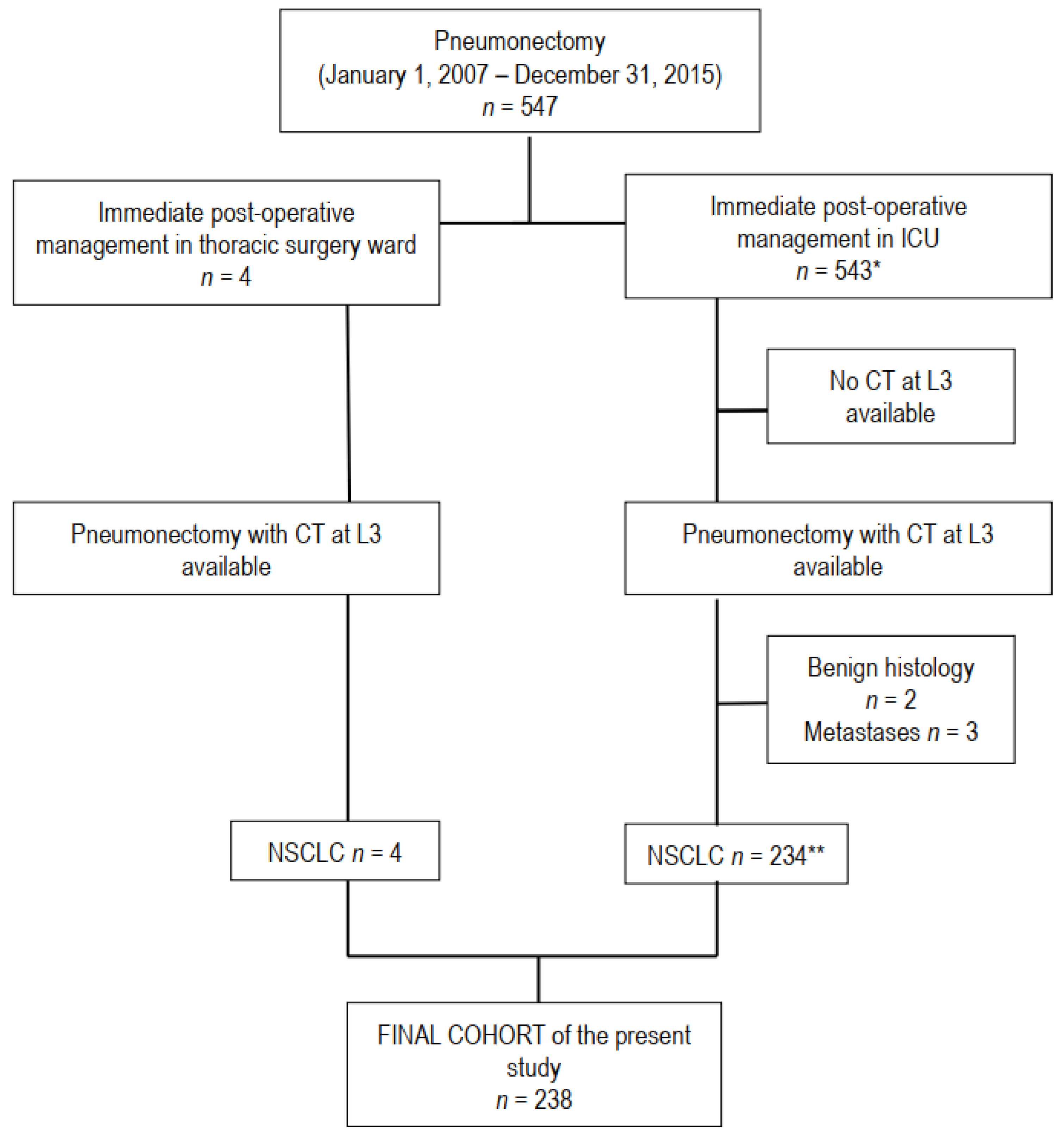
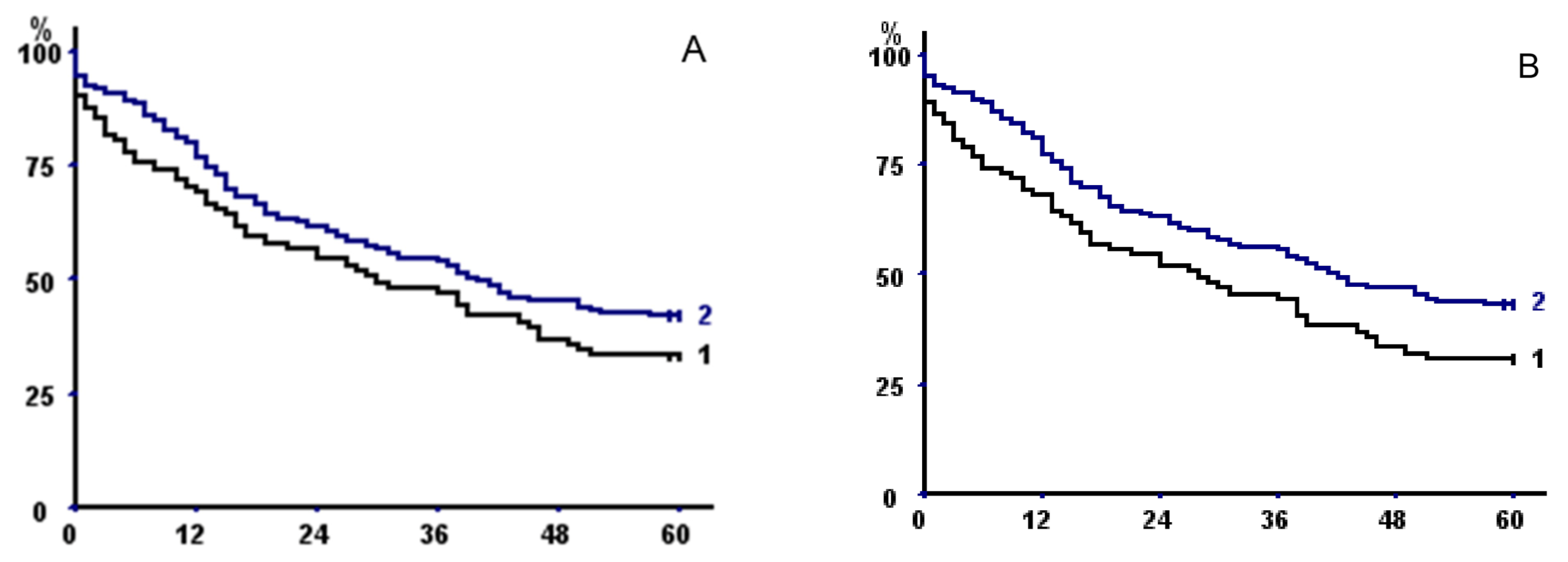
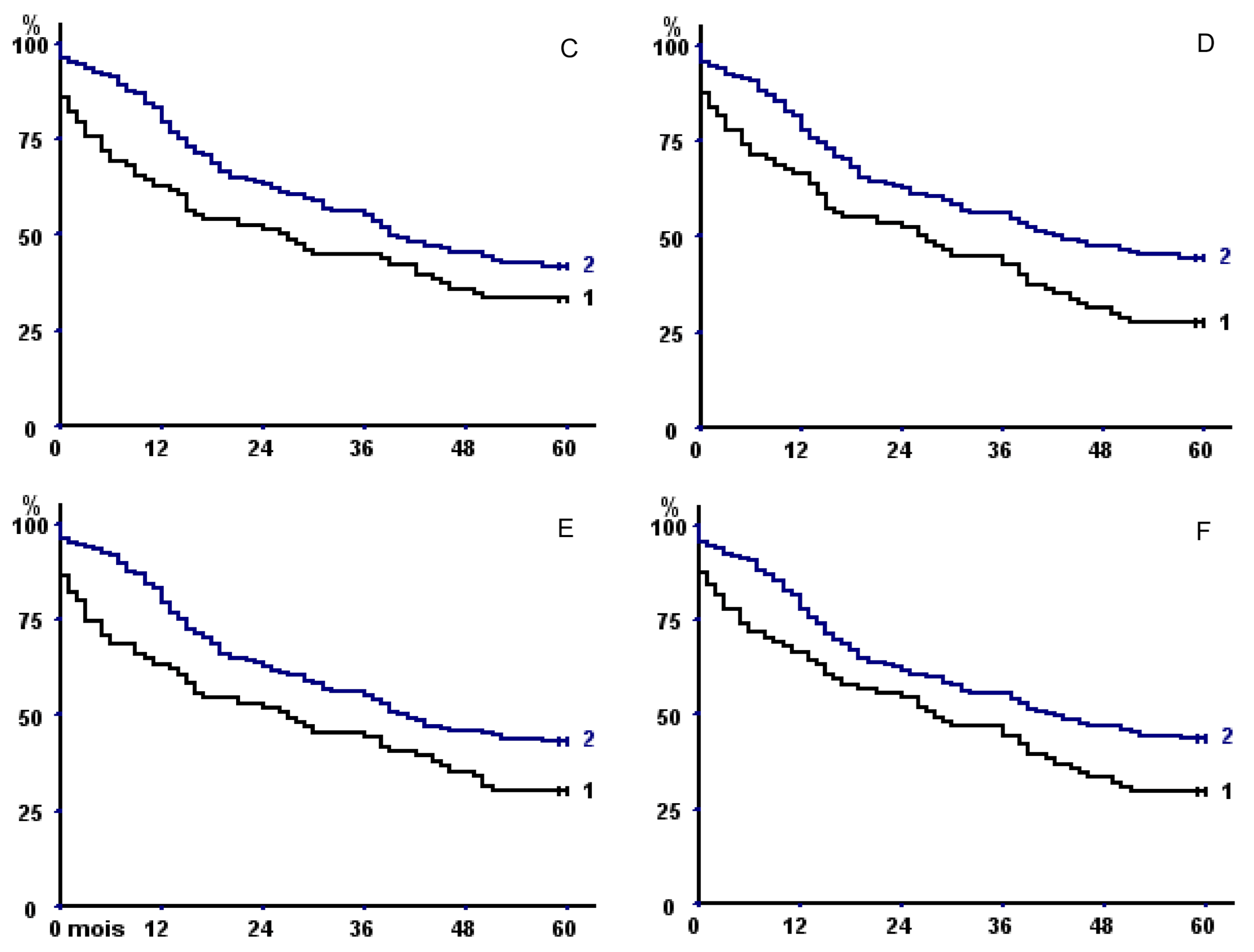
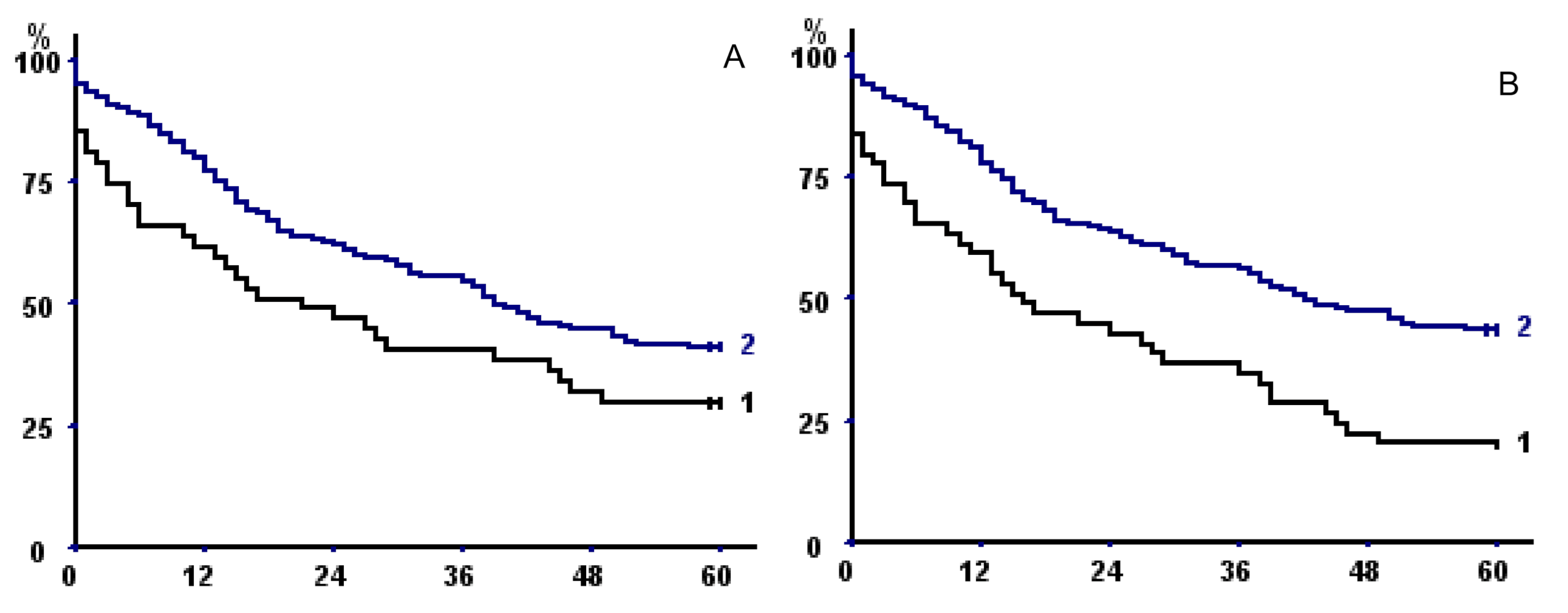
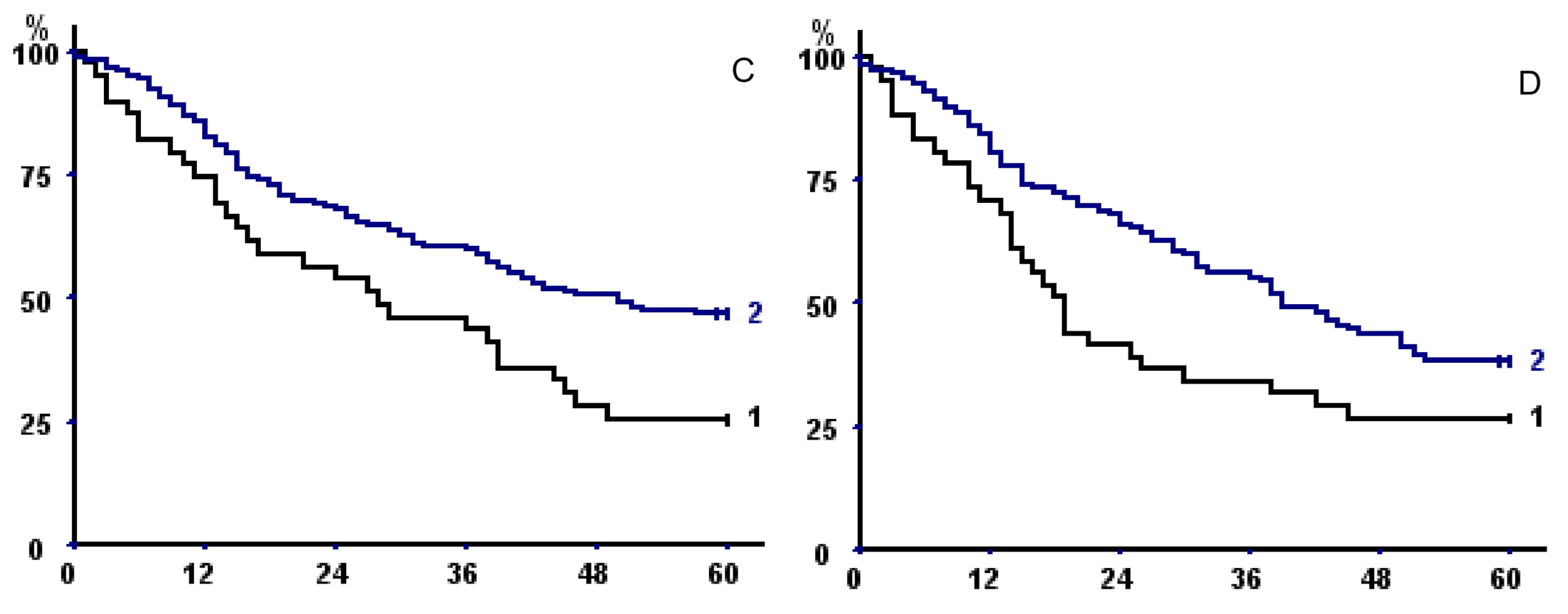
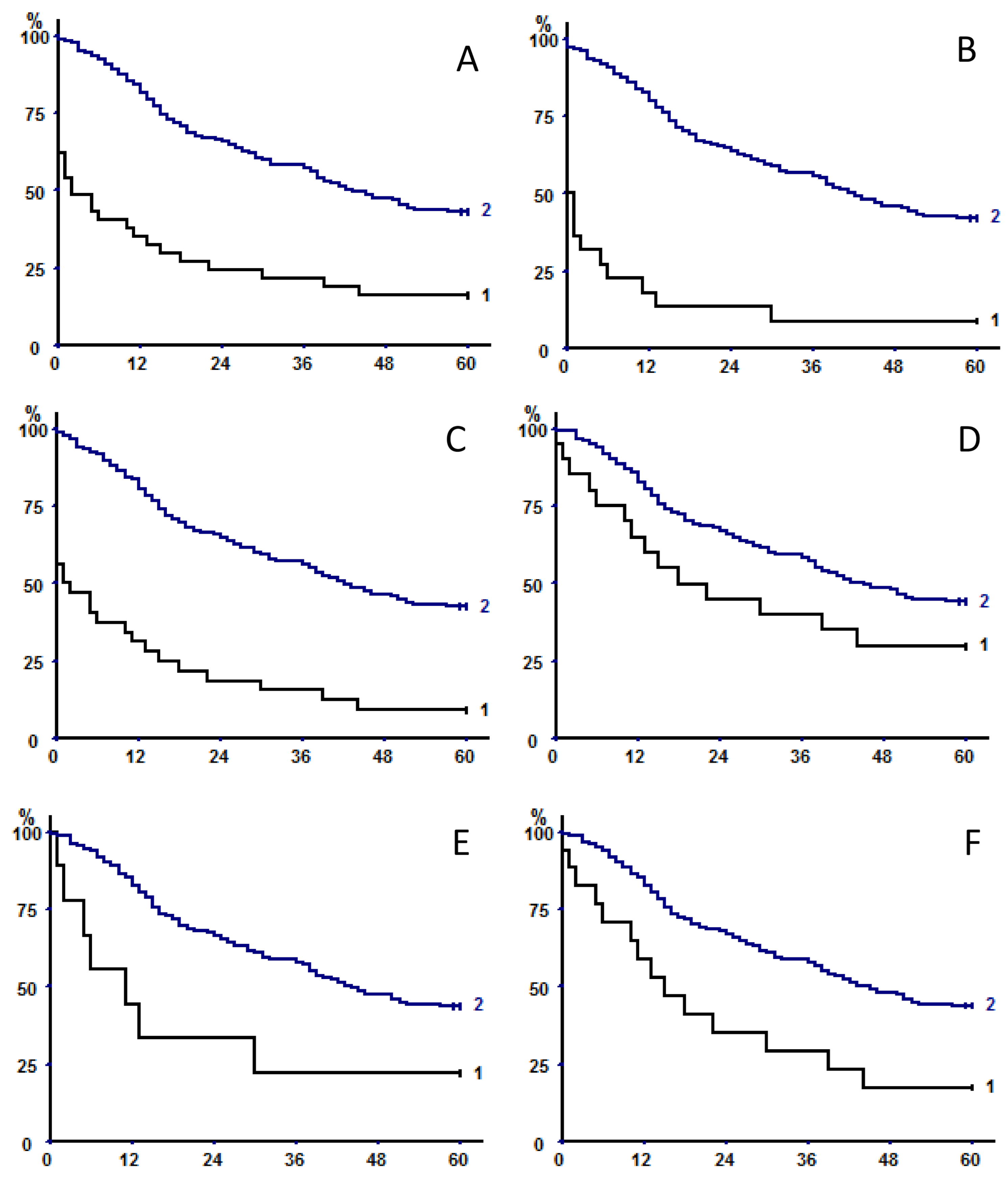
There is no standardization in methods to assess sarcopenia; in particular the prognostic significance of muscular fatty infiltration in lung cancer patients undergoing surgery has not been evaluated so far. We thus performed several computed tomography (CT)-based morphometric measurements of sarcopenia in 238 consecutive non-small cell lung-cancer patients undergoing pneumonectomy from 1 January 2007 to 31 December 2015. Sarcopenia was assessed by the following CT-based parameters: cross-sectional total psoas area (TPA), cross-sectional total muscle area (TMA), and total parietal muscle area (TPMA), defined as TMA without TPA. Measures were performed at the level of the third lumbar vertebra and were obtained for the entire muscle surface, as well as by excluding fatty infiltration based on CT attenuation. Findings were stratified for gender, and a threshold of the 33rd percentile was set to define sarcopenia. Furthermore, we assessed the possibility of being sarcopenic at both the TPA and TPMA level, or not, by taking into account of not fatty infiltration. Five-year survival was 39.1% for the whole population. Lower TPA, TMA, and TPA were associated with lower survival at univariate analysis; taking into account muscular fatty infiltration did not result in more powerful discrimination. Being sarcopenic at both psoas and parietal muscle level had the optimum discriminating power. At the multivariable analysis, being sarcopenic at both psoas and parietal muscles (considering the whole muscle areas, including muscular fat), male sex, increasing age, and tumor stage, as well as Charlson Comorbidity Index (CCI), were independently associated with worse long-term outcomes. We conclude that sarcopenia is a powerful negative prognostic factor in patients with lung cancer treated by pneumonectomy.
Keywords:
sarcopenia; pneumonectomy; lung neoplasms; survival