You are currently viewing a new version of our website. To view the old version click .
Nutrients
  • This is an early access version, the complete PDF, HTML, and XML versions will be available soon.
  • Article
  • Open Access

24 December 2025

Participants’ Perspectives on Health Impact, Barriers and Facilitators to Adherence in a Mediterranean Diet Lifestyle Trial


,
,
and
1
Department of Preventive Medicine and Public Health, Faculty of Medicine, University of Granada, Avda. Dr. Jesús Candel Fábregas 11, 18016 Granada, Spain
2
Instituto de Investigación Biosanitaria de Granada (IBS.GRANADA), 18012 Granada, Spain
3
Centro de Investigación Biomédica en Red de Epidemiología y Salud Pública (CIBERESP-Spain), 28029 Madrid, Spain
*
Author to whom correspondence should be addressed.
This article belongs to the Special Issue Nutrition and Care Strategies to Promote Healthy Aging and Prevent Chronic Diseases in Older Adults

Abstract

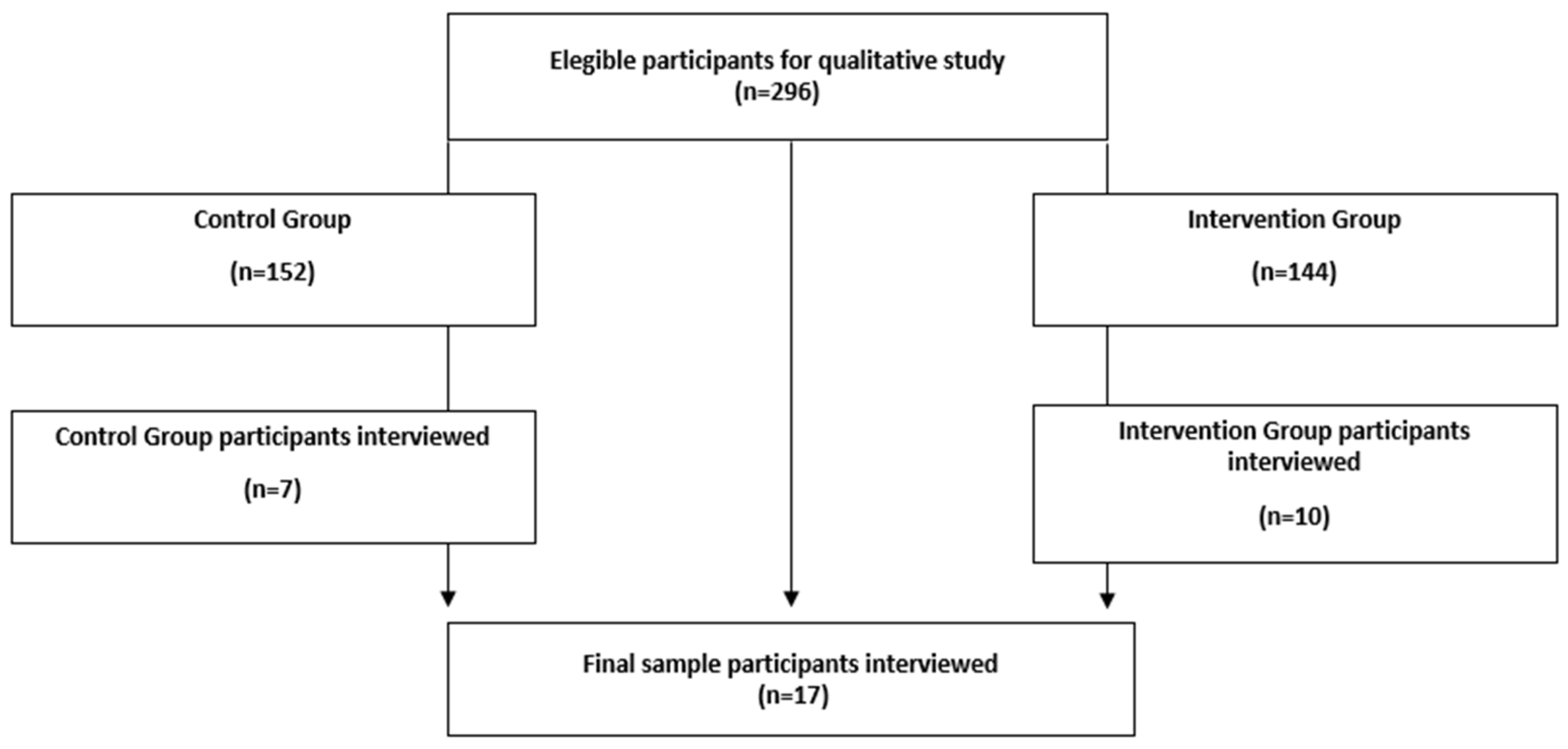
Background/Objectives: Interventions promoting the Mediterranean Diet (MedDiet) and healthy lifestyle behaviours are effective and cost-efficient in preventing non-communicable diseases (NCDs), yet sustaining adherence remains challenging. This study explored perceived health impacts on, barriers to, and facilitators of adherence among older Spanish adults participating in a randomised clinical trial (RCT) based on the MedDiet and lifestyle interventions. Methods: A qualitative study was conducted with 17 Spanish participants (aged 60–81 years) with overweight/obesity and metabolic syndrome (MetS). In-depth, semi-structured interviews were audio-recorded, transcribed verbatim, and analysed through inductive thematic analysis with a gender-sensitive approach. Results: Participants identified several facilitators, including perceived improvements in vitality, psychological well-being, and physical performance, alongside enhanced nutritional literacy and confidence in orchestrating daily dietary practices. Women emphasised empowerment, autonomy, and the satisfaction of promoting family health. Main barriers included low motivation, disease burden, mobility restrictions, and limited partner support, with women particularly highlighting emotional and relational factors. A continuous, trust-based relationship with the research team acted as a strong external facilitator supporting long-term commitment. Conclusions: Perceived health gains, self-efficacy, social engagement, and research team support facilitated adherence, while low motivation, illness burden, and limited partner involvement hindered it. These findings highlight the importance of gender- and context-sensitive strategies to optimise adherence and the long-term effectiveness of Mediterranean lifestyle interventions.

Article Metrics

Citations

Article Access Statistics

Multiple requests from the same IP address are counted as one view.