Beyond Calories: Addressing Micronutrient Deficiencies in the World’s Most Vulnerable Communities—A Review

 ,
,  ,
,  , , , , and
Abstract
1. Introduction

| Micronutrient | Deficiency Disease/Impact | Causes | References |
|---|---|---|---|
| Iron | Anaemia, fatigue, impaired cognitive function | Inadequate dietary intake, blood loss (menstruation, ulcers), poor absorption (intestinal disorders) | [14] |
| Vitamins | Night blindness, weakened immunity, and childhood mortality Rickets, osteoporosis, and muscle weakness | Insufficient intake of animal and plant-based sources, malabsorption disorders, and protein deficiency. Limited sun exposure, poor dietary intake, and kidney/liver disorders affect vitamin D metabolism. Insufficient fruit and vegetable intake, smoking (increases vitamin C requirement). Malabsorption disorders, long-term antibiotic use, and liver disease | [15,16] |
| Iodine | Goitre, cognitive impairment, hypothyroidism | Low iodine in soil and water, lack of iodised salt consumption | [17] |
| Zinc | Growth retardation, impaired wound healing, weakened immunity | Not consuming enough zinc-rich foods like meat, seafood, and poultry. Consuming foods high in phytates | [18] |
| Calcium | Osteoporosis, muscle cramps, weak bones | Low dairy intake, vitamin D deficiency (affecting calcium absorption), high sodium/caffeine intake (increases calcium loss) | [19] |
2. Global Burden of Micronutrient Deficiencies: Prevalence, Drivers, and Consequences
2.1. Prevalence of Micronutrient Deficiencies and Their Impact on Health Globally
2.1.1. Iron Deficiency
2.1.2. Vitamin A Deficiency
2.1.3. Vitamin D Deficiency
2.1.4. Deficiency of Iodine
2.1.5. Zinc Deficiency
| Micronutrient Deficiency | Population Group/Diagnostic Criteria | Global Prevalence Estimate | Notes/Year of Data | Primary Reference(s) |
|---|---|---|---|---|
| Iron (Anaemia) | Children 6–59 months | 40% (269 million children) | 2019 data; Anaemia is often used as a proxy for the iron deficiency burden. | [50] |
| Iron (Anaemia) | Pregnant Women (15–49 years) | 37% (32 million women) | 2019 data. Regions of Africa and South East Asia are most affected. | [50] |
| Iron (Anaemia) | Non-pregnant Women (15–49 years) | 30% (539 million women) | 2019 data. Dietary iron deficiency causes 66.2% of total anaemia cases (2021). | [50] |
| Iodine Deficiency Disorders (IDD) | Women of Reproductive Age | 81.4 million Prevalent Cases | 2019 GBD estimate. The age-standardised prevalence declined by 13.3% since 1990. | [51] |
| Iodine (Access) | Global Households | 89% using iodised salt | The 2020 estimate indicates nearly 1 billion people lack consistent access. | |
| Vitamin A Deficiency (VAD) | Preschool-aged Children (0–5 years) | 19.53% (VAD, low serum retinol) | Systematic review finding (2023). Classified as a mild/moderate PH problem globally. | [52] |
| Vitamin A Deficiency (Severe PH Problem) | Preschool-aged Children (Africa Region) | 30.59% | The highest regional prevalence was observed in this age group, indicating a severe public health crisis. | [52] |
| Zinc (Risk of Inadequate Intake) | Global Population (All ages) | 17.3% | Based on food balance sheets and theoretical physiological requirements (IZiNCG). | [53] |
| Vitamin D (Deficiency) | Global Population (All ages) | 15.7% | Serum 25(OH)D < 30 nmol/L. Data pooled from 2000–2022 systematic review. | [54] |
| Vitamin D (Insufficiency) | Global Population (All ages) | 47.9% | Serum 25(OH)D < 50 nmol/L. Nearly half the global population is affected. | [54] |
| Folate Deficiency | Women of Reproductive Age (Lower-Income Economies) | >20% | Systematic review finding. Highlights stark economic disparity compared to HICs (<5%). | [55] |
| Polynutritional Deficiency | Children under five years old | >50% | An estimate of deficiency in at least one key nutrient (Iron, Zinc, or Vitamin A). | [56] |
2.2. The Challenge of Diagnosis and Screening in Vulnerable Settings
3. Vulnerable Populations at Risk of Malnutrition
3.1. Children and Adolescents
3.2. Pregnant and Lactating Women
3.3. Elderly
3.4. Low-Income Communities
3.5. Refugees and Displaced Persons
4. Relationship Between Micronutrient Deficiencies and Hunger
4.1. Hunger as a Contributor to Nutrient Deficiencies
4.2. Socioeconomic Factors Influencing Hunger and Nutrition
4.3. Case Studies of Affected Populations
| S/No | Micronutrient | Deficiency Explanation | Consequences | Vulnerable Population | References |
|---|---|---|---|---|---|
| 1. | Vitamin A | Concentration of serum retinol or retinol binding protein below the cutoff value | Impaired vision, including night blindness and blindness in severe cases | Young children, particularly those under 5 years old, and pregnant women | [70] |
| 2. | Thiamine | Low level of thiamine in blood and low activity of the enzyme “transketolase” | Several disorders, including neurological and cardiovascular issues | Infants, particularly those who are exclusively breastfed by mothers with thiamine deficiency, adults majorly pregnant and lactating women | [82] |
| 3. | Riboflavin | Low level of riboflavin in the blood | Sore throat, lesions in the mouth, and skin disorders | Athletes, pregnant and lactating women, older persons, habitual alcohol abusers, and adults with liver disease | [83] |
| 4. | Niacin | Urinary excretion of specific niacin metabolites, such as N1-methylnicotinamide (NMN). | Dermatitis, diarrhoea, and dementia | People experiencing poverty or malnutrition, those with anorexia nervosa, alcohol use disorder, AIDS, inflammatory bowel disease, or liver cirrhosis | [84] |
| 5. | Folate | Low level of folic acid in the blood | Megaloblastic anaemia, fatigue, irritability, and neurological problems | Pregnant women, children under 5 years of age, and the elderly | [85] |
| 6. | Cobalamin | Low level of cobalamin in blood | Impacting neurological function and the synthesis of red blood cells | Older adults, individuals with gastrointestinal disorders, infants of vegan mothers and women of reproductive age | [86] |
| 7. | Calciferol | Lower levels of 25-hydroxyvitamin D in the blood | Soft and deformed bones, leg deformities, osteomalacia | older adults, people with darker skin, and infants | [87] |
| 8. | Ascorbic acid | Lower levels of ascorbic acid in the blood | Scurvy, characterized by fatigue, weakness, bleeding gums, loose teeth, and skin changes like bruising and spots | Smokers, elderly people, children, pregnant women, and anyone with malabsorption problems | [88] |
| 9. | Tocopherol | Lower levels of alpha-tocopherol in the blood serum | Muscle weakness, coordination problems (ataxia), peripheral neuropathy, and haemolytic anaemia | Premature infants, particularly those with very low birth weights, and individuals with impaired fat absorption, such as cystic fibrosis or abetalipoproteinemia | [89] |
5. Challenges in Addressing Micronutrient Deficiencies
5.1. Awareness and Education
5.2. Access to Nutritious Foods
5.3. Addressing Micronutrient Deficiencies: Challenges in Healthcare Accessibility and Policy Implementation
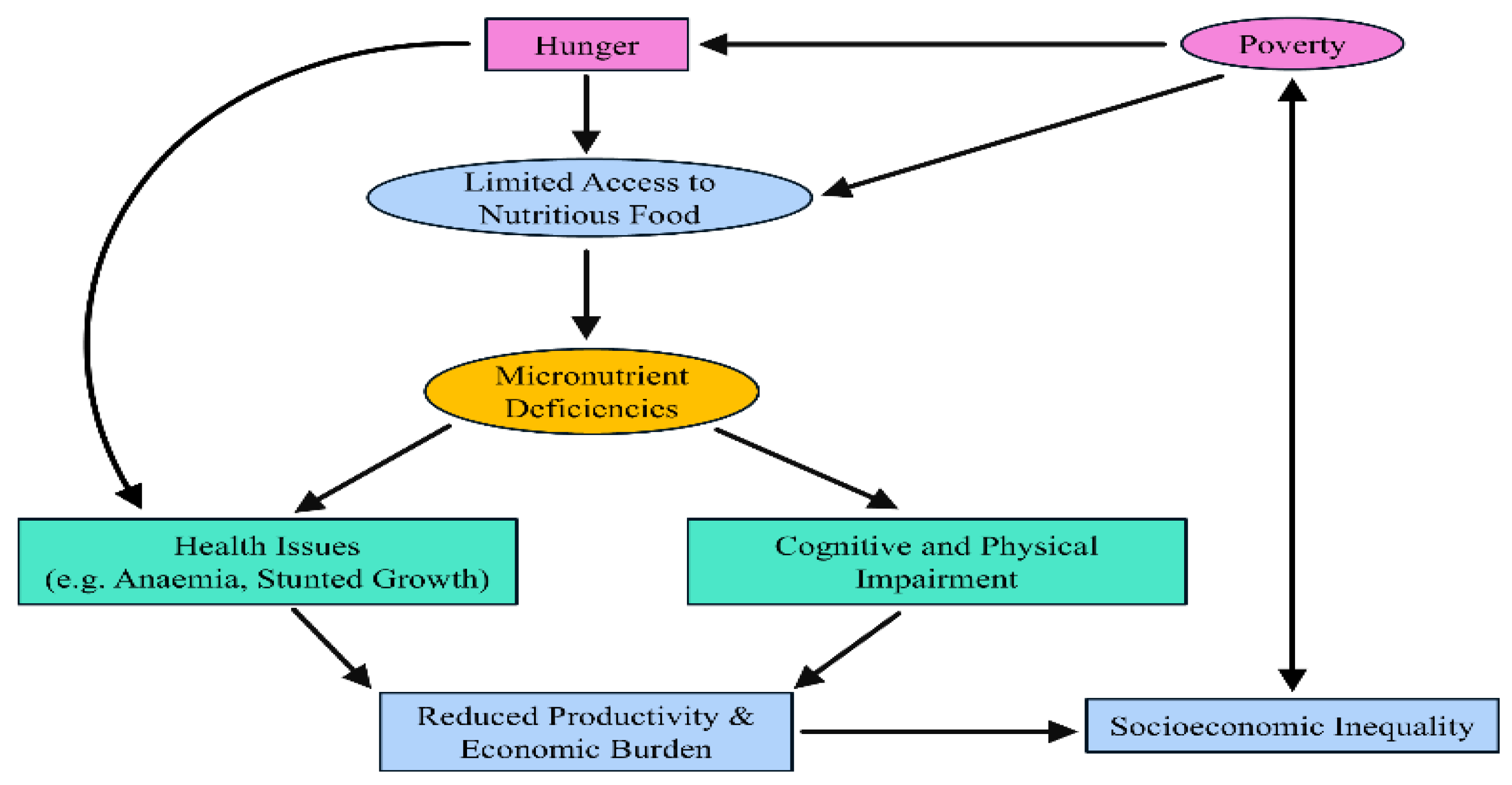
The Vicious Cycle of Micronutrient Deficiencies and Socioeconomic Inequality
6. Potential Solutions and Interventions
6.1. Food Fortification Initiatives
| Approach | Key Benefits | Main Challenges | References |
|---|---|---|---|
| Promotion of diverse diets | Enhances intake of multiple micronutrients and supports overall health. | Limited access and affordability of diverse foods, especially in rural areas. | [103] |
| Home and community gardening | Improves household access to fresh, nutrient-rich foods. | Land, water, and technical constraints; seasonal variability. | [104] |
| Biofortified crops | Sustainable and cost-effective improvement of staple nutrient content. | Low adoption due to limited awareness and seed access. | [105] |
| Nutrition education | Increases nutrition knowledge and dietary behaviour change. | Cultural resistance and low literacy levels. | [106] |
| Agriculture–nutrition integration | Aligns agricultural production with nutrition goals | Weak coordination between the agriculture and health sectors | [107] |
| Addressing socioeconomic and gender barriers | Enhances equitable access to nutritious foods. | Poverty, gender inequality, and food insecurity. | [108] |
6.2. Micronutrient Supplementation Programmes
6.3. Biofortification
6.4. Dietary Diversification and Education
7. Future Directions and Research Needs
7.1. Food-Based Approach
7.2. Sustainable Food Systems
7.3. Gaps in Current Research
7.4. Emerging Technologies in Nutrition
8. Limitations and Knowledge Gaps
9. Conclusions
Funding
Data Availability Statement
Acknowledgments
Conflicts of Interest
References
- Kumar, A.; Kerketta, A.; Dewali, S.; Sharma, N.; Kumari Panda, A.; Singh Bisht, S. Tackling hidden hunger: Understanding micronutrient deficiency and effective mitigation strategies. In Emerging Solutions in Sustainable Food and Nutrition Security; Springer International Publishing: Cham, Switzerland, 2023; pp. 305–319. [Google Scholar]
- Lowe, N.M. The global challenge of hidden hunger: Perspectives from the field. Proc. Nutr. Soc. 2021, 80, 283–289. [Google Scholar] [CrossRef]
- Odoms-Young, A.; Brown, A.G.M.; Agurs-Collins, T.; Glanz, K. Food Insecurity, Neighborhood Food Environment, and Health Disparities: State of the Science, Research Gaps and Opportunities. Am. J. Clin. Nutr. 2024, 119, 850–861. [Google Scholar] [CrossRef] [PubMed]
- Godswill, A.G.; Somtochukwu, I.V.; Ikechukwu, A.O.; Kate, E.C. Health Benefits of Micronutrients (Vitamins and Minerals) and their Associated Deficiency Diseases: A Systematic Review. Int. J. Food Sci. 2020, 3, 1–32. [Google Scholar] [CrossRef]
- Baiden, P.; LaBrenz, C.A.; Thrasher, S.; Asiedua-Baiden, G.; Harerimana, B. Adverse childhood experiences and household food insecurity among children aged 0–5 years in the USA. Public Health Nutr. 2021, 24, 2123–2131. [Google Scholar] [CrossRef]
- Mulatu, S.; Mulatu, G.; Gedif, A. Dietary practice and associated factors among lactating mothers in Dangila District in the Awi Zone Amhara region Ethiopia, 2022: A cross-sectional study. Front. Nutr. 2025, 11, 1506707. [Google Scholar] [CrossRef] [PubMed]
- Wang, Y.; Dong, C.; Han, Y.; Gu, Z.; Sun, C. Immunosenescence, aging and successful aging. Front. Immunol. 2022, 13, 942796. [Google Scholar] [CrossRef]
- Dickinson, A.; Wills, W.; Kapetanaki, A.B.; Ikioda, F.; Godfrey-Smythe, A.; Halliday, S.V. Food security and food practices in later life: A new model of vulnerability. Ageing Soc. 2022, 42, 2180–2205. [Google Scholar] [CrossRef]
- Abdalla, L.; Goulao, L.F. Food security and nutrition in refugee camps in the European Union: Development of a framework of analysis linking causes and effects. Food Secur. 2024, 16, 735–755. [Google Scholar] [CrossRef]
- Rahaman, A.; Kumari, A.; Zeng, X.A.; Khalifa, I.; Farooq, M.A.; Singh, N.; Ali, S.; Alee, M.; Aadil, R.M. The increasing hunger concern and current need in the development of sustainable food security in the developing countries. Trends Food Sci. Technol. 2021, 113, 423–429. [Google Scholar] [CrossRef]
- Soriano, J.; Morales-Suarez-Varela, M. Malnutrition During Pregnancy and Childhood: Ethiopian Perspectives. In Handbook of Public Health Nutrition; Springer: Berlin/Heidelberg, Germany, 2025; pp. 1–28. [Google Scholar] [CrossRef]
- Adeyeye, S.A.O.; Ashaolu, T.J.; Bolaji, O.T.; Abegunde, T.A.; Omoyajowo, A.O. Africa and the Nexus of poverty, malnutrition and diseases. Crit. Rev. Food Sci. Nutr. 2023, 63, 641–656. [Google Scholar] [CrossRef]
- Taslim, N.A.; Farradisya, S.; Gunawan WBen Alfatihah, A.; Barus, R.I.B.; Ratri, L.K.; Arnamalia, A.; Barazani, H.; Samtiya, M.; Mayulu, N.; Kim, B.; et al. The interlink between chrono-nutrition and stunting: Current insights and future perspectives. Front. Nutr. 2023, 10, 1303969. [Google Scholar] [CrossRef]
- Pasricha, S.R.; Tye-Din, J.; Muckenthaler, M.U.; Swinkels, D.W. Iron deficiency. Lancet 2021, 397, 233–248. [Google Scholar] [CrossRef]
- Gana, W.; De Luca, A.; Debacq, C.; Poitau, F.; Poupin, P.; Aidoud, A.; Fougère, B. Analysis of the Impact of Selected Vitamins Deficiencies on the Risk of Disability in Older People. Nutrients 2021, 13, 3163. [Google Scholar] [CrossRef]
- Griffiths, J.K. Vitamin Deficiencies. In Hunter’s Tropical Medicine and Emerging Infectious Disease: Ninth Edition; CRC Press: Boca Raton, FL, USA, 2012; pp. 997–1002. [Google Scholar] [CrossRef]
- Hatch-McChesney, A.; Lieberman, H.R. Iodine and Iodine Deficiency: A Comprehensive Review of a Re-Emerging Issue. Nutrients 2022, 14, 3474. [Google Scholar] [CrossRef]
- Mannar, M.G.V.; Khan, N.A. Food Fortification: Rationale and Methods. In Encyclopedia of Food and Health; Elsevier: Amsterdam, The Netherlands, 2015; pp. 27–34. [Google Scholar] [CrossRef]
- Shlisky, J.; Mandlik, R.; Askari, S.; Abrams, S.; Belizan, J.M.; Bourassa, M.W.; Cormick, G.; Driller-Colangelo, A.; Gomes, F.; Khadilkar, A.; et al. Calcium deficiency worldwide: Prevalence of inadequate intakes and associated health outcomes. Ann. N. Y. Acad. Sci. 2022, 1512, 10–28. [Google Scholar] [CrossRef]
- Lopes, S.O.; Abrantes, L.C.S.; Azevedo, F.M.; Morais Nde Sde Morais Dde, C.; Gonçalves, V.S.S.; Fontes, E.A.F.; Franceschini Sdo, C.C.; Priore, S.E. Food Insecurity and Micronutrient Deficiency in Adults: A Systematic Review and Meta-Analysis. Nutrients 2023, 15, 1074. [Google Scholar] [CrossRef]
- Stevens, G.A.; Beal, T.; Mbuya, M.N.N.; Luo, H.; Neufeld, L.M.; Addo, O.Y.; Adu-Afarwuah, S.; Alayón, S.; Bhutta, Z.; Brown, K.H.; et al. Micronutrient deficiencies among preschool-aged children and women of reproductive age worldwide: A pooled analysis of individual-level data from population-representative surveys. Lancet Glob. Health 2022, 10, e1590–e1599. [Google Scholar] [CrossRef] [PubMed]
- Adeyanju, A.A.; Kruger, J.; Taylor, J.R.; Duodu, K.G. Effects of different souring methods on the protein quality and iron and zinc bioaccessibilities of non-alcoholic beverages from sorghum and amaranth. Int. J. Food Sci. Technol. 2019, 54, 798–809. [Google Scholar] [CrossRef]
- Kiani, A.K.; Dhuli, K.; Donato, K.; Aquilanti, B.; Velluti, V.; Matera, G.; Bertelli, M. Main nutritional deficiencies. J. Prev. Med. Hyg. 2022, 63, E93–E101. [Google Scholar]
- Turawa, E.; Awotiwon, O.; Dhansay, M.A.; Cois, A.; Labadarios, D.; Bradshaw, D.; Van Wyk, V.P. Prevalence of anaemia, iron deficiency, and iron deficiency anaemia in women of reproductive age and children under 5 years of age in south Africa (1997–2021): A systematic review. Int. J. Environ. Res. Public Health 2021, 18, 2799. [Google Scholar] [CrossRef] [PubMed]
- Ellwanger, J.H.; Ziliotto, M.; Kulmann-Leal, B.; Chies, J.A.B. Iron deficiency and soil-transmitted helminth infection: Classic and neglected connections. Parasitol. Res. 2022, 121, 3381–3392. [Google Scholar] [CrossRef]
- East, P.L.; Doom, J.R.; Blanco, E.; Burrows, R.; Lozoff, B.; Gahagan, S. Iron Deficiency in Infancy and Sluggish Cognitive Tempo and ADHD Symptoms in Childhood and Adolescence. J. Clin. Child Adolesc. Psychol. 2023, 52, 259–270. [Google Scholar] [CrossRef] [PubMed]
- Mwangi, M.N.; Mzembe, G.; Moya, E.; Verhoef, H. Iron deficiency anaemia in sub-Saharan Africa: A review of current evidence and primary care recommendations for high-risk groups. Lancet Haematol. 2021, 8, e732–e743. [Google Scholar] [CrossRef] [PubMed]
- Lemoine, A.; Tounian, P. Childhood anemia and iron deficiency in sub-Saharan Africa—Risk factors and prevention: A review. Arch. Pédiatr. 2020, 27, 490–496. [Google Scholar] [CrossRef]
- Hune, Y.; Asaye, H.; Negesse, A.; Temesgen, H.; Yirga, T.; Mekonnen, H. Prevalence of Vitamin A Deficiency and Associated Factors Among Children Aged 6–59 Months in Dera District, Northwest Ethiopia: A Cross-Sectional Study. J. Pediatr. Neonatal Biol. 2021, 6, 35–43. [Google Scholar] [CrossRef]
- Beer, K.; Singh, A.; Ravi, S.C.; Gupta, A.K.; Kumar, A.; Sharma, M.M. A comprehensive review on the role of Vitamin A on human health and nutrition. J. Environ. Biol. 2024, 45, 645–653. [Google Scholar] [CrossRef]
- Nuredin, A.; Melis, T.; Abdu, A.O. Clinical vitamin A deficiency among preschool aged children in southwest Ethiopia. Front. Nutr. 2024, 11, 1267979. [Google Scholar] [CrossRef]
- Abdi, N.I. Assessment of Vitamin A Routine Supplementation and Diet Rich in Vitamin A on Nutrition Status in Under Five Years of Age in Wajir East Sub-County. Master’s Thesis, Kenya Methodist University, Meru, Kenya, 2020. Available online: http://41.89.31.5/handle/123456789/906 (accessed on 14 December 2025).
- Cashman, K.D. Vitamin D Deficiency: Defining, Prevalence, Causes, and Strategies of Addressing. Calcif. Tissue Int. 2020, 106, 14–29. [Google Scholar] [CrossRef] [PubMed]
- Dominguez, L.J.; Farruggia, M.; Veronese, N.; Barbagallo, M. Vitamin d sources, metabolism, and deficiency: Available compounds and guidelines for its treatment. Metabolites 2021, 11, 255. [Google Scholar] [CrossRef]
- Grant, W.B.; Bhattoa, H.P.; Pludowski, P. Determinants of Vitamin D Deficiency from Sun Exposure. In Vitamin D; Elsevier: Amsterdam, The Netherlands, 2018; Volume 2, pp. 79–90. [Google Scholar] [CrossRef]
- Rizzello, F.; Gionchetti, P.; Spisni, E.; Saracino, I.M.; Bellocchio, I.; Spigarelli, R.; Collini, N.; Imbesi, V.; Dervieux, T.; Alvisi, P.; et al. Dietary Habits and Nutrient Deficiencies in a Cohort of European Crohn’s Disease Adult Patients. Int. J. Mol. Sci. 2023, 24, 1494. [Google Scholar] [CrossRef]
- Minisola, S.; Colangelo, L.; Pepe, J.; Diacinti, D.; Cipriani, C.; Rao, S.D. Osteomalacia and Vitamin D Status: A Clinical Update 2020. JBMR Plus 2021, 5, e10447. [Google Scholar] [CrossRef]
- De Martinis, M.; Allegra, A.; Sirufo, M.M.; Tonacci, A.; Pioggia, G.; Raggiunti, M.; Ginaldi, L.; Gangemi, S. Vitamin D deficiency, osteoporosis and effect on autoimmune diseases and hematopoiesis: A review. Int. J. Mol. Sci. 2021, 22, 8855. [Google Scholar] [CrossRef]
- Jacobsen, S.S.; Vilhelmsen, M.; Lottrup, L.; Brandt, M. Facilitators and barriers for using outdoor areas in the primary work tasks of eldercare workers in nursing homes. BMC Health Serv. Res. 2023, 23, 1300. [Google Scholar] [CrossRef]
- Wu, Z.; Liu, Y.; Wang, W. The burden of iodine deficiency. Arch. Med. Sci. 2024, 20, 1484–1494. [Google Scholar] [CrossRef] [PubMed]
- Krela-Kaźmierczak, I.; Czarnywojtek, A.; Skoracka, K.; Rychter, A.M.; Ratajczak, A.E.; Szymczak-Tomczak, A.; Dobrowolska, A. Is there an ideal diet to protect against iodine deficiency? Nutrients 2021, 13, 513. [Google Scholar] [CrossRef] [PubMed]
- Pasyechko, N.V.; Kulchinska, V.M.; Naumova, L.V. Subclinical hypothyroidism in pregnant women in the iodine deficiency region: To treat or not to treat? Miznar. Endokrinol. Zurnal 2020, 16, 471–477. [Google Scholar] [CrossRef]
- Olivieri, A.; De Angelis, S.; Moleti, M.; Vermiglio, F. Iodine deficiency and thyroid function. In Thyroid, Obesity and Metabolism: Exploring Links Between Thyroid Function, Obesity, Metabolism and Lifestyle; Springer International Publishing: Cham, Switzerland, 2021; pp. 3–20. [Google Scholar]
- Toloza, F.J.K.; Motahari, H.; Maraka, S. Consequences of Severe Iodine Deficiency in Pregnancy: Evidence in Humans. Front. Endocrinol. 2020, 11, 409. [Google Scholar] [CrossRef]
- Gupta, S.; Brazier, A.K.M.; Lowe, N.M. Zinc deficiency in low- and middle-income countries: Prevalence and approaches for mitigation. J. Hum. Nutr. Diet. 2020, 33, 624–643. [Google Scholar] [CrossRef]
- Wessells, K.R.; King, J.C.; Brown, K.H. Development of a Plasma Zinc Concentration Cutoff to Identify Individuals with Severe Zinc Deficiency Based on Results from Adults Undergoing Experimental Severe Dietary Zinc Restriction and Individuals with Acrodermatitis Enteropathica. J. Nutr. 2014, 144, 1204–1210. [Google Scholar] [CrossRef]
- De Benedictis, C.A.; Trame, S.; Rink, L.; Grabrucker, A.M. Prevalence of low dietary zinc intake in women and pregnant women in Ireland. Ir. J. Med. Sci. 2023, 192, 1835–1845. [Google Scholar] [CrossRef]
- Maywald, M.; Rink, L. Zinc in Human Health and Infectious Diseases. Biomolecules 2022, 12, 1748. [Google Scholar] [CrossRef]
- Durrani, A.M.; Parveen, H. Zinc Deficiency and Its Consequences During Pregnancy. In Microbial Biofertilizers and Micronutrient Availability: The Role of Zinc in Agriculture and Human Health; Springer International Publishing: Berlin/Heidelberg, Germany, 2021; pp. 69–82. [Google Scholar] [CrossRef]
- World Health Organization. Anaemia (Fact Sheet). 2024. Available online: https://www.who.int/news-room/fact-sheets/detail/anaemia (accessed on 14 December 2025).
- Lin, J.; Tan, H.L.; Ge, H. Global, regional, and national burden of iodine deficiency in reproductive women from 1990 to 2019, and projections to 2035: A systematic analysis for the Global Burden of Disease Study in 2019. Int. J. Women’s Health 2025, 17, 1863–1875. [Google Scholar] [CrossRef]
- Wang, Y.; Huang, Y.; Chase, R.C.; Li, T.; Ramai, D.; Li, S.; Huang, X.; Antwi, S.O.; Keaveny, A.P.; Pang, M. Global burden of digestive diseases: A systematic analysis of the global burden of diseases study, 1990 to 2019. Gastroenterology 2023, 165, 773–783. [Google Scholar] [CrossRef] [PubMed]
- Wessells, K.R.; Brown, K.H. Estimating the global prevalence of zinc deficiency: Results based on zinc availability in national food supplies and the prevalence of stunting. PLoS ONE 2012, 7, e50568. [Google Scholar] [CrossRef]
- Cui, A.; Zhang, T.; Xiao, P.; Fan, Z.; Wang, H.; Zhuang, Y. Global and regional prevalence of vitamin D deficiency in population-based studies from 2000 to 2022: A pooled analysis of 7.9 million participants. Front. Nutr. 2023, 10, 1070808. [Google Scholar] [CrossRef]
- Okunade, K.S.; Olowoselu, F.O.; Oyedeji, O.A.; Oshodi, Y.A.; Ugwu, A.O.; Olumodeji, A.M.; Adejimi, A.A.; Adenekan, M.A.; Ojo, T.; Ademuyiwa, I.Y.; et al. Prevalence and determinants of moderate-to-severe anaemia in the third trimester of pregnancy: A multicenter cross-sectional study in Lagos, Nigeria. Sci. Rep. 2024, 14, 11411. [Google Scholar] [PubMed]
- Amorim Sacramento, L.; Gonzalez-Lombana, C.; Scott, P. Malnutrition disrupts adaptive immunity during visceral leishmaniasis by enhancing IL-10 production. PLoS Pathog. 2024, 20, e1012716. [Google Scholar] [CrossRef] [PubMed]
- Ritchie, H.; Roser, M. Micronutrient Deficiency. Our World in Data. 2017. Available online: https://ourworldindata.org/micronutrient-deficiency (accessed on 14 December 2025).
- Berger, M.M.; Talwar, D.; Shenkin, A. Pitfalls in the interpretation of blood tests used to assess and monitor micronutrient nutrition status. Nutr. Clin. Pract. 2023, 38, 56–69. [Google Scholar] [CrossRef]
- Carabotti, M.; Annibale, B.; Lahner, E. Common pitfalls in the management of patients with micronutrient deficiency: Keep in mind the stomach. Nutrients 2021, 13, 208. [Google Scholar] [CrossRef]
- Sant, K.E.; Anderson, O.S.; Waes, J.G. Fumonisin, Folate and other Methyl Donors and Neural Tube Defects. In Comprehensive Toxicology, 3rd ed.; Elsevier: Amsterdam, The Netherlands, 2018; Volume 5, pp. V5-179–V5-201. [Google Scholar] [CrossRef]
- Fufa, D.A.; Laloto, T.D. Factors associated with undernutrition among children aged between 6–36 months in Semien Bench district, Ethiopia. Heliyon 2021, 7, e07072. [Google Scholar] [CrossRef]
- Jiang, S.; Liu, J.; Qi, X.; Wang, R.; Wang, X.; Wang, K.; Xu, Q.; Chen, P.; Meng, N.; Wu, Q.; et al. Global, Regional, and National Estimates of Nutritional Deficiency Burden among Reproductive Women from 2010 to 2019. Nutrients 2022, 14, 832. [Google Scholar] [CrossRef]
- Rosenthal, J.; Reeve, M.E.; Ramirez, N.; Crider, K.S.; Sniezek, J.; Vellozzi, C.; Lopez-Pazos, E. Red blood cell folate insufficiency among nonpregnant women of childbearing age in Guatemala 2009 to 2010: Prevalence and predicted neural tube defects risk. Birth Defects Res. Part A Clin. Mol. Teratol. 2016, 106, 587–595. [Google Scholar] [CrossRef]
- World Health Organization. WHO Health Workforce Support and Safeguards List 2023; World Health Organization: Geneva, Switzerland, 2023. [Google Scholar]
- Sant, K.E.; Anderson, O.S.; Gelineau-van Waes, J.B. Fumonisin, Folate and Other Methyl Donors and Neural Tube Defects. In Reference Module in Biomedical Sciences; Elsevier: Amsterdam, The Netherlands, 2024. [Google Scholar] [CrossRef]
- WHO. Global Accelerated Action for the Health of Adolescents. 23 April 2025. Available online: https://www.who.int/initiatives/global-accelerated-action-for-the-health-of-adolescent (accessed on 14 December 2025).
- Volkert, D.; Beck, A.M.; Cederholm, T.; Cruz-Jentoft, A.; Hooper, L.; Kiesswetter, E.; Maggio, M.; Raynaud-Simon, A.; Sieber, C.; Sobotka, L.; et al. ESPEN practical guideline: Clinical nutrition and hydration in geriatrics. Clin. Nutr. 2022, 41, 958–989. [Google Scholar] [CrossRef]
- De van der Schueren, M.A.E.; Jager-Wittenaar, H. Malnutrition risk screening: New insights in a new era. Clin. Nutr. 2022, 41, 2163–2168. [Google Scholar] [CrossRef] [PubMed]
- Norman, K.; Haß, U.; Pirlich, M. Malnutrition in older adults—Recent advances and remaining challenges. Nutrients 2021, 13, 2764. [Google Scholar] [CrossRef] [PubMed]
- Srinivasan, K.; Buys, E.M. Insights into the role of bacteria in vitamin A biosynthesis: Future research opportunities. Crit. Rev. Food Sci. Nutr. 2019, 59, 3211–3226. [Google Scholar] [CrossRef]
- Wilson, R.D.; O’Connor, D.L. Maternal folic acid and multivitamin supplementation: International clinical evidence with considerations for the prevention of folate-sensitive birth defects. Prev. Med. Rep. 2021, 24, 101617. [Google Scholar] [CrossRef]
- Lopez de Romaña, D.; Greig, A.; Thompson, A.; Arabi, M. Successful delivery of nutrition programs and the sustainable development goals. Curr. Opin. Biotechnol. 2021, 70, 97–107. [Google Scholar] [CrossRef]
- Krishnamoorthy, S.; Kunjithapatham, S.; Manickam, L. Traditional Indian breakfast (Idli and Dosa) with enhanced nutritional content using millets. Nutr. Diet. 2013, 70, 241–246. [Google Scholar] [CrossRef]
- Khuri, J.; Wang, Y.; Holden, K.; Fly, A.D.; Mbogori, T.; Mueller, S.; Kandiah, J.; Zhang, M. Dietary Intake and Nutritional Status among Refugees in Host Countries: A Systematic Review. Adv. Nutr. 2022, 13, 1846–1865. [Google Scholar] [CrossRef] [PubMed]
- Bauer, J.M.; Nielsen, K.S.; Hofmann, W.; Reisch, L.A. Healthy eating in the wild: An experience-sampling study of how food environments and situational factors shape out-of-home dietary success. Soc. Sci. Med. 2022, 299, 114869. [Google Scholar] [CrossRef]
- Ayala, A.; Meier, B.M. A human rights approach to the health implications of food and nutrition insecurity. Public Health Rev. 2017, 38, 10. [Google Scholar] [CrossRef]
- Otiti, M.I.; Allen, S.J. Severe acute malnutrition in low- and middle-income countries. Paediatr. Child Health 2021, 31, 301–307. [Google Scholar] [CrossRef]
- Grantham-McGregor, S.; Cheung, Y.B.; Cueto, S.; Glewwe, P.; Richter, L.; Strupp, B. Developmental potential in the first 5 years for children in developing countries. Lancet 2007, 369, 60–70. [Google Scholar] [CrossRef]
- Seenivasan, S.; Talukdar, D.; Nagpal, A. National income and macro-economic correlates of the double burden of malnutrition: An ecological study of adult populations in 188 countries over 42 years. Lancet Planet. Health 2023, 7, e469–e477. [Google Scholar] [CrossRef]
- Underwood, B.A. Overcoming Micronutrient Deficiencies in Developing Countries: Is There a Role for Agriculture? Food Nutr. Bull. 2000, 21, 356–360. [Google Scholar] [CrossRef]
- Venkatesh, U.; Sharma, A.; Ananthan, V.A.; Subbiah, P.; Durga, R. Micronutrient’s deficiency in India: A systematic review and meta-analysis. J. Nutr. Sci. 2021, 10, e110. [Google Scholar] [CrossRef] [PubMed]
- Masuda, M.; Ide, M.; Utsumi, H.; Niiro, T.; Shimamura, Y.; Murata, M. Production potency of folate, Vitamin B12, and thiamine by lactic acid bacteria isolated from Japanese pickles. Biosci. Biotechnol. Biochem. 2012, 76, 2061–2067. [Google Scholar] [CrossRef] [PubMed]
- Powers, H.J. Riboflavin (vitamin B-2) and health12. Am. J. Clin. Nutr. 2003, 77, 1352–1360. [Google Scholar] [CrossRef]
- Terakata, M.; Fukuwatari, T.; Sano, M.; Nakao, N.; Sasaki, R.; Fukuoka, S.-I.; Shibata, K. Establishment of True Niacin Deficiency in Quinolinic Acid Phosphoribosyltransferase Knockout Mice, 3. J. Nutr. 2012, 142, 2148–2153. [Google Scholar] [CrossRef]
- Waller, D.G.; Sampson, A.P. 47-Anaemia and haematopoietic colony-stimulating factors. In Medical Pharmacology and Therapeutics, 5th ed.; Waller, D.G., Sampson, A.P., Eds.; Elsevier: Amsterdam, The Netherlands, 2018; pp. 537–545. [Google Scholar] [CrossRef]
- Wolffenbuttel, B.H.R.; Wouters, H.J.C.M.; Heiner-Fokkema, M.R.; van der Klauw, M.M. The Many Faces of Cobalamin (Vitamin B12) Deficiency. Mayo Clin. Proc. Innov. Qual. Outcomes 2019, 3, 200–214. [Google Scholar] [CrossRef]
- Burgaz, A.; Orsini, N.; Larsson, S.C.; Wolk, A. Blood 25-hydroxyvitamin D concentration and hypertension: A meta-analysis. J. Hypertens. 2011, 29, 636–645. [Google Scholar] [CrossRef]
- Abeysuriya, H.I.; Bulugahapitiya, V.P.; Loku Pulukkuttige, J. Total vitamin C, ascorbic acid, dehydroascorbic acid, antioxidant properties, and iron content of underutilized and commonly consumed fruits in Sri Lanka. Int. J. Food Sci. 2020, 2020, 4783029. [Google Scholar] [CrossRef]
- Traber, M.G. Deciphering the enigma of the function of alpha-tocopherol as a vitamin. Free Radic. Biol. Med. 2024, 221, 64–74. [Google Scholar] [CrossRef] [PubMed]
- Amoadu, M.; Abraham, S.A.; Adams, A.K.; Akoto-Buabeng, W.; Obeng, P.; Hagan, J.E. Risk Factors of Malnutrition among In-School Children and Adolescents in Developing Countries: A Scoping Review. Children 2024, 11, 476. [Google Scholar] [CrossRef] [PubMed]
- Santos, R.; Sossa Jerome, C.; Azandjeme, C.; Mizehoun-Adissoda, C.; Metonnou, C. Barriers and Facilitators to the Implementation of Government Policies on Infant and Young Child Feeding and Food Fortification in Benin. Food Nutr. Bull. 2025, 46, 39–50. [Google Scholar] [CrossRef]
- Acire, P.V.; Bagonza, A.; Opiri, N. The misbeliefs and food taboos during pregnancy and early infancy: A pitfall to attaining adequate maternal and child nutrition outcomes among the rural Acholi communities in Northern Uganda. BMC Nutr. 2023, 9, 126. [Google Scholar] [CrossRef]
- Shreya Bhati, N.; Sharma, A.K. Dietary Diversification, Supplementation, Biofortification, and Food Fortification. In Nonthermal Food Processing, Safety, and Preservation; Wiley: Hoboken, NJ, USA, 2024; pp. 133–152. [Google Scholar] [CrossRef]
- Bai, Y.; Herforth, A.; Masters, W.A. Global variation in the cost of a nutrient-adequate diet by population group: An observational study. Lancet Planet. Health 2022, 6, e19–e28. [Google Scholar] [CrossRef]
- Dsilva, J. The Role of Eco-Innovation in Achieving Climate Neutral Food Systems: The Middle East and North Africa Perspective. In Climate Change Management: Vol. Part F106; Springer Science and Business Media Deutschland GmbH: Berlin/Heidelberg, Germany, 2025; pp. 115–130. [Google Scholar] [CrossRef]
- Pandey, B.; Reba, M.; Joshi, P.K.; Seto, K.C. Urbanization and food consumption in India. Sci. Rep. 2020, 10, 17241. [Google Scholar] [CrossRef]
- Lulanga, S.; Marinda, P.A.; Khayeka-Wandabwa, C. Linkages between Agricultural Diversification, Dietary Diversity, and Nutrition Outcomes in Sub-Saharan Africa: A Systematic Review. Agric. Sci. 2022, 13, 879–896. [Google Scholar] [CrossRef]
- Passarelli, S.; Free, C.M.; Shepon, A.; Beal, T.; Batis, C.; Golden, C.D. Global estimation of dietary micronutrient inadequacies: A modelling analysis. Lancet Glob. Health 2024, 12, e1590–e1599. [Google Scholar] [CrossRef] [PubMed]
- McIsaac, J.L.D.; Spencer, R.; Chiasson, K.; Kontak, J.; Kirk, S.F.L. Factors Influencing the Implementation of Nutrition Policies in Schools: A Scoping Review. Health Educ. Behav. 2019, 46, 224–250. [Google Scholar] [CrossRef] [PubMed]
- Abdullahi, A.M.; Kalengyo, R.B.; Warsame, A.A. The unmet demand of food security in East Africa: Review of the triple challenges of climate change, economic crises, and conflicts. Discov. Sustain. 2024, 5, 244. [Google Scholar] [CrossRef]
- Singh, S.; Awasthi, S.; Kumar, D.; Sarraf, S.R.; Pandey, A.K.; Agarwal, G.G.; Awasthi, A.; Anish, T.S.; Mathew, J.L.; Kar, S.; et al. Micronutrients and cognitive functions among urban school-going children and adolescents: A cross-sectional multicentric study from India. PLoS ONE 2023, 18, e0281247. [Google Scholar] [CrossRef]
- MacLean, B.; Sholzberg, M.; Weyand, A.C.; Lim, J.; Tang, G.; Richards, T. Identification of women and girls with iron deficiency in the reproductive years. Int. J. Gynaecol. Obstet. 2023, 162, 58–67. [Google Scholar] [CrossRef]
- FAO. The State of Food Security and Nutrition in the World 2021; Food and Agriculture Organization of the United Nations: Rome, Italy, 2021. [Google Scholar]
- Tadesse, S.; Kershaw, M.; Knapp, R.; Gizaw, R.; Biadgilign, S.; Feleke, A.; Kennedy, E. Household decision-making: Implications for production, consumption, and sale of nutrient-rich foods. Food Nutr. Bull. 2022, 43, 3–13. [Google Scholar] [CrossRef]
- Bouis, H.; Birol, E.; Boy, E.; Gannon, B.M.; Haas, J.D.; Low, J.; Welch, R.M. Food biofortification: Reaping the benefits of science to overcome hidden hunger. In October Webinar on the Need for Agricultural Innovation to Sustainably Feed the World by 2050; (No. 69); Council for Agricultural Science and Technology (CAST): Ames, IA, USA, 2020. [Google Scholar]
- Ruel, M.T.; Quisumbing, A.R.; Balagamwala, M. Nutrition-sensitive agriculture: What have we learned so far? Glob. Food Secur. 2018, 17, 128–153. [Google Scholar] [CrossRef]
- Kadiyala, S.; Harris, J.; Headey, D.; Yosef, S.; Gillespie, S. Agriculture and nutrition in India: Mapping evidence to pathways. Ann. N. Y. Acad. Sci. 2014, 1331, 43–56. [Google Scholar] [CrossRef]
- Quisumbing, A.; Heckert, J.; Faas, S.; Ramani, G.; Raghunathan, K.; Malapit, H. The pro-WEAI for Market Inclusion Study Team. Women’s empowerment and gender equality in agricultural value chains: Evidence from four countries in Asia and Africa. Food Secur. 2021, 13, 1101–1124. [Google Scholar] [CrossRef] [PubMed]
- Bell, V.; Rodrigues, A.R.; Ferrão, J.; Varzakas, T.; Fernandes, T.H. The Policy of Compulsory Large-Scale Food Fortification in Sub-Saharan Africa. Foods 2024, 13, 2438. [Google Scholar] [CrossRef]
- Merlino Barr, S.; Groh-Wargo, S. Targeted fortification with human milk analysis: An opportunity for innovation. Semin. Fetal Neonatal Med. 2022, 27, 101392. [Google Scholar] [CrossRef]
- Jha, A.B.; Warkentin, T.D. Biofortification of Pulse Crops: Status and Future Perspectives. Plants 2020, 9, 73. [Google Scholar] [CrossRef]
- Tang, K.; Eilerts, H.; Imohe, A.; Adams, K.P.; Sandalinas, F.; Moloney, G.; Joy, E.; Hasman, A. Evaluating equity dimensions of infant and child vitamin A supplementation programmes using Demographic and Health Surveys from 49 countries. BMJ Open 2023, 13, e062387. [Google Scholar] [CrossRef] [PubMed]
- Osendarp, S.J.M.; Martinez, H.; Garrett, G.S.; Neufeld, L.M.; De-Regil, L.M.; Vossenaar, M.; Darnton-Hill, I. Large-Scale Food Fortification and Biofortification in Low- and Middle-Income Countries: A Review of Programs, Trends, Challenges, and Evidence Gaps. Food Nutr. Bull. 2018, 39, 315–331. [Google Scholar] [CrossRef]
- Sousa, S.; Gelormini, M.; Damasceno, A.; Lopes, S.A.; Maló, S.; Chongole, C.; Muholove, P.; Casal, S.; Pinho, O.; Moreira, P.; et al. Street food in Maputo, Mozambique: Availability and nutritional value of homemade foods. Nutr. Health 2019, 25, 37–46. [Google Scholar] [CrossRef] [PubMed]
- Perdana, T.; Chaerani, D.; Hermiatin, F.R.; Achmad, A.L.H.; Fridayana, A. Improving the capacity of local food network through local food hubs’ development. Open Agric. 2022, 7, 311–322. [Google Scholar] [CrossRef]
- Perera, T.; Frei, S.; Frei, B.; Wong, S.S.; Bobe, G. Improving Nutrition Education in U.S. Elementary Schools: Challenges and Opportunities. J. Educ. Pract. 2015, 6, 41–50. Available online: https://eric.ed.gov/?id=EJ1081364 (accessed on 14 December 2025).
- Selvaraj, K.; Mondal, A.; Kulkarni, B. Addressing Dual Burden of Malnutrition in India: Role of Food Systems. In Advances in Agri-Food Systems; Springer Nature Singapore: Singapore, 2025; pp. 267–283. [Google Scholar] [CrossRef]
- Wirth, J.P.; Petry, N.; Tanumihardjo, S.A.; Rogers, L.M.; McLean, E.; Greig, A.; Garrett, G.S.; Klemm, R.D.W.; Rohner, F. Vitamin a supplementation programs and country-level evidence of vitamin A deficiency. Nutrients 2017, 9, 190. [Google Scholar] [CrossRef]
- Paudyal, N.; Parajuli, K.R.; Garcia Larsen, V.; Adhikari, R.K.; Devkota, M.D.; Rijal, S.; Chitekwe, S.; Torlesse, H. A review of the maternal iron and folic acid supplementation programme in Nepal: Achievements and challenges. Matern. Child Nutr. 2022, 18, e13173. [Google Scholar] [CrossRef]
- Croce, L.; Chiovato, L.; Tonacchera, M.; Petrosino, E.; Tanda, M.L.; Moleti, M.; Magri, F.; Olivieri, A.; Pearce, E.N.; Rotondi, M. Iodine status and supplementation in pregnancy: An overview of the evidence provided by meta-analyses. Rev. Endocr. Metab. Disord. 2023, 24, 241–250. [Google Scholar] [CrossRef]
- Picolo, M.; Barros, I.; Joyeux, M.; Gottwalt, A.; Possolo, E.; Sigauque, B.; Kavle, J.A. Rethinking integrated nutrition-health strategies to address micronutrient deficiencies in children under five in Mozambique. Matern. Child Nutr. 2019, 15, e12721. [Google Scholar] [CrossRef]
- Verney, A.M.J.; Busch-Hallen, J.F.; Walters, D.D.; Rowe, S.N.; Kurzawa, Z.A.; Arabi, M. Multiple micronutrient supplementation cost–benefit tool for informing maternal nutrition policy and investment decisions. Matern. Child Nutr. 2023, 19, e13523. [Google Scholar] [CrossRef] [PubMed]
- Ofori, K.F.; Antoniello, S.; English, M.M.; Aryee, A.N.A. Improving nutrition through biofortification—A systematic review. Front. Nutr. 2022, 9, 1043655. [Google Scholar] [CrossRef]
- Laurie, S.M.; Faber, M.; Claasen, N. Incorporating orange-fleshed sweet potato into the food system as a strategy for improved nutrition: The context of South Africa. Food Res. Int. 2018, 104, 77–85. [Google Scholar] [CrossRef]
- Janaswamy, S.; Dahal, P.; Janaswamy, S. Micronutrient Malnutrition—A Glimpse on the Current Strategies and Future Prospects. J. Food Nutr. Metab. 2021, 4, 1–8. [Google Scholar] [CrossRef]
- Davies, A.; Chen, J.; Peters, H.; Lamond, A.; Rangan, A.; Allman-Farinelli, M.; Porykali, S.; Oge, R.; Nogua, H.; Porykali, B. What Do We Know about the Diets of Pacific Islander Adults in Papua New Guinea? A Scoping Review. Nutrients 2024, 16, 1472. [Google Scholar] [CrossRef] [PubMed]
- WHO/UNICEF Joint Water Supply; Sanitation Monitoring Programme. Progress on Sanitation and Drinking Water: 2015 Update and MDG Assessment; World Health Organization: Geneva, Switzerland, 2015. [Google Scholar]
- Bamidele, O.P.; Emmambux, M.N. Encapsulation of bioactive compounds by “extrusion” technologies: A review. Crit. Rev. Food Sci. Nutr. 2020, 61, 3100–3118. [Google Scholar] [CrossRef] [PubMed]
- Jiang, Y.; Sokorai, K.; Pyrgiotakis, G.; Demokritou, P.; Li, X.; Mukhopadhyay, S.; Jin, T.; Fan, X. Cold plasma-activated hydrogen peroxide aerosol inactivates Escherichia coli O157:H7, Salmonella Typhimurium, and Listeria innocua and maintains quality of grape tomato, spinach and cantaloupe. Int. J. Food Microbiol. 2017, 249, 53–60. [Google Scholar] [CrossRef]

| Factor | Description | Impact on Nutrition | Example Regions |
|---|---|---|---|
| Poverty | Low income affects food choices | Limited access to diverse diets | Sub-Saharan Africa, South Asia |
| Conflict | Displacement disrupts food systems | Inconsistent food supply | Syria, Yemen, Sudan |
| Climate change | Crop failures, food price spikes | Reduced availability of key nutrients | Horn of Africa, South America |
| Urbanization | Shift to processed foods | Lower intake of micronutrients | Emerging economies |
| Gender inequality | Women’s limited access to resources | Increased maternal and child malnutrition | South Asia, Middle East |
Disclaimer/Publisher’s Note: The statements, opinions and data contained in all publications are solely those of the individual author(s) and contributor(s) and not of MDPI and/or the editor(s). MDPI and/or the editor(s) disclaim responsibility for any injury to people or property resulting from any ideas, methods, instructions or products referred to in the content. |
© 2025 by the authors. Licensee MDPI, Basel, Switzerland. This article is an open access article distributed under the terms and conditions of the Creative Commons Attribution (CC BY) license (https://creativecommons.org/licenses/by/4.0/).
Share and Cite
Elegbeleye, J.A.; Fayemi, O.E.; Agbemavor, W.S.K.; Krishnamoorthy, S.; Adebowale, O.J.; Adeyanju, A.A.; Mkhabela, B.; Bamidele, O.P. Beyond Calories: Addressing Micronutrient Deficiencies in the World’s Most Vulnerable Communities—A Review. Nutrients 2025, 17, 3960. https://doi.org/10.3390/nu17243960
Elegbeleye JA, Fayemi OE, Agbemavor WSK, Krishnamoorthy S, Adebowale OJ, Adeyanju AA, Mkhabela B, Bamidele OP. Beyond Calories: Addressing Micronutrient Deficiencies in the World’s Most Vulnerable Communities—A Review. Nutrients. 2025; 17(24):3960. https://doi.org/10.3390/nu17243960
Chicago/Turabian StyleElegbeleye, James Ayokunle, Olanrewaju E. Fayemi, Wisdom Selorm Kofi Agbemavor, Srinivasan Krishnamoorthy, Olalekan J. Adebowale, Adeyemi Ayotunde Adeyanju, Busisiwe Mkhabela, and Oluwaseun Peter Bamidele. 2025. "Beyond Calories: Addressing Micronutrient Deficiencies in the World’s Most Vulnerable Communities—A Review" Nutrients 17, no. 24: 3960. https://doi.org/10.3390/nu17243960
APA StyleElegbeleye, J. A., Fayemi, O. E., Agbemavor, W. S. K., Krishnamoorthy, S., Adebowale, O. J., Adeyanju, A. A., Mkhabela, B., & Bamidele, O. P. (2025). Beyond Calories: Addressing Micronutrient Deficiencies in the World’s Most Vulnerable Communities—A Review. Nutrients, 17(24), 3960. https://doi.org/10.3390/nu17243960