


The Impact of Mindfulness Interventions upon Visual Attention and Attentional Bias Towards Food Cues: A Systematic Review

Abstract
1. Introduction
1.1. Operationalising Visual Attention and Attentional Bias
1.2. Theoretical Frameworks Underpinning Attentional Bias
1.3. Individual and Contextual Moderators
1.4. Mindfulness: Attentional Bias and Eating Behaviour Modification
2. Materials and Methods
2.1. Eligibility Criteria
2.2. Search Strategy
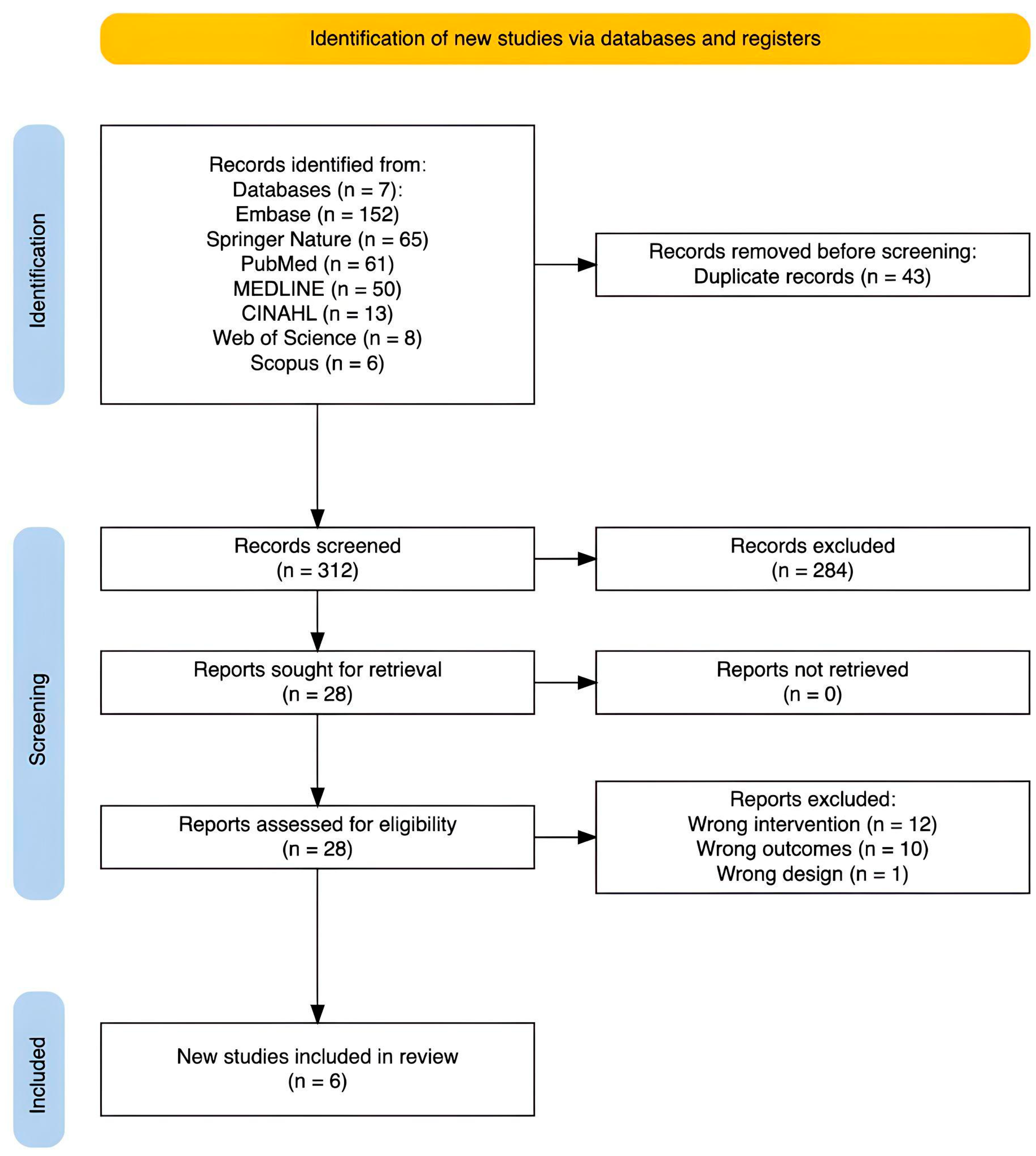
2.3. Study Screening
3. Results
3.1. Study Design and Sample Size
3.2. Sex
3.3. Age Range
3.4. Mindfulness Interventions
3.5. Visual Attention and Attentional Bias Measures
3.6. Studies with Additional Elements or Confounds
3.7. Risk of Bias
4. Discussion
4.1. Overview of Main Findings
4.2. Moderators of Attentional Bias and Mindfulness Effects
4.3. Clarifying Mechanisms of Change
4.4. Duration and Intensity of Training
4.5. Variability and Methodological Considerations
4.6. Strengths, Limitations, and Future Directions
5. Conclusions
Supplementary Materials
Author Contributions
Funding
Data Availability Statement
Conflicts of Interest
Abbreviations
| PRISMA | Preferred Reporting Items for Systematic Reviews and Meta-Analysis |
| PROSPERO | Prospective Register of Systematic Reviews |
| RCT | Randomised Controlled Trial |
References
- Clemente-Suárez, V.J.; Beltrán-Velasco, A.I.; Redondo-Flórez, L.; Martín-Rodríguez, A.; Tornero-Aguilera, J.F. Global Impacts of Western Diet and Its Effects on Metabolism and Health: A Narrative Review. Nutrients 2023, 15, 2749. [Google Scholar] [CrossRef] [PubMed]
- Kopp, W. How Western Diet and Lifestyle Drive the Pandemic of Obesity and Civilization Diseases. Diabetes Metab. Syndr. Obes. Targets Ther. 2019, 12, 2221–2236. [Google Scholar] [CrossRef]
- Rakhra, V.; Galappaththy, S.; Bulchandani, S.; Cabandugama, P.K. Obesity and the Western Diet: How We Got Here. Mo. Med. 2020, 117, 536. [Google Scholar]
- Rouhani, M.H.; Haghighatdoost, F.; Surkan, P.J.; Azadbakht, L. Associations between Dietary Energy Density and Obesity: A Systematic Review and Meta-Analysis of Observational Studies. Nutrition 2016, 32, 1037–1047. [Google Scholar] [CrossRef]
- Hall, K.D.; Ayuketah, A.; Brychta, R.; Cai, H.; Cassimatis, T.; Chen, K.Y.; Chung, S.T.; Costa, E.; Courville, A.; Darcey, V.; et al. Ultra-Processed Diets Cause Excess Calorie Intake and Weight Gain: An Inpatient Randomized Controlled Trial of Ad Libitum Food Intake. Cell Metab. 2019, 30, 67–77. [Google Scholar] [CrossRef]
- Attuquayefio, T.; Stevenson, R.J. A Systematic Review of Longer-Term Dietary Interventions on Human Cognitive Function: Emerging Patterns and Future Directions. Appetite 2015, 95, 554–570. [Google Scholar] [CrossRef]
- Attuquayefio, T.; Stevenson, R.J.; Boakes, R.A.; Oaten, M.J.; Yeomans, M.R.; Mahmut, M.; Francis, H.M. A High-Fat High-Sugar Diet Predicts Poorer Hippocampal-Related Memory and a Reduced Ability to Suppress Wanting under Satiety. J. Exp. Psychol. Anim. Learn. Cogn. 2016, 42, 415–428. [Google Scholar] [CrossRef]
- Attuquayefio, T.; Stevenson, R.J.; Oaten, M.J.; Francis, H.M. A Four-Day Western-Style Dietary Intervention Causes Reductions in Hippocampal-Dependent Learning and Memory and Interoceptive Sensitivity. PLoS ONE 2017, 12, e0172645. [Google Scholar] [CrossRef]
- Francis, H.M.; Stevenson, R.J. Higher Reported Saturated Fat and Refined Sugar Intake Is Associated with Reduced Hippocampal-Dependent Memory and Sensitivity to Interoceptive Signals. Behav. Neurosci. 2011, 125, 943–955. [Google Scholar] [CrossRef] [PubMed]
- Stevenson, R.J.; Francis, H.M.; Attuquayefio, T.; Gupta, D.; Yeomans, M.R.; Oaten, M.J.; Davidson, T. Hippocampal-Dependent Appetitive Control Is Impaired by Experimental Exposure to a Western-Style Diet. R. Soc. Open Sci. 2020, 7, 191338. [Google Scholar] [CrossRef] [PubMed]
- Hendrikse, J.J.; Cachia, R.L.; Kothe, E.J.; McPhie, S.; Skouteris, H.; Hayden, M.J. Attentional Biases for Food Cues in Overweight and Individuals with Obesity: A Systematic Review of the Literature. Obes. Rev. 2015, 16, 424–432. [Google Scholar] [CrossRef]
- Li, X.; Tao, Q.; Fang, Y.; Cheng, C.; Hao, Y.; Qi, J.; Li, Y.; Zhang, W.; Wang, Y.; Zhang, X. Reward Sensitivity Predicts Ice Cream-Related Attentional Bias Assessed by Inattentional Blindness. Appetite 2015, 89, 258–264. [Google Scholar] [CrossRef] [PubMed]
- Nansel, T.R.; Lipsky, L.M.; Eisenberg, M.H.; Haynie, D.L.; Liu, D.; Simons-Morton, B. Greater Food Reward Sensitivity Is Associated with More Frequent Intake of Discretionary Foods in a Nationally Representative Sample of Young Adults. Front. Nutr. 2016, 3, 33. [Google Scholar] [CrossRef]
- Werthmann, J.; Roefs, A.; Nederkoorn, C.; Mogg, K.; Bradley, B.P.; Jansen, A. Can(Not) Take My Eyes off It: Attention Bias for Food in Overweight Participants. Health Psychol. 2011, 30, 561–569. [Google Scholar] [CrossRef]
- MacLeod, C.; Mathews, A.; Tata, P. Attentional Bias in Emotional Disorders. J. Abnorm. Psychol. 1986, 95, 15–20. [Google Scholar] [CrossRef]
- Sharpe, B.T.; Halls, M.; Gladwin, T.E. The Rise and Fall of the Dot-Probe Task: Opportunities for Metascientific Learning. Seeds Sci. 2022. [Google Scholar] [CrossRef]
- Lender, A.; Meule, A.; Rinck, M.; Brockmeyer, T.; Blechert, J. Measurement of Food-Related Approach–Avoidance Biases: Larger Biases When Food Stimuli Are Task Relevant. Appetite 2018, 125, 42–47. [Google Scholar] [CrossRef]
- Kahveci, S.; Meule, A.; Lender, A.; Blechert, J. Food Approach Bias Is Moderated by the Desire to Eat Specific Foods. Appetite 2020, 154, 104758. [Google Scholar] [CrossRef]
- Hagan, K.E.; Alasmar, A.; Exum, A.; Chinn, B.; Forbush, K.T. A Systematic Review and Meta-Analysis of Attentional Bias toward Food in Individuals with Overweight and Obesity. Appetite 2020, 151, 104710. [Google Scholar] [CrossRef] [PubMed]
- Puurtinen, M.; Hoppu, U.; Puputti, S.; Mattila, S.; Sandell, M. Investigating Visual Attention toward Foods in a Salad Buffet with Mobile Eye Tracking. Food Qual. Prefer. 2021, 93, 104290. [Google Scholar] [CrossRef]
- Strack, F.; Deutsch, R. Reflective and Impulsive Determinants of Social Behavior. Personal. Soc. Psychol. Rev. 2004, 8, 220–247. [Google Scholar] [CrossRef]
- Booth, C.; Spronk, D.; Grol, M.; Fox, E. Uncontrolled Eating in Adolescents: The Role of Impulsivity and Automatic Approach Bias for Food. Appetite 2018, 120, 636–643. [Google Scholar] [CrossRef]
- Van Malderen, E.; Kemps, E.; Claes, L.; Verbeken, S.; Goossens, L. A Dual-Pathway Perspective on Food Choices in Adolescents: The Role of Loss of Control Over Eating. Front. Psychol. 2021, 12, 630000. [Google Scholar] [CrossRef]
- Jones, S.R.; Fordahl, S.C. Bingeing on High-Fat Food Enhances Evoked Dopamine Release and Reduces Dopamine Uptake in the Nucleus Accumbens. Obesity 2021, 29, 721–730. [Google Scholar] [CrossRef] [PubMed]
- Ziauddeen, H.; Alonso-Alonso, M.; Hill, J.O.; Kelley, M.; Khan, N.A. Obesity and the Neurocognitive Basis of Food Reward and the Control of Intake. Adv. Nutr. 2015, 6, 474–486. [Google Scholar] [CrossRef] [PubMed]
- Castellanos, E.H.; Charboneau, E.; Dietrich, M.S.; Park, S.; Bradley, B.P.; Mogg, K.; Cowan, R.L. Obese Adults Have Visual Attention Bias for Food Cue Images: Evidence for Altered Reward System Function. Int. J. Obes. 2009, 33, 1063–1073. [Google Scholar] [CrossRef] [PubMed]
- March, J.; Gluth, S. The Hungry Lens: Hunger Shifts Attention and Attribute Weighting in Dietary Choice. eLife 2024, 13, RP103736. [Google Scholar] [CrossRef]
- Francis, H.; Stevenson, R. The Longer-Term Impacts of Western Diet on Human Cognition and the Brain. Appetite 2013, 63, 119–128. [Google Scholar] [CrossRef]
- Jacka, F.N.; Cherbuin, N.; Anstey, K.J.; Sachdev, P.; Butterworth, P. Western Diet Is Associated with a Smaller Hippocampus: A Longitudinal Investigation. BMC Med. 2015, 13, 215. [Google Scholar] [CrossRef]
- Pursey, K.M.; Stanwell, P.; Callister, R.J.; Brain, K.; Collins, C.E.; Burrows, T.L. Neural Responses to Visual Food Cues According to Weight Status: A Systematic Review of Functional Magnetic Resonance Imaging Studies. Front. Nutr. 2014, 1, 7. [Google Scholar] [CrossRef]
- Brockmeyer, T.; Skunde, M.; Wu, M.; Bresslein, E.; Rudofsky, G.; Herzog, W.; Friederich, H.-C. Difficulties in Emotion Regulation across the Spectrum of Eating Disorders. Compr. Psychiatry 2014, 55, 565–571. [Google Scholar] [CrossRef]
- Woo, J.; Lee, G.-E.; Lee, J.-H. Attentional Bias for High-Calorie Food Cues by the Level of Hunger and Satiety in Individuals with Binge Eating Behaviors. Front. Neurosci. 2023, 17, 1149864. [Google Scholar] [CrossRef]
- Berridge, K.C. ‘Liking’ and ‘Wanting’ Food Rewards: Brain Substrates and Roles in Eating Disorders. Physiol. Behav. 2009, 97, 537–550. [Google Scholar] [CrossRef] [PubMed]
- Kakoschke, N.; Kemps, E.; Tiggemann, M. Attentional Bias Modification Encourages Healthy Eating. Eat. Behav. 2014, 15, 120–124. [Google Scholar] [CrossRef] [PubMed]
- Mason, A.E.; Epel, E.S.; Aschbacher, K.; Lustig, R.H.; Acree, M.; Kristeller, J.; Cohn, M.; Dallman, M.; Moran, P.J.; Bacchetti, P.; et al. Reduced Reward-Driven Eating Accounts for the Impact of a Mindfulness-Based Diet and Exercise Intervention on Weight Loss: Data from the SHINE Randomized Controlled Trial. Appetite 2016, 100, 86–93. [Google Scholar] [CrossRef]
- Nelson, J.B. Mindful Eating: The Art of Presence While You Eat. Diabetes Spectr. 2017, 30, 171–174. [Google Scholar] [CrossRef]
- Tapper, K. Mindfulness and Craving: Effects and Mechanisms. Clin. Psychol. Rev. 2018, 59, 101–117. [Google Scholar] [CrossRef]
- Kabat-Zinn, J. Mindfulness-Based Interventions in Context: Past, Present, and Future. Clin. Psychol. Sci. Pract. 2003, 10, 145. [Google Scholar] [CrossRef]
- Allirot, X.; Miragall, M.; Perdices, I.; Baños, R.M.; Urdaneta, E.; Cebolla, A. Effects of a Brief Mindful Eating Induction on Food Choices and Energy Intake: External Eating and Mindfulness State as Moderators. Mindfulness 2017, 9, 750–760. [Google Scholar] [CrossRef]
- Papies, E.K.; Barsalou, L.W.; Custers, R. Mindful Attention Prevents Mindless Impulses. Soc. Psychol. Personal. Sci. 2011, 3, 291–299. [Google Scholar] [CrossRef]
- Tapper, K. Mindful Eating: What We Know so Far. Nutr. Bull. 2022, 47, 168–185. [Google Scholar] [CrossRef]
- Warren, J.M.; Smith, N.; Ashwell, M. A Structured Literature Review on the Role of Mindfulness, Mindful Eating and Intuitive Eating in Changing Eating Behaviours: Effectiveness and Associated Potential Mechanisms. Nutr. Res. Rev. 2017, 30, 272–283. [Google Scholar] [CrossRef] [PubMed]
- Page, M.J.; McKenzie, J.E.; Bossuyt, P.M.; Boutron, I.; Hoffmann, T.C.; Mulrow, C.D.; Shamseer, L.; Tetzlaff, J.M.; Akl, E.A.; Brennan, S.E.; et al. The PRISMA 2020 Statement: An Updated Guideline for Reporting Systematic Reviews. Br. Med. J. 2021, 372, n71. [Google Scholar] [CrossRef]
- Hussain, M.; Unchiasu, M.; Wood, J.; Samways, N.; Keyte, R.; Egan, H.; Mantzios, M. Exploring Mindfulness and Mindful Eating and Visual Attention Towards Food Cues: Preliminary Findings. J. Cogn. Enhanc. 2022, 6, 402–416. [Google Scholar] [CrossRef]
- Mercado, D.; Werthmann, J.; Antunes-Duarte, T.; Campbell, I.C.; Schmidt, U. A Randomised Controlled Feasibility Study of Food-Related Computerised Attention Training versus Mindfulness Training and Waiting-List Control for Adults with Overweight or Obesity: The FOCUS Study. J. Eat. Disord. 2023, 11, 61. [Google Scholar] [CrossRef]
- Alamout, M.M.; Rahmanian, M.; Aghamohammadi, V.; Mohammadi, E.; Nasiri, K. Effectiveness of Mindfulness Based Cognitive Therapy on Weight Loss, Improvement of Hypertension and Attentional Bias to Eating Cues in Overweight People. Int. J. Nurs. Sci. 2020, 7, 35–40. [Google Scholar] [CrossRef] [PubMed]
- Baquedano, C.; Vergara, R.; Lopez, V.; Fabar, C.; Cosmelli, D.; Lutz, A. Compared to Self-Immersion, Mindful Attention Reduces Salivation and Automatic Food Bias. Sci. Rep. 2017, 7, 13839. [Google Scholar] [CrossRef] [PubMed]
- Thomas, E.A.; Mijangos, J.L.; Hansen, P.A.; White, S.; Walker, D.; Reimers, C.; Beck, A.C.; Garland, E.L. Mindfulness-Oriented Recovery Enhancement Restructures Reward Processing and Promotes Interoceptive Awareness in Overweight Cancer Survivors: Mechanistic Results from a Stage 1 Randomized Controlled Trial. Integr. Cancer Ther. 2019, 18, 153473541985513. [Google Scholar] [CrossRef]
- Critical Appraisal Skills Programme Randomised Controlled Trials (RCTs) Checklist—CASP. Available online: https://casp-uk.net/casp-tools-checklists/randomised-controlled-trial-rct-checklist/ (accessed on 1 January 2025).
- van Ens, W.; Schmidt, U.; Campbell, I.C.; Roefs, A.; Werthmann, J. Test-Retest Reliability of Attention Bias for Food: Robust Eye-Tracking and Reaction Time Indices. Appetite 2019, 136, 86–92. [Google Scholar] [CrossRef]

| Author, Year, Country | Participant Population (N, Age, % Sex, BMI) | Clinical/Non-clinical | Study Design, Experimental Conditions | Blinding Reported | Mindfulness Intervention | Intervention Duration | Mechanism Assessed (Primary) | Measurement Tool(s) | Follow-Up Period | Key Findings | Ecological Validity (Lab/Real World) |
|---|---|---|---|---|---|---|---|---|---|---|---|
| Hussain et al. 2022 [44] England Study 1 | N = 20, 75% female. Age 21.85 ± 3.18 BMI = 22.8 ± 5.14 | Non-clinical | Between-subjects experiment (RCT) | Not reported | Mindfulness meditation (MM) | Single session | Visual attention and attentional bias | Screen-based eye- tracking (Tobii Pro X3-120) Metrics: Gaze duration, average fixation duration (ms), total fixation duration (ms). | None | MM increased state mindfulness and showed greater maintained attention toward LED food images vs. HED food images compared to control. | Lab |
| Hussain et al. 2022 [44] England Study 2 | N = 44, 86.36% female. Age 23.61 ± 6.87 BMI = 24.44 ± 4.67 | Non-clinical | Between-subjects experiment (RCT) | Not reported | Mindful construal diary (MCD-R) | Single session | State mindfulness and attentional bias | Screen-based eye-tracking (Tobii Pro X3-120) Metrics: Gaze directional bias, gaze duration bias, average fixation duration (ms), total fixation duration (ms). | None | The MCD increased state mindfulness but did not change maintained attentional bias to food relative to control. Participants displayed greater attentional bias towards HED food images compared to LED food images. | Lab |
| Mercado et al. 2023 [45] England | N = 45, 78% female. Age 31.6 years. BMI = 34.4 ± 6.57 | Clinical | Between-subjects (RCT) | Not reported | Mindfulness training (MT) and attentional bias modification training (ABMT) | 8 weeks | Attentional bias and hedonic hunger | Dot-probe task + eye-tracking (Tobii Pro Fusion remote eye-tracking) Metrics: RT differences (ms) + initial fixation duration bias (ms), fixation duration (ms), saccadic latency (ms). | 4 weeks | Only ABMT significantly reduced attentional bias toward HED foods. MT increased ME and decreased hedonic hunger, emotional eating, and disinhibition. | Lab |
| Alamout et al. 2020 [46] Iran | N = 45, not reported, 100% female BMI = 27.28 ± 1.35 | Non-clinical | Between-subjects design (RCT) | No | Mindfulness-based cognitive therapy (MBCT) | 8 weeks | Attentional bias | Dot-probe task Metrics: RT differences (ms) | 4 weeks | MBCT along with the conventional diet therapy was more effective in decreasing attentional bias towards food cues than the diet therapy alone. | Lab |
| Baquedano et al. 2017 [47] Chile | N = 50, 54% female. Age 23.9 ± 3.5, range 18–35 | Non-clinical | Within-subjects design (RCT) | Not reported | Mindfulness attention (MA) induction task | Single session | Attentional bias and physiological response | Approach–avoidance task (AAT) Metrics: RT differences (ms) | None | MA showed a significant reduction in food approach bias to HED food compared to the immersed condition. | Lab |
| Thomas et al. 2019 [48] United States | N = 51, 100% female. Age 57.92 ± 10.04, BMI = 34.69 ± 7.39 | Clinical | Mixed-subjects, stage I pilot (RCT) | No | Mindfulness-oriented recovery enhancement (MORE) and personalised optimism with exercise recovery (POWER) | 10 weeks | Interoceptive awareness and attentional bias | Dot-probe task Metrics: Mean RT differences (ms) towards food vs. neutral image pairs (64 trial/block). | Post-test only | MORE + POWER decreased automatic FAB (50 ms cues) towards food images compared to POWER. | Lab–clinical hybrid |
Disclaimer/Publisher’s Note: The statements, opinions and data contained in all publications are solely those of the individual author(s) and contributor(s) and not of MDPI and/or the editor(s). MDPI and/or the editor(s) disclaim responsibility for any injury to people or property resulting from any ideas, methods, instructions or products referred to in the content. |
© 2025 by the authors. Licensee MDPI, Basel, Switzerland. This article is an open access article distributed under the terms and conditions of the Creative Commons Attribution (CC BY) license (https://creativecommons.org/licenses/by/4.0/).
Share and Cite
Duffy, R.; Attuquayefio, T. The Impact of Mindfulness Interventions upon Visual Attention and Attentional Bias Towards Food Cues: A Systematic Review. Nutrients 2025, 17, 3885. https://doi.org/10.3390/nu17243885
Duffy R, Attuquayefio T. The Impact of Mindfulness Interventions upon Visual Attention and Attentional Bias Towards Food Cues: A Systematic Review. Nutrients. 2025; 17(24):3885. https://doi.org/10.3390/nu17243885
Chicago/Turabian StyleDuffy, Ryan, and Tuki Attuquayefio. 2025. "The Impact of Mindfulness Interventions upon Visual Attention and Attentional Bias Towards Food Cues: A Systematic Review" Nutrients 17, no. 24: 3885. https://doi.org/10.3390/nu17243885
APA StyleDuffy, R., & Attuquayefio, T. (2025). The Impact of Mindfulness Interventions upon Visual Attention and Attentional Bias Towards Food Cues: A Systematic Review. Nutrients, 17(24), 3885. https://doi.org/10.3390/nu17243885

