Article

Effects of Vitamin D Supplementation and a Cafeteria Diet on Various Parameters in the Next Generation of Rats with Metabolic Syndrome


by
İsmail Caner Yavuz
1,* and
Betül Çiçek
2
1
Department of Health Care Services, Vocational Health College, Süleyman Demirel University, Isparta 32260, Türkiye
2
Department of Nutrition and Dietetics, Faculty of Health Sciences, Erciyes University, Kayseri 38280, Türkiye
*
Author to whom correspondence should be addressed.
Nutrients 2024, 16(21), 3781; https://doi.org/10.3390/nu16213781
Submission received: 23 September 2024 / Revised: 28 October 2024 / Accepted: 30 October 2024 / Published: 4 November 2024
(This article belongs to the Topic Metabolic Syndrome, Biomarkers and Lifestyles)

Abstract

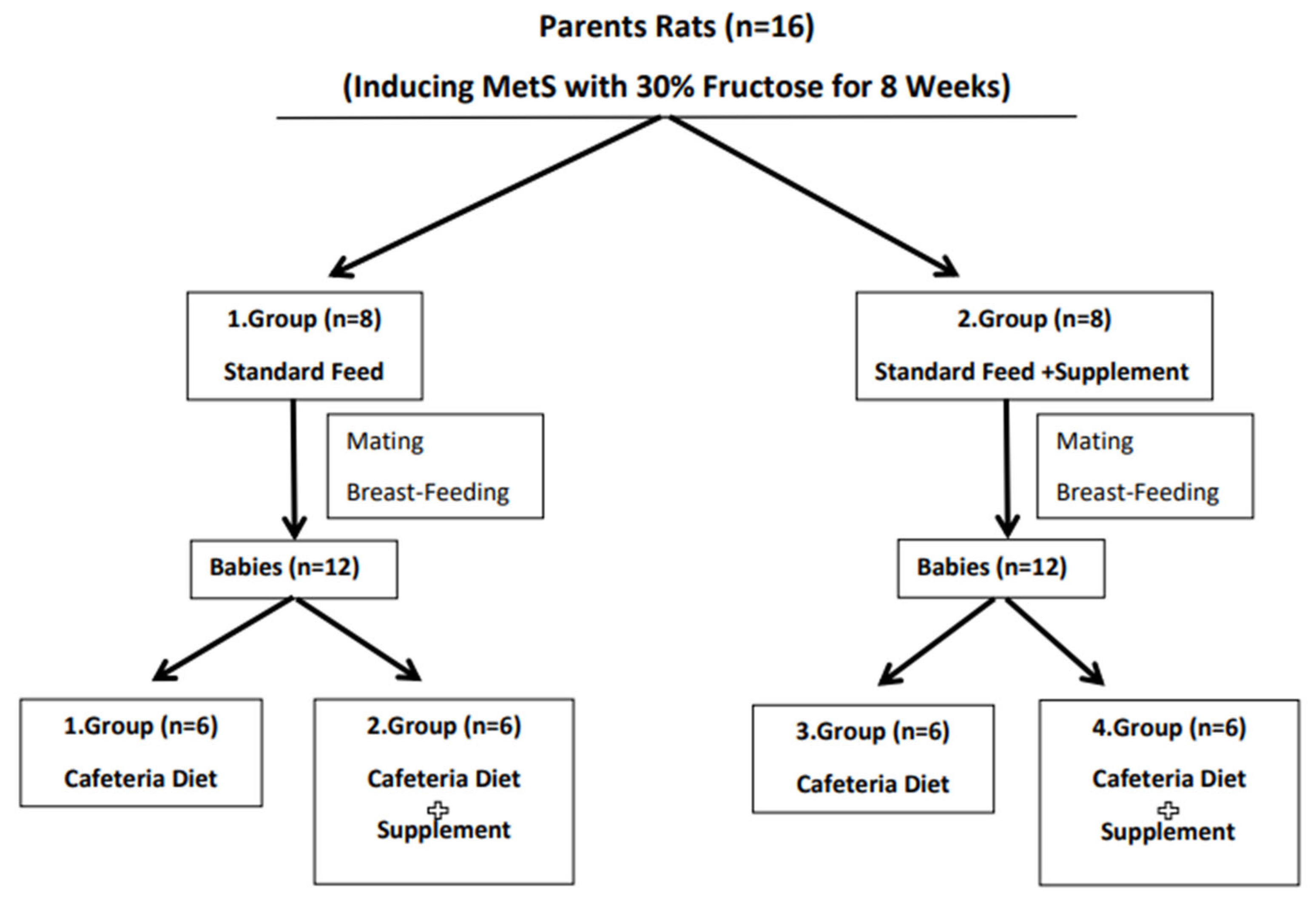
Background/Objectives: Metabolic Syndrome (MetS) is an increasingly widespread public health problem worldwide. MetS is associated with a cafeteria diet characterized by high fat and high simple carbohydrates. A cafeteria diet significantly affects serum glucose, creatine, urea, triglyceride, cholesterol and MetS parameters such as ALT, AST and ALP. Due to its epigenetic effects, vitamin D is important in controlling MetS parameters and minimizing MetS findings in subsequent generations. Methods: In this study, the effect of weekly 0.3 mL (1.000 IU/week) vitamin D intervention on MetS parameters was investigated in parental rats developing high-fructose MetS and their offspring. Offspring of MetS rats receiving and not receiving vitamin D supplementation were divided into four different groups and exposed to a cafeteria diet and vitamin D supplementation for eight weeks. Results: It was shown that parental rats in the intervention group had lower serum urea, glucose, creatine, total cholesterol, ALP, AST and ALT levels (p < 0.05). Serum urea, glucose, creatine, ALT, AST, ALP, triglyceride, total cholesterol levels and body weights were lower and HDL levels were higher in the offspring (p < 0.05). However, initial serum ALT and AST values were higher in the offspring of MetS parent rats receiving vitamin D supplementation and in the offspring of rats not receiving supplementation than in the offspring of supplemented parents. Conclusions: In conclusion, it was found that vitamin D supplementation improved MetS parameters in parent rats, positively affected MetS parameters in offspring rats despite an inadequate diet, and positively affected some MetS parameters by affecting epigenetic pathways in offspring born to MetS mothers.
Keywords: metabolic syndrome; cafeteria diet; vitamin D; fasting serum glucose; obesity metabolic syndrome; cafeteria diet; vitamin D; fasting serum glucose; obesity