Article

A Case Study of Wave–Wave Interaction South to Dongsha Island in the South China Sea

1
College of Marine Technology and Environment, Dalian Ocean University, Dalian 116023, China
2
Frontier Science Center for Deep Ocean Multispheres and Earth System (FDOMES) and Physical Oceanography Laboratory, Ocean University of China, Qingdao 266100, China
3
School of Mathematical Sciences, Ocean University of China, Qingdao 266100, China
*
Author to whom correspondence should be addressed.
Remote Sens. 2024, 16(2), 337; https://doi.org/10.3390/rs16020337
Submission received: 22 November 2023 / Revised: 29 December 2023 / Accepted: 8 January 2024 / Published: 15 January 2024

Abstract

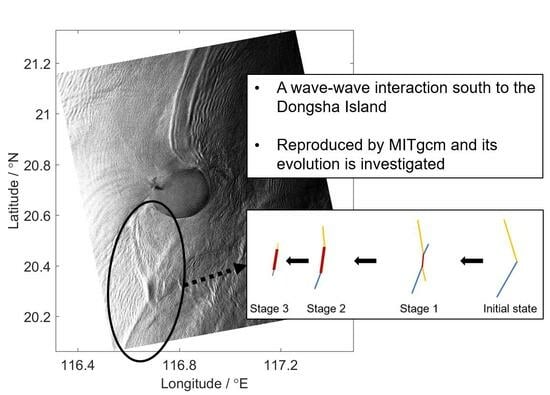
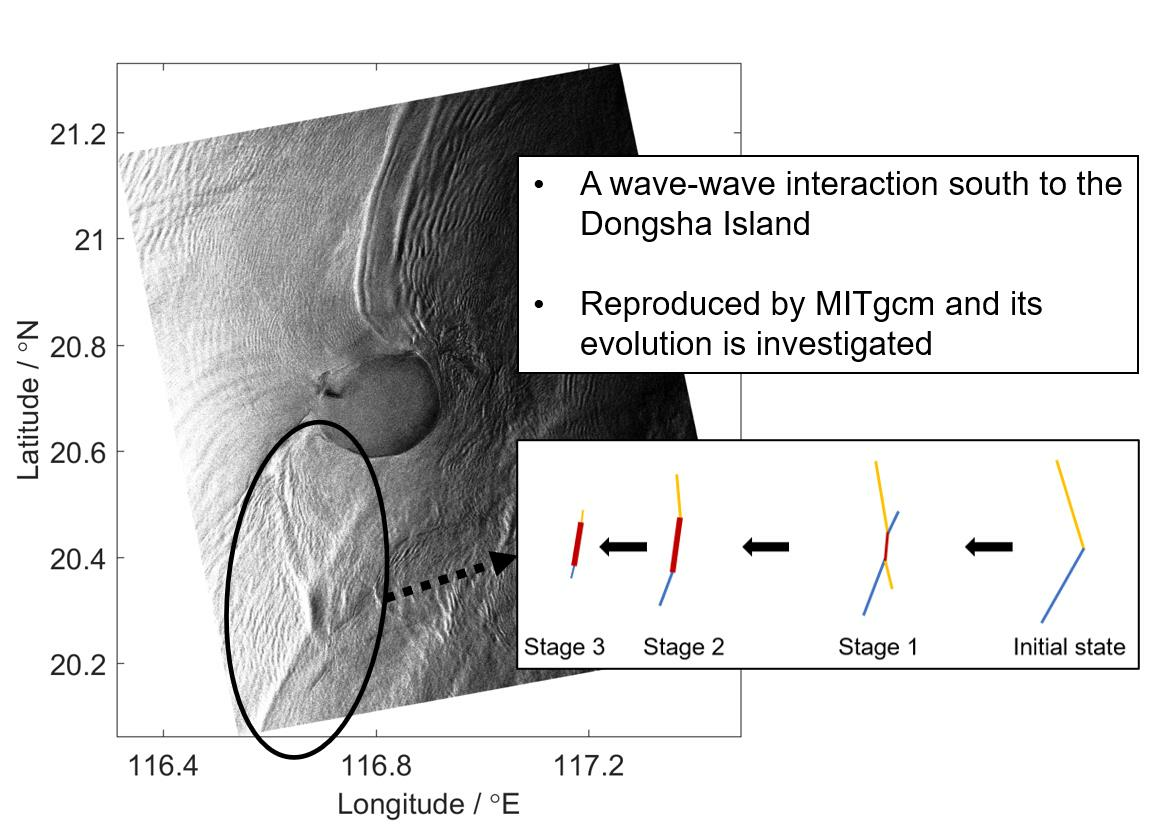
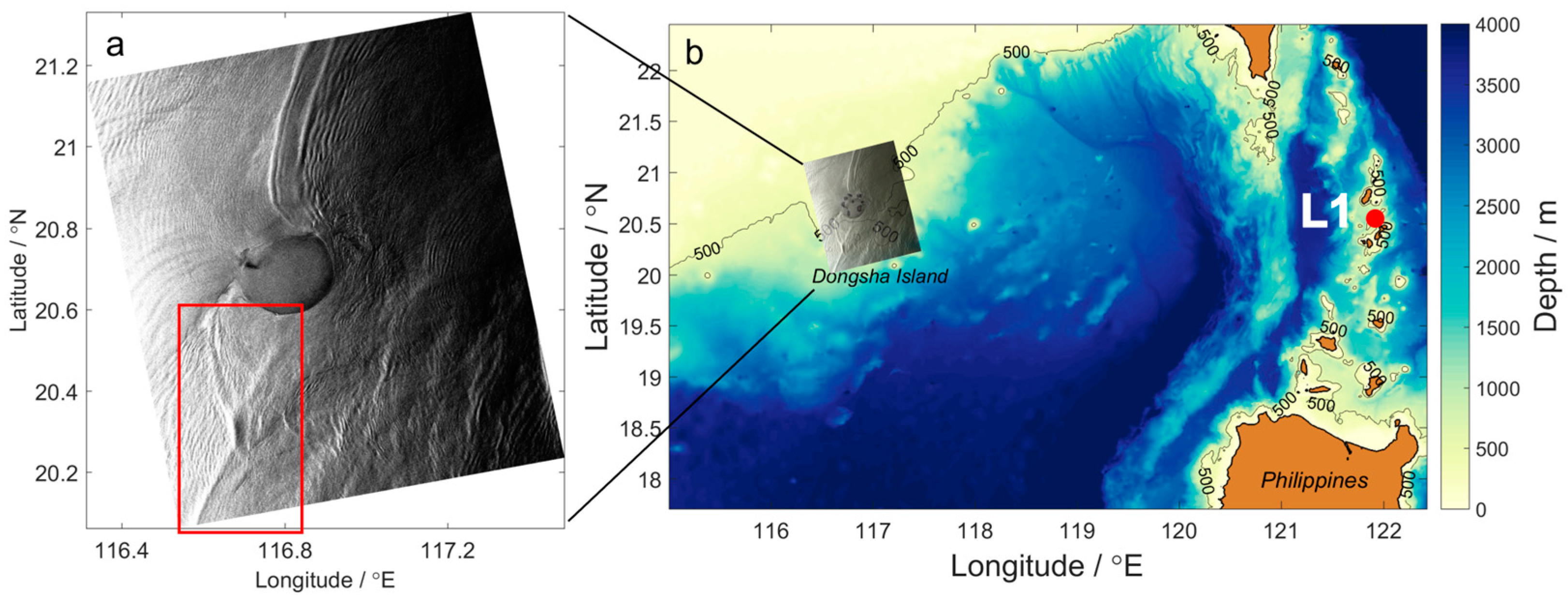
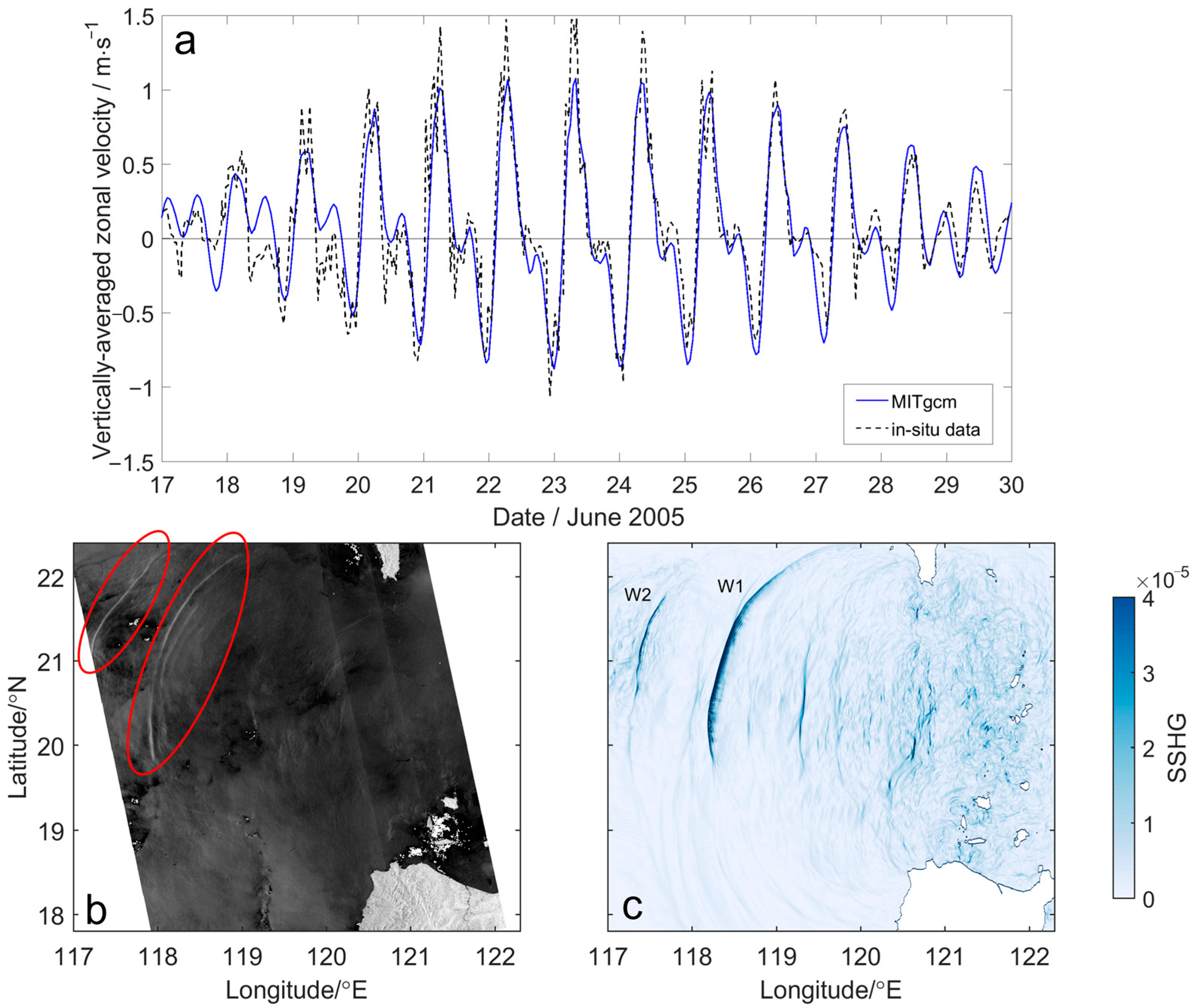
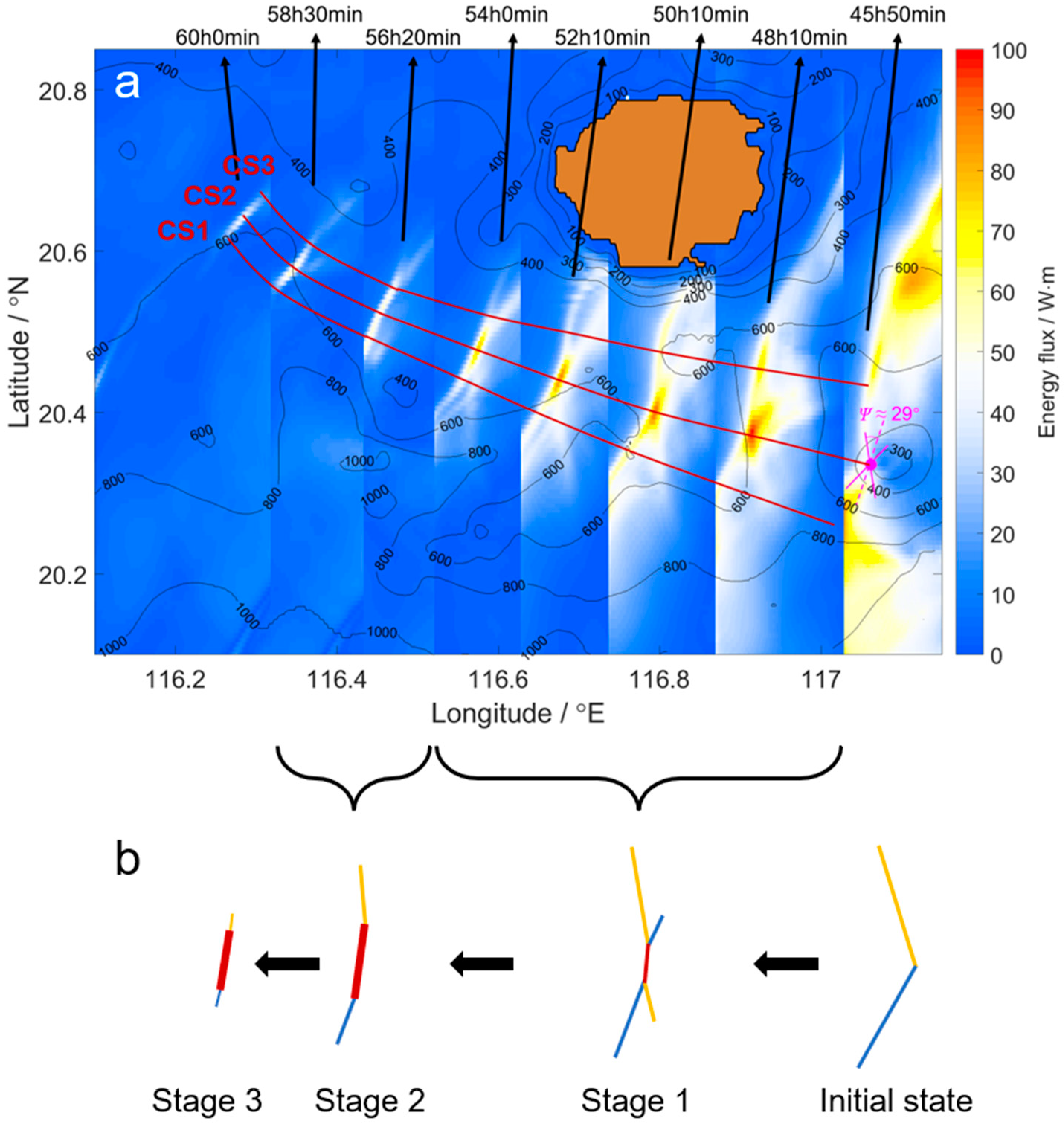
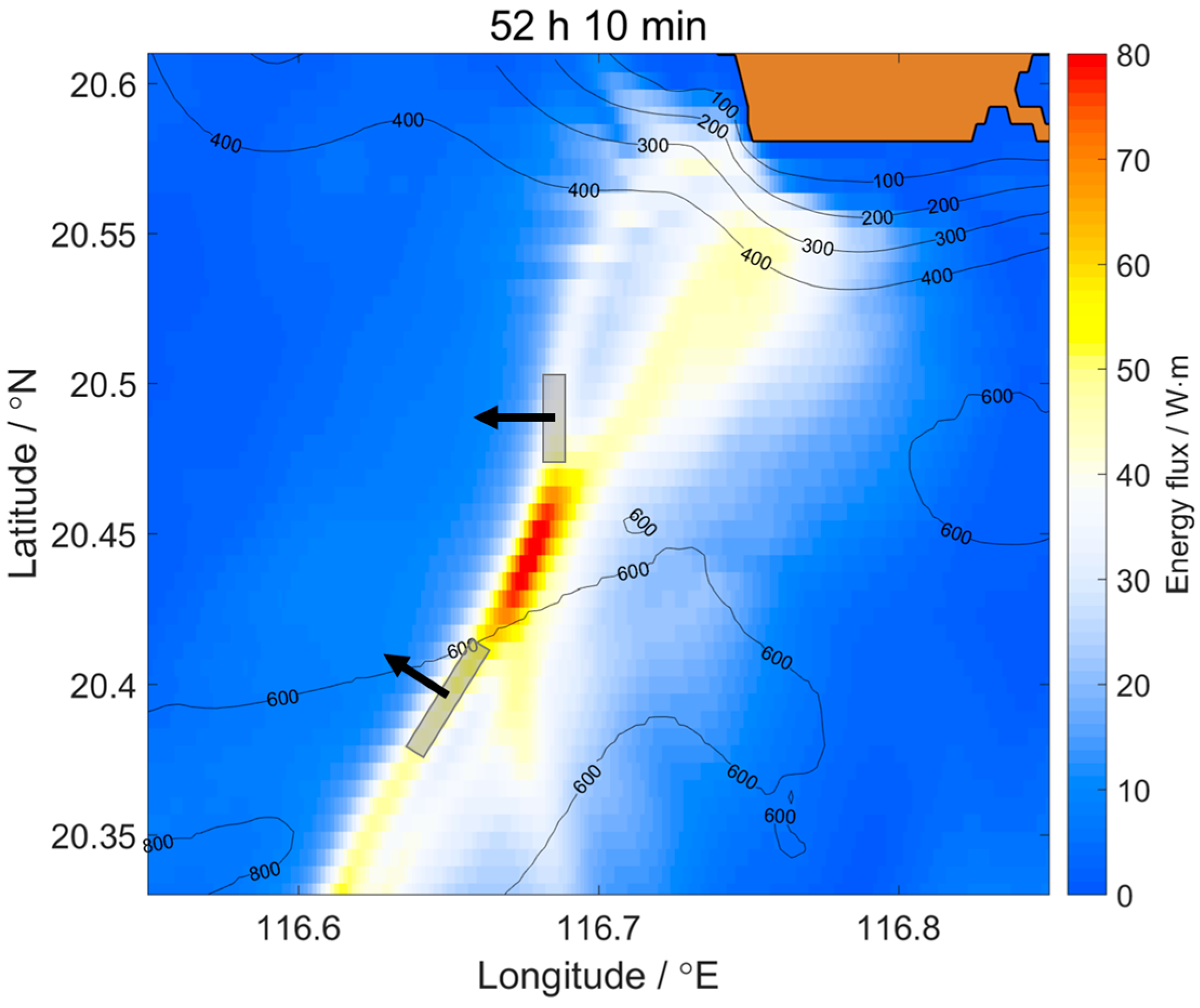
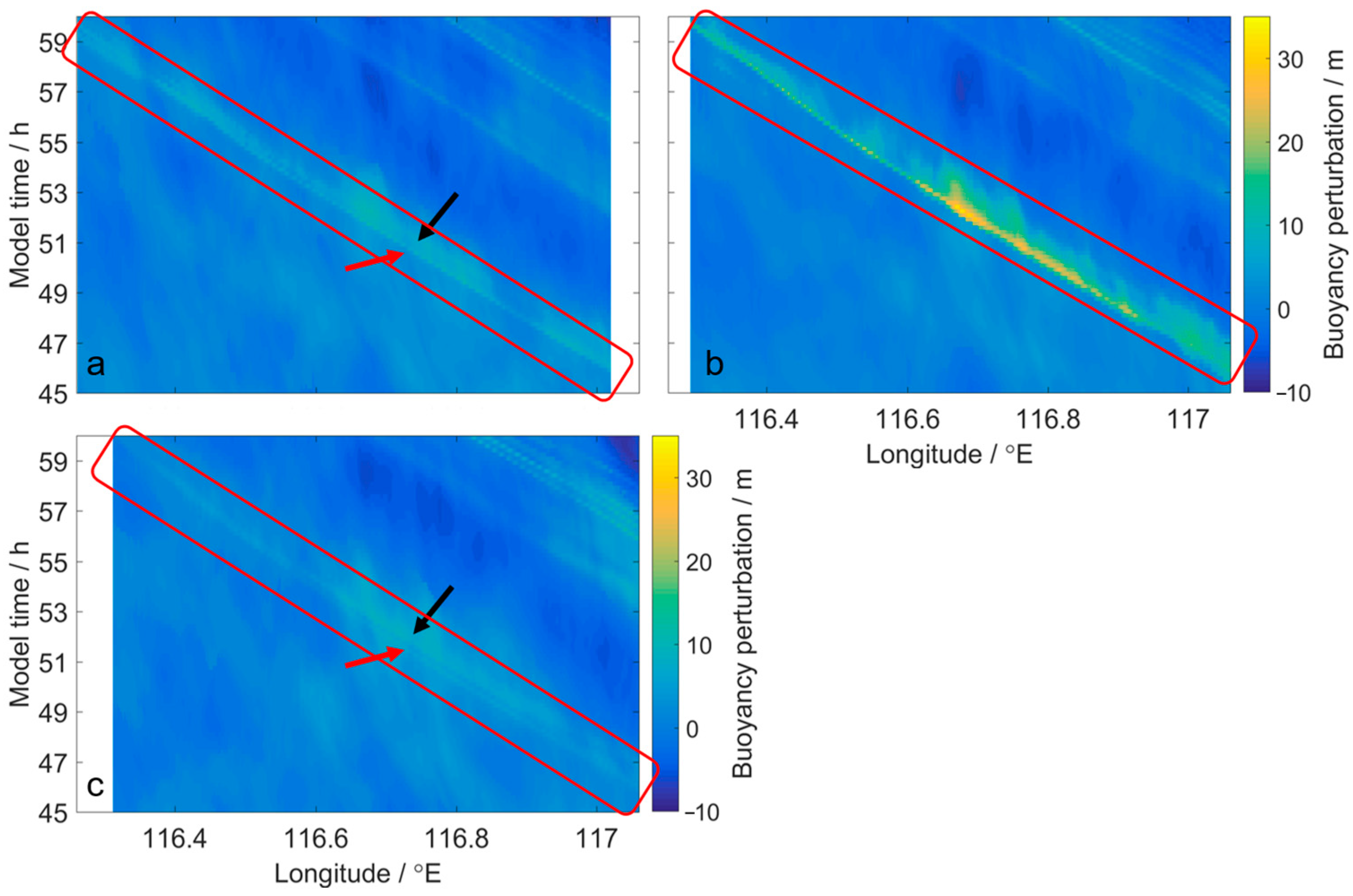
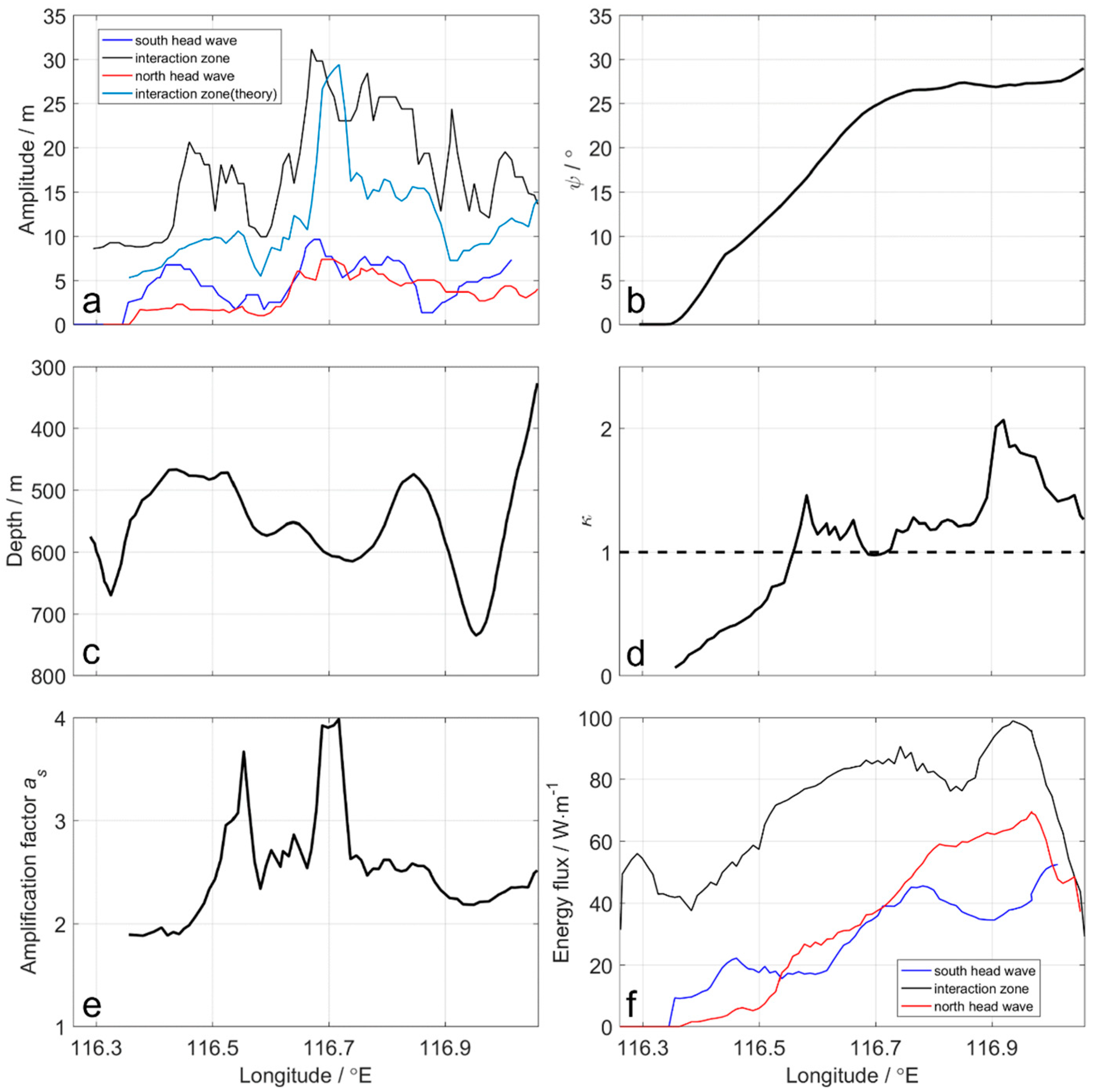
In a SAR image acquired by the ERS-2 satellite, crossed “X-shape” internal solitary waves (ISWs) south to Dongsha Island are found to be a wave–wave interaction composed of five solitons: two head waves, two tail waves, and the overlapped part. To explain this remote sensing phenomenon, based on a high-resolution three-dimensional MIT general circulation model (MITgcm) using realistic topography and tidal forcing, the “X-shape” internal waves are reproduced at the same location. The development processes of the waves indicate that the “X-shape” ISWs are two waves diffracted from one internal wave southeast to Dongsha Island. During the propagation, the amplitude of their overlapped part of the “X-shape” ISWs becomes significantly larger than the sum of the amplitudes of both head waves, which proves that nonlinear wave–wave interaction has occurred. Based on wave–wave interaction theory, the theoretical maximum value of the amplitude of the overlapped part at the initial moment is calculated as 14.12 m, which is in good agreement with the model results of 14 m. Meanwhile, the variation of the theoretical amplitude of the overlapped part is basically consistent with that of the modeled one, confirming the occurrence of the wave–wave interaction. Besides, when the waves propagate over varying water depths, the type of the wave–wave interaction can change rather than being fixed from the start.
Keywords: oceanic internal wave; wave–wave interaction; numerical model; satellite remote sensing oceanic internal wave; wave–wave interaction; numerical model; satellite remote sensing
Graphical Abstract