Article

Study of the OLR Anomalies before the 2023 Turkey M7.8 Earthquake

1
School of Ecological Environment, Institute of Disaster Prevention, Sanhe 065201, China
2
National Institute of Natural Hazards, Ministry of Emergency Management of the People’s Republic of China, Beijing 100085, China
3
Department of Geophysics, School Earth and Space Sciences, Peking University, Beijing 100091, China
4
China Earthquake Networks Center, Beijing 100045, China
5
National Space Science Center, Chinese Academy of Sciences, Beijing 100190, China
*
Author to whom correspondence should be addressed.
Remote Sens. 2023, 15(21), 5078; https://doi.org/10.3390/rs15215078
Submission received: 23 August 2023 / Revised: 19 October 2023 / Accepted: 20 October 2023 / Published: 24 October 2023

Abstract

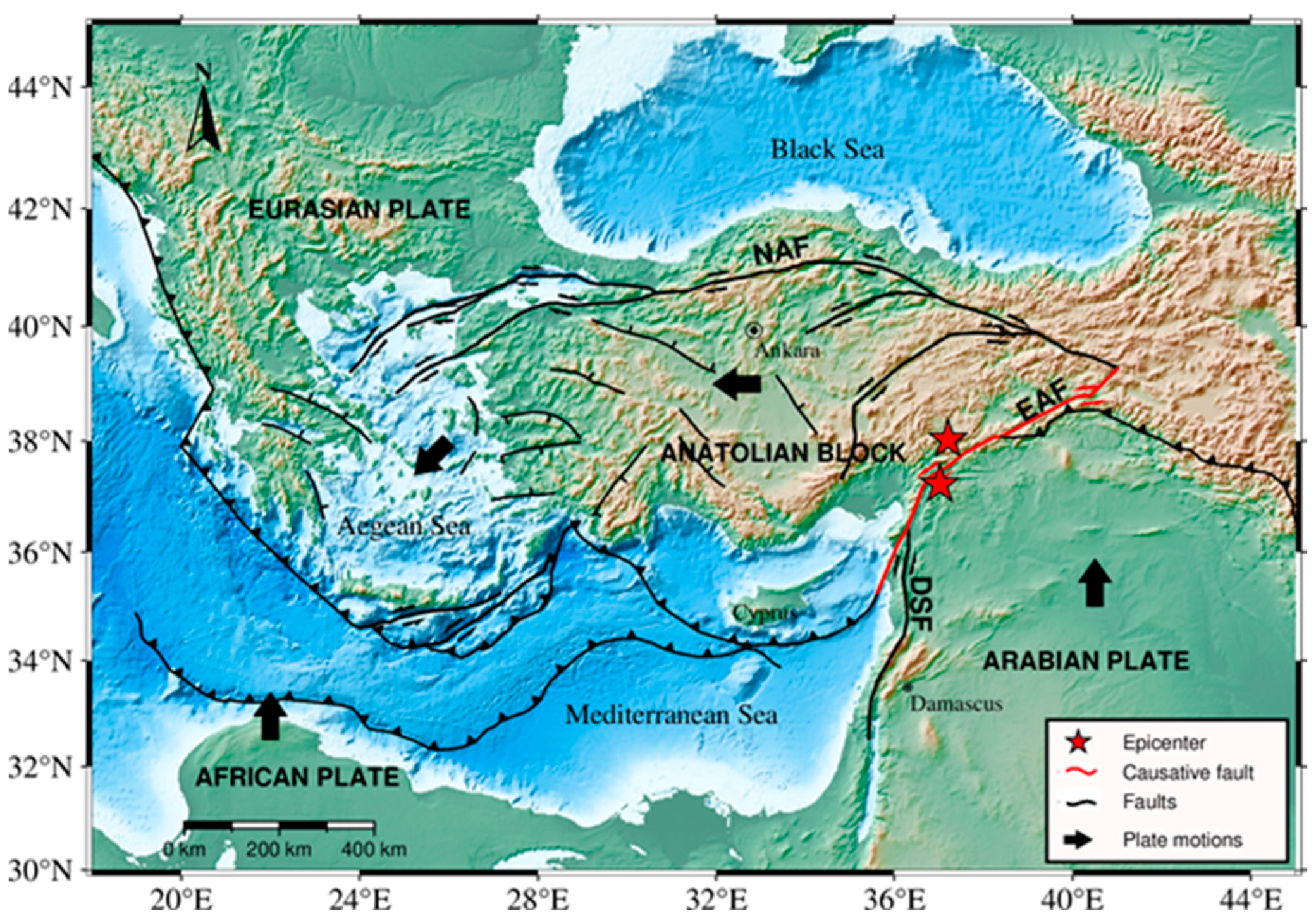
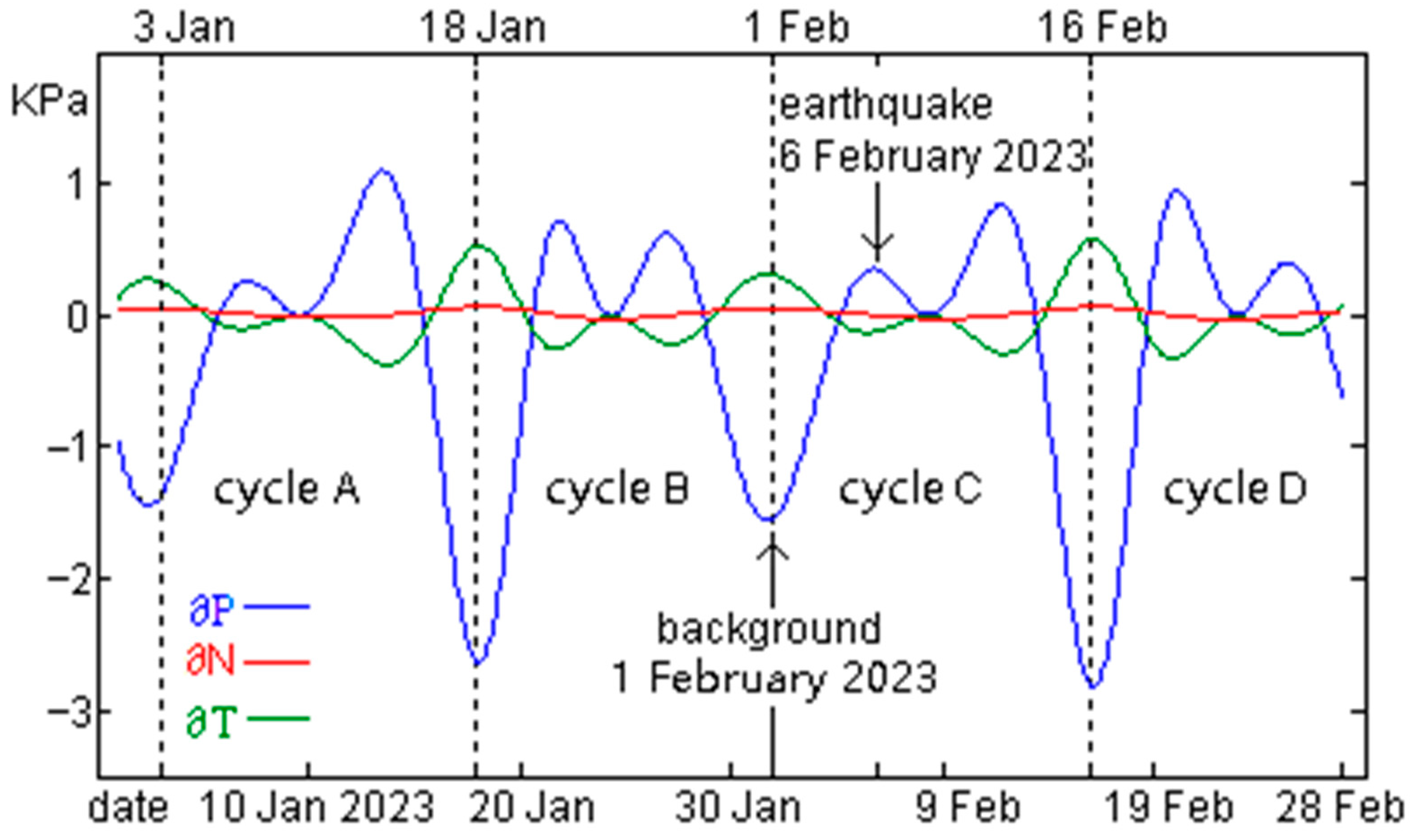
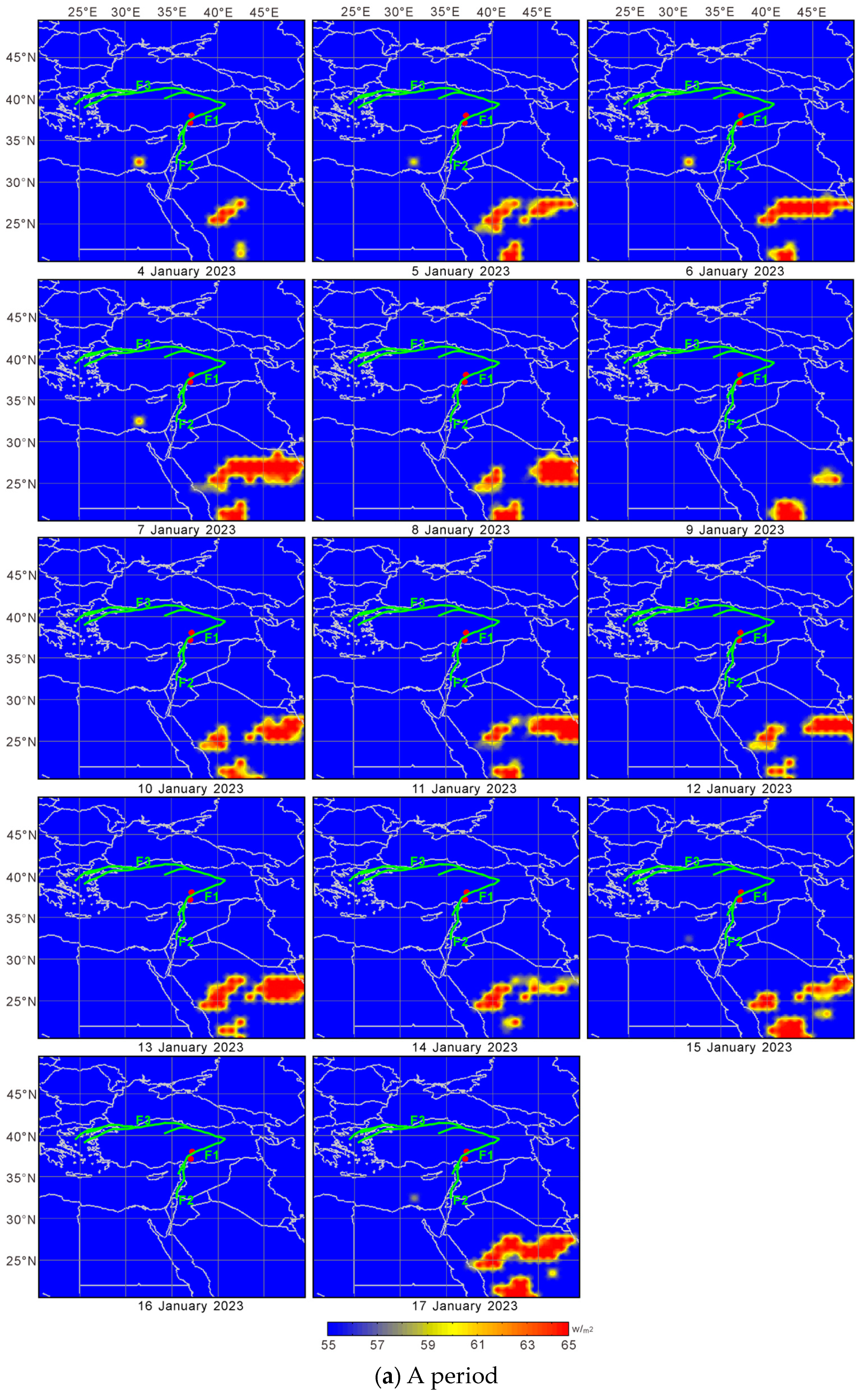
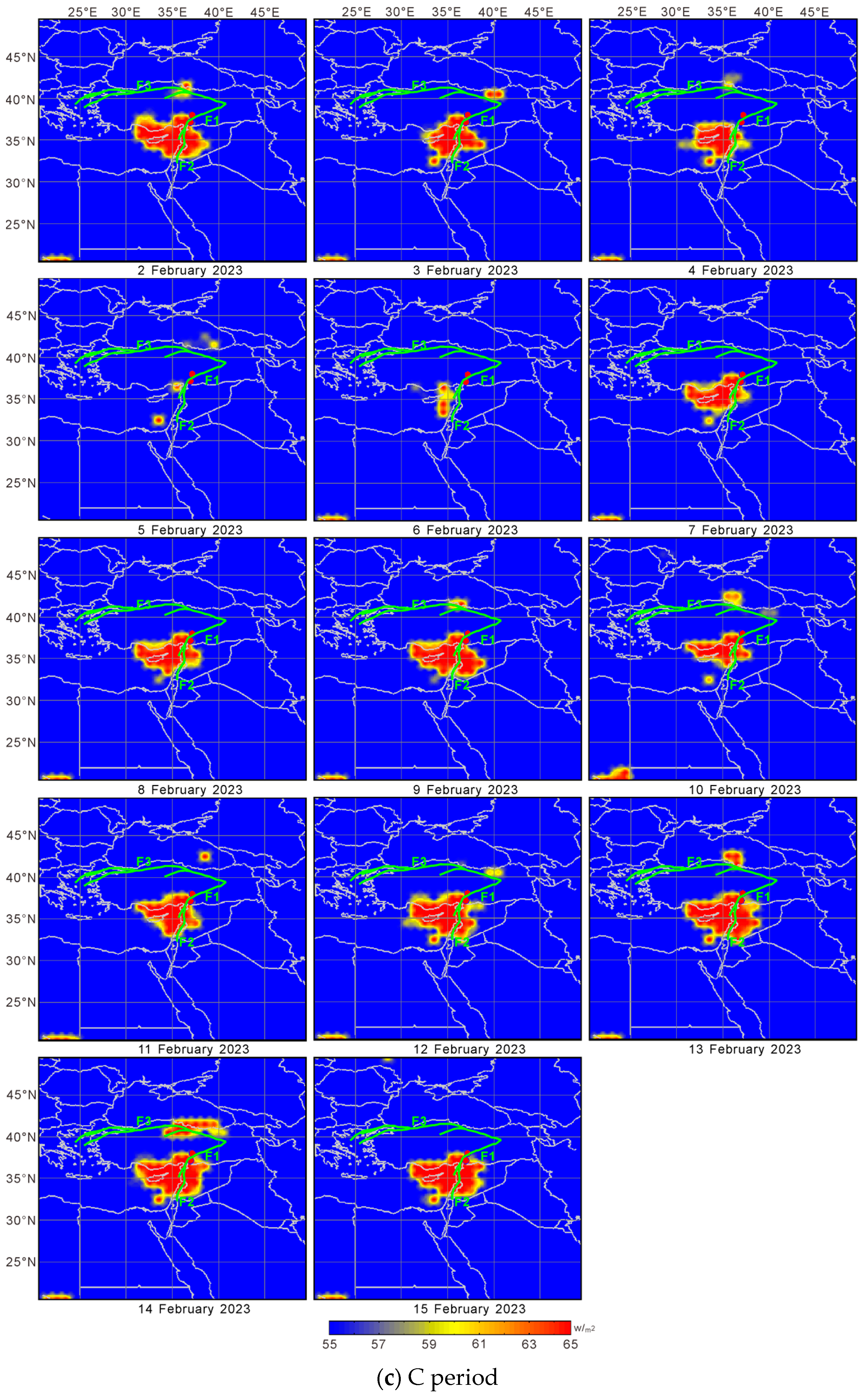
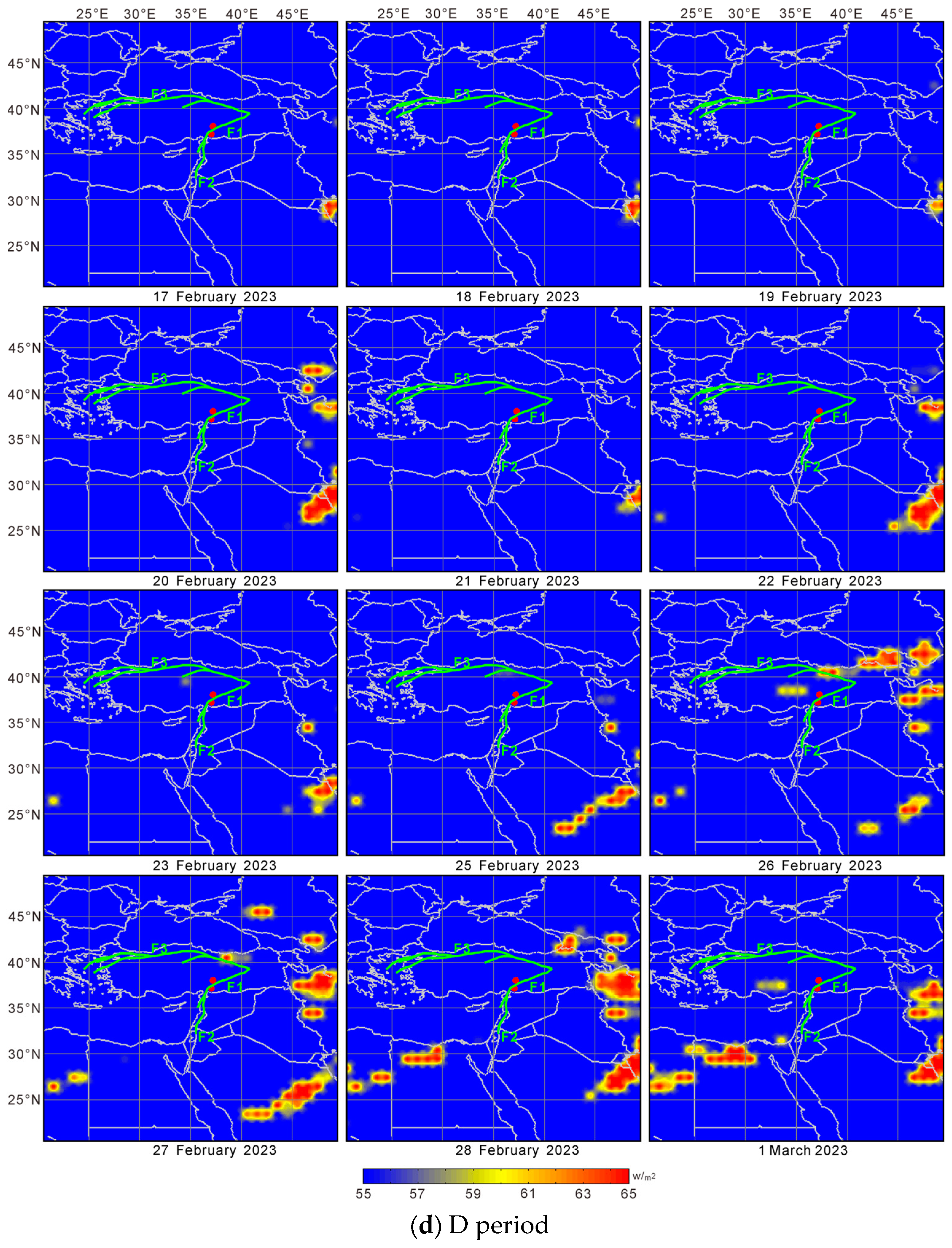
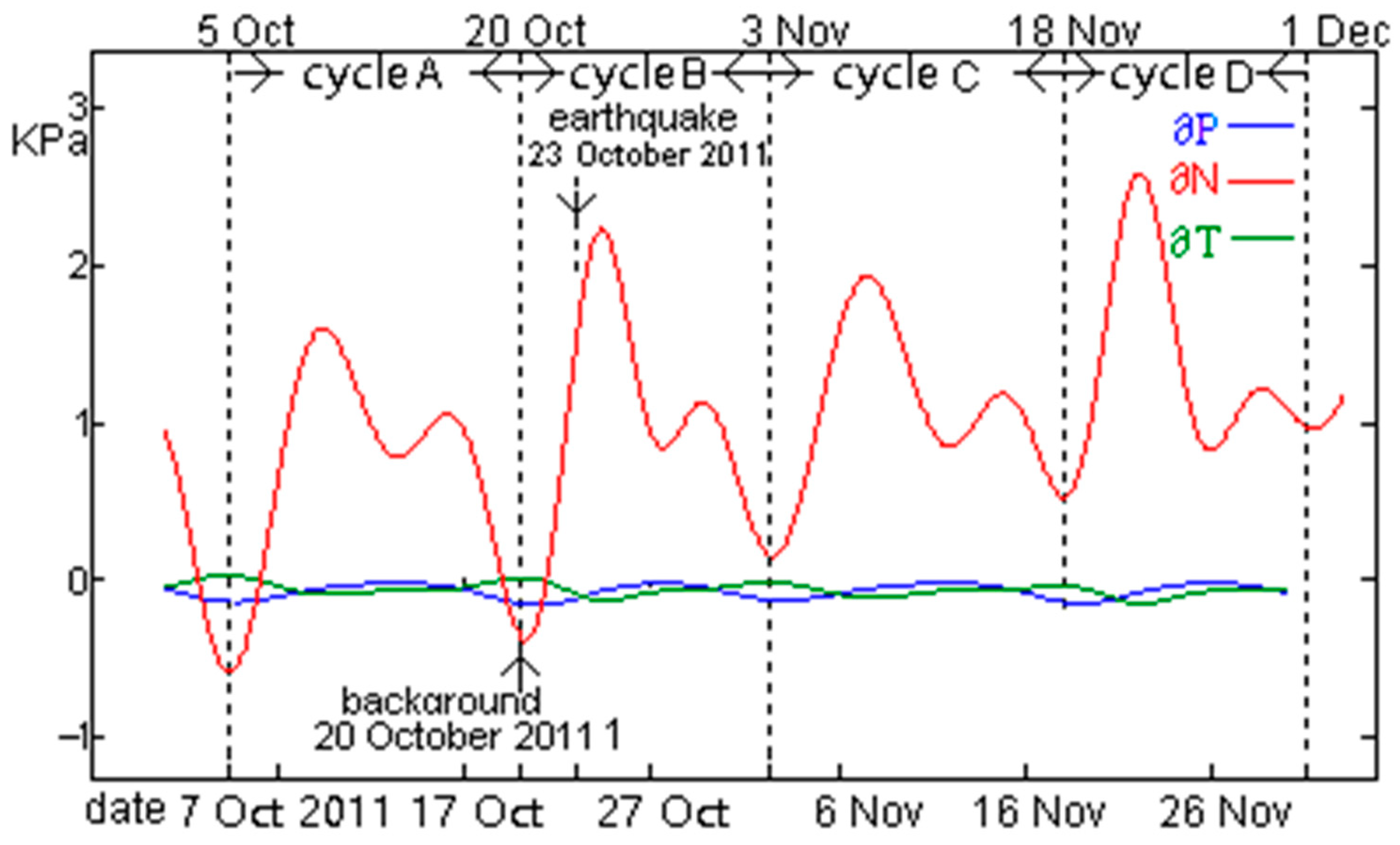
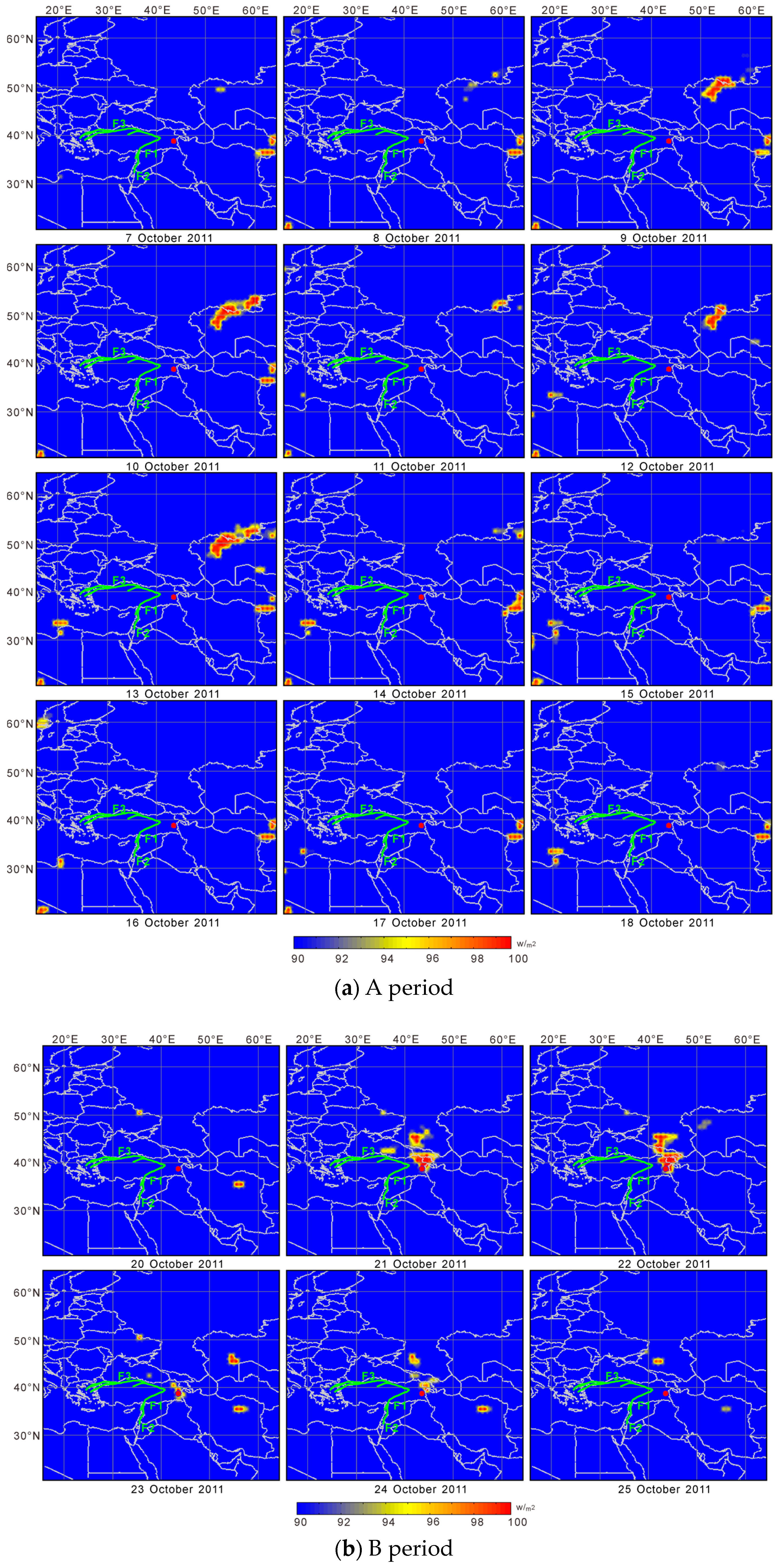
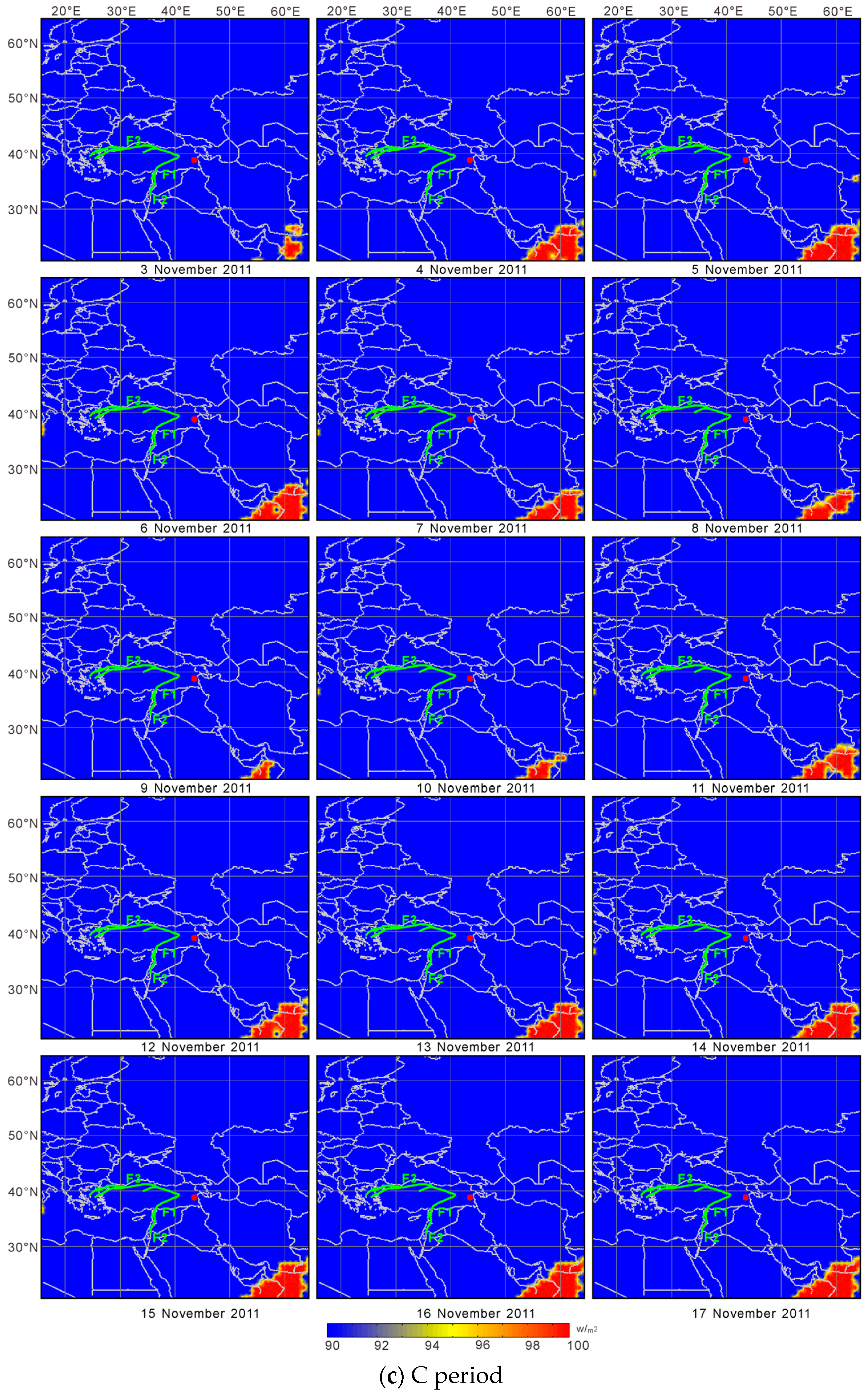
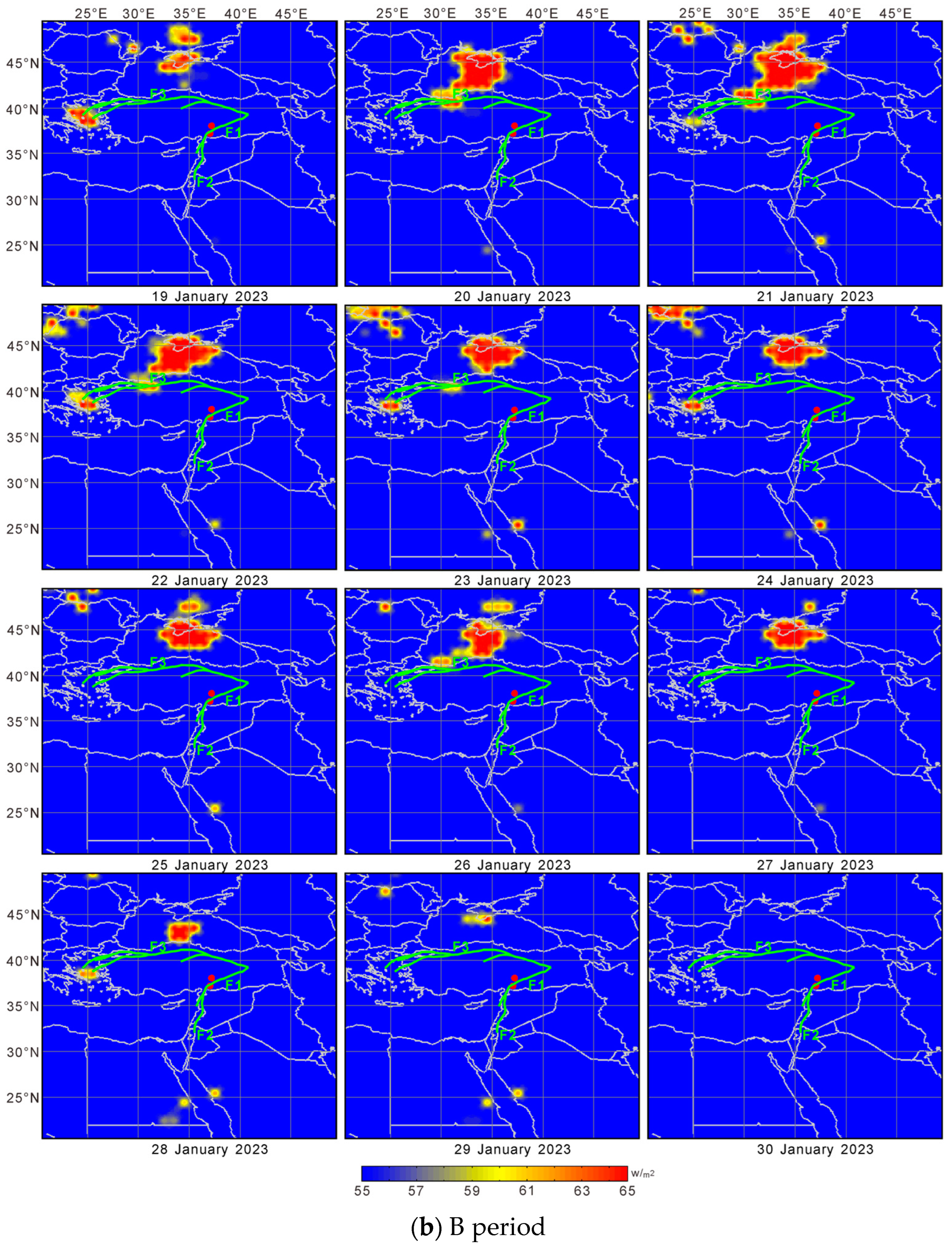
Using the model of the additive tectonic stress from celestial tide-generating force, we studied the relationship between the seismogenic structure and celestial tide-generating stress in the M7.8 Turkey earthquake on 6 February 2023. We analyzed the daily continuous variation characteristics of OLR before and after the Turkey earthquake and discussed the correlation characteristics of tidal stress, OLR, and the earthquake. The results showed that the observed OLR anomaly according to the tidal stress variation cycle “C” (1–15 February) presented a phase change in time, which was synchronized with a continuous trough-to-peak change in the additional tectonic main pressure stress. The spatial distribution of OLR anomalies was mainly concentrated in the southwest section of the East Anatolian Fault Zone, which indicates that seismic tectonic movements were the main causes of OLR anomaly variation during this earthquake. An OLR anomaly change was related to this M7.8 “Swarm Type” of earthquake in Turkey. Impending earthquake OLR anomalies represent that the stress of the seismogenic structure in the seismogenic region has entered a critical state, which can provide stress monitoring and a seismogenic region indication for earthquakes induced by tidal force. The change cycle of the celestial tide-generating force provides a time indication for the identification of seismic thermal anomalies, and it indicates that the combination of the additional tectonic stress of the tidal force and the change of OLR anomaly has value for the research on the short-impending earthquake precursor.
Keywords: earthquake; OLR; short-impending anomaly; tidal stress; Turkey earthquake; OLR; short-impending anomaly; tidal stress; Turkey