Technical Note

Fishing for Feral Cats in a Naturally Fragmented Rocky Landscape Using Movement Data
1
School of Earth and Planetary Science, Curtin University, Bentley, WA 6102, Australia
2
Bentley Delivery Centre, Biodiversity and Conservation Science, Department of Biodiversity, Conservation and Attractions, Locked Bag 104, Perth, WA 6983, Australia
*
Author to whom correspondence should be addressed.
Remote Sens. 2021, 13(23), 4925; https://doi.org/10.3390/rs13234925
Submission received: 25 October 2021 / Revised: 19 November 2021 / Accepted: 1 December 2021 / Published: 4 December 2021

Abstract

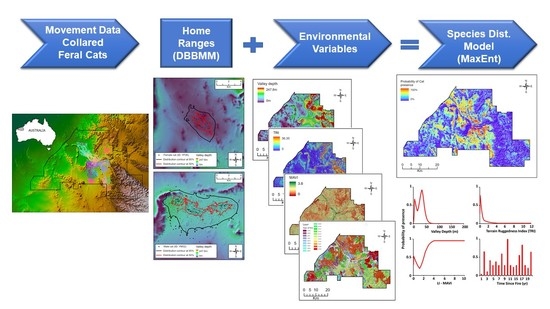
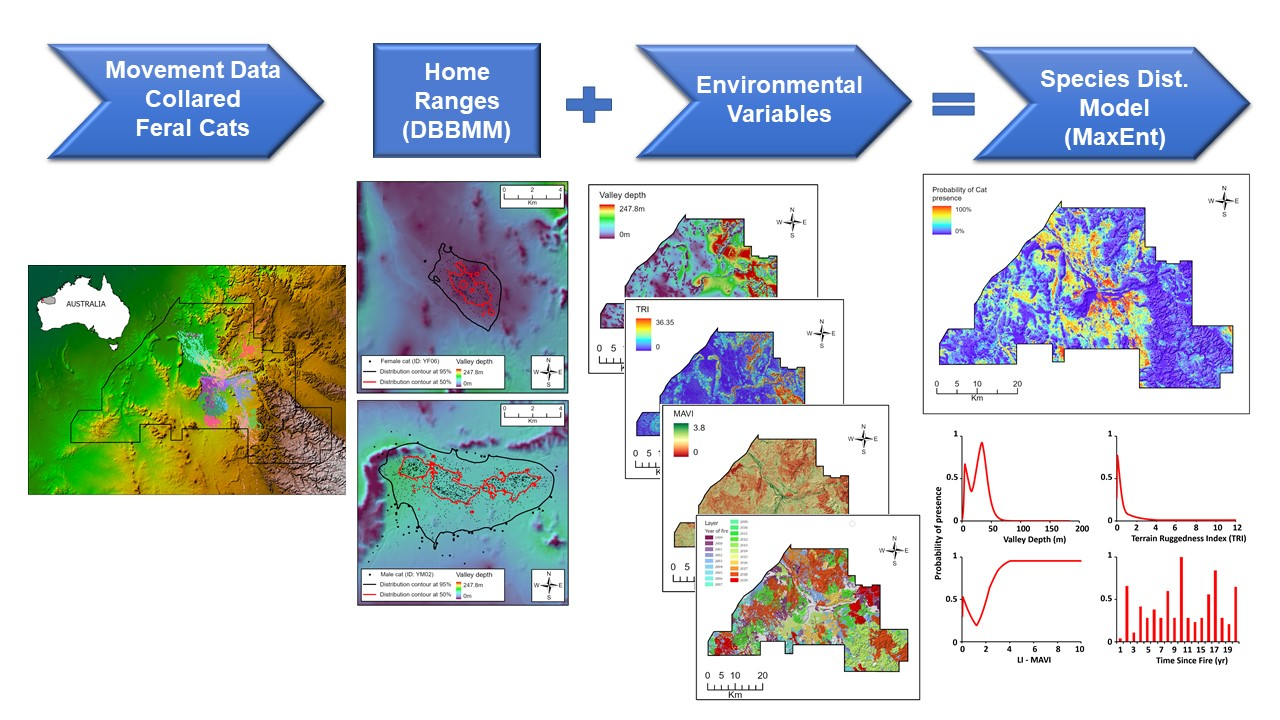
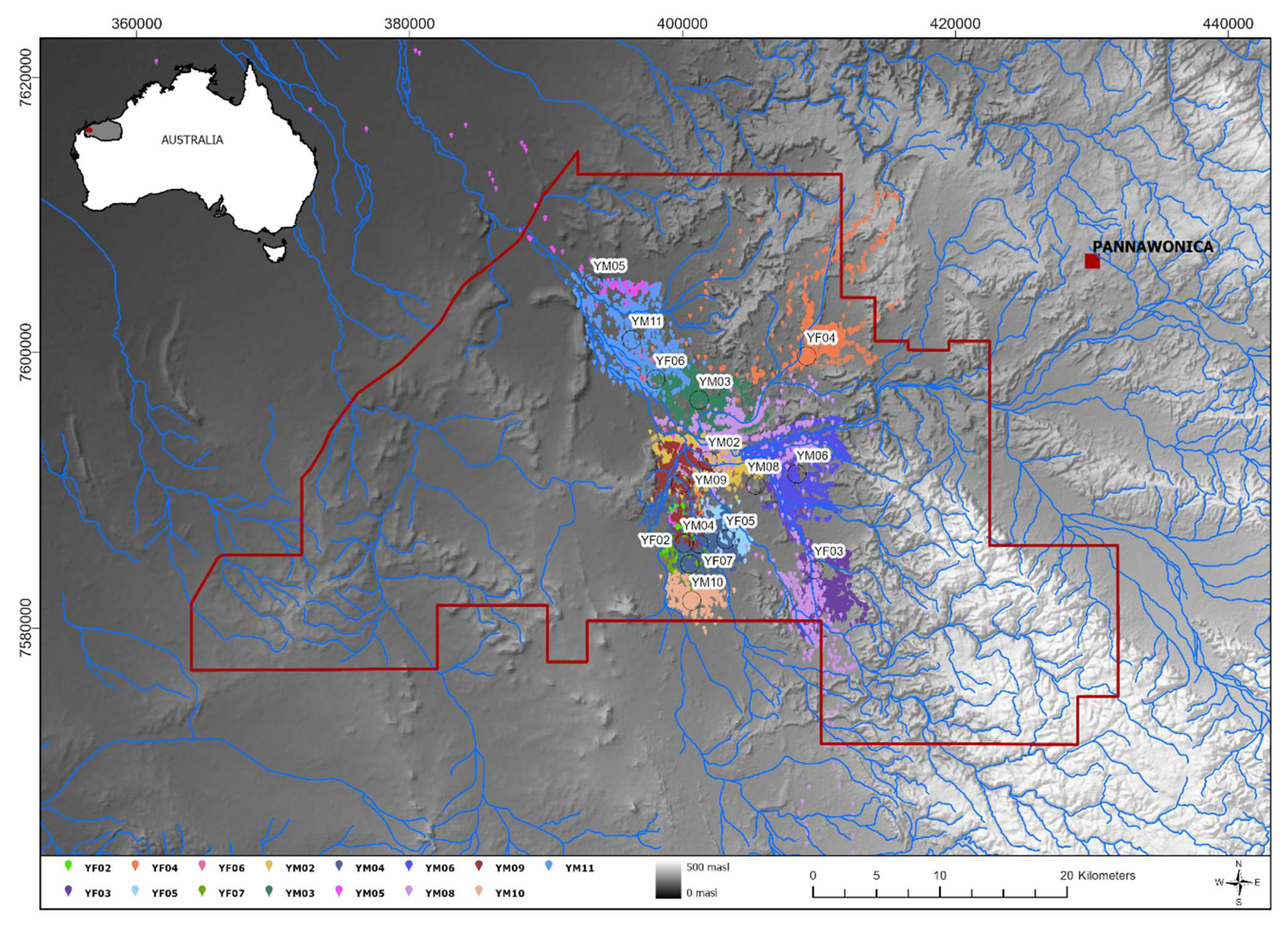
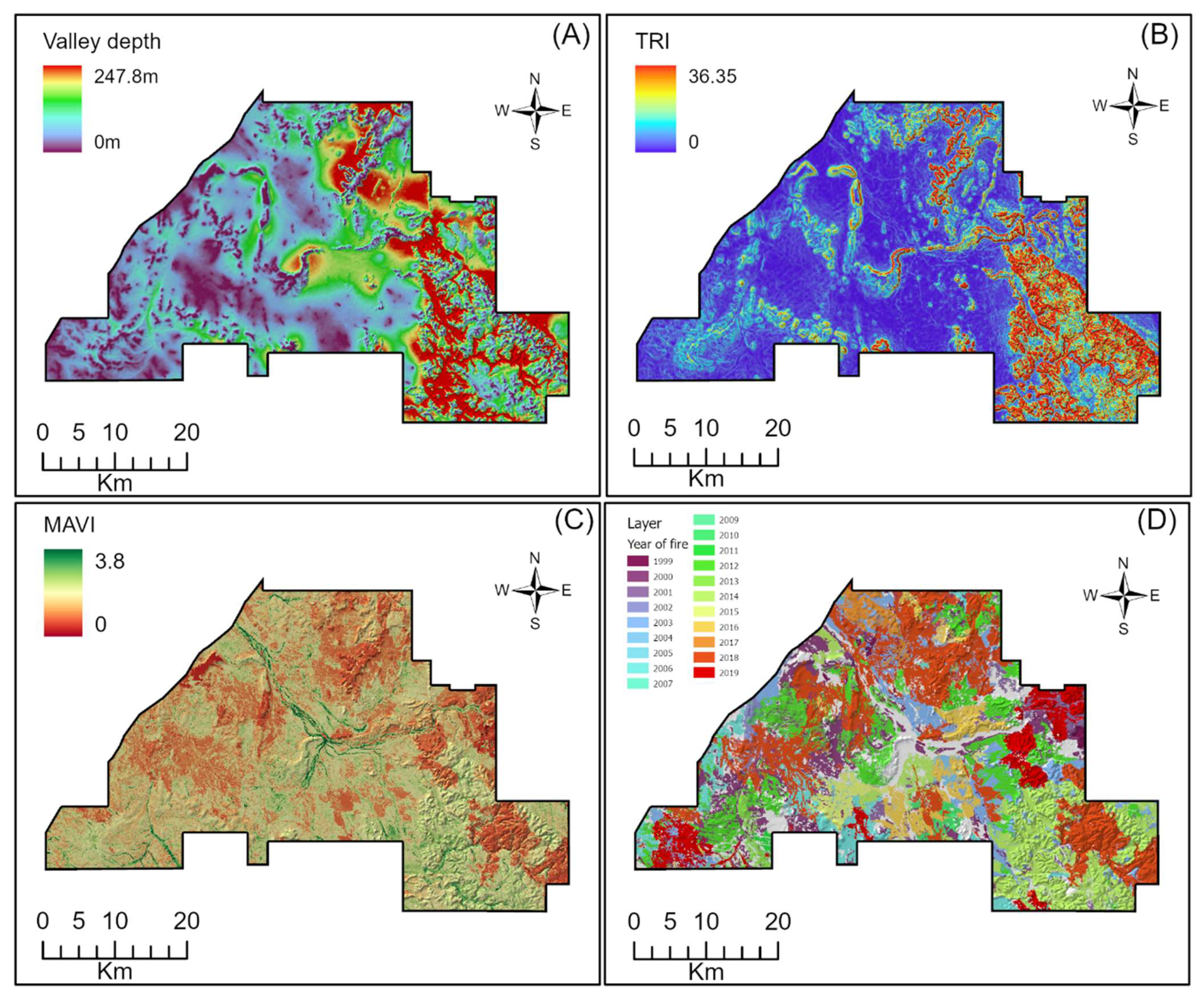
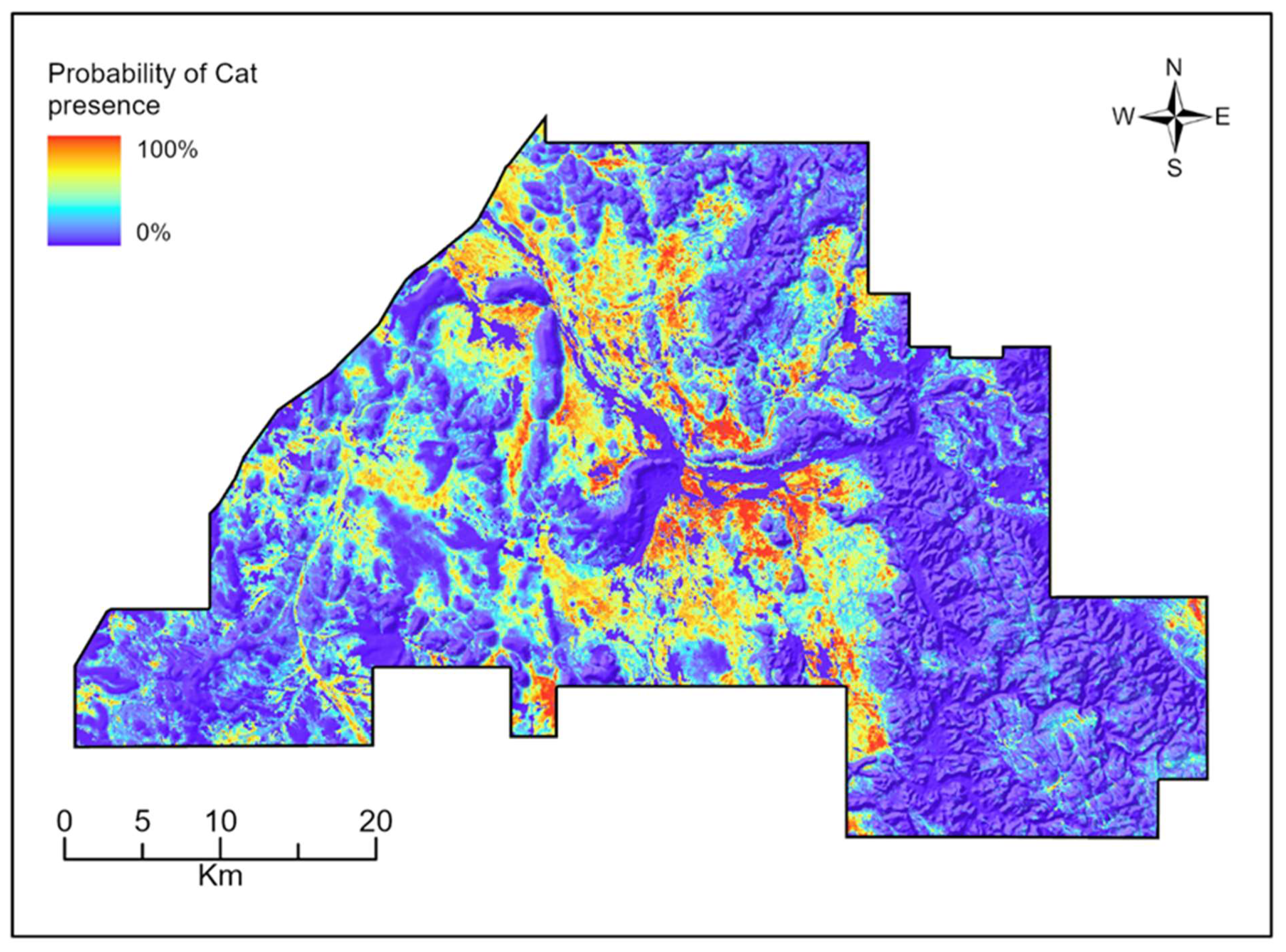
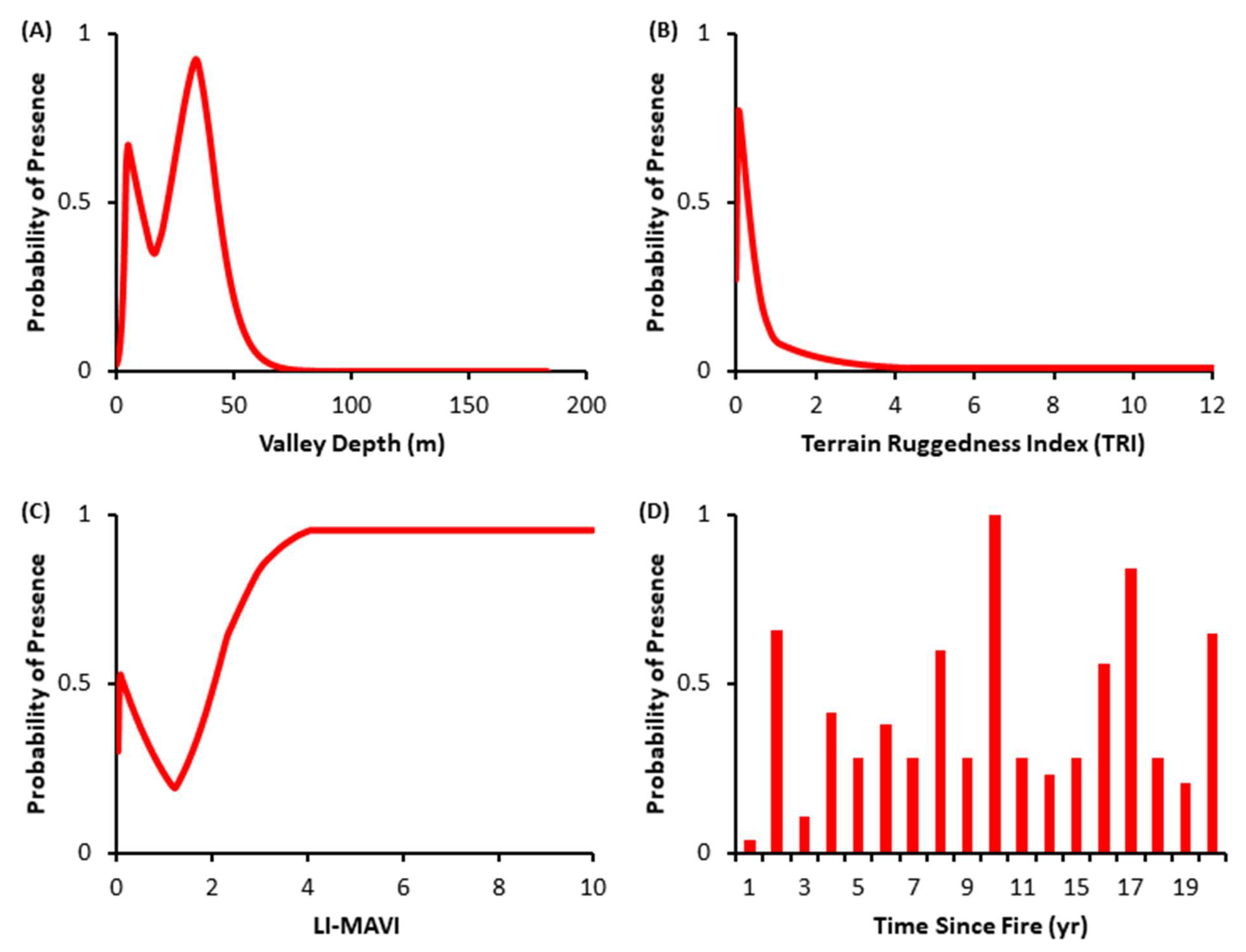
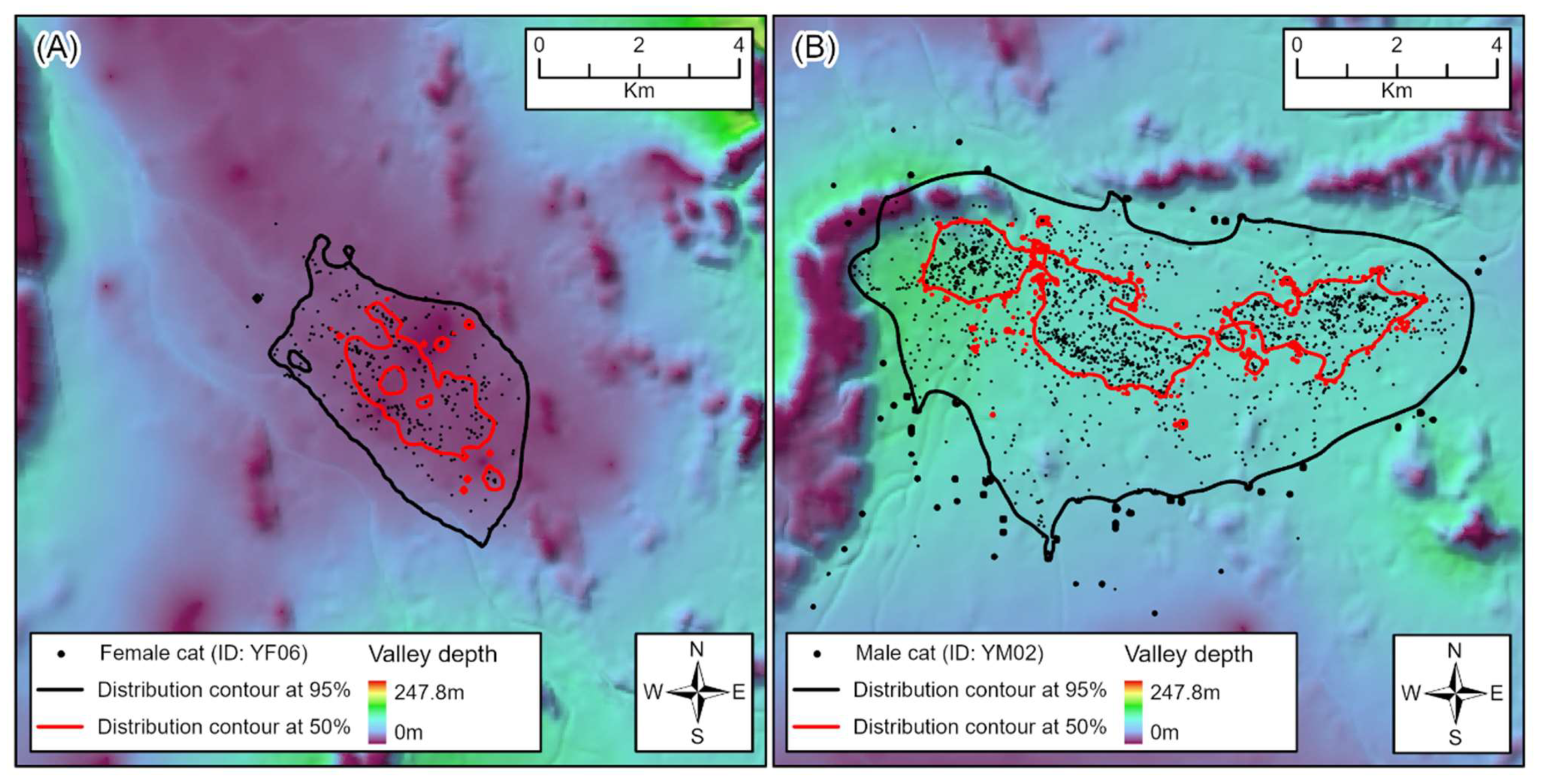
Feral cats are one of the most damaging predators on Earth. They can be found throughout most of Australia’s mainland and many of its larger islands, where they are adaptable predators responsible for the decline and extinction of many species of native fauna. Managing feral cat populations to mitigate their impacts is a conservation priority. Control strategies can be better informed by knowledge of the locations that cats frequent the most. However, this information is rarely captured at the population level and therefore requires modelling based on observations of a sample of individuals. Here, we use movement data from collared feral cats to estimate home range sizes by gender and create species distribution models in the Pilbara bioregion of Western Australia. Home ranges were estimated using dynamic Brownian bridge movement models and split into 50% and 95% utilisation distribution contours. Species distribution models used points intersecting with the 50% utilisation contours and thinned by spacing points 500 m apart to remove sampling bias. Male cat home ranges were between 5 km2 (50% utilisation) and 34 km2 (95% utilisation), which were approximately twice the size of the female cats studied (2–17 km2). Species distribution modelling revealed a preference for low-lying riparian habitats with highly productive vegetation cover and a tendency to avoid newly burnt areas and topographically complex, rocky landscapes. Conservation management can benefit by targeting control effort in preferential habitat.
Keywords: Felis catus; species distribution models; MaxEnt; Pilbara; extinction; predation; Brownian bridge modelling; GPS collar; Lagrangian methods; home range Felis catus; species distribution models; MaxEnt; Pilbara; extinction; predation; Brownian bridge modelling; GPS collar; Lagrangian methods; home range
Graphical Abstract