


Abstract
Environmental, Social, and Governance (ESG) has emerged as a critical paradigm for corporate sustainable development. In the maritime industry, a sector central to global trade, ESG is gaining prominence, driven by regulatory pressures and investor demands. This study conducts a systematic literature review to map the research landscape of ESG in the shipping industry from 2020 to 2024. Employing the PRISMA methodology, we analyze 20 core academic papers from the Web of Science and Scopus databases. Our findings reveal a rapidly growing research interest, with a clear thematic evolution from a singular focus on environmental issues to a more holistic, three-pillar (E, S, and G) framework. Key research hotspots identified include the relationship between ESG performance and financial performance, ESG disclosure, and risk management. While a positive correlation between good ESG practices and corporate financial performance is a recurring theme, significant challenges persist, notably inconsistent disclosure standards, fragmented global research efforts, and a lack of industry-specific evaluation frameworks. This review synthesizes the current state of knowledge, identifies critical research gaps, and proposes a forward-looking agenda focusing on developing industry-specific frameworks, analyzing external institutional impacts, and enhancing data credibility. Our findings provide a foundational reference for academics, policymakers, and industry practitioners to advance the sustainable transformation of the shipping industry.
1. Introduction
With the advancement of the global sustainable development agenda, Environmental, Social, and Governance (ESG) has evolved from a niche investment concept into a crucial criterion for gauging corporate sustainable development. For the maritime industry, which undertakes over 80% of global trade volume [1], this transformation presents both unique challenges and significant opportunities. The sector’s capital-intensive nature and significant environmental footprint have placed it under increasing scrutiny from regulators, investors, and society [2]. Consequently, as investors and shipping companies increasingly regard ESG factors as important indicators for measuring corporate performance and long-term success potential, enhancing ESG performance has become a vital topic for the sustainable development of shipping companies [3,4,5,6,7].
A series of regulations and policies have accelerated this trend. Initiatives introduced by the International Maritime Organization (IMO) to reduce greenhouse gas emissions, coupled with frameworks like the European Union’s new draft European Sustainability Reporting Standard (ESRS) and the Poseidon Principles, are compelling shipping companies to improve carbon emission management, enhance social responsibility, and optimize corporate governance [2,8]. These frameworks directly link ship financing with climate alignment, further pressuring companies to improve their ESG performance. As a result, shipping companies face a wide spectrum of sustainability-related risks, such as the tightening of international emission control regulations and volatility in fuel prices, making ESG risk management a critical component of corporate strategy [9,10].
Although existing research has begun to explore the mechanism through which ESG affects corporate sustainability, the literature remains fragmented. Current studies often focus on specific aspects, such as the impact of a single ESG pillar on financial performance [11], case studies of individual firms [12], or the development of specific frameworks without a broader systematic synthesis [13]. An integrated analysis that systematically delineates the evolution of research themes, identifies overarching challenges, and charts future development pathways for the global shipping industry is still needed.
To fill this gap, this study employs the Systematic Literature Review (SLR) method. By analyzing core ESG-related research in the shipping industry published between 2020 and 2024, this paper aims to: (1) identify the core research themes and hotspots; (2) illustrate the evolutionary trajectory of these themes; (3) summarize the key challenges facing the industry’s ESG practices; and (4) propose a structured agenda for future research. This study contributes to the literature by providing a holistic overview of the ESG research landscape in the maritime sector, offering a solid theoretical foundation and practical guidance for promoting the industry’s sustainable transformation.
2. Research Methodology
2.1. Research Design
To map the research landscape, synthesize existing findings, and identify key trends and gaps in the ESG literature within the maritime industry, this study adopts a Systematic Literature Review (SLR) approach. The SLR methodology is particularly suitable for this study’s objectives as it provides a rigorous, transparent, and replicable process for literature analysis.
Before the start of the search, a review protocol was entered into the PROSPERO database (Registered ID: CRD420251250508). To ensure the quality and transparency of this review, the study adheres to the Preferred Reporting Items for Systematic Reviews and Meta-Analyses (PRISMA) guidelines. The research design encompasses a multi-stage process, beginning with the formulation of research questions and a structured search strategy. This is followed by a systematic screening of literature based on predefined inclusion and exclusion criteria, and concludes with a qualitative and quantitative synthesis of the final corpus of selected studies, which is detailed in the subsequent sections. The complete PRISMA checklist is provided in the Supplementary Material Table S1.
2.2. Data Analysis and Tools
To ensure a rigorous and replicable search, this study utilized the Web of Science (WoS) Core Collection and Scopus databases. To thoroughly refine the search and filter relevant papers, a Boolean “AND” operation is applied to link all the groups. Each group links individual keywords using the Boolean “OR” operator. The search query was designed to capture relevant literature by combining primary keywords (“environmental, social and governance” OR “ESG”) with industry-specific terms (“maritime” OR “shipping”). This keyword selection strategy is informed by recent high-impact studies in the field [14,15], which have established these terms as central to the discourse. The search scope was applied to the titles, abstracts, and author keywords of indexed publications.
The inclusion criteria were carefully defined to maintain the quality and focus of the literature corpus. Only peer-reviewed “articles” and “reviews” published in English were considered for inclusion. This process ensures that the analyzed literature has undergone rigorous academic scrutiny. The data were extracted independently by two people with a process to resolve differences. After conducting the initial searches across both databases, all retrieved records were aggregated, and duplicate entries were removed.
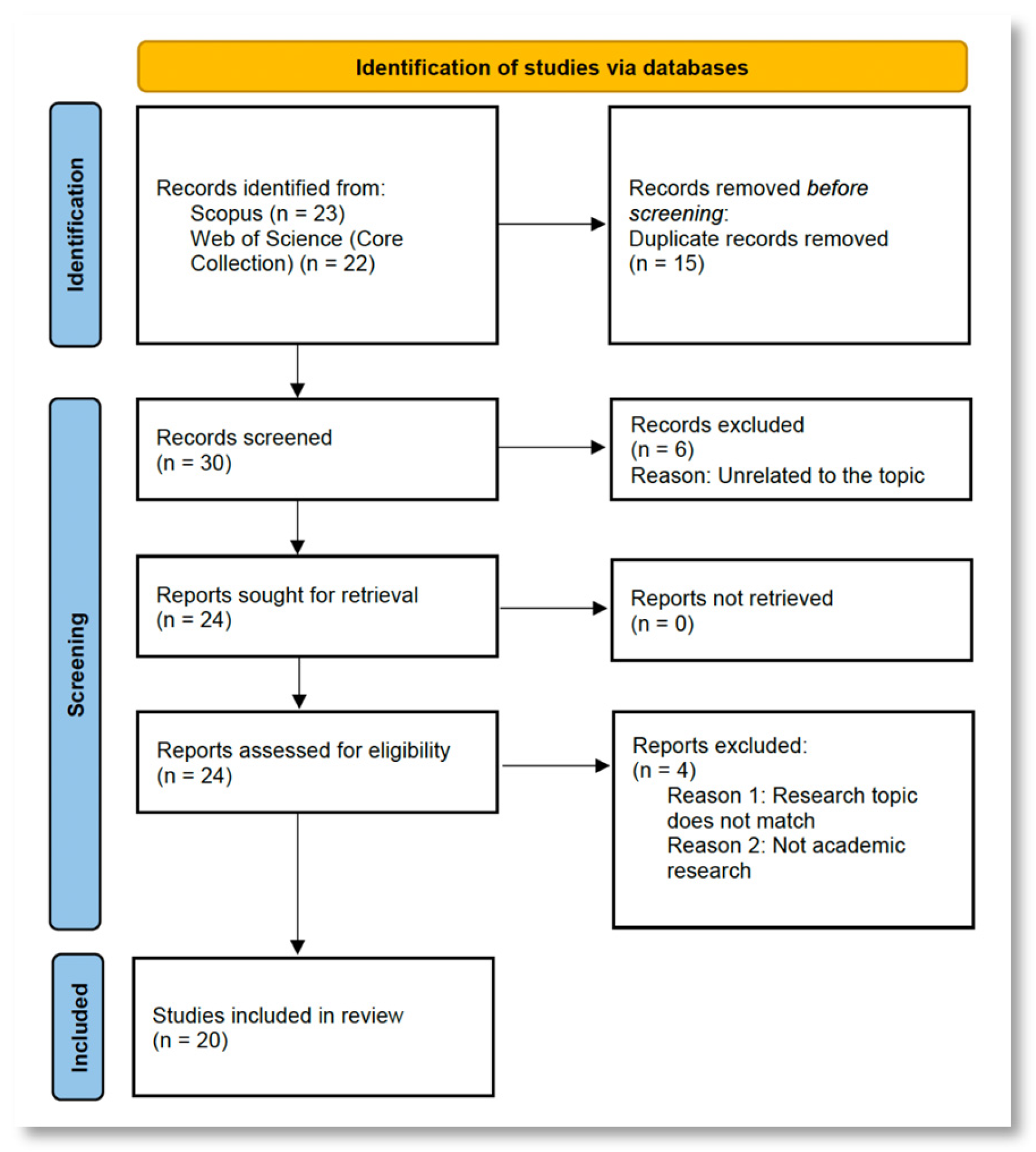
The final selection process involved a multi-stage screening. An initial screening of titles and abstracts was conducted to eliminate literature clearly unrelated to the research topic. Following this, a full-text review of the remaining articles was performed to assess their eligibility in detail. Ultimately, 20 core papers were identified as directly relevant to the research questions and were included in the final synthesis. The detailed process of article selection is illustrated in Figure 1 of the PRISMA flow diagram.
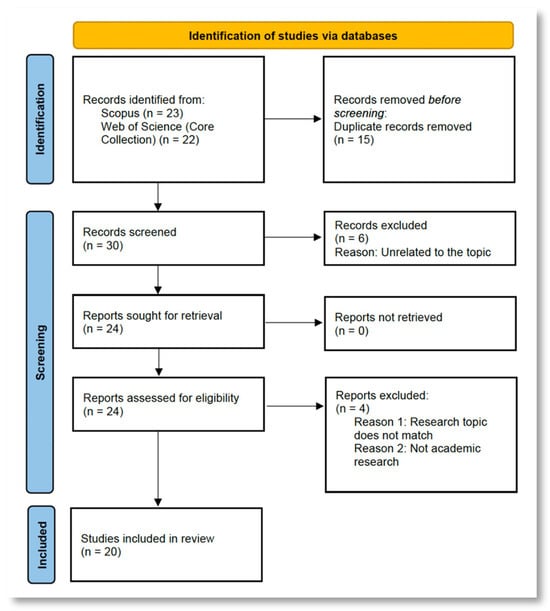
Figure 1.
Prisma flowchart [16].
A standardized form was used to extract data from 20 selected articles. This facilitates the process of comparing and synthesizing information across different studies. For each included paper, basic data about the paper and content-related data were extracted and entered into the database as following:
- (i)
- Basic data: authors, paper title, date, country/institution, paper type, paper keywords, and research topic.
- (ii)
- Content-related data: ESG assessment frameworks, financial performance evaluation metrics, case studies, and pathways for improving ESG ratings.
Regarding the risk of bias assessment, since this review primarily focuses on synthesizing thematic trends and conceptual frameworks rather than conducting a meta-analysis of quantitative effects, a formal risk of bias assessment for individual studies was deemed not applicable.
3. Results
3.1. Bibliometric Profile and Thematic Evolution of ESG Research in Shipping
To understand the current status, development, and trends of ESG research in the shipping industry, a bibliometric analysis was conducted on the 20 selected core papers. For analytical tools, we selected CiteSpace 6.3.R1 (64-bit) and VOSviewer 1.6.20 (0), which offer robust data analysis and visualization capabilities. These are commonly used tools in bibliometric analysis [17], capable of analyzing relationships between documents based on key information to reveal underlying connections. Through analysis with CiteSpace and VOSviewer, we examined publication trends, author collaboration networks, and the evolution of key research themes.
3.1.1. Publication Trends and Geographical Distribution
The analysis of publication years reveals that research on ESG in the maritime industry is a nascent but rapidly growing field. The majority of the sampled literature was published between 2022 and 2024, indicating a surge in academic interest in recent years. This trend can be associated with the growing global and institutional focus on the ESG theme and the heightened discourse surrounding the correlation between corporate ESG performance and financial results.
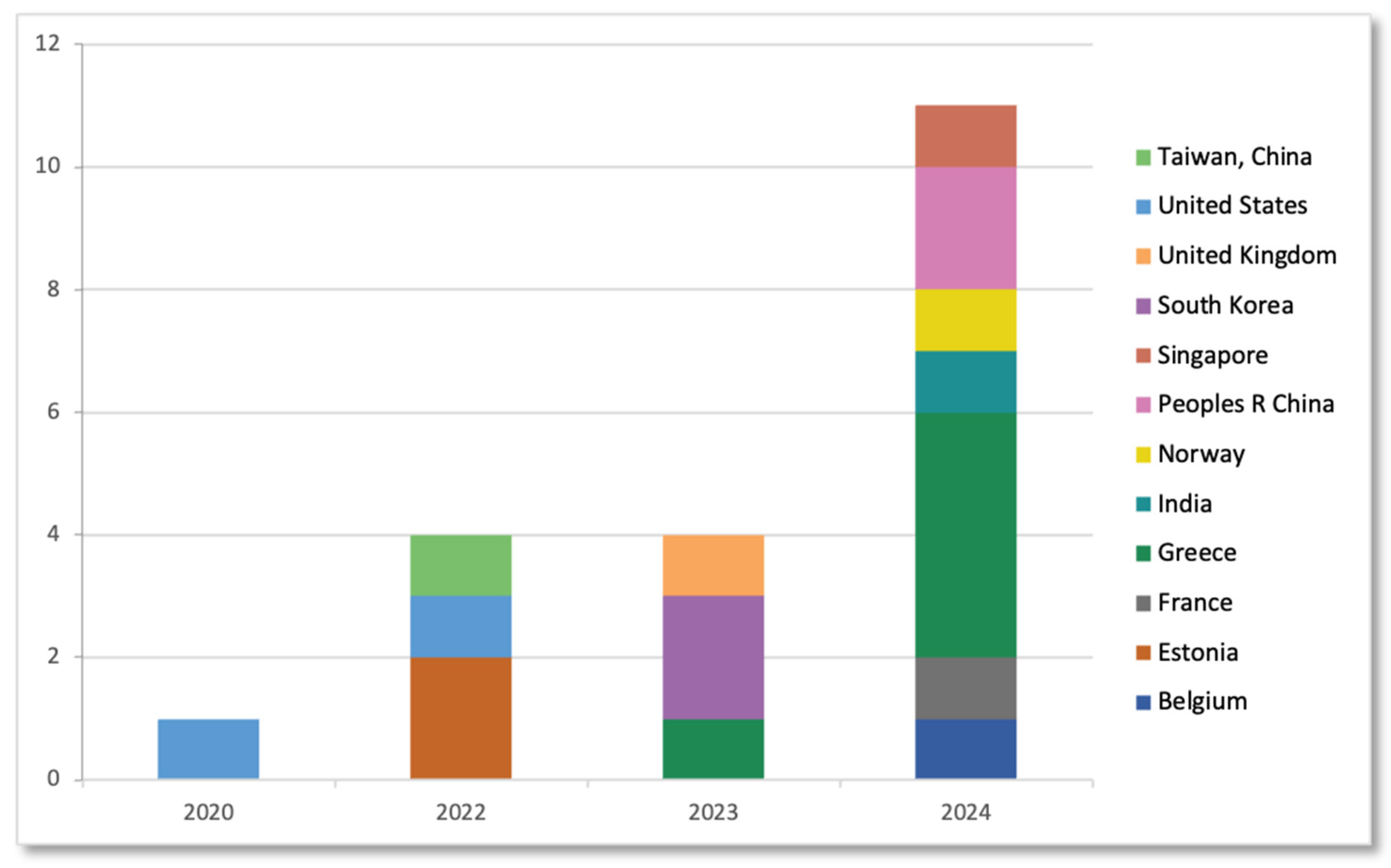
Among the 20 selected papers, the publishing journals of highly cited papers (partial) show that the relevant research fields cover various disciplines including business, finance and economics (as shown in Table A1). Geographically, the research is led by scholars from a few key maritime nations. As shown in the author affiliation analysis (Figure 2), Greek scholars are the most productive group (25%), followed by Chinese researchers (15%). This is unsurprising, given Greece’s long-standing prominence in the global shipping industry and China’s dual role as a major maritime power and a key driver in global supply chains.
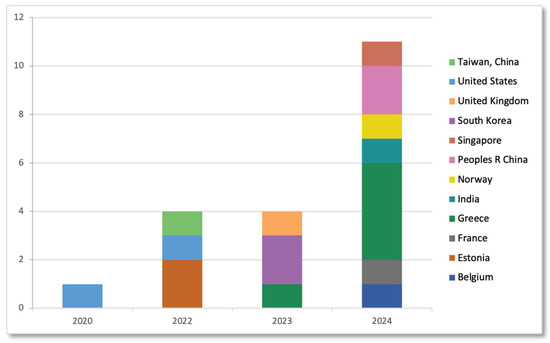
Figure 2.
Distribution of Research Origins (based on First Author Affiliation).
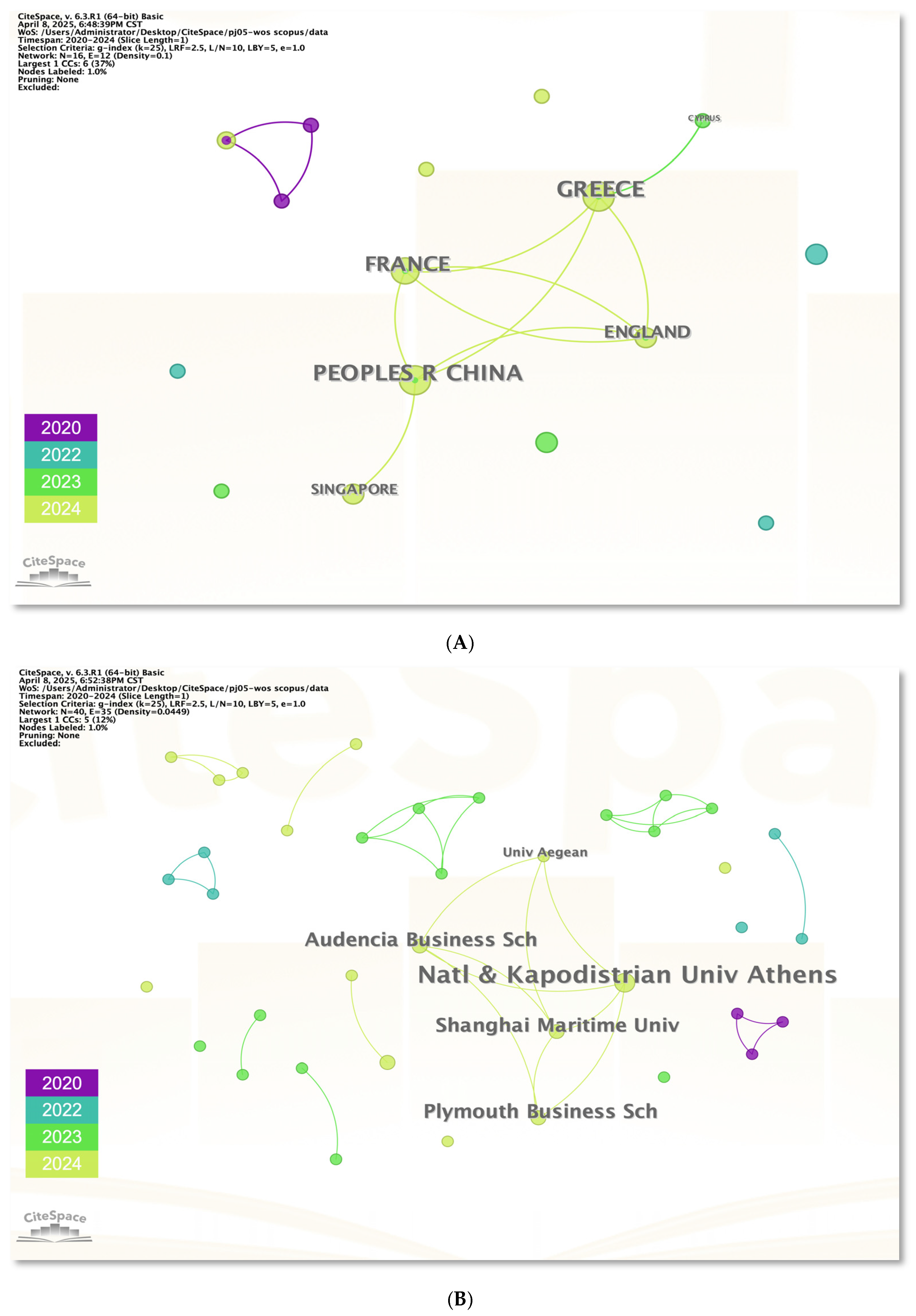
Figure 2 focuses solely on the affiliations of first authors to concisely present regional research dynamics. The collaboration network diagram (Figure 3) further illustrates that international cooperation has gradually strengthened. Given the potential limitations of analysis based on a single author’s affiliation Figure 3A, we generated the institutional/country collaboration network diagram Figure 3B. It can be observed that early research (circa 2020) exhibited a relatively independent state; however, by 2023–2024, collaborations among institutions from China, Greece, France, and the UK had increased significantly, marking the formation of a global research community.
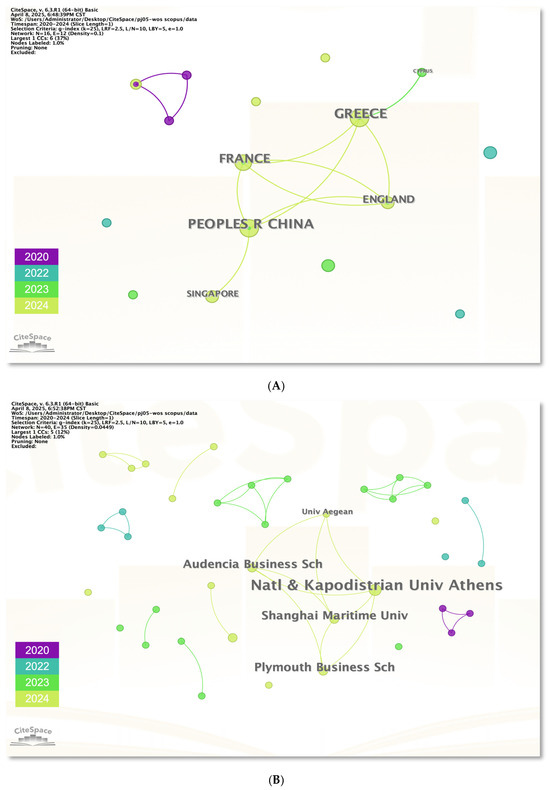
Figure 3.
State/Institution Collaboration Network Diagram. (A) Collaborative Network Map of Affiliated States. (B) Collaborative Network Map of Affiliated Institutions.
3.1.2. Core Research Themes and Their Evolution
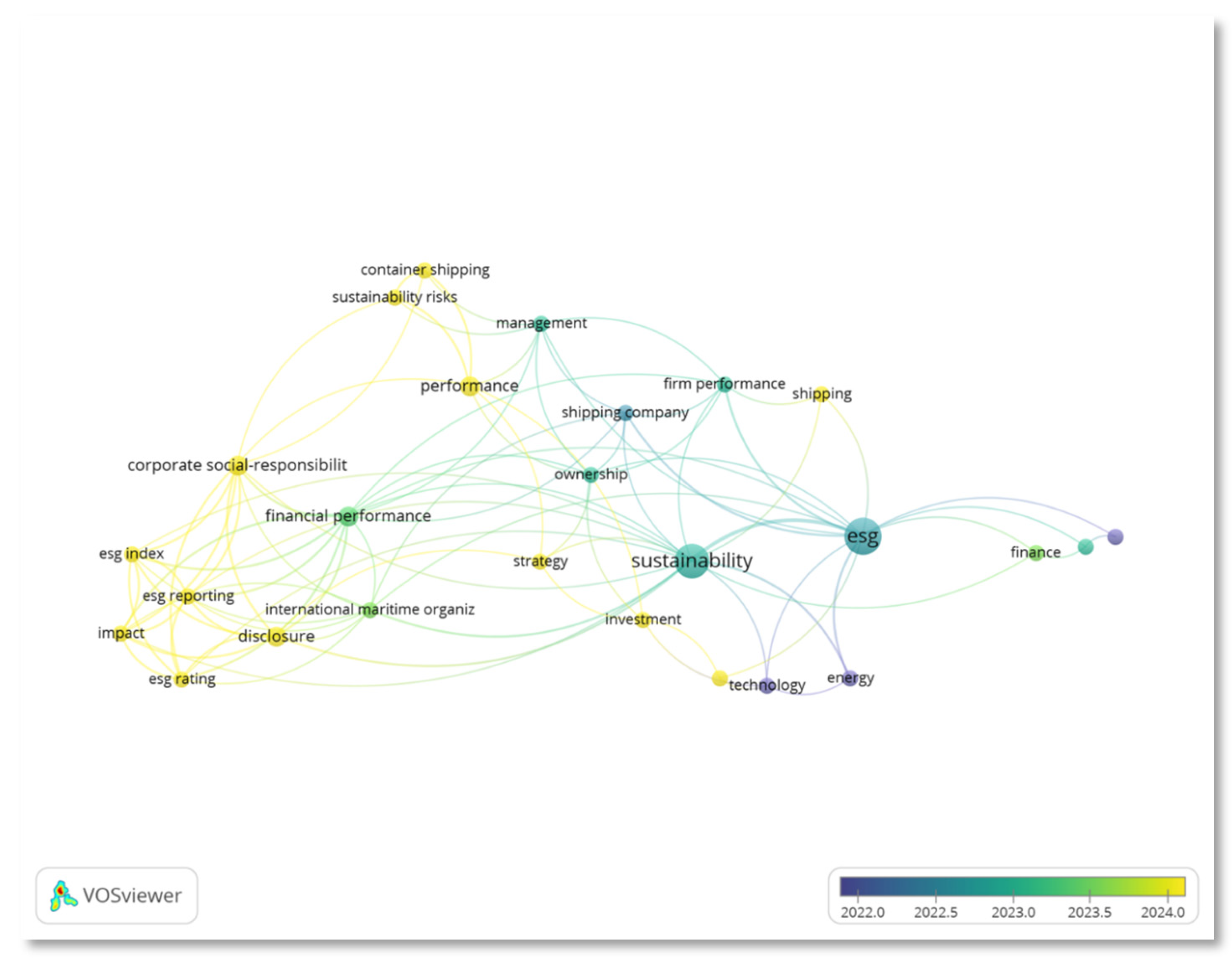
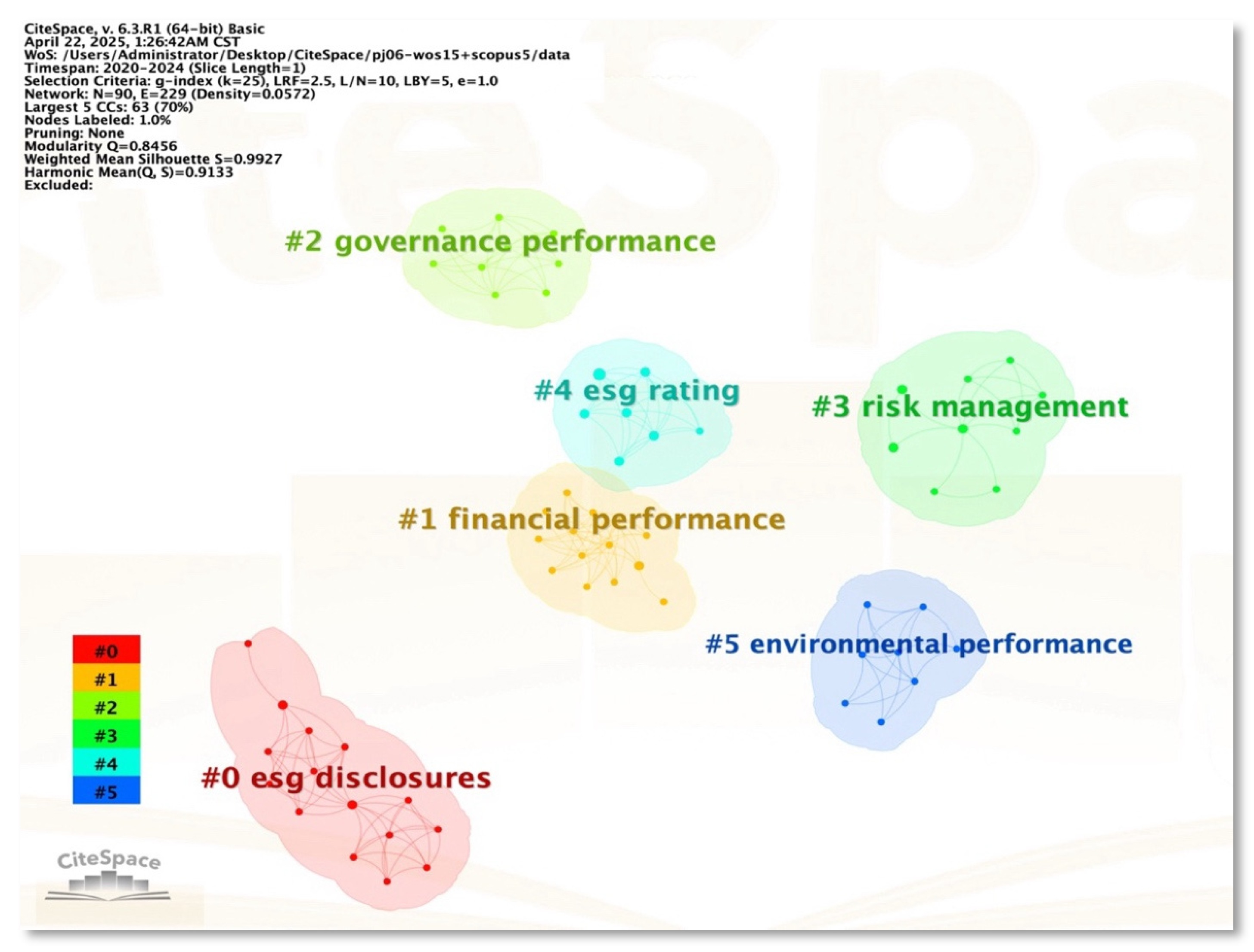
Keyword co-occurrence analysis was used to identify the core themes and intellectual structure of the research field. As the keyword co-occurrence network (Figure 4) and clustering analysis (Figure 5) demonstrate, the research landscape is structured around several key clusters. These include #0 ESG disclosures, #1 financial performance, #2 governance performance, #3 risk management, #4 ESG rating and #5 environmental performance. The centrality of terms like “financial performance,” “corporate social responsibility,” and “disclosure” confirms that the relationship between sustainability practices and economic outcomes is the intellectual core of this research area.
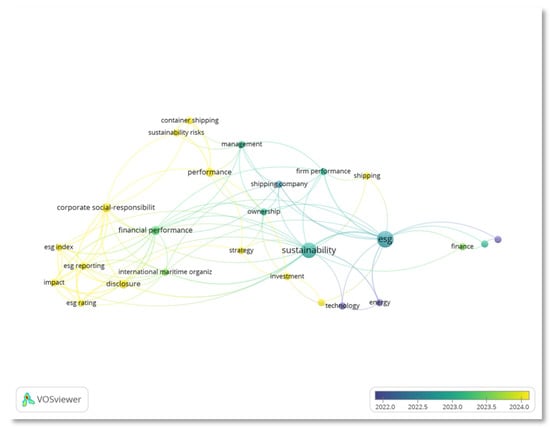
Figure 4.
Keyword co-occurrence network diagram.
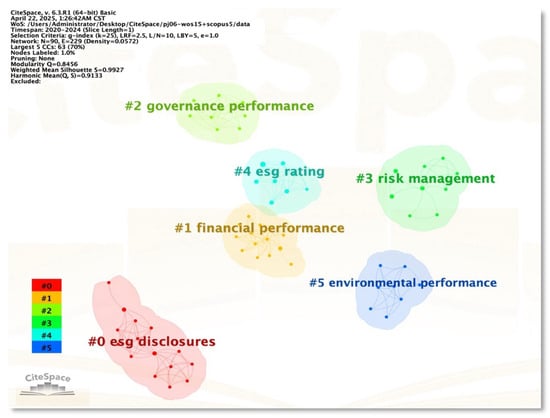
Figure 5.
Keyword clustering diagram.
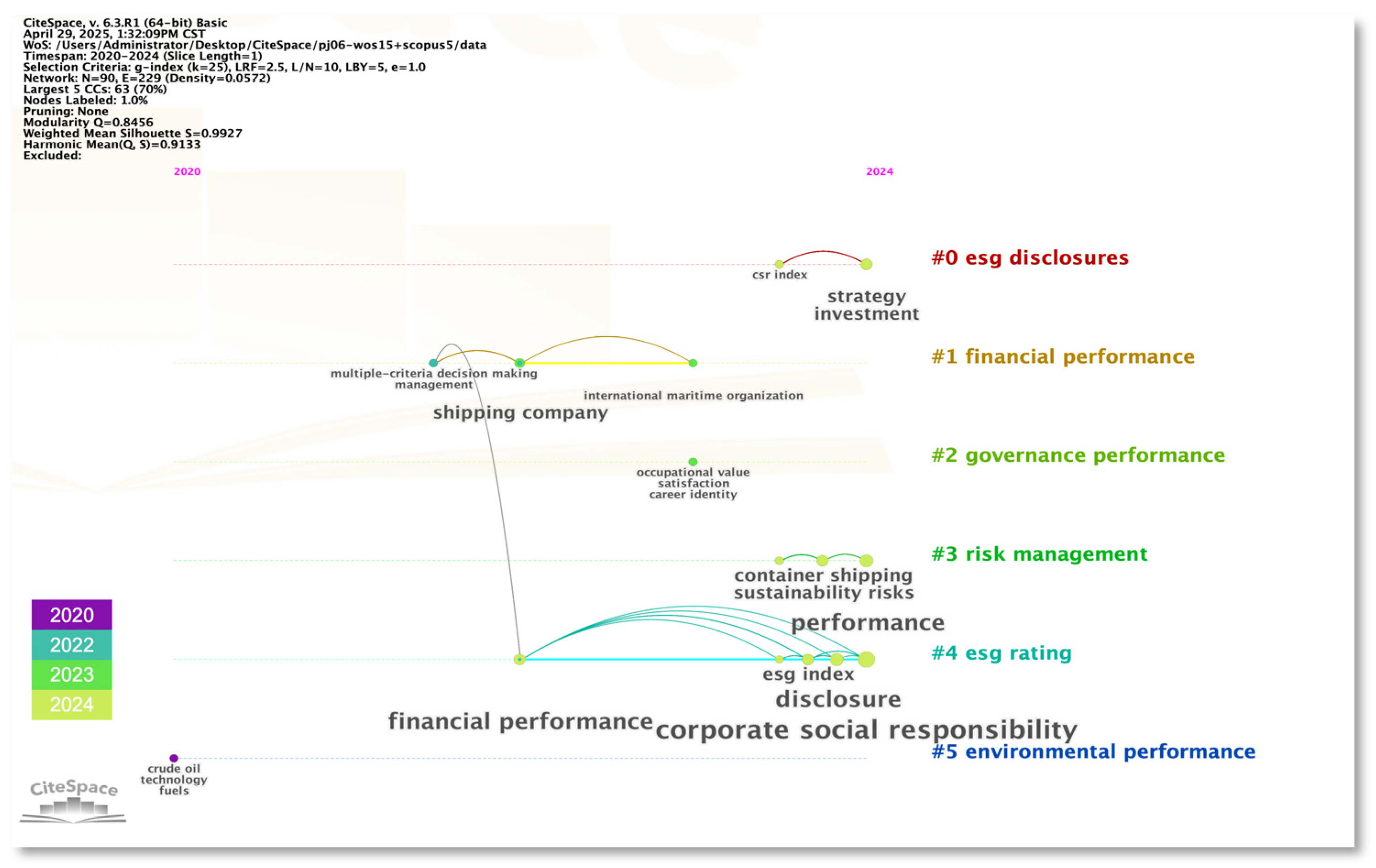
The keyword timeline diagram (Figure 6) provides a dynamic view of the field’s evolution. Early research (2020–2021) focused heavily on energy technologies and the environmental pillar, reflecting the industry’s initial response to decarbonization pressures. However, from 2022 onwards, the research focus has significantly broadened. Themes related to ESG disclosure, ESG rating, and risk management became prominent. This thematic shift indicates a maturation of the field, moving from a primary concern with environmental compliance towards a more holistic and strategic approach that integrates all three ESG pillars and emphasizes accountability, measurement, and the management of sustainability-related risks.
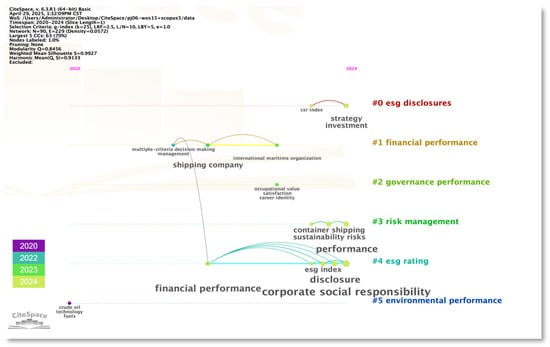
Figure 6.
Timeline of keyword evolution.
3.2. General Overview of the Field
The bibliometric analysis underscores that research on ESG in the shipping industry has rapidly evolved to address the demand for a coordinated approach to environmental, social, and corporate governance. A review of the core literature reveals that academic inquiry has progressed across multiple levels and perspectives. The scope of research has broadened significantly, encompassing several key areas:
- Risk Identification and Management: A foundational theme involves identifying the unique spectrum of sustainability risks faced by the shipping industry, ranging from regulatory and technological to operational risks [10,18];
- Framework Design and Evaluation: A growing body of work is dedicated to constructing and proposing ESG evaluation frameworks and indices specifically tailored to the maritime sector, aiming to move beyond generic, cross-industry standards [13,19];
- Performance and Influencing Factors Analysis: Researchers are actively analyzing the factors that influence ESG performance, as well as exploring the multifaceted relationship between corporate ESG practices and financial performance [11,15];
- Pathways for Improvement: Studies are also beginning to seek actionable pathways for ESG score improvement, providing practical guidance for shipping companies on their sustainability journey [9,12].
In essence, the field has moved beyond merely acknowledging the importance of ESG. It is now actively engaged in defining risks, developing measurement tools, analyzing performance drivers, and charting a course for improvement. The following sections will delve deeper into each of these core research areas.
3.2.1. Risk Identification in the ESG Context
A foundational theme in the literature is the identification and assessment of sustainability-related risks, which are crucial for formulating effective corporate strategies. The transition to an ESG-centric operational model introduces a new spectrum of risks that shipping companies must understand and manage.
Two recent studies by Zhou and Yuen [10] present a multidimensional, ESG-aligned taxonomy of these risks for the container shipping sector. In their first study, they identified 36 sustainability risks and developed a quantitative assessment framework to rank them. The findings highlighted that the five most threatening risks are primarily environmental and operational: ‘strengthened international emission control policies’, ‘global climate change’, ‘shipping equipment failures’, ‘fuel price fluctuations’, and ‘ships violating port-area emission control policies’. This underscores the significant pressure exerted by regulatory changes and market volatility on shipping operations. The study concludes by urging companies to prioritize investment in environmental governance to build resilience against these future uncertainties.
In a subsequent study, Zhou and Yuen [18] expanded their analysis by identifying 45 sustainability risks and employing a Bayesian network model to evaluate their interdependencies and overall impact on sustainability performance. Through sensitivity analysis, this research revealed that the most influential risks are predominantly rooted in social and governance (S&G) factors: ‘weak organizational governance’, ‘insufficient seafarers’ training and education’, ‘weak social sustainability culture’, ‘maritime accidents’, and ‘weak environmental sustainability culture’. This finding is particularly insightful, as it suggests that while environmental pressures are the most immediate threats, the underlying capacity to manage them effectively stems from the robustness of a company’s internal governance and human capital. Consequently, the authors propose that the most cost-effective mitigation strategy is the implementation and improvement of internal control mechanisms.
3.2.2. Design of ESG Evaluation Frameworks
Recognizing the inadequacy of generic, cross-industry ESG standards [20], a significant stream of research has focused on designing evaluation frameworks tailored to the unique characteristics of the maritime sector. These efforts aim to provide a standardized and relevant basis for ESG reporting, scoring, and ranking.
A particularly programmatic effort to address this gap has been undertaken by Tsatsaronis and his collaborators through a series of interconnected studies [14]. Their work is motivated by the empirical finding that a positive correlation exists between Corporate Social Responsibility (CSR) practices and corporate financial performance in shipping, which underscores the need for a reliable and industry-specific measurement tool.
To this end, Tsatsaronis et al. [13] developed a structured, shipping-specific ESG rating and reporting framework. Their methodology involved a multi-stage process: first, a content analysis of ESG reports from 70 listed shipping companies was conducted to identify key ESG factors and metrics. This was followed by a survey of industry experts to assign weights to these factors, culminating in a weighted composite ESG index designed to capture the industry’s idiosyncrasies. This approach represents a crucial step towards creating a robust benchmark for corporate performance evaluation.
However, in a crucial follow-up study, the same research group conducted a quality assessment of existing ESG reporting practices among listed maritime companies [21]. This investigation revealed a significant “reporting gap”: it was found that, according to their proposed framework, only about one-third of the essential ESG factors were being reported with high accuracy by the industry. This highlights a considerable discrepancy between what constitutes a disclosure-complete ESG report and the current industry practice.
In parallel with this firm-level, performance-oriented approach, another stream of research has explored ESG from a policymaking perspective. Nõmmela and Kaare [8,19] proposed a maritime policy design framework that integrates ESG performance goals with maritime economics. Using Estonia as a case study, their work demonstrates how ESG indicators can be used as both inputs for policy design (e.g., in problem definition and goal setting) and outputs for evaluating policy compliance [8]. In a subsequent study, they developed a sustainability maturity model based on the analysis of 143 Estonian maritime enterprises. This model allows for the classification of companies into different maturity levels (e.g., beginner, developing, mature), enabling policymakers to design flexible and targeted support measures for firms at different stages of their ESG journey.
Together, these studies illustrate two complementary approaches to framework design. The work by Tsatsaronis et al. [13,14] focuses on creating a standardized, content-based rating tool for comparing corporate performance from an investor and managerial perspective. In contrast, the work by Nõmmela and Kaare [8,19] concentrates on developing a process-oriented policy and maturity framework to guide the industry’s overall sustainable development from a governmental perspective. Both approaches underscore the critical need for frameworks that are deeply embedded in the specific context of the maritime industry.
3.2.3. Analysis of Factors Influencing ESG Performance
Beyond designing frameworks, a crucial area of research investigates the determinants of ESG performance [22,23]. These studies analyze the internal and external factors that either enable or hinder a shipping company’s ability to achieve its sustainability goals.
From a corporate-level perspective, Lin et al. [24] utilized a hybrid multiple-criteria decision-making (MCDM) method to identify key factors affecting the sustainability of global shipping companies. Their research reveals a clear causal chain: strong financial performance is the primary driver, enabling companies to better withstand external shocks like the COVID-19 pandemic. This resilience, in turn, allows them to invest in ESG practices, which subsequently enhances their bond financing capabilities. This finding provides strong empirical support for the “doing well by doing good” hypothesis in the maritime context, suggesting that financial health is a prerequisite for, and is ultimately reinforced by, robust ESG engagement. Furthermore, their analysis of ESG sub-dimensions indicates that board size (a governance factor) is a key determinant for improving environmental performance, such as CO2 emission reduction.
Shifting the focus from the corporate level to the individual and cultural levels, Yoon [25] explored the human element of ESG within the cruise shipping sub-sector. The study found that cultivating a sense of “global citizenship” among employees is pivotal. This concept, which encompasses heightened cultural sensitivity and awareness of global challenges (including environmental issues), positively influences employees’ professional values and service attitudes. The research suggests that hiring employees with a strong sense of global citizenship can foster a corporate culture that naturally prioritizes social responsibility and ethical governance. This provides a valuable, “bottom-up” perspective, indicating that a company’s ESG performance is not only driven by top-down corporate policies but also shaped by the values and mindset of its workforce.
In summary, the literature identifies a multi-layered set of drivers for ESG performance. At the macro-corporate level, financial capacity and governance structures are key enablers. Simultaneously, at the micro-individual level, the cultivation of a globally conscious and socially responsible workforce provides the cultural foundation necessary for a truly sustainable organization.
3.2.4. Economic Consequences of ESG Practices
A substantial body of literature has empirically investigated the economic consequences of ESG practices in the maritime industry, largely confirming a positive relationship between sustainability and financial outcomes. These studies [26,27] explore how ESG performance translates into tangible corporate value, improved financial metrics, and enhanced access to capital.
One stream of research focuses on the direct impact of ESG disclosure on corporate value and financial performance. Using panel data from 213 listed ports, Gavalas [11] found a positive correlation between ESG disclosure levels and key valuation metrics such as the price-to-book ratio (MaBo) and Tobin’s Q ratio (QRa). This suggests that ports with higher ESG disclosure are perceived more favorably by the market and are more attractive to investors. Similarly, Nenavani et al. [4], analyzing 23 logistics enterprises in India, found that the composite ESG score was significantly and positively correlated with financial indicators like Return on Assets (ROA) and Return on Equity (ROE). Interestingly, their analysis revealed that the social (S) pillar had the strongest correlation with ROE, highlighting the importance of social factors in driving financial returns within the logistics sector.
Another stream of research examines how ESG performance interacts with corporate structure and resource allocation. Jia and Azevedo [15] studied 56 listed shipping companies and found a strong positive mediating effect of market capitalization on ESG scores, indicating that larger shipping companies tend to achieve higher ESG performance. Their research also uncovers nuanced relationships with ownership structures, finding that institutional investor shareholding is positively correlated with ESG ratings, while family shareholding is negatively correlated. This suggests that different types of owners have distinct priorities regarding ESG investments. Complementing this, Sigalas [28] investigated how ESG performance influences corporate resource allocation intensity. The study found that better ESG scores facilitate greater access to capital, which in turn allows firms to allocate more resources to new assets. This provides a direct causal link, showing that strong ESG performance is a key enabler of corporate investment and growth.
In summary, the literature provides compelling evidence that good ESG practices yield significant economic benefits for shipping and logistics companies. These benefits manifest as higher corporate valuations, improved financial performance, and enhanced access to capital for resource allocation [6,29,30]. The findings collectively suggest that ESG is no longer a peripheral concern but a core component of strategic financial management in the maritime industry.
3.2.5. Diverse Improvement Paths for ESG Ratings
The literature not only identifies the importance of ESG but also proposes diverse and actionable pathways for shipping companies to enhance their ESG performance [31]. These paths range from operational efficiency improvements to strategic financial and digital transformations [32].
A primary path lies in improving eco-efficiency and operational performance. Parris et al. [33], through an analysis of 93 global shipping companies, found that traditional maritime economies like China are achieving significant growth in eco-efficiency scores by strategically adopting ESG principles. This suggests that a systematic integration of ESG into operations is a viable path to improvement. On a more granular level, Greene et al. [9] focused on crude oil transportation and demonstrated that CO2 emission intensity is primarily driven by transportation distance. Their finding implies that optimizing trade routes and increasing local transportation, rather than solely focusing on ship-level energy efficiency, offers a significant, yet often overlooked, lever for environmental performance improvement.
Another critical pathway is through sustainable financing and strategic investment. As investors increasingly prioritize sustainability, ESG performance has become a key factor in attracting capital. Pangalos [3] highlighted that ESG goals are now a core component of investment strategies and fund allocation in dry bulk shipping, serving as a tool for both risk mitigation and accessing new investment opportunities. This indicates that a proactive ESG strategy can unlock access to “green finance,” which is essential for funding the transition to a more sustainable fleet.
Furthermore, the digital transformation of the industry is emerging as a powerful enabler for ESG enhancement. Aerts and Mathys [32], by analyzing over 500 industry reports, identified a clear trend towards digitalization, with a shifting focus from general technological adoption to specific areas like cybersecurity and emerging technologies such as blockchain and drones. Their analysis points to future research and industry efforts pivoting towards critical areas like ESG and sustainability, where digital tools can significantly improve monitoring, transparency, and efficiency. Similarly, Lee et al. [12] used semantic network analysis on sustainability reports from leading container shipping companies to identify common ESG strategic elements, confirming that digital and intelligent transformation is a shared priority for industry leaders aiming to improve their ESG standing.
Finally, these diverse paths converge towards the overarching goal of a green and sustainable transformation. Garatli et al. [5] synthesized these elements, outlining a holistic approach that includes adopting alternative fuels, improving design and operational efficiency, and leveraging market-based measures like sustainable financing. Their work underscores that improving ESG is a systemic challenge that requires a multi-pronged strategy, integrating technological innovation, financial incentives, and operational excellence.
In conclusion, the literature suggests that enhancing ESG performance is not a monolithic task but a multi-faceted endeavor. Shipping companies can pursue various complementary strategies, including optimizing operational eco-efficiency, leveraging sustainable finance, embracing digital transformation, and committing to a holistic green transition.
4. Main Findings and Future Research Agenda
4.1. Main Findings
This systematic literature review synthesizes the current state of ESG research in the maritime industry, revealing several key findings, prevailing trends, and significant challenges.
Firstly, the research field demonstrates a clear trajectory of maturation and multidimensionality. The academic discourse has evolved from a nascent focus on broad environmental concerns and corporate social responsibility to a more sophisticated, tri-pillar framework encompassing Environmental (E), Social (S), and Governance (G) dimensions. Within this framework, environmental topics, particularly carbon emissions and decarbonization technologies, are the most mature. However, social issues like crew welfare and labor rights, especially post-COVID-19, along with governance aspects such as board diversity and data transparency, are gaining significant traction. This evolution reflects a shift from mere compliance to strategic integration.
Secondly, a strong consensus has emerged regarding the positive economic consequences of ESG performance. A substantial body of empirical evidence confirms that strong ESG performance is positively correlated with corporate financial performance. Shipping companies with higher ESG ratings tend to benefit from enhanced corporate value, lower financing costs, greater risk resilience, and improved access to capital markets [11,15]. This finding refutes the traditional view of ESG as a “cost item” and repositions it as a crucial component of long-term value creation and a key determinant in investment and financing decisions.
Thirdly, research methodologies have become increasingly diverse and sophisticated. The field is moving beyond qualitative analyses and case studies to adopt more quantitative and structured methods. The application of bibliometrics, semantic network analysis, Bayesian network modeling, and multiple-criteria decision-making (MCDM) is becoming more common. This methodological advancement is enabling a more generalizable and explanatory analysis of ESG dynamics, providing robust empirical support for industry development.
However, a significant and overarching challenge persists, primarily centered on information disclosure and standardization. The literature consistently identifies weak and inconsistent information disclosure as the single biggest obstacle to advancing ESG in the shipping industry. The absence of a mandatory, standardized, industry-specific reporting framework leads to issues of data incomparability, hinders effective evaluation, and creates risks of “greenwashing” [13]. While some leading companies are publishing sustainability reports, the overall disclosure level—particularly in the social and governance dimensions and among small and medium-sized enterprises—remains insufficient.
4.2. Future Research Agenda
Based on the challenges and gaps identified in the literature, this review proposes a future research agenda centered on four key areas:
- Developing Industry-Specific and Adaptable ESG Frameworks: The foremost priority is to address the lack of standardized evaluation systems. Future research should move beyond adopting frameworks from other industries (e.g., finance and mining) and focus on constructing and empirically validating ESG reporting and rating frameworks that are specifically tailored to the shipping industry’s unique context. This includes its global operations, capital intensity, and specific environmental impacts [8,13]. A more operational framework that combines metrics such as carbon intensity, port facility compatibility, and crew well-being while also exploring how to achieve local adaptation under unified international standards should be formulated;
- Analyzing the Impact of External Institutional Environments: Current research is predominantly focused on firm-level factors. A critical gap exists in the systematic analysis of external institutional factors. Future studies should establish a three-level linkage research framework (“enterprise-industry-institution”) to explore how macro-level variables—such as regional carbon markets, geopolitical risks, carbon border adjustment mechanisms, and the availability of green financial instruments (e.g., green bonds, sustainability-linked loans)—shape corporate ESG strategies and performance;
- Enhancing ESG Data Credibility and Comparability: To tackle the issue of information asymmetry and “greenwashing,” future research should investigate the role of third-party assurance and digital technologies. This includes studying the effectiveness of auditing and certification systems in improving disclosure quality. Furthermore, addressing the issue of “aggregate confusion” caused by divergent ESG ratings from different agencies is a significant barrier [34]. Exploring the application of technologies like AI, the Internet of Things (IoT), and blockchain in automating data collection, enhancing transparency, and ensuring the traceability of ESG performance data presents a promising and critical research frontier;
- Expanding the Scope to Underrepresented Actors and Regions: The current research focus is heavily skewed towards large, listed companies in developed nations. To promote a globally inclusive ESG transformation, future research must broaden its scope to include small and medium-sized shipping enterprises (SMEs) and those in emerging economies. These companies face distinct challenges, such as financing constraints and technological shortcomings, and require tailored policy guidance and capacity-building support. Research in this area is essential for ensuring a just and equitable transition for the entire global shipping industry.
4.3. Limitations
This review has key limitations. First, it is restricted to English-language publications, potentially excluding non-English regional insights. Second, grey literature and industry reports were excluded to prioritize peer-reviewed academic rigor, omitting industry-specific practical perspectives. Third, the final sample of 20 core papers reflects the nascent nature of maritime ESG research (2020–2024) and strict eligibility criteria focused on direct thematic relevance.
These factors may modestly limit external validity and generalizability—e.g., overlooking non-Western scholarship and industry practices. Nevertheless, the 20 papers cover core themes (e.g., ESG disclosure, financial performance linkages) and major geographic research hubs, ensuring the key findings remain representative of the field’s current state.
5. Conclusions
This systematic literature review has mapped the evolving landscape of Environmental, Social, and Governance (ESG) research within the maritime industry from 2020 to 2024. Our analysis reveals a field in rapid maturation, characterized by a thematic shift from singular environmental concerns to a holistic, three-pillar framework, indicating a growing consensus on the positive financial implications of robust ESG performance and increasing sophistication in research methodologies.
The central finding is that ESG is no longer a peripheral issue of corporate social responsibility but has become a core element of strategic management, risk mitigation, and value creation in the shipping industry. Strong ESG performance is increasingly recognized as a prerequisite for accessing capital, enhancing corporate reputation, and ensuring long-term resilience. However, this transition is fraught with significant challenges, primarily the pervasive issue of inconsistent and inadequate information disclosure, stemming from the lack of a standardized, industry-specific evaluation framework. This “data gap” hinders effective decision-making for investors, policymakers, and the companies themselves.
In response to these findings, this paper has outlined a clear agenda for future research. Priorities include the development of tailored ESG frameworks, a deeper analysis of external institutional drivers, and the exploration of technological solutions to enhance data credibility. In conclusion, ESG represents both a formidable challenge and a transformative opportunity for the global shipping industry. By addressing the current gaps through collaborative governance, technological innovation, and a commitment to transparency, the industry can successfully navigate its sustainable transformation. This will not only enable shipping companies to achieve the triple goals of economic viability, social value, and ecological integrity but also reinforce the industry’s pivotal role in a sustainable global transportation system.
Supplementary Materials
The following supporting information can be downloaded at: https://www.mdpi.com/article/10.3390/su18031581/s1, Table S1: Prisma 2020 checklist.
Author Contributions
Conceptualisation, Y.L., C.Q. and D.Z.; methodology, Y.L. and D.Z.; software, Y.L.; formal analysis, Y.L.; resources, Y.L. and D.Z.; data curation, Y.L. and J.L.; writing—original draft preparation, Y.L., J.L. and D.Z.; writing—review and editing, Y.L., J.L., C.Q. and D.Z.; visualisation, Y.L. and J.L.; supervision, C.Q. and D.Z.; project administration, D.Z. All authors have read and agreed to the published version of the manuscript.
Funding
This work is joint funded by the Fundamental Research Funds for the Central Universities (3132025297) and the Liaoning Provincial Science and Technology Joint Program (General Program of National Natural Science Foundation) (No. 2025-MSLH-091).
Institutional Review Board Statement
Not applicable.
Informed Consent Statement
Not applicable.
Data Availability Statement
No new data were created or analyzed in this study.
Conflicts of Interest
The authors declare no conflicts of interest.
Appendix A

Table A1.
Citation of highly cited papers (partial).
References
- UNCTAD. Review of Maritime Transport 2020; United Nations Conference on Trade and Development: 2020; United Nations Publications: New York, NY, USA, 2020; Available online: https://unctad.org/system/files/official-document/rmt2020_en.pdf (accessed on 25 November 2025).
- Balcombe, P.; Brierley, J.; Lewis, C.; Skatvedt, L.; Speirs, J.; Hawkes, A.; Staffell, I. How to Decarbonise International Shipping: Options for Fuels, Technologies and Policies. Energy Convers. Manag. 2019, 182, 72–88. [Google Scholar] [CrossRef]
- Pangalos, G. Financing for a Sustainable Dry Bulk Shipping Industry: What Are the Potential Routes for Financial Innovation in Sustainability and Alternative Energy in the Dry Bulk Shipping Industry? J. Risk Financ. Manag. 2023, 16, 101. [Google Scholar] [CrossRef]
- Nenavani, J.; Prasuna, A.; Siva Kumar, S.N.V.; Kasturi, A. ESG Measures and Financial Performance of Logistics Companies. Lett. Spat. Resour. Sci. 2024, 17, 5. [Google Scholar] [CrossRef]
- Garatli, A.W.; Al-Saleem, F.; Wheeler, M. Green and Sustainable Maritime Shipping for Climate Change and Disaster Mitigation. J. Marit. Res. 2022, 19, 9–29. [Google Scholar]
- Oncioiu, I.; Popescu, D.M.; Aviana, A.E.; Serban, A.; Rotaru, F.; Petrescu, M.; Marin-Pantelescu, A. The Role of Environmental, Social, and Governance Disclosure in Financial Transparency. Sustainability 2020, 12, 6757. [Google Scholar] [CrossRef]
- Wu, X.; Zhang, L.; Feng, H. Green Strategic Planning Approach for International Shipping Activities. Sustainability 2020, 12, 41. [Google Scholar] [CrossRef]
- Nõmmela, K.; Kaare, K.K. Incorporated Maritime Policy Concept: Adopting ESRS Principles to Support Maritime Sector’s Sustainable Growth. Sustainability 2022, 14, 13593. [Google Scholar] [CrossRef]
- Greene, S.; Jia, H.Y.; Rubio-Domingo, G. Well-to-Tank Carbon Emissions from Crude Oil Maritime Transportation. Transp. Res. Part D-Transp. Environ. 2020, 88, 102587. [Google Scholar] [CrossRef]
- Zhou, Y.S.; Yuen, K.F. Prepare for the Sustainability Era: A Quantitative Risk Analysis Model for Container Shipping Sustainability-Related Risks. J. Clean. Prod. 2024, 475, 143661. [Google Scholar] [CrossRef]
- Gavalas, D. Does Sustainability Reporting Affect Firm Performance? Evidence from the Port Sector. Marit. Technol. Res. 2024, 6, 266092. [Google Scholar] [CrossRef]
- Lee, J.M.; Lee, J.W.; Lee, C.H.; Kim, Y. Identifying ESG Trends of International Container Shipping Companies Using Semantic Network Analysis and Multiple Case Theory. Sustainability 2023, 15, 9441. [Google Scholar] [CrossRef]
- Tsatsaronis, M.; Syriopoulos, T.; Karamperidis, S.; Boura, G. Shipping-Specific ESG Rating and Reporting Framework. Marit. Policy Manag. 2024, 51, 698–716. [Google Scholar] [CrossRef]
- Tsatsaronis, M.; Syriopoulos, T.; Gavalas, D.; Boura, G.; Trakadas, P.; Gkorila, M. The Impact of Corporate Social Responsibility on Corporate Financial Performance: An Empirical Study on Shipping. Marit. Policy Manag. 2024, 51, 226–239. [Google Scholar] [CrossRef]
- Jia, H.Y.; Azevedo, P. Sustainable Investing and Ownership Structure in International Shipping Companies. Marit. Policy Manag. 2024, 52, 691–708. [Google Scholar] [CrossRef]
- Page, M.J.; McKenzie, J.E.; Bossuyt, P.M.; Boutron, I.; Hoffmann, T.C.; Mulrow, C.D.; Moher, D. The PRISMA 2020 statement: An updated guideline for reporting systematic reviews. Br. Med. J. 2021, 372, n71. [Google Scholar] [CrossRef]
- Ding, X.; Yang, Z. Knowledge mapping of platform research: A visual analysis using VOSviewer and CiteSpace. Electron. Commer. Res. 2022, 22, 787–809. [Google Scholar] [CrossRef]
- Zhou, Y.S.; Yuen, K.F. A Bayesian Network Model for Container Shipping Companies’ Organisational Sustainability Risk Management. Transp. Res. Part D-Transp. Environ. 2024, 126, 103999. [Google Scholar] [CrossRef]
- Nõmmela, K.; Kaare, K.K. Maritime Policy Design Framework with ESG Performance Approach: Case of Estonia. Economies 2022, 10, 88. [Google Scholar] [CrossRef]
- Chiasson, M.W.; Davidson, E. Taking Industry Seriously in Information Systems Research. MIS Q. 2005, 29, 591–605. [Google Scholar] [CrossRef]
- Tsatsaronis, M.; Syriopoulos, T.; Karamperidis, S.; Boura, G.; Dimopoulos, A. Quality Assessment of ESG Reporting Among Listed Maritime Companies. Marit. Econ. Logist. 2024, 26, 592–611. [Google Scholar] [CrossRef]
- Niu, B.Z.; Dong, J.; Wang, H.Z. Smart Port vs. Port Integration to Mitigate Congestion: ESG Performance and Data Validation. Transp. Res. Part E-Logist. Transp. Rev. 2024, 191, 103741. [Google Scholar] [CrossRef]
- Martiny, A.; Taglialatela, J.; Testa, F.; Iraldo, F. Determinants of Environmental Social and Governance (ESG) Performance: A Systematic Literature Review. J. Clean. Prod. 2024, 456, 142213. [Google Scholar] [CrossRef]
- Lin, A.J.; Chang, H.Y.; Hung, B. Identifying Key Financial, Environmental, Social, Governance (ESG), Bond, and COVID-19 Factors Affecting Global Shipping Companies—A Hybrid Multiple-Criteria Decision-Making Method. Sustainability 2022, 14, 5148. [Google Scholar] [CrossRef]
- Yoon, Y. Improving Cruise Crew Competency and Cultivating Global Citizenship: A Sustainable Development Approach for the Cruise Industry. Sustainability 2023, 15, 13208. [Google Scholar] [CrossRef]
- Griffin, D.; Guedhami, O.; Li, K.; Lu, G.L. National Culture and the Value Implications of Corporate Environmental and Social Performance. J. Corp. Financ. 2021, 71, 102123. [Google Scholar] [CrossRef]
- Ziolo, M.; Filipiak, B.Z.; Bak, I.; Cheba, K. How to Design More Sustainable Financial Systems: The Roles of Environmental, Social, and Governance Factors in the Decision-Making Process. Sustainability 2019, 11, 5604. [Google Scholar] [CrossRef]
- Sigalas, C. Resource Allocation Choices in Asset-Intensive Industries. Eur. Manag. Rev. 2024, early view. [Google Scholar] [CrossRef]
- Arvidsson, S.; Dumay, J. Corporate ESG Reporting Quantity, Quality and Performance: Where to Now for Environmental Policy and Practice? Bus. Strategy Environ. 2022, 31, 1091–1110. [Google Scholar] [CrossRef]
- Daugaard, D. Emerging New Themes in Environmental, Social and Governance Investing: A Systematic Literature Review. Account. Financ. 2020, 60, 1501–1530. [Google Scholar] [CrossRef]
- Koo, J.E.; Ki, E.S. Internal Control Personnel’s Experience, Internal Control Weaknesses, and ESG Rating. Sustainability 2020, 12, 8645. [Google Scholar] [CrossRef]
- Aerts, G.; Mathys, G. Discovering Trends in the Digitalization of Shipping: An Exploratory Study into Trends Using Natural Language Processing. J. Mar. Sci. Eng. 2024, 12, 618. [Google Scholar] [CrossRef]
- Parris, D.; Spinthiropoulos, K.; Ragazou, K.; Kanavas, V.; Tsanaktsidis, C. Measuring Eco-Efficiency of the Global Shipping Sector Based on an Energy and Environmental Approach: A Dynamic Slack-Based Measure Non-Oriented Model. Energies 2023, 16, 6997. [Google Scholar] [CrossRef]
- Berg, G.; Kölbel, J.; Rigobon, R. Aggregate Confusion: The Divergence of ESG Ratings. Rev. Financ. 2022, 26, 1315–1344. [Google Scholar] [CrossRef]
Disclaimer/Publisher’s Note: The statements, opinions and data contained in all publications are solely those of the individual author(s) and contributor(s) and not of MDPI and/or the editor(s). MDPI and/or the editor(s) disclaim responsibility for any injury to people or property resulting from any ideas, methods, instructions or products referred to in the content. |
© 2026 by the authors. Licensee MDPI, Basel, Switzerland. This article is an open access article distributed under the terms and conditions of the Creative Commons Attribution (CC BY) license.