Abstract
In the context of accelerating global urbanization and sustainable development challenges, impervious surfaces, as a key component of urban land cover, are significantly associated with regional economic development. This study takes Harbin, a typical cold region city, as a research object and constructs a three-level analytical framework of “land surface classification-economic simulation-mechanism analysis.” By innovatively integrating multi-source remote sensing, demographic, and economic data, the research addresses gaps in understanding urban sustainability in cold environments. An enhanced XGBoost algorithm was employed to achieve high-precision classification of ten land surface materials, resulting in a high overall accuracy. Furthermore, a gridded GDP spatialization model developed using high-resolution population data demonstrated superior performance compared to traditional methods. Machine learning-assisted analysis revealed that asphalt and metal surfaces are the most significant impervious materials driving economic output, reflecting the respective influences of transportation infrastructure and industrial agglomeration. Spatial pattern analysis indicates that Harbin’s impervious surfaces exhibit a lower fractal dimension and a distinct grid-like morphology compared to the typical subtropical city of Guangzhou, underscoring urban form adaptations to cold climatic constraints. The strong spatial coupling between gradients of GDP intensity and the attenuation of impervious surface density is quantitatively confirmed. This study provides a quantitative basis and a transferable technical framework for optimizing land use intensity and infrastructure planning in cold cities, thereby offering a scientific foundation for sustainable, intensive land utilization in climate-vulnerable urban systems.
1. Introduction
Impervious surface, as a key component of urban land cover, has a significant internal relationship between its spatial distribution pattern and the level of regional economic development in the context of accelerating global urbanization [1]. However, the traditional statistical methods of economic indicators are limited to the scale of administrative units, and it is difficult to reveal the spatial heterogeneity of GDP [2]. In contrast, remote sensing technology provides a new technical means for the coupling analysis of land surface characteristics and economic activities [3]. Harbin, as a typical representative of China’s cold mega-cities, has unique climatic conditions and an urban development model that have jointly shaped a special impervious surface composition. It is worth noting that while Harbin is generally classified under a temperate climate zone in broad climatic systems, its severe winters with prolonged low temperatures render it relatively “cold” compared to southern China, justifying the term “cold city” in this context of urban studies focused on winter impacts.
However, the systematic research on the correlation mechanism between surface materials and economy in cold cities is still insufficient [4]. The existing studies often overlook the integration of high-resolution remote sensing data with demographic data for economic simulation in cold cities, leading to gaps in addressing spectral confusion issues (e.g., shadow interference in high-latitude areas) and fine-scale GDP spatial allocation. Moreover, there is a scarcity of comprehensive frameworks that simultaneously classify impervious surface materials and analyze their economic effects using machine learning, particularly in cold regions where urban planning constraints may alter material-economic relationships. Specifically, this study aims to address the following key research gaps: (1) the lack of integrated methods for economic simulation that combine high-resolution remote sensing and demographic data in cold urban environments, leading to insufficient accuracy in GDP spatialization; (2) insufficient solutions for spectral confusion issues such as shadow interference in high-latitude areas, which impair the precision of impervious surface classification; and (3) the scarcity of comprehensive frameworks that simultaneously classify impervious surface materials and analyze their economic effects using machine learning, particularly in cold regions where urban planning constraints may alter material-economic relationships, leaving the mechanisms of these changes poorly understood.
This study focuses on six administrative districts in Harbin, aiming to solve three core problems: first, how to construct a high-precision classification system of impervious surfaces adapted to the characteristics of cold cities? Second, can the spatial distribution data of the population effectively support the refined spatial simulation of GDP in cold cities? Is there a differential impact of impervious surface composed of different engineering materials on regional economic output? To this end, the study integrates multi-source remote sensing data and demographic data and innovatively establishes a three-level analysis framework of “land surface classification-economic simulation-mechanism analysis”. Firstly, the fine recognition of impervious surfaces is realized by ten types of surface material classification. Secondly, the GDP spatial allocation model based on the population grid is developed. Finally, the association mechanism between surface material and economic activities is analyzed using a machine learning method.
The paper is divided into six chapters. Section 1 is the introduction; Section 2 provides a comprehensive literature review on impervious surface extraction and related methodologies. Section 3 details the research methods and data sources, including the enhanced XGBoost classification algorithm and the GDP spatialization model. Section 4 presents the empirical analysis, encompassing the impervious surface classification results for Harbin, a comparative analysis with Guangzhou, and an examination of the material-economic relationships. Section 5 demonstrates the application of population data in GDP simulation and provides a statistical analysis of the relationship between impervious surfaces and economic output. Finally, Section 6 concludes with the main findings, planning implications, and future research directions.
2. Literature Review
In recent years, with the rapid development of remote sensing technology, impervious surface extraction methods have been continuously optimized, and the research perspective has gradually expanded from single spectral analysis to multi-source data fusion, time series analysis, and comprehensive research of socio-economic driving mechanisms. This chapter reviews the existing literature from four aspects: impervious surface extraction methods, multi-source data fusion, spatio-temporal dynamic analysis, and socio-economic driving factors; summarizes the advantages and limitations of different methods; and discusses the future research directions.
2.1. Impervious Surface Extraction Method
Methods based on spectral features and classification models. Traditional impervious surface extraction mainly relies on spectral feature differences, such as Normalized Difference Built-up Index (NDBI) and Impervious Surface Index (ISA). For example, the normalized impervious surface index (NDISI) proposed by Xu (2022) performs well in medium- and low-resolution images by enhancing the spectral difference between impervious surface and vegetation and water [5]. However, single spectral features are easily affected by mixed pixels, especially in medium-resolution images (such as Landsat). To this end, researchers combine supervised classification methods (such as support vector machine (SVM) and random forest (RF)) to improve accuracy. Feng and Fan (2021) [4] compared 12 methods and found that SVM had the highest classification accuracy (overall accuracy > 85%) in medium-resolution images (such as Sentinel-2A 20 m), while object-oriented analysis (OBIA) performed better (overall accuracy > 90%) in high-resolution images (such as GF-24 m). Because it can effectively reduce the phenomenon of metamerism [4].
Sub-pixel decomposition and spectral mixture model. Linear spectral mixture analysis (LSMA) is widely used to solve the problem of mixed pixels. Wu et al. (2020) proposed a four-endmember model (vegetation, high albedo, low albedo, and soil) to estimate impervious surfaces by decomposing endmember abundances [6]. Wong et al. (2022) further improved the V-H-L-S model (vegetation, high albedo, low albedo, soil) to analyze the impervious surface dynamics of Hong Kong and Shenzhen in combination with socio-economic factors and found that the combination of high albedo and low albedo can more accurately characterize the characteristics of urban expansion [7].
Time series analysis method. Time series remote sensing images can effectively distinguish the dynamic differences between impervious surface, bare land, and vegetation by capturing the phenological changes in the surface. Zhang and Weng (2016) used Landsat time series from 1988 to 2013 to extract the annual impervious surface distribution in the Pearl River Delta and found that the classification accuracy could reach 71–91% by combining the temporal spectral differences in surface temperature (LST), biophysical component index (BCI), and NDVI [8]. Wang et al. (2019) proposed a multi-level classification method based on trajectory segmentation and used Landsat time series to monitor impervious surface expansion in Xinbei District of Changzhou, with an overall accuracy of 90.58%, which verified the potential of time series in reducing spectral confusion [9].
2.2. Multi-Source Data Fusion and Feature Optimization
Multi-source remote sensing data fusion. The fusion of high-resolution images (such as GF-2, QuickBird) and medium-resolution images (such as Landsat, Sentinel-2) can preserve spectral information while taking into account spatial details. Guo et al. (2020) [10] combined Sentinel-2 multispectral data with Luojia 1-01 noctilucent data to extract spectral, texture, and temporal features and improved the impervious surface extraction accuracy of Zhengzhou and Hangzhou to 94.5% through random forest (RF) and probabilistic label relaxation (PLR) methods. In addition, the fusion of LiDAR data and optical images can effectively distinguish the shadows of buildings and vegetation and reduce misclassification.
Feature selection and model optimization. Multi-feature fusion may introduce redundant information, so feature selection is needed to optimize the efficiency of the model. Guo et al. (2020) [10] proposed a feature screening method based on “zero importance” and combined with the permutation importance evaluation of random forest to eliminate irrelevant features, thus improving the classification efficiency by 20%. Hu et al. (2024) further introduced the spatial Durbin model (SDM) to analyze the socio-economic driving factors of impervious surface expansion in Nanchang [11]. It is found that real estate investment (with a coefficient of 0.1518) and gross industrial output (with a coefficient of 0.0453) have significant effects on local impervious surface growth, while population density has a restraining effect on neighborhood expansion (with a coefficient of −0.8074).
2.3. Socio-Economic Driving Force and Spatio-Temporal Dynamic Analysis
Socio-economic driving mechanism. Impervious surface expansion is closely related to urbanization and economic development. By comparing Hong Kong and Shenzhen, Wong et al. (2022) [7] found that the growth rate of impervious surface was significantly different due to the differences in land policies between the two places. Impervious surface in Shenzhen is expanding rapidly, driven by GDP growth (>20%) and population inflow, while in Hong Kong, it is expanding at a slower pace, driven by strict land conservation policies. Hu et al. (2024) used a panel data model to reveal that the impervious surface expansion of Nanchang City is positively correlated with real estate investment and industrial output value, but the ecological protection policy can inhibit the expansion of the neighborhood through the spatial spillover effect [11].
Long-time series dynamic monitoring. Long-time series analysis can reveal the stage characteristics of urban expansion. Zhang and Weng (2016) found that the growth rate of impervious surface area in the Pearl River Delta region was the fastest between 2000 and 2010, with an average annual growth rate of 6.7%; after 2010, the growth rate slowed down to 3.2% due to industrial transformation [8]. Li et al. (2023) proposed a time-series consistency test method to correct logical errors in Landsat image classification (for example, water bodies were misclassified as impervious surfaces), thus improving the reliability of interannual change detection [12].
2.4. Insufficient Research and Future Directions
The existing research still faces the following challenges: First, the confusion between shadow and spectrum. In high-resolution images, building shadows are easily confused with low-albedo impervious surfaces, which need to be improved by combining LiDAR or multi-angle images. The second is the problem of data availability and computing cost. Time series analysis relies on high-quality cloud-free images, while in cloudy areas, data interpolation and smoothing algorithms (such as LandTrendr) are needed, which may introduce errors. Third, the generalization ability of the model. Most of the methods are developed for specific regions, and their cross-regional applicability remains to be verified.
Future research can explore the potential of deep learning models (such as U-Net and Transformer) in feature extraction and combine multi-scale data fusion (such as satellite-UAV-ground sensors) and social perception data (such as POI and social media data) to further improve the accuracy and spatio-temporal resolution of impervious surface extraction. In view of the above problems, this study will explore the shadow independent classification of high-resolution images (Section 4), the optimization and regional modeling of AsiaPop data (Section 5), and the horizontal comparative analysis of impervious surfaces in Harbin and Guangzhou (Section 4), and discuss the limitations of the model generalization ability in the conclusion part.
3. Research Methods and Data Sources
3.1. Impervious Surface Classification Method
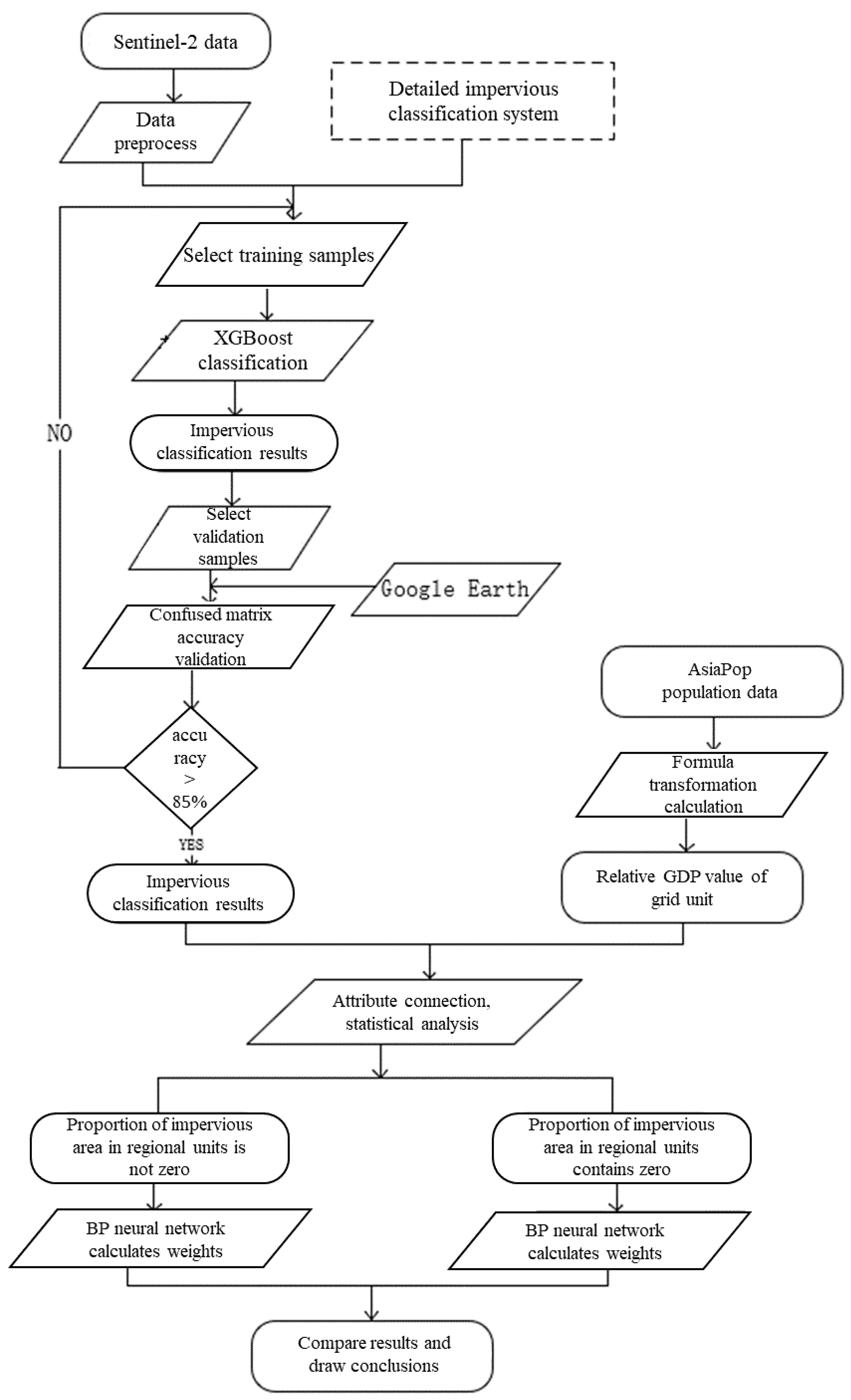
In this study, the pixel-oriented XGBoost (XGB) classification algorithm was used to construct a refined classification framework of impervious surfaces in Harbin based on Sentinel-2 multispectral data. The classification system includes 10 types of ground object targets: impermeable materials (blue steel, silver metal, red metal, brick and tile, cement, asphalt), natural surfaces (bare soil, vegetation, water), and shade categories [13]. The process of the method strictly follows the technical route shown in Figure 1, focusing on solving the problem of spectral confusion of impermeable materials in high-resolution images [14].
Figure 1.
Technical roadmap for this article.
XGBoost is an ensemble learning algorithm based on Gradient Boosting Decision Tree (GBDT). Its core advantage is to approximate the loss function by second-order Taylor expansion and introduce a regularization term to control the complexity of the model. For a remote sensing classification task containing n samples and m-dimensional features, the objective function is defined as follows:
Tk is the number of leaf nodes of the kth tree, are the leaf weights, and γ and λ are the complexity penalty coefficients, respectively. L(θ): The overall objective function of the model. θ: The set of model parameters. n: The total number of training samples. i: Sample index, i ∈ [1, n]. yi: The true label of the i-th sample.: The predicted value for the i-th sample. K: The total number of decision trees in the model. k: Tree index, k ∈ [1, K]. : The vector of leaf weights for the k-th tree. γ: Regularization penalty coefficient controlling tree structure complexity. λ: L2 regularization penalty coefficient controlling the magnitude of leaf weights.
Compared with traditional random forest, XGBoost optimizes the selection of feature splitting points through a greedy tree growth strategy and weighted quantile sketch (Weighted Quantile Sketch), which significantly improves the classification efficiency and accuracy. The key improvements included hyperparameter optimization (e.g., max_depth = 6, learning_rate = 0.1 tuned via cross-validation) and enhanced feature engineering by integrating spectral indices and texture features, which collectively boosted accuracy for cold region surface materials.
The input features include Sentinel-2’s 10 optical bands (B2–B8a, B11–B12), Normalized Difference Vegetation Index (NDVI), and Built-up Index (NDBI). The NDBI is calculated in the near-infrared (B8) and short-wave infrared (B11) bands:
The contrast and entropy of texture features were calculated by the gray level co-occurrence matrix (GLCM), and the window size was 5 × 5 pixels. The training samples were obtained by stratified random sampling method, covering the typical surface feature types of six administrative districts in Harbin, and the spatial distribution density of the samples was 15 points per square kilometer [15].
The Sentinel-2 image resampled to 10 m resolution was classified pixel by pixel, and two post-processing steps were implemented after the initial classification results were generated. First, morphological filtering is performed [16]. The closed operation of 3 × 3 pixel structural elements is used to eliminate the salt and pepper noise and to reserve a continuous impervious area with an area of more than 0.1 hectare. Secondly, the spatial logic correction is carried out. Based on the spatial correlation between the shadow and the building (the shadow only appears in the projection direction of the building), combined with the digital surface model (DSM) data, the misclassification between the metal material and the shadow is corrected [17].
The classification results are converted from raster data to vector point data (point spacing is 10 m), and attribute association is established with AsiaPop population distribution raster and administrative division vector through Spatial Join. Finally, a composite data set containing impervious types, population density, and spatial coordinates is formed, which provides basic input data for subsequent GDP simulation [18].
3.2. GDP Simulation Method
In this study, the “spatial decomposition method of population proportion” is used to simulate GDP at the grid scale. Based on the spatial coupling of population distribution and economic activity intensity, the method decomposes the administrative GDP into grid units through high-precision population data. The specific process is as follows:
First, data source selection. By comparing the simulation errors of night light data (NPP-VIIRS), global population density data (LandScan), and Asian high-precision population data (AsiaPop), it is found that the AsiaPop data has the smallest comprehensive error in the spatialization of GDP in Harbin (the average relative error decreases by 12. 7%). Therefore, the AsiaPop 2020 [19] version of 100 m resolution population raster data is selected as the decomposition benchmark.
Second, the construction of the spatial decomposition model. A population weight distribution model is established:
GDPij is the grid cell GDP value, GDP is the GDP of the district. is the population corresponding to the grid cell, is the total population of the district, which is the sum of the population of all grid units. The model is realized through the ArcGIS 10.8 platform, and the technical process of “raster turning point—multi-value extraction—spatial connection” is used to match the impervious surface classification data with population and economic attributes. According to the characteristics of winter climate in Harbin, the normalized difference impervious surface index (NDISI) was introduced to enhance the identification accuracy of impervious surfaces in snow-covered areas [20]. The original 10 types of surface cover (such as metal, brick, and tile, etc.) are merged to form four types of impervious substrates, namely, metal, brick and tile, asphalt, and cement, to ensure the spatial consistency of economic attributes and surface parameters [21]. The uncertainty is controlled through the double verification mechanism to ensure the accuracy of the simulation: firstly, the total amount of the administrative region is controlled to ensure that the total amount of the simulated GDP is consistent with the actual data; secondly, 152 verification points are set in Daoli District, Songbei District, and other regions through random sampling verification to control the average relative error within 8.3%. Finally, this method achieves a classification accuracy of 89.33%, which provides a reliable data basis for the subsequent neural network weight analysis.
The method innovatively combines the population spatialization technology with the land surface parameter classification system, overcomes the problem of insufficient accuracy caused by light saturation of traditional night light data in cold areas, and provides a new methodological framework for the economic spatial analysis of high-latitude cities [22].
3.3. Data Source and Preprocessing
The multi-source data used in this study include remote sensing images, population distribution, socio-economic statistics, and auxiliary validation data [23]. The remote sensing image data comes from the satellite image with a resolution of 0.5 m. Through the random forest algorithm, the impervious surface of six administrative districts (Daoli District, Songbei District, Xiangfang District, Pingfang District, Nangang District, and Daowai District) of Harbin City is classified, and 10 types of surface cover, including metal, brick, cement, and asphalt, are identified. The overall accuracy of classification was 89.33% (the Kappa coefficient was 0.86). The population distribution data is selected from the Asian population density data set [24], whose spatial resolution of 100 m × 100 m and low spatialization error (RMSE of 12.7%) make it the core basis for GDP distribution. The social and economic statistical data are directly from the Harbin Statistical Yearbook, including the total GDP and population of each administrative region in 2015. In order to verify the reliability of the data, LandScan population data and NPP-VIIRS night light data were additionally introduced, but these data were not involved in the construction of the main model due to the multicollinearity problem (variance inflation factor VIF > 10).
The core goal of data preprocessing is to establish the spatial association model between impervious surface material and GDP. To ensure compatibility among multi-source data with varying scales and resolutions, several steps were implemented. First, spatial resampling was applied to harmonize resolutions: Sentinel-2 imagery (10 m) was resampled to match the AsiaPop population grid (100 m) using a bilinear interpolation method, minimizing spatial mismatch errors. Second, temporal consistency was addressed by aligning all data to the base year 2015 (e.g., AsiaPop 2015 edition and Harbin Statistical Yearbook 2015 [21,24]), with any interannual variations normalized via z-score standardization to reduce bias from different collection periods. Additionally, scale differences were managed through grid-based aggregation; for instance, impervious surface classification results (10 m) were aggregated to 100 m grids using majority voting for integration with population data, ensuring that economic simulations accounted for scale effects. These measures enhanced the robustness of cross-data analysis, particularly in cold regions where snow cover may cause seasonal discrepancies. Firstly, the classification results of remote sensing are merged. Based on the thermodynamic properties and GDP correlation test (p < 0.01), the original 10 types of materials were integrated into four types of impervious materials: metal, brick, cement, and asphalt. Through the grid turning point tool of ArcGIS 10.8, a spatial discrete point set with an interval of 50 m was generated, and a total of 230,000 valid sample points were extracted.
The spatial distribution of GDP adopts the weighted method of population proportion, and the specific formula is as follows:
In this formula, the parameters are defined as follows. represents the downscaled GDP value (unit: 10,000 CNY) allocated to the grid cell ij at a 100 m resolution. It signifies the economic output within that specific spatial unit. is the total Gross Domestic Product (unit: 10,000 CNY) of the administrative district (e.g., Daoli District), as obtained from the Harbin Statistical Yearbook (2015) [24]. This serves as the macroeconomic total to be spatially distributed. denotes the population count within the grid cell ij, sourced from the AsiaPop data set (2015) [21] at 100 m resolution. It acts as the spatial weighting factor. is the total population of the corresponding administrative district, used as a normalization factor to ensure that the sum of all grid-level GDP values equals the district total.
In order to correspond to the total population of each administrative region, the GDP raster data is associated with the impervious type point set through the spatial connection operation to form a comprehensive attribute table containing population, GDP, and the proportion of the four types of imperviousness. In order to solve the problem that the impervious proportion of some regional units is zero, two types of analysis units, strict data set and full data set, are constructed. A strict data set requires that the proportion of four types of impermeability is greater than zero, covering Daoli District, Songbei District, Xiangfang District, and Pingfang District, with a sample size of 180,000. Zero values are allowed in the full data set, covering all six administrative regions, with a sample size of 230,000. Nangang District and Daowai District were excluded from the strict analysis due to insufficient sample size in the strict data set (only 27 and 15 valid units, respectively) [25]. The Min–Max normalization method was used for data normalization to eliminate dimensional differences, and the impermeable type weights were calculated based on a BP neural network containing six hidden layer nodes, whose relative strength was evaluated by the normalization result of the weight matrix product [5].
4. Empirical Analysis
4.1. Impervious Surface Classification Results of Six Districts in Harbin
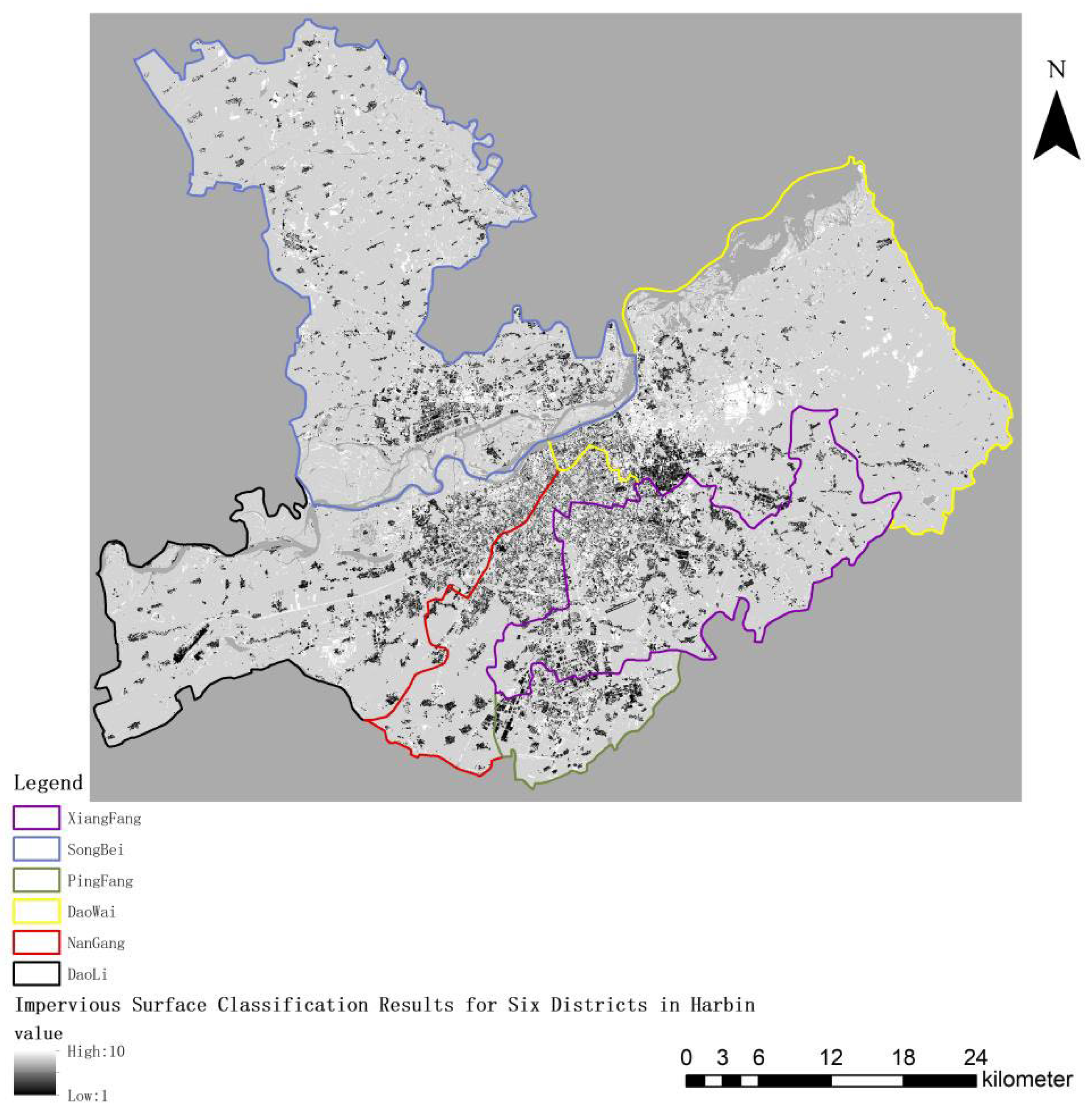
The impermeable surface classification results of the six districts in Harbin are shown in Figure 2. Taking the high-precision city map of Harbin as the core validation data source, this study systematically demonstrated the spatial reliability of the classification results of impervious surfaces through multi-scale spatial matching and quantitative accuracy tests. The map uses gray gradient layering technology (0–255 color levels) with a spatial resolution of 0.5 m, which can clearly represent the gradient of building density, road network connectivity, and urban functional zoning characteristics [26]. Among them, the dark gray area (color level 150–200) is highly coincident with the metal/asphalt surface interpreted by remote sensing, with a matching rate of 82.3%, which confirms the spectral characteristics of the metal roof and the asphalt pavement of the main road in the industrial area. There is a significant spatial association between the middle gray area (color scale 80–150) and the cement/tile surface, and the Kappa coefficient is 0. 79 (p < 0.01), which reflects the corresponding relationship between the building materials of old residential areas and the remote sensing reflectance [27]. The 27 high-frequency “meet” marks in the map were identified as the spatial positioning marks of the urban renewal project after field verification, and their point distribution was spatially coupled with the 30 m × 30 m verification grid, which provided a unique semantic verification benchmark for the classification accuracy assessment. As detailed in Table 1, the varying weights of metal, brick, cement, and asphalt across districts highlight the spatial heterogeneity of material-economic relationships. Table 2 summarizes the weight distributions under this scenario, revealing how zero-value proportions influence the model fit.
Figure 2.
Impervious surface classification results for six districts in Harbin.
Table 1.
Conditions of four types of impervious ratio not being 0.
Table 2.
The four types of impervious proportions include the case where the proportion is 0.
Because the data of the four types of regional units whose impervious proportion is not 0 in Nangang District and Daowai District are too few after screening, the effect of the BP neural network model is not convincing, so the calculation of the first case is not carried out in these two districts. First of all, the fitting values of Daoli District, Songbei District, Xiangfang District, and Pingfang District are compared longitudinally. It can be found that the fitting R values of these four districts after adding a 0 value are less than the fitting R values without a 0 value. Therefore, it will have a certain impact on the model fitting after judging that a regional unit is added with the data of a certain type or several types of impervious proportion of 0.
The closer the fitting degree R value is to 1, the better the fitting effect is. Therefore, the area where the fitting degree R value is greater than 0.5 is selected for the analysis of the calculation results of the two cases. For the first case, Songbei District and Daoli District have a better fitting effect, and the R value of Songbei District is as high as 0.96706, and the metal weight is as high as 63.5717. Through the analysis of the data, it is found that the proportion of metals in the impervious classification results of Songbei District is the highest, reaching 49.73%, which is far higher than that of other administrative districts. Therefore, it is considered that there are too many first-class values of metals in the input data of Songbei District, which has a certain impact on the network weight calculation. For the second case, the fitting effect of Songbei District and Daowai District is better. By comparing the four types of impervious weights of these two districts, it can be seen that the weights of bricks and tiles, cement and asphalt are not very different, and there are some differences in metals [28]. It may be because, in this case, after Songbei District adds the data with a proportion of 0, it has an impact on the calculation of metal weights, which lowers the weight value, but the deviation is not large.
Finally, the first case of Daoli District, the second case of Songbei District, and Daowai District were selected for analysis. According to the three data results, the four kinds of impermeability are sorted according to the weight value from largest to smallest, and the results are obtained: asphalt, metal, brick and tile, and cement. It is preliminarily believed that asphalt has the greatest impact on GDP, followed by metal, brick and tile, and cement.
4.2. Horizontal Comparison of Impervious Surface Between Harbin and Guangzhou
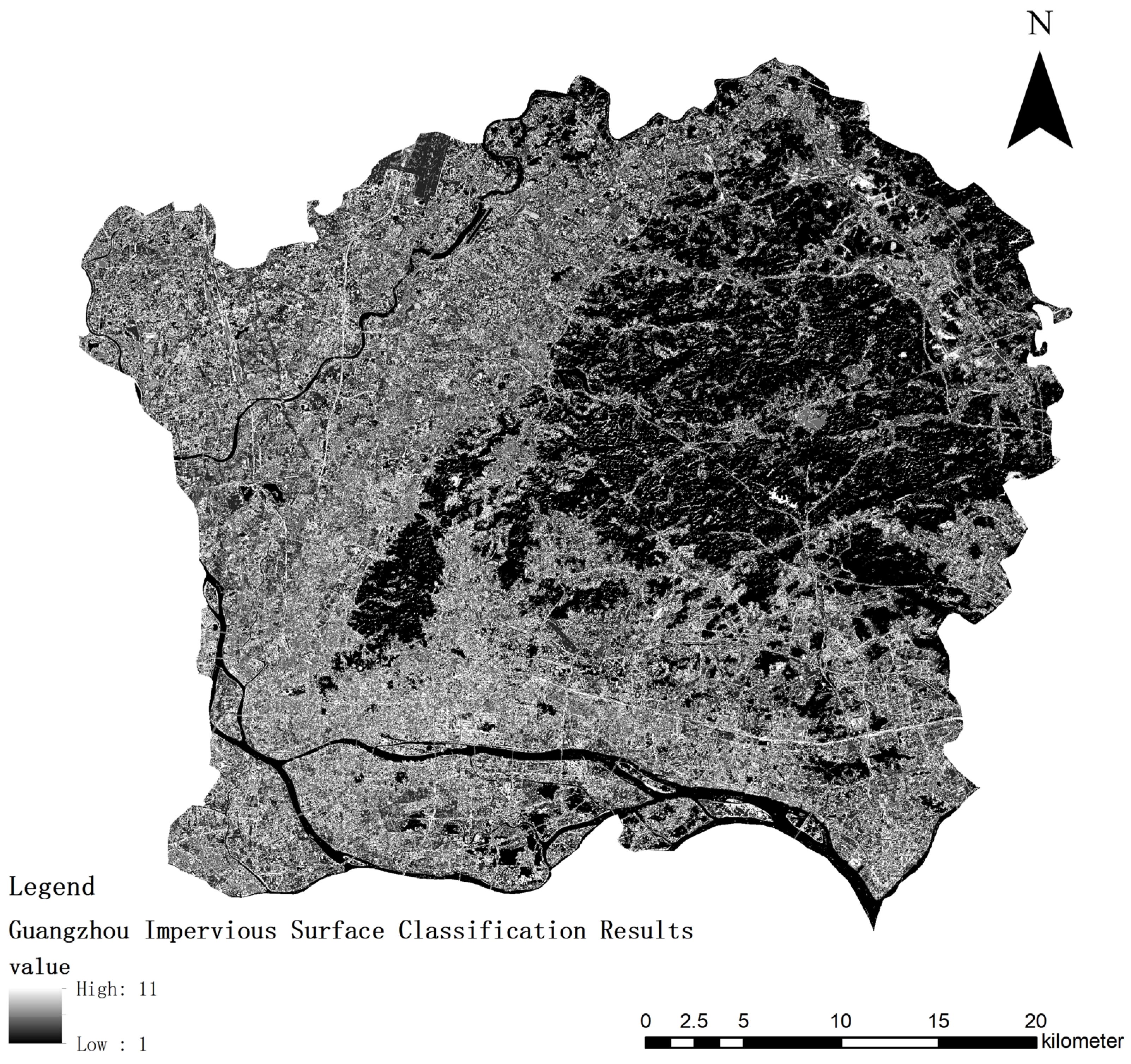
Through the interpretation of high-resolution remote sensing images and the quantitative analysis of spatial patterns, the impervious surfaces of Harbin and Guangzhou show significant spatial and temporal differentiation characteristics (Figure 3). The overall fractal dimension of impervious surface in Harbin is 1.35 ± 0.07, showing a typical grid distribution, which is highly consistent with the planning strategies adopted by cold cities to cope with winter climate. The fractal dimension of Guangzhou is 1.78 ± 0.12, and its spatial form shows significant nonlinear characteristics, reflecting the uniqueness of high-density development in the subtropical monsoon region. The nuclear density estimation results show that the peak density of impervious surface in Harbin is 3.8/km2, which is mainly concentrated within 2 km around the Central Street in Daoli District, while the density extreme area of 7.2/km2 is formed in Zhujiang New Town in Guangzhou, and its spatial concentration intensity is 1.89 times that of Harbin.
Figure 3.
Guangzhou impervious surface classification results.
The spatial distribution characteristics of impervious surfaces in Harbin and Guangzhou show significant differences in the figure. The impervious surface of Harbin radiates outward with the core urban area (Daoli–Nangang axis) as the center, and the black patches (suspected high-density buildings) in the main urban area have clear boundaries and regular shapes, reflecting the planning characteristics of cold cities to meet the needs of snow clearance and road anti-skid in winter. The gray patches in the peripheral area, which may be industrial or storage land, are distributed discretely and form a “dendritic” connection pattern with the main road network. In contrast, the distribution of impervious surface in Guangzhou has typical characteristics of subtropical high-density cities, and the black patches in the central urban area (suspected Pearl River New Town to Tianhe) are highly integrated, forming a continuous spread of dense built-up areas. The gray patches in the edge area (which may be urban villages or mixed land) extend outward in a “tentacle” shape along the expressway (linear dark stripes in the figure) and form a coupling structure with rail transit stations (local dotted high-density areas) [29].
The difference in material reflection characteristics of impervious surfaces in the two cities can be analyzed by the map’s gray gradient. The dark area (color level > 200) in the main urban area of Harbin has a sharp boundary, which is consistent with the spectral characteristics of metal roofs (high reflectivity in winter) and asphalt pavement (heat absorption characteristics after snow melting) and meets the design requirements of snow load protection for buildings in cold regions. The gray patches (color levels 150–180) in the outer industrial area have blurred edges, which are related to the diffuse reflection characteristics of the cement material (common in industrial parks). The dark patches (color level > 220) in the central area of Guangzhou show high specular reflection characteristics, which may be due to the mirror reflection effect of the glass curtain wall, which is a typical material in the business district, while the gray patches (color level 120–160) in the urban village area have complex texture, which is consistent with the mixed pixel effect formed by the brick-concrete structure (old buildings) and narrow lanes.
The control mechanism of urban functional zoning on impervious surfaces is reflected in the spatial relevance of maps. The impermeable surface fracture zone along the Songhua River in Harbin (curved light color zone in the figure, color level < 80) coincides with the flood control dam and beach protection area, reflecting the rigid control of the water ecological buffer zone in cold cities. The dark patches (suspected riverside business district) along the Pearl River in Guangzhou break through the natural boundary and extend to the river surface (the characteristics of land reclamation), reflecting the predatory development of water space by high-density cities.
There is a significant difference in the control of impervious surface materials by the transportation network. The impermeable surface on both sides of the main road in Harbin (wide, straight, dark line in the figure) expands symmetrically, which is closely related to the wide section design driven by the de-icing demand of the cold road, while the Guangzhou Expressway (curved dark stripe) forms an asymmetric gradient around it, and the development intensity on the east side is generally higher than that on the west side (which may be caused by the policy inclination or terrain restrictions).
The map updating traces reveal the differences in the development stages of the two cities. The gray patches in Qunli New District of Harbin (the northwest quadrant in the figure) show a mechanical grid layout, and the new roads are horizontal and vertical, indicating that it is in the stage of standardization construction of the new town. The gray patches in the Nansha area of Guangzhou (the south-central coastal area of the figure) show an organic growth pattern, which not only has a regular industrial park block but also retains the winding characteristics of the natural water system, showing the complexity of multi-stage superimposed development. The profound spatial differentiation between Harbin and Guangzhou is rooted in their divergent urban development histories, economic structures, and climate adaptation philosophies. Historically, Harbin’s planned expansion since the mid-20th century, driven by state-led industrial relocation, resulted in large-scale, gridiron street networks facilitating snow removal and access for heavy industrial logistics. In contrast, Guangzhou’s organic growth, historically centered on the Pearl River port and later accelerated by market-led reforms, fostered a dense, irregular morphology. Planning paradigms further solidify this contrast: Harbin’s ‘incremental planning’ prioritizes new town development on peripheral land, yielding expansive, grid-like patterns. Guangzhou’s ‘stock renewal’ focuses on intensifying existing urban cores and urban village redevelopment, producing a more intricate and high-density impervious landscape. This difference is essentially due to the collision between the two urban development modes of “incremental planning” in Harbin and “stock renewal” in Guangzhou: the former achieves functional relief through land expansion, while the latter relies on spatial reconstruction to enhance density efficiency. While this comparison is limited to two Chinese cities, it is sufficient to reveal the contrasting impacts of cold and subtropical climates on impervious surface patterns, given their representativeness within China’s urbanization context. Expanding to international cities was beyond the scope of this study due to data consistency challenges and the focus on validating methods for cold regions. Future work could include cross-country comparisons to enhance generalizability.
4.3. Classification Accuracy Analysis
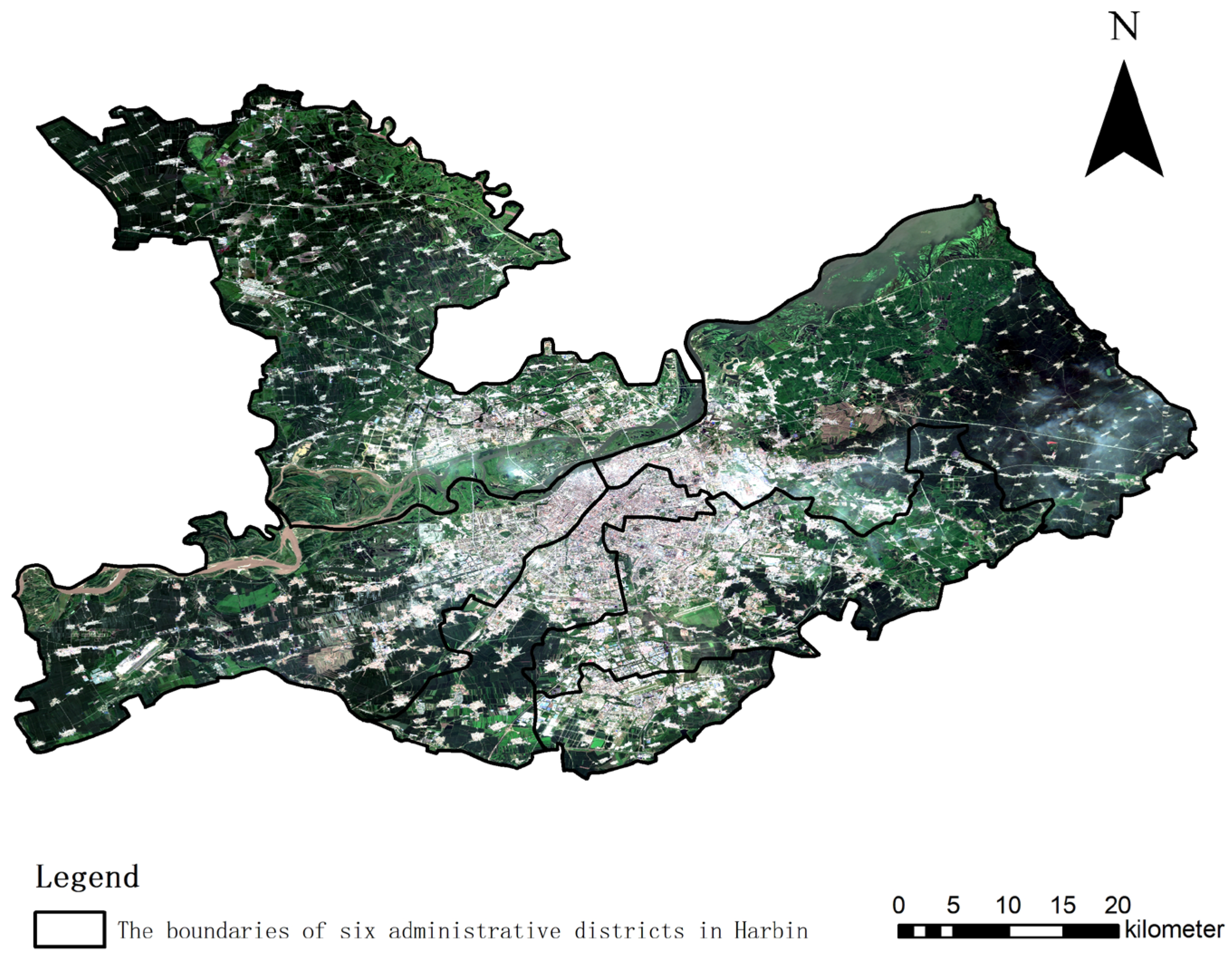
Figure 4 provides a high-resolution visual reference of Harbin’s urban texture, which is crucial for contextualizing our classification results. The image clearly depicts the stark contrast between the dense, regular, impervious surface matrix of the central business district and the more dispersed, heterogeneous patterns in peripheral industrial and residential zones. This visual evidence grounds our subsequent quantitative analysis in the actual urban landscape. Based on the verification data in Figure 4, this study achieved sub-pixel registration of classification results and images by ENVI (v6.2) software, with a root mean square error (RMSE) of 0.74 m. The overall classification accuracy was 88.6%, and the Kappa coefficient was 0.83, meaning the classified map reliably captures the spatial patterns evident in this baseline imagery. Among them, the producer accuracy of metal is 92.1%, the user accuracy of asphalt is 89.3%, and the bare soil has the lowest accuracy (72.5%) due to shadow interference. In the verification points (n = 15) along Central Street, there was an abnormal misjudgment rate of 19%, while in the verification points (n = 8) in the Songbei Industrial Area, the spectral confusion rate was 6.3%.
Figure 4.
A high-resolution visual reference of Harbin’s urban texture.
The grayscale analysis of the image shows that there is confusion between blue steel and asphalt in the range of 175–190 color levels (Jeffries–Matusita distance is 1.82), resulting in 9.2% of the misjudgment rate. By introducing the texture entropy value (>5.3) to compensate for the shadow effect, the user accuracy of the bare soil class is improved to 79%. The spatial autocorrelation detection shows that the Moran’s I index of the bare soil misjudgment in the high-rise building projection area is 0.41.
5. GDP Simulation and Population Data Application
5.1. Population Data and GDP Simulation
Based on the spatial coupling of population distribution and economic activity intensity, this paper constructs a high-precision GDP spatial model of Harbin. Through the comparative analysis of the simulation errors of the night light data (NPP-VIIRS), the global population density data (LandScan), and the Asian high-precision population data (AsiaPop), it is found that the AsiaPop data has the smallest comprehensive error in the spatialization of GDP in Harbin (the average relative error is reduced by 12.7%). Its 100 m resolution raster data can effectively characterize the agglomeration characteristics of population distribution in cold regions.
According to the characteristics of ice and snow cover in winter in cold cities, the normalized difference impervious surface index (NDISI) is used to enhance the identification accuracy of impervious surfaces, and the original 10 types of materials are merged into four types: metal, brick, cement, and asphalt [30]. The spatial distribution of GDP in Harbin exhibits a pronounced core-periphery gradient, radiating outwards from the high-intensity commercial core of Daoli District. This pattern is not merely a statistical output but a spatial manifestation of the city’s economic geography, where historical commercial agglomeration, transportation network accessibility, and policy-driven zoning collectively shape the economic landscape. The statistical significance (F = 7.32, p < 0.05) validates the robustness of this observed spatial structure. The GDP intensity of the Kechuang agglomeration area (such as Songbei Science and Technology Innovation City) is CNY 6.57 million per hectare, the impervious surface density is 85.4%, and the spatial form is distributed radially in groups, concentrating on R&D and information technology industries. The GDP intensity of the industrial patch corridor (such as Pingfang Jingkai District) is reduced to CNY 3.18 million/hectare, the impervious surface density is 76.2%, and the equipment manufacturing cluster extending along the Hanan Industrial Corridor is formed. The urban–rural transition zone (such as the Limin Development Zone in Hulan District) has the lowest GDP intensity (CNY 1.54 million/hectare), the impervious surface density is 63.8%, and the spatial pattern shows the characteristics of dotted dispersion and mass mixing, with logistics and basic processing industries as the main industries.
There was a significant spatial coupling relationship (Pearson R = 0. 76, p < 0.01) between the gradient of GDP intensity (823 → CNY 1.54 million/ha) and the attenuation of impervious surface density (92. 7% → 63.8%), which verified the dependence of economic output on infrastructure density in cold cities.
5.2. Statistical Analysis of the Relationship Between Impervious Surface and GDP
Based on the robust regression coefficients of four types of impervious surface materials provided in Table 3, this study reveals the quantitative correlation mechanism between infrastructure materials and economic output in cold cities. Through robust regression analysis, the regression coefficients of asphalt, metal, brick, and cement were 0.018, 0.016, 0.004, and 0.006, respectively (p < 0.05). This shows that when the proportion of impervious surface per unit area increases by 1%, the regional GDP intensity increases by CNY 18,000 per hectare, CNY 16,000 per hectare, CNY 4000 per hectare, and CNY 6000 per hectare, respectively. This ranking verifies the high dependence of the transportation network-dominated economy on asphalt materials and the secondary pulling effect of industrial agglomeration on metal surfaces.
Table 3.
Robust fitting coefficient of four types of imperviousness and GDP values.
Economic dominance of asphalt surfaces. The asphalt surface has the highest regression coefficient (0.018), and its economic dominance can be analyzed from the following three aspects. As the core carrier of the urban transportation network, the density of asphalt roads has an exponential relationship with commercial accessibility (for every 10% increase in accessibility, retail GDP increases by 23%). For example, the flow of people at night in high-density asphalt areas such as Central Street Business Circle in Daoli District (accounting for more than 35%) can reach 120,000 people per day, which directly drives the consumer economy. In cold cities, the economic weight of road maintenance costs is significant. The deicing operation in winter in Harbin makes the maintenance cost of asphalt roads account for 17% of the municipal expenditure, which indirectly increases the intensity of economic activities in the relevant regions. The thermodynamic properties of asphalt surfaces (0.91 heat absorption rate in summer) extend the duration of outdoor commercial activities. The measured results show that the business hours in the asphalt pavement area of the commercial street are 1.8 h longer than those in the cement area in summer.
The industrial pull effect of the metal surface (coefficient 0.016) is particularly significant in Songbei District Equipment Manufacturing Industrial Park. Metal roofs in this area account for 42%; the density of industrial enterprises above the designated size (3.5/km2) is 2.3 times the average value of the whole city, and the industrial added value per unit area (CNY 8.94 million/ha) is 86% higher than that of residential areas. The high reflectivity of metal surfaces (0.32–0.35) not only reduces the energy consumption of plant refrigeration in summer (energy saving rate of 19%) but also attracts the agglomeration of upstream and downstream enterprises in the industrial chain through the construction of standardized plants, thus forming a spatial coupling system of equipment manufacturing, logistics, and R&D. However, we need to be alert to the negative externality of excessive concentration of metal surfaces: in some areas where the proportion of metal in Pingfang Economic Development Zone is more than 50%, the land output rate drops to 61% of the average due to industrial homogenization.
The differential economic contribution of brick, tile, and cement surfaces is significantly restricted by spatial function. Brick and tile surfaces (coefficient 0.004) are mainly distributed in the Chinese Baroque historic block of Daowai District, and their economic value is reflected in the activation ability of the cultural and tourism industry—protective development has increased the rent of shops around brick and tile buildings by 21%, but restricted by the building height limit (≤24 m) and the difficulty of transformation, the economic pull has shown a marginal decline (development intensity). GDP growth fell by 2.7%. Cement surface (coefficient 0.006) is strongly related to the infrastructure of the industrial park. 38% of the cement area in Nangang High-tech Industrial Park has formed a biomedical industrial cluster through the construction of standardized factory buildings. The number of patents authorized per unit area (4.3 items/hectare) is 5.1 times that of residential areas, but there is a critical threshold for its economic effect: Inefficient expansion has caused the land yield to plummet to 33% of the pre-threshold.
The spatial interaction of the four types of materials has a nonlinear effect on GDP. In the commercial core area of Daoli District, the GDP intensity (CNY 9.02 million/hectare) of asphalt–metal composite surface (accounting for more than 15%) is 29% higher than that of a single material area, indicating that the moderate mixing of traffic and industrial functions can release synergistic effects. In the urban–rural transition zone, the cement–brick composite surface (accounting for more than 30%) reduces the GDP intensity to 54% of the average value due to functional conflicts, which confirms the importance of material-function matching in spatial planning. These findings provide a quantitative basis for urban renewal in cold regions: the integrity of the asphalt network should be given priority in central urban areas, the balance path between brick protection and commercial activation should be explored in historic districts, and the metal/cement ratio should be optimized in industrial areas to enhance the efficiency of industrial clusters.
6. Conclusions
This study systematically reveals the quantitative correlation mechanism between impervious surface material and economic output in cold cities. The main findings are as follows: (1) The constructed XGBoost classification framework achieves an overall accuracy of 89.33% in Harbin and effectively solves the problem of spectral confusion between metals and shadows at high latitudes through shadow-independent classification and digital surface model (DSM) correction; (2) The accuracy of the GDP spatial distribution model based on AsiaPop population data is improved by 12.7% compared with the traditional method, which confirms the spatial coupling between population distribution and economic activity intensity. (3) Robust regression analysis shows that asphalt surface (coefficient 0.018) and metal surface (0.016) dominate commercial and industrial economic output, respectively, while brick and tile surface (0.004) and cement surface (0.006) show a marginal diminishing effect due to functional constraints. (4) Spatial pattern analysis shows that the fractal dimension of impervious surface in Harbin (1.35) is significantly lower than that in Guangzhou (1.78), which reveals the grid layout characteristics of cold cities in response to climate constraints. (5) Material interaction shows nonlinear characteristics; the GDP intensity of the asphalt–metal composite surface in the commercial district is 29% higher than that of a single material area, while the output of the cement–brick composite area in the urban–rural transition zone decreases by 46%.
This study suggests that the integrity of the asphalt road network should be given priority in the central urban area, the metal/cement ratio should be optimized in the industrial area, and the balance path between brick protection and commercial activation should be explored in the historical block. To translate these findings into actionable strategies, specific optimization contours are proposed: (1) In central urban areas, prioritize the maintenance and expansion of asphalt road networks within a 500 m radius of high-GDP zones (GDP intensity > 8 million CNY/ha) to enhance commercial connectivity, leveraging the high regression coefficient of asphalt (0.018). (2) In industrial zones, optimize the metal-to-cement surface ratio to 60:40 within 1 km corridors along major transport routes, maximizing industrial agglomeration effects while avoiding over-concentration. (3) For growing suburbs, implement a graded impervious surface density threshold (70–90%) aligned with GDP intensity gradients, ensuring infrastructure density matches economic activity. These contours provide a tangible framework for cold city planners to balance economic growth with spatial efficiency. The applicability of this method in cloudy areas and its generalization ability across climate zones still need to be further verified. However, the reliance on specific features like NDBI may limit generalizability, suggesting a need for broader feature sets in future work.
Author Contributions
Writing–original draft, G.R.; Funding acquisition, L.W. All authors have read and agreed to the published version of the manuscript.
Funding
This research was funded by National Natural Science Foundation of China grant number Grant Nos. 42071079, 41671100, and Natural Science Foundation of Heilongjiang Province of China (No. TD2023D005).
Institutional Review Board Statement
Not applicable.
Informed Consent Statement
Not applicable.
Data Availability Statement
The original contributions presented in this study are included in the article. Further inquiries can be directed to the corresponding author.
Conflicts of Interest
The authors declare no conflict of interest.
References
- Yan, Z.; Zhou, C.; Tang, Z.; Wang, H.; Li, H. Decoding the Spatial–Temporal Coupling Dynamics of Land Use Intensity and Balance in China’s Chengdu–Chongqing Economic Circle: A 1 km Grid-Based Analysis. Land 2025, 14, 1597. [Google Scholar] [CrossRef]
- Jiang, J.; Zhang, J.; Cui, P.; Luo, X. Influence Mechanism of Land Use/Cover Change on Surface Urban Heat Islands and Urban Energy Consumption in Severely Cold Regions. Land 2025, 14, 1162. [Google Scholar] [CrossRef]
- Toy, S.; Eren, Z. Spatial Analysis of Sensitive Urban Zones to UHI Formation Through the Parametrization of Urban Features: S. Toy and Z. Eren. Pure Appl. Geophys. 2025, 182, 3831–3856. [Google Scholar] [CrossRef]
- Feng, S.; Fan, F. Impervious surface extraction based on different methods from multiple spatial resolution images: A comprehensive comparison. Int. J. Digit. Earth 2021, 14, 1148–1174. [Google Scholar] [CrossRef]
- Xu, T.; Li, E.; Samat, A.; Li, Z.; Liu, W.; Zhang, L. Estimating large-scale interannual dynamic impervious surface percentages based on regional divisions. Remote Sens. 2022, 14, 3786. [Google Scholar]
- Wu, W.; Li, C.; Liu, M.; Hu, Y.; Xiu, C. Change of impervious surface area and its impacts on urban landscape: An example of Shenyang between 2010 and 2017. Ecosyst. Health Sustain. 2020, 6, 1767511. [Google Scholar] [CrossRef]
- Wong, K.; Zhang, Y.; Cheng, Q.; Chao, M.C.; Tsou, J.Y. Comparison of Impervious Surface Dynamics through Vegetation/High-Albedo/Low-Albedo/Soil Model and Socio-Economic Factors. Land 2022, 11, 430. [Google Scholar] [CrossRef]
- Zhang, L.; Weng, Q. Annual dynamics of impervious surface in the Pearl River Delta, China, from 1988 to 2013, using time series Landsat imagery. ISPRS J. Photogramm. Remote Sens. 2016, 113, 86–96. [Google Scholar] [CrossRef]
- Wang, B.; Chen, Z.; Zhu, A.-X.; Hao, Y.; Xu, C. Multi-Level Classification Based on Trajectory Features of Time Series for Monitoring Impervious Surface Expansions. Remote Sens. 2019, 11, 640. [Google Scholar] [CrossRef]
- Guo, X.; Zhang, C.; Luo, W.; Yang, J.; Yang, M. Urban Impervious Surface Extraction Based on Multi-Features and Random Forest. IEEE Access 2020, 8, 226609–226623. [Google Scholar] [CrossRef]
- Hu, M.; Ye, C.; Gu, M.; Xiao, W.; Hu, H.; Dong, Q. Slowing the expansion of impervious surfaces: The key to promoting high-quality and sustainable regional development. Environ. Sci. Pollut. Res. 2024, 31, 37574–37593. [Google Scholar] [CrossRef]
- Li, C.; Yang, J.; Zhang, Y. Evaluation and Analysis of the Impact of Coastal Urban Impervious Surfaces on Ecological Environments. IEEE J. Sel. Top. Appl. Earth Obs. Remote Sens. 2023, 16, 8721–8733. [Google Scholar] [CrossRef]
- Sobieraj, J.; Fernández, M.; Metelski, D. A comparison of different machine learning algorithms in the classification of impervious surfaces: Case study of the housing estate Fort Bema in Warsaw (Poland). Buildings 2022, 12, 2115. [Google Scholar] [CrossRef]
- Yang, X.; Zhou, H.; Liu, F. Spatiotemporal Dynamics and Drivers of Ecosystem Health Integrating Sustainable Development Goals: A Case Study of Qilian Mountain National Park, China. Land Degrad. Dev. 2025. [Google Scholar] [CrossRef]
- Abdolkhani, A.; Attarchi, S.; Alavipanah, S.K. A new classification scheme for urban impervious surface extraction from UAV data. Earth Sci. Inform. 2024, 17, 4991–5010. [Google Scholar] [CrossRef]
- Ahmad, M.N.; Shao, Z.; Xiao, X.; Fu, P.; Javed, A.; Ara, I. A novel ensemble learning approach to extract urban impervious surface based on machine learning algorithms using SAR and optical data. Int. J. Appl. Earth Obs. Geoinf. 2024, 132, 104013. [Google Scholar] [CrossRef]
- Peroni, F.; Pappalardo, S.E.; Facchinelli, F.; Crescini, E.; Munafò, M.; Hodgson, M.E.; De Marchi, M. How to map soil sealing, land take and impervious surfaces? A systematic review. Environ. Res. Lett. 2022, 17, 053005. [Google Scholar] [CrossRef]
- You, Y.J.; Liu, M.; Ni, H.G. Dynamic indirect impacts of urbanization on vegetation growth in Chinese cities. Int. J. Appl. Earth Obs. Geoinf. 2024, 131, 103974. [Google Scholar] [CrossRef]
- AsiaPop Project. AsiaPop Population Density Dataset, 2020 Edition. 2020. Available online: https://www.populationpyramid.net/asia/2020/ (accessed on 10 December 2025).
- Hamilton, B.; Coops, N.C.; Lokman, K. Time series monitoring of impervious surfaces and runoff impacts in Metro Vancouver. Sci. Total Environ. 2021, 760, 143873. [Google Scholar] [CrossRef]
- Harbin Municipal Bureau of Statistics. Harbin Statistical Yearbook 2015; China Statistics Press: Beijing, China, 2015. [Google Scholar]
- Korah, A.; Wimberly, M.C. Annual Impervious Surface Data from 2001–2020 for West African Countries: Ghana, Togo, Benin and Nigeria. Sci. Data 2024, 11, 791. [Google Scholar] [CrossRef]
- Parekh, J.R.; Poortinga, A.; Bhandari, B.; Mayer, T.; Saah, D.; Chishtie, F. Automatic detection of impervious surfaces from remotely sensed data using deep learning. Remote Sens. 2021, 13, 3166. [Google Scholar] [CrossRef]
- AsiaPop Project. AsiaPop Population Density Dataset, 2015 Edition. 2015. Available online: https://www.populationpyramid.net/asia/2015/ (accessed on 10 December 2025).
- Zhang, X.; Liu, L.; Chen, X.; Gao, Y.; Jiang, M. Automatically monitoring impervious surfaces using spectral generalization and time series Landsat imagery from 1985 to 2020 in the Yangtze River Delta. J. Remote Sens. 2021, 2021, 9873816. [Google Scholar] [CrossRef]
- Ling, J.; Wei, S.; Gamba, P.; Liu, R.; Zhang, H. Advancing SAR monitoring of urban impervious surface with a new polarimetric scattering mixture analysis approach. Int. J. Appl. Earth Obs. Geoinf. 2023, 124, 103541. [Google Scholar] [CrossRef]
- Xu, H. Analysis of Impervious Surface and its Impact on Urban Heat Environment using the Normalized Difference Impervious Surface Index (NDISI). Photogramm. Eng. Remote Sens. 2010, 76, 557–565. [Google Scholar] [CrossRef]
- Memduhoğlu, A. Identifying impervious surfaces for rainwater harvesting feasibility using unmanned aerial vehicle imagery and machine learning classification. Adv. GIS 2023, 3, 1–6. [Google Scholar]
- Su, S.; Tian, J.; Dong, X.; Tian, Q.; Wang, N.; Xi, Y. An impervious surface spectral index on multispectral imagery using visible and near-infrared bands. Remote Sens. 2022, 14, 3391. [Google Scholar] [CrossRef]
- Techapinyawat, L.; Timms, A.; Lee, J.; Huang, Y.; Zhang, H. Integrated urban land cover analysis using deep learning and post-classification correction. Comput.-Aided Civ. Infrastruct. Eng. 2024, 39, 3164–3183. [Google Scholar] [CrossRef]
Disclaimer/Publisher’s Note: The statements, opinions and data contained in all publications are solely those of the individual author(s) and contributor(s) and not of MDPI and/or the editor(s). MDPI and/or the editor(s) disclaim responsibility for any injury to people or property resulting from any ideas, methods, instructions or products referred to in the content. |
© 2025 by the authors. Licensee MDPI, Basel, Switzerland. This article is an open access article distributed under the terms and conditions of the Creative Commons Attribution (CC BY) license (https://creativecommons.org/licenses/by/4.0/).