

The Influence of Perceived Organizational Support on Sustainable AI Adoption in Digital Transformation: An Integrated SEM–ANN–NCA Model


Abstract
1. Introduction
2. Theoretical Foundation and Hypothesis Development
2.1. Sustainable AI Adoption: Concept and Literature Background
2.2. An Integrated Multi-Theoretical Framework for Sustainable AI Adoption
2.3. The Connotation and Mechanisms of Multidimensional Organizational Support
2.4. Organizational Support in Alleviating Technostress (H1–H3)
2.5. Organizational Support in Reducing Innovation Resistance (H4–H6)
2.6. Technostress Intensifies Innovation Resistance (H7)
2.7. Innovation Resistance Inhibits AI Technology Acceptance (H8)
2.8. Organizational Support Promotes AI Technology Acceptance (H9–H11)
2.9. Technostress Inhibits AI Technology Acceptance (H12)
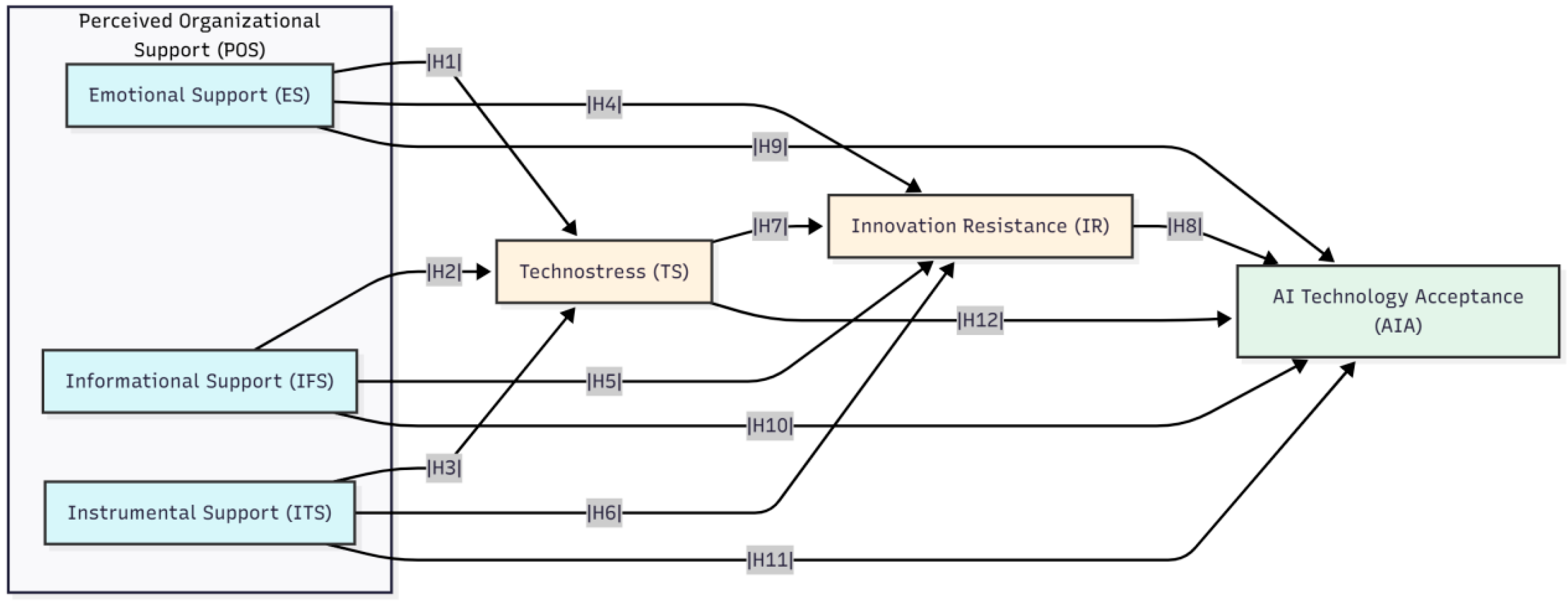
2.10. Theoretical Integration and Research Framework
3. Research Methodology
3.1. Overview of Research Design
3.2. Sample Selection and Distribution
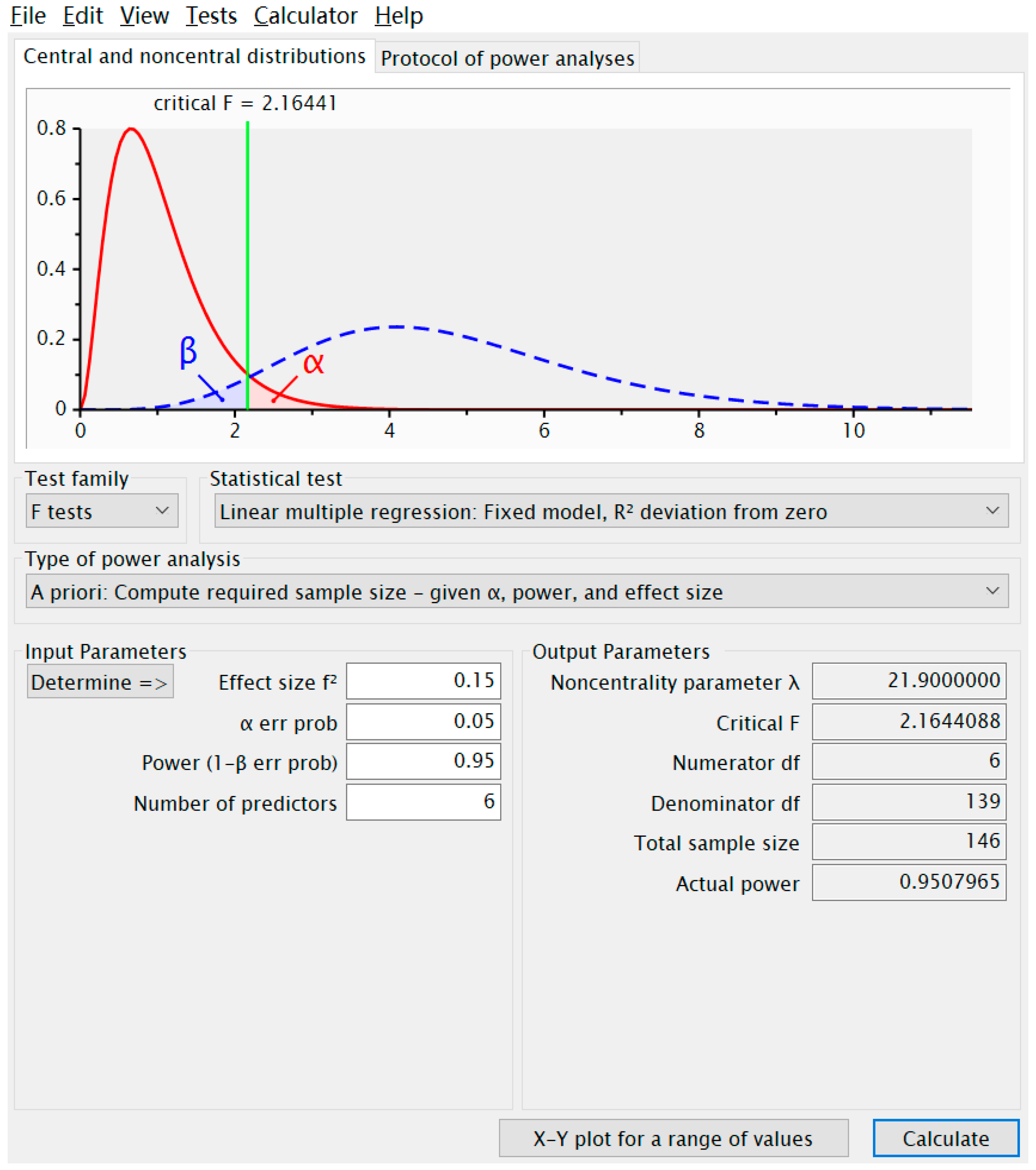
3.3. Basis for Sample Size Calculation
3.4. Variable Measurement and Scale Design
3.5. Data Analysis Methods
3.5.1. Structural Equation Modeling (SEM): Path Verification and Mediation Effect Identification
3.5.2. Artificial Neural Network (ANN): Identification of Nonlinear Relationships and Variable Importance Ranking
3.5.3. Necessary Condition Analysis (NCA): Threshold Identification and Necessity Reasoning
4. Data Analysis and Results
4.1. Sample Characteristics Description
4.2. Reliability and Validity Analysis
4.2.1. Descriptive Statistics and Normality Test
4.2.2. Reliability Analysis
4.2.3. Validity Analysis
4.2.4. Convergent Validity and Composite Reliability
4.2.5. Discriminant Validity
4.2.6. Pearson Correlation Analysis
4.3. Structural Equation Modeling (SEM) Results
4.3.1. Model Fit Evaluation (SEM)
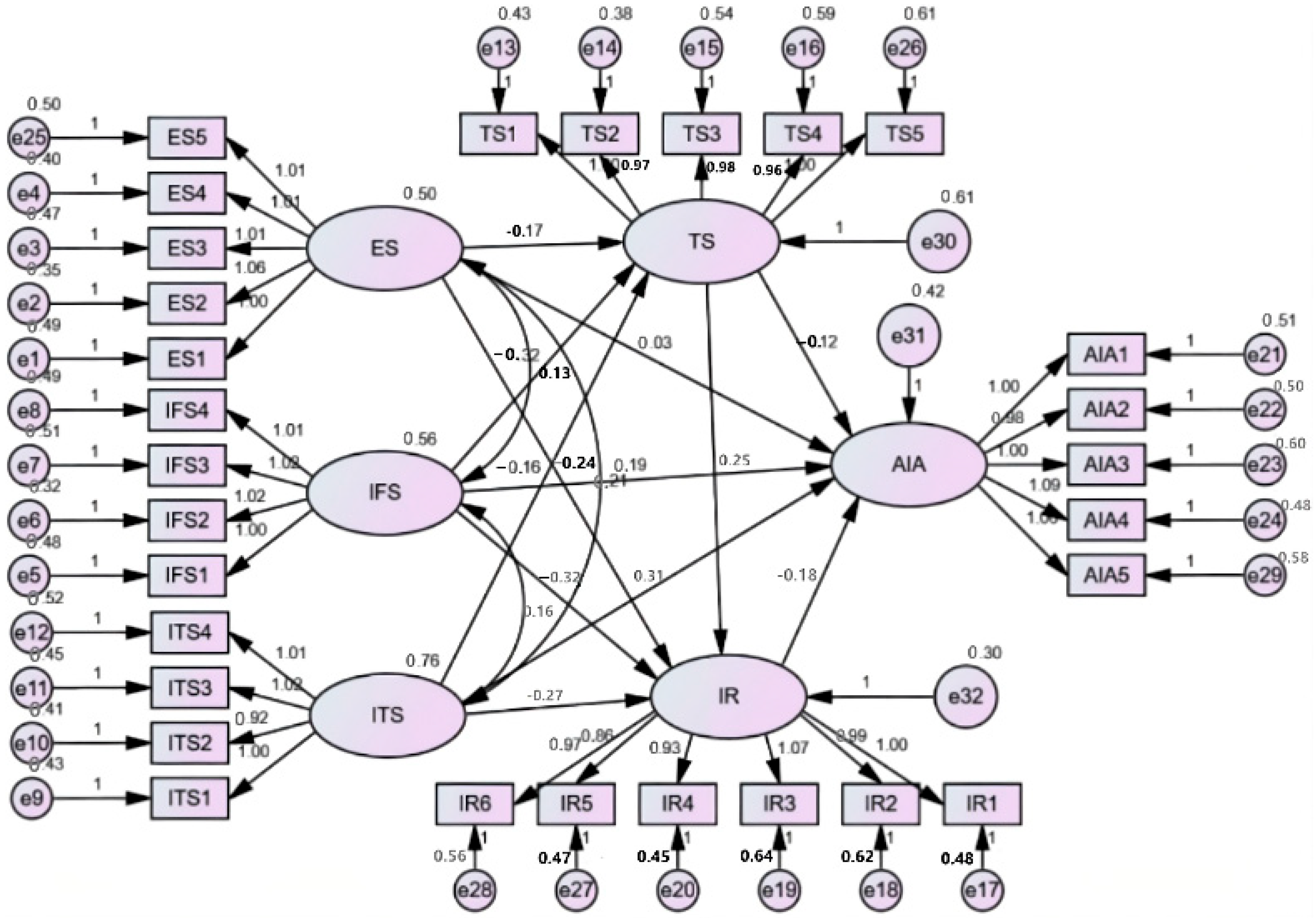
4.3.2. Hypothesis Testing and Mediation Analysis
4.4. Artificial Neural Network (ANN) Analysis
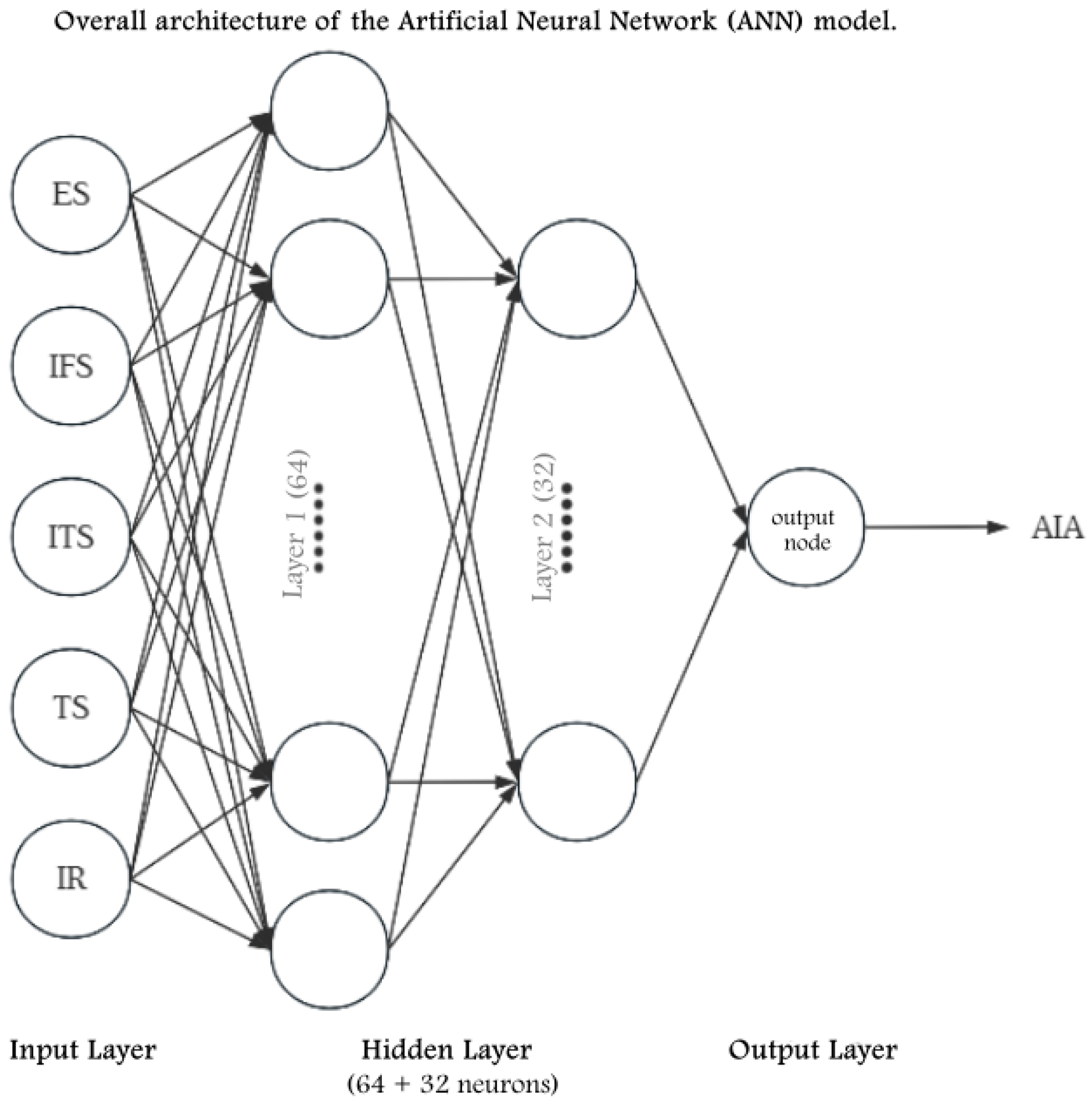
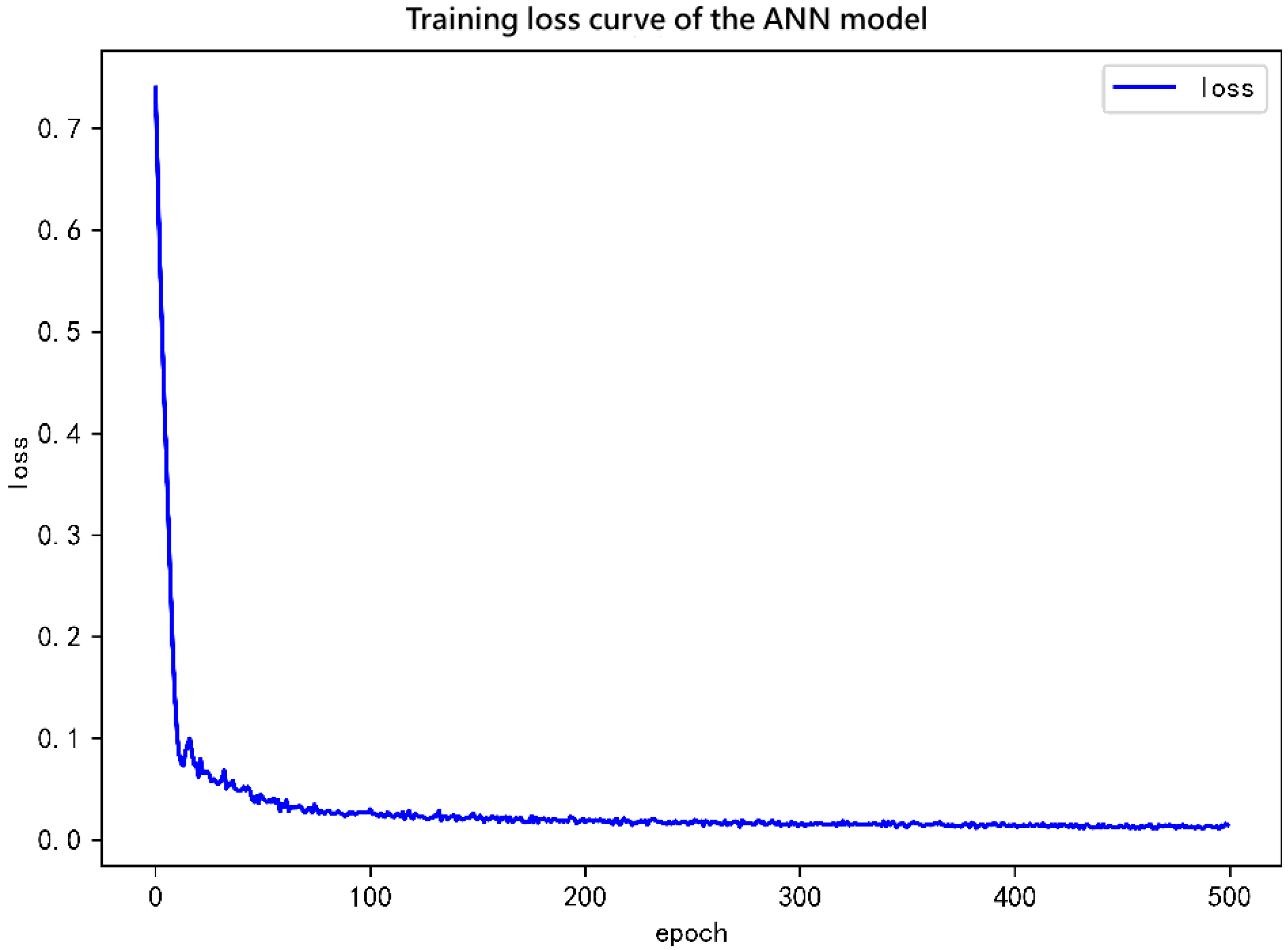
4.4.1. Model Configuration and Parameter Settings
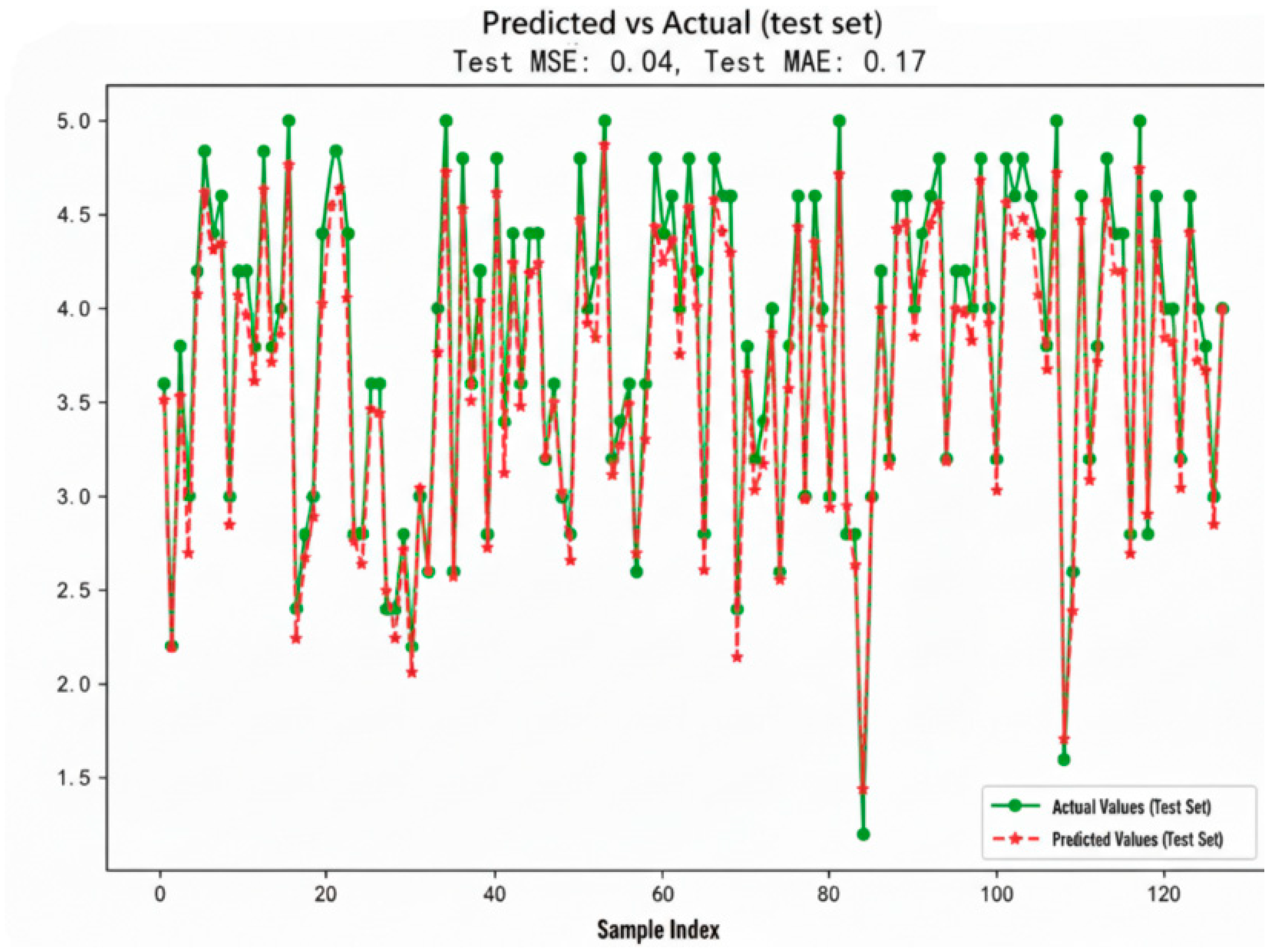
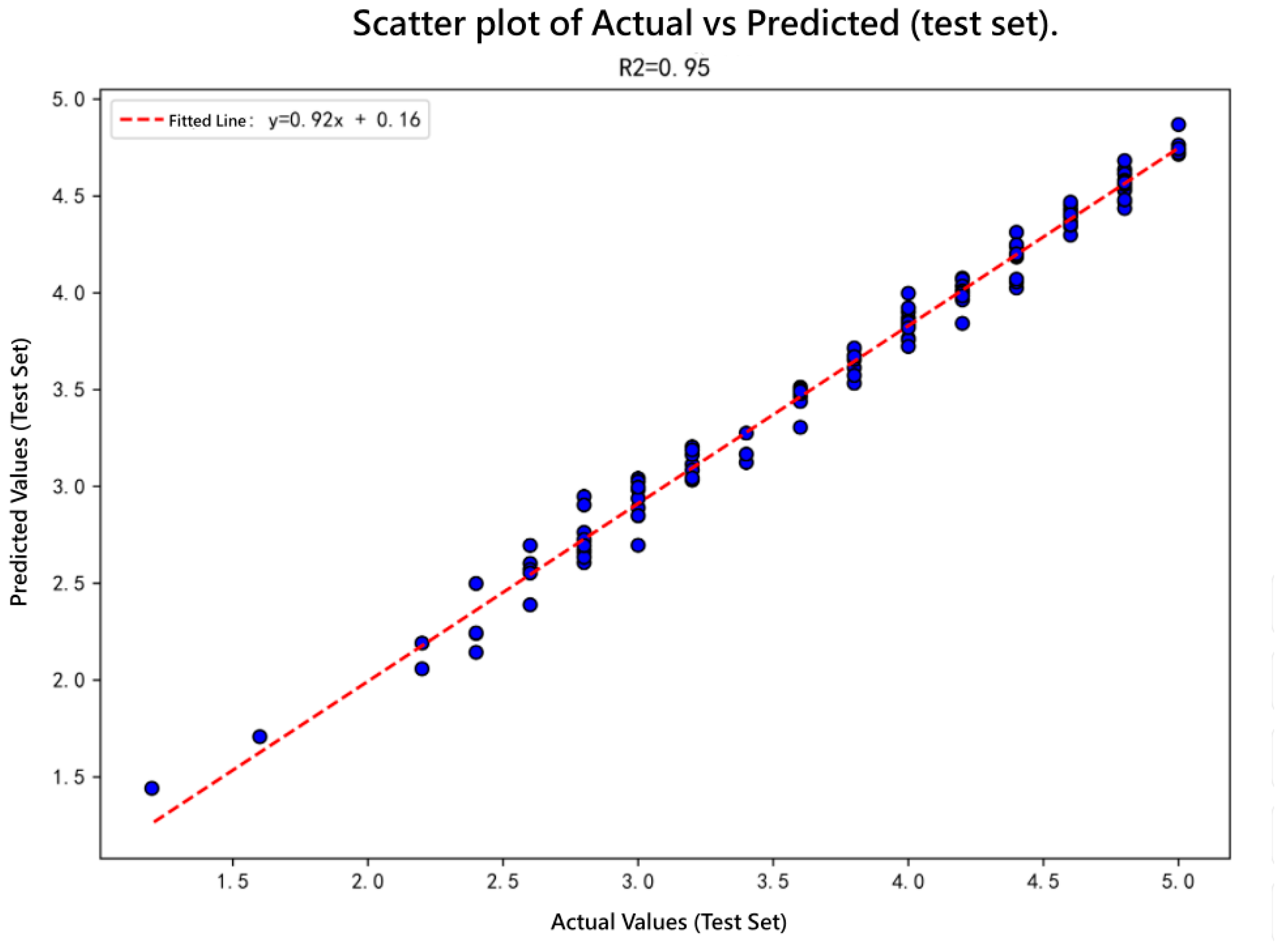
4.4.2. Cross-Validation and Prediction Results
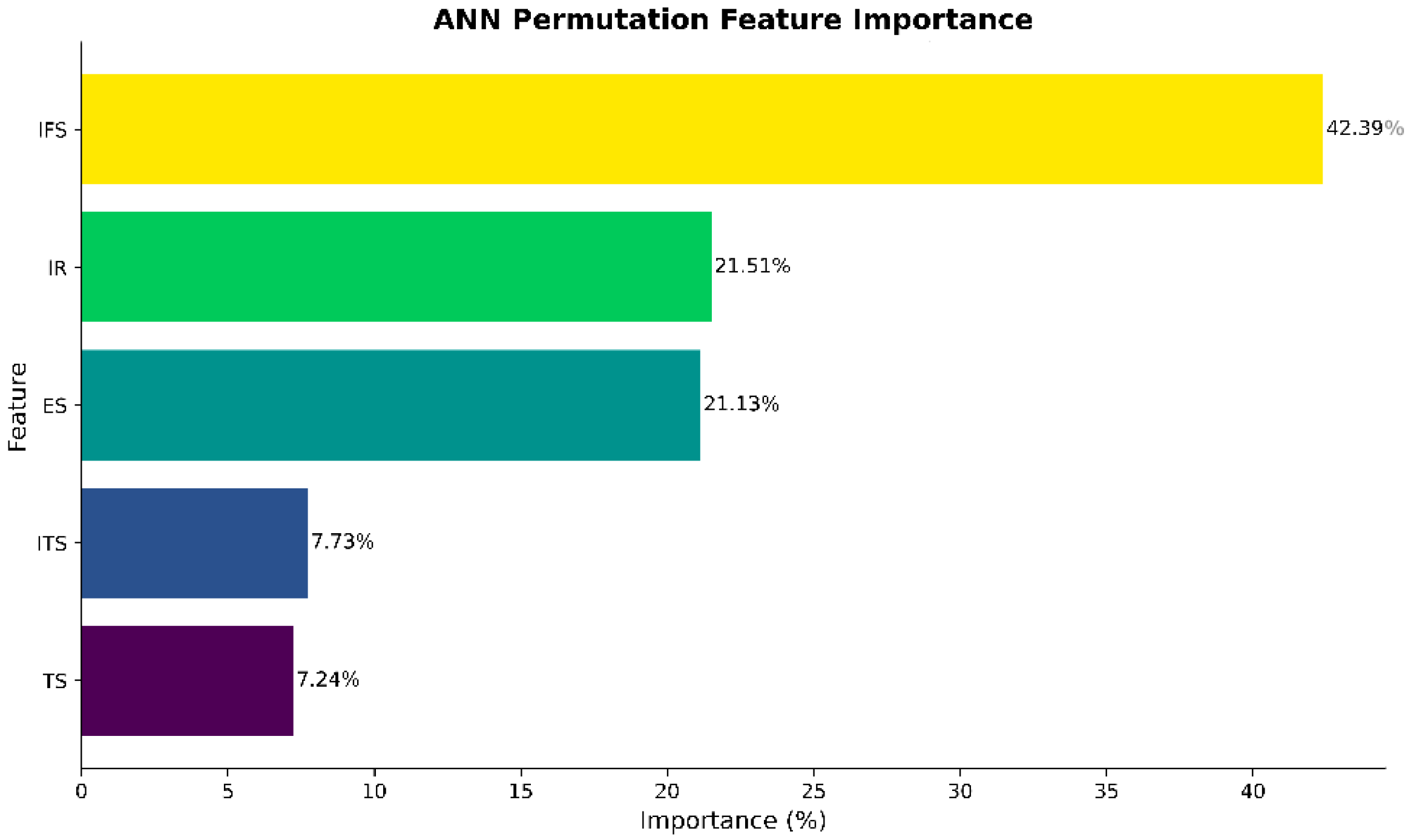
4.4.3. Variable Importance Analysis
4.5. Comparative Analysis: SEM vs. ANN
4.5.1. Variable Importance and Path Coefficients
4.5.2. Indirect Effects and Predictive Structure
4.5.3. Predictive Performance Comparison
4.5.4. Summary of Convergence and Divergence
4.5.5. Integrated Theoretical Implications
4.6. Necessary Condition Analysis (NCA)
5. Discussion
5.1. Interpretation of Key Findings
5.2. Theoretical Implications
5.3. Managerial Implications
5.4. Methodological and Theoretical Contributions
5.5. Limitations and Future Research
6. Conclusions
Author Contributions
Funding
Data Availability Statement
Conflicts of Interest
Abbreviations
| SPSS | Statistical Package for the Social Sciences |
| AMOS | Analysis of Moment Structures |
| CR | Composite Reliability |
| AVE | Average Variance Extracted |
| ES | Emotional Support |
| IFS | Informational Support |
| ITS | Instrumental Support |
| TS | Technostress |
| IR | Innovation Resistance |
| AIA | AI Technology Acceptance |
| SEM | Structural Equation Modeling |
| ANN | Artificial Neural Network |
| NCA | Necessary Condition Analysis |
| POS | Perceived Organizational Support |
| SET | Social Exchange Theory |
| COR | Conservation of Resources Theory |
| DOI | Diffusion of Innovation Theory |
| TAM | Technology Acceptance Model |
Appendix A

| Variable | Code | Item | Source |
|---|---|---|---|
| Emotional Support (ES) | ES1 | My organization offers emotional comfort and support when I use new technologies. | Kossek et al. (2011) [65] Mathieu et al. (2019) [75] |
| ES2 | When I face difficulties using AI technologies, my organization shows empathy and understanding. | ||
| ES3 | The organization pays attention to my emotional reactions during technological change. | ||
| ES4 | I feel encouraged and recognized by the organization when facing technical challenges. | ||
| ES5 | My organization ensures I do not feel isolated when adapting to new technologies. | ||
| Informational Support (IFS) | IFS1 | The organization actively collects my feedback to improve AI application experiences. | Esbensen Kim et al. (2004) [30] Kossek et al. (2011) [65] |
| IFS2 | When I need to understand AI, the organization provides sufficient information. | ||
| IFS3 | When using new technologies, the organization provides guides or training materials. | ||
| IFS4 | The organization provides timely technical guidance when I use AI technology. | ||
| Instrumental Support (ITS) | ITS1 | My organization provides appropriate devices for operating AI technologies. | Chen et al. (2023) [86] Soomro et al. (2024) [81] |
| ITS2 | The organization provides additional resources to improve efficiency in AI practices. | ||
| ITS3 | The organization offers auxiliary tools to optimize operational processes. | ||
| ITS4 | My organization provides maintenance support for AI equipment. | ||
| Technostress (TS) | TS1 | It takes a lot of time to understand the functions of AI technology. | Tarafdar et al. (2007) [78] Erdmann et al. (2025) [82] |
| TS2 | The operational procedures of AI technology are overly complex. | ||
| TS3 | It is hard to keep up with the pace of AI technology development. | ||
| TS4 | Using AI technology makes my career prospects feel uncertain. | ||
| TS5 | AI technology speeds up my work rhythm significantly. | ||
| Innovation Resistance (IR) | IR1 | I feel resistant to the actual application limitations of AI technology. | Jain et al. (2024) [83] Dul et al. (2020) [72] |
| IR2 | The diversity of AI models makes it difficult for me to adapt. | ||
| IR3 | I feel distrustful toward AI technology. | ||
| IR4 | Frequent updates of AI functions cause me psychological stress. | ||
| IR5 | I find it difficult to adapt to frequent AI function updates. | ||
| IR6 | I find using AI technology troublesome and feel repelled by it. | ||
| AI Technology Acceptance (AIA) | AIA1 | I am willing to try and use AI technology in my work. | Venkatesh et al. (2012) [73] Zhang et al. (2024) [27] |
| AIA2 | AI technology helps to improve my work efficiency. | ||
| AIA3 | I believe AI technology is beneficial for my work. | ||
| AIA4 | I actively learn and master AI technology. | ||
| AIA5 | Using AI technology has increased my job satisfaction. |
References
- Venkatesh, V.; Morris, M.G.; Davis, G.B.; Davis, F.D. User acceptance of information technology: Toward a unified view. MIS Q. 2003, 27, 425–478. [Google Scholar] [CrossRef]
- Tarafdar, M.; Cooper, C.L.; Stich, J.F. The technostress trifecta-techno eustress, techno distress and design: Theoretical directions and an agenda for research. Inf. Syst. J. 2019, 29, 6–42. [Google Scholar] [CrossRef]
- Eisenberger, R.; Huntington, R.; Hutchison, S.; Sowa, D. Perceived organizational support. J. Appl. Psychol. 1986, 71, 500–507. [Google Scholar] [CrossRef]
- Kurtessis, J.N.; Eisenberger, R.; Ford, M.T.; Buffardi, L.C.; Stewart, K.A.; Adis, C.S. Perceived organizational support: A meta-analytic evaluation of organizational support theory. J. Manag. 2017, 43, 1854–1884. [Google Scholar] [CrossRef]
- Çini, M.A.; Erdirençelebi, M.; Akman, A.Z. The effect of organization employees’ perspective on digital transformation on their technostress levels and performance: A public institution example. Cent. Eur. Bus. Rev. 2023, 12, 33–57. [Google Scholar] [CrossRef]
- Lanzl, J. Social support as technostress inhibitor: Even more important during the COVID-19 pandemic? Bus. Inf. Syst. Eng. 2023, 65, 329–343. [Google Scholar] [CrossRef]
- Pirkkalainen, H.; Salo, M.; Tarafdar, M.; Makkonen, M. Deliberate or instinctive? Proactive and reactive coping for technostress. J. Manag. Inf. Syst. 2019, 36, 1179–1212. [Google Scholar] [CrossRef]
- Chandra, S.; Shirish, A.; Srivastava, S.C. Does technostress inhibit employee innovation? Examining the linear and curvilinear influence of technostress creators. Commun. Assoc. Inf. Syst. 2019, 44, 299–331. [Google Scholar] [CrossRef]
- Dul, J. Necessary condition analysis (NCA) logic and methodology of “necessary but not sufficient” causality. Organ. Res. Methods 2016, 19, 10–52. [Google Scholar] [CrossRef]
- Siano, A.; Vollero, A.; Conte, F.; Amabile, S. “More than words”: Expanding the taxonomy of greenwashing after the Volkswagen scandal. J. Bus. Res. 2017, 71, 27–37. [Google Scholar] [CrossRef]
- Palazzo, M.; Vollero, A.; Siano, A. Intelligent packaging in the transition from linear to circular economy: Driving research in practice. J. Clean. Prod. 2023, 388, 135984. [Google Scholar] [CrossRef]
- Mariani, M.M.; Machado, I.; Magrelli, V.; Dwivedi, Y.K. Artificial intelligence in innovation research: A systematic review, conceptual framework, and future research directions. Technovation 2023, 122, 102623. [Google Scholar] [CrossRef]
- Strielkowski, W.; Grebennikova, V.; Lisovskiy, A.; Rakhimova, G.; Vasileva, T. AI-driven adaptive learning for sustainable educational transformation. Sustain. Dev. 2025, 33, 1921–1947. [Google Scholar] [CrossRef]
- Rhoades, L.; Eisenberger, R. Perceived organizational support: A review of the literature. J. Appl. Psychol. 2002, 87, 698–714. [Google Scholar] [CrossRef]
- Aryee, S.; Budhwar, P.S.; Chen, Z.C. Organisational justice, trust foci, and work outcomes: Test of a mediated social exchange model. In Proceedings of the Annual Meeting of the Academy of Management, Washington, DC, USA, 3–8 August 2001. [Google Scholar]
- Fatima, T.; Masood, A. Impact of digital leadership on open innovation: A moderating serial mediation model. J. Knowl. Manag. 2024, 28, 161–180. [Google Scholar] [CrossRef]
- Wilson, T.D. Models in information behaviour research. J. Doc. 1999, 55, 249–270. [Google Scholar] [CrossRef]
- Savolainen, R. Everyday life information seeking: Approaching information seeking in the context of “way of life”. Libr. Inf. Sci. Res. 1995, 17, 259–294. [Google Scholar] [CrossRef]
- Hobfoll, S.E.; Halbesleben, J.; Neveu, J.P.; Westman, M. Conservation of resources in the organizational context: The reality of resources and their consequences. Annu. Rev. Organ. Psychol. Organ. Behav. 2018, 5, 103–128. [Google Scholar] [CrossRef]
- Feroz, K.; Kwak, M. Digital transformation (DT) and artificial intelligence (AI) convergence in organizations. J. Comput. Inf. Syst. 2024, 1–17. [Google Scholar] [CrossRef]
- Wang, H.; Ding, H.; Kong, X. Understanding technostress and employee well-being in digital work: The roles of work exhaustion and workplace knowledge diversity. Int. J. Manpow. 2023, 44, 334–353. [Google Scholar] [CrossRef]
- Fan, J.; Zhang, L.; Li, N.; Man, S. How the perceived substitution of AI technology hinders nurses’ innovation behavior: The mediating role of AI anxiety and human-AI cooperation intention and the moderating role of organizational AI readiness. BMC Nurs. 2025, 24, 832. [Google Scholar] [CrossRef]
- Pirkkalainen, H.; Salo, M.; Makkonen, M.; Tarafdar, M. Coping with Technostress: When Emotional Responses Fail. In Proceedings of the 38th International Conference on Information Systems (ICIS 2017), Seoul, Republic of Korea, 10–13 December 2017; Association for Information Systems: Atlanta, GA, USA, 2017; pp. 1–17. [Google Scholar]
- Chang, P.C.; Zhang, W.; Cai, Q.; Guo, H. Does AI-driven technostress promote or hinder employees’ artificial intelligence adoption intention? A moderated mediation model of affective reactions and technical self-efficacy. Psychol. Res. Behav. Manag. 2024, 17, 413–427. [Google Scholar] [CrossRef]
- Claudy, M.C.; Garcia, R.; O’Driscoll, A. Consumer resistance to innovation—A behavioral reasoning perspective. J. Acad. Mark. Sci. 2015, 43, 528–544. [Google Scholar] [CrossRef]
- Cieslak, V.; Valor, C. Moving beyond conventional resistance and resistors: An integrative review of employee resistance to digital transformation. Cogent Bus. Manag. 2025, 12, 2442550. [Google Scholar] [CrossRef]
- Zhang, Z.; Wang, X.; Su, C.; Zhang, X.; Sun, L.; Yuan, X. Technostress and employee safety performance in China: The moderating role of perceived organizational support and the mediating role of job burnout. J. Gen. Manag. 2024; ahead-of-print. [Google Scholar] [CrossRef]
- Bausch, D.; Kraemer, T.; Mauroner, O. Technology-induced stress and employee resistance in the context of digital transformation and identification of countermeasures. Int. J. Innov. Technol. Manag. 2024, 21, 2450029. [Google Scholar] [CrossRef]
- Uren, V.; Edwards, J.S. Technology readiness and the organizational journey towards AI adoption: An empirical study. Int. J. Inf. Manag. 2023, 68, 102588. [Google Scholar] [CrossRef]
- Esbensen Kim, H. Multivariate data analysis–in practice. In An Introduction to Multivariate Data Analysis and Experimental Design, 5th ed.; Aalborg University: Esbjerg, Denmark; Camo Process, A.S.: Oslo, Norway, 2004; pp. 75–78. [Google Scholar]
- Blau, P.M. Exchange and Power in Social Life; Routledge: London, UK, 2017. [Google Scholar] [CrossRef]
- Richter, N.F.; Schubring, S.; Hauff, S.; Ringle, C.M.; Sarstedt, M. When predictors of outcomes are necessary: Guidelines for the combined use of PLS-SEM and NCA. Ind. Manag. Data Syst. 2020, 120, 2243–2267. [Google Scholar] [CrossRef]
- Rani, S.; Danu, A.; Himanshu. Does digital competence really matter? The impact of attitude and ICT on research performance. J. Appl. Res. High. Educ. 2025; ahead-of-print. [Google Scholar] [CrossRef]
- Thiem, A. The logic and methodology of “necessary but not sufficient causality”: A comment on necessary condition analysis (NCA). Sociol. Methods Res. 2021, 50, 913–925. [Google Scholar] [CrossRef]
- Backhaus, K.; Erichson, B.; Gensler, S.; Weiber, R.; Weiber, T. Multivariate Analysis: An Application-Oriented Introduction, 2nd ed.; Springer Gabler: Wiesbaden, Germany, 2021. [Google Scholar] [CrossRef]
- Gurney, K. An Introduction to Neural Networks; CRC Press: Boca Raton, FL, USA, 1997. [Google Scholar] [CrossRef]
- Fazal-e-Hasan, S.M.; Amrollahi, A.; Mortimer, G.; Adapa, S.; Balaji, M.S. A multi-method approach to examining consumer intentions to use smart retail technology. Comput. Hum. Behav. 2021, 117, 106622. [Google Scholar] [CrossRef]
- El-Masri, M.; Al-Yafi, K.; Kamal, M.M. A task-technology-identity fit model of smartwatch utilisation and user satisfaction: A hybrid SEM-neural network approach. Inf. Syst. Front. 2023, 25, 835–852. [Google Scholar] [CrossRef]
- Popa, I.; Ștefan, S.C.; Olariu, A.A.; Breazu, A.; Cioc, M.M. Predictors of Employees’ Work Performance in Online and On-Site Conditions: A Combined use of PLS-SEM and NCA. Econ. Comput. Econ. Cybern. Stud. Res. 2024, 58, 265–279. [Google Scholar] [CrossRef]
- Ly, B. Digital Transformation, Organizational Culture, and Public Sector Flexibility in Emerging Economies: Insights from NCA and PLS-SEM Analysis. J. Knowl. Econ. 2025; ahead-of-print. [Google Scholar] [CrossRef]
- Hanifah, H.; Lee, Y.X.; Abdul, H. Revitalizing SMEs’ performance: Unleashing the dynamics of Technology-Organization-Environment factors for M-Commerce adoption. J. Sci. Technol. Policy Manag. 2025; ahead-of-print. [Google Scholar] [CrossRef]
- Hair, J.F.; Hult, G.T.M.; Ringle, C.M.; Sarstedt, M. A Primer on Partial Least Squares Structural Equation Modeling (PLS-SEM); SAGE: Singapore, 2014; ISBN 9781452217444. [Google Scholar]
- Abu-Mostafa, Y.S. Learning from hints in neural networks. J. Complex. 1990, 6, 192–198. [Google Scholar] [CrossRef]
- Hair, J.F.; Black, W.C.; Babin, B.J.; Anderson, R.E. Multivariate Data Analysis, 7th ed.; Prentice Hall: Upper Saddle River, NJ, USA, 2009. [Google Scholar]
- George, D.; Mallery, P. IBM SPSS Statistics 26 Step by Step: A Simple Guide and Reference, 16th ed.; Routledge: London, UK, 2019. [Google Scholar] [CrossRef]
- DeVellis, R.F.; Thorpe, C.T. Scale Development: Theory and Applications, 5th ed.; SAGE Publications: Thousand Oaks, CA, USA, 2021. [Google Scholar]
- Cortina, J.M. What is coefficient alpha? An examination of theory and applications. J. Appl. Psychol. 1993, 78, 98–104. [Google Scholar] [CrossRef]
- Tavakol, M.; Dennick, R. Making sense of Cronbach’s alpha. Int. J. Med. Educ. 2011, 2, 53–55. [Google Scholar] [CrossRef]
- Raykov, T.; Marcoulides, G.A. Introduction to Psychometric Theory; Routledge: London, UK, 2011. [Google Scholar] [CrossRef]
- Kaiser, H.F. An index of factorial simplicity. Psychometrika 1974, 39, 31–36. [Google Scholar] [CrossRef]
- Mertler, C.A.; Vannatta, R.A.; LaVenia, K.N. Advanced and Multivariate Statistical Methods: Practical Application and Interpretation; Routledge: London, UK, 2021. [Google Scholar] [CrossRef]
- Sarstedt, M.; Ringle, C.M.; Smith, D.; Reams, R.; Hair, J.F., Jr. Partial least squares structural equation modeling (PLS-SEM): A useful tool for family business researchers. J. Fam. Bus. Strategy 2014, 5, 105–115. [Google Scholar] [CrossRef]
- McNeish, D. Thanks coefficient alpha, we’ll take it from here. Psychol. Methods 2018, 23, 412–433. [Google Scholar] [CrossRef]
- Sijtsma, K. On the use, the misuse, and the very limited usefulness of Cronbach’s alpha. Psychometrika 2009, 74, 107–120. [Google Scholar] [CrossRef]
- Clark, L.A.; Watson, D. Constructing validity: New developments in creating objective measuring instruments. Psychol. Assess. 2019, 31, 1412–1427. [Google Scholar] [CrossRef]
- Fabrigar, L.R.; Wegener, D.T.; MacCallum, R.C.; Strahan, E.J. Evaluating the use of exploratory factor analysis in psychological research. Psychol. Methods 1999, 4, 272–299. [Google Scholar] [CrossRef]
- Costello, A.B.; Osborne, J. Best practices in exploratory factor analysis: Four recommendations for getting the most from your analysis. Pract. Assess. Res. Eval. 2005, 10, 7. [Google Scholar] [CrossRef]
- Tabachnick, B.G.; Fidell, L.S. Using Multivariate Statistics, 7th ed.; Pearson: London, UK, 2019. [Google Scholar]
- Fornell, C.; Larcker, D.F. Evaluating structural equation models with unobservable variables and measurement error. J. Mark. Res. 1981, 18, 39–50. [Google Scholar] [CrossRef]
- Henseler, J.; Hubona, G.; Ray, P.A. Using PLS path modeling in new technology research: Updated guidelines. Ind. Manag. Data Syst. 2016, 116, 2–20. [Google Scholar] [CrossRef]
- Sarstedt, M.; Ringle, C.M.; Hair, J.F. Partial least squares structural equation modeling. In Handbook of Market Research; Springer International Publishing: Cham, Switzerland, 2021; pp. 587–632. [Google Scholar] [CrossRef]
- Nunnally, J.C.; Bernstein, I.H. Psychometric Theory, 3rd ed.; McGraw-Hill: Columbus, OH, USA, 1994. [Google Scholar]
- Landis, R.S.; Beal, D.J.; Tesluk, P.E. A comparison of approaches to forming composite measures in structural equation models. Organ. Res. Methods 2000, 3, 186–207. [Google Scholar] [CrossRef]
- Hu, L.T.; Bentler, P.M. Cutoff criteria for fit indexes in covariance structure analysis: Conventional criteria versus new alternatives. Struct. Equ. Model. A Multidiscip. J. 1999, 6, 1–55. [Google Scholar] [CrossRef]
- Kossek, E.E.; Pichler, S.; Bodner, T.; Hammer, L.B. Workplace social support and work–family conflict: A meta-analysis clarifying the influence of general and work–family-specific supervisor and organizational support. Pers. Psychol. 2011, 64, 289–313. [Google Scholar] [CrossRef]
- Bhattacherjee, A.; Hikmet, N. Physicians’ resistance toward healthcare information technology: A theoretical model and empirical test. Eur. J. Inf. Syst. 2007, 16, 725–737. [Google Scholar] [CrossRef]
- Hair, J.F.; Hult, G.T.M.; Ringle, C.M.; Sarstedt, M.; Richter, N.F.; Hauff, S. A Primer on Partial Least Squares Structural Equation Modeling (PLS-SEM), 2nd ed.; SAGE Publications: Singapore, 2017. [Google Scholar] [CrossRef]
- Varoquaux, G. Cross-validation failure: Small sample sizes lead to large error bars. NeuroImage 2018, 180, 68–77. [Google Scholar] [CrossRef]
- Molnar, C. Interpretable Machine Learning: A Guide for Making Black Box Models Explainable, 2nd ed.; Zenodo: Geneva, Switzerland, 2022. [Google Scholar] [CrossRef]
- Fisher, A.; Rudin, C.; Dominici, F. All models are wrong, but many are useful: Learning a variable’s importance by studying an entire class of prediction models simultaneously. J. Mach. Learn. Res. 2019, 20, 1–81. [Google Scholar]
- Altmann, A.; Toloşi, L.; Sander, O.; Lengauer, T. Permut. Importance: A Corrected Feature Importance measure. Bioinformatics 2010, 26, 1340–1347. [Google Scholar] [CrossRef]
- Dul, J.; Van der Laan, E.; Kuik, R. A statistical significance test for necessary condition analysis. Organ. Res. Methods 2020, 23, 385–395. [Google Scholar] [CrossRef]
- Venkatesh, V.; Thong, J.Y.; Xu, X. Consumer acceptance and use of information technology: Extending the unified theory of acceptance and use of technology. MIS Q. 2012, 36, 157–178. [Google Scholar] [CrossRef]
- Masrek, M.N.; Baharuddin, M.F.; Syam, A.M. Determinants of Behavioral Intention to Use Generative AI: The Role of Trust, Personal Innovativeness, and UTAUT II Factors. Int. J. Basic Appl. Sci. 2025, 14, 378–390. [Google Scholar] [CrossRef]
- Mathieu, M.; Eschleman, K.J.; Cheng, D. Meta-analytic and multiwave comparison of emotional support and instrumental support in the workplace. J. Occup. Health Psychol. 2019, 24, 387–409. [Google Scholar] [CrossRef]
- Abulail, R.N.; Badran, O.N.; Shkoukani, M.A.; Omeish, F. Exploring the Factors Influencing AI Adoption Intentions in Higher Education: An Integrated Model of DOI, TOE, and TAM. Computers 2025, 14, 230. [Google Scholar] [CrossRef]
- George-Reyes, C.E.; López-Caudana, E.O.; Avello-Martínez, R. Artificial intelligence adoption test based on UTAUT2 and complex thinking: Design with K coefficient and reliability analysis using structural equation modeling. Cogent Educ. 2025, 12, 2511446. [Google Scholar] [CrossRef]
- Tarafdar, M.; Tu, Q.; Ragu-Nathan, B.S.; Ragu-Nathan, T.S. The impact of technostress on role stress and productivity. J. Manag. Inf. Syst. 2007, 24, 301–328. [Google Scholar] [CrossRef]
- Saleem, F.; Malik, M.I. Technostress, quality of work life, and job performance: A moderated mediation model. Behav. Sci. 2023, 13, 1014. [Google Scholar] [CrossRef] [PubMed]
- Shmueli, G. To explain or to predict? Stat. Sci. 2010, 25, 289–310. [Google Scholar] [CrossRef]
- Soomro, S.; Fan, M.; Sohu, J.M.; Soomro, S.; Shaikh, S.N. AI adoption: A bridge or a barrier? The moderating role of organizational support in the path toward employee well-being. Kybernetes, 2024; ahead-of-print. [Google Scholar] [CrossRef]
- Erdmann, A.; Toro-Dupouy, L. The influence of the institutional environment on AI adoption in universities: Identifying value drivers and necessary conditions. Eur. J. Innov. Manag. 2025, 28, 4365–4398. [Google Scholar] [CrossRef]
- Jain, K.K.; Raghuram, J.N.V. Gen-AI integration in higher education: Predicting intentions using SEM-ANN approach. Educ. Inf. Technol. 2024, 29, 17169–17209. [Google Scholar] [CrossRef]
- Huang, Y.; Fu, S. Understanding farmers’ intentions to participate in traceability systems: Evidence from SEM-ANN-NCA. Front. Sustain. Food Syst. 2023, 7, 1246122. [Google Scholar] [CrossRef]
- Soomro, R.B.; Al-Rahmi, W.M.; Dahri, N.A.; Almuqren, L.; Al-Mogren, A.S.; Aldaijy, A. A SEM–ANN analysis to examine impact of artificial intelligence technologies on sustainable performance of SMEs. Sci. Rep. 2025, 15, 5438. [Google Scholar] [CrossRef]
- Chen, Y.; Hu, Y.; Zhou, S.; Yang, S. Investigating the determinants of performance of artificial intelligence adoption in hospitality industry during COVID-19. Int. J. Contemp. Hosp. Manag. 2023, 35, 2868–2889. [Google Scholar] [CrossRef]


| Category | Description | Frequency | Percentage |
|---|---|---|---|
| Gender | Male | 218 | 51.2 |
| Female | 208 | 48.8 | |
| Age | Under 18 years | 35 | 8.2 |
| 18–24 years | 148 | 34.7 | |
| 25–30 years | 159 | 37.3 | |
| 31–40 years | 60 | 14.1 | |
| 41–50 years | 19 | 4.5 | |
| 51–60 years | 5 | 1.2 | |
| Education | Junior High School or below | 15 | 3.5 |
| High School/Vocational School | 128 | 30.0 | |
| Associate Degree | 125 | 29.3 | |
| Bachelor’s Degree | 122 | 28.6 | |
| Master’s Degree or above | 36 | 8.5 | |
| Monthly Expenditure | Below RMB 3000 | 49 | 11.5 |
| RMB 3001–5000 | 58 | 13.6 | |
| RMB 5001–8000 | 130 | 30.5 | |
| RMB 8001–12,000 | 138 | 32.4 | |
| Above RMB 12,001 | 51 | 12.0 | |
| Occupation | Marketing/Sales/Business | 20 | 4.7 |
| Procurement | 18 | 4.2 | |
| Administration | 12 | 2.8 | |
| Human Resources | 13 | 3.1 | |
| Product/Operations Staff | 36 | 8.5 | |
| Finance/Accounting/Cashier/Audit | 16 | 3.8 | |
| Business Manager | 18 | 4.2 | |
| Lawyer/Legal Affairs | 21 | 4.9 | |
| Designer | 37 | 8.7 | |
| Service Industry Staff | 27 | 6.3 | |
| Technical/Development Engineer | 20 | 4.7 | |
| Agricultural/Forestry/Animal Husbandry/Fishery Worker | 19 | 4.5 | |
| Worker/Laborer | 18 | 4.2 | |
| Full-time Homemaker | 3 | 0.7 | |
| Freelancer | 17 | 4.0 | |
| Retired/Pensioner | 5 | 1.2 | |
| Student | 35 | 8.2 | |
| Teacher | 33 | 7.7 | |
| Medical Staff | 19 | 4.5 | |
| Researcher | 22 | 5.2 | |
| Government/Party Personnel | 17 | 4.0 | |
| Total | 426 | 100.0 | |
| Variables | Second-Order Variables | Mean | Standard Deviation (SD) | Skewness | Kurtosis | Population Mean (M) | Population SD |
|---|---|---|---|---|---|---|---|
| ES | ES1 | 4.02 | 0.996 | −0.941 | 0.367 | 0.77739 | 0.604 |
| ES2 | 4.13 | 0.953 | −1.129 | 1.088 | |||
| ES3 | 3.88 | 0.989 | −0.766 | 0.167 | |||
| ES4 | 4.1 | 0.952 | −0.98 | 0.591 | |||
| ES5 | 4.04 | 1.006 | −1.037 | 0.728 | |||
| IFS | IFS1 | 4.04 | 1.02 | −1.039 | 0.641 | 0.82967 | 0.688 |
| IFS2 | 4.12 | 0.953 | −1.05 | 0.819 | |||
| IFS3 | 3.9 | 1.044 | −0.776 | 0.029 | |||
| IFS4 | 3.96 | 1.033 | −0.843 | 0.149 | |||
| ITS | ITS1 | 3.68 | 1.091 | −0.59 | −0.362 | 0.92553 | 0.857 |
| ITS2 | 3.77 | 1.024 | −0.598 | −0.276 | |||
| ITS3 | 3.49 | 1.115 | −0.502 | −0.452 | |||
| ITS4 | 3.74 | 1.142 | −0.687 | −0.341 | |||
| TS | TS1 | 2.13 | 1.088 | 0.784 | −0.023 | 0.91036 | 0.829 |
| TS2 | 2.04 | 1.045 | 0.876 | 0.188 | |||
| TS3 | 2.34 | 1.125 | 0.557 | −0.458 | |||
| TS4 | 2.27 | 1.135 | 0.689 | −0.238 | |||
| TS5 | 2.42 | 1.166 | 0.565 | −0.43 | |||
| IR | IR1 | 2.18 | 1.06 | 0.767 | 0.089 | 0.83265 | 0.693 |
| IR2 | 2.26 | 1.117 | 0.708 | −0.163 | |||
| IR3 | 2.36 | 1.176 | 0.621 | −0.406 | |||
| IR4 | 2.07 | 1.002 | 0.756 | 0.013 | |||
| IR5 | 2.01 | 0.972 | 0.851 | 0.274 | |||
| IR6 | 2.23 | 1.074 | 0.677 | −0.131 | |||
| AIA | AIA1 | 3.88 | 1.04 | −0.753 | −0.031 | 0.84305 | 0.711 |
| AIA2 | 3.82 | 1.028 | −0.625 | −0.202 | |||
| AIA3 | 3.57 | 1.083 | −0.467 | −0.378 | |||
| AIA4 | 3.72 | 1.08 | −0.586 | −0.36 | |||
| AIA5 | 3.55 | 1.107 | −0.492 | −0.409 |
| Construct | Cronbach’s Alpha | Number of Items |
|---|---|---|
| KMO Measure of Sampling Adequacy | 0.910 | |
| Bartlett’s Test of Sphericity | ||
| Approximate Chi-Square | 5864.468 | |
| Degrees of Freedom | 406 | |
| Significance | 0.000 | |
| Construct | Cronbach’s Alpha | Number of Items |
|---|---|---|
| ES | 0.853 | 5 |
| IFS | 0.836 | 4 |
| ITS | 0.868 | 4 |
| TS | 0.877 | 5 |
| IR | 0.870 | 6 |
| AIA | 0.849 | 5 |
| Component | Initial Eigenvalues | Extraction Sums of Squared Loadings | Rotation Sums of Squared Loadings | ||||||
|---|---|---|---|---|---|---|---|---|---|
| Total | % of Variance | Cumulative % | Total | % of Variance | Cumulative % | Total | % of Variance | Cumulative % | |
| 1 | 8.352 | 28.798 | 28.798 | 8.352 | 28.798 | 28.798 | 3.572 | 12.319 | 12.319 |
| 2 | 2.690 | 9.275 | 38.073 | 2.690 | 9.275 | 38.073 | 3.418 | 11.785 | 24.104 |
| 3 | 2.343 | 8.081 | 46.154 | 2.343 | 8.081 | 46.154 | 3.218 | 11.096 | 35.200 |
| 4 | 2.125 | 7.328 | 53.482 | 2.125 | 7.328 | 53.482 | 3.190 | 10.999 | 46.199 |
| 5 | 2.029 | 6.996 | 60.478 | 2.029 | 6.996 | 60.478 | 2.870 | 9.897 | 56.095 |
| 6 | 1.467 | 5.059 | 65.537 | 1.467 | 5.059 | 65.537 | 2.738 | 9.442 | 65.537 |
| 7 | 0.650 | 2.242 | 67.779 | ||||||
| 8 | 0.621 | 2.140 | 69.919 | ||||||
| 9 | 0.586 | 2.021 | 71.940 | ||||||
| 10 | 0.579 | 1.998 | 73.938 | ||||||
| 11 | 0.541 | 1.864 | 75.802 | ||||||
| 12 | 0.525 | 1.811 | 77.614 | ||||||
| 13 | 0.503 | 1.734 | 79.348 | ||||||
| 14 | 0.497 | 1.715 | 81.063 | ||||||
| 15 | 0.476 | 1.643 | 82.706 | ||||||
| 16 | 0.451 | 1.557 | 84.262 | ||||||
| 17 | 0.435 | 1.500 | 85.762 | ||||||
| 18 | 0.426 | 1.469 | 87.231 | ||||||
| 19 | 0.410 | 1.412 | 88.644 | ||||||
| 20 | 0.396 | 1.367 | 90.011 | ||||||
| 21 | 0.387 | 1.333 | 91.344 | ||||||
| 22 | 0.373 | 1.288 | 92.631 | ||||||
| 23 | 0.350 | 1.206 | 93.837 | ||||||
| 24 | 0.336 | 1.157 | 94.994 | ||||||
| 25 | 0.319 | 1.100 | 96.094 | ||||||
| 26 | 0.312 | 1.075 | 97.169 | ||||||
| 27 | 0.304 | 1.049 | 98.217 | ||||||
| 28 | 0.266 | 0.917 | 99.134 | ||||||
| 29 | 0.251 | 0.866 | 100.000 | ||||||
| Item | Component | |||||
|---|---|---|---|---|---|---|
| 1 | 2 | 3 | 4 | 5 | 6 | |
| ES1 | 0.761 | |||||
| ES2 | 0.794 | |||||
| ES3 | 0.736 | |||||
| ES4 | 0.778 | |||||
| ES5 | 0.780 | |||||
| IFS1 | 0.762 | |||||
| IFS2 | 0.796 | |||||
| IFS3 | 0.809 | |||||
| IFS4 | 0.750 | |||||
| ITS1 | 0.819 | |||||
| ITS2 | 0.796 | |||||
| ITS3 | 0.807 | |||||
| ITS4 | 0.805 | |||||
| TS1 | 0.782 | |||||
| TS2 | 0.795 | |||||
| TS3 | 0.786 | |||||
| TS4 | 0.791 | |||||
| TS5 | 0.774 | |||||
| IR1 | 0.674 | |||||
| IR2 | 0.718 | |||||
| IR3 | 0.722 | |||||
| IR4 | 0.751 | |||||
| IR5 | 0.667 | |||||
| IR6 | 0.718 | |||||
| AIA1 | 0.726 | |||||
| AIA2 | 0.772 | |||||
| AIA3 | 0.748 | |||||
| AIA4 | 0.791 | |||||
| AIA5 | 0.758 | |||||
| Second-Order Variables | Variables | Estimate | AVE | CR | |
|---|---|---|---|---|---|
| ES1 | <--- | ES | 0.708 | 0.540 | 0.854 |
| ES2 | <--- | ES | 0.782 | ||
| ES3 | <--- | ES | 0.721 | ||
| ES4 | <--- | ES | 0.748 | ||
| ES5 | <--- | ES | 0.711 | ||
| IFS1 | <--- | IFS | 0.734 | 0.564 | 0.838 |
| IFS2 | <--- | IFS | 0.805 | ||
| IFS3 | <--- | IFS | 0.731 | ||
| IFS4 | <--- | IFS | 0.732 | ||
| ITS1 | <--- | ITS | 0.800 | 0.623 | 0.868 |
| ITS2 | <--- | ITS | 0.782 | ||
| ITS3 | <--- | ITS | 0.799 | ||
| ITS4 | <--- | ITS | 0.775 | ||
| TS1 | <--- | TS | 0.798 | 0.533 | 0.851 |
| TS2 | <--- | TS | 0.807 | ||
| TS3 | <--- | TS | 0.757 | ||
| TS4 | <--- | TS | 0.734 | ||
| TS5 | <--- | TS | 0.741 | ||
| IR1 | <--- | IR | 0.756 | 0.531 | 0.871 |
| IR2 | <--- | IR | 0.711 | ||
| IR3 | <--- | IR | 0.732 | ||
| IR4 | <--- | IR | 0.740 | ||
| IR5 | <--- | IR | 0.709 | ||
| IR6 | <--- | IR | 0.720 | ||
| AIA1 | <--- | AIA | 0.728 | 0.530 | 0.849 |
| AIA2 | <--- | AIA | 0.722 | ||
| AIA3 | <--- | AIA | 0.701 | ||
| AIA4 | <--- | AIA | 0.767 | ||
| AIA5 | <--- | AIA | 0.724 | ||
| ES | IFS | ITS | TS | IR | AIA | |
|---|---|---|---|---|---|---|
| ES | 0.745 | |||||
| IFS | 0.215 ** | 0.751 | ||||
| ITS | 0.294 ** | 0.211 ** | 0.789 | |||
| TS | −0.227 ** | −0.295 ** | −0.242 ** | 0.730 | ||
| IR | −0.389 ** | −0.443 ** | −0.444 ** | 0.443 ** | 0.729 | |
| AIA | 0.205 ** | 0.318 ** | 0.293 ** | −0.303 ** | −0.380 ** | 0.728 |
| AVE | 0.745 | 0.751 | 0.789 | 0.730 | 0.729 | 0.728 |
| ES | IFS | ITS | TS | IR | AIA | |
|---|---|---|---|---|---|---|
| ES | 1 | |||||
| IFS | 0.215 ** | 1 | ||||
| ITS | 0.294 ** | 0.211 ** | 1 | |||
| TS | −0.227 ** | −0.295 ** | −0.242 ** | 1 | ||
| IR | −0.389 ** | −0.443 ** | −0.444 ** | 0.443 ** | 1 | |
| AIA | 0.205 ** | 0.318 ** | 0.293 ** | −0.303 ** | −0.380 ** | 1 |
| Item | CMIN/DF | NFI | TLI | CFI | RMSEA | RFI |
|---|---|---|---|---|---|---|
| Excellent Value | >1, <3 | >0.9 | >0.9 | >0.9 | <0.05 | >0.9 |
| Good Value | >3, <5 | >0.8 | >0.8 | >0.8 | <0.08 | >0.8 |
| Result | 3.172 | 0.935 | 0.944 | 0.955 | 0.060 | 0.921 |
| Hypotheses | Path Relation | Estimate | S.E. | C.R. | p | Outcome | ||
|---|---|---|---|---|---|---|---|---|
| H1 | TS | <--- | ES | −0.173 | 0.071 | −2.438 | 0.015 | Supported |
| H2 | TS | <--- | IFS | −0.323 | 0.067 | −4.811 | *** | Supported |
| H3 | TS | <--- | ITS | −0.164 | 0.057 | −2.877 | 0.004 | Supported |
| H4 | IR | <--- | ES | −0.237 | 0.056 | −4.240 | *** | Supported |
| H5 | IR | <--- | IFS | −0.321 | 0.055 | −5.817 | *** | Supported |
| H6 | IR | <--- | ITS | −0.265 | 0.046 | −5.799 | *** | Supported |
| H7 | IR | <--- | TS | 0.249 | 0.046 | 5.416 | *** | Supported |
| H8 | AIA | <--- | IR | −0.205 | 0.093 | −2.209 | 0.027 | Supported |
| H9 | AIA | <--- | ES | 0.026 | 0.064 | 0.413 | 0.680 | Not Supported |
| H10 | AIA | IFS | 0.193 | 0.065 | 2.956 | 0.003 | Supported | |
| H11 | AIA | <--- | ITS | 0.129 | 0.054 | 2.387 | 0.017 | Supported |
| H12 | AIA | <--- | TS | −0.124 | 0.054 | −2.310 | 0.021 | Supported |
| Indirect Path | β (Original Sample) | t-Value | p-Value | 95% CI (BCa) | Significance |
|---|---|---|---|---|---|
| ITS → IR → AIA | 0.080 | 4.224 | 0.000 | [0.045, 0.117] | Significant |
| TS → IR → AIA | −0.074 | 4.484 | 0.000 | [−0.108, −0.044] | Significant |
| IFS → IR → AIA | 0.089 | 4.181 | 0.000 | [0.050, 0.130] | Significant |
| ES → IR → AIA | 0.057 | 3.838 | 0.000 | [0.029, 0.083] | Significant |
| IFS → TS → AIA | 0.043 | 2.537 | 0.011 | [0.012, 0.075] | Significant |
| ITS → TS → AIA | 0.028 | 1.983 | 0.047 | [0.004, 0.056] | Marginally significant |
| ES → TS → AIA | 0.024 | 2.102 | 0.036 | [0.005, 0.045] | Significant |
| IFS → TS → IR → AIA | 0.018 | 3.027 | 0.002 | [0.007, 0.031] | Significant |
| ITS → TS → IR → AIA | 0.012 | 2.570 | 0.010 | [0.004, 0.022] | Significant |
| ES → TS → IR → AIA | 0.010 | 2.147 | 0.032 | [0.002, 0.018] | Significant |
| Fold | MSE | RMSE | MAE | R2 |
|---|---|---|---|---|
| 1 | 0.008172 | 0.090398 | 0.074137 | 0.989258 |
| 2 | 0.014266 | 0.119441 | 0.095655 | 0.980289 |
| 3 | 0.016176 | 0.127184 | 0.107207 | 0.971489 |
| 4 | 0.011329 | 0.106438 | 0.088329 | 0.981027 |
| 5 | 0.014383 | 0.119928 | 0.100371 | 0.977785 |
| 6 | 0.017531 | 0.132403 | 0.101754 | 0.971974 |
| 7 | 0.016536 | 0.128592 | 0.090927 | 0.973618 |
| 8 | 0.043787 | 0.209254 | 0.164615 | 0.953393 |
| 9 | 0.022422 | 0.149738 | 0.093881 | 0.974312 |
| 10 | 0.015153 | 0.123099 | 0.098321 | 0.974764 |
| Average | 0.017975 | 0.130647 | 0.10152 | 0.974791 |
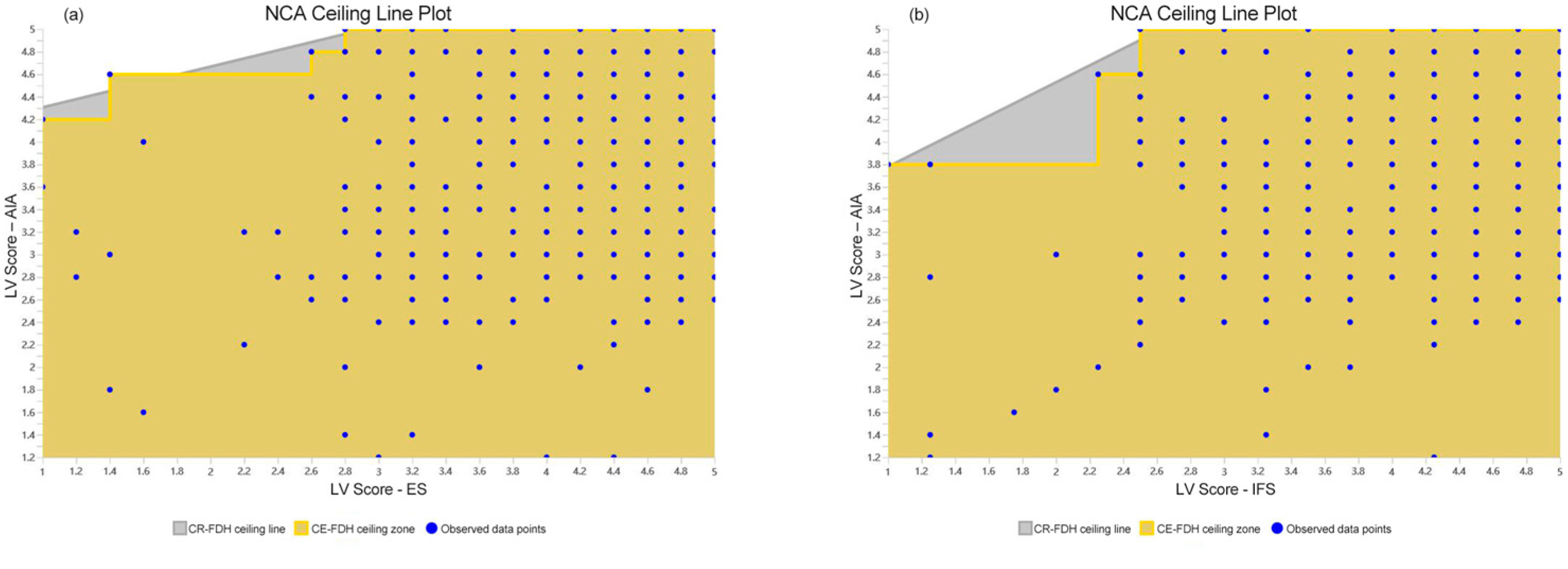
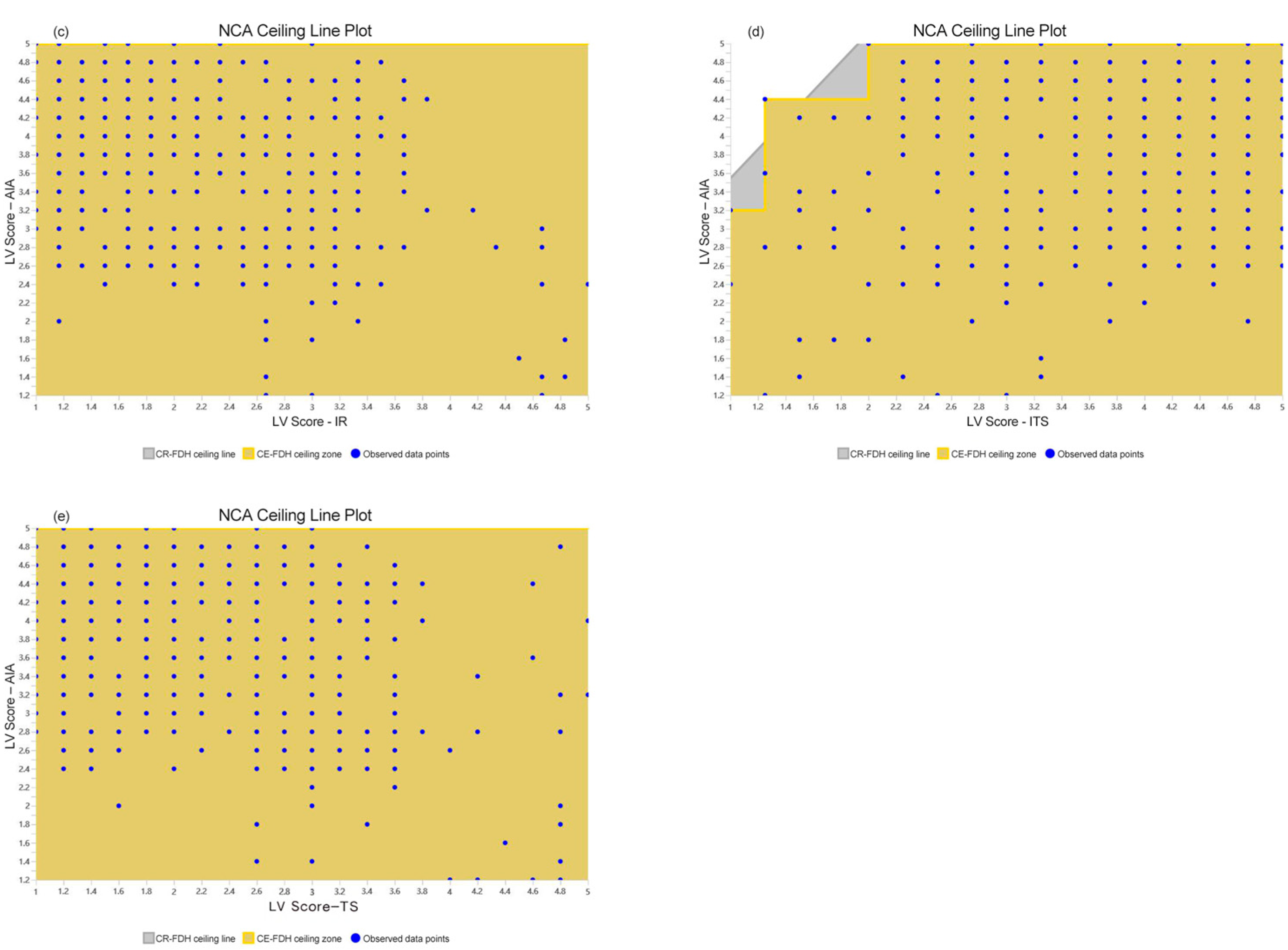
| Variable | CE-FDH | CR-FDH | Notes |
|---|---|---|---|
| ES | 0.055 | 0.044 | Exhibits weak necessity for the outcome variable, slightly reduced under CR-FDH. |
| IFS | 0.105 | 0.065 | Represents a strong necessary condition (approaching the empirical 0.1 threshold under CE-FDH). |
| IR | 0 | 0 | Not a necessary condition and does not constitute a bottleneck. |
| ITS | 0.059 | 0.044 | Serves as a marginal necessary condition, with a smaller effect than IFS. |
| TS | 0 | 0 | Similar to IR, does not constitute a necessary condition. |
Disclaimer/Publisher’s Note: The statements, opinions and data contained in all publications are solely those of the individual author(s) and contributor(s) and not of MDPI and/or the editor(s). MDPI and/or the editor(s) disclaim responsibility for any injury to people or property resulting from any ideas, methods, instructions or products referred to in the content. |
© 2025 by the authors. Licensee MDPI, Basel, Switzerland. This article is an open access article distributed under the terms and conditions of the Creative Commons Attribution (CC BY) license (https://creativecommons.org/licenses/by/4.0/).
Share and Cite
Feng, Y.; Feng, Y.; Liu, Z. The Influence of Perceived Organizational Support on Sustainable AI Adoption in Digital Transformation: An Integrated SEM–ANN–NCA Model. Sustainability 2025, 17, 11373. https://doi.org/10.3390/su172411373
Feng Y, Feng Y, Liu Z. The Influence of Perceived Organizational Support on Sustainable AI Adoption in Digital Transformation: An Integrated SEM–ANN–NCA Model. Sustainability. 2025; 17(24):11373. https://doi.org/10.3390/su172411373
Chicago/Turabian StyleFeng, Yu, Yi Feng, and Ziyang Liu. 2025. "The Influence of Perceived Organizational Support on Sustainable AI Adoption in Digital Transformation: An Integrated SEM–ANN–NCA Model" Sustainability 17, no. 24: 11373. https://doi.org/10.3390/su172411373
APA StyleFeng, Y., Feng, Y., & Liu, Z. (2025). The Influence of Perceived Organizational Support on Sustainable AI Adoption in Digital Transformation: An Integrated SEM–ANN–NCA Model. Sustainability, 17(24), 11373. https://doi.org/10.3390/su172411373