Social Media and Environmental Communication in China: A Systematic Review of Present Status, Trends, and Future Challenges


Abstract
1. Introduction
2. Materials and Methods
2.1. Research Strategy
2.2. Inclusion and Exclusion Criteria
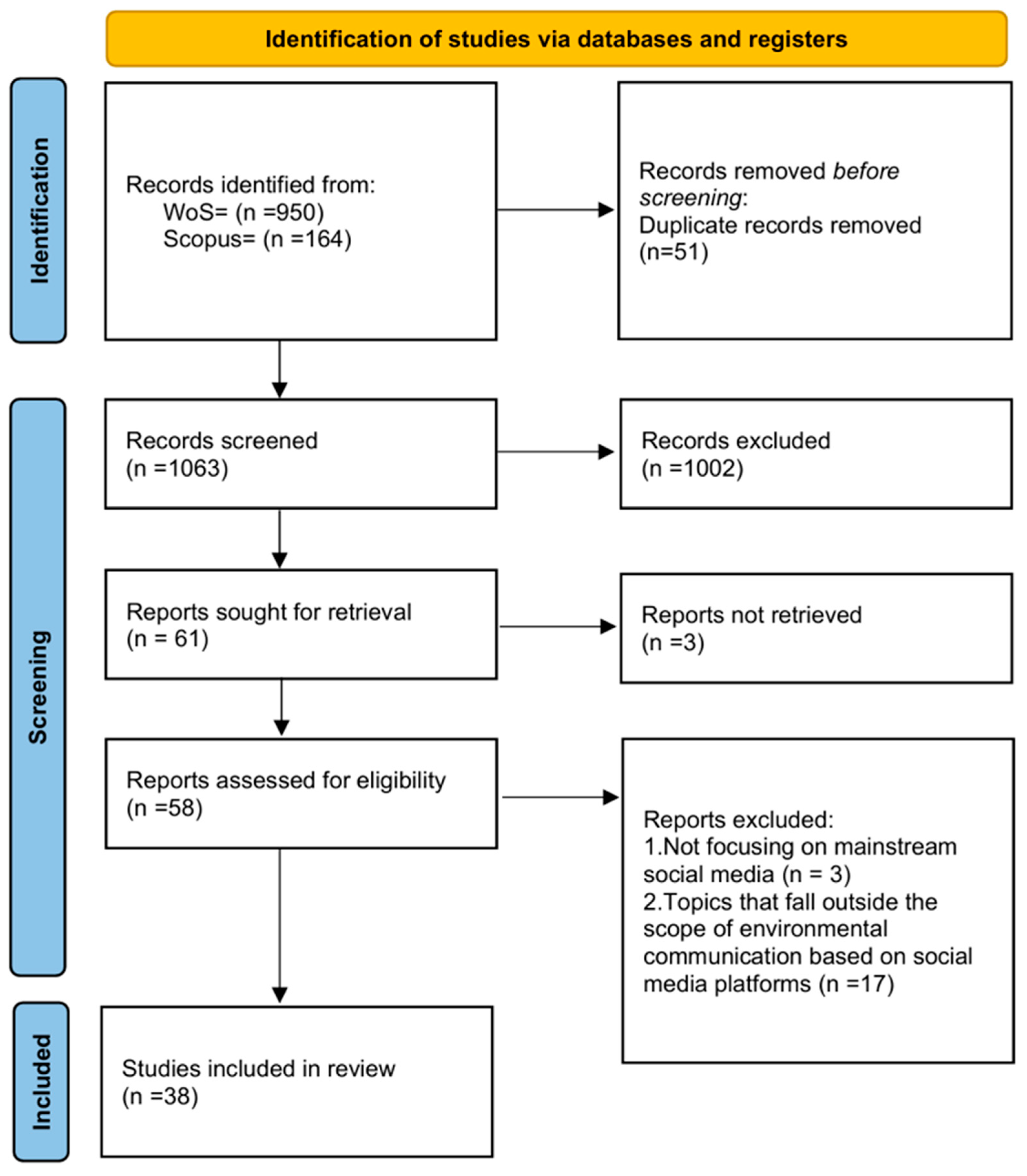
2.3. Data Screening
2.4. Data Eligibility
3. Results
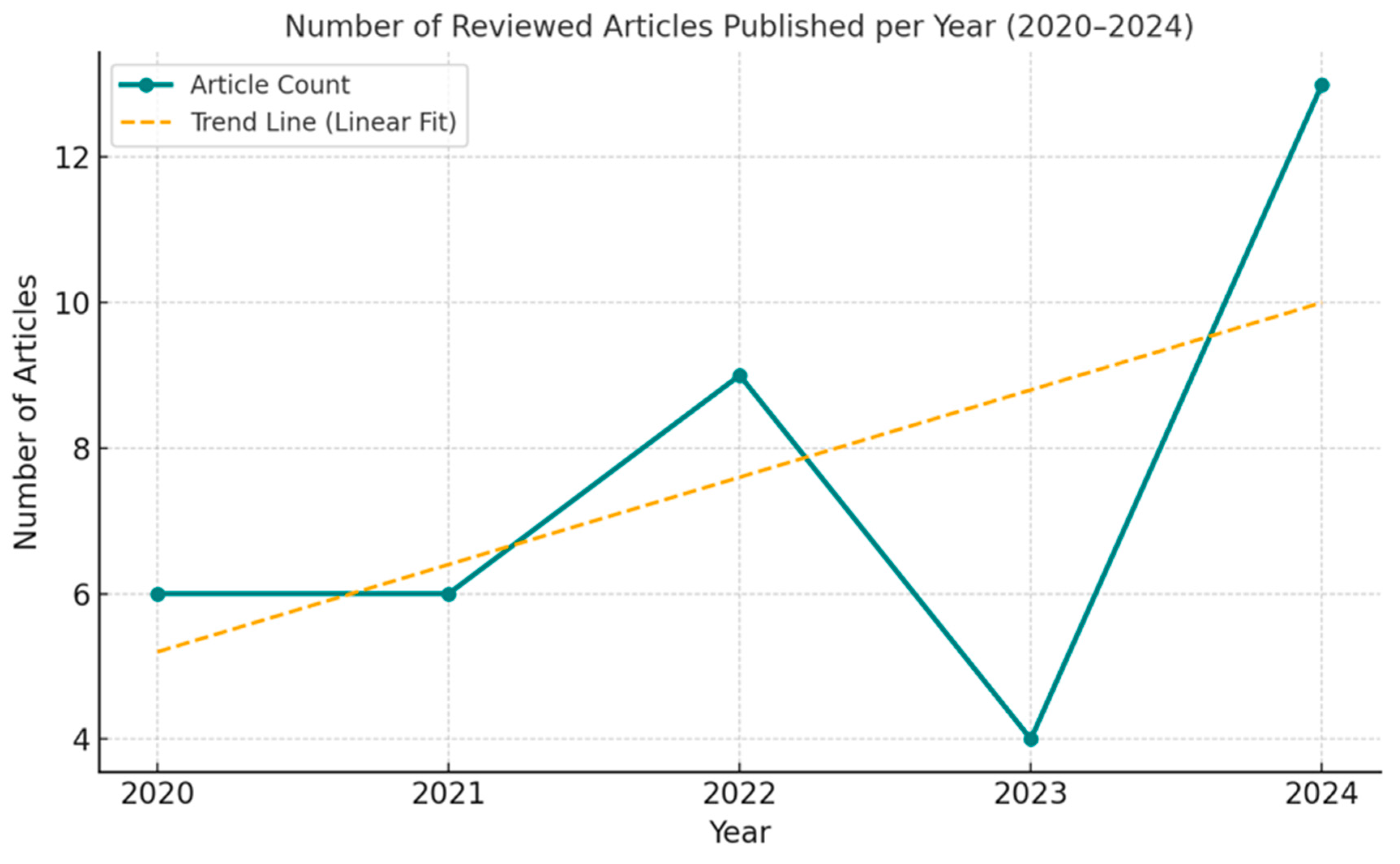
3.1. Publication Trends
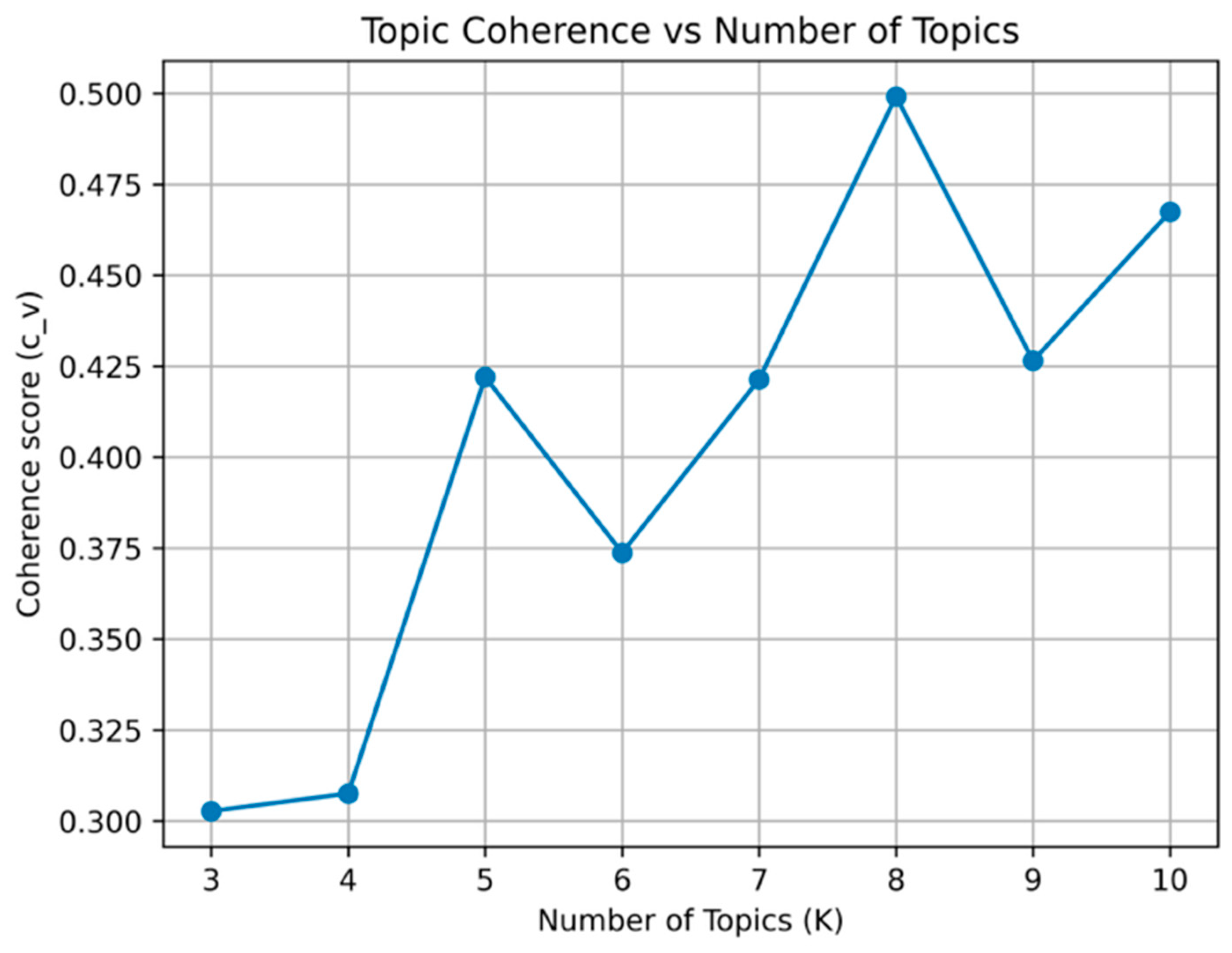
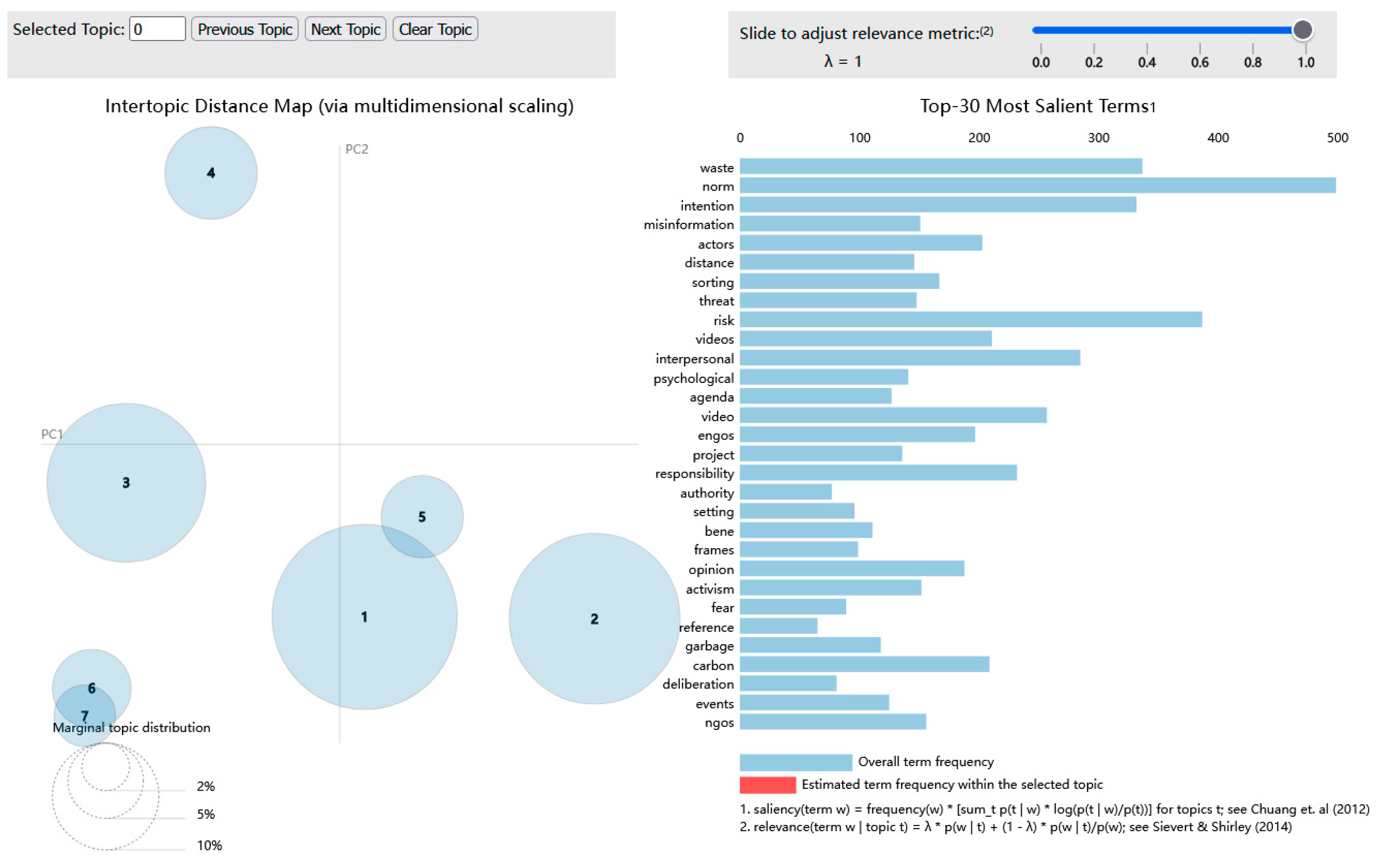
3.2. Research Topics in Reviewed Studies
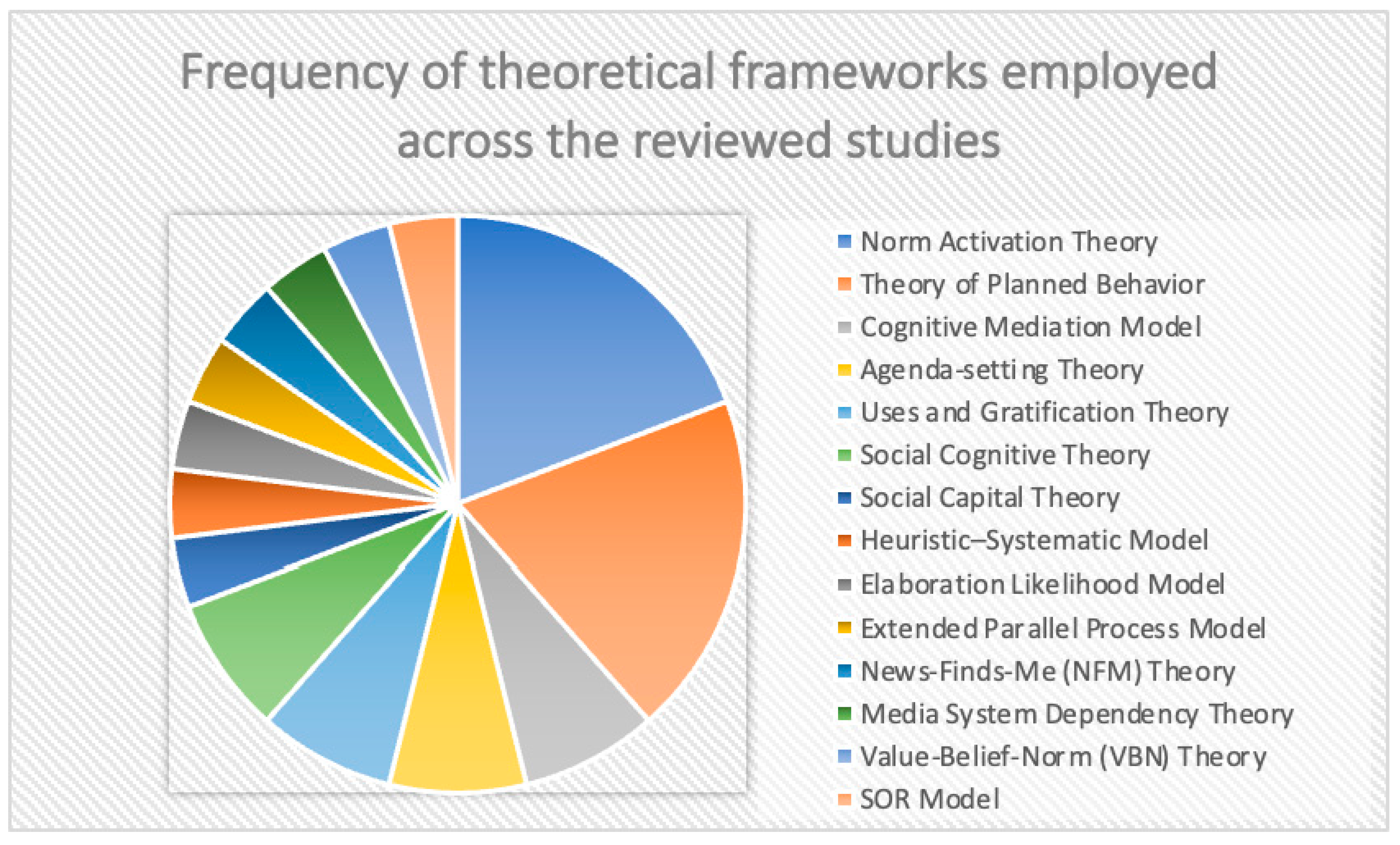
3.3. Theoretical Frameworks in Reviewed Studies
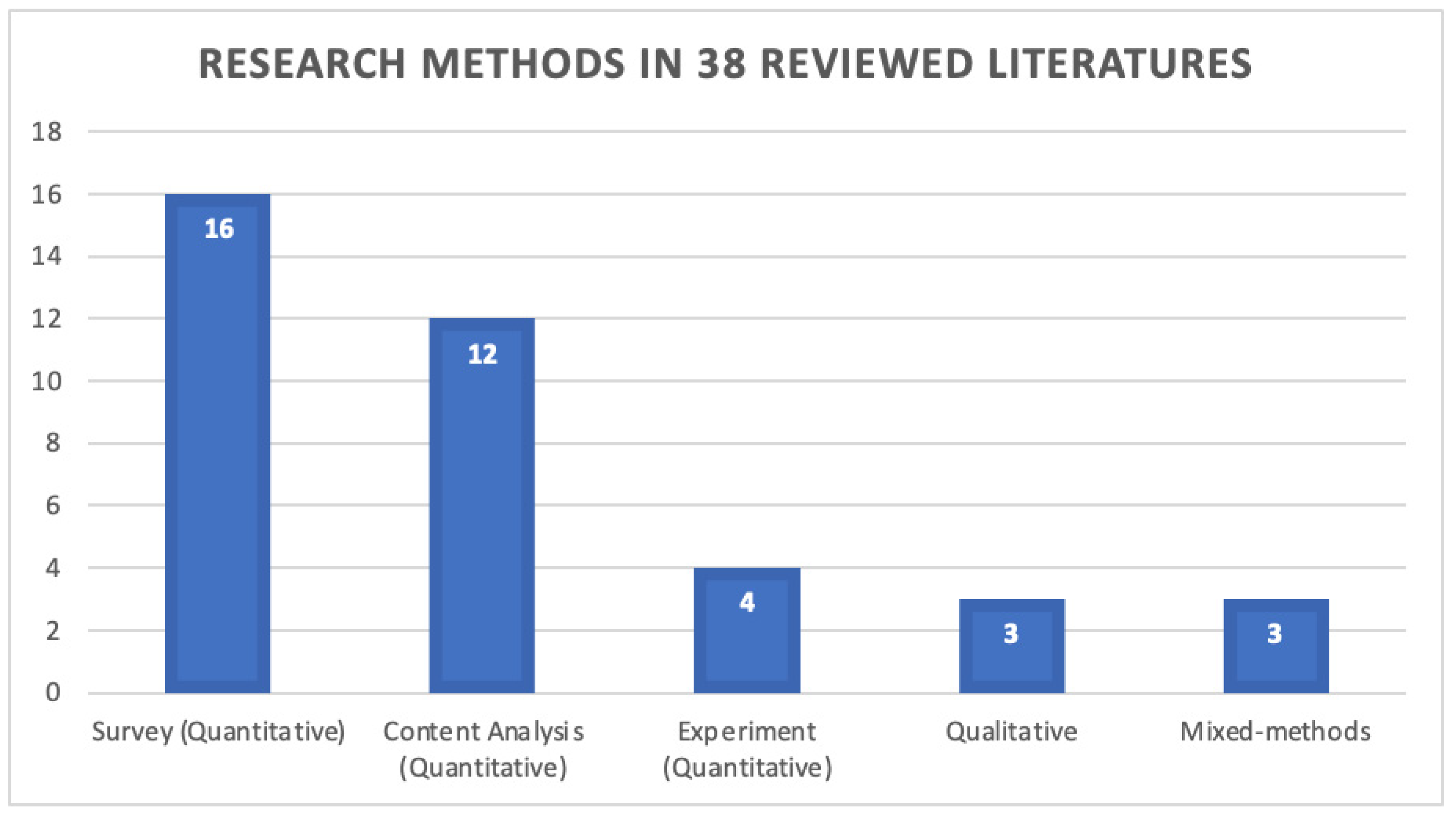
3.4. Research Methods in Reviewed Studies
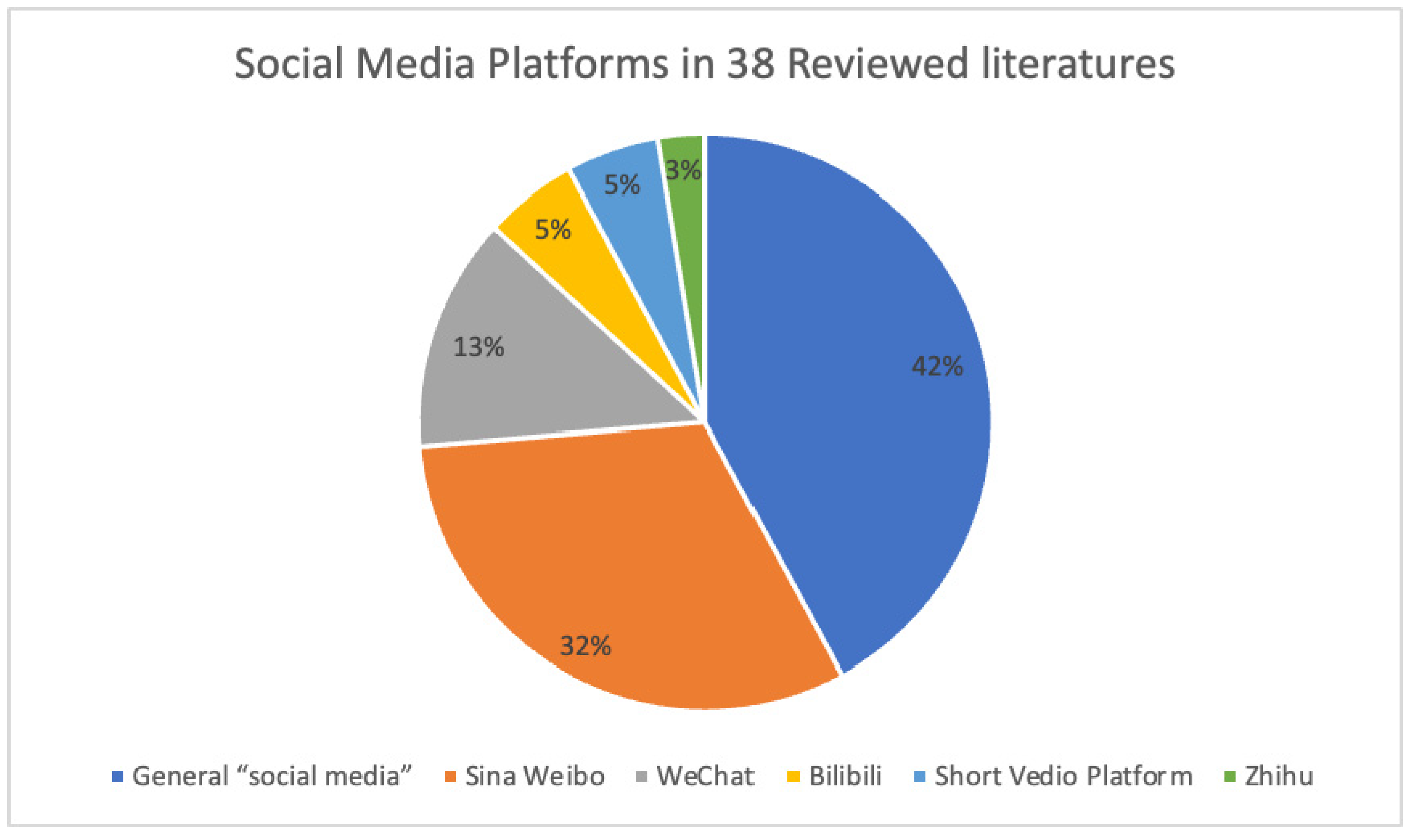
3.5. Social Media Platform in Reviewed Studies
4. Discussion
4.1. Thematic Development
4.2. Theoretical Application
4.3. Trends in Methodological Choices
4.4. Media Platforms
4.5. Research Gaps and Future Research Suggestions
5. Conclusions
Supplementary Materials
Author Contributions
Funding
Institutional Review Board Statement
Informed Consent Statement
Data Availability Statement
Conflicts of Interest
References
- Wang, B.; Siri, Z.; Haron, M.A. Threshold Effects of PM2.5 on Pension Contributions: A Fuzzy Regression Discontinuity Design and Machine Learning Approach. Sustainability 2025, 17, 8620. [Google Scholar] [CrossRef]
- Sachs, J.; Lafortune, G.; Fuller, G.; Iablonovski, G. The Sustainable Development Goals Report 2025, 1st ed.; The Sustainable Development Goals Report; United Nations Research Institute for Social Development: New York, NY, USA, 2025. [Google Scholar]
- Carvalho, A.; Peterson, T.R. Rethinking Environmental Communication Scholarship. In Environmental Communication; Walter de Gruyter GmbH: Berlin, Germany, 2024. [Google Scholar]
- Xie, P.; Zhang, Y.; Chen, R.; Lin, Z.; Lu, N. Social Media’s Impact on Environmental Awareness: A Marginal Treatment Effect Analysis of WeChat Usage in China. BMC Public Health 2024, 24, 3237. [Google Scholar] [CrossRef]
- Sun, Y.; Jia, R.; Razzaq, A.; Bao, Q. Social Network Platforms and Climate Change in China: Evidence from TikTok. Technol. Forecast. Soc. Change 2024, 200, 123197. [Google Scholar] [CrossRef]
- Anderson, A. Sustainability in Environmental Communication Research: Emerging Trends and Future Challenges. In The Sustainability Communication Reader; Weder, F., Krainer, L., Karmasin, M., Eds.; Springer Fachmedien Wiesbaden: Wiesbaden, Germany, 2021; pp. 31–50. [Google Scholar] [CrossRef]
- Weder, F.; Karmasin, M.; Krainer, L.; Voci, D. Sustainability Communication as Critical Perspective in Media and Communication Studies—An Introduction. In The Sustainability Communication Reader; Weder, F., Krainer, L., Karmasin, M., Eds.; Springer Fachmedien Wiesbaden: Wiesbaden, Germany, 2021; pp. 1–12. [Google Scholar] [CrossRef]
- Yang, J. Understanding China’s Changing Engagement in Global Climate Governance: A Struggle for Identity. Asia Eur. J. 2022, 20, 357–376. [Google Scholar] [CrossRef]
- Meng, Y.; Chung, D.; Zhang, A. The Effect of Social Media Environmental Information Exposure on the Intention to Participate in Pro-Environmental Behavior. PLoS ONE 2023, 18, e0294577. [Google Scholar] [CrossRef] [PubMed]
- Yan, X.; Schäfer, M.S. Multimodal Climate Change Communication on WeChat: Analyzing Visual/Textual Clusters on China’s Largest Social Media Platform. Clim. Change 2025, 178, 133. [Google Scholar] [CrossRef]
- Xiang, C.; Lo, A.Y. Authoritarian Environmentalism 2.0: An Incremental Transition of Environmental Governance in China. Environ. Plan. C Polit. Space 2025, 43, 765–782. [Google Scholar] [CrossRef]
- Ji, J.; Lu, Y.; Calabrese, C. Who Sets the Agenda for Climate Change in China? A Longitudinal Analysis of Primary Actors That Drive Online Discussions on Social Media. Environ. Commun. 2024, 18, 695–711. [Google Scholar] [CrossRef]
- Sultana, B.C.; Prodhan, T.R.; Alam, E.; Sohel, S.; Bari, A.B.M.M.; Pal, S.C.; Islam, K.; Islam, A.R.T. A Systematic Review of the Nexus between Climate Change and Social Media: Present Status, Trends, and Future Challenges. Front. Commun. 2024, 9, 1301400. [Google Scholar] [CrossRef]
- Pearce, W.; Niederer, S.; Özkula, S.M.; Sánchez Querubín, N. The Social Media Life of Climate Change: Platforms, Publics, and Future Imaginaries. WIREs Clim. Change 2019, 10, e569. [Google Scholar] [CrossRef]
- Page, M.J.; McKenzie, J.E.; Bossuyt, P.M.; Boutron, I.; Hoffmann, T.C.; Mulrow, C.D.; Shamseer, L.; Tetzlaff, J.M.; Akl, E.A.; Brennan, S.E.; et al. The PRISMA 2020 Statement: An Updated Guideline for Reporting Systematic Reviews. BMJ 2021, 372, n71. [Google Scholar] [CrossRef] [PubMed]
- Ktisti, E.; Hatzithomas, L.; Boutsouki, C. Green Advertising on Social Media: A Systematic Literature Review. Sustainability 2022, 14, 14424. [Google Scholar] [CrossRef]
- Zhu, J.; Liu, W. A Tale of Two Databases: The Use of Web of Science and Scopus in Academic Papers. Scientometrics 2020, 123, 321–335. [Google Scholar] [CrossRef]
- Abuhassna, H.; Alnawajha, S. Instructional Design Made Easy! Instructional Design Models, Categories, Frameworks, Educational Context, and Recommendations for Future Work. Eur. J. Investig. Health Psychol. Educ. 2023, 13, 715–735. [Google Scholar] [CrossRef]
- Köse, S.K.; Aydoğdu, G.; Demir, E.; Kiraz, M. Looking Backward toward the Future: A Bibliometric Analysis of the Last 40 Years of Meningioma Global Outcomes. Medicine 2024, 103, e39241. [Google Scholar] [CrossRef]
- Churchill, R.; Singh, L. The Evolution of Topic Modeling. ACM Comput. Surv. 2022, 54, 1–35. [Google Scholar] [CrossRef]
- Syed, S.; Spruit, M. Full-Text or Abstract? Examining Topic Coherence Scores Using Latent Dirichlet Allocation. In Proceedings of the 2017 IEEE International Conference on Data Science and Advanced Analytics (DSAA), Tokyo, Japan, 19–21 October 2017; pp. 165–174. [Google Scholar] [CrossRef]
- Bennett, J.; Rachunok, B.; Flage, R.; Nateghi, R. Mapping Climate Discourse to Climate Opinion: An Approach for Augmenting Surveys with Social Media to Enhance Understandings of Climate Opinion in the United States. PLoS ONE 2021, 16, e0245319. [Google Scholar] [CrossRef]
- Chuang, J.; Manning, C.D.; Heer, J. Termite: Visualization Techniques for Assessing Textual Topic Models. In Proceedings of the International Working Conference on Advanced Visual Interfaces; ACM: Capri Island Italy, 2012; pp. 74–77. [Google Scholar] [CrossRef]
- Sievert, C.; Shirley, K.E. LDAvis: A Method for Visualizing and Interpreting Topics. In Proceedings of the Workshop on Interactive Language Learning, Visualization, and Interfaces, Baltimore, MD, USA, 27 June 2014. [Google Scholar]
- Han, R.; Cheng, Y. The Influence of Norm Perception on Pro-Environmental Behavior: A Comparison between the Moderating Roles of Traditional Media and Social Media. Int. J. Environ. Res. Public Health 2020, 17, 7164. [Google Scholar] [CrossRef]
- Liu, Y.; Li, X. Pro-Environmental Behavior Predicted by Media Exposure, SNS Involvement, and Cognitive and Normative Factors. Environ. Commun. 2021, 15, 954–968. [Google Scholar] [CrossRef]
- Chen, Y. An Investigation of the Influencing Factors of Chinese WeChat Users’ Environmental Information-Sharing Behavior Based on an Integrated Model of UGT, NAM, and TPB. Sustainability 2020, 12, 2710. [Google Scholar] [CrossRef]
- Zhang, N.; Li, D. Mind the Gap: How Zhongyong Thinking Affects the Effectiveness of Media Use on Pro-Environmental Behaviours in China. Environ. Commun. 2023, 17, 437–451. [Google Scholar] [CrossRef]
- Wen, N.; Chao, N.; Wang, C. Predicting the Intention of Sustainable Commuting among Chinese Commuters: The Role of Media and Morality. Environ. Commun. 2021, 15, 401–417. [Google Scholar] [CrossRef]
- Tong, Q.; Zhang, Q.; Zhang, J. More Is Not Always Better: The Role of Social Media Information in Shaping Individual Low-Carbon Behavioral Intention. Int. J. Sustain. Dev. World Ecol. 2024, 31, 639–652. [Google Scholar] [CrossRef]
- Liu, M.; Shi, Z.; Zhang, Z. How Environmental Policy Perception and Social Media Use Impact Pro-Environmental Behavior: A Moderated Mediation Model Based on the Theory of Planned Behavior. Sustainability 2024, 16, 7587. [Google Scholar] [CrossRef]
- Ai, P.; Li, W.; Yang, W. Adolescents’ Social Media Use and Their Voluntary Garbage Sorting Intention: A Sequential Mediation Model. Int. J. Environ. Res. Public Health 2021, 18, 8119. [Google Scholar] [CrossRef] [PubMed]
- Han, R.; Xu, J. A Comparative Study of the Role of Interpersonal Communication, Traditional Media and Social Media in Pro-Environmental Behavior: A China-Based Study. Int. J. Environ. Res. Public Health 2020, 17, 1883. [Google Scholar] [CrossRef]
- Chen, L.; Zheng, W.; Fu, L. Examining Factors Influencing Public Knowledge, Risk Perception, and Policy Support for Waste Classification: A Multigroup Comparison of the Cognitive Mediation Model Based on Gender Differences. Environ. Commun. 2023, 17, 759–774. [Google Scholar] [CrossRef]
- Fu, L.; Lei, L.; Chen, L. Text, Short Video, or Long Video? Effects of Attention to Various Types of Social Media on Public Knowledge of Dual Carbon: A Multigroup Comparison Based on Environmental Concern Levels. Environ. Commun. 2024, 18, 610–627. [Google Scholar] [CrossRef]
- Wu, M.; Long, R.; Chen, H.; Wang, J. Is Social Media More Conducive to Climate Change Communication Behavior? The Mediating Role of Risk Perception and Environmental Values. Environ. Dev. Sustain. 2023, 26, 29401–29427. [Google Scholar] [CrossRef]
- Huang, F.; Chen, Q.; Ma, W.; Evans, R. Promoting Public Engagement with Household Waste Separation through Government Social Media: A Case Study of Shanghai. J. Environ. Manag. 2022, 320, 115825. [Google Scholar] [CrossRef]
- Wang, X.; Yue, X. A Study on the Mechanism of the Influence of Short Science Video Features on People’s Environmental Willingness in Social Media—Based on the SOR Model. Front. Environ. Sci. 2022, 10, 990709. [Google Scholar] [CrossRef]
- Zhu, J.; Zheng, S.; Kaabar, M.K.A.; Yue, X.-G. Online or Offline? The Impact of Environmental Knowledge Acquisition on Environmental Behavior of Chinese Farmers Based on Social Capital Perspective. Front. Environ. Sci. 2022, 10, 1052797. [Google Scholar] [CrossRef]
- Zhang, N.; Skoric, M.M. Getting Their Voice Heard: Chinese Environmental NGO’s Weibo Activity and Information Sharing. Environ. Commun. 2020, 14, 844–858. [Google Scholar] [CrossRef]
- Tang, H.; Chen, L.; Liu, S.; Tan, X.; Li, Y. Reconsidering the Effectiveness of Fear Appeals: An Experimental Study of Interactive Fear Messaging to Promote Positive Actions on Climate Change. J. Health Commun. 2024, 29, 57–67. [Google Scholar] [CrossRef]
- Yang, X.; Zhang, L. Message Presentation Is of Importance as Well: The Asymmetric Effects of Numeric and Verbal Presentation of Fear Appeal Messages in Promoting Waste Sorting. Environ. Commun. 2022, 16, 1059–1076. [Google Scholar] [CrossRef]
- Su, Y.; Luo, C.; Borah, P. Learning about Climate Change with Algorithmic News? A Two-Wave Panel Study Examining the Role of “News-Finds-Me” Perception. J. Comput.-Mediat. Commun. 2024, 29, zmae010. [Google Scholar] [CrossRef]
- Li, Y.; Yu, B.; Dai, J. “Climate Change” or “Global Warming”? The (Un)Politicization of Climate in Chinese Social Media Platform. Environ. Commun. 2024, 18, 927–944. [Google Scholar] [CrossRef]
- Yang, Z. More Than Just an Audience: The New Approach to Public Engagement with Climate Change Communication on Chinese Knowledge-Sharing Networks. Environ. Commun. 2022, 16, 757–772. [Google Scholar] [CrossRef]
- Yang, Y.; Stoddart, M.C.J. Public Engagement in Climate Communication on China’s Weibo: Network Structure and Information Flows. Polit. Gov. 2021, 9, 146–158. [Google Scholar] [CrossRef]
- Zhang, N.; Huang, L. Fostering Opinion Leaders’ pro-Environmental Behaviour: Examining the Mediating Role of Social Media Expression and the Moderating Role of Mianzi. Asian J. Commun. 2024, 34, 638–657. [Google Scholar] [CrossRef]
- Zhang, X. Anti-Incineration Mobilization on WeChat: Evidence from 12 WeChat Subscription Accounts. Environ. Commun. 2021, 15, 1061–1076. [Google Scholar] [CrossRef]
- Joseph, J.; Karackattu, J.T. New Media Activism and Politics of Ecology in the People’s Republic of China. China Rep. 2022, 58, 390–409. [Google Scholar] [CrossRef]
- Guo, Y.; Hou, Y. COVID-19 Pandemic as an Opportunity or Challenge: Applying Psychological Distance Theory and the Co-Benefit Frame to Promote Public Support for Climate Change Mitigation on Social Media. Environ. Commun. 2024, 18, 550–568. [Google Scholar] [CrossRef]
- Goron, C.; Bolsover, G. Engagement or Control? The Impact of the Chinese Environmental Protection Bureaus’ Burgeoning Online Presence in Local Environmental Governance. J. Environ. Plan. Manag. 2020, 63, 87–108. [Google Scholar] [CrossRef]
- Shen, C.; Wang, Y. The Impact of Climate Change on Media Coverage of Sponge City Programs: A Text Mining and Machine Learning Analysis. Environ. Commun. 2023, 17, 518–535. [Google Scholar] [CrossRef]
- Sun, Y.; Huang, V.G. Embedded Data Activism: The Institutionalization of a Grassroots Environmental Data Initiative in China. Chin. J. Commun. 2022, 15, 115–137. [Google Scholar] [CrossRef]
- Ji, J.; Hu, T.; Chen, Z.; Zhu, M. Exploring the Climate Change Discourse on Chinese Social Media and the Role of Social Bots. Asian J. Commun. 2024, 34, 109–128. [Google Scholar] [CrossRef]
- Gong, P.; Wang, L.; Liu, X.; Wei, Y. The Value of Social Media Tool for Monitoring and Evaluating Environment Policy Communication: A Case Study of the ‘Zero-Waste City’ Initiative in China. Energy Ecol. Environ. 2022, 7, 614–629. [Google Scholar] [CrossRef]
- Che, S.; Kuang, K.; Liu, S. Climate Communication with Chinese Youth by Chinese Nongovernmental Organizations: A Case Study of Chinese Weather Enthusiasts on Bilibili. Weather Clim. Soc. 2024, 16, 467–479. [Google Scholar] [CrossRef]
- Xu, J.; Zhang, H. Activating beyond Informing: Action-Oriented Utilization of WeChat by Chinese Environmental NGOs. Int. J. Environ. Res. Public Health 2022, 19, 3776. [Google Scholar] [CrossRef]
- Zheng, S.; Cui, J.; Sun, C.; Li, J.; Li, B.; Guan, W. The Effects of the Type of Information Played in Environmentally Themed Short Videos on Social Media on People’s Willingness to Protect the Environment. Int. J. Environ. Res. Public Health 2022, 19, 9520. [Google Scholar] [CrossRef] [PubMed]
- Yu, X.; Wang, J.; Liu, Y. Civic Participation in Chinese Cyberpolitics: A Grounded Theory Approach of Para-Xylene Projects. Int. J. Environ. Res. Public Health 2021, 18, 12458. [Google Scholar] [CrossRef]
- Chu, J.; Zhu, Y.; Ji, J. Characterizing the Semantic Features of Climate Change Misinformation on Chinese Social Media. Public Underst. Sci. 2023, 32, 845–859. [Google Scholar] [CrossRef]
- Alivi, M.A.; Ghazali, A.H.A.; Tamam, E. Significant Effects of Online News on Vote Choice: A Review. Int. J. Web Based Communities 2018, 14, 379. [Google Scholar] [CrossRef]
- Wang, H.; Jiang, C. Local Nuances of Authoritarian Environmentalism: A Legislative Study on Household Solid Waste Sorting in China. Sustainability 2020, 12, 2522. [Google Scholar] [CrossRef]
- Treen, K.M.; Williams, H.T.P.; O’Neill, S.J. Online Misinformation about Climate Change. WIREs Clim. Change 2020, 11, e665. [Google Scholar] [CrossRef]
- Maniates, M.F. Individualization: Plant a Tree, Buy a Bike, Save the World? Glob. Environ. Polit. 2001, 1, 31–52. [Google Scholar] [CrossRef]
- Shove, E. Beyond the ABC: Climate Change Policy and Theories of Social Change. Environ. Plan. Econ. Space 2010, 42, 1273–1285. [Google Scholar] [CrossRef]
- Ball-Rokeach, S.J.; DeFleur, M.L. A Dependency Model of Mass-Media Effects. Commun. Res. 1976, 3, 3–21. [Google Scholar] [CrossRef]
- Eise, J.; Lambert, N.J.; Adekunle, T.; Eversole, K.; Eise, L.; Murphy, M.; Sprouse, L. Climate Change Communication Research: A Systematic Review. SSRN Electron. J. 2020. [Google Scholar] [CrossRef]
- Attia, N.A.H.M.; Ahmed, N.T.I. Is TikTok a Public Sphere for Democracy in Egypt? The Application of Habermas’s “Pseudo-Public Sphere”. Stud. Media Commun. 2025, 13, 336. [Google Scholar] [CrossRef]
- Moore, S.A. (Ed.) Pragmatic Sustainability: Theoretical and Practical Tools, 1st ed.; Routledge: Abingdon, UK; New York, NY, USA, 2010. [Google Scholar]



| Criteria | Inclusion | Exclusion |
|---|---|---|
| Timeline | 2020–2024 | <2020 or >2024 |
| Document Type | Articles with empirical data | Article review, conference abstracts, chapters in book, book series, book, meta-analysis, systematic review, literature review, and meta-synthesis |
| Language | English | Non-English |
| Scope | Studies explicitly focusing on China or Chinese social media platforms (e.g., Weibo, WeChat, Douyin/TikTok) and addressing environmental communication, discourse, or public engagement | Studies not focused on China or without social media as the primary object of analysis |
| Topic | |
|---|---|
| T1 | Carbon-related communication and message processing/text analysis |
| T2 | Norms, risk and interpersonal narrative in communication |
| T3 | ENGOs and ecological activism in the online public sphere |
| T4 | Waste and incineration conflicts and civic mobilization |
| T5 | Psychological distance, perceived threat and pro-environmental intentions |
| T6 | Agenda-setting and visual social media actors |
| T7 | Misinformation, authority and scientific credibility |
| Theoretical Framework | Studies |
|---|---|
| Norm Activation Theory (NAT) | [25,26,27,28,29] |
| Theory of Planned Behavior (TPB) | [27,30,31,32,33] |
| Cognitive Mediation Model (CMM) | [34,35] |
| Agenda-setting Theory | [12,36] |
| Uses and Gratification Theory (UGT) | [27,37] |
| Social Cognitive Theory (SCT) | [32,33] |
| SOR (Stimulus–Organism–Response) Model | [38] |
| Social Capital Theory | [39] |
| Heuristic–Systematic Model (HSM) | [40] |
| Elaboration Likelihood Model (ELM) | [41] |
| Extended Parallel Process Model (EPPM) | [42] |
| News-Finds-Me (NFM) Theory | [43] |
| Media System Dependency Theory (MSDT) | [29] |
| Value-Belief-Norm (VBN) Theory | [33] |
| Studies | Methodology | Social Media Platform |
|---|---|---|
| Li et al. [44] | Content Analysis | Bilibili |
| Han et al. [33] | Online Questionnaire Survey | General “social media” |
| Han et al. [25] | Online Questionnaire Survey | General “social media” |
| Wen et al. [29] | Online Questionnaire Survey | General “social media” |
| Liu et al. [26] | Online Questionnaire Survey | General “social media” |
| Zhang et al. [28] | Online Questionnaire Survey | General “social media” |
| Chen et al. [34] | Online Questionnaire Survey | General “social media” |
| Fu et al. [35] | Online Questionnaire Survey | Short-video (Douyin, Kuaishou), Long-video (Youku, iQIYI, Bilibili), Text-based (WeChat, Weibo, Zhihu) |
| Ji et al. [12] | Content Analysis | Sina Weibo |
| Tong et al. [30] | Online Questionnaire Survey | General “social media” |
| Su et al. [43] | Online Questionnaire Survey | General “social media” |
| Tang et al. [41] | Online Experiment | Sina Weibo |
| Yang Zheng [45] | Qualitative | Zhihu |
| Yang et al. [46] | Content Analysis | Sina Weibo |
| Zhang and Huang [47] | Online Questionnaire Survey | General “social media” |
| Zhang Xixi [48] | Content Analysis | |
| Yang and Zhang [42] | Online Experiment | General “social media” |
| Joseph and Karackattu [49] | Mixed-methods | General “social media” |
| Wu et al. [36] | Online Questionnaire Survey | General “social media” |
| Yang Chen [27] | Online Questionnaire Survey | |
| Guo and Hou [50] | Online Experiment | |
| Goron and Bolsover [51] | Content Analysis | Sina Weibo |
| Shen and Wang [52] | Content Analysis | General “social media” |
| Sun and Huang [53] | Qualitative | Weibo + WeChat + Bluemap app |
| Ji et al. [54] | Content Analysis | Sina Weibo |
| Sun et al. [5] | Content Analysis | TikTok |
| Zhang and Skoric [40] | Content Analysis | Sina Weibo |
| Gong et al. [55] | Content Analysis | Sina Weibo |
| Liu and Zhang [31] | Online Questionnaire Survey | General “social media” |
| Zhu et al. [39] | Online Questionnaire Survey | General “social media” |
| Che et al. [56] | Mixed-methods | Bilibili |
| Xu and Zhang [57] | Mixed-methods | |
| Ai et al. [32] | Online Questionnaire Survey | General “social media” |
| Huang et al. [37] | Content Analysis | General “social media” |
| Zheng et al. [58] | Online Experiment | Short Videos Platform |
| Wang and Yue [38] | Online Questionnaire Survey | Short Videos Platform |
| Yu et al. [59] | Qualitative | Sina Weibo |
| Chu et al. [60] | Content Analysis | Sina Weibo |
| Studies | Research Gap | Future Study Suggestion |
|---|---|---|
| Li et al. [44] | Although the study reveals how different actors use climate terms and frames on Bilibili, the exclusive focus on one youth-dominated platform limits understanding of broader public perceptions and excludes multi-platform discourse dynamics. | Future research should adopt a cross-platform approach and incorporate audiences of varied age groups to better capture how politicization and framing of climate issues differ across social and demographic contexts. |
| Han et al. [33] | Although the study offers valuable comparisons among communication modes, it relies solely on self-reported survey data, which limits understanding of actual behavioral change and may introduce social desirability bias. | Future research should incorporate observational or experimental designs to validate the behavioral effects of social and interpersonal communication and better explore the causality behind pro-environmental actions. |
| Han et al. [25] | Although this study compares the moderating roles of traditional and social media, it treats media use as aggregated categories and does not account for differences across specific platforms or content types, limiting contextual precision. | Future studies should disaggregate media categories and analyze the influence of individual platforms and content features to better capture media’s nuanced role in activating different norm perceptions. |
| Wen et al. [29] | Although the study builds a sophisticated model integrating media use and norm activation theory, it relies solely on cross-sectional self-reported data, limiting the ability to establish causal relationships and assess actual behavior. | Future research should use longitudinal or experimental designs and include behavioral tracking to strengthen causal inference and validate the theoretical model in real-world commuting behavior. |
| Liu et al. [26] | This study does not distinguish clearly between types of pro-environmental behaviors, treating them as a single index, which limits understanding of how specific behaviors are influenced by cognitive and social factors. | Future research should differentiate behavioral outcomes (e.g., low-cost vs. high-cost actions) to examine how distinct combinations of personal norms, efficacy, and media exposure predict specific pro-environmental choices. |
| Zhang et al. [28] | The current study uses cross-sectional survey data and focuses on a relatively young sample, which restricts its capacity to assess causality or explore generational differences in the effects of Zhongyong thinking. | Future research should employ longitudinal or experimental methods and recruit a more age-diverse sample to examine how cultural cognition influences media effects across different generations. |
| Chen et al. [34] | Despite its extension of the cognitive mediation model, the study measures media attention as a unidimensional construct and overlooks the influence of different media types or platforms on information processing outcomes. | Future research should adopt a multidimensional media attention framework to explore how various platforms differentially affect elaboration, risk perception, and policy support. |
| Fu et al. [35] | While the study compares media types effectively, it does not examine the content characteristics or framing styles within each platform type, which may further explain variation in public understanding. | Future research should investigate how platform-specific features and recommendation systems shape elaboration and knowledge outcomes across different user groups. |
| Ji et al. [12] | Despite its innovative use of second-level agenda-setting theory, the study focuses on actor interactions but does not examine how message framing or sentiment within those interactions might influence agenda-setting power. | Future research should integrate framing analysis or sentiment mining to uncover how narrative tone and message style affect the influence and reception of climate communication across different actor groups. |
| Tong et al. [30] | The study does not explore how different emotional or cognitive responses to social media content affect both information exposure and avoidance, limiting psychological insight. | Future research should investigate how emotional tone and content overload on various platforms influence users’ selective attention and low-carbon behavioral intentions. |
| Su et al. [43] | The study used a general NFM scale and did not analyze the distinct effects of its sub-dimensions on climate change knowledge. | Future research should examine each NFM sub-dimension’s role separately and use more discriminating climate knowledge measures with representative samples. |
| Tang et al. [41] | This study focuses solely on psychological mechanisms within one-time message exposure, leaving the long-term behavioral effects of interactive fear appeals unexamined. | Future research should adopt longitudinal or multi-wave designs to evaluate the sustained influence of interactive fear messaging and explore additional mediators such as emotion and message involvement. |
| Yang Zheng [45] | The study explores citizen science communicators (CSCs) on Zhihu but does not assess the credibility or accuracy of their climate-related content, raising concerns about misinformation risks. | Future research should examine the scientific quality and fact-checking mechanisms of CSC content and explore collaborative models between professional scientists and public communicators. |
| Yang et al. [46] | This study emphasizes structural network analysis but does not assess the discursive quality or framing strategies within user interactions, limiting insight into meaning-making processes. | Future research should incorporate discourse or framing analysis to evaluate how communication content, not just structure, shapes public engagement and climate understanding. |
| Zhang and Huang [47] | While the study explores mediating and moderating factors influencing PEB, it relies heavily on self-reported intentions, lacking behavioral validation and experimental testing. | Future work should adopt field experiments or behavioral tracking to validate the effects of social media expression and mianzi on actual pro-environmental behaviors. |
| Zhang Xixi [48] | The study offers rich discursive analysis but lacks audience-side data to verify how these mobilization messages were received or acted upon. | Future work should include user reception studies or surveys to assess how WeChat content influences public awareness and participation behavior. |
| Yang and Zhang [42] | The study did not explore how individual differences in numeracy or message processing styles may interact with message format, limiting personalization insight. | Future research should examine audience traits like numeracy or cognitive style to determine how they moderate the effects of numeric vs. verbal fear appeals. |
| Joseph and Karackattu [49] | The study provides rich historical and conceptual analysis but lacks empirical measurement of how digital activism concretely affects policy outcomes or public trust. | Future research should employ quantitative or mixed methods to assess the direct impact of new media activism on specific environmental policies and institutional responsiveness. |
| Wu et al. [36] | Existing studies insufficiently consider the combined mediating role of risk perception and environmental values across different media types. | Future research should employ longitudinal designs and include additional value constructs (e.g., altruism, egoism) to enhance causal inference and framework robustness. |
| Yang Chen [27] | The study lacks comparative analysis with other platforms, limiting the understanding of whether the identified motivations are unique to WeChat users. | A valuable next step would be to test the integrated model across platforms like Weibo or Douyin to evaluate its generalizability beyond the WeChat context. |
| Guo and Hou [50] | The study focuses on official accounts’ online activity but does not assess public interaction quality or citizen trust, limiting insight into actual participatory outcomes. | Subsequent research could evaluate how online communication by government agencies affects public responsiveness, trust, and offline environmental action at the local level. |
| Goron and Bolsover [51] | The study does not explore how mediatized policy normalization affects long-term offline behavioral changes or enforcement outcomes. | It would be valuable to assess how online discourse translates into sustained offline compliance and whether media-driven legitimacy impacts local implementation practices. |
| Shen and Wang [52] | Although the study compares state-oriented newspapers and market-oriented web news on sponge city programs before and after the Henan floods, its macro-level focus on institutional media discourse overlooks citizens’ everyday understandings and lived experiences of sponge city initiatives. | Future research should link media-framing analysis with surveys, interviews, or social media data to capture public attitudes toward sponge city programs and to examine how extreme weather events shift these views over time. |
| Sun and Huang [53] | This study did not comprehensively assess how the functions of social media influence the visibility and scalability of data activism. | Further research could compare multiple grassroots data initiatives across various platforms to examine the role of platform-specific logics in influencing institutional co-optation. |
| Ji et al. [54] | Existing research lacks cross-platform comparison to understand how algorithmic actors like social bots’ function differently in diverse digital ecologies. | Future studies should compare social bot activity across platforms to assess platform-specific influences on climate discourse dynamics. |
| Sun et al. [5] | Although the study builds a supernetwork model to identify climate-related opinion leaders on TikTok in China, its focus on 50 accounts and structural metrics alone neglects message quality, audience characteristics, and real-world behavioural effects. | Future research should expand to larger and more diverse samples, combine content and sentiment analysis with user surveys or experiments, and compare TikTok with other platforms to assess how influencer credibility and climate messaging affect attitudes and actions. |
| Zhang and Skoric [40] | The study does not account for network centrality or inter-organizational dynamics, which are key to understanding influence on Weibo. | Future research should apply social network analysis to map and evaluate NGOs’ structural positions and their impact on message diffusion. |
| Gong et al. [55] | Despite constructing a comprehensive measurement framework, the study focuses only on Weibo and lacks cross-platform comparison. | Future research should expand the analysis to include diverse platforms such as WeChat or short-video apps to better understand multi-platform dynamics in environmental policy communication. |
| Liu and Zhang [31] | The study does not distinguish between different types of social media platforms, reducing the explanatory power of media effects on behavioral intentions. | Future studies may analyze platform-specific features (e.g., interactivity, credibility) to identify how they differently moderate the TPB pathway toward environmental behavior. |
| Zhu et al. [39] | This study does not assess how different digital platforms may offer unequal access to environmental knowledge among rural populations. | It would be worthwhile to explore how platform accessibility, digital literacy, and content format interact to shape knowledge acquisition and behavior in underserved rural areas. |
| Che et al. [56] | It focuses only on a single NGO and one platform, limiting the generalizability of the findings across diverse organizational strategies and media environments. | Subsequent research could include multiple NGOs and platforms like TikTok or WeChat to compare how different communication contexts affect youth engagement and content reception. |
| Xu and Zhang [57] | The study does not explore whether mobilization efforts on WeChat translate into actual offline actions or long-term engagement. | Assessing users’ post-engagement behavior and the real-world impact of action-oriented messages would provide a deeper understanding of WeChat’s mobilizational effectiveness. |
| Ai et al. [32] | The study narrowly focuses on adolescents in Shanghai, limiting the geographical and policy-contextual generalizability of its findings. | Further research could employ longitudinal or experimental methods to better examine the causal mechanism. |
| Huang et al. [37] | The study focuses only on one city and platform, limiting generalizability and overlooking how platform features shape engagement. | Future work could compare cities and platforms to explore how different media environments influence public participation in waste separation. |
| Zheng et al. [58] | The study only tested message types within one-shot video exposure, limiting insight into long-term behavioral impact. | It would be useful to assess repeated exposure effects and compare platform formats like Douyin vs. Bilibili for sustained influence. |
| Wang and Yue [38] | The study relies solely on self-reported questionnaire data, lacking behavioral data that could verify users’ actual environmental actions. | Subsequent research could incorporate behavioral tracking data from platforms like Douyin to validate the intention-behavior link. |
| Yu et al. [59] | The study focuses on single-case PX protests and lacks comparative insight into cross-city mobilization dynamics. | It would be valuable to conduct multi-case comparisons to explore whether similar participation patterns hold across different environmental controversies. |
| Chu et al. [60] | The study only examines semantic features like frames and authority references, overlooking other influential factors such as visual content or network diffusion. | Upcoming research could integrate multimodal and network-based features to better predict and trace climate misinformation online. |
Disclaimer/Publisher’s Note: The statements, opinions and data contained in all publications are solely those of the individual author(s) and contributor(s) and not of MDPI and/or the editor(s). MDPI and/or the editor(s) disclaim responsibility for any injury to people or property resulting from any ideas, methods, instructions or products referred to in the content. |
© 2025 by the authors. Licensee MDPI, Basel, Switzerland. This article is an open access article distributed under the terms and conditions of the Creative Commons Attribution (CC BY) license (https://creativecommons.org/licenses/by/4.0/).
Share and Cite
Song, K.; Alivi, M.A. Social Media and Environmental Communication in China: A Systematic Review of Present Status, Trends, and Future Challenges. Sustainability 2025, 17, 11057. https://doi.org/10.3390/su172411057
Song K, Alivi MA. Social Media and Environmental Communication in China: A Systematic Review of Present Status, Trends, and Future Challenges. Sustainability. 2025; 17(24):11057. https://doi.org/10.3390/su172411057
Chicago/Turabian StyleSong, Kangni, and Mumtaz Aini Alivi. 2025. "Social Media and Environmental Communication in China: A Systematic Review of Present Status, Trends, and Future Challenges" Sustainability 17, no. 24: 11057. https://doi.org/10.3390/su172411057
APA StyleSong, K., & Alivi, M. A. (2025). Social Media and Environmental Communication in China: A Systematic Review of Present Status, Trends, and Future Challenges. Sustainability, 17(24), 11057. https://doi.org/10.3390/su172411057