


Abstract
This study aims to identify the variables that influence revisit intention and the theories most frequently employed in related research. This research adopts a systematic literature review (SLR) following the PRISMA 2020 guidelines, encompassing the identification, screening, and synthesis of articles from the Scopus, ScienceDirect, and Emerald databases. The results indicate that customer satisfaction, destination image, experience, and service quality emerge as the most dominant variables. At the same time, constructs such as electronic word-of-mouth (e-WOM), place identity, and accessibility receive comparatively little scholarly attention. Moreover, the Theory of Planned Behavior constitutes the most commonly applied theoretical framework, followed by the stimulus-organism-response (SOR) model, the Theory of Reasoned Action (TRA), and Cognitive Appraisal Theory. These findings reveal research gaps that provide a foundation for future conceptual model development. The study offers both theoretical and practical contributions toward strengthening strategies for fostering tourist loyalty.
1. Introduction
In the highly competitive hospitality industry, efforts to foster tourists’ revisit intention have become a crucial strategy for sustaining business viability and enhancing profitability. Revisit intention not only reflects the level of satisfaction with previous lodging experiences but also represents a post-consumption behavior that directly influences customer loyalty [1,2]. Moreover, Gregoriades et al. [3] emphasize that revisit intention serves as a key performance indicator for hotel businesses, particularly in navigating the economic uncertainties caused by the COVID-19 pandemic, which significantly reduced global tourist mobility. Prior studies also reveal that tourists with a strong intention to return tend to demonstrate higher consumption engagement, longer stays, and a greater likelihood of engaging in positive word-of-mouth communication, which can enhance the hotel’s reputation [1,4]. Therefore, promoting revisit intention is not only essential for improving customer retention rates but also constitutes a strategic foundation for sustainable growth in a dynamic hospitality landscape.
From a conceptual perspective, revisit intention is not a singular construct but a multidimensional one. It can be understood as motivational (the reasons that drive tourists to return, such as emotional attachment or cultural curiosity), intentional (the expressed willingness or plan to revisit), and behavioral (the actual decision or action to revisit) [5,6]. This differentiation highlights that revisit intention extends beyond mere loyalty, encompassing both cognitive evaluations and affective commitments.
The literature further shows nuanced definitions. For example, Braimah [7] frames revisit intention as a probability assessment of returning, emphasizing a rational-evaluative stance, whereas Ibrahim et al. [5] conceptualize it within a stimulus–organism–response framework, linking social media engagement to behavioral outcomes. Meanwhile, Khasawneh and Alfandi [6] view revisit intention as intertwined with risk perception and overall destination image, stressing contextual vulnerability. Nguyen et al. [1] highlight the role of post-visit experience evaluations and emotional attachment in predicting revisit decisions. Taken together, these perspectives suggest that revisit intention is not merely an “indicator of satisfaction and loyalty,” but a dynamic construct situated at the intersection of cognitive judgments, emotional responses, and contextual influences. This theoretical divergence provides the foundation for the present study, which seeks to synthesize fragmented insights and clarify how antecedent factors shape tourists’ revisit decisions.
Research on revisit intention holds significant importance, particularly in the context of developing marketing strategies and ensuring the sustainability of the hospitality and tourism industries. Revisit intention is regarded as a key indicator of a destination’s or hotel’s success in retaining tourists, as returning visitors typically exhibit longer stays, higher levels of consumption, and a greater propensity to provide positive recommendations through word-of-mouth [1,4]. In addition, strengthening revisit intention contributes to marketing cost efficiency, as retaining existing customers is generally more cost-effective than acquiring new ones [1,8]. Furthermore, Gregoriades et al. [3] underscore that in times of uncertainty, such as during the COVID-19 pandemic, the ability to retain tourists with a strong revisit intention becomes a critical factor for maintaining business continuity and stability. Therefore, understanding the determinants, mechanisms, and consequences of revisit intention is an essential academic and practical endeavor for optimizing the sustainable performance of destinations and accommodations.
The growing number of studies on revisit intention over the past decade highlights that this topic has become a central focus in tourism and hospitality research. Numerous studies have examined revisit intention from various perspectives, including antecedent factors [2,9,10], customer loyalty [11,12], and the role of social media in shaping return visit decisions [5,12]. However, the diversity of theoretical approaches, variations in operational definitions, differences in identified dimensions, and inconsistencies in determining antecedent factors have led to fragmentation in the academic understanding of this variable. Therefore, a comprehensive systematic literature review (SLR) is needed to identify, classify, and synthesize the various antecedent variables and theories used in revisit intention research. Through the SLR approach, this study aims to produce a more structured conceptual mapping that not only enriches academic discourse but also provides a clearer direction for future research.
Although research on revisit intention has evolved across various tourism contexts, existing studies reveal several limitations that need to be addressed. Alawneh et al. [13] focus solely on cultural and heritage tourism in Jordan, without comprehensively examining the definition, dimensions, antecedents, and theoretical foundations of revisit intention within the hospitality industry. However, the cultural-tourism focus of this study limits generalizability to broader hospitality contexts where factors such as service quality and destination branding play a greater role. Similarly, Dhewi et al. [14] limit their scope to heritage hotels, thus excluding revisit intention in more general hotel and tourism area contexts that encompass a wide range of modern accommodation types. The emphasis on heritage hotels highlights factors specific to historical and cultural experiences, which differ from determinants relevant in mainstream hotels. Meanwhile, Ramadan and Kasim [15] explore motivational factors using the push-pull theory within MICE destinations, but fail to provide a comprehensive analysis of the conceptual structure of revisit intention, including its definitions, dimensions, antecedents, and underlying consumer behavior theories. These studies focus on whether cultural tourism, heritage hotels, or MICE events offer valuable but narrow insights that cannot be directly generalized to broader hospitality and tourism contexts. For example, cultural or heritage settings often involve stronger identity-based motivations, while MICE destinations emphasize functional and event-related drivers. This contextual fragmentation underscores the lack of an integrated theoretical approach that explains revisit intention across diverse tourism environments. In response to these gaps, the present study offers a novel contribution by conducting a systematic literature review to identify, classify, and synthesize the antecedents and theoretical foundations of revisit intention within the broader context of the hotel industry and tourism areas. This approach aims to develop a comprehensive conceptual mapping of revisit intention, thereby enriching the academic literature and offering practical contributions to the development of marketing strategies in hotels and tourism destinations.
2. Literature Review
2.1. Revisit Intention
Revisit intention refers to a tourist’s behavioral intention to return to a specific destination in the future as part of their post-consumption experience [1]. Generally, this intention reflects a conscious decision by tourists regarding the likelihood of revisiting the same destination based on their previous travel experiences [6]. Additionally, revisit intention also encompasses the desire to recommend the destination to others, serving as a form of social endorsement for the place visited [16]. In the tourism industry, such behavior is particularly significant, as it is believed to strengthen business growth and enhance destination competitiveness [17]. However, it is important to note that revisit intention represents only an intention, not a guarantee of actual behavior. Manyangara et al. [2] show that although intention often predicts loyalty, external factors such as economic conditions, health concerns, or competing destinations can prevent it from turning into action. Thus, rather than assuming a direct causal chain, revisit intention should be viewed as a proximal indicator that may influence but does not automatically determine long-term loyalty and destination competitiveness.
2.2. SLR PRISMA
A Systematic Literature Review (SLR) is a methodological approach designed to identify, evaluate, and synthesize all relevant evidence related to a specific research question in a systematic, transparent, and replicable manner. SLR distinguishes itself from traditional literature reviews by employing predefined protocols for article search, selection, and analysis, thereby minimizing bias and enhancing the credibility of research outcomes [14,18,19]. In line with this approach, Górska-Warsewicz and Kulykovets [20] emphasize that SLR serves as a critical tool for integrating findings from multiple studies, allowing researchers to identify trends and research gaps and to build a stronger theoretical foundation. By adhering to the principles of systematicity and reproducibility, SLR requires the formulation of clear inclusion and exclusion criteria, the use of comprehensive database-driven search strategies, and explicit documentation of the selection and data extraction processes [21]. Therefore, SLR is not merely a summary of existing literature but a critical synthesis that contributes to the advancement of theory and practice in the studied field.
To ensure quality and transparency in the implementation of a Systematic Literature Review (SLR), the Preferred Reporting Items for Systematic Reviews and Meta-Analyses (PRISMA) method serves as the widely adopted primary guideline by Page et al. [22] and Page et al. [23]. PRISMA provides a structured framework consisting of four key stages, identification, screening, eligibility, and inclusion, each designed to minimize bias and enhance the validity of findings [18,21]. This rigor is particularly important in tourism revisit intention research, where prior studies are fragmented across diverse contexts (e.g., heritage hotels, cultural tourism, or MICE destinations) and often use varying definitions and measures of revisit intention [13,14,15]. By applying PRISMA, researchers can transparently document inclusion criteria and study selection, making it possible to compare heterogeneous findings and reveal conceptual gaps that are otherwise obscured. As such, using SLR combined with PRISMA is not only methodologically robust but also uniquely suited to synthesizing dispersed tourism research into a coherent framework.
3. Methodology
The study selection process in this systematic literature review follows the stages outlined by the PRISMA 2020 guidelines (Supplementary Materials), as developed by Page et al. [22] and Page et al. [23]. PRISMA 2020 ensures that the identification, selection, and inclusion of studies are carried out in a systematic, transparent, and replicable manner. To synthesize the findings from the selected articles, this study adopts a narrative synthesis approach. The synthesis involves a comprehensive reading of each article to identify antecedent variables that positively influence revisit intention. These findings are then systematically documented and summarized in tabular form to present a clear and organized overview of the relationships identified in previous research. In addition, this study also includes bibliometric outputs, namely the most relevant author and co-occurrence network, to provide a broader mapping of influential researchers and conceptual linkages in the field. Each stage of the process is described as follows:
3.1. Identification
Within the PRISMA 2020 framework, the identification stage seeks to collect all potentially relevant records from databases or other sources, representing the total number of documents retrieved prior to screening. In this study, the identification process relies exclusively on the Scopus, ScienceDirect, and Emerald databases, using the following keywords: “revisit intention” OR “re-visit intention” OR “intention to return” OR “intention to revisit” AND (Hospitality OR Hotel OR Tourist OR “tourist spot” OR “tourism sector” OR “tourist sites”). The search does not apply any restrictions on publication year; therefore, the results cover journal articles published between 2000 and 2025. The articles are filtered to include only those written in English and marked as fully published (final publication stage). The database search is conducted using Scopus, ScienceDirect, and Emerald. All searches are carried out until September 20, 2025, and include all articles indexed in each database up to that date. Altogether, the searches yield 5577 records. The complete list of reviewed articles, along with the PRISMA 2020 checklist, is available in the registration record published on Figshare. No data conversions or imputations are required, as all extracted data are fully reported in the included studies.
3.2. Records Removed Before Screening
In PRISMA 2020, prior to the screening stage, a record-cleaning process is conducted to remove duplicates and records that fail to meet administrative criteria. This step ensures that only eligible records proceed to content screening. In the present study, several records were excluded before the screening stage due to the following reasons:
- (a)
- The document was not a journal article (e.g., proceedings, book chapters).
- (b)
- The article was still in press.
- (c)
- The source was not a peer-reviewed journal.
- (d)
- The article was written in a language other than English.
3.3. Screening (Records Screened and Record Excluded)
The screening stage in PRISMA 2020 involves evaluating the titles and abstracts of records to determine whether they generally meet the inclusion criteria. Records deemed irrelevant to the research focus are excluded at this stage. In this study, the remaining records after the initial cleaning were screened based on their titles and abstracts. The primary screening criteria included:
- (a)
- The article focuses on the tourism or hospitality sector.
- (b)
- The main topic pertains to revisit intention or factors influencing revisit intention.
- (c)
- The article indicates the use of quantitative or mixed-methods approaches.
Records that did not meet these criteria were excluded and documented as records excluded. The screening process is conducted by four people, starting from this stage until the final selection. Each person screens the records independently and manually, without the assistance of automation tools. In cases where there are differences in judgment among reviewers, these are resolved through discussion until a consensus is reached.
3.4. Report Sought for Retrieval
PRISMA 2020 stipulates that following the screening stage, all potentially relevant records should undergo full-text retrieval to allow for a comprehensive evaluation of their eligibility. The purpose of this step is to assess the suitability of each study based on a full reading of its content. In this study, all articles that passed the title and abstract screening were recorded as reports sought for retrieval, and the full-text download process was conducted to proceed to the eligibility stage.
3.5. Report Not Retrieved
The reports not retrieved stage in PRISMA 2020 refers to records for which full-text retrieval was attempted but ultimately unsuccessful due to technical issues or access limitations. In this study, any articles whose full texts could not be accessed through Scopus, ScienceDirect, Emerald, or institutional sources were recorded as reports not retrieved and were not included in the eligibility assessment.
3.6. Eligibility (Records Assessed for Eligibility and Full-Text Excluded)
The eligibility stage in PRISMA 2020 involves a full-text evaluation to ensure that each article fully meets the established inclusion criteria. In this study, the full texts of all successfully retrieved articles were reviewed and assessed based on the following criteria:
- (a)
- The article is an empirical study (not a conceptual paper or review article).
- (b)
- It employs a quantitative or mixed-methods approach.
- (c)
- It investigates antecedents of revisit intention within the tourism or hospitality sector.
Articles that did not meet these criteria upon full-text review were excluded, and the reasons for exclusion were thoroughly documented as follows:
- (a)
- The article does not test the direct effect on the revisit intention variable. This means that studies only exploring indirect or mediating effects, without reporting a direct statistical test on revisit intention, were excluded.
- (b)
- The article does not examine the revisit intention variable at all. For example, papers that focus on related constructs such as loyalty or satisfaction but do not explicitly include revisit intention as a dependent variable were removed.
- (c)
- The article is incomplete. This refers to records such as conference abstracts, extended summaries, or non-final drafts that do not provide sufficient methodological or statistical information for data extraction.
To ensure consistency across different statistical approaches (e.g., multiple regression, path analysis, or SEM), only standardized coefficients (β) reported by the original authors are recorded. If a study reports several models, the coefficient from the main or final model specified by the authors is extracted, including both positive and negative effects, whether significant or not. All extracted data are then coded manually using a structured coding guideline, so that the extraction process remains systematic, transparent, and replicable.
3.7. Included (Total Studies Included)
The final stage in PRISMA 2020 is included, which refers to the total number of studies ultimately incorporated into the systematic synthesis. In this study, all articles that passed the full-text eligibility assessment were compiled for further analysis, which included:
- (a)
- Analyzing the antecedents of revisit intention.
- (b)
- Examining the theoretical frameworks used in revisit intention research.
To minimize the risk of bias during the screening process, the risk of bias assessment is conducted by the research team independently, manually, and on a rotating basis among the team members. This approach is intended to ensure objectivity and consistency in the selection and evaluation of studies included in the synthesis. A clear and concise flow diagram, along with a description of the selection process following the PRISMA 2020 guidelines by Page et al. [22] and Page et al. [23], is presented in Figure 1.
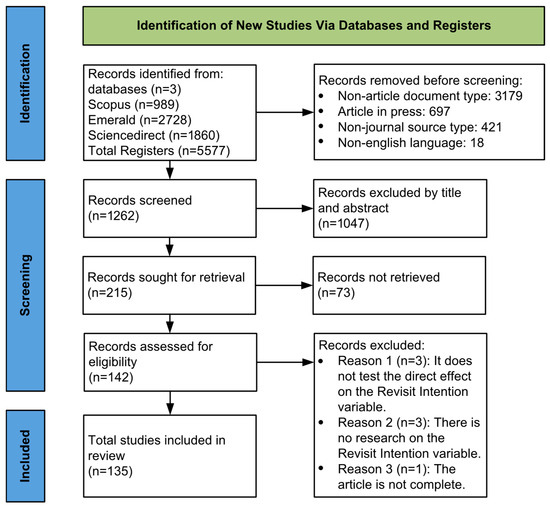
Figure 1.
PRISMA 2020 Flow Diagram for Systematic Reviews on the Revisit Intention Variable.
Following the PRISMA 2020 framework as outlined by Page et al. [22] and Page et al. [23], the study selection process in this research was carried out rigorously to ensure that only the most relevant, valid, and criterion-compliant articles were included for analysis. Each stage of the selection process is explained transparently to support the replication and traceability of this study. The data obtained from the selected studies are presented in three key formats: Figure 2, Annual Trends in Revisit Intention Research; Figure 3, Most Frequently Investigated Factors Influencing Revisit Intention; and a summary table. The table provides a comprehensive overview of the variables that influence revisit intention, highlights factors that are less frequently examined, and outlines the theoretical frameworks commonly applied in revisit intention research.
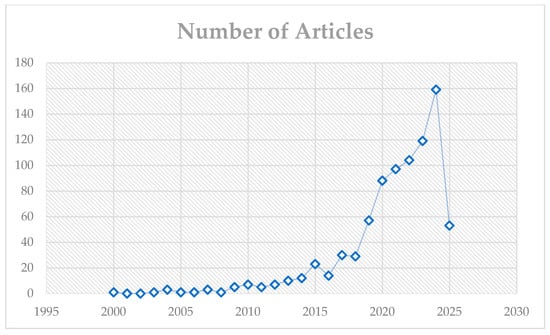
Figure 2.
Trends in Revisit Intention Research.
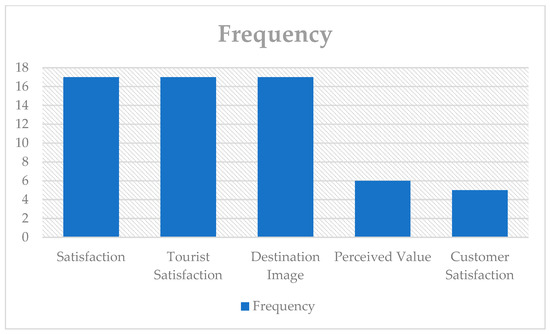
Figure 3.
Most Frequently Investigated Factors Influencing Revisit Intention.
4. Research Finding
4.1. Annual Trends in Revisit Intention Research
To provide a comprehensive overview of the dynamics in revisit intention research, this section first presents the annual development in the number of scholarly publications addressing the topic. The visualization of publication trends not only reflects the level of academic attention given to tourist loyalty issues but also highlights the topic’s relevance in addressing the evolving challenges and demands of the global tourism industry. Figure 1 illustrates the growth in the number of scientific articles examining revisit intention from 2000 to 2025, based on the data collected through the systematic review.
Based on the quantitative data presented in Figure 2, research on revisit intention began in the year 2000 and experienced fluctuations through 2008. Following this period, the number of revisit intention studies steadily increased, surpassing ten publications in 2014. A notable upward trend emerged beginning in 2015, with a sharp surge observed between 2020 and 2024, peaking in 2024 with a total of 159 documents. Rather than being interpreted solely as growing academic interest, this surge should also be understood in light of external factors, such as the COVID-19 pandemic and the proliferation of special issues in tourism journals, which created momentum for studies on tourist behavior and loyalty. However, the sharp decline in 2025 may be attributed to incomplete publication data for the current year and should not be interpreted as a substantive downward trend. Taken together, these findings indicate that while revisit intention remains a strategically relevant theme in tourism research, patterns of publication are shaped not only by theoretical and practical relevance but also by broader contextual drivers in the academic publishing landscape.
4.2. Leading Antecedents of Revisit Intention: A Frequency-Based Analysis
To enhance the understanding of key factors influencing revisit intention, this study performs a frequency analysis of antecedent variables identified across the selected articles. The findings are illustrated in Figure 3, titled “Most Frequently Investigated Factors Influencing Revisit Intention”. This visual representation emphasizes the five most frequently examined variables in prior research, offering valuable insights into the predominant areas of scholarly focus within the revisit intention discourse in tourism and hospitality contexts.
As shown in Figure 3, three antecedent variables, such as Satisfaction, Tourist Satisfaction, and Destination Image, appear most frequently, each cited in 17 articles. These results suggest that both general and tourism-specific satisfaction, along with perceptions of destination image, are consistently recognized as central drivers of tourists’ intention to revisit a destination. Perceived Value ranks next, identified in 6 studies, indicating that tourists’ assessment of received value relative to their expectations plays a meaningful, though less frequently explored, role. Finally, Customer Satisfaction is reported in 5 articles, pointing to a narrower yet significant dimension of how the fulfillment of customer expectations directly relates to revisit intention. Beyond these descriptive patterns, the dominance of satisfaction-related constructs and destination image reflects the strong alignment of revisit intention research with loyalty frameworks in consumer behavior theory. At the same time, the relatively limited attention to perceived value and customer satisfaction suggests that more nuanced aspects of tourist decision-making, such as cost–benefit evaluations and service-specific experiences, remain underexplored. Addressing these gaps may expand the theoretical landscape by integrating economic and experiential perspectives into models of revisit intention. Collectively, these findings underscore the critical influence of satisfaction and destination perception in shaping revisit behavior within tourism research.
4.3. Most Relevant Author
The bibliometric analysis of the most relevant authors is shown in Figure 4, which visualizes the researchers with the greatest contributions to studies on revisit intention. The figure presents the 20 most productive authors based on the number of publications and provides an overview of those who consistently contribute to this topic. This finding is important because it guides future researchers to refer to the key works that dominate the development of revisit intention research.
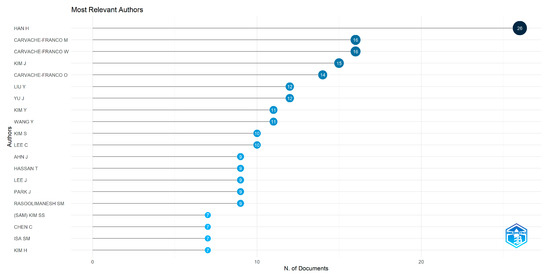
Figure 4.
Most Relevant Author in Revisit Intention Research.
From Figure 4, Han H holds the top position with 26 publications, demonstrating strong consistency and significant influence in the academic discussion on revisit intention. Following this, three other notable authors are Carvache-Franco M, Carvache-Franco W, and Kim J, with 16, 16, and 15 publications, respectively. Their contributions highlight a group of productive scholars who focus on this topic from different perspectives, including destination management and tourist behavior. The dominance of these authors’ publications shows that the direction of revisit intention research is strongly shaped by their work, which future researchers can use as a key reference and foundation for developing richer and more contextual conceptual models.
4.4. Co-Occurrence Network
The next bibliometric analysis is shown in Figure 5, which presents the co-occurrence network of keywords used in studies related to revisit intention. This mapping shows the connections between concepts that frequently appear together in the articles, helping to illustrate the conceptual structure within tourism and tourist behavior research. The visualization makes it easier to identify dominant keywords, research clusters, and the direction of emerging topics.
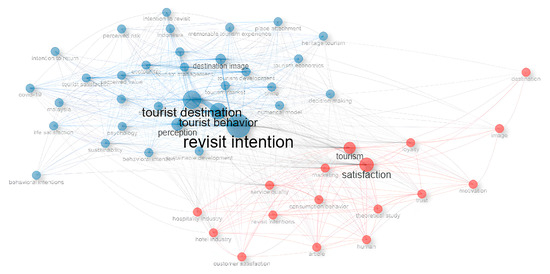
Figure 5.
Co-Occurrence Network in Revisit Intention Research.
From Figure 5, it is clear that the keyword “revisit intention” is central and closely connected to concepts such as tourist destination, tourist behavior, destination image, and satisfaction. The blue cluster highlights a focus on tourist behavior, destination image, and travel experience, while the red cluster is more related to service quality, loyalty, and customer satisfaction. This pattern indicates that research on revisit intention is not limited to the behavioral dimension of tourists but is also enriched by managerial factors such as service quality and destination marketing strategies. Thus, the keyword network confirms that revisit intention is a multidimensional topic that develops at the intersection of tourist behavior, destination experience, and service satisfaction.
4.5. Factor Affecting Revisit Intention
As part of this systematic analysis, a critical step was taken by categorizing various antecedent variables that influence revisit intention based on their conceptual similarities and the terminology used by previous researchers. This categorization approach serves to simplify the complexity of terminology while providing a more systematic structure for understanding both the consistent and divergent factors identified in the existing literature. Table 1 presents the synthesis of the reviewed studies, showing the original variables examined, the number of articles in which they appear, as well as the corresponding authors and years of publication. It should be noted that, unlike Figure 3 which presents the frequency of variables exactly as reported in the original articles, Table 1 groups variables with similar concepts (e.g., Satisfaction, Tourist Satisfaction, Customer Satisfaction) to highlight their conceptual coherence.

Table 1.
Determinant Variables of Revisit Intention.
Based on the categorization of antecedent variables presented in Table 1, customer satisfaction emerges as the most dominant determinant, appearing in the highest number of articles and encompassing a wide range of terminology such as tourist satisfaction, destination satisfaction, and overall satisfaction. In addition, variables such as destination image, experience, perceived value, and service quality also consistently appear as key determinants. This reflects the strong influence of positive perceptions, emotional experiences, and service quality on tourists’ decisions to revisit a destination. The articles synthesized and incorporated into the research findings are limited to those that employ a quantitative approach, conduct hypothesis testing, report a positive effect on revisit intention, and use samples consisting of tourists, hotel guests, or individuals associated with tourism sites or hospitality services.
On the other hand, variables such as trust, culture, and service remain underexplored, offering potential opportunities for future research to deepen the understanding of factors that may enhance tourist loyalty toward specific destinations. Beyond trust, culture, and service, several other antecedent variables related to revisit intention have been rarely examined. These lesser-used variables are summarized in Table 2.
Table 2.
Less Frequently Studied Antecedent Variables of Revisit Intention.
The classification of rarely studied variables in revisit intention research, as shown in Table 2, reveals that although variables such as electronic word of mouth (e-WOM), attitude, and accessibility possess strong theoretical potential in explaining revisit intentions, their frequency in the literature remains limited. For example, e-WOM and attitude were each identified in only six studies, while other variables such as accessibility, subjective norm, place identity, place attachment, and destination quality appeared in merely three or four publications. Some variables, such as cultural identity, social return, and friendly environmental behavior, were found in only a single study. These findings indicate that psychosocial factors, spatial identity, and aspects of sustainability and destination accessibility have yet to receive significant attention in revisit intention research. One possible reason for this limited exploration is that many of these variables are context-specific and require interdisciplinary approaches, making them less frequently adopted in mainstream tourism research. However, their theoretical potential is considerable: e-WOM can capture the growing influence of digital interactions on travel decisions, attitude and subjective norm can strengthen the application of behavioral theories such as TRA and TPB, and variables like cultural identity or friendly environmental behavior can enrich the integration of cultural and sustainability perspectives into revisit intention models.
4.6. Theoretical Foundations Frequently Used in Revisit Intention Research
To provide a more comprehensive understanding of the conceptual foundation underlying revisit intention studies, it is essential to identify the theories most commonly employed by researchers in analyzing this phenomenon. The choice of theoretical framework not only reflects the analytical lens used to explain tourist behavior but also indicates the prevailing theoretical paradigms within the literature. Accordingly, Table 3 presents the most frequently adopted theories in revisit intention research, based on the systematically reviewed studies.
Table 3.
Theoretical Foundations in Revisit Intention Research.
Based on Table 3, the Theory of Planned Behavior (TPB) emerges as the most widely utilized framework in revisit intention research. Its broad adoption across various contexts and publication years underscores the theory’s relevance and flexibility in explaining tourists’ behavioral intentions to return to a destination. Following TPB, the Stimulus-Organism-Response (SOR) Theory has also gained considerable traction, particularly in studies examining how external stimuli—such as experiences or services—influence tourists’ internal responses, which subsequently shape revisit intention. Although the Theory of Reasoned Action (TRA) and Cognitive Appraisal Theory are not as prevalent as TPB and SOR, they continue to make valuable contributions to understanding the psychological and cognitive mechanisms underpinning revisit intention. This diversity of theoretical frameworks indicates that revisit intention research is grounded not only in robust behavioral theories but is also increasingly incorporating cognitive and affective perspectives to capture the complexities of modern tourist decision-making.
4.7. Studies Excluded After Full-Text Assessment
Although many articles make valuable contributions in identifying variables that influence revisit intention, some initially appear to meet the inclusion criteria and are considered for further analysis. However, after a rigorous final selection process, several are excluded due to methodological or substantive reasons that do not align with the focus of this study. This subsection presents examples of articles excluded from the final synthesis, along with brief explanations for their exclusion. The list of excluded articles and the reasons for their exclusion are summarized in Table 4.
Table 4.
List of Excluded Articles with Justifications.
Based on Table 4, although both articles mention revisit intention, they do not explicitly treat it as a primary variable that is thoroughly analyzed within the research model. In the article by Nazir et al. [153], revisit intention appears only implicitly within the broader construct of destination loyalty, which is measured as a composite of several behavioral dimensions, without being the main focus in testing variable relationships. Similarly, in the article by Raggiotto and Scarpi [154], revisit intention is included as part of the definition of destination loyalty; however, the study specifically tests the mediating effects of self-enhancement and place attachment on overall loyalty, not on revisit intention as a separate outcome.
Therefore, although both articles offer relevant theoretical insights into revisit behavior, they do not meet the inclusion criteria for further analysis in this study because revisit intention is not examined independently as a standalone variable. Instead, it is used as part of survey items or as a secondary element within another construct, rather than as a central focus of the conceptual framework or hypothesis testing. As a result, both articles are excluded from the final synthesis.
5. Discussion
The analysis of publication trends shows that research on revisit intention has increased over the last decade, with a more notable rise during the period from 2020 to 2024. The number of publications reached its peak in 2024, with a total of 159 articles. This growth should be understood not only as evidence of greater conceptual interest but also as a response to external factors, such as the dynamics of the COVID-19 pandemic and the emergence of special issues that encourage tourism-related publications. This phenomenon illustrates the link between publication trends and the rapidly evolving social and tourism industry context. At the same time, the decline in publications in 2025 needs to be interpreted with caution, since the available data do not yet cover the entire year. Overall, these findings confirm that revisit intention remains a relevant and strategic field of study, even though publication patterns are shaped by external dynamics and the practical needs of the tourism industry.
Not all variables show consistent positive and significant effects on revisit intention. Factors such as experience, service quality, perceived destination, trust, cultural intelligence, and service are consistently significant, while customer satisfaction and destination image show mixed results. The most consistently cited variables in the literature on revisit intention are customer satisfaction and destination image. Customer satisfaction refers to tourists’ affective evaluations of their overall experience during a visit, which strongly influences their intention to return [40]. Studies by Park et al. [42] and Ren et al. [43] indicate that high levels of satisfaction with historical or ecotourism experiences not only reinforce the desire to revisit but also foster lasting emotional connections. However, after adding newly identified studies to the SLR, the satisfaction–revisit link is no longer uniformly positive and significant. For example, while several satisfaction reports show positive direct effects, “satisfaction with amenities revitalization” does not yield a significant direct path to revisit intention and instead operates via place attachment [84]. When place attachment acts as a mediating variable, the relationship between satisfaction with amenities revitalization and revisit intention becomes positive and significant, suggesting that this satisfaction enhances revisit intention only when visitors feel emotionally connected to the place [84]. In this context, improved amenities contribute not merely to functional satisfaction but also to emotional attachment, fostering a stronger sense of comfort and belonging. Hence, amenities revitalization is most effective when combined with efforts that build place attachment, such as creating social interaction spaces and preserving cultural elements that make the environment personally meaningful. This divergence suggests that the impact of satisfaction depends on how it is operationalized (global vs. attribute-specific) and on model specification (direct vs. mediated paths), rather than functioning as a universal predictor across contexts [42,43,83].
Meanwhile, destination image, shaped by cognitive, affective, and conative attributes, significantly influences tourist perceptions [85,86]. This is supported by Hasan et al. [63] and Nam et al. [10], who found that a positive destination image directly enhances revisit intention, especially when supported by place attachment and brand trust [87,88]. Thus, the combination of customer satisfaction and destination image emerges as a key strategy for maintaining tourist loyalty. Yet the evidence is not fully consistent.
Rasoolimanesh et al. [95] report that destination image exerts a negative and insignificant direct effect on revisit intention, but the relationship becomes positive and significant when mediated by memorable tourism experiences (MTE). This suggests that destination image strongly motivates revisit intention only when tourists’ perceptions are translated into meaningful, emotionally rich memories that deepen personal engagement with the destination. Similarly, Song et al. [101] find that both cognitive and affective images show insignificant direct effects on revisit intention; however, when mediated by place dependence, these relationships become positive and significant. In other words, cognitive and affective images influence revisit intention most strongly when tourists perceive the destination as functionally irreplaceable and personally valuable, reflecting a high level of dependence on the place for specific leisure experiences. These mixed findings indicate that the role of destination image depends on how it is measured and the context in which it is studied, suggesting it is a conditional rather than universal predictor of revisit intention.
In addition, experience and service quality have also been identified as critical determinants of revisit intention. Experience refers to tourists’ personal interactions that generate emotional, cognitive, and behavioral impressions, elements that play a significant role in fostering loyalty [106]. Studies by Seow et al. [110], Liu et al. [55], and Hu and Xu [120] consistently demonstrate that unique, authentic, and memorable tourism experiences have a positive and statistically significant effect on revisit intention. These findings highlight the importance of emotional resonance, local culture, and lasting memories in shaping tourists’ behavioral intentions. Rahmawati et al. [112] further reinforce this view, showing that positive experiences can even offset shortcomings such as limited infrastructure. Collectively, these results confirm that experience is a consistently strong predictor of revisit intention, particularly when it evokes meaningful emotional engagement and aligns with the contextual and structural characteristics of the destination.
Alongside experience, service quality plays a vital role in enhancing revisit intention through tourists’ evaluations of destination services, including hospitality, professionalism, and efficiency [28,46]. Findings from Manyangara et al. [2] and Polas et al. [122] reinforce that high service quality independently boosts tourist trust, which in turn strengthens revisit intention. Therefore, tourism destinations must prioritize the improvement of both experience and service quality as strategic investments to ensure long-term tourist loyalty.
Perceived destination and trust also play crucial roles in shaping tourists’ revisit intention. Perceived destination refers to tourists’ subjective evaluations of the functional, emotional, and experiential value of a destination. Hasan et al. [126] found that a high perceived value of a destination significantly enhances tourists’ positive attitudes, thereby strengthening their intention to return. Interestingly, studies by Pham et al. [67] and Sumhyai & Punyasiri [118] highlight that perceived value and perceived destination image, formed through electronic word-of-mouth (e-WOM), have a direct impact on revisit intention. Similarly, Liu et al. [55] demonstrate that perceived destination image acts as a mediator in the relationship between tourist experience and revisit intention, underscoring the vital role of destination perception in fostering tourist loyalty. Moreover, trust, defined as tourists’ belief in the integrity and safety of a destination, significantly enhances the tourist–destination relationship. Chen et al. [129] and Nasib et al. [87] identify that high levels of trust not only increase revisit intention but also reduce the likelihood of tourists spreading negative information. Findings by Yusof et al. [130] and Ardani et al. [28] further reveal that trust strengthens tourists’ willingness to recommend the destination to others. Therefore, destinations must manage trust as a strategic foundation for sustaining long-term tourist loyalty.
Cultural intelligence has also been identified as a factor influencing revisit intention, particularly in the context of cultural tourism. Cultural intelligence refers to a tourist’s ability to understand, adapt to, and effectively interact with the local culture of a destination. According to Zhang et al. [139], tourists with high cultural intelligence tend to be more open to cultural differences, which strengthens their desire to revisit the destination. Findings by Elfiondri et al. [134] reveal that cultural contact, through direct interaction with local traditions and the use of locally based tourism language, significantly enhances revisit intention. Similarly, Lai et al. [135] and Yao et al. [138] found that deep cultural experiences create strong tourism memories and high levels of place attachment, which ultimately reinforce tourists’ intentions to return. These findings underscore the importance of developing culturally intelligent destination strategies by offering authentic and interactive cultural experiences to sustain long-term tourist loyalty.
Finally, supplementary service-related variables also significantly influence tourists’ revisit intention. These variables include additional amenities, staff friendliness, food and beverage service, and fair pricing. According to Bam and Kunwar [80], the quality of hospitality services is a critical factor in enhancing tourist satisfaction and indirectly encouraging revisit intention—particularly in unique destinations such as Nepal. Studies by Cengizci et al. [140] and Ćulić et al. [49] further affirm that superior hotel services contribute to the creation of a favorable destination image, which positively impacts tourists’ intentions to return. Interestingly, Long and Nguyen [73] found that fair service pricing in rural tourism destinations enhances tourists’ perceived value, thereby strengthening their desire to revisit. These findings emphasize the importance of destinations to continuously improve the quality of supplementary services in order to create a holistic tourism experience and secure long-term tourist loyalty through consistently strengthened revisit intention.
A review of the less frequently studied variables in revisit intention research reveals significant opportunities to broaden our understanding of tourists’ return intentions. While variables such as electronic word-of-mouth (e-WOM), attitude, and accessibility have been examined more often than others, exploration of variables like place identity, place attachment, destination quality, attraction, perceived risk, physical environment, destination brand awareness, cultural identity, social return, and friendly environmental behavior remains limited. Yet, these underexplored variables have shown positive and significant effects on revisit intention. For instance, the study by Alfaisaly et al. [100] demonstrated that e-WOM has a significant impact on shaping positive destination image and enhancing revisit intention. However, such findings have yet to be widely replicated across diverse tourism contexts. Similarly, attitude, which closely relates to tourists’ personal evaluations of marketing communication—particularly post-visit emails—has been shown to significantly increase revisit intention [143]. Additionally, accessibility, as explored by Ariesta et al. [90], was found to have a positive and significant effect on revisit intention, although it has so far been studied primarily in marine tourism contexts. Future research can operationalize e-WOM not only as tourists’ online reviews but also as measurable constructs of post-stay evaluations, interactivity on digital platforms, and cross-cultural differences in sharing behavior [76,141]. This approach would allow researchers to test how e-WOM functions as both a mediator and moderator in shaping revisit intention. Therefore, these relatively underexplored variables offer valuable avenues for further research, potentially enriching the theoretical and practical understanding of revisit intention dynamics across different types of tourism destinations.
In studies on revisit intention, a range of behavioral theories has been employed to comprehensively understand how tourists form the intention to return to a destination. One of the most dominant frameworks is the Theory of Planned Behavior (TPB), which posits that attitude, subjective norms, and perceived behavioral control collectively shape behavioral intention, including the decision to revisit [60,150]. TPB’s strength lies in its flexibility to incorporate cognitive and contextual variables, such as local cultural values and perceptions of safety [70,94]. TPB is widely applied in various tourism contexts, such as cultural tourism [28], ecotourism [113], culinary tourism [126], community-based tourism [60], as well as educational and medical tourism [79,94]. These contexts show that TPB is most relevant when tourist behavior is rational and planned, meaning that the decision to revisit is z of revisit intention because it captures the cognitive and social dynamics that shape tourists’ decision-making processes.
In addition to TPB, the Stimulus-Organism-Response (SOR) model plays a key role in explaining how external stimuli, such as destination atmosphere, service quality, and digital marketing communication shape tourists’ affective and cognitive states, which in turn influence revisit behavior [67,143,145]. The advantage of SOR lies in its ability to highlight the mediating role of emotional and psychological states, as shown in place-attachment studies where environmental attributes such as infrastructure and atmosphere trigger stronger revisit intentions [145]. SOR is most relevant for explaining tourist behavior that is emotional and reactive to destination experiences, such as perceptions of atmosphere (tourscape), brand authenticity, or memorable experiences. Research by Shi et al. [77] shows that brand authenticity and destination brand equity influence revisit intention through the mediation of satisfaction, while Torres-Moraga et al. [132] find that sustainable tourscape elements build trust and destination identification as key mediators. Therefore, SOR is more appropriate in contexts where revisit intention is driven by emotional resonance, sensory experiences, and social interactions at the destination rather than by purely rational tourist considerations.
Furthermore, the Theory of Reasoned Action (TRA) offers a rational perspective by explaining behavioral intention based on attitude and subjective norms. It emphasizes that positive attitudes and trust in a destination’s quality and sustainability are crucial in forming revisit intentions [61,131,152]. TRA is most relevant in the context of rational and planned tourist behavior, where the decision to revisit is based on a logical evaluation of the destination’s benefits and social support from the environment. Research by Yoopetch and Kongarchapatara [61] shows that attitude, subjective norms, and satisfaction have a positive effect on revisit intention in tea tourism, while Kusumawati et al. [131] find similar results in island tourism. Therefore, TRA provides a strong understanding of how cognitive beliefs and social influence shape tourists’ commitment to revisiting a destination.
Lastly, the Cognitive Appraisal Theory (CAT) contributes by highlighting the role of emotional and cognitive evaluations of memorable tourism experiences, which act as mediators between destination stimuli and revisit intention [117,148]. Empirical evidence confirms that human emotions such as joy, love, surprise, or even fear significantly influence the formation of memorable tourism experiences, which subsequently drive revisit intention [117,148]. CAT is most relevant for explaining tourist behavior that is emotional and experience-centered, such as authentic experiences, place attachment, and memorable tourism experiences. The study by Zhou et al. [148] shows that authentic experiences trigger cognitive evaluations (memorable experiences) and positive emotions (place attachment), which enhance revisit intention. Similarly, Tiwari et al. [117] emphasize that human emotions play an important role in shaping memorable experiences that drive revisit intention. Therefore, compared with theories that focus on rational aspects (such as TRA and TPB), CAT is more suitable for experience-based and affective tourism contexts, where the interaction between cognition and emotion becomes the key to shaping tourist behavior.
Building on this integration, the four theories, TPB, SOR, TRA, and CAT, form a comprehensive framework that connects cognitive, emotional, and behavioral factors in explaining revisit intention. TPB and TRA focus on the rational side of decision-making, where tourists’ attitudes, perceived control, and social norms shape their revisit plans. In contrast, SOR and CAT emphasize emotional and experiential aspects, showing how environmental cues and personal appraisals trigger behavioral responses. When combined, these theories show that revisit intention results from the interaction between thinking, feeling, and context. This integration highlights the need for future research to connect rational planning with emotional experience to better capture the complexity of tourist behavior and improve understanding of revisit intention in various tourism contexts.
6. Conclusions and Further Study
This study presents a systematic synthesis of the literature on revisit intention, revealing that the topic has experienced significant growth, particularly since 2020. The increase in publications during this period reflects a heightened strategic focus on tourist loyalty, represented by revisit intention, within contemporary tourism research. The synthesis identified several key variables most frequently used to explain revisit intention: customer satisfaction, destination image, experience, service quality, perceived destination, trust, cultural intelligence, and service. These variables play a crucial role in shaping tourists’ revisit intentions, as they bridge tourists’ perceptions, emotions, and evaluations of destinations. Each of these variables has been tested across diverse contexts and methodologies, demonstrating consistent empirical relevance and providing a robust foundation for understanding tourist behavior.
Nevertheless, this study also identifies several variables that remain underexplored in revisit intention research, such as attitude, electronic word-of-mouth (e-WOM), accessibility, and place identity. The limited exploration of these variables highlights conceptual gaps that offer promising opportunities for future investigation. From a theoretical standpoint, the Theory of Planned Behavior (TPB) emerges as the most widely adopted framework due to its ability to explain the relationship between attitudes, subjective norms, and perceived behavioral control in shaping tourists’ intentions. In addition to TPB, other frameworks such as the Stimulus, Organism, Response (SOR) model, the Theory of Reasoned Action (TRA), and the Cognitive Appraisal Theory (CAT) also play important roles, as they accommodate the psychological, affective, and evaluative dimensions of revisit behavior. However, the application of these theories remains largely limited to specific types of destinations and has yet to sufficiently address the diversity of modern tourism contexts, such as ecotourism, digital tourism, and community-based tourism. Accordingly, future research should consider developing an integrated model that combines TPB, SOR, and emotional-based theories such as Affective Events Theory to capture both rational decision-making and affective processes in shaping revisit intention.
However, this study has several limitations. First, the evidence synthesized is constrained by the scope and methodological quality of the included articles. Many studies rely on cross-sectional survey designs and self-reported data, which can introduce bias such as social desirability or common method variance. Additionally, most reviewed studies are concentrated in Asia and Europe, creating a geographical imbalance that limits the global applicability of the findings. Regions such as Africa, Latin America, and other underexplored destinations remain largely absent from current research. Furthermore, this review does not provide a critical comparison of regional or contextual differences in interpreting revisit intention. The analysis is limited to identifying key authors, theories, and antecedent factors, without examining how cultural, social, or destination-specific contexts may shape these relationships. Future research is therefore encouraged to address this gap by investigating how regional and contextual variations influence revisit behavior. Third, limitations exist in the review process itself. Although the PRISMA 2020 guidelines were followed and clear inclusion criteria were applied, this review relied solely on the Scopus, ScienceDirect, and Emerald databases. As a result, potentially relevant studies indexed in other databases such as Web of Science or EBSCOhost may have been overlooked. Moreover, no formal quality appraisal tools (e.g., risk of bias assessments) were employed due to the narrative nature of the synthesis, which limits the ability to evaluate the strength of evidence across studies.
Based on the gaps identified, future research should aim to develop more integrative conceptual frameworks that incorporate underexplored variables such as place identity, e-WOM, accessibility, and attitude. These variables hold promise for offering deeper insights into tourist behavior but remain insufficiently examined in the current literature. Scholars are also encouraged to test these models across a wider range of destinations—especially in emerging, post-pandemic, and non-traditional tourism settings to improve the generalizability of findings. Interdisciplinary approaches, such as combining behavioral theories with emotional or digital communication frameworks, should be adopted to reflect the growing complexity of tourism behavior in the digital age. Moreover, future research should broaden its geographical scope by including underrepresented regions to examine whether existing theoretical models and causal relationships remain valid across diverse cultural, economic, and social contexts. Such expansion will enhance the global relevance and external validity of revisit intention studies.
From a managerial perspective, this review provides several actionable insights for hotel managers, destination marketers, and policymakers. First, satisfaction-driven loyalty programs should move beyond general service improvement toward experience personalization. Hotels and destinations can enhance repeat visits by designing tailored post-stay engagement, such as personalized communication, exclusive member events, or loyalty rewards based on previous preferences to strengthen affective attachment. Second, destination image can be strategically leveraged for branding through storytelling and authentic content marketing that evokes emotional resonance. For example, highlighting cultural authenticity or environmental sustainability in campaigns can create memorable associations that foster revisit intentions. Third, managers should treat service quality as both a trust-building and experience-shaping mechanism. Regular staff training in intercultural communication and empathy can translate into consistent service delivery that strengthens tourists’ perceived safety and comfort. Fourth, policymakers can play a complementary role by investing in public amenities, accessibility, and digital infrastructure that improve destination convenience and inclusivity, factors empirically linked to stronger revisit intentions. Finally, initiatives that foster cultural intelligence, such as community-based tourism programs and local interaction platforms, can enhance tourists’ sense of belonging, further encouraging return visits.
Supplementary Materials
The following supporting information can be downloaded at: https://www.mdpi.com/article/10.3390/su172411044/s1, the PRISMA 2020 checklist.
Author Contributions
Conceptualization, A.R., A.K., E.Y. and A.N.L.I.F.; Data curation, A.R.; Formal analysis, A.R., A.K., E.Y. and A.N.L.I.F.; Investigation, A.K., E.Y. and A.N.L.I.F.; Methodology, A.R., A.K., E.Y. and A.N.L.I.F.; Resources, A.R., A.K., E.Y. and A.N.L.I.F.; Software, A.R.; Validation, A.K., E.Y. and A.N.L.I.F.; Visualization, A.R.; Writing—original draft, A.R.; Writing—review & editing, A.K., E.Y. and A.N.L.I.F. All authors have read and agreed to the published version of the manuscript.
Funding
This research received no external funding.
Institutional Review Board Statement
Not applicable.
Informed Consent Statement
Not applicable.
Data Availability Statement
The data supporting this review’s findings can be obtained from the corresponding author upon reasonable request. In addition, the extended dataset, including the full list of articles and the PRISMA 2020 checklist, is openly available at the following Figshare repository: Dataset on Revisit Intention [https://doi.org/10.6084/m9.figshare.29645048].
Acknowledgments
The author gratefully acknowledges the support and facilities provided by the Faculty of Administrative Sciences, Brawijaya University, which have been instrumental throughout this research.
Conflicts of Interest
The authors declare no conflict of interest.
References
- Nguyen Viet, B.; Dang, H.P.; Nguyen, H.H. Revisit Intention and Satisfaction: The Role of Destination Image, Perceived Risk, and Cultural Contact. Cogent Bus. Manag. 2020, 7, 1796249. [Google Scholar] [CrossRef]
- Manyangara, M.E.; Makanyeza, C.; Muranda, Z. The Effect of Service Quality on Revisit Intention: The Mediating Role of Destination Image. Cogent Bus. Manag. 2023, 10, 2250264. [Google Scholar] [CrossRef]
- Gregoriades, A.; Pampaka, M.; Herodotou, H.; Christodoulou, E. Explaining Tourist Revisit Intention Using Natural Language Processing and Classification Techniques. J. Big Data 2023, 10, 60. [Google Scholar] [CrossRef]
- Hossain, M.S.; Hossain, M.A.; Al Masud, A.; Islam, K.M.Z.; Mostafa, M.G.; Hossain, M.T. The Integrated Power of Gastronomic Experience Quality and Accommodation Experience to Build Tourists’ Satisfaction, Revisit Intention, and Word-of-Mouth Intention. J. Qual. Assur. Hosp. Tour. 2023, 25, 1692–1718. [Google Scholar] [CrossRef]
- Ibrahim, B.; Aljarah, A.; Sawaftah, D. Linking Social Media Marketing Activities to Revisit Intention through Brand Trust and Brand Loyalty on the Coffee Shop Facebook Pages: Exploring Sequential Mediation Mechanism. Sustainability 2021, 13, 2277. [Google Scholar] [CrossRef]
- Khasawneh, M.S.; Alfandi, A.M. Determining Behaviour Intentions from the Overall Destination Image and Risk Perception. Tour. Hosp. Manag. 2019, 25, 355–375. [Google Scholar] [CrossRef]
- Braimah, S.M.; Solomon, E.N.A.; Hinson, R.E. Tourists Satisfaction in Destination Selection Determinants and Revisit Intentions; Perspectives from Ghana. Cogent Soc. Sci. 2024, 10, 2318864. [Google Scholar] [CrossRef]
- Zhang, H.; Fu, X.; Cai, L.A.; Lu, L. Destination Image and Tourist Loyalty: A Meta-Analysis. Tour. Manag. 2014, 40, 213–223. [Google Scholar] [CrossRef]
- Baber, R.; Baber, P. Influence of Social Media Marketing Efforts, E-Reputation and Destination Image on Intention to Visit among Tourists: Application of S-O-R Model. J. Hosp. Tour. Insights 2023, 6, 2298–2316. [Google Scholar] [CrossRef]
- Nam, S.; Oh, Y.; Hong, S.; Lee, S.; Kim, W.H. The Moderating Roles of Destination Regeneration and Place Attachment in How Destination Image Affects Revisit Intention: A Case Study of Incheon Metropolitan City. Sustainability 2022, 14, 3839. [Google Scholar] [CrossRef]
- Tajeddini, K.; Gamage, T.C.; Hameed, W.U.; Qumsieh-Mussalam, G.; Chaijani, M.H.; Rasoolimanesh, S.M.; Kallmuenzer, A. How Self-Gratification and Social Values Shape Revisit Intention and Customer Loyalty of Airbnb Customers. Int. J. Hosp. Manag. 2022, 100, 103093. [Google Scholar] [CrossRef]
- Primananda, P.G.B.N.; Yasa, N.N.K.; Sukaatmadja, I.P.G.; Setiawan, P.Y. Trust as a Mediating Effect of Social Media Marketing, Experience, Destination Image on Revisit Intention in the COVID-19 Era. Int. J. Data Netw. Sci. 2022, 6, 517–526. [Google Scholar] [CrossRef]
- Alawneh, K.A.; Darabseh, F.; Shatnawi, H.S.; Alananzeh, O.A.; Al Sekhaneh, W. Scientometric Study on Archaeology, Culture, Heritage, Tourism, Perceived Value and Revisit Intention in Jordan. Arqueol. Iberoam. 2025, 55, 41–57. [Google Scholar] [CrossRef]
- Dhewi, T.S.; Narmaditya, B.S.; Mukhlis, I.; Ridzuan, A.R. What Drives the Revisit Intention of Heritage Hotel Consumers? A Systematic Literature Review. Tour. Hosp. Manag. 2024, 30, 239–247. [Google Scholar] [CrossRef]
- Ramadan, A.; Kasim, A. Factors Influencing MICE Destination Revisit Intentions: A Literature Review. Turyzm 2022, 32, 185–217. [Google Scholar] [CrossRef]
- Chen, C.F.; Tsai, D.C. How Destination Image and Evaluative Factors Affect Behavioral Intentions? Tour. Manag. 2007, 28, 1115–1122. [Google Scholar] [CrossRef]
- Abbasi, G.A.; Kumaravelu, J.; Goh, Y.N.; Dara Singh, K.S. Understanding the Intention to Revisit a Destination by Expanding the Theory of Planned Behaviour (TPB). Span. J. Mark.—ESIC 2021, 25, 282–311. [Google Scholar] [CrossRef]
- Albeha, M.; Fernandes, S.; Mesquita, D.; Seabra, F.; Ferreira-Oliveira, A.T. Graduate Employability and Competence Development in Higher Education—A Systematic Literature Review Using PRISMA. Sustainability 2020, 12, 5900. [Google Scholar] [CrossRef]
- Gong, T.; Yi, Y. A Review of Customer Citizenship Behaviors in the Service Context. Serv. Ind. J. 2021, 41, 169–199. [Google Scholar] [CrossRef]
- Górska-Warsewicz, H.; Kulykovets, O. Hotel Brand Loyalty-A Systematic Literature Review. Sustainability 2020, 12, 4810. [Google Scholar] [CrossRef]
- Harie, Y.; Gautam, B.P.; Wasaki, K. Computer Vision Techniques for Growth Prediction: A Prisma-Based Systematic Literature Review. Appl. Sci. 2023, 13, 5335. [Google Scholar] [CrossRef]
- Page, M.J.; McKenzie, J.E.; Bossuyt, P.M.; Boutron, I.; Hoffmann, T.C.; Mulrow, C.D.; Shamseer, L.; Tetzlaff, J.M.; Akl, E.A.; Brennan, S.E.; et al. The PRISMA 2020 Statement: An Updated Guideline for Reporting Systematic Reviews. BMJ 2021, 372, n71. [Google Scholar] [CrossRef] [PubMed]
- Page, M.J.; McKenzie, J.E.; Bossuyt, P.M.; Boutron, I.; Hoffmann, T.C.; Mulrow, C.D.; Shamseer, L.; Tetzlaff, J.M.; Moher, D. Updating Guidance for Reporting Systematic Reviews: Development of the PRISMA 2020 Statement. J. Clin. Epidemiol. 2021, 134, 103–112. [Google Scholar] [CrossRef] [PubMed]
- Goh, Y.N. Investigating Revisit Intentions for the Boutique Hotels of Penang-A UNESCO World Heritage Site. Asian Soc. Sci. 2015, 11, 126–134. [Google Scholar] [CrossRef]
- Khalil, M.I.; Haque, R.; Senathirajah, A.R.B.S.; Al-Ainati, S.; Alkhatib, H.; Ahmed, S.; Chowdhury, B. An Analysis of Structural Path Modelling of CSR Dimensions with the Mediation Effect of Customer Demand and Satisfaction on Revisit Intention. Int. J. Oper. Quant. Manag. 2023, 29, 406–430. [Google Scholar]
- Kim, W.H.; Lee, S.H.; Kim, K.S. Effects of Sensory Marketing on Customer Satisfaction and Revisit Intention in the Hotel Industry: The Moderating Roles of Customers’ Prior Experience and Gender. Anatolia 2020, 31, 523–535. [Google Scholar] [CrossRef]
- Sun, S.; Law, R.; Fong, D.K.C. What Affects the Revisit Intention of Chinese Tourists to Macao? J. China Tour. Res. 2018, 14, 296–309. [Google Scholar] [CrossRef]
- Ardani, W.; Rahyuda, K.; Giantari, I.G.A.K.; Sukaatmadja, I.P.G. Supply Chain Strategy in Tourism Industry for Antecedents and Consequences of Foreign Tourists Shopping Satisfaction on Revisit Intention at Traditional Souvenir Market. Int. J. Supply Chain. Manag. 2020, 9, 1268–1279. [Google Scholar]
- Khoo, K.L. A Study of Service Quality, Corporate Image, Customer Satisfaction, Revisit Intention and Word-of-Mouth: Evidence from the KTV Industry. PSU Res. Rev. 2022, 6, 105–119. [Google Scholar] [CrossRef]
- Damayanti, T.A. Indrawati. The Effect of Social Media Quality, Social Media Quantity, Social Media Credibility and E-Wom on Revisit Intention: Destination Brand Awareness and Destination Satisfaction as Intervening Variables. Calitatea 2023, 24, 87–97. [Google Scholar] [CrossRef]
- Shabankareh, M.; Sarhadi, A.; Hamzavi, J.; Ranjbaran, A.; Nazarian, A.; Osullivan, N. Effects of Information and Communication Technology Improvement on Revisit Intention During COVID-19. Tour. Hosp. Manag. 2023, 29, 455–470. [Google Scholar] [CrossRef]
- Bandaru, R.; Venkateshwarlu, H. Foreign Tourists’ Revisit Intention Approach Applied in the Indian Tourism Market. Indian J. Mark. 2020, 50, 43–54. [Google Scholar] [CrossRef]
- Kerdpitak, C. The Relationship between Hotel Guests’ Satisfaction and Revisit Intentions in Bangkok, Thailand. Int. J. Innov. Creat. Change 2019, 10, 137–156. [Google Scholar]
- Yu, J. Exploring Recreationist-Environment Fit Hospitality Experiences of Green Hotels in China. Sustainability 2022, 14, 1850. [Google Scholar] [CrossRef]
- Sharma, V.; Bhat, D.A.R. Co-Creation and Technological Innovation: The Predictors of Guest Satisfaction and Revisit Intention in Hospitality Industry. Int. J. Hosp. Tour. Syst. 2022, 15, 91–100. [Google Scholar]
- Ugwuanyi, C.C.; Ehimen, S.; Uduji, J.I. Hotel Guests’ Experience, Satisfaction and Revisit Intentions: An Emerging Market Perspective. Afr. J. Hosp. Tour. Leis. 2021, 10, 406–424. [Google Scholar] [CrossRef]
- Cole, S.T.; Scott, D. Examining the Mediating Role of Experience Quality in a Model of Tourist Experiences. J. Travel Tour. Mark. 2004, 16, 79–90. [Google Scholar] [CrossRef]
- Caber, M.; Albayrak, T.; Crawford, D. Perceived Value and Its Impact on Travel Outcomes in Youth Tourism. J. Outdoor Recreat. Tour. 2020, 31, 100327. [Google Scholar] [CrossRef]
- Kim, J.H. The Impact of Memorable Tourism Experiences on Loyalty Behaviors: The Mediating Effects of Destination Image and Satisfaction. J. Travel Res. 2018, 57, 856–870. [Google Scholar] [CrossRef]
- Back, R.M.; Bufquin, D.; Park, J.Y. Why Do They Come Back? The Effects of Winery Tourists’ Motivations and Satisfaction on the Number of Visits and Revisit Intentions. Int. J. Hosp. Tour. Adm. 2021, 22, 1511499. [Google Scholar] [CrossRef]
- Chitthanom, C. Relationships among Medical Activity Perceived Functional Values, Satisfaction Trust, and Revisit Intention in Medical Tourism: A Case Study on Clmv Tourists in Thailand. ABAC J. 2020, 40, 54–77. [Google Scholar]
- Park, S.Y.; Hwang, D.; Lee, W.S.; Heo, J. Influence of Nostalgia on Authenticity, Satisfaction, and Revisit Intention: The Case of Jidong Mural Alley in Korea. Int. J. Hosp. Tour. Adm. 2020, 21, 440–455. [Google Scholar] [CrossRef]
- Ren, J.; Su, K.; Zhou, Y.; Hou, Y.; Wen, Y. Why Return? Birdwatching Tourists’ Revisit Intentions Based on Structural Equation Modelling. Sustainability 2022, 14, 14632. [Google Scholar] [CrossRef]
- Allameh, S.M.; Pool, J.K.; Jaberi, A.; Salehzadeh, R.; Asadi, H. Factors Influencing Sport Tourists’ Revisit Intentions: The Role and Effect of Destination Image, Perceived Quality, Perceived Value and Satisfaction. Asia Pac. J. Mark. Logist. 2015, 27, 191–207. [Google Scholar] [CrossRef]
- Ariya, G.; Sempele, C.; Wishitemi, B. An Evaluation of Wildlife Tourism Destinations’ Attributes, Overall Satisfaction and Revisit Intentions: A Tourist Guides’ Perspective. Afr. J. Hosp. Tour. Leis. 2020, 9, 1220–1237. [Google Scholar] [CrossRef]
- Bader, M.; Khasawneh, N.; Al Rousan, R.; Al Hasanat, S.; Nayak, K.P. Factors Influencing the Satisfaction and Revisit Intention of Jordanian Medical Tourists. Acad. Tur. 2023, 16, 291–311. [Google Scholar] [CrossRef]
- Cheung, M.L.; Leung, W.K.S.; Cheah, J.H.; Koay, K.Y.; Hsu, B.C.Y. Key Tea Beverage Values Driving Tourists’ Memorable Experiences: An Empirical Study in Hong Kong-Style Café Memorable Experience. Int. J. Cult. Tour. Hosp. Res. 2021, 15, 355–370. [Google Scholar] [CrossRef]
- Choo, H.; Petrick, J.F. Social Interactions and Intentions to Revisit for Agritourism Service Encounters. Tour. Manag. 2014, 40, 372–381. [Google Scholar] [CrossRef]
- Ćulić, M.; Vujičić, M.D.; Kalinić, Č.; Dunjić, M.; Stankov, U.; Kovačić, S.; Vasiljević, Ð.A.; Anđelković, Ž. Rookie Tourism Destinations—The Effects of Attractiveness Factors on Destination Image and Revisit Intention with the Satisfaction Mediation Effect. Sustainability 2021, 13, 5780. [Google Scholar] [CrossRef]
- Jeong, M.; Shin, H.H. Tourists’ Experiences with Smart Tourism Technology at Smart Destinations and Their Behavior Intentions. J. Travel Res. 2020, 59, 1464–1477. [Google Scholar] [CrossRef]
- Kim, S.; Park, J.H.; Lee, D.K.; Son, Y.H.; Yoon, H.; Kim, S.; Yun, H.J. The Impacts of Weather on Tourist Satisfaction and Revisit Intention: A Study of South Korean Domestic Tourism. Asia Pac. J. Tour. Res. 2017, 22, 895–908. [Google Scholar] [CrossRef]
- Kim, M.J.; Bonn, M.; Lee, C.K.; Hahn, S.S. Effects of Personality Traits on Visitors Attending an Exposition: The Moderating Role of Anxiety Attachment. Asia Pac. J. Tour. Res. 2018, 23, 502–519. [Google Scholar] [CrossRef]
- Kou, Y.; Xue, X. The Influence of Rural Tourism Landscape Perception on Tourists’ Revisit Intentions—A Case Study in Nangou Village, China. Humanit. Soc. Sci. Commun. 2024, 11, 620. [Google Scholar] [CrossRef]
- Lin, Y.C.; Tsai, H.Y.M.; Liang, A.R.D.; Chang, H.Y. Role of Destination Attachment in Accommodation Experiences of Historical Guesthouses. Tour. Hosp. Res. 2024, 24, 15–33. [Google Scholar] [CrossRef]
- Liu, Q.; Deeprasert, J.; Jiang, S. Cultural Identity, Experience Quality and Revisit Intention to Mount Tai as A Heritage Tourism Destirnations: Mediation Roles of Perceived Value, Perceived Destination Image and Satisfaction. J. Ecohumanism 2024, 3, 586–603. [Google Scholar] [CrossRef]
- Viet, B.N.; Nguyen, V.S. Factors Affecting Satisfaction and Revisit-Intention of Pilgrimage Tourists: Bà Chúa Xứ Shrine in Vietnam. Int. J. Relig. Tour. Pilgr. 2021, 9, 101–112. [Google Scholar]
- Sugiama, A.G.; Suhartanto, D.; Lu, C.Y.; Rediyasa, I.W.; Sulaeman, R.P.; Renalda, F.M. Tourist Satisfaction and Revisit Intention: The Role of Attraction, Accessibility, and Facilities of Water Park Tourism. Geoj. Tour. Geosites 2024, 52, 257–266. [Google Scholar] [CrossRef]
- Wang, X.; Lai, I.K.W.; Wang, X. Investigating How Girlfriend Getaway Travel Experiences Influence Female Travellers to Come Back. Asia Pac. J. Tour. Res. 2022, 27, 1179–1192. [Google Scholar] [CrossRef]
- Su, L.; Huang, Y. How Does Perceived Destination Social Responsibility Impact Revisit Intentions: The Mediating Roles of Destination Preference and Relationship Quality. Sustainability 2018, 11, 133. [Google Scholar] [CrossRef]
- Zaitul, Z.; Ilona, D.; Novianti, N. Village-Based Tourism Performance: Tourist Satisfaction and Revisit Intention. Pol. J. Sport Tour. 2022, 29, 36–43. [Google Scholar] [CrossRef]
- Yoopetch, C.; Kongarchapatara, B. Sustainable Livelihood and Revisit Intention for Tea Tourism Destinations: An Application of Theory of Reasoned Action. Acad. Entrep. J. 2021, 27, 1–13. [Google Scholar]
- Chan, W.C.; Wan Ibrahim, W.H.; Lo, M.C.; Mohamad, A.A.; Ramayah, T.; Chin, C.H. Controllable Drivers That Influence Tourists’ Satisfaction and Revisit Intention to Semenggoh Nature Reserve: The Moderating Impact of Destination Image. J. Ecotourism 2022, 21, 147–165. [Google Scholar] [CrossRef]
- Hasan, M.K.; Abdullah, S.K.; Lew, T.Y.; Islam, M.F. The Antecedents of Tourist Attitudes to Revisit and Revisit Intentions for Coastal Tourism. Int. J. Cult. Tour. Hosp. Res. 2019, 13, 218–234. [Google Scholar] [CrossRef]
- Kim, W.; Oh, J. A Study on the Antecedents of Revisit Intention for Korean Medical Tourism: Focusing on Chinese Medical Tourists. ICIC Express Lett Part Appl. 2021, 12, 741–750. [Google Scholar] [CrossRef]
- Mohammed, A.R.J.; Mohd Zahari, M.S.; Hanafiah, M.H.; Rahman, A.R.A. Foreign Tourist Satisfaction, Commitment and Revisit Intention: Exploring the Effect of Environmental Turbulence in the Arab Region. J. Islam. Mark. 2022, 13, 2480–2495. [Google Scholar] [CrossRef]
- Nguyen Huu, T.; Nguyen Ngoc, H.; Nguyen Dai, L.; Nguyen Thi Thu, D.; Truc, L.N.; Nguyen Trong, L. Effect of Tourist Satisfaction on Revisit Intention in Can Tho City, Vietnam. Cogent Bus. Manag. 2024, 11, 2322779. [Google Scholar] [CrossRef]
- Van Pham, T.; Duc Le, T.; Dang Thi, K.T.; Nguyen, T.L.; Tran, T.N.T. Unveiling the Impacts of EWOM on Tourist Revisit Intention from a Cognitive Perspective: The Moderating Role of Trade-Offs. Cogent Bus. Manag. 2025, 12, 2452239. [Google Scholar] [CrossRef]
- Rehman, A.U.; Shoaib, M.; Javed, M.; Abbas, Z.; Nawal, A.; Zámečník, R. Understanding Revisit Intention towards Religious Attraction of Kartarpur Temple: Moderation Analysis of Religiosity. Sustainability 2022, 14, 8646. [Google Scholar] [CrossRef]
- Wilopo, W.; Nuralam, I.P. An Investigating the Influence of Social Media Marketing Activities on Revisit Intention among Indonesian International Tourists. Cogent Bus. Manag. 2025, 12, 2440626. [Google Scholar] [CrossRef]
- Zheng, K.; Kumar, J.; Kunasekaran, P.; Valeri, M. Role of Smart Technology Use Behaviour in Enhancing Tourist Revisit Intention: The Theory of Planned Behaviour Perspective. Eur. J. Innov. Manag. 2022, 27, 872–893. [Google Scholar] [CrossRef]
- Assaker, G.; Hallak, R. Moderating Effects of Tourists’ Novelty-Seeking Tendencies on Destination Image, Visitor Satisfaction, and Short- and Long-Term Revisit Intentions. J. Travel Res. 2013, 52, 600–613. [Google Scholar] [CrossRef]
- Kim, T.; Han, S.; Park, J.H. What Drives Long-Stay Tourists to Revisit Destinations? A Case Study of Jeju Island. Asia Pac. J. Tour. Res. 2022, 27, 856–870. [Google Scholar] [CrossRef]
- Long, N.T.; Nguyen, T.L. Sustainable Development of Rural Tourism in an Giang Province, Vietnam. Sustainability 2018, 10, 953. [Google Scholar] [CrossRef]
- Nguyen-Viet, B.; Van Nguyen, S. Authentic Experience, Place Attachment, and Behavioral Intention: Vietnamese Religious Tourism. SAGE Open 2023, 13, 21582440231216193. [Google Scholar] [CrossRef]
- Nugraha, K.S.W. Experiential Marketing: Managing Tourist Satisfaction and Revisit Intention Bangsring Underwater Banyuwangi. Int. J. Sci. Technol. Res. 2019, 8, 3475–3479. [Google Scholar]
- Shatnawi, H.S.; Alawneh, K.A.; Alananzeh, O.A.; Khasawneh, M.; Masa’Deh, R. The Influence of Electronic Word-of-Mouth, Destination Image, and Tourist Satisfaction on Unesco World Heritage Site Revisit Intention: An Empirical Study of Petra, Jordan. Geoj. Tour. Geosites 2023, 50, 1390–1399. [Google Scholar] [CrossRef]
- Shi, H.; Liu, Y.; Kumail, T.; Pan, L. Tourism Destination Brand Equity, Brand Authenticity and Revisit Intention: The Mediating Role of Tourist Satisfaction and the Moderating Role of Destination Familiarity. Tour. Rev. 2022, 77, 751–779. [Google Scholar] [CrossRef]
- Pai, C.K.; Liu, Y.; Kang, S.; Dai, A. The Role of Perceived Smart Tourism Technology Experience for Tourist Satisfaction, Happiness and Revisit Intention. Sustainability 2020, 12, 6592. [Google Scholar] [CrossRef]
- Juliana, J.; Sianipar, R.; Lemy, D.M.; Pramezwary, A.; Pramono, R.; Djakasaputra, A. Factors Influencing Visitor Satisfaction and Revisit Intention in Lombok Tourism: The Role of Holistic Experience, Experience Quality, and Vivid Memory. Int. J. Sustain. Dev. Plan. 2023, 18, 2503–2511. [Google Scholar] [CrossRef]
- Bam, N.; Kunwar, A. Tourist Satisfaction: Relationship Analysis among Its Antecedents and Revisit Intention. Adv. Hosp. Tour. Res. 2020, 8, 30–47. [Google Scholar] [CrossRef]
- Kim, T.; Kim, W.G.; Kim, H.B. The Effects of Perceived Justice on Recovery Satisfaction, Trust, Word-of-Mouth, and Revisit Intention in Upscale Hotels. Tour. Manag. 2009, 30, 51–62. [Google Scholar] [CrossRef]
- Huang, S.; Hsu, C.H.C. Effects of Travel Motivation, Past Experience, Perceived Constraint, and Attitude on Revisit Intention. J. Travel Res. 2009, 48, 29–44. [Google Scholar] [CrossRef]
- Kim, H.; Woo, E.; Uysal, M. Tourism Experience and Quality of Life Among Elderly Tourists. Tour. Manag. 2015, 46, 465–476. [Google Scholar] [CrossRef]
- Nursyamsiah, R.A.; Setiawan, R.P. Does Place Attachment Act as a Mediating Variable That Affects Revisit Intention toward a Revitalized Park? Alex. Eng. J. 2023, 64, 999–1013. [Google Scholar] [CrossRef]
- Adam, M.; Ibrahim, M.; Putra, T.R.I.; Yunus, M. The Effect of E-WOM Model Mediation of Marketing Mix and Destination Image on Tourist Revisit Intention. Int. J. Data Netw. Sci. 2023, 7, 265–274. [Google Scholar] [CrossRef]
- Foster, B.; Sidharta, I. A Perspective from Indonesian Tourists: The Influence of Destination Image on Revisit Intention. J. Appl. Bus. Res. 2019, 4, 29–34. [Google Scholar] [CrossRef]
- Rusiadi, N.S. Modeling the Impact of Tourism Brand Love and Brand Trust on Increasing Tourist Revisit Intention: An Empirical Study. J. Syst. Manag. Sci. 2023, 13, 399–415. [Google Scholar] [CrossRef]
- Pujiastuti, E.E.; Utomo, H.J.N.; Novamayanti, R.H. Millennial Tourists and Revisit Intention. Manag. Sci. Lett. 2020, 10, 2889–2896. [Google Scholar] [CrossRef]
- Supriono; Yulianto, E. The Effect of Festival Quality on Revisit Intention: Mediating Role of Destination Image in Jember Fashion Carnaval, Jember, Indonesia. Geoj. Tour. Geosites 2021, 38, 1195–1202. [Google Scholar] [CrossRef]
- Ariesta, D.; Sukotjo, E.; Suleman, N.R. The Effect of Attraction, Accessibility and Facilities on Destination Images and It’s Impact on Revisit Intention in the Marine Tourism of the Wakatobi Regency. Int. J. Sci. Technol. Res. 2020, 9, 6605–6613. [Google Scholar]
- Fachmi, M.; Sultan, Z.; Sabban, Y.A.; Syafruddin, S. Impact of Increased Revisit Intentions: The Role of Distribution in the Tourism Sector of South Sulawesi. J. Distrib. Sci. 2024, 22, 63–71. [Google Scholar] [CrossRef]
- Hang, N.P.T.; Linh, N.H.K.; Nghi, L.D. Examining the Effect of Airportscape on Airport Image, Tourist Revisit Intention, Considering Roles of Sense of Place and Destination Image. J. Logist. Inform. Serv. Sci. 2023, 10, 164–181. [Google Scholar] [CrossRef]
- Kusumah, E.P.; Hurriyati, R.; Disman, D.; Gaffar, V. Determining Revisit Intention: The Role of Virtual Reality Experience, Travel Motivation, Travel Constraint and Destination Image. Tour. Hosp. Manag. 2022, 28, 297–314. [Google Scholar] [CrossRef]
- Liestiandre, H.K.; Morrison, A.M.; Yasa, N.N.K.; Sukawati, T.G.R.; Sukaatmadja, I.P.G. The Impact of a Local Well-Being Philosophy on Revisit Intentions to Bali Among Digital Nomads. Tour. Hosp. 2024, 5, 1099–1124. [Google Scholar] [CrossRef]
- Rasoolimanesh, S.M.; Seyfi, S.; Hall, C.M.; Hatamifar, P. Understanding Memorable Tourism Experiences and Behavioural Intentions of Heritage Tourists. J. Destin. Mark. Manag. 2021, 21, 100621. [Google Scholar] [CrossRef]
- Feng, Y.; Qin, J.; Lv, X.; Tian, Y.; Meng, W. Exploring the Influence of Historical Storytelling on Cultural Heritage Tourists’ Revisit Intention: A Case Study of the Mogao Grottoes in Dunhuang. PLoS ONE 2024, 19, e0307869. [Google Scholar] [CrossRef]
- Ko, J.H.; Kang, H.S.; Seo, J.W. Experiential Value, Overall Image, Revisit Intention, and Willingness to Pay a Premium in the Context of Environmentally Certified Hotel Restaurants: The Moderating Effect of Environmental Consciousness. Sustainability 2023, 15, 12913. [Google Scholar] [CrossRef]
- Chew, E.Y.T.; Jahari, S.A. Destination Image as a Mediator Between Perceived Risks and Revisit Intention: A Case of Post-Disaster Japan. Tour. Manag. 2014, 40, 382–393. [Google Scholar] [CrossRef]
- Luvsandavaajav, O.; Narantuya, G.; Dalaibaatar, E.; Zoltan, R. A Longitudinal Study of Destination Image, Tourist Satisfaction, and Revisit Intention. J. Tour. Serv. 2022, 13, 128–149. [Google Scholar] [CrossRef]
- Alfaisaly, R.A.; Kani, Y.; Islam, A.Y.M.A.; Alalyani, A.S.; Aziz, N.A. Revisit Intention: A Preliminary Investigation of GCC Tourists’ Electronic Word of Mouth, Destination Image, and Perceived Risk. Int. J. Hosp. Tour. Syst. 2022, 15, 89–102. [Google Scholar]
- Song, H.M.; Kim, K.S.; Yim, B.H. The Mediating Effect of Place Attachment on the Relationship between Golf Tourism Destination Image and Revisit Intention. Asia Pac. J. Tour. Res. 2017, 22, 1182–1193. [Google Scholar] [CrossRef]
- Duan, Y.; Wu, J. Sport Tourist Perceptions of Destination Image and Revisit Intentions: An Adaption of Mehrabian-Russell’s Environmental Psychology Model. Heliyon 2024, 10, e31810. [Google Scholar] [CrossRef] [PubMed]
- Tosun, C.; Dedeoglu, B.B.; Usakli, A. The Role of Gender in Shaping the Destination Service Quality and Its Consequences. Int. J. Tour. Res. 2024, 26, e2701. [Google Scholar] [CrossRef]
- Rahman, I.; Martin, D.S.; Liu, S. Outbound Medical Tourists: The Interplay of Perceived Quality, Length of Stay, Group-Size, Post-Visit Destination Image and Revisit Intention. PLoS ONE 2022, 17, e0267755. [Google Scholar] [CrossRef]
- Sornsaruht, P. An Investigation of How Hotel Image, Hotel Service Quality, Guest Loyalty, and Guest Experience Influence Luxury Hotel Guest Revisit Intention in Thailand. J. Ecohumanism 2024, 3, 1610–1625. [Google Scholar] [CrossRef]
- Dhewi, T.S.; Narmaditya, B.S.; Mukhlis, I.; Ridzuan, A.R. Ethnocentrism and Revisit Intention of Heritage Hotels in Indonesia: A Serial Mediation of Customer Experience and Hotel Image. Afr. J. Hosp. Tour. Leis. 2023, 12, 1453–1466. [Google Scholar]
- Sukaatmadja, I.P.G.; Yasa, N.N.K.; Rahmayanti, P.L.D. Bali Brand Love: A Perspective from Domestic Tourists. Cogent Bus. Manag. 2023, 10, 2260119. [Google Scholar] [CrossRef]
- Huyen, N.N.T.; Duong Hong, H.; Hoang Thi, L. Green Practices: Building Green Image and Green Trust for Green Revisit Intentions in the Hospitality Industry. J. Open Innov. Technol. Mark. Complex. 2025, 11, 100481. [Google Scholar] [CrossRef]
- Lin, C.H. Effects of Cuisine Experience, Psychological Well-Being, and Self-Health Perception on the Revisit Intention of Hot Springs Tourists. J. Hosp. Tour. Res. 2014, 38, 243–265. [Google Scholar] [CrossRef]
- Seow, A.N.; Foroughi, B.; Choong, Y.O. Tourists’ Satisfaction, Experience, and Revisit Intention for Wellness Tourism: E Word-of-Mouth as the Mediator. SAGE Open 2024, 14, 21582440241274049. [Google Scholar] [CrossRef]
- Chen, H.; Wang, Y.; Li, N. Research on the Relationship of Consumption Emotion, Experiential Marketing, and Revisit Intention in Cultural Tourism Cities: A Case Study. Front. Psychol. 2022, 13, 894376. [Google Scholar] [CrossRef]
- Rahmawati, R.; Oktora, K.; Ratnasari, S.L.; Ramadania, R.; Darma, D.C. Is It True that Lombok Deserves to be a Halal Tourist Destination in the World? A Perception of Domestic Tourists. Geoj. Tour. Geosites 2021, 34, 94–101. [Google Scholar] [CrossRef]
- Elfiondri; Zaitul; Pratimaratri, U.; Kartika, D.; Amril, O. Indigenous Tradition Based Tourism Development: Foreign Tourist’s Memorable Tourism Experience in Mentawai, Indonesia. Humanit. Soc. Sci. Rev. 2019, 7, 402–410. [Google Scholar] [CrossRef]
- Setiawan, R.; Hurriyati, R.; Wibowo, L.A.; Gaffar, V. Does Nostalgic Emotion Affect Revisit Intention COVID-19 Era? Int. J. Entrep. 2021, 25, 1–9. [Google Scholar]
- Zhang, H.; Wu, Y.; Buhalis, D. A Model of Perceived Image, Memorable Tourism Experiences and Revisit Intention. J. Destin. Mark. Manag. 2018, 8, 326–336. [Google Scholar] [CrossRef]
- Melón, M.P.A.; Fandos-Herrera, C.; Sarasa, R.G. Analysis of Antecedents and Consequences of Memorable Tourist Experiences (MTEs): A Spanish Case Study. J. Vacat. Mark. 2021, 27, 346–360. [Google Scholar] [CrossRef]
- Tiwari, A.V.; Bajpai, N.; Pandey, P.K. The Role of Human Emotions in Memorable Tourism Experience and Revisit Intention. Tour. Manag. Stud. 2023, 19, 15–27. [Google Scholar] [CrossRef]
- Sumhyai, P.; Punyasiri, S. The Causal Effect of Perceived Destination Images and Perceived Experience Quality toward Revisit Intention to World Heritage Site: A Case Study on Thai Tourists and Ayutthaya World Heritage Site in Thailand. Pak. J. Life Soc. Sci. 2024, 22, 5405–5417. [Google Scholar] [CrossRef]
- Luo, J.M.; Lam, C.F.; Wang, H. Exploring the Relationship Between Hedonism, Tourist Experience, and Revisit Intention in Entertainment Destination. SAGE Open 2021, 11, 21582440211050390. [Google Scholar] [CrossRef]
- Hu, Y.; Xu, S. Memorability of a Previous Travel Experience and Revisit Intention: The Three-Way Interaction of Nostalgia, Perceived Disappointment Risk and Extent of Change. J. Destin. Mark. Manag. 2021, 20, 100604. [Google Scholar] [CrossRef]
- Lin, M. Understanding the Influencing Factors of Tourists’ Revisit Intention in Traditional Villages. Heliyon 2024, 10, e35029. [Google Scholar] [CrossRef] [PubMed]
- Polas, M.R.H.; Raju, V.; Hossen, S.M.; Karim, A.M.; Tabash, M.I. Customer’s Revisit Intention: Empirical Evidence on Gen-Z from Bangladesh towards Halal Restaurants. J. Public Aff. 2022, 22, e2572. [Google Scholar] [CrossRef]
- Bichler, B.F.; Pikkemaat, B.; Peters, M. Exploring the Role of Service Quality, Atmosphere and Food for Revisits in Restaurants by Using a E-Mystery Guest Approach. J. Hosp. Tour. Insights 2021, 4, 351–369. [Google Scholar] [CrossRef]
- Jadon, R.S.; Kumar, S. Exploring Global Tourism Trends through Mathematical Modeling: Service Quality and Revisit Intentions. J. Inf. Syst. Eng. Manag. 2025, 10, 50–62. [Google Scholar] [CrossRef]
- Jansri, W.; Hussein, L.A.; Loo, J.T.K. The Effect of Service Quality on Revisit Intention in Tourist Beach. Geoj. Tour. Geosites 2020, 29, 472–487. [Google Scholar] [CrossRef]
- Hasan, K.; Abdullah, S.K.; Islam, F.; Neela, N.M. An Integrated Model for Examining Tourists’ Revisit Intention to Beach Tourism Destinations. J. Qual. Assur. Hosp. Tour. 2020, 21, 716–737. [Google Scholar] [CrossRef]
- Intuluck, W.; Srisakun, C.; Tadawattanawit, S. The Mediating Role of Perceived Value, Brand Awareness, and Brand Loyalty in Tourism Revisit Intention among High-Quality Tourists in Thailand. Thammasat Rev. 2023, 26, 395–422. [Google Scholar] [CrossRef]
- Munawar, F.; Munawar, R.; Tarmidi, D. The Impact of Perceived Coolness, Destination Uniqueness and Tourist Experience on Revisit Intention: A Geographical Study on Cultural Tourism in Indonesia. Rev. Int. Geogr. Educ. Online 2021, 11, 400–411. [Google Scholar] [CrossRef]
- Chen, H.; Bernard, S.; Rahman, I. Greenwashing in Hotels: A Structural Model of Trust and Behavioral Intentions. J. Clean. Prod. 2019, 206, 326–335. [Google Scholar] [CrossRef]
- Yusof, M.F.M.; Kamarudin, L.M.; Patwary, A.K.; Mohamed, A.E. Measuring Revisit Intention of Domestic Tourists in Langkawi UNESCO Global Geopark, Malaysia: A Road to Sustainable Tourism. J. Environ. Manag. Tour. 2021, 12, 1052–1063. [Google Scholar] [CrossRef]
- Kusumawati, A.; Utomo, H.S.; Suharyono, S.; Sunarti, S. The Antecedents of Behavioural Intention for Island Tourism Across Traveller Generations: A Case of Bali. Leisure/Loisir 2021, 45, 53–74. [Google Scholar] [CrossRef]
- Torres-Moraga, E.; Rodriguez-Sanchez, C.; Alonso-Dos-Santos, M.; Vidal, A. Tourscape Role in Tourist Destination Sustainability: A Path Towards Revisit. J. Destin. Mark. Manag. 2024, 31, 100863. [Google Scholar] [CrossRef]
- Hassan, S.B.; Soliman, M. COVID-19 and Repeat Visitation: Assessing the Role of Destination Social Responsibility, Destination Reputation, Holidaymakers’ Trust and Fear Arousal. J. Destin. Mark. Manag. 2021, 19, 100495. [Google Scholar] [CrossRef]
- Elfiondri; Zaitul; Rina, N. Tradition, Cultural Contact and English for Tourism: The Case of Mentawai, Indonesia. Heliyon 2021, 7, e07322. [Google Scholar] [CrossRef]
- Lai, S.; Zhang, S.; Zhang, L.; Tseng, H.W.; Shiau, Y.C. Study on the Influence of Cultural Contact and Tourism Memory on the Intention to Revisit: A Case Study of Cultural and Creative Districts. Sustainability 2021, 13, 2416. [Google Scholar] [CrossRef]
- Amir, S.; Astuti, W.; Chandrarin, G. More Than Nature: Why Do Tourists Return to Ecotourism? Exploring the Dimensions of Memorable Tourist Experiences as a Determinant of Revisit and Recommend Intention. J. Ecohumanism 2024, 3, 2326–2338. [Google Scholar] [CrossRef]
- Vu, V.V.; Hoang, V.H.; Vu, L.H. Investigating the Role of Memorable Tourism Experience towards Revisit Intention and Electronic Word of Mouth: A Study on Beach Tourists. J. Distrib. Sci. 2024, 22, 83–93. [Google Scholar] [CrossRef]
- Yao, D.; Zhang, K.; Wang, L.; Law, R.; Zhang, M. From Religious Belief to Intangible Cultural Heritage Tourism: A Case Study of Mazu Belief. Sustainability 2020, 12, 4229. [Google Scholar] [CrossRef]
- Zhang, Y.; Shao, W.; Thaichon, P. Investigating Tourist Post-Travel Evaluation and Behavioural Intention: A Cultural Intelligence Perspective. Asia Pac. J. Mark. Logist. 2021, 33, 2037–2053. [Google Scholar] [CrossRef]
- Cengizci, A.D.; Başer, G.; Karasakal, S. Exploring Push and Pull Motivations of Russian Tourists to Turkey. Tour. Rev. Int. 2020, 24, 127–141. [Google Scholar] [CrossRef]
- Sharipudin, M.N.S.; Cheung, M.L.; De Oliveira, M.J.; Solyom, A. The Role of Post-Stay Evaluation on Ewom and Hotel Revisit Intention among Gen Y. J. Hosp. Tour. Res. 2023, 47, 57–83. [Google Scholar] [CrossRef]
- Lai, C.N.; Yu, T.K.; Kuo, J.K. How to Say Sorry: Increasing Revisit Intention through Effective Service Recovery in Theme Parks. Soc. Behav. Personal. 2010, 38, 509–514. [Google Scholar] [CrossRef]
- Yang, K.; Min, J.H.; Garza-Baker, K. Post-Stay Email Marketing Implications for the Hotel Industry: Role of Email Features, Attitude, Revisit Intention and Leisure Involvement Level. J. Vacat. Mark. 2019, 25, 405–417. [Google Scholar] [CrossRef]
- Çetin, İ.; Ozgul Katlav, E.; Çobanoglu, C. The Effect of Border Tourism Destination Attributes on Tourist Satisfaction and Revisit Intention: The Case of Province of Van. J. Qual. Assur. Hosp. Tour. 2024, 25, 1164–1193. [Google Scholar] [CrossRef]
- Isa, S.M.; Ariyanto, H.H.; Kiumarsi, S. The Effect of Place Attachment on Visitors’ Revisit Intentions: Evidence from Batam. Tour. Geogr. 2020, 22, 51–82. [Google Scholar] [CrossRef]
- Wang, Y.; Xiong, M.; Miao, H.; Wang, Y.; Yang, X.; Zhou, J. Impact of Perceived Rural Destinations Restorativeness on Revisit Intentions: The Neglected Post-Travel Negative Emotions. J. Hosp. Tour. Manag. 2025, 62, 219–231. [Google Scholar] [CrossRef]
- Zhou, G.; Liu, Y.; Chen, W.; Yong, Q. Relationship Between Triggers of Nostalgia and Revisit Intention in Rural Tourism. Rev. Argent. Clin. Psicol. 2020, 29, 536–545. [Google Scholar] [CrossRef]
- Zhou, G.; Chen, W.; Wu, Y. Research on the Effect of Authenticity on Revisit Intention in Heritage Tourism. Front. Psychol. 2022, 13, 883380. [Google Scholar] [CrossRef]
- Mittal, A.; Bhandari, H.; Chand, P.K. Anticipated Positive Evaluation of Social Media Posts: Social Return, Revisit Intention, Recommend Intention and Mediating Role of Memorable Tourism Experience. Int. J. Cult. Tour. Hosp. Res. 2022, 16, 193–206. [Google Scholar] [CrossRef]
- Lee, M.T.; Liu, J.M.; Borazon, E.Q. Evaluating the Effect of Perceived Value of Ecosystem Services on Tourists’ Behavioral Intentions for Aogu Coastal Wetland. Sustainability 2020, 12, 6214. [Google Scholar] [CrossRef]
- Zheng, H.; Ahmad, M.; Khan, A.J.; Hanif, N.; Chaudhry, I.S. Tourist Revisit Intention: A Focus on Perceived Service Quality, Place Attachment, and Tourist Intimacy. Soc. Behav. Personal. 2024, 52, 1–11. [Google Scholar] [CrossRef]
- Kusumawati, A.; Utomo, H.S.; Suharyono, S.; Sunarti, S. Effects of Sustainability on WoM Intention and Revisit Intention, with Environmental Awareness as a Moderator. Manag. Environ. Qual. Int. J. 2020, 31, 273–288. [Google Scholar] [CrossRef]
- Nazir, M.U.; Yasin, I.; Tat, H.H. Destination Image’s Mediating Role Between Perceived Risks, Perceived Constraints, and Behavioral Intention. Heliyon 2021, 7, e07613. [Google Scholar] [CrossRef] [PubMed]
- Raggiotto, F.; Scarpi, D. This Must Be the Place: A Destination-Loyalty Model for Extreme Sporting Events. Tour. Manag. 2021, 83, 104254. [Google Scholar] [CrossRef]
Disclaimer/Publisher’s Note: The statements, opinions and data contained in all publications are solely those of the individual author(s) and contributor(s) and not of MDPI and/or the editor(s). MDPI and/or the editor(s) disclaim responsibility for any injury to people or property resulting from any ideas, methods, instructions or products referred to in the content. |
© 2025 by the authors. Licensee MDPI, Basel, Switzerland. This article is an open access article distributed under the terms and conditions of the Creative Commons Attribution (CC BY) license (https://creativecommons.org/licenses/by/4.0/).