Equity in Urban Parking Distribution: A Spatial Statistical Framework for Sustainable Transport Planning

 , ,
, ,  ,
,  and
and 
Abstract
1. Introduction
1.1. From Urbanization to Transport and Spatial Equity
1.2. Knowledge Gaps and Previous Approaches to Equity in Urban Parking Distribution
1.3. Research Objectives and Conceptual Framework Contribution
2. Literature Review
2.1. Theoretical Foundations of Spatial Justice and Urban Equity
2.2. Empirical Studies on Urban Facility Distribution Using Spatial Statistics
2.3. Parking Equity and Its Broader Impacts
2.4. Studies in the Iranian Context
2.5. Bridging Dispersion Analysis with Equity Considerations
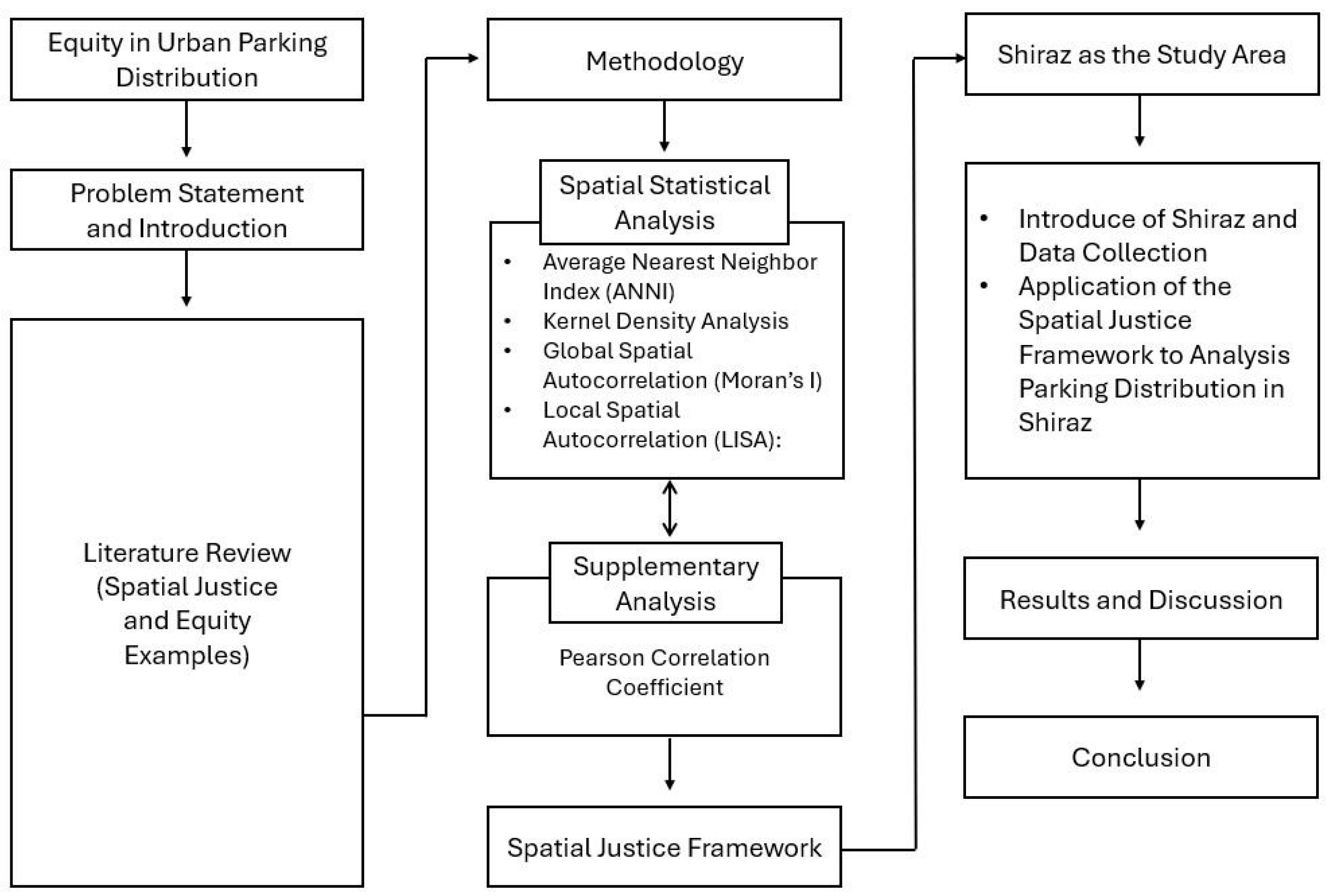
3. Methodology
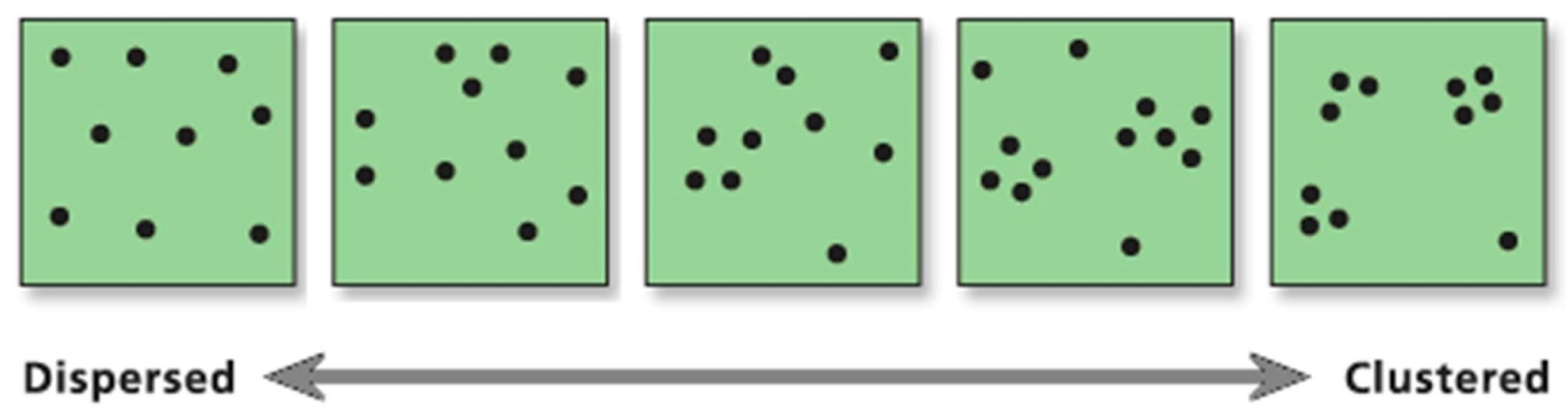
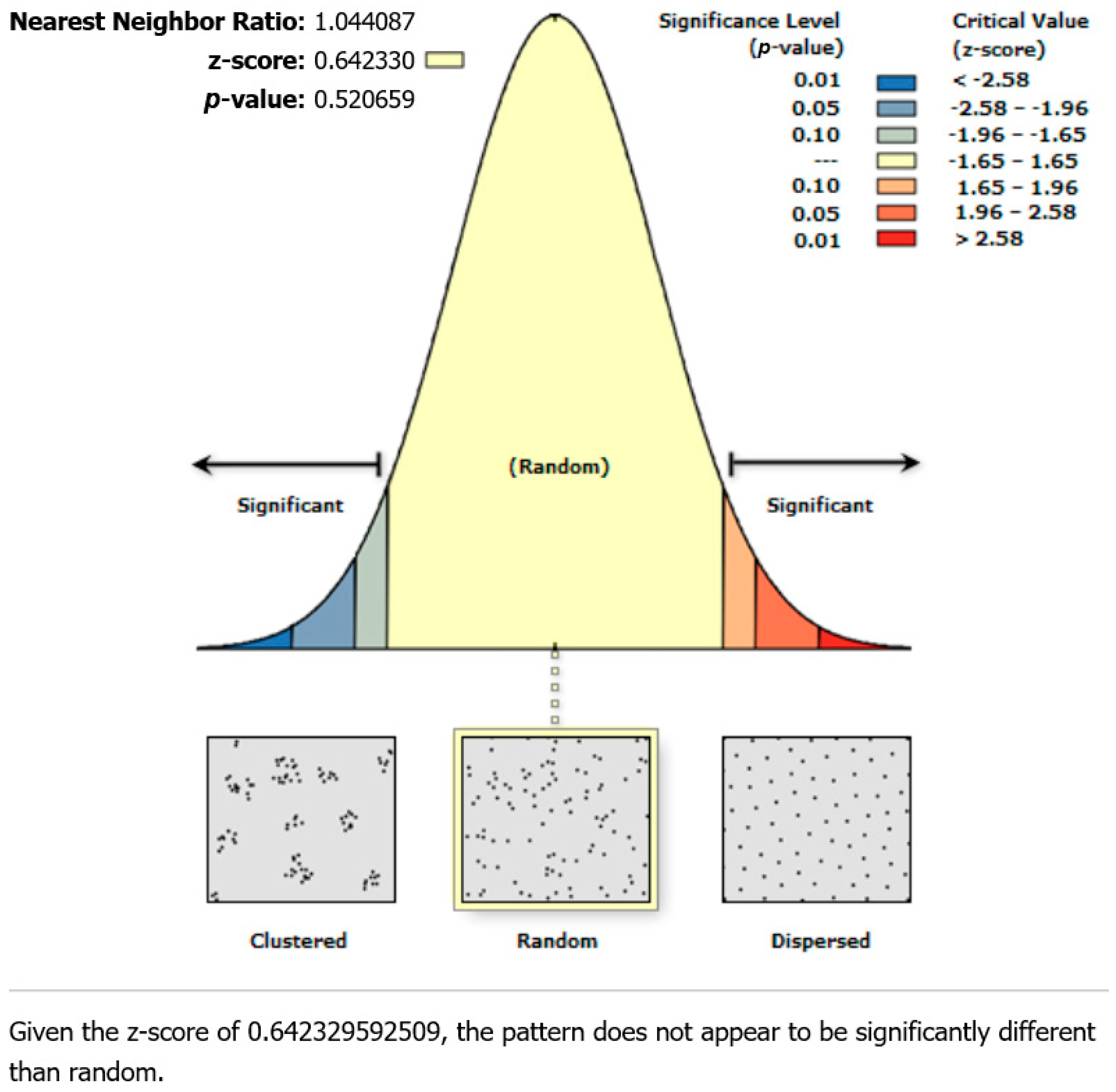
3.1. Average Nearest Neighbor Index
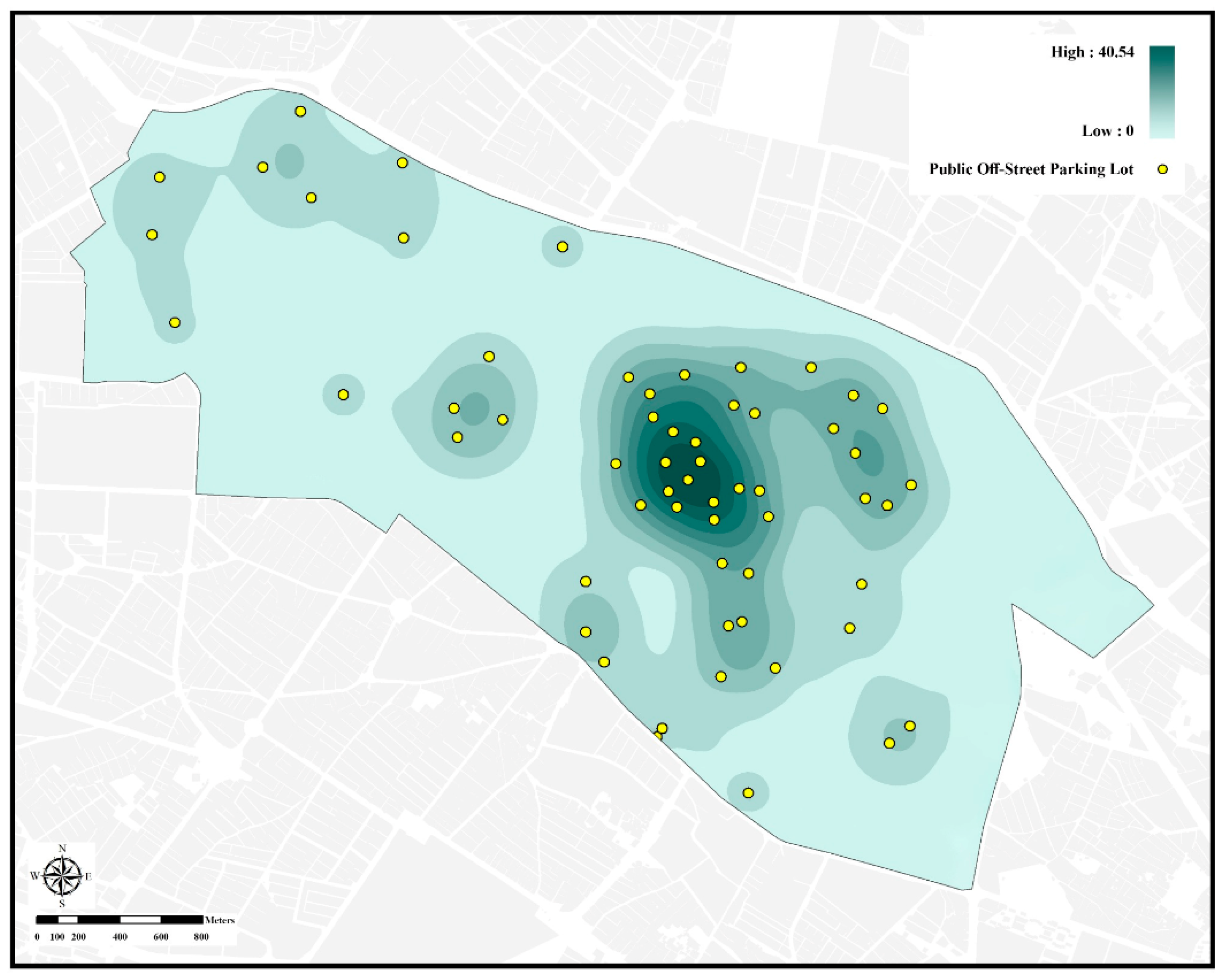
3.2. Kernel Density Analysis
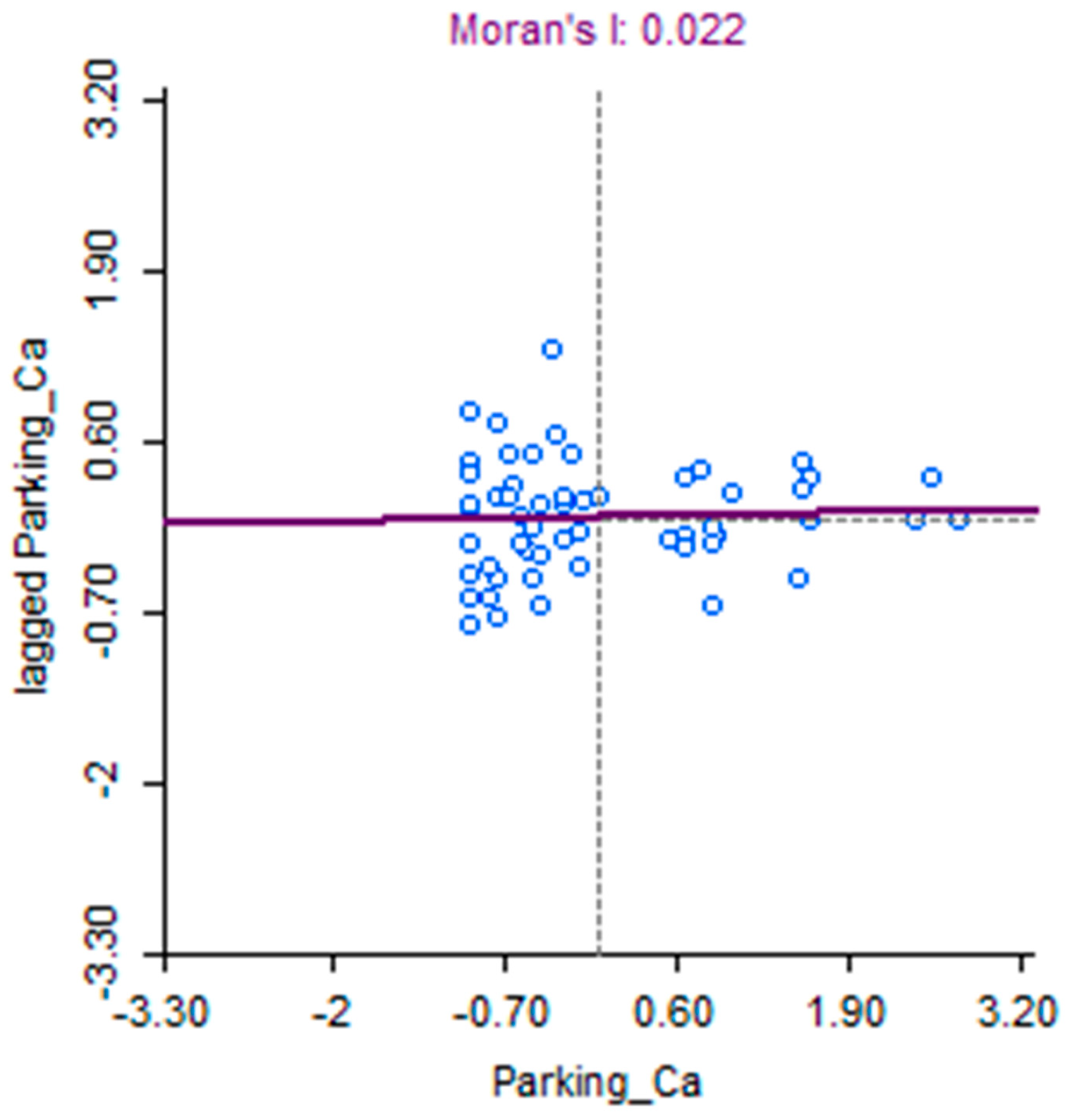
3.3. Spatial Autocorrelation Analysis
- n is the number of spatial units (zones),
- xi is the value of the variable (e.g., parking capacity) in zone i,
- x is the mean value of the variable,
- wij is the spatial weight between zones i and j.
3.4. Supplementary Analyses
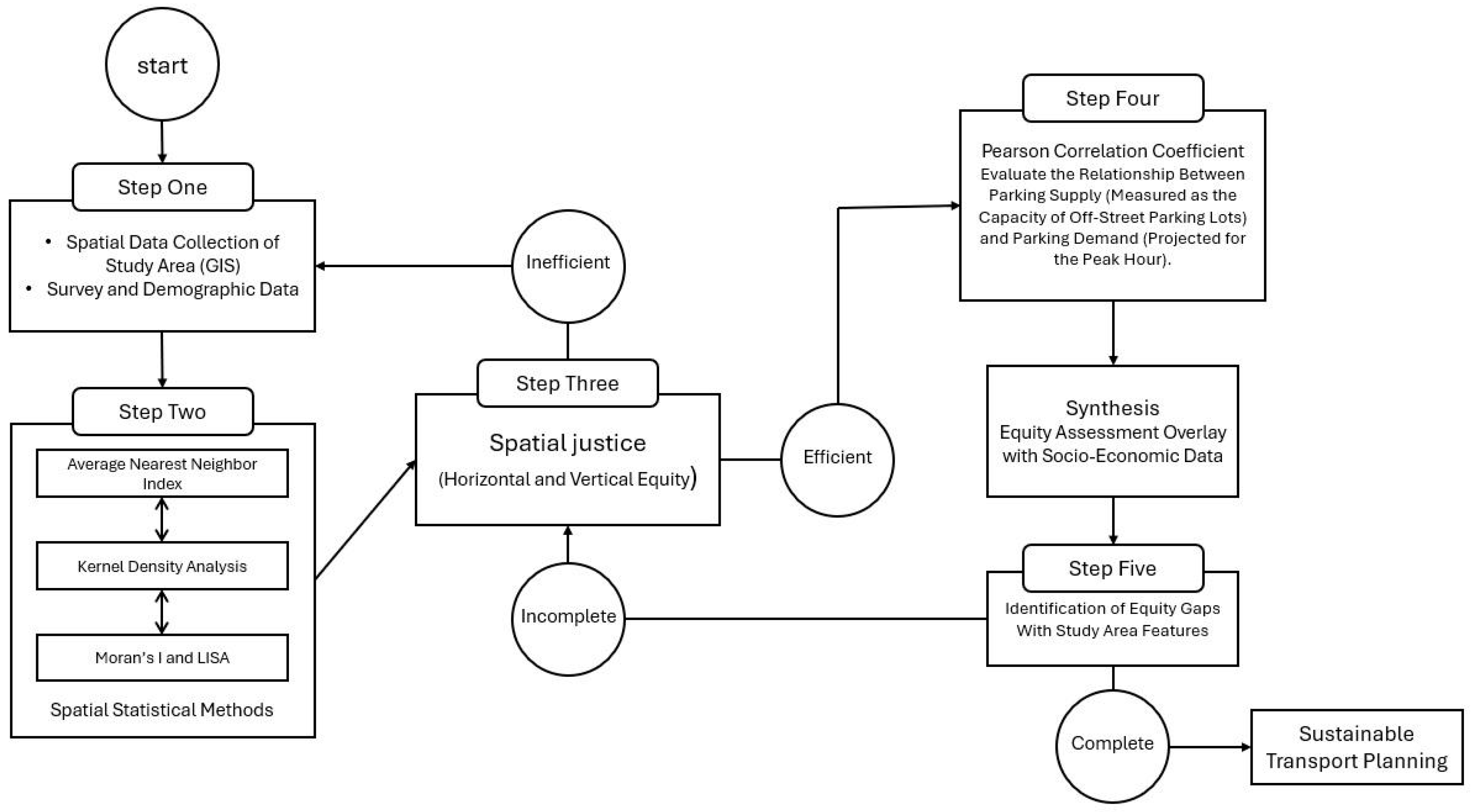
3.5. Integration with the Spatial Justice Framework
4. Results
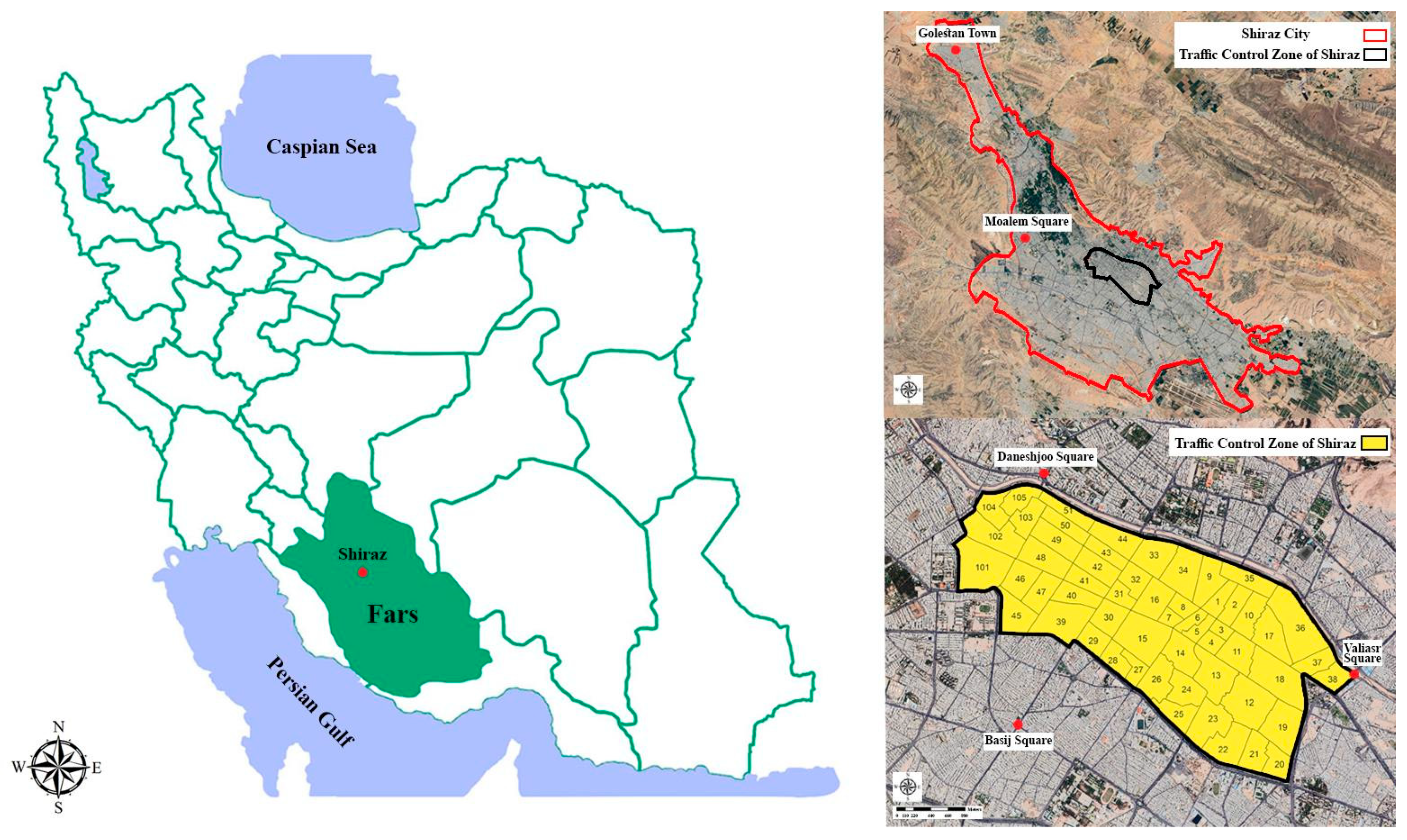
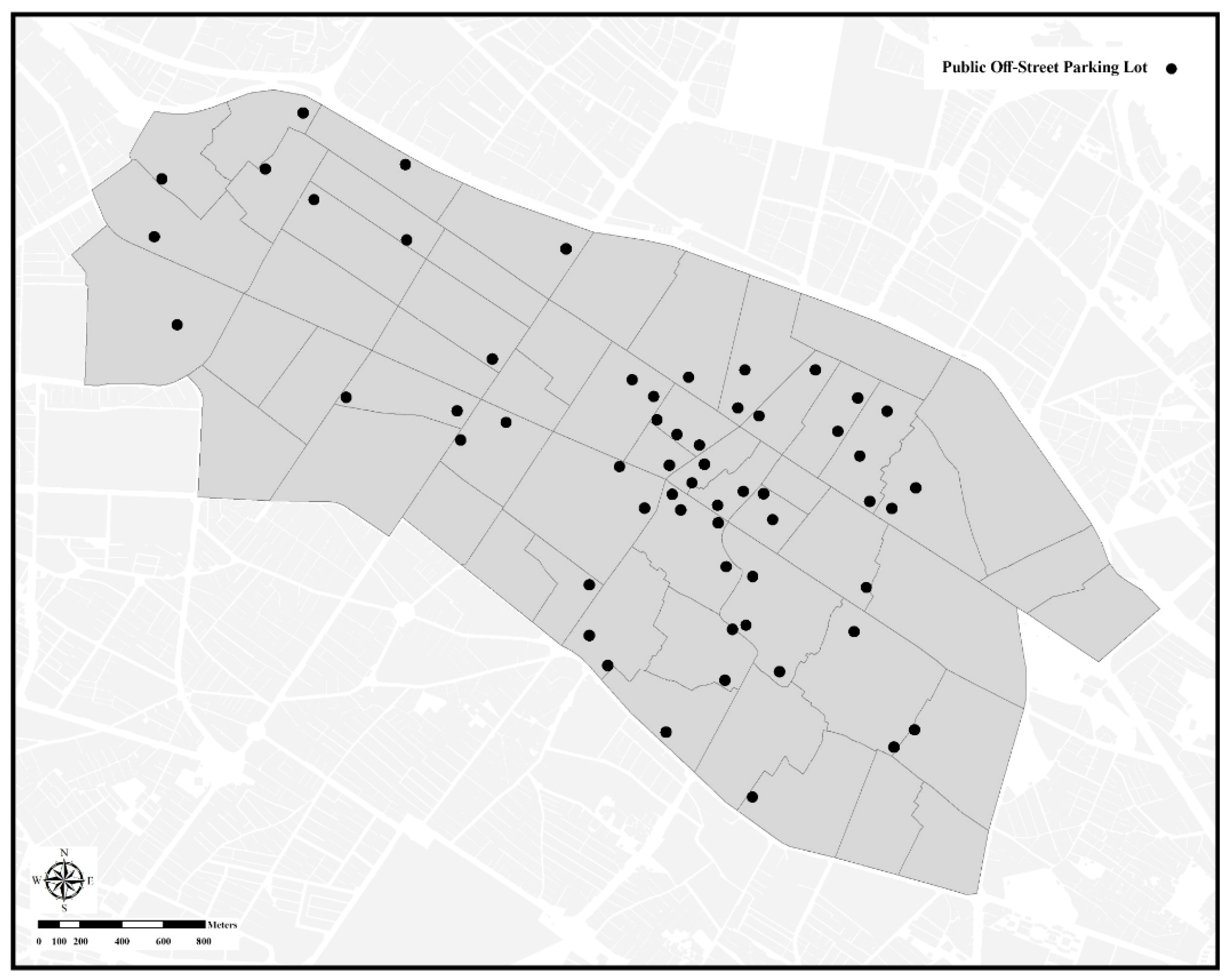
4.1. Step One: Study Area and Data Collection
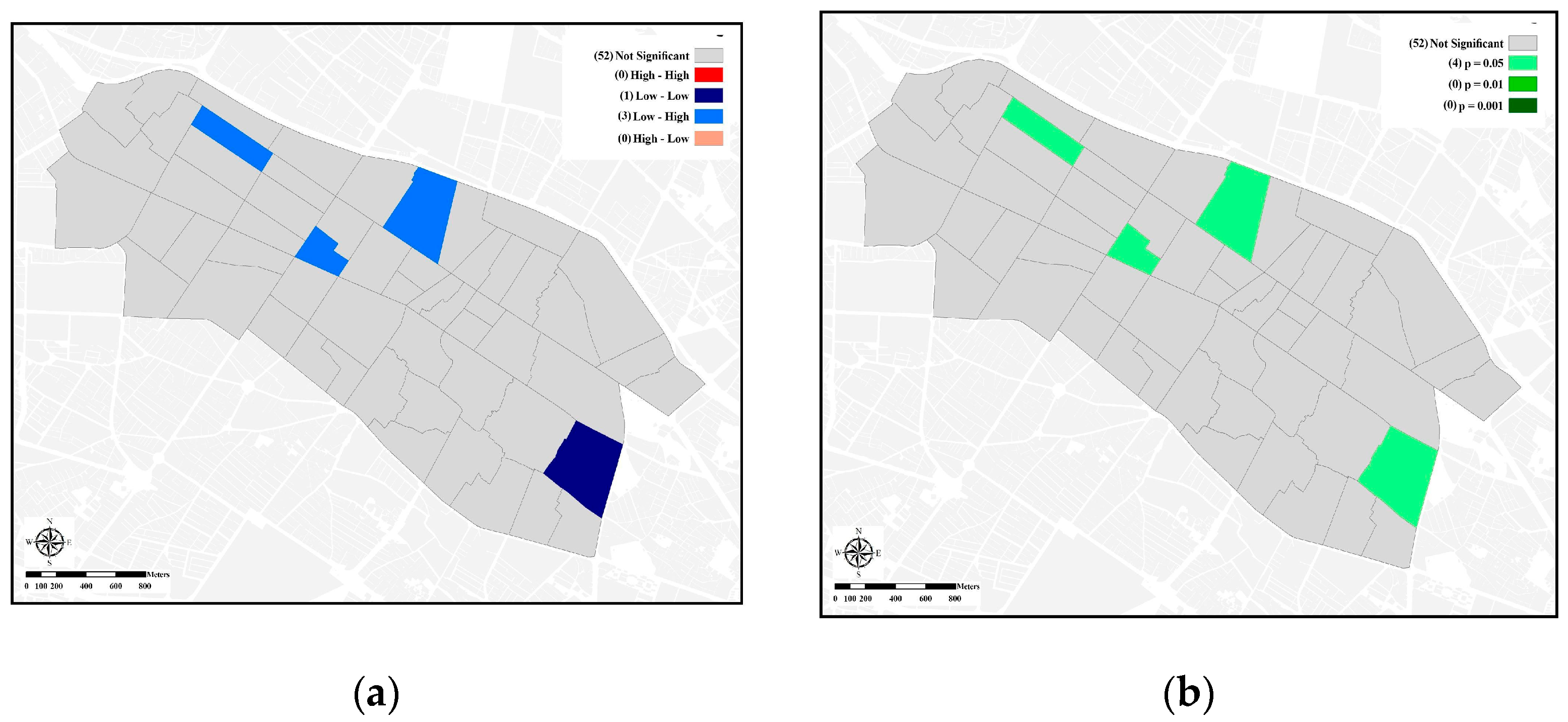
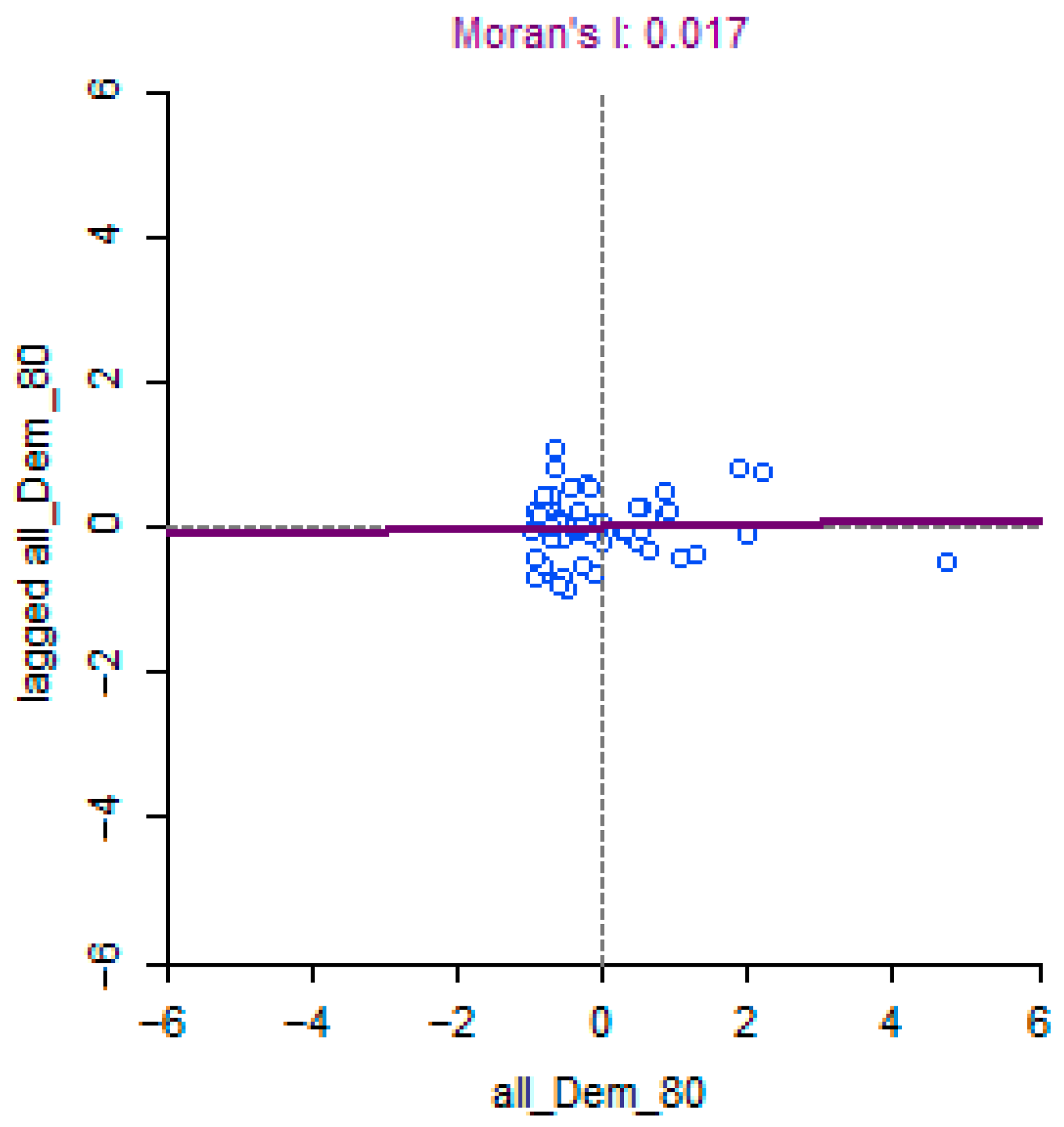
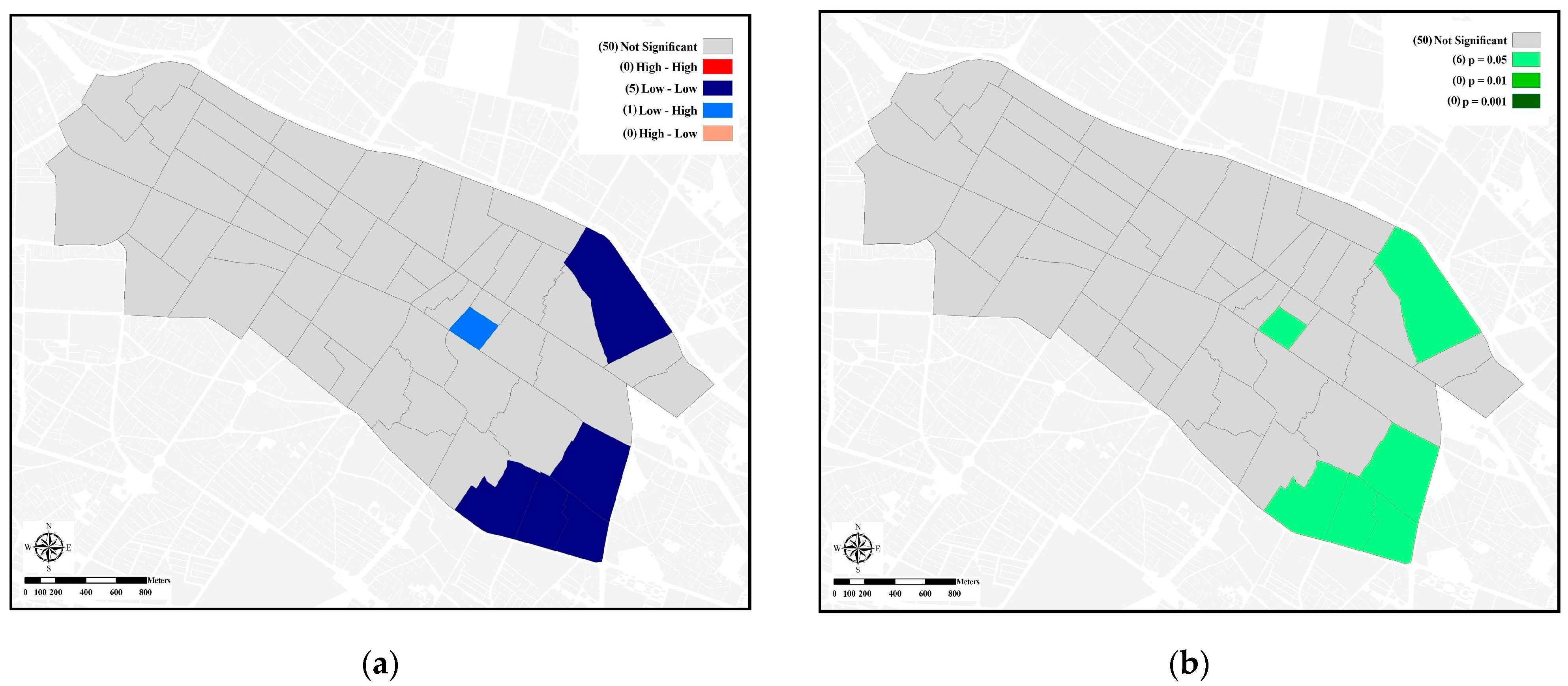
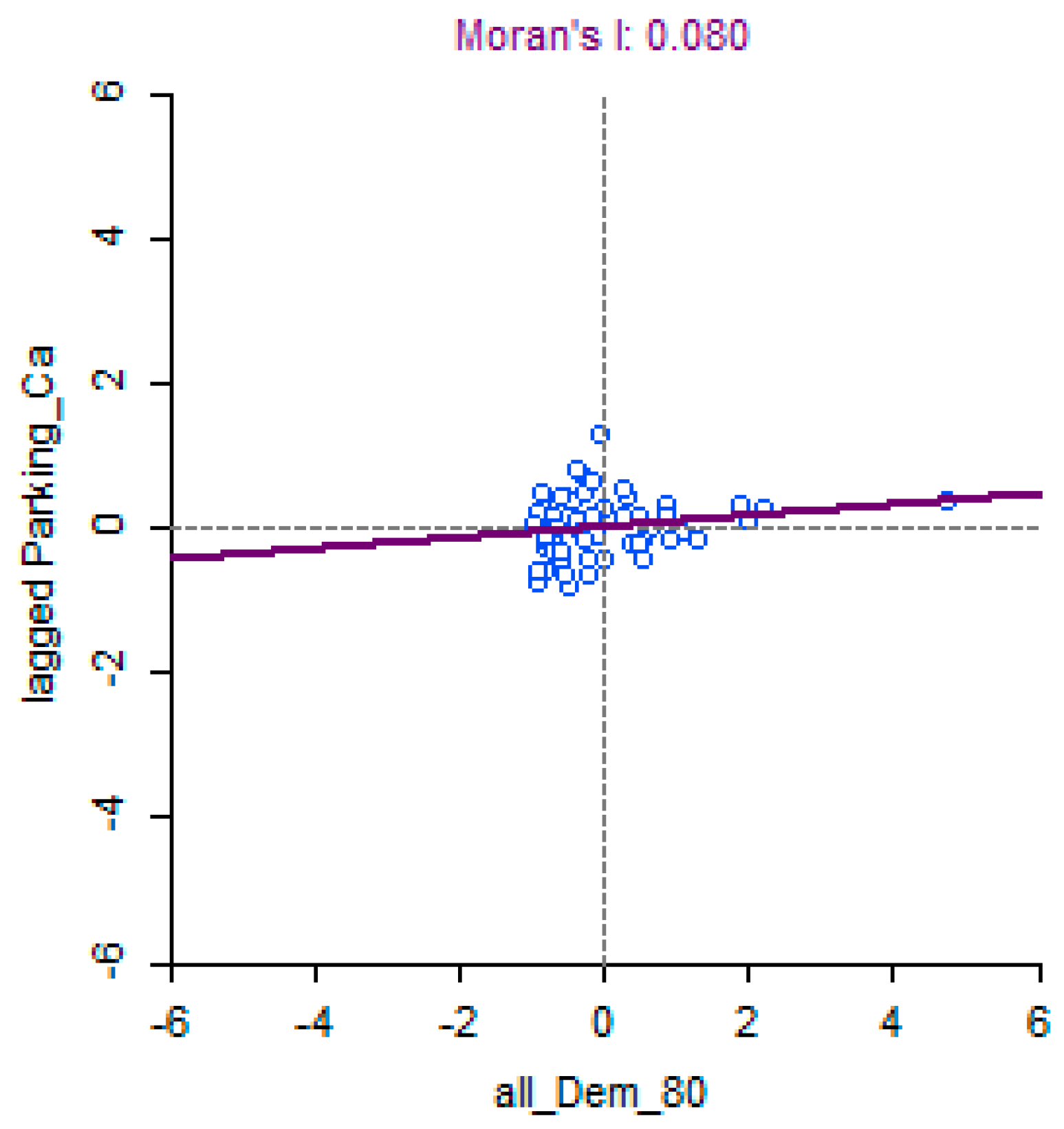
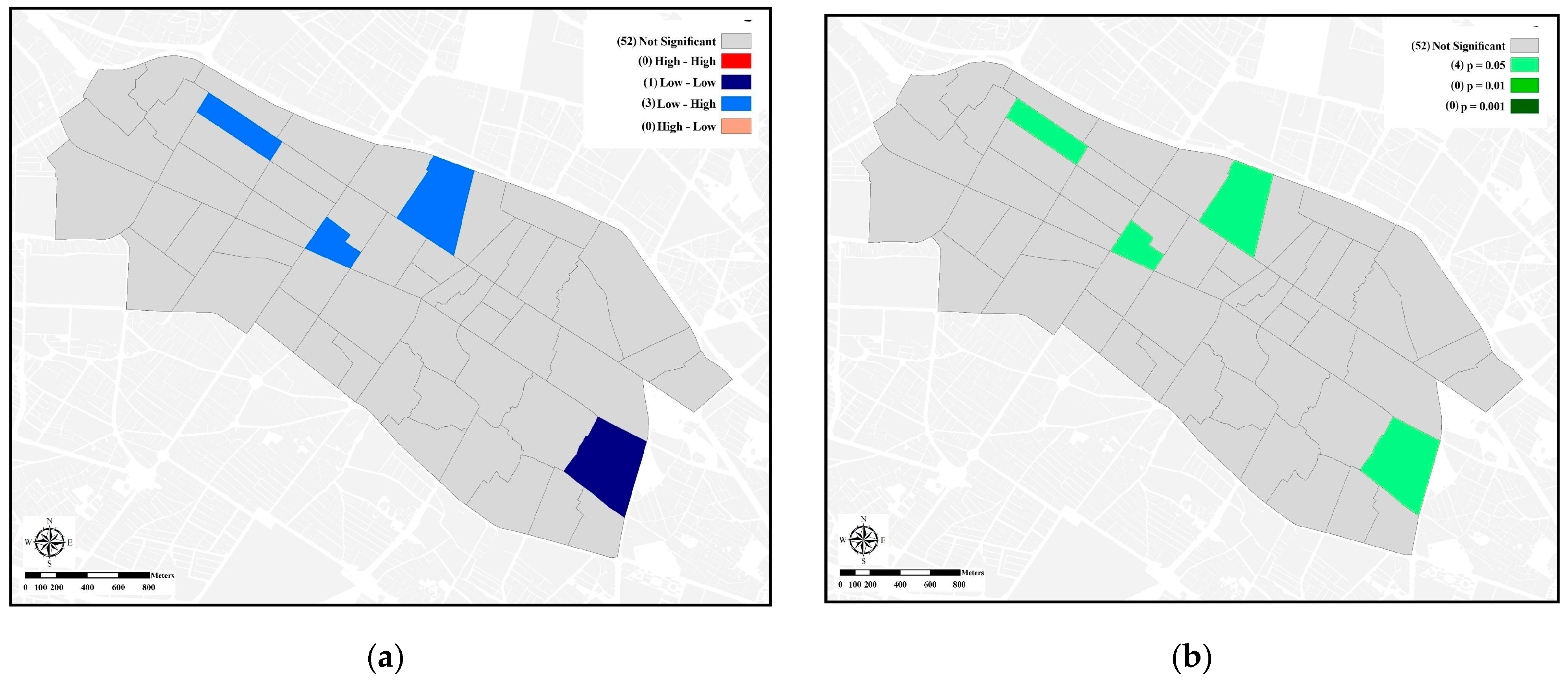
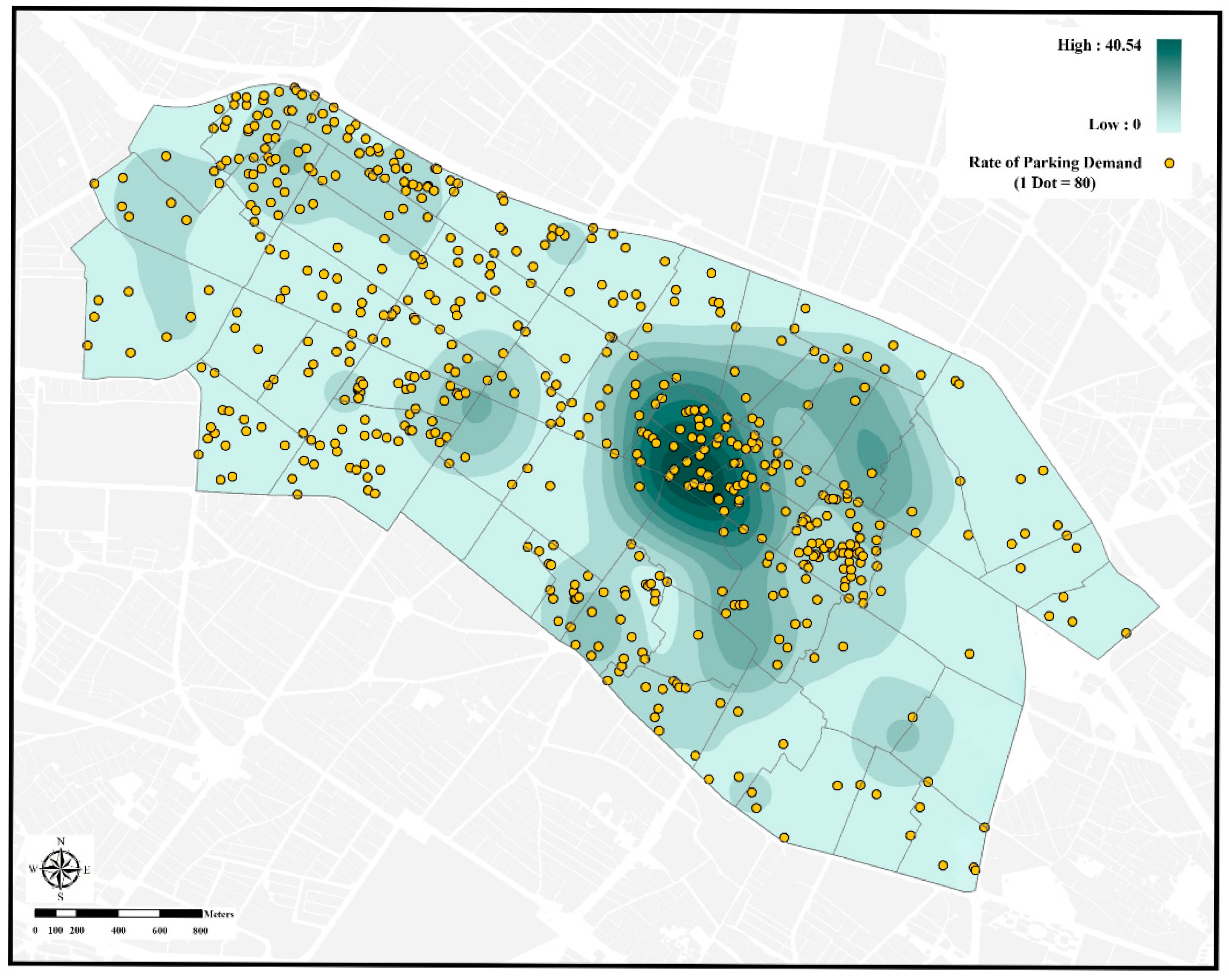
4.2. Step Two and Three: Spatial Statistical Methods (ANNI, Kernel Density, Spatial Autocorrelation)
4.3. Step Four: Pearson Correlation Coefficient
4.4. Step Five: Equity Synthesis
5. Discussion
5.1. Interpreting Distribution Patterns: Randomness vs. Equity
5.2. The Supply-Demand Mismatch and Its Drivers
5.3. Local Clustering and Spatial (In)justice
5.4. Socio-Economic and Policy Implications
5.5. Methodological Contribution and Future Research
5.6. Implications for Transport Equity
6. Conclusions
- Identify Priority Areas: Pinpoint exact neighborhoods suffering from parking shortages.
- Formulated Targeted Policies: Guide investments in new facilities and the implementation of demand-management strategies like dynamic pricing.
- Advance Broader Goals: Align parking management with sustainable development objectives (SDG 11) by promoting transport equity and reducing vehicle emissions.
- To build upon this work, future research should:
- Integrate temporal data to understand how parking demand and equity fluctuate throughout the day.
- Incorporate parking behavior data to model user decision-making more accurately.
- Expand the model to a metropolitan scale to analyze cross-city mobility patterns.
Author Contributions
Funding
Institutional Review Board Statement
Informed Consent Statement
Data Availability Statement
Acknowledgments
Conflicts of Interest
Abbreviations
| GIS | Geographic Information System |
| ANNI | Average Nearest Neighbor Index |
| KDE | Kernel Density Estimation |
| SD | Spatial Distribution |
References
- Taleai, M.; Sliuzas, R.; Flacke, J. An integrated framework to evaluate the equity of urban public facilities using spatial multi-criteria analysis. Cities 2014, 40, 56–69. [Google Scholar] [CrossRef]
- Hosseini, A.; Farhadi, E.; Hussaini, F.; Pourahmad, A.; Seraj Akbari, N. Analysis of spatial (in)equality of urban facilities in Tehran: An integration of spatial accessibility. Environ. Dev. Sustain. 2022, 24, 6527–6555. [Google Scholar] [CrossRef]
- Abdeen, M.A.; Nemer, I.A.; Sheltami, T.R. A balanced algorithm for in-city parking allocation: A case study of Al Madinah City. Sensors 2021, 21, 3148. [Google Scholar] [CrossRef] [PubMed]
- Lachapelle, U.; Boisjoly, G. Breaking down public transit travel time for more accurate transport equity policies: A trip component approach. Transp. Res. Part A Policy Pract. 2023, 175, 103756. [Google Scholar] [CrossRef]
- Wo, J.C.; Kim, Y.A.; Malone, S.E. Examining the spatial distribution of parking tickets in San Francisco neighborhoods: An overlooked form of urban inequality? J. Urban Aff. 2025, 47, 1709–1740. [Google Scholar] [CrossRef]
- Qi, Z.; Lim, S.; Hossein Rashidi, T. Assessment of transport equity to central business district (CBD) in Sydney, Australia. Transp. Lett. 2020, 12, 246–256. [Google Scholar] [CrossRef]
- Shoup, D. The High Cost of Free Parking; Routledge: Abingdon, UK, 2005. [Google Scholar]
- Tahmasbi, B.; Mansourianfar, M.H.; Haghshenas, H.; Kim, I. Multimodal accessibility-based equity assessment of urban public facilities distribution. Sustain. Cities Soc. 2019, 49, 101633. [Google Scholar] [CrossRef]
- Stivers, C.; Pandey, S.K.; DeHart-Davis, L.; Hall, J.L.; Newcomer, K.; Portillo, S.; Sabharwal, M.; Strader, E.; Wright, J. Beyond social equity: Talking social justice in public administration. Public Adm. Rev. 2023, 83, 229–240. [Google Scholar] [CrossRef]
- Zheng, Y.; Cao, J.; Shen, Y.; Liu, B.; Ji, Y. Parking planning with route assignment for planned special events. Transp. Res. Rec. 2023, 2677, 266–280. [Google Scholar] [CrossRef]
- Soja, E. The city and spatial justice. Justice Spatiale/Spat. Justice 2009, 1, 1–5. [Google Scholar]
- Lefebvre, H. Writings on Cities; Blackwell: Cambridge, MA, USA, 1996. [Google Scholar]
- Harvey, D. Justice, Nature, and the Geography of Difference; Blackwell Publishers: Malden, MA, USA, 1996. [Google Scholar]
- Fainstein, S.S. The just city. Int. J. Urban Sci. 2014, 18, 1–18. [Google Scholar] [CrossRef]
- Brazil, N. The unequal spatial distribution of city government fines: The case of parking tickets in Los Angeles. Urban Aff. Rev. 2020, 56, 823–856. [Google Scholar] [CrossRef]
- Savignano, E. Change for the Meter: Exploring the Equity Implications of Market-Priced Parking; UC Los Angeles, Institute of Transportation Studies: Los Angeles, CA, USA, 2023. [Google Scholar] [CrossRef]
- Goetting, K.; Liebe, U.; Becker, S. From Parking Place to Public Space: A Factorial Survey Experiment on Public Acceptability of Parking Space Reallocation in Germany. Clim. Policy 2025, 1–19. [Google Scholar] [CrossRef]
- De Bartolomeo, S.; Ottomanelli, M.; Caggiani, L. An equity parking area location model for transition from dockless to docked shared micromobility systems. NPJ Sustain. Mobil. Transp. 2025, 2, 23. [Google Scholar] [CrossRef]
- Brueckner, J.K.; Franco, S.F. Parking and urban form. J. Econ. Geogr. 2017, 17, 95–127. [Google Scholar] [CrossRef]
- Lefebvre-Ropars, G.; Morency, C.; Negron-Poblete, P. Toward a framework for assessing the fair distribution of space in urban streets. Transp. Res. Rec. 2021, 2675, 259–274. [Google Scholar] [CrossRef]
- Litman, T. Parking Management Best Practices; Routledge: New York, NY, USA, 2020. [Google Scholar]
- Fiez, T.; Ratliff, L. Data-driven spatio-temporal analysis of curbside parking demand: A case study in Seattle. arXiv 2017, arXiv:1712.01263. [Google Scholar]
- Channamallu, S.S.; Kermanshachi, S.; Rosenberger, J.M.; Pamidimukkala, A. A review of smart parking systems. Transp. Res. Procedia 2023, 73, 289–296. [Google Scholar] [CrossRef]
- Delbosc, A.; Currie, G. Using Lorenz curves to assess public transport equity. J. Transp. Geogr. 2011, 19, 1252–1259. [Google Scholar] [CrossRef]
- France-Mensah, J.; Kothari, C.; O’Brien, W.J.; Jiao, J. Integrating social equity in highway maintenance and rehabilitation programming: A quantitative approach. Sustain. Cities Soc. 2019, 48, 101526. [Google Scholar] [CrossRef]
- Israel, E.; Frenkel, A. Social justice and spatial inequality: Toward a conceptual framework. Prog. Hum. Geogr. 2018, 42, 647–665. [Google Scholar] [CrossRef]
- Lucas, K. Editorial for Special Issue of European Transport Research Review: Transport Poverty and Inequalities. Eur. Tra. Res. Rev. 2018, 10, 17. [Google Scholar] [CrossRef]
- Fasihi, H. Urban Parks and Their Accessibility in Tehran, Iran. Environ. Justice 2019, 12, 242–249. [Google Scholar] [CrossRef]
- Mahmoudi, S.; Jelokhani-Niaraki, M.; Argany, M. Evaluation of spatial justice in accessibility of urban facilities: A case study of accessibility of public parks in District# 11 of Tehran, Iran. Int. Arch. Photogramm. Remote Sens. Spat. Inf. Sci. 2019, 42, 703–707. [Google Scholar] [CrossRef]
- Pourkhaksar, S. Investigating and Analyzing the Spatial Distribution of Urban Services with the Approach of Spatial Justice (Case Example: 13 Districts of Mashhad Municipality). Master’s Thesis, Allameh Tabatabai University, Tehran, Iran, 2020. (In Persian). [Google Scholar]
- Eskandari, M.; Shahandeh, A.; Shetab-bushehri, N. A Mathematical Programming Model for Off-street Public Parking Facilities Location (Case Study: The Central District of Isfahan). Res. Prod. Oper. Manag. 2016, 7, 83–104. [Google Scholar] [CrossRef]
- Amanpoor, S.; Soleimani Moghadam, P.; Zarifi, F.; Zarifi, K. Study of the current status and estimation of parking demand for Ahvaz City until the 2026 outlook. In Proceedings of the International Conference on New Research in Civil Engineering, Architecture and Urban Planning, Tehran, Iran, 26 November 2015; Available online: https://civilica.com/doc/449508 (accessed on 28 September 2025).
- Shoup, D. Parking and the City; Routledge: New York, NY, USA, 2018. [Google Scholar]
- Statistical Centre of Iran (SCI). Population and Housing Census; SCI’s Mandate: Tehran, Iran, 2016. [Google Scholar]
- Soltani, A.; Askari, S. Exploring spatial autocorrelation of traffic crashes based on severity. Injury 2017, 48, 637–647. [Google Scholar] [CrossRef]
- Zhu, H.; Yu, W.; Li, J. The spatial injustice in tourism-led historic urban area renewal: An analytical framework from stakeholder analysis. Curr. Issues Tour. 2024, 27, 1229–1248. [Google Scholar] [CrossRef]
- Zhang, W.; Liu, H.; Liu, Y.; Zhou, J.; Xiong, H. Semi-supervised hierarchical recurrent graph neural network for city-wide parking availability prediction. In Proceedings of the AAAI Conference on Artificial Intelligence, New York, NY, USA, 7–12 February 2020. [Google Scholar]
- Raza, A.; Zhong, M.; Akuh, R.; Safdar, M. Public transport equity with the concept of time-dependent accessibility using Geostatistics methods, Lorenz curves, and Gini coefficients. Case Stud. Transp. Policy 2023, 11, 100956. [Google Scholar] [CrossRef]
- Zuo, Y.; Zou, L.; Zhang, M.; Smith, L.; Yang, L.; Loprinzi, P.D.; Ren, Z. The temporal and spatial evolution of marathons in China from 2010 to 2018. Int. J. Environ. Res. Public Health 2019, 16, 5046. [Google Scholar] [CrossRef] [PubMed]
- Tsou, K.W.; Hung, Y.T.; Chang, Y.L. An accessibility-based integrated measure of relative spatial equity in urban public facilities. Cities 2005, 22, 424–435. [Google Scholar] [CrossRef]
- Deputy of Transportation and Traffic, Shiraz Municipality. Updating the Comprehensive Urban Transportation and Traffic Studies of Shiraz; Shiraz Municipality: Shiraz, Iran, 2018. [Google Scholar]
- Attard, M.; Guzman, L.A.; Oviedo, D. Urban space distribution: The case for a more equitable mobility system. Case Stud. Transp. Policy 2023, 14, 101096. [Google Scholar] [CrossRef]



| No. | Authors (Year) | Study Title | Methodological Approach | Key Findings |
|---|---|---|---|---|
| 1 | Katharina Goetting Ulf Liebe Sophia Becker [17] (2025) | From parking place to public space: a factorial survey experiment on the public’s acceptability of parking space reallocation in Germany. | Use FSE method (Factorial survey experiments) 2798 participants were evaluated. | Social aspects, This article found that, contrary to expectations, the German public showed a greater preference for the equality principle for distributing parking and its reallocation. |
| 2 | Simona De Bartolomeo Michele Ottomanelli Leonardo Caggiani [18] 2025 | An equity parking area location model for transition from dockless to docked shared micromobility systems | Using the Gini index, developed a bi-objective optimization model using a genetic algorithm to locate shared micromobility parking stations by minimizing both total walking distance and inequality | physical aspects, It provided a mathematical framework to ensure that the burden of walking to newly created micromobility parking stations is distributed more fairly across different population zones. |
| 3 | Elena Savignano [16] 2023 | Change for the Meter: Exploring the Equity Implications of Market-Priced Parking | Mixed-methods (including literature review, secondary data analysis, field observations, and an in-person survey) | Economic aspects, This article identified that market-priced parking has disparate impacts based on gender and race and provided policy recommendations. |
| 4 | Gabriel Ropars Lefebvre et al. [12] 2021 | Toward a framework for assessing the fair distribution of space in urban streets | This paper proposes a method to assess the balance between the three fundamental dimensions of the street. | Parking as a subset of urban space, The paper tries to integrate three aspects of a public space, including a parking lot. the link, the place, and the environment to approach the fair distribution of street space in an urban context. |
| 5 | Noli Brazil [15] 2020 | The unequal spatial distribution of city government fines: The case of parking tickets in Los Angeles | The Getis-Ord Gi method (the analysis of spatial association by using distance statistics) is based on binomial regression models. | Economic aspects, This article showed that neighborhoods with a higher concentration of renters, young adults, and Black people in Los Angeles disproportionately issued parking tickets. |
| 6 | Jan Brueckner Sofia Franco [19] 2017 | Parking and urban form | The study used a theoretical monocentric urban model with specific Cobb–Douglas functional forms. | Physical aspects, It demonstrated that a universal minimum parking requirement, rather than systematically addressing spatial equity, is a crude policy tool that can reduce social welfare and distort urban form. |
| Correlations | |||
|---|---|---|---|
| Parking Capacity | Parking Demand | ||
| Parking Capacity | Pearson | 1 | 0.266 * |
| Correlation | 56 | 0.048 | |
| Sig (2-tailed) | 56 | ||
| No | |||
| Parking Demand | Pearson | 0.266 * | 1 |
| Correlation | 0.048 | ||
| Sig. (2-tailed) | 56 | ||
| No | 56 | ||
Disclaimer/Publisher’s Note: The statements, opinions and data contained in all publications are solely those of the individual author(s) and contributor(s) and not of MDPI and/or the editor(s). MDPI and/or the editor(s) disclaim responsibility for any injury to people or property resulting from any ideas, methods, instructions or products referred to in the content. |
© 2025 by the authors. Licensee MDPI, Basel, Switzerland. This article is an open access article distributed under the terms and conditions of the Creative Commons Attribution (CC BY) license (https://creativecommons.org/licenses/by/4.0/).
Share and Cite
Sadeghi, A.R.; Maktabifard, Z.; Ramezani, M.; Tesoriere, G.; Campisi, T. Equity in Urban Parking Distribution: A Spatial Statistical Framework for Sustainable Transport Planning. Sustainability 2025, 17, 10774. https://doi.org/10.3390/su172310774
Sadeghi AR, Maktabifard Z, Ramezani M, Tesoriere G, Campisi T. Equity in Urban Parking Distribution: A Spatial Statistical Framework for Sustainable Transport Planning. Sustainability. 2025; 17(23):10774. https://doi.org/10.3390/su172310774
Chicago/Turabian StyleSadeghi, Ali Reza, Zahra Maktabifard, Mina Ramezani, Giovanni Tesoriere, and Tiziana Campisi. 2025. "Equity in Urban Parking Distribution: A Spatial Statistical Framework for Sustainable Transport Planning" Sustainability 17, no. 23: 10774. https://doi.org/10.3390/su172310774
APA StyleSadeghi, A. R., Maktabifard, Z., Ramezani, M., Tesoriere, G., & Campisi, T. (2025). Equity in Urban Parking Distribution: A Spatial Statistical Framework for Sustainable Transport Planning. Sustainability, 17(23), 10774. https://doi.org/10.3390/su172310774