


Abstract
Agricultural cooperatives are essential in mitigating climate change and food insecurity through the promotion of sustainable agricultural practices and the conservation of biodiversity. However, weaknesses in governance, economic restrictions, market pressures, and regulatory obstacles frequently hinder their efficacy. This study investigates the main factors leading to cooperative failures through qualitative analysis of twenty-three (23) expert interviews. Research demonstrates that strong governance, efficient communication, financial stability, and supportive policies are crucial for the viability of cooperatives. Leadership issues, bureaucratic inefficiencies, and market competition were seen as significant roadblocks. It is essential to tackle these difficulties via governance adjustments, economic resilience approaches, and policy advocacy to strengthen the role of cooperatives in climate change mitigation and food security.
1. Introduction
Agricultural cooperatives have long been recognized as essential entities in the global agri-food system, actively promoting ethical farming methods, improving food security, and contributing to climate change mitigation [1,2,3,4]. Within the European Union, they hold significant market shares in essential agricultural production areas, accounting for over 40% of total sales. Their presence is especially pronounced in the dairy sector, comprising nearly 60% of the market, followed by the fruit and vegetable and wine sectors, each with approximately 40% market shares [5].
Cooperatives, as member-owned and managed entities, provide an alternative to traditional corporate frameworks by prioritizing democratic governance, fair profit distribution, and sustainable economic viability. Their capacity to promote environmentally sustainable agriculture, preserve biodiversity, and stabilize rural economies makes them vital instruments in attaining sustainable development objectives, particularly since the global concerns of climate change and food security have become more pressing, requiring coordinated efforts.
This paper defines climate change resilience and food security using widely acknowledged frameworks to build a coherent conceptual basis. Climate change resilience indicates “the ability of social, economic, and environmental systems to withstand hazardous events, adapting or reorganizing in ways that preserve their fundamental functions, identity, and structure, while also retaining the capacity for adaptation, learning, and transformation,” as articulated by the Intergovernmental Panel on Climate Change (IPCC) [6]. In the context of agricultural cooperatives, this encompasses the capability to endure climate-induced disruptions while maintaining production continuity and enhancing adaptability at both the organizational and individual farmer levels.
Food security, as defined by the Food and Agriculture Organization (FAO), exists when all individuals, at all times, possess physical, social, and economic access to adequate, safe, and nutritious food to fulfill their dietary requirements and preferences for an active and healthy lifestyle [7]. This concept is based on four interrelated pillars: food availability (supply), food access (economic and physical), food usage (nutritional value and safety), and food stability (consistency of supply across time). These variables jointly delineate the resilience of food systems among climatic stressors.
The urgency of these challenges becomes even more evident when considering that the escalation of climate-related disturbances jeopardizes food stability, making food security a critical global concern [8]. Food security extends beyond simple food availability; it includes economic access to healthy food, the stability of supply chains, and the resilience of food systems against external shocks [9], all of which are dimensions that agricultural cooperatives can actively contribute to, when operating properly; hence, it is essential to mitigate the obstacles they frequently encounter and to foster the creation of cooperative models that are tailored to the specific socio-economic and institutional environments in which they operate.
Cooperatives, as collective entities, facilitate smallholder farmers’ access to markets, financial resources, and technical skills, thus enabling them to reduce climate risks and enhance productivity [10]. They also enable the implementation of climate-smart agricultural techniques, such as sustainable soil management, crop diversification, crop matching, and water conservation, by consolidating resources and promoting economies of scale [11]. Moreover, they function as an essential platform for knowledge dissemination, guaranteeing that farmers possess adaptive solutions to address climate-induced risks.
Beyond production-level initiatives, cooperatives are essential in enhancing food safety, quality standards, local varieties, and strengthening biodiversity, especially within perishable food supply chains [3]. Their unified governance frameworks facilitate enhanced traceability and adherence to regulatory standards, minimizing food loss and waste while improving market access.
To attain their climate change resilience and food security objectives, cooperatives have to overcome the various challenges they often encounter. The governance structures in cooperatives are crucial for their lasting survival. Strong leadership, openness, and member involvement are crucial for guaranteeing efficient operations. Their intrinsic governance problems usually stem from their dual identity as economic entities and social organizations [12]. This frequently leads to conflicts of interest, ineffective decision-making procedures, and decreased member participation, which can compromise cooperative efficacy. Governance deficiencies hinder cooperatives from efficiently incorporating environmental measures, addressing market constraints, or achieving financial stability. Moreover, inadequate leadership and a constrained strategic vision might result in internal inefficiencies, hindering cooperatives from implementing climate-smart farming practices or biodiversity conservation initiatives [13]. Internal opportunistic behaviors, such as illegal side-selling by members, pose significant risks to cooperative viability, as they undermine economic stability and continuity of supply chains [14].
Financial sustainability is a crucial factor in cooperative resilience. Nevertheless, numerous cooperatives are deficient in financial know-how, resources, and institutional support required to thrive in contemporary marketplaces [15]. They frequently encounter difficulties in attracting investment due to their distinctive ownership structure, which restricts the issuance of shares or the acquisition of external funding. Insufficient capital may hinder cooperatives from investing in biodiversity conservation initiatives, adopting climate-smart farming practices, or expanding market access. Moreover, cooperatives with fragile financial frameworks are more vulnerable to economic disruptions, especially in unstable agricultural markets.
Alongside these financial and governance challenges, another key area of vulnerability emerges from the external market and regulatory environment. In addition to the challenges mentioned above, cooperatives must contend with growing market rivalry and regulatory obstacles. Liberalized trade regulations, the proliferation of multinational agribusinesses, and the increasing supremacy of investor-owned corporations leave cooperatives competitively disadvantaged. In the absence of strong branding, product distinction, or supply chain integration, cooperatives frequently encounter difficulties in sustaining profitability and consumer loyalty. These pressures are exacerbated by the structural constraints of cooperatives, which make them more vulnerable to external influences, as they lack the flexibility and financial resources that corporate rivals possess. Moreover, tight regulatory frameworks and inconsistent policy backing further hinder cooperative activities [10]. Bureaucratic obstacles, legal uncertainties, and insufficient government incentives can hinder cooperative growth and innovation, restricting their ability to adopt sustainable agriculture practices or impact environmental policy [16].
Taken together, these interconnected internal and external obstacles suggest a deeper, systemic issue in the functioning of cooperatives. Despite their recognized advantages, there is significantly less research conducted on the issues that hinder the operation of cooperatives, often leading to failure or, in severe instances, complete collapse.
Several empirical studies indicate ongoing structural and operational weaknesses that impede cooperative operational success. Despite focused reforms and heightened legislative scrutiny, many cooperatives face persistent challenges, including inadequate governance, insufficient capitalization, and passive membership structures [17]. This persistent contrast between the aspirational potential of cooperatives and their frequent underperformance needs a thorough examination of failures and roadblocks. An expanding volume of research suggests that comprehending the reasons behind the underperformance of cooperatives is crucial for realizing their transformational potential and for creating resilient cooperative models that can endure the challenges posed by climate change and market fluctuations [18,19,20]. Understanding failure in this context should not be seen as a retrospective judgment, but rather, this research regards failure as a diagnostic instrument for uncovering underlying institutional deficiencies and informing future cooperative design strategies.
This study aims to examine the primary causes that hinder agricultural cooperatives from attaining their objectives. The research finds significant impediments through qualitative analysis of expert interviews, including governance weaknesses, economic restraints, market limitations, and regulatory constraints. The article thoroughly examines these difficulties, yielding essential insights into the systemic vulnerabilities of cooperatives and presenting pragmatic recommendations for enhancing their resilience. Strengthening cooperative governance, improving financial sustainability, promoting policy reforms, and encouraging member engagement are vital measures to ensure that cooperatives serve as effective tools for climate change mitigation and food security.
2. Materials and Methods
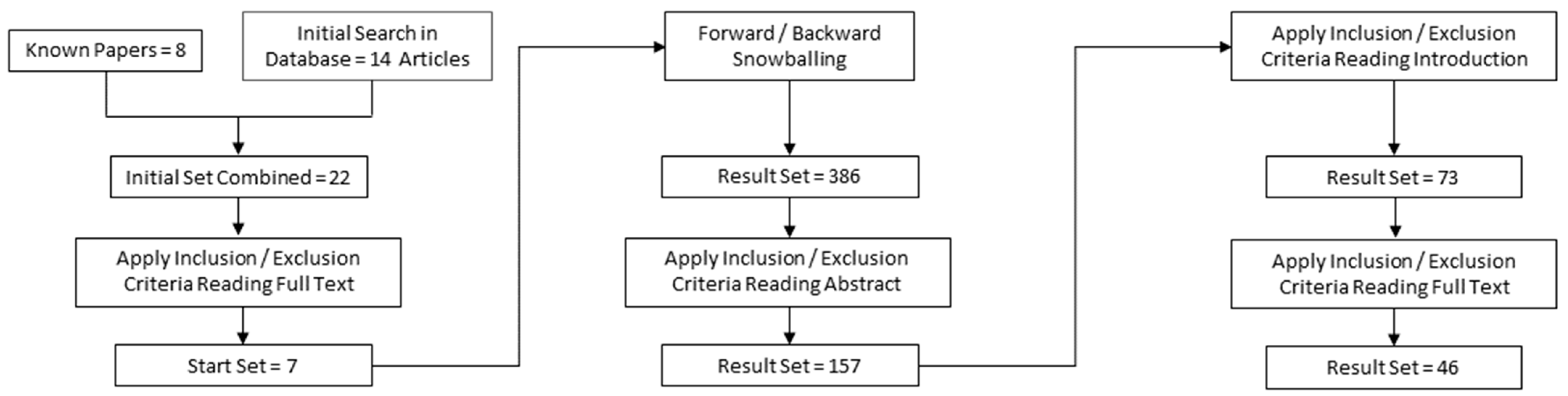
The present study employed a snowball review methodology to thoroughly investigate the challenges and inefficiencies of agricultural cooperatives due to the scarcity of academic research on the subject. The snowball review technique, especially effective in focused or under-researched areas, entails finding key sources and meticulously tracing citations and references to reveal further relevant research [21]. This iterative method facilitates the enhancement of the literature base beyond traditional database inquiries, guaranteeing a more comprehensive and deeper synthesis of existing information. The process began with the selection of a limited initial group of relevant articles for backward and forward snowball sampling. To create the initial set, we first assembled a list of previously identified significant publications based on our earlier research and existing knowledge of the literature about agricultural cooperatives, organizational resilience, and cooperative performance. Subsequently, we performed an initial search using Scopus and Google Scholar, employing keyword combinations such as (“cooperativ*” OR “collective action” OR “producer organization”) AND (“resilien*” OR “failur*” OR “climate change resili*”) AND (“agriculture” OR “agrifood”). Fourteen papers from the database search satisfied the initial inclusion and exclusion criteria for relevancy, peer-reviewed status, and fit with the study’s conceptual framework. Furthermore, eight articles from our known sources were included. Utilizing rigorous criteria—namely, conceptual depth, empirical contribution, and methodological rigor—we identified a starting set of seven publications, including three from the database search and four from established references.
This first set established the foundation for the snowballing process, whereby we methodically performed backward citation tracking (analyzing references mentioned by these publications) and forward citation tracking (finding papers that referenced them). This iterative approach enabled us to discover supplementary relevant material that informed the analytical framework and thematic structure of the research. The process continued iteratively until theoretical saturation was achieved, indicating that no further significant contributions were discovered in later citations.
- Inclusion Criteria:
- We utilized a contemporary bibliography (2020–2025) to ensure the subjects remain pertinent; however, it is crucial to emphasize the scarcity of recent empirical research concerning the specific issues examined, particularly those associated with internal cooperative governance dynamics and resilience. Consequently, it was essential to include seminal works while they were widely cited and theoretically robust. We endeavored to achieve a balance between timeliness and academic relevance to provide a comprehensive and evidence-based analysis.
- Articles published in English or Greek to guarantee the incorporation of both global academic discourse and locally specific knowledge, especially from Southern Europe and the Eastern Mediterranean.
- Only publications from peer-reviewed journals, academic book chapters, or institutional reports including empirical results or theoretical frameworks were included.
- The articles had to engage substantively with at least one of the following themes: agricultural cooperatives, climate change resilience, cooperative failures or challenges, governance issues, member participation, food security, market challenges, financial limitations, or policies.
- Studies centered on the European setting (particularly the EU and Mediterranean areas) or comparative international instances were deemed suitable if they provided transferable insights for collaborative resilience and performance.
- Exclusion Criteria:
- Unreviewed materials, such as opinion articles, blog entries, working papers devoid of explicit methodology, and reports without empirical validation.
- Research concentrated only on non-agricultural cooperatives (e.g., housing, education, healthcare) unless they yielded universally relevant insights about organizational resilience or governance against external pressures.
- Articles deficient in analytical rigor, empirical evidence, or explicit relation to the research aims.
Qualitative research was included to enhance the insights from the literature study, utilizing transcript-based thematic analysis of semi-structured interviews with twenty-three stakeholders with expertise in agricultural cooperatives, until no new themes, insights, or variations emerged. The respondents were chosen by purposive sampling to guarantee varied representation, including board leaders, agricultural economists, and industry specialists. Each interview lasted 45 to 60 min and was conducted either in person or through phone calls to facilitate accessibility. The interview guide was constructed based on principal themes discerned in the literature and was organized around governance problems, financial sustainability, market competitiveness, regulatory constraints, and member participation. Our research includes expert interviews on a focused subject—namely, agricultural cooperatives and the challenges they face in attaining climate change resilience and enhancing food security, which represents a distinct context. The individuals selected were not random stakeholders, but rather carefully chosen informants with substantial, domain-specific knowledge. The sample size of 23 interviews is methodologically sound and conforms to established qualitative research standards, particularly in specialized topics [22]. Thematic analysis indicated information redundancy by the 16th to 19th interviews, confirming the adequacy of the sample size. Sample includes stakeholders involved in cooperatives of different sizes, operating in diverse regional contexts, across both mandatory and voluntary membership schemes, and encompassing various types of cooperatives (e.g., agricultural marketing, supply, credit). This heterogeneity enriches the analytical depth and enhances the transferability of the findings. The rationale for obtaining a heterogeneous sample is that any similarity identified across a diverse group of instances is more likely to represent a broadly generalizable phenomenon than a commonality seen in a homogenous group. Consequently, sample heterogeneity offers evidence that results are not exclusively characteristic of a certain region, cooperative type, or time [23]. Participants included cooperative managers, board members, union representatives, technical advisors, and consultants, all of whom contributed practical insights into daily operational issues, institutional dynamics, and organizational decision-making processes. The sample also included academics and policy experts specialized in agricultural cooperation, rural development, and cooperative economics, who provided a more extensive analytical and comparative perspective. The combination of practical, managerial, and academic viewpoints enhanced the dataset and fostered a more profound, contextually informed understanding of the structural limitations and strategic possibilities confronting cooperative structures.
After the data collection, thematic analysis was performed using Braun and Clarke’s six-phase framework, known for its rigorous methodology in detecting, interpreting, and reporting patterns within qualitative data [24]. The initial phase included data familiarization, during which all interviews were transcribed verbatim, reviewed multiple times, and preliminary reflections were documented. During the second phase, preliminary codes were produced via open coding, in which important text parts were methodically assigned labels. The final phase was topic identification, during which related codes were aggregated into general themes, illustrating recurring patterns and principal concepts across the interviews. The fourth and fifth stages entailed the examination and characterization of topics, guaranteeing cohesion and internal consistency. The concluding phase entailed topic synthesis, during which the results were methodically presented in accordance with the research objectives. The thematic analysis results were organized into a framework, identifying the main issues encountered by agricultural cooperatives, accompanied by illustrative statements from the interviews.
The combination of the snowball review methodology with transcript-based thematic analysis facilitated a comprehensive and multifaceted examination of the inefficiencies within agricultural cooperatives. This analytical approach offered a thorough grasp of the fundamental causes of cooperative failures by methodically reviewing existing research and incorporating empirical feedback from important stakeholders. The findings strengthen the broader conversation on cooperative sustainability by pinpointing essential intervention areas that policymakers, cooperative leaders, and development practitioners must tackle to improve cooperative performance and resilience.
Finally, a ranking system was created to systematically prioritize the most important challenges encountered by agricultural cooperatives, based on the frequency of mentions in expert interviews and the significance of themes discovered in the literature review. We employed a triangulated thematic ranking method, wherein results from qualitative interviews are juxtaposed and synthesized with ideas obtained from the snowball literature survey. Each identified difficulty received a weighted frequency score, integrating direct mentions from interviews with references in the academic literature, so facilitating a systematic and evidence-based prioritization of cooperative inefficiencies.
3. Results
3.1. Roadblocks Agricultural Cooperatives Encounter, as Revealed by the Snowball Literature Review
Agricultural cooperatives encounter a wide array of issues revealed through the snowball literature review. The review revealed a complex web of interrelated and autonomous obstacles, transcending governance, financial, and market concerns. The findings indicate that the issues faced by agricultural cooperatives are complex and interconnected, necessitating a comprehensive approach to enhance cooperative resilience and sustainability.
Cooperatives, especially in the agricultural sector, encounter various challenges that frequently result in failure. The investigated papers indicate a persistent pattern of governance inefficiencies, financial limitations, market challenges, member alienation, and failures in structural adaptation that have significantly affected their sustainability. These challenges are further intensified by external factors such as inequitable trading practices, regulatory discrepancies, and changes in customer preferences. This paper investigates the factors contributing to the challenges and frequent failures of cooperatives, synthesizing information from several sources.
A primary cause of cooperative failure is governance inefficiency, as several cooperatives function under outdated structures that hinder decision-making. Cook and Burress (2013) assert that inadequate board monitoring and disagreements between managers and members generate inefficiencies that impede responsiveness to market fluctuations and operational requirements. Prolonged CEO tenures in cooperatives contribute to inefficiencies. Boards led by long-tenured CEOs often meet less frequently, participate in less board training, and conduct fewer executive sessions. Furthermore, these boards are less inclined to incorporate formal audit and member relations committees. This diminished monitoring may transfer responsibility from the board to management, perhaps causing inefficiencies that hinder the cooperative’s adaptability to market changes and operational needs [25]. Moreover, numerous cooperatives encounter an internal contradiction between the aspiration for member governance and the necessity for professional administration [26]. The absence of robust leadership frequently leads to inadequate strategic planning, thus diminishing the cooperative’s capacity to compete in the contemporary agricultural industry. A significant number of members fail to engage effectively in governance, leaving critical decisions to a limited, sometimes unqualified leadership team, hence intensifying inefficiencies.
Financial limitations exacerbate the challenges faced by cooperatives. Liang and Hendrikse (2013) explore the substantial challenges cooperatives encounter in capital acquisition relative to investor-owned firms (IOFs), as they primarily depend on member contributions instead of external investments [27]. This constraint hinders their ability to invest in innovation, infrastructure, and market expansion. The horizon problem, as described by Giannakas et al. (2016), hinders long-term investments since older individuals favor immediate profits over financing initiatives that might advantage future generations [28]. The free-rider dilemma, as highlighted by van Dijk (2019), occurs when certain members exploit cooperative resources without making proportional contributions, therefore undermining financial stability and exacerbating internal conflicts [29]. This leads to a cooperative that cannot expand or modernize, rendering it susceptible to competition pressures.
Market competition constitutes a significant obstacle for cooperatives. Numerous cooperatives encounter challenges in developing robust branding, hindering their ability to distinguish their products in premium markets [30]. In the absence of effective marketing techniques, they depend on bulk commodity sales, so constraining profitability. Markelova and Mwangi (2010) highlight that cooperatives frequently possess insufficient bargaining strength against big retail chains and wholesalers, which dictate prices and enforce disadvantageous contract conditions [31]. Furthermore, Mérel et al. (2009) observe that cooperatives struggle to maintain consistent product quality, hence constraining their capacity to obtain long-term contracts with substantial purchasers [32].
Unfair trading practices (UTPs) constitute a notable challenge. Benos et al. (2024) examine the detrimental impact of UTPs on cooperative performance, revealing that delayed payments and buyer-imposed financial risks substantially diminish cooperative profitability [33]. Notwithstanding regulatory initiatives such as the EU Directive 2019/633 [34], the implementation of these standards is inconsistent, rendering cooperatives susceptible to exploitation. Di Marcantonio et al. (2022) indicate that affiliation with producer associations aids farmers in negotiating more equitable contracts; yet, it does not entirely eradicate the power disparities within the agricultural supply chain [35]. Thus, despite formal policy efforts, market asymmetries persist in disadvantaging cooperative actors.
Member disengagement significantly exacerbates cooperative failure. Fulton and Giannakas (2001) suggest that when members perceive no direct financial advantages, their commitment diminishes, resulting in decreased involvement in governance and decision-making [36]. Sebhatu et al. (2021) emphasize that side-selling, wherein members bypass the cooperative to sell products individually at elevated rates, undermines the financial stability of the cooperative [37]. Erosion of trust between members and cooperative leadership is an escalating issue, as several members perceive a disconnection from strategic decisions, ultimately leading to diminished cooperative effectiveness.
Failures in structural adaptation are another significant concern. Fulton and Hueth (2009) suggest that numerous cooperatives neglect to update their business strategies, making them less adaptable to market fluctuations [38]. Ortiz-Miranda et al. (2010) also observe that cooperatives failing to invest in diversification, including agro-tourism or value-added processing, encounter difficulties in maintaining competitiveness [39]. The inflexible governance frameworks delineated by Höhler and Kühl inhibit cooperatives from implementing adaptable tactics necessary for their survival in a more competitive landscape [40].
3.2. Insights from Cooperative Leaders: Thematic Analysis of Interview Data
The thematic analysis results were organized into a framework, identifying the main issues encountered by agricultural cooperatives, accompanied by illustrative quotes from the interviews. This thematic synthesis is organized within the subsequent conceptual framework, illustrating the principal reasons that lead to cooperative inefficiencies (Table 1):

Table 1.
Thematic analysis board: challenges and inefficiencies in agricultural cooperatives.
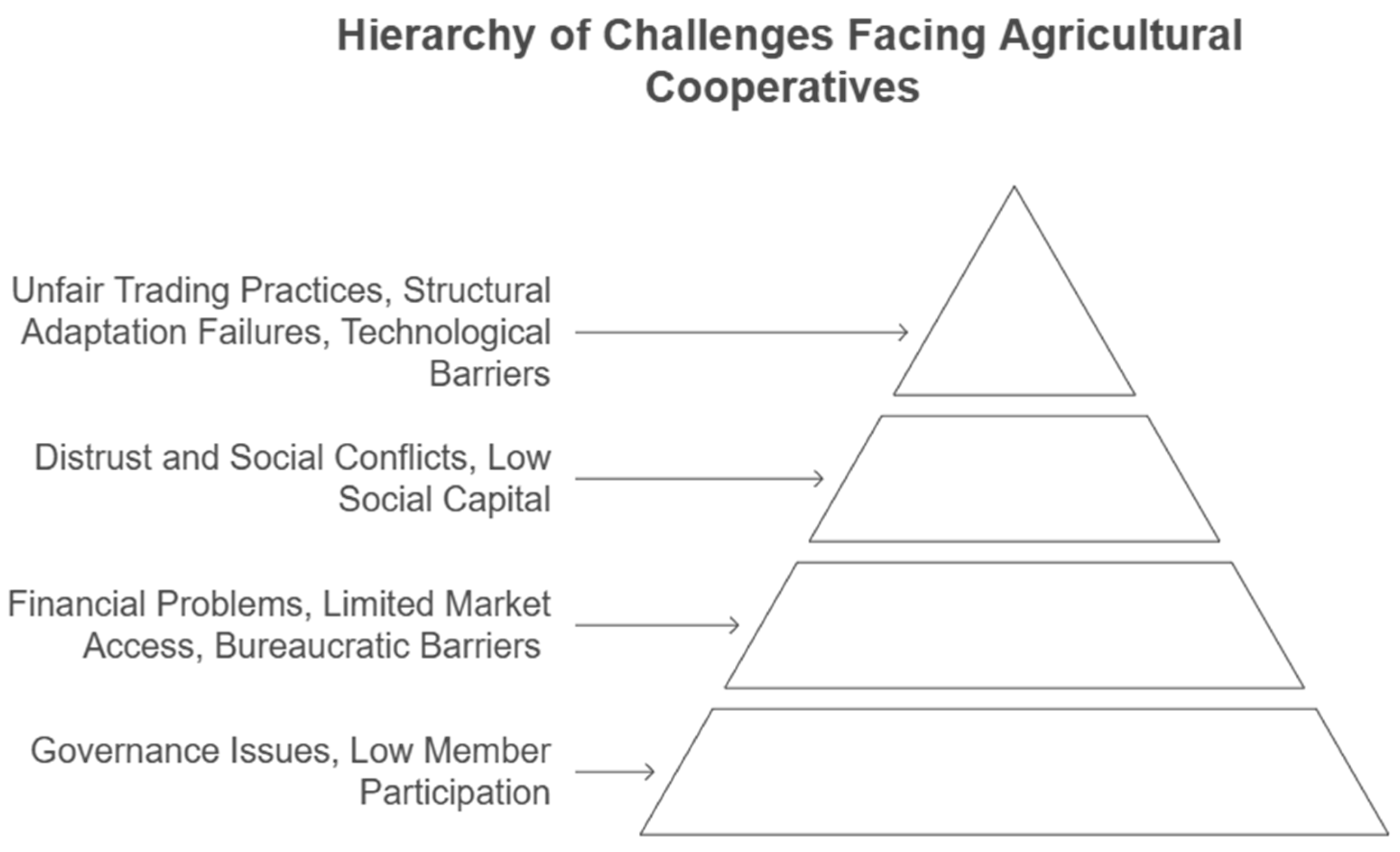
Figure 1 illustrates a hierarchy of issues encountered by agricultural cooperatives using a pyramid form. Thematic significance was derived using a weighted approach based on three converging dimensions: (a) frequency of mention in interviews, (b) representation in the recent peer-reviewed literature, and (c) perceived impact as qualitatively articulated by interviewees. Each dimension was standardized to a 0–1 scale, and an average composite score was computed for each theme. This technique guaranteed that the ranking represented both empirical saturation and conceptual significance through triangulated evidence weighting.
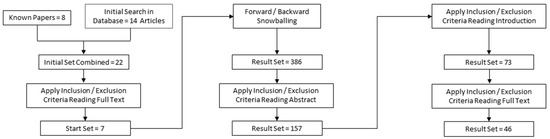
Figure 1.
Flowchart of the snowballing literature review process.
While Figure 2 provides a useful visual hierarchy for prioritizing cooperative challenges, it must be acknowledged that such a representation has inherent limitations in depicting causality. The framework may inadvertently imply a linear and deterministic relationship, with governance and participation automatically producing higher-level failures in finance, markets, and regulation. In practice, however, these relationships are multidirectional, characterized by feedback loops and mutual reinforcement. Financial instability can weaken governance just as much as governance deficiencies can create financial mismanagement, while external regulatory pressures may directly affect member participation and trust. Moreover, the pyramid is static and cannot fully capture the dynamic nature of cooperative development, where the relative weight of obstacles shifts over time in response to climatic shocks, policy reforms, or market disruptions. Its hierarchical form also risks masking contextual variation across cooperatives, since challenges are neither uniform nor universally ordered but are mediated by socio-economic, institutional, and cultural specificities. For this reason, the pyramid should not be interpreted in isolation but rather in conjunction with the broader analysis presented in the study, which provides the necessary depth and nuance to understand these interdependencies.
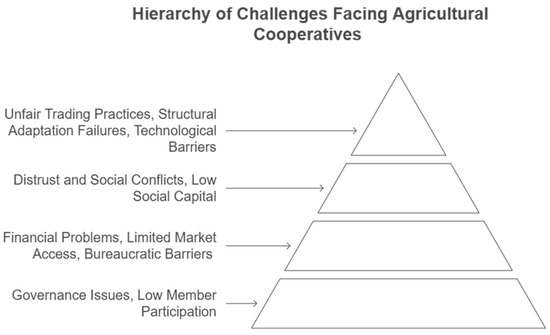
Figure 2.
Triangulated thematic ranking: the pyramid of obstacles.
The identification of governance inefficiencies and limited member engagement at the base of the pyramid is substantiated both empirically and conceptually via triangulated data obtained from expert interviews, thematic analysis, and the contemporary literature. In our research, these two difficulties were the most often referenced by respondents and were characterized as fundamentally obstructing other facets of cooperative functioning. Participants directly linked inadequate governance to procedural stagnation, insufficient transparency, and vulnerability to internal opportunism, all of which undermine cooperative flexibility and the quality of decision-making. Likewise, less member involvement was regularly linked to centralized power, democratic decline, and member disengagement, which subsequently resulted in trust deficiencies and social fragmentation. These conclusions are robustly supported by contemporary research. Benos et al. assert that inadequate governance promotes internal opportunism and disrupts economic cooperation within cooperatives [14]. Jamaluddin et al. assert that participatory deficits undermine cooperative resilience by diminishing member control and ownership [16]. Sergaki et al. contend that sustained cooperative entrepreneurship is unachievable without concurrent governance change and dynamic membership structures [41]. Recent contributions confirm that governance and participation are not only thematic categories but causal levers, whose failure triggers dysfunction in financial, market, and policy domains. Consequently, their positioning at the pyramid’s base signifies both empirical saturation in the data and the structural rationale of failure recognized in the latest cooperative studies. Insufficient governance and limited participation lead to financial mismanagement, reduced social capital, and internal discord—factors that undermine trust and unity among members. This adversely impacts higher-level domains, including market access, innovative capability, and the implementation of sustainable practices. The combination of these interrelated difficulties threatens the general sustainability of the cooperative. The pyramid figuratively illustrates that sustainability is compromised not only by individual issues but by a systematic aggregation of deficiencies, starting with fundamental structural and participative inadequacies. These challenges jeopardize both the viability of the cooperative operation and the sustainability and economic stability of individual member farms.
4. Discussion
The findings of this study demonstrate that challenges in governance and participation are not isolated management failures but structural outcomes of institutional misalignment. Drawing from institutional economics, these challenges reflect unresolved principal–agent dynamics, high member disengagement costs, and low formal incentive alignment. They are further shaped by persistent gender imbalances in leadership, which reduce inclusiveness and weaken the diversity of perspectives necessary for adaptive governance. From the perspective of resilience theory, the failure of cooperatives to withstand shocks or restructure under stress signifies a reduced adaptive capability, especially when leadership is centralized and member input is lacking. This implies that the limitations observed are not merely functional or behavioral, but are embedded in the design and evolution of cooperative models. Within the framework of food systems governance, these internal constraints inhibit cooperatives from engaging in deliberative processes about agri-food policy, hence maintaining their marginalization in sustainable transitions. In other words, internal dysfunctions within cooperatives are closely tied to broader political–economic structures that limit their transformative potential. To address these persistent barriers, it is essential to understand that cooperative reform cannot follow a one-size-fits-all model. Each cooperative must be restructured in a way that aligns with the specific socio-cultural context, historical conditions, and local production patterns of the region in which it operates. Models of governance must be sensitive to local realities and not imposed uniformly from above.
At the same time, the phenomenon of “clientelist practices” must be decisively addressed. Cooperatives should move away from the election of individuals based solely on personal agendas. Leadership selection must be based on professional competence, strategic vision, and the ability to design and implement long-term sustainability plans. Without disrupting clientelist norms and introducing meritocratic criteria, cooperatives will remain entrapped in cycles of inefficiency and stagnation.
Climate adaptation in agricultural cooperatives has to go beyond mere ideological vows to “resilience” and concentrate on the implementation of real, data-driven solutions that enable cooperatives to foresee, react to, and recover from climate disturbances. In order to plan data-driven solutions, it is essential that the sustainability performance of cooperatives is measured holistically across all three pillars using specific and verifiable indicators. This is already a common practice in other corporations, where ESG performance is assessed through measurable indicators and publicly reported. Cooperatives should move in the same direction, adopting transparent and standardized sustainability metrics. Without comprehensive assessment methods, claims of sustainability may devolve into mere symbolic gestures rather than actual practices. Numerous cooperatives across southern Europe are deficient in climate risk insurance, digital infrastructure, and agro-climatic forecasting systems. Moreover, adaptation methods including drought-resistant crop varieties, rotational irrigation strategies, and mobile meteorological stations are little employed owing to financial deficiencies, technical illiteracy among older individuals, and inadequate legislative incentives. These climate-specific barriers disproportionately affect smallholders, who often lack insurance mechanisms, access to forecasting tools, and the financial capacity to adopt advanced technologies. Embedding climate-risk assessment tools, such as seasonal forecasting, drought monitoring, and climate vulnerability mapping, into cooperative planning would provide data-driven decision-making capacity. Co-financed investments in water-efficient infrastructure, renewable energy, and digital traceability systems would further enhance climate resilience while strengthening competitiveness. Adaptation in cooperatives often relies more on social capital and leadership initiative than on formal institutional assistance. This highlights the need for national policy frameworks to integrate climate adaptation into cooperative governance, supported by mechanisms such as subsidized climate-smart technology, customized training programs, and prioritized access to resilience-oriented credit lines. Significantly, adaptation could be seen as a governance matter. Cooperatives characterized by decentralized leadership and gender-inclusive decision-making frameworks had a greater propensity to anticipate member needs, coordinate intersectoral responses, and participate in post-disaster negotiations with regional authorities. This suggests that gender inclusion is not only a matter of equity but a practical driver of climate resilience, enabling cooperatives to design strategies that are more responsive to diverse member realities.
Policy interventions designed to enhance agricultural cooperatives must transcend general support rhetoric and adopt specific, instrument-level strategies. A primary focus is the provision of climate-smart credit guarantees, particularly designed for cooperatives engaging in adaptive technology, including drought-resistant cultivars, water-efficient irrigation systems, and renewable energy infrastructure. In parallel, collective investment funds could be created within cooperatives to finance innovation and biodiversity projects, while resilience-oriented insurance schemes tailored to agricultural cooperatives would help buffer against climatic shocks and market volatility. To enhance good governance and democratic involvement, performance-based subsidies should be established, expressly tied to quantifiable metrics such as member participation rates, gender-balanced leadership, and the execution of transparent financial accounting systems. Concrete mechanisms could include governance scorecards that assess transparency, frequency of board meetings, rotation of leadership, and inclusiveness, alongside mandatory independent audits of both finances and governance practices. The introduction of digital voting platforms would further ensure accountability and wider member participation, reducing clientelist practices and enhancing trust. The compulsory implementation of Unfair Trading Practices (UTPs) regulation, as specified in EU Directive 2019/633, necessitates the establishment of compliance measures particular to cooperatives, which should include advising services and legal assistance designed for smallholder-dominated organizations. Targeted tax incentives should be implemented for cooperatives that invest in digital traceability technologies, logistics modernization, and e-commerce platforms, therefore enhancing value chain transparency and improving competitiveness in volatile agri-food markets. Participating in policy dialogues and advocating for enhanced cooperative safeguards against inequitable trading practices can contribute to establishing a more equitable competitive environment. Policymakers should focus on reducing trade barriers to enhance agricultural productivity and food security.
The primary difficulty for cooperatives is balancing democratic member control with operational efficiency. This research demonstrates that disengaged governance frameworks impair collaborative decision-making, diminish trust, and decrease adaptive ability. Hybrid governance models, in which democratic oversight by the general membership is strategically balanced with delegated managerial autonomy, could be the solution to institutional rigidity. These mixed structures aim to alleviate the inefficiencies often linked to excessively centralized or excessively democratic government, particularly in environments where market responsiveness and innovation are vital for competitiveness. Enhancing governance structures will enable cooperatives to be more adaptable and proficient in addressing market demands [41]. Basterretxea et al. emphasize that the co-existence of two distinct organizational realms—member control and managerial expertise—requires careful equilibrium to guarantee both member engagement and operational efficiency [42]. Practical improvements may include rotating leadership requirements, accountability scorecards for board members, and the institutionalization of inclusive voting processes via digital platforms.
Non-governmental organizations may function as knowledge intermediates and facilitators at the field level by providing extensive training in climate adaptation, financial literacy, and digital governance. Moreover, they are uniquely equipped to close the horizontal learning gap across cooperative sectors by facilitating peer-exchange platforms and translocal cooperative networks that promote reciprocal learning. NGOs must enhance their lobbying for legislative and institutional changes, especially in areas where the cooperative legal framework is immature, lacks gender sensitivity, or is administratively cumbersome. It is essential that they include the perspectives of grassroots members, particularly women, youth, and disadvantaged producers, in national cooperative growth initiatives.
5. Conclusions
This research underscores the pressing necessity for further investigation into cooperative sustainability. The scarcity of contemporary studies on cooperative failure indicates a deficiency in the academic literature, resulting in policymakers, cooperative leaders, and academics possessing an inadequate comprehension of how to effectively foster cooperative success. Future research should concentrate on discovering scalable methods for cooperative governance change, financial innovation, and competitive market positioning [43]. Furthermore, additional empirical research is required to investigate the function of cooperatives in climate change adaptation and biodiversity conservation.
As shown in this study, cooperatives possess the capacity to act as significant catalysts for food security, climate resilience, and biodiversity preservation. Nonetheless, in the absence of substantive changes and focused assistance from politicians, NGOs, and international organizations, they will persist in encountering structural obstacles that hinder their capacity to perform these essential functions. Resolving these difficulties necessitates a collaborative effort among multiple stakeholders that integrates internal cooperative reform with external governmental assistance and market integration measures.
Finally, we seek to recognize the limitations of the presented research. The triangulated thematic ranking method employed offers a systematic framework for examining cooperative inefficiencies; however, certain constraints must be acknowledged. The inherent subjectivity of thematic analysis might affect the categorization of challenges, while the restricted sample size of expert interviews may not fully represent the diversity of cooperative experiences across regions. Although the snowball review process broadens the range of literature analyzed, it depends on citation chains, which may exclude relevant but less-cited studies.
The weighted ranking system, while beneficial for prioritization, does not capture contextual subtleties such as disparities in governance frameworks, regulatory landscapes, or market situations. In addition, reliance on transcript-based analysis omits non-verbal cues that could yield deeper insights. Future research may strengthen validity by triangulating thematic analysis with observational data and longitudinal investigations.
The research focuses on European cooperatives, as a comparison with non-European ones would be inequitable due to cultural and socioeconomic differences. It is essential to recognize that no single governance model is universally applicable. Every cooperative functions within a distinct framework of social, economic, and organizational circumstances. Cooperatives situated in areas with similar socio-economic, cultural, and institutional traits may face analogous issues and may therefore benefit from context-specific, locally customized tactics. Subsequent studies need to expand upon this groundwork by using comparative, cross-regional techniques that include both qualitative and quantitative instruments to investigate the evolution of cooperative governance in varied contexts.
Author Contributions
Conceptualization, M.P. and P.S.; methodology, N.K.; validation, P.S., N.K., S.A.N., and C.S.; formal analysis, M.P.; investigation, M.P.; resources, P.S., N.K., and S.A.N.; data curation, M.P.; writing—original draft preparation, M.P.; writing—review and editing, P.S., N.K., S.A.N., and C.S.; visualization, M.P.; supervision, P.S.; project administration, P.S.; funding acquisition, C.S. All authors have read and agreed to the published version of the manuscript.
Funding
This research received no external funding.
Institutional Review Board Statement
Ethical review and approval were not required for this study due to legal regulations. The study was conducted in accordance with Article 89 of the General Data Protection Regulation (EU) 2016/679 and the national implementation law in Greece, Law 4624/2019, which govern the protection of personal data and specify that research not processing identifiable personal data does not require ethical review.
Informed Consent Statement
Informed consent for participation was obtained from all subjects involved in the study.
Data Availability Statement
The data presented in this study are available on request from the corresponding author.
Conflicts of Interest
The authors declare no conflicts of interest.
References
- Mindlin, Y.; Novikov, M.; Ignatyeva, O. Clusters and Cooperatives as a Tool of Sustainable Food Security: A Comparative Analysis. IOP Conf. Ser. Earth Environ. Sci. 2022, 1043, 012038. [Google Scholar] [CrossRef]
- Imami, D.; Valentinov, V.; Skreli, E.; Zhllima, E.; Gjeci, G.; Canaj, E. Food Safety and Value Chain Coordination in the Context of a Transition Economy: The Role of Agricultural Cooperatives. Int. J. Commons 2021, 15, 21–34. [Google Scholar] [CrossRef]
- Kirezieva, K.; Bijman, J.; Jacxsens, L.; Luning, P.A. The Role of Cooperatives in Food Safety Management of Fresh Produce Chains: Case Studies in Four Strawberry Cooperatives. Food Control 2016, 62, 299–308. [Google Scholar] [CrossRef]
- Guerreschi, A.; Zecca, E. Green Coops: Drivers of Innovation for Circular Strategies among Italian Cooperatives. Ecol. Econ. 2025, 227, 108432. [Google Scholar] [CrossRef]
- Cogeca. Agri-Cooperatives Monitor; Raiffeisen: Brussels, Belgium, 2024; Available online: https://www.raiffeisen.de/sites/default/files/2024-11/Brosch%C3%BCre_Der%20Europ%C3%A4ische%20Genossenschaftsverband%20Copa-Cogeca%20ver%C3%B6ffentlichte%20eine%20Brosch%C3%BCre%20zum%20Thema%20Genossenschaften%20der%20Agrar-%20und%20Ern%C3%A4hrungswirtschaft%20schaffen%20nachhaltige%20L%C3%B6sungen%20f%C3%BCr%20Landwirte%2C%20Partner%20und%20Konsumenten.pdf (accessed on 1 March 2025).
- IPCC. Climate Change 2022: Impacts, Adaptation and Vulnerability. Contribution of Working Group II to the Sixth Assessment Report of the Intergovernmental Panel on Climate Change; Cambridge University Press: Cambridge, UK, 2022; Available online: https://www.ipcc.ch/report/ar6/wg2/ (accessed on 2 January 2025).
- FAO. The State of Food Security and Nutrition in the World 2023: Urbanization, Agrifood Systems Transformation and Healthy Diets Across the Rural–Urban Continuum; Food and Agriculture Organization of the United Nations: Rome, Italy, 2023. [Google Scholar] [CrossRef]
- García-Díez, J.; Gonçalves, C.; Grispoldi, L.; Cenci-Goga, B.; Saraiva, C. Determining Food Stability to Achieve Food Security. Sustainability 2021, 13, 7222. [Google Scholar] [CrossRef]
- Chan, H.Y.; Abdul Halim-Lim, S.; Tan, T.B.; Kamarulzaman, N.H.; Jamaludin, A.A.; Wan-Mohtar, W.A. Exploring the Drivers and the Interventions towards Sustainable Food Security in the Food Supply Chain. Sustainability 2020, 12, 7890. [Google Scholar] [CrossRef]
- Ribašauskienė, E.; Šumylė, D.; Volkov, A.; Baležentis, T.; Streimikienė, D.; Morkunas, M. Evaluating Public Policy Support for Agricultural Cooperatives. Sustainability 2019, 11, 3769. [Google Scholar] [CrossRef]
- Chander, P. Subgame-Perfect Cooperative Agreements in a Dynamic Game of Climate Change. J. Environ. Econ. Manag. 2017, 84, 173–188. [Google Scholar] [CrossRef]
- Novkovic, S.; Puusa, A.; Miner, K. Co-operative Identity and the Dual Nature: From Paradox to Complementarities. J. Coop. Organ. Manag. 2022, 10, 100162. Available online: https://www.sciencedirect.com/science/article/pii/S2213297X21000343 (accessed on 20 May 2025). [CrossRef]
- Feng, X.; Chen, J.; Mao, Z.; Peng, Y.; Zailani, S. Exploring Determinants of and Barriers to Climate-Smart Agricultural Technologies Adoption in Chinese Cooperatives: A Hybrid Study. Agriculture 2024, 15, 1005. [Google Scholar] [CrossRef]
- Benos, T.; Sergaki, P.; Kalogeras, N. When Less Is Not More: Restraining Internal Opportunistic Behavior in Cooperatives. J. Co-Oper. Organ. Manag. 2025, 13, 100260. [Google Scholar] [CrossRef]
- Tamayo, R.T.; Montenegro, D.L. Tackling Financial Management Challenges to Build a Resilient Future. J. Financ. Manag. Sci. 2025, 11, 3168–3180. [Google Scholar]
- Jamaluddin, F.; Saleh, N.M.; Abdullah, A.; Hassan, M.S.; Hamzah, N.; Jaffar, R.; Aziz, S.A.A.G.; Embong, Z. Cooperative Governance and Cooperative Performance: A Systematic Literature Review. SAGE Open 2023, 13, 21582440231192944. [Google Scholar] [CrossRef]
- Canadian Centre for the Study of Co-operatives. Top Co-op Issues 2021: A Research Update from the Canadian Centre for the Study of Co-Operatives; University of Saskatchewan: Saskatoon, SK, Canada, 2022. [Google Scholar]
- Kalogiannidis, S.; Karafolas, S.; Chatzitheodoridis, F. The Key Role of Cooperatives in Sustainable Agriculture and Agrifood Security: Evidence from Greece. Sustainability 2024, 16, 7202. [Google Scholar] [CrossRef]
- Novković, S.; Šimleša, D. Measuring Transformational Impact of Cooperatives. In Humanistic Governance in Democratic Organizations; Novković, S., Ed.; Humanism in Business Series; Springer: Cham, Switzerland, 2023; pp. 423–440. [Google Scholar] [CrossRef]
- Agyekumhene, A.; Duku, C.; Tadesse, L.; Andersson, C.I.M. Obstacles to Effective Strategy Implementation: Insights from Agricultural Cooperatives in Developing Countries. J. Co-Oper. Organ. Manag. 2022, 10, 100189. [Google Scholar] [CrossRef]
- Ryan, C.; Vanderburg, M.; Chugh, R.; Johnston, K.; Clapperton, R.; Bond, K.; Flanders, M.; James, C. Mobile Applications in Nursing Science Education: A Scoping Review with Snowballing Method. Nurse Educ. Today 2024, 138, 106215. [Google Scholar] [CrossRef]
- Ahmed, S.K. Sample Size for Saturation in Qualitative Research: Debates, Definitions, and Strategies. J. Qual. Res. Anal. 2025, 3, 100124. [Google Scholar] [CrossRef]
- Robinson, O.C. Sampling in Interview-Based Qualitative Research: A Theoretical and Practical Guide. Qual. Res. Psychol. 2014, 11, 25–41. [Google Scholar] [CrossRef]
- Babbage, C.M.; Wagner, H.; Dowthwaite, L.; Portillo, V.; Perez, E.; Fischer, J. Exploring Individual’s Public Trust in the NHS Test and Trace System—A Pragmatic Reflexive Thematic Analysis. Internet Interv. 2024, 36, 100740. [Google Scholar] [CrossRef]
- Cook, M.L.; Burress, M.J. The Impact of CEO Tenure on Cooperative Governance. Manag. Decis. Econ. 2013, 34, 218–229. [Google Scholar] [CrossRef]
- Bunders, H.; de Moor, J. Paradoxical Tensions as a Double-Edged Sword: Analysing the Development of Platform Cooperatives in Europe. Organ. Stud. 2023, 44, 1021–1045. [Google Scholar] [CrossRef]
- Liang, Q.; Hendrikse, G. Cooperative CEO Identity and Efficient Governance: Member or Outside CEO. Agribusiness 2013, 29, 23–38. [Google Scholar] [CrossRef]
- Giannakas, K.; Fulton, M.; Sesmero, J. Horizon and Free-Rider Problems in Cooperative Organizations. J. Agric. Resour. Econ. 2016, 41, 372–392. [Google Scholar]
- van Dijk, G.; Sergaki, P.; Baourakis, G. The Cooperative Enterprise: Practical Evidence for a Theory of Cooperative Entrepreneurship; Springer: Cham, Switzerland, 2019; p. 44. [Google Scholar]
- Beverland, M. Can Cooperatives Brand? Exploring the Interplay Between Cooperative Structure and Sustained Brand Marketing Success. Food Policy 2007, 32, 480–495. [Google Scholar] [CrossRef]
- Markelova, H.; Mwangi, E. Collective Action for Smallholder Market Access: Evidence and Implications for Africa. Rev. Policy Res. 2010, 27, 621–640. [Google Scholar] [CrossRef]
- Mérel, P.R.; Saitone, T.L.; Sexton, R.J. Cooperatives and Quality-Differentiated Markets: Strengths, Weaknesses, and Modeling Approaches. J. Rural Coop. 2009, 37, 201–224. [Google Scholar]
- Benos, T.; Sergaki, P.; Kalogeras, N. The Effect of Unfair Trading Practices on the Performance of Agricultural Cooperatives. Proceedings 2024, 94, 5. [Google Scholar] [CrossRef]
- EU Directive 2019/633. The European Parliament and of the Council of 17 April 2019 on Unfair Trading Practices in Business-to-Business Relationships in the Agricultural and Food Supply Chain. Available online: https://eur-lex.europa.eu/eli/dir/2019/633/oj/eng (accessed on 23 August 2025).
- Di Marcantonio, F.; Havari, E.; Colen, L.; Ciaian, P. Do Producer Organizations Improve Trading Practices and Negotiation Power for Dairy Farms? Evidence from Selected EU Countries. Agric. Econ. 2022, 53, 121–137. [Google Scholar] [CrossRef]
- Fulton, M.; Giannakas, K. Organizational Commitment in a Mixed Oligopoly: Agricultural Cooperatives and Investor-Owned Firms. Am. J. Agric. Econ. 2001, 83, 1258–1265. [Google Scholar] [CrossRef]
- Sebhatu, K.T.; Gezahegn, T.W.; Berhanu, T.; Maertens, M.; Van Passel, S.; D’Haese, M. Exploring Variability Across Cooperatives: Economic Performance of Agricultural Cooperatives in Northern Ethiopia. Int. Food Agribus. Manag. Rev. 2021, 24, 397–419. [Google Scholar] [CrossRef]
- Fulton, M.E.; Hueth, B. Cooperative Conversions, Failures, and Restructurings: An Overview. J. Coop. 2009, 23, i–xi. [Google Scholar]
- Ortiz-Miranda, D.; Moreno-Pérez, O.M.; Moragues-Faus, A. Innovative Strategies of Agricultural Cooperatives in the Framework of the New Rural Development Paradigms: The Case of the Region of Valencia (Spain). Environ. Plan. A 2010, 42, 661–677. [Google Scholar] [CrossRef]
- Höhler, J.; Kühl, R. Dimensions of Member Heterogeneity in Cooperatives and Their Impact on Organization—A Literature Review. Ann. Public Coop. Econ. 2018, 89, 697–712. [Google Scholar] [CrossRef]
- Sergaki, P.; Kontogeorgos, A.; Ntrinias, T.; Lainas, S. Governance and Entrepreneurship of Cooperative Enterprises; Kallipos, Open Academic Editions: Athens, Greece, 2023. [Google Scholar] [CrossRef]
- Basterretxea, I.; Cornforth, C.; Heras-Saizarbitoria, I. Corporate Governance as a Key Aspect in the Failure of Worker Cooperatives. Ann. Public Coop. Econ. 2020, 91, 435–458. [Google Scholar] [CrossRef]
- Staboulis, C.; Natos, D.; Mattas, K. Estimating the Impact of Trade Costs on Agricultural Productivity. Int. J. Food Syst. Dyn. 2019, 10, 278–286. [Google Scholar] [CrossRef]
Disclaimer/Publisher’s Note: The statements, opinions and data contained in all publications are solely those of the individual author(s) and contributor(s) and not of MDPI and/or the editor(s). MDPI and/or the editor(s) disclaim responsibility for any injury to people or property resulting from any ideas, methods, instructions or products referred to in the content. |
© 2025 by the authors. Licensee MDPI, Basel, Switzerland. This article is an open access article distributed under the terms and conditions of the Creative Commons Attribution (CC BY) license (https://creativecommons.org/licenses/by/4.0/).