Article

Multi-Objective Optimal Power Flow Analysis Incorporating Renewable Energy Sources and FACTS Devices Using Non-Dominated Sorting Kepler Optimization Algorithm


by
Mokhtar Abid
1,
Messaoud Belazzoug
1,
Souhil Mouassa
2,3,*,
Abdallah Chanane
1 and
Francisco Jurado
3
1
LabSET, Automatic and Electrical Engineering Department, University of Blida 1, Blida 09000, Algeria
2
Department of Electrical Engineering, University of Bouira, Bouira 10000, Algeria
3
Department of Electrical Engineering, EPS Linares, University of Jaén, 23700 Jaén, Spain
*
Author to whom correspondence should be addressed.
Sustainability 2024, 16(21), 9599; https://doi.org/10.3390/su16219599
Submission received: 6 September 2024 / Revised: 26 October 2024 / Accepted: 29 October 2024 / Published: 4 November 2024
(This article belongs to the Section Energy Sustainability)

Abstract

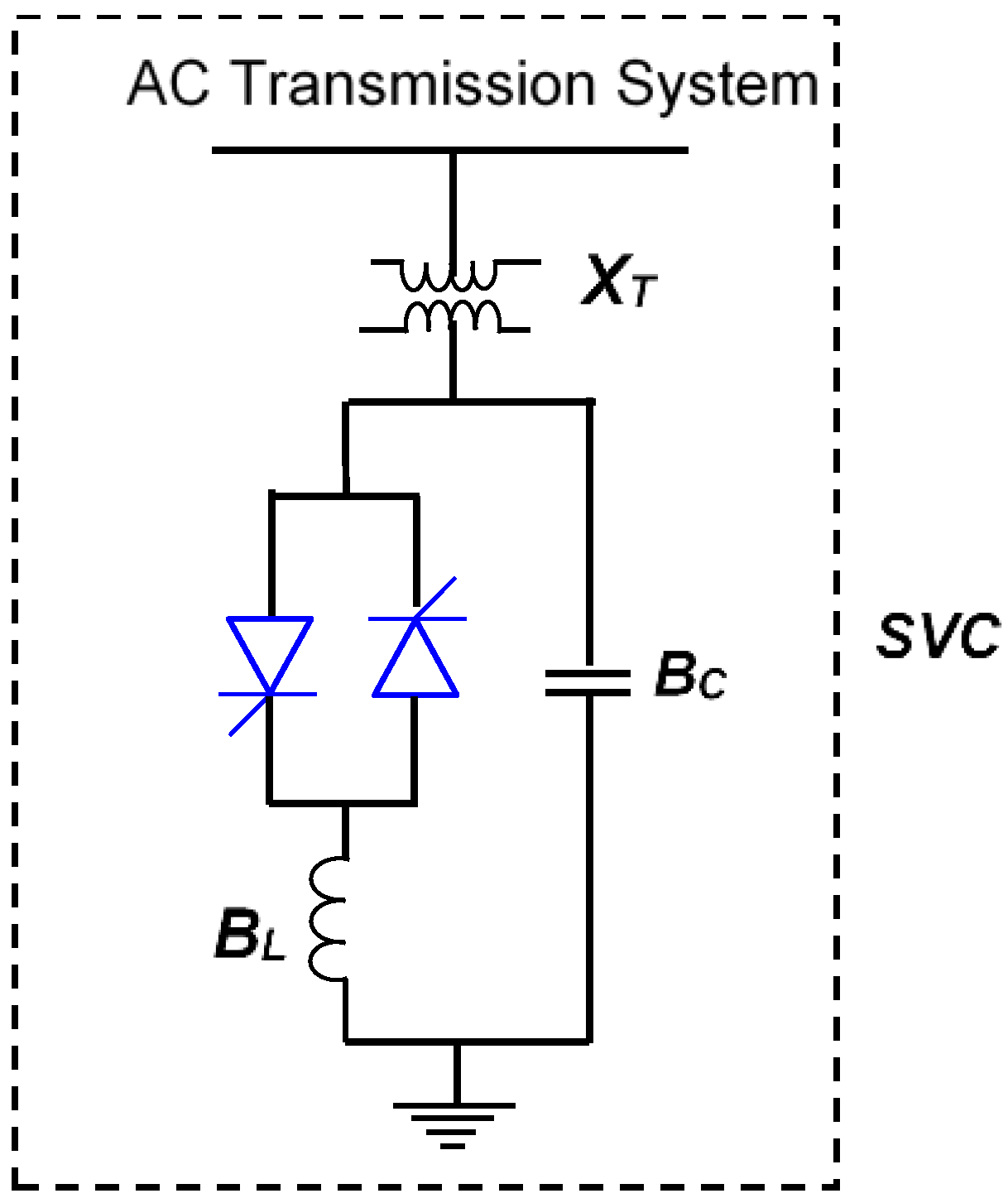
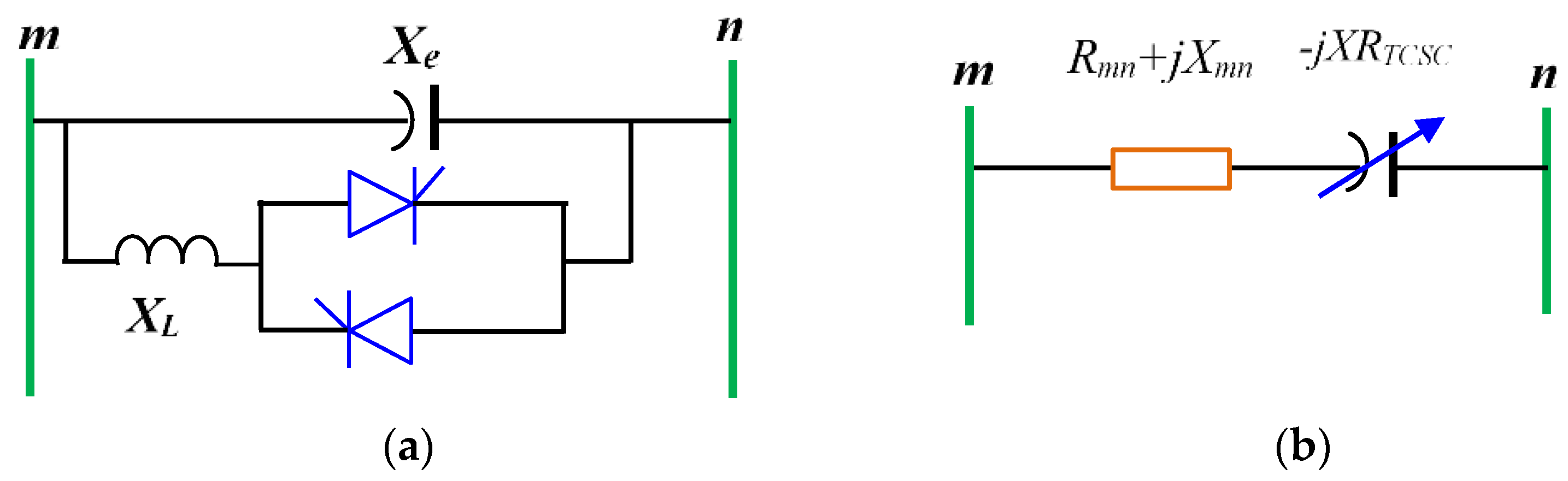
In the rapidly evolving landscape of electrical power systems, optimal power flow (OPF) has become a key factor for efficient energy management, especially with the expanding integration of renewable energy sources (RESs) and Flexible AC Transmission System (FACTS) devices. These elements introduce significant challenges in managing OPF in power grids. Their inherent variability and complexity demand advanced optimization methods to determine the optimal settings that maintain efficient and stable power system operation. This paper introduces a multi-objective version of the Kepler optimization algorithm (KOA) based on the non-dominated sorting (NS) principle referred to as NSKOA to deal with the optimal power flow (OPF) optimization in the IEEE 57-bus power system. The methodology incorporates RES integration alongside multiple types of FACTS devices. The model offers flexibility in determining the size and optimal location of the static var compensator (SVC) and thyristor-controlled series capacitor (TCSC), considering the associated investment costs. Further enhancements were observed when combining the integration of FACTS devices and RESs to the network, achieving a reduction of 6.49% of power production cost and 1.31% from the total cost when considering their investment cost. Moreover, there is a reduction of 9.05% in real power losses (RPLs) and 69.5% in voltage deviations (TVD), while enhancing the voltage stability index (VSI) by approximately 26.80%. In addition to network performance improvement, emissions are reduced by 22.76%. Through extensive simulations and comparative analyses, the findings illustrate that the proposed approach effectively enhances system performance across a variety of operational conditions. The results underscore the significance of employing advanced techniques in modern power systems enhance overall grid resilience and stability.
Keywords: renewable energy; OPF; multi-objective optimization; NS-Kepler optimization algorithm; FACTS devices renewable energy; OPF; multi-objective optimization; NS-Kepler optimization algorithm; FACTS devices