


Abstract
This study underscores the crucial role of architectural education and oversight in managing reused historic houses as tourist accommodations in a sustainable manner. It employs a unique methodology to establish authenticity and sustainability principles in conservation and tourism development, specifically in the reused accommodation business, and to analyze the strengths and weaknesses of current practices in Iran. Focusing on two reused houses in Isfahan City, which were honored in the conservation category of the Memar Awards, the most prestigious Iranian architecture award, this study assesses and contrasts their post-conservation life under the influence of architect and non-architect managers. Data were collected through on-site observations, documentation reviews, and questionnaires and then evaluated using a mixed-methods approach that complies with the criteria set by the International Council on Monuments and Sites (ICOMOS) and the Global Sustainable Tourism Council (GSTC). This study’s findings both emphasize the significance of management’s impact on preserving and enhancing conservation outcomes and identify the primary factors contributing to the unsustainability and failure of this project in Iran. As a result, a model has been developed for a successful project of this type to preserve the values of cultural heritage buildings and their surroundings, if effectively implemented. This model applies to similar cases in different contexts, making this study’s findings highly relevant and valuable.
1. Introduction
As the tourism industry expands, the reuse of cultural heritage buildings for various purposes is becoming more prevalent. However, there is a noticeable lack of comprehensive research on the primary deficiencies in such practices, particularly in developing countries [1]. In the face of new trends and competition in the global tourism market, more cultural heritage buildings are being transformed into accommodations. Yet, the issues of authenticity, which pertains to the original design, materials, and historical significance, and sustainability criteria are not always fully considered [2]. This project poses specific challenges in Iran due to the lack of required expertise, resources, investment, and partnership [1]. This study, therefore, presents a timely and much-needed exploration of these issues, offering fresh insights and potential solutions that are highly relevant to the current state of reusing Iranian houses as accommodations. These potential solutions, if implemented, can pave the way for a sustainable and authentic tourism industry.
The recent climate and environmental changes, coupled with unsustainable developments in Iran, have accelerated the deterioration of Iranian cultural heritage. However, private investors have initiated a new wave of conservation influenced by global trends in cultural heritage. In the 1990s, the reuse of centuries-old historic houses to generate tourism revenue began in Isfahan, a leading destination in Iran [3]. Today, more historic houses in the old residential neighborhoods of Iranian tourist cities are finding a new life as accommodations. While cultural tourism significantly contributes to the economy, adopting sustainable development principles is not just a choice but an imperative to prevent adverse impacts on the cultural legacy. The interplay between cultural heritage and sustainable development necessitates projects to achieve a high level of performance to preserve the cultural legacy and enhance its attractiveness through successful strategies [4,5,6].
Cultural heritage preservation comes at a high cost, and it has been recognized that the private sector’s involvement and the government’s prioritization of tourism are key to boosting the industry and maintaining Iran’s rich history and culture. The Iran Ministry of Cultural Heritage, Tourism, and Handicrafts (MCTH) has implemented a new policy that involves privatizing cultural heritage buildings and engaging people in their conservation and management for new functions. Accordingly, any property with architectural and historical values can be converted into a tourist accommodation [7,8,9]. However, this project has little architectural information, education, and supervision based on the international heritage conservation and the sustainable accommodation industry criteria. This has allowed private investors to obtain a hotel license and apply their design preferences to heritage properties while adapting them to tourist accommodations, leading to the loss of their authentic features due to the abovementioned necessities. Although cultural tourism has become essential in Iran, few studies have been conducted on sustainable developments in its heritage sites [10].
Repurposing historic houses for touristic lodging presents an opportunity to enrich guests’ experiences while celebrating the architectural values of reused accommodations and their cultural surroundings. However, this complex project demands a comprehensive methodological approach to balance the tourism market needs and the preservation of natural and cultural heritage. The potential impact of successfully implementing these recommendations is immense, not only in terms of preserving cultural heritage but also in creating a sustainable and thriving tourism industry in Iran.
The urge to establish and activate ICOMOS in Iran and protect Iranian cultural heritage against deteriorating agents was emphasized in a document published by ICOMOS in 2001 [11]. ICOMOS Iran was established in the same year. It started its activities in 2002 to promote the research, study, and introduction of historic buildings and sites and their maintenance, protection, revival, and restoration at the national level [12]. However, this entire wealth is in decline due to a lack of proper planning and standards, scientific relations with overseas institutions, education and training on heritage conservation, adaptive reuse, and sustainable development, as well as the non-implementation of existing norms and regulations.
The adaptive reuse of historic houses is highly relevant because it helps revitalize many abandoned houses that dot Iranian city centers. Iranian houses need great attention and care to regain and express their glory and the essence of life. Their management must consider a variety of parameters to preserve their historical, architectural, social, economic, and other values.
This study seeks to answer this main question: How can the authenticity and sustainability of reused Iranian houses as tourist accommodations be preserved and enhanced long-term?
The “architectural authenticity” and “environmental sustainability” of cultural heritage buildings, the “compatibility” of their new additions/constructions, and the “sustainability” of their management were studied to answer the above question.
Two projects of this type in Isfahan City, presented with the Memar Award in the conservation category, were selected to assess their conservation outcomes and their management’s impact on them. This evaluation was performed based on on-site observations, documentation reviews, questionnaires, and the chosen sources of criteria related to heritage conservation and the sustainable accommodation business. The sources include ICOMOS, a global non-governmental organization dedicated to conserving and protecting cultural heritage, and GSTC, a global authority on sustainable tourism. ICOMOS works to conserve and protect each type of cultural heritage property by promoting applying theory, methodology, and scientific techniques and improving the standards and techniques in heritage preservation [13]. The GSTC industry criteria, created to reach a common understanding of sustainable tourism, are the minimum an accommodation business should aspire to achieve [14]. These criteria assessed the sustainability of the case studies’ management practices.
This study focuses on the continuity of preserving and promoting cultural heritage buildings in tourism and hospitality according to Sustainable Development Goals (SDGs) 9 to 12 and 15 presented in the chosen GSTC industry criteria, especially SDG 11, Sustainable Cities and Communities [15]. The findings of this study will interest scholars, practitioners, and policymakers concerned with sustainable developments in cultural tourism, and future research areas are suggested to explore policy development and influence in such practices.
2. Materials and Methods
2.1. Study Site: Isfahan City and Isfahani Houses
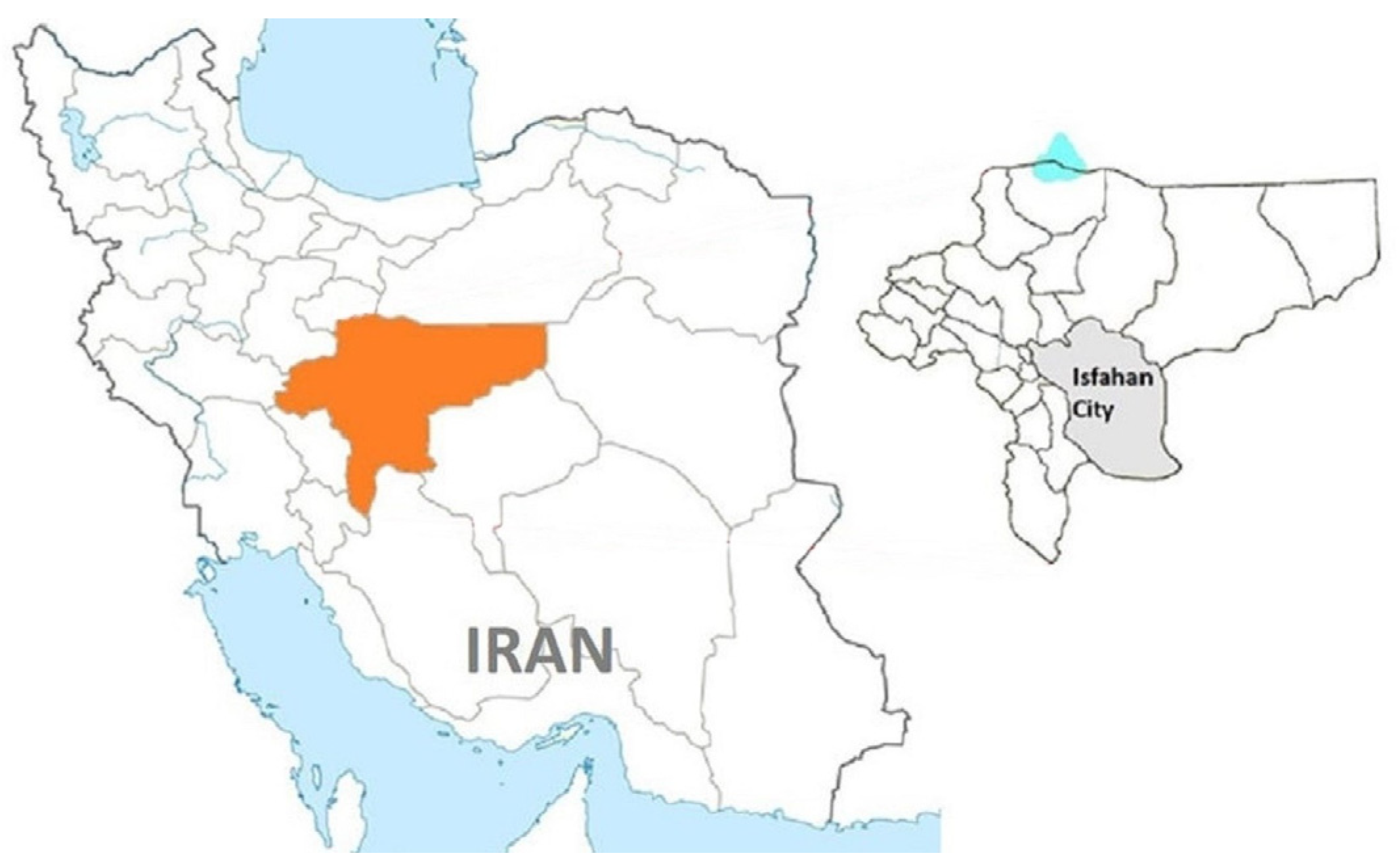
Isfahan, one of Iran’s leading destinations, served as the capital of Persia from 1598 to 1736 [16]. It is home to numerous historical sites such as caravansaries, baths, mosques, bazaars, schools, gardens, bridges, mansions, and houses. The cultural heritage of empires and dynasties that ruled Isfahan from 330 BCE is highly influential in Iran’s tourism industry [17]. It boasts over 22,000 historical buildings and monuments, with 1850 in the national register and 4 registered by UNESCO [7]. Isfahan City’s most prominent features are its historic houses, a great source of attraction reflecting the artistic, architectural, and cultural magnificence of the Safavid (1501–1736), Qajar (1794–1925), and Pahlavi (1925–1979) dynasties. Their considerable historical, social, and local interests represent authentic examples of traditional Iranian architecture [3,18]. Figure 1 shows Isfahan City’s location in Iran’s central desert area.
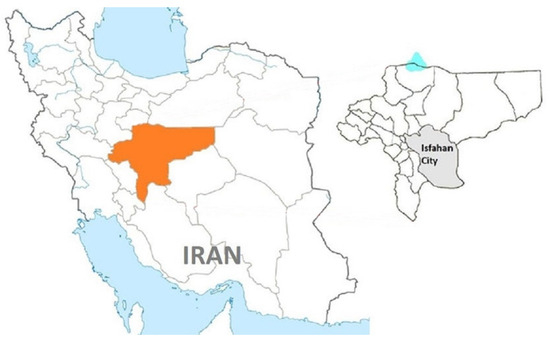
Figure 1.
Location of Isfahan City in Isfahan Province, Iran [19].
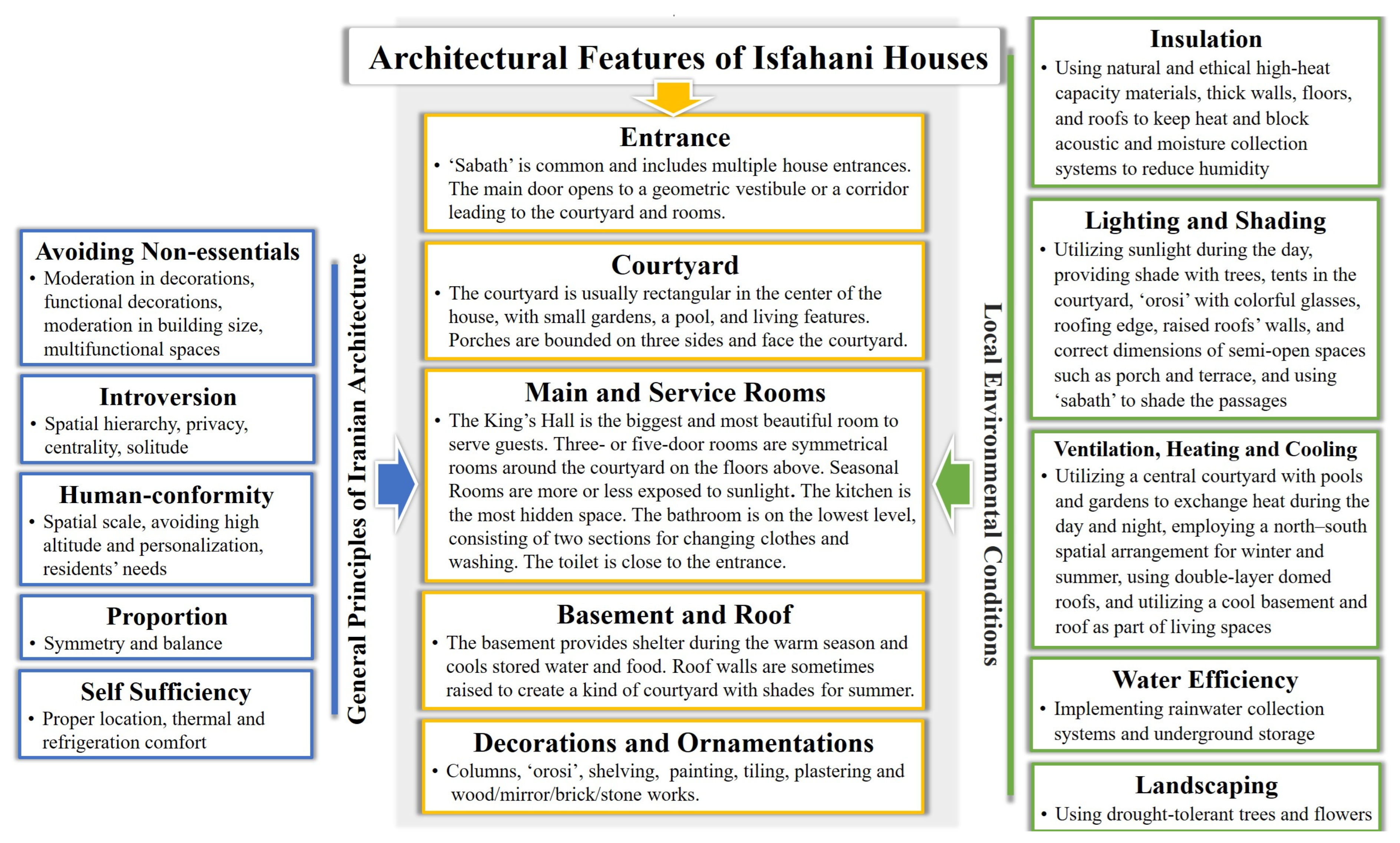
In Iran, the climate has shaped the orientation, spatial organization, form, and type of structure and materials used in elements and components of traditional architecture, as well as the cultural and religious aspects that underpin it. In a hot and dry climate zone, Isfahan is a city steeped in history with a dense and compact context and mostly introverted houses featuring a central courtyard [20]. These courtyard houses adhere to the general principles of traditional Iranian architecture, which are deeply rooted in specific cultural and religious aspects. These principles are applied to individual structures and larger-scale compounds such as neighborhoods and cities, emphasizing privacy and avoiding excessiveness [21,22,23]. In the central desert area of Iran, houses were formed based on finding solutions for the hot weather and extreme environmental conditions according to the general principles of traditional Iranian architecture, which cover various architectural and environmental issues. In the residential architecture of this region, flat and domical double-layer roofs were used to retain warm air and heat the rooms at night. Houses mainly had basements to create a cooler interior as a living space, store water and food, and disconnect the main rooms from the ground’s heat. Buildings were attached, typically, in a compact plan with open, semi-open, and closed spaces as layout components. To improve the microclimate in a house in such an area, courtyards including a symmetrically designed pool and small gardens with drought tolerant landscaping, natural lighting, and ventilation, “orosi” (wooden window) with or without colorful glass, vertical and horizontal shadings, and “sabath” (roofed alley) were widespread [24]. Figure 2 shows the architectural features of Isfahani houses, which were influenced by the general principles of Iranian architecture and the local environmental conditions.
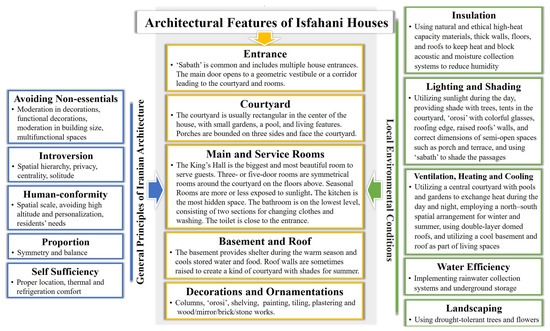
Figure 2.
Architectural features of Isfahani houses. Developed by the authors based on [21,22,23,24,25,26].
Isfahani houses are sustainable architectural masterpieces that consider regional factors such as culture, conventions, site, and climate [27,28]. They are composed of five main architectural elements, each indicating the ingenuity of Iranian architecture and a response to specific local environmental conditions, such as water scarcity, high temperature, and day–night temperature variation [24]. Isfahani houses stand as a valuable testament to the architecture and lifestyle of Iranian ancestors. Sadly, these important cultural landmarks are currently at risk of destruction due to neglect, insufficient funds, and insecure and abandoned conditions; this pressing issue demands immediate attention [7,29]. Natural and human-induced threats, particularly from development practices, pose severe risks to preserving Iranian cultural heritage. Furthermore, the impact of unsustainable progress and economic crises has led to a budget shortfall for Iran MCTH [30].
2.2. Isfahani Houses as Tourist Accommodations
As tourism continues to flourish in Isfahan, more abandoned houses within its historical context are being repurposed, offering an opportunity to combat functional obsolescence and demolition. Despite the increasing demand for lodging in recent years, the city has yet to invest in the hospitality sector. To tackle this issue, the master plans of Isfahan and other cities in Iran propose converting historic houses into accommodations through collaborative efforts between various authorities and the private sector [31,32]. Due to budget constraints, Iran MCTH has devised a plan to preserve historic houses by utilizing the revenue they generate when reused as tourist accommodations. However, not all experts agree with this approach, citing potential damages [33]. Historical contexts of Iranian cities face a host of challenges, and a viable strategy for their protection and development has yet to be agreed upon. Development poses a significant threat to historical contexts when authenticity and sustainability are not considered. It is imperative to employ approaches that enrich cultural identity, promote tourism, and foster economic growth in these areas [34]. The destruction of Iranian cultural heritage is often attributed to financial gain, a lack of architectural sensitivity, and unsustainable planning in economic projects, while unforeseen issues such as the recent COVID-19 pandemic and subsequent decline in tourism, as well as international sanctions, exacerbate this problem further [35]. Reaching sustainable development goals has always been a primary government strategy, but many developing countries, such as Iran, suffer from unsustainable conditions [36]. Disruptions in key markets like tourism exacerbate Iran’s already unstable hospitality sector [37].
Professionals and researchers in the tourism industry have a crucial role in enhancing sustainable tourism management in Iran. Isfahan’s status as a leading tourism destination results from its government’s effective strategic planning, the active involvement of stakeholders, and keen competition across various dimensions. By incorporating innovative sustainable practices, Isfahan’s cultural tourism industry can attract investors and bolster local residents’ economic prosperity. Ensuring the sustainable growth and preservation of Isfahan’s tourism and hospitality sector is pivotal for the overall development of central Iran [38].
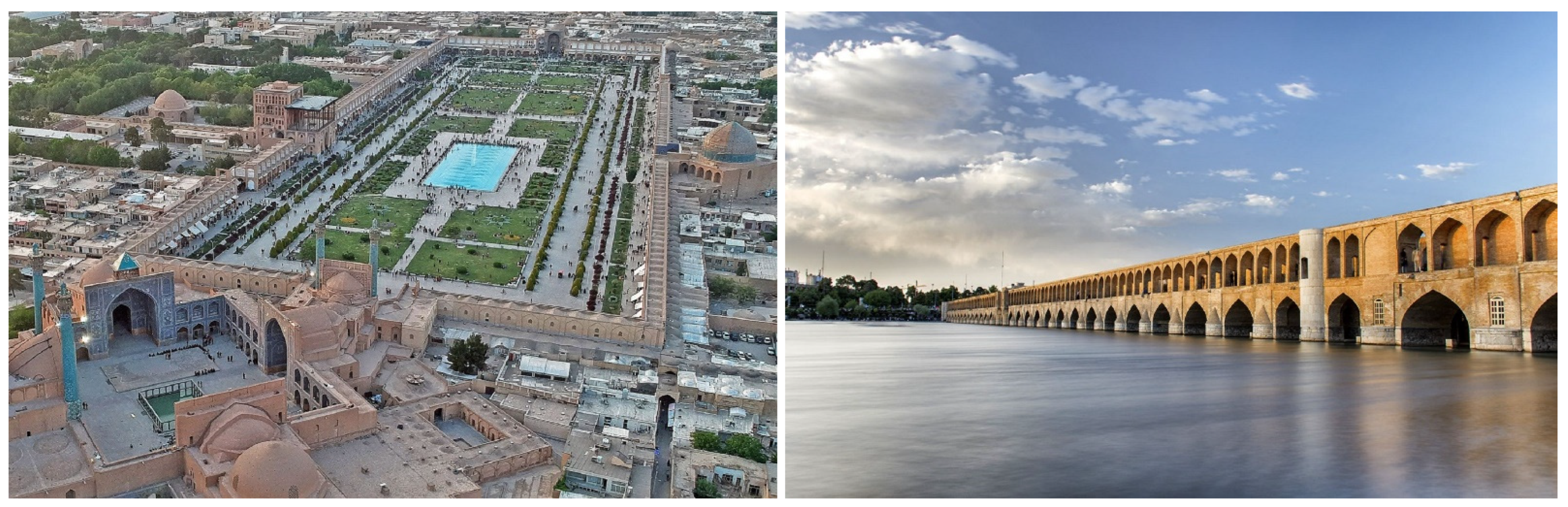
The city centers of Iranian cities boast numerous historic houses that showcase traditional Iranian architecture and urban design and are fundamental to the country’s tourism industry [39]. Isfahan City is home to Naghsh-e Jahan Square, Atigh Jameh Mosque, and Chehel Sotoun Palace, all of which are recognized as UNESCO World Heritage Sites [40]. The registration process for Vank Cathedral is currently in progress. These impressive landmarks are situated in the city’s center, close to the Zayandehrood River and historic bridges like the Si-o-Se Pol Bridge, contributing to the expansion of the tourism and hospitality industry and, notably, the reuse of historic houses as accommodations in this area of Isfahan [41]. Figure 3 shows the main tourist sites in Isfahan City’s center.
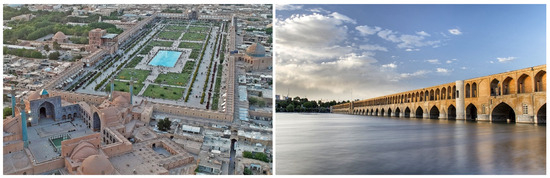
Figure 3.
Naghshe-Jahan Square and historical landmarks (left); Si-o-Se Pol Bridge on Zayandehrood River (right). Isfahan City’s center [42,43].
TripAdvisor, a renowned travel resource, features 149 accommodation properties in Isfahan City, 45 of which are repurposed historic houses [44]. Other popular travel and hotel reservation websites list 11 properties of similar historical significance [45,46,47]. Approximately 66 of the 149 available accommodations in Isfahan City are reused historic houses, categorized as “traditional residences” on Iranian websites. This number is steadily increasing, offering more options for travelers seeking unique experiences.
Recognizing Isfahani houses’ tourism potential is crucial. They offer a significant economic opportunity, as they can serve as valuable economic assets for their owners and contribute to the growth of tourism businesses [48]. However, an approach is needed to assess the sustainability of their conservation and adaptive reuse in cultural tourism development, especially in the hospitality industry. Current studies focus on various aspects at different stages of these projects, with only a few simultaneously addressing conservation and post-conservation phases.
2.3. Sampling, Data Collection, and Evaluation Procedure
The Memar Awards, a highly esteemed mark of recognition in architecture and urban design, has promoted excellence among Iranian Architects of the Year since 2001 [49]. Qaeli House and Joybar House, situated in Isfahan City’s historical context, were presented with the notable Memar Award in the conservation category in 2016 and 2019, respectively, and were selected as case studies. That Qaeli House is managed by a non-architect owner and Joybar House is owned and managed by its leading architect presents a unique condition of distinct contrast and an ideal opportunity for a comparative evaluation of their post-conservation life. The availability and access to the owners/managers, architects, architectural plans, documents, and photos before and after conservation were also critical factors in their selection. The data collection process was thorough and comprehensive, involving the official websites of the case studies, their architectural firms, and other sources with related information. Site observations, documentation reviews, and questionnaires, with permission for photography and access to further information, were also part of the data collection process, ensuring the reliability and trustworthiness of the findings. The same set of questions was used for both case studies to gather accurate information from six involved individuals in the projects who were familiar with the local conditions. As shown in Table 1, for each case, one of the leading architects from the conservation team, the owner (manager) of the house, and a local staff member of the hospitality team were selected as respondents. The survey was conducted in Isfahan in 2023, with participants asked to answer the questions within their knowledge and having the freedom to abstain from answering any question or to withdraw from the study at any point. The questionnaire primarily focused on the general information about the project, authenticity aspects, the environmental sustainability of the houses, and the sustainability of their management in preserving them. Furthermore, the responses contributed to the observations for the comprehensive analysis of the case studies. (See Supplementary File for the questionnaire)

Table 1.
Profile of the respondents to the questionnaire.
Responses to the questionnaire, architectural plans, documents, and photos of case studies formed their evaluation, focusing on two goals. The initial goal was to assess the conservation outcomes, safeguarding architectural authenticity, which contributes to environmental sustainability. Table 2 shows the ICOMOS documents related to preserving cultural heritage monuments and sites which were referred to analyze the change in the case studies’ architectural features and the compatibility of their new additions. The second goal was to emphasize the continuity of maintaining and improving conservation outcomes by the management in the case studies’ post-conservation life.
Table 2.
Sources used in the case studies evaluation.
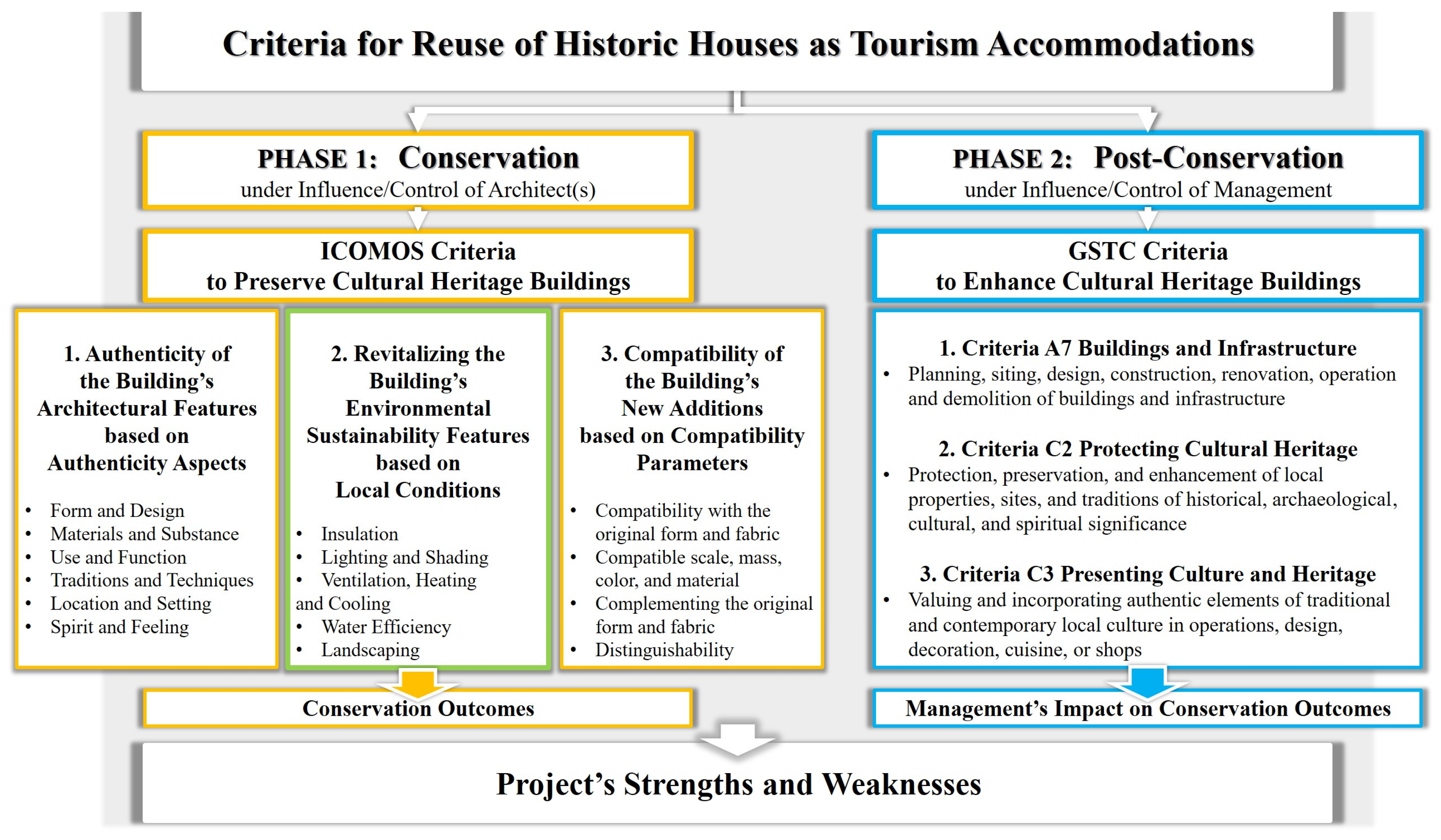
To achieve the second goal of this study, GSTC industry criteria for sustainable accommodation business, a widely accepted criterion in this field, helped evaluate the case studies management’s impact on conservation outcomes. The chosen criteria directly relate to enhancing cultural heritage buildings. Therefore, a criteria set shown in Figure 4 was prepared to measure the success rate of architects and business owners/managers in the case studies conservation and post-conservation phases. This evaluation revealed this project’s strengths and weaknesses and contributed to developing a successful project of this type according to the existing conditions of Iran. (See Appendix A for GSTC criteria and indicators).
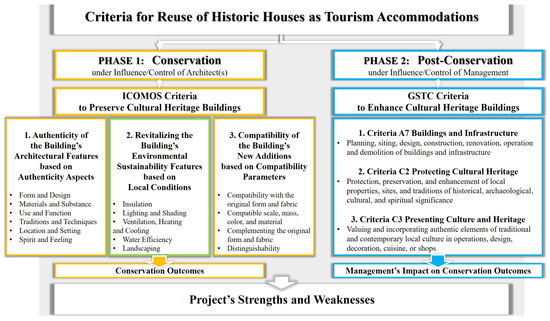
Figure 4.
Criteria set for the case studies evaluation. Developed by the authors based on [15,50,51,52,53,54,55,56,57,58,59,60,61,62,63,64,65].
3. Case Studies
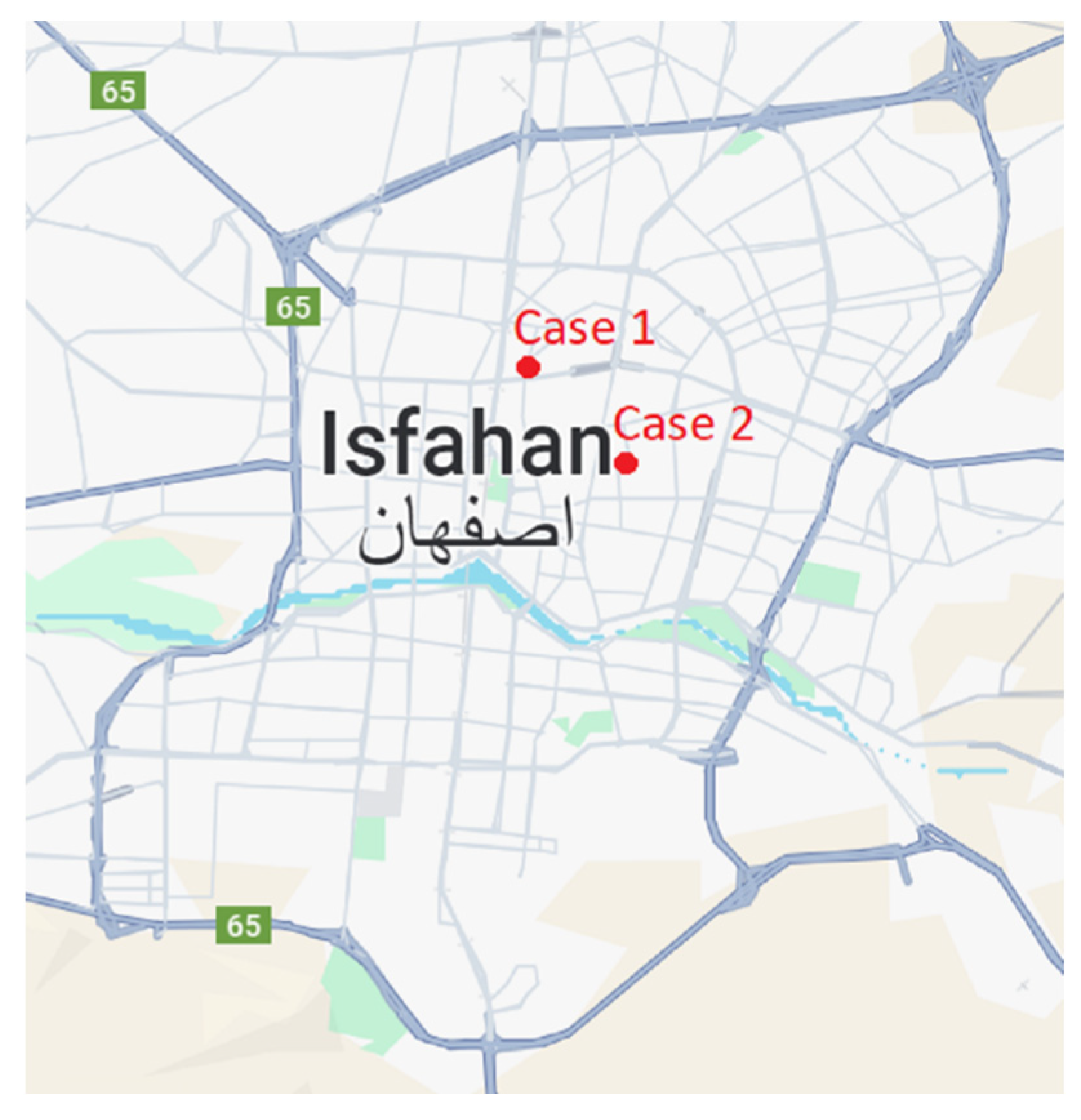
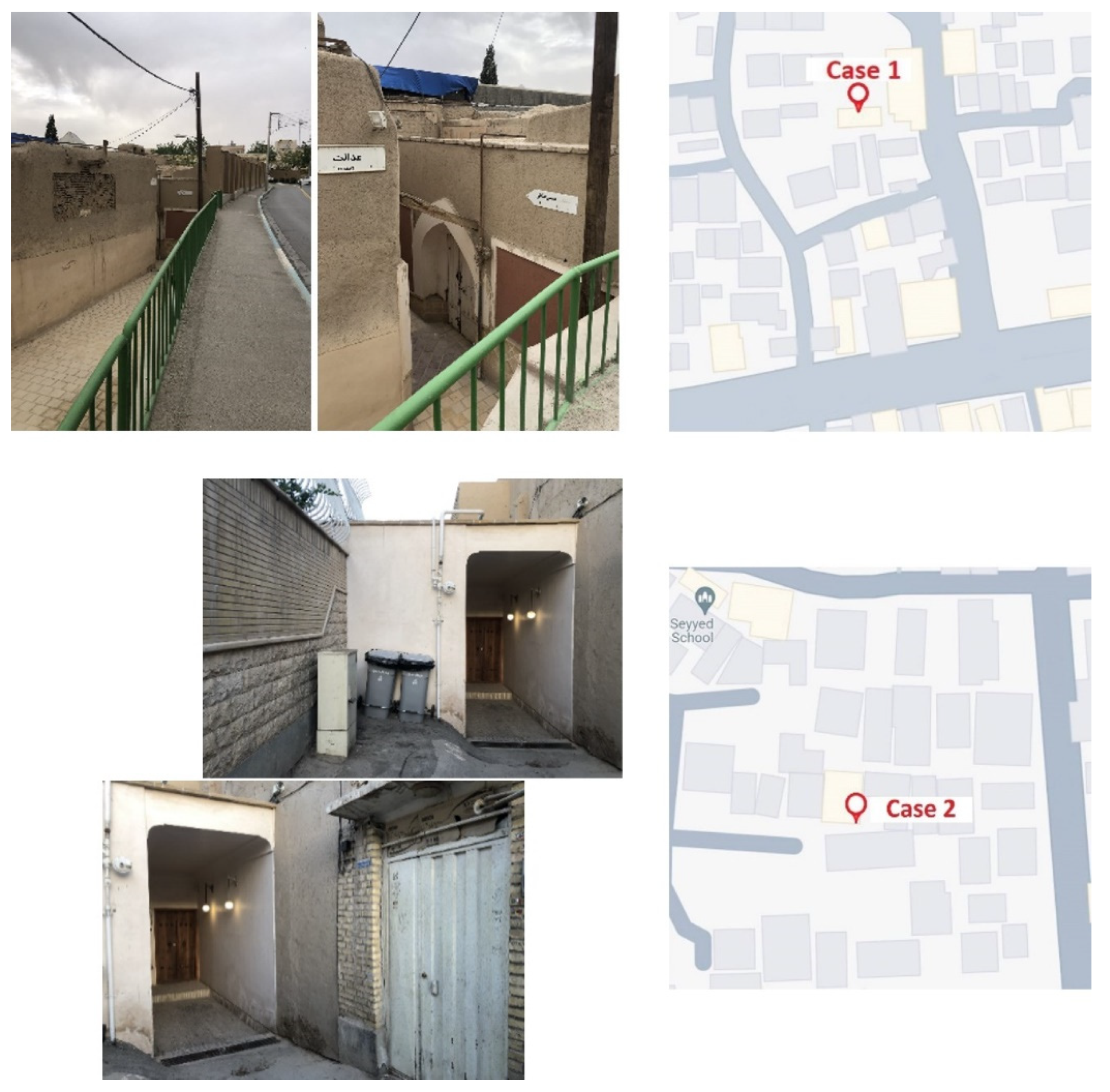
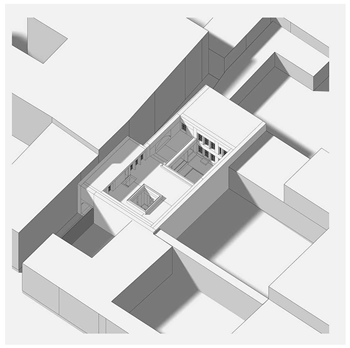
The selected houses are hidden gems within Isfahan City’s center, as shown in Figure 5, highly dense historic residential neighborhoods. The architects used specific strategies in the conservation and adaptation plans, aiming to increase the guests’ experiences in these houses and meet the regulations and standards of Iran MCTH.
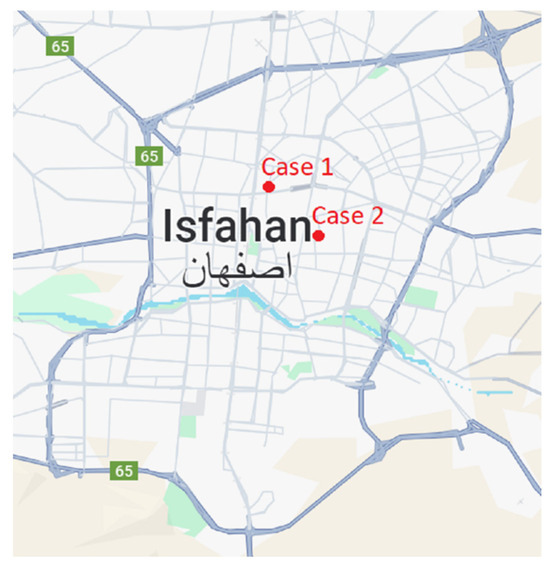
Figure 5.
Location of Case 1, Qaeli House, and Case 2, Joybar House [66,67].
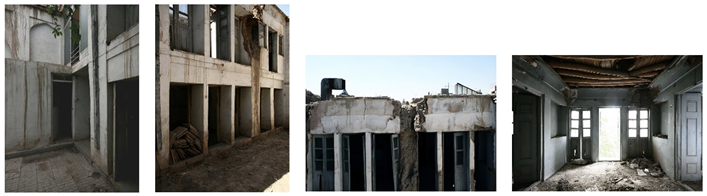
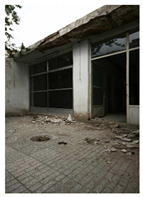
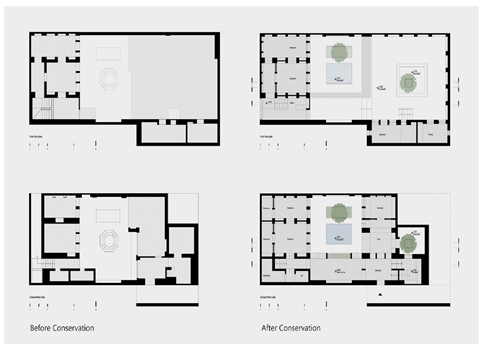
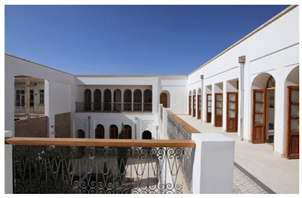
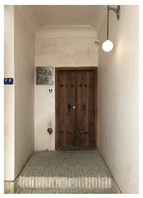
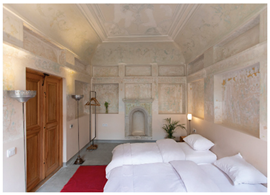
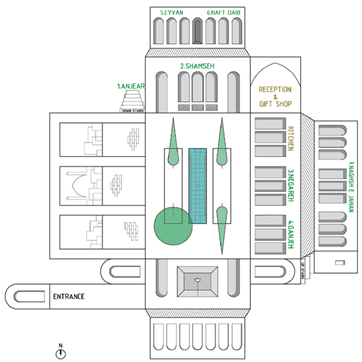
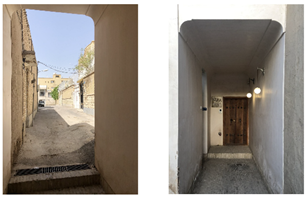
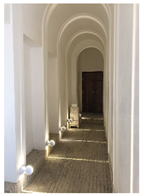
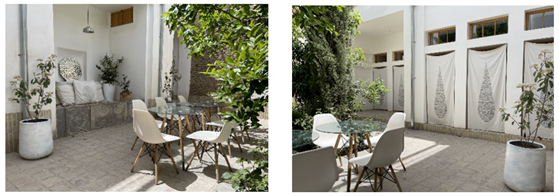
Qaeli House was a ruin of the late Pahlavi period, and the Qaeli family aimed to demolish it to build a new house; however, the adjacent neighbors’ and the municipality of Isfahan’s decision to prevent the demolition of historic houses made their plan impossible. In addition, the small 160 sqm land of the house would lose a significant area by widening the narrow and roofed alley (sabath) to make it accessible for vehicles; the context itself was the main challenge. Afterward, the recent progression of tourism and hospitality in Isfahan resulted in reusing this house as a tourist accommodation [68]. The Qaeli House project by USE Studio won first place in the Memar Awards’ conservation category in 2016, a recognition that underscores the project’s excellence and contribution to architectural conservation [69].
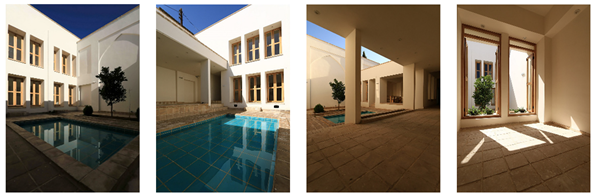
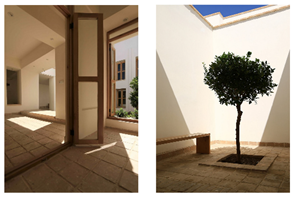
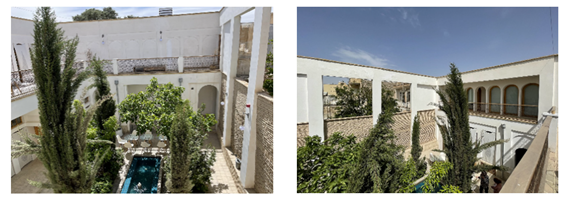
Joybar House, a relic from the late Qajar period, was a two-and-a-half-story high building on 290 sqm land. It had been abandoned and uninhabited for twenty years until a young architect and her partner, driven by their love for Isfahan’s architectural heritage, bought the house from the heirs. The conservation and subsequent transformation of the house into a tourist accommodation was their passion project [70]. The Joybar House project by Pishan Studio, a testament to their dedication, was a finalist in the Memar Awards’ conservation category in 2019 [69].
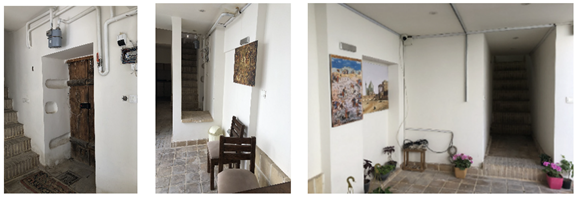
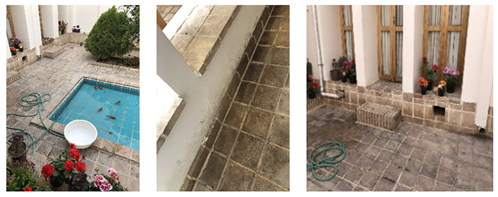
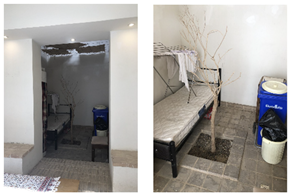
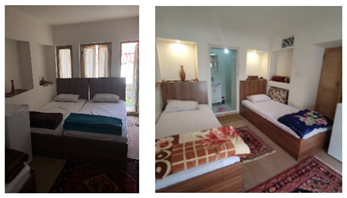
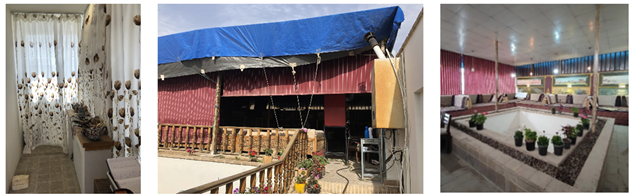
Table 3 and Table 4 provide a comprehensive view of the transformations of the case studies’ architectural features. These changes, meticulously documented and observed on-site, showcase the evolution from the pre-conservation stage, under the influence/control of architects, to the post-conservation stage, under the influence/control of management. This detailed account allows the audience to fully appreciate the extent of the conservation efforts.
Table 3.
Pre-conservation to post-conservation life of Qaeli House.
Table 4.
Pre-conservation to post-conservation life of Joybar House.
4. Application of the Evaluation Model to the Case Studies, Results, and Discussions
Table 5 and Table 6 evaluate the case studies’ compliance with the chosen criteria, a crucial aspect of this research. This evaluation is based on the questionnaire responses and the descriptions in Table 3 and Table 4, derived from site observations and documentation reviews.
Table 5.
Case studies’ compliance with the chosen GSTC industry criteria.
Table 6.
Case study management’s impact on conservation outcomes.
Comments in Table 5 underscore the significance of this project in Isfahan, as it does not meet many GSTC indicators for enhancing cultural heritage buildings.
The information in Table 6 is based on data gathered from questionnaire responses, site observations, and documentation, focusing on three main concerns identified in ICOMOS documents. It employs the authors’ designated grading system that awards positive points for minimizing changes to the historic house and enhancing its environmental sustainability during the conservation phase. The extent of the changes, ranging from slight to extensive, and their reversibility reflect the architects’ respect for the building’s heritage values during this phase. The degree of alterations, which can range from minor to extensive, and their potential reversibility demonstrate the architects’ commitment to honoring the heritage values of the building during this phase. Major or extensive changes (deemed disrespectful) do not receive any points, while moderate changes receive +1 point, and no changes or minor ones (considered respectful) receive +2 points. The same criteria apply to the activation of environmental sustainability features and the compatibility of the new additions to the house. Furthermore, it assesses the positive or negative impact of management practices on conservation outcomes as either respectful or disrespectful changes to the house in the post-conservation phase in order to measure the success of the business in upholding favorable adaptive reuse objectives. A negative impact receives no points, while a positive impact receives +2 points.
The distinct difference in approach to maintaining the heritage values of the building and its context is evident in the management of Qaeli House, which received 28 out of 90 points, and the management of Joybar House, which received the total 90 points. Despite the absence of specific authenticity- and sustainability-related guidelines in both projects, the architects demonstrated their expertise and dedication. Drawing from their university education and the study of random cases worldwide, they preserved the authentic characteristics of the houses. They also revitalized those features of Iranian architecture that contribute to environmental sustainability and skillfully added new spaces and elements in harmony with the old structures. The local experts’ assistance with the traditional building techniques and materials further enhanced their good conservation practices. Despite the architects’ great job, this study recognized low sustainability in reusing Qaeli House as a tourist accommodation. The disconnect between the house’s architecture and management teams after the conservation completion is a significant factor in this project’s failure. Numerous improper changes to its architectural features and recent damages indicate unawareness, inattention, and neglect of heritage considerations.
This project’s weaknesses mainly result from a lack of education and training in heritage preservation and cultural tourism development. This, along with the absence of strict laws and supervision of current practices, directly impacts heritage buildings and sites. Due to their specific structure, service difficulties naturally arise in historical sites, and addressing them to meet the residents’ and tourists’ needs requires cooperation from municipalities, local authorities, and the people. In Isfahan’s historical context, the lack of awareness and collaboration among people and governmental institutions leads to its destruction. Limited financial resources and the urgency of basic social needs prevent prioritizing cultural heritage activities while regarding the historical context [34,39]. Respondents to the questionnaire mentioned that the budget shortfall caused by international sanctions and the COVID-19 pandemic has further worsened the conditions in Isfahan; many reused accommodations were sold or have lost their functions.
The enthusiasm for reusing Joybar House as an accommodation contrasts with the inevitable choice to reuse Qaeli House due to restrictions on new construction. This highlights their owners’ distinct preferences and orientations within the cultural tourism industry. Qaeli House now caters more to locals in its rooftop café rather than hosting and lodging tourists. Joybar House has an official website, maintains a very active presence on social media, and engages with all its highly rated reviews. Conversely, Qaeli House has a minimal presence in the tourism and hospitality market, with most of its guests being domestic visitors seeking short stays at lower prices due to the restricted services [78]. Poor experiences significantly decrease tourists’ satisfaction and intention to revisit a destination, and low-rating reviews discourage others from visiting as well [79,80].
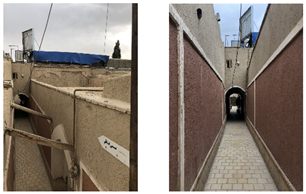
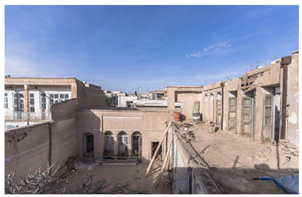
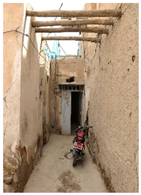
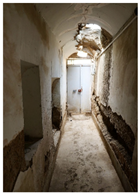
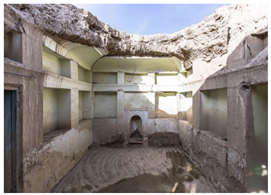
As shown in Figure 6, the case studies are in dense historic urban areas where government agencies encounter development challenges.
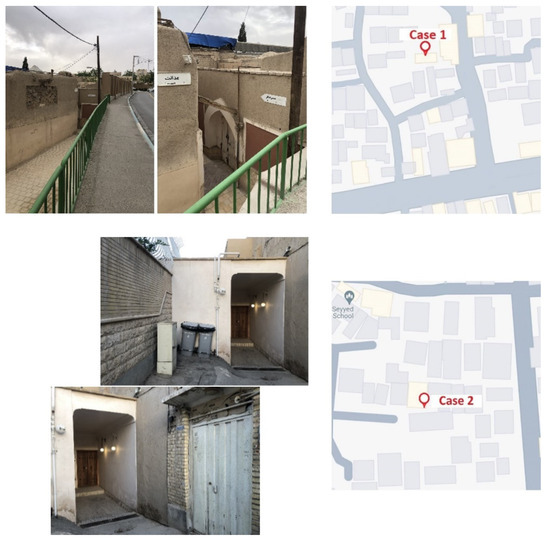
Figure 6.
Unsustainable progress and the lack of architectural taste in the surroundings of the case studies. Authors’ photography and [81].
Over the last fifty years, these areas have suffered from gradual decay due to neglect and obsolescence. Today, historic Iranian cities remain neglected for extended periods or are being replaced by new developments that do not blend harmoniously with their surroundings. In Isfahan, a pressing issue is the lack of an inclusive strategic plan for historic urban areas [39].
According to the houses’ leading architects and the findings of this study, several issues of this project need the attention and action of Iran MCTH and other related organizations. These include the following:
- Complex administrative processes to obtain permits and approvals from different government departments in line with MCTH laws;
- Inaccurate architectural opinions from MCTH experts;
- Lack of funding opportunities for the permanent maintenance of heritage buildings, leading to rapid erosion and deterioration;
- MCTH requirements that affect heritage buildings, such as increasing wall height to block neighboring views;
- Lack of education and training in heritage conservation and sustainability principles for owners, investors, hospitality staff, and even conservation teams;
- Unclear guidelines on heritage conservation and sustainable development, as well as mechanisms for monitoring and enforcing compliance;
- Inadequate laws and architectural supervision for new additions to heritage buildings, exaggerated ornamentation, and changes for technical or accessibility needs;
- Lack of cooperation between local residents and workers with female and younger architects and professionals;
- Inadequate supervision and certification for accessibility in heritage buildings, which have narrow doorways and stairs, high thresholds, height changes, and vulnerable flooring;
- Lack of laws on risk factors and impact assessments despite the heritage buildings’ vulnerability.
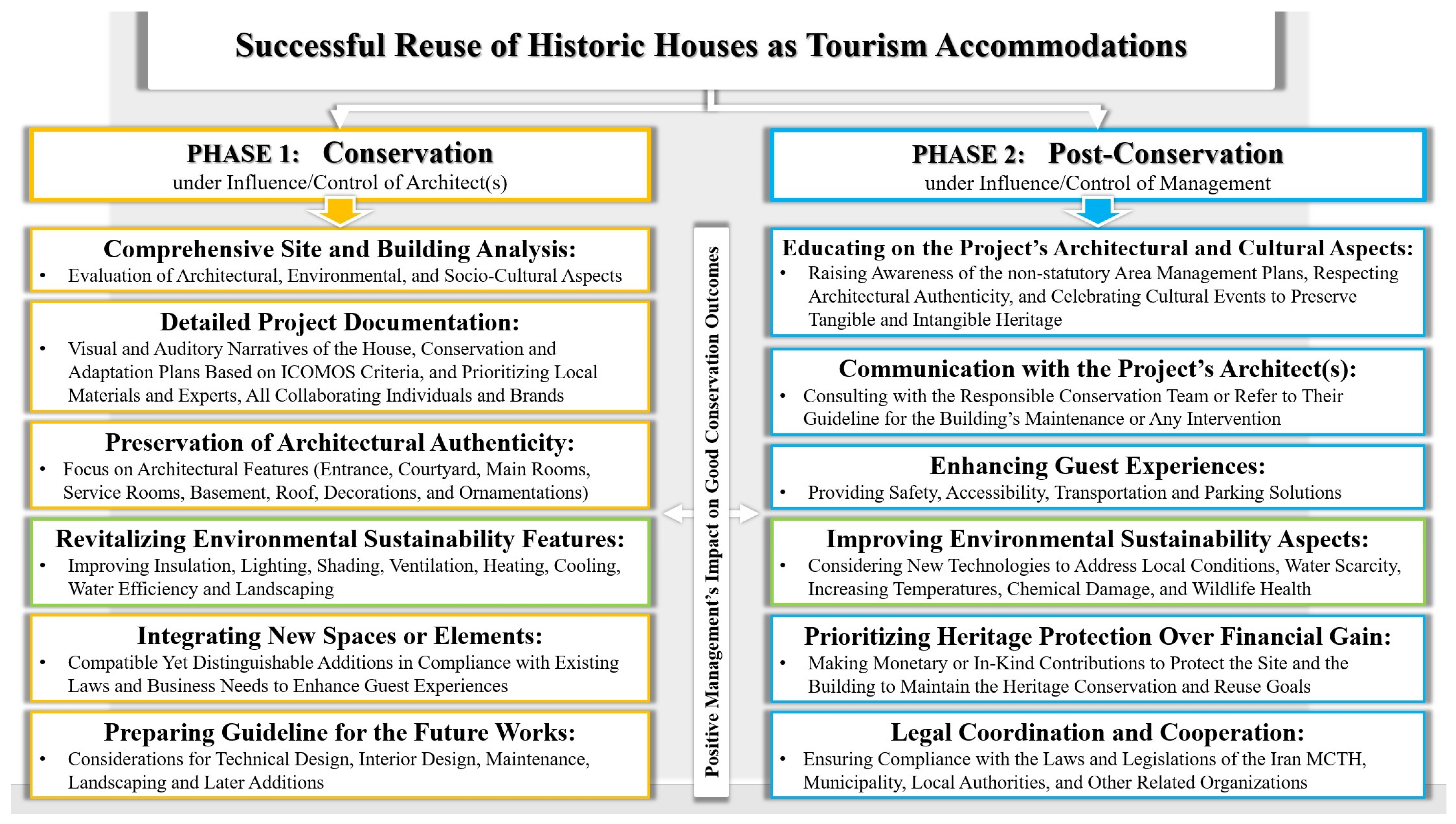
Based on the interconnected deficiencies mentioned above, this research presents a conceptual model for reusing Isfahani houses as tourist accommodations. This model considers the industry’s sustainability principles during the conservation and post-conservation phases, effectively addressing this project’s various dimensions.
The chosen GSTC criteria in this research emphasize “SDG 11 Sustainable Cities and Communities”. This goal is to make cities and human settlements sustainable, including ten targets, and “Target 11.4 Protect the World’s Cultural and Natural Heritage” is the focus of this research. Also, “SDG 9 Industry, Innovation and Infrastructure” for promoting sustainable industrialization and “SDG 12 Responsible Consumption and Production” to ensure sustainable consumption and production patterns are repeated in the chosen criteria. SDG 9’s targets focus on supporting, upgrading, and developing technology for sustainability, and SDG 12’s “Target 12.A” focuses on sustainable development for sustainable tourism [82,83,84]. The functional justification for each item of the model is significant to ensure the model’s success in meeting the mentioned SDGs.
In phase 1, a comprehensive study and analysis of the heritage building and its contextual surroundings, along with ICOMOS criteria to develop the proposals and thorough documentation of the conservation and adaptation processes, are crucial for the respectful evolution of the building. Using the authors’ developed diagram in Figure 2 is highly beneficial in this phase, as it encompasses all the building’s architectural and environmental sustainability features. Additionally, architects should establish guidelines for future requirements to facilitate ongoing preservation of the building and the site by non-architect business owners and managers.
In phase 2, the emphasis lies on preserving conservation outcomes, enhancing guest experiences, and improving environmental sustainability. This will be achieved through increased awareness, education, and training for the entire accommodation business team. Regular communication with responsible architects, cultural heritage and tourism experts, and third-party certification organizations is essential to reach this goal.
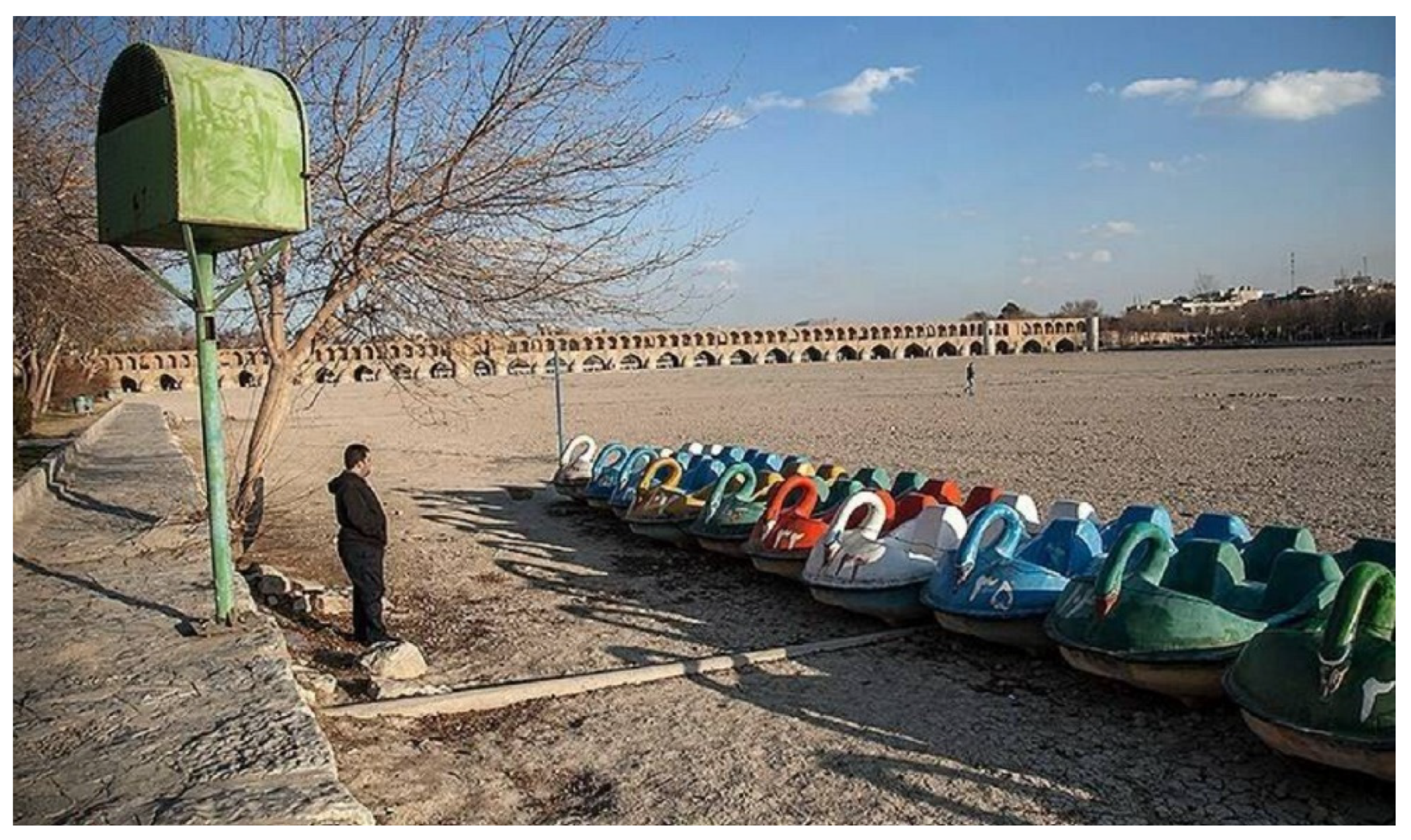
Successful proposals must consider environmental concerns. Unfortunately, financial factors often precede environmental design considerations [39]. The world is currently grappling with significant challenges related to climate change, and its adverse effects, including drought, can potentially incite global conflicts [85]. The Zayanderood River, a vital source of sustenance for Isfahan City, has been affected by drought for the past two decades. This situation poses one of Iran’s most urgent environmental, social, and economic dilemmas. If this pattern continues, the ecological landscape of Isfahan could undergo substantial upheaval, posing threats to its long-term sustainability. Along with environmental concerns, the structural stability of historical buildings is also at risk, with the possibility of gradual sinking due to prolonged drought. These factors collectively obstruct Isfahan’s sustainable development goals, which have been significantly emphasized in recent years [86].
As shown in Figure 7, the model’s items are closely related, complementing each other and influencing the project’s general success. This model applies to similar cases in different contexts.
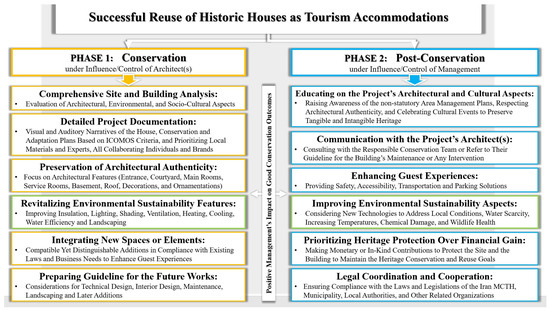
Figure 7.
The conceptual model for successfully reusing historic houses as tourist accommodations regarding authenticity and sustainability. Developed by the authors.
In the last few years, the drought in Iran has caused a sharp drop in tourism and its revenues. Due to the slow and long-term changes, this has had long-term destructive effects on cultural heritage [87]. Figure 8 shows a view of the dry Zayandehrood River and the historic bridge at risk of damage.
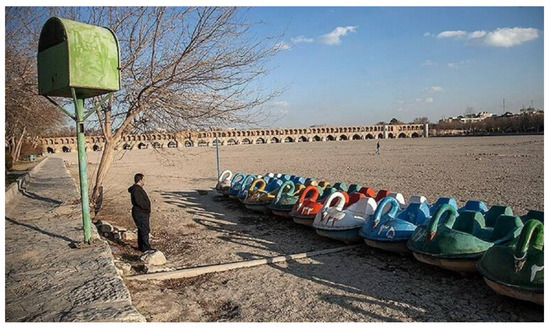
Figure 8.
The recent prolonged droughts of the Zayandehrood River indicate severe unsustainability in environmental conditions and tourism in Isfahan City [88].
5. Conclusions
5.1. Contributions
This paper presents a novel approach to the challenges of preserving and enhancing the authenticity and sustainability of historic houses in different phases of reusing them as tourist accommodations. Unlike the literature on general tourism development, this research outlines a roadmap capitalizing on historic houses’ authentic characteristics and environmental sustainability features reused for touristic lodging, rooted in heritage conservation principles and sustainable accommodation business. The research methodology includes an evaluation model using a multi-criteria technique, sustainable tourism and hospitality criteria, and international guidelines for promoting cultural heritage. This model is designed to measure this project’s success rate. It benefits from a straightforward calculation procedure to find the strengths or weaknesses of conservation outcomes and the impact of business management on them. Then, this research introduces a conceptual model for a successful project of this type. The potential benefits of implementing this conceptual model in such projects are promising. First, it is based on authenticity aspects identified according to the ICOMOS charters and the SDGs presented in GSTC industry criteria. Second, it can be adapted to similar cases in different contexts, offering a flexible and versatile tool. Third, users can receive the required guidance in any project phase.
This research offers transformative insights to enhance the long-term success of reusing historic houses as tourist accommodations, with a strong focus on sustainable management that aligns with heritage considerations. Historic districts’ rapid and intense development pressures underscore the urgent need to re-evaluate development management and update legislation and policies. Outdated laws and ineffective organizations have led to legal and administrative challenges in preserving cultural heritage and promoting cultural tourism. Sometimes, existing laws do not adequately protect conservators from damaging development plans. The rapid pace of development makes it imperative to review the laws on cultural heritage. However, the responsible organizations should undertake this review, as the gaps in these laws allow for further damage. To change management’s perspective on historical context, there must be a shift in attitudes towards cultural tourism development among leaders and workers, a societal shift in culture, and the promotion of successful heritage conservation and adaptive reuse projects as models for practical preservation and development. This urgency is not just a call to action but a reminder of the immediate importance of this issue in sustainable tourism and heritage conservation. While recognizing the immense cultural and heritage values of historic houses is a compelling drive for their long-term success as tourist accommodations, this study suggests the following highly effective actions:
- Emphasizing the importance of third-party certification to preserve heritage buildings’ authenticity and prevent personal taste imposition;
- Highlighting new technologies’ role in enhancing heritage buildings’ sustainability and proposing funding for technology adoption to prepare for future environmental challenges;
- Stressing the importance of attracting investors to ensure long-term project maintenance and financial stability for ongoing preservation efforts;
- Proposing incentives for successful projects and strict penalties for harmful practices to ensure the project’s integrity;
- Creating a culture of trust in the new generation of architects and conservators who are more up to date in the related fields while appreciating the knowledge and help of local experts.
This project represents a unique opportunity for material care, economic investment, community connection, and a deep appreciation for the artifacts that have been a part of different generations’ identities for centuries. This research underscores the pivotal role of policymakers in adopting appropriate strategies and developing more expertise concerning cultural heritage intervention strategies, thereby paving the way for significant positive change. The literature review on reused tourist accommodation in historical contexts significantly enriches the research landscape, providing profound insights into its dynamics, challenges, and opportunities. It addresses sustainability, cultural heritage enhancement, and policy implications, serving as a comprehensive roadmap for further research. This study on reusing historic houses as tourist accommodations, focusing on architectural authenticity and environmental sustainability, aligns with the SDGs, takes a holistic approach, and underscores the crucial role of architectural supervision in the business management and integration of sustainable accommodation business criteria. Together, these studies establish a foundation for scholars interested in advancing research on this project in Isfahan and other cities.
5.2. Limitations
This study has explored various dimensions and aspects with solid support and cooperation from the case studies’ management and architecture teams. However, certain factors could impact similar research involving other case studies. Some stakeholders may hold conservative views, or their availability may be hindered by prior commitments. Additionally, some may be unfamiliar with the concepts and issues addressed in this research. The lack of documents and data related to the buildings and sites also poses a challenge in such investigations.
5.3. Future Work
Future research could focus on policy development to create and implement a comprehensive localized criteria set that is simplified and easy to understand for all involved in this project’s different phases, particularly non-architect members. This is essential to achieve the goals of conservation, adaptive reuse, cultural tourism development, and environmental sustainability. The direct supervision of architects familiar with the historical context, specific architectural and heritage values of traditional architecture, and sustainability in tourism development practices is also crucial. Additionally, there is a need for cooperation and support for policy development from local and national institutions and organizations.
Supplementary Materials
The following supporting information can be downloaded at https://www.mdpi.com/article/10.3390/su16166820/s1, Questionnaire.
Author Contributions
Conceptualization, S.T. and E.U.T.; Methodology, S.T. and E.U.T.; Software, S.T. and E.U.T.; Validation, S.T. and E.U.T.; Formal analysis, S.T. and E.U.T.; Investigation, S.T. and E.U.T.; Resources, S.T. and E.U.T.; Data curation, S.T. and E.U.T.; Writing—original draft, S.T. and E.U.T.; Writing—review & editing, S.T. and E.U.T.; Visualization, S.T. and E.U.T.; Supervision, E.U.T. The authors contributed equally to this work. All authors have read and agreed to the published version of the manuscript.
Funding
This research received no external funding.
Institutional Review Board Statement
All subjects gave informed consent for inclusion before participating in this study. This study was conducted in accordance with the Declaration of Helsinki, and the protocol was approved by the Architecture, Planning, and Design Ethics Sub-Board of the Eastern Mediterranean University’s Scientific Research and Publication Ethics Board (BAYEK) (ETK00-2023-0003) in 2023.
Informed Consent Statement
Informed consent was obtained from all subjects involved in this research. Published images and authors’ photography are used with permission.
Data Availability Statement
Data are contained within the article. The questionnaire is in the Supplementary File.
Acknowledgments
The authors would like to acknowledge the contribution of the case studies’ management and architecture teams and staff members and thank them for kindly sharing all research data, information, and materials.
Conflicts of Interest
The authors declare no conflicts of interest.
Appendix A
Table A1.
Chosen Criteria (A7, C2, C3) to Enhance Cultural Heritage Buildings under the Global Sustainable Tourism Council Criteria for Hotels—Suggested Performance Indicators, Version 3, 2016.






References
- Tavana, M.; Azadmanesh, A.; Khalili Nasr, A.; Mina, H. A multicriteria-optimization model for cultural heritage renovation projects and public-private partnerships in the hospitality industry. Curr. Issues Tour. 2022, 25, 3709–3734. [Google Scholar] [CrossRef]
- Fars News. Available online: https://www.farsnews.ir/isfahan/news/14000103000125/ (accessed on 10 May 2024).
- Rezaei, N.; Alborzi, G.; Alilou, L. Transformation of Historic Neighborhoods: How Tourism Is Changing the Historic Center of Kashan, Iran. Herit. Soc. 2019, 12, 176–196. [Google Scholar] [CrossRef]
- Saydam, M.B.; Ozturen, A.; Kilic, C. Cultural heritage tourism in North Cyprus: Findings from in-depth interviews with experts. Worldw. Hosp. Tour. Themes 2022, 14, 349–364. [Google Scholar] [CrossRef]
- Abokhamis Mousavi, S.; Hoskara, E.; Woosnam, K.M. Developing a Model for Sustainable Hotels in Northern Cyprus. Sustainability 2017, 9, 2101. [Google Scholar] [CrossRef]
- Cucco, P.; Maselli, G.; Nesticò, A.; Ribera, F. An evaluation model for adaptive reuse of cultural heritage in accordance with 2030 SDGs and European Quality Principles. J. Cult. Herit. 2023, 59, 202–216. [Google Scholar] [CrossRef]
- Islamic Republic News Agency. Available online: https://www.irna.ir/news/84188362/ (accessed on 10 May 2024).
- Islamic Republic News Agency. Available online: https://www.irna.ir/news/85134452/ (accessed on 10 May 2024).
- Islamic Republic News Agency. Available online: https://www.irna.ir/news/85129920/ (accessed on 10 May 2024).
- Rezaei, N. Resident perceptions toward tourism impacts in historic center of Yazd, Iran. Tour. Geogr. 2017, 19, 734–755. [Google Scholar] [CrossRef]
- Nesf e Jahan Newspaper. Available online: https://nesfejahan.net/fa/news/2809/ (accessed on 7 May 2024).
- International Council on Monuments and Sites. Available online: https://www.icomos.org/public/risk/2001/iran2001.htm (accessed on 12 May 2024).
- International Council on Monuments and Sites. Available online: https://www.icomos.org/en/about-icomos/mission-and-vision/mission-and-vision (accessed on 8 May 2024).
- Global Sustainable Tourism Council. Available online: https://www.gstcouncil.org/gstc-criteria/gstc-industry-criteria-for-hotels (accessed on 2 May 2024).
- GSTC (Global Sustainable Tourism Council). Criteria for Hotels, Suggested Performance Indicators, Version 3; United Nations Foundation: Washington, DC, USA, 2016. [Google Scholar]
- Iran Daily. Available online: https://irandaily.ir/News/115777.html (accessed on 7 May 2024).
- Nasab, S.H.; Naz, N.; Anjum, G.A. Impact of Urban Conservation Policies on Transformation of Iranian Historic City Centers: Yazd, Iran. Pak. J. Sci. 2014, 66, 147–155. [Google Scholar]
- Dehghan Pour Farashah, M.; Aslani, E.; Yadollahi, S.; Ghaderi, Z. Post-occupancy evaluation of historic buildings after their adaptive reuse into boutique hotels: An experience from Yazd, Iran, International. J. Build. Pathol. Adapt. 2021, 41, 849–874. [Google Scholar]
- Mirbag, A.; Shokati Poursani, A. Indoor radon measurement in residential/commercial buildings in Isfahan city. J. Air Pollut. Health 2018, 3, 209–218. [Google Scholar] [CrossRef]
- Ghasemi Sichani, M.; Memarian, G.H. Typology of the Qajar period house in Isfahan. City Identity 2011, 4, 87–94. [Google Scholar]
- Khajegir, A.; Afroogh, M.; Fahim, A. The Art of Islamic Architecture during the Safavid Period and the Introduction of the Teachings of Islam. J. Fine Arts 2018, 1, 37–42. [Google Scholar] [CrossRef]
- Zekrgoo, A.H.; Goodarzi, T. Reviving Tradition in Islamic Built Environment: An Assessment of Pirnia’s Proposed Principles. In International Conference on Architecture and Built Environment; International Islamic University: Kuala Lumpur, Malaysia, 2013; pp. 292–299. [Google Scholar]
- Peyvastehgar, Y.; Heidari, A.; Eslami, M. Recognizing the five principles of Pirnia in the architecture of traditional houses in Iran and analyzing it with reference to Islamic religious sources, a case study: Houses in the city of Yazd. Stud. Islam. Iran. City 2017, 7, 51–66. [Google Scholar]
- Abdolbaghi, M. Construction design zoning of the territory of Iran and climatic modeling of civil buildings space. J. King Saud Univ. 2011, 23, 355–369. [Google Scholar]
- Azimi Yekta, Z. Architecture of Iran in Qajar Era. Int. J. Acad. Res. Bus. Soc. Sci. 2015, 5, 281–291. [Google Scholar]
- Chavardi, J.; Bigdeli, A.; Alisoufi, A.; Jahanbakhsh, H. Western Architecture During the First Pahlavi Dynasty and Its Effects on the Lifestyle of Iranian Women. J. Hist. Cult. Art Res. 2017, 6, 1407–1420. [Google Scholar]
- Iran’s Metropolises News Agency. Available online: https://www.imna.ir/service/culture/Isfahanology (accessed on 7 May 2024).
- Keshtkaran, P. Harmonization between climate and architecture in vernacular heritage: A case study in Yazd, Iran. Procedia Eng. 2011, 21, 428–438. [Google Scholar] [CrossRef]
- Independent Persian. Available online: https://www.independentpersian.com/node/391311/ (accessed on 7 May 2024).
- Asadi, S. Cultural Heritage Lost: Case Study of Isfahan, Iran. In Multiculturalism and Interculturalism; IntechOpen: London, UK, 2023. [Google Scholar]
- Iran Ministry of Cultural Heritage, Tourism and Handicrafts. Available online: https://www.mcth.ir/english/Tourism/Tourism-Destinations (accessed on 6 May 2024).
- Nesf-e-Jahan Newspaper. Available online: http://www.nesfejahan.net/fa/news/78977 (accessed on 7 May 2024).
- Iran Analytical News Agency. Available online: https://www.khabaronline.ir/news/405199/ (accessed on 10 May 2024).
- Mizan Online News Agency. Available online: https://www.mizanonline.ir/fa/news/62470/ (accessed on 10 May 2024).
- Iran Analytical News Agency. Available online: https://www.khabaronline.ir/news/1498314/ (accessed on 10 May 2024).
- Hassanzadehkermanshahi, K.; Shirowzhan, S. Measuring Urban Sustainability over Time at National and Regional Scale for Addressing United Nations Sustainable Development Goal (SDG) 11: Iran and Tehran as Case Studies. Sustainability 2022, 14, 7402. [Google Scholar] [CrossRef]
- Ghorbani, A.; Mousazadeh, H.; Akbarzadeh Almani, F.; Lajehvardi, M.; Hamidizadeh, M.R.; Orouei, M.; Zhu, K.; Denes David, L. Reconceptualizing Customer Perceived Value in Hotel Management in Turbulent Times: A Case Study of Isfahan Metropolis Five-Star Hotels during the COVID-19 Pandemic. Sustainability 2023, 15, 7022. [Google Scholar]
- Ghorbani, A.; Zangiabadi, A.; Mousazadeh, H.; Akbarzadeh Almani, F.; Zhu, K.; Denes David, L. Travel to Mars-like Places on Earth: A New Branch of Sustainable Ecotourism in Lut Desert World Heritage Site, Iran. Sustainability 2023, 15, 9677. [Google Scholar] [CrossRef]
- Tavakoli, H.; Hedayati Marzbali, M. Urban Public Policy and the Formation of Dilapidated Abandoned Buildings in Historic Cities: Causes, Impacts and Recommendations. Sustainability 2021, 13, 6178. [Google Scholar] [CrossRef]
- UNESCO. Available online: https://whc.unesco.org/en/statesparties/ir (accessed on 18 July 2024).
- The Islamic Republic News Agency. Available online: https://www.irna.ir/news/85025102/ (accessed on 18 July 2024).
- Historical Iran. Available online: https://historicaliran.blogspot.com/2009/11/naghshe-jahan-square.html (accessed on 20 July 2024).
- Iran Tourism. Available online: https://irantourism.travel/en/si-o-se-pol-bridge (accessed on 20 July 2024).
- TripAdvisor. Available online: https://www.tripadvisor.ca/Hotels-g295423-oa120-Isfahan_Isfahan_Province-Hotels.html (accessed on 20 July 2024).
- Iran Hotel. Available online: https://www.iranhotelonline.com/isfahan-hotels/ (accessed on 20 July 2024).
- Snapp Trip. Available online: https://www.snapptrip.com/ (accessed on 20 July 2024).
- Alibaba. Available online: https://www.alibaba.ir/hotel/ir-isfahan (accessed on 20 July 2024).
- Bahar News. Available online: https://www.baharnews.ir/news/213635/ (accessed on 7 May 2024).
- Memar Magazine. Available online: http://memarmagazine.com/en/#about (accessed on 22 May 2024).
- The Nara Document on Authenticity. 1994. Available online: https://www.icomos.org/en/charters-and-texts/179-articles-en-francais/ressources/charters-and-standards/386-the-nara-document-on-authenticity-1994 (accessed on 2 May 2024).
- The Burra Charter. The Australia ICOMOS Charter for Places of Cultural Significance; Australia ICOMOS Incorporated: Melbourne, Australia, 2013. [Google Scholar]
- The Paris Declaration on Heritage as a Driver of Development. 2011. Available online: https://www.icomos.org/images/DOCUMENTS/Charters/GA2011_Declaration_de_Paris_EN_20120109.pdf (accessed on 2 May 2024).
- ICOMOS New Zealand Charter for the Conservation of Places of Cultural Heritage Value; ICOMOS: Auckland, New Zealand, 2010.
- The ICOMOS Charter for the Interpretation and Presentation of Cultural Heritage Sites. Int. J. Cult. Prop. 2008, 15, 377–383.
- Quebec Declaration on the Preservation of the Spirit of Place. Int. J. Cult. Prop. 2008. Available online: https://whc.unesco.org/uploads/activities/documents/activity-646-2.pdf (accessed on 2 May 2024).
- ICOMOS Charters Principles for the Analysis, Conservation and Structural Restoration of Architectural Heritage. 2003. Available online: https://www.icomos.org/en/about-the-centre/179-articles-en-francais/ressources/charters-and-standards/165-icomos-charter-principles-for-the-analysis-conservation-and-structural-restoration-of-architectural-heritage (accessed on 2 May 2024).
- ICOMOS Principles for the Preservation and Conservation-Restoration of Wall Paintings. 2003. Available online: https://www.icomos.org/en/what-we-do/focus/179-articles-en-francais/ressources/charters-and-standards/166-icomosprinciples-for-the-preservation-and-conservationrestoration-of-wall-paintings (accessed on 2 May 2024).
- Long, B. International Cultural Tourism Charter Managing Tourism at Places of Heritage Significance. In Encyclopedia of Global Archaeology; Springer International Publishing: Cham, Switzerland, 1999. [Google Scholar]
- Charter on the Built Vernacular Heritage. 1999. Available online: https://www.icomos.org/images/DOCUMENTS/Charters/vernacular_e.pdf (accessed on 2 May 2024).
- The Declaration of San Antonio. 1996. Available online: https://www.icomos.org/en/resources/charters-and-texts/179-articles-en-francais/ressources/charters-and-standards/188-the-declaration-of-san-antonio (accessed on 2 May 2024).
- The Florence Charter. 1981. Available online: https://www.icomos.org/en/what-we-do/focus/179-articles-en-francais/ressources/charters-and-standards/158-the-florence-charter (accessed on 2 May 2024).
- The Declaration of Amsterdam. 1975. Available online: https://www.icomos.org/en/and/169-the-declaration-of-amsterdam (accessed on 2 May 2024).
- European Charter of the Architectural Heritage. 1975. Available online: https://www.icomos.org/en/resources/charters-and-texts/179-articles-en-francais/ressources/charters-and-standards/170-european-charter-of-the-architectural-heritage (accessed on 2 May 2024).
- Final Report of the Meeting on the Preservation and Utilization of Monuments and Sites of Artistic and Historical Value. 1967. Available online: https://www.icomos.org/en/resources/charters-and-texts/179-articles-en-francais/ressources/charters-and-standards/168-the-norms-of-quito (accessed on 2 May 2024).
- The Venice Charter. 1964. Available online: https://www.icomos.org/en/participer/179-articles-en-francais/ressources/charters-and-standards/157-thevenice-charter (accessed on 2 May 2024).
- Google Maps. Available online: https://www.google.com/maps/place/Ghaeli+Guest+House/ (accessed on 14 May 2024).
- Google Maps. Available online: https://www.google.com/maps/place/Joybar+Boutique+Hotel/ (accessed on 14 May 2024).
- USE Studio. Available online: https://use-studio.com/qaelis-guest-house (accessed on 16 May 2024).
- Memar Magazine. Available online: http://memarmagazine.com/en/#award (accessed on 22 May 2024).
- Wegmann, T. Persian Nights: Amazing Boutique Hotels & Guest Houses in Iran; teNeues: Krefeld, Germany, 2021. [Google Scholar]
- Hajirasouliha, E. Interview File with Architecture Students in Iran about the Qaeli House Project. Isfahan, Iran, 2020. [Google Scholar]
- Archdaily. Available online: https://www.archdaily.com/895712/qaeli-guesthouse-use-studio (accessed on 18 May 2024).
- Contemporary Architecture of Iran. Available online: http://www.caoi.ir/en/projects/item/1237#general-information (accessed on 18 May 2024).
- Memar Magazine Special Issue for Memar Award; Joybar House: Isfahan, Iran, 2019.
- Jahani, Y. Adaptive Reuse for Hospitality Design–Focus on Qajar Architecture. Bachelor’s Thesis, Berlin International University of Applied Sciences, Berlin, Germany, 2020. [Google Scholar]
- Joybar Boutique Hotel. Available online: https://www.joybarboutiquehotel.com/Home (accessed on 16 May 2024).
- Pishan Studio. Available online: http://www.pishanstudio.com/joybar-boutique-hotel.html (accessed on 16 May 2024).
- USpace. Available online: https://ghaeli.uspace.ir/ (accessed on 22 July 2024).
- Torabi, Z.A.; Shalbafian, A.A.; Allam, Z.; Ghaderi, Z.; Murgante, B.; Khavarian-Garmsir, A.R. Enhancing Memorable Experiences, Tourist Satisfaction, and Revisit Intention through Smart Tourism Technologies. Sustainability 2022, 14, 2721. [Google Scholar] [CrossRef]
- Kim, J.H. The Impact of Memorable Tourism Experiences on Loyalty Behaviors: The Mediating Effects of Destination Image and Satisfaction. J. Travel Res. 2018, 57, 856–870. [Google Scholar] [CrossRef]
- Google Maps. Available online: https://www.google.com/maps/place/Isfahan,+Isfahan+Province,+Iran/ (accessed on 5 May 2024).
- The Global Goals. Available online: https://www.globalgoals.org/goals/11-sustainable-cities-and-communities/ (accessed on 20 July 2024).
- The Global Goals. Available online: https://www.globalgoals.org/goals/9-industry-innovation-and-infrastructure/ (accessed on 20 July 2024).
- The Global Goals. Available online: https://www.globalgoals.org/goals/12-responsible-consumption-and-production/ (accessed on 20 July 2024).
- Mohammadi, A.; Saghafi, M.R.; Tahbaz, M.; Nasrollahi, F. Effects of Vernacular Climatic Strategies (VCS) on Energy Consumption in Common Residential Buildings in Southern Iran: The Case Study of Bushehr City. Sustainability 2017, 9, 1950. [Google Scholar]
- Sarvari, H.; Rakhshanifar, M.; Tamosaitiene, J.; Chan, D.; Beer, M. A Risk Based Approach to Evaluating the Impacts of Zayanderood Drought on Sustainable Development Indicators of Riverside Urban in Isfahan-Iran. Sustainability 2019, 11, 6797. [Google Scholar] [CrossRef]
- Chamani, A.; Kazemi, M. Investigating the causes of drought in Zayandehrood and its impact on the tourism industry of Isfahan from the people’s point of view. In Proceedings of the 1st International Conference of Iranian Natural Hazards and Environmental Crisis Strategies and Challenges; University of Mohaghegh Ardabili: Ardabil, Iran, 2019. [Google Scholar]
- Mashregh News. Available online: https://www.mashreghnews.ir/photo/924707/ (accessed on 20 July 2024).

Disclaimer/Publisher’s Note: The statements, opinions and data contained in all publications are solely those of the individual author(s) and contributor(s) and not of MDPI and/or the editor(s). MDPI and/or the editor(s) disclaim responsibility for any injury to people or property resulting from any ideas, methods, instructions or products referred to in the content. |
© 2024 by the authors. Licensee MDPI, Basel, Switzerland. This article is an open access article distributed under the terms and conditions of the Creative Commons Attribution (CC BY) license (https://creativecommons.org/licenses/by/4.0/).