Article

Assessing the Susceptibility of the Xiangka Debris Flow Using Analytic Hierarchy Process, Fuzzy Comprehensive Evaluation Method, and Cloud Model


1
School of Geological Engineering, Qinghai University, Xining 810016, China
2
Key Laboratory of Cenozoic Resources and Environment on the Northern Margin of the Qinghai-Tibet Plateau, Xining 810016, China
3
Qinghai Zhongyan Resources and Environment Survey and Design Co., Ltd., Haidong 810700, China
*
Author to whom correspondence should be addressed.
Sustainability 2024, 16(13), 5392; https://doi.org/10.3390/su16135392
Submission received: 5 April 2024 / Revised: 17 June 2024 / Accepted: 19 June 2024 / Published: 25 June 2024

Abstract

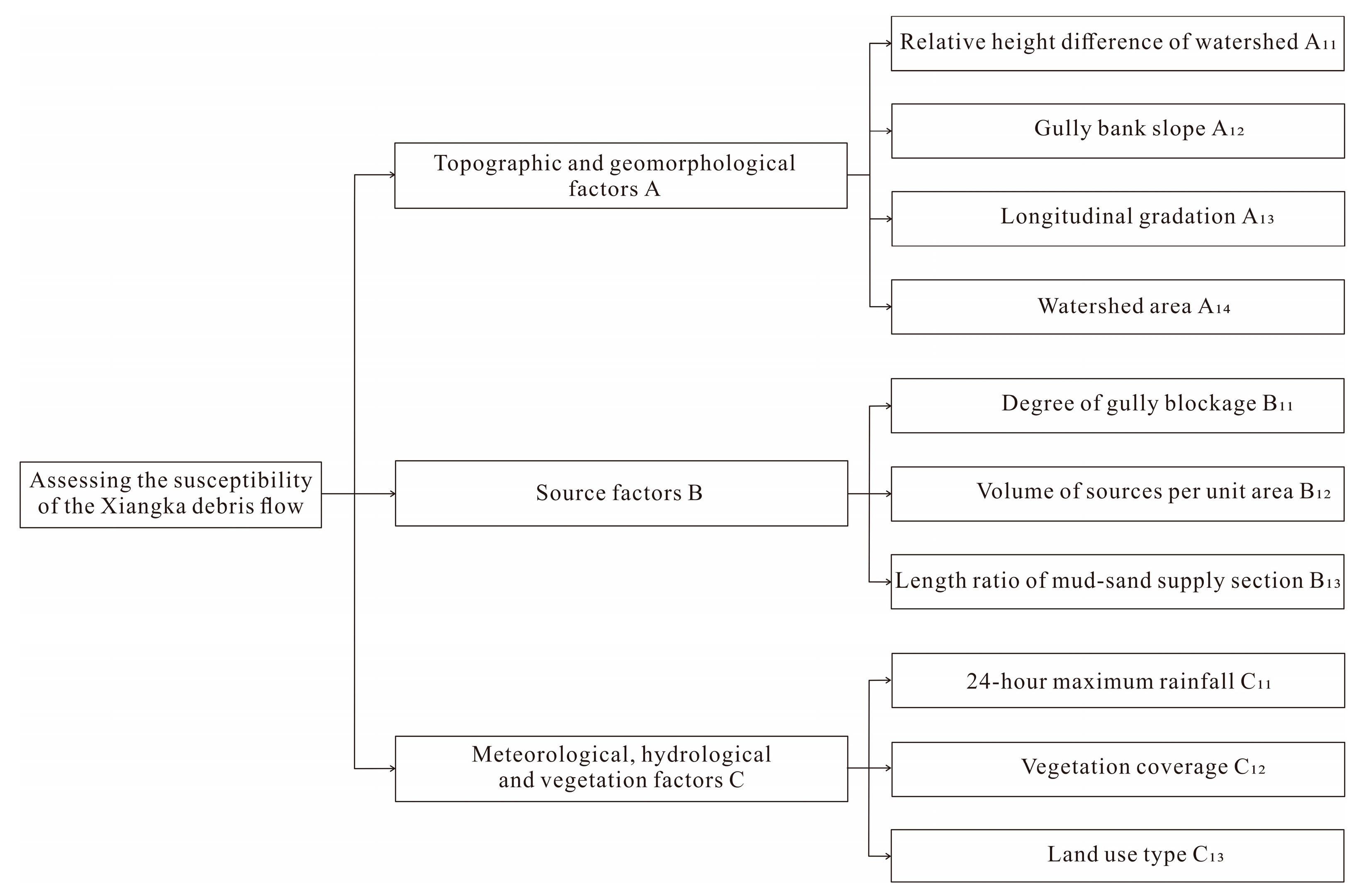
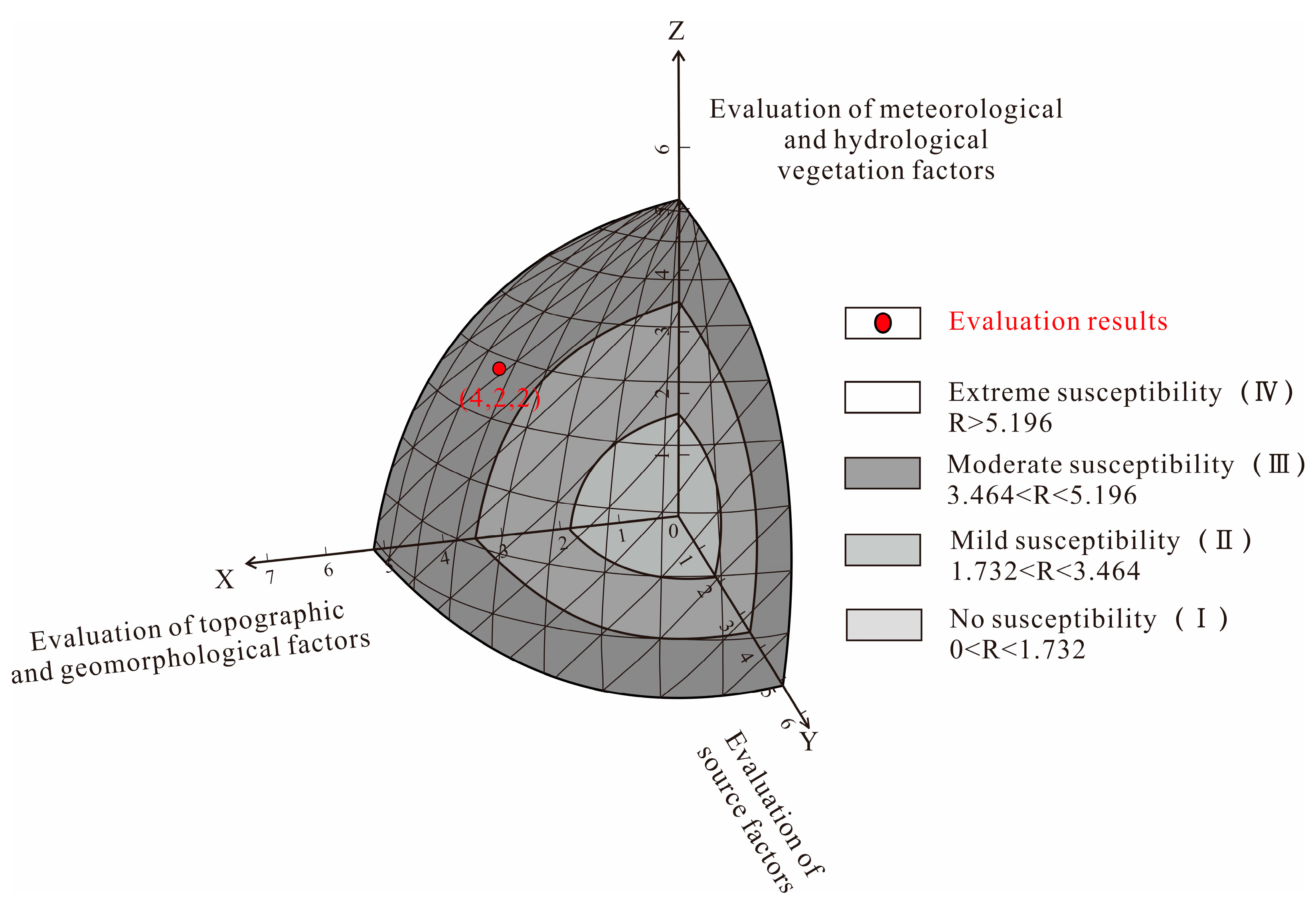
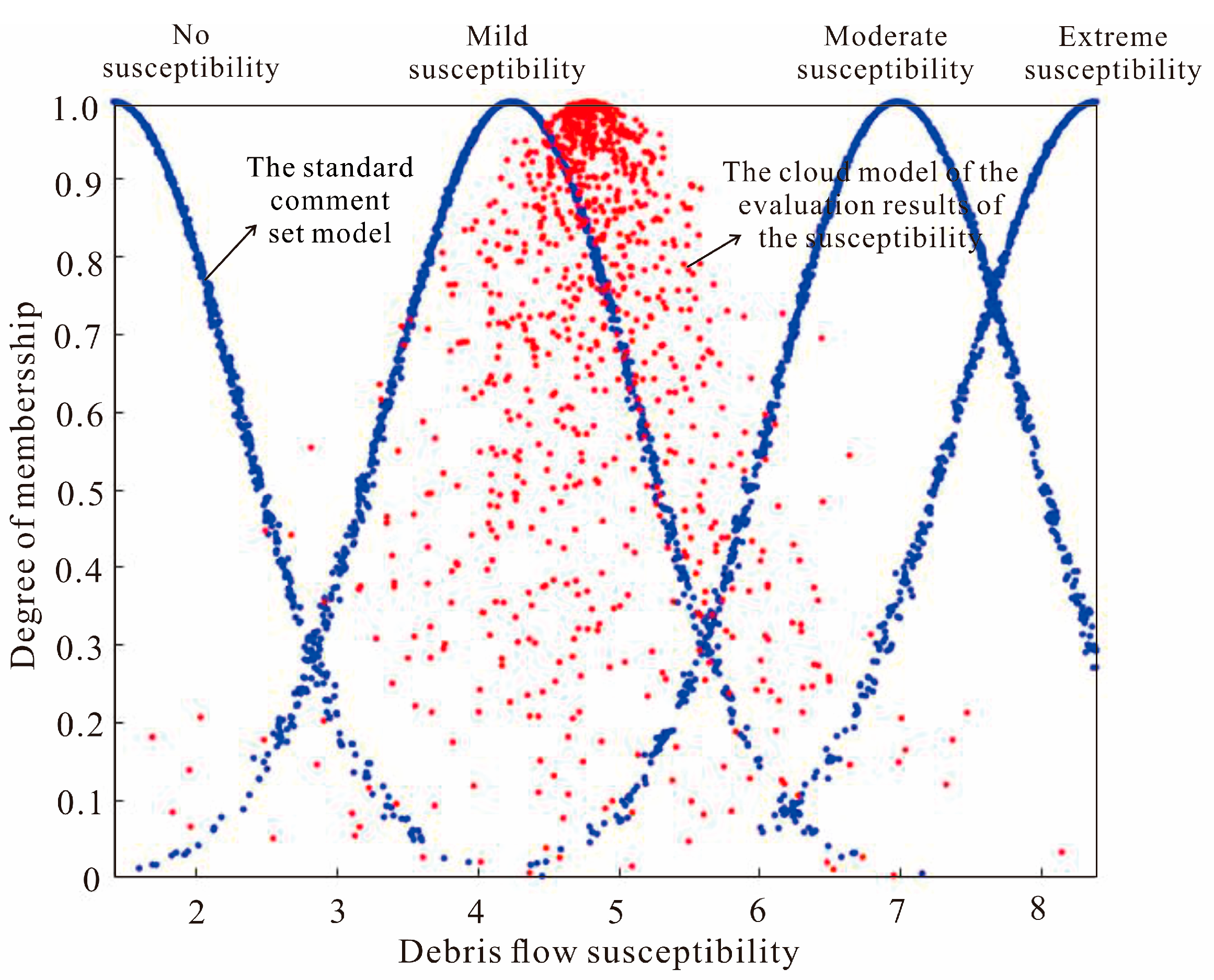
The seasonal Xiangka debris flow, breaking out frequently in Xinghai County, Qinghai Province, poses a serious threat to resident safety, has significant potential economic impacts, and inflicts severe damage on the geological environment, vegetation, and land resources in the area. Therefore, a susceptibility assessment is crucial. Utilizing data from field investigations, meteorology, and remote sensing, this study devised an assessment system using 10 evaluation factors with pronounced regional characteristics as susceptibility indices. Based on data processing using ArcGIS 10.7 and MATLAB R2016B, this study assessed the susceptibility of the Xiangka debris flow using AHP, the fuzzy comprehensive evaluation method, and a cloud model. The analysis results show that, based on AHP, the primary index affecting the occurrence of Xiangka debris flow is mainly source factor (0.447). The secondary indices are mainly the length ratio of the mud sand supply section (0.219), fractional vegetation cover (FVC, 0.208), and watershed area (0.192). Combined with the actual characteristics, it can be seen that the formation conditions of the Xiangka debris flow primarily encompass the following: sources such as slope erosion and accumulation at gully exits, challenging topography and terrain conducive to the accumulation of water and solid materials, and water source aspects like surface runoff from intense rainfall. Based on the fuzzy mathematical method—fuzzy coordinate method—cloud model, it is concluded that the degree of susceptibility is mild-to-moderate. The combination of these methods provides a new idea for the evaluation of debris flow susceptibility. This study can provide a theoretical basis for the layout of treatment engineering and geological disaster prevention in this area and promote the sustainable development of the ecological environment.
Keywords: debris flow; AHP; fuzzy comprehensive evaluation method; fuzzy coordinate method; cloud model; susceptibility evaluation debris flow; AHP; fuzzy comprehensive evaluation method; fuzzy coordinate method; cloud model; susceptibility evaluation