Article

The Disaster Protection System of Mountainous Rivers in Japan: The Example of the Akatani Watershed’s Reconstruction


1
Département de Géographie, Université Paris Cité, UMR 8586 PRODIG, 75013 Paris, France
2
Laboratory of Environmental Sedimentology and Sediment Hazards, Department of Maritime Sciences, Kobe University, Kobe 658-0022, Japan
3
Département SEGGAT (Sciences Économiques, Gestion, Géographie et Aménagement des Territoires), Université Caen Normandie, IDEES (Identification et Différentiation de l’Espace, de l’Environnement et des Sociétés), UMR 6266 CNRS, 14000 Caen, France
4
Département SVE (Science de la Vie et de l’Environnement), Université de Rennes, Inserm, Irset (Institut de Recherche en Santé, Environnement et Travail), UMR_S 1085, 35000 Rennes, France
*
Author to whom correspondence should be addressed.
Sustainability 2023, 15(21), 15331; https://doi.org/10.3390/su152115331
Submission received: 15 July 2023 / Revised: 3 October 2023 / Accepted: 16 October 2023 / Published: 26 October 2023
(This article belongs to the Special Issue Water Resource Management and Sustainable Environment Development)

Abstract

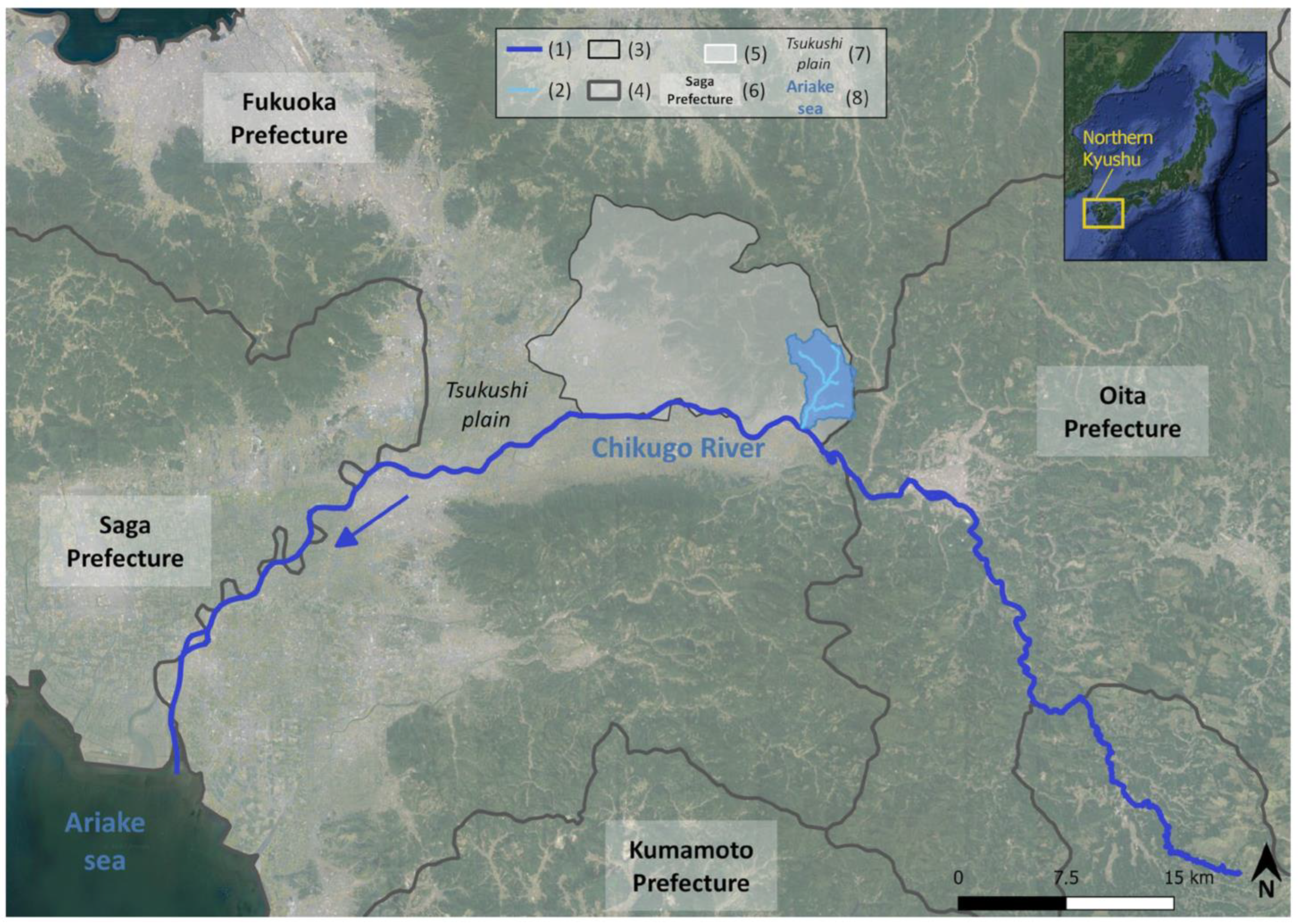
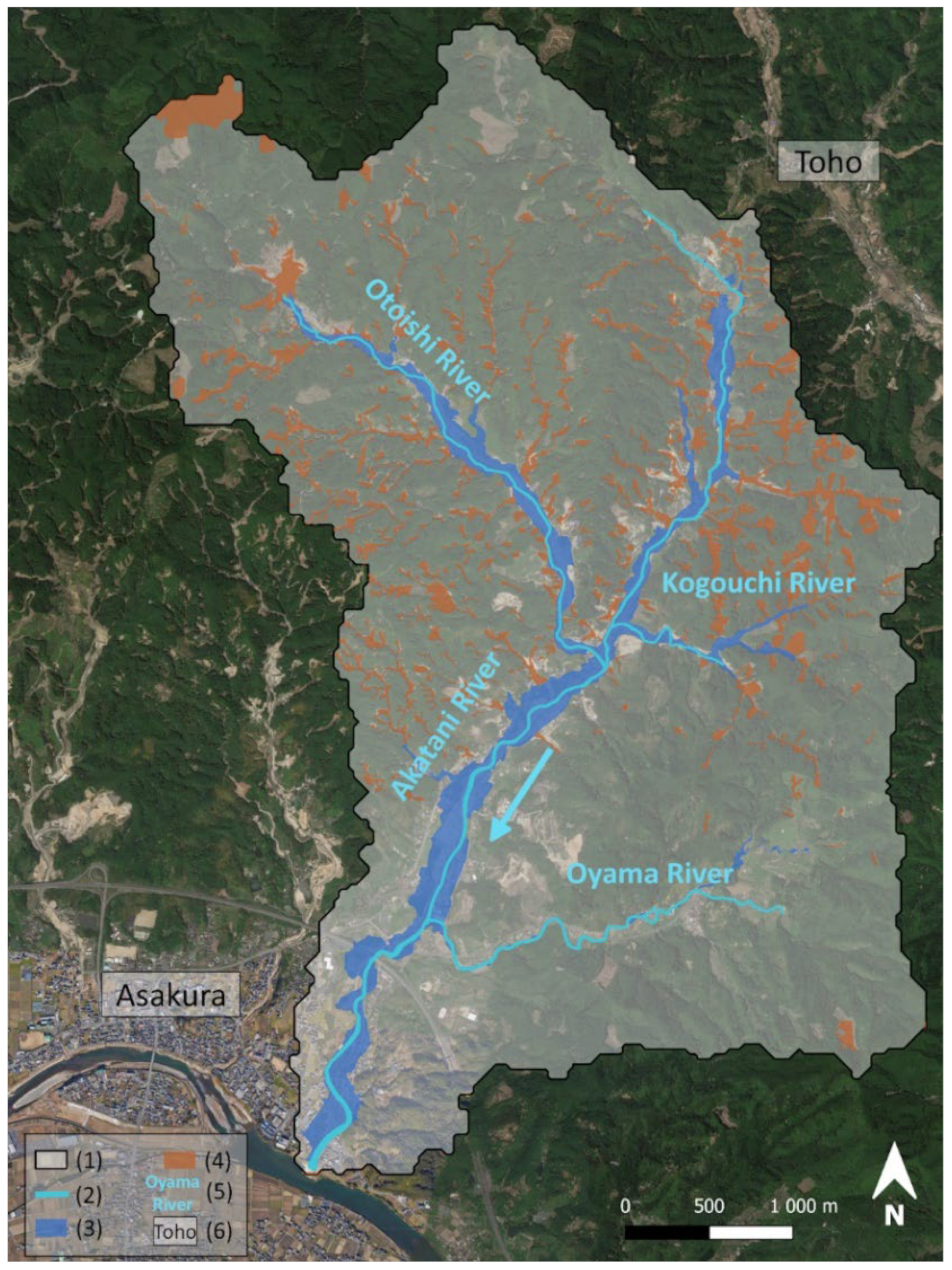
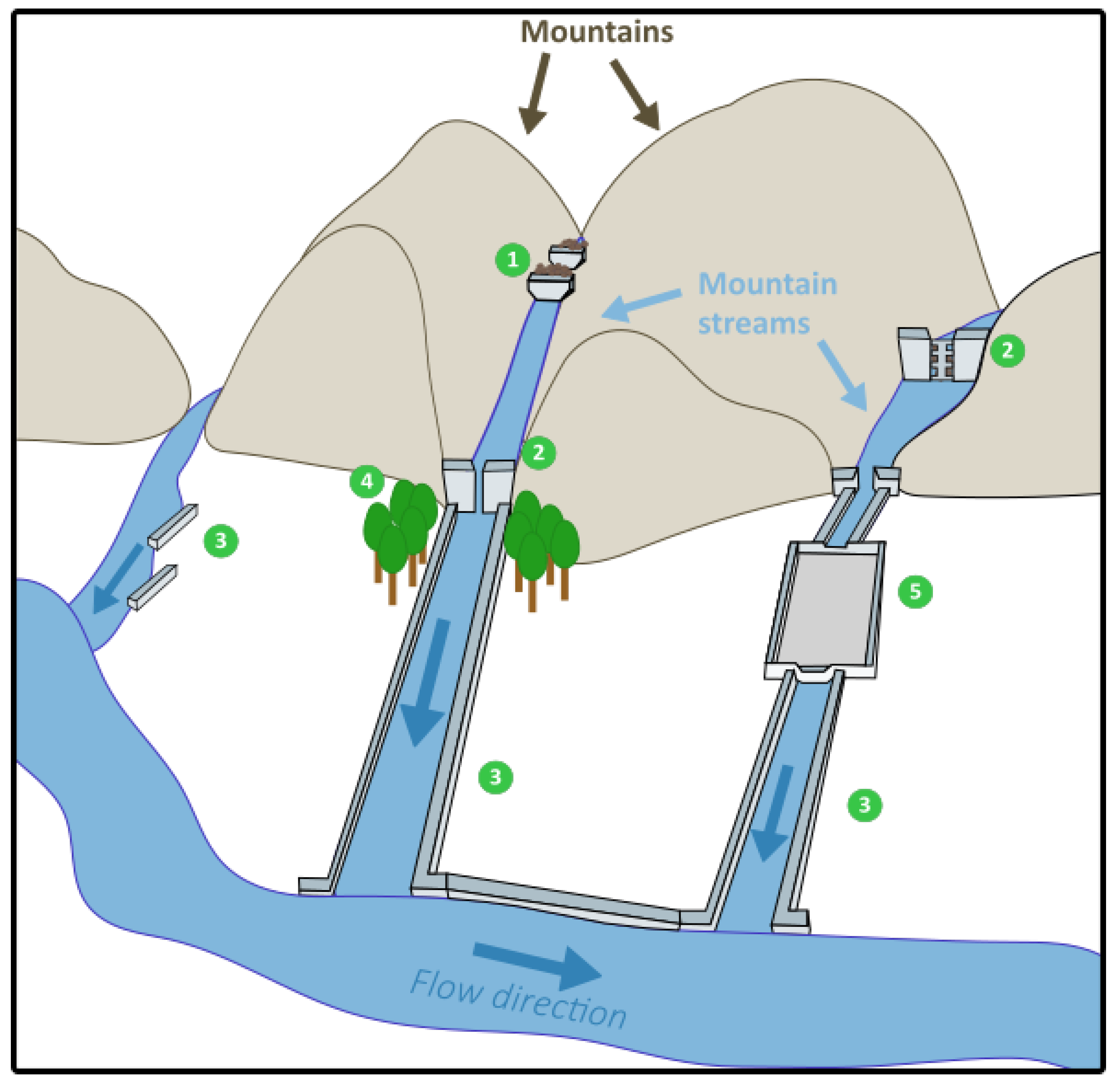
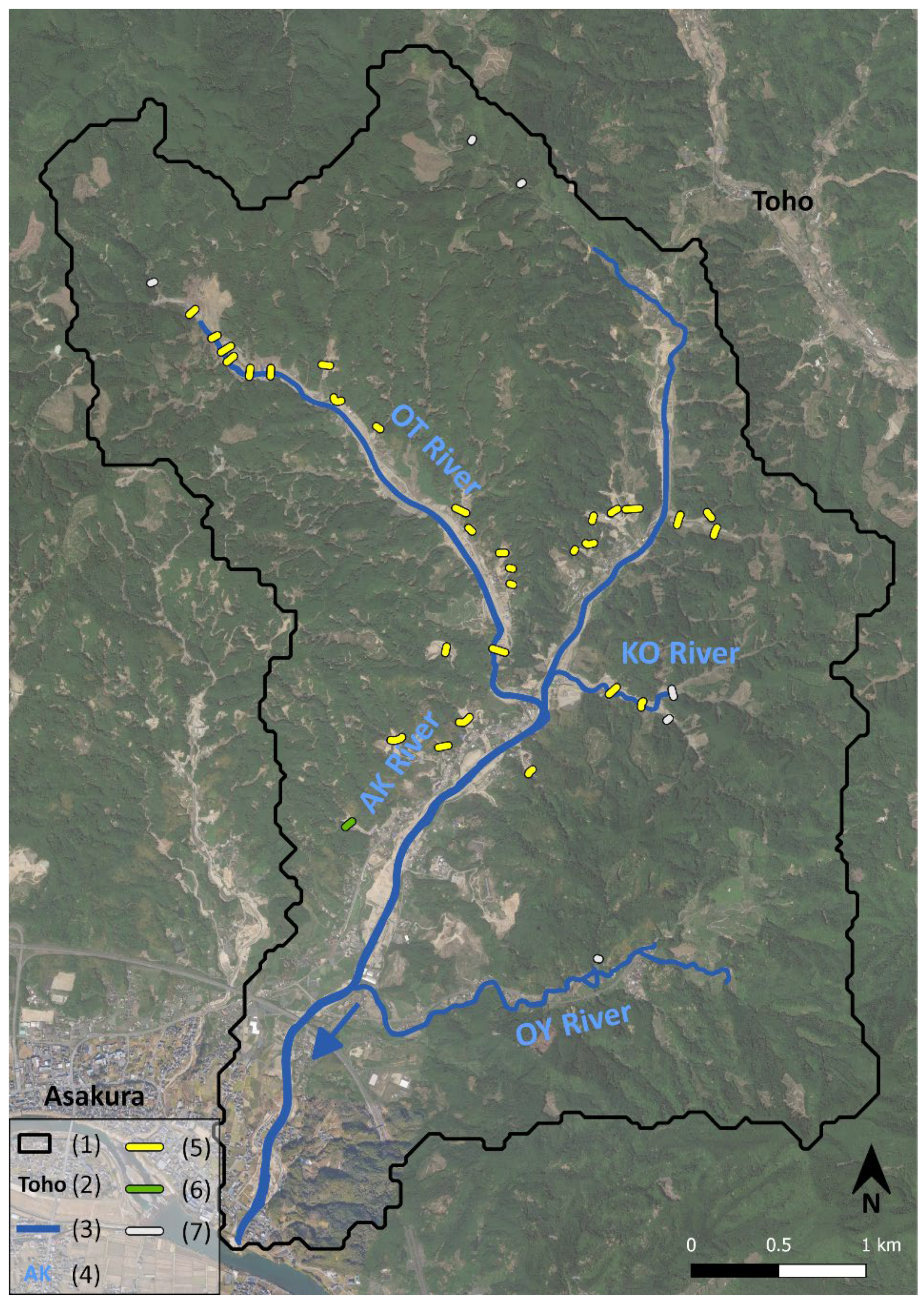
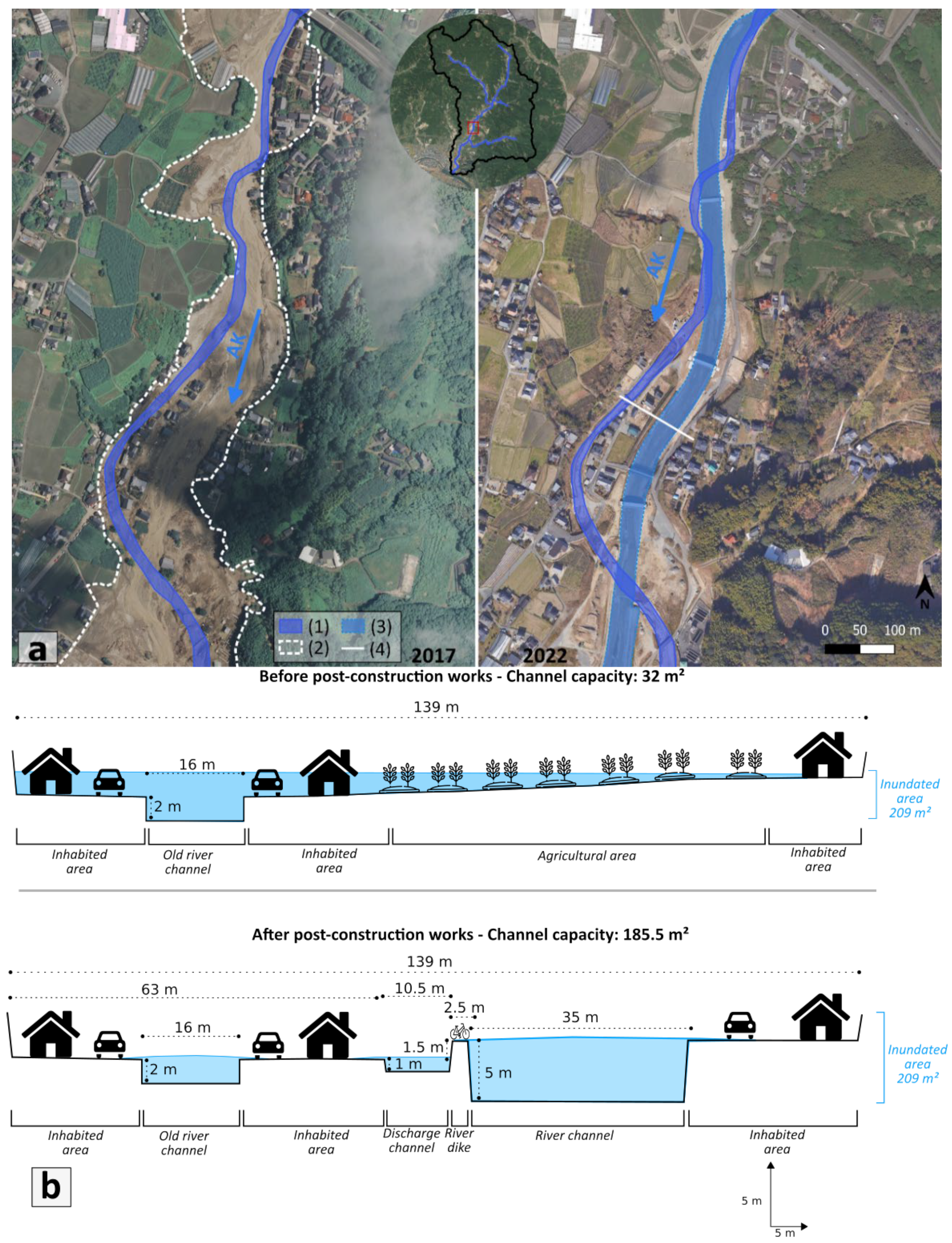
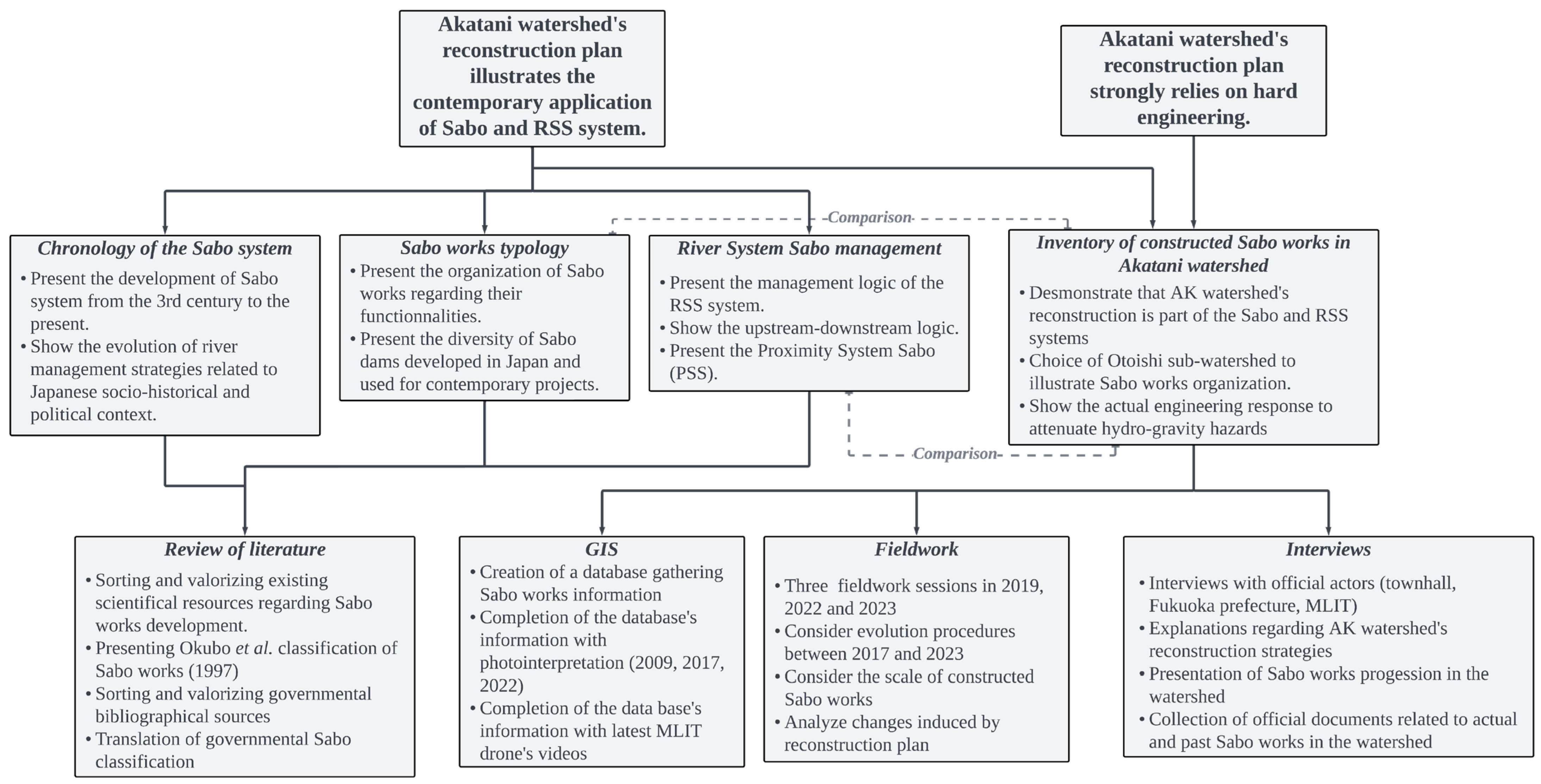
On 5–6 July 2017, an unstable atmospheric condition caused an unusual concentration of rainfall above the Northern part of Kyushu Island, triggering a set of hydro-meteorological hazards. Within the affected area, the mountainous subwatershed of the Akatani River was significantly impacted by numerous landslides combined with debris flow and floods. National and local agencies deployed a plan of reconstruction to restore the floodplain and protect inhabitants. Regarding the hydrosystem in the Akatani watershed, this reconstruction project mainly focuses on the restoration of damaged protection systems and the construction of new infrastructures. Thus, this paper aims to explain the restoration plan of the Akatani River in terms of the strategic Japanese River System Sabo and then as a model of a national-scale spatial plan. It draws on (i) a literature review based on the historical evolution of Japanese protection systems and the River Sabo System; (ii) field surveys in 2019, 2022 and 2023, in conjunction with (iii) interviews with local, regional, and national officials; and (iv) a Geographical Information System analysis of previously and newly built protection systems through aerial photograph interpretation and geospatial data. Sabo works implemented in the Akatani watershed illustrate the engineering vision of Japanese river management. They also constitute a comprehensive system and include a downstream–upstream logic which echoes that of the River System Sabo. In addition, the disaster of July 2017 and the government’s response emphasize the continuous adaptation and improvement of the Japanese disaster management system, which mitigates severe disasters.
Keywords: hydrological risk; watershed management; river restoration; Akatani River; Japan; Sabo hydrological risk; watershed management; river restoration; Akatani River; Japan; Sabo