Article

School Management Culture, Emotional Labor, and Teacher Burnout in Mainland China
1
College of Education Administration, Faculty of Education, Beijing Normal University, Beijing 100875, China
2
Faculty of Education, Central China Normal University, Wuhan 430079, China
3
Faculty of Education, Chinese University of Hong Kong, Hong Kong 999077, China
4
Qinghe Campus, Tsinghua University Primary School, Beijing 100085, China
*
Author to whom correspondence should be addressed.
Sustainability 2021, 13(16), 9141; https://doi.org/10.3390/su13169141
Submission received: 12 July 2021 / Revised: 29 July 2021 / Accepted: 11 August 2021 / Published: 16 August 2021

Abstract

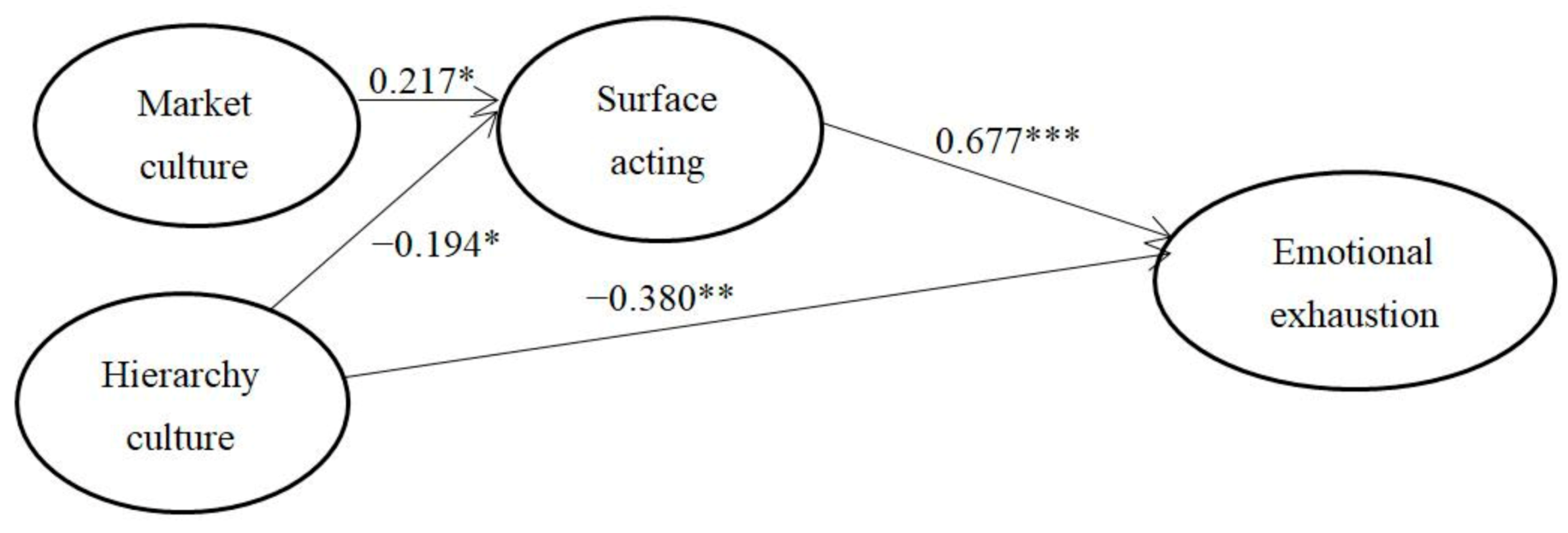
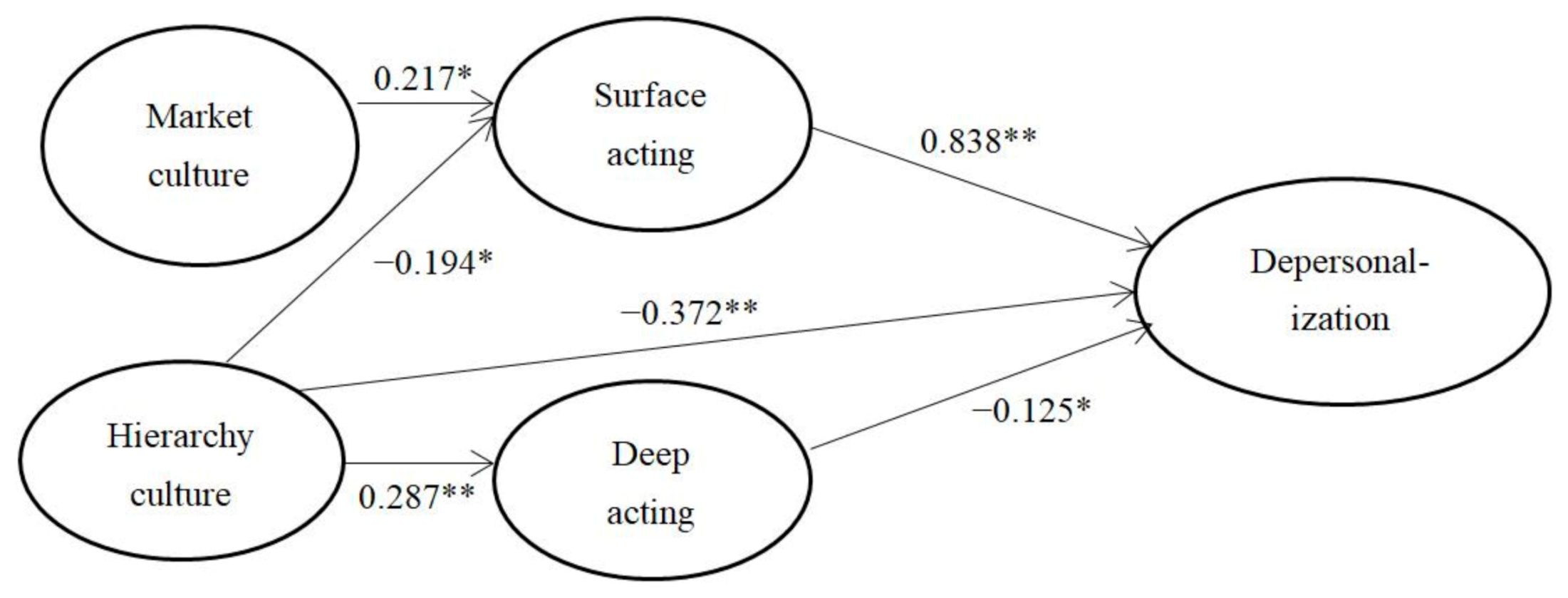
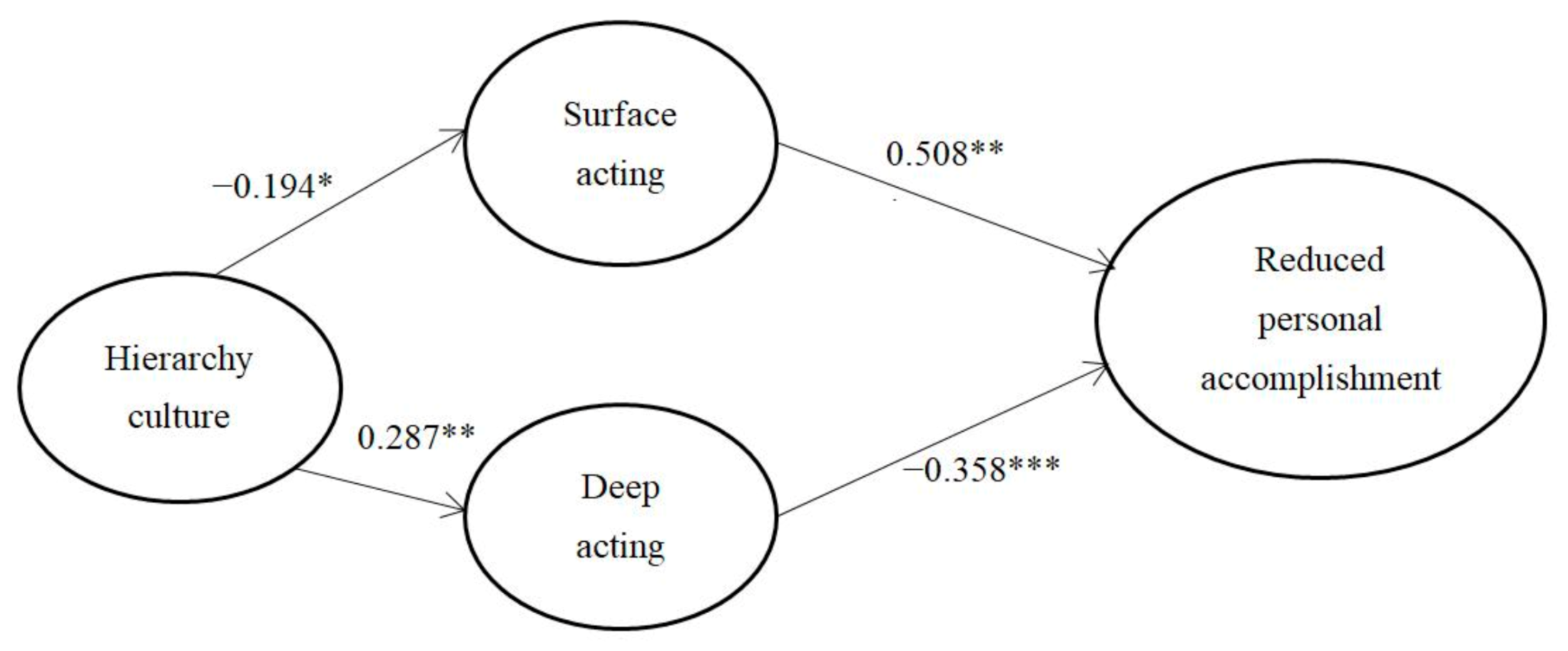
The literature suggests that teacher burnout is influenced by the market and hierarchy cultures of school management and teachers’ emotional labor strategies of surface and deep acting. However, studies have suggested that school management cultures and emotional labor strategies may not function independently based on the emotional labor theory. Nevertheless, the literature has paid less attention to the relationship between the school management cultures, emotional labor, and teacher burnout. Therefore, this study aims to investigate the relationship between the three variables in China via an online questionnaire survey. After surveying 425 kindergarten, primary and secondary teachers who participated in a professional development program organized by a public university in Beijing, the study found that teacher burnout was positively related to market culture but negatively related to hierarchy culture. Moreover, the impact of the market culture was fully mediated by surface acting while the impact of hierarchy culture was partially mediated by surface acting and deep acting.
Keywords: school management culture; emotional labor; teacher burnout; market; hierarchy school management culture; emotional labor; teacher burnout; market; hierarchy