Abstract
Water-saving irrigation behavior (WSIB) is important for sustainable economic and social development in river basins and is promoted by improving water-saving awareness. Understanding the factors of WSIB could facilitate water demand management and information campaigns. Using the theory of planned behavior, this paper analyzes the influence of subjective attitude, perceived behavioral control and subjective norms on behavioral intention and final behavior with a structural equation model (SEM). Moreover, comparative study of the upper, middle and lower reaches of a river basin is also carried out to examine the regional differences. A survey of 546 rural residents in Heihe River Basin (HRB), which is located in northwest China, shows that (1) water-saving expectations and subjective norms have a significant impact on WSIB in upstream areas, and perceived behavioral control and subjective norms have positive effects in the middle and lower reaches; (2) the transformation of awareness into WSIB is slow and non-significant in all areas, mainly hindered by expected economic benefits; and (3) family water-saving experiences and social networks promote WSIB in the midstream and downstream areas. Compared with the midstream and downstream reaches, historical water-saving experience has no obvious effect on WSIB in the upper reaches. These findings highlight policies that (1) strengthen economic interests and increase the transformation of water-saving awareness into WSIB; (2) strengthen public awareness and neighborhood interaction, setting good examples to promote WSIB; and (3) increase farmer participation in relevant decision-making.
1. Introduction
Many major river systems do not have adequate water flow [1], and a large proportion of the world is currently experiencing water stress [2,3,4]. The endorheic basins in the arid region of northwest China are especially faced with water scarcities, leading to competition between the socio-economic and ecological uses of water [5,6]. In this situation, water management that meets the increasing human demand for water while simultaneously protecting fragile ecosystems is urgently needed.
Although meeting this challenge will require alternative sources of water and increasing the productivity of existing water supplies [7], managing demand is also considered an essential element of future water security [8,9,10,11]. Substitute supply and augment supply, for example, new water supply projects and finding more water sources, usually come at considerable costs and require time to implement. Conversely, water conservation can be implemented quickly and is not associated with large infrastructure investment costs [12].
For farmers, various types of irrigation systems such as drip, sprinkle irrigation and centre pivot claim to have high irrigation efficiencies, thereby leading to water conservation. Introducing water-saving irrigation technologies could reduce water consumption without reducing crop yield, and simultaneously, such technologies could increase crop yield with the same amount of water by improving water utilization [13,14,15,16,17]. However, the application scope of water-saving irrigation technologies represented by drip and sprinkling irrigation is still limited [18], which has raised concern among scholars. Empirical studies show that the adoption of water-saving irrigation technologies is restricted by natural, social and economic factors [19,20,21,22], such as individual characteristics (age, ecological cognition, level of education, gender, etc.), home management characteristics (income, cropping system, multiple occupations, social capital, etc.), and environmental factors (promotion system, water price, water system, government support, etc.) [23,24,25,26,27,28]. The results relating to efficiency devices highlight that demand management approaches are as much about human behavior as they are about technology [11].
Some studies related to people’s behavioral characteristics find that raising awareness is a key strategy for reducing demand [29,30,31]. Several studies have investigated the relationship between psychosocial variables and water consumption. Syme et al. [32] found that households with more positive attitudes towards water conservation used less water. Gregory et al. [33] showed that households that reported more engagement and awareness of water conservation used less water. Similarly, Willis et al. [34] found that households that were more environmentally concerned and who reported more water-saving awareness and practices used significantly less water than those who were less concerned and aware [11]. However, research on the key elements of water-saving consciousness and how much these structural elements affect the final behavior is still weak.
Attitudes play a central role in the theory of planned behavior [35], one of the most widely used and well-supported social psychological theories of behavioral decision-making. According to the theory of planned behavior, intentions, which reflect a motivation or plan to engage in an action, are the most immediate predictors of behavior. In turn, intentions are predicted by attitudes (positive or negative evaluations of the behavior), subjective norms (perceptions of social support for the behavior from important others) and perceived behavioral control (perception of the extent to which the behavior is under volitional control [11].
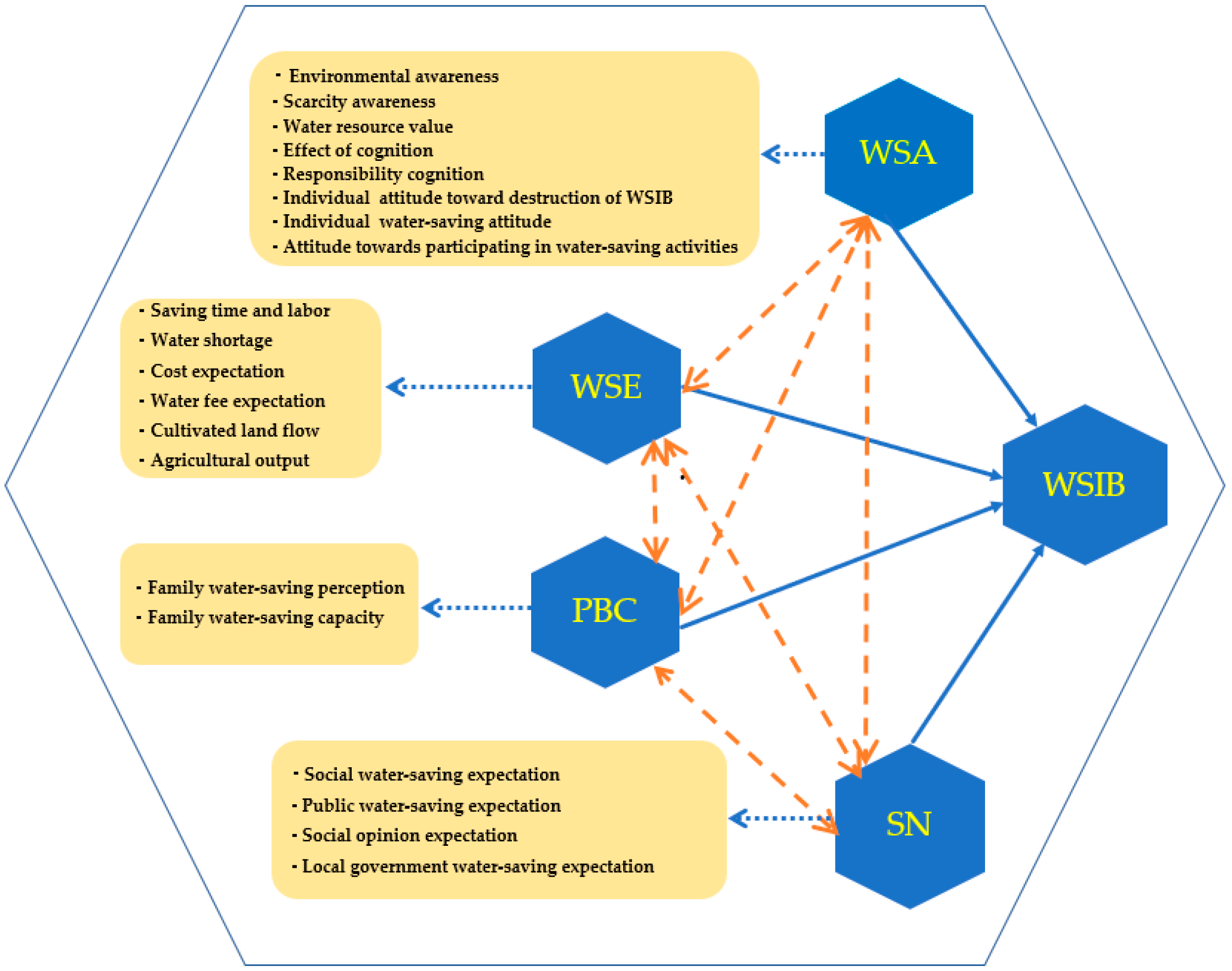
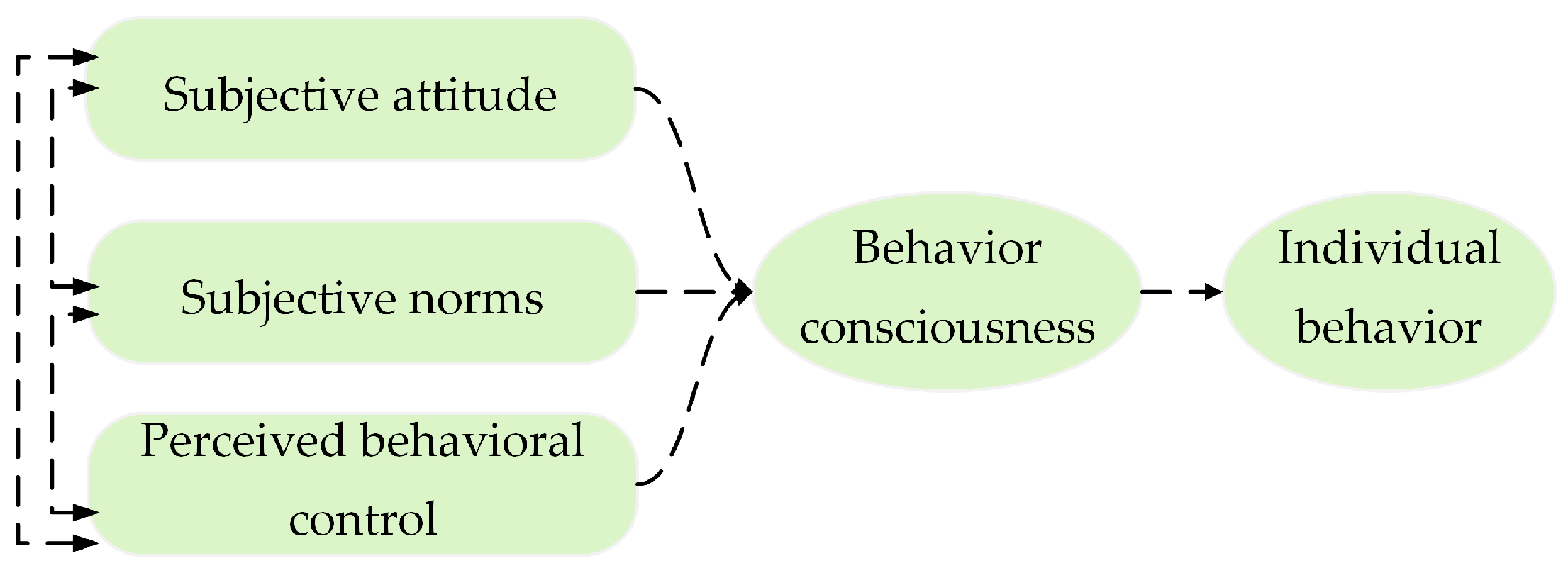
The three main variables of behavioral consciousness are subjective attitude, perceived behavioral control and subjective norms [36,37], as shown in Figure 1. Subjective attitude refers to the individual’s psychological evaluation of a specific behavior. In this paper, water-saving attitude refers to the cognition by individuals concerning water resource conservation and protection, including views on the current situation of water resources and the environment, the value of water resources, and the publicity and education activities related to water resource protection. Perceived behavioral control refers to the perception of the individual’s ability to perform a specific behavior. Water-saving behavioral control in this paper refers to the perception of the water-saving ability of the sample households. Subjective norms refer to the guiding effect of residents’ social environment on their behavioral intentions [38]. The subjective norms of water saving in this paper mainly include residents’ perception of water saving in the surrounding neighborhoods, the whole society, the local government and other relevant institutions.
Figure 1.
Flowchart for the planned behavior model.
In addition, in terms of sociodemographic variables, the region can play a role as a predictor of water use. Given the differences in drought experiences and associated restrictions across regions, the region can be a proxy for examining the effects of these variables [11]. Residents with more pronounced experiences of drought and associated regulations may use less water. Past research has shown that environmental conditions and regulations influence water conservation [7,39]. Therefore, comparative studies between different regions are obviously helpful to understand the influence of regional differences on water consumption. These aspects emphasize the importance of identifying the determinants of water-saving behaviors so that policy-makers can gain an in-depth understanding of the ways in which they can positively influence water demand [11].
The Heihe River Basin, the second largest inland river basin in China, is a typical inland river in northwest China, where water resources are the key factor limiting economic development and ecological protection. There has been much investment in the construction of water-saving irrigation technologies to meet the increasing demand for water, but the overall utilization rate of these technologies, such as drip, sprinkle irrigation, and centre pivot technologies, is not high [40]. Previous research focused on the cost of water-saving irrigation technologies and the rebound effects [41] and rarely considered the perspective of water-saving consciousness. Moreover, the Heihe River Basin (HRB) can be divided into three subunits from south to north according to different environmental conditions, and each subunit has different natural and social conditions and is influenced by different factors related to minority cultures [42]; thus, regional studies have frequently targeted this area.
Therefore, starting from the perspective of water-saving consciousness, and based on the theory of planned behavior, the objective of this paper is to (1) examine the questionnaire survey statistics of the upper, middle and lower reaches of the HRB; (2) establish a structural equation model (SEM) to analyze the influencing path of water-saving awareness on water-saving irrigation behavior (WSIB); and (3) analyze the specific influencing links and factors to provide reference for policy-makers.
2. Methodology and Materials
2.1. Study Area
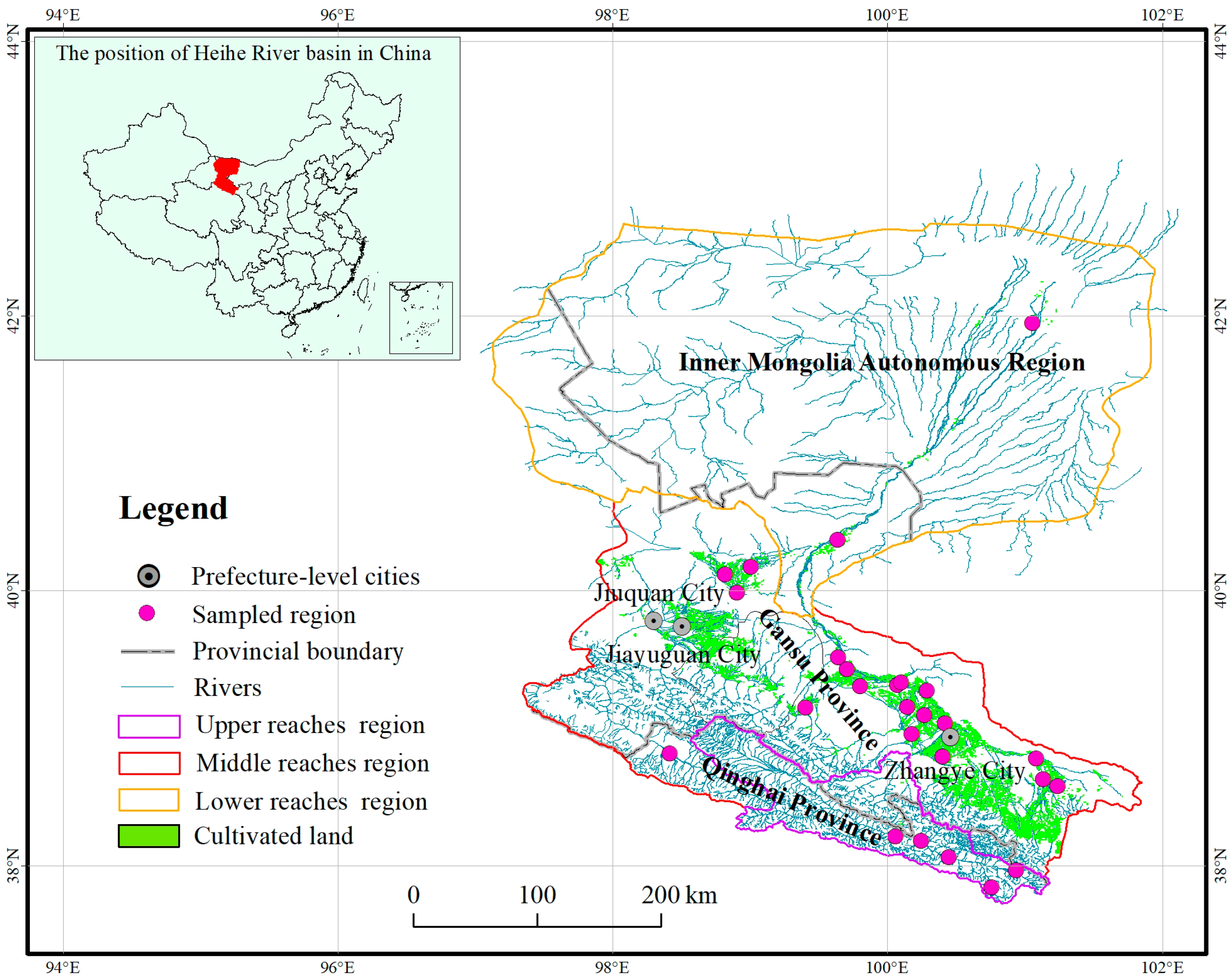
The HRB (90–102° E, 37°50′–42°40′ N) covers Qinghai Province, Gansu Province, and Inner Mongolia, with a river length of 821 kilometers and a catchment area of 14 × 104 km2 (Figure 2). From south to north, variations of the HRB are evident and it can be divided into three subunits. The upper reaches, which are located in Qilian Mountain, belong to the northern margin of the Tibet Plateau. It is the birthplace of the Heihe River as well as the runoff area, with abundant rainfall, less evaporation, and a cold and damp climate. Being the oasis of the Hexi Corridor and the desert plain, the middle reaches of the HRB are a key area for agriculture. The lower reaches of the HRB, which are north of the Langxinshan Gorge, form the oasis in Inner Mongolia. With a mean elevation of around 1000 m and a mean annual precipitation of 50 mm, it is mainly occupied by Gobi, desert, and bare land [42].
Figure 2.
Location of the study area.
2.2. Data Source
To ensure the rationality of the sample and the relevance of the research, the survey targeted pure agricultural operators in rural areas. The survey used a combination of stratified sampling based on population size and random sampling to determine 30 townships and 20 rural households in each township (Figure 2). The survey period was from 1 April to 15 May 2018, and questionnaires and field visits involved 600 rural residents. The questionnaire survey was conducted in two phases. The first phase was from 1 April to 30 April. The selected townships were given a questionnaire using a stratified sampling method to collect data. The second phase was from 6 May to 15 May, when a field visit was conducted to interview the main staff of the local cadres and water management. The interviews covered the recent overall economic situation, water supply methods, water prices and corresponding water resources management of the villagers. In addition, 10 households were randomly selected for a return visit. We used a five-point Likert scale [43] (1 = never, 2 = occasionally not, 3 = do not know, 4 = occasionally, and 5 = often) to quantify the questionnaire responses. Higher scores indicated greater likelihood.
2.3. Sample Characteristics
As shown in Table 1, the total number of upstream samples is 110, with a validity of 91.82%; for the total 330 midstream samples, the validity is 91.52%, and for the 160 downstream samples, the validity is 89.38%. Among them, the gender distribution of the interviewed households in different regions of the basin was relatively uniform, with men and women each accounting for almost 50%. Most of the survey participants were older, and those between 41 and 55 years old represented a large proportion of the sampled farmers in different regions of the basin. Most of those interviewed had an educational level of junior high school or below. In terms of family structure, households with four or more members accounted for the largest proportion, followed by those with two or one member. Regarding the purpose of farming, the sampled farmers in different regions showed significant differences: 80% of the sampled farmers in the upstream areas engaged in cultivation for food consumption, while nearly 70% of farmers in the midstream and downstream areas farmed for profit. Concerning the future choice of arable land use, nearly 75% of the sampled farmers in the upper reaches would choose to leave their own arable land to future generations, while the majority of the sampled farmers in the middle and lower reaches would choose to rent the arable land to others. In terms of employment status and cultivated land area, the sampled farmers also showed obvious differences. Farmers in the upstream reaches had small-scale areas of cultivated land, and the degree of concurrent employment was high. In contrast, the sampled farmers in the middle and lower reaches generally cultivated land of greater area and had a relatively low degree of concurrent employment.
Table 1.
Sample characteristics in the study area.
2.4. Construction of the Model
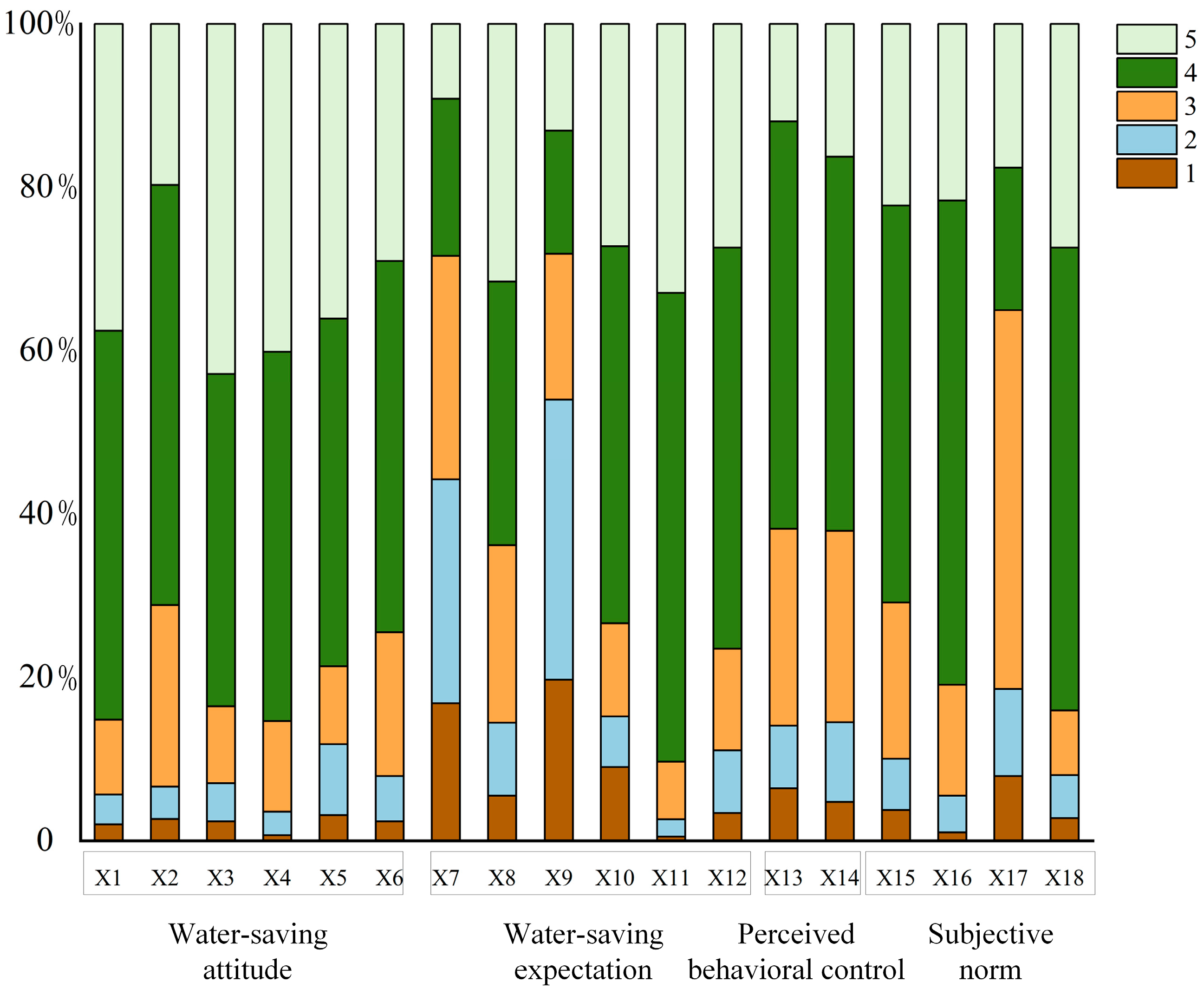
Based on the field investigation, this study added the element of water-saving expectation as a fourth element to predict behavioral intentions on the basis of the theory of planned behavior. Accordingly, a questionnaire was used to obtain information on 22 items related to water-saving attitudes (WSA, X1–X8), water-saving expectations (WSE, X9–X14), perceived behavioral control (PBC, X15–X16), subjective norms (SN, X17–X20) and WSIB (Y1–Y2) (see Appendix A). The overall situation of the number of questionnaire respondents in the basin is shown in Figure 3. Among the water-saving attitudes indicator variables, question X4 is related to the cognition of water resources. Due to the low education level of the sample farmers, they did not know much about water-saving irrigation technologies, leading most of the respondents to check 1 or 2 on the questionnaire question. In addition, question X5 is about responsibility perception. Due to factors such as traditional perception and income, most of the sample farmers believed that the government and other relevant departments should spend most of their investments in water-saving irrigation technologies, which also led to a relatively high number of people checking 1 or 2 for that question. The results are the opposite of those of the other questions; thus, these two questions have been eliminated from Figure 3. On the whole, most of the sample farmers had a high degree of recognition of water-saving consciousness. The model structure of the hypothesis is shown in Figure 4, and the specific meaning of the indicators is shown in the Appendix A.
Figure 3.
Distribution of the respondents’ responses. Note: 1–5 indicates the questionnaire answer options, i.e., 1 = never, 2 = occasionally not, 3 = do not know, 4 = occasionally, and 5 = often. X1–X6 are indicator variables of water-saving attitudes, X7–X12 are indicator variables of water-saving expectations, X13–X14 are indicator variables of perceived behavioral control, and X15–X18 are indicator variables of subjective norms. Detailed problem settings are shown in the Appendix A. The vertical axis is the proportion of responses.
Figure 4.
Structural equation diagram based on the study purpose. Note: WSA means water-saving attitudes; WSE means water-saving expectations; PBC means perceived behavior control; SN means subjective norms; and WSIB means water-saving irrigation behavior.
2.5. Research Methods
The SEM is a statistical method integrating a factor analysis and path analysis. Many data that cannot be directly measured, such as water-saving awareness and WSIB, are called latent variables. The explicit variables used to reflect these latent variables are called indicator variables or observation variables. The SEM can effectively analyze the relationship between observed variables and latent variables. This paper used Amos23.0 software for the data analyses, and SPSS 23.0 was used to test the validity and reliability of the questionnaire.
2.6. Validity and Reliability Tests
SPSS 23.0 was used to perform the KMO (Kaiser–Meyer–Olkin) and Bartlett sphericity test for water-saving attitudes, water-saving expectations, perceived behavioral control, subjective norms, and WSIB. The results (Table 2) show that the KMO of the five latent variables ranged from 0.54–0.832, with all values greater than 0.5; the Bartlett sphericity test was also significant (p < 0.001), and the cumulative variance rate of the five latent variables was 55.43–80.71%, which is greater than 50% and indicates that each latent variable is highly correlated and has only one effective factor. Thus, the factors are suitable for analysis [44], passing the validity test.
Table 2.
Results of the questionnaire reliability analysis.
In addition to the validity test, Cronbach’s alpha was also used to test the reliability of the questionnaire data. The categories water-saving attitudes, water-saving expectations, perceived behavioral control, subjective norms, and WSIB had values of 0.809, 0.841, 0.753, 0.764 and 0.804, respectively. According to the Cronbach’s alpha criterion (≥0.8, excellent reliability; ≥0.7, good reliability; >0.5, acceptable) [45], the reliability was good.
3. Results and Analysis
3.1. Estimation and Verification of Parameters
Based on the survey data, Amos23.0 was used to estimate the model parameters, and the standardized path coefficients and estimation results of each parameter in the hypothetical model are shown in Table 3. The empirical results differ slightly across regions in the basin. The standardized path coefficients of water-saving attitudes, water-saving expectations, perceived behavioral control, and subjective norms to WSIB in the upstream area were 0.135, 0.302, 0.097, and 0.369, respectively. Among them, water-saving expectations and subjective norms had significant positive effects on WSIB. The perceived behavioral control and subjective norms of residents in the middle reaches of the basin had significant positive impacts on WSIB, with standardized path coefficients of 0.141 and 0.161, respectively. In the downstream area, perceived behavioral control and subjective norms had significant positive impacts on WSIB; the standardized path coefficients were 0.393 and 0.169, respectively.
Table 3.
Standardized path coefficients of the model variables.
3.2. Model Fitness Evaluation
Following model parameter estimation, we also evaluated the overall fitness of the model. The model fitness evaluation index can be divided into two categories: Absolute and relative fit indexes, as shown in Table 4. The absolute fit index includes the chi-square degree of freedom ratio (x2/df), the approximate error root mean square (RMSEA), and the goodness-of-fit index (GFI) of the model; the relative fit index includes the norm-fit index (NFI), the comparative fit index (CFI), and the Tucker Lewis index (TLI). All values of the fitness indicators met the requirements, and the overall fit was acceptable.
Table 4.
Overall evaluation of the residents’ water-saving behavior model.
3.3. Empirical Analysis
3.3.1. The Effect of Water-Saving Attitudes on WSIB
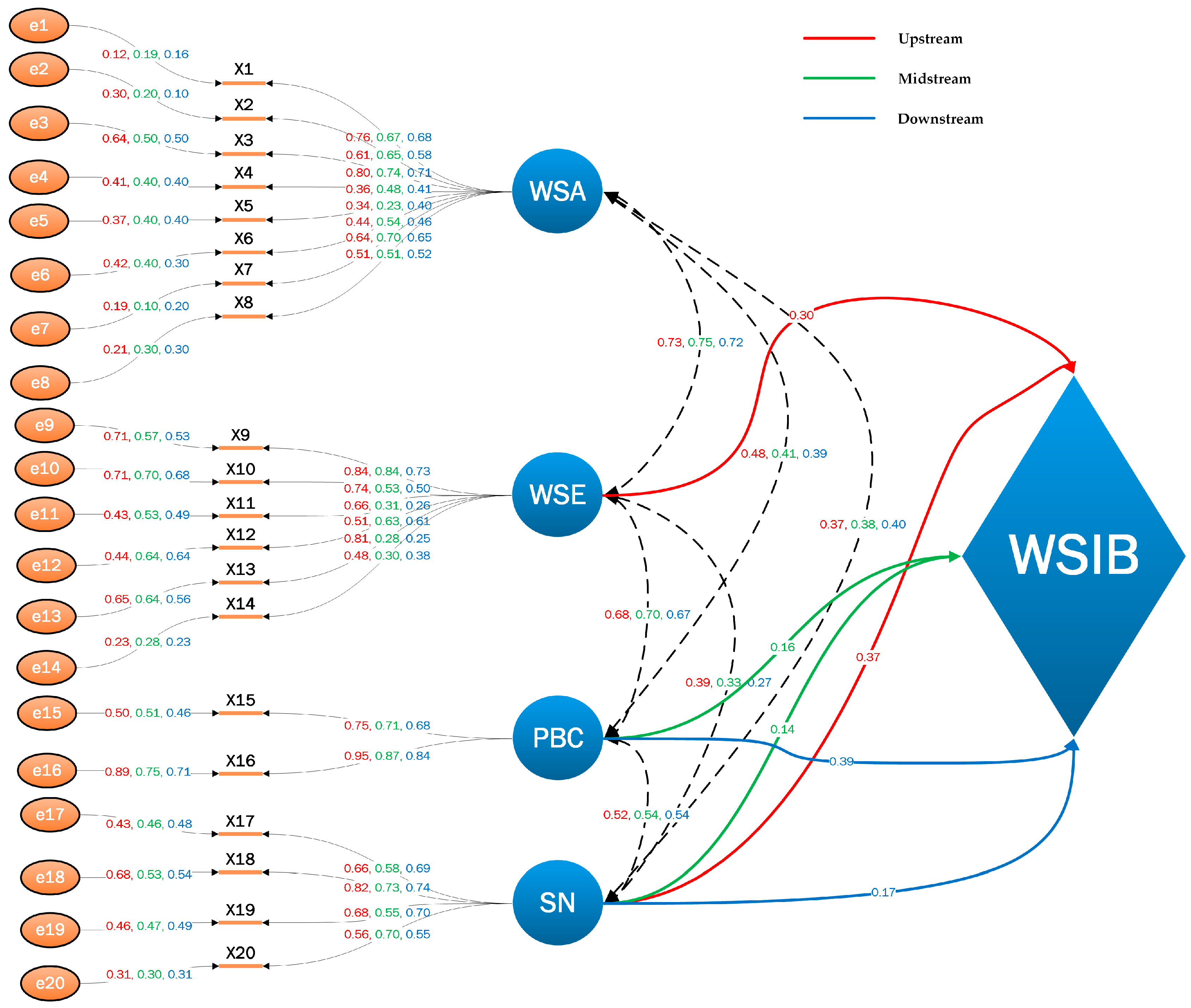
Water-saving attitudes reflect farmers’ cognition of the conservation and protection of agricultural irrigation water resources, which has a positive impact on water-saving behaviors [33]. The water-saving attitudes of residents in the HRB had no significant positive impact on water-saving behaviors, and its correlation coefficients with water-saving expectations were the highest, all above 0.7, indicating that the “value rationality” of farmers’ water conservation in the whole basin had externality, which is mainly affected by self-interests and savings expectations. The level of economic development in rural areas is backward, and the per capita income is low. Agriculture plays a key role in the lives of the sample farmers, constituting an important income source in the middle and lower reaches and the main source of food in the upper reaches. Therefore, the sampled farmers pay more attention to economic issues directly related to water-saving irrigation and rural economic development, such as expected agricultural income, expenditures and savings [46]. At the cultural level, traditional farming practices and a lack of understanding of advanced agricultural water-saving irrigation techniques impacted farmers’ perceptions, even if they recognized the shortage of water resources and the ecological and environmental problems. The factor loadings for environmental protection, scarcity awareness, and water resources status were, respectively, 0.76, 0.61, 0.80; 0.67, 0.65, 0.74; and 0.68, 0.58, and 0.71 in Figure 5. The farmers considered alleviating water shortages and improving the ecological environment to be mainly the responsibility of society and the government, implying less individual or household responsibility, with water conservation being of little significance in mitigating water shortages. Concerning water-saving attitudes, the sampled farmers in the different areas of the river basin all believed that the government should bear most of the investment costs of water-saving irrigation equipment, with factor loadings of 0.34, 0.23, and 0.40, respectively, in the three areas.
Figure 5.
Path diagram of the water-saving behavior model in the HRB. Note: WSA means water-saving attitudes; WSE means water-saving expectations; PBC means perceived behavioral control; SN means subjective norms; and WSIB means water-saving irrigation behavior.
3.3.2. Impact of Water-Saving Expectations on WSIB
Farmers’ water-saving expectations refer to the expected effects of water-saving irrigation decisions, including the impact of water conservation on water fees, agricultural income, and water shortages. The direct effect on WSIB was not significant in the middle and lower reaches, but it was significant at the 10% level in the upper reaches. As shown in Figure 5, in the middle and lower reaches, the distribution trends of the factor loadings for water-saving expectations were similar. The factors that contributed the most were saving time and labor and water expenditures; those with the least contribution were agricultural production and future arable land transfer. The sampled farmers in the middle and lower reaches demonstrated understanding that water-saving technologies could save time and expenses, but they also worried that agricultural output would be reduced due to insufficient water input. In other words, the expected reduction in crop yield hindered the transformation of the sampled farmers’ water-saving awareness into water-saving practice, as did their relatively determined intended future use of the cultivated land (Table 1). There may be two reasons for this. First, the age of the sampled farmers in the middle and lower reaches was generally older (Table 1). The shortage of agricultural labor resources due to ageing and the expected increase in the proportion of agricultural water fees have revealed the need for water-saving technologies among the sampled farmers. Second, the farmers’ relatively determined future transfer of cultivated land and lower agricultural income limited the transformation of the farmers’ water-saving consciousness into action. The younger members of the sampled families mostly chose to work in cities and had little or no farming skills, and almost none of them talked about agriculture [47]. Under this circumstance, most farmers intended to rent out most of their land, which reduces their interest in developing and continuing agricultural practices. The promotion of advanced agricultural technologies and water-saving irrigation tools therefore faced great difficulties. Second, agriculture was the main source of income for the sampled farmers. The farmers worried that their agricultural output would fall due to insufficient water input and thus maintained a wait-and-see attitude towards new water-saving technologies. Comprehensively comparing the immediate costs and expected benefits, most farmers chose to maintain the status quo and continued to use their original irrigation practices. In the upstream area of the Heihe River, water-saving expectations did not hinder the transformation of the farmers’ water-saving awareness into water-saving practices mainly for several reasons. The upper part of the river mainly flows through the Qilian Mountains, which have an average elevation of 4000 m and are snow-covered year round, making the area unsuitable for large-scale food crops [42]. Therefore, the cultivated land area of these sampled farmers was generally lower (less than 5 (mu = 1/15 ha)), and agricultural income was not the main source of these farmers’ income. The main purpose of planting in this area was for household consumption; therefore, the expected crop reduction due to water-saving irrigation technologies did not substantially impede the water-saving practices of these sampled farmers. Moreover, water is abundant and free of charge in the upstream area, making it easier for farmers to believe that water-saving irrigation technologies do not reduce the normal demand for crops. Upstream farmers with a higher level of concurrent employment indicated the need for water-saving technologies to minimize the time and labor of farming. The expected farmland transfer direction was also determined in this area (for future generations), which also reduced their fears that water-saving technologies would be scrapped within a few years. In conclusion, compared with farmers in the middle and lower reaches, farmers in the upper reaches had fewer worries about water-saving irrigation technologies, and their water-saving consciousness was more easily converted into water-saving behaviors.
3.3.3. The Effect of Perceived Behavioral Control on WSIB
Perceived behavioral control reflects an individual’s judgment of his/her degree of water-saving behavior. The coefficients of its direct effects on WSIB passed the significance test in the middle and lower reaches of the Heihe River, 0.14 and 0.393, respectively. There was no significant impact in the upstream region. Therefore, the water-saving practices of the sampled farmers in the middle and lower reaches depended on their own historical water-saving experiences and expected water-saving obstacles. Compared with the upstream area, there is a shortage of water resources in the middle and lower reaches, the sampled farmers’ degree of concurrent employment is relatively low, and the scale of cultivated land is large. Since farming in this area is a long-term process, to improve the comparative benefits of agriculture, these farmers have tried to reduce their use of water resources; thus, they are relatively familiar with their own water-saving capacities, expectations and obstacles. In contrast, in the upstream region, agricultural water has been exempt from fees for many years, and the sampled farmers hold uncertain expectations of their water-saving capacities and obstacles, which makes the coefficient of perceived behavioral control for water-saving behaviors non-significant.
3.3.4. The Influence of Subjective Norms on WSIB
Subjective norms refer to the guiding role of residents’ social environment on their behavior and include the perceptions of water-saving among their neighbors, the whole society and relevant local government agencies. In the upper, middle, and lower reaches of the HRB, the direct path coefficients of subjective norms to WSIB were 0.369, 0.161, and 0.169, respectively, all passing the significance test. Based on the factor loadings, the trend distributions of the coefficients were similar (Figure 5). Neighbors had the greatest impact on the sampled farmers’ water-saving awareness, with a factor loading above 0.7, followed by local government agencies, and finally the national government. This shows that the group concept in the Chinese culture had an important impact on rural residents’ awareness of water conservation. Group consensus can restrict individual behavior through external rewards or pressures, especially in rural areas [48]. When they had observed that their neighbors had adopted some water-saving behaviors or new water-saving technologies, farmers were more likely to choose to follow suit. In addition, people in rural areas of China have close social contact. Farmers tend to pay attention to the views of their neighbors. When people around them praise their water-saving behaviors, the farmers will have enhanced enthusiasm for accepting new technologies and new knowledge [49,50]. That is, a good inter-resident relationship of trust and communication is a positive factor promoting the transformation of farmers’ water-saving awareness into practice (there is a group effect). Second, residents’ trust in the system and management institutions is also an important factor promoting water conservation. Trust in relevant institutions and systems managing the water supply can encourage rural residents to participate in water-saving measures and water-saving policies advocated by the government [38].
4. Main Conclusions and Policy Implications
4.1. Main Conclusions
This paper, taking the survey data of farmers in the HRB as the sample, expands the factors of the existing planned behavior theory and uses the SEM approach to empirically analyze the influence of farmers’ water-saving consciousness on WSIB. The results show the following: (1) The attitude of farmers had no direct impact on WSIB, but economic expectations were a key link connecting awareness to WSIB. This self-interested economic value orientation weakened the final impact of the farmers’ perceived social, ecological, and other public benefits on WSIB. (2) In terms of the direct influence of farmers’ water-saving expectations on WSIB, the expectations of saving water and reducing the water fees positively affected farmers’ actual water-saving practices; expectations of production reduction, costs, and farmland transfer reduced the effects of farmers’ water-saving awareness on their water-saving practices. (3) Perceived behavioral control and subjective norms had significant positive impacts on farmers’ actual water-saving practices, indicating that good water-saving experiences, clear expectations of water-saving obstacles, and trust in neighbors and institutions were the main determinants for the sampled farmers’ implementation of WSIB.
4.2. Policy Implications
- (1)
- In the process of transforming water-saving consciousness into practice, the value associated with the agricultural economy still has key effects. Therefore, farmers should be actively encouraged to participate in relevant water-saving decision-making and project implementation activities. Water-saving consciousness should be promoted and the motivation for WSIB transformed through reward and punishment systems to make the ecological and social public interests in water-saving the personal interests of farmers.
- (2)
- Good communication among villagers should be built using informal norms, such as neighborhood township norms, which have a positive impact on farmers’ water-saving behaviors. Various media and measures should be used to improve the transparency of the formulation and operation of water-saving regulations and establish a trust system for the water saving of neighbors, farmers, and institutions. Advanced water-saving figures and typical water-saving cases should be publicized to create a positive atmosphere concerning water saving among the people and promote WSIB.
- (3)
- For farmers in the middle and lower reaches, a high value-added industrial model should be developed, featuring crop planting and processing with government and market guidance; increased planting scale and the cultivation of water-saving crops should be promoted; and farmers’ income should be effectively increased to form a positive cycle with the benefits of water saving. For farmers in upstream areas, based on a full understanding of the price elasticity of the local agricultural water demand and the expected impact of water price policies on agricultural production, a reasonable fee should be set for agricultural water use to promote WSIB and improve farmers’ water-saving awareness.
Author Contributions
Conceptualization, methodology and data curation, F.Z. and L.L.; Figures and tables, L.L., Y.Z. and X.D.; writing: original draft preparation, F.Z. and L.L.; writing: review and editing, F.Z., L.L., A.G., X.S., Q.C., and X.D.
Funding
This research was supported by the Strategic Priority Research Program of the Chinese Academy of Sciences [grant numbers XDA19070502, XDA20100104, XDA19040504]; the National Natural Science Foundation of China [grant numbers 41571516, 41690144]; and the Fundamental Research Funds for the Central Universities (grant number 2019jbkyjd013).
Conflicts of Interest
The authors declare no conflict of interest.
Appendix A
Table A1.
Water-saving attitudes, motivations, and perceived behavioral control questionnaire for rural residents.
Table A1.
Water-saving attitudes, motivations, and perceived behavioral control questionnaire for rural residents.
| Factors | Number | Indicator Variable | Problem Setting |
|---|---|---|---|
| Water-saving attitudes | X1 | Environmental awareness | Do you feel guilty wasting water for agriculture? |
| X2 | Scarcity awareness | What is the shortage of irrigation water in your village? | |
| X3 | Water resource value | Water resources are very valuable; do you agree? | |
| X4 | Effect of cognition | Water-saving irrigation technologies can both increase agricultural income and improve the ecological environment; do you agree? | |
| X5 | Responsibility cognition | Who do you think should invest in the cost of water-saving irrigation technologies? * | |
| X6 | Individual attitudes towards the destruction of WSIB | When you encounter behaviors that damage rivers and channels, will you stop or report to the relevant government departments? | |
| X7 | Individual water-saving attitudes | Have you and your family thought about saving water during the farming process? | |
| X8 | Attitudes towards participating in water-saving activities | Are you willing to participate in public education or technology promotion activities for water-saving irrigation technologies? | |
| Water-saving expectations | X9 | Saving time and labor | If water-saving irrigation technologies can save labor and time, would you consider using them? |
| X10 | Water shortages | Water conservation can solve the water shortage situation; do you agree? | |
| X11 | Cost expectations | The investment costs of water-saving technologies are not expected to affect your water-saving decision; do you agree? | |
| X12 | Water fee expectations | If investing in water-saving technologies can save agricultural water bills; would you consider using them? | |
| X13 | Expected farmland transfer direction | Will your water-saving irrigation technologies decisions be affected by the expected transfer of your own farmland? | |
| X14 | Agricultural output | Saving water will significantly reduce crop yields; do you agree? | |
| Perceived behavioral control | X15 | Family water-saving perceptions | For my family, water-saving technologies can be used to reduce the amount of water used for agricultural irrigation; do you agree? |
| X16 | Family water-saving capacity | My family has the energy to learn the measures and methods necessary to save agricultural irrigation water; do you agree? | |
| Subjective norms | X17 | Social water-saving expectations | The whole society is advocating for saving irrigation at present; do you agree? |
| X18 | Public water-saving expectations | When you see neighbors and friends implement agricultural irrigation technologies, will you want to follow their example? | |
| X19 | Social opinion expectations | When you see water-saving irrigation technologies on the TV or in the newspaper, will you follow their example? | |
| X20 | Local government water-saving expectations | Will you take an active part in the water-saving irrigation technologies public education activities organized by the local government (village committee)? | |
| Water-saving irrigation practices | Y1 | Investment in water-saving technologies and tools | How much are you willing to pay for water-saving irrigation technologies? ** |
| Y2 | Proportion of water-saving irrigation area | The proportion of the water-saving irrigation area in your home to the planting area is? *** |
Note: The questionnaire answers are set to five levels: 1 = never, 2 = occasionally not, 3 = do not know, 4 = occasionally, and 5 = often. * 1 = entirely by the government; 2 = common burden, but government more; 3 = common burden, but farmer more; 4 = half and half; 5 = entirely by the farmer for question X5. ** 1 = 0–500; 2 = 501–1000; 3 = 1001–1500; 4 = 1501–2000; 5 = more than 2001, and *** 1 = 0–5%; 2 = 6–10%; 3 = 11–15%; 4 = 16–20%; 5 = more than 21% for question Y1 and Y2, respectively.
References
- Postel, S. Dividing the Waters: Food Security, Ecosystem Health, and the New Politics of Scarcity; Worldwatch Institute: Washington, DC, USA, 1996. [Google Scholar]
- Vörösmarty, C.J.; Green, P.; Salisbury, J.; Lammers, R.B. Global Water Resources: Vulnerability from Climate Change and Population Growth. Science 2000, 289, 284–288. [Google Scholar] [CrossRef] [PubMed]
- Alam, K. Farmers’ adaptation to water scarcity in drought-prone environments: A case study of Rajshahi District, Bangladesh. Agric. Water Manag. 2015, 148, 196–206. [Google Scholar] [CrossRef]
- Liu, M.; Yang, L.; Min, Q. Water-saving irrigation subsidy could increase regional water consumption. J. Clean. Prod. 2019, 213, 283–288. [Google Scholar] [CrossRef]
- Cheng, G.; Li, X.; Zhao, W.; Xu, Z.; Feng, Q.; Xiao, S.; Xiao, H. Integrated study of the water-ecosystem- economy in the Heihe River Basin. Natl. Sci. Rev. 2014, 11, 413–428. [Google Scholar] [CrossRef]
- Zhang, L.; Ma, Q.; Zhao, Y.; Wu, X.; Yu, W. Determining the influence of irrigation efficiency improvement on water use and consumption by conceptually considering hydrological pathways. Agric. Water Manag. 2019, 213, 674–681. [Google Scholar] [CrossRef]
- Trumbo, C.W.; O’Keefe, G.J. Intention to Conserve Water: Environmental Values, Reasoned Action, and Information Effects across Time. Soc. Nat. Resour. 2005, 1818, 573–585. [Google Scholar] [CrossRef]
- Arbués, F.; García-Valiñas, M.A.Á.; Martínez-Espiñeira, R. Estimation of residential water demand: A state-of-the-art review. J. Soc. Econ. 2003, 32, 81–102. [Google Scholar] [CrossRef]
- Brooks, D.B. An operational definition of water demand management. Int. J. Water Resour. Dev. 2006, 22, 521–528. [Google Scholar] [CrossRef]
- Inman, D.; Jeffrey, P. A review of residential water conservation tool performance and influences on implementation effectiveness. Urban Water J. 2006, 3, 127–143. [Google Scholar] [CrossRef]
- Fielding, K.S.; Russell, S.; Spinks, A.; Mankad, A. Determinants of household water conservation: The role of demographic, infrastructure, behavior, and psychosocial variables. Water Resour. Res. 2012, 48, 1–12. [Google Scholar] [CrossRef]
- Magnus, M.; Stephen, C.; Sorada, T. Promoting Water Conservation: Where to from here? Water 2018, 1010, 1510. [Google Scholar] [CrossRef]
- Koundouri, P.; Nauges, C.; Tzouvelekas, V. Technology Adoption under Production Uncertainty: Theory and Application to Irrigation Technology. Am. J. Agric. Econ. 2006, 88, 657–670. [Google Scholar] [CrossRef]
- Dagnino, M.; Ward, F.A. Economics of agricultural water conservation: Empirical analysis and policy implications. Int. J. Water Resour. Dev. 2012, 4, 1–24. [Google Scholar] [CrossRef]
- Wang, Z.; Huang, K.; Yang, S.; Yu, Y. An inpute output approach to evaluate the water footprint and virtual water trade of Beijing, China. J. Clean. Prod. 2013, 42, 17–179. [Google Scholar] [CrossRef]
- Pfeiffer, L.; Lin, C.Y.C. Does efficient irrigation technology lead to reduced groundwater extraction? Empirical evidence. J. Environ. Econ. Manag. 2014, 2, 189–208. [Google Scholar] [CrossRef]
- Zhao, Z.; Xia, L.; Jiang, X.; Gao, Y. Effects of water-saving irrigation on the residues and risk of polycyclic aromatic hydrocarbon in paddy field. Sci. Total Environ. 2018, 618, 736–745. [Google Scholar] [CrossRef]
- Kijne, J.W. Teaching irrigation science and water management: Accepting professional diversity. Edit. Irrig. Sci. 2011, 29, 1–10. [Google Scholar] [CrossRef][Green Version]
- Mushtaq, S.; Dawe, D.; Lin, H.; Moya, P. An assessment of the role of ponds in the adoption of water-saving irrigation practices in the Zhanghe Irrigation System, China. Agric. Water Manag. 2006, 83, 100–110. [Google Scholar] [CrossRef]
- Karami, E. Appropriateness of farmers’ adoption of irrigation methods: The application of the AHP model. Agric. Syst. 2006, 87, 101–119. [Google Scholar] [CrossRef]
- Padilla, H. Farmers’ intrinsic motivations, barriers to the adoption of conservation practices and effectiveness of policy instruments: Empirical evidence from northern Australia. Land Use Policy 2011, 28, 25–265. [Google Scholar]
- Brodt, S.; Klonsky, K.; Tourte, L. Farmer goals and management styles: Implications for advancing biologically based agriculture. Agric. Syst. 2006, 89, 90–105. [Google Scholar] [CrossRef]
- Liu, Y.; Sciences, C.A.O. Determinants of agricultural water saving technology adoption: An empirical study of 10 provinces of China. Ecol. Econ. 2008, 4, 462–472. [Google Scholar]
- Herbreteau, V.; Gonzalez, J.P.; Khaungaew, W.; Salem, G.; Janeau, J.L. Agricultural changes, water quality and health: Investigating the health status of populations living in an agricultural irrigated area, using spatial analysis, in Phrae province. Thail. Int. J. Geoinform. 2006, 2, 23–28. [Google Scholar]
- Bjornlund, H.; Nocol, L.; Klein, K.K. The adoption of improved irrigation technology and management practicesdA study of two irrigation districts in Alberta, Canada. Agric. Water Manag. 2009, 96, 121–131. [Google Scholar] [CrossRef]
- Wang, H.L.; Fan, Y.; Reardon, T. Social learning and parameter uncertainty in irreversible investment: Evidence from greenhouse adoption in northern China. Ann. Meet. 2008, 7, 27–29. [Google Scholar] [CrossRef]
- Nikouei, A.; Zibaei, M.; Ward, F.A. Incentives to adopt irrigation water saving measures for wetlands preservation: An integrated basin scale analysis. J. Hydrol. 2012, 464, 216–232. [Google Scholar] [CrossRef]
- Cremades, R.; Rothausen, S.G.; Conway, D.; Zou, X.; Wang, J.; Li, Y.E. Co-benefits and trade-offs in the water-energy nexus of irrigation modernization in China. Environ. Res. Lett. 2016, 11, 054007. [Google Scholar] [CrossRef]
- Zhong, F.L.; Guo, A.J.; Jiang, D.W.; Yang, X.; Yao, W.G.; Lu, J. Research progress regarding residents’ water consumption behavior as relates to water demand management: A literature review. Adv. Water Sci. 2018, 29, 446–454. [Google Scholar]
- Fan, L.; Niu, H.; Yang, X.; Qin, W.; Bento, C.P.; Ritsema, C.J.; Geissen, V. Factors affecting farmers’ behaviour in pesticide use: Insights from a field study in northern China. Sci. Total Environ. 2015, 537, 360–368. [Google Scholar] [CrossRef]
- Tong, Y.; Fan, L.X.; Niu, H.P. Water conservation awareness and practices in households receiving improved water supply: A gender-based analysis. J. Clean. Prod. 2017, 141, 947–955. [Google Scholar] [CrossRef]
- Syme, G.J.; Shao, Q.; Po, M.; Campbell, E. Predicting and understanding home garden water use. Landscape Urban Plann. 2004, 68, 121–128. [Google Scholar] [CrossRef]
- Gregory, G.D.; Leo, M.D. Repeated behavior and environmental psychology: The role of personal involvement and habit formation in explaining water consumption 1. J. Appl. Soc. Psychol. 2003, 33, 1261–1296. [Google Scholar] [CrossRef]
- Willis, R.M.; Stewart, R.A.; Panuwatwanich, K.; Williams, P.R.; Hollingsworth, A.L. Quantifying the influence of environmental and water conservation attitudes on household end use water consumption. J. Environ. Manag. 2011, 92, 1996–2009. [Google Scholar] [CrossRef] [PubMed]
- Ajzen, I. The theory of planned behavior, Organ. Behav. Hum. Decis. Process. 1991, 50, 179–211. [Google Scholar] [CrossRef]
- Bagozzi, R.; Lee, K.H.; Loo, M.F.V. Decisions to donate bone marrow: The role of attitudes and subjective norms across cultures. Psychol. Health 2001, 16, 29–56. [Google Scholar] [CrossRef]
- Clark, W.A.; Wang, G.A. Conflicting attitudes toward inter-basin water transfers in Bulgaria. Water Int. 2003, 28, 79–89. [Google Scholar] [CrossRef]
- Fan, L.; Wang, F.; Liu, G.; Yang, X.; Qin, W. Public Perception of Water Consumption and Its Effects on Water Conservation Behavior. Water 2014, 6, 1771–1784. [Google Scholar] [CrossRef]
- Kenney, D.S.; Klein, R.A.; Clark, M.P. Use and effectiveness of municipal water restrictions during drought in Colorado. J. Am. Water Resour. Assoc. 2004, 40, 77–87. [Google Scholar] [CrossRef]
- Guo, G.; Lu, Q. Learning Ability and External Risk on Farmers’ Adoption of Water-saving Irrigation Techniques in Zhangye of Gansu Province. Sci. Technol. Manag. Res. 2018, 7, 229–235. [Google Scholar]
- Zhang, B.; Fu, Z.; Wang, J.; Zhang, L. Farmers’ adoption of water-saving irrigation technology alleviates water scarcity in metropolis suburbs: A case study of Beijing, China. Agric. Water Manag. 2019, 212, 349–357. [Google Scholar] [CrossRef]
- Deng, X.Z.; Zhao, C.H. Identification of Water Scarcity and Providing Solutions for Adapting to Climate Changes in the Heihe River Basin of China. Adv. Meteorol. 2015, 2015, 1–13. [Google Scholar] [CrossRef]
- Likert, R. A technique for the measurement of attitudes. Arch. Psychol. 1932, 22, 1–55. [Google Scholar]
- Mao, X.; Song, J.; Feng, H.; Zhao, Q. Residents recreation satisfaction index of Beijing city parks based on SEM. Geogr. Res. 2013, 32, 166–178. [Google Scholar]
- Zhang, W.T. SPSS Statistical Analysis Basic Tutorial M, 2nd ed.; Higher Education Press: Beijing, China, 2011; pp. 102–104. [Google Scholar]
- Stern, P.C.; Dietz, T.; Kalof, L. Value Orientations, Gender, and Environmental Concern. Environ. Behav. 1993, 25, 322–348. [Google Scholar] [CrossRef]
- Chen, X.R.; Wang, L.L. Influence of social norms on farmers’ water-saving technology adoption behavior. Water Sav. Irrig. 2018, 8, 85–89. [Google Scholar]
- Campbell, H.E.; Johnson, R.M.; Larson, E.H. Prices, Devices, People, or Rules: The Relative Effectiveness of Policy Instruments in Water Conservation. Rev. Policy Res. 2004, 21, 637–662. [Google Scholar] [CrossRef]
- Watts, D.J.; Strogatz, S.H. Collective Dynamics of Small World Networks. Nature 1998, 393, 440–442. [Google Scholar] [CrossRef]
- Conley, T.G.; Udry, C.R. Learning about a New Technology: Pineapple in Ghana. Am. Econ. Rev. 2010, 100, 35–69. [Google Scholar] [CrossRef]
© 2019 by the authors. Licensee MDPI, Basel, Switzerland. This article is an open access article distributed under the terms and conditions of the Creative Commons Attribution (CC BY) license (http://creativecommons.org/licenses/by/4.0/).