
Article

Metabolic Profiling and In Vitro Assessment of the Immunomodulatory Effects of Hydrodistillation-Derived Extracts from the Fruticose Lichen Pseudevernia furfuracea (L.) Zopf. on Human Lymphocytes

by
Yasser Essadki
1,
Antonio Casas-Rodríguez
2,
Antonio Cascajosa-Lira
2,
Leticia Diez-Quijada
2,*,
Alexandre Campos
3,
Vitor Vasconcelos
3,4,
Fatima El Khalloufi
5,
Brahim Oudra
1,
Ana M. Cameán
2 and
Angeles Jos
2
1
Water Sciences, Microbial Biotechnologies and Sustainability of Natural Resources Laboratory (Aquabiotech), Faculty of Sciences Semlalia of Marrakech, Cadi Ayyad University, UCA, Av. Prince My Abdellah, P.O. Box 2390, Marrakech 40000, Morocco
2
Area of Toxicology, Faculty of Pharmacy, University of Sevilla, C. Tramontana, 2, 41012 Sevilla, Spain
3
Interdisciplinary Centre of Marine and Environmental Research (CIIMAR/CIMAR), University of Porto, Terminal de Cruzeiros do Porto de Leixões, 4450-208 Matosinhos, Portugal
4
Department of Biology, Faculty of Sciences, University of Porto (FCUP), Rua Campo Alegre s/n, 4169-007 Porto, Portugal
5
Natural Resources Engineering and Environmental Impacts Team, Multidisciplinary Research and Innovation Laboratory, Polydisciplinary Faculty of Khouribga, Sultan Moulay Slimane University of Beni Mellal, Bd 2 Mars, Khouribga 25000, Morocco
*
Author to whom correspondence should be addressed.
J. Xenobiot. 2025, 15(6), 201; https://doi.org/10.3390/jox15060201
Submission received: 3 October 2025 / Revised: 6 November 2025 / Accepted: 11 November 2025 / Published: 1 December 2025

Abstract

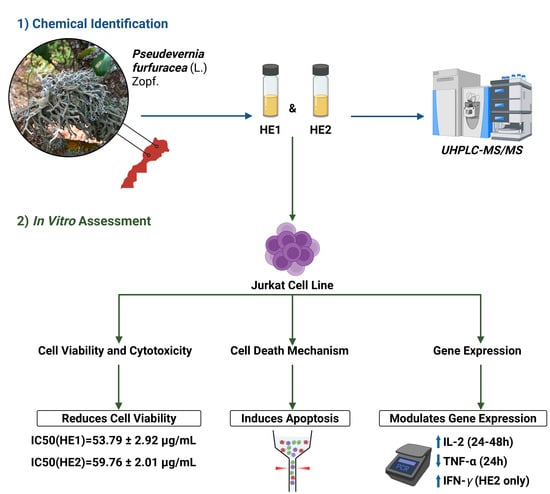
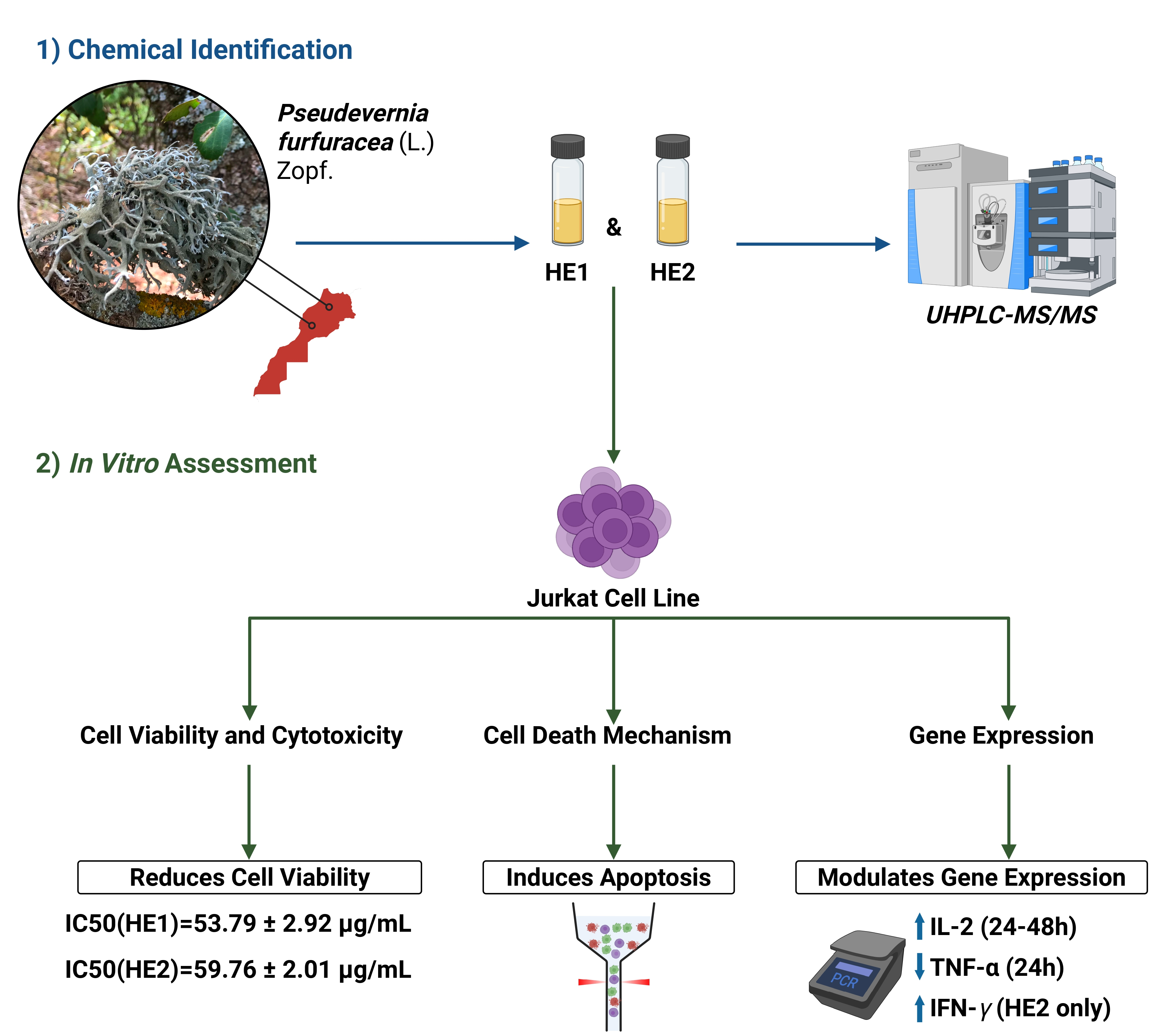
Lichens are complex symbiotic systems known for synthesizing diverse secondary metabolites with documented antimicrobial, antioxidant, and antiproliferative activities. The present study focused on Pseudevernia furfuracea, a species widely distributed across Moroccan habitats. Two hydrodistillation-derived extracts (HE1 and HE2) were analyzed through ultra-high-Performance liquid chromatography coupled with tandem mass spectrometry (UHPLC-MS/MS) to characterize their metabolite composition, and their effects were evaluated on Jurkat cells, a representative human cell line of the immune system. As the results of the characterization, the main compounds identified were Caprolactam, N,N-Diethylaniline, Erucamide, and 4-Isopropylaniline. Cytotoxicity assessment revealed that both HE1 and HE2 decreased the viability of Jurkat cells in a concentration-dependent manner. The mean effective concentrations (EC50) after 24 h of treatment were 53.79 ± 2.92 µg/mL for HE1 and 59.76 ± 2.01 µg/mL for HE2. Cell death mechanisms were further examined by flow cytometry, revealing that apoptosis predominated after 24 h of treatment, progressing mainly to late apoptotic stages after 48 h. In parallel, the expression levels of key cytokine genes, including IL-2, TNF-α, and IFN-γ, were quantified at the mRNA level to evaluate potential immunomodulatory effects. Up-regulation was observed in IL-2 after exposure to both extracts for 24 and 48 h, and in the case of IFN-γ after exposure to HE2 for 24 h; in contrast, HE1 and HE2 produced down-regulation in TNF-α at 24 h. These findings suggest that HE1 and HE2 have immunomodulatory activity in Jurkat cells. Further investigations are needed to elucidate the underlying mechanisms and to clarify how HE1 and HE2 influence immune responses in human systems.

Graphical Abstract

1. Introduction

Lichens are symbiotic organisms known for their unique secondary metabolites [1], which contribute to their ecological adaptability [2] and potential pharmacological applications [3]. More than a thousand secondary metabolites originating from lichens have been identified [4], many of which exhibit antioxidant [5], antimicrobial [6], and anticancer properties [7]. To date, research has primarily focused on secondary metabolites such as depsides, depsidones, and dibenzofurans, which can represent up to 15–20% of the lichen dry weight. In contrast, other secondary metabolites—often present in much lower concentrations—remain largely underexplored [8].
In our study, we investigated lichen extracts obtained via hydrodistillation, a method rarely applied in lichen research. Drawing parallels from plant systems, where metabolites such as monoterpenes and phenolics play crucial ecological and signaling roles [9], this suggests that lichens may harbor a broader and more chemically diverse arsenal of bioactive molecules than previously recognized. Moreover, these less-characterized lichen secondary metabolites may also possess promising pharmacological effects.
Although several lichen extracts produced through comparable extraction techniques have been examined for their antioxidant and antimicrobial potential [10], no systematic screening of their cytotoxic or anticancer effects has been performed. Moreover, previous research on lichen bioactivity has largely relied on organic solvent extractions, which yield different classes of metabolites than those obtained via hydrodistillation. Consequently, the potential of novel compounds present in lichen extracts remains an unresolved area of investigation within cancer research.
Extensive research has been devoted to characterizing the chemical profile and assessing the diverse biological activities of Pseudevernia furfuracea [11,12,13,14,15,16], although the mechanisms involved in these activities are not fully elucidated. It has been demonstrated that nonpolar fractions of Pseudevernia furfuracea have significant antimicrobial activity, whereas polar fractions have been reported to exhibit antioxidant, anti-inflammatory, antinociceptive, and wound-healing potential [11]. Aoussar et al. [13] reported that among three different lichens from Morocco, the extract of Pseudevernia furfuracea exhibited the strongest antioxidant activity, contained the highest total phenolic content, and showed the most pronounced antibacterial potential. In addition, extracts from P. furfuracea demonstrated cytotoxic effects against several cancer lines [12,16]. The potential antiproliferative and cytotoxic activity of P. furfuracea extracts has been also demonstrated in vitro in 2D and 3D models [15]. Moreover, Furmanek et al. [16] reported high cytotoxic activity for extracts from this lichen species in different cancer cell lines.
Building on our prior work investigating the antimicrobial potential of this novel type of extract from lichens [17], we now aim to assess their cytotoxic potential and impact on mRNA expression and types of cell death. In this study, we evaluated the biological effects of two extracts (HE1 and HE2) obtained from distinct Moroccan biotopes on Jurkat cells, a model of human lymphocytes, under the hypothesis that these extracts harbor bioactive metabolites capable of triggering cytotoxic responses through specific molecular mechanisms. Jurkat cells has been widely used in the research of T-cell biology [18]. As an immortalized T-cell line, it provides a reliable in vitro model of adaptive immune responses owing to its phenotypic and functional similarity to human lymphocytes [19]. However, to date, no previous studies have been carried out on these extracts in this cell line.
The present study reports the first in vitro evaluation of the immunomodulatory properties of Pseudevernia furfuracea extracts HE1 and HE2 using Jurkat cells as the experimental model. Cytotoxic assessment was performed using the Trypan Blue exclusion technique. The expression levels of cytokine genes (IL-2, TNF-α, and IFN-γ) were analyzed using real-time quantitative polymerase chain reaction (RT-qPCR) to evaluate possible inflammatory responses, and flow cytometry was used to characterize cell death pathways, apoptosis and necrosis, after treatment with the extracts. In addition, this work presents the first UHPLC–MS/MS characterization of the chemical composition of both extracts. The potential transformation products of atraric acid, the predominant constituent, were also studied to gain insight into its contribution to the observed biological effects.

2. Materials and Methods

2.1. Chemical and Reagents

All cell culture media and reagents were sourced from commercial suppliers. Media components were obtained from Gibco (Biomol, Sevilla, Spain), while chemicals used in cytotoxicity and flow cytometry assays were purchased from Sigma-Aldrich (Madrid, Spain). Primers specific for IL-2 (qHsaCIP0029918), TNF-α (qHsaCEP0040184), and IFN-γ (qHsaCEP0050640), together with the materials required for gene expression analysis, were provided by Bio-Rad Laboratories (Hercules, CA, USA) and Qiagen (Madrid, Spain).

2.2. Lichen Sample Collection and Extraction

Samples of Pseudevernia furfuracea were collected in June 2021 from two Moroccan regions: the High Atlas near Marrakech and the Middle Atlas near Azrou [17]. Lichen identification was conducted by one of the authors (Y.E.) using determination keys [20] and online resources [21].
Lichen extraction was performed according to the procedure previously described by Essadki et al. [17]. Briefly, 100 g of powdered lichen was subjected to hydrodistillation. The obtained distillate was afterwards extracted with dichloromethane. The dry residues obtained after dichloromethane evaporation were stored in at −20 °C. Extracts from Pseudevernia furfuracea collected in both Atlas regions were designated as HE1 and HE2, respectively.

2.3. Chemical Characterization

The extracts HE1 and HE2 were previously characterized using GC-MS by Essadki et al. [17] but only with regard to volatile compounds. The concentrations of atraric acid and chloroatranol were 73.53% and 19.80%, respectively, in HE1 and 56.95% and 24.38%, respectively, in HE2, being identified as the main components. To achieve a more comprehensive chemical profile, the present study expands upon this analysis by examining non-volatile compounds through UHPLC-MS/MS.

UHPLC-MS/MS Equipment and Conditions

Compound profiling of HE1 and HE2 followed the analytical workflow described by Cascajosa-Lira et al. [22], with minor adaptations. The analyses were performed on a Thermo Scientific UHPLC system (Dionex Ultimate 3000RS) interfaced with a Q Exactive quadrupole–Orbitrap mass spectrometer (Thermo Fisher Scientific, Waltham, MA, USA equipped with a HESI-II ion source. Instrument control and data handling were managed through Xcalibur software (v4.3, Thermo Fisher Scientific).
Chromatographic separation was achieved using an Acquity UPLC BEH C18 column (2.1 × 100 mm, 1.7 µm; Waters, Milford, MA, USA) maintained at a flow rate of 0.4 mL min−1. The mobile phase comprised water (A) and methanol (B), each containing 0.1% formic acid. The gradient program was as follows: 0–0.5 min, 5% B; 0.5–5 min, linear increase to 100% B; 5–7 min, hold at 100% B; and 7–10 min, re-equilibration at 5% B, with an injection volume of 5 µL.
Mass detection was conducted in both positive and negative ionization modes under full-scan acquisition at 70,000 resolution (FWHM, m/z 200). The HESI settings were as follows: spray voltage 3.5 kV (positive) and 3.0 kV (negative), S-lens RF level 50, capillary temperature 320 °C, and probe heater 425 °C. Sheath, auxiliary, and sweep gas flows were adjusted to 50, 13, and 3 arbitrary units, respectively. Data were processed and interpreted using TraceFinder 5.1 and Compound Discoverer 3.2 (Thermo Fisher Scientific).

2.4. Cell System

The human T-lymphoblastic Jurkat cell line (ATCC® TIB-152), derived from a case of acute T-cell leukemia, was sourced from the American Type Culture Collection (ATCC, Manassas, VA, USA). Cells were cultured at 37 °C in a humidified atmosphere containing 5% CO2 at the Biology Service of the Centro de Investigación, Tecnología e Innovación, Universidad de Sevilla (CITIUS). Growth was supported in RPMI-1640 medium (R8005) supplemented with 10% fetal bovine serum, 2 g L−1 sodium bicarbonate, 10,000 U mL−1 penicillin, and 10 mg mL−1 streptomycin. Standard aseptic techniques were applied throughout, and all experiments were performed with cells between passages 5 and 18.

2.5. Cytotoxicity Evaluation

Cell viability was determined according to the Trypan Blue exclusion assay described by Strober [23]. Jurkat cells were plated in 96-well microplates at a density of 5 × 10⁵ cells mL−1 and allowed to stabilize for 24 h before exposure to graded concentrations of HE1 and HE2. Extract stock solutions (100 mg mL−1) were prepared in DMSO, and were serially diluted to yield final treatment concentrations ranging from 20 to 200 µg mL−1. Three experimental controls were included: untreated cells (negative control), a solvent control containing 0.2% DMSO, and a positive control treated with 0.3% Triton X-100. As no significant differences were found between the negative and solvent controls, only data from the solvent control are reported. Cell viability was quantified by counting unstained (live) and blue-stained (non-viable) cells in a Neubauer chamber, and results are expressed as the percentage of viable cells. Each assay was independently repeated at least three times, with all concentrations tested in triplicate.

2.6. Flow Cytometry

Flow cytometry was conducted according to the approach of Casas-Rodríguez et al. [24]. Jurkat cells (1 × 10⁶ cells well−1) were seeded in six-well plates and exposed for 24 h or 48 h to different concentrations of HE1 and HE2. The exposure levels corresponded to each extract’s EC50 value and its respective half and quarter dilutions. Experimental controls comprised untreated cells (negative control), cells maintained in medium with 0.2% DMSO (solvent control), and a positive control treated with 1.5 µM camptothecin.
After treatment, cells were collected by centrifugation, rinsed with PBS, and resuspended in 500 µL of annexin-binding buffer. Staining was carried out by incubating the suspensions for 15 min at room temperature with 5 µL Annexin V-FITC (apoptotis marker) and 1 µL propidium iodide (necrosis marker). Subsequently, 400 µL of binding buffer was added, and fluorescence signals were measured on a MACSQuant VYB cytometer (Miltenyi Biotec, Bergisch Gladbach, Germany). For each sample, at least 10,000 events were acquired. Because no significant differences were detected between the negative and solvent controls, only solvent control data are reported.

2.7. Gene Expression Analysis

Quantitative reverse transcription PCR (RT-qPCR) was employed to assess the mRNA expression of selected cytokines, following the methodology of Casas-Rodríguez et al. [24]. Jurkat cells were treated with non-cytotoxic concentrations of HE1 and HE2 (20 µg mL−1) for 24 h and 48 h. Experimental controls comprised untreated cells (negative control), a solvent control containing 0.2% DMSO, and a positive control exposed to 10 ng mL−1 lipopolysaccharide (LPS). The GAPDH housekeeping gene was used as an internal control.
Total RNA was extracted using an RNeasy Mini Kit (Qiagen, Hilden, Germany), and any residual genomic DNA was eliminated using an RNase-Free DNase Set (Qiagen). Complementary DNA (cDNA) was synthesized from 1 µg of total RNA with a QuantiTect® Reverse Transcription Kit (Qiagen) and diluted 1:5 before amplification. qPCR reactions were carried out on a LightCycler® 480 system (Roche, Basel, Switzerland) using PrimePCR probes (Bio-Rad Laboratories, Hercules, CA, USA) specific for IL-2 (qHsaCIP0029918), TNF-α (qHsaCEP0040184), and IFN-γ (qHsaCEP0050640). Thermal cycling was performed with an initial denaturation at 95 °C for 2 min, followed by 50 cycles of 95 °C for 5 s and 60 °C for 30 s.
Relative expression levels were determined using the 2−ΔΔCT method. Fold change values below 0.7 were interpreted as gene down-regulation, whereas values above 1.5 indicated up-regulation. Since no statistically significant differences were detected between the negative and solvent controls, only results for the solvent control are presented.

2.8. Statistical Analysis

Data distribution and variance homogeneity were assessed using the Kolmogorov–Smirnov test. For datasets meeting normality assumptions, one-way ANOVA followed by Tukey’s multiple comparison test was applied. Non-parametric data were analyzed using the Kruskal–Wallis test with Dunn’s post hoc comparisons. EC50 values were estimated by linear regression from the corresponding concentration–response curves. All statistical procedures were performed in GraphPad Prism version 9.0 (GraphPad Software, USA). Differences were considered statistically significant at * p < 0.05, ** p < 0.01, *** p < 0.001, and **** p < 0.0001.

3. Results and Discussion

3.1. Putative Identification of Compounds by UHPLC-MS/MS

The UHPLC-MS/MS analysis led to the putative identification of 43 compounds in both HE1 and HE2 (Table 1). In the case of HE1, 21 compounds were detected, with 39 for HE2 and a total of 17 shared between HE1 and HE2. Moreover, only 4 compounds were identified specifically in HE1 and 22 were characteristic of HE2. The most abundant compounds in terms of area under the curve were Caprolactam, N, N-Diethylaniline, Erucamide, and 4-Isopropylaniline. The most represented families of compounds were aromatic amines (six compounds), amphetamine-like stimulants and phenethylamines, phthalic derivatives (three compounds), and amides and fatty acids amides (three compounds).
The extracts contain a chemically diverse mixture comprising several major classes. Phenolic compounds, such as substituted naphthalenetriols (1,3,8-Naphthalenetriol) and alkylated phenols (3,5-di-tert-Butyl-4-hydroxybenzaldehyde, Eugenol methyl ether), are present alongside terpenoid derivatives like menthyl acetate ((-)-Menthylacetate) and hygrophorone analogs (4-O-acetyl hygrophorone A14). A significant portion includes fatty acids and their derivatives, including amides and esterified forms (oleamide, stearoyl ethanolamide, Erucamide, dibutyl hexanedioate). Various aromatic and aliphatic amines, particularly aniline derivatives (2,6-Diethylaniline, N,N-Diethylaniline, 4-Isopropylaniline), are also included. Alkaloid-like structures and nitrogen-containing heterocycles are represented (Bacillamidin G, Berkazaphilone A, 2-oxa-4-azatetracyclo [6.3.1.1~6,10~.0~1,5~]tridecan-3-one), along with lactones and lactams (Caprolactam, Thermolide E). Additionally, the extracts contain esters, both aliphatic and aromatic (diethyl phthalate, dibutyl phthalate, 1,2,2,6,6-Pentamethyl-4-piperidinyl acrylate), quinones (9,10-Phenanthraquinone), anhydrides (phthalic anhydride), and several industrial chemicals such as glycols, phosphates, and nitrosamines (triethylene glycol, tributyl phosphate, Di-N-butylnitrosoamine). These compositions highlight a wide range of chemical families of natural product-like structures, especially in the case of HE2.
In previous studies, our group characterized the chemical nature of these extracts based on volatile components [17]. In that study, GC-MS analysis was performed, revealing volatile compounds that closely align with the chemical profile present in this work. The application of both methodologies allow us the identification of both volatile, apolar, thermostable compounds and non-volatile compounds. This dual approach provides a more complete metabolic fingerprint of these extracts, enhancing our understanding of their bioactive potential. Thus, monoterpenes and sesquiterpenes such as trans-verbenol, δ-cadinene, and himachalol detected in the previous work are consistent with the presence of menthyl acetate and other terpenoid derivatives found in the non-volatile fraction. Similarly, volatile phenolic compounds like acetyl isoeugenol support the identification of related aromatic ethers such as eugenol methyl ether in the present work. The detection of saturated and unsaturated fatty acids, including n-hexadecanoic acid and 9,12,15-octadecatrienoic acid, aligns with the presence of amide and ester derivatives of fatty acids in the original profile, such as oleamide and stearoyl ethanolamide. Furthermore, volatile compounds typical of lichen secondary metabolites, such as methyl haematommate, atraric acid, and chloroatranol, further support the authentic lichen origin of the extract [17]. However, due to their volatile nature, these compounds were not detected using UHPLC-MS/MS. Instead, in the next section, we focus on the characterization of the hydrophilic derivatives of atraric acid, detected in the present work by Compound Discoverer.

3.2. Putative Identification of the Transformation Products of Atraric Acid

The presence of primary and secondary transformation products of atraric acid was identified (Table 2, Figure 1). The most frequent transformations were mainly nitroreduction followed by dehydration. The secondary transformations were oxidation, desaturation, and methylation. Acetylation was detected in HE2 but not in HE1.
In this study, we focused on the chemical characterization of the secondary metabolites derived from atraric acid, a major component (73.53% in HE1 and 56.95% in HE2) according to Essadki et al. [17] found in Pseudevernia furfuracea extracts. Through UHPLC-MS/MS analysis, several hydrophilic derivatives of atraric acid were identified, which further confirm the complex chemical nature of this lichen. While previous works, like those by Güvenç et al. [11], have identified a range of depsidic compounds in the methanolic extract of P. furfuracea harvested from Turkey, our study distinguishes itself by focusing on the atraric acid pathway and its hydrophilic derivatives. We did not observe the classic depsidic compounds like protocetraric acid or atranorin in our analysis, which highlights the novelty in terms of composition of our specific extracts obtained by hydrodistillation compared to classical organic solvent extracts. These findings enhance our understanding of the secondary metabolite profile of Pseudevernia furfuracea and underscore the diversity of chemical compounds that can be derived from a single metabolic precursor, atraric acid. The identification of these derivatives adds a novel layer to the chemical complexity of this lichen, offering potential insights for further pharmacological studies.
This work represents, to our knowledge, the first identification of atraric acid derivatives in lichen species. Although earlier investigations, including the work of Noël et al. [25], have investigated the biotransformation of other depsidic compounds, specifically usnic acid, resulting in the identification of ethanolanime and methylated derivatives, our findings reveal methylated products that likely follow a similar metabolic pathway, supported by the structural resemblance between the parent compounds. Nevertheless, we cannot exclude the impact of the hydrodistillation procedure on the composition of the extracts. Indeed, it was previously reported that heating in presence of water can elicit hydrolysis and other chemical transformations of various compounds contained in the extracts [26].

3.3. Determination of Cell Viability

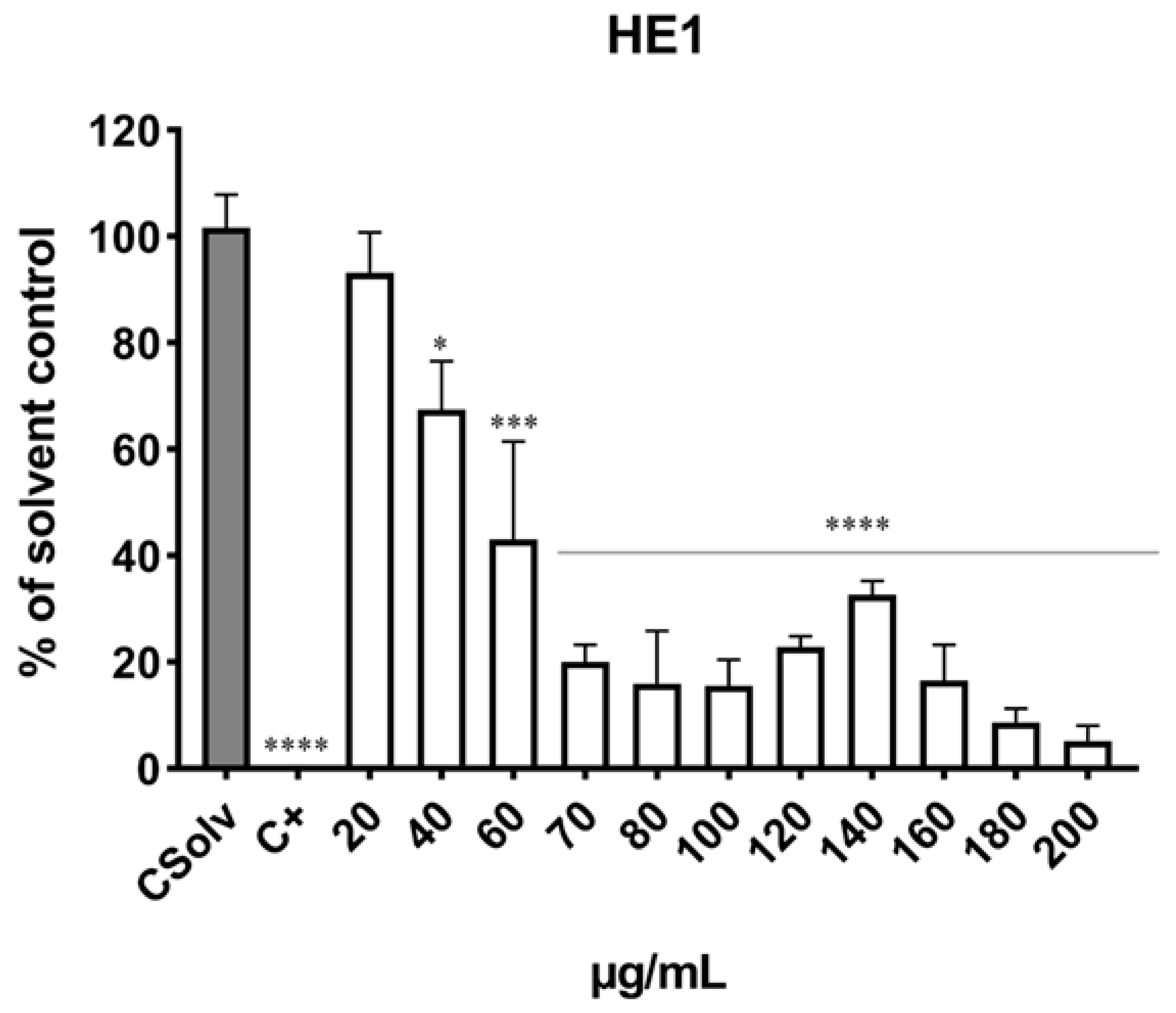
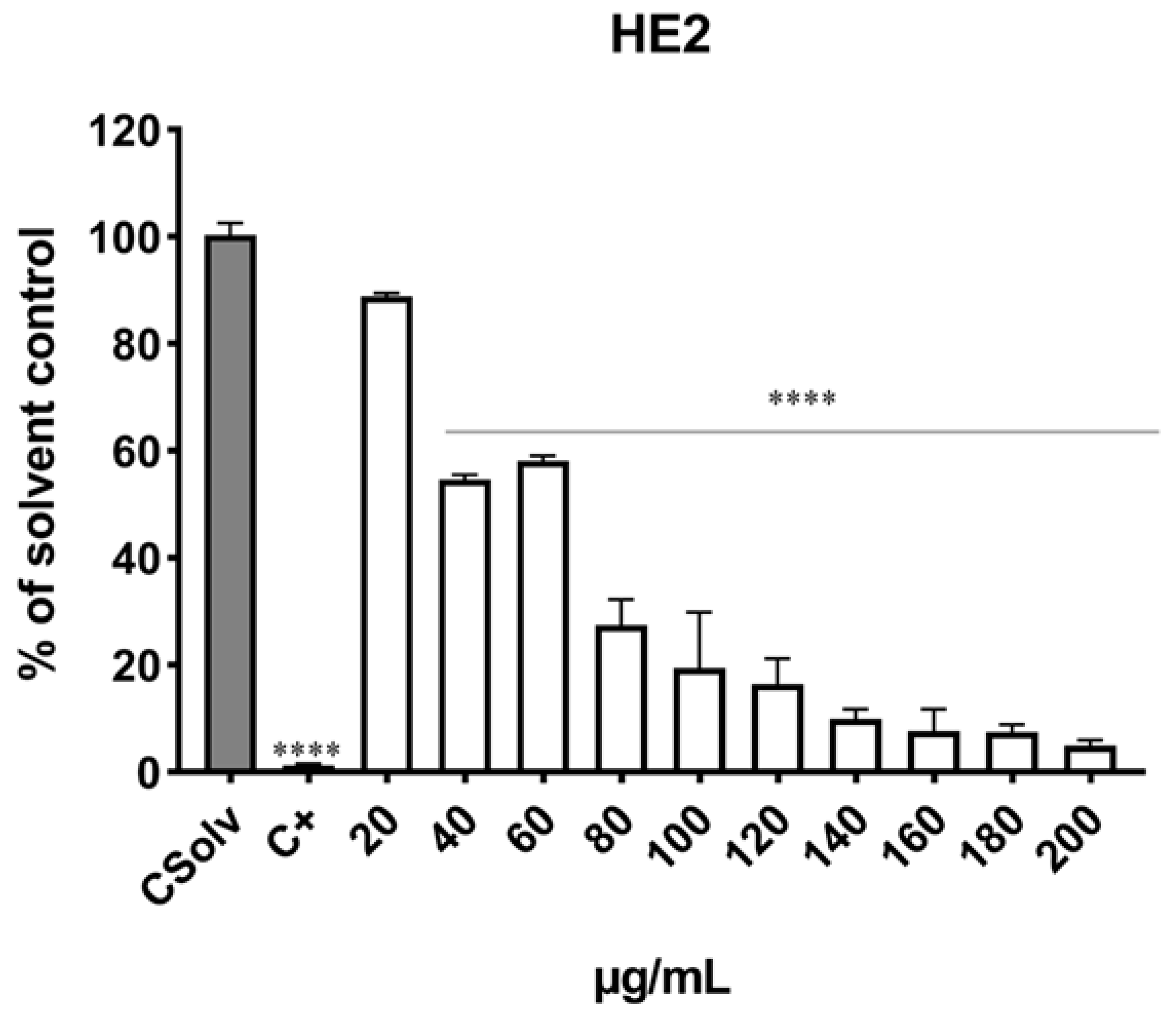
As shown in Figure 2 and Figure 3, exposure of Jurkat cells to HE1 and HE2 for 24 h resulted in a dose-dependent decline in viability, with statistically significant effects observed from 40 µg mL−1 onward compared with the solvent control. For HE1, marked cytotoxicity was observed after exposure to ≥70 µg/mL in which viability was significantly decreased (up to 5.20% viability). For HE2, the highest cytotoxicity was observed after exposure to ≥80 µg/mL with decreases in cell viability (up to 4.94% viability). Positive control (0.3% Triton X-100) produced a reduction in cell viability of more than 90%. The EC50 values were 53.79 ± 2.92 µg/mL and 59.76 ± 2.01 µg/mL for HE1 (Figure 2) and HE2 (Figure 3), respectively.
Cytotoxicity testing represents a fundamental step in in vitro toxicity assessment. The present findings demonstrate that HE1 and HE2 extracts from Pseudevernia furfuracea var. furfuracea significantly reduced Jurkat cell viability, with both extracts exhibiting comparable cytotoxic potential. According to the American National Cancer Institute (NCI) guidelines, crude plant extracts are considered cytotoxic when their IC50 values fall below 30 µg mL−1 in preliminary screening assays [27]. To our knowledge, studies that have evaluated the cytotoxicity of Pseudevernia furfuracea in the same cells are very scarce [15,16,28]. The results obtained here align with the observations previously described by Kello et al. [28]. These authors assessed the cytotoxic effects of an extract from P. furfuracea (10, 50, 100 µg/mL) in Jurkat cells using resazurin assay and confirmed its cytotoxic effects, which were concentration- and time-dependent, obtaining an IC50 value of 45 µg/mL. Similar results were reported by the same authors [15], who evaluated the cytotoxicity of P. furfuracea extracts (10–100 µg/mL) in Jurkat cells using the resazurin assay and obtained an IC50 of 44.3 µg/mL in a 2D model. In addition, they compared the results in 2D with those obtained in a 3D spheroids model and reported an IC50 of 77.3 µg/mL. Differences in the effects of the same extracts or metabolites between 2D and 3D culture systems could be influenced by factors such as compound diffusion and accessibility to proliferating cells at the surface versus quiescent or necrotic cells in the inner regions, as consequences of oxygen and nutrient transport limitations [15]. In contrast, Furmanek et al. [16] observed reduced cytotoxicity in Jurkat cells, obtaining an IC50 of 174.87 µg mL−1 after treatment with Pseudevernia furfuracea extracts (1–500 µg mL−1) evaluated using the MTS method. These differences could be explained in part due to the presence of different compounds and metabolites from these lichen species as a result of the differences in environmental conditions, extraction procedures employed, time of exposure, etc.
There are several studies focused on the cytotoxicity of compounds and/or major metabolites from P. furfuracea extracts [12,15,16,29] and different results have been reported depending on their main components. In relation to the compounds present in HE1 and HE2 extracts, the main components were Caprolactam, N, N-Diethylaniline, Erucamide, and 4-Isopropylaniline. In comparison, in the work of Furmanek et al. [16], the major phenolic constituents identified were 3-hydroxyphysodic acid, 2′-O-methylphysodic acid, and a physodic acid isomer. Physodic acid and its derivatives have been reported to contribute to the notable antioxidant and antitumor potential of Pseudevernia furfuracea extracts [16]. This interpretation is further supported by the findings of Kello et al. [15], who demonstrated a pronounced cytotoxic activity of physodic acid against Jurkat cells. Given the scarcity of studies addressing the cytotoxic behavior of P. furfuracea in this cell line, the present results provide novel and promising evidence of biological activity in this lichen species. Further research is warranted to elucidate the precise mechanisms underlying these effects in Jurkat cells.
To date, only Bačkorová et al. [29] have evaluated Jurkat cell sensitivity to four common lichen secondary metabolites, parietin, atranorin, usnic acid, and gyrophoric acid. Their results showed concentration- and time-dependent cytotoxicity using the MTT assay, with IC50 values ranging from 76.3 µM to above 200 µM, usnic acid being the most potent. Moreover, they noted that lichen extracts exhibited greater cytotoxicity than individual compounds, likely due to synergistic or additive interactions among their components [12,28,30,31].
Several studies have evaluated the cytotoxicity of Pseudevernia furfuracea and lichens compounds in different cells lines [12,13,14,15,16,30,32,33,34]. In comparative assays evaluating nine human cancer cell lines exposed to parietin, atranorin, usnic acid, and gyrophoric acid, Jurkat cells exhibited one of the highest sensitivities [29]. The cytotoxicity showed by HE1 and HE2 in the present work was similar to the results reported by Kosanic et al. [12] in human melanoma (FemX) and LS 174 (human colon carcinoma) cell lines after exposure to lichen extracts and compounds of Pseudevernia furfuracea (12.5–200 µg/mL) by MTT test. The IC50 values were 55.09 and 56.96 µg/mL in the FemX and LS 174 cell lines, respectively. Other authors assessed the cytotoxicity of different P. furfuracea extracts (methanol, acetone, and ethyl acetate) in colon cancer cells (HTC-116 and SW-480) and normal human fibroblast cell line (MRC-5) by MTT test [32]. The highest cytotoxicity was observed after 72 h of exposure to ethyl acetate and acetone P. furfuracea extracts, with reported IC50 values of 21.2 µg/mL on HTC-116 and 51.3 µg/mL on SW-480 cells. The studied extracts produced considerable cytotoxicity on cancer cells, while non-cytotoxicity was observed on normal cells. Overall, the cytotoxic effects of lichens have been reported across multiple cancer cell lines, with their activity generally higher in carcinoma cells than in non-cancerous cells [35].
Ingelfinger et al. [33] studied the cytotoxic effects produced by P. furfuracea extracts (3 and 30 µg/mL) in HMEC-1 and HCT-116 cells using resazurin and WST-1 assays, respectively; after exposure, cell viability was not affected in both cell lines. The cytotoxic effects of different acetone extracts including P. furfuracea (12.5–200 µg/mL) in different cancer cell lines (22RV1, HT-29, Hep-G2, and CHO) were evaluated by WST1 assay, and P. furfuracea produced the highest effects in all cancer cell lines assessed, with IC50 values ranged from 42.30 µg/mL (22RV1 cells) to 68.60 µg/mL (Hep-G2 cells) [13]. Other authors did not observe cytotoxic effects in the HEK 293T cell line after exposure to methanol extract (PF70M) of P. furfuracea (0.156–100 µg/mL) using Alamar blue [14]. The same authors evaluated methyl haematommate (PF-1) and atraric acid (PF-2) (10–80 µg/mL), polyphenolic molecules isolated from P. furfuracea, in five cancer cell lines (MDA-MB-231, MCF7, PA-1, HepG2, and SCC-40) [34]. The compounds studied did not show significant antiproliferative affects against MDA-MB-231, HepG2, and SCC-40 cell lines; however, significant activity was observed in PA-1 cells after exposure to atraric acid and moderate activity in the case of MCF-7 cells. Petrova et al. [30] assessed the cytotoxicity of P. furfuracea extract (PSE) and physodic acid (10–100 µg/mL) in different cell lines (MCF-10A, Bj-5ta, and HUVECs) by MTS assay. These authors reported different sensitivities in cell lines after exposure to PSE and Phy, with IC50 values between 45.53 to 92.70 µg/mL for PSE and 79.88 to 92.76 µg/mL for Phy. However, the findings indicated that neither compound exhibited marked cytotoxicity in any of the tested cell lines. Kello et al. [15] assayed in nine cancer cell lines (Jurkat, HeLa, HTC116, Caco-2, MCF-7, MDA-MB-231, A549, BLM, and A2780) P. furfuracea extracts (10–100 µg/mL). In these 2D systems, P. furfuracea extract was one of the best sources of potential cytotoxic substances with IC50 values in the range of 31.9–48.6 µg/mL. Furmanek et al. [16] assessed the cytotoxic potential of different extracts from lichen species, including P. furfuracea (1–500 µg/mL) in five human cancer cell lines (Jurkat, MCF-7, Caco-2, SK-mel-28, and U87MG). The highest cytotoxic activity was shown by the P. furfuracea extract, which inhibited cell viability of MCF-7 (IC50: 110.84 µg/mL), Caco-2 (IC50: 123.86 µg/mL), SK-mel-28 (IC50: 161.80 µg/mL), U87MG (IC50: 107.43 µg/mL), and Jurkat (IC50: 174.87 µg/mL), higher values compared to those obtained in the present work.
Once the cytotoxicity of HE1 and HE2 was established, the results were used to investigate toxicity mechanisms in a tiered approach.

3.4. Analysis of Cell Death Mechanisms (Apoptosis/Necrosis) Through Flow Cytometry

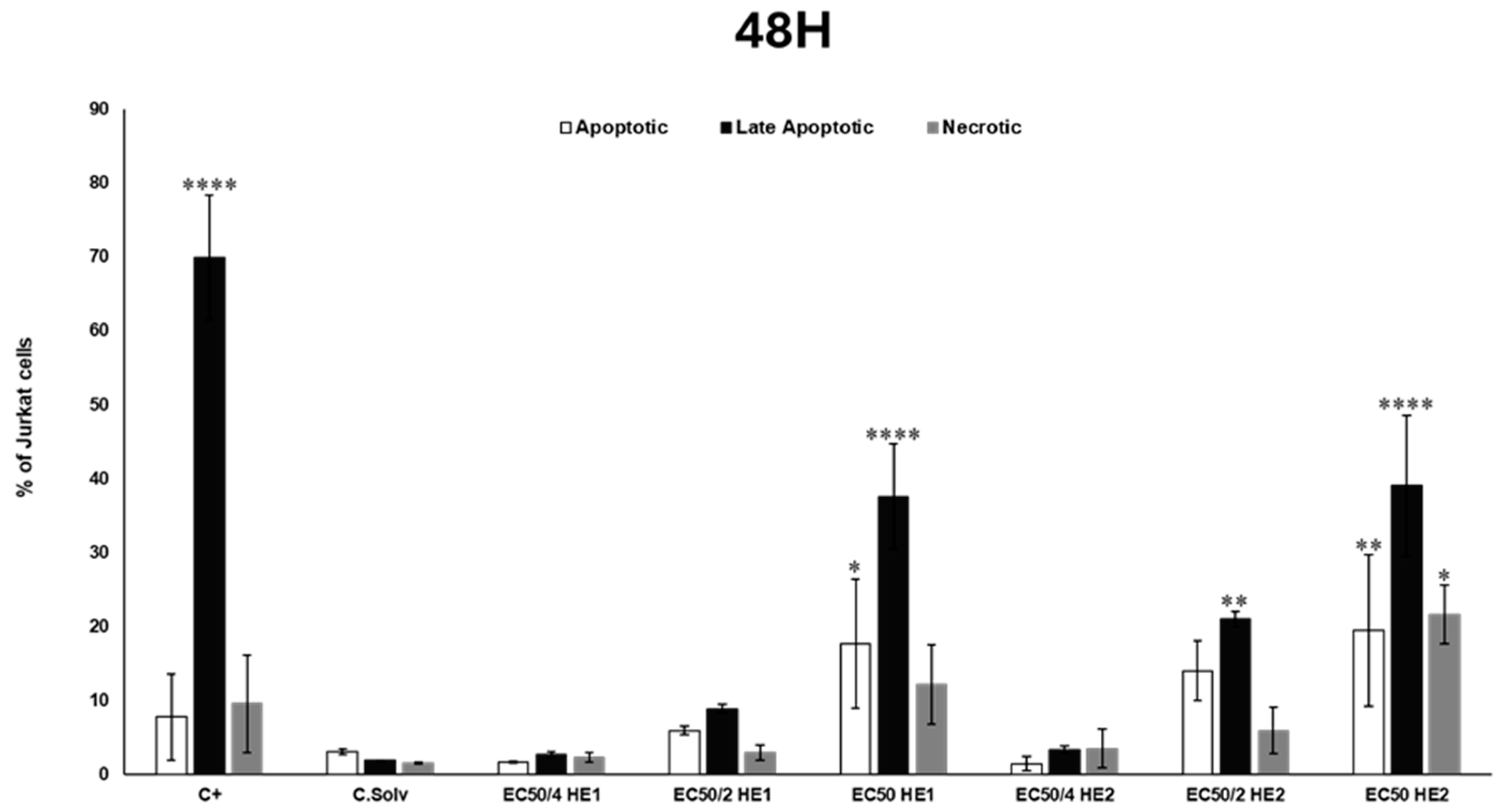
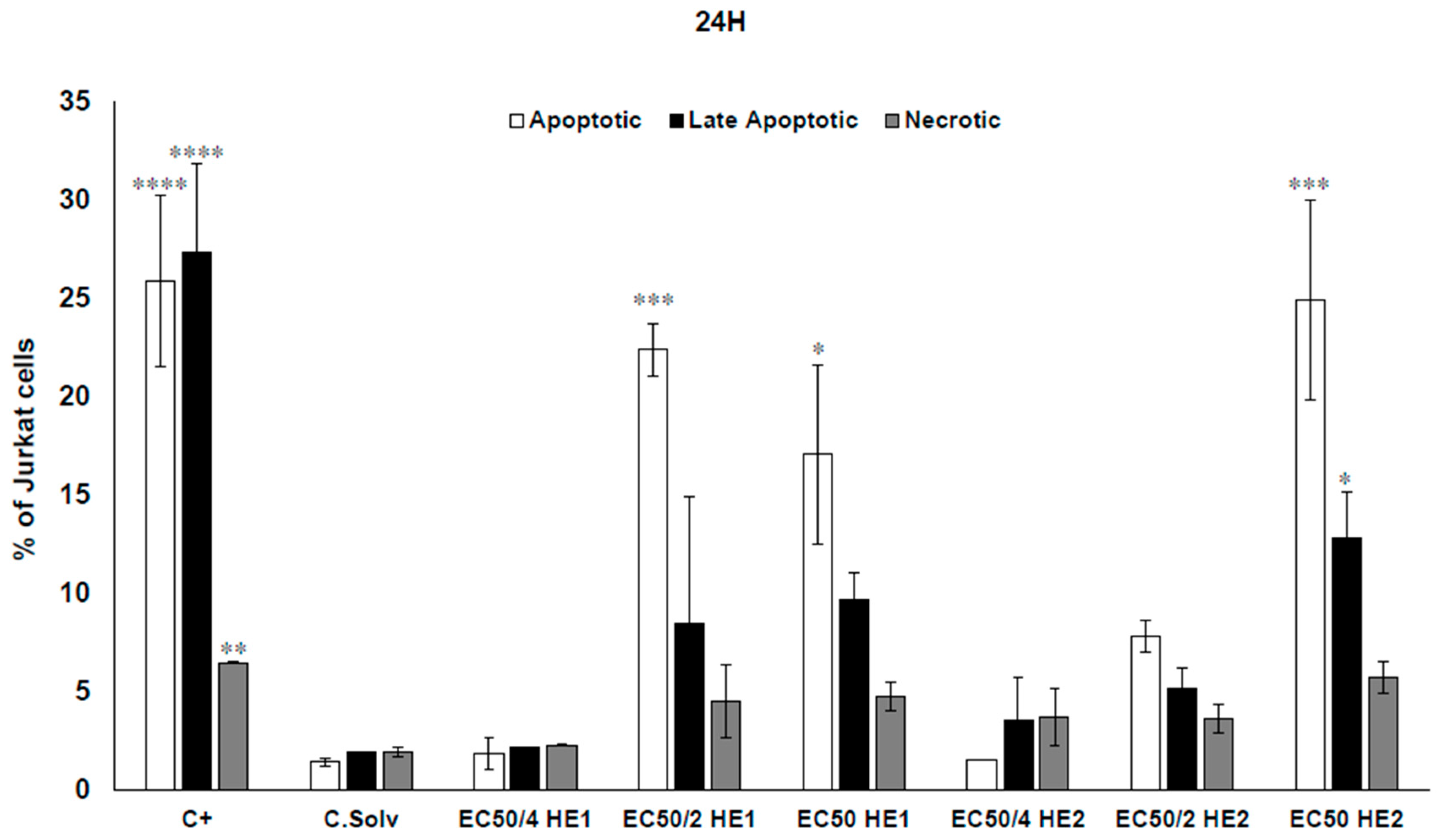
The apoptotic/necrotic effects of HE1 and HE2 were assessed in Jurkat cells. The results obtained are shown in Figure 4 and Figure 5 for 24 and 48 h, respectively. The concentrations evaluated for both HE1 and HE2 were EC50, EC50/2, and EC50/4 in the case of HE1 (53.79, 26.89, and 13.45 µg/mL) and for HE2 (59.76, 29.88, and 14.94 µg/mL).
Regarding HE1 and HE2, more than 90% of viable cells were observed in the solvent control group (0.2% DMSO) for both exposure times. In the positive control group, between 60 and 90% of cells were apoptotic, late apoptotic, or necrotic after exposure for 24 or 48 h.
In the case of HE1, no significant differences were detected after 24 h exposure to 13.45 µg/mL (EC50/4). However, at the highest concentrations assayed (EC50/2 and EC50), significant differences in the percentage of apoptotic (22.4 ± 1.36 and 17.10 ± 4.55%, respectively) cells in comparison to the solvent control group were observed (Figure 4). After 48 h of exposure, no significant differences were observed at either 13.45 or 26.89 µg/mL of HE1. Nevertheless, the highest concentration tested exhibited a significant increase in both the apoptotic and late apoptotic populations, the late apoptotic being predominant with 37.54 ± 7.10% of cells (Figure 5).
With respect to HE2, after 24 h, no significant differences were observed in the 29.88 and 14.94 µg/mL groups. However, at the highest concentration evaluated, apoptosis and late apoptosis (24.93 ± 5.05% and 12.86 ± 2.34%, respectively) were the predominant death mechanisms (Figure 4). At 48 h, no significant differences were observed at the lowest concentration of HE2 (14.94 µg/mL). In the 29.88 µg/mL exposed group, significant differences in comparison to the solvent control group were detected only in the late apoptotic population (21.05 ± 1.00%). Finally, a significant increase in the percentage of apoptotic, late apoptotic, and necrotic populations was observed at EC50, with the most significant increase in the case of late apoptotic cells with 39.03 ± 9.53% of cells (Figure 5).
Compounds produced by lichens exert cytotoxic effects by inducing cell cycle arrest, apoptosis, necrosis, and inhibition of angiogenesis [3,36]. To our knowledge, this is the first study that evaluates the mechanisms of cell death (apoptosis/necrosis) produced by these novel types of extracts from P. furfuracea (HE1 and HE2) in Jurkat cells. Seklić et al. [32] reported that apoptotic responses are influenced by treatment dose and exposure time, with stronger effects arising after extended incubation periods, which aligns with the results obtained in this work: more predominancy of late apoptotic cells at 48 h (vs. 24 h) for both extracts and even necrotic cells at the higher concentration for HE2.
As far as we know, only Kello et al. [28] assayed the ability of a P. furfuracea extract (45 µg/mL) to produce cell death (apoptosis) in Jurkat cells. The authors reported alterations in cell cycle dynamics, noting S-phase arrest after 24 h of exposure and a progressive accumulation of cells in the sub-G0/G1 phase, accompanied by a decrease in the G1 and G2/M populations between 24 and 72 h. These findings indicate that the lichen extract triggered apoptosis-mediated cell death in Jurkat cells, consistent with the results of the present study.
Other authors have studied the ability of P. furfuracea extracts to cause cell death in different cell lines [12,30,32,33]. Thus, methanol, acetone, and ethyl acetate extracts of P. furfuracea (10 and 100 µg/mL) caused cell death mainly by apoptosis in HCT-116 and SW-480 cells [32]. The authors reported that the ethyl acetate extract exhibited strong pro-apoptotic activity in HCT-116 cells after 72 h of exposure, inducing 20.12% late apoptosis at the lowest concentration and 75.39% late apoptotic and 5.62% necrotic cells at the highest dose. In SW-480 cells, the methanol and acetone extracts produced the most pronounced pro-apoptotic effects, consistent with their observed cytotoxicity profiles. Overall, the cytotoxicity of P. furfuracea extracts in HCT-116 and SW-480 cells were the consequence of induced apoptosis. In contrast, Ingelfinger et al. [33] reported no evidence of apoptosis or cell cycle phase alterations in HCT-116 cells following exposure to 3 and 30 µg mL−1 of the extract.
Several well-known lichen secondary metabolites have also been investigated for their capacity to induce cell death. [29,37]. Among the tested metabolites (parietin, atranorin, usnic acid, and gyrophoric acid), all except parietin induced alterations in cell cycle distribution across four cancer cell lines (A2780, HCT-116 p53+/+, HCT-116 p53−/−, and HL-60). Atranorin produced effects only in HL-60 cells at 100 µM after 72 h; by contrast, no effect was observed in this cell line after usnic acid exposure. In addition, gyrophoric acid was only effective in A2780 cells. The authors concluded that alterations in cell cycle progression could be attributed to the biological action of the tested metabolites. Moreover, usnic acid and atranorin induced apoptosis in HT-29 and A2780 cancer cells, being activators of programmed cell death in both cell lines [37]. Lichen-derived compounds act as modulators of apoptosis in diverse cancer cells [38,39], primarily through the regulation of genes such as caspases, p53, p38, and Bcl-2 family members, which govern cellular survival and apoptotic processes [40].
Various lichen-derived compounds have been shown to induce apoptosis through multiple mechanisms, including mitochondrial pathways, death receptor signaling, cellular signaling cascades, and hypoxia-related responses [37,41]. Regarding the mechanism of apoptosis, activation of death receptors leads to the initiation of caspases, which are essential proteases responsible for executing programmed cell death. The ability of certain lichen metabolites to trigger apoptosis underscores their potential as pro-apoptotic agents for the targeted elimination of tumor cells [42]. Apoptosis induced by these metabolites may proceed via the intrinsic mitochondrial route or the extrinsic death receptor–mediated pathway, both involving specific and independent protein cascades [32]. Within the extrinsic apoptotic pathway, cell death is triggered by the interaction of pro-apoptotic ligands (e.g., TNF-α) with membrane death receptors such as TNFR1/TNFRSF1A [42]. Further investigations are warranted to elucidate the specific molecular pathways through which lichen extracts and their bioactive components induce apoptosis.

3.5. Effects of HE1 and HE2 on Cytokine mRNA Expression by RT-qPCR

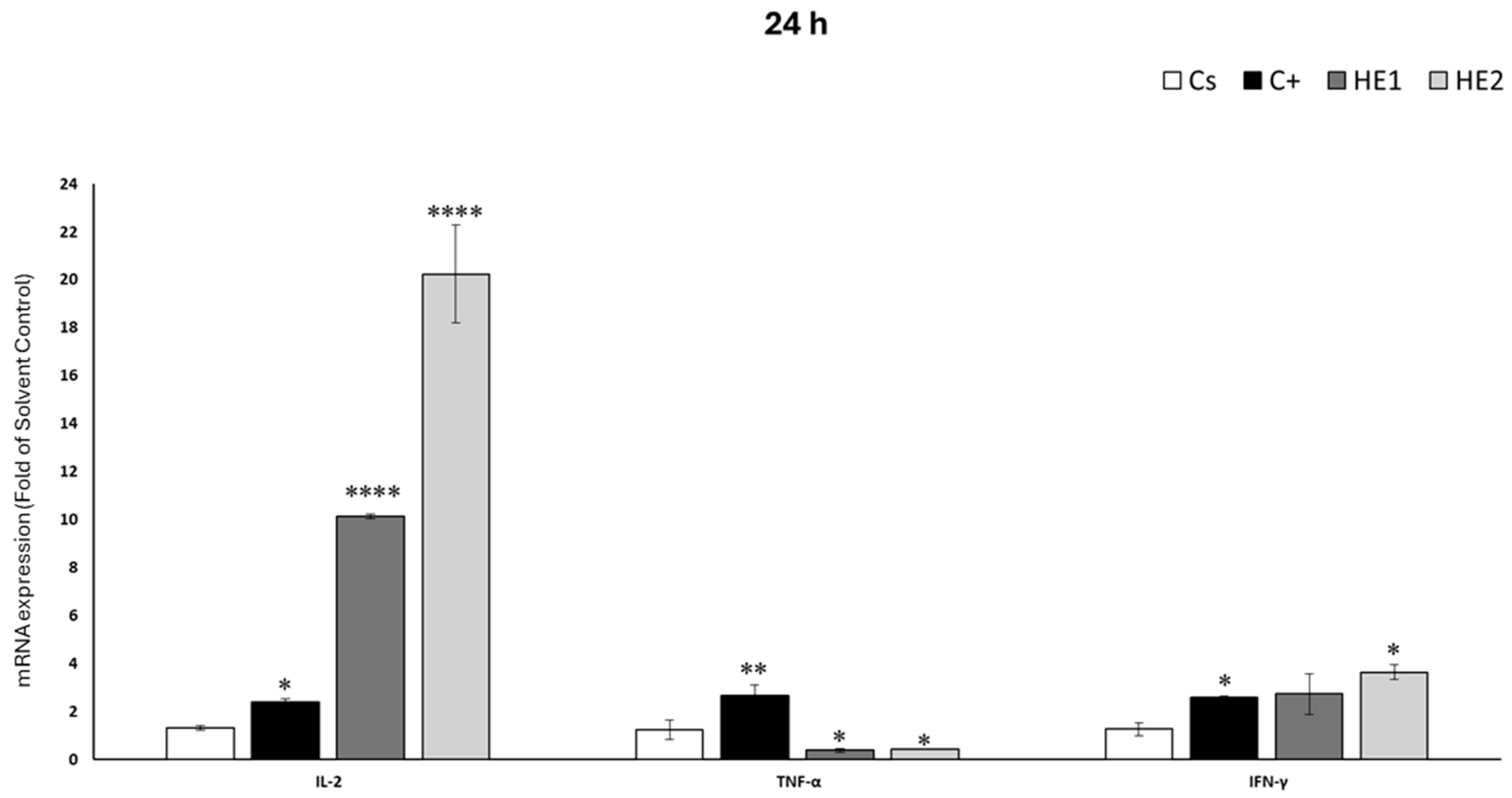
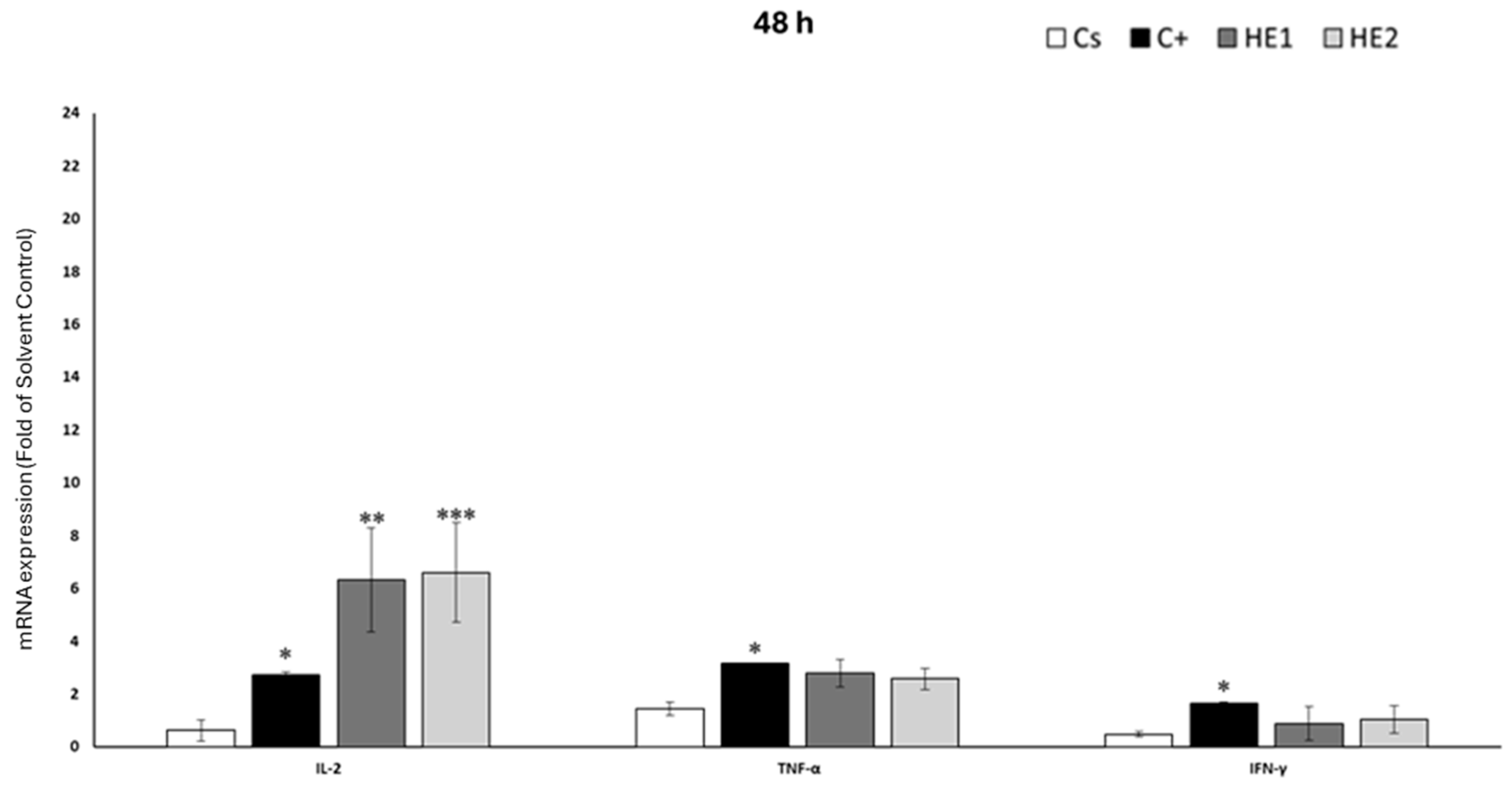
Cytokine gene expression profiles are shown in Figure 6 and Figure 7, illustrating responses after 24 h and 48 h of treatment, respectively. In the case of HE1, IFN-γ expression after 24 h of exposure did not differ significantly from that of the solvent control group. Conversely, treatment with HE1 resulted in a marked increase in IL-2 expression (10.14-fold) and a significant decrease in TNF-α levels (0.64-fold compared with the solvent control) (Figure 6). After 48 h (Figure 7), no significant differences were observed in TNF-α and IFN-γ, with values close to those of the solvent control group. For HE2, only IL-2 expression was significantly upregulated, showing a 6.32-fold increase. For HE2, exposure for 24 h resulted in a marked increase in the expression of IL-2 (20.24-fold) and IFN-γ (3.62-fold) relative to the solvent control (Figure 6). On the contrary, down-regulation was observed in TNF-α (0.59-fold with respect to the solvent control). After 48 h, no changes were found for TNF-α and IFN-γ expression. At 48 h of exposure, a significant up-regulation of IL-2 was detected, corresponding to a 6.59-fold increase relative to the solvent control (Figure 7).
This study is the first to report that Pseudevernia furfuracea extracts modulate mRNA expression levels of key cytokines (IL-2, TNF-α, and IFN-γ) in Jurkat cells. The observed up-regulation of IL-2 after 24 and 48 h of exposure to the extracts suggests a potential immunomodulatory effect, as IL-2 plays a central role in immune activation and homeostasis [43]. This cytokine regulates the magnitude and duration of both primary and memory immune responses, promotes T-cell proliferation, enhances the cytotoxic activity of natural killer (NK) cells, and induces the release of pro-inflammatory mediators [44]. TNF-α is a multifunctional cytokine involved in immune regulation, apoptosis, and cell differentiation [45]. It showed only a modest response: a significant decrease was observed at 24 h, but no change was detected at 48 h. Given TNF-α’s dual role in inducing both apoptosis and necrosis depending on the cellular context [46], this mild modulation suggests a limited effect in comparison to IL-2. IFN-γ expression increased only in response to the HE2 extract at 24 h, with no changes observed at 48 h. This pattern may reflect an early-stage adaptive immune response but with less sustained activation compared to IL-2. Overall, these findings suggest that P. furfuracea extracts, particularly HE2, may influence immune responses through selective and time-dependent modulation of cytokine gene expression.
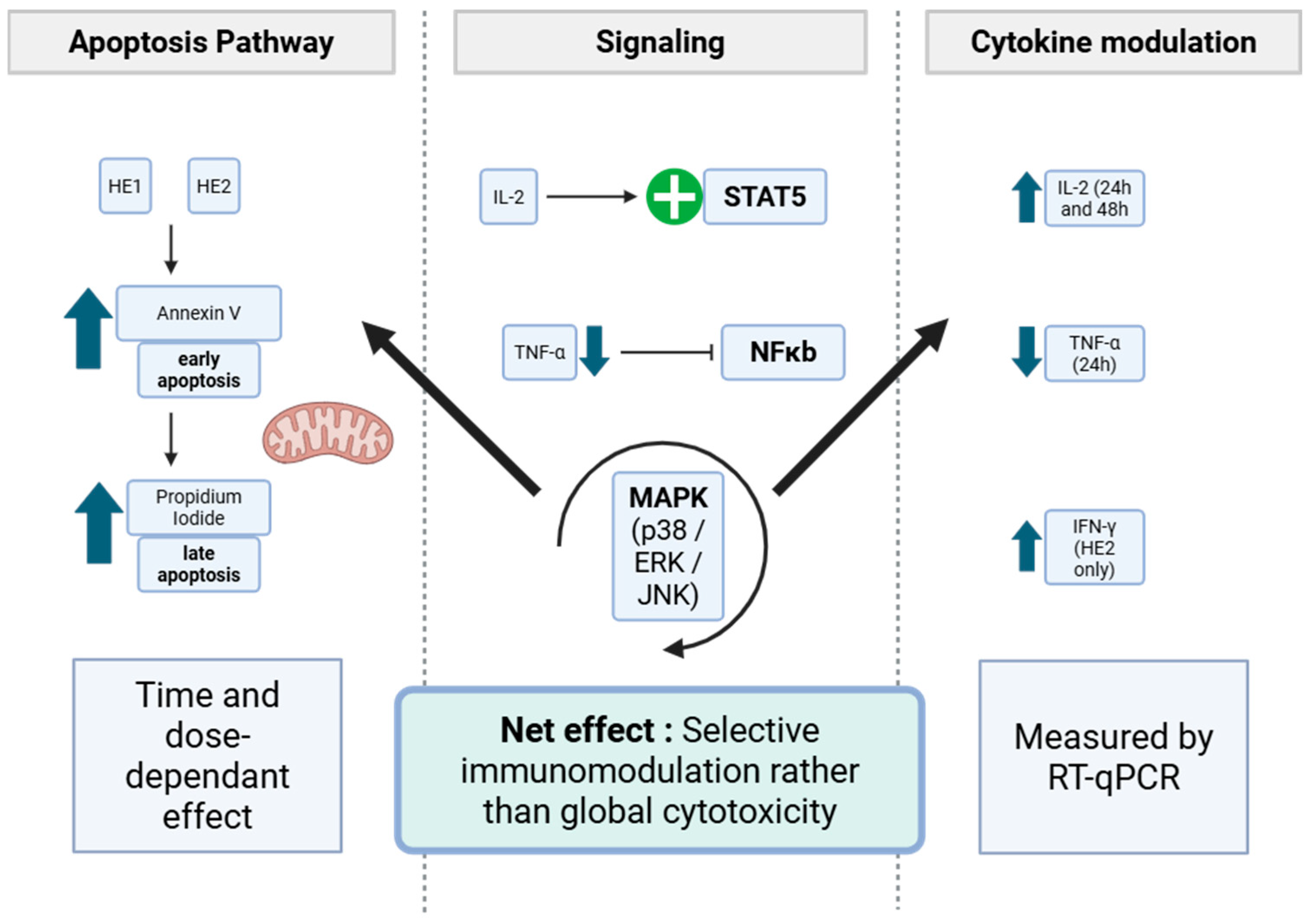
The observed cytokine modulation suggests that P. furfuracea extracts may influence key intracellular signaling pathways governing T-cell activation and apoptosis. The up-regulation of IL-2 and IFN-γ, together with the reduction of TNF-α, indicates possible activation of STAT5 and inhibition of NF-κB pathways [47,48]. Previous studies have demonstrated that lichen metabolites, such as physodic acid, can modulate MAPK signaling pathways (ERK, JNK, and p38) and induce apoptosis [28]. Taken together, these findings support the involvement of STAT5, NF-κB, and MAPK signaling in the immunomodulatory response observed [49,50]. A schematic representation summarizing the proposed mechanisms connecting apoptosis pathway and chemokine expression is presented in Figure 8.
To date, only one study has examined the effects of a Pseudevernia furfuracea methanolic extract (10 and 50 µg mL−1) on the expression of anti-migratory/pro-migratory and invasion-related markers (E-cadherin, β-catenin, N-cadherin, Vimentin, Snail, and MMP-9) in HCT-116 and SW-480 cells using qRT-PCR [51]. In HCT-116 cells, treatment increased E-cadherin expression while reducing β-catenin, N-cadherin, Vimentin, Snail, and MMP-9 levels. In SW-480 cells, P. furfuracea extract suppressed all pro-migratory and invasive gene expressions. These findings indicate that the methanolic extract of P. furfuracea significantly modulates the expression of genes implicated in cell migration and invasion in both HCT-116 and SW-480 cell lines.
While these findings reveal the significant immunomodulatory and pro-apoptotic effects of Pseudevernia furfuracea hydrodistillation-derived extracts in Jurkat cells, the results are limited to an in vitro T-cell model. To establish their physiological and pharmacological relevance, future work should include in vivo studies or assays using primary human lymphocytes or animal models. Such investigations will be essential to confirm the systemic immunomodulatory capacity, bioavailability, and safety of the active compounds identified in this study.

4. Conclusions

The Pseudevernia furfuracea extracts HE1 and HE2 were analyzed by UHPLC-MS/MS for the first time, revealing several novel components, including Caprolactam, N,N-Diethylaniline, Erucamide, and 4-Isopropylaniline. Additionally, potential metabolites of atraric acid, present in both extracts, were characterized. HE1 and HE2 exhibited immunomodulatory effects on human Jurkat cells, as evidenced by cytotoxic activity primarily mediated through apoptosis after 24 h and progressing to late apoptosis at 48 h. Moreover, the expression of pro-inflammatory genes was modulated, with each extract eliciting a distinct expression pattern. Further studies are needed to elucidate the molecular mechanisms driving the immunomodulatory activity and to pinpoint the bioactive constituents accountable for the observed responses.

Author Contributions

Conceptualization: Y.E., A.C.-R., A.C.-L., L.D.-Q., B.O., A.J., A.M.C.; methodology: L.D.-Q., A.C.-R., A.C.-L., Y.E.; investigation: Y.E., A.C.-R., A.C.-L., L.D.-Q.; resources: A.J., A.M.C., V.V., A.C., B.O.; data curation: Y.E., A.C.-R., A.C.-L., L.D.-Q.; writing—original draft preparation: Y.E., A.C.-R., A.C.-L., L.D.-Q.; writing—review and editing: Y.E., A.C.-R., A.C.-L., L.D.-Q., A.J., A.M.C., B.O.; visualization: Y.E., A.C.-R., A.C.-L., L.D.-Q.; supervision: L.D.-Q., A.C.-R., A.C.-L., F.E.K., A.J., A.M.C., B.O.; project administration: A.J., A.M.C., V.V., A.C., B.O.; funding acquisition, A.M.C., V.V., B.O. All authors have read and agreed to the published version of the manuscript.

Funding

This work was supported by the project PID2023-147444OB-I00 funded by MICIU/AEI/10.13039/501100011033 and FEDER, UE. Also, the TOXICROP project (H2020-823860). The FPI grant number PRE2020-094412 awarded to Antonio Casas-Rodríguez was funded by Spanish Ministerio de Ciencia e Innovación. The FPU grant number FPU2019-01247 awarded to Antonio Cascajosa-Lira was funded by the Spanish Ministerio de Universidades.

Institutional Review Board Statement

Not applicable.

Data Availability Statement

Data will be made available on request.

Acknowledgments

Y.E. would like to thank Eva Barreno from the University of Valencia and Michel Bertrand, along with the Association Française de Lichénologie (AFL), for their invaluable assistance in confirming the identification of the lichen species. Moreover, we would like to thank the Direction Provinciale des Eaux et Forêts et de la Lutte Contre la Désertification of Azrou for granting the necessary permissions for lichen specimen collection. A.C.–R. acknowledges the Spanish MICINN for his predoctoral grant (PRE2020-094412). A.C.-L. acknowledges the Spanish Ministerio de Universidades for his predoctoral grant (FPU2019-01247). The biology service of CITIUS of the University of Sevilla is acknowledged for the technical assistance. The authors also acknowledge the VII PPTI-US 2025 for the use of General Research Services (I.3) and Research and Knowledge Transfer Management (I.7).

Conflicts of Interest

The authors declare no conflicts of interest.

Abbreviations

The following abbreviations are used in this manuscript:
UHPLC-MS/MSultra-high-performance liquid chromatography coupled with tandem mass spectrometry
RT-qPCRquantitative real-time polymerase chain reaction
IL-2interleukin 2
TNF-αtumor necrosis factor α
IFN-γinterferon γ
EC50effective concentration 50
2Dtwo-dimensional
3Dthree-dimensional
mRNAmessenger ribonucleic acid
C-negative reaction to calcium hypochlorite
K-negative reaction to potassium hydroxide
K+positive reaction to potassium hydroxide
GC-MSGas chromatography coupled to mass spectrometry
ATCCAmerican Type Culture Collection
DMSOdimethylsulfoxyde
BBannexin-binding buffer
Annexin V-FITCannexin V conjugated with fluorescein isothiocyanate
GAPDHglyceraldehyde-3-phosphate dehydrogenase
LPSlipopolysaccharide
RTreverse transcription
cDNAcomplementary DNA
ANOVAanalysis of variance
NCIAmerican National Cancer Institute
IC50inhibitory concentration 50
MTS assay3-(4,5-dimethylthiazol-2-yl)-5-(3-carboxymethoxyphenyl)-2-(4-sulfophenyl)-2H-tetrazolium) assay
MTT test3-(4,5-dimethylthiazol-2-yl)-2,5-diphenyltetrazolium bromide assay
WST-1 assaywater-soluble tetrazolium-1 assay
phyphysodic acid

References

  1. Yasmin, F.; Jabin, R. Physiology of Lichen. In Chemistry, Biology and Pharmacology of Lichen; John Wiley and Sons: Hoboken, NJ, USA, 2024; pp. 71–80. [Google Scholar]
  2. Ndhlovu, N.T.; Minibayeva, F.; Beckett, R.P. A Role for Secondary Metabolites in Desiccation Tolerance in Lichens. Microbiol. Res. 2024, 15, 225–235. [Google Scholar] [CrossRef]
  3. Shah, A.A.; Badshah, L.; Muhammad, M.; Basit, A.; Ullah, I.; Mohamed, H.I.; Khan, A. Chapter 5-Secondary metabolites of lichens and their application. In Fungal Secondary Metabolites; Abd-Elsalam, K.A., Mohamed, H.I., Eds.; Elsevier: Berlin/Heidelberg, Germany, 2024; pp. 91–115. [Google Scholar]
  4. Singh, G. Linking Lichen Metabolites to Genes: Emerging Concepts and Lessons from Molecular Biology and Metagenomics. J. Fungi 2023, 9, 160. [Google Scholar] [CrossRef]
  5. Faiz ul Rasul, H.; Afzal, F.; Khalid, W.; Ahmad, M.; Gull, S.; Faiz ul Rasool, I.; Ilyas, M.; Javed, M. Antioxidant Properties of Lichen. In Chemistry, Biology and Pharmacology of Lichen; John Wiley and Sons: Hoboken, NJ, USA, 2024; pp. 153–167. [Google Scholar]
  6. Ahmed, M.Z.; Rao, T.; Khan, N.A.; Aslam, M.; Pane, Y.S. Antimicrobial Activities of Lichens. In Chemistry, Biology and Pharmacology of Lichen; John Wiley and Sons: Hoboken, NJ, USA, 2024; pp. 169–191. [Google Scholar]
  7. Nugraha, A.S.; Lam, T.H.Y.; Wongso, H.; Firli, L.N.; Keller, P.A. Lichens. In Chemistry, Biology and Pharmacology of Lichen; John Wiley and Sons: Hoboken, NJ, USA, 2024; pp. 193–229. [Google Scholar]
  8. Le Pogam, P.; Herbette, G.; Boustie, J. Analysis of Lichen Metabolites, a Variety of Approaches. In Recent Advances in Lichenology: Modern Methods and Approaches in Biomonitoring and Bioprospection; Upreti, D.K., Divakar, P.K., Shukla, V., Bajpai, R., Eds.; Springer: New Delhi, India, 2015; Volume 1, pp. 229–261. [Google Scholar]
  9. Effah, E.; Holopainen, J.K.; McCormick, A.C. Potential roles of volatile organic compounds in plant competition. Perspect. Plant Ecol. Evol. Syst. 2019, 38, 58–63. [Google Scholar] [CrossRef]
  10. Sanad, H.; Belattmania, Z.; Nafis, A.; Hassouani, M.; Mazoir, N.; Reani, A.; Hassani, L.; Vasconcelos, V.; Sabour, B. Chemical Composition and In Vitro Antioxidant and Antimicrobial Activities of the Marine Cyanolichen Lichina pygmaea Volatile Compounds. Mar. Drugs 2022, 20, 169. [Google Scholar] [CrossRef]
  11. Güvenç, A.; Akkol, E.K.; Süntar, I.; Keles, H.; Yildiz, S.; Çalis, I. Biological activities of Pseudevernia furfuracea (L.) Zopf extracts and isolation of the active compounds. J. Ethnopharmacol. 2012, 144, 726–734. [Google Scholar] [CrossRef]
  12. Kosanic, M.; Manojlovic, N.; Jankovic, S.; Stanojkovic, T.; Rankovic, B. Evernia prunastri and Pseudoevernia furfuraceae lichens and their major metabolites as antioxidant, antimicrobial and anticancer agents. Food Chem. Toxicol. 2013, 53, 112–118. [Google Scholar] [CrossRef]
  13. Aoussar, N.; Laasri, F.E.; Bourhia, M.; Manoljovic, N.; Mhand, R.A.; Rhallabi, N.; Ullah, R.; Shahat, A.A.; Noman, O.M.; Nasr, F.A.; et al. Phytochemical Analysis, Cytotoxic, Antioxidant, and Antibacterial Activities of Lichens. Evid.-Based Complement. Altern. Med. 2020, 2020, 8104538. [Google Scholar] [CrossRef] [PubMed]
  14. Kalra, R.; Conlan, X.A.; Areche, C.; Dilawari, R.; Goel, M. Metabolite Profiling of the Indian Food Spice Lichen, Pseudevernia furfuracea Combined with Optimised Extraction Methodology to Obtain Bioactive Phenolic Compounds. Front. Pharmacol. 2021, 12, 629695. [Google Scholar] [CrossRef] [PubMed]
  15. Kello, M.; Goga, M.; Kotorova, K.; Sebova, D.; Frenak, R.; Tkacikova, L.; Mojzis, J. Screening Evaluation of Antiproliferative, Antimicrobial and Antioxidant Activity of Lichen Extracts and Secondary Metabolites In Vitro. Plants 2023, 12, 611. [Google Scholar] [CrossRef]
  16. Furmanek, Ł.; Żurek, N.; Kapusta, I.; Seaward, M.R.D.; Czarnota, P. The cytotoxic potential of polyphenols extracted from eight lichen species and their antioxidant activity against the cancer cell lines. Biocatal. Agric. Biotechnol. 2024, 62, 103424. [Google Scholar] [CrossRef]
  17. Essadki, Y.; Hilmi, A.; Cascajosa-Lira, A.; Girão, M.; Darrag, E.M.; Martins, R.; Romane, A.; El Amrani Zerrifi, S.; Mugani, R.; Tazart, Z.; et al. In Vitro Antimicrobial Activity of Volatile Compounds from the Lichen Pseudevernia furfuracea (L.) Zopf. Against Multidrug-Resistant Bacteria and Fish Pathogens. Microorganisms 2024, 12, 2336. [Google Scholar] [CrossRef]
  18. Montano, M. 2-Model systems. In Translational Biology in Medicine; Montano, M., Ed.; Woodhead Publishing: Cambridge, UK, 2014; pp. 9–33. [Google Scholar]
  19. Cebadero-Dominguez, Ó.; Casas-Rodríguez, A.; Puerto, M.; Cameán, A.M.; Jos, A. In vitro safety assessment of reduced graphene oxide in human monocytes and T cells. Environ. Res. 2023, 232, 116356. [Google Scholar] [CrossRef]
  20. Clauzade, G.; Roux, C. Likenoj de Okcidenta Eŭropo: Ilustrita Determinlibro; Société Botanique du Centre-Ouest: Nercillac, France, 1985. [Google Scholar]
  21. Nimis, P.L. ITALIC-The Information System on Italian Lichens. 2024. Available online: https://italic.units.it/ (accessed on 2 October 2025).
  22. Cascajosa-Lira, A.; Medrano-Padial, C.; Pichardo, S.; de la Torre, J.M.; Baños, A.; Jos, A.; Cameán, A.M. Identification of in vitro metabolites of an Allium organosulfur compound and environmental toxicity prediction as part of its risk assessment. Environ. Res. 2023, 229, 116001. [Google Scholar] [CrossRef]
  23. Strober, W. Trypan Blue Exclusion Test of Cell Viability. Curr. Protoc. Immunol. 2015, 111, A3-B. [Google Scholar] [CrossRef]
  24. Casas-Rodriguez, A.; Cebadero-Dominguez, O.; Puerto, M.; Camean, A.M.; Jos, A. Immunomodulatory Effects of Cylindrospermopsin in Human T Cells and Monocytes. Toxins 2023, 15, 301. [Google Scholar] [CrossRef]
  25. Noël, A.; Garnier, A.; Clément, M.; Rouaud, I.; Sauvager, A.; Bousarghin, L.; Vásquez-Ocmín, P.; Maciuk, A.; Tomasi, S. Lichen-associated bacteria transform antibacterial usnic acid to products of lower antibiotic activity. Phytochemistry 2021, 181, 112535. [Google Scholar] [CrossRef]
  26. Sadgrove, N.; Padilla-González, G.; Phumthum, M. Fundamental Chemistry of Essential Oils and Volatile Organic Compounds, Methods of Analysis and Authentication. Plants 2022, 11, 789. [Google Scholar] [CrossRef]
  27. Suffness, M.; Pezzuto, J.M. Assays related to cancer drug discovery. In Methods in Plant Biochemistry: Assays for Bioactivity, 6th ed.; Hostettmann, K., Ed.; Academic Press: London, UK, 1990; pp. 71–133. [Google Scholar]
  28. Kello, M.; Kuruc, T.; Petrova, K.; Goga, M.; Michalova, Z.; Coma, M.; Rucova, D.; Mojzis, J. Pro-Apoptotic Potential of Pseudevernia furfuracea (L.) Zopf Extract and Isolated Physodic Acid in Acute Lymphoblastic Leukemia Model In Vitro. Pharmaceutics 2021, 13, 2173. [Google Scholar] [CrossRef] [PubMed]
  29. Bačkorová, M.; Bačkor, M.; Mikeš, J.; Jendželovský, R.; Fedoročko, P. Variable responses of different human cancer cells to the lichen compounds parietin, atranorin, usnic acid and gyrophoric acid. Toxicol. In Vitro 2011, 25, 37–44. [Google Scholar] [CrossRef] [PubMed]
  30. Petrova, K.; Kello, M.; Kuruc, T.; Backorova, M.; Petrovova, E.; Vilkova, M.; Goga, M.; Rucova, D.; Backor, M.; Mojzis, J. Potential Effect of Pseudevernia furfuracea (L.) Zopf Extract and Metabolite Physodic Acid on Tumour Microenvironment Modulation in MCF-10A Cells. Biomolecules 2021, 11, 420. [Google Scholar] [CrossRef]
  31. Thakur, M.; Kapoor, B.; Kapoor, D.; Sharma, N.R. Lichens: A promising source of anti-cancerous activity and their molecular mechanisms. S. Afr. J. Bot. 2023, 159, 155–163. [Google Scholar] [CrossRef]
  32. Seklic, D.S.; Obradovic, A.D.; Stankovic, M.S.; Zivanovic, M.N.; Mitrovic, T.L.J.; Stamenkovic, S.M.; Markovic, S.D. Proapoptotic and Antimigratory Effects of Pseudevernia furfuracea and Platismatia glauca on Colon Cancer Cell Lines. Food Technol. Biotechnol. 2018, 56, 421–430. [Google Scholar] [CrossRef] [PubMed]
  33. Ingelfinger, R.; Henke, M.; Roser, L.; Ulshöfer, T.; Calchera, A.; Singh, G.; Parnham, M.J.; Geisslinger, G.; Fürst, R.; Schmitt, I.; et al. Unraveling the Pharmacological Potential of Lichen Extracts in the Context of Cancer and Inflammation with a Broad Screening Approach. Front. Pharmacol. 2020, 11, 1322. [Google Scholar] [CrossRef] [PubMed]
  34. Kalra, R.; Conlan, X.A.; Gupta, M.; Areche, C.; Bhat, M.; Goel, M. Evaluation of the anticancer potential of secondary metabolites from Pseudevernia furfuracea based on epidermal growth factor receptor inhibition. Nat. Prod. Res. 2022, 36, 6439–6442. [Google Scholar] [CrossRef] [PubMed]
  35. Zambare, V.P.; Christopher, L.P. Biopharmaceutical potential of lichens. Pharm. Biol. 2012, 50, 778–798. [Google Scholar] [CrossRef]
  36. El-Garawani, I.M.; Elkhateeb, W.A.; Zaghlol, G.M.; Almeer, R.S.; Ahmed, E.F.; Rateb, M.E.; Abdel Moneim, A.E. Candelariella vitellina extract triggers in vitro and in vivo cell death through induction of apoptosis: A novel anticancer agent. Food Chem. Toxicol. 2019, 127, 110–119. [Google Scholar] [CrossRef]
  37. Bačkorová, M.; Jendželovský, R.; Kello, M.; Bačkor, M.; Mikeš, J.; Fedoročko, P. Lichen secondary metabolites are responsible for induction of apoptosis in HT-29 and A2780 human cancer cell lines. Toxicol. In Vitro 2012, 26, 462–468. [Google Scholar] [CrossRef]
  38. Paluszczak, J.; Kleszcz, R.; Studzińska-Sroka, E.; Krajka-Kuźniak, V. Lichen-derived caperatic acid and physodic acid inhibit Wnt signaling in colorectal cancer cells. Mol. Cell. Biochem. 2018, 441, 109–124. [Google Scholar] [CrossRef]
  39. Nguyen, T.T.; Yoon, S.; Yang, Y.; Lee, H.-B.; Oh, S.; Jeong, M.-H.; Kim, J.-J.; Yee, S.-T.; Crişan, F.; Moon, C.; et al. Lichen Secondary Metabolites in Flavocetraria cucullata Exhibit Anti-Cancer Effects on Human Cancer Cells through the Induction of Apoptosis and Suppression of Tumorigenic Potentials. PLoS ONE 2014, 9, e111575. [Google Scholar] [CrossRef]
  40. Dinçsoy, A.B.; Cansaran Duman, D. Changes in apoptosis-related gene expression profiles in cancer cell lines exposed to usnic acid lichen secondary metabolite. Turk. J. Biol. 2017, 41, 484–493. [Google Scholar] [CrossRef]
  41. Chidambara Murthy, K.N.; Jayaprakasha, G.K.; Patil, B.S. Apoptosis mediated cytotoxicity of citrus obacunone in human pancreatic cancer cells. Toxicol. In Vitro 2011, 25, 859–867. [Google Scholar] [CrossRef] [PubMed]
  42. Mohammadi, M.; Zambare, V.; Suntres, Z.; Christopher, L. Isolation, Characterization, and Breast Cancer Cytotoxic Activity of Gyrophoric Acid from the Lichen Umbilicaria muhlenbergii. Processes 2022, 10, 1361. [Google Scholar] [CrossRef]
  43. Gaffen, S.L.; Liu, K.D. Overview of interleukin-2 function, production and clinical applications. Cytokine 2004, 28, 109–123. [Google Scholar] [CrossRef]
  44. Zhu, Y.; Lu, Z.; Wang, Z.; Liu, J.; Ning, K. Based on the immune system: The role of the IL-2 family in pancreatic disease. Front. Immunol. 2025, 16, 1480496. [Google Scholar] [CrossRef] [PubMed]
  45. Kong, L.; Qian, K.; Wu, S.; Li, B.; Guo, Z.; Yin, X.; Huang, Y.; Ye, J.; Tu, X.; Fu, S. Functional characterization of TNF-α in pufferfish (Takifugu obscurus) in immune response and apoptosis against Aeromonas hydrophila. J. Fish Dis. 2021, 44, 1343–1353. [Google Scholar] [CrossRef] [PubMed]
  46. Mustafa, M.; Ahmad, R.; Tantry, I.Q.; Ahmad, W.; Siddiqui, S.; Alam, M.; Abbas, K.; Moinuddin; Hassan, M.I.; Habib, S.; et al. Apoptosis: A Comprehensive Overview of Signaling Pathways, Morphological Changes, and Physiological Significance and Therapeutic Implications. Cells 2024, 13, 1838. [Google Scholar] [CrossRef]
  47. Leonard, W.J.; Lin, J.-X.; O’Shea, J.J. The γc Family of Cytokines: Basic Biology to Therapeutic Ramifications. Immunity 2019, 50, 832–850. [Google Scholar] [CrossRef]
  48. Liu, T.; Zhang, L.; Joo, D.; Sun, S.-C. NF-κB signaling in inflammation. Signal Transduct. Target. Ther. 2017, 2, 17023. [Google Scholar] [CrossRef]
  49. Dong, C.; Davis, R.J.; Flavell, R.A. MAP kinases in the immune response. Annu. Rev. Immunol. 2002, 20, 55–72. [Google Scholar] [CrossRef]
  50. Taniguchi, K.; Karin, M. NF-κB, inflammation, immunity and cancer: Coming of age. Nat. Rev. Immunol. 2018, 18, 309–324. [Google Scholar] [CrossRef]
  51. Seklic, D.S.; Jovanovic, M.M.; Virijevic, K.D.; Grujic, J.N.; Zivanovic, M.N.; Markovic, S.D. Pseudevernia furfuracea inhibits migration and invasion of colorectal carcinoma cell lines. J. Ethnopharmacol. 2022, 284, 114758. [Google Scholar] [CrossRef] [PubMed]
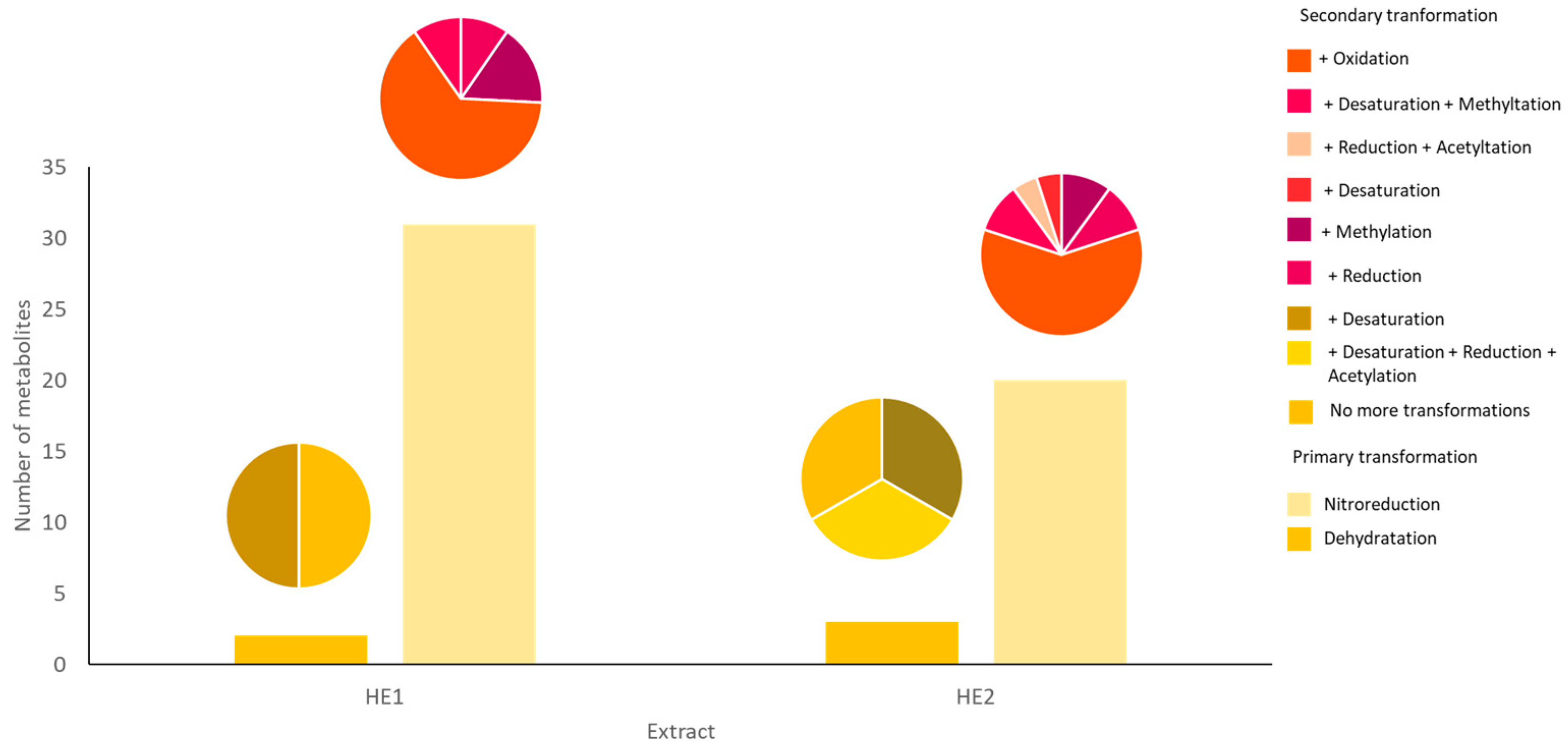
Figure 1. Graphical representation of the putative chemical transformations of atraric acid detected through UHPLC-MS/MS analysis and Compound Discoverer software.
Jox 15 00201 g001
Figure 2. Jurkat cells (5 × 10⁵ cells/mL) were exposed for 24 h to increasing concentrations of HE1. Cell viability was evaluated using the Trypan Blue exclusion assay, which distinguishes viable (unstained) from non-viable (blue-stained) cells under microscopy. Triton X-100 (0.3%) served as a positive control for complete cell lysis, and 0.2% DMSO was used as solvent control. Results are expressed as mean ± SD from three independent experiments performed in triplicate. Statistical significance vs. solvent control: * p < 0.05, *** p < 0.001, and **** p < 0.0001.
Jox 15 00201 g002
Figure 3. Jurkat cells (5 × 10⁵ cells/mL) were exposed for 24 h to increasing concentrations of HE2. Cell viability was evaluated using the Trypan Blue exclusion assay, which distinguishes viable (unstained) from non-viable (blue-stained) cells under microscopy. Triton X-100 (0.3%) served as a positive control for complete cell lysis, and 0.2% DMSO was used as solvent control. Results are expressed as mean ± SD from three independent experiments performed in triplicate. Statistical significance vs. solvent control: **** p < 0.0001.
Jox 15 00201 g003
Figure 4. Jurkat cells were treated with HE1 or HE2 at EC50, EC50/2, and EC50/4 concentrations for 24 h. Apoptosis and necrosis were quantified by dual staining with Annexin V-FITC (early apoptosis) and Propidium Iodide (PI, necrosis marker). Cells were analyzed by flow cytometry (10,000 events/sample) using a MACSQuant VYB cytometer. Camptothecin (1.5 μM) served as positive control and 0.2% DMSO as solvent control. Values are mean ± SD of three replicates. Statistical significance: * p < 0.05, ** p < 0.01, *** p < 0.001, and **** p < 0.0001.
Jox 15 00201 g004
Figure 5. Jurkat cells were treated with HE1 or HE2 at EC50, EC50/2, and EC50/4 concentrations for 48 h. Apoptosis and necrosis were quantified by dual staining with Annexin V-FITC (early apoptosis) and Propidium Iodide (PI, necrosis marker). Cells were analyzed by flow cytometry (10,000 events/sample) using a MACSQuant VYB cytometer. Camptothecin (1.5 μM) served as positive control and 0.2% DMSO as solvent control. Values are mean ± SD of three replicates. Statistical significance: * p < 0.05, ** p < 0.01, and **** p < 0.0001.
Jox 15 00201 g005
Figure 6. Jurkat cells were exposed for 24 h to non-cytotoxic concentrations of HE1 or HE2 (20 μg/mL). Relative mRNA expression of IL-2, TNF-α, and IFN-γ was quantified by RT-qPCR using GAPDH as housekeeping gene. Lipopolysaccharide (LPS, 10 ng/mL) served as positive control and 0.2% DMSO as solvent control. Expression levels are represented as fold change (2−ΔΔCT) relative to solvent control. Results are mean ± SD of three independent experiments. Significance: * p < 0.05, ** p < 0.01, and **** p < 0.0001.
Jox 15 00201 g006
Figure 7. Jurkat cells were exposed for 48 h to non-cytotoxic concentrations of HE1 or HE2 (20 μg/mL). Relative mRNA expression of IL-2, TNF-α, and IFN-γ was quantified by RT-qPCR using GAPDH as housekeeping gene. Lipopolysaccharide (LPS, 10 ng/mL) served as positive control and 0.2% DMSO as solvent control. Expression levels are represented as fold change (2−ΔΔCT) relative to solvent control. Results are mean ± SD of three independent experiments. Significance: * p < 0.05, ** p < 0.01, and *** p < 0.001.
Jox 15 00201 g007
Figure 8. Proposed immunomodulatory mechanisms of Pseudevernia furfuracea hydrodistillation-derived extracts (HE1 and HE2) in Jurkat cells. Flow cytometry results (Annexin V/PI staining) show a concentration and time-dependent progression from apoptotis to late apoptosis. RT-qPCR analyses reveal modifications (up-regulation and/or down-regulation) in chemokine expression (IL-2, TNF-α, and IFN-γ). The proposed signaling interactions include activation of STAT5 by IL-2, modulation of NFκB associated with TNF-α suppression, and involvement of MAPK (ERK, JNK, p38) cascades linking cytokine regulation to apoptosis. In the diagram, thick blue arrows indicate up- or down-regulation; the green ‘+’ sign indicates activation, and the T-bar indicates inhibition.
Jox 15 00201 g008
Table 1. Putative identification of the compounds detected in HE1 and HE2 through UHPLC-MS/MS. Signal colors ranges vary from red representing low intensity, to yellow, indicating high intensity.
NameMolecular FormulaMolecular WeightRTArea MaxHE1HE2
(-)-MenthylacetateC12H22O2198.1615616.6065.33 × 106-+
[FAhydroxy(20:3)]11_12-dihydroxy-5Z_8Z_14Z-eicosatrienoicacidC20H34O4338.2451515.1382.65 × 107-+
1,2,2,6,6-Pentamethyl-4-piperidinyl acrylateC13H23NO2225.1722517.9921.64 × 107++
1_3_8-NaphthalenetriolC10H8O3176.0470410.7931.48 × 107-+
2,4-Diethyl-thioxanthen-9-oneC17H16OS268.0915717.1014.37 × 106++
2,6-DiethylanilineC10H15N149.119940.5954.59 × 106++
2-oxa-4-azatetracyclo [6.3.1.1~6,10~.0~1,5~]tridecan-3-oneC11H15NO2193.110050.5621.29 × 107++
3,5-di-tert-Butyl-4-hydroxybenzaldehydeC15H22O2234.1615114.2978.06 × 106-+
4-IsopropylanilineC9H13N135.10440.5711.98 × 107++
4-O-acetyl hygrophorone A14C22H38O5382.2712715.1693.36 × 107-+
4-PentylanilineC11H17N163.1356718.9451.01 × 107+-
5-(6-hydroxy-6-methyloctyl)-2,5-dihydrofuran-2-oneC13H22O3243.1827818.0989.90 × 106++
9,10-phenanthraquinoneC14H8O2208.0521111.1482.70 × 107-+
Acetone oximeC3H7NO73.052590.5951.27 × 107++
Bacillamidin GC17H35NO269.2711417.663.67 × 106++
Berkazaphilone AC13H16O3220.1094714.6116.35 × 106-+
CaprolactamC6H11NO113.083842.7662.62 × 108-+
Cladoacetal BC12H12O3204.0782615.5766.66 × 106-+
DEETC12H17NO191.130649.5036.24 × 106-+
DiaminotolueneC7H10N2122.084080.5683.84 × 106+-
Dibutyl hexanedioateC14H26O4258.1826615.2361.36 × 107-+
Dibutyl phthalateC16H22O4278.1515115.4528.12 × 107++
Diethyl phthalateC12H14O4222.0888310.7941.02 × 107-+
diisopropylethylamineC8H19N129.1514818.3467.73 × 107-+
Di-N-butylnitrosoamineC8H18N2O158.141572.8849.59 × 106-+
ErucamideC22H43NO337.3338719.1481.63 × 108++
Eugenol methyl etherC11H14O2178.099076.5016.67 × 106-+
F1839-BC24H33NO6431.2301511.2111.59 × 107++
FL6DDAGI0001_aC22H26O6386.172311.2122.25 × 107++
HeptaminolC8H19NO145.146350.5692.33 × 106++
MDPBPC15H19NO3261.1360215.0275.62 × 106-+
N,N-DiethylanilineC10H15N149.1199719.0721.88 × 108++
N-MethylpyridiniumC6H7N93.057650.5621.43 × 106+-
NP-014924C10H12O4164.047199.9175.75 × 107++
NP-020014C15H26O3276.1720815.0281.31 × 107-+
OleamideC18H35NO281.271217.7173.72 × 106+-
PhenmetrazineC11H15NO177.115040.5636.46 × 106++
Phthalic anhydrideC8H4O3148.015810.7931.50 × 107-+
PseudocapsaicinC17H27NO3293.1986514.611.54 × 107-+
Stearoyl ethanolamideC20H41NO2309.3022718.4381.40 × 107++
Thermolide EC28H53NO8531.3760815.1771.36 × 107-+
Tributyl phosphateC12H27O4P266.1643214.0186.15 × 106-+
Triethylene glycolC6H14O4150.088910.5721.38 × 107-+
Table 2. Putative identification of atraric acid transformation products by UHPLC-MS/MS. Signal color ranges vary from red, representing low intensity, to green, indicating high intensity.
TransformationComposition ChangeMolecular FormulaMolecular WeightRTArea MaxHE1HE2
Dehydration, Desaturation-(H4O)C10H8O3176.0470510.7941.45 × 107++
Nitro Reduction, Oxidation-(CO)C9H12O3168.0781914.9151.96 × 106+-
Nitro Reduction, Oxidation-(CO)C9H12O3168.0781618.5791.89 × 106-+
Dehydration-(CH4O)C9H8O3164.047049.9185.87 × 106++
Nitro Reduction, Oxidation-(CO)C9H12O3168.0781617.6331.56 × 106-+
Nitro Reduction, Oxidation-(CO)C9H12O3168.0782315.8272.55 × 106+-
Nitro Reduction, Oxidation-(CO)C9H12O3168.0781716.7091.51 × 106+-
Nitro Reduction, Oxidation-(CO)C9H12O3168.0782316.1691.40 × 106+-
Nitro Reduction, Oxidation-(CO)C9H12O3168.078216.8671.39 × 106++
Nitro Reduction, Oxidation-(CO)C9H12O3168.0782316.0153.33 × 106+-
Dehydration, Reduction, Acetylation+(C2H2)C12H14O4222.0888510.7931.03 × 107-+
Nitro Reduction, Oxidation-(CO)C9H12O3168.078219.351.18 × 106+-
Nitro Reduction, Oxidation-(O) + (H2)C10H14O3182.0937518.0566.99 × 105+-
Nitro Reduction, Methylation-(O2) + (CH4)C11H16O2180.1145218.7263.98 × 105+-
Nitro Reduction, Oxidation-(CO)C9H12O3168.078216.6259.97 × 105+-
Nitro Reduction, Oxidation-(CO)C9H12O3168.078216.9289.96 × 105++
Nitro Reduction, Oxidation-(CO)C9H12O3168.0781916.2048.93 × 105+-
Nitro Reduction, Oxidation-(CO)C9H12O3168.0781617.522.93 × 105+-
Nitro Reduction, Oxidation-(CO)C9H12O3168.078216.2487.91 × 105+-
Nitro Reduction, Methylation-(O2) + (CH4)C11H16O2180.114517.5843.91 × 105-+
Nitro Reduction, Methylation-(O2) + (CH4)C11H16O2180.1146118.2953.91 × 105-+
Nitro Reduction, Oxidation-(CO)C9H12O3168.078216.8821.09 × 106-+
Nitro Reduction, Methylation-(O2) + (CH4)C11H16O2180.1144917.8253.80 × 105+-
Nitro Reduction, Oxidation-(CO)C9H12O3168.0781718.635.77 × 105-+
Nitro Reduction, Oxidation-(CO)C9H12O3168.0781418.6867.76 × 105+-
Nitro Reduction, Methylation-(O2) + (CH4)C11H16O2180.1145318.5763.76 × 105+-
Nitro Reduction, Oxidation-(CO)C9H12O3168.0781717.4833.76 × 105-+
Nitro Reduction, Methylation-(O2) + (CH4)C11H16O2180.114518.1953.75 × 105+-
Nitro Reduction, Oxidation-(CO)C9H12O3168.0781818.869.74 × 105++
Nitro Reduction, Methylation-(O2) + (CH4)C11H16O2180.1145318.6283.74 × 105+-
Nitro Reduction, Oxidation-(CO)C9H12O3168.0781618.3057.73 × 105++
Nitro Reduction, Reduction-(CO2) + (H2)C9H14O2154.0989416.7894.72 × 105+-
Nitro Reduction, Oxidation-(CO)C9H12O3168.0781819.2849.69 × 105+-
Desaturation, Nitro Reduction, Methylation-(O2) + (CH2)C11H14O2178.0988617.6214.64 × 105+-
Nitro Reduction, Reduction-(CO2) + (H2)C9H14O2154.0989216.4244.54 × 105-+
Nitro Reduction, Oxidation-(CO)C9H12O3168.078217.321.05 × 106-+
Nitro Reduction, Oxidation-(CO)C9H12O3168.0782317.0769.48 × 105+-
Nitro Reduction, Methylation-(O2) + (CH4)C11H16O2180.114517.515.47 × 105-+
Nitro Reduction, Oxidation-(CO)C9H12O3168.0781917.4911.04 × 106+-
Desaturation, Nitro Reduction, Methylation-(O2) + (CH2)C11H14O2178.0988518.9063.35 × 105++
Nitro Reduction, Reduction-(CO2) + (H2)C9H14O2154.0989316.214.30 × 105++
Nitro Reduction, Oxidation-(CO)C9H12O3168.0781417.5053.30 × 105-+
Desaturation, Nitro Reduction-(O2)C10H12O2164.0832418.523.24 × 105-+
Nitro Reduction, Oxidation-(CO)C9H12O3168.0781717.1913.23 × 105+-
Nitro Reduction, Reduction, Acetylation-(O) + (C2H6)C12H18O3210.1250318.3423.19 × 105-+
Desaturation, Nitro Reduction, Methylation-(O2) + (CH2)C11H14O2178.0988918.7424.11 × 105+-
Desaturation, Nitro Reduction, Methylation-(O2) + (CH2)C11H14O2178.0988517.5045.07 × 105-+
Nitro Reduction, Oxidation-(CO)C9H12O3168.0781618.9067.03 × 105-+
Nitro Reduction-(CO2)C9H12O2152.0832816.935.03 × 105-+
Nitro Reduction, Reduction-(CO2) + (H2)C9H14O2154.0989216.5996.02 × 105+-
Disclaimer/Publisher’s Note: The statements, opinions and data contained in all publications are solely those of the individual author(s) and contributor(s) and not of MDPI and/or the editor(s). MDPI and/or the editor(s) disclaim responsibility for any injury to people or property resulting from any ideas, methods, instructions or products referred to in the content.