
Intelligent Extremum Seeking Control of PEM Fuel Cells for Optimal Hydrogen Utilization in Hydrogen Electric Vehicles

 ,
,  ,
, 
 , and
, and 
Abstract
1. Introduction
2. Fuel Cell Modeling and ANN Model Development
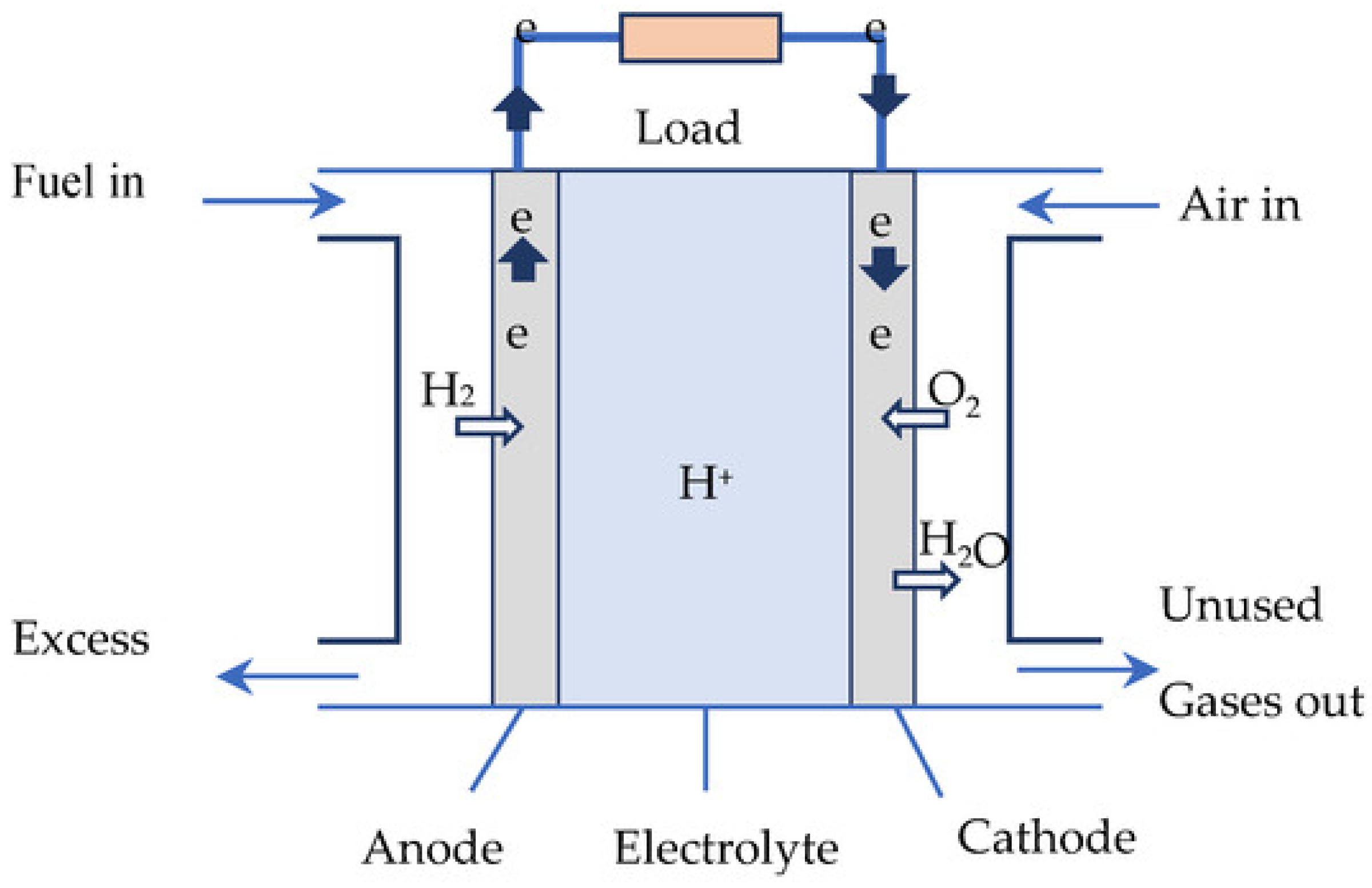
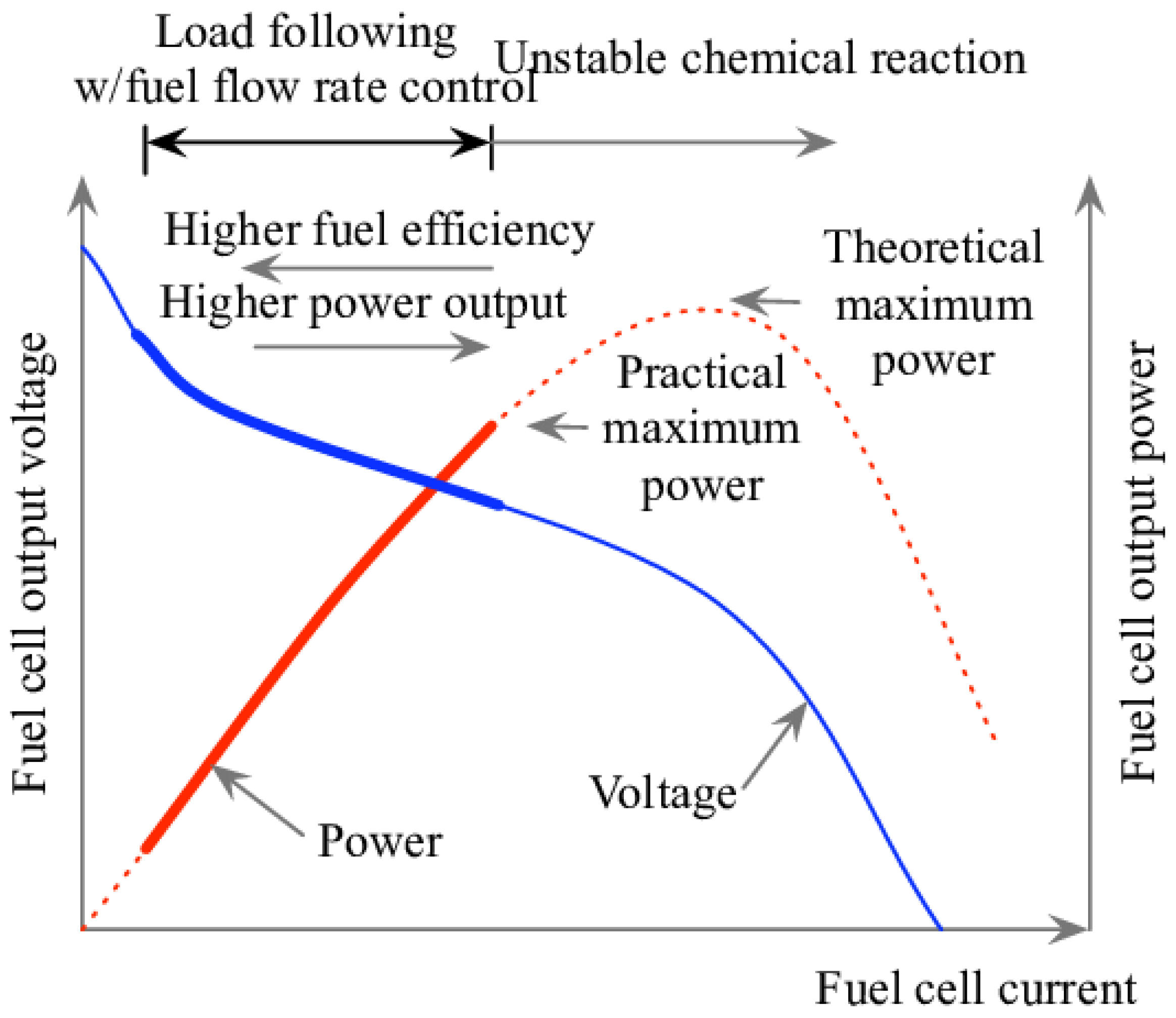
2.1. Fundamentals of Hydrogen Hydrogen Fuel Cell PEMs
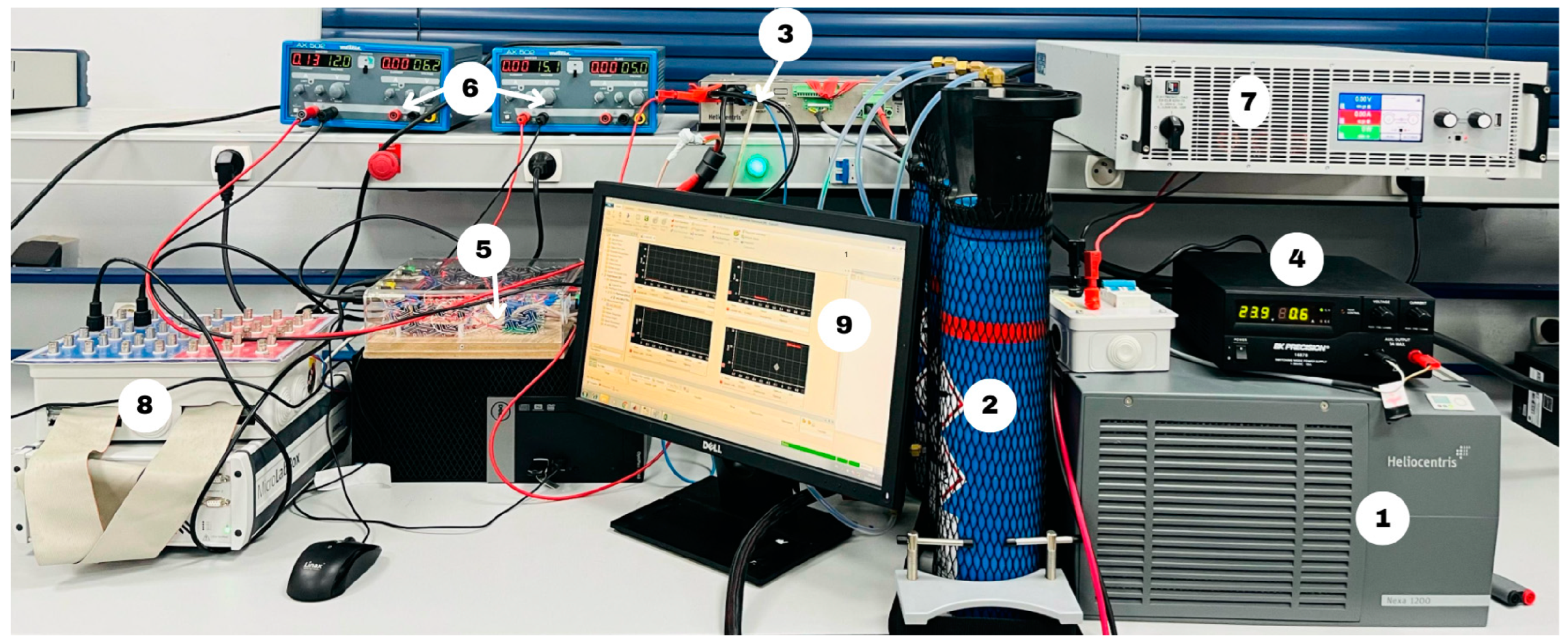
2.2. Experimental Data and Input Variables
- A NEXA 1200 PEM fuel cell module along with its monitoring software,
- Three metal hydride canisters from Heliocentris, each with a hydrogen storage capacity of 800 NL,
- A Nexa 1200 DC/DC converter,
- A BK Precision power supply was used to start the fuel cell,
- Hall effect sensors to take Voltage and current measurements,
- Two Metrix AX502 power supplies to power the Hall effect sensors,
- A programmable DC electronic load,
- A MicroLabBox-dSPACE DS1202 device running Control Desk software,
- Computer for data acquisition.
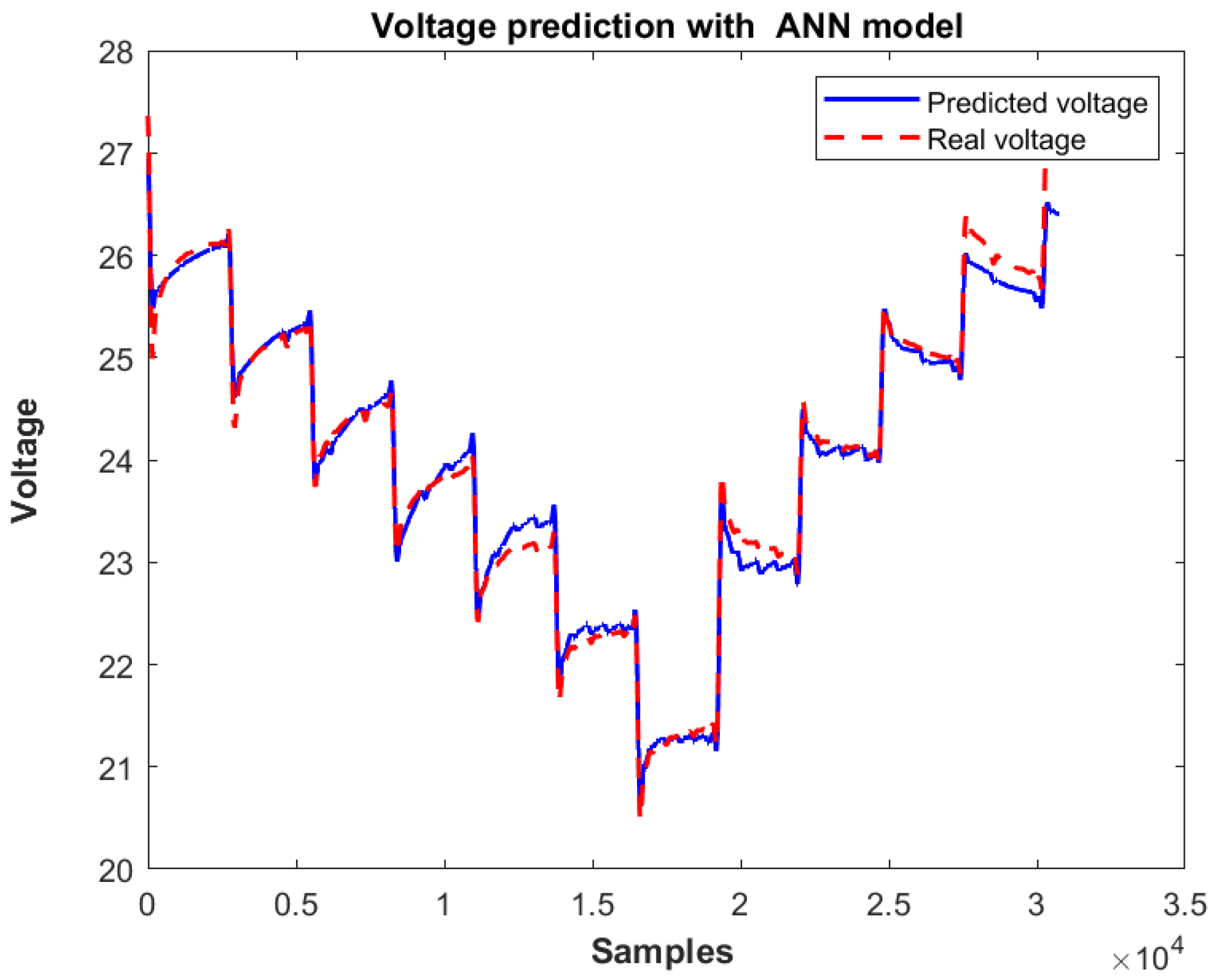
2.3. Modeling PEMFC Using an Artificial Neural Network
3. Intelligent Extremum Seeking Control of PEMFC
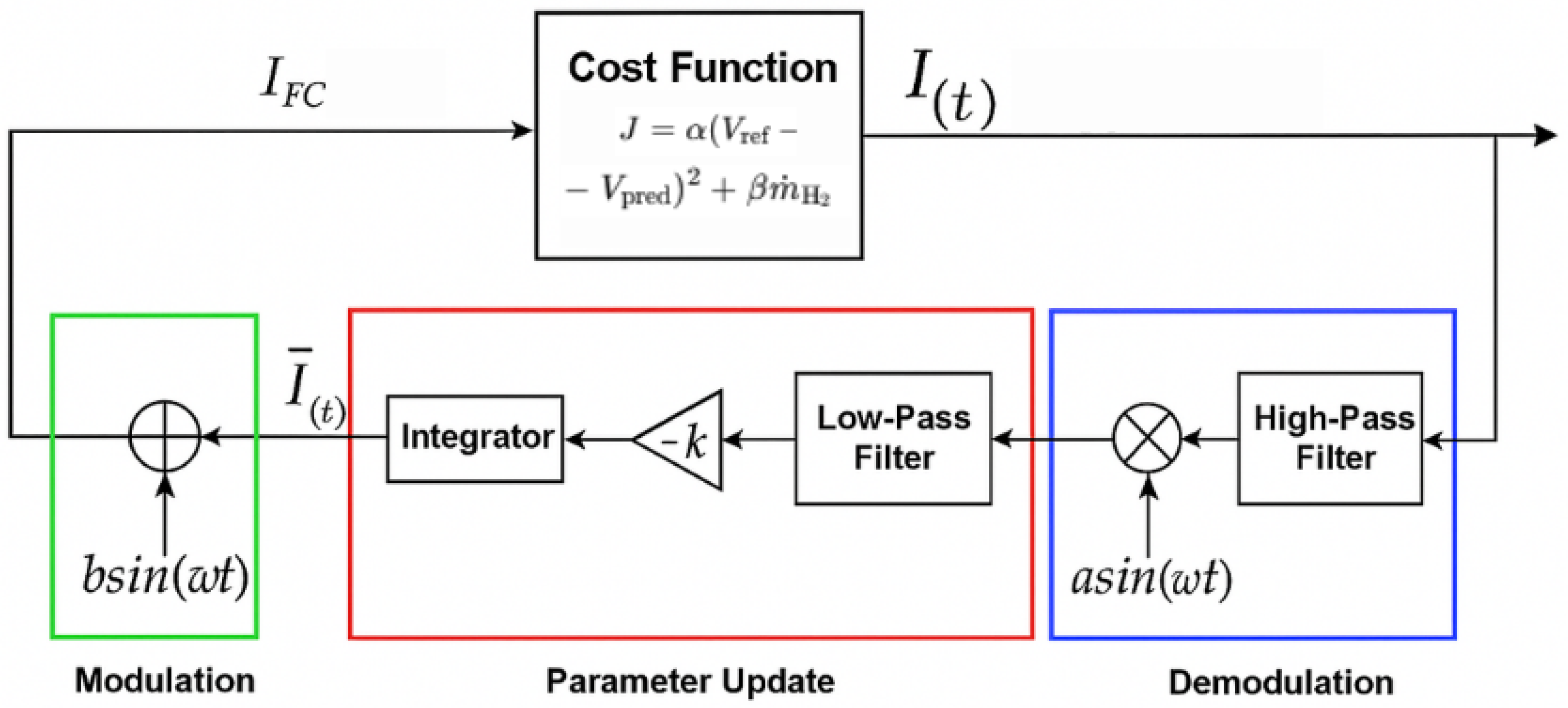
3.1. Principle of Extremum Seeking Control (ESC)
- A perturbation signal injected into the control input,
- A demodulation mechanism that extracts information about the gradient of the performance function,
- An adaptation law that updates the control input based on the estimated gradient.
3.2. Inputs and Outputs of the ESC-PEMFC System
3.3. Integration of the ANN Model into the ESC Loop
- The ANN is trained to predict the fuel cell voltage V from two main inputs: the current I and temperature T. This approximation avoids the complexities and uncertainties associated with classical physical models.
- The cost function calculation: ESC aims to minimize a trade-off between hydrogen consumption , computed via Faraday’s law as a function of current I, and the voltage tracking error . The trade-off is weighted by coefficients and .
- Gradient estimation: To estimate the derivative of the cost with respect to the current command I, ESC evaluates the cost function at and . These evaluations are performed via the ANN, which predicts the corresponding voltages and .
- Command update: The estimated gradient is used to adapt the current command to minimize the cost. For clarity, Algorithm 1 presents an illustrative pseudocode of ESC-ANN integration.
| Algorithm 1 Pseudocode of ESC-ANN integration |
| For each time step k |
| reference current at step k |
| temperature at step k |
| If |
| Else |
| End If |
| Compute cost: and |
| Estimate gradient: |
| Update command: |
| Saturate around within ±5% |
| Smooth correction and set |
| End For |
4. Implemented ESC-ANN Algorithm
4.1. ESC Controller Parameters
4.2. Adaptation Parameters of ESC
4.3. Role of the ESC Algorithm in Hydrogen Optimization
5. Experimental Results and Analysis
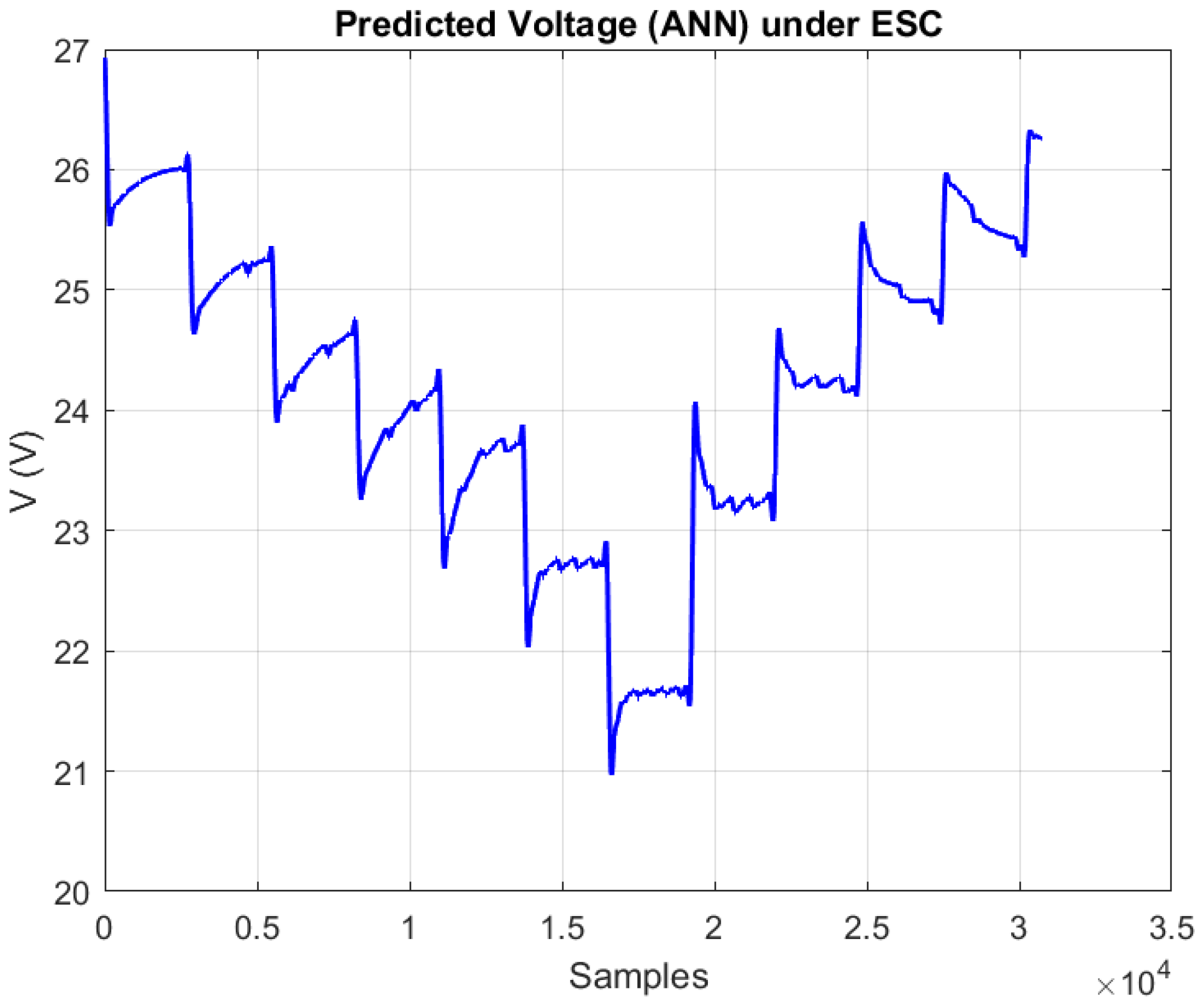
5.1. Voltage Profile
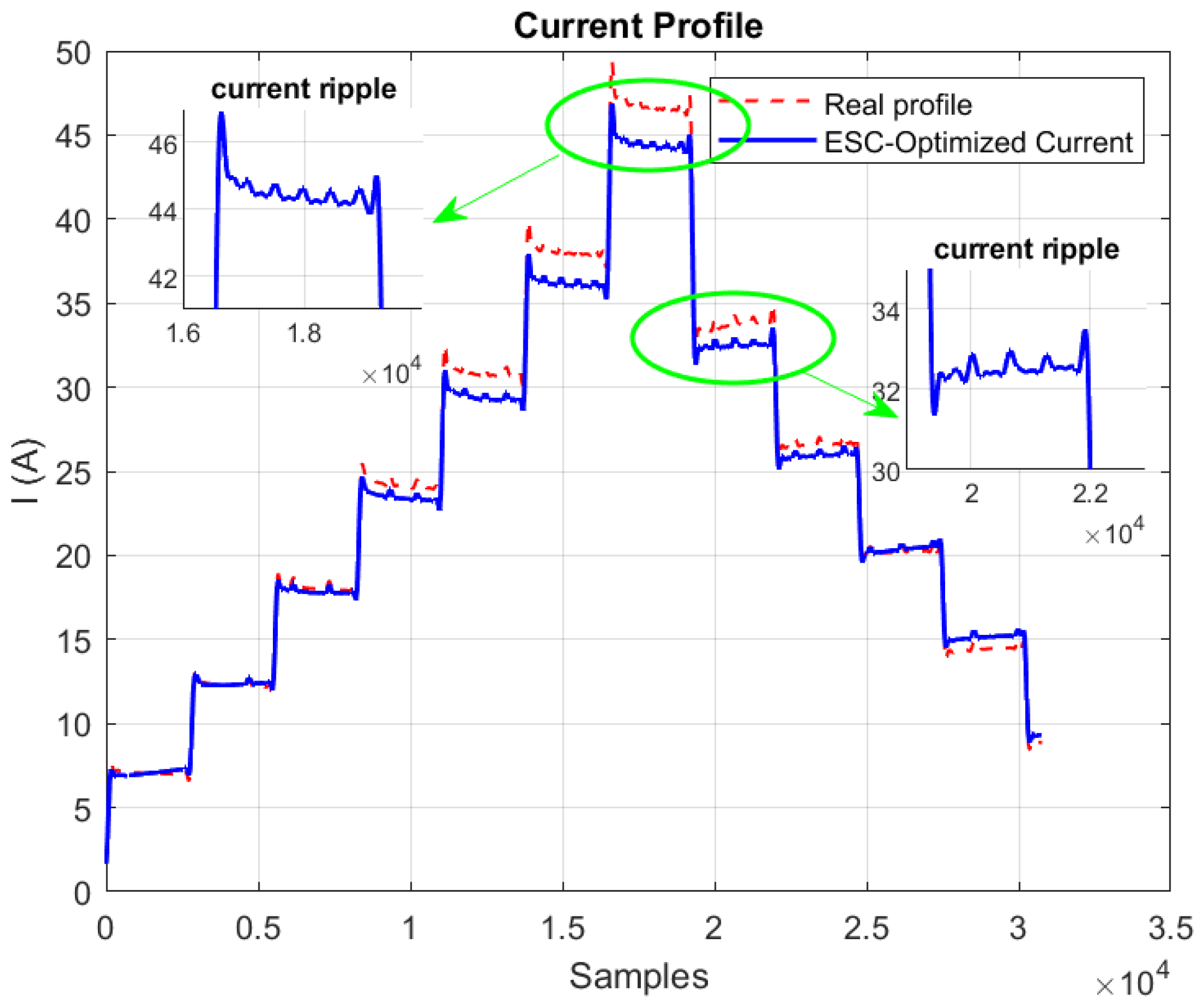
5.2. Current Profile
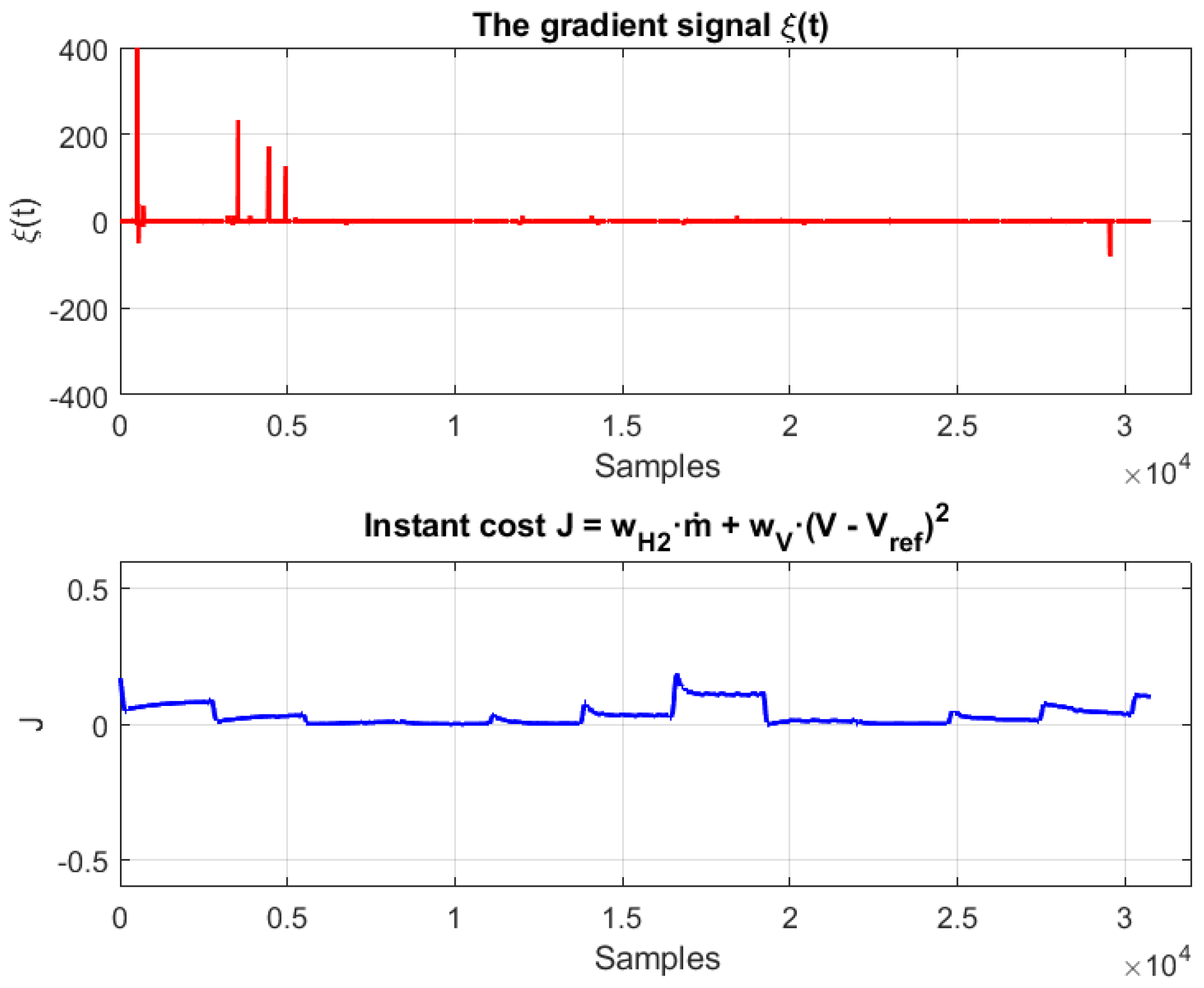
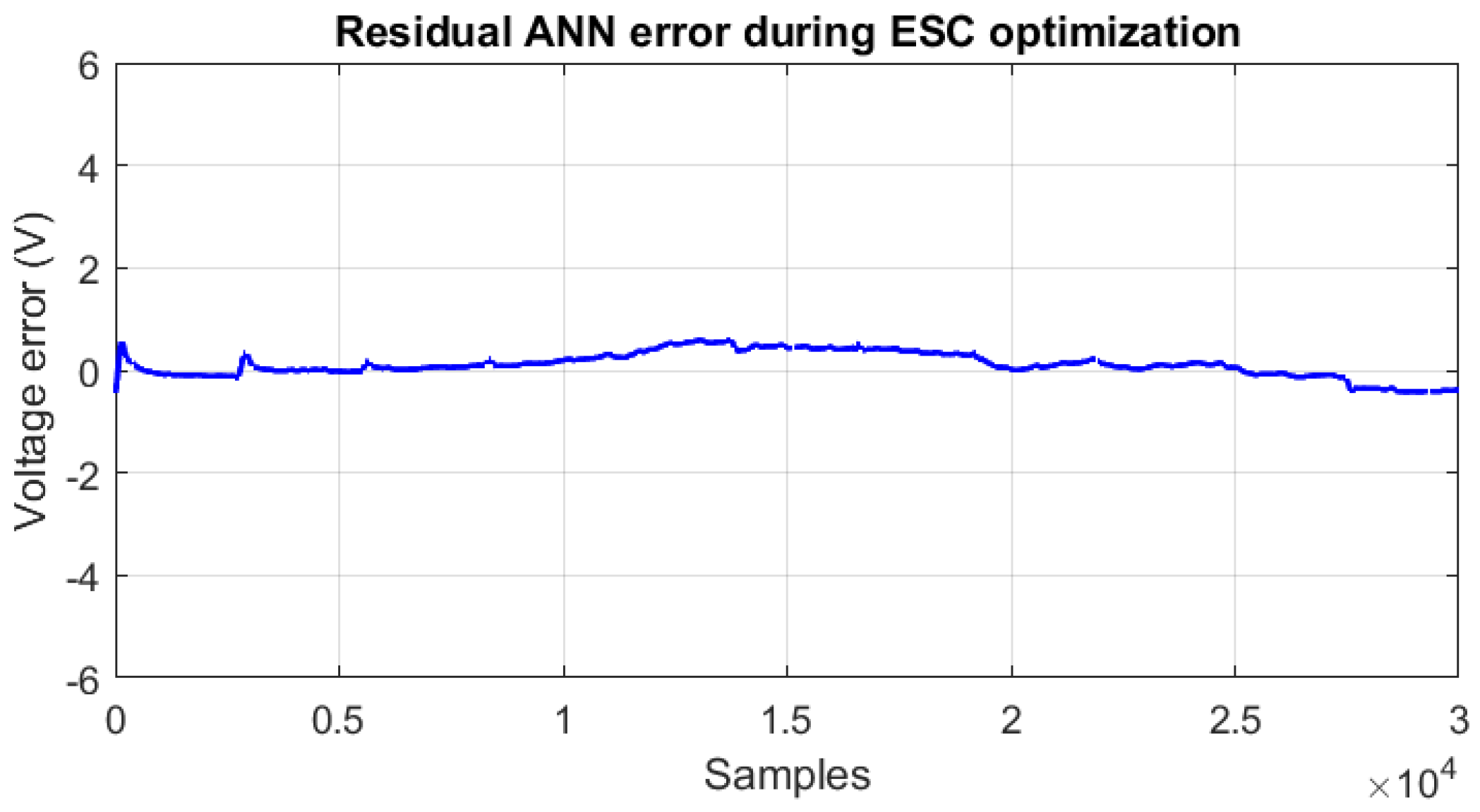
5.3. Convergence Behavior of the ESC–ANN Framework
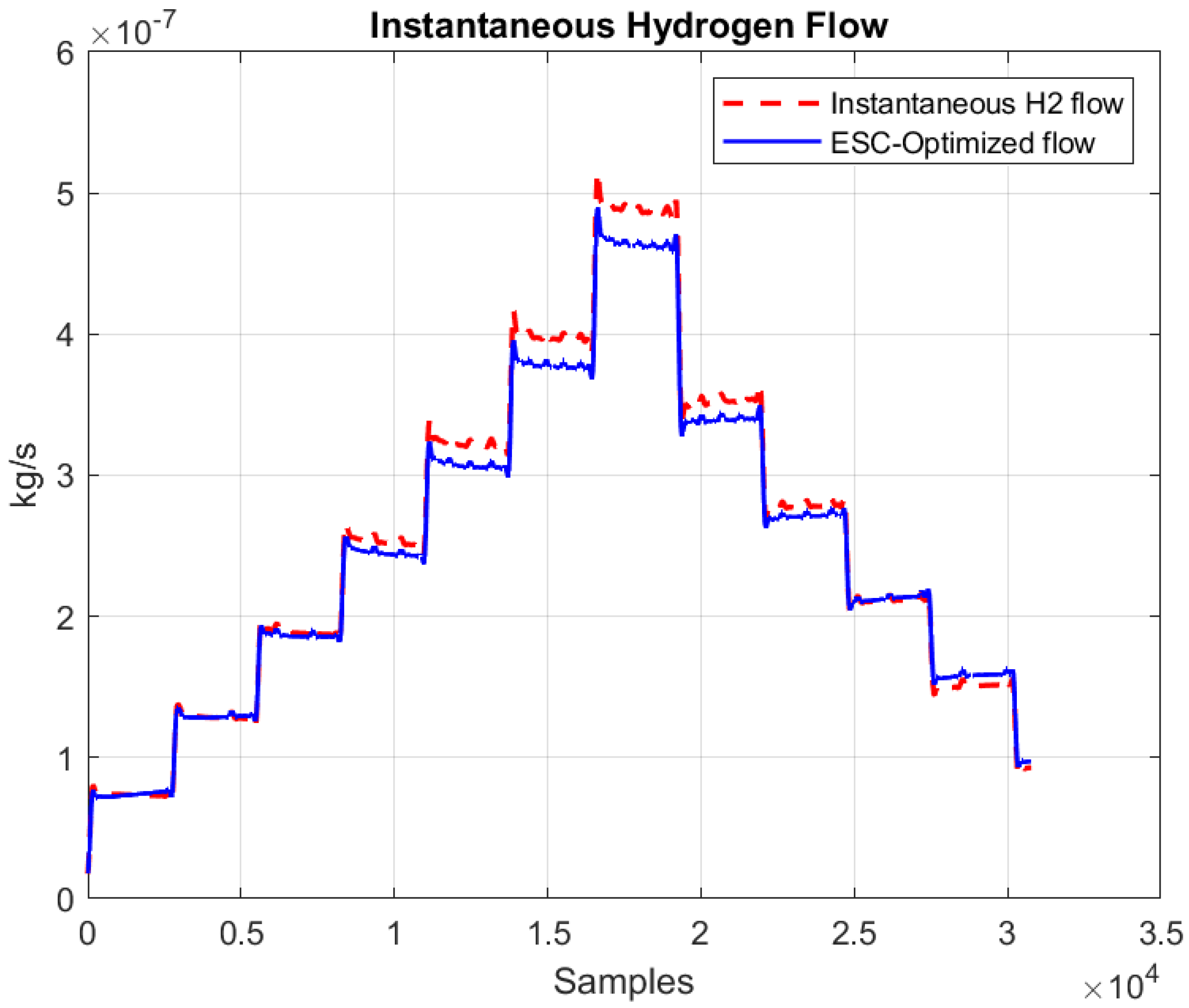
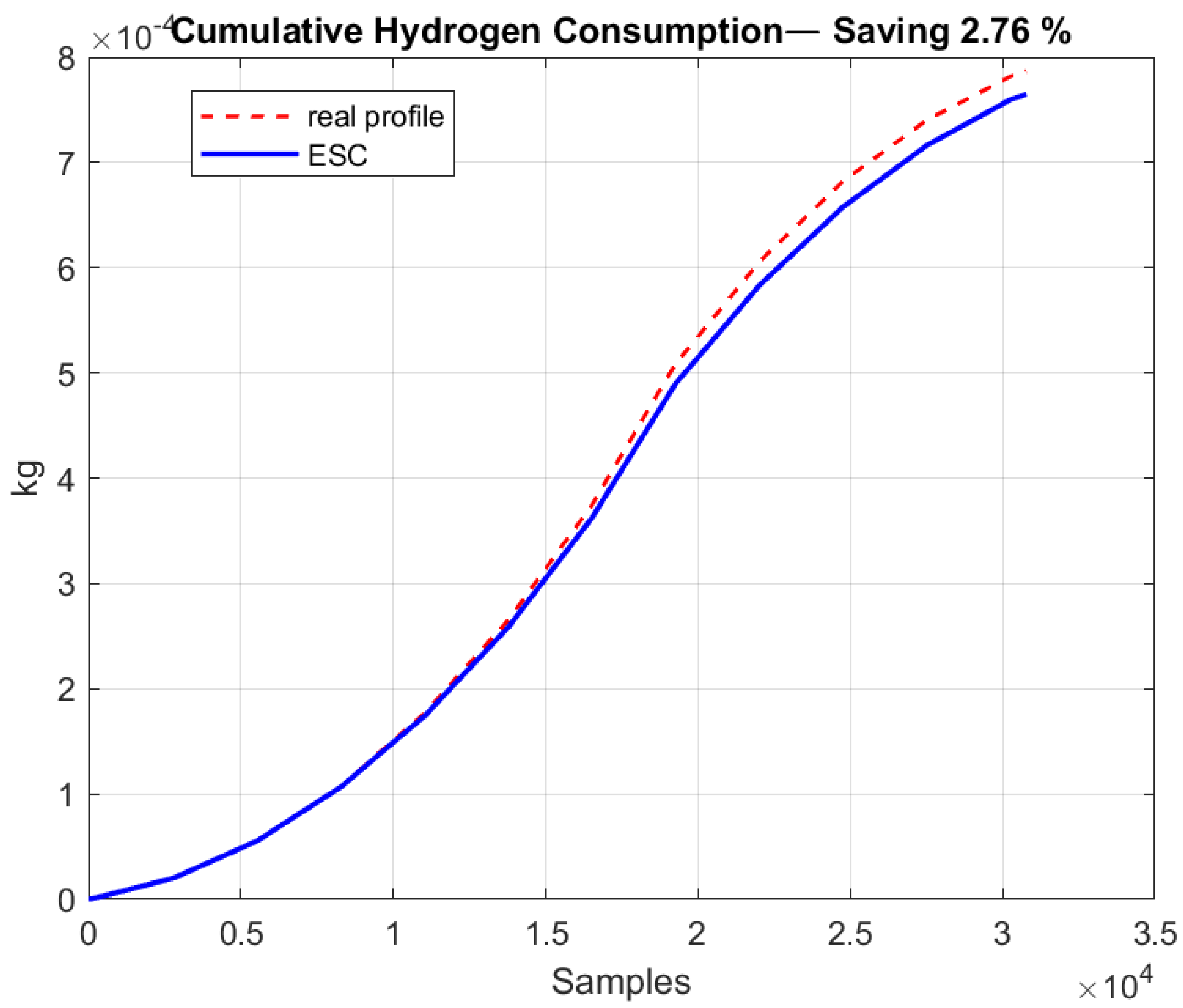
5.4. Instantaneous Hydrogen Flow and Cumulative Hydrogen Consumption
6. Conclusions
Author Contributions
Funding
Data Availability Statement
Acknowledgments
Conflicts of Interest
References
- Singh, M.; Singla, M.K.; Beryozkina, S.; Gupta, J.; Safaraliev, M. Hydrogen vehicles and hydrogen as a fuel for vehicles: A state-of-the-art review. Int. J. Hydrogen Energy 2024, 64, 1001–1010. [Google Scholar] [CrossRef]
- Tellez-Cruz, M.M.; Escorihuela, J.; Solorza-Feria, O.; Compañ, V. Proton exchange membrane fuel cells (PEMFCs): Advances and challenges. Polymers 2021, 13, 3064. [Google Scholar] [CrossRef] [PubMed]
- Lü, X.; Qu, Y.; Wang, Y.; Qin, C.; Liu, G. A comprehensive review on hybrid power system for PEMFC-HEV: Issues and strategies. Energy Convers. Manag. 2018, 171, 1273–1291. [Google Scholar] [CrossRef]
- Baroutaji, A.; Arjunan, A.; Robinson, J.; Wilberforce, T.; Abdelkareem, M.A.; Olabi, A.G. PEMFC poly-generation systems: Developments, merits, and challenges. Sustainability 2021, 13, 11696. [Google Scholar] [CrossRef]
- Zhang, F.; Zu, B.; Wang, B.; Qin, Z.; Yao, J.; Wang, Z.; Fan, L.; Jiao, K. Developing long-durability proton-exchange membrane fuel cells. Joule 2025, 9, 101853. [Google Scholar] [CrossRef]
- Arun, M.; Giddey, S.; Joseph, P.; Dhawale, D.S. Challenges and mitigation strategies for general failure and degradation in polymer electrolyte membrane-based fuel cells and electrolysers. J. Mater. Chem. 2025, 13, 11236–11263. [Google Scholar] [CrossRef]
- Koundi, M.; El Fadil, H.; EL Idrissi, Z.; Lassioui, A.; Intidam, A.; Bouanou, T.; Nady, S.; Rachid, A. Investigation of hydrogen production system-based PEM EL: PEM EL modeling, DC/DC power converter, and controller design approaches. Clean Technol. 2023, 5, 531–568. [Google Scholar] [CrossRef]
- Kishore, S.C.; Perumal, S.; Atchudan, R.; Alagan, M.; Sundramoorthy, A.K.; Lee, Y.R. A critical review on artificial intelligence for fuel cell diagnosis. Catalysts 2022, 12, 743. [Google Scholar] [CrossRef]
- Caliskan, A.; Percin, H.B. The effective parameter identification for a PEMFC based on Archimedes optimization algorithm. Int. J. Hydrogen Energy 2024, 143, 1043–1052. [Google Scholar] [CrossRef]
- Ma, K.; Hu, S.; Hu, G.; Bai, Y.; Yang, J.; Dou, C.; Guerrero, J.M. Energy management considering unknown dynamics based on extremum seeking control and particle swarm optimization. IEEE Trans. Control Syst. Technol. 2019, 28, 1560–1568. [Google Scholar] [CrossRef]
- Lauand, C.K.; Meyn, S. Quasi-stochastic approximation: Design principles with applications to extremum seeking control. IEEE Control Syst. Mag. 2023, 43, 111–136. [Google Scholar] [CrossRef]
- Wang, L.; Chen, S.; Ma, K. On stability and application of extremum seeking control without steady-state oscillation. Automatica 2016, 68, 18–26. [Google Scholar] [CrossRef]
- Bizon, N. Improving the PEMFC energy efficiency by optimizing the fueling rates based on extremum seeking algorithm. Int. J. Hydrogen Energy 2014, 39, 10641–10654. [Google Scholar] [CrossRef]
- Yin, L.; Li, Q.; Breaz, E.; Chen, W.; Gao, F. Model guided extremum seeking and active disturbance rejection control for efficiency real-time optimization of PEMFC system. IEEE Trans. Ind. Electron. 2023, 71, 5905–5919. [Google Scholar] [CrossRef]
- Fang, S.; Feng, J.; Fan, X.; Chen, D.; Tan, C. PEMFC gas-feeding control: Critical insights and review. Actuators 2024, 13, 455. [Google Scholar] [CrossRef]
- Fayyazi, M.; Sardar, P.; Thomas, S.I.; Daghigh, R.; Jamali, A.; Esch, T.; Kemper, H.; Langari, R.; Khayyam, H. Artificial intelligence/machine learning in energy management systems, control, and optimization of hydrogen fuel cell vehicles. Sustainability 2023, 15, 5249. [Google Scholar] [CrossRef]
- Altinoz, O.T. Modeling of Model-Free Adaptive Perturbation-based Extremum Seeking Control as Computational Optimization Problem. In Proceedings of the 4th International Artificial Intelligence and Data Science Congress, Chengdu, China, 14–15 March 2024; pp. 14–15. [Google Scholar]
- Sinha, D.; Sarangi, P.K.; Sinha, S. Efficacy of artificial neural networks (ANN) as a tool for predictive analytics. In Analytics Enabled Decision Making; Springer Nature: Singapore, 2023; pp. 123–138. [Google Scholar]
- Rubio, A.; Agila, W.; González, L.; Aviles-Cedeno, J. Distributed intelligence in autonomous PEM fuel cell control. Energies 2023, 16, 4830. [Google Scholar] [CrossRef]
- Li, J.; Yu, T.; Yang, B. Adaptive controller of PEMFC output voltage based on ambient intelligence large-scale deep reinforcement learning. IEEE Access 2021, 9, 6063–6075. [Google Scholar] [CrossRef]
- Duan, Z.; Mei, N.; Feng, L.; Yu, S.; Jiang, Z.; Chen, D.; Xu, X.; Hong, J. Research on hydrogen consumption and driving range of hydrogen fuel cell vehicle under the CLTC-P condition. World Electr. Veh. J. 2021, 13, 9. [Google Scholar] [CrossRef]
- Piras, M.; De Bellis, V.; Malfi, E.; Novella, R.; Lopez-Juarez, M. Hydrogen consumption and durability assessment of fuel cell vehicles in realistic driving. Appl. Energy 2024, 358, 122559. [Google Scholar] [CrossRef]
- Sun, H.; Wang, Z.; Meng, Q.; White, S. Advancements in hydrogen storage technologies: Enhancing efficiency, safety, and economic viability for sustainable energy transition. Int. J. Hydrogen Energy 2025, 105, 10–22. [Google Scholar] [CrossRef]
- Belkoufa, I.; Assila, A.; Alaoui-Belghiti, A.; Laasri, S.; Hlil, E.K.; Hajjaji, A. Strain matters: Enhancing the hydrogenation properties of Mg2CoH5 through multiaxial approaches. Int. J. Hydrogen Energy 2025, 105, 1114–1122. [Google Scholar] [CrossRef]
- Belhaj, F.Z.; El Fadil, H.; El Idrissi, Z.; Intidam, A.; Koundi, M.; Giri, F. New equivalent electrical model of a fuel cell and comparative study of several existing models with experimental data from the PEMFC Nexa 1200 W. Micromachines 2021, 12, 1047. [Google Scholar] [CrossRef] [PubMed]
- Mei, J.; Meng, X.; Tang, X.; Li, H.; Hasanien, H.; Alharbi, M.; Dong, Z.; Shen, J.; Sun, C.; Fan, F.; et al. An accurate parameter estimation method of the voltage model for proton exchange membrane fuel cells. Energies 2024, 17, 2917. [Google Scholar] [CrossRef]
- Benmouiza, K.; Cheknane, A. Analysis of proton exchange membrane fuel cells voltage drops for different operating parameters. Int. J. Hydrogen Energy 2018, 43, 3512–3519. [Google Scholar] [CrossRef]
- Alrewq, M.; Albarbar, A. Investigation into the characteristics of proton exchange membrane fuel cell-based power system. IET Sci. Meas. Technol. 2016, 10, 200–206. [Google Scholar] [CrossRef]
- Intidam, A.; El Fadil, H.; Housny, H.; El Idrissi, Z.; Lassioui, A.; Nady, S.; Jabal Laafou, A. Development and experimental implementation of optimized PI-ANFIS controller for speed control of a brushless DC motor in fuel cell electric vehicles. Energies 2023, 16, 4395. [Google Scholar] [CrossRef]
- Abbade, H.; El Fadil, H.; Lassioui, A.; Intidam, A.; Hamed, A.; El Asri, Y.; Fhail, A.; Hasni, A. Deep Learning-Based Performance Modeling of Hydrogen Fuel Cells Using Artificial Neural Networks: A Comparative Study of Optimizers. Processes 2025, 13, 1453. [Google Scholar] [CrossRef]
- Ariyur, K.B.; Krstic, M. Real-Time Optimization by Extremum-Seeking Control; John Wiley & Sons: Hoboken, NJ, USA, 2003. [Google Scholar]
- Trollberg, O. On Real-Time Optimization Using Extremum Seeking Control and Economic Model Predictive Control: With Applications to Bioreactors and Paper Machines. Ph.D. Dissertation, KTH Royal Institute of Technology, Stockholm, Sweden, 2017. [Google Scholar]
- Truong, H.V.A.; Trinh, H.A.; Do, T.C.; Nguyen, M.H.; Phan, V.D.; Ahn, K.K. An Enhanced Extremum Seeking-Based Energy Management Strategy with Equivalent State for Hybridized-Electric Tramway-Powered by Fuel Cell–Battery–Supercapacitors. Mathematics 2024, 12, 1849. [Google Scholar] [CrossRef]
- Dewasme, L.; Vande Wouwer, A. Model-Free Extremum Seeking Control of Bioprocesses: A Review with a Worked Example. Processes 2020, 8, 1209. [Google Scholar] [CrossRef]
- Hayati, M.R.; Khayatian, A.; Dehghani, M. Simultaneous optimization of net power and enhancement of PEM fuel cell lifespan using extremum seeking and sliding mode control techniques. IEEE Trans. Energy Convers. 2016, 31, 688–696. [Google Scholar] [CrossRef]
- Zhou, D.; Al-Durra, A.; Matraji, I.; Ravey, A.; Gao, F. Online energy management strategy of fuel cell hybrid electric vehicles: A fractional-order extremum seeking method. IEEE Trans. Ind. Electron. 2018, 65, 6787–6799. [Google Scholar] [CrossRef]
- Zhou, D.; Ravey, A.; Al-Durra, A.; Gao, F. A comparative study of extremum seeking methods applied to online energy management strategy of fuel cell hybrid electric vehicles. Energy Convers. Manag. 2017, 151, 778–790. [Google Scholar] [CrossRef]
- Rafia, H.; Ouadi, H.; Elbhiri, B. Adaptive artificial neural network-based proportional integral controllers and extremum seeking energy optimizer for wind systems. IEEE Access 2024, 12, 164560–164575. [Google Scholar] [CrossRef]
- Benosman, M. Learning-Based Adaptive Control: An Extremum Seeking Approach–Theory and Applications; Butterworth-Heinemann: Oxford, UK, 2016. [Google Scholar]
- Kunusch, C.; Castanos, F. Extremum seeking algorithms for minimal hydrogen consumption in PEM fuel cells. In Proceedings of the American Control Conference, Washington, DC, USA, 17–19 June 2013; pp. 1144–1149. [Google Scholar]
- Belkoufa, I.; Misski, B.; Alaoui-Belghiti, A.; Moslah, C.; Mouyane, M.; Houivet, D.; Laasri, S.; Hlil, E.K.; Hajjaji, A. Improved thermodynamic properties of (Sc, V, Ti, Fe, Mn, Co, and Ni) doped NaBH4 for hydrogen storage: First-principal calculation. Int. J. Hydrogen Energy 2024, 68, 481–490. [Google Scholar] [CrossRef]
- Bizon, N. Energy optimization of fuel cell system by using global extremum seeking algorithm. Appl. Energy 2017, 206, 458–474. [Google Scholar] [CrossRef]






| Parameter | Description | Value |
|---|---|---|
| : Adaptation gain | Step size for control update | 0.15 |
| : Current increment | Finite-difference step for gradient estimation | 0.2 |
| : Logical sampling time | Time interval for hydrogen accumulation | 0.1 |
| : Minimum current | Lower operational limit of PEMFC | 1.72 |
| : Maximum current | Upper operational limit of PEMFC | 49.79 |
Disclaimer/Publisher’s Note: The statements, opinions and data contained in all publications are solely those of the individual author(s) and contributor(s) and not of MDPI and/or the editor(s). MDPI and/or the editor(s) disclaim responsibility for any injury to people or property resulting from any ideas, methods, instructions or products referred to in the content. |
© 2025 by the authors. Published by MDPI on behalf of the World Electric Vehicle Association. Licensee MDPI, Basel, Switzerland. This article is an open access article distributed under the terms and conditions of the Creative Commons Attribution (CC BY) license.
Share and Cite
Abbade, H.; El Fadil, H.; Intidam, A.; Lassioui, A.; Bouanou, T.; Hamed, A. Intelligent Extremum Seeking Control of PEM Fuel Cells for Optimal Hydrogen Utilization in Hydrogen Electric Vehicles. World Electr. Veh. J. 2026, 17, 15. https://doi.org/10.3390/wevj17010015
Abbade H, El Fadil H, Intidam A, Lassioui A, Bouanou T, Hamed A. Intelligent Extremum Seeking Control of PEM Fuel Cells for Optimal Hydrogen Utilization in Hydrogen Electric Vehicles. World Electric Vehicle Journal. 2026; 17(1):15. https://doi.org/10.3390/wevj17010015
Chicago/Turabian StyleAbbade, Hafsa, Hassan El Fadil, Abdessamad Intidam, Abdellah Lassioui, Tasnime Bouanou, and Ahmed Hamed. 2026. "Intelligent Extremum Seeking Control of PEM Fuel Cells for Optimal Hydrogen Utilization in Hydrogen Electric Vehicles" World Electric Vehicle Journal 17, no. 1: 15. https://doi.org/10.3390/wevj17010015
APA StyleAbbade, H., El Fadil, H., Intidam, A., Lassioui, A., Bouanou, T., & Hamed, A. (2026). Intelligent Extremum Seeking Control of PEM Fuel Cells for Optimal Hydrogen Utilization in Hydrogen Electric Vehicles. World Electric Vehicle Journal, 17(1), 15. https://doi.org/10.3390/wevj17010015