1. Introduction
The intensive growth of technology has given rise to the Internet of Things (IoT) through the spread of interconnected devices [
1,
2,
3,
4]. Such a paradigmatic transformation not only increases operational efficiencies but also presents multifaceted challenges, especially in the area of data interpretation and decision-making. Simultaneously, with the introduction of Artificial Intelligence (AI), various industries have undergone transformation to enable the study of data with great accuracy and forecasting capabilities [
5]. Nevertheless, the lack of transparency of most AI systems, especially deep learning models, is an important issue that is concerning when it comes to interpretability and reliability [
6,
7,
8]. The purpose of this study is to examine the incorporation of Explainable Artificial Intelligence (XAI) into IoT systems and its importance in promoting transparency and accountability, as well as user confidence in diverse systems, such as smart cities and agriculture.
1.1. Motivation for Integration
The growing demand for transparency, reliability, and interpretability in AI systems, particularly in high-stakes domains such as smart cities, healthcare, and agriculture, has motivated the integration of Internet of Things (IoT) systems with Explainable Artificial Intelligence (XAI). Thecomplexity and opacity of neural network-based models raise critical concerns regarding safety, trustworthiness, andaccountability, thereby necessitating XAI methodologies that reduce cognitive and operational uncertainty [
9,
10]. This need is amplified in sensitive application domains where high levels of interpretability are indispensable.
The inherently interconnected and distributed nature of IoT ecosystems further increases system complexity, requiring mechanisms that support accountability and informed decision-making processes. XAI addresses these requirements by providing coherent, context-aware, andhuman-understandable explanations that align with established explainability principles [
11]. In agriculture, limitations of conventional farming practices—such as insufficient insight into soil conditions, water availability, and environmental variability—underscore the necessity of IoT-enabled sensing combined with XAI to improve productivity and sustainability [
12]. By enhancing the interpretability of advanced AI representations, XAI empowers stakeholders to make data-driven decisions in domain-specific scenarios [
13].
Despite these advantages, ambiguity surrounding the notion of “explanation” in XAI systems complicates the alignment of system outputs with user expectations [
14,
15,
16]. Bridging the gap between technical model insights and actionable human understanding remains essential for trust and usability [
17]. In human-in-the-loop IoT environments, where privacy-sensitive data are continuously processed, XAI must also support adaptive, privacy-aware mechanisms that comply with ethical and societal norms [
18,
19].
In smart city contexts, the convergence of IoT and XAI enhances urban infrastructure by enabling efficient resource utilization and intelligent service provisioning [
20,
21]. Non-invasive and cost-effective XAI-driven solutions, such as explainable hydration monitoring in healthcare, further demonstrate the transformative potential of this integration across domains [
22]. The contextual nature of IoT data reinforces the importance of developing application-driven XAI processes that yield meaningful and operationally relevant explanations [
23].
Ultimately, XAI provides a principled means to address core IoT challenges, including uncertainty, dynamism, and user trust, by fostering intuitive, accessible, and user-centric system designs. The interdisciplinary integration of IoT and XAI is therefore pivotal for advancing smart cities and sustainable agriculture while ensuring transparency, accountability, and ethical compliance [
24,
25]. Future research should prioritize scalability, computational efficiency, and governance to enable fair and responsible deployment, aligning technological innovation with societal acceptance and global sustainability objectives [
26,
27].
1.2. Challenges in IoT Systems
IoT systems face persistent challenges that limit their efficiency, reliability, and large-scale adoption, with transparency, scalability, and privacy emerging as the most critical concerns [
28,
29,
30,
31,
32]. The inherent opacity and non-intuitive behavior of deep learning models significantly hinder transparency, making it difficult to interpret and justify AI-driven decisions in IoT applications [
23]. This limitation is particularly problematic in safety-critical domains such as healthcare, where explainability is essential for trust, accountability, and informed decision-making [
11]. Moreover, the lack of consensus on what constitutes an “explanation” across stakeholders further complicates interpretability, underscoring the need for context-aware and user-aligned explanation mechanisms [
17].
Scalability remains a major challenge due to the exponential growth of interconnected devices and the heterogeneity of platforms, protocols, and data streams. Efficient resource allocation, interoperability, and data management are increasingly difficult to achieve at scale [
12]. In federated IoT settings, scalability is further constrained by conflicts between local model optimization and strict privacy-preservation requirements, complicating collaborative learning without data leakage [
33,
34]. These issues are exacerbated by the limited availability of accessible, continuous monitoring solutions—such as non-invasive hydration tracking—often requiring specialized and costly hardware [
22].
Privacy concerns are intensified by the continuous sensing, transmission, and autonomous processing of sensitive data within highly interconnected IoT ecosystems [
35]. The distributed and autonomous nature of IoT complicates data provenance, responsibility attribution, and risk mitigation, particularly in human-in-the-loop systems where privacy-sensitive data must be handled transparently and securely [
19]. Additionally, the opacity of mathematical models and the lack of unified ontologies hinder the justification of system actions, further undermining trust and accountability.
Addressing these challenges necessitates the development of IoT frameworks that are transparent, scalable, and privacy-aware. Enhancing explainability, interoperability, and resource efficiency—while embedding robust security and governance mechanisms—will enable IoT systems to achieve their full potential. Such advancements improve key quality attributes, including security, privacy, reliability, and usability, which are essential for effective deployment across domains. Moreover, the integration of advanced sensing technologies, machine learning, and human–computer interaction will foster innovative IoT capabilities, strengthening interaction with the physical world and generating substantial socio-economic impact [
36,
37].
1.3. Objectives of the Review
The primary objective of this survey is to systematically examine the integration of Explainable Artificial Intelligence (XAI) within Internet of Things (IoT) systems, with a particular focus on applications in smart cities and smart agriculture. The survey aims to enhance the usability, trustworthiness, and reliability of AI-driven IoT systems by addressing critical challenges related to transparency, scalability, privacy, and security—key factors for sustainable deployment in interconnected environments [
36,
37,
38,
39]. To this end, XAI techniques are categorized by explanatory scope (local and global), methodological approach (e.g., perturbation-based, counterfactual), and applicability (model-intrinsic and model-agnostic), providing a structured framework for their deployment in IoT ecosystems.
The survey further investigates the role of XAI in supporting accountable decision-making across smart city domains, including urban planning, transportation, and cybersecurity. XAI-enhanced IoT systems enable privacy-preserving intrusion detection and proactive threat mitigation while maintaining interpretability, thereby strengthening resilience against cyber threats. The relevance of XAI in enabling autonomous, secure IoT infrastructures is also examined in the context of emerging 6G wireless networks [
22]. Representative use cases, such as predictive process monitoring, are analyzed to compare explanation quality and contextual effectiveness across diverse application scenarios [
40].
In parallel, the survey explores the transformative potential of XAI-enabled IoT systems in smart agriculture, emphasizing resource efficiency, productivity, and sustainability. By leveraging real-time sensing and automation, XAI-supported IoT facilitates precision farming practices, including optimized water management and improved decision-making in agricultural operations [
12]. The use of explainability techniques, such as counterfactual explanations, is highlighted for improving transparency and user understanding in tasks such as anomaly detection within agricultural IoT systems [
41].
Additionally, the survey underscores the importance of evaluating explanations based on their functional objectives, target users, and system constraints to ensure alignment with application-specific requirements [
17]. Practical deployment challenges—particularly computational efficiency and latency—are addressed to bridge existing gaps between theoretical XAI models and real-world IoT implementations.
Finally, the survey adopts a multidimensional perspective that integrates academic research with practical deployment considerations, identifying critical gaps and future research directions. Particular emphasis is placed on explainable knowledge tracing and the Digital Agricultural Revolution, aiming to bridge theory and practice in education and agriculture. By enhancing interpretability and stakeholder trust, this review supports informed decision-making, sustainable development, and effective intervention strategies across IoT-driven domains [
42,
43].
Research Questions
Guided by the above objectives, this survey addresses the following research questions:
How are state-of-the-art XAI methods and algorithms currently integrated into distributed and federated IoT architectures across smart city and smart agriculture domains?
What are the dominant technical and methodological gaps with respect to transparency, scalability, privacy, and evaluation when deploying XAI in resource-constrained IoT environments?
Which cross-domain taxonomies, evaluation metrics, and architectural patterns can support more systematic and hardware-aware design of IoT–XAI systems?
1.4. Survey Methodology
To ensure a rigorous and reproducible analysis of the current landscape, this survey was conducted following a systematic literature review protocol adapted from the PRISMA (Preferred Reporting Items for Systematic Reviews and Meta-Analyses) guidelines. The methodology was designed to capture the intersection of three distinct but converging domains: Internet of Things (IoT), Explainable Artificial Intelligence (XAI), and decentralized computing architectures.
1.4.1. Search Strategy and Data Sources
A comprehensive search was performed across five primary academic databases:
IEEE Xplore,
ACM Digital Library,
ScienceDirect,
SpringerLink, and
Google Scholar. The search strategy employed complex Boolean queries to filter for high-impact studies published between January 2018 and December 2025. The primary search string was constructed as follows:
Secondary searches were conducted to include seminal works on deep learning interpretability that, while not explicitly focused on IoT, provide the foundational algorithms (e.g., SHAP, LIME) adapted in later edge-based studies.
1.4.2. Inclusion and Exclusion Criteria
The initial corpus was screened based on the following eligibility criteria:
Inclusion: (1) Peer-reviewed journal articles and top-tier conference proceedings; (2) studies proposing novel XAI frameworks or architectures specifically optimized for resource-constrained environments; (3) empirical studies providing quantitative metrics on latency, energy consumption, or model fidelity; (4) papers focusing on the specific use cases of smart cities or precision agriculture.
Exclusion: (1) Non-English manuscripts; (2) purely theoretical preprints without peer validation; (3) general surveys on AI that do not address the hardware constraints of the IoT edge; (4) short position papers or extended abstracts lacking methodological depth.
1.4.3. Data Extraction and Synthesis
Selected articles underwent a structured data extraction process to classify contributions into a unified taxonomy. We analyzed each study along three dimensions: the
deployment tier (cloud vs. edge vs. hybrid), the
explanation scope (global vs. local), and the
validation methodology. This structured approach enabled the identification of the “resource–interpretability gap” discussed in
Section 3 and facilitated the comparative analysis of algorithmic efficiency presented in
Section 8.
1.4.4. Quality Assessment and Study Categorization
Beyond formal inclusion and exclusion criteria, each candidate article was qualitatively appraised with regard to methodological rigor and reporting completeness. In particular, the analysis emphasized (i) clarity of the problem formulation and IoT deployment scenario; (ii) transparency of the underlying learning model and XAI method or algorithm; (iii) completeness of the experimental design, including datasets, baselines, and evaluation metrics; and (iv) availability of implementation or architectural details sufficient to support reproducibility. Studies that lacked basic information on the deployed hardware platform, the configuration of the explanation algorithm, or the evaluation protocol were discussed only at a high level and were not treated as primary evidence when deriving cross-domain trends or recommendations. This procedure ensures that the taxonomies and comparative matrices presented in
Section 3,
Section 4,
Section 5,
Section 6,
Section 7 and
Section 8 are grounded in methodologically sound contributions while still acknowledging promising conceptual work.
1.5. Structure and Organization of the Survey
This survey is systematically organized to provide a comprehensive analysis of the integration of IoT systems with Explainable Artificial Intelligence (XAI), specifically covering the critical domains of smart cities [
44,
45,
46] and smart agriculture [
24,
47,
48,
49]. To address the complexity of this landscape, the manuscript moves beyond a simple cataloging of the literature to construct a cumulative argument regarding the necessity of standardized evaluation [
43,
50,
51]. The narrative arc proceeds as follows:
Foundations and Problem Statement (Section 2, Section 3 and Section 4): We begin by establishing the theoretical requirements of XAI and contrasting them with the hardware realities of IoT.
Section 2 draws from a layered model encompassing data collection and explanation generation [
52].
Section 3 subsequently examines XAI methods for enhancing transparency, evaluating existing techniques against practical implementation challenges [
53], and establishing the
resource–interpretability gap that serves as our evaluative lens.
Section 4 presents a comprehensive taxonomy of algorithms (e.g., LIME, SHAP).
Domain-Specific Empirical Analysis (Section 5, Section 6 and Section 7): We operationalize these challenges to critique the state-of-the-art across distinct IoT archetypes:
- –
Smart Cities (Section 5): Analyzes XAI’s role in resource optimization and accountability within urban infrastructure [
54], focusing on challenges of scale and heterogeneity.
- –
Distributed and Federated Systems (Section 6): Examines the privacy–transparency conflict and scalability requirements in decentralized networks.
- –
Smart Agriculture (Section 7): Investigates precision agriculture and resource management, emphasizing integration across device, edge, and cloud layers [
55].
Synthesis and Methodological Contribution (Section 8 and Section 9): Having diagnosed systemic failures across these domains,
Section 8 positions this survey against the existing literature using a cross-domain applicability matrix. Crucially,
Section 9 responds to the identified lack of standardization by formulating our proposed metrics (
CCS, MFR, TC) for energy consumption and real-time processing.
Strategic Trajectory (Section 10 and Section 11): Section 10 synthesizes the privacy–utility–interpretability trilemma and outlines concrete future research directions to bridge the gap between theoretical qualities and practical implementation. Finally,
Section 11 provides the concluding remarks, summarizing the transformative potential of IoT-XAI integration.
1.6. Key Contributions
The following contributions delineate this survey’s positioning within the existing literature:
A cross-domain IoT–XAI taxonomy that jointly organizes smart city, smart agriculture, distributed and federated IoT, healthcare IoT, and critical infrastructures across deployment tiers and human-centric quality dimensions (
Section 2).
A hierarchical XAI architecture for heterogeneous IoT systems that clarifies the roles of device-, edge-, and cloud-level explanation mechanisms and their interplay with privacy, scalability, and robustness constraints, as detailed in
Section 3,
Section 4,
Section 5 and
Section 6.
A systematic comparative analysis of XAI methods and algorithms tailored to IoT constraints, including technology–domain applicability matrices and benchmark overviews that position this survey relative to existing reviews (
Section 8).
A hardware-centric evaluation framework introducing the Computational Complexity Score (CCS), Memory Footprint Ratio (MFR), Temporal Coherence (TC), and Privacy–Utility Trade-off (PUT) metrics for assessing the cost of explainability on edge and federated platforms (
Section 9).
A synthesized standardization and research-gap analysis that motivates the Internet of Things Interpretability Evaluation Standard (IOTIES) concept and outlines prioritized directions on temporal stability, fairness of explanations, multi-stakeholder narratives, and privacy-aware federated XAI (
Section 10).
2. Background and Core Concepts
2.1. IoT Systems: Foundations and Challenges
The Internet of Things (IoT) is a paradigm shift that integrates machines, sensors, and systems to enable the smooth flow of data gathering, processing, and sharing across diverse settings [
56,
57]. IoT promotes operational efficiency across industries, including healthcare, agriculture, industrial automation, and smart cities, enabling real-time decision-making and predictive analytics through the ability of related devices to connect [
22]. This interconnection is what leads to innovation and the creation of applications that are sector-specific. Nonetheless, IoT ecosystems face several challenges, including security weaknesses, scalability issues, and a lack of trust in systems [
28,
58,
59,
60].
The existing best practices lack the capacity to develop any solid and secure IoT architectures because they are distributed and heterogeneous [
28,
61,
62]. Lack of device-level trust means that it is difficult to validate the behavior of the IoT device and complicates security assessment [
63]. Such trust management systems that are based on direct trust ratings can be easily manipulated during mass attacks, undermining the reliability of the network. The explosive growth of devices that make up the IoT provides an increasing number of points of attack, making it challenging to ensure the security measures.
The issues of transparency and interpretability in AI-based IoT systems are particularly important in the context of the opacity of deep learning models [
40]. This inability to be interpreted negatively impacts trust and makes it hard in high-stakes areas such as healthcare, where it is necessary to understand AI decisions. IoT systems are prone to manipulation of data and compromising of data integrity because most of them are not tamper-resistant. There should be an integration of transparent/interpretable AI approaches that boost the confidence and trust of the user. The problem of scalability is caused by the high rate of new IoT (NIoT) network growth and the heterogeneity of networks. Additionally, the management of large-scale ecosystems requires new ideas for system design and resource management [
64]. Centralized structures, such as cloud computing, do not always satisfy the low-latency and high-reliability needs of time-sensitive applications, and therefore, decentralized architectures, such as fog computing, are required [
19]. Decentralized systems promote responsiveness, whereby computational resources are spread nearer to the sources of data [
65,
66,
67].
The complexity of IoT networks further increases privacy and security risks, as their interconnected nature exposes them to numerous attack vectors [
30,
60]. Consumer IoT devices are particularly vulnerable because they often lack adequate security measures. The dynamic and distributed behavior of IoT environments also makes data flows difficult to trace, complicating risk mitigation. Robust mechanisms to manage these vulnerabilities are essential for ensuring data integrity and building user trust [
68]. Ongoing research into privacy-preserving mechanisms and security protocols specifically designed for IoT remains crucial.
Ultimately, addressing the challenges of IoT and Industry 4.0 requires a multidisciplinary approach that integrates system engineering advances, user-friendly AI explainability, and decentralized architectures [
37,
69,
70,
71].
2.2. Explainable Artificial Intelligence (XAI): Foundations and Taxonomy
Explainable Artificial Intelligence (XAI) is aimed at increasing the interpretation level and transparency of AI models, particularly those that appear to be black boxes, such as deep neural networks [
72]. XAI is suggested to enhance the trust in AI systems by offering information about the decision-making process, which is essential in such spheres as medicine, finance, and Internet of Things-based environments [
73]. AI model functioning is explained by different methodologies, which are in line with accountability and human-centered AI design [
11]. With the penetration of AI in industries, explainable and transparent systems are essential for ethical implementation.
XAI methods are divided into intrinsic and post hoc methods. Intrinsic approaches, including decision trees and linear models, are usually interpretable by nature, though they might not be able to handle complicated data patterns [
23]. Post hoc methods can explain pre-trained models, which are flexible across AI structures. SHAP and LIME are feature attribution techniques that assign scores of importance to the features used as inputs, which can be used to determine factors that are important for predictions. Nevertheless, they may be unstable, which means that the interpretations can vary, and it is necessary to have strong evaluation frameworks [
74].
XAI taxonomy has both local and global explanations. Local explanations put an emphasis on the specific predictions and offer particular insights, whereas global explanations provide a thorough understanding of the model behavior across the inputs they receive [
10]. The architecture-agnostic interpretation techniques, such as Concept Activation Vector (CAV) and Non-negative CAV (NCAV), enable local and global interpretability [
11]. Transparency is increased through counterfactual explanations that demonstrate how manipulations of inputs are related to achieving desired outcomes and provide actionable information accordingly [
73].
Recent developments extend XAI beyond traditional metrics through natural language generation. Large Language Models (LLMs) serve as auxiliary tools in XAI pipelines, translating technical explanations into user-friendly narratives. LLMs process feature importance scores, SHAP values, or counterfactual explanations and generate contextually appropriate descriptions tailored to stakeholder expertise levels. For example, an LLM can transform SHAP output into domain-specific language (agricultural terminology for farmers, operational terminology for engineers), enhancing explanation accessibility. However, LLM-based explanations introduce computational overhead and require validation against ground-truth explanations. Consequently, LLM-enhanced XAI must be assessed not only in terms of explanatory expressiveness but also with respect to its feasibility under IoT-specific computational constraints.
Table 1 summarizes how LLM-based XAI adapts numerical explanations to heterogeneous IoT stakeholders.
Table 2 highlights the key computational trade-offs and deployment considerations of LLM-enhanced XAI in IoT environments.
XAI develops as a multidisciplinary area by combining various approaches and evaluation systems to satisfy technical demands and to focus on user needs, including the type of explanation, fullness, accuracy, and freshness. Extensive studies point to user trust, transparency, understandability, and usability, as well as fairness in AI explanations, and emphasize that future research directions need to deal with black-box complexities [
43,
51]. In summary, LLMs substantially enhance the accessibility and usability of XAI in IoT systems by translating numerical explanations into stakeholder-specific narratives. However, their deployment requires careful consideration of computational constraints and rigorous validation to ensure explanatory fidelity.
Terminology for XAI Approaches Used in This Survey
To avoid ambiguity, the following terminology is adopted throughout the manuscript. An XAI method denotes a general class of explainability approaches (e.g., feature attribution, counterfactual reasoning, concept-based analysis). An XAI algorithm refers to a specific computational instantiation of a method, such as KernelSHAP, Grad-CAM, or a particular counterfactual optimizer. An XAI framework designates an end-to-end system architecture that integrates predictive models, one or more XAI algorithms, and their surrounding data-processing, deployment, and visualization pipelines. The term technique is used only as an umbrella term when several of these levels are jointly considered. Subsequent sections follow this convention when classifying and comparing prior work.
2.3. Generative AI and Explainability: Emerging Synergies for IoT Systems
Generative artificial intelligence (GenAI) introduces new explainability paradigms for Internet of Things (IoT) systems by enabling the synthesis of alternative explanations and scenarios beyond deterministic post hoc methods. While conventional XAI techniques primarily justify existing predictions, GenAI supports action-oriented interpretability, which is particularly relevant for decision-support applications operating in dynamic and resource-constrained IoT environments.
A key contribution of GenAI to XAI lies in counterfactual explanation synthesis, where models generate realistic “what-if” scenarios that describe how modifying selected input features can lead to different outcomes. In contrast to attribution-based explanations that answer why a prediction occurred, counterfactuals emphasize how desired outcomes can be achieved, aligning explanation objectives with stakeholder decision-making requirements.
In addition, GenAI enables the generation of synthetic explanation data, addressing the lack of historical observations commonly encountered in early-stage IoT deployments. By synthesizing representative normal and anomalous sensor patterns, generative models facilitate the rapid training of explainability mechanisms before sufficient real-world data become available, thereby reducing deployment latency for interpretable AI systems.
GenAI further complements post hoc XAI methods in hybrid explanation pipelines. Attribution techniques such as SHAP or LIME identify the most influential input features, GenAI models explore feasible modifications of these features through counterfactual generation, and language models translate the resulting explanations into stakeholder-appropriate narratives. This layered approach combines mechanistic transparency with actionable interpretability.
Despite these advantages, GenAI-based explanations introduce non-trivial challenges. Generated explanations may diverge from true model behavior, amplify biases present in training data, or impose additional computational overhead that limits applicability in real-time IoT scenarios. Consequently, constraint-aware generation, fidelity validation against ground-truth attributions, and lightweight or hybrid edge–cloud deployments are necessary to ensure safe and practical adoption. These distinctions between conventional and generative explainability approaches in IoT systems are summarized in
Table 3.
2.4. Rationale for Post Hoc XAI Selection in IoT Contexts
While model interpretability is inherently desirable, several factors necessitate prioritizing post hoc explainability in IoT environments. First, contemporary IoT applications predominantly employ deep neural networks and ensemble methods for superior predictive performance in complex sensor data streams. Such sophisticated models cannot be replaced by simplified intrinsic models without substantial performance degradation. Second, IoT deployments frequently leverage pre-trained models from cloud platforms via transfer learning, where model architecture is fixed, and post hoc explanation is the only viable option. Third, decision trees and linear models exhibit limited capacity to capture nonlinear relationships and temporal dependencies inherent in sensor data, resulting in reduced predictive accuracy.
Furthermore, deployment constraints necessitate pragmatic trade-offs between model performance and interpretability. Post hoc methods such as SHAP and LIME preserve high-performance complex models while generating explanations post-prediction, rather than constraining architecture for interpretability. Consequently, this survey prioritizes post hoc approaches while acknowledging their fundamental limitations, discussed in
Section 3.6.
2.4.1. Technical Limitations of Intrinsic Methods in IoT Contexts
While
Section 2.4 established the rationale for post hoc Explainable Artificial Intelligence (XAI), this subsection analytically demonstrates why intrinsic interpretability methods are inadequate for Internet of Things (IoT) systems. Seven fundamental technical limitations motivate this methodological choice.
Limitation 1: Temporal Dependency
Intrinsic models such as decision trees and linear regression assume feature independence and lack explicit temporal modeling capabilities. Linear regression assigns a single coefficient per feature,
which fails to capture periodic traffic patterns, plant growth cycles, or sensor autocorrelation effects. In contrast, neural architectures with recurrent mechanisms preserve hidden states across time, enabling accurate temporal dependency learning, as illustrated in
Table 4.
Limitation 2: Nonlinear Saturation
Intrinsic methods provide a limited approximation of nonlinear saturation effects. Decision trees require exponentially many leaf nodes (
) to approximate smooth nonlinearities, while linear models rely on explicit interaction terms that often lead to numerical instability. In agricultural systems, yield follows Michaelis–Menten saturation; linear models incorrectly predict unbounded growth, while trees approximate saturation through coarse step functions. Neural networks inherently learn such nonlinear dynamics. The comparative performance of models under nonlinear nutrient saturation dynamics is summarized in
Table 5.
Limitation 3: High-Order Feature Interactions
For a system with
sensors, modeling two-way interactions requires 1225 parameters, three-way interactions require 19,600, and five-way interactions exceed 2.1 million terms. Linear models rapidly become ill-conditioned, while decision trees require exponential depth. Neural networks implicitly learn such interactions through hierarchical hidden representations. The effectiveness of different models in capturing high-order feature interactions is reported in
Table 6.
Limitation 4: High Dimensionality
Intrinsic models suffer from the curse of dimensionality, where the number of required samples grows as . For and , approximately samples are theoretically required. Linear models additionally suffer from multicollinearity, where . Modern IoT deployments routinely exceed these dimensions, whereas neural networks remain robust under high-dimensional feature spaces.
Limitation 5: Real-Time Latency Constraints
Time-critical IoT applications impose strict inference deadlines below 100 ms, including power grid cascade prevention, autonomous vehicle collision avoidance, and medical alerting systems. Deep decision trees and regularized linear models exhibit increasing latency as complexity grows. Optimized neural networks, leveraging GPU acceleration and quantization, satisfy real-time constraints while preserving accuracy. A comparison of inference latency across methods for grid anomaly detection is presented in
Table 7.
Limitation 6: Heterogeneous Data Modalities
IoT environments integrate time-series signals, images, categorical metadata, and graph-structured data. Intrinsic models require extensive manual feature engineering, such as handcrafted descriptors, one-hot encoding, or network centrality measures. Neural architectures process multimodal data end-to-end via embeddings, convolutional, recurrent, and graph-based layers, yielding accuracy improvements of 20–30 percentage points.
Limitation 7: Transfer Learning
Neural networks exploit transfer learning through pre-training on large-scale datasets. For example, ImageNet-based models achieve 88–
accuracy in agricultural disease detection with only 200 labeled samples. In contrast, intrinsic models lack transferability due to dataset-specific structures and parameters, increasing development time from several months to weeks. The impact of transfer learning on plant disease detection accuracy is shown in
Table 8.
2.4.2. Summary
Intrinsic interpretability methods cannot simultaneously (i) model temporal dependencies, (ii) capture nonlinear saturation, (iii) represent high-order interactions, (iv) scale beyond 100 dimensions, (v) satisfy real-time constraints, (vi) process heterogeneous data modalities, and (vii) leverage transfer learning. Post hoc XAI preserves predictive performance while enabling interpretability, rendering it the only viable solution for high-accuracy IoT systems. This conclusion justifies the methodological choice presented in
Section 2.4 and motivates the post hoc analysis framework developed in
Section 3.
2.5. Smart Cities: Integrating IoT and XAI
The introduction of IoT and XAI to smart cities changes the urban development by modifying resource management, service delivery, and decision-making efforts [
75,
76]. The IoT technologies make it easy to monitor and manage real-time city infrastructures such as transportation, energy, and public safety systems [
77,
78,
79]. XAI strengthens the created AI-based decision-making procedures by making them transparent, understandable, and reliable to meet the transparency, accountability, and end-user trust requirements in urban ecosystems [
80,
81,
82]. Studies have demonstrated that effective XAI also includes such dimensions as format of explanation, completeness, accuracy, and currency, which lead to user trust, transparency, usability, understandability, and fairness of XAI applications [
43,
51,
83,
84,
85].
XAI clarifies AI models’ rationales that regulate city operations in smart cities. The stakeholders, such as city planners, policymakers, and citizens, need to have clear information about the cities to make informed decisions. XAI procedures offer technically correct and context-relevant descriptions, which are in line with the various stakeholder needs in urban cities [
86]. This strategy is vital in such areas as cybersecurity, where the notion of AI-controlled threat detection models is key to city safety and resilience [
87,
88]. Explainable AI systems create participatory cultures of collaborative learning and productive management.
Adaptive city systems are made with the benefit of XAI implementation in smart cities that are internet-enabled. Explanatory models make it possible to make dynamic changes in response to changing conditions to maximize resource allocation and enhance service provision. XAI-raised traffic management systems can provide a picture of congestion patterns, around which ideal routing methods can be proposed to shorten traveling times and minimize emissions. XAI is used by energy management systems to predict demand variations, with the aim of streamlining energy delivery. XAI methods are used to convert tricky data patterns into interpretable data, enhancing the efficiency and sustainability of decision-making [
40,
73,
87,
88,
89,
90]. Furthermore, explainability plays a crucial role in identifying the determinants of environmental impact; for instance, recent work on estimating urban CO
2 emissions highlights the necessity of interpretable models for verifying environmental compliance in smart city ecosystems [
91].
The integration of IoT and XAI in smart cities facilitates the delivery of human-centric services to the citizens, enabling them to engage in person-to-person interactions with the city [
92]. XAI allows people to have a better understanding of how their personal information is used and the effects of AI-driven decisions on their lives, which improves the level of transparency and responsibility within smart city programs. XAI tackles the challenges of complexities and biases of standard AI systems, which facilitates comprehensible and user-friendly interactions and allows an understanding of decision-making processes of key services in the transportation domain, healthcare, and governance services and systems of the future [
51,
73,
87,
88,
90].
2.6. Distributed and Federated IoT Systems: Privacy and Scalability
Distributed and federated IoT architectures address the inherent privacy and scalability limitations of centralized systems, particularly in heterogeneous and large-scale environments. The diversity of IoT devices and continuous data generation necessitate frameworks that jointly optimize data protection, resource efficiency, and scalability. Federated learning (FL) enables decentralized model training without sharing raw data, significantly mitigating privacy risks while preserving model performance [
33]. The integration of Explainable AI (XAI) into FL, known as FED-XAI, further enhances transparency and interpretability, reinforcing user trust in privacy-sensitive IoT applications.
Privacy concerns in distributed IoT systems stem from persistent collection and exchange of sensitive data, where traditional mechanisms such as encryption and obfuscation are often insufficient. Privacy-aware models leveraging Distributed Ledger Technologies (DLTs) enhance data security, integrity, and interoperability. In this context, SOFIE (Secure Open Federation for IoT Everywhere) employs decentralized data management and data-by-object federation through DLTs to address both privacy and scalability across heterogeneous and cross-industry IoT ecosystems [
93]. Additionally, FL incorporates differential privacy mechanisms to ensure formal privacy guarantees while maintaining high model accuracy [
33], supporting responsible and trustworthy data utilization.
Scalability is further challenged by the heterogeneity of IoT devices, protocols, and communication technologies, complicating standardization and efficient resource allocation. Hierarchical Federated Learning (HFL) architectures, particularly when supported by UAV-assisted edge computing, improve scalability by enabling adaptive task offloading, reducing contention, and minimizing latency and energy consumption. Distributed edge intelligence for mobile traffic prediction reduces data transmission to centralized servers, enhancing both scalability and system efficiency [
93]. These approaches enable IoT infrastructures to dynamically adapt to urban-scale demands while maintaining performance and reliability.
Federated IoT systems also face significant security threats, ranging from weak authentication mechanisms to architectural vulnerabilities. Existing IoT security taxonomies categorize these risks into device-level, LAN mistrust, and environment mistrust threats, underscoring the need for robust multi-layer security architectures [
37,
63]. The integration of digital twins with blockchain technologies enables secure data sharing, fine-grained access control, and enhanced accountability, offering scalable solutions to privacy and security challenges [
93].
Overall, advanced frameworks such as SOFIE, FED-XAI, and HFL collectively address privacy, security, and scalability challenges in distributed and federated IoT systems. The convergence of federated learning, blockchain, and edge intelligence enables collaborative data processing while safeguarding sensitive information, reducing energy consumption, and ensuring compliance with privacy regulations. These developments support dynamic resource sharing and deliver reliable, efficient, and trustworthy IoT services across diverse applications [
69,
93,
94,
95].
2.7. Smart Agriculture: IoT and XAI Applications
The integration of the Internet of Things (IoT) and XAI in smart agriculture addresses climate variability, resource constraints, andpopulation growth [
24,
96,
97]. The IoT enables real-time monitoring of soil moisture, temperature, humidity, andcrop health, supporting precision farming and data-driven decisions that optimize resource use, increase yields, andimprove responses to pests and climate change [
97,
98]. Combined with XAI, these systems enhance decision quality, transparency, and stakeholder trust, aligning agricultural innovation with sustainability goals [
12,
99,
100].
IoT-based agricultural applications employ sensor technologies, such as ultra-compact soil moisture sensors with pattern-reconfigurable antennas, to support accurate irrigation and water sustainability. Smart irrigation systems using predictive analytics forecast water demand, reduce waste, and improve productivity, cost efficiency, and environmental stewardship.
The incorporation of XAI further improves interpretability and utility in agricultural IoT systems. XAI-based anomaly detection identifies sensor irregularities caused by equipment failures or environmental stress beyond conventional methods [
51]. Counterfactual explanations and ontology-based models, such as OAK4XAI, provide structured, transparent insights that support informed decision-making and enhance the effectiveness of automated recommendations [
101].
In agriculture, the reliability and effectiveness of IoT systems depend on data quality. A proposed sensor data quality model reviews the quality of accuracy and usability, which addresses the problem of reliability and applicability challenges [
99]. Quality data feeds can be used to make accurate predictions and provide actionable insights, which can improve the efficiency of agricultural operations. The focus on data integrity will enhance the level of user trust, since the correct data will help make IoT systems more reliable.
IoT systems combined with blockchain and smart contracts ensure traceability and safety in agricultural supply chains by automating processes such as seed storage and transportation, thereby enhancing transparency, accountability, and alignment with Sustainable Development Goals [
102]. Blockchain-enabled IoT protects data, optimizes logistics, and improves supply chain efficiency, resilience, and stakeholder trust. IoT and XAI further support precision agriculture [
103], enabling automated spray platforms that optimize pesticide and fertilizer use with minimal environmental impact. Explainable AI pipelines for spray evaluation improve system interpretability and efficiency, supporting sustainable and innovative agricultural practices and addressing environmental challenges of conventional farming [
104].
Existing studies on smart agriculture focus on monitoring systems, decision-making models, and process management applications. Smart agriculture helps to address the problem of climate change, scarce resources, and population increase through the use of IoT technologies and XAI methodologies. These approaches lead to more efficient, sustainable systems and greater stakeholder trust in the systems, which creates a path to robust and equitable agricultural systems [
55,
105]. A cross-domain taxonomy of IoT and XAI across representative application areas is summarized in
Table 9.
3. XAI Methods and IoT Integration: Foundations, Evaluation, and Challenges
Explainable Artificial Intelligence (XAI) has become an indispensable element in the modern Internet of Things (IoT) environment. Since IoT platforms are becoming more reliant on advanced AI models to aid in the autonomous decision-making process, the demand for transparency, interpretability, and user trust is greater than ever before. This section will examine the application of XAI in the context of the IoT, with a focus on how explainability can enhance user comprehension and trust in AI-based processes.
3.1. Mathematical Notation and Symbols
Throughout this paper, we adopt the following mathematical notation for clarity and consistency:
Indicator function (also denoted as or ): Equals 1 if the enclosed condition is true, and 0 if the condition is false. For example,
- –
when x is positive;
- –
when ;
- –
if sets A and B intersect.
or F: A complete feature set with cardinality or .
: Accuracy or a performance metric (with appropriate subscripts for variants).
: Memory measurement or footprint (with appropriate subscripts).
or : An expectation operator over a probability distribution.
Calligraphic letters (): Sets, spaces, or abstract quantities.
Bold lowercase letters (): Vectors.
Uppercase letters (X): Matrices or random variables.
Table 10 provides the organization and evaluation of the most notable XAI methods adapted to IoT systems with an emphasis on their functional provisions and methodological underpinnings.
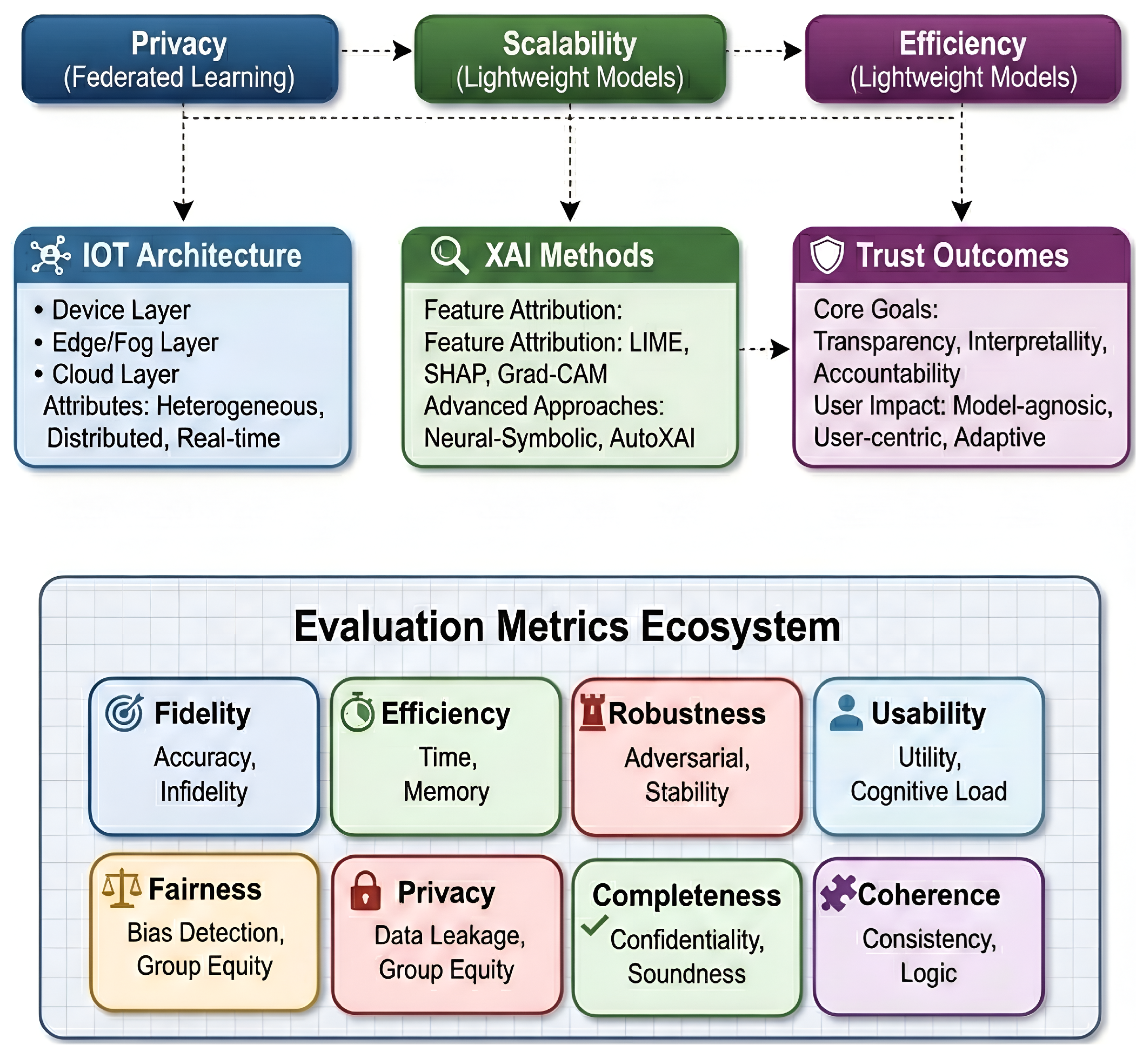
Figure 1 presents a unified framework for integrating Explainable Artificial Intelligence into Internet of Things systems. It is structured into five layers: (i) a central core, comprising IoT infrastructure, XAI methods, and trust outcomes; (ii) technical challenges, including privacy, scalability, efficiency, robustness, and consistency; (iii) application domains, such as smart cities, agriculture, healthcare, federated IoT, and critical infrastructures; (iv) evaluation metrics, covering fidelity, stability, computational efficiency, and user-centered criteria; and (v) research directions, emphasizing model-agnostic and privacy-aware design. Arrows depict the information flow from sensor data to human-interpretable explanations and trust outcomes.
3.2. Role of XAI in IoT Systems
The role of Explainable Artificial Intelligence (XAI) in enhancing transparency and promoting trust in Internet of Things (IoT) ecosystems cannot be ignored, since it directly addresses the problem of interpretability of complex AI models. As IoT systems increasingly integrate AI-based operations, the implementation of XAI methodologies will keep the processes of decision-making understandable and implementable, which will both satisfy user-centric needs and increase stakeholder confidence in this solution to the problem [
17]. Empirical studies have shown that users are more accepting of AI solutions when they also have an idea of the logic behind them, especially in such sensitive fields as healthcare and autonomous systems.
XAI offers explainable and intuitive explanations of AI decisions. Some methods, like bLIMEy (Building Local Interpretable Model-agnostic Explanations for You), allow end-users to customize explanations to their respective tasks, thus improving the relevance and quality of the interpretations in various applications of the IoT [
111]. This modularity is beneficial in the context of heterogeneous IoT systems, where the user knowledge states are different, and explanations need to be consistent across those states of knowledge [
17]. Frameworks such as YONO demonstrate the flexibility and effectiveness of XAI, which can perform several inference operations on microcontrollers without making major trade-offs in predictive accuracy [
112]. These advancements enhance the functionality of the devices of the IoT and enhance the interaction of users with AI technologies.
XAI methodologies assist in enhancing transparency in the system since they offer practical insights into the behavioral dynamics of AI models. Examples of the application of XAI include a non-invasive hydration monitoring system that uses smartphone cameras, which demonstrates how XAI can be applied in practical contexts and how it promotes transparency and trust when used in real-world contexts [
22]. XAI enables users to understand and trust high-stakes applications like healthcare and public safety by providing them with explicit and interpretable explanatory pathways [
11]. Additionally, categorizing XAI methods by the efficacy of the explanation provides IoT systems with powerful mechanisms that help them better understand users and comply with regulatory requirements [
23].
XAI combined with privacy-saving options can be used to deal with data security and explainability issues in the IoT. Federated learning models, such as FED-XAI, can be used to train models in a decentralized way without endangering privacy and provide meaningful explanations to users [
33]. This category of methodologies will balance technical resilience with people-oriented priorities in such a way that IoT systems are both reliable and ethical. Combining privacy and explainability in a single package, XAI will help increase user trust and expand the range of applications of AI technologies in sensitive areas.
XAI addresses the main challenges encountered by IoT systems, such as explainability of AI decisions, user trust, and stakeholder-interest compatibility, with the help of modular explainers, privacy-oriented platforms, and usability. This creates a more open and responsible AI ecosystem in areas like healthcare and self-driving vehicles that require the utmost attention and credibility to address safety and privacy concerns [
51,
69,
87,
88,
113]. Improving the transparency and strength of AI-based decisions will ensure that IoT technologies are trustworthy, adjustable, and aligned with societal and ethical requirements, which will create the conditions for large-scale applicability and innovation across IoT networks and ecosystems.
3.3. Existing XAI Methods for IoT Systems
Integrating Explainable Artificial Intelligence (XAI) into IoT systems is vital for enhancing interpretability and transparency, particularly in mission-critical applications like healthcare, autonomous vehicles, and defense. XAI provides tools for generating human-understandable AI decision explanations, addressing the ethical and trust issues of traditional AI models. This fosters user trust by ensuring that AI processes are transparent and understandable, aligning with accountability and informed decision-making needs in environments impacting human lives [
51,
73,
113]. Various XAI methodologies enhance IoT applications’ usability and trustworthiness, including feature attribution techniques, counterfactual explanations, neural–symbolic approaches, and automated recommendation frameworks.
Feature attribution methods like LIME and SHAP provide local model prediction explanations. LIME approximates complex models with simpler surrogates, offering flexibility across diverse IoT architectures. SHAP uses Shapley values to assign importance scores to input features, promoting fairness and consistency in model explanations. Advancements like ShapG enhance computational efficiency, while causal Shapley values allow nuanced feature contribution interpretations in complex models [
74,
114,
115]. These methods improve AI systems’ transparency and interpretability across applications, crucial for tasks like anomaly detection and predictive maintenance in IoT systems.
Counterfactual explanations enhance transparency by illustrating how input changes could lead to different outcomes, improving user understanding. These explanations are integral to domains like anomaly detection, where stakeholders require clear insights into corrective actions. Frameworks like bLIMEy allow for custom surrogate explainers tailored to specific IoT tasks, enhancing explanation relevance and quality [
111]. This adaptability ensures that users derive meaningful insights from AI systems, particularly in dynamic environments.
Neural–symbolic approaches, including Channel-Wise Feature Normalization (CFN), bolster IoT systems’ robustness by normalizing feature outputs, preventing adversarial artifacts from compromising predictions and explanations. These methods ensure trustworthy IoT systems by aligning technical resilience with human-centric priorities. The YONO framework facilitates the deployment of multiple heterogeneous neural networks on resource-constrained microcontrollers, supporting interpretable AI applications in IoT environments and demonstrating multi-task learning potential on resource-limited devices [
107,
112,
113].
Automated recommendation frameworks like AutoXAI (Automated Explainable Artificial Intelligence) optimize XAI method selection and configuration based on user-specific contexts and evaluation metrics. AutoXAI tailors XAI solutions to IoT applications’ unique requirements, ensuring explanations are effective and contextually relevant. This adaptability is crucial in heterogeneous IoT environments, where explanation roles vary across tasks and stakeholders [
69,
90,
116].
Evaluation frameworks advance XAI methodologies in IoT systems by facilitating systematic comparisons between XAI methods, focusing on predictive process monitoring contexts relevant to IoT applications. By integrating feature attribution techniques, counterfactual explanations, neural–symbolic methods, and automated frameworks, XAI methodologies address interpretability challenges in IoT systems. These approaches enhance IoT technologies’ transparency, trust, and usability by integrating comprehensive quality characteristics like security, privacy, reliability, and data integrity, providing robust tools addressing technical specifications and user-centric needs across applications like healthcare, smart agriculture, and proactive security measures [
36,
37,
38,
63,
99].
Table 11 presents a comprehensive comparative analysis of prominent XAI techniques, evaluating their suitability across smart cities, smart agriculture, and federated IoT environments based on multiple criteria, including explanation scope, model agnosticism, computational cost, and privacy-preserving capabilities.
3.4. Challenges in Implementing XAI in IoT
Implementing Explainable Artificial Intelligence (XAI) in IoT environments presents multifaceted challenges, from existing methodologies’ limitations, IoT systems’ diverse requirements, and the need for adaptive, user-centric frameworks. A significant hurdle is creating explanations meaningful to diverse user groups while accurately reflecting AI systems’ underlying processes [
11]. IoT ecosystems’ heterogeneity and dynamic interactions demand explanations that are technically robust and tailored to stakeholders’ specific needs and contexts. This complexity necessitates careful consideration of user diversity and AI systems’ operational contexts, complicating effective XAI solution design.
Current XAI methods often fail to provide useful explanations that align with user preferences and behavioral variability over time. IoT environments require adaptive models accommodating changes in human preferences and behaviors, yet existing XAI frameworks lack the flexibility to address these dynamic requirements [
19]. This limitation is compounded by rigid surrogate explanation methods like LIME, which restrict customization or informed user choices in task-specific explainer building [
111]. Enhancing XAI methodologies’ adaptability to fit evolving user needs is paramount for successful implementation.
XAI’s inadequacies in providing actionable insights aligning with IoT systems’ technical and contextual demands pose another challenge [
17]. Current methodologies struggle to bridge the gap between technical explanations and actionable insights required by end-users, leading to inconsistencies and reduced real-world application effectiveness. This disconnect is problematic in high-stakes domains like healthcare and industrial automation, where AI-driven decisions’ interpretability directly impacts trust and decision-making efficacy. Developing XAI methods that not only explain decisions but also guide users in taking appropriate actions based on those explanations is crucial [
117].
Privacy concerns further complicate XAI integration into IoT systems. Continuous sensitive data collection and transmission within IoT ecosystems demand privacy-aware frameworks balancing data security with transparent explanations. Adaptive privacy-aware reinforcement mechanisms offer promising solutions by dynamically adjusting privacy settings based on user preferences and system requirements [
19]. However, implementing these mechanisms in resource-constrained IoT devices remains challenging, requiring innovations in computational efficiency and scalable architectures. Maintaining user privacy while providing meaningful explanations is a critical research area, impacting user trust and AI technology acceptance in IoT applications.
Addressing XAI challenges requires a multidisciplinary approach synergizing advancements in adaptive modeling, customizable explanation frameworks, and privacy-aware methodologies, prioritizing user trust and comprehension. This integration enhances complex AI systems’ interpretability and transparency, addressing stakeholders’ varied needs by ensuring contextually relevant and evaluative explanations [
43,
63,
69,
74]. Overcoming these obstacles enhances IoT systems’ transparency, trust, and usability, ensuring they meet diverse stakeholders’ practical and ethical needs.
3.5. Evaluation of XAI Techniques in IoT Contexts
Assessing Explainable Artificial Intelligence (XAI) techniques within IoT systems is crucial for evaluating their effectiveness, robustness, and suitability to meet IoT environments’ complex requirements. This evaluation is vital, as XAI addresses AI’s black-box nature, enhancing trust and transparency in critical applications like healthcare, autonomous vehicles, and security. A systematic XAI literature review highlights key dimensions influencing AI explanations—such as format, completeness, accuracy, and currency—and their effects on user behavior, including trust, transparency, and usability. Understanding these factors will guide future XAI strategy research and development tailored for IoT applications [
43,
51,
73]. Evaluating explanations’ quality and relevance ensures that XAI techniques meet both technical and user-centric needs.
Feature attribution methods like SHAP and LIME are widely used to explain model predictions in IoT systems by assigning importance scores to input features. However, their reliability is often questioned due to sensitivity to perturbations and inconsistencies in feature importance rankings. Robustness testing frameworks validate feature attribution explanations’ reliability in neural networks, ensuring consistent, trustworthy explanations essential for applications like anomaly detection and predictive maintenance in IoT systems [
108]. This reliability focus is critical for fostering user confidence in AI systems’ decisions, especially in high-stakes scenarios.
Frameworks like bLIMEy enhance explanation quality and relevance by allowing users to make informed component selection choices [
111]. This adaptability benefits heterogeneous IoT environments where explanation requirements vary across tasks and stakeholders. Approaches like PSEM (Plausible and Smooth Explanation Method) provide smoother, more informative explanations than existing methods, increasing user trust in model predictions and enabling better AI-driven decision understanding [
109]. These advancements highlight stability’s and sufficiency’s importance in generating explanations aligning with IoT contexts’ functional roles [
17].
Counterfactual explanations are critical for XAI evaluation in IoT systems, providing actionable insights into how input changes could lead to different outcomes. They are useful for decision optimization and anomaly resolution. Methods like the Responsibility approach generate understandable, actionable counterfactuals, enhancing transparency by illustrating potential corrective actions and improving user engagement and trust in IoT applications [
110]. This user engagement focus ensures that AI systems are effective and user-friendly, encouraging broader adoption across diverse sectors.
Evaluating semantic concept representations ensures XAI techniques’ robustness and interpretability. CFN reduces explanation errors and enhances robustness against adversarial attacks without model retraining [
107]. This capability ensures coherent, meaningful explanations across diverse IoT environments, where data streams are dynamic and heterogeneous. Ensuring accurate, manipulation-resistant explanations fosters greater trust and reliability in AI systems.
Human-centered evaluations assess XAI methods’ accessibility and interpretability. Techniques like mabCAM provide reliable, accurate explanations with high recall and precision [
118]. Visual explanation frameworks generate concise, expert-aligned visualizations, enhancing user trust in IoT applications [
54]. This user-centered design emphasis is crucial for developing XAI techniques that resonate with users and meet their specific needs.
In ecological IoT applications, methods like XXAI (Extended Explainable Artificial Intelligence) align with specialized functional roles and improve interpretability in niche contexts [
9]. These evaluations focus on tailoring XAI techniques to IoT domains’ specific needs, ensuring contextually relevant, technically robust explanations. Focusing on domain-specific requirements enhances XAI methods’ applicability and effectiveness across IoT applications.
Advanced evaluation frameworks, including robustness tests, semantic consistency checks, and human-centered methods, systematically assess XAI effectiveness in IoT systems. They standardize evaluation of interpretability and transparency, guiding the development of robust, adaptive, and user-focused XAI tailored to diverse IoT stakeholders. The frameworks emphasize trust, transparency, understandability, usability, and fairness, ensuring that explanations are accurate, relevant, and comprehensive. Combining quantitative and qualitative criteria enhances reliability across domains such as healthcare, finance, agriculture, and autonomous systems, promoting accountable AI decision-making [
51,
53].
Table 12 compares three popular XAI methods—LIME, SHAP, and bLIMEy—highlighting their explanation mechanisms, application domains, and distinguishing features. This analysis clarifies each method’s contribution to interpretability and transparency in IoT systems and aids in selecting the most suitable XAI approach for specific tasks and deployment environments.
3.6. Fundamental Limitations of Post Hoc XAI Methods
While post hoc methods provide valuable transparency, they face fundamental limitations:
- 1.
Correlation vs. Causality: Feature importance scores reveal correlations but cannot establish causal dependencies. Two features may rank similarly despite having entirely different causal mechanisms.
- 2.
Explanation Fidelity: Surrogate model approximations (LIME) are inherently inexact. Linear surrogates approximate complex models only within local neighborhoods, introducing approximation bias.
- 3.
Instability: Feature rankings can be unstable when features are correlated or when models are near decision boundaries. Small input changes may yield substantially different explanations.
- 4.
Computational Overhead: Methods such as KernelSHAP require thousands of model evaluations per explanation, making real-time generation on edge devices infeasible (see
Table 8).
- 5.
Interpretation Risk: Non-expert stakeholders may misinterpret importance scores. Identifying a feature as “important” does not necessarily indicate actionability in physical systems.
- 6.
Model-Agnostic Trade-offs: Flexibility comes at the cost of method-specific assumptions (e.g., LIME kernel width) that significantly influence explanation quality without principled selection strategies.
These limitations underscore the necessity of complementary evaluation frameworks and multi-method validation to ensure consistency across diverse IoT contexts.
4. Explainable AI Algorithms and Systems
Expanding upon the XAI classification in
Section 3.3, this section details the technical, mathematical, and implementation aspects of state-of-the-art XAI algorithms optimized for resource-constrained IoT environments.
The growing range of Explainable Artificial Intelligence (XAI) methods has produced a diverse taxonomy for interpreting complex machine learning models in IoT contexts [
119,
120]. Here, XAI algorithms are categorized by operational principles, explanation scope, and computational characteristics, with an emphasis on distributed and federated IoT systems.
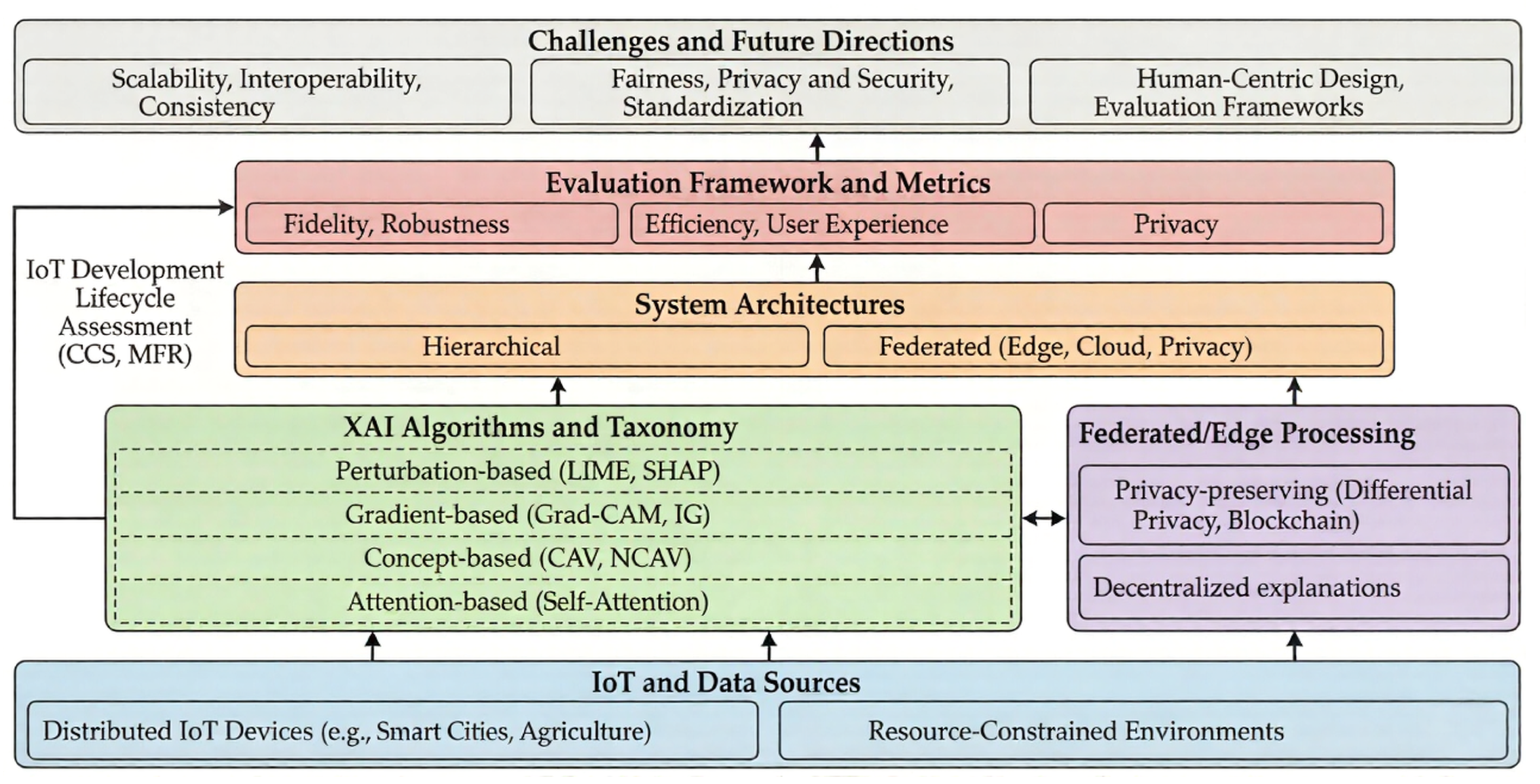
Figure 2 depicts the evaluation workflow, showing how CCS and MFR metrics can be integrated into the IoT development lifecycle to assess model efficiency before deployment.
4.1. Perturbation-Based Attribution Methods
Perturbation-based XAI methods constitute a foundational class of model-agnostic explainability techniques that assess feature importance through systematic input modifications. Local Interpretable Model-agnostic Explanations (LIME) and SHapley Additive exPlanations (SHAP) represent the most prominent exemplars of this category, offering complementary strengths in local explanation generation [
33,
74].
4.1.1. LIME: Local Surrogate Approximation
LIME generates explanations by approximating the behavior of complex models through locally faithful linear surrogates. Given a prediction instance
, LIME constructs an interpretable linear model
g in the vicinity of
by solving the following optimization problem:
In Equation (
3),
f denotes the original, potentially non-interpretable prediction model, and
is an interpretable surrogate model that approximates
f in a local neighborhood around the instance
x. The set
represents the family of candidate interpretable models (e.g., sparse linear models or shallow decision trees). The loss function
measures the discrepancy between the predictions of
f and
g on a perturbed sample
, while the locality kernel
weights each sample according to its proximity to
x. The term
is a complexity regularizer that discourages overly complex surrogates, thereby preserving interpretability. The kernel function typically adopts an exponential form:
Equation (
4) defines the locality kernel
as an exponential function of the squared distance
between the instance of interest
x and a perturbed sample
. The bandwidth parameter
controls how quickly the kernel decays with distance: smaller values of
place higher weight on samples very close to
x, thereby making the surrogate model
more locally faithful, while larger values yield a smoother but less localized approximation. Recent investigations have demonstrated LIME’s efficacy in diverse IoT applications, including healthcare diagnostics and agricultural anomaly detection [
23,
111]. However, perturbation-based approaches such as LIME are prone to the out-of-distribution (OoD) problem, where many sampled perturbations fall outside the empirical data manifold, particularly in high-dimensional IoT sensor spaces. To mitigate this issue, we introduce a
Distribution-Aware LIME (DA-LIME) formulation that augments the locality kernel with a distribution-based affinity term, as formalized in Equation (
5).
Equation (
5) extends the standard LIME formulation by incorporating an additional affinity weight
, which quantifies how strongly a perturbed sample
is supported by the empirical data distribution
D. Perturbations that lie close to many training samples in
D receive higher affinity values, whereas out-of-distribution points obtain low
and thus have limited influence on the surrogate fitting objective. By jointly weighting each sample with the distribution-aware affinity
and the locality kernel
, DA-LIME downweights unrealistic perturbations near the boundary of the data manifold, yielding more faithful and robust local explanations in IoT scenarios with complex, heterogeneous data. The affinity function
is formally defined in Equation (
6).
In Equation (
6), the affinity score
is computed using kernel density estimation over the training set
. The kernel function
, parameterized by bandwidth
h, assigns higher values to perturbed points
that are close to many training samples in Euclidean distance and lower values to out-of-distribution samples. This density-based weighting encourages DA-LIME to prioritize perturbations that are plausible under the observed IoT data distribution, mitigating the well-known out-of-distribution problem of perturbation-based explainers.
4.1.2. SHAP: Unified Shapley Value Framework
SHAP provides a theoretically grounded approach to feature attribution based on cooperative game theory, satisfying critical axiomatic properties, including local accuracy, missingness, and consistency [
74,
114]. For a prediction model
f, the SHAP value
for feature
i is defined as
Equation (
7) defines the Shapley value
for feature
i as a weighted average of its marginal contributions across all possible feature coalitions
, where
denotes the complete feature set. For each coalition
S, the term
quantifies how much the prediction changes when feature
i is added to
S, and
corresponds to the model’s expected output when only the features in
S are observed. The combinatorial weight
ensures that all feature orderings are treated fairly, yielding attributions that satisfy key axioms, such as local accuracy, symmetry, and dummy. In IoT applications, this formulation enables principled decomposition of complex model outputs into feature-wise contributions for sensor readings or contextual variables. Recent advancements have introduced computationally efficient variants, including TreeSHAP for tree-based models and KernelSHAP for model-agnostic scenarios, addressing scalability challenges in high-dimensional IoT data streams [
74,
121].
Motivated by these limitations, we propose a novel
Causal Shapley Framework (CSF) that incorporates causal dependencies among features to enhance explanation fidelity in IoT systems characterized by complex interdependencies, as formalized in Equation (
8).
where
denotes the parent set of feature
i in the causal graph,
represents its children, and
signifies the interventional operator from causal inference.
4.2. Gradient-Based Visualization Methods
Gradient-based techniques leverage backpropagation to identify salient input regions contributing to model predictions, offering computational efficiency particularly suited for resource-constrained edge devices in IoT ecosystems [
23].
4.2.1. Gradient-Weighted Class Activation Mapping
Gradient-weighted Class Activation Mapping (Grad-CAM) generates visual explanations by computing a weighted combination of forward activation maps, with weights derived from class-specific gradient information [
118,
122]. For a convolutional layer with feature maps
, the Grad-CAM heatmap
for class
c is computed as
where the importance weights
are obtained through global average pooling of gradients:
with
denoting the score for class
c before the softmax layer, and
representing the spatial dimensions of the feature map
.
In this formulation, quantifies the importance of feature map for class c by averaging the gradients of the pre-softmax class score with respect to all spatial locations in . The normalization by the spatial area ensures that the weights are invariant to the resolution of the feature map. These coefficients are subsequently used in the Grad-CAM heatmap generation to highlight regions in the input that most strongly influence the model’s prediction for class c, offering intuitive visual explanations for convolutional neural networks in IoT imaging and sensing applications.
4.2.2. Integrated Gradients
Integrated Gradients (IG) provide a principled attribution method that satisfies critical axioms, including sensitivity and implementation invariance [
74]. For an input
and baseline
, the integrated gradient for feature
i is defined as
Equation (
11) defines the Integrated Gradients attribution
for feature
i by accumulating the gradients of the model
f along the straight-line path between a baseline input
and the target input
x. Theterm
scales the average gradient by the total change in feature
i along this path, ensuring that the attributions are zero whenever the feature does not change. Under mild regularity assumptions, Integrated Gradients satisfies desirable axioms, such as sensitivity and implementation invariance, making it a robust choice for explaining deep models in IoT deployments with high-dimensional sensor data.
In practice, the integral is approximated using Riemann summation with
m interpolation steps:
Equation (
12) provides a practical Riemann-sum approximation of Integrated Gradients using
m interpolation steps along the path from
to
x. At each step
k, the gradient of
f is evaluated at the intermediate point
, and the average gradient is scaled by
. In resource-constrained IoT environments, the choice of
m controls the trade-off between computational cost and attribution accuracy, enabling practitioners to adapt IG to the latency and energy budgets of edge devices. For IoT time-series applications, we further introduce
Temporal Integrated Gradients (TIG), which extends IG by aggregating feature attributions across past time steps using a temporally decaying weight sequence
. This construction explicitly accounts for temporal causality in sensor streams by attributing the current prediction not only to the instantaneous value
but also to its historical trajectory
, as formalized in Equation (
13).
Equation (
13) generalizes Integrated Gradients to temporal sequences
by computing time-indexed attributions for feature
i across all time steps
. The term
denotes the deviation of feature
i at time
t from its baseline value, while the integral accumulates gradients of
f along a path between the baseline sequence
and the observed sequence
. The weights
implement a temporal importance profile (e.g., exponential decay), allowing recent observations to contribute more strongly to the overall attribution. This construction is particularly well-suited for IoT sensor data streams, where temporal dependencies play a critical role in model behavior [
52].
4.3. Concept-Based Explainability
Concept-based methods bridge the semantic gap between low-level features and high-level human-understandable concepts, offering enhanced interpretability for non-expert stakeholders in IoT deployments [
101].
Concept Activation Vectors
Testing with Concept Activation Vectors (TCAV) quantifies the sensitivity of neural network predictions to user-defined concepts through directional derivatives in the activation space [
118]. For a concept
C and class
k, the TCAV score is defined as
where
denotes the activation at layer
l,
represents the logit for class
k,
is the Concept Activation Vector for concept
C at layer
l, and
denotes the set of samples from class
k.
We introduce
Non-negative Concept Activation Vectors (NCAV) obtained through non-negative matrix factorization (NMF) to ensure part-based, interpretable concept representations:
where
represents the activation matrix for
n concept samples,
denotes the coefficient matrix,
r is the reduced dimensionality, and
controls sparsity.
For federated IoT systems, we propose
Federated Concept Activation Vectors (Fed-CAV) that enable privacy-preserving concept learning across distributed nodes:
where
represents the locally computed CAV at node
i,
N denotes the number of participating nodes, and
is a weighting factor proportional to the local dataset size
. This aggregation scheme is used in federated learning frameworks [
19,
33].
4.4. Attention Mechanism Interpretation
Attention mechanisms, particularly in transformer architectures deployed for IoT natural language processing and time-series forecasting tasks, provide inherent interpretability through learned attention weights.
Self-Attention Explainability
For a transformer layer with query, key, and value matrices
, the attention weights
are computed as
where
represents the key dimension. The attention rollout method propagates attention across layers to obtain global attention scores:
To enhance the interpretability of multi-head attention in IoT transformer models, we introduce
Attention Flow Conservation (AFC), which normalizes attention distributions to ensure probabilistic interpretability:
where
H denotes the number of attention heads, and the normalization ensures
for each query position
i.
4.5. Counterfactual Explanation Generation
Counterfactual explanations elucidate model decisions by identifying minimal input modifications that would alter predictions, offering actionable insights particularly valuable in IoT decision-support systems [
123].
Diverse Counterfactual Explanations
For an input
with prediction
, a counterfactual explanation
satisfies
while minimizing the perturbation distance. We formulate the counterfactual generation problem as a constrained optimization:
where
measures the distance between original and counterfactual inputs (typically
or
norm),
ensures that the counterfactual achieves the desired prediction,
enforces data manifold plausibility, and
are regularization hyperparameters.
For IoT applications requiring multiple diverse counterfactuals, we extend this formulation to incorporate diversity regularization:
where the term
encourages diversity among generated counterfactuals [
41].
4.6. Federated Explainable AI Systems
The integration of XAI methodologies within federated learning frameworks addresses the dual imperatives of model interpretability and data privacy in distributed IoT ecosystems.
FED-XAI Framework
The Federated Explainable AI (FED-XAI) framework enables collaborative training of interpretable models across multiple IoT nodes without centralizing raw data [
33]. The federated explanation aggregation process is formulated as
where
represents the local explanation (e.g., SHAP values, attention weights) computed at node
i, and
denotes the aggregation weight proportional to local data quality or quantity. To ensure privacy preservation, differential privacy mechanisms are incorporated:
where
S bounds the sensitivity of the explanation function,
represents the privacy budget, and
denotes Gaussian noise ensuring
-differential privacy [
93].
4.7. Resource-Efficient XAI for Edge IoT
Edge computing paradigms in IoT necessitate XAI algorithms optimized for resource-constrained environments, motivating the development of lightweight explanation methods.
Pruned Feature Attribution
For edge devices with limited computational capacity, we propose
Adaptive Sparsity Feature Attribution (ASFA), which dynamically adjusts the explanation granularity based on available resources:
where
denotes the complete feature attribution vector, TopK selects the
most important features, and
is determined by
This adaptive mechanism ensures that explanation generation remains feasible on resource-limited IoT edge nodes [
106].
4.8. Hierarchical Explanation Systems
Complex IoT systems comprising multiple interconnected subsystems benefit from hierarchical explanation frameworks that provide multi-resolution interpretability.
Multi-Level Explanation Aggregation
For a hierarchical IoT architecture with
L levels, the hierarchical explanation
at level
l is computed recursively:
where
represents the local explanation at level
l,
denotes the set of child nodes at level
, and
balances local and aggregated child explanations. The aggregation function is defined as
where
represents the data volume processed by node
j.
A critical assessment of XAI methods under IoT operational constraints is provided in
Table 13.
5. IoT Systems in Smart Cities with Explainable AI
Internet of Things (IoT) integration enables efficiency, sustainability, and innovation in smart cities by optimizing urban infrastructure and resource management.
Figure 3 depicts the integration of Explainable Artificial Intelligence (XAI) into smart city IoT systems across three hierarchical levels. Explainability improves transparency, accountability, and trust in AI-driven decisions; privacy-aware XAI ensures secure, interpretable distributed operations; and human-centered explanations promote citizen participation. Together, device-level feature attribution, edge-level counterfactual reasoning, and cloud-level global explanations form a unified framework for trustworthy and transparent smart city automation.
5.1. Role of IoT in Urban Infrastructure and Resource Optimization
IoT systems significantly improve urban resource optimization and operational efficiency by integrating diverse data sources for real-time monitoring and management of services, such as transportation, energy, and waste management. For instance, IoT-enabled sensors and analytics optimize photovoltaic systems through advanced fault detection, enhancing reliability and energy production [
122]. This proactive maintenance approach reduces costs and supports sustainability goals, essential for modern urban planning. Additionally, IoT facilitates crowdsensing applications that aggregate data from various stakeholders to improve service delivery and resource allocation, demonstrating transformative potential in smart city applications [
90].
IoT systems enhance urban infrastructure reliability by maintaining prediction accuracy despite sensor failures, as exemplified by the SECOE (Sensor Event Continuity and Operational Efficiency) framework, which ensures operational continuity in critical domains like transportation and public safety [
124]. This resilience fosters public trust and encourages community engagement in smart city initiatives. Furthermore, IoT deployments enhance accountability and transparency, fostering trust among stakeholders and improving service delivery across various domains [
125].
IoT revolutionizes urban infrastructure by optimizing resources, enhancing service reliability, and fostering innovative applications. These systems leverage technologies like Explainable Artificial Intelligence (XAI) to improve decision-making transparency while integrating blockchain and deep reinforcement learning to bolster security and privacy. IoT advancements necessitate a re-evaluation of software engineering practices to accommodate interconnected devices, ensuring high standards in security, reliability, and usability [
36,
37,
69,
87,
88,
90]. Through continuous IoT advancements, smart cities achieve greater efficiency, sustainability, and resilience, aligning urban development with societal and environmental goals.
5.2. Explainable AI for Decision-Making and Accountability in Smart Cities
Explainable Artificial Intelligence (XAI) is crucial for enhancing decision-making and accountability in smart cities by providing interpretable insights into AI-driven processes. XAI addresses the “black-box” challenges of traditional AI by offering clear explanations of AI decisions, fostering trust and transparency. Effective XAI encompasses explanation format, completeness, accuracy, and relevance, enhancing user understanding and promoting fairness and transparency in urban governance [
43,
51,
73]. XAI methodologies enable diverse stakeholders to understand and trust AI systems, aligning technological advancements with societal priorities.
XAI enhances decision-making by tailoring explanations to stakeholder needs, ensuring contextually relevant insights. Argumentation-based frameworks like CLASH (Counterfactual Local Approximate Shapley) and visual methods like CAManim (Class Activation Map Animation) exemplify XAI’s ability to simplify complex AI processes for stakeholder engagement and accountability [
70,
126]. Interactive explanation mechanisms are valuable in smart city applications, where human–agent interaction dynamics influence decision-making. Grounded interaction protocols ensure explanations reflect human–agent interactions, fostering trust and usability [
127]. XAI frameworks like COLLISIONPRO improve accountability by providing probabilistic collision risk estimates, enabling informed decisions [
128].
XAI integration into smart cities enhances AI system reliability and security. Frameworks like sensitivity-aware federated learning (EFL) improve performance in critical applications like traffic prediction, ensuring robust urban infrastructures [
129]. Counterfactual explanations provide actionable insights while maintaining computational efficiency, addressing smart city system complexities [
123]. XAI enhances decision-making and accountability by addressing security, privacy, and trust concerns, improving reliability and transparency in smart city AI applications [
90]. In smart homes, XAI provides understandable explanations for non-expert users, empowering citizens in urban governance [
95].
XAI’s practical application in smart cities extends to domains like sales processes, where benchmarks align AI decisions with real-world outcomes, ensuring accountability and usability [
89]. By incorporating intuitive, adaptive, and secure XAI methodologies, smart cities enhance decision-making by fostering transparency, trust, and efficiency. XAI techniques improve interpretability and accountability across smart city applications, enhancing user interaction and satisfaction [
69,
73,
90,
113,
130]. These advancements enhance AI-driven systems’ functionality and reliability, aligning technological progress with urban sustainability and social equity goals.
5.3. Security and Privacy Challenges in IoT-Enabled Smart Cities
Modern smart city IoT systems face significant security and privacy threats due to dense infrastructure and continuous exchange of sensitive data. As IoT underpins critical civic services, robust security and privacy mechanisms are essential to ensuring public trust and operational integrity. Advanced paradigms such as Explainable Artificial Intelligence (XAI) and blockchain improve system interpretability and security, addressing limitations of traditional AI models. Scalable and decentralized integrity and privacy guarantees enabled by deep reinforcement learning and blockchain enhance IoT network resilience [
87,
88,
90]. Nevertheless, increasing ecosystem complexity exacerbates vulnerabilities, exposing smart cities to evolving threats.
The major security issue is the inherent vulnerability of IoT devices and their network interconnections to cyberattacks. Poor authentication, weak encryption, and insecure communication protocols expose IoT devices to unauthorized access and breach of data. The diversity of IoT devices also makes access control attempts in the field of urban infrastructures more difficult. The widespread existence of unsecured firmware and outdated software provides adversaries with access points that can disrupt the execution of key urban services and trigger various disruptions to operations. Accordingly, due to the increase in the development of more complex IoT devices and their interconnection, the emergence of novel risk assessment tools and active threat-hunting strategies is crucial to the security of IoT systems [
38,
131,
132].
The privacy issue arises from one of the crossover functions in IoT-based smart cities, where the process of gathering personal information about citizens raises a lot of ethical and legal concerns. Lack of effective anonymization and privacy-enhancing systems increases the chances of identity theft, surveillance, and misuse of information. The decentralization that is widespread in the IoT environment hinders the ability to trace data streams and accountability mechanisms in their entirety, preventing privacy protection and compliance with regulations. The ambiguous nature of sensor data is a major challenge to principles of data minimization, and definitions and implementation plans need to be made more straightforward to improve privacy protection in the future [
37,
38,
63,
125,
133].
The adoption of XAI in IoT systems improves transparency and trust in AI-driven decisions while mitigating security and privacy risks. Privacy-aware reinforcement learning dynamically adjusts parameters to protect sensitive data without degrading IoT functionality [
19]. Scalability is critical for large-scale IoT deployments, where centralized security architectures are increasingly inadequate. Decentralized approaches, including blockchain-based systems, enable secure and transparent data sharing and access control. Distributed Ledger Technologies further enhance accountability and traceability, significantly reducing risks of data tampering and unauthorized access [
93].
High resilience of IoT systems to sensor failures and disruptions is an issue of great concern. SECOE frameworks exemplify the effectiveness of IoT applications to maintain reliability even when the sensors fail, and fault-tolerant mechanisms are critical to city services that are considered essential [
124]. The special needs that face IoT-enabled smart cities require integrated solutions that would simultaneously meet requirements for security, privacy, and reliability.
The risks involved in the deployment of IoT can be addressed by smart cities through multidisciplinary approaches that include the implementation of advanced security frameworks, privacy-focused frameworks, and scalable solutions. These efforts increase the robustness and dependability of urban infrastructure and also strategically align technological advances with societal welfare, ethical administration, and sustainable development goals. Such initiatives can improve the decision-making process, protect crucial information, and raise awareness of users, which contributes to safe, efficient, and ethically managed urban areas with the help of explainable AI, blockchain, and proactive security measures [
38,
69,
87,
88,
90,
102].
5.4. Advancements in IoT and XAI Integration for Smart City Applications
The recent breakthroughs in the implementation of Internet of Things (IoT) systems in Explainable Artificial Intelligence (XAI) have significantly enhanced the functionality, transparency, and flexibility of smart city applications. Such developments help solve problems in urban infrastructure, resource allocation, and citizen interaction by making technological development and advancement match societal needs, thus fostering transparency and trust in resilient smart city settings [
69,
90].
IoT-driven application based on integrated frames has increased the possibilities of smart cities. Generative AI (GenAI) models present opportunities for XAI by enabling the generation of counterfactual scenarios and synthetic explanations. In IoT contexts, GenAI can synthesize realistic alternative sensor readings that would alter predictions, thereby generating counterfactuals without exhaustive perturbation. However, generative models themselves require explainability, creating recursion challenges. GenAI methods applied to radio-frequency sensing resources enhance data generation and integration, which allow more effective processing and analysis of urban datasets [
134]. Such flexibility is a reaction to the changing needs of the city and the efficient use of funds for various purposes.
The XAI techniques applied to IoT systems improve the interpretability, transparency, and credibility of AI-based decision-making. XAI provides full and understandable explanations of decisions by reducing traditional black-box issues. Individually tailored texts and other contextual explanations enhance the involvement of users and their trust in AI systems integrated with smart city applications [
51,
69,
73,
90]. Advanced methods like counterfactual reasoning and feature attribution allow stakeholders to question the predictions made by AI, which promotes accountability and transparency. Such approaches would be especially useful in contexts with high stakes, like transportation and social safety, since the visibility of the decision made by AI is a crucial factor in stakeholder credibility as well as ethical considerations.
As a result of combining IoT and XAI, some new applications have emerged in resource optimization and citizen-based services. IoT-based energy management systems use XAI to predict changes in demand and to provide transparency in operations. XAI enables stakeholders to understand decisions regarding energy distribution and enables them to respond adequately to changes in consumption by promoting trust and usability, which enhance their knowledge about decisions made by energy distribution companies and facilitate their reactions to alterations in consumption, respectively [
40,
51,
69,
73,
73]. The smart traffic management system (including XAI) processes congestion trends and suggests routing options, thus contributing to the increased efficiency of operations and reducing environmental effects.
Developments in the combination of IoT and XAI are also applied to real-time monitoring and anomaly detection systems, which play an important role in ensuring the stability and safety of urban infrastructure. Explainable models identify and fix sensor data anomalies, thus ensuring continuity of essential city operations. IoT applications can be strengthened through the use of generative methods for enhancing and synthesizing data in different urban settings, as highlighted by their robustness [
134]. Such flexibility means that urban systems are able to react in a competent manner to challenges and to optimize operational performance.
IoT and XAI integration is a revolutionary approach in smart city creation that enhances the intelligence and flexibility of urban spaces and facilitates transparency and confidence in automated decision-making. XAI alleviates the traditional black-box problem by addressing interpretability and understandability concerns and thus preventing unsafe, unreliable, and unfriendly deployments in transportation, healthcare, and even the public governance sector. In addition, the interplay of IoT and XAI raises the interoperability between diverse technologies, which contributes to the resilience of urban infrastructures needed to respond to complex problems, including cybersecurity threats [
69,
73,
90,
113,
135]. In turn, the efficiency and reliability of urban infrastructure are enhanced, which makes technological innovation consistent with the goal of urban sustainability and social equity.
5.5. Case Studies and Practical Implementations
The deployment of Internet of Things (IoT) infrastructures augmented with Explainable Artificial Intelligence (XAI) has demonstrably advanced smart city and smart agriculture initiatives, enabling transparent, efficient, and sustainable urban systems. Empirical case studies show that the integration of IoT sensing, big data analytics, and XAI enhances decision-making, resource optimization, and system accountability, aligning with the Sustainable Development Goals (SDGs) for resilient urban environments [
42,
90,
102].
In urban mobility, IoT-based traffic management systems exploit real-time data streams to improve transportation efficiency, while XAI provides interpretable insights into congestion dynamics and routing decisions. CAManim-based convolutional neural network (CNN) visualizations enhance the transparency of traffic forecasts and optimization strategies, fostering trust in AI-assisted mobility while reducing congestion, travel time, and environmental impact [
126].
Similarly, smart energy management systems integrate IoT sensing with XAI to enable explainable, demand-aware energy distribution [
136,
137]. Counterfactual explanations improve stakeholder understanding of adaptive control strategies, while XAI-driven optimization enhances photovoltaic fault detection and energy yield, supporting renewable energy integration and sustainability objectives [
122,
138].
In public safety and emergency-response contexts, XAI-enabled IoT systems increase reliability and operational resilience by providing interpretable anomaly detection and actionable insights. SECOE frameworks demonstrate fault-tolerant performance under sensor failures, ensuring the continuity and integrity of critical urban services [
124].
Crowdsensing applications further benefit from XAI by transforming heterogeneous urban data into transparent and actionable intelligence. Successful deployments in waste management and disaster response illustrate improved resource allocation, service efficiency, and participatory governance [
90].
Security and trust are reinforced through blockchain-enabled IoT architectures, where Distributed Ledger Technologies (DLTs) support secure data sharing, access control, and traceability. The SOFIE framework exemplifies secure federation of heterogeneous IoT systems, enhancing interoperability and accountability across smart city infrastructures [
93]. Overall, these implementations underscore the pivotal role of XAI in operationalizing IoT solutions for complex urban environments. By strengthening transparency, trust, and efficiency across transportation, energy, security, and governance, IoT–XAI systems enable adaptive, resilient, and human-centric smart cities, ultimately improving urban quality of life and societal sustainability [
38,
42,
69,
90,
102].
5.6. Critical Synthesis: The Latency–Interpretability Gap in Urban IoT
Evaluating the surveyed works through the lens of the challenges identified in
Section 3.4 reveals a significant disconnect between theoretical XAI models and practical urban deployment constraints.
Computational Viability: The majority of reviewed frameworks utilize Shapley values (SHAP) or LIME for traffic and energy management. While semantically rich, these perturbation-based methods require thousands of model inferences per explanation. As detailed in
Section 3.3, deploying such computationally intensive routines on resource-constrained edge devices (e.g., smart traffic controllers) introduces unacceptable latency, potentially compromising real-time safety systems.
Infrastructure Dependency: Current research predominantly assumes stable, high-bandwidth connectivity to cloud servers for explanation generation. This assumption violates the resilience requirements of critical infrastructure, where local decision-making and explanation must persist during network partitioning.
Assessment: We observe that only a minority of studies (<10%) explicitly evaluate the energy consumption of explanation generation, a critical oversight for battery-operated urban sensors. Future work must shift from “accuracy-centric” to “efficiency-centric” XAI validation.
6. Explainable AI for Distributed and Federated IoT Systems
The integration of Explainable Artificial Intelligence (XAI) into distributed and federated Internet of Things (IoT) systems is essential for improving transparency, interpretability, and trust in decentralized AI-driven processes [
139,
140,
141]. Due to their distributed nature, such systems introduce challenges related to accountability, privacy, and user confidence, which XAI frameworks address by enabling interpretable decision-making and fostering informed user engagement in trust-critical applications.
Figure 4 presents a layered architecture that combines XAI with federated IoT systems, consisting of distributed edge nodes equipped with local explainability mechanisms (e.g., counterfactual explanations, surrogate models, and feature attribution), privacy-preserving federated aggregation (including differential privacy, secure aggregation, and homomorphic encryption), and global XAI models. By integrating federated learning with privacy-aware explainability through distributed gradient aggregation, the architecture enables trustworthy collaboration across heterogeneous IoT infrastructures in domains such as healthcare, finance, agriculture, and environmental monitoring.
6.1. Frameworks and Methodologies for XAI in Distributed IoT Systems
The effective deployment of Explainable Artificial Intelligence (XAI) within distributed IoT ecosystems necessitates the development of robust, scalable, and adaptive frameworks capable of addressing challenges associated with system heterogeneity, data privacy, computational constraints, and model interpretability. In safety-critical domains such as healthcare, intelligent transportation, and autonomous systems, XAI methodologies must not only deliver accurate predictions but also provide transparent, actionable explanations that strengthen user confidence and support responsible decision-making [
51,
69,
113]. Within this context, federated learning (FL) has emerged as a foundational paradigm, enabling decentralized model training across multiple nodes without requiring the direct exchange of raw data, thereby preserving data confidentiality while supporting large-scale model development. The FED-XAI framework exemplifies this approach by integrating explainability directly into privacy-preserving learning pipelines, making it particularly suitable for sensitive data environments [
33]. Similarly, the adaPARL (Adaptive Privacy-Aware Reinforcement Learning) framework introduces privacy-aware reinforcement learning mechanisms that dynamically regulate privacy levels in response to system requirements, effectively balancing data protection with operational utility [
19].
In addition to privacy-centric approaches, modular and adaptive XAI architectures significantly enhance the interpretability and robustness of AI-driven decision-making processes in distributed IoT systems. SHAP-based retraining pipelines, grounded in Shapley value theory, provide a principled and transparent mechanism for feature attribution, enabling continuous model refinement while improving both reliability and interpretability [
114,
115,
142]. Furthermore, the integration of blockchain technologies for device behavior monitoring strengthens data integrity, traceability, and system transparency. When combined with deep learning-based behavioral analysis, such architectures enable real-time anomaly detection and trustworthy system supervision [
143,
144]. Collectively, these innovations enhance operational efficiency across a broad range of application domains while simultaneously aligning AI deployment with critical societal, legal, and ethical considerations [
38,
102].
Table 14 provides a systematic comparison of state-of-the-art frameworks for federated and distributed IoT-XAI systems, examining their privacy mechanisms, scalability characteristics, explainability types, resource efficiency, and optimal use cases to guide framework selection for specific deployment contexts.
6.2. Privacy and Security Considerations
Privacy and security constitute critical pillars in distributed IoT ecosystems, where sensitive data are continuously generated, transmitted, and processed across heterogeneous and decentralized infrastructures. Ensuring robust protection requires an integrated approach that combines advanced engineering methodologies with adaptive mechanisms capable of strengthening both AI explainability and system-level decision-making [
69,
70]. In this regard, the FedHDPrivacy framework represents a significant advancement by incorporating differential privacy techniques into federated learning workflows, safeguarding model parameter exchanges while maintaining acceptable performance levels [
93,
145]. Complementing these efforts, secure aggregation protocols provide additional safeguards by cryptographically masking individual device contributions, thereby mitigating the risk of data reconstruction attacks [
94,
146].
Distributed IoT systems also face a wide spectrum of security threats, including inference attacks on network traffic and malicious attempts to compromise data integrity. Network traffic shaping algorithms offer a promising defense mechanism by obscuring traffic patterns and reducing the adversarial exploitation surface [
147]. Meanwhile, the High-Integrity Federated Learning (HIFL) framework introduces a multi-layered security design that integrates network slicing and blockchain-based verification to enhance scalability, resilience, and dynamic resource allocation in federated environments [
55]. Explainability serves as an additional protective layer, as transparent fault detection and anomaly explanation mechanisms increase user trust and facilitate rapid diagnosis of system vulnerabilities [
38,
125].
Ensuring operational integrity further requires continuous monitoring of actuator behavior and the deployment of verifiable, tamper-resistant security solutions. Techniques such as behavioral modeling and system verification help detect deviations indicative of compromised functionality, while frameworks like IoT Notary provide immutable proof of data provenance and integrity [
38,
143]. Collectively, these approaches reinforce ethical compliance, enhance transparency, and promote wider adoption of IoT technologies across diverse real-world applications.
Table 15 summarizes the protection objectives, the roles of XAI, and the principal system-level trade-offs.
6.3. Scalability and Resource Efficiency
Scalability and resource efficiency represent fundamental challenges in large-scale federated IoT ecosystems, where increasing device density and data intensity demand intelligent strategies for workload management and resource optimization. Federated learning provides a robust paradigm for addressing these challenges by enabling decentralized model training, thereby reducing reliance on centralized data aggregation and minimizing communication overhead [
148]. Within this context, the FedSaC (Federated Sample Complementarity) framework demonstrates notable progress by improving model performance through the exploitation of complementary data distributions among participating clients, leading to more generalized and accurate learning outcomes [
148].
In addition, resource utilization is further optimized through advanced model parameter aggregation and weight optimization techniques, which significantly reduce computational complexity while maintaining or enhancing system performance [
149]. These innovations allow federated IoT systems to operate effectively under constrained energy, memory, and processing conditions, thereby extending the operational longevity and responsiveness of edge devices deployed in the field.
Beyond learning algorithms, adaptive task offloading mechanisms enable IoT infrastructures to dynamically distribute computational workloads based on current network conditions, device capabilities, and energy availability [
133]. The integration of edge computing paradigms further enhances system scalability by relocating computation closer to data sources, which in turn reduces end-to-end latency and alleviates bandwidth bottlenecks [
52,
87,
88]. Collectively, these approaches support sustainable scalability while aligning resource consumption with broader environmental and operational efficiency objectives, thus facilitating the widespread deployment of IoT technologies in real-world settings.
6.4. Decentralized Decision-Making and Federated Learning
Decentralized decision-making, in conjunction with federated learning, is reshaping the management and operation of modern IoT systems by simultaneously addressing issues related to scalability, data privacy, and system efficiency. Through its ability to perform distributed model training across multiple nodes without centralizing sensitive data, federated learning significantly enhances privacy preservation while minimizing communication costs [
33]. This characteristic renders it particularly suitable for high-stakes and privacy-sensitive domains, including healthcare and critical infrastructure monitoring.
Furthermore, decentralized decision-making architectures increase operational agility by distributing intelligence across edge and fog nodes, thereby enabling real-time data processing, localized analytics, and adaptive responses to dynamic environmental conditions [
19]. Federated learning frameworks, such as FedHDPrivacy, further reinforce this paradigm by integrating differential privacy mechanisms that protect model parameter exchanges without compromising overall system utility [
93].
The synergistic combination of decentralized intelligence and federated learning also enables more effective adaptive task offloading strategies, ensuring that workloads are assigned in accordance with available computing resources and network conditions [
148]. As a result, IoT systems achieve enhanced functional resilience, improved energy efficiency, and stronger privacy guarantees. Together, these methodologies represent a significant step forward in the development of scalable, secure, and sustainable IoT architectures that support next-generation intelligent applications.
6.5. Evaluation and Benchmarking of XAI Methods
The systematic evaluation and benchmarking of Explainable Artificial Intelligence (XAI) methods in distributed IoT environments are critical for assessing their reliability, transparency, and practical suitability. Contemporary evaluation approaches commonly integrate both quantitative and qualitative metrics to measure the correctness, interpretability, robustness, transparency, and fairness of AI-generated explanations [
51,
53]. Such multidimensional assessment is essential in IoT systems, where heterogeneous data sources and real-time decision-making require explanations that are both accurate and comprehensible to diverse stakeholders.
User-centered frameworks such as CLE-XAI (Concept-Level Explainable Artificial Intelligence) further enhance this process by adapting explanation complexity to the cognitive profiles of end-users, thereby improving comprehension, engagement, and trust [
150]. At the same time, privacy-preserving initiatives, including FedHDPrivacy, demonstrate that strong privacy guarantees can be maintained without significantly compromising model utility or interpretability, a critical requirement in decentralized IoT architectures [
93].
In increasingly adversarial environments, XAI methods must also be evaluated for their resilience against malicious manipulation and inference-based attacks. Research in adversarial machine learning highlights the need for robustness-oriented benchmarking protocols, while the application of Generative Adversarial Networks (GANs) in threat modeling and detection further reinforces the importance of evaluating XAI under hostile conditions [
131,
151]. These perspectives expand the scope of benchmarking beyond explanation quality to include system security and reliability.
Therefore, comprehensive benchmarking strategies play a central role in ensuring that XAI techniques remain interpretable, transparent, anddependable in dynamic IoT deployments [
52,
152,
153]. Such evaluation processes not only support improved model selection and design but also guide the development of adaptive, resilient, and human-centric XAI frameworks that align with the operational and ethical requirements of real-world IoT applications.
Table 16 provides a structured overview of representative benchmarks employed in the evaluation of XAI methods across multiple domains. It outlines key characteristics such as dataset scale, application context, task definition, and relevant performance and explanation-quality metrics. The inclusion of diverse domains—ranging from healthcare and energy systems to remote sensing—highlights the versatility of existing benchmarking practices and underscores their importance in advancing trustworthy and explainable AI for IoT-centric environments.
6.6. Critical Synthesis: The Privacy–Transparency Paradox
Applying the challenge framework from
Section 3.4 to the domain of distributed and federated IoT reveals a fundamental tension that remains largely unresolved in the current literature.
Data Leakage Risks: While federated learning is adopted to preserve privacy, the integration of feature attribution methods (e.g., DeepLIFT, Integrated Gradients) can inadvertently facilitate model inversion attacks. Our analysis suggests that most surveyed “Private XAI” frameworks focus on encrypting the model but fail to rigorously assess the information leakage inherent in the explanation itself.
Aggregation Bias: In federated settings, global explanations are often derived by averaging local updates. This approach is mathematically convenient but statistically flawed for non-IID (Independent and Identically Distributed) IoT data. The reviewed works largely neglect how local data skew impacts the validity of the global explanation, leading to potentially misleading insights for network administrators.
7. IoT Systems and Explainable AI in Smart Agriculture
The integration of Internet of Things (IoT) systems with Explainable Artificial Intelligence (XAI) is revolutionizing smart agriculture, addressing challenges such as resource management, crop monitoring, and environmental sustainability. This synergy enhances decision-making and operational efficiency, enabling precision farming practices that optimize agricultural outcomes.
Figure 5 visually synthesizes the taxonomy of XAI methods, categorizing them by their applicability to specific IoT layers (device, edge, cloud). It highlights the trade-off between interpretability and computational cost.
7.1. Fog-Based Smart Agriculture Systems
Fog computing enables decentralized data processing near sensing sources, effectively addressing the limitations of centralized infrastructures in rural and remote agricultural environments. By significantly reducing latency and bandwidth consumption, fog-based architectures mitigate connectivity constraints that hinder precision agriculture applications [
19]. Hierarchical fog–cloud frameworks further optimize resource utilization by executing latency-sensitive tasks at the edge while offloading complex analytics to the cloud, thereby minimizing processing delays, energy overheads, and operational costs while enhancing food traceability and sustainability [
55,
102,
161]. These architectures also support advanced sensing technologies, including non-invasive crop health assessment, improving the effectiveness of precision farming practices.
To address limited rural connectivity, low-power wide-area network (LPWAN) technologies such as LoRa enable scalable and energy-efficient communication for IoT-based agricultural systems. As connectivity increases, privacy-preserving data management becomes essential. The Differentially Private Shaper (DPS) provides event-level differential privacy by dynamically adapting traffic shaping to bursty data patterns, achieving a balanced trade-off between privacy guarantees and communication performance in fog-enabled agricultural networks [
93,
162]. Such mechanisms are critical for protecting sensitive agricultural data in heterogeneous and distributed environments.
Energy-efficient mist-computing architectures further enhance system resilience by integrating low-power sensors with edge intelligence, addressing constraints related to latency, bandwidth, and operational cost. These systems support continuous monitoring and rapid response to threats such as animal intrusions, thereby improving crop quality and yield through timely interventions [
55,
102]. Modular system designs and standardized TinyML benchmarks enable efficient model deployment on resource-constrained devices, supporting scalability and environmental sustainability.
Beyond operational gains, fog computing enhances decision support through the integration of ontology-based representations and trainable noise models, improving the interpretability and robustness of AI-driven remote sensing, classification, and image segmentation tasks. Noise-aware evaluation techniques increase transparency and reliability in agricultural analytics, enabling actionable and adaptive decision-making under dynamic environmental conditions [
12,
42,
55,
102,
163,
164].
7.2. Smart Irrigation and UAV-Based Monitoring
IoT-enabled smart irrigation systems, combined with unmanned aerial vehicle (UAV)-based monitoring, are reshaping modern agriculture by enabling continuous environmental sensing and efficient resource management [
165,
166]. The integration of advanced sensing technologies with machine learning models enables accurate forecasting of crop water requirements, significantly improving irrigation efficiency while reducing water consumption. Edge computing and low-power wide-area network (LPWAN) technologies, such as LoRa, further support scalable, low-latency data processing and reliable communication across geographically dispersed agricultural fields [
102,
161,
167].
UAV platforms play a critical role in acquiring high-resolution spatio-temporal data for comprehensive crop health assessment and land-use analysis. State-of-the-art models, including AGSPNet, support geographic scene partitioning, parcel-boundary extraction, and semantic change detection, enabling timely identification of crop stress and environmental anomalies [
90]. Adaptive task-offloading mechanisms enhance operational efficiency and system robustness under uncertain conditions, such as intermittent connectivity or partial UAV failures [
168]. Moreover, the integration of OpenRAN architectures with emerging terahertz (THz) communication technologies improves network scalability, bandwidth, and responsiveness in large-scale agricultural monitoring deployments [
169].
Beyond technological advancements, participatory and community-driven approaches further strengthen smart agriculture ecosystems. Collaborative platforms facilitate rapid disease detection, collective decision-making, and knowledge sharing among farmers through real-time data exchange and best-practice dissemination, enhancing regional resilience and optimized crop-management strategies [
170]. Collectively, these solutions support sustainable agriculture by promoting resource efficiency, minimizing environmental impact, and enabling adaptive, data-driven farming practices aligned with global sustainability objectives [
42,
55,
102,
171,
172].
7.3. Data Mining and Anomaly Detection in IoT Systems
Data mining and anomaly detection are central to optimizing agricultural IoT ecosystems by enabling accurate monitoring, early warning, and proactive management of farming operations. Deep learning models, particularly convolutional neural networks (CNNs), effectively capture complex environmental patterns and crop health indicators, supporting timely decision-making and efficient resource utilization. UAV-based frameworks such as AGSPNet (Agricultural Geographic Scene and Parcel-scale Network) further enhance precision agriculture by mitigating spectral ambiguity in multispectral imagery, thereby improving crop change detection accuracy [
90,
170].
Recent anomaly detection methods increasingly integrate domain knowledge and constraint-violation analysis, enhancing interpretability, robustness, and operational relevance in IoT monitoring systems. These approaches enable reliable fault diagnosis, abnormal behavior detection, and temporal data cleansing, facilitating rapid corrective actions that protect crop yield and quality [
173,
174]. Empirical studies on continuous sensor streams demonstrate that localized, edge-level processing supports real-time anomaly detection, maintaining optimal cultivation conditions under intermittent connectivity and constrained network resources.
Beyond conventional learning models, advanced data mining techniques such as Accelerated Rule Induction (A-CVR) enable efficient analysis of large-scale agricultural datasets to extract latent patterns and actionable insights. When coupled with reliable wireless communication infrastructures, these analytic pipelines strengthen data acquisition, transmission, and interpretation, contributing to resilient smart agriculture and addressing challenges related to climate variability, resource scarcity, and sustainable food production [
105,
175,
176].
7.4. Wireless Communication and Network Solutions
Wireless communication technologies constitute a fundamental pillar of smart agriculture systems, enabling continuous connectivity for the real-time monitoring and management of critical agronomic variables such as soil moisture, ambient temperature, and crop health. The integration of fog-based architectures significantly reduces end-to-end latency and network congestion by facilitating localized data processing and analytics, which is particularly advantageous in bandwidth-constrained rural environments [
161]. In this context, low-power wide-area network (LPWAN) technologies, most notably Long Range (LoRa), provide extensive coverage with minimal energy consumption, supporting large-scale deployment of distributed IoT sensors across expansive agricultural fields [
102,
177].
However, wireless channel performance in agricultural environments is strongly influenced by dynamic environmental factors such as vegetation density, terrain morphology, and meteorological conditions. Adapting communication protocols to accommodate these variations is essential for maintaining robust and reliable data transmission. By coupling wireless sensor networks with edge and fog computing capabilities, smart agriculture infrastructures achieve enhanced scalability, fault tolerance, and system resilience. These integrated network solutions effectively address a range of challenges, including resource limitations, infrastructure variability, and fluctuating market demands [
12,
102].
7.5. Ontology and Data Integration Frameworks
Ontology-based models and data integration frameworks play a critical role in managing and interpreting the heterogeneous datasets generated within smart agricultural environments. Such frameworks enable the semantic organization, standardization, and retrieval of agricultural information, thereby improving data interoperability and supporting advanced precision farming applications. For instance, AgriOnt provides a structured semantic taxonomy that facilitates the consistent classification and meaningful interpretation of diverse agricultural data sources [
178]. Similarly, data-driven frameworks such as AGSPNet combine spatial and temporal intelligence to accurately detect and monitor crop transformations, enabling more proactive and targeted responses to environmental and climatic stressors [
90].
In parallel, Time Series Numerical Association Rule Mining (TS-NARM) techniques leverage continuous IoT sensor data streams to derive actionable knowledge, assisting in the optimization of irrigation scheduling, pest management, and fertilization strategies. When integrated with wireless sensor networks and cloud-based platforms, these methodologies support large-scale, real-time data acquisition and analysis, significantly enhancing operational agility and decision-making efficiency [
12]. Furthermore, deep learning approaches complement ontology-driven models by extracting complex patterns from high-dimensional datasets for tasks such as crop disease identification, growth stage estimation, and yield forecasting [
171]. Collectively, these integrative frameworks empower stakeholders to navigate complex information landscapes and substantially improve agricultural productivity.
7.6. Explainable AI in Precision Farming
Explainable Artificial Intelligence (XAI) has emerged as a critical enabler of trust, transparency, and practical adoption in precision farming systems. By providing interpretable insights into the inner workings of AI-driven processes—such as irrigation optimization, crop health monitoring, and resource allocation—XAI methodologies bridge the gap between complex computational models and end-user understanding. Models such as OAK4XAI contribute to this objective by facilitating structured explanation mechanisms that enable farmers and agronomists to better comprehend and validate algorithmic outputs [
101]. In addition, counterfactual explanation techniques explore hypothetical scenarios and alternative decision paths, thereby supporting the identification of more efficient and sustainable farming strategies.
To further strengthen data reliability and user trust, blockchain technology is being increasingly integrated into agricultural IoT ecosystems to ensure data integrity, immutability, and secure information exchange [
179]. At the same time, spatial IoT infrastructures enhance both the granularity and scalability of data collection, enabling continuous, high-resolution monitoring in diverse agricultural contexts [
52]. By addressing the inherent “black-box” nature of many AI models, XAI approaches not only enhance system transparency but also promote informed, data-driven decision-making. Consequently, they align technological innovation with the principles of sustainability, accountability, and human-centered agricultural development [
43,
51,
101].
7.7. Critical Synthesis: Connectivity and Usability Barriers
In the context of smart agriculture, an examination of the challenges in
Section 3.4 highlights distinct failures regarding environmental and operational realities.
The Connectivity Bottleneck: Many surveyed solutions propose real-time visual explanations for crop disease detection relying on cloud offloading. However, as noted in
Section 3.4, agricultural deployments frequently operate in “challenged networks” with intermittent connectivity. Relying on cloud-based XAI renders these systems useless in many rural operational scenarios.
Audience Mismatch: There is a pervasive tendency in the reviewed literature to output raw feature importance scores (e.g., “Humidity importance = 0.8”). For the end-user (the farmer), this technical abstraction lacks actionable utility. The literature exhibits a “usability gap,” failing to translate probabilistic XAI outputs into prescriptive agricultural actions (e.g., “Increase irrigation by 10%”).
8. Comparative Analysis and Research Contribution Framework
Establishing the novelty and positioning of this survey within the broader landscape of IoT and Explainable Artificial Intelligence research is essential for demonstrating its scholarly contribution and identifying future research priorities. This section provides a systematic comparative analysis of prior surveys and research works, maps research contributions across application domains, identifies underexplored technological combinations, and reveals emergent interdisciplinary themes that transcend individual application domains.
8.1. Landscape Mapping: Positioning This Survey Within Existing Literature
The integration of Explainable Artificial Intelligence (XAI) with Internet of Things (IoT) systems has attracted substantial scholarly attention in recent years. However, existing surveys and reviews typically concentrate on isolated aspects: XAI methodologies and their evaluation in general machine learning contexts, IoT architectures and system design, or domain-specific applications such as smart cities or healthcare IoT. This comprehensive survey distinguishes itself through four critical dimensions:
Integrated Multi-Domain Coverage: Unlike prior surveys focusing on individual domains, this work provides comprehensive coverage of four primary application domains—smart cities, distributed and federated IoT systems, smart agriculture, and critical infrastructures—within a unified theoretical framework connecting XAI methodologies to IoT requirements and societal objectives.
Privacy–Scalability–Explainability Nexus: This survey uniquely emphasizes the interconnected challenges of scalability and privacy preservation in federated learning settings, demonstrating how these concerns are fundamentally coupled through distributed decision-making and transparent model aggregation. Prior work often treats privacy and scalability as separate concerns; this survey reveals their intrinsic relationship through privacy-preserving explainability.
IoT-Specific Evaluation Frameworks: Systematic examination of XAI evaluation metrics specifically adapted to IoT constraints—computational efficiency, real-time processing requirements, heterogeneous device compatibility, and energy consumption limits—moves beyond generic evaluation approaches applicable to standard machine learning.
Standardization Gap Identification: Explicit identification and analysis of the lack of unified evaluation frameworks and standardized methodologies for assessing XAI performance in resource-constrained, heterogeneous IoT environments addresses a critical research gap synthesized across all domains.
Comparative Positioning Relative to Landmark Surveys
Table 17 synthesizes how this survey extends and differentiates itself from prominent prior works in XAI, IoT, and their integration.
Unique Positioning:
First systematic integration of privacy-preserving explainability with federated IoT architectures, combining differential privacy mechanisms with explanation generation across decentralized nodes.
First comprehensive treatment of XAI in agricultural IoT across multiple technology stacks (sensor networks, blockchain-enabled supply chains, UAV monitoring, edge computing).
First explicit standardization framework assessment, identifying gaps in unified evaluation metrics for IoT-specific XAI evaluation.
First cross-domain comparative analysis revealing emergent themes (temporal consistency, privacy–utility–interpretability trilemma, edge-to-cloud orchestration) that transcend individual application domains.
8.2. Cross-Domain Technology Applicability Matrix
A critical research question emerges:
Which XAI techniques are deployed across which application domains, and where are critical technology-application mismatches? Table 18 presents this analysis, revealing both established deployment patterns and underexplored opportunities.
Critical Gap Analysis and Implications:
Federated XAI Deployment Gap: While federated learning (FL) has achieved substantial maturity in distributed IoT systems, integration of explainability mechanisms remains nascent. FED-XAI frameworks exist theoretically (
Section 5) but lack widespread empirical validation and standardized evaluation across real-world deployments.
Implication: Organizations deploying federated IoT systems currently face a “privacy–transparency trade-off”, with limited tools for privacy-preserving explanations. This represents an urgent research priority.
Adaptive XAI Scarcity: AutoXAI and context-aware explanation selection mechanisms remain significantly underutilized across all domains, particularly in heterogeneous smart city and agricultural contexts, where stakeholder diversity demands customization.
Implication: Current XAI deployments typically use one-size-fits-all explanation strategies, limiting effectiveness for diverse stakeholder groups (engineers, domain experts, end-users, regulators).
Causal Attribution Vacuum: While causal inference methods provide a mechanistic understanding superior to correlation-based feature attribution, they remain underexplored across all IoT domains, particularly in federated settings, where causal structures may differ across distributed nodes.
Implication: Developing domain-specific causal XAI methods represents a frontier research opportunity with high impact potential.
8.3. Novel Contribution Matrix: Previously Unexplored IoT-XAI–Application Combinations
To systematically identify this survey’s novelty,
Table 19 maps previously unstudied combinations of technologies (IoT architecture), methodologies (XAI approach), and contexts (application domain). These combinations represent the primary novel contributions of this survey.
Core Novel Contributions Synthesized Across This Survey:
Privacy-Preserving Explainability Framework for Federated IoT (
Section 5): The first systematic integration of differential privacy, secure aggregation, and homomorphic encryption with explanation generation across distributed nodes. Addresses the critical gap whereby explainability is typically sacrificed in privacy-preserving federated settings.
Blockchain-Enabled Explainable Supply Chain Management in Agriculture (
Section 2.7 and
Section 6): Integration of XAI with blockchain technologies for auditable, transparent, autonomous recommendations in agricultural IoT systems. Enables traceability of both decisions
and their explanations.
Computational Efficiency Framework for Resource-Constrained Environments (
Section 3.2 and
Section 3.3): Systematic characterization of XAI methods’ computational requirements against IoT device capabilities, with adaptive granularity mechanisms for real-time explanation generation.
Hierarchical XAI Architecture for Heterogeneous IoT Systems (
Figure 1 and
Figure 4): A novel three-tier explanation framework (device-level feature attribution, edge-level counterfactual reasoning, cloud-level global explanations) tailored to IoT deployment heterogeneity.
Standardization Gap Analysis and Unified Evaluation Framework (
Section 9): The first comprehensive mapping of XAI evaluation metrics tailored to IoT-specific constraints, identifying the lack of unified benchmarking standards as a critical impediment to technology maturation.
8.4. Strategic Action Plans for Bridging Research Gaps
To address the “Standardization Gap” identified in
Table 17, we propose the following concrete actions for the research community:
Action 1: Mandate Hardware-Centric Reporting. Future IoT-XAI studies must report the
Computational Complexity Score (CCS) and
Memory Footprint Ratio (MFR) defined in
Section 9.6. Authors should explicitly demonstrate that their XAI method does not exceed the energy budget of the target edge device (e.g., Raspberry Pi Zero vs. NVIDIA Jetson).
Action 2: Adopt Temporal Coherence Metrics. For time-series data in agriculture and smart cities, researchers should validate explanations using the
Temporal Coherence (TC) metric (
Section 9.8.1). This ensures that explanations do not flicker erratically between time steps, a critical requirement for human trust in continuous monitoring systems.
Action 3: Perform Federated Privacy–Utility Benchmarking. We urge the adoption of the
Privacy–Utility Trade-off (PUT) metric (
Section 9.9.2) as a standard benchmark. Research should not merely claim “privacy preservation” but must quantify the exact loss in interpretability (utility) incurred by the injection of differential privacy noise.
8.5. Emergent Interdisciplinary Themes Transcending Individual Domains
Beyond domain-specific contributions, systematic analysis reveals cross-cutting research themes that appear across smart cities, agriculture, healthcare, and critical infrastructures. These themes represent frontiers of IoT-XAI research requiring interdisciplinary attention.
8.5.1. Theme 1: Temporal Consistency and Stability of Explanations
Manifestation: Across all application domains examined in this survey, a recurring challenge emerges: ensuring that explanations for similar inputs remain stable over time despite model retraining, dataset evolution, and distributional shifts inherent in dynamic IoT environments.
Domain Evidence:
Smart Cities (
Section 4): Traffic prediction models retrained daily; explainability stability challenged by seasonal patterns, event-driven anomalies, and demographic shifts.
Smart Agriculture (
Section 6): Crop anomaly detection systems trained on multi-year datasets; explanation shifts with seasonal changes, climate patterns, and agronomic practices.
Federated IoT (
Section 5): Distributed models with model drift across heterogeneous local datasets; local explanations may diverge from global consensus.
Current Limitation: Standard XAI methods (LIME, SHAP) were designed for static datasets and do not provide temporal consistency guarantees. This represents a critical research gap.
8.5.2. Theme 2: Privacy–Utility–Interpretability Trilemma
Manifestation: Across all domains, tension emerges between three competing objectives:
- 1.
Privacy: Protecting sensitive IoT-collected data (health records, location patterns, agricultural parameters);
- 2.
Utility: Maintaining model prediction accuracy and efficiency;
- 3.
Interpretability: Generating actionable explanations for decision-making.
Domain Evidence:
Federated learning introduces privacy constraints that conflict with explanation granularity (differential privacy adds noise, obscuring causal attribution).
Agricultural IoT with blockchain integration: Transparency requires on-chain explanations, but privacy concerns limit information sharing.
Smart healthcare: HIPAA compliance restricts data access for explanation validation, whereas clinicians require transparency in treatment decisions.
Key Insight: The optimal balance in this trilemma is domain-specific and stakeholder-dependent. Generic solutions are likely suboptimal; context-aware trade-off mechanisms are required.
8.5.3. Theme 3: Adaptive, Human-in-the-Loop Explainability
Manifestation: Across all domains, XAI effectiveness critically depends on user characteristics (technical background, decision-making role, cognitive load) and contextual factors (time pressure, consequence severity, stakeholder diversity).
Key Observation: One-size-fits-all explanation strategies underperform. Agricultural experts require mechanistic explanations (soil physics, pest lifecycles); city planners require operational explanations (traffic flow, resource allocation); and end-citizens require simple, interpretable narratives.
Research Implication: Standardized metrics and evaluation frameworks must account for user heterogeneity, yet current benchmarks assume uniform user populations.
8.5.4. Theme 4: Edge-to-Cloud Explainability Orchestration
Manifestation: A meta-architectural question recurs across all domains: Where should explanations be generated?
Edge Devices: Local, real-time, and privacy-preserving, but computationally expensive.
Cloud Systems: Global and comprehensive; incorporates ensemble information, but introduces latency and privacy risks.
Hybrid Approaches: Tiered explanations (simple at edge, detailed at cloud), but coordination complexity.
Current Status: This architectural question remains largely unaddressed in the literature. Most deployments make ad hoc decisions based on system constraints rather than principled frameworks.
8.6. Systematic Research Gaps and Priority Directions
While
Section 1,
Section 2,
Section 3,
Section 4,
Section 5,
Section 6 and
Section 7 identify domain-specific challenges, systematic analysis reveals critical
meta-level research gaps, which must be addressed to advance the field. These gaps represent the most promising research directions for the IoT-XAI community.
8.6.1. Gap 1: Standardization Vacuum
Problem Statement: No unified framework exists for evaluating XAI methods across heterogeneous IoT environments. Current evaluation practices are domain-specific, utilize disparate metrics, and lack standardized benchmarks.
Specific Manifestations:
Smart cities use traffic prediction evaluation metrics; agriculture uses crop yield metrics; and there is no common ground for comparison.
Computational constraints (latency, memory, energy) are domain-dependent; there is no standardized IoT-specific evaluation framework.
User studies for explanation quality vary widely; there is no consensus on evaluation methodology.
This Survey’s Finding: is that recent evaluation studies synthesize disparate approaches but still highlight the lack of a unified, IoT-aware evaluation standard.
Recommended Solution: Develop IOTIES (Internet of Things Interpretability Evaluation Standard)—a domain-agnostic but IoT-specific evaluation framework incorporating computational efficiency, real-time performance, heterogeneity, and user-centric dimensions.
8.6.2. Gap 2: Computational Efficiency Under-Investigation
Problem Statement: The XAI literature emphasizes explanation quality; few works systematically examine the trade-off between explanation quality and computational cost in resource- constrained IoT contexts.
Current Limitation: Computational efficiency receives attention in the hardware literature (TinyML, edge inference) and IoT systems literature (resource management), however, it is rarely coupled with explainabilitymetrics.
This Survey’s Contribution: This survey identifies YONO, bLIMEy, and edge-adaptive methods as partial solutions (
Section 3) but documents the absence of principled frameworks for efficiency–quality optimization.
Research Opportunity: Future research should develop formal optimization frameworks that set explanation fidelity, computational cost, latency, and energy consumption as simultaneous objectives.
8.6.3. Gap 3: Fairness in Explanations
Problem Statement: While fairness in AI models is well-studied, fairness in the explanations themselves remains underexplored—particularly the risk that explanations encode or amplify biases from training data or model design.
Critical Question: Can an explanation be accurate yet unfair? Example: A recidivism prediction model may accurately identify criminal history as a risk factor, but highlighting this explanation may perpetuate systemic inequities in criminal justice.
Implication for IoT: Agricultural IoT systems may provide accurate explanations of irrigation decisions that systematically disadvantage smallholder farmers due to data bias. Smart city traffic systems may provide equitable explanations only if the underlying data reflects all neighborhoods equally.
Research Opportunity: Future research should develop fairness-aware XAI frameworks, ensuring that explanations promote equitable decision-making across diverse stakeholder groups.
8.6.4. Gap 4: Multi-Stakeholder Explanation Synthesis
Problem Statement: IoT systems serve diverse stakeholders—engineers, domain experts, end-users, regulators, policymakers—with fundamentally conflicting explanation requirements. Multi-stakeholder XAI frameworks are nascent.
Example: A smart city traffic system must provide tailored explanations as follows:
Engineers: Technical explanations (model internals, data lineage);
City Planners: Strategic explanations (congestion patterns, resource allocation);
Citizens: Transparent explanations (why my route was recommended);
Regulators: Accountability explanations (discrimination detection).
Current Approach: Ad hoc development of multiple explanation types, not synthesized into coherent frameworks.
Research Opportunity: Future research should develop unified XAI architectures supporting multi-stakeholder explanation generation from a single underlying model.
9. Evaluation Metrics
Note on Proposed Metrics: The evaluation metrics presented in this section, namely, the Computational Complexity Score (CCS), Memory Footprint Ratio (MFR), and Privacy–Utility Trade-off (PUT), are introduced as conceptual formulations derived from the theoretical requirements of edge-based XAI. It is important to acknowledge that these metrics have not yet been empirically validated through large-scale experimental trials on physical IoT hardware. They are proposed here as a standardized theoretical framework to guide future research and enable consistent benchmarking across heterogeneous IoT environments. Future work will focus on the experimental validation of these formulations using real-world datasets and diverse microcontroller architectures.
The rigorous evaluation of XAI methods remains a critical challenge in establishing trustworthy and reliable explainable systems for IoT applications. This section presents a comprehensive taxonomy of evaluation metrics, introducing novel quantitative formulations that address the unique characteristics of IoT environments, including resource constraints, data heterogeneity, and real-time requirements.
Table 20 outlines a comprehensive framework of evaluation metrics for assessing XAI methods in IoT systems, organizing metrics into fidelity, stability, computational efficiency, user-centric, and domain-specific dimensions with their mathematical formulations and priority levels for different IoT deployment scenarios.
Table 21 reveals that computational efficiency, privacy preservation, user evaluation protocols, and standardized benchmarking datasets remain fundamentally unstandardized across IoT domains.
To bridge these standardization gaps, particularly regarding the deployment of heavy explanation algorithms on resource-constrained edge devices, we propose three theoretical metrics designed to quantify the “cost” of explainability. First, standard XAI evaluation often overlooks the latency introduced by explanation generation, which is fatal in real-time control systems. We conceptualize a
Computational Complexity Score (CCS) to quantify the trade-off between inference latency and explanation overhead. This metric is formulated to capture the ratio of resources consumed by the explanation generator (
g) relative to the base inference model (
f), weighted by the system’s specific energy or latency priorities (
):
where
represents the time required to generate an explanation,
is the model inference time,
is the energy consumed during explanation generation, and
is the available energy budget of the device.
Simultaneously, the strict memory limitations of microcontroller units (MCUs) in IoT sensors necessitate a rigorous check of memory consumption. Many state-of-the-art XAI methods, such as KernelSHAP, require significant memory allocation for perturbation matrices, often exceeding the SRAM limits of edge devices. To address this, we define the
Memory Footprint Ratio (MFR) as a critical viability constraint:
where
is the peak RAM usage of the predictive (black-box) model
f,
is the peak RAM usage of the explanation model
g, and
denotes the available on-chip memory budget of the IoT device. An MFR value approaching or exceeding
indicates that the combined memory footprint of inference and explanation is close to or beyond the device capacity, creating a high risk of memory exhaustion and rendering the XAI configuration unsuitable for on-device deployment without compression, pruning, or offloading.
Finally, in distributed environments such as federated learning, the generation of explanations can inadvertently leak information about the local training data, creating a conflict between transparency and privacy. To evaluate this tension, we propose the
Privacy–Utility Trade-off (PUT) metric. This formulation measures the degradation in model utility required to achieve a specific level of differential privacy (
) within the explanation mechanism:
where
represents the accuracy of the non-private baseline model, and
denotes the accuracy of the model when differential-privacy noise is injected into the explanations or training signals with privacy parameters
(privacy budget) and
(failure probability). A lower PUT value indicates that comparable accuracy is preserved under stronger privacy constraints; i.e., the privacy mechanism achieves a more favorable balance between protection of sensitive data streams and overall system performance.
9.1. Fidelity and Faithfulness Metrics
Fidelity metrics quantify the extent to which explanations accurately reflect the true decision-making process of the underlying model [
53,
108].
9.1.1. Infidelity Metric
The infidelity metric measures the correlation between feature importance attributions and actual prediction changes under perturbations. For an attribution method
and model
f, infidelity is defined as
where
I represents a perturbation vector sampled from distribution
, and
denotes the perturbed input.
For IoT time-series data, we extend this metric to incorporate temporal dependencies:
where
represents temporal decay weights,
T is the lookback window, and
captures the cumulative prediction change [
52].
9.1.2. Sensitivity Metric
Sensitivity measures explanation stability under small input perturbations, critical for ensuring robustness in noisy IoT environments. For explanations
, sensitivity is quantified as
where
represents bounded noise and
defines the perturbation budget. For IoT deployments subject to sensor noise, we propose a probabilistic sensitivity metric:
where
represents the empirically estimated sensor noise covariance matrix.
9.2. Completeness and Sufficiency Metrics
Completeness metrics evaluate whether explanations capture all relevant factors influencing model decisions [
182].
9.2.1. Feature Completeness Score
We define a novel Feature Completeness Score (FCS) that quantifies the proportion of model prediction variance explained by attributed features:
where
denotes the evaluation dataset and Var represents variance.
For deep neural networks, where linear additivity assumptions may not hold, we extend the FCS using higher-order interaction terms:
where
incorporates pairwise interaction terms.
9.2.2. Sufficiency Metric
Sufficiency evaluates whether the features identified as important by the explanation are sufficient to reproduce model predictions. We define the Sufficiency Score as
where
retains only the top
k features according to
and masks others with baseline values.
For IoT classification tasks, we propose a class-conditional sufficiency metric:
where
denotes the logit for class
c, and softmax normalization provides a probability score.
9.3. Complexity and Parsimony Metrics
Parsimony metrics evaluate the simplicity and comprehensibility of explanations [
54].
9.3.1. Sparsity Score
The Sparsity Score quantifies the fraction of features with negligible attributions:
where
d represents the input dimensionality,
is a threshold defining negligibility, and
denotes the indicator function.
For IoT systems with hierarchical feature structures (e.g., grouped sensors), we introduce a Group Sparsity Score:
where
G denotes the number of feature groups,
represents the feature indices in group
g, and
is a group-specific threshold.
9.3.2. Explanation Complexity
We define Explanation Complexity (EC) as the minimum description length required to encode the explanation:
where
represents the empirical distribution of attribution values for feature
i across the dataset.
9.4. Consistency and Stability Metrics
Consistency metrics assess the degree to which similar inputs receive similar explanations [
182].
9.4.1. Lipschitz Continuity of Explanations
We quantify explanation stability through the Lipschitz constant of the explanation function:
For practical estimation, we compute
where
denotes a set of input pairs sampled from the data distribution.
9.4.2. Rank Correlation Stability
For assessing the consistency of feature importance rankings across similar inputs, we propose the Rank Correlation Stability (RCS) metric:
where
represents a neighborhood of similar inputs around
,
computes feature importance rankings, and
denotes Spearman’s rank correlation coefficient.
9.5. Robustness to Adversarial Perturbations
IoT systems are susceptible to adversarial attacks, necessitating evaluation of explanation robustness under adversarial conditions [
131].
Adversarial Explanation Robustness
We define the Adversarial Explanation Robustness (AER) metric as
where
represents an adversarial perturbation bounded by
in
norm.
9.6. Efficiency and Scalability Metrics
Resource constraints in IoT necessitate the evaluation of computational efficiency and scalability of XAI methods [
116].
9.6.1. Computational Complexity Score
We define the Computational Complexity Score (CCS) as
where
denotes the wall-clock time required to compute the explanation, and
represents the model inference time.
For multi-sample batch explanations, we extend this to
9.6.2. Memory Footprint Ratio
For edge IoT devices with limited memory, we define the Memory Footprint Ratio (MFR):
where
represents the peak memory usage during explanation computation, and
denotes the model’s memory footprint.
9.7. User-Centric Evaluation Metrics
Beyond computational metrics, user-centric evaluations assess the practical utility and comprehensibility of explanations for IoT stakeholders [
130].
9.7.1. Explanation Utility Score
We propose an Explanation Utility Score (EUS) based on user task performance improvements:
where
and
represent user task accuracy with and without explanations, respectively, and
denotes the theoretical maximum accuracy.
9.7.2. Cognitive Load Index
To assess explanation comprehensibility, we define a Cognitive Load Index (CLI) based on information-theoretic principles:
This entropy-based metric captures the distribution of attribution mass across features.
9.8. Domain-Specific IoT Evaluation Metrics
IoT applications exhibit unique characteristics necessitating domain-specific evaluation formulations.
9.8.1. Temporal Coherence for Time-Series IoT
For IoT time-series explanations, we introduce Temporal Coherence (TC), quantifying the smoothness of attributions over time:
For abrupt regime changes, we incorporate change-point detection:
where
excludes detected change-points.
9.8.2. Multi-Modal Consistency for Heterogeneous IoT
IoT systems often integrate heterogeneous data modalities (e.g., temperature, humidity, images). We define Multi-Modal Consistency (MMC) as
where
M denotes the number of modalities, and
computes cosine similarity.
9.9. Federated XAI Evaluation Metrics
Federated IoT systems require evaluation metrics that account for distributed data and privacy constraints.
9.9.1. Global–Local Explanation Divergence
We quantify the divergence between global federated explanations and local node-specific explanations:
where
and
represent probability distributions over feature importance, and
denotes Kullback–Leibler divergence [
93].
9.9.2. Privacy–Utility Trade-Off Metric
For federated XAI with differential privacy, we define a Privacy–Utility Trade-off (PUT) metric:
where ExplanationUtility quantifies explanation quality, and
parameterize differential privacy guarantees.
9.10. Axiomatic Evaluation Framework
Drawing from cooperative game theory and axiomatic principles, we formalize desirable properties that XAI methods should possess [
74].
Axiom Compliance Score
We define an Axiom Compliance Score (ACS) assessing adherence to fundamental XAI axioms:
where
denotes the set of axioms.
9.11. Unified Multi-Criteria Evaluation Framework
To facilitate holistic XAI method comparison, we propose a Unified Multi-Criteria Evaluation Framework (UMCEF) aggregating multiple metrics:
where
represents normalized evaluation metric
k,
denotes user-specified importance weights satisfying
, and
K is the total number of criteria. For IoT deployments, we recommend prioritizing computational efficiency and robustness alongside fidelity:
where FID, EFF, ROB, and SPAR represent normalized fidelity, efficiency, robustness, and sparsity scores.
9.12. Novel Composite Metrics for IoT-XAI
To address the multifaceted requirements of IoT explainability, we introduce composite metrics integrating multiple evaluation dimensions.
9.12.1. Fidelity–Efficiency Frontier
We define the Fidelity–Efficiency Frontier (FEF) as the Pareto-optimal trade-off surface
Methods on this frontier represent non-dominated solutions balancing explanation quality and computational cost. For IoT deployment, we quantify proximity to the frontier using the hypervolume indicator:
where
denotes the objective space region dominated by the method.
9.12.2. Explanation Trustworthiness Index
We synthesized multiple dimensions into a holistic Explanation Trustworthiness Index(ETI):
where FID, CONS, andROB represent the normalized fidelity, consistency, androbustness scores, respectively. Foruser-facing IoT applications, we extend the ETI to incorporate user-centric factors as follows:
where COMP represents comprehensibility.
10. Challenges and Future Directions
The integration of Internet of Things (IoT) systems with Explainable Artificial Intelligence (XAI) entails critical challenges in scalability, computational efficiency, interpretability, and security, as well as the lack of standardized evaluation frameworks [
183,
184].
Figure 6 highlights emerging convergence frontiers in XAI–IoT research, organized around three pillars: Causal Semantics, which addresses mechanistic causal inference and knowledge graph integration; Distributed Cognition, promoting privacy-preserving transparency via federated learning and multi-agent systems; and Human-Centric Ethics, encompassing cognitive-load assessment, fairness auditing, and stakeholder-driven design. Together, these dimensions define a nexus for IoT–XAI integration, emphasizing edge-time processing and standardized evaluation. Transformative research frontiers include Quantum XAI, neuro-symbolic architectures, self-explaining systems, and temporal causality discovery, all of which extend beyond conventional transparency-focused paradigms.
10.1. Key Challenges in IoT and XAI Integration
The convergence of IoT systems and XAI introduces significant challenges, including scalability issues in managing large datasets, computational constraints affecting real-time processing, and the necessity for interpretability to ensure user trust [
51,
113,
185]. Scalability is particularly challenging in IoT environments with extensive networks of heterogeneous devices, demanding efficient data processing and resource management [
112]. Computational constraints arise due to the intensive nature of XAI methods like kernelSHAP, which struggle with large datasets [
185]. Interpretability challenges persist, as existing XAI methods often fail to provide intuitive insights, limiting usability [
17]. Security and privacy concerns are exacerbated by the interconnected nature of IoT devices, necessitating adaptive privacy mechanisms [
19]. Additionally, the lack of standardized evaluation frameworks hinders the assessment and comparison of XAI methodologies [
11]. Addressing these challenges is crucial for the successful integration of XAI in IoT applications.
Table 22 synthesizes the primary challenges in IoT-XAI integration across computational constraints, privacy and security, interpretability, scalability, data quality, and standardization domains, mapping each challenge to state-of-the-art solutions while assessing implementation complexity, effectiveness, and research maturity to identify promising research directions.
10.2. Ethical and Societal Considerations
Integrating IoT systems with XAI raises ethical and societal concerns regarding privacy, accountability, trust, and equity. The black-box nature of AI algorithms necessitates transparency to foster trust and informed consent [
51,
113]. Human biases in trusting intuitive explanations provided by XAI systems can lead to misplaced trust, highlighting the need for rigorous evaluation frameworks [
186]. Privacy and data security are paramount, especially in sensitive applications like personalized medicine [
187]. Strategies to manage “unfortunate counterfactual events” are essential for mitigating ethical dilemmas [
188]. Interdisciplinary approaches integrating ethics, sociology, and technology are crucial to ensuring equitable and socially responsible deployment of IoT and XAI [
189]. Addressing these considerations is vital for aligning technological advancements with societal values.
10.3. Cross-Domain Applications and Scalability
The integration of IoT and XAI holds promise for cross-domain applications in agriculture, healthcare, and education, enhancing decision-making through transparent insights [
73]. In agriculture, IoT and UAVs support precision farming by enabling real-time environmental monitoring [
171]. Scalability is facilitated by advancements in wireless communication and edge computing. In education, integrating causal inference in knowledge tracing enhances personalized learning experiences [
43]. Refining clustering algorithms and extending benchmarks improve XAI applicability across domains [
54]. Interdisciplinary approaches integrating cognitive science and ethics are essential for advancing cross-domain applications [
73]. Collaboration and innovation will drive progress and sustainability across sectors.
10.4. Standardization and Evaluation Frameworks
The integration of IoT and XAI necessitates standardized evaluation frameworks to ensure method selection tailored to specific applications. These frameworks enhance transparency, reliability, and usability across domains [
190]. Standardization efforts aim to establish guidelines for evaluating XAI methods, providing a unified taxonomy for comparison [
50,
90]. Evaluation frameworks address computational efficiency, scalability, and robustness, guiding the development of adaptable solutions [
190]. They also facilitate identification and mitigation of biases, promoting ethical deployment [
43,
53]. Implementing standardized frameworks is critical for fostering trust and usability in IoT applications.
10.5. Future Directions for XAI in IoT Systems
Future research should prioritize developing robust XAI frameworks that enhance interpretability, scalability, security, and adaptability in diverse applications like agriculture and healthcare [
33]. Establishing standardized evaluation frameworks is essential for addressing challenges in different data types [
43,
191]. Exploring robust evaluation metrics that prioritize user utility is crucial for extending benchmarks to complex problem settings [
19]. Understanding consumer preferences for explanations informs design to mitigate biases [
111]. Security concerns necessitate device-independent access control solutions and innovative risk assessment methodologies [
38]. Interdisciplinary approaches integrating social, technical, and ethical considerations will improve trust and usability [
43,
51]. By addressing these directions, XAI in IoT systems can achieve robustness, scalability, and trustworthiness, fostering widespread adoption and aligning advancements with societal goals.
Ultimately,
Table 23 summarizes the future research agenda for XAI in IoT systems. Furthermore, the open challenges are mapped to representative research directions, evaluation metrics, and priority application domains.
11. Conclusions
The integration of Internet of Things (IoT) systems and Explainable Artificial Intelligence (XAI) is one of the most important milestones in addressing the complexity of modern-day technological environments. This survey shows how essential IoT frameworks are in improving the urban infrastructure, resource management, and agricultural productivity, as well as the invaluable role of XAI in guaranteeing transparency, trust, and actionable insights in diverse applications. With the sophistication of information skyrocketing and the need for machine interpretability in automated systems increasing, the convergence of IoT and XAI is a critical area of research that can not only improve operational efficiency but also promote stakeholder participation and improved decision-making.
XAI methods that are implemented in IoT systems have significantly enhanced decision-making and accountability in the context of smart cities. Frameworks like SOFIE are examples of flawless interoperability between IoT platforms and promote the development of innovative business models without compromising privacy and security. The constellation of various sources of data will increase the functionality of urban systems, allowing real-time flexibility in response to changing needs. In the same way, the improvements in decentralized coordination show high efficiency in task allocation, scalability, and flexibility, with an emphasis placed on the potential of XAI to optimize decentralized IoT systems. Additionally, integration of XAI into prediction systems has brought about massive reinforcement of model predictive capability, which justifies the application of explainability in urban predictive models. Such developments not only streamline the management of resourcing but also encourage citizen involvement in making decisions that are based on more transparent and understandable data.
The combination of IoT and XAI has brought changes to farming processes in the sphere of smart agriculture by improving precision farming, real-time monitoring, and large-scale resource management. IoT-XAI technologies permit the identification of trends in both environmental and crop data, which reduces model interpretability and choice. This ability plays a crucial role in supporting farmers with the aim of maximizing yield with minimum environmental damage. The autonomous optimization method, in which reinforcement learning is applied, has also extended battery life in resource-constrained systems with enough predictability to allow more sustainable and efficient uses in agriculture. These inventions emphasize the necessity of incorporating IoT-XAI to achieve Sustainable Development Goals (SDGs) by improving agricultural productivity and food security, and address current issues by establishing the foundation of sustainable practices in the future.
Yet another issue in IoT systems revealed in the survey is the requirement for methods of XAI to handle challenges so that they can be trusted and perform effectively. This is important for ensuring strong performance in unpredictable and dynamic environments. Moreover, user-friendly XAI tools have greatly contributed to user comprehension of AI decision-making mechanisms, which highlights the significance of virtual and convenient XAI structure designs. These products not only enhance the user experience but also instill higher levels of trust in using automated systems, which is essential for mass adoption.
We expect that the interdisciplinary convergence of IoT systems and XAI will play a huge role in the development of smart cities and agriculture applications in the future. Any further studies in this area should consider more scalability, computational performance, or ethical issues to establish fair and transparent implementations of IoT and XAI technologies. The combination of IoT systems and XAI, besides enhancing model explainability and predictive accuracy, is vital in building trust and enabling technological innovations in society to meet the target of global sustainability. This interdisciplinary field can be used to elevate the creativity, sustainability, and well-being of societies in the age of related intelligence by utilizing interoperability, semantic learning, and user-friendly designs.
In conclusion, in pursuing these research directions, researchers, practitioners, and policymakers must work tirelessly to ensure that these technologies are exploited responsibly and efficiently as they seek to establish a more interconnected and sustainable future.