Review

Development of Janus Particles as Potential Drug Delivery Systems for Diabetes Treatment and Antimicrobial Applications


1
GenScript Biotech Pte. Ltd., 164, Kallang Way, Solaris@Kallang 164, Singapore 349248, Singapore
2
Department of Chemical Engineering, University of Tennessee, Chattanooga, TN 37403, USA
3
CQM—Centro de Química da Madeira (Madeira Chemistry Center), Universidade da Madeira (University of Madeira), Campus da Penteada (Penteada Campus), 9020-105 Funchal, Portugal
4
NanoStruc Research Group, Chemistry Department, Faculty of Science, Helwan University, Cairo 11795, Egypt
5
School of Chemical Sciences, Dublin City University, D09 V209 Dublin, Ireland
*
Author to whom correspondence should be addressed.
Pharmaceutics 2023, 15(2), 423; https://doi.org/10.3390/pharmaceutics15020423

Submission received: 15 December 2022 / Revised: 12 January 2023 / Accepted: 24 January 2023 / Published: 27 January 2023
(This article belongs to the Special Issue Bionanomaterials: Fascinating Materials for Biomedical Applications)

Abstract

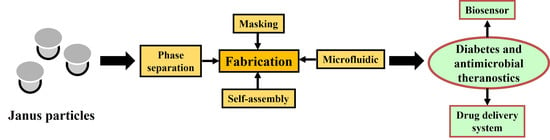
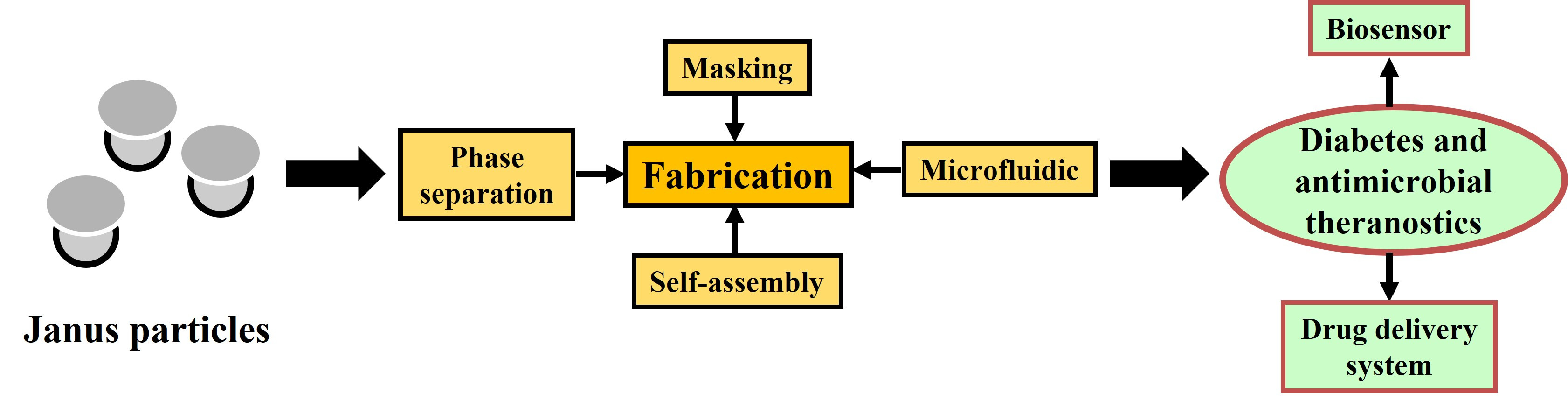
Janus particles have emerged as a novel and smart material that could improve pharmaceutical formulation, drug delivery, and theranostics. Janus particles have two distinct compartments that differ in functionality, physicochemical properties, and morphological characteristics, among other conventional particles. Recently, Janus particles have attracted considerable attention as effective particulate drug delivery systems as they can accommodate two opposing pharmaceutical agents that can be engineered at the molecular level to achieve better target affinity, lower drug dosage to achieve a therapeutic effect, and controlled drug release with improved pharmacokinetics and pharmacodynamics. This article discusses the development of Janus particles for tailored and improved delivery of pharmaceutical agents for diabetes treatment and antimicrobial applications. It provides an account of advances in the synthesis of Janus particles from various materials using different approaches. It appraises Janus particles as a promising particulate system with the potential to improve conventional delivery systems, providing a better loading capacity and targeting specificity whilst promoting multi-drugs loading and single-dose-drug administration.
Keywords: Janus particle; drug delivery; formulation; pharmacokinetics; pharmacodynamics Janus particle; drug delivery; formulation; pharmacokinetics; pharmacodynamics
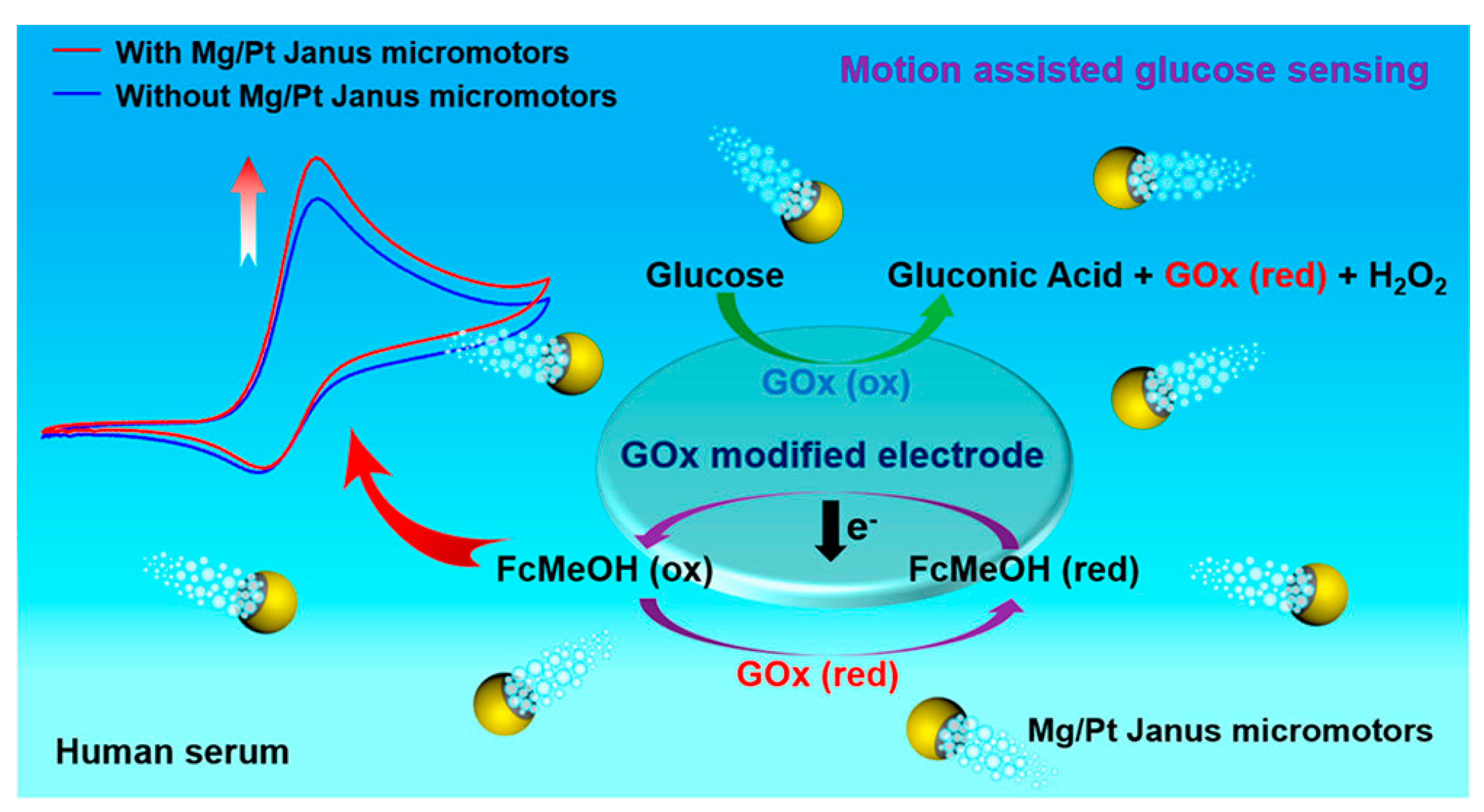
Graphical Abstract