




Next Issue
Volume 18, March
Previous Issue
Volume 18, January


Viruses, Volume 18, Issue 2 (February 2026) – 124 articles
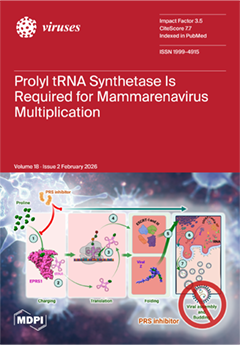
Cover Story (view full-size image): Mammarenaviruses include highly deadly pathogens such as Lassa and Junín viruses, for which no FDA‑approved vaccines or antivirals exist. We show that the host enzyme prolyl tRNA synthetase (PRS), a domain of the bifunctional glutamyl‑prolyl tRNA synthetase (EPRS1), is essential for mammarenavirus multiplication. The PRS inhibitor halofuginone potently inhibits mammarenavirus multiplication in infected cells by disrupting prolyl-tRNA charging, depriving proline-rich viral proteins, and severely impairing viral assembly and budding. These results support PRS as a druggable target for the development of host-direct antivirals to combat human pathogenic mammarenaviruses. View this paper
  • Issues are regarded as officially published after their release is announced to the table of contents alert mailing list.
  • You may sign up for e-mail alerts to receive table of contents of newly released issues.
  • PDF is the official format for papers published in both, html and pdf forms. To view the papers in pdf format, click on the "PDF Full-text" link, and use the free Adobe Reader to open them.
Order results
Result details
Section
Select all
Export citation of selected articles as:
13 pages, 979 KB  
Communication
SARS-CoV-2 Error Catastrophe Under Molnupiravir: Mutagenic Enhancement Enables Viral Persistence with Impaired Fitness
by Yuriko Tomita, Kaya Miyazaki, Rika Mochizuki and Hideki Hasegawa
Viruses 2026, 18(2), 273; https://doi.org/10.3390/v18020273 - 23 Feb 2026
Viewed by 848
Abstract
Molnupiravir induces mutations that render severe acute respiratory syndrome coronavirus 2 (SARS-CoV-2) replication-competent through error catastrophe mechanisms. Previous studies showed no resistant virus emergence during prolonged molnupiravir treatment, with no resistant variants reported. However, these approaches were limited by genetic uniformity at passage [...] Read more.
Molnupiravir induces mutations that render severe acute respiratory syndrome coronavirus 2 (SARS-CoV-2) replication-competent through error catastrophe mechanisms. Previous studies showed no resistant virus emergence during prolonged molnupiravir treatment, with no resistant variants reported. However, these approaches were limited by genetic uniformity at passage initiation. To investigate viral population dynamics under enhanced genetic diversity, we employed mutagenic pre-treatment using 5-fluorouracil (5-FU) and favipiravir to generate diverse quasi-species populations before molnupiravir selection pressure. Viral populations were treated with stepwise increasing molnupiravir concentrations (10 μM ⟶ 25 μM ⟶ 40 μM) over ten serial passages. Viral detectability, plaque morphology, and mutation accumulation were analyzed using molecular and sequencing approaches. Only high-concentration favipiravir (1000 μM) pre-treatment maintained detectable viral RNA through ten passages under 40 μM molnupiravir, while favipiravir (500 μM) and 5-FU groups became undetectable after passage 6. Surviving populations formed extremely small plaques with markedly reduced replication capacity. Next-generation sequencing revealed extensive mutation accumulation across viral proteins, including polymerase proteins. Individual viable virus isolation was unsuccessful, and large-scale propagation could not be achieved. These findings demonstrate apparent survival rather than true resistance to molnupiravir, characterized by severely compromised viral fitness. Full article
(This article belongs to the Section Viral Immunology, Vaccines, and Antivirals)
Show Figures

Figure 1

28 pages, 4865 KB  
Article
Functional Analyses of the Histone-like A104R Protein of African Swine Fever Virus and of a Homologous Pseudogene Product Found in Soft Tick Genomes
by Björn-Patrick Mohl, Tonny Kabuuka, Katarzyna Magdalena Dolata, Katrin Pannhorst, Jan Hendrik Forth, Axel Karger, Thomas C. Mettenleiter and Walter Fuchs
Viruses 2026, 18(2), 272; https://doi.org/10.3390/v18020272 - 23 Feb 2026
Viewed by 969
Abstract
African swine fever virus (ASFV) causes a fatal disease in domestic pigs and wild boars (Sus scrofa), leading to nearly 100% mortality during acute infection and significant economic losses in swine production. Unlike other eukaryotic viruses, ASFV encodes a histone-like nucleic [...] Read more.
African swine fever virus (ASFV) causes a fatal disease in domestic pigs and wild boars (Sus scrofa), leading to nearly 100% mortality during acute infection and significant economic losses in swine production. Unlike other eukaryotic viruses, ASFV encodes a histone-like nucleic acid-binding protein, pA104R, which is highly conserved and present in all described ASFV isolates of different genotypes. Moreover, A104R-like sequences have been identified in the genomes of soft ticks, which can replicate and transmit ASFV. Using a virulent genotype IX field isolate from Kenya, we analyzed the importance of A104R for viral replication in a permissive wild boar cell line (WSL). In this study, we confirmed that A104R is not essential for in vitro replication of ASFV. Loss of A104R did not detectably affect viral DNA replication or RNA transcription but led to a moderate reduction in virus titers and plaque sizes. Substitution of A104R with a similar ASFV-like element derived from the genome of an Ornithodoros moubata soft tick was not capable of rescuing the deletion mutant phenotype. In contrast, reintroduction of the authentic A104R open reading frame (ORF) into the deletion mutant fully restored wild-type virus growth properties. In accompanying studies, we verified the DNA-binding activities of the ASFV- and tick-derived A104R proteins and performed mass spectrometric analyses of the pA104R interactome. These experiments revealed, besides DNA-dependent co-precipitated proteins, specific DNA-independent protein–protein interactions of pA104R with other viral and cellular proteins. Full article
(This article belongs to the Collection African Swine Fever Virus (ASFV))
Show Figures

Figure 1

17 pages, 775 KB  
Review
Jamestown Canyon Virus Disease: An Analytic Review of Human Cases Reported from 1982 Through 2022
by Stephen F. Johnson and Karin E. Peterson
Viruses 2026, 18(2), 271; https://doi.org/10.3390/v18020271 - 23 Feb 2026
Viewed by 742
Abstract
Reports of acute Jamestown Canyon Virus (JCV) cases have increased markedly over the last 15 years, associated with improved diagnostic testing protocols. Analysis of these cases and the criteria used for their diagnosis could benefit clinicians encountering this under-recognized disease. In the current [...] Read more.
Reports of acute Jamestown Canyon Virus (JCV) cases have increased markedly over the last 15 years, associated with improved diagnostic testing protocols. Analysis of these cases and the criteria used for their diagnosis could benefit clinicians encountering this under-recognized disease. In the current study, we analyzed all published reports of acute human JCV infections in North America from the first in 1982 through 2022, including retrospective studies. A total of 50 reports with 416 cases of JCV were found. The primary illness associated with JCV infection involved the nervous system. Of reported encephalitis cases, the fatality rate was 2.4 percent in hospitalized patients. Of the cases with detailed patient outcome information, approximately 40 percent had prolonged hospitalization and/or long-term neurological sequelae. Although case incidence has increased over the last few decades, the overall time from admission/clinical onset to testing for JCV has not substantially changed from the 1980s. Confounding factors such as being immunocompromised, as well as previous or concurrent infections, were associated with a greater risk of more severe outcomes. Thus, the complexity of JCV infection with other conditions may impact the overall outcomes of JCV encephalitis. Full article
(This article belongs to the Section Viral Immunology, Vaccines, and Antivirals)
Show Figures

Figure 1

20 pages, 3695 KB  
Article
Changes in the Epidemiology of Pneumonia in Children Younger than 14 Years Old During and After the COVID-19 Pandemic in Mexico, a National Multicenter Study
by Rosa María Wong-Chew, Patricia Bautista Carbajal, Verónica Tabla-Orozco, María Del Carmen Espinosa-Sotero, Pedro Antonio Martínez-Arce, Daniel E. Noyola, María Susana Juárez-Tobías, Gerardo Martínez-Aguilar, Fabian Rojas-Larios, Izveydi Zuyino Mondragón-Salinas and Miguel Leonardo García-León
Viruses 2026, 18(2), 270; https://doi.org/10.3390/v18020270 - 22 Feb 2026
Viewed by 991
Abstract
Background: In 2019, pneumonia caused 740,180 deaths in children under five years of age, representing 22% of global mortality in this age group. During the COVID-19 pandemic, public health interventions markedly reduced the circulation of most respiratory viruses other than SARS-CoV-2, leading to [...] Read more.
Background: In 2019, pneumonia caused 740,180 deaths in children under five years of age, representing 22% of global mortality in this age group. During the COVID-19 pandemic, public health interventions markedly reduced the circulation of most respiratory viruses other than SARS-CoV-2, leading to significant post-pandemic shifts in respiratory pathogen epidemiology. This study aimed to characterize the epidemiology, clinical features, and risk factors associated with respiratory viruses and bacteria causing pneumonia in Mexican children during the late pandemic and post pandemic periods. Methods: Children younger than 14 years with pneumonia were recruited from seven hospitals in Mexico. Demographic and clinical data were collected, and nasopharyngeal swabs were analyzed using a multiplex PCR panel detecting 19 viruses and 7 bacteria. Univariate, bivariate, and logistic regression analyses were performed (SPSS v25). Results: A total of 1715 children were included: 704 during the pandemic (2021–2023) and 1011 post-pandemic (2023–2025). Co-infections (72% vs. 65%, p < 0.001), virus–virus co-infections (25% vs. 11%, p < 0.001), and single viral infections (20% vs. 15%, p = 0.007) were more frequent during the pandemic. Pathogen detection was high in both periods, though negative samples increased post-pandemic (5.4% vs. 15%, p < 0.001). During the pandemic, the 5 most frequently detected pathogens were rhinovirus (66%), RSV A and B (38%), Streptococcus pneumoniae (30%), Haemophilus influenzae (28%), human metapneumovirus (13%). In the post-pandemic period, the 5 most frequently detected pathogens were rhinovirus (52%), Haemophilus influenzae (36%), Streptococcus pneumoniae (35%), RSV A and B (28%), metapneumovirus (11%). Rhinovirus and RSV predominated during the pandemic, whereas Haemophilus influenzae, Streptococcus pneumoniae, parainfluenza viruses, Bordetella pertussis, and Mycoplasma pneumoniae significantly increased post-pandemic. Conclusions: Pediatric pneumonia epidemiology shifted from a predominantly viral profile during the pandemic to increased bacterial detections and virus–bacteria co-infections post-pandemic, alongside re-emergence of typical RSV and influenza seasonality. Higher mean age and rhinovirus as the most frequent pathogen persist after the pandemic. Sustained molecular surveillance and reinforced vaccination programs remain essential in the post-pandemic era. Full article
(This article belongs to the Special Issue RSV Epidemiological Surveillance: 2nd Edition)
Show Figures

Figure 1

14 pages, 652 KB  
Article
Predictive Value of Sustained Virologic Response at Week 4 in Patients with Hepatitis C Virus Infection Treated with Sofosbuvir/Velpatasvir
by Gia Landry, Mark Sulkowski, Jordan J. Feld, Nancy Reau, Stacey Scherbakovsky, Farrah Black, Candido Hernández, Renee-Claude Mercier, Liyun Ni, Marc Bourlière and Alessandra Mangia
Viruses 2026, 18(2), 269; https://doi.org/10.3390/v18020269 - 21 Feb 2026
Viewed by 1230
Abstract
Direct-acting antiviral therapies can cure most people with hepatitis C virus (HCV) infection with little need for testing or monitoring. A major challenge to eliminating HCV is ensuring patients complete all steps of care, including confirmation of cure. We assessed the concordance of [...] Read more.
Direct-acting antiviral therapies can cure most people with hepatitis C virus (HCV) infection with little need for testing or monitoring. A major challenge to eliminating HCV is ensuring patients complete all steps of care, including confirmation of cure. We assessed the concordance of sustained virologic response (SVR) at 4 weeks (SVR4) and 12 weeks (SVR12) post-treatment to evaluate the viability of SVR4 as a predictor of cure in patients treated with sofosbuvir (SOF)/velpatasvir (VEL). We conducted a retrospective analysis of patients from the Phase 3 ASTRAL-1, -2, and -3 programs and a historical cohort from the Louisiana Department of Health Sexually Transmitted Infection (STI)/HIV/Hepatitis Program claims database. Concordance analyses were performed for patients with both SVR4 and SVR12 data. The concordance analysis in the ASTRAL studies included 1015 patients; 1005 and 1002 achieved SVR4 and SVR12, respectively. Among SVR4 achievers, 3 failed to maintain SVR12, while all (10/10) patients who did not achieve SVR4 also failed SVR12. In the real-world cohort, 479/509 (94%) patients achieved SVR4 and 485/509 (95%) achieved SVR12. Of those with SVR4, 7 failed SVR12; 17 of 30 patients who did not achieve SVR4 also failed SVR12. High concordance between SVR4 and SVR12 was observed in both ASTRAL and the real-world dataset, supporting the use of SVR4 as a predictor of long-term SVR in patients with HCV infection treated with SOF/VEL. Streamlining cure confirmation by shifting SVR determination from week 12 to week 4 post-treatment may reduce patient loss to follow-up. Full article
(This article belongs to the Special Issue Advancing Hepatitis Elimination: HBV, HDV, and HCV)
Show Figures

Figure 1

14 pages, 2948 KB  
Article
Next-Generation Sequencing Reveals Continued Circulation of Rare HIV-1 Subtypes in the Democratic Republic of the Congo and Refines the Estimate of the Emergence Dates of Three Subtypes
by Mark Anderson, Gregory S. Orf, Vera Holzmayer, Ana Olivo, Barbara J. Harris, Michael G. Berg, Guixia Yu, Asmeeta Achari, Scot Federman, Charles Y. Chiu, Linda James, Samuel Mampunza, Gavin A. Cloherty and Mary A. Rodgers
Viruses 2026, 18(2), 268; https://doi.org/10.3390/v18020268 - 21 Feb 2026
Viewed by 792
Abstract
HIV-1 diversified for decades within the Democratic Republic of the Congo (DRC) before spreading globally in the early 1980s. Thus, the DRC is home to some of the most ancestral and diverse HIV-1 strains. Recent serosurveys conducted from 2017 to 2019 in Kinshasa, [...] Read more.
HIV-1 diversified for decades within the Democratic Republic of the Congo (DRC) before spreading globally in the early 1980s. Thus, the DRC is home to some of the most ancestral and diverse HIV-1 strains. Recent serosurveys conducted from 2017 to 2019 in Kinshasa, DRC, indicated high prevalence of HIV-1, yet sequence data is lacking from this period. Given the history of circulating rare HIV-1 subtypes in the DRC, a viral whole-genome sequencing study was conducted to determine current diversity in the greater Kinshasa area. Next-generation sequencing (NGS) through metagenomic and target enrichment methods was conducted on 197 specimens collected from 2017 to 2019. A large array of HIV subtypes (A, B, C, D, F1, G, H, J, and K), circulating recombinant forms (CRF01_AE, CRF02_AG, CRF05_DF, CRF11_cpx, CRF13_cpx, CRF25_cpx, CRF 45_cpx, and CRF92_C2U), unique recombinant forms, and unclassifiable sequences were observed, with many branching in basal positions within, or outside of, many subtypes on phylogenetic trees. Incorporating these new sequences into Bayesian inference of phylogeny pushes back the dates of the most recent common ancestors of HIV-1 group M and the rare subtypes G, H, and J by between 3 and 7 years each. The DRC continues to harbor diverse and rare HIV-1 subtypes that could challenge diagnostic tests, treatments, and vaccines. In addition to shifting subtype emergence dates, the sequences from our study are evidence that rare strains continue to circulate and should be regularly monitored. Full article
(This article belongs to the Section Human Virology and Viral Diseases)
Show Figures

Figure 1

20 pages, 2657 KB  
Article
Enhanced Antitumor Activity and Induction of Immunogenic Cell Death in NUT Carcinoma Cells by Combining Oncolytic Viruses with the Dual Inhibitor NEO2734
by Fiona D. Nitschke, Julia Beil, Irina Smirnow, Andrea Schenk, Mary E. Carter, Ulrich M. Lauer and Linus D. Kloker
Viruses 2026, 18(2), 267; https://doi.org/10.3390/v18020267 - 20 Feb 2026
Viewed by 799
Abstract
NUT carcinoma (NC) is a rare exceptionally aggressive malignancy, defined by NUTM1 gene translocations, most commonly generating a BRD4::NUTM1 fusion that results in a poor prognosis and limited therapeutic options. Oncolytic virotherapy has emerged as a promising strategy for NC, and [...] Read more.
NUT carcinoma (NC) is a rare exceptionally aggressive malignancy, defined by NUTM1 gene translocations, most commonly generating a BRD4::NUTM1 fusion that results in a poor prognosis and limited therapeutic options. Oncolytic virotherapy has emerged as a promising strategy for NC, and the dual bromodomain and extra-terminal domain (BET) and p300/CBP inhibitor NEO2734 has demonstrated potent antiproliferative activity. To investigate multimodal therapeutic approaches that combine epigenetic modulation with immunogenic and cytotoxic effects of oncolytic viruses (OVs), we evaluated two recombinant OVs, including the herpes simplex virus talimogene laherparepvec (T-VEC) and a measles vaccine virus (MeV-GFP), in combination with NEO2734 in four distinct NC cell lines. Viability assays revealed enhanced tumor cell reduction with all combinations, including synergistic effects with T-VEC combinations. Cell cycle analysis showed G1 arrest with NEO2734 alone, whereas its combination with T-VEC resulted in S-phase broadening and reduced G2-phase populations, consistent with replicative stress and increased cytotoxicity. Evaluation of immunogenic cell death (ICD) markers displayed elevated ATP and HMGB1 levels and increased surface calreticulin with T-VEC and NEO2734 combinations. Overall, these findings indicate that combining OVs with BET/p300 inhibitors elicits potent antitumor responses, supports synergistic interactions and immunogenicity, and warrants further investigation in multimodal therapeutic strategies for NC. Full article
(This article belongs to the Special Issue Progress and Prospects in Oncolytic Virotherapy 2025–2026)
Show Figures

Graphical abstract

13 pages, 1490 KB  
Article
Elm Blunervirus 1: A Novel Hexapartite Blunervirus Infecting Ulmus parvifolia in China
by Yanxiang Wang, Lifeng Zhai, Junjie Xiang, Wanqing Chen, Jingjing Li, Kai Yin, Xiaoshan Shi, Junming Tu, Xian Xia, Ying Wang and Jianyu Bai
Viruses 2026, 18(2), 266; https://doi.org/10.3390/v18020266 - 20 Feb 2026
Viewed by 761
Abstract
The genus Blunervirus comprises plant viruses that infect a diverse range of plants, but no blunervirus has been reported infecting elm trees (Ulmus parvifolia) in China to date. Using high-throughput sequencing and reverse-transcription PCR assays, a novel blunervirus, tentatively named elm blunervirus [...] Read more.
The genus Blunervirus comprises plant viruses that infect a diverse range of plants, but no blunervirus has been reported infecting elm trees (Ulmus parvifolia) in China to date. Using high-throughput sequencing and reverse-transcription PCR assays, a novel blunervirus, tentatively named elm blunervirus 1 (ElmBlV1), was identified from a symptomatic elm plant (Ulmus parvifolia) in China. The genome of ElmBlV1 harbors canonical molecular features of blunerviruses and comprises six RNA segments (RNAs1–6), with RNA5 and 6 being two additional genomic components not reported in known blunerviruses. Sequence analyses revealed amino acid (aa) identity of ElmBlV1 proteins ranging from 25.9% (polyprotein encoded by RNA1) to 64.2% (movement protein encoded by RNA4) relative to reported blunerviruses and include five orphan open reading frames. Phylogenetically, ElmBlV1 is most closely related to blueberry necrotic ring blotch virus. Furthermore, ElmBlV1 P37 localizes to both plasmodesmata and the nucleus. Additionally, the RNA reads mapping revealed high read coverage was observed on RNAs3–4 for this virus. To our knowledge, this is the first report of a blunervirus infecting an elm tree in China. Our results enrich the diversity of known viruses in the genus of Blunervirus and expand our understanding of their genomic characteristics and molecular biology. Full article
(This article belongs to the Section Viruses of Plants, Fungi and Protozoa)
Show Figures

Figure 1

21 pages, 2209 KB  
Article
Identification of Significant Genomic Changes and Compartmentalization of Simian Foamy Virus in a Human Zoonotically Infected by a Chimpanzee (Pan troglodytes troglodytes)
by Haoqiang Zheng, Anupama Shankar, Gunars Osis, Alex Burgin, Mili Sheth, Kaveh G. Kiani, Yen T. Duong, David Cowan and William M. Switzer
Viruses 2026, 18(2), 265; https://doi.org/10.3390/v18020265 - 20 Feb 2026
Viewed by 784
Abstract
Despite increasing reports of zoonotic simian foamy virus (SFV) infections globally, knowledge of its genetic adaptation in humans and impact on viral transmission and pathogenicity remains limited. We obtained complete SFV genomes using metagenomics analysis of viral isolates from peripheral blood lymphocytes (PBLs) [...] Read more.
Despite increasing reports of zoonotic simian foamy virus (SFV) infections globally, knowledge of its genetic adaptation in humans and impact on viral transmission and pathogenicity remains limited. We obtained complete SFV genomes using metagenomics analysis of viral isolates from peripheral blood lymphocytes (PBLs) and throat specimens from a worker (Case 6) and source chimpanzee (B1) that bit him. We analyzed viral diversity in three genomic regions (LTR, tas, and bet) involved in replication and latency using longitudinal specimens (PBLs, throat, saliva, urine, and semen) from Case 6 over five years, and PBLs from B1 and five additional chimpanzees over three years. Proviral loads were measured using a validated qPCR assay. Phylogenetic analysis revealed nearly identical SFV genomes in Case 6 and B1. Overall, bet sequences exhibited high genetic stability across body compartments and over time, with evidence of compartmentalization in Case 6 urine and semen specimens. G→A substitutions in GG and GA motifs in bet indicated heterogeneous APOBEC-associated editing across hosts and anatomical compartments following zoonotic transmission. Case 6 had significant deletions in the LTR region that were absent in B1 and other chimpanzees. Length variation in tas, including truncated forms, was observed across longitudinal specimens from Case 6, B1, and other chimpanzees. Proviral loads were consistently low and undetectable in most Case 6 urine specimens. Together, analysis of this SFV transmission pair identifies genomic changes likely to affect viral replication and persistence, highlighting mechanisms that may limit secondary transmission and pathogenicity of SFV in humans. Full article
(This article belongs to the Special Issue Spumaretroviruses: Research and Applications)
Show Figures

Figure 1

19 pages, 5009 KB  
Article
Influenza A Virus NS1 Inhibits RIPLET Activation of Duck RIG-I Signaling
by Mirzabek J. Kazbekov, Angela Chiriankandath, Brooklyn Osborne, Danyel Evseev and Katharine E. Magor
Viruses 2026, 18(2), 264; https://doi.org/10.3390/v18020264 - 20 Feb 2026
Cited by 1 | Viewed by 894
Abstract
Retinoic acid-inducible gene I (RIG-I) is a crucial pattern recognition receptor for detecting viral RNA and initiating an immune response against influenza A viruses (IAVs). The activation of RIG-I in mammalian cells requires ubiquitination by two E3 ubiquitin ligases: TRIM25 and RIPLET. Using [...] Read more.
Retinoic acid-inducible gene I (RIG-I) is a crucial pattern recognition receptor for detecting viral RNA and initiating an immune response against influenza A viruses (IAVs). The activation of RIG-I in mammalian cells requires ubiquitination by two E3 ubiquitin ligases: TRIM25 and RIPLET. Using dual luciferase assays, we demonstrate that duck RIPLET enhances the activation of RIG-I, driving the IFN-β promoter activity in chicken DF-1 fibroblasts. qPCR analyses show that the co-expression of duck RIG-I and RIPLET significantly upregulates key immune genes and reduces viral RNA transcripts in DF-1 cells challenged with low pathogenic avian influenza (LPAI) H6N2. Co-immunoprecipitation and confocal microscopy studies suggest the interaction and confirm the colocalization of duck RIG-I and RIPLET in the cytoplasm. Further, we show that the non-structural protein 1 (NS1) of IAV, known for its role in immune evasion, suppression, and pathogenicity, from five different strains of IAV (PR8, BC500, CA431, D4AT, and VN1203) can all inhibit duck RIPLET activation of RIG-I, with NS1 from avian strains showing the greatest decrease in IFN-β promoter activity in chicken DF-1 cells. Overall, our research provides valuable insight into the E3 ubiquitin ligases required for RIG-I activation and susceptibility of this pathway to IAV interference across species. Full article
(This article belongs to the Section Animal Viruses)
Show Figures

Figure 1

15 pages, 4037 KB  
Article
GFP-Tagged Erns in Bungowannah Pestivirus: A Tool for Viral Tracking and Functional Studies
by Sara Ezzat and Matthias Schweizer
Viruses 2026, 18(2), 263; https://doi.org/10.3390/v18020263 - 20 Feb 2026
Viewed by 815
Abstract
Pestiviruses, such as bovine viral diarrhea virus (BVDV) or classical swine fever virus (CSFV), are members of the family Flaviviridae and infect a broad range of species, causing significant economic losses in livestock. A unique feature of pestiviruses is the Erns protein, [...] Read more.
Pestiviruses, such as bovine viral diarrhea virus (BVDV) or classical swine fever virus (CSFV), are members of the family Flaviviridae and infect a broad range of species, causing significant economic losses in livestock. A unique feature of pestiviruses is the Erns protein, which is part of the glycoprotein complex at the surface of the virion, but it is also secreted as an RNase that functions as an interferon (IFN) antagonist. This dual nature makes Erns a particularly complex and multifunctional protein, highlighting its importance for understanding pestivirus biology. Bungowannah pestivirus (BuPV) was reported to exhibit high genetic plasticity, making it suitable for engineering recombinant tools. In this study, we generated a recombinant BuPV expressing green fluorescent protein (GFP) fused to the N-terminus of the Erns protein from BVDV. The GFP-Erns fusion was detected by fluorescence microscopy and remained stable across five serial passages. The recombinant virus infected all tested mammalian cell lines but replicated more slowly than the parental BuPV stock. RNase activity assays confirmed retention of enzymatic function. These results demonstrate stable expression, broad infectivity, and preserved activity of GFP-Erns in the recombinant BuPV, indicating that this might be a useful tool for further investigations on pestivirus pathogenesis. Full article
(This article belongs to the Special Issue Bovine Viral Diarrhea Viruses and Other Pestiviruses)
Show Figures

Graphical abstract

24 pages, 5481 KB  
Article
Temporal Dynamics of Recombination in Field Isolates of Foot-and-Mouth Disease Virus
by Mate Malichava, Alexander Lukashev and Yulia Aleshina
Viruses 2026, 18(2), 262; https://doi.org/10.3390/v18020262 - 19 Feb 2026
Cited by 1 | Viewed by 927
Abstract
Foot-and-mouth disease virus (FMDV) is a highly contagious pathogen of cloven-hoofed livestock. Recombination is one of the mechanisms that contribute to genetic diversity of FMDV and facilitate the generation of new viral lineages, or recombinant forms. While the general patterns of recombination in [...] Read more.
Foot-and-mouth disease virus (FMDV) is a highly contagious pathogen of cloven-hoofed livestock. Recombination is one of the mechanisms that contribute to genetic diversity of FMDV and facilitate the generation of new viral lineages, or recombinant forms. While the general patterns of recombination in FMDV are well-known, the temporal dynamics of this process remain unexplored. This study systematically analyzed recombination across 1485 publicly available complete genome sequences of FMDV, collected from 1934 to 2024. In addition to the well-known general recombination pattern with hotspots on the borders of the genome region that encodes capsid proteins VP2-VP3-VP1, we identified serotype-specific recombination patterns. A significant temporal signal required to analyze temporal dynamics was found in serotypes A, Asia1, O, and SAT1 in the VP2-VP3-VP1 genome region. To assess the lifetimes of FMDV recombinant forms, we compared these time-scaled phylogenetic trees with phylogenies for other genomic regions exchanged by recombination events. The median lifetimes of FMDV recombinant forms ranged from 2 to 18 years, depending on the serotype and the nonstructural genomic region involved in recombination. These timescales are comparable to human (+)RNA viruses, such as enteroviruses and caliciviruses. In distinct serotypes, recombination could be more frequent on the 5′ or 3′ border of the capsid-encoding genome region, without a uniform pattern. Full article
(This article belongs to the Special Issue Foot-and-Mouth Disease Virus)
Show Figures

Figure 1

13 pages, 2920 KB  
Article
In Silico Characterization of Two Human Pegivirus Proteins Highlights Similarities with Hepatitis C Virus and Possible Therapeutic Repurposing
by Kaleigh M. Copenhaver, Barbara A. Hanson, Joshua J. Ziarek and Igor J. Koralnik
Viruses 2026, 18(2), 261; https://doi.org/10.3390/v18020261 - 19 Feb 2026
Viewed by 645
Abstract
Human Pegivirus (HPgV) is an understudied flavivirus that is highly prevalent and often persists in the blood and tissues of humans. HPgV-infected brain tissue from individuals with Parkinson’s disease has shown significant transcriptomic and immune signaling differences compared to non-infected Parkinson’s brains. The [...] Read more.
Human Pegivirus (HPgV) is an understudied flavivirus that is highly prevalent and often persists in the blood and tissues of humans. HPgV-infected brain tissue from individuals with Parkinson’s disease has shown significant transcriptomic and immune signaling differences compared to non-infected Parkinson’s brains. The HPgV genome is similar to Hepatitis C Virus (HCV), a well-characterized flavivirus with multiple approved small-molecule therapeutics. Here, we used HCV crystal structures to create homology models for two HPgV non-structural (NS) proteins, the serine protease (NS3) and the RNA-dependent RNA polymerase (NS5B), and performed molecular dynamic simulations. HCV and HPgV proteins had minimal structural differences, as seen by the Root Mean Square Deviation (RMSD) difference between NS3 (1.00 Å) and NS5B (1.26 Å). FDA-approved small molecules were then docked in silico to the NS3 and NS5B subunits of HCV and HPgV. HCV had weak to moderate correlated docking scores with HPgV NS3 (R2 = 0.21, p < 0.001) and NS5B (R2 = 0.58, p < 0.001). The predicted protein–ligand interactions showed potential binding between HCV antivirals and conserved residues of HPgV, including the catalytic triad for NS3 or the GDD motif for NS5B. Together, these results provide structural insights for key HPgV proteins and highlight possibilities for therapeutic repurposing of HCV antivirals. Full article
(This article belongs to the Section General Virology)
Show Figures

Graphical abstract

38 pages, 3138 KB  
Review
Machine Learning in Preclinical Development of Antiviral Peptide Candidates: A Review of the Current Landscape
by Hannah Hargrove, Bei Tong, Amr Hussein Elkabanny and Xiaohui Frank Zhang
Viruses 2026, 18(2), 260; https://doi.org/10.3390/v18020260 - 19 Feb 2026
Viewed by 782
Abstract
In the field of antiviral peptide (AVP) design, one of the most prominent limiting factors is the time and material cost required to perform the initial screening of novel AVPs. In particular, traditional target identification as well as traditional preclinical screening of novel [...] Read more.
In the field of antiviral peptide (AVP) design, one of the most prominent limiting factors is the time and material cost required to perform the initial screening of novel AVPs. In particular, traditional target identification as well as traditional preclinical screening of novel drug candidates can be a very lengthy and expensive process. In recent decades, target identification and initial screening of AVPs has been increasingly carried out using machine learning (ML). The use of ML to initially screen potential interactions reduces the financial cost and lengthy time scale of preclinical AVP development, allowing for candidate peptides to be identified and screened faster, at a lower cost to both manufacturer and consumer. Additionally, the use of ML in generating and screening AVP candidates allows a more diverse chemical space to be explored than high-throughput screening methodologies allow. In silico generation and validation of AVP candidates also limits researcher contact with high BSL-rated viruses, thereby increasing the safety and accessibility of AVP design. This review seeks to provide a broad overview of the current uses of ML in early-stage AVP design, and to shed some light on the future direction of the field. Full article
(This article belongs to the Special Issue Harnessing AI and Machine Learning for Antiviral Development)
Show Figures

Figure 1

22 pages, 6149 KB  
Article
Evolutionary and Modification Features of Two Monkeypox Virus Strains: Insights from Integrated Genomic and Epigenomic Analyses
by Zhongru Zhao, Bohan Zhang, Jingwan Han, Dandan Lin, Yongjian Liu, Lei Jia, Hanping Li, Jingyun Li, Xiaolin Wang, Hongling Wen and Lin Li
Viruses 2026, 18(2), 259; https://doi.org/10.3390/v18020259 - 18 Feb 2026
Viewed by 932
Abstract
Since 2022, global outbreaks of monkeypox virus (MPXV) have been repeatedly designated by the World Health Organization (WHO) as a public health emergency of international concern (PHEIC), underscoring the urgent need to elucidate the multidimensional mechanisms underlying viral evolution and transmission. Current understanding [...] Read more.
Since 2022, global outbreaks of monkeypox virus (MPXV) have been repeatedly designated by the World Health Organization (WHO) as a public health emergency of international concern (PHEIC), underscoring the urgent need to elucidate the multidimensional mechanisms underlying viral evolution and transmission. Current understanding remains largely focused on genomic variation, while the critical role of epigenetic regulation has been considerably overlooked. To address this gap, this study integrates high-throughput evolutionary genomic analysis with whole-genome DNA methylation profiling. Using parallel Illumina and Nanopore sequencing platforms, we comprehensively characterized two clinically derived MPXV isolates collected locally. The results revealed that both isolates belonged to the C.1.1 ancestral lineage, diverging into distinct clades (E.3 and E.4, respectively, supporting the presence of at least two independent viral introduction events into the region, each followed by limited local transmission. They had accrued a considerable number of single-nucleotide polymorphisms (SNPs), with APOBEC3-associated substitutions constituting 84.8% and 77.6% of all observed mutations. Furthermore, both 5-hydroxymethylcytosine (5hmC) and N6-methyladenine (6mA) modifications were identified and found to be preferentially enriched within the inverted terminal repeats (ITRs) regions of MPXV genome in both viral strains; moreover, the E.4 lineage viral strain exhibits a markedly more intricate and compositionally diversified modification landscape, a pattern that indicates appreciable epigenetic heterogeneity among MPXV lineages. Our study furnishes a multi-omics framework that presents a systematic evolutionary feature of two clinical MPXV isolates and their genomic DNA 5hmC and 6mA modification topologies, and enhances our understanding of MPXV viral adaptation and diversification. Full article
(This article belongs to the Section General Virology)
Show Figures

Figure 1

16 pages, 2671 KB  
Article
Tracing SARS-CoV-2 Evolution in Algeria: Insights from 2020 to 2023
by Fatima Ezzohra Ezahedi, Fawzi Derrar, Ágota Ábrahám and Safia Zeghbib
Viruses 2026, 18(2), 258; https://doi.org/10.3390/v18020258 - 18 Feb 2026
Viewed by 760
Abstract
Genomic surveillance is a cornerstone of pandemic response; it has helped guide public health interventions worldwide. However, North Africa stands between limited surveillance resources and efforts to address the data gap in this strategic geographic region that links sub-Saharan Africa and Europe. In [...] Read more.
Genomic surveillance is a cornerstone of pandemic response; it has helped guide public health interventions worldwide. However, North Africa stands between limited surveillance resources and efforts to address the data gap in this strategic geographic region that links sub-Saharan Africa and Europe. In this study, we present the first comprehensive evolutionary investigation of Algerian SARS-CoV-2 genomes, revealing their phylogeny, continuous phylogeography within the country, mutation analysis, and a super-spreading event through haplotype network analysis. We characterized the genetic diversity and unique mutation pattern of 449 Algerian sequences, revealing multiple independent introductions into the country since the first reported case on the 25th of February 2020 followed by numerous local transmissions that facilitated the virus’s rapid propagation. This study highlights both the importance of molecular epidemiology and equitable access to resources in implementing genomic epidemiology and in increasing sequencing efforts to strengthen pandemic preparedness. Full article
Show Figures

Figure 1

18 pages, 3190 KB  
Article
1′- and 4′-Cyano Modified Adenosine Analogs Against Prototypic Flavivirus RNA-Dependent RNA Polymerases
by Simon M. Walker, Calvin J. Gordon, Egor P. Tchesnokov, Long Sun, Jing Zou, Xuping Xie, Nicholas C. Riola, Vincent Cutillas, Venice Du Pont, Xiaofeng Zhao, Ting Wang, Jared Pitts, Dustin S. Siegel, Jason K. Perry, Joy Y. Feng, John P. Bilello and Matthias Götte
Viruses 2026, 18(2), 257; https://doi.org/10.3390/v18020257 - 18 Feb 2026
Viewed by 853
Abstract
Flaviviruses are arthropod-borne RNA viruses associated with significant human diseases globally. There are no effective direct-acting antivirals approved to treat these viral infections. Given its critical role in viral replication, the RNA-dependent RNA polymerase (RdRp) is a logical target for antiviral drug development. [...] Read more.
Flaviviruses are arthropod-borne RNA viruses associated with significant human diseases globally. There are no effective direct-acting antivirals approved to treat these viral infections. Given its critical role in viral replication, the RNA-dependent RNA polymerase (RdRp) is a logical target for antiviral drug development. Remdesivir (formerly GS-5734), a 1′-cyano modified C-adenosine monophosphate prodrug, was the first US Food and Drug Administration (FDA) approved antiviral for coronavirus disease 2019 (COVID-19) and was also shown to inhibit flavivirus replication. GS-7682, a 4′-cyano modified C-adenosine prodrug, exhibits a broad-spectrum antiviral activity. Here, we determined the anti-flavivirus potency of both remdesivir and GS-7682 and characterized their active triphosphate forms, GS-443902 and GS-646939, respectively, against a panel of purified flavivirus RdRps. These include dengue, Japanese encephalitis, West Nile, yellow fever, and Zika. Enzyme kinetics demonstrate efficient RNA incorporation of GS-443902 and GS-646939. GS-646939 acts as an immediate chain terminator. Conversely, GS-443902 acts through a template-dependent inhibition mechanism by impeding the incorporation of the complementary UTP. Both mechanisms correlate with anti-flavivirus activity, although remdesivir is generally superior. The data demonstrate that immediate chain termination is not necessarily a preferred mechanism of action of nucleotide analogs. Template-dependent inhibition should also be considered, especially for viruses lacking intrinsic proofreading activities. Full article
(This article belongs to the Special Issue The Structure and Function of Flavivirus Genes and Proteins)
Show Figures

Figure 1

17 pages, 2908 KB  
Article
Assessment of Functional Antibody Responses Induced by Tembusu Virus Vaccines Using a Blocking ELISA
by Chengguang Lu, Siming Zhu, Wenjun Jiang, Mingtian Mao, Huihui Li, Bing Li, Meijuan Zhang, Mian Wu, Zhuo Zhang, Dalin He, Youxiang Diao and Yi Tang
Viruses 2026, 18(2), 256; https://doi.org/10.3390/v18020256 - 18 Feb 2026
Viewed by 660
Abstract
To establish a rapid, sensitive, and reproducible method for evaluating the immunogenic performance of Tembusu virus (TMUV) vaccines, we developed and optimized a blocking enzyme-linked immunosorbent assay (bELISA) using the TMUV envelope (E) protein as the coating antigen. By systematically screening the coating [...] Read more.
To establish a rapid, sensitive, and reproducible method for evaluating the immunogenic performance of Tembusu virus (TMUV) vaccines, we developed and optimized a blocking enzyme-linked immunosorbent assay (bELISA) using the TMUV envelope (E) protein as the coating antigen. By systematically screening the coating antigen concentration, mAb dilution, serum dilution, and chromogenic reaction time, we determined the optimal reaction conditions for this assay. The results showed that bELISA exhibited high specificity, yielding positive reactions only with TMUV-positive sera and no cross-reactivity with sera against other common duck viruses; the cutoff value for positivity was 48.89%, and the lowest detectable serum dilution was 1:10. Neutralization assays confirmed that the TMUV E-specific mAb significantly inhibited viral replication, supporting the functional relevance and reliability of the established bELISA. In a comparative investigation, this assay was used to assess five TMUV vaccines, including both inactivated and attenuated variants, in Cherry Valley ducks. The DF2 inactivated vaccine was found to elicit the highest antibody levels and blocking rates. This was followed by the WF100 attenuated vaccine, which also demonstrated a strong immune response. The TC2B inactivated vaccine, although effective, showed a comparatively lower response, whereas the FX2010-180P strain and mosquito cell-derived WF100 attenuated vaccine showed weaker immunogenicity. Neutralization assays further confirmed that the TMUV E-specific mAb significantly inhibited viral replication, supporting the functional relevance and reliability of the established bELISA. In summary, the bELISA described here demonstrates high specificity, sensitivity, and reproducibility and is suitable for evaluating the immune efficacy of different TMUV vaccines, providing a reliable technical platform for vaccine immunology studies and optimization of immunization strategies. Full article
Show Figures

Graphical abstract

10 pages, 1260 KB  
Brief Report
Antiviral Activity of Remdesivir and Obeldesivir Against SARS-CoV-2 Omicron Subvariants That Were Circulating from September 2023 Through June 2025
by Lauren Rodriguez, Jiani Li, Dong Han, Nadine Peinovich, Clarissa Martinez, Pui Yan Ho, J. Lizbeth Reyes Zamora, Ross Martin, John P. Bilello, Jason K. Perry and Charlotte Hedskog
Viruses 2026, 18(2), 255; https://doi.org/10.3390/v18020255 - 18 Feb 2026
Viewed by 732
Abstract
With the ongoing emergence of SARS-CoV-2 variants, continued surveillance of antiviral susceptibility remains critical for detecting resistance that could compromise treatment efficacy. This study evaluated the activity of 2 SARS-CoV-2 RNA-dependent RNA polymerase (Nsp12) inhibitors against emerging Omicron variants: remdesivir (RDV), an approved [...] Read more.
With the ongoing emergence of SARS-CoV-2 variants, continued surveillance of antiviral susceptibility remains critical for detecting resistance that could compromise treatment efficacy. This study evaluated the activity of 2 SARS-CoV-2 RNA-dependent RNA polymerase (Nsp12) inhibitors against emerging Omicron variants: remdesivir (RDV), an approved antiviral for the treatment of COVID-19, and obeldesivir (ODV), an oral prodrug that shares the same parent nucleoside as RDV. Both RDV and ODV were shown to retain antiviral activity against the Omicron subvariants BA.2.86.1, JN.1.7, KP.2, KP.3.1.1, KP.3.3, LP.8.1, NB.1.8.1, XBB.2, XEC, and XFG compared with wild-type reference strains. Only 1 new lineage-defining Nsp12 substitution, D284Y (detected in NB.1.8.1), was observed. Phenotypic analysis demonstrated that a replicon containing this substitution remained susceptible to both RDV and ODV. These findings are consistent with previous studies showing that RDV and ODV retain potent activity against previously identified Omicron variants, support the continued clinical use of RDV against circulating SARS-CoV-2 variants, and reinforce the potential of ODV as an oral antiviral therapeutic. Full article
(This article belongs to the Section Coronaviruses)
Show Figures

Figure 1

15 pages, 3347 KB  
Article
Wastewater-Based Surveillance of Respiratory Viruses in the SARS-CoV-2 Post-Pandemic Period in Mexico
by Oscar Uriel Ulloa-Medina, Pedro Gerardo Hernández-Sánchez, Gabriel Mata-Moreno, Luis Rubén Jaime-Rocha, Sara del Carmen Alatorre-Camacho, Ignacio Lara-Hernández, Mauricio Comas-García, Juan Carlos Muñoz-Escalante, Ana María González-Ortiz, Pedro Torres-González and Daniel E. Noyola
Viruses 2026, 18(2), 254; https://doi.org/10.3390/v18020254 - 17 Feb 2026
Viewed by 1034
Abstract
In recent years, wastewater (WW)-based epidemiology has been increasingly used for surveillance of SARS-CoV-2 and has emerged as a potential tool for monitoring other respiratory viruses. Most evidence on the use of WW for detecting multiple respiratory viruses comes from developed countries. In [...] Read more.
In recent years, wastewater (WW)-based epidemiology has been increasingly used for surveillance of SARS-CoV-2 and has emerged as a potential tool for monitoring other respiratory viruses. Most evidence on the use of WW for detecting multiple respiratory viruses comes from developed countries. In this study, we assessed the feasibility of multi-respiratory virus sewage surveillance in a middle-income country and explored signals that may be potentially used as early warning signs for Public Health authorities. We examined the presence of SARS-CoV-2, influenza virus, respiratory syncytial virus (RSV), and human metapneumovirus (hMPV) in 238 WW samples collected from three treatment plants in San Luis Potosí, Mexico, over one year. The weekly detection of each virus was compared with the weekly number of hospital admissions for respiratory infections caused by that virus in pediatric patients. SARS-CoV-2, influenza, hMPV, and RSV were detected in 152 (63.9%), 108 (45.4%), 95 (39.9%), and 24 (10.1%) samples, respectively. There was no significant correlation between viral detection in WW and the number of hospitalizations during that week. However, analyses of WW viral detection with hospitalizations in subsequent weeks showed an increasing correlation reaching a maximum correlation for a lag of 12 weeks for SARS-CoV-2 (rs = 0.63, p = 0.001), 9 weeks for influenza (rs 0.62, p = 0.0001), 2 weeks for RSV (rs = 0.30, p = 0.05), and 3 weeks for hMPV (rs = 0.39, p = 0.009). In addition, we identified time-periods of SARS-CoV-2, influenza, and RSV widespread circulation (several consecutive weeks in which viruses were detected in the three treatment plants); most hospitalizations caused by these viruses occurred after widespread circulation was detected in WW, suggesting this may be used as an early alert for public health systems. Overall, our results show that WW-based surveillance of multiple respiratory viruses is feasible and has potential applications as an early warning system in middle-income countries. Full article
(This article belongs to the Special Issue Wastewater-Based Epidemiology and Viral Surveillance)
Show Figures

Figure 1

29 pages, 3788 KB  
Article
In Search of the Most Significant Potential G-Quadruplexes in SARS-CoV-2 RNA: Genomic Analysis
by Margarita Zarudnaya, Ivan Voiteshenko, Vasyl Hurmah, Tetiana Shyryna, Alex Nyporko, Maksym Platonov, Szczepan Roszak, Bakhtiyor Rasulev, Karina Kapusta and Leonid Gorb
Viruses 2026, 18(2), 253; https://doi.org/10.3390/v18020253 - 16 Feb 2026
Viewed by 938
Abstract
G-quadruplexes (G4s) are emerging as potential antiviral targets. SARS-CoV-2 genomic RNA contains 42 G-rich regions harboring putative G-quadruplex-forming sequences (PQSs). Here, we performed a systematic genomic and structural analysis of SARS-CoV-2 PQSs. It was proposed that non-G-tetrads or different triads may stabilize most [...] Read more.
G-quadruplexes (G4s) are emerging as potential antiviral targets. SARS-CoV-2 genomic RNA contains 42 G-rich regions harboring putative G-quadruplex-forming sequences (PQSs). Here, we performed a systematic genomic and structural analysis of SARS-CoV-2 PQSs. It was proposed that non-G-tetrads or different triads may stabilize most G4s in this RNA. Many G4s may include the most stable U·A-U triad. Several G-quadruplexes may be significantly stabilized by 3′ U-tetrad. Large-scale mutational analysis of RNA structural elements containing PQSs showed that most PQSs are highly conserved, while persistent G4-destroying mutations were observed only for one PQS and were transient for two others. Based on G4 position and structural context, we propose that: (i) G4 370 in nsp1 may contribute to cap-independent translation initiation; (ii) certain putative G4s in different genes may assist in co-translational folding of viral proteins; (iii) G4 13385, located upstream of the frameshift stimulation element, may promote formation of a pseudoknot competent for −1 frameshifting. For putative G4s at positions 3467, 13385 and 28903, we analyzed binding to 13 compounds by molecular docking and selected four candidates for molecular dynamics simulations. The ligand EKM emerged as a promising antiviral candidate due to its specific binding to G4 3467. Full article
(This article belongs to the Section Human Virology and Viral Diseases)
Show Figures

Figure 1

22 pages, 5888 KB  
Article
Pathogenicity and Genotyping of Fowl Adenovirus-D Serotype 2/11 Circulating in Commercial Broilers in Egypt
by Eman Abd ElMenum Shosha, Ibrahim Eldaghayes, Saleh Esmate Ali Abdel-Rahaman, Amel Hussein, Heba M. El Naggar, Mohammed A. Gamaleldin, Ahmed Fotouh and Amina A. Radwan
Viruses 2026, 18(2), 252; https://doi.org/10.3390/v18020252 - 16 Feb 2026
Cited by 2 | Viewed by 699
Abstract
Fowl adenoviruses are opportunistic emerging viruses that spread widely in fowls, infecting birds of all ages, including young broiler chicks. This study aims to genotype the current adenovirus strains associated with inclusion body hepatitis hydropericardium syndrome (IBH-HPS) among infected broilers in Upper Egypt [...] Read more.
Fowl adenoviruses are opportunistic emerging viruses that spread widely in fowls, infecting birds of all ages, including young broiler chicks. This study aims to genotype the current adenovirus strains associated with inclusion body hepatitis hydropericardium syndrome (IBH-HPS) among infected broilers in Upper Egypt and to evaluate their pathogenic features. In 2024, 100 tissue samples were collected across Assiut and Sohag governorates in Upper Egypt for genetic characterization and pathogenicity evaluation. FAdVs were detected in 22% (11/50) of flocks. Typical FAdV lesions of dead embryos were observed after seven days post egg inoculation. Regarding the PCR assay of the hexon gene, only 8 of 30 samples were confirmed positive at 897 bp, yielding a 26.6% positivity rate. The remaining samples were considered negative using established RT-qPCR protocols for other viral pathogens. Partial sequencing of the hexon gene revealed that FAdV isolates (n = 4) clustered within FAdV species-D serotype 2/11, as determined by phylogenetic analysis. The four isolates shared (98–99%) and (94–100%) nucleotide and amino-acid similarities to FAdV-D of Israeli strains (2019–2020) and contemporary Egyptian isolates (2022), respectively, and low genetic divergence (54–81%) in comparison with other documented species. The amino acid sequence alignment and 3D structure indicate that the four immunogenic HVRs are located in the L1 region of the hexon protein, and that the highly conserved 91GQMTT95, a specific region for FAdV-D serotype 2/11, is present. Regarding pathogenicity, the gross and histopathological findings observed clearly demonstrate the systemic pathogenicity of FAdV-2/11 in the infected group, with a final mortality rate of 30% at seven days post-infection (dpi). The FAdV DNA in hepatic tissues and cloacal swabs was confirmed by the PCR method at 3 dpi and 5 dpi. These results emphasize the circulating of FAdV-2/11 species D in Upper Egypt and highlight the significant need for a single inactivated vaccine that effectively targets the relevant FAdV serotypes to achieve broader and more efficient protection. Full article
(This article belongs to the Section Animal Viruses)
Show Figures

Figure 1

21 pages, 2585 KB  
Article
Evolution of Human Adenoviruses, a Double-Stranded DNA Viral Pathogen Documented Through Genomics and Bioinformatics and Viewed Through a Web Resource Database
by Katayoon Dadkhah, Shoaleh Dehghan, James Chodosh, Qiwei Zhang and Donald Seto
Viruses 2026, 18(2), 251; https://doi.org/10.3390/v18020251 - 16 Feb 2026
Cited by 1 | Viewed by 1044
Abstract
Human adenoviruses (HAdVs) remain prominent global human pathogens, particularly in dense, crowded populations. The advent of genomic and bioinformatic tools allows for high-resolution means to identify, characterize, and understand these pathogens. These tools also provide the basis for the standardization of names, as [...] Read more.
Human adenoviruses (HAdVs) remain prominent global human pathogens, particularly in dense, crowded populations. The advent of genomic and bioinformatic tools allows for high-resolution means to identify, characterize, and understand these pathogens. These tools also provide the basis for the standardization of names, as well as an accessible archive of all genotypes (“Human Adenovirus Working Group”). This overview and perspective of all the genotypes in one setting provides a better understanding of the mechanisms of their molecular evolution: genome recombination plays a major role in the emergence of novel adenoviral pathogens. In the context of the fidelity of their DNA polymerase replication machinery, this strategy provides entry into immune-naïve host populations through the acquisition of genome sequences that may include antigenic epitopes that have not circulated commonly, widely, or recently, as well as sequences encoding host cell entry proteins. Using the “chess” metaphor for describing the rapid evolution of RNA viruses, we propose a similar but diametrically opposed “White King Reigns in the Family of Human Adenoviruses”. Full article
(This article belongs to the Special Issue 15-Year Anniversary of Viruses)
Show Figures

Figure 1

16 pages, 5624 KB  
Article
Generation of a Bivalent Recombinant Vaccine Conferring Dual Protection Against Potyvirus and Orthotospovirus in Cucurbits
by Tsung-Chi Chen, Ya-Chi Kang, Thi-Ngoc-Bich Tran, Li-Hsin Huang, Chian-Chi Lin and Shyi-Dong Yeh
Viruses 2026, 18(2), 250; https://doi.org/10.3390/v18020250 - 15 Feb 2026
Viewed by 700
Abstract
Climate warming has facilitated the expansion of insect vectors and plant viral pathogens, leading to increased incidence of viral diseases in crops. Cucurbit crops, including cucumber (Cucumis sativus), melon (Cucumis melo), squash (Cucurbita pepo), and watermelon ( [...] Read more.
Climate warming has facilitated the expansion of insect vectors and plant viral pathogens, leading to increased incidence of viral diseases in crops. Cucurbit crops, including cucumber (Cucumis sativus), melon (Cucumis melo), squash (Cucurbita pepo), and watermelon (Citrullus lanatus), are of major economic importance worldwide, but their production is severely threatened by viral infections. Among the most damaging viruses are zucchini yellow mosaic virus (ZYMV; genus Potyvirus), transmitted by aphids, and melon yellow spot virus (MYSV; genus Orthotospovirus), transmitted by thrips, both of which cause significant yield losses in Asia, including Taiwan. Previously, an attenuated ZYMV mutant, ZAC, was shown to confer effective cross-protection against ZYMV in several cucurbit species. In the present study, we engineered a recombinant virus, ZAC-MYnp, by inserting the nucleocapsid protein (NP) open reading frame of MYSV into the ZAC genome. ZAC-MYnp retained the attenuated phenotype of ZAC and remained effective in protecting against ZYMV infection, with protection rates of 70.4% and 87.0% in zucchini and muskmelon plants, respectively. In addition, under both mechanical and thrips-mediated challenge conditions, ZAC-MYnp significantly reduced MYSV symptom severity in muskmelon, with a protection rate of 66.7% and a protective efficacy of 79.0%, respectively. These results demonstrate that ZAC-derived recombinant viruses can function as a bivalent viral vaccine, offering dual protection against an aphid-borne potyvirus and a thrips-borne orthotospovirus. Our study highlights the feasibility of using a bivalent recombinant vaccine to manage two distinct insect-borne viruses in cucurbit crops. Full article
(This article belongs to the Special Issue Application of Genetically Engineered Plant Viruses)
Show Figures

Figure 1

20 pages, 893 KB  
Systematic Review
Transcriptomic Profile of Glioblastoma Cells Infected with Zika Virus: A Systematic Review and Pathway Analysis
by Diego Menezes, Clarisse Rezende Reis, Izabela Mamede, Victor Emmanuel Viana Geddes, Renan Pedra de Souza and Renato Santana Aguiar
Viruses 2026, 18(2), 249; https://doi.org/10.3390/v18020249 - 15 Feb 2026
Viewed by 810
Abstract
Glioblastoma (GBM) is an aggressive tumor with limited therapeutic options. Zika virus (ZIKV) has demonstrated activity against GBM; however, the cellular pathways behind this interaction remain unclear. We systematically reviewed open-access primary studies assessing differentially expressed genes (DEGs) in GBM models infected with [...] Read more.
Glioblastoma (GBM) is an aggressive tumor with limited therapeutic options. Zika virus (ZIKV) has demonstrated activity against GBM; however, the cellular pathways behind this interaction remain unclear. We systematically reviewed open-access primary studies assessing differentially expressed genes (DEGs) in GBM models infected with wild-type or engineered ZIKV using transcriptomic approaches (inclusion criteria); reviews, restricted-access studies, commentaries, preprints, abstracts, and articles lacking data or not meeting these conditions were excluded (PROSPERO CRD420251077092). We performed a pathway analysis of reported DEGs. PubMed and Google Scholar were searched up to 5 March 2025; 139 records were identified and 5 met the eligibility criteria. Risk of bias was evaluated using an adapted ToxRTool for in vitro experiments and the SYRCLE RoB tool for in vivo models. Altogether, 4360 genes were reported as upregulated and 2072 as downregulated; 12 genes (DNAJB9, SESN2, PMAIP1, PPP1R15A, KLF4, ATF3, IFNB1, IFNL1, ANKRD33B, ZC3HAV1, OASL, and CCL5) were consistently upregulated, none were consistently downregulated. Pathway analysis of the studies providing complete DEG lists identified 23 commonly enriched pathways mostly related to interferon signaling. These findings may help guide future research in this field; nevertheless, methodological heterogeneity limits comparability, reinforcing the need for standardized protocols. Funding: ITpS, CNPq, and FAPEMIG. Full article
(This article belongs to the Section General Virology)
Show Figures

Figure 1

14 pages, 685 KB  
Communication
Exposure Without Active Infection: Surveillance of Influenza A Viruses and Coronaviruses in Antarctic Seabirds
by Jennifer Oliveira Melo, Leonardo Corrêa da Silva Junior, Martha Lima Brandão, Bruno Rocha Pribul, Luciana Trilles, Roberto do Val Vilela, Dilmara Reischak, Marilda M. Siqueira, Paola Cristina Resende and Maria Ogrzewalska
Viruses 2026, 18(2), 248; https://doi.org/10.3390/v18020248 - 15 Feb 2026
Viewed by 1095
Abstract
Understanding the circulation of influenza A viruses and other respiratory pathogens in Antarctic wildlife is essential for anticipating outbreaks and evaluating potential impacts on vulnerable populations. During the austral summer of December 2024 and January 2025, we conducted viral surveillance in six bird [...] Read more.
Understanding the circulation of influenza A viruses and other respiratory pathogens in Antarctic wildlife is essential for anticipating outbreaks and evaluating potential impacts on vulnerable populations. During the austral summer of December 2024 and January 2025, we conducted viral surveillance in six bird species breeding at Lions Rump, King George Island, South Shetland Islands, Antarctica. A total of 199 individuals were sampled, including Pygoscelis papua (gentoo penguin; n = 81), Pygoscelis adeliae (Adélie penguin; n = 79), Pygoscelis antarcticus (chinstrap penguin; n = 34), Stercorarius antarcticus (brown skua; n = 2), Chionis albus (snowy sheathbill; n = 2), and Eudyptes chrysolophus (macaroni penguin; n = 1). All cloacal and oropharyngeal swabs tested negative for influenza A viruses and coronaviruses by RT-PCR. Blood samples from 177 birds were screened by enzyme-linked immunosorbent assay, which detected influenza A virus antibodies in 20 individuals (11.3%). Hemagglutination inhibition assays identified subtypes H6 and H11 in two penguins and H1, H5, H6, and H9 in one skua. These findings reveal no evidence of active viral infection during the sampling period but provide serological evidence of past exposure in seabird populations at Lions Rump. Continued surveillance is essential to characterize viral dynamics in Antarctic ecosystems and to support early detection and preparedness for potential incursions of emerging high-pathogenicity influenza A viruses. Full article
(This article belongs to the Section Animal Viruses)
Show Figures

Figure 1

9 pages, 518 KB  
Perspective
SARS-CoV-2 Persistence and the Gut Microbiota: New Insights into Long COVID Pathogenesis
by Sofia De Stefanis, Francesca Colavita, Fabrizio Maggi and Manuela Antonioli
Viruses 2026, 18(2), 247; https://doi.org/10.3390/v18020247 - 14 Feb 2026
Viewed by 2339
Abstract
In December 2019, the world experienced the emergence of a new virus, SARS-CoV-2, which caused the 2020 pandemic. SARS-CoV-2 causes COVID-19, primarily affecting the respiratory system, as well as the gastrointestinal tract. Remarkably, one in eight COVID-19 patients develops Long COVID, which is [...] Read more.
In December 2019, the world experienced the emergence of a new virus, SARS-CoV-2, which caused the 2020 pandemic. SARS-CoV-2 causes COVID-19, primarily affecting the respiratory system, as well as the gastrointestinal tract. Remarkably, one in eight COVID-19 patients develops Long COVID, which is linked to SARS-CoV-2 persistence in the gastrointestinal tract, resulting in chronic inflammation and microbiota dysregulation. Given that gut microbiota dysbiosis plays a pivotal role in antiviral defense and gastrointestinal conditions, here we examine emerging evidence on how persistent SARS-CoV-2 infection may contribute to the aetiology of enteric disorders. In particular, we emphasise the intricate connection between chronic inflammation caused by persistent SARS-CoV-2 infection (e.g., irritable bowel syndrome and inflammatory bowel disease) and the possible development of diseases such as Crohn’s disease and ulcerative colitis. Full article
Show Figures

Figure 1

34 pages, 1191 KB  
Review
Dissecting Cell Death Pathways in Influenza A Virus Infection: Comparative Insights from Human Models
by Ngoc Mai Khoi Nguyen, Alison C. West, Rebecca L. Ambrose and Michelle D. Tate
Viruses 2026, 18(2), 246; https://doi.org/10.3390/v18020246 - 14 Feb 2026
Viewed by 1018
Abstract
Influenza A virus remains a major global health threat, causing annual epidemics and occasional pandemics. Programmed cell death, including apoptosis, pyroptosis, and necroptosis, with emerging evidence for ferroptosis, plays a dual role in influenza pathogenesis, both limiting viral replication and contributing to immunopathology. [...] Read more.
Influenza A virus remains a major global health threat, causing annual epidemics and occasional pandemics. Programmed cell death, including apoptosis, pyroptosis, and necroptosis, with emerging evidence for ferroptosis, plays a dual role in influenza pathogenesis, both limiting viral replication and contributing to immunopathology. Most mechanistic insights have been derived from murine genetic models, which have been invaluable for establishing causal roles of these pathways. However, murine models and cancer-derived cell lines differ significantly from human physiology. This review systematically compares influenza-induced programmed cell death across human-relevant platforms, including primary cells, immortalized non-cancerous lines, co-cultures, organoids, and precision-cut lung slices. The increasing complexity of these models reveals distinct aspects of pathway activation, bystander effects, cell-type vulnerability, and spatial dynamics. We highlight critical divergences between model systems, identify gaps in comparative analyses across viral strains and experimental platforms, and outline future directions leveraging advanced model systems, multi-omics, and functional genomics to enhance translational relevance and guide the development of host-directed therapies. Full article
(This article belongs to the Section Human Virology and Viral Diseases)
Show Figures

Figure 1

24 pages, 8970 KB  
Article
ERVWE1 Impairs Mitochondrial Homeostasis and Promotes Neuronal Apoptosis via the miR-27b-3p/BNIP3 Axis in Schizophrenia
by Yaru Su, Kexin Zhao, Mengqi Zhang, Jiahang Zhang, Zhao Lv, Fangyi Hou, Xu Zhang, Zhao Zhang and Fan Zhu
Viruses 2026, 18(2), 245; https://doi.org/10.3390/v18020245 - 14 Feb 2026
Viewed by 1606
Abstract
Schizophrenia is a severe neurodevelopmental disorder with a complex and largely unresolved pathogenesis. Accumulating evidence indicates that mitochondrial dysfunction is a consistent pathological hallmark of schizophrenia, suggesting that impaired mitochondrial homeostasis may represent a convergent mechanism underlying disease vulnerability. BCL2/adenovirus E1B 19 kDa [...] Read more.
Schizophrenia is a severe neurodevelopmental disorder with a complex and largely unresolved pathogenesis. Accumulating evidence indicates that mitochondrial dysfunction is a consistent pathological hallmark of schizophrenia, suggesting that impaired mitochondrial homeostasis may represent a convergent mechanism underlying disease vulnerability. BCL2/adenovirus E1B 19 kDa interacting protein 3 (BNIP3) is a critical regulator of mitochondrial integrity and apoptosis. However, its role in schizophrenia has not yet been elucidated. Human endogenous retroviruses W family envelope (ERVWE1) has been implicated as a potential risk factor in schizophrenia, but the molecular mechanisms by which it contributes to neuronal pathology remain poorly understood. In this study, we investigated whether ERVWE1 induces mitochondrial dysfunction and neuronal apoptosis through the regulation of BNIP3. Bioinformatic analysis of the public dataset GSE53987 revealed significantly elevated BNIP3 expression in the brain tissues of patients with schizophrenia, accompanied by enrichment of mitochondria-related pathways. Consistently, BNIP3 expression was also increased in the peripheral blood of schizophrenia patients and positively correlated with ERVWE1 levels. Mechanistically, ERVWE1 upregulated BNIP3 expression by suppressing miR-27b-3p, a microRNA that directly targets BNIP3. The resulting increase in BNIP3 led to marked mitochondrial structural and functional impairment, characterized by reduced mitochondrial aspect ratio, enhanced mitochondria permeability transition pore (mPTP) opening, and decreased mitochondrial DNA (mtDNA) copy number. These mitochondrial defects subsequently triggered cytochrome c release into the cytosol, activating the intrinsic mitochondrial apoptotic pathway. Collectively, this study provides the first evidence that the ERVWE1/miR-27b-3p/BNIP3 axis contributes to mitochondrial dysfunction and neuronal apoptosis in schizophrenia. Our findings identify a previously unrecognized molecular pathway linking endogenous retroviral activity to mitochondrial pathology, offering novel insights into the mechanisms and potential therapeutic targets for schizophrenia. Full article
(This article belongs to the Section Human Virology and Viral Diseases)
Show Figures

Figure 1

14 pages, 2480 KB  
Review
Hepatitis D Virus: Enigmas and Gaps of Knowledge
by Flor H. Pujol, Rossana Celeste Jaspe, Armando Andres Roca Suarez, Enkhtuul Batbold, Fabien Zoulim, Barbara Testoni and Isabelle Chemin
Viruses 2026, 18(2), 244; https://doi.org/10.3390/v18020244 - 14 Feb 2026
Viewed by 805
Abstract
Hepatitis D virus (HDV) is a very peculiar virus that shares many characteristics with plant viroids. One of its unique characteristics is the requirement for the presence of a helper virus for its replication, and in particular enveloping its virion, a role often [...] Read more.
Hepatitis D virus (HDV) is a very peculiar virus that shares many characteristics with plant viroids. One of its unique characteristics is the requirement for the presence of a helper virus for its replication, and in particular enveloping its virion, a role often played by the hepatitis B virus (HBV). Infection with HDV is frequently associated with more severe disease, which may present with fulminant hepatitis or a more rapid progression to cirrhosis and hepatocellular carcinoma (HCC), when compared to HBV mono-infection. HDV exhibits many peculiarities and enigmas, which have led to it being considered a neglected virus. This review aims to identify the most important gaps in knowledge and peculiarities in the study of this enigmatic virus, from virology to clinical implications. Full article
(This article belongs to the Special Issue Advancing Hepatitis Elimination: HBV, HDV, and HCV)
Show Figures

Graphical abstract

Previous Issue
Next Issue
Back to TopTop
