Dissecting Cell Death Pathways in Influenza A Virus Infection: Comparative Insights from Human Models



Abstract
1. Introduction
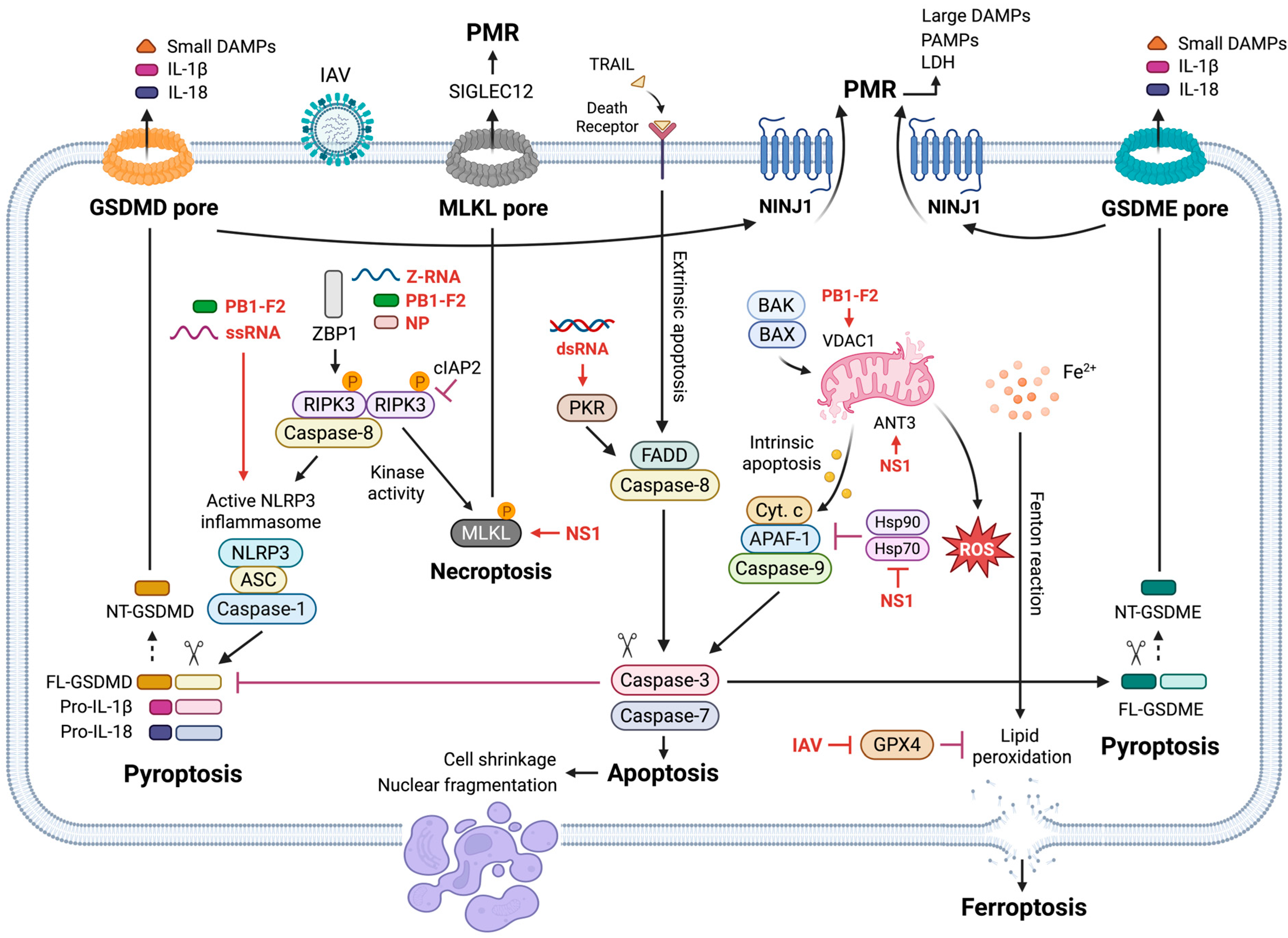
2. Programmed Cell Death During IAV Infection
2.1. Apoptosis: Intrinsic and Extrinsic Pathways
2.1.1. Intrinsic (Mitochondrial) Pathway
2.1.2. Extrinsic (Death Receptor) Pathway
2.2. Pyroptosis: Gasdermins D and E and NINJ1
2.2.1. GSDMD-Mediated Pyroptosis
2.2.2. GSDME-Mediated Pyroptosis
2.2.3. Terminal Membrane Rupture: NINJ1
2.3. Necroptosis: RIPK1/RIPK3/MLKL Signaling
ZBP1: The Necroptotic Trigger
2.4. Ferroptosis: An Emerging Contributor to IAV-Induced Lung Injury
2.5. Crosstalk and Functional Implications
3. Cell Death Responses During IAV Infection in Human Cells
3.1. Cell Tropism and Receptor Distribution
3.1.1. Receptor Distribution and Viral Entry
3.1.2. Key Cell Populations
3.2. Epithelial Cells
3.2.1. Cancer-Derived Epithelial Cell Lines
3.2.2. Primary and Immortalized Non-Cancerous Epithelial Cells
3.3. Myeloid Cells
Cancer-Derived Myeloid Lines and Human Blood-Derived Macrophages
3.4. Lung Structural Cells: Endothelial and Fibroblast Populations
3.4.1. Endothelial Cells
3.4.2. Fibroblasts
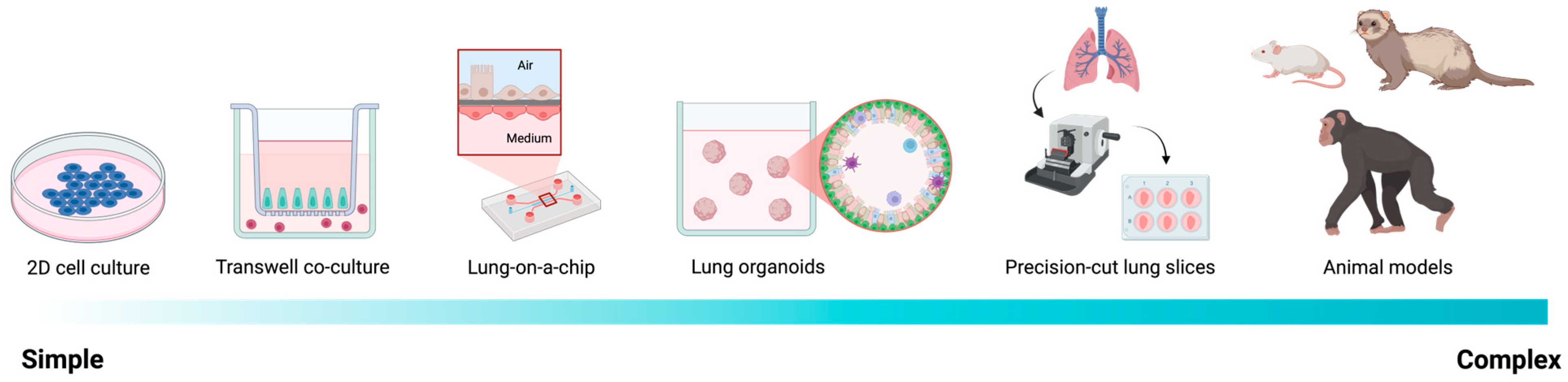
4. Advances In Vitro and Ex Vivo Models for Studying IAV-Induced Cell Death
4.1. Co-Culture Studies
4.2. Lung-on-Chip Technology
4.3. Lung Organoid Studies
4.4. Precision-Cut Lung Slices
5. Comparative Insights: PCD Profiling Across Human Model Systems
5.1. Model Origin: Cancer Versus Non-Cancer Monoculture
5.2. Cellular Context: Monoculture Versus Multicellular Systems
5.3. Dimensionality: 2D Cultures Versus 3D Organoids
5.4. Tissue Complexity: Engineered Systems Versus Native Lung Tissue
5.5. Temporal Scope: Short-Term Versus Extended Culture Models
6. Integrating Murine and Human Models: Divergences and Translation
6.1. Pyroptosis: GSDMD vs. GSDME Dominance
6.2. Terminal Execution of Necroptosis
6.3. Ferroptosis: An Emerging but Poorly Defined Pathway
6.4. PANoptosis and Pathway Redundancy
6.5. Strain-Specific Responses: Divergent Patterns Across Species
6.6. Temporal Dynamics
6.7. Translational and Therapeutic Implications
6.7.1. Clinical Insights from Human Models
6.7.2. Species-Specific Considerations
6.7.3. Emerging Role of Ferroptosis
7. Therapeutic Development: Validation Framework and Therapeutic Development
7.1. Limitations of Current Pharmacological Modulators

| Pathway | Inhibitor | Target | Status | Key Limitations |
|---|---|---|---|---|
| Necroptosis | Necrostatin-1 [169] | RIPK1 | Preclinical | Off-target effects, limited specificity, poor solubility. |
| Necroptosis | UH15-38 [62] | RIPK3 kinase activity | Preclinical | May incompletely inhibit necroptosis, limited validation in human models. |
| Necroptosis | GSK-872 [59] | RIPK3 | Preclinical | Cytotoxicity at higher concentrations; incomplete specificity. |
| Pyroptosis | Disulfiram [170] | GSDMD | FDA-approved (alcoholism) | Poor target selectivity, pleiotropic effects, poor solubility. |
| Pyroptosis | Dimethyl fumarate [165] | GSDMD/E | FDA-approved (multiple sclerosis) | Non-selective cysteine modification, pleiotropic immunomodulatory effects, poor solubility. |
| Pyroptosis | Necrosulfonamide [171] | GSDMD | Preclinical | Experimental tool compound, not clinically viable, poor solubility. |
| Inflammasome | MCC950 [172] | NLRP3 | Preclinical | Liver toxicity, limited clinical translation. |
| Inflammasome | ADS032 [160] | NLRP1/3 | Preclinical | Early-stage development. |
| Ferroptosis | Ferrostatin-1 [173] | Lipid peroxidation | Preclinical | Limited bioavailability, poor solubility. |
7.2. Emerging Technologies for PCD Pathway Mapping
7.3. Integrated Validation Pipeline and Therapeutic Strategy
8. Concluding Remarks
Author Contributions
Funding
Informed Consent Statement
Data Availability Statement
Acknowledgments
Conflicts of Interest
Abbreviations
| ALI | Air–liquid interface |
| AM | Alveolar macrophage |
| APAF1 | Apoptotic protease-activating factor 1 |
| ARDS | Acute respiratory distress syndrome |
| AT1/2 | Alveolar type 1/type 2 cells |
| CRISPR | Clustered regularly interspaced short palindromic repeats |
| DAMP | Damage-associated molecular pattern |
| DISC | Death-inducing signaling complexes |
| ECM | Extracellular matrix |
| FADD | Fas-associated death domain protein |
| FasL | Fas ligand |
| GPX4 | Glutathione peroxidase 4 |
| GSDMD | Gasdermin D |
| GSDME | Gasdermin E |
| HA | Hemagglutinin |
| HPAI | Highly pathogenic avian influenza |
| HSP70/90 | Heat shock proteins 70/90 |
| IAP | Inhibitor of apoptosis |
| IAV | Influenza A virus |
| IDO1 | Indoleamine 2,3-dioxygenase 1 |
| iPSC | Induced pluripotent stem cells |
| LDH | Lactate dehydrogenase |
| LUBAC | Linear ubiquitin chain assembly complex |
| M1 | Matrix protein 1 |
| MLKL | Mixed lineage kinase domain-like protein |
| NA | Neuraminidase |
| NINJ1 | Ninjurin-1 |
| NLRP3 | NOD-, LRR-, and pyrin domain-containing protein 3 |
| NP | Nuclear protein |
| NS1 | Nonstructural protein 1 |
| PAMP | Pathogen-associated molecular pattern |
| PARP | poly(ADP-ribose) polymerase |
| PB1-F2 | Polymerase basic protein 1 frame 2 |
| PBEC | Primary bronchial epithelial cell |
| PBMC | Peripheral blood mononuclear cells |
| PCD | Programmed cell death |
| PCLS | Precision-cut lung slice |
| PMR | Plasma membrane rupture |
| PR8 | Mouse-adapted A/Puerto Rico/8/1934 (H1N1) strain |
| RAGE | Receptor for advanced glycation end products |
| RHIM | RIP homotypic interaction motif |
| RIPK | Receptor-interacting protein kinase |
| ROS | Reactive oxygen species |
| SA | Sialic acid |
| SIGLEC12 | Sialic acid-binding immunoglobulin-like lectin 12 |
| ssRNA | Single-stranded ribonucleic acid |
| TRADD | TNFR1-associated death domain protein |
| TRAIL | TNF-related apoptosis-inducing ligand |
| ZBP1 | Z-DNA binding protein 1 |
References
- World Health Organization. Global Influenza Strategy 2019–2030. 2019. Available online: https://www.who.int/publications/i/item/9789241515320 (accessed on 12 February 2026).
- Glaser, L.; Stevens, J.; Zamarin, D.; Wilson, I.A.; Garcia-Sastre, A.; Tumpey, T.M.; Basler, C.F.; Taubenberger, J.K.; Palese, P. A single amino acid substitution in 1918 influenza virus hemagglutinin changes receptor binding specificity. J. Virol. 2005, 79, 11533–11536. [Google Scholar] [CrossRef]
- Scholtissek, C.; Rohde, W.; Von Hoyningen, V.; Rott, R. On the origin of the human influenza virus subtypes H2N2 and H3N2. Virology 1978, 87, 13–20. [Google Scholar] [CrossRef] [PubMed]
- Christman, M.C.; Kedwaii, A.; Xu, J.; Donis, R.O.; Lu, G. Pandemic (H1N1) 2009 virus revisited: An evolutionary retrospective. Infect. Genet. Evol. 2011, 11, 803–811. [Google Scholar] [CrossRef] [PubMed]
- Blais-Savoie, J.; Halajian, E.; Nirmalarajah, K.; Banete, A.; Corredor, J.C.; Kotwa, J.D.; Lee, Y.; Raj, S.; Sharif, S.; Mideo, N.; et al. Examining the Threat of H5N1 Highly Pathogenic Avian Influenza to Human Health. Chest 2025, in press. [Google Scholar] [CrossRef] [PubMed]
- Granata, G.; Simonsen, L.; Petrosillo, N.; Petersen, E. Mortality of H5N1 human infections might be due to H5N1 virus pneumonia and could decrease by switching receptor. Lancet Infect. Dis. 2024, 24, e544–e545. [Google Scholar] [CrossRef]
- Caserta, L.C.; Frye, E.A.; Butt, S.L.; Laverack, M.; Nooruzzaman, M.; Covaleda, L.M.; Thompson, A.C.; Koscielny, M.P.; Cronk, B.; Johnson, A.; et al. Spillover of highly pathogenic avian influenza H5N1 virus to dairy cattle. Nature 2024, 634, 669–676. [Google Scholar] [CrossRef]
- Mokalla, V.R.; Gundarapu, S.; Kaushik, R.S.; Rajput, M.; Tummala, H. Influenza Vaccines: Current Status, Adjuvant Strategies, and Efficacy. Vaccines 2025, 13, 962. [Google Scholar] [CrossRef]
- Hui, D.S.; Lee, N. Adjunctive therapies and immunomodulating agents for severe influenza. Influenza Other Respir. Viruses 2013, 7, 52–59. [Google Scholar] [CrossRef]
- Gao, Y.; Guyatt, G.; Uyeki, T.M.; Liu, M.; Chen, Y.; Zhao, Y.; Shen, Y.; Xu, J.; Zheng, Q.; Li, Z.; et al. Antivirals for treatment of severe influenza: A systematic review and network meta-analysis of randomised controlled trials. Lancet 2024, 404, 753–763. [Google Scholar] [CrossRef]
- Atkin-Smith, G.K.; Duan, M.; Chen, W.; Poon, I.K.H. The induction and consequences of Influenza A virus-induced cell death. Cell Death Dis. 2018, 9, 1002. [Google Scholar] [CrossRef]
- Laghlali, G.; Lawlor, K.E.; Tate, M.D. Die Another Way: Interplay between Influenza A Virus, Inflammation and Cell Death. Viruses 2020, 12, 401. [Google Scholar] [CrossRef]
- Sun, Y.; Liu, K. Mechanistic Insights into Influenza A Virus-Induced Cell Death and Emerging Treatment Strategies. Vet. Sci. 2024, 11, 555. [Google Scholar] [CrossRef] [PubMed]
- Zheng, Y.; Zhang, Y.; Chen, Y.; Deng, X.; Liu, B.; Xu, Q.; Qian, C.; Zhang, Z.; Wang, K.; Zeng, Y.; et al. Indoleamine 2,3-dioxygenase 1 drives epithelial cells ferroptosis in influenza-induced acute lung injury. Redox Biol. 2025, 81, 103572. [Google Scholar] [CrossRef] [PubMed]
- Zhirnov, O.P.; Klenk, H.D. Control of apoptosis in influenza virus-infected cells by up-regulation of Akt and p53 signaling. Apoptosis 2007, 12, 1419–1432. [Google Scholar] [CrossRef] [PubMed]
- Yu, H.; Sun, Y.; Zhang, J.; Zhang, W.; Liu, W.; Liu, P.; Liu, K.; Sun, J.; Liang, H.; Zhang, P.; et al. Influenza A virus infection activates caspase-8 to enhance innate antiviral immunity by cleaving CYLD and blocking TAK1 and RIG-I deubiquitination. Cell Mol. Life Sci. 2024, 81, 355. [Google Scholar] [CrossRef]
- Oltean, T.; Van San, E.; Divert, T.; Vanden Berghe, T.; Saelens, X.; Maelfait, J.; Takahashi, N.; Vandenabeele, P. Viral dosing of influenza A infection reveals involvement of RIPK3 and FADD, but not MLKL. Cell Death Dis. 2021, 12, 471. [Google Scholar] [CrossRef]
- Ishikawa, E.; Nakazawa, M.; Yoshinari, M.; Minami, M. Role of tumor necrosis factor-related apoptosis-inducing ligand in immune response to influenza virus infection in mice. J. Virol. 2005, 79, 7658–7663. [Google Scholar] [CrossRef]
- Ghavami, S.; Kerkhoff, C.; Los, M.; Hashemi, M.; Sorg, C.; Karami-Tehrani, F. Mechanism of apoptosis induced by S100A8/A9 in colon cancer cell lines: The role of ROS and the effect of metal ions. J. Leukoc. Biol. 2004, 76, 169–175. [Google Scholar] [CrossRef]
- Vogler, M.; Braun, Y.; Smith, V.M.; Westhoff, M.A.; Pereira, R.S.; Pieper, N.M.; Anders, M.; Callens, M.; Vervliet, T.; Abbas, M.; et al. The BCL2 family: From apoptosis mechanisms to new advances in targeted therapy. Signal Transduct. Target. Ther. 2025, 10, 91. [Google Scholar] [CrossRef]
- Riedl, S.J.; Salvesen, G.S. The apoptosome: Signalling platform of cell death. Nat. Rev. Mol. Cell Biol. 2007, 8, 405–413. [Google Scholar] [CrossRef]
- Liu, H.; Golebiewski, L.; Dow, E.C.; Krug, R.M.; Javier, R.T.; Rice, A.P. The ESEV PDZ-binding motif of the avian influenza A virus NS1 protein protects infected cells from apoptosis by directly targeting Scribble. J. Virol. 2010, 84, 11164–11174. [Google Scholar] [CrossRef] [PubMed]
- Zamarin, D.; Garcia-Sastre, A.; Xiao, X.; Wang, R.; Palese, P. Influenza virus PB1-F2 protein induces cell death through mitochondrial ANT3 and VDAC1. PLoS Pathog. 2005, 1, e4. [Google Scholar] [CrossRef] [PubMed]
- Halder, U.C.; Bagchi, P.; Chattopadhyay, S.; Dutta, D.; Chawla-Sarkar, M. Cell death regulation during influenza A virus infection by matrix (M1) protein: A model of viral control over the cellular survival pathway. Cell Death Dis. 2011, 2, e197. [Google Scholar] [CrossRef] [PubMed]
- Tripathi, S.; Batra, J.; Cao, W.; Sharma, K.; Patel, J.R.; Ranjan, P.; Kumar, A.; Katz, J.M.; Cox, N.J.; Lal, R.B.; et al. Influenza A virus nucleoprotein induces apoptosis in human airway epithelial cells: Implications of a novel interaction between nucleoprotein and host protein Clusterin. Cell Death Dis. 2013, 4, e562. [Google Scholar] [CrossRef]
- Zhang, C.; Yang, Y.; Zhou, X.; Yang, Z.; Liu, X.; Cao, Z.; Song, H.; He, Y.; Huang, P. The NS1 protein of influenza A virus interacts with heat shock protein Hsp90 in human alveolar basal epithelial cells: Implication for virus-induced apoptosis. Virol. J. 2011, 8, 181. [Google Scholar] [CrossRef]
- Mayank, A.K.; Sharma, S.; Nailwal, H.; Lal, S.K. Nucleoprotein of influenza A virus negatively impacts antiapoptotic protein API5 to enhance E2F1-dependent apoptosis and virus replication. Cell Death Dis. 2015, 6, e2018. [Google Scholar] [CrossRef]
- Micheau, O.; Tschopp, J. Induction of TNF receptor I-mediated apoptosis via two sequential signaling complexes. Cell 2003, 114, 181–190. [Google Scholar] [CrossRef]
- Fullsack, S.; Rosenthal, A.; Wajant, H.; Siegmund, D. Redundant and receptor-specific activities of TRADD, RIPK1 and FADD in death receptor signaling. Cell Death Dis. 2019, 10, 122. [Google Scholar] [CrossRef]
- Li, H.; Zhu, H.; Xu, C.J.; Yuan, J. Cleavage of BID by caspase 8 mediates the mitochondrial damage in the Fas pathway of apoptosis. Cell 1998, 94, 491–501. [Google Scholar] [CrossRef]
- Micheau, O.; Thome, M.; Schneider, P.; Holler, N.; Tschopp, J.; Nicholson, D.W.; Briand, C.; Grutter, M.G. The long form of FLIP is an activator of caspase-8 at the Fas death-inducing signaling complex. J. Biol. Chem. 2002, 277, 45162–45171. [Google Scholar] [CrossRef]
- Haas, T.L.; Emmerich, C.H.; Gerlach, B.; Schmukle, A.C.; Cordier, S.M.; Rieser, E.; Feltham, R.; Vince, J.; Warnken, U.; Wenger, T.; et al. Recruitment of the linear ubiquitin chain assembly complex stabilizes the TNF-R1 signaling complex and is required for TNF-mediated gene induction. Mol. Cell 2009, 36, 831–844. [Google Scholar] [CrossRef] [PubMed]
- Geng, J.; Ito, Y.; Shi, L.; Amin, P.; Chu, J.; Ouchida, A.T.; Mookhtiar, A.K.; Zhao, H.; Xu, D.; Shan, B.; et al. Regulation of RIPK1 activation by TAK1-mediated phosphorylation dictates apoptosis and necroptosis. Nat. Commun. 2017, 8, 359. [Google Scholar] [CrossRef] [PubMed]
- Pasparakis, M.; Vandenabeele, P. Necroptosis and its role in inflammation. Nature 2015, 517, 311–320. [Google Scholar] [CrossRef] [PubMed]
- Tenev, T.; Bianchi, K.; Darding, M.; Broemer, M.; Langlais, C.; Wallberg, F.; Zachariou, A.; Lopez, J.; MacFarlane, M.; Cain, K.; et al. The Ripoptosome, a signaling platform that assembles in response to genotoxic stress and loss of IAPs. Mol. Cell 2011, 43, 432–448. [Google Scholar] [CrossRef]
- Brincks, E.L.; Kucaba, T.A.; Legge, K.L.; Griffith, T.S. Influenza-induced expression of functional tumor necrosis factor-related apoptosis-inducing ligand on human peripheral blood mononuclear cells. Hum. Immunol. 2008, 69, 634–646. [Google Scholar] [CrossRef]
- Nelli, R.K.; Dunham, S.P.; Kuchipudi, S.V.; White, G.A.; Baquero-Perez, B.; Chang, P.; Ghaemmaghami, A.; Brookes, S.M.; Brown, I.H.; Chang, K.C. Mammalian innate resistance to highly pathogenic avian influenza H5N1 virus infection is mediated through reduced proinflammation and infectious virus release. J. Virol. 2012, 86, 9201–9210. [Google Scholar] [CrossRef]
- Herold, S.; Steinmueller, M.; von Wulffen, W.; Cakarova, L.; Pinto, R.; Pleschka, S.; Mack, M.; Kuziel, W.A.; Corazza, N.; Brunner, T.; et al. Lung epithelial apoptosis in influenza virus pneumonia: The role of macrophage-expressed TNF-related apoptosis-inducing ligand. J. Exp. Med. 2008, 205, 3065–3077. [Google Scholar] [CrossRef]
- Fujikura, D.; Chiba, S.; Muramatsu, D.; Kazumata, M.; Nakayama, Y.; Kawai, T.; Akira, S.; Kida, H.; Miyazaki, T. Type-I interferon is critical for FasL expression on lung cells to determine the severity of influenza. PLoS ONE 2013, 8, e55321. [Google Scholar] [CrossRef]
- Bergsbaken, T.; Fink, S.L.; Cookson, B.T. Pyroptosis: Host cell death and inflammation. Nat. Rev. Microbiol. 2009, 7, 99–109. [Google Scholar] [CrossRef]
- Newton, K.; Dixit, V.M.; Kayagaki, N. Dying cells fan the flames of inflammation. Science 2021, 374, 1076–1080. [Google Scholar] [CrossRef]
- Huston, H.C.; Anderson, M.J.; Fink, S.L. Pyroptosis and the cellular consequences of gasdermin pores. Semin. Immunol. 2023, 69, 101803. [Google Scholar] [CrossRef] [PubMed]
- Rosli, S.; Ambrose, R.L.; Harpur, C.M.; Lam, M.; Hodges, C.; Barry, K.T.; West, A.C.; Mansell, A.; Lawlor, K.E.; Tate, M.D. Gasdermin E deficiency limits inflammation and lung damage during influenza virus infection. Cell Death Dis. 2025, 16, 440. [Google Scholar] [CrossRef] [PubMed]
- Rosli, S.; Harpur, C.M.; Lam, M.; West, A.C.; Hodges, C.; Mansell, A.; Lawlor, K.E.; Tate, M.D. Gasdermin D promotes hyperinflammation and immunopathology during severe influenza A virus infection. Cell Death Dis. 2023, 14, 727. [Google Scholar] [CrossRef] [PubMed]
- Wan, X.; Li, J.; Wang, Y.; Yu, X.; He, X.; Shi, J.; Deng, G.; Zeng, X.; Tian, G.; Li, Y.; et al. H7N9 virus infection triggers lethal cytokine storm by activating gasdermin E-mediated pyroptosis of lung alveolar epithelial cells. Natl. Sci. Rev. 2022, 9, nwab137. [Google Scholar] [CrossRef]
- Speaks, S.; McFadden, M.I.; Zani, A.; Solstad, A.; Leumi, S.; Roettger, J.E.; Kenney, A.D.; Bone, H.; Zhang, L.; Denz, P.J.; et al. Gasdermin D promotes influenza virus-induced mortality through neutrophil amplification of inflammation. Nat. Commun. 2024, 15, 2751. [Google Scholar] [CrossRef]
- Shi, J.; Zhao, Y.; Wang, K.; Shi, X.; Wang, Y.; Huang, H.; Zhuang, Y.; Cai, T.; Wang, F.; Shao, F. Cleavage of GSDMD by inflammatory caspases determines pyroptotic cell death. Nature 2015, 526, 660–665. [Google Scholar] [CrossRef]
- Kayagaki, N.; Stowe, I.B.; Lee, B.L.; O’Rourke, K.; Anderson, K.; Warming, S.; Cuellar, T.; Haley, B.; Roose-Girma, M.; Phung, Q.T.; et al. Caspase-11 cleaves gasdermin D for non-canonical inflammasome signalling. Nature 2015, 526, 666–671. [Google Scholar] [CrossRef]
- Lee, S.; Hirohama, M.; Noguchi, M.; Nagata, K.; Kawaguchi, A. Influenza A Virus Infection Triggers Pyroptosis and Apoptosis of Respiratory Epithelial Cells through the Type I Interferon Signaling Pathway in a Mutually Exclusive Manner. J. Virol. 2018, 92, e00396-18. [Google Scholar] [CrossRef]
- Rogers, C.; Fernandes-Alnemri, T.; Mayes, L.; Alnemri, D.; Cingolani, G.; Alnemri, E.S. Cleavage of DFNA5 by caspase-3 during apoptosis mediates progression to secondary necrotic/pyroptotic cell death. Nat. Commun. 2017, 8, 14128. [Google Scholar] [CrossRef]
- Guy, C.; Baran, M.; Ribo-Molina, P.; van den Hoogen, B.G.; Bowie, A.G. Viral sensing by epithelial cells involves PKR- and caspase-3-dependent generation of gasdermin E pores. iScience 2023, 26, 107698. [Google Scholar] [CrossRef]
- Kayagaki, N.; Kornfeld, O.S.; Lee, B.L.; Stowe, I.B.; O’Rourke, K.; Li, Q.; Sandoval, W.; Yan, D.; Kang, J.; Xu, M.; et al. NINJ1 mediates plasma membrane rupture during lytic cell death. Nature 2021, 591, 131–136. [Google Scholar] [CrossRef] [PubMed]
- Xu, Y.; Zheng, Y.; Liu, Y.; Wei, C.; Ren, J.; Zuo, W.; Gu, R.; Liu, H.; Deng, X.; Liu, Y.; et al. Ninjurin-1 mediates cell lysis and detrimental inflammation of PANoptosis during influenza A virus infection. Signal Transduct. Target. Ther. 2025, 10, 307. [Google Scholar] [CrossRef] [PubMed]
- Johnston, A.; Wang, Z. Necroptosis: MLKL Polymerization. J. Nat. Sci. 2018, 4, e513. [Google Scholar] [PubMed]
- Scaffidi, P.; Misteli, T.; Bianchi, M.E. Release of chromatin protein HMGB1 by necrotic cells triggers inflammation. Nature 2002, 418, 191–195. [Google Scholar] [CrossRef]
- Noh, H.; Hashem, Z.; Boms, E.; Najafov, A. SIGLEC12 mediates plasma membrane rupture during necroptotic cell death. Nature 2025, 649, 460–466. [Google Scholar] [CrossRef]
- Zhang, T.; Yin, C.; Boyd, D.F.; Quarato, G.; Ingram, J.P.; Shubina, M.; Ragan, K.B.; Ishizuka, T.; Crawford, J.C.; Tummers, B.; et al. Influenza Virus Z-RNAs Induce ZBP1-Mediated Necroptosis. Cell 2020, 180, 1115–1129 e13. [Google Scholar] [CrossRef]
- Thapa, R.J.; Ingram, J.P.; Ragan, K.B.; Nogusa, S.; Boyd, D.F.; Benitez, A.A.; Sridharan, H.; Kosoff, R.; Shubina, M.; Landsteiner, V.J.; et al. DAI Senses Influenza A Virus Genomic RNA and Activates RIPK3-Dependent Cell Death. Cell Host Microbe 2016, 20, 674–681. [Google Scholar] [CrossRef]
- Kaiser, W.J.; Sridharan, H.; Huang, C.; Mandal, P.; Upton, J.W.; Gough, P.J.; Sehon, C.A.; Marquis, R.W.; Bertin, J.; Mocarski, E.S. Toll-like receptor 3-mediated necrosis via TRIF, RIP3, and MLKL. J. Biol. Chem. 2013, 288, 31268–31279. [Google Scholar] [CrossRef]
- Gaba, A.; Xu, F.; Lu, Y.; Park, H.S.; Liu, G.; Zhou, Y. The NS1 Protein of Influenza A Virus Participates in Necroptosis by Interacting with MLKL and Increasing Its Oligomerization and Membrane Translocation. J. Virol. 2019, 93, e01835-18. [Google Scholar] [CrossRef]
- Sun, Y.; Ji, L.; Liu, W.; Sun, J.; Liu, P.; Wang, X.; Liu, X.; Xu, X. Influenza virus infection activates TAK1 to suppress RIPK3-independent apoptosis and RIPK1-dependent necroptosis. Cell Commun. Signal 2024, 22, 372. [Google Scholar] [CrossRef]
- Gautam, A.; Boyd, D.F.; Nikhar, S.; Zhang, T.; Siokas, I.; Van de Velde, L.A.; Gaevert, J.; Meliopoulos, V.; Thapa, B.; Rodriguez, D.A.; et al. Necroptosis blockade prevents lung injury in severe influenza. Nature 2024, 628, 835–843. [Google Scholar] [CrossRef] [PubMed]
- Nogusa, S.; Thapa, R.J.; Dillon, C.P.; Liedmann, S.; Oguin, T.H., 3rd; Ingram, J.P.; Rodriguez, D.A.; Kosoff, R.; Sharma, S.; Sturm, O.; et al. RIPK3 Activates Parallel Pathways of MLKL-Driven Necroptosis and FADD-Mediated Apoptosis to Protect against Influenza A Virus. Cell Host Microbe 2016, 20, 13–24. [Google Scholar] [CrossRef] [PubMed]
- Shubina, M.; Tummers, B.; Boyd, D.F.; Zhang, T.; Yin, C.; Gautam, A.; Guo, X.J.; Rodriguez, D.A.; Kaiser, W.J.; Vogel, P.; et al. Necroptosis restricts influenza A virus as a stand-alone cell death mechanism. J. Exp. Med. 2020, 217, e20191259. [Google Scholar] [CrossRef] [PubMed]
- Tang, D.; Chen, X.; Kang, R.; Kroemer, G. Ferroptosis: Molecular mechanisms and health implications. Cell Res. 2021, 31, 107–125. [Google Scholar] [CrossRef]
- Ren, R.; Wu, S.; Cai, J.; Yang, Y.; Ren, X.; Feng, Y.; Chen, L.; Qin, B.; Xu, C.; Yang, H.; et al. The H7N9 influenza A virus infection results in lethal inflammation in the mammalian host via the NLRP3-caspase-1 inflammasome. Sci. Rep. 2017, 7, 7625. [Google Scholar] [CrossRef]
- Rodrigue-Gervais, I.G.; Labbe, K.; Dagenais, M.; Dupaul-Chicoine, J.; Champagne, C.; Morizot, A.; Skeldon, A.; Brincks, E.L.; Vidal, S.M.; Griffith, T.S.; et al. Cellular inhibitor of apoptosis protein cIAP2 protects against pulmonary tissue necrosis during influenza virus infection to promote host survival. Cell Host Microbe 2014, 15, 23–35. [Google Scholar] [CrossRef]
- Taabazuing, C.Y.; Okondo, M.C.; Bachovchin, D.A. Pyroptosis and Apoptosis Pathways Engage in Bidirectional Crosstalk in Monocytes and Macrophages. Cell Chem. Biol. 2017, 24, 507–514 e4. [Google Scholar] [CrossRef]
- Zhou, B.; Abbott, D.W. Gasdermin E permits interleukin-1 beta release in distinct sublytic and pyroptotic phases. Cell Rep. 2021, 35, 108998. [Google Scholar] [CrossRef]
- Malireddi, R.K.S.; Kanneganti, T.D. Three decades of caspases and RIPKs in life and death. Hum. Mol. Genet. 2025, 34, R121–R136. [Google Scholar] [CrossRef]
- Eskander, G.; Abdelhamid, S.G.; Wahdan, S.A.; Radwan, S.M. Insights on the crosstalk among different cell death mechanisms. Cell Death Discov. 2025, 11, 56. [Google Scholar] [CrossRef]
- Liang, J.J.; Fraser, I.D.C.; Bryant, C.E. Lipid regulation of NLRP3 inflammasome activity through organelle stress. Trends Immunol. 2021, 42, 807–823. [Google Scholar] [CrossRef] [PubMed]
- Lin, X.; Wang, R.; Zou, W.; Sun, X.; Liu, X.; Zhao, L.; Wang, S.; Jin, M. The Influenza Virus H5N1 Infection Can Induce ROS Production for Viral Replication and Host Cell Death in A549 Cells Modulated by Human Cu/Zn Superoxide Dismutase (SOD1) Overexpression. Viruses 2016, 8, 13. [Google Scholar] [CrossRef] [PubMed]
- Fernandez, M.V.; Miller, E.; Krammer, F.; Gopal, R.; Greenbaum, B.D.; Bhardwaj, N. Ion efflux and influenza infection trigger NLRP3 inflammasome signaling in human dendritic cells. J. Leukoc. Biol. 2016, 99, 723–734. [Google Scholar] [CrossRef] [PubMed]
- Ju, X.; Yan, Y.; Liu, Q.; Li, N.; Sheng, M.; Zhang, L.; Li, X.; Liang, Z.; Huang, F.; Liu, K.; et al. Neuraminidase of Influenza A Virus Binds Lysosome-Associated Membrane Proteins Directly and Induces Lysosome Rupture. J. Virol. 2015, 89, 10347–10358. [Google Scholar] [CrossRef]
- Oberst, A.; Dillon, C.P.; Weinlich, R.; McCormick, L.L.; Fitzgerald, P.; Pop, C.; Hakem, R.; Salvesen, G.S.; Green, D.R. Catalytic activity of the caspase-8-FLIP(L) complex inhibits RIPK3-dependent necrosis. Nature 2011, 471, 363–367. [Google Scholar] [CrossRef]
- Rogers, G.N.; Paulson, J.C. Receptor determinants of human and animal influenza virus isolates: Differences in receptor specificity of the H3 hemagglutinin based on species of origin. Virology 1983, 127, 361–373. [Google Scholar] [CrossRef]
- Praena, B.; Wan, X.F. Influenza Virus Infections in Polarized Cells. Viruses 2022, 14, 1307. [Google Scholar] [CrossRef]
- Tate, M.D.; Schilter, H.C.; Brooks, A.G.; Reading, P.C. Responses of mouse airway epithelial cells and alveolar macrophages to virulent and avirulent strains of influenza A virus. Viral Immunol. 2011, 24, 77–88. [Google Scholar] [CrossRef]
- Thomas, B.J.; Porritt, R.A.; Hertzog, P.J.; Bardin, P.G.; Tate, M.D. Glucocorticosteroids enhance replication of respiratory viruses: Effect of adjuvant interferon. Sci. Rep. 2014, 4, 7176. [Google Scholar] [CrossRef]
- Bodnar-Wachtel, M.; Huber, A.L.; Gorry, J.; Hacot, S.; Burlet, D.; Gerossier, L.; Guey, B.; Goutagny, N.; Bartosch, B.; Ballot, E.; et al. Inflammasome-independent NLRP3 function enforces ATM activity in response to genotoxic stress. Life Sci. Alliance 2023, 6, e202201494. [Google Scholar] [CrossRef]
- Gao, J.; Qiu, X.; Xi, G.; Liu, H.; Zhang, F.; Lv, T.; Song, Y. Downregulation of GSDMD attenuates tumor proliferation via the intrinsic mitochondrial apoptotic pathway and inhibition of EGFR/Akt signaling and predicts a good prognosis in non-small cell lung cancer. Oncol. Rep. 2018, 40, 1971–1984. [Google Scholar] [CrossRef] [PubMed]
- Rao, X.; Zhou, D.; Deng, H.; Chen, Y.; Wang, J.; Zhou, X.; Jie, X.; Xu, Y.; Wu, Z.; Wang, G.; et al. Activation of NLRP3 inflammasome in lung epithelial cells triggers radiation-induced lung injury. Respir. Res. 2023, 24, 25. [Google Scholar] [CrossRef] [PubMed]
- Al Heialy, S.; Hachim, M.Y.; Hachim, I.Y.; Hamoudi, R.; Hamid, Q. Identification of unique immune response expression profiles to SARS-CoV-2 in non-small cell lung cancer using systems immunology approach. Adv. Biomed. Health Sci. 2022, 1, 79–91. [Google Scholar] [CrossRef]
- Thomas, K.J.; Jacobson, M.R. Defects in mitochondrial fission protein dynamin-related protein 1 are linked to apoptotic resistance and autophagy in a lung cancer model. PLoS ONE 2012, 7, e45319. [Google Scholar] [CrossRef]
- Li, M.; Li, A.; Huang, H.; Munson, J.; Obadan, A.; Fuller, D.H.; Adams Waldorf, K.M. Impact of progesterone on innate immunity and cell death after influenza A virus H1N1 2009 infection of lung and placental cells in vitro. Front. Virol. 2022, 2, 953208. [Google Scholar] [CrossRef]
- Yang, N.; Hong, X.; Yang, P.; Ju, X.; Wang, Y.; Tang, J.; Li, C.; Fan, Q.; Zhang, F.; Chen, Z.; et al. The 2009 pandemic A/Wenshan/01/2009 H1N1 induces apoptotic cell death in human airway epithelial cells. J. Mol. Cell Biol. 2011, 3, 221–229. [Google Scholar] [CrossRef]
- Yeganeh, B.; Ghavami, S.; Rahim, M.N.; Klonisch, T.; Halayko, A.J.; Coombs, K.M. Autophagy activation is required for influenza A virus-induced apoptosis and replication. Biochim. Biophys. Acta Mol. Cell Res. 2018, 1865, 364–378. [Google Scholar] [CrossRef]
- Vidic, J.; Richard, C.A.; Pechoux, C.; Da Costa, B.; Bertho, N.; Mazerat, S.; Delmas, B.; Chevalier, C. Amyloid Assemblies of Influenza A Virus PB1-F2 Protein Damage Membrane and Induce Cytotoxicity. J. Biol. Chem. 2016, 291, 739–751. [Google Scholar] [CrossRef]
- Lam, W.Y.; Tang, J.W.; Yeung, A.C.; Chiu, L.C.; Sung, J.J.; Chan, P.K. Avian influenza virus A/HK/483/97(H5N1) NS1 protein induces apoptosis in human airway epithelial cells. J. Virol. 2008, 82, 2741–2751. [Google Scholar] [CrossRef]
- Cheng, J.; Tao, J.; Li, B.; Shi, Y.; Liu, H. Swine influenza virus triggers ferroptosis in A549 cells to enhance virus replication. Virol. J. 2022, 19, 104. [Google Scholar] [CrossRef]
- Liu, W.; Chakraborty, B.; Safi, R.; Kazmin, D.; Chang, C.Y.; McDonnell, D.P. Dysregulated cholesterol homeostasis results in resistance to ferroptosis increasing tumorigenicity and metastasis in cancer. Nat. Commun. 2021, 12, 5103. [Google Scholar] [CrossRef] [PubMed]
- Saydam, N.; Kirb, A.; Demir, O.; Hazan, E.; Oto, O.; Saydam, O.; Guner, G. Determination of glutathione, glutathione reductase, glutathione peroxidase and glutathione S-transferase levels in human lung cancer tissues. Cancer Lett. 1997, 119, 13–19. [Google Scholar] [CrossRef] [PubMed]
- Vilaplana-Lopera, N.; Kim, J.; Nam, G.; Tullis, I.D.C.; Paillas, S.; Ruan, J.L.; Lee, P.J.; Jiang, Y.; Park, S.; Hou, T.; et al. Tissue-specific iron levels modulate lipid peroxidation and the FLASH radiotherapy effect. Cell Death Dis. 2025, 16, 668. [Google Scholar] [CrossRef] [PubMed]
- Harpur, C.M.; West, A.C.; Le Page, M.A.; Lam, M.; Hodges, C.; Oseghale, O.; Gearing, A.J.; Tate, M.D. Naturally derived cytokine peptides limit virus replication and severe disease during influenza A virus infection. Clin. Transl. Immunol. 2023, 12, e1443. [Google Scholar] [CrossRef]
- Londrigan, S.L.; Short, K.R.; Ma, J.; Gillespie, L.; Rockman, S.P.; Brooks, A.G.; Reading, P.C. Infection of Mouse Macrophages by Seasonal Influenza Viruses Can Be Restricted at the Level of Virus Entry and at a Late Stage in the Virus Life Cycle. J. Virol. 2015, 89, 12319–12329. [Google Scholar] [CrossRef]
- David, C.; Verney, C.; Si-Tahar, M.; Guillon, A. The deadly dance of alveolar macrophages and influenza virus. Eur. Respir. Rev. 2024, 33, 240132. [Google Scholar] [CrossRef]
- Short, K.R.; Brooks, A.G.; Reading, P.C.; Londrigan, S.L. The fate of influenza A virus after infection of human macrophages and dendritic cells. J. Gen. Virol. 2012, 93, 2315–2325. [Google Scholar] [CrossRef]
- Hoeve, M.A.; Nash, A.A.; Jackson, D.; Randall, R.E.; Dransfield, I. Influenza virus A infection of human monocyte and macrophage subpopulations reveals increased susceptibility associated with cell differentiation. PLoS ONE 2012, 7, e29443. [Google Scholar] [CrossRef]
- Yu, W.C.; Chan, R.W.; Wang, J.; Travanty, E.A.; Nicholls, J.M.; Peiris, J.S.; Mason, R.J.; Chan, M.C. Viral replication and innate host responses in primary human alveolar epithelial cells and alveolar macrophages infected with influenza H5N1 and H1N1 viruses. J. Virol. 2011, 85, 6844–6855. [Google Scholar] [CrossRef]
- Ferreira, A.C.; Sacramento, C.Q.; Pereira-Dutra, F.S.; Fintelman-Rodrigues, N.; Silva, P.P.; Mattos, M.; de Freitas, C.S.; Marttorelli, A.; de Melo, G.R.; Campos, M.M.; et al. Severe influenza infection is associated with inflammatory programmed cell death in infected macrophages. Front. Cell. Infect. Microbiol. 2023, 13, 1067285. [Google Scholar] [CrossRef]
- Choudhury, S.M.; Sarkar, R.; Karki, R.; Kanneganti, T.D. A comparative study of apoptosis, pyroptosis, necroptosis, and PANoptosis components in mouse and human cells. PLoS ONE 2024, 19, e0299577. [Google Scholar] [CrossRef] [PubMed]
- Boal-Carvalho, I.; Mazel-Sanchez, B.; Silva, F.; Garnier, L.; Yildiz, S.; Bonifacio, J.P.; Niu, C.; Williams, N.; Francois, P.; Schwerk, N.; et al. Influenza A viruses limit NLRP3-NEK7-complex formation and pyroptosis in human macrophages. EMBO Rep. 2020, 21, e50421. [Google Scholar] [CrossRef] [PubMed]
- Sokolova, T.M.; Poloskov, V.V.; Shuvalov, A.N.; Rudneva, I.A.; Timofeeva, T.A. Signal Immune Reactions of Macrophages Differentiated from THP-1 Monocytes to Infection with Pandemic H1N1PDM09 Virus and H5N2 and H9N2 Avian Influenza A Virus. Bull. Exp. Biol. Med. 2018, 164, 636–640. [Google Scholar] [CrossRef] [PubMed]
- De La Cruz, J.A.; Ganesh, T.; Diebold, B.A.; Cao, W.; Hofstetter, A.; Singh, N.; Kumar, A.; McCoy, J.; Ranjan, P.; Smith, S.M.E.; et al. Quinazolin-derived myeloperoxidase inhibitor suppresses influenza A virus-induced reactive oxygen species, pro-inflammatory mediators and improves cell survival. PLoS ONE 2021, 16, e0254632. [Google Scholar] [CrossRef]
- Daigneault, M.; Preston, J.A.; Marriott, H.M.; Whyte, M.K.; Dockrell, D.H. The identification of markers of macrophage differentiation in PMA-stimulated THP-1 cells and monocyte-derived macrophages. PLoS ONE 2010, 5, e8668. [Google Scholar] [CrossRef]
- Lee, D.C.; Law, A.H.; Hui, K.; Tam, A.H.; Peiris, J.S.; Lau, A.S. Interferon dysregulation and virus-induced cell death in avian influenza H5N1 virus infections. Hong Kong Med. J. 2012, 18, 12–16. [Google Scholar]
- Armstrong, S.M.; Darwish, I.; Lee, W.L. Endothelial activation and dysfunction in the pathogenesis of influenza A virus infection. Virulence 2013, 4, 537–542. [Google Scholar] [CrossRef]
- Zeng, H.; Pappas, C.; Belser, J.A.; Houser, K.V.; Zhong, W.; Wadford, D.A.; Stevens, T.; Balczon, R.; Katz, J.M.; Tumpey, T.M. Human pulmonary microvascular endothelial cells support productive replication of highly pathogenic avian influenza viruses: Possible involvement in the pathogenesis of human H5N1 virus infection. J. Virol. 2012, 86, 667–678. [Google Scholar] [CrossRef]
- Higazy, D.; Lin, X.; Xie, T.; Wang, K.; Gao, X.; Cui, M. Altered gene expression in human brain microvascular endothelial cells in response to the infection of influenza H1N1 virus. Anim. Dis. 2022, 2, 25. [Google Scholar] [CrossRef]
- Yang, S.; Fan, Z.; Lu, X.; Liu, H.; Zhou, Z.; Qi, H.; Zeng, J.; Zheng, M.; Zou, X.; Fang, S.; et al. Response of Human Retinal Microvascular Endothelial Cells to Influenza A (H1N1) Infection and the Underlying Molecular Mechanism. Invest. Ophthalmol. Vis. Sci. 2024, 65, 38. [Google Scholar] [CrossRef]
- Zeng, H.; Belser, J.A.; Goldsmith, C.S.; Gustin, K.M.; Veguilla, V.; Katz, J.M.; Tumpey, T.M. A(H7N9) virus results in early induction of proinflammatory cytokine responses in both human lung epithelial and endothelial cells and shows increased human adaptation compared with avian H5N1 virus. J. Virol. 2015, 89, 4655–4667. [Google Scholar] [CrossRef] [PubMed]
- Xu, X.; Zhang, Q.; Lv, Z.; Cheng, C.; Zha, J.; Shu, H.; Xiao, H.; Pan, S. Unraveling the deadly dance: Endothelial cells and neutrophils in sepsis-induced acute lung injury/acute respiratory distress syndrome. Front. Cell Dev. Biol. 2025, 13, 1551138. [Google Scholar] [CrossRef] [PubMed]
- Armstrong, S.M.; Wang, C.; Tigdi, J.; Si, X.; Dumpit, C.; Charles, S.; Gamage, A.; Moraes, T.J.; Lee, W.L. Influenza infects lung microvascular endothelium leading to microvascular leak: Role of apoptosis and claudin-5. PLoS ONE 2012, 7, e47323. [Google Scholar] [CrossRef] [PubMed]
- Sumikoshi, M.; Hashimoto, K.; Kawasaki, Y.; Sakuma, H.; Suzutani, T.; Suzuki, H.; Hosoya, M. Human influenza virus infection and apoptosis induction in human vascular endothelial cells. J. Med. Virol. 2008, 80, 1072–1078. [Google Scholar] [CrossRef]
- Namba, T.; Tsuge, M.; Yashiro, M.; Saito, Y.; Liu, K.; Nishibori, M.; Morishima, T.; Tsukahara, H. Anti-high mobility group box 1 monoclonal antibody suppressed hyper-permeability and cytokine production in human pulmonary endothelial cells infected with influenza A virus. Inflamm. Res. 2021, 70, 1101–1111. [Google Scholar] [CrossRef]
- Han, T.; Lai, Y.; Jiang, Y.; Liu, X.; Li, D. Influenza A virus infects pulmonary microvascular endothelial cells leading to microvascular leakage and release of pro-inflammatory cytokines. PeerJ 2021, 9, e11892. [Google Scholar] [CrossRef]
- Kim, H.S.; Lee, H.; Kim, H.S.; Won, S.; Lee, E.K.; Bang, K.; Chun, Y.H.; Yoon, J.S.; Kim, H.H.; Kim, J.T. Effect of Influenza Virus Infection in a Murine Model of Asthma. Iran. J. Allergy Asthma Immunol. 2015, 14, 392–401. [Google Scholar]
- Bauer, L.; Rijsbergen, L.C.; Leijten, L.; Benavides, F.F.; Noack, D.; Lamers, M.M.; Haagmans, B.L.; de Vries, R.D.; de Swart, R.L.; van Riel, D. The pro-inflammatory response to influenza A virus infection is fueled by endothelial cells. Life Sci. Alliance 2023, 6, e202201837. [Google Scholar] [CrossRef]
- Short, K.R.; Kasper, J.; van der Aa, S.; Andeweg, A.C.; Zaaraoui-Boutahar, F.; Goeijenbier, M.; Richard, M.; Herold, S.; Becker, C.; Scott, D.P.; et al. Influenza virus damages the alveolar barrier by disrupting epithelial cell tight junctions. Eur. Respir. J. 2016, 47, 954–966. [Google Scholar] [CrossRef]
- Marshall, R.J.; Armart, P.; Hulme, K.D.; Chew, K.Y.; Brown, A.C.; Hansbro, P.M.; Bloxham, C.J.; Flint, M.; Ronacher, K.; Bielefeldt-Ohmann, H.; et al. Glycemic Variability in Diabetes Increases the Severity of Influenza. mBio 2020, 11, e02841-19. [Google Scholar] [CrossRef]
- Wang, P.; Luo, R.; Zhang, M.; Wang, Y.; Song, T.; Tao, T.; Li, Z.; Jin, L.; Zheng, H.; Chen, W.; et al. A cross-talk between epithelium and endothelium mediates human alveolar-capillary injury during SARS-CoV-2 infection. Cell Death Dis. 2020, 11, 1042. [Google Scholar] [CrossRef] [PubMed]
- Srivastava, S.K.; Foo, G.W.; Aggarwal, N.; Chang, M.W. Organ-on-chip technology: Opportunities and challenges. Biotechnol. Notes 2024, 5, 8–12. [Google Scholar] [CrossRef] [PubMed]
- Brugger, M.; Machahua, C.; Zumkehr, T.; Cismaru, C.; Jandrasits, D.; Trueb, B.; Ezzat, S.; Oliveira Esteves, B.I.; Dorn, P.; Marti, T.M.; et al. Aging shapes infection profiles of influenza A virus and SARS-CoV-2 in human precision-cut lung slices. Respir. Res. 2025, 26, 112. [Google Scholar] [CrossRef] [PubMed]
- Bai, H.; Si, L.; Jiang, A.; Belgur, C.; Zhai, Y.; Plebani, R.; Oh, C.Y.; Rodas, M.; Patil, A.; Nurani, A.; et al. Mechanical control of innate immune responses against viral infection revealed in a human lung alveolus chip. Nat. Commun. 2022, 13, 1928. [Google Scholar] [CrossRef]
- Gu, S.; Pan, P.; Wang, J.; Shi, Y.; Shi, F.; Zhang, Y.; Guan, W.; Cao, Y.; Qin, H.; Wang, Q.; et al. Exploring Influenza A Virus-Induced Lung Injury and Immune Response Based on Humanized Lung-on-Chip. Discov. Med. 2023, 35, 539–552. [Google Scholar] [CrossRef]
- Ringquist, R.; Bhatia, E.; Chatterjee, P.; Maniar, D.; Fang, Z.; Franz, P.; Kramer, L.; Ghoshal, D.; Sonthi, N.; Downey, E.; et al. An immune-competent lung-on-a-chip for modelling the human severe influenza infection response. Nat. Biomed. Eng. 2025. [Google Scholar] [CrossRef]
- Man, Y.; Posey, R.R.; Bai, H.; Jiang, A.; Dosta, P.; Ocampo-Alvarado, D.; Plebani, R.; Ji, J.; Belgur, C.; Artzi, N.; et al. Preclinical assessment of pan-influenza A virus CRISPR RNA therapeutics in a human lung alveolus chip. Lab Chip 2025, 25, 5240–5254. [Google Scholar] [CrossRef]
- Li, J.; Yang, W.; Liu, X.; Yang, K.; Zhou, J.; Yang, X. Research progress of lung organoids in infectious respiratory diseases. Eur. J. Pharmacol. 2025, 1006, 178201. [Google Scholar] [CrossRef]
- Kim, M.J.; Kim, S.; Kim, H.; Gil, D.; Han, H.J.; Thimmulappa, R.K.; Choi, J.H.; Kim, J.H. Reciprocal enhancement of SARS-CoV-2 and influenza virus replication in human pluripotent stem cell-derived lung organoids. Emerg. Microbes Infect. 2023, 12, 2211685. [Google Scholar] [CrossRef]
- Ekanger, C.T.; Zhou, F.; Bohan, D.; Lotsberg, M.L.; Ramnefjell, M.; Hoareau, L.; Rosland, G.V.; Lu, N.; Aanerud, M.; Gartner, F.; et al. Human Organotypic Airway and Lung Organoid Cells of Bronchiolar and Alveolar Differentiation Are Permissive to Infection by Influenza and SARS-CoV-2 Respiratory Virus. Front. Cell Infect. Microbiol. 2022, 12, 841447. [Google Scholar] [CrossRef]
- Salgueiro, L.; Kummer, S.; Sonntag-Buck, V.; Weiss, A.; Schneider, M.A.; Krausslich, H.G.; Sotillo, R. Generation of Human Lung Organoid Cultures from Healthy and Tumor Tissue to Study Infectious Diseases. J. Virol. 2022, 96, e0009822. [Google Scholar] [CrossRef] [PubMed]
- Ekanger, C.T.; Dinesh Kumar, N.; Koutstaal, R.W.; Zhou, F.; Beukema, M.; Waldock, J.; Jochems, S.P.; Mulder, N.; van Els, C.; Engelhardt, O.G.; et al. Comparison of air-liquid interface transwell and airway organoid models for human respiratory virus infection studies. Front. Immunol. 2025, 16, 1532144. [Google Scholar] [CrossRef] [PubMed]
- Kumar, P.A.; Hu, Y.; Yamamoto, Y.; Hoe, N.B.; Wei, T.S.; Mu, D.; Sun, Y.; Joo, L.S.; Dagher, R.; Zielonka, E.M.; et al. Distal airway stem cells yield alveoli in vitro and during lung regeneration following H1N1 influenza infection. Cell 2011, 147, 525–538. [Google Scholar] [CrossRef] [PubMed]
- Yang, J.; Hernandez, B.J.; Martinez Alanis, D.; Narvaez del Pilar, O.; Vila-Ellis, L.; Akiyama, H.; Evans, S.E.; Ostrin, E.J.; Chen, J. The development and plasticity of alveolar type 1 cells. Development 2016, 143, 54–65. [Google Scholar] [CrossRef]
- Han, Y.; Leng, D.; Zhang, T.; Ge, J.; Fang, Y.; Lu, T.; Dong, X.; Nair, M.S.; de Silva, N.; Han, Z.; et al. A Human Immuno-Lung Organoid Model to Study Macrophage-Mediated Lung Cell Senescence Upon SARS-CoV-2 Infection. Adv. Sci. 2025, 12, e03932. [Google Scholar] [CrossRef]
- Li, T.; Peng, D.; Yao, M.; Li, M.; Wang, Y.; Li, S.; Zhang, D.; Yang, B.; Qiu, H.J.; Li, L.F. Immune organoids: Emerging platforms for modeling and analyzing human adaptive immunity. Front. Immunol. 2025, 16, 1632117. [Google Scholar] [CrossRef]
- Koziol-White, C.; Gebski, E.; Cao, G.; Panettieri, R.A., Jr. Precision cut lung slices: An integrated ex vivo model for studying lung physiology, pharmacology, disease pathogenesis and drug discovery. Respir. Res. 2024, 25, 231. [Google Scholar] [CrossRef]
- Lehmann, M.; Krishnan, R.; Sucre, J.; Kulkarni, H.S.; Pineda, R.H.; Anderson, C.; Banovich, N.E.; Behrsing, H.P.; Dean, C.H.; Haak, A.; et al. Precision Cut Lung Slices: Emerging Tools for Preclinical and Translational Lung Research. An Official American Thoracic Society Workshop Report. Am. J. Respir. Cell Mol. Biol. 2024, 72, 16–31. [Google Scholar] [CrossRef]
- Temann, A.; Golovina, T.; Neuhaus, V.; Thompson, C.; Chichester, J.A.; Braun, A.; Yusibov, V. Evaluation of inflammatory and immune responses in long-term cultured human precision-cut lung slices. Hum. Vaccin. Immunother. 2017, 13, 351–358. [Google Scholar] [CrossRef]
- Danov, O.; Vollmer Barbosa, P.; Obernolte, H.; Fuchs, M.; Guillon, P.; Dirr, L.; El-Deeb, I.; Kunz, M.; Hose, L.; Martin, G.; et al. Leveraging human precision cut lung slices for the study of human parainfluenza virus 3 infection. Respir. Res. 2025, 26, 315. [Google Scholar] [CrossRef]
- Naumann, M.; Hornung, F.; Eiserloh, S.; Tannert, A.; Hader, A.; Guliev, R.R.; Sandhaus, T.; Deinhardt-Emmer, S.; Neugebauer, U. Investigating alveolar macrophages in an human ex vivo precision-cut lung slice model of SARS-CoV-2 infection using Raman spectroscopy-A case study. Clin. Transl. Med. 2025, 15, e70453. [Google Scholar] [CrossRef] [PubMed]
- Parikh, V.; Scala, J.; Patel, R.; Corbi, C.; Lo, D.; Bochkov, Y.A.; Kennedy, J.L.; Kurten, R.C.; Liggett, S.B.; Gern, J.E.; et al. Rhinovirus C15 Induces Airway Hyperresponsiveness via Calcium Mobilization in Airway Smooth Muscle. Am. J. Respir. Cell Mol. Biol. 2020, 62, 310–318. [Google Scholar] [CrossRef] [PubMed]
- Shiratori, H.; Feinweber, C.; Luckhardt, S.; Linke, B.; Resch, E.; Geisslinger, G.; Weigert, A.; Parnham, M.J. THP-1 and human peripheral blood mononuclear cell-derived macrophages differ in their capacity to polarize in vitro. Mol. Immunol. 2017, 88, 58–68. [Google Scholar] [CrossRef] [PubMed]
- Chiok, K.L.; Jenik, K.; Fenton, M.; Falzarano, D.; Dhar, N.; Banerjee, A. MERS-CoV and SARS-CoV-2 infection in diverse human lung organoid-derived cultures. J. Virol. 2025, 99, e0109825. [Google Scholar] [CrossRef]
- Bryson, K.J.; Garrido, D.; Esposito, M.; McLachlan, G.; Digard, P.; Schouler, C.; Guabiraba, R.; Trapp, S.; Vervelde, L. Precision cut lung slices: A novel versatile tool to examine host-pathogen interaction in the chicken lung. Vet. Res. 2020, 51, 2. [Google Scholar] [CrossRef]
- Neuhaus, V.; Danov, O.; Konzok, S.; Obernolte, H.; Dehmel, S.; Braubach, P.; Jonigk, D.; Fieguth, H.G.; Zardo, P.; Warnecke, G.; et al. Assessment of the Cytotoxic and Immunomodulatory Effects of Substances in Human Precision-cut Lung Slices. J. Vis. Exp. 2018, 135, e57042. [Google Scholar] [CrossRef]
- Speaks, S.; Papa, J.; McFadden, M.; Roettger, J.E.; Liu, B.D.; Mohan, S.; Reznik, B.M.; Leumi, S.; Cable, J.M.; Forero, A.; et al. Gasdermin E is Dispensable for H1N1 Influenza Virus Pathogenesis in Mice. bioRxiv 2025. [Google Scholar] [CrossRef]
- Barry, K.; Murphy, C.; Mansell, A. NLRP1- A CINDERELLA STORY: A perspective of recent advances in NLRP1 and the questions they raise. Commun. Biol. 2023, 6, 1274. [Google Scholar] [CrossRef]
- Qin, C.; Sai, X.Y.; Qian, X.F.; Wu, Y.; Zou, L.F.; Wang, H.M.; Bian, T.; Yan, Z. Close Relationship between cIAP2 and Human ARDS Induced by Severe H7N9 Infection. Biomed. Res. Int. 2019, 2019, 2121357. [Google Scholar] [CrossRef]
- Lv, Y.W.; Du, Y.; Ma, S.S.; Shi, Y.C.; Xu, H.C.; Deng, L.; Chen, X.Y. Proanthocyanidins attenuates ferroptosis against influenza-induced acute lung injury in mice by reducing IFN-gamma. Life Sci. 2023, 314, 121279. [Google Scholar] [CrossRef]
- Mei, X.; Hua, J.; Chen, L. Ferroptosis-associated genes as candidate biomarkers for the identification of patients with severe influenza necessitating mechanical ventilation. BMJ Open Respir. Res. 2025, 12, e002557. [Google Scholar] [CrossRef] [PubMed]
- Tate, M.D.; Brooks, A.G.; Reading, P.C. Inhibition of lectin-mediated innate host defences in vivo modulates disease severity during influenza virus infection. Immunol. Cell Biol. 2011, 89, 482–491. [Google Scholar] [CrossRef] [PubMed]
- McAuley, J.L.; Tate, M.D.; MacKenzie-Kludas, C.J.; Pinar, A.; Zeng, W.; Stutz, A.; Latz, E.; Brown, L.E.; Mansell, A. Activation of the NLRP3 inflammasome by IAV virulence protein PB1-F2 contributes to severe pathophysiology and disease. PLoS Pathog. 2013, 9, e1003392. [Google Scholar] [CrossRef] [PubMed]
- Pinar, A.; Dowling, J.K.; Bitto, N.J.; Robertson, A.A.; Latz, E.; Stewart, C.R.; Drummond, G.R.; Cooper, M.A.; McAuley, J.L.; Tate, M.D.; et al. PB1-F2 Peptide Derived from Avian Influenza A Virus H7N9 Induces Inflammation via Activation of the NLRP3 Inflammasome. J. Biol. Chem. 2017, 292, 826–836. [Google Scholar] [CrossRef]
- Tate, M.D.; Pickett, D.L.; van Rooijen, N.; Brooks, A.G.; Reading, P.C. Critical role of airway macrophages in modulating disease severity during influenza virus infection of mice. J. Virol. 2010, 84, 7569–7580. [Google Scholar] [CrossRef]
- Short, K.R.; Kroeze, E.; Fouchier, R.A.M.; Kuiken, T. Pathogenesis of influenza-induced acute respiratory distress syndrome. Lancet Infect. Dis. 2014, 14, 57–69. [Google Scholar] [CrossRef]
- West, A.C.; Harpur, C.M.; Le Page, M.A.; Lam, M.; Hodges, C.; Ely, L.K.; Gearing, A.J.; Tate, M.D. Harnessing Endogenous Peptide Compounds as Potential Therapeutics for Severe Influenza. J. Infect. Dis. 2024, 230, e384–e394. [Google Scholar] [CrossRef]
- Perlman, R.L. Mouse models of human disease: An evolutionary perspective. Evol. Med. Public Health 2016, 2016, 170–176. [Google Scholar] [CrossRef]
- Docherty, C.A.; Fernando, A.J.; Rosli, S.; Lam, M.; Dolle, R.E.; Navia, M.A.; Farquhar, R.; La France, D.; Tate, M.D.; Murphy, C.K.; et al. A novel dual NLRP1 and NLRP3 inflammasome inhibitor for the treatment of inflammatory diseases. Clin. Transl. Immunology 2023, 12, e1455. [Google Scholar] [CrossRef]
- Bawazeer, A.O.; Rosli, S.; Harpur, C.M.; Docherty, C.A.; Mansell, A.; Tate, M.D. Interleukin-1beta exacerbates disease and is a potential therapeutic target to reduce pulmonary inflammation during severe influenza A virus infection. Immunol. Cell Biol. 2021, 99, 737–748. [Google Scholar] [CrossRef]
- Rosli, S.; Kirby, F.J.; Lawlor, K.E.; Rainczuk, K.; Drummond, G.R.; Mansell, A.; Tate, M.D. Repurposing drugs targeting the P2X7 receptor to limit hyperinflammation and disease during influenza virus infection. Br. J. Pharmacol. 2019, 176, 3834–3844. [Google Scholar] [CrossRef] [PubMed]
- Tate, M.D.; Ong, J.D.H.; Dowling, J.K.; McAuley, J.L.; Robertson, A.B.; Latz, E.; Drummond, G.R.; Cooper, M.A.; Hertzog, P.J.; Mansell, A. Reassessing the role of the NLRP3 inflammasome during pathogenic influenza A virus infection via temporal inhibition. Sci. Rep. 2016, 6, 27912. [Google Scholar] [CrossRef] [PubMed]
- Su, H.; Chen, G.; Xie, H.; Li, W.; Xiong, M.; He, J.; Hu, H.; Zhao, W.; Shao, Q.; Li, M.; et al. Structure-based design of potent and selective inhibitors targeting RIPK3 for eliminating on-target toxicity in vitro. Nat. Commun. 2025, 16, 4288. [Google Scholar] [CrossRef] [PubMed]
- Humphries, F.; Shmuel-Galia, L.; Ketelut-Carneiro, N.; Li, S.; Wang, B.; Nemmara, V.V.; Wilson, R.; Jiang, Z.; Khalighinejad, F.; Muneeruddin, K.; et al. Succination inactivates gasdermin D and blocks pyroptosis. Science 2020, 369, 1633–1637. [Google Scholar] [CrossRef]
- Kastrati, I.; Siklos, M.I.; Calderon-Gierszal, E.L.; El-Shennawy, L.; Georgieva, G.; Thayer, E.N.; Thatcher, G.R.; Frasor, J. Dimethyl Fumarate Inhibits the Nuclear Factor kappaB Pathway in Breast Cancer Cells by Covalent Modification of p65 Protein. J. Biol. Chem. 2016, 291, 3639–3647. [Google Scholar] [CrossRef]
- Shi, F.L.; Yuan, L.S.; Wong, T.S.; Li, Q.; Li, Y.P.; Xu, R.; You, Y.P.; Yuan, T.; Zhang, H.R.; Shi, Z.J.; et al. Dimethyl fumarate inhibits necroptosis and alleviates systemic inflammatory response syndrome by blocking the RIPK1-RIPK3-MLKL axis. Pharmacol. Res. 2023, 189, 106697. [Google Scholar] [CrossRef]
- Scarpellini, C.; Klejborowska, G.; Lanthier, C.; Hassannia, B.; Vanden Berghe, T.; Augustyns, K. Beyond ferrostatin-1: A comprehensive review of ferroptosis inhibitors. Trends Pharmacol. Sci. 2023, 44, 902–916. [Google Scholar] [CrossRef]
- Degterev, A.; Hitomi, J.; Germscheid, M.; Ch’en, I.L.; Korkina, O.; Teng, X.; Abbott, D.; Cuny, G.D.; Yuan, C.; Wagner, G.; et al. Identification of RIP1 kinase as a specific cellular target of necrostatins. Nat. Chem. Biol. 2008, 4, 313–321. [Google Scholar] [CrossRef]
- Hu, J.J.; Liu, X.; Xia, S.; Zhang, Z.; Zhang, Y.; Zhao, J.; Ruan, J.; Luo, X.; Lou, X.; Bai, Y.; et al. FDA-approved disulfiram inhibits pyroptosis by blocking gasdermin D pore formation. Nat. Immunol. 2020, 21, 736–745. [Google Scholar] [CrossRef]
- Rathkey, J.K.; Zhao, J.; Liu, Z.; Chen, Y.; Yang, J.; Kondolf, H.C.; Benson, B.L.; Chirieleison, S.M.; Huang, A.Y.; Dubyak, G.R.; et al. Chemical disruption of the pyroptotic pore-forming protein gasdermin D inhibits inflammatory cell death and sepsis. Sci. Immunol. 2018, 3, eaat2738. [Google Scholar] [CrossRef]
- Coll, R.C.; Robertson, A.A.; Chae, J.J.; Higgins, S.C.; Munoz-Planillo, R.; Inserra, M.C.; Vetter, I.; Dungan, L.S.; Monks, B.G.; Stutz, A.; et al. A small-molecule inhibitor of the NLRP3 inflammasome for the treatment of inflammatory diseases. Nat. Med. 2015, 21, 248–255. [Google Scholar] [CrossRef] [PubMed]
- Skouta, R.; Dixon, S.J.; Wang, J.; Dunn, D.E.; Orman, M.; Shimada, K.; Rosenberg, P.A.; Lo, D.C.; Weinberg, J.M.; Linkermann, A.; et al. Ferrostatins inhibit oxidative lipid damage and cell death in diverse disease models. J. Am. Chem. Soc. 2014, 136, 4551–4556. [Google Scholar] [CrossRef] [PubMed]
- Lim, H.J.; Wang, Y.; Buzdin, A.; Li, X. A practical guide for choosing an optimal spatial transcriptomics technology from seven major commercially available options. BMC Genom. 2025, 26, 47. [Google Scholar] [CrossRef] [PubMed]
- Chang, J.T.; Liu, L.B.; Wang, P.G.; An, J. Single-cell RNA sequencing to understand host-virus interactions. Virol. Sin. 2024, 39, 1–8. [Google Scholar] [CrossRef]
- Gupta, S.; Chan, D.W.; Zaal, K.J.; Kaplan, M.J. A High-Throughput Real-Time Imaging Technique To Quantify NETosis and Distinguish Mechanisms of Cell Death in Human Neutrophils. J. Immunol. 2018, 200, 869–879. [Google Scholar] [CrossRef]
- Lanigan, T.M.; Rasmussen, S.M.; Weber, D.P.; Athukorala, K.S.; Campbell, P.L.; Fox, D.A.; Ruth, J.H. Real time visualization of cancer cell death, survival and proliferation using fluorochrome-transfected cells in an IncuCyte® imaging system. J. Biol. Methods 2020, 7, e133. [Google Scholar] [CrossRef]
- Selcen, S.; Wieland, L.; De Oliveira, T.; Ghadimi, M.; Conradi, L.C.; Schneider, G.; Witte, L.; Wirth, M. Integrated real-time imaging of executioner caspase dynamics, apoptosis-induced proliferation, and immunogenic cell death using a stable fluorescent reporter platform. Cell Death Discov. 2025, 11, 368. [Google Scholar] [CrossRef]
- Wang, W.; Huang, G.; Zhou, Y.; Wang, Y.; Wu, L.; James, T.D.; Wang, W.; Wang, Y. Design and optimization of caspase-1-responsive fluorescent probes for pyroptosis imaging and anti-pyroptosis drug screening. Chem. Sci. 2025, 17, 585–596. [Google Scholar] [CrossRef]
- Niwa, R.; Sakai, K.; Lung, M.S.Y.; Matsumoto, T.; Mikawa, R.; Maehana, S.; Suzuki, M.; Yamamoto, Y.; Maurissen, T.L.; Hirabayashi, A.; et al. ACE2 knockout hinders SARS-CoV-2 propagation in iPS cell-derived airway and alveolar epithelial cells. Front. Cell Dev. Biol. 2023, 11, 1290876. [Google Scholar] [CrossRef]


| Model | Cell Types | Structural Aspects | Advantages | Disadvantages | PCD Findings |
|---|---|---|---|---|---|
| Cancer-derived cell lines | A549, Calu-3. | 2D monolayer. |
|
|
|
| Primary/immortalized non-cancer | PBECs, HBEC3-KT, BEAS2B. | 2D or ALI. |
|
|
|
| Co-culture (Transwell) | 2D co-culture of epithelial, stromal, or immune cells separated by a synthetic membrane. |
|
|
|
|
| Lung-on-Chip | 2D co-culture of epithelial, stromal, and immune cells in a microfluidic chip. |
|
|
|
|
| Lung organoid | 3D culture of differentiated epithelial and stromal cells. |
|
|
|
|
| Ex vivo Lung slices | Native tissue section containing epithelial, structural, immune cells. |
|
|
|
|
| Murine Models | Whole organism. |
|
|
|
|
| PCD Pathway | Mouse Models | Human Models | Implication |
|---|---|---|---|
| Apoptosis | Caspase-3, mitochondrial pathway conserved. | Caspase-3, mitochondrial pathway conserved. | Likely translates well. |
| Pyroptosis | Strain-dependent: GSDMD (H1N1, H3N2), GSDME (H3N2, H7N9). | GSDME dominant in epithelium (caspase-3-driven). | GSDMD-targeted therapies may be less effective in human epithelium. |
| Necroptosis | RIPK3 → MLKL → membrane rupture. | RIPK3 → MLKL + SIGLEC12 → membrane rupture. | MLKL inhibitors alone may be insufficient in humans. |
| Ferroptosis | Well-documented. | Preliminary evidence in A549, BEAS-2B. | Requires validation in human primary cells. |
| PANoptosis | Demonstrated in macrophages (high MOI). | Multiple pathways activated; coordinated execution unclear. | Mechanism needs clarification in human cells. |
Disclaimer/Publisher’s Note: The statements, opinions and data contained in all publications are solely those of the individual author(s) and contributor(s) and not of MDPI and/or the editor(s). MDPI and/or the editor(s) disclaim responsibility for any injury to people or property resulting from any ideas, methods, instructions or products referred to in the content. |
© 2026 by the authors. Licensee MDPI, Basel, Switzerland. This article is an open access article distributed under the terms and conditions of the Creative Commons Attribution (CC BY) license.
Share and Cite
Nguyen, N.M.K.; West, A.C.; Ambrose, R.L.; Tate, M.D. Dissecting Cell Death Pathways in Influenza A Virus Infection: Comparative Insights from Human Models. Viruses 2026, 18, 246. https://doi.org/10.3390/v18020246
Nguyen NMK, West AC, Ambrose RL, Tate MD. Dissecting Cell Death Pathways in Influenza A Virus Infection: Comparative Insights from Human Models. Viruses. 2026; 18(2):246. https://doi.org/10.3390/v18020246
Chicago/Turabian StyleNguyen, Ngoc Mai Khoi, Alison C. West, Rebecca L. Ambrose, and Michelle D. Tate. 2026. "Dissecting Cell Death Pathways in Influenza A Virus Infection: Comparative Insights from Human Models" Viruses 18, no. 2: 246. https://doi.org/10.3390/v18020246
APA StyleNguyen, N. M. K., West, A. C., Ambrose, R. L., & Tate, M. D. (2026). Dissecting Cell Death Pathways in Influenza A Virus Infection: Comparative Insights from Human Models. Viruses, 18(2), 246. https://doi.org/10.3390/v18020246