


Abstract
Cross-laminated bamboo (CLB) has gained increasing attention as an emerging structural material combining high mechanical performance with remarkable sustainability potential. This comprehensive review summarizes and critically discusses the main advances and trends in CLB research, drawing on experimental, analytical, and numerical approaches reported in the literature. The review highlights that the mechanical performance of CLB depends on panel architecture, bamboo product type, and adhesive systems. Reported experimental results indicate that CLB panels can achieve competitive or higher mechanical performance than selected cross-laminated timber (CLT) configurations made from specific wood species, particularly in bending, compression, tension, and rolling shear. At the same time, the literature reveals variability associated with manufacturing parameters, adhesive types, and lamella orientation, which affects the comparability of results and highlights current challenges for standardization. Structural applications investigated include floor and wall panels, beams, and rocking walls, especially for seismic-resilient building systems. Despite growing experimental evidence, most investigations remain limited to laboratory-scale elements, with modelling simplifications that constrain predictive accuracy. This review identifies the main challenges and research opportunities towards industrial scalability, standardized testing procedures, and design models adapted to the specific behavior of CLB, paving the way for its consolidation as a reliable and sustainable construction material.
1. Introduction
The intensification of climate change, driven by anthropogenic greenhouse gas (GHG) emissions—particularly carbon dioxide (CO2)—constitutes an urgent global challenge [1]. In this context, the construction industry, encompassing both building activities and material production, emerges as a sector of significant impact, accounting for approximately 37% of global carbon emissions. Its decarbonization is therefore essential to mitigating the climate crisis and achieving global sustainability targets [2]. Furthermore, projections from the United Nations (UN) indicate substantial population growth, with an estimated 8.5 billion people by 2030 and 9.7 billion by 2050 [3]. Simultaneously, the UN-Habitat World Cities Report 2022 [4] projects that approximately 68% of the global population will reside in urban areas, thereby intensifying the demand for infrastructure and housing. Given this dual scenario, the development and adoption of renewable and sustainable construction materials becomes imperative to reconcile the growing needs of urban development with the reduction in the sector’s carbon footprint, effectively contributing to climate change mitigation.
In this context, engineered bamboo has emerged as a promising and sustainable alternative within the Architecture, Engineering, and Construction (AEC) sector [5,6,7]. Among these products, laminated bamboo lumber (LBL), glued laminated bamboo (Glubam), and bamboo scrimber (BS)—also referred to as parallel bamboo strand lumber (PBSL) [8]—stand out for exhibiting mechanical properties that are comparable to or surpass those of wood and engineered wood products. The high strength and flexibility of these materials enable their use in a wide range of structural applications [6,8,9,10]. These advantages include an excellent strength-to-weight ratio, seismic performance, environmental compatibility, and cost-effectiveness in prefabrication processes [11,12]. From an environmental perspective, bamboo presents significant advantages such as rapid growth and post-harvest regeneration capacity, contributing to sustainability [12,13]. Moreover, its use can mitigate pressure on conventional forest resources.
In a more recent development, bamboo-based cross-laminated timber, commonly referred to in the literature as cross-laminated bamboo (CLB) (Figure 1), has been investigated as a novel structural material, inspired by the success of cross-laminated timber (CLT), whose standardization and proven performance have driven its widespread adoption. CLB aims to expand the applications of bamboo in taller buildings and innovative construction systems [14]. It is essential to clearly distinguish between the manufacturing processes of engineered bamboo products used as lamellae and the final structural configuration of CLB. Engineered bamboo products such as bamboo scrimber and laminated bamboo lumber are unidirectional composite materials manufactured through distinct processing routes, involving fiber or strip preparation, adhesive impregnation, and hot- or cold-pressing [15,16]. CLB, in turn, is an engineered bamboo product manufactured by assembling orthogonally oriented lamellae into a multilayer panel, where the lamellae are produced from engineered bamboo products such as bamboo scrimber and laminated bamboo lumber, or bamboo strips, in a configuration analogous to CLT [17,18].
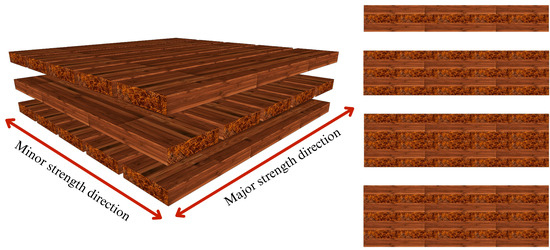
Figure 1.
CLB panel configuration and examples of cross-sections.
The defining feature of CLB lies in its cross-laminated architecture, which aims to reduce material anisotropy, enhance dimensional stability, and improve load transfer between layers. Structurally and functionally analogous to CLT, CLB exhibits more balanced mechanical properties, high in-plane strength and stiffness, and a strong potential for prefabrication, which makes it well-suited for wall and floor applications [19,20]. Although bamboo structures have traditionally been employed in buildings with small spans and up to three stories, the full potential of their excellent mechanical properties—such as high tensile and compressive strength—has not yet been fully explored [7,12,21]. In this context, the research and development of innovative materials such as CLB are essential to expanding the scope of bamboo applications in large-scale and tall buildings. Despite the promising potential of CLB, the available technical and scientific knowledge regarding its structural performance remains limited, particularly when compared to well-established products such as CLT. While engineered wood products benefit from a comprehensive normative, technical, and commercial foundation, CLB still lacks consolidated investigations that synthesize information on its manufacturing processes, characterization methodologies, and structural applications. This gap represents a significant barrier to its industrialization and broader adoption in the construction sector.
As emphasized by Conboy [22], literature analysis often receives secondary attention in research, with greater focus placed on the collection and analysis of empirical data. This approach may overlook the connection to the state of the art and the relationship with pre-existing research, both of which are essential for theoretical development [23]. In this context, the present review aims to address part of this gap by outlining the current state of scientific knowledge on CLB, with an emphasis on its manufacturing processes, mechanical properties, constitutive models, and structural applications. By compiling and critically analyzing the available studies, this review intends to provide a reliable knowledge base for researchers and designers, as well as support for future numerical modeling and practical applications of the material. The methodological approach adopted consisted of a broad literature review aimed at identifying and examining scientific publications on CLB. The search strategy was guided by a general protocol and employed a search string combining “cross-laminated bamboo” and “cross-laminated bamboo” with the Boolean operator OR. Searches were carried out in Scopus and Web of Science, selected for their wide thematic coverage. All records retrieved from these databases were considered, without restrictions on publication period or document type. This review specifically examined the following aspects related to CLB: (i) the current state of the scientific literature; (ii) the methodologies employed in the assessment of CLB’s structural performance; (iii) the relevant technical standards for the manufacturing and characterization of the material; (iv) the manufacturing processes and their associated factors, including bamboo species, types of engineered bamboo products, adhesives, and other relevant parameters; (v) the mechanical properties and constitutive models used; and (vi) the main construction applications of CLB.
2. Synthesis of Research on CLB
2.1. Mechanical Properties of CLB
Table 1, Table 2 and Table 3 summarize the mechanical properties reported from experimental studies on CLB. These properties are essential for understanding the structural behavior of CLB and for assessing its applicability in structural engineering. Bending strength and bending modulus of elasticity are consistently higher in the major direction than in the minor direction, reflecting the preferential fiber orientation of bamboo. The CLB-8-BS configuration exhibits high bending strength values ranging from 75.77 MPa [24] to 79.78 MPa [25], with corresponding bending modulus values between 8.31 GPa [25] and 10.04 GPa [24]. Reported effective bending stiffness values show considerable variation, highlighting the influence of layup configuration, number of layers, and lamella thickness.
Compared with CLT manufactured from specific wood species, including Hem-fir (Canadian western hem-fir (Tsuga heterophylla (Raf.) Sarg × Abies amabilis (Dougl.) Forbes), Chinese fir, and Norway spruce, CLB shows higher reported bending strength in the major direction. In particular, CLB-8-BS [24,25] exhibits bending strength values approximately 60%–69% higher than CLT-3-HF [26], 87%–187% higher than CLT-5-SPF [27], and 108%–220% higher than CLT-3-CF [28], based on reported mean values. These comparisons are indicative due to differences in material composition, panel architecture, and testing procedures, but they demonstrate the competitive bending performance of CLB.
With respect to the bending modulus of elasticity, CLB-8-BS panels [24,25] present values comparable to or slightly lower than those reported for CLT-3-HF [26] (−19% to −2%), whereas CLB-5-BS [29] shows a substantially higher modulus, approximately 75% greater than that of CLT-3-HF [26]. Effective bending stiffness follows a similar trend: CLB specimens with 100 mm thickness [29] exhibit stiffness values comparable to or slightly higher than CLT-5-SPF [27] (+8%–13%), while the 60 mm thick CLB-5-BS [29] presents markedly lower stiffness (≈−77%). These results suggest that bending stiffness in CLB systems is primarily governed by panel geometry and layer arrangement rather than material type alone.
As shown in Table 1, CLB produced from bamboo scrimber exhibits densities of approximately 1150–1200 kg/m3, higher than those of wood species commonly used in CLT panels, such as Chinese fir and hem-fir (≈386–451 kg/m3). Accordingly, comparisons of absolute mechanical properties should be interpreted with caution, as the higher strength and stiffness of CLB reflect not only the cross-laminated architecture but also the higher density of the engineered bamboo products used as lamellae.

Table 1.
Bending properties of CLB.
Table 1.
Bending properties of CLB.
| D (Kg/m3) | EB/WS | Specimens (mm) | Pmax (kN) | fBending,0 (MPa) | fBending,90 (MPa) | EBending,0 (GPa) | EBending,90 (GPa) | Mmax (kN·m) | EIeff (1011 N·mm2) | RF | |
|---|---|---|---|---|---|---|---|---|---|---|---|
| CLB-8 | 1155 | BS | 760 × 50 × 50 | 79.78 (0.16) a | 64.26 (0.07) a | 8.31 (0.03) a | 5.50 (0.05) a | [25] | |||
| CLB-8 | 1155 * | BS | 31.57 (0.02) a | 75.77 (0.02) a | 49.79 (0.14) a | 10.04 (0.06) a | 5.50 (0.07) a | [24] | |||
| CLB-5 | 1200 * | BS | 1800 × 600 × 100 | 137.40 (6.10) b | 51.86 | 17.95 | 37.79 | 7.11 | [29] | ||
| CLB-7 | BS | 1800 × 600 × 100 | 145.70 (10.70) b | 46.01 | 17.95 | 40.07 | 7.43 | ||||
| CLB-5 | BS | 1800 × 600 × 60 | 58.80 (3.60) b | 59.92 | 17.95 | 16.17 | 1.53 | ||||
| CLB-3 | LB | 600 × 600 × 50 | 173.35 | [30] | |||||||
| CLB-5 | LB | 1800 × 600 × 100 | 138.80 | [19] | |||||||
| CLB-7 | LB | 1800 × 600 × 100 | 144.20 | ||||||||
| CLB-5 | LB | 1800 × 600 × 60 | 58.00 | ||||||||
| CLT-3 | 451 | HF | 1630 × 145 × 51 | 47.30 (0.12) a | 6.40 (0.28) a | 10.28 (0.10) a | 0.57 (0.11) a | 2.97 (0.12) a | [26] | ||
| CLT-3 | 386 * | CF | 910 × 90 × 54 | 24.93 (0.09) a | 11.04 (0.09) a | [28] | |||||
| CLT-5 | 445 * | SPF | 2850 × 300 × 150 | 102.30 (6.90) b | 25.60 (1.70) b | 6.10 (0.50) b | [27] | ||||
| CLT-5 | SPF | 3750 × 300 × 150 | 56.20 (3.70) b | 28.20 (1.90) b | 6.50 (0.20) b | ||||||
| CLT-5 | SPF | 1950 × 300 × 150 | 37.10 (2.50) b | 27.80 (1.90) b | 6.60 (0.30) b |
Notes: D—Density; EB—Engineered bamboo; WS—Wood species; BS—Bamboo scrimber; LB—Laminated bamboo; HF—Hem-fir; CF—Chinese fir; NF—Norway spruce; SPF—Spruce-pine-fir; RF—Reference; Pmax—Maximum load; fBending,0—Bending strength in the principal direction; fBending,90—Bending strength in the secondary direction; EBending,0—Modulus of elasticity in bending in the principal direction; EBending,90—Modulus of elasticity in bending in the secondary direction; Mmax—Moment capacity; EIeff—Effective bending stiffness; a—Coefficient of variation; b—Standard deviation; *—Density values refer to EB (CLB) or WS (CLT).
Compressive strength values for CLB-8-BS [25] are similar in the major and minor directions, with values of 54.34 MPa and 53.45 MPa, respectively, indicating limited directional sensitivity under compression. The compressive modulus of elasticity varies among configurations, ranging from 6.61 GPa in CLB-8-BS [25] to higher values in laminated bamboo panels (e.g., CLB-3-LB and CLB-5-LB [31]), reflecting the influence of bamboo product type and layup. In contrast, tensile strength in CLB-8-BS [25] is higher in the transverse direction, with 71.78 MPa exceeding 63.48 MPa.
For compressive strength in the major direction, CLB-8-BS [25] exhibits values approximately 222% higher than CLT-5-SPF [32], 166% higher than CLT-5-SPF [33], and 88% higher than CLT-3-NS [34], based on the reported mean values in the respective studies. With respect to the modulus of elasticity in compression in the major direction, CLB-8-BS [25] exhibits values comparable to those reported for CLT-5-SPF [33], with a marginal difference of approximately −2%. In contrast, CLB specimens produced from laminated bamboo show higher elastic moduli in compression. Specifically, CLB-3-LB [31] and CLB-5-LB [31] present modulus of elasticity values approximately 121% and 86% higher, respectively, than those reported for CLT-5-SPF [33]. These results indicate that the elastic response in compression of CLB is influenced by the type of bamboo product employed.
In the major direction, the tensile strength of CLB-8-BS [25] is approximately 265% higher than that reported for CLT-3-NS [34], based on mean values. As with other cross-study comparisons, this result should be interpreted as indicative due to potential differences in panel architecture, material processing, and testing procedures. Nevertheless, it highlights the high tensile performance of CLB specimens relative to selected CLT specimens.
Table 2.
Compression and tensile properties of CLB.
Table 2.
Compression and tensile properties of CLB.
| D (Kg/m3) | EB/WS | Specimens (mm) | fCompression,0 (MPa) | fCompression,90 (MPa) | ECompression,0 (GPa) | ECompression,90 (GPa) | fTensile,0 (MPa) | fTensile,90 (MPa) | ETensile,0 (GPa) | ETensile,90 (GPa) | RF | |
|---|---|---|---|---|---|---|---|---|---|---|---|---|
| CLB-8 | 1155 | BS | 200 × 50 × 50 c 453 × 50 × 25 d | 54.34 (0.03) a | 53.45 (0.02) a | 6.61 (0.03) a | 7.48 (0.05) a | 63.48 (0.10) a | 71.78 (0.11) a | 6.55 (0.06) a | 6.40 (0.03) a | [25] |
| CLB-3 | 890 | LB | 700 × 700 × 17.5 c | 17.22 (3.22) b | 2.43 (0.66) b | [31] | ||||||
| CLB-3 | LB | 600 × 600 × 17.5 c | 14.86 (1.17) b | 7.43 (0.69) b | ||||||||
| CLB-5 | LB | 700 × 700 × 27.5 c | 15.67 (3.02) b | 9.46 (4.16) b | ||||||||
| CLB-5 | LB | 600 × 600 × 27.5 c | 12.48 (0.92) b | 8.74 (0.76) b | ||||||||
| CLB-3 | 830 * | LB | 600 × 600 × 17.5 c | 13.50 | 5.28 | [35] | ||||||
| CLB-5 | 830 * | LB | 700 × 700 × 27.5 c | 22.59 | 12.54 | |||||||
| CLT-3 | 7.42 | 6.74 | ||||||||||
| CLT-5 | 4.62 | 3.91 | ||||||||||
| CLT-5 | SPF | 525 × 176 × 172 c | 16.87 | [32] | ||||||||
| CLT-5 | 445 * | SPF | 400 × 260 × 150 c | 16.30 (0.20) b | [36] | |||||||
| CLT-5 | 445 * | SPF | 300 × 150 × 150 c | 20.40 (0.06) a | 12.00 (0.05) a | 6.72 (0.07) a | 5.10 (0.14) a | [33] | ||||
| CLT-3 | 470 * | NS | 200 × 100 × 60 c 100 × 20 × 60 d | 28.86 (0.03) a | 19.80 (0.18) a | 17.38 (0.09) a | 16.24 (0.14) a | [34] |
Notes: D—Density; EB—Engineered bamboo; WS—Wood species; RF—Reference; BS—Bamboo scrimber; LB—Laminated bamboo; NS—Norway spruce; SPF—Spruce-pine-fir; fCompression,0—Compressive strength in the principal direction; fCompression,90—Compressive strength in the secondary direction; fTensile,0—Tensile strength in the principal direction; fTensile,90—Tensile strength in the secondary direction; ECompression,0—Modulus of elasticity in compression in the principal direction; ECompression,90—Modulus of elasticity in compression in the secondary direction; ETensile,0—Modulus of elasticity in tension in the principal direction; ETensile,90—Modulus of elasticity in tension in the secondary direction; a—Coefficient of variation; b—Standard deviation; c—Specimen under compression; d—Specimen under tension; *—Density values refer to EB (CLB) or WS (CLT).
Bond-line strength values show a pronounced dependence on the adhesive system employed. Reported values range from 0.67 MPa for CLB-2-BS [37] bonded with melamine–urea–formaldehyde (MUF) to 10.20 MPa for CLB-3-BS [38] bonded with phenol–resorcinol–formaldehyde (PRF). For laminated bamboo specimens, CLB-2-LB [37] bonded with MUF (3.45 MPa) and polyurethane (PUR, 2.08 MPa) exhibited higher bond-line strength than those bonded with hybrid polymer adhesive (HPA, 1.56 MPa). These results indicate that bond-line strength in CLB systems is governed primarily by adhesive chemistry, with PRF-based systems providing the highest interlaminar resistance among the reported studies.
When compared with CLT manufactured from specific wood species, higher rolling shear strength values are reported. For example, CLB-3-LB [39] achieves rolling shear strength values of up to 10.60 MPa, whereas CLT-3-CF [28] and CLT-3-NS [34] report values of approximately 1.75 MPa and 1.29 MPa, respectively. These comparisons are indicative and reflect differences in material composition, adhesive systems, panel architecture, and test methodologies among the referenced studies. Nevertheless, they suggest that CLB configurations can achieve higher rolling shear resistance than selected CLT datasets reported in the literature.
Table 3.
Shear properties of CLB.
Table 3.
Shear properties of CLB.
| D (Kg/m3) | EB/WS | Adhesive Type | Specimen (mm) | fBond-line (MPa) | fRolling-shear (MPa) | ERolling-shear (MPa) | RF | |
|---|---|---|---|---|---|---|---|---|
| CLB-3 | 631 | LB | PRF | 60 × 45 × 20 c 210 × 100 × 90 d | 10.20 (2.37) b | 4.26 (0.65) b | 87.61 (5.53) b | [38] |
| LB | 210 × 100 × 90 d 540 × 90 × 50 e | 2.91 (0.63) b | 147.90 (9.06) b | |||||
| CLB-3 | LB | Polyurethane-GU305 | 95 × 60 × 60 | 10.60 (0.21) a | 146.00 (0.06) a | [39] | ||
| LB | 300 × 60 × 45 | 9.45 (0.14) a | ||||||
| LB | 300 × 60 × 60 | 9.40 (0.14) a | ||||||
| CLB-2 | LB | PUR | 50 × 40 × 30 | 2.08 (0.23) a | [37] | |||
| MUF | 50 × 40 × 30 | 3.45 (0.33) a | ||||||
| HPA | 50 × 40 × 30 | 1.56 (0.18) a | ||||||
| BS | PUR | 50 × 40 × 30 | 1.41 (0.32) a | |||||
| MUF | 50 × 40 × 30 | 0.67 (0.17) a | ||||||
| PVA | 50 × 40 × 30 | 4.76 (0.29) a | ||||||
| CLT-3 | 386 * | CF | PUR | 424 × 90 × 54 | 1.75 (0.06) a | [28] | ||
| CLT-3 | 470 * | NS | Polyurethane based | 240 × 100 × 60 | 1.29 (0.04) a | [34] |
Notes: D—Density; EB—Engineered bamboo; WS—Wood species; RF—Reference; BS—Bamboo scrimber; LB—Laminated bamboo; CF—Chinese fir; fBond-line—Bond line strength; fRolling-shear—Rolling shear strength; ERolling-shear—Rolling shear modulus; PRF—Phenol-resorcinol–formaldehyde; PVA—Polyvinyl acetate; MUF—Melamine-urea-formaldehyde; HPA—Hybrid polymer adhesive; PUR—One-component polyurethane; a—Coefficient of variation; b—Standard deviation; c—Bonding strength test; d—Two-plate planar shear test; e—Short-span bending test; *—Density values refer to EB (CLB) or WS (CLT).
2.2. Small-Scale CLB Specimens
This section presents the main findings from studies conducted on small-scale CLB specimens, i.e., specimens with dimensions significantly smaller than those of full-scale structural elements.
2.2.1. CLB Performance Under Compression
Archila et al. [35] investigated the mechanical behavior of CLB panels under compression using digital image correlation (DIC). The results showed high load-bearing capacity compared to CLT panels. Three-dimensional strain maps revealed regions prone to increased deformation along the panel thickness (radial) direction, particularly in specimens containing localized gaps associated with manufacturing defects. Strain maps and finite element simulations confirmed the influence of these imperfections on reduced structural performance. No permanent deformations were observed in the longitudinal and transverse directions after testing.
Archila et al. [31] evaluated the axial compression behavior of CLB in both major and minor directions, using contact (LVDT) and non-contact (DIC) measurements. Results showed that the longitudinal modulus of elasticity was 50% to 70% higher than the transverse modulus, reflecting the predominance of layers oriented in the load direction. Values obtained by DIC showed higher variability and exceeded those from LVDTs and analytical predictions, indicating the need to adjust the point pattern to reduce the coefficient of variation. Five-layer panels, with lower slenderness ratios, showed reduced susceptibility to buckling, whereas three-layer panels exhibited out-of-plane deformations and lower transverse stiffness. Overall, CLB panels, with higher density and lower relative thickness compared to CLT, presented approximately twice the modulus of elasticity.
Qiu and Fan [25] analyzed the anisotropic compressive behavior of CLB using specimens with fiber orientations from 0° to 90°. The cross-laminated structure significantly reduced anisotropy, resulting in more uniform mechanical properties. Compared to PBSL, CLB exhibited smaller variations in compressive strength and modulus of elasticity across different fiber orientations, indicating improved directional stability. Load–displacement curves revealed three stages: elastic, elastoplastic, and post-failure. Compressive strength remained relatively stable across angles, with a slight reduction at 45°. Cracks primarily followed the fiber direction of the outer layer, with interlaminar delamination identified as the main failure mode, caused by stiffness and deformation differences between adjacent orthogonal layers.
Wang et al. [40] investigated the compressive performance of three-layer CLB panels manufactured with different thickness combinations (70, 80, and 100 mm) and tested along both the main and transverse fiber directions. The authors found that the compressive strength of CLB is consistently higher in the main fiber direction, ranging from 35.3 to 41.4 MPa, whereas in the transverse direction, it varied between 32.2 and 35.3 MPa, with greater ductility also observed along the main fiber direction. The tests revealed characteristic failure modes, including out-of-plane buckling and partial delamination, particularly in the 80 mm thickness of specimens. The characteristic load-bearing capacity was estimated using two approaches: (i) the conventional Eurocode-based method, which yielded more conservative values by considering only the contribution of lamellas parallel to the load; and (ii) a design-by-test procedure applied directly to the experimental results, providing values that more accurately reflect the structural behavior of CLB. These findings confirm the strong potential of CLB as a compressed structural element and underscore the need for dedicated design methods tailored to this material.
Overall, the reviewed studies show that CLB has high compressive capacity and favorable stiffness, outperforming CLT and PBSL and displaying reduced anisotropy due to its cross-laminated structure. Manufacturing-related voids and interlaminar incompatibilities were key factors reducing stiffness and triggering failure, especially in thinner or three-layer panels. Compressive strength was higher along the main fiber direction, with ductile responses marked by delamination, buckling, and fiber-aligned cracking. Differences between DIC and LVDT measurements highlight the need for improved testing procedures. These findings confirm the strong compressive performance of CLB and underscore the influence of panel configuration, fiber orientation, and manufacturing quality on its structural behavior.
2.2.2. CLB Performance Under Tensile
In Qiu and Fan [25], the load–displacement curves of CLB under tension exhibited linear deformation with no evident plastic stage, indicating brittle failure. Tensile strength was highest at 0° and 90°, with slight variations at intermediate angles and approximately symmetrical behavior around 45°, where the lowest performance was observed. Compared to PBSL, CLB showed lower anisotropy, with more consistent variations in both strength and modulus of elasticity across different fiber orientations. Cracks propagated primarily along the fibers of the outer layer, with transverse cracking observed in only one specimen with fibers aligned at 0°. Most failures initiated in the central region of the specimens, forming continuous and irregular cracks that rapidly extended through all layers. Scanning electron microscopy (SEM) analyses identified matrix and fiber failures, associated with fractures in transverse and parallel laminae, respectively.
2.2.3. CLB Performance Under Bending
Qiu and Fan [25] evaluated the bending behavior of CLB, highlighting its lower anisotropy compared to PBSL. Off-axis orientation had a limited influence on CLB properties, with the best performance observed at 15° and the lowest at 45°. While PBSL showed significant variation in flexural strength between 0° and 90°, CLB exhibited reduced variation. Similar stability was observed in the modulus of elasticity. Cracks in CLB followed the fiber direction of the outer layer, with failures involving fiber rupture and delamination. Unlike CLT, CLB exhibited progressive interlayer failure and improved core shear resistance, contributing to its high bending capacity. Deflection curves showed three stages: elastic, nonlinear deformation, and post-failure. After approximately 10 mm of deflection, an abrupt load drop occurred, followed by a stable residual response, indicating the material’s ability to sustain load after initial failure.
Subsequently, Qiu et al. [24] compared the mechanical behavior of CLB and PBSL in directions parallel and perpendicular to the fibers to evaluate the cross-laminated structure’s effect on anisotropy reduction. Results showed that CLB exhibited more balanced deformation and strength in both directions, significantly reducing the parallel-to-perpendicular strength ratio observed in PBSL. PBSL failed abruptly in bending, while CLB exhibited progressive damage involving bending, shear, and interfacial failure. Load–displacement curves for both materials were nearly linear up to failure; however, in the perpendicular direction, CLB showed stepped load drops after peak load, contrasting with the linear and brittle behavior of PBSL.
Qiu et al. [30] analyzed the failure behavior of PBSL and CLB panels under bending after blast exposure, focusing on residual load capacity. Results indicated that the orthogonal structure of CLB improves flexural performance, likely by delaying initial cracking and reducing anisotropy. Although CLB showed higher ultimate load capacity than PBSL, its residual capacity after blast exposure was lower, suggesting weaker interfacial resistance between layers. Under loading, the deformation of CLB’s orthogonal structure was more uniform, limiting crack propagation in the matrix. CLB exhibited brittle failure characterized by a sudden load drop to half of the peak value, followed by a plastic plateau. Matrix cracking and fiber rupture occurred almost simultaneously, indicating a concentrated and rapidly progressing failure mechanism.
In summary, bending studies show that CLB is a stable and less anisotropic material whose orthogonal layup limits off-axis effects, improves shear transfer, and promotes more gradual failure than PBSL. Deformation patterns involved fiber-aligned cracking, delamination, and progressive strength loss rather than abrupt collapse, with load–displacement curves exhibiting elastic, nonlinear, and post-failure stages and some residual capacity after cracking. Under blast loading, peak resistance increased, although weaker interlayer bonding reduced residual strength. Overall, CLB’s flexural behavior is governed by fiber orientation, layer configuration, and interlayer adhesion, confirming its efficiency as a bending-resistant material.
2.2.4. CLB Performance Under Shear
Xing et al. [37] evaluated the bond shear strength of bamboo products considering fiber direction, adhesive types, and pressing pressures using laminated bamboo and bamboo scrimber (BS) specimens, with both unidirectional and cross-laminated (CLB) configurations. Failures were attributed to poor adhesive penetration and performance, resulting in interfacial bond fractures. Li et al. [38] investigated the shear properties of CLB using the two-plate shear method and short beam shear (SBS) tests, and assessed bond line strength between outer and cross layers. Results showed good bonding performance, with failures occurring in the central layers. The SBS test exhibited lower shear strength, greater variability, and localized damage near the loading and support points. The two-plate test produced a more uniform stress field, higher accuracy, and failure through transverse shear with inclined cracks (~45°), leading to brittle collapse due to crack multiplication. Load–displacement curves were nearly linear up to failure, especially in bond shear tests. In contrast, flexural specimens showed more ductile behavior with progressive crack propagation and staged failure. In bond shear tests, inclined cracks initiated at the corners of the cross-laminated layers. In flexural tests, most samples failed suddenly with 45° cracks. Digital Image Correlation (DIC) provided more accurate shear modulus measurements compared to traditional gauges.
Wang et al. [39] examined the transverse shear properties of CLB using modified planar shear (MPS) and short beam bending (SBB) tests. Both methods led to transverse shear failure with cracks located in the middle layer. In the MPS test, reduced cohesive strength shifted initial failure zones to higher regions of the layer. In the SBB test, beams with higher span-to-depth ratios failed in bending, while ratios below seven highlighted significant degradation in shear-related strength. Stress–strain curves showed behavior similar to that reported by Li et al. [33], with failures characterized by inclined cracks (45°) and interlayer delamination. In MPS tests, cracks propagated from the lower to upper interface of the middle layer. In bending tests, delamination and cracking occurred between outer and middle layers, and also between laminae within the middle layer, confirming the brittle and localized nature of transverse shear failure in CLB.
Overall, research on shear behavior shows that CLB failures are predominantly brittle and localized, driven by interlaminar stresses, adhesive performance, and layer configuration. Insufficient adhesive penetration leads to interfacial failure, while well-bonded specimens typically fail within the central layers. Across test methods, shear failure consistently appeared as 45° cracking and delamination, confirming CLB’s sensitivity to transverse shear. Tests with more uniform stress fields, such as the two-plate method, produced more reliable results, whereas SBS and SBB showed greater variability due to bending effects. DIC also provided more consistent shear modulus estimates than strain gauges. Overall, CLB offers adequate shear capacity but remains highly dependent on bond quality and the inherently brittle nature of its transverse shear mechanisms.
2.2.5. CLB Fracture Performance
Wu et al. [18] investigated the translaminar fracture properties of CLB, focusing on energy release rate, toughening mechanisms, and the influence of lamella arrangement. Load–displacement and load–CMOD curves showed that specimens with a higher volume of 90° layers exhibited more pronounced nonlinear behavior before peak load and a more gradual post-peak decline. The translaminar energy release rate was significantly higher than that of unidirectional laminated bamboo, indicating that cross-lamination enhances energy dissipation. Crack propagation in the 90° layers was identified as the main toughening mechanism, becoming more pronounced with increased volume of these layers. While the 0°/90° lamination sequence had little effect on the initial energy release rate, it significantly influenced the critical rate due to intensified fiber pull-out in 90° cracks, increasing energy dissipation during fracture.
2.2.6. Thermal Performance of CLB
Lv et al. [41] evaluated the thermal performance of CLB walls, with and without EPS foam boards, using a heat flow meter box under controlled temperature conditions. The study assessed the effects of CLB thickness and different layer combinations of bamboo and EPS. Results showed that increasing wall thickness improved thermal insulation, while variations in layer configuration, at constant thickness, had minimal impact. CLB walls with EPS exhibited lower heat transfer coefficients compared to plain CLB walls. The addition of a single EPS layer significantly reduced heat transfer (by 48.3% to 56.6%), while a second EPS layer provided no further substantial improvement.
2.2.7. CLB Performance Under Blast Loading
Qiu et al. [42] evaluated the blast resistance of PBSL and CLB panels through field tests. Results showed that CLB outperformed PBSL, demonstrating greater damage dissipation and structural integrity. While PBSL exhibited four damage patterns, including matrix cracking, CLB—due to its cross-laminated structure—prevented this failure mode and showed three more controlled damage patterns. The scaled critical distance required to initiate severe damage was significantly lower for CLB, indicating higher blast resistance. Under identical loading conditions, PBSL exhibited fiber fracture, whereas CLB remained in the elastic range. Both materials showed good resistance to large dynamic deformations, but CLB demonstrated superior blast resistance, as evidenced by an increase in the anisotropy coefficient from 0.089 (PBSL) to 0.805 (CLB).
2.3. CLB Panels
This section presents the main findings from studies conducted on CLB panels with dimensions approximating those of full-scale structural elements.
2.3.1. Bending Performance of CLB Panels
Lv et al. [29] investigated the flexural performance of unidirectional CLB slabs, with and without CFRP grid reinforcement, considering variables such as thickness, number of layers, and reinforcement position. Unreinforced slabs failed in brittle tension, with cracks initiating in the bottom layer and propagating to collapse. In panels with CFRP at the base, initial cracking was followed by a sudden load drop, a subsequent increase due to reinforcement action, and final failure by fracture of the top layer and CFRP. When CFRP was placed between layers, failure modes included progressive delamination and adhesive interface failure. Load–displacement curves were nearly linear until yielding. In unreinforced slabs, a slight stiffness loss was observed due to plastic compression of the bamboo scrimber. CFRP reduced mid-span displacements and increased sectional stiffness. Load capacity increased with both thickness and number of layers and was significantly enhanced by CFRP, with a maximum gain of 235.7% when integrated within the layers, but a 24.7% reduction when placed between them, indicating more stable cross-sectional behavior during loading.
Ding and Lv [19] conducted an experimental study to evaluate the flexural behavior of three types of CLB panels, considering the effects of total thickness and number of layers. Results showed that increasing thickness and the number of layers significantly improved flexural stiffness and load capacity. Panels with the same total thickness but a higher number of layers and a greater longitudinal lamination ratio exhibited better structural performance. Similarly, for the same number of layers, thicker individual layers resulted in greater stiffness and strength. Load-deflection curves showed increasing deflection with load, with rates varying according to panel characteristics. Cross-sectional stress–strain curves exhibited approximately linear behavior, with gradual stress increase under load.
In summary, bending tests show that CLB panel performance is largely governed by thickness, number of layers, longitudinal lamination ratio, and CFRP reinforcement placement. Unreinforced slabs exhibited brittle tension failure, whereas CFRP significantly improved stiffness and load capacity, particularly when embedded within the section. Panels that were thicker or more highly laminated achieved greater flexural strength, with load–deflection responses remaining mostly linear up to yielding. Thus, geometric configuration and reinforcement strategy are key determinants of structural-scale CLB flexural behavior.
2.3.2. Fire Performance of CLB Panels
Lv et al. [43] analyzed the effects of different protection methods and fire exposure durations on charring in CLB slabs. Three treatments were evaluated: no protection, application of JT-01 fire-retardant coating, and impregnation with monoammonium phosphate (MAP) solution. The fire-retardant coating showed the best performance, with the lowest charring depth and rate, while MAP was less effective, likely due to poor adhesion between bamboo filaments. Charring rate increased between 45 and 60 min of exposure due to deeper fire penetration and detachment of transverse lamellae. From 60 to 75 min, charring progression varied depending on layer configuration and adhesive–fire interaction. Longitudinal layers showed a lower average charring rate, as adhesive melting facilitated fire propagation through gaps and detachment of transverse layers.
Lü et al. [44] investigated the degradation of mechanical properties in CLB slabs exposed to fire on one side, considering different exposure times and protection methods. Four-point bending tests showed that slabs treated with fire-retardant coating retained the highest residual load capacity, followed by untreated slabs and those treated with MAP solution. Regardless of the protection method, residual capacity decreased with longer fire exposure. The residual capacity coefficient, defined as the ratio between exposed and unexposed slab capacity, ranged from 10.6% to 72.6%, indicating a significant loss in structural performance after fire exposure.
Overall, fire-related studies show that CLB panels deteriorate significantly under high temperatures, with performance strongly influenced by protection method, exposure duration, and layer configuration. Fire-retardant coatings provided the lowest charring depths and highest residual capacity, whereas MAP treatments were less effective due to weaker adhesion. Charring progression was governed by adhesive softening and the differing responses of longitudinal and transverse layers, leading to lamella detachment and faster fire penetration. Residual capacity declined sharply with longer exposure, highlighting CLB’s vulnerability to fire-induced damage and the need for effective protective strategies.
2.3.3. Life Cycle Assessment (LCA) of CLB Panels
Wang and Lan [45] conducted a cradle-to-grave LCA of CLB produced from moso bamboo scrimber in China over a 100-year horizon. The LCA was integrated with process-based simulations for manufacturing and end-of-life stages to generate the required mass and energy balances for the life cycle inventory. End-of-life alternatives for bamboo residues and for CLB panels were evaluated to assess their decarbonization potential. The authors demonstrated that CLB has strong decarbonization potential, achieving a net Global Warming Potential (GWP) of –318 to –947 kg CO2 eq/m3 and functioning as a carbon-negative material over 100 years. Combusting bamboo residues during production resulted in the lowest climate impacts, outperforming the biochar-plus-natural-gas scenario due to higher emissions from pyrolysis and the greater energy credits obtained from substituting grid electricity. Recycling 50% of panels at end-of-life further reduced GWP by lowering methane emissions from landfilling, identified as the main greenhouse gas source. Although CLB retains 35–57% of its biogenic carbon after a century, the study reported environmental trade-offs: residue combustion reduced impacts such as acidification, ecotoxicity, and fossil fuel depletion by up to 63%, while increasing human-health-related and ozone-depleting impacts. Sensitivity analysis showed that scrimber density, material losses, electricity generation efficiency, and landfill methane recovery rates are key drivers of climate performance. The most favorable scenario combined residue combustion with 50% recycling, whereas the least effective involved biochar production without recycling, highlighting the importance of energy strategy and end-of-life management in maximizing CLB’s environmental benefits.
2.4. CLB Rocking Walls
Lv et al. [17] investigated the cyclic behavior of CLB rocking walls with conventional friction dampers (CFDs), considering moment ratio and number of cycles. Results showed stable behavior with preserved lateral stiffness and bilinear response. Walls remained elastic, and stiffness variation was attributed to reduced contact length with the foundation. Walls with CFDs exhibited flag-shaped hysteresis curves and higher load capacity due to energy dissipation provided by the dampers. Lower moment ratios increased load capacity, while the number of cycles had minimal effect. Relative self-centering efficiency (RSE) was high in all cases, especially without CFDs (RSE = 0.988), indicating excellent recentering capacity. The presence of CFDs and higher moment ratios slightly reduced this efficiency, with no significant effect from the number of cycles. Energy dissipation was mainly provided by CLB deformation in unbraced walls and by the devices in braced ones, being maximized at a moment ratio of 0.8. Post-tensioned cables remained elastic and did not lose force, which increased rapidly after 0.2% drift due to wall uplift.
Similarly, Lu et al. [46] proposed and experimentally tested a CLB rocking wall equipped with bending-friction coupled dampers (BFCDs), where steel bars were integrated into CFDs to enhance flexural energy dissipation. Walls with dampers exhibited higher peak forces and better overall performance compared to unbraced walls. BFCDs led to greater accumulated energy dissipation, especially with partially weakened bars and higher friction force. Retesting without repair did not compromise stiffness, strength, energy dissipation, or self-centering capacity, indicating good resistance to repeated actions. Relative self-centering efficiency (ξ) remained above 90%, with slight reductions in systems with higher friction or weakened bars due to increased plastic deformation. Modified secant stiffness (K’sec) increased with the use of dampers and was highest in BFCDs, attributed to additional stiffness from the flexural bars. Numerical models correlated well with experimental results, validating the simulation of stress distribution in CLB walls. Lu et al. [47] developed a partially restrained energy dissipation (PRED) device and evaluated its effect on post-tensioned CLB rocking walls through numerical simulation. The use of PREDs increased peak force by up to 49%, enhanced lateral stiffness (higher hysteresis slope), and improved energy dissipation (larger hysteresis area), although residual displacement also increased. Parametric analyses showed that more PREDs enhanced strength, stiffness, and energy dissipation, but reduced self-centering capacity and increased residual displacement. In the case of four PREDs, residual displacement was 115.7% higher than with two. Varying the distance between PREDs and the wall edge had little effect on strength, stiffness, or self-centering, but shorter distances caused stress concentrations in the steel plates beyond the yield limit, indicating the need for optimal device positioning.
Lv et al. [48] developed a finite element model (FEM) and a modified analytical model (MAM), calibrated with experimental data, to predict the seismic behavior of CLB rocking walls. A design procedure was also proposed based on these models. The effects of initial post-tensioning level, bar cross-sectional area, wall aspect ratio, and CFD friction force were analyzed. Lateral capacity and drift increased with initial post-tensioning, though this had a limited impact on energy dissipation and stiffness parameters Sd and Se. Larger bar cross-sections significantly improved secondary (Se) and yield (Sy) stiffness, while initial stiffness (Sd) showed moderate gains. Walls with higher aspect ratios had lower lateral capacity, higher drift at yielding, and lower overall stiffness, but exhibited greater ductility. Lower aspect ratio walls had higher stiffness but reduced deformation capacity. Increased CFD friction improved energy dissipation and lateral capacity but reduced RSE, indicating a trade-off between dissipation and recentering. Han et al. [49] proposed a displacement-based design (DBD) method for CLB rocking walls with friction dampers, aimed at controlling drift and sizing post-tensioning bars and CFDs appropriately. The method enables calculation of inter-story shear forces and compliance with collapse prevention (CP) drift limits, as required by the Chinese seismic code. Segmented and monolithic wall configurations were designed and applied to buildings using simplified numerical models with Cartesian connectors. Two three-story building models, X-LamBR1 (segmented wall) and X-LamBR2 (monolithic wall), were compared. X-LamBR2 showed superior seismic performance, with lower drift, reduced inter-story shear forces, and higher lateral stiffness.
In summary, studies show that CLB rocking walls provide stable cyclic performance, strong self-centering, and greatly enhanced energy dissipation when equipped with damping devices. CFDs and BFCDs increased peak strength, stiffness, and hysteretic dissipation while preserving adequate recentering, with only minor reductions under higher friction or bar weakening. Post-tensioned elements remained elastic and retained force, ensuring self-centering. Parametric analyses indicated that device number, type, and placement control the trade-off between energy dissipation and residual displacement. Numerical models closely matched experiments, and displacement-based design methods effectively sized post-tensioning and damping components. Overall, CLB rocking walls show strong potential as seismic-resisting systems, governed by the interaction of post-tensioning, damping mechanisms, and geometry.
3. Experimental Methods for CLB Evaluation
Table 4 summarizes the main experimental tests found in the literature, covering the investigation of mechanical properties, fire resistance, and thermal performance of CLB.
Table 4.
Summary of experimental tests performed by the reviewed studies.
The diversity of tests reflects the scientific community’s efforts to characterize the mechanical, thermal, and fire-related behavior of CLB, highlighting its potential as an engineered material for structural applications. The table presents the main experimental methodologies identified, with emphasis on bending, shear, compression, and tensile tests, carried out in accordance with recognized standards such as ASTM, ISO, and EN. These tests assess key properties, including mechanical strength, stiffness, bond line integrity, thermal behavior, and fire performance under various loading conditions, including monotonic and cyclic actions.
The data indicate growing interest not only in the basic characterization of CLB but also in its response under more complex loading scenarios, such as cyclic lateral loads, supporting its potential use in seismic-resistant and blast-resistant structures. However, it is important to note that these standards were originally developed for solid wood or engineered wood products such as CLT, and their direct application to CLB presents limitations. Despite structural similarities, CLB possesses specific characteristics—such as higher density, pronounced anisotropy, and heterogeneous fibrous structure—that may significantly influence its mechanical behavior and affect the representativeness of results obtained using non-specific standards. Thus, while these standards serve as a valid starting point, there is a clear need for the development of dedicated testing protocols for CLB to ensure standardization, reliability, and applicability in real design scenarios.
The predominance of monotonic tests in the reviewed studies indicates that research on CLB remains in a consolidation phase, focusing on basic mechanical characterization. Nonetheless, the presence of cyclic tests and the use of displacement-controlled or multi-cycle protocols suggest increasing attention to the performance of CLB under dynamic actions, such as those caused by earthquakes, wind loads, or explosions. These studies are particularly relevant for the use of CLB in resilient structural systems, such as post-tensioned rocking walls, already explored in some investigations.
Another important aspect is the scale of testing. While most studies use small-scale specimens to allow experimental control and cost efficiency, there is a need to expand to full-scale testing that considers connection effects, material variability, and the global behavior of construction systems. This is essential for validating numerical models, understanding failure mechanisms, and supporting the development of design guidelines for building applications.
In summary, experimental research on CLB has advanced significantly, contributing to the development of a robust technical foundation. However, critical gaps remain, including the absence of specific standards, limited studies on long-term performance, durability in aggressive environments, and behavior under fatigue and creep. Additionally, greater methodological consistency across studies is needed. Addressing these limitations is essential for the recognition of CLB as a reliable and sustainable structural material, enabling its large-scale adoption in contemporary construction.
4. Analytical Methods for CLB Evaluation
Qiu et al. [24] investigated the flexural behavior of CLB using three theoretical approaches: the shear analogy method, the K-method, and laminated composite theory. The shear analogy method, typically applied to CLT design, estimates flexural and shear stiffness; the K-method, used for plywood, accounts for the grouping of inner layers; and laminated composite theory assumes linear stress and strain distributions and plane sections. Both the K-method and shear analogy provided good stiffness estimates, though the K-method overestimated strength. Laminated composite theory showed the best accuracy and was the most suitable for predicting CLB flexural strength.
Qiu et al. [30] proposed an analytical model for CLB flexural behavior based on orthotropic plate theory and failure criteria. Using the Rayleigh–Ritz method to minimize strain energy, the model incorporates flexural stiffness as a function of mechanical properties and panel thickness. Failure is evaluated using normal and shear stress criteria, distinguishing between matrix and fiber failure. Crack initiation corresponds to matrix failure, while peak load is associated with fiber rupture. A bilinear model simulates post-crack stiffness degradation. The predictions aligned well with experimental results and captured progressive failure mechanisms. Lv et al. [29] estimated CLB flexural capacity using the Chinese standard GB 50005 [59]. Flexural stress and effective stiffness were calculated based on the plane section assumption, supported by strain distributions across the slab thickness. The formula was adjusted to reflect CLB-specific properties, including the modulus of elasticity parallel to the fibers, and the area and moment of inertia of fiber-parallel layers. Only longitudinal layers were considered for simplification. The method yielded acceptable accuracy.
Archila et al. [35] applied BS EN 14272 [60] to estimate the average compressive modulus of elasticity of CLB panels in both longitudinal and transverse directions. Analytical values, generally higher than experimental ones, showed good agreement with numerical results, validating the method. However, the model tended to overestimate longitudinal stiffness. Panels with longitudinal orientation exhibited 1.5 to 2.5 times greater load capacity than transverse ones, in both theoretical and experimental data. Despite its effectiveness, the model does not account for manufacturing defects or voids, which can affect accuracy. Archila et al. [14] also applied BS EN 14272-based methods to estimate CLB mechanical properties in compression, shear, and bending. For compression, the modulus of elasticity was computed as the weighted sum of individual layer stiffnesses, assuming rigid bonding and symmetric layups. Transverse layers were considered to contribute minimally. In shear, in-plane modulus was estimated from layer properties, neglecting deformation in cross layers. Typical wood ratios between shear and elastic moduli were used. For bending, transformed section theory was applied, considering the equivalent moment of inertia of outer longitudinal layers. Strength was estimated from experimental MOR values of small specimens. While predictions aligned with numerical data, simplifications led to overestimations.
Lv et al. [43] proposed two models for the thermal behavior of CLB slabs under fire exposure. The first, a location-time model, estimates charring depth by accounting for different rates in longitudinal and transverse layers, surpassing conventional models such as NDS by incorporating bamboo anisotropy. Lower charring rates in longitudinal layers are attributed to higher structural integrity; higher rates in cross layers result from fire penetration through voids. The second model defines a modified temperature profile across slab thickness, correcting underestimation near the char front in earlier models. Thermal penetration depth was fixed at 60 mm, and a gradient coefficient of 3.80 was calibrated using experimental data. Both models showed good accuracy for CLB with constant density and moisture, though adjustments are needed for varying properties. Lv, Wang, and Liu [41] used ISO 6946 [61] to calculate thermal transmittance and resistance of laminated bamboo and EPS walls based on material properties. Discrepancies between theoretical and experimental results were attributed to material heterogeneity, voids, poor interfaces, and moisture content variation. Although the standard offers a solid basis for preliminary analysis, supplementary testing and modeling are needed for accurate thermal performance evaluation of heterogeneous systems such as laminated bamboo.
Wang et al. [39] applied the shear analogy method to predict failure modes in CLB beams under flexure, considering span-to-depth ratio effects. Numerical models confirmed that transverse shear failures occur for ratios below seven, while tension failures dominate for ratios equal to or above seven. Increased span-to-depth ratios reduced load capacity and increased deflection, validating the method’s relevance for CLB design criteria. Wu et al. [18] evaluated three methods to determine the translaminar R-curve of CLB: (i) the area difference between load–displacement curves of two specimens, (ii) linear asymptotic superposition based on LEFM (linear elastic fracture mechanics) and load–CMOD (crack opening mouth displacement) data, and (iii) an area-based method using two load–displacement points. All methods yielded consistent results, validated by comparisons between calculated and experimentally obtained traction–separation relations using notched tensile specimens. Despite strong agreement, further studies were recommended to improve cohesive law estimation.
The reviewed studies show that analytical methods for CLB have primarily focused on predicting mechanical properties under bending, compression, and shear using models adapted from wood-based systems such as CLT and plywood. Key methods include transformed section theory, shear analogy, laminated composite theory, and standards such as BS EN 14272 [60], GB 50005 [59], and ISO 6946 [61]. While these approaches generally produce results consistent with experimental and numerical data, they tend to overestimate properties, especially when simplifications are made—such as excluding cross layers or assuming perfect interlayer bonding. Moreover, few studies account for construction imperfections, such as gaps and discontinuities, which impact actual performance. In thermal analyses, recent models have advanced by incorporating bamboo anisotropy, though calibration with experimental data remains necessary. In terms of investigated properties, most studies emphasize flexural and compressive behavior, while models for dynamic response, fatigue, creep, and long-term durability remain limited. Developing CLB-specific analytical models that consider its distinct structural and physical characteristics is a key gap and a promising direction to enhance the reliability and applicability of analytical methods for engineered bamboo design and assessment.
In addition to the analytical models discussed above, the reviewed literature employs a wide range of prediction equations to estimate flexural, compressive, shear, thermal, and fracture-related responses of CLB. These equations reflect the diversity of theoretical approaches currently used for CLB evaluation. To synthesize these contributions, Table 5 summarizes the main analytical equations reported in the literature, listing each formulation alongside its source, intended parameter, and associated variables.
Table 5.
Main analytical equations used in CLB evaluation.
4.1. Analytical Model Considering the Characteristics of Limit States
Lv et al. [17] proposed limit states for the behavior of CLB rocking walls under lateral loading, based on material and post-tensioning bar strains, stresses, and damage levels. Three primary limit states were defined: (i) decompression at the wall base (DEC), occurring when overturning moment exceeds resistance from initial post-tensioning and gravity loads; (ii) effective limit of linear-elastic response (ELL), marked by reduction in contact length and onset of lateral stiffness degradation; and (iii) yielding of post-tensioning bars (YP), when bars reach yield strain due to gap opening. Later, Lv et al. [48] introduced a fourth limit state: yielding of the CLB at the wall corner (YCC), associated with localized compressive stress concentrations.
Based on these states, Lv et al. [17] developed an analytical model to estimate the hysteretic response of CLB rocking walls with conventional friction dampers (CFDs), considering force and moment equilibrium at each limit state, along with associated elastic and rigid-body displacements. Wall stiffness was defined as a function of lateral forces and corresponding displacements. Subsequently, Lv et al. [48] proposed a modified analytical model (MAM) that refines the limit state estimates by incorporating the contribution of CFD friction and shear deformation, particularly in the DEC stage. The MAM applies the minimum potential energy method to calculate deformations and uses shear analogy to estimate effective bending and shear stiffness.
Additionally, Lu et al. [46] identified three behavioral stages in experimental tests: (i) decompression, without gap opening and with predominant static friction; (ii) reduction in the compression zone, with initial separation and partial activation of energy dissipation devices; and (iii) rocking, with rotation about the contact edge, sliding of dampers, and full engagement of bending bars. The proposed models aligned with experimental results and provided a framework for predicting energy dissipation mechanisms and self-centering capacity in non-linear CLB systems.
4.2. Design Procedure for CLB Rocking Walls
Lv et al. [48] proposed a design procedure for CLB rocking walls aimed at meeting lateral strength and stiffness requirements under the collapse prevention (CP) hazard level. The method uses initial inputs such as wall dimensions from architectural plans, bamboo mechanical properties from experimental tests, and gravity loads per floor. The CP-level shear force is determined through dynamic analysis, and the maximum allowable story drift is set at 2%. It is assumed that the post-tensioning bars yield, are symmetrically arranged, and can be simplified as a single bar along the wall centerline, neglecting plasticity at the corners. The design procedure comprises five main steps: (1) calculation of post-tensioning bar elongation, (2) determination of initial post-tensioning force and cross-sectional area, (3) definition of the number of wall layers, (4) iterative verification using the Modified Analytical Model (MAM), and (5) sizing of conventional friction dampers (CFDs).
Additionally, Han et al. [49] developed a Displacement-Based Design (DBD) method to control inter-story drift in multi-story structures. The structural system is modeled as a single-degree-of-freedom (SDOF) system, and shear forces are determined based on equivalent stiffness, viscous damping, and seismic acceleration spectra. The DBD method also includes the definition of initial post-tensioning, yield strength, and geometry of the post-tensioning bars, along with the friction force in the CFDs, which depends on the number of surfaces, friction coefficient, and bolt preload. A minimum moment ratio of 1.15 is required to ensure self-centering behavior. After the initial sizing, parameters are iteratively adjusted based on elastic displacement checks to ensure compliance with seismic performance requirements and drift limitations.
5. Numerical Methods for CLB Evaluation
Several studies employed the Abaqus finite element software version 6.11 to model the mechanical and thermal behavior of CLB. Lu et al. [47] developed a numerical model of CLB rocking walls with partially restrained energy dissipators (PREDs). The CLB was modeled using continuous shell elements (SC8R) with anisotropic, nearly elastic behavior. PREDs were modeled with a combined hardening plastic material. Metallic components were modeled with solid elements (C3D8R), and post-tensioning bars with beam elements (B31), with prestress applied through thermal loading. Both tendons and steel elements used a bilinear elastoplastic constitutive model.
In another study, Lu et al. [46] analyzed stress distribution in CLB rocking walls under lateral loading using shell elements (SC8R) under plane stress assumptions and anisotropic elastic behavior. Adhesive layers were neglected. Post-tensioning bars were modeled with B31 elements, prestressed via temperature reduction, and anchored using multipoint constraints (MPC). Steel components and BFCDs were modeled with solid elements (C3D8R); bending bars used a combined hardening model, and other steel parts were modeled as elastic. Contact was defined with “hard contact” in the normal direction and “penalty” in the tangential direction, with a friction coefficient of 0.3. Numerical results correlated well with experimental data, highlighting stress redistribution: reduction in the compression zone at the wall base and stress concentration at the wall corner.
Lv et al. [48] extended this model using thermally coupled truss elements (T2D2T) for post-tensioning bars, under plane stress conditions. All materials (CLB, steel, copper) followed ideal elastoplastic behavior. General contact was applied with “hard contact” in the normal direction and “penalty” in the tangential direction, with a friction coefficient of 0.3 for bamboo–steel and steel–steel interfaces. “MPC tie” constraints were used between tendons and steel plates and foundation, as well as between CFDs and the CLB wall. Post-tensioning bars were modeled as a single non-bonded element, with prestress applied via cooling.
Han et al. [49] proposed a simplified numerical model (SNM) for CLB rocking walls. Panels were modeled using solid shell elements (S4R), and Cartesian connectors were represented by springs in three directions. Central connectors defined the wall’s envelope response, while edge connectors simulated energy dissipation. Friction force from CFDs was applied via edge connectors. Additional tri-linear connectors linked the rocking wall to adjacent shear walls. Archila et al. [35] developed 3D models to simulate the elastic compression behavior of CLB panels, assuming orthotropic behavior. Contact between lamellae was modeled as rigid in the normal direction, and cross-layer bonding was defined with tie constraints. Numerical results matched experimental data, with deviations attributed to voids that reduced compressive stiffness by approximately 10%.
Wang et al. [39] modeled transverse shear and bending tests using solid elements (C3D8) and a cohesive zone model (CZM) to simulate delamination. The CZM used a linear elastic–brittle law. CLB’s constitutive response was defined from experiments, combining elastoplastic behavior in compression and brittle behavior in tension and shear. The model accurately reproduced failure modes observed in tests. Lv et al. [41] used thermal hexahedral elements (DC3D8) to simulate heat transfer in CLB walls. The model assumed homogeneous, isotropic layers, perfect thermal interfaces, and constant ambient temperature. Results showed that adhesive thermal conductivity had a negligible influence, while EPS layer placement slightly affected heat transfer. The model yielded relative errors below 13% compared to experiments.
These numerical methods demonstrate significant progress in modeling the structural and thermal performance of CLB. The widespread use of Abaqus and FEM confirms their suitability for simulating various material behaviors—from steady-state thermal analysis to complex mechanical responses of rocking walls under lateral loading. Studies employed 3D and simplified models for different purposes, using shell, solid, and beam elements, as well as cohesive zone models and connector elements. The adoption of elastic, elastoplastic, and brittle constitutive models allowed accurate representation of experimentally observed responses. A notable advantage of numerical modeling is its flexibility in addressing diverse boundary conditions and loading scenarios, supporting its application in both structural and thermal assessments. Despite the models’ generally strong agreement with experimental results, simplifications—such as neglecting adhesive layers or homogenizing thermal properties—highlight the need for further refinement to improve local effect representation. Overall, the reviewed studies confirm the robustness of numerical methods for analyzing CLB while identifying key opportunities for enhancing model accuracy and extending their use in advanced design applications for engineered bamboo systems.
6. Manufacturing Processes of CLB
Several experimental studies have described the manufacturing procedures used for producing CLB. Qiu and Fan [25] used PBSL boards bonded with phenolic resin. The boards were planed and sanded to 6.25 mm thickness, arranged in a [0°/90°]4 layup, and bonded using one-component polyurethane adhesive. The panels were cold-pressed for 4 h at 5 MPa, resulting in a density of 1.15 g/cm3 and a thickness of 50 mm. Qiu et al. [42] followed a similar procedure using the same lamination configuration and pressing conditions.
Xing et al. [37] employed glued laminated bamboo and bamboo scrimber panels supplied by Hunan Taohuajiang and Hangzhou Dasso, respectively. Both materials were derived from Moso bamboo aged 3 to 5 years with a moisture content between 8% and 12%. Li et al. [38] also used glued laminated bamboo, bonded with phenol-resorcinol-formaldehyde (PRF) adhesive, cold-pressed at 0.2 MPa and 20 °C for over 24 h. Wang et al. [39] fabricated CLB panels from Moso bamboo (density: 1.15 g/cm3, moisture: 10%) using GU305 polyurethane adhesive, cold-pressed for 5 h at 25 °C under 2 MPa, followed by 24 h of curing. Glue line thickness ranged from 0.1 mm to 0.3 mm. The final panels measured 1200 mm × 1200 mm × 60 mm, with unbonded edges.
Wu et al. [18] used carbonized Moso bamboo strips (5 mm thick, 20–25 mm wide), pressed at 3 MPa and 105 °C for 3 min. The strips were bonded with urea-formaldehyde (UF) resin and arranged in longitudinal/transverse ratios of 1:4 and 2:3. The panels had a density of 862 kg/m3, a moisture content of 8.9%, and dimensions of 1200 mm × 1000 mm. Archila et al. [35] manufactured CLB using FGS (flat guadua sheets), treated by thermo-hydro-mechanical (THM) compression (45% reduction) at 50 kg/cm2 and 150 °C for 20 min. The FGS sheets were arranged in cross-laminated layouts (three and five layers), bonded with epoxy resin (4% by weight, 215 g/m2 spread), and cold-pressed at 35 kg/cm2. Panels were cured for 20 days in a controlled environment. The THM treatment reduced waste by 27% and enhanced mechanical performance.
In studies by Lv et al. [29,41], CLB was produced from bamboo scrimber (average density: 1.2 g/cm3), impregnated with two-component polyurethane adhesive, hot-pressed at 140 °C, and subsequently cured. Panels were assembled with orthogonal layers, bonded and pressed for 5 h at over 25 °C and above 2 MPa. In Lv et al. [29], lower layers were reinforced with CFRP mesh. Lv et al. [17] used bamboo scrimber (moisture: 9%, density: 1.15 g/cm3) to fabricate five-layer panels of 20 mm thickness. The layers were bonded with resorcinol adhesive and cold-pressed at 1.5 MPa for 4 h. The outer and core layers were longitudinally oriented, while the intermediate layers were transverse. Lu et al. [46] used similar materials and conditions.
Table 6 summarizes the key characteristics of CLB panels and their manufacturing processes as reported in the studies reviewed.
Table 6.
Characteristic data about CLB and its manufacturing process.
The analysis of CLB manufacturing processes reveals a wide range of strategies regarding raw materials, geometric configurations, adhesives, and pressing parameters, reflecting the experimental stage of this engineered product. Bamboo scrimber and Moso bamboo are predominantly used, with lamellae arranged in cross-laminated layouts and varying numbers of layers. Structural adhesives such as polyurethane (PUR) and resorcinol-formaldehyde (RF) are commonly applied, with significant differences in cold-pressing conditions, curing times, and applied pressures. To a lesser extent, other bamboo species, such as Guadua, and additional treatments like thermo-hydro-mechanical (THM) modification have also been employed.
Compared to CLT, CLB lamellae are significantly thinner, typically ranging from 6.25 mm to 20 mm, due to the naturally smaller dimensions of bamboo culms relative to timber logs. As a result, more layers are required to achieve panel thicknesses suitable for structural applications, ensuring sufficient stiffness and strength. Unlike CLT, CLB panels may include an even number of layers, as reported in some studies. This variability highlights both the adaptability of CLB and the lack of standardized production practices, which hinders reproducibility and comparability across studies. Differences in lamella thickness, adhesive types, and pressing durations directly affect the mechanical properties and performance of the panels, emphasizing the need for standardized manufacturing procedures to enable industrial-scale production and product standardization. Future research should focus on defining optimized and reproducible parameters to support the consolidation of CLB as a viable and reliable material for structural applications.
7. CLB Applications
CLB has been extensively studied for its potential in structural applications requiring bidirectional strength. Qiu and Fan [25] highlighted its suitability for structural elements subjected to both longitudinal and transverse loads, such as structural panels. Similarly, Qiu et al. [24] emphasized its potential for bidirectional components capable of resisting various loading conditions. Lv et al. [43] proposed its application in tall buildings, inspired by the successful use of CLT in multi-story timber structures. Lü et al. [44] supported this proposal by identifying CLB as a viable solution for components requiring two-way strength, with additional emphasis on fire safety.
Wu et al. [18] suggested using CLB in beams and shear walls, noting that its cross-laminated configuration improves translaminar fracture resistance, enhancing energy absorption and damage tolerance. Ding and Lv [19] identified CLB as a promising material for shear walls, floor diaphragms, and roof elements due to its orthotropic structural stiffness. Qiu et al. [30] proposed its use in floors and walls for resilient buildings, citing favorable performance under explosive loads. Qiu et al. [42] reinforced this by recommending CLB for blast-resistant structures, highlighting its high resistance to dynamic deformation and ability to limit damage to fiber rupture and delamination, preventing matrix failure. Lv et al. [29] proposed CLB for conventional slabs and slabs reinforced with CFRP mesh. Xing et al. [37] emphasized its use in prefabricated and modular panels aligned with sustainable construction practices. Li et al. [38] confirmed satisfactory performance in walls and floors due to its shear resistance, while Lv et al. [41] also noted its thermal insulation function in energy-efficient buildings. Archila et al. [35] suggested CLB for sandwich systems and stressed skin structures, such as monocoques. More recently, Archila et al. [14] proposed its use in hybrid systems and prefabricated elements combining high-density lamellae with low-density core materials to optimize strength and sustainability.
In seismic contexts, recent studies have focused on CLB in rocking wall systems. Lu et al. [46] proposed combining it with partially restrained energy dissipators (PREDs). Lv et al. [17] investigated the use of conventional friction dampers (CFDs) with self-centering capacity. Han et al. [49] assessed the seismic performance of CLB rocking walls in three-story buildings, aiming at drift control and energy dissipation. Lv et al. [48] confirmed these findings, emphasizing high energy dissipation, self-centering capacity, and stability under cyclic loading. Lu et al. [47] also proposed integrating CLB with bending-friction coupled dampers (BFCDs) for multi-story earthquake-resistant structures.
The synthesis of proposed applications highlights CLB’s potential as a high-performance structural element in modern construction systems. Reviewed studies demonstrate its effectiveness in walls, slabs, beams, floors, and modular systems, particularly in contexts requiring multidirectional strength, dynamic response, and resistance to extreme actions such as impact and seismic loads. Its cross-laminated configuration, with orthogonally oriented layers, provides superior stiffness, translaminar fracture resistance, and energy dissipation compared to unidirectional panels. Integration with auxiliary materials, such as CFRP mesh, further expands its applicability in high-efficiency hybrid systems. Despite these advances, structural application of CLB still lacks standardization and code validation, especially concerning performance under varying load conditions and long-term durability. Future research should focus on full-scale performance evaluation, development of optimized construction systems, and the formulation of technical guidelines to consolidate CLB as a viable and sustainable alternative for structural use in the built environment.
8. Conclusions
This study consolidated the technical and scientific knowledge on CLB, analyzing the advancements in structural performance, manufacturing, property characterization, numerical and analytical methods, and structural applications. The main conclusions of this review are:
The reviewed literature indicates that CLB can achieve competitive or higher mechanical performance than selected CLT configurations made from specific wood species, particularly in terms of strength-related properties. Reported bending, compressive, and tensile strengths of CLB panels exceed those of selected CLT datasets by up to 220%, 222%, and 265%, respectively, depending on configuration and bamboo product type. In contrast, stiffness-related properties show a stronger dependence on panel geometry, layup, and adhesive systems. These results highlight the structural potential of CLB while underscoring the need for configuration-specific evaluation and further standardization. In addition, in comparison with other engineered bamboo products, CLB demonstrated a significant reduction in anisotropy, resulting in greater structural stability.
Tests under different loading conditions indicated that the stiffness and load-bearing capacity of CLB increase with the number of layers and the use of reinforcements such as CFRP. Nevertheless, delamination and cracking in intermediate layers persist as recurrent failure modes. Thermal and fire tests revealed relevant improvements with the incorporation of EPS layers and fire-retardant coatings.
The performance of CLB in resilient structural systems was evidenced by studies on post-tensioned rocking walls equipped with energy dissipation devices, which demonstrated high self-centering capacity and stability under dynamic actions.
The diversity of experimental methodologies reflects the scientific community’s effort to characterize CLB. However, the predominance of monotonic tests on small-scale specimens and the use of standards designed for wood products highlight the lack of specific guidelines, limiting the standardization and comparability of results.
CLB manufacturing processes exhibit significant heterogeneity regarding materials, adhesives, geometric parameters, and pressing conditions, directly impacting panel performance. The development of unified protocols is essential to ensure reproducibility and enable industrial-scale production.
Numerical models based on the finite element method, predominantly developed using Abaqus software, have successfully simulated the structural and thermal behavior of CLB. Nonetheless, common simplifications, such as neglecting adhesive layers and homogenizing material properties, underscore the need for further refinement of modeling strategies.
The analytical approaches employed are adaptations of models originally developed for wood products. Although they provide coherent estimates, these approaches tend to overestimate properties due to simplifications and the disregard of construction imperfections.
CLB demonstrated effective performance in structural elements such as floors, beams, and walls, as well as superior behavior under dynamic load scenarios, including explosions and earthquakes.
Although scientific production on CLB has expanded significantly since 2019, critical gaps remain to be addressed, including the development of specific testing protocols and standards tailored to the material’s particularities, the execution of full-scale tests, the investigation of long-term performance with a focus on creep, fatigue, and durability, and the refinement of numerical and analytical models. Advances in these areas are essential for consolidating CLB as a reliable, sustainable, and competitive structural material for contemporary construction.
Author Contributions
Conceptualization, methodology, writing—original draft preparation, A.L.C. and L.F.A.; Conceptualization, methodology, supervision, V.D.A.; writing—review and editing, formal analysis, data curation, A.L.C., L.F.A., V.D.A., F.J.R.M. and S.N.M. All authors have read and agreed to the published version of the manuscript.
Funding
The authors declare that no funds, grants, or other financial support were received for this research.
Data Availability Statement
All data generated or analyzed during this study are included in this published article.
Conflicts of Interest
The authors declare no conflicts of interest.
References
- Nath, A.J.; Sileshi, G.W.; Das, A.K. BAMBOO: Climate Change Adaptation and Mitigation; Apple Academic Press: Burlington, ON, Canada, 2020; Volume 7, ISBN 9781771888301. [Google Scholar]
- United Nations Environment Program Global Status Report for Buildings and Construction: Towards a Zero-emission, Efficient and Resilient Buildings and Construction Sector; United Nations Environment Program: Nairobi, Kenya, 2022.
- United Nations Department of Economic and Social Affairs, Population Division. World Population Prospects 2022: Summary of Results; United Nations Department of Economic and Social Affairs, Population Division: New York, NY, USA, 2022. [Google Scholar]
- ONU-Habitat World Cities Report 2022: Envisaging the Future of Cities; ONU-Habitat: Nairobi, Kenya, 2022.
- Mahdavi, M.; Clouston, P.L.; Asce, A.M.; Arwade, S.R. Development of Laminated Bamboo Lumber: Review of Processing, Performance, and Economical Considerations. J. Mater. Civ. Eng. 2011, 23, 1036–1042. [Google Scholar] [CrossRef]
- Sharma, B.; Gatóo, A.; Bock, M.; Ramage, M. Engineered Bamboo for Structural Applications. Constr. Build. Mater. 2015, 81, 66–73. [Google Scholar] [CrossRef]
- Liu, K.W.; Yang, J.; Kaam, R.; Shao, C.Z. An Overview of Global Modern Bamboo Construction Industry: A Summary Report of ICBS2018. In Modern Engineered Bamboo Structures; Xiao, Y., Li, Z., Liu, K.W., Eds.; Taylor & Francis Group: London, UK, 2020; pp. 33–49. ISBN 9781138351851. [Google Scholar]
- Sun, X.; He, M.; Li, Z. Novel Engineered Wood and Bamboo Composites for Structural Applications: State-of-Art of Manufacturing Technology and Mechanical Performance Evaluation. Constr. Build. Mater. 2020, 249, 118751. [Google Scholar] [CrossRef]
- Kumar, D.; Mandal, A. Review on Manufacturing and Fundamental Aspects of Laminated Bamboo Products for Structural Applications. Constr. Build. Mater. 2022, 348, 128691. [Google Scholar] [CrossRef]
- Sharma, B.; Van Der Vegte, A. Engineered Bamboo for Structural Applications. In Nonconventional and Vernacular Construction Materials: Characterisation, Properties and Applications; Harries, K.A., Sharma, B., Eds.; Elsevier Ltd.: Amsterdam, The Netherlands, 2020; pp. 597–623. ISBN 9780081027042. [Google Scholar]
- Wang, R.; Xiao, Y.; Li, Z. Lateral Loading Performance of Lightweight Glubam Shear Walls. J. Struct. Eng. 2017, 143, 04017020. [Google Scholar] [CrossRef]
- Zea Escamilla, E.; Archilla, H.; Nuramo, D.A.; Trujillo, D. Bamboo: An Engineered Alternative for Buildings in the Global South. In Bioclimatic Architecture in Warm Climates; Guedes, M.C., Cantuaria, G., Eds.; Springer: Wiesbaden, Germany, 2019; pp. 397–414. [Google Scholar]
- Van der Lugt, P.; Van den Dobbelsteen, A.A.J.F.; Janssen, J.J.A. An Environmental, Economic and Practical Assessment of Bamboo as a Building Material for Supporting Structures. Constr. Build. Mater. 2006, 20, 648–656. [Google Scholar] [CrossRef]
- Archila, H.F.; Zea-Escamilla, E.; Harries, K. Structural Analysis of Cross-Laminated Guadua-Bamboo (G-XLam) Panels Using Design Methods for CLT. In Bio-Based Building Materials: Proceedings of ICBBM 2023; Amziane, S., Merta, I., Page, J., Eds.; Springer Science and Business Media B.V.: Cham, Switzerland, 2023; Volume 45, pp. 937–945. [Google Scholar]
- Jafarnia, N.; Mofidi, A. Engineered Bamboo for Sustainable Construction: A Systematic Review of Characterization Methods. Sustainability 2025, 17, 5977. [Google Scholar] [CrossRef]
- Mashrah, W.A.H.; Boufendassa, R.; Fu, X.; Al-Mansour, A.; Yu, Y.; Mohammed, A.; Mo, S. Comprehensive Review of Engineered Bamboo in Structural Engineering: Comparative Insights into Laminated Bamboo and Bamboo Scrimber. Structures 2025, 76, 108896. [Google Scholar] [CrossRef]
- Lv, Q.; Han, T.; Liu, Y.; Ding, Y.; Lu, Y. An Experimental and Analytical Study on Cross-Laminated Bamboo Rocking Walls with Friction Dampers. J. Renew. Mater. 2021, 9, 1757–1779. [Google Scholar] [CrossRef]
- Wu, Y.; Liu, S.; Li, Z.; Xu, J.; Xu, W. Experimental Investigation on Translaminar Fracture Behavior of Cross-Laminated Bamboo. Constr. Build. Mater. 2023, 393, 132112. [Google Scholar] [CrossRef]
- Ding, H.; Lv, Q.F. Experimental Study on Bending Behavior of CLB Panels. In Proceedings of the The Third International Conference on Modern Bamboo Structures, Beijing, China, 25–27 June 2018. [Google Scholar]
- Brandner, R.; Flatscher, G.; Ringhofer, A.; Schickhofer, G.; Thiel, A. Cross Laminated Timber (CLT): Overview and Development. Eur. J. Wood Wood Prod. 2016, 74, 331–351. [Google Scholar] [CrossRef]
- Sharma, B.; Gatoo, A.; Bock, M.; Mulligan, H.; Ramage, M. Engineered Bamboo: State of the Art. Constr. Mater. 2014, 168, 57–67. [Google Scholar] [CrossRef]
- Conboy, K. Agility from First Principles: Reconstructing the Concept of Agility in Information Systems Development. Inf. Syst. Res. 2009, 20, 329–354. [Google Scholar] [CrossRef]
- Conforto, E.C.; Amaral, D.C.; Da Silva, S.L. Roteiro Para Revisão Bibliográfica Sistemática: Aplicação No Desenvolvimento de Produtos e Gerenciamento de Projetos. In Proceedings of the 8° Congresso Brasileiro de Gestão de Desenvolvimento de Produto, Porto Alegre, Brazil, 12–14 September 2011; pp. 1–12. [Google Scholar]
- Qiu, Z.; Zhu, W.; Fan, H. Anisotropy Attenuation of Reconstituted Bamboo Lumber by Orthogonal Layup Process. Compos. Commun. 2023, 40, 101608. [Google Scholar] [CrossRef]
- Qiu, Z.; Fan, H. Laminated Bamboo Materials for Plated Building Structures. J. Build. Eng. 2022, 61, 105239. [Google Scholar] [CrossRef]
- Li, H.; Wang, B.J.; Wang, L.; Wei, P.; Wei, Y.; Wang, P. Characterizing Engineering Performance of Bamboo-Wood Composite Cross-Laminated Timber Made from Bamboo Mat-Curtain Panel and Hem-Fir Lumber. Compos. Struct. 2021, 266, 113785. [Google Scholar] [CrossRef]
- Li, H.; Wei, Y.; Chen, J.; Du, H.; Zhang, Y. Out-of-Plane Bending and Shear Behavior of Cross-Laminated Bamboo and Timber under Four-Point Loading with Variable Spans. Eng. Struct. 2025, 323, 119273. [Google Scholar] [CrossRef]
- Zhang, X.; Yang, S.; Fei, B.; Qin, D.; Yang, J.; Li, H.; Wang, X. Bending and Shear Performance of a Cross-Laminated Composite Consisting of Flattened Bamboo Board and Chinese Fir Lumber. Constr. Build. Mater. 2023, 392, 131913. [Google Scholar] [CrossRef]
- Lv, Q.; Wang, W.; Liu, Y. Flexural Performance of Cross-Laminated Bamboo (CLB) Slabs and CFRP Grid Composite CLB Slabs. Adv. Civ. Eng. 2019, 17, 6980782. [Google Scholar] [CrossRef]
- Qiu, Z.; Yang, Y.; Fan, H. Flexural Failure Mechanism of Bamboo Composite Plates with Different Construction Technologies and Tectonic Patterns. Ind. Crop. Prod. 2024, 218, 118992–119002. [Google Scholar] [CrossRef]
- Archila, H.F.; Rhead, A.; Ansell, M.P.; Walker, P.; Lizarazo-Marriaga, J. Elastic Response of Cross-Laminated Engineered Bamboo Panels Subjected to in-Plane Loading. Proc. Inst. Civ. Eng. Constr. Mater. 2017, 172, 284–295. [Google Scholar] [CrossRef]
- Fan, Y.; Su, J.; Peng, P.; Yu, C.; Zhang, L.; Xiao, Y. Experimental Study of Cross-Laminated Bamboo and Timber Columns under Axial Compression. China Civ. Eng. J. 2021, 54, 68–76. [Google Scholar]
- Li, H.; Wei, Y.; Yan, L.; Semple, K.E.; Dai, C. In-Plane Compressive Behavior of Short Cross-Laminated Bamboo and Timber. Ind. Crops Prod. 2023, 200, 116807. [Google Scholar] [CrossRef]
- Anwar-Us-saadat, M.; Goonewardena, J.; Kafle, B.; Ashraf, M.; Subhani, M. Comparative Study on Various Strength Parameters of Structural Elements Made from Cross-Laminated Timber. J. Renew. Mater. 2022, 10, 1575–1606. [Google Scholar] [CrossRef]
- Archila, H.F.; Brandon, D.; Ansell, M.P.; Walker, P.; Ormondroyd, G.A. Evaluation of the Mechanical Properties of Cross Laminated Bamboo Panels by Digital Image Correlation and Finite Element Modelling. In Proceedings of the WCTE 2014—World Conference on Timber Engineering, Proceedings, Quebec City, QC, Canada, 10–14 August 2014. [Google Scholar]
- Li, H.; Wei, Y.; Ding, M.; Chen, S.; Chen, J. In-Plane Compressive Behavior of Cross-Laminated Bamboo and Timber with Variable Heights. Thin-Walled Struct. 2024, 204, 112295. [Google Scholar] [CrossRef]
- Xing, W.; Hao, J.; Sikora, K.S. Shear Performance of Adhesive Bonding of Cross-Laminated Bamboo. J. Mater. Civ. Eng. 2019, 31, 04019201. [Google Scholar] [CrossRef]
- Li, Z.; Xia, M.K.; Shi, J.J.; Wang, R. Shear Properties of Composite Cross-Laminated Bamboo Panels. Eur. J. Wood Wood Prod. 2022, 80, 635–646. [Google Scholar] [CrossRef]
- Wang, J.; Han, T.; Lv, Q.; Liu, Y.; Zhao, S.; Yang, S. Rolling Shear Properties of Cross-Laminated Bamboo (CLB) Specimens: A Comprehensive Study. Constr. Build. Mater. 2024, 414, 135052. [Google Scholar] [CrossRef]
- Wang, R.; Li, Z.; Wu, Y.; Xia, M.; Wang, Q. Estimating the Characteristic Strength Values of Unidirectional Engineered Bamboo Laminates and Cross-Laminated Bamboo Panels. Eur. J. Wood Wood Prod. 2025, 83, 96. [Google Scholar] [CrossRef]
- Lv, Q.; Wang, W.; Liu, Y. Study on Thermal Insulation Performance of Cross-Laminated Bamboo Wall. J. Renew. Mater. 2019, 7, 1231–1250. [Google Scholar] [CrossRef]
- Qiu, Z.; Fan, H.; Wang, B.; Jiang, R.; Wang, Y.; Bao, W.; Hou, X. A More Explosion-Resistant Bamboo Fiber Reinforced Composite Structure through Balancing Bamboo Anisotropy. Constr. Build. Mater. 2023, 409, 133968. [Google Scholar] [CrossRef]
- Lv, Q.; Wang, W.; Liu, Y. Charring Depth and Charring Rate of Cross-Laminated Bamboo Slabs Exposed to a One-Sided Standard Fire. Fire Saf. J. 2021, 125, 103439. [Google Scholar] [CrossRef]
- Lü, Q.; Wang, W.; Liu, Y. Experimental Study on Mechanical Properties of Cross-Laminated Bamboo Slabs after One-Sided Fire. J. Southeast Univ. 2021, 51, 212–218. [Google Scholar] [CrossRef]
- Wang, Y.; Lan, K. Life Cycle Assessment of Emerging Mass Timber Product: Cross-Laminated Bamboo. Clean. Environ. Syst. 2024, 15, 100243. [Google Scholar] [CrossRef]
- Lu, Y.; Lv, Q.; Liu, Y. Experimental and Numerical Study on Seismic Performance of CLB Rocking Wall with Bending-Friction Coupled Dampers. J. Build. Eng. 2022, 45, 103622. [Google Scholar] [CrossRef]
- Lu, Y.; Liu, Y.; Lv, Q. A Partially Restrained Energy Dissipater: Parametric Analysis and Application in Rocking Wall. J. Constr. Steel Res. 2022, 192, 107235. [Google Scholar] [CrossRef]
- Lv, Q.; Han, T.; Liu, Y. Models and Design Procedure for Cross-Laminated Bamboo Rocking Walls. Structures 2022, 38, 1031–1049. [Google Scholar] [CrossRef]
- Han, T.; Liu, Y.; Lu, Y.; Wu, W.; Sun, T.; Lv, Q. Design and Numerical Analysis of Cross-Laminated Bamboo (CLB) Buildings with Different Rocking Wall Configurations. Structures 2023, 56, 105011. [Google Scholar] [CrossRef]
- ASTM D198; Standard Test Metholds of Static Tests of Lumber in Structural Sizes. American Society for Testing and Materials (ASTM): West Conshohocken, PA, USA, 2015.
- ISO 834-1; Fire-Resistance Tests—Elements of Building Construction. International Organization for Standardization (ISO): Geneva, Switzerland, 2025.
- BS EN 789; Timber Structures—Test Methods—Determination of Mechanical Properties of Wood Based Panels. British Standards Institution (BSI): London, UK, 2004.
- ASTM D143; Standard Testmethods for Small Clear Specimens of Timber. American Society for Testing and Materials (ASTM): West Conshohocken, PA, USA, 2014.
- ASTM D2718; Standard Test Methods for Structural Panels in Planar Shear (Rolling Shear). American Society for Testing Materials (ASTM): West Conshohocken, PA, USA, 2011.
- ANSI/APA PRG 320; Standard for Performance-Rated Cross-Laminated Timber. The Engineered Wood Association (APA): Tacoma, DC, USA, 2012.
- EN 392; Glued Laminated Timber: Shear Test of Glue Line. European Committee for Standardization (CEN): Brussels, Belgium, 1995.
- EN 16351; Timber Structures: Cross Laminated Timber: Requirements. European Committee for Standardization (CEN): Brussels, Belgium, 2015.
- ISO 8990; Thermal Insulation-Determination of Steady State Thermal Transmission Properties-Calibrated and Guarded Hot Box. International Organization for Standardization (ISO): Geneva, Switzerland, 1994.
- GB 50005; Standard for Design of Timber Structures. Ministry of Housing and Urban-Rural Development of the People’s Republic of China: Beijing, China, 2017.
- BS EN 14272; Plywood—Calculation Method for Some Mechanical Properties. British Standards Institution (BSI): London, UK, 2011.
- ISO 6946; Building Components and Building Elements—Thermal Resistance and Thermal Transmittance—Calculation Methods. International Organization for Standardization (ISO): Geneva, Switzerland, 2017.
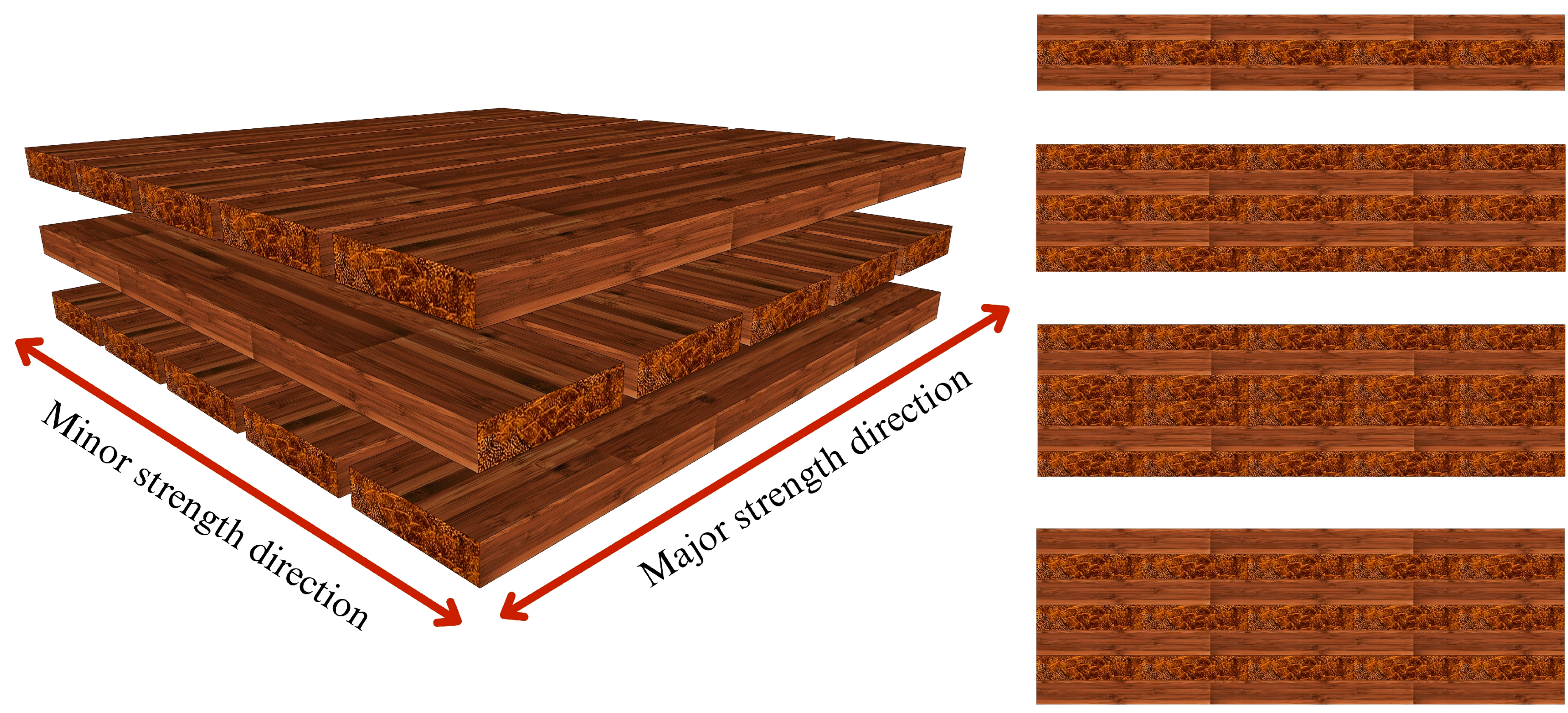
Disclaimer/Publisher’s Note: The statements, opinions and data contained in all publications are solely those of the individual author(s) and contributor(s) and not of MDPI and/or the editor(s). MDPI and/or the editor(s) disclaim responsibility for any injury to people or property resulting from any ideas, methods, instructions or products referred to in the content. |
© 2026 by the authors. Licensee MDPI, Basel, Switzerland. This article is an open access article distributed under the terms and conditions of the Creative Commons Attribution (CC BY) license.