Article

Decline or Rejuvenation? Efficiency Development of China’s National Scenic Areas
1
Key Laboratory of Regional Sustainable Development Modeling, Institute of Geographic Sciences and Natural Resources Research, Chinese Academy of Sciences, Beijing 100101, China
2
College of Resources and Environment, Chinese Academy of Sciences, Beijing 100049, China
3
East China Sea Research Institute of Tourism, Ningbo University, Ningbo 315211, China
*
Author to whom correspondence should be addressed.
Forests 2022, 13(7), 995; https://doi.org/10.3390/f13070995
Submission received: 26 May 2022 / Revised: 21 June 2022 / Accepted: 22 June 2022 / Published: 24 June 2022
(This article belongs to the Special Issue Nature-Based Tourism and Nature Conservation Activation by Tourism)

Abstract

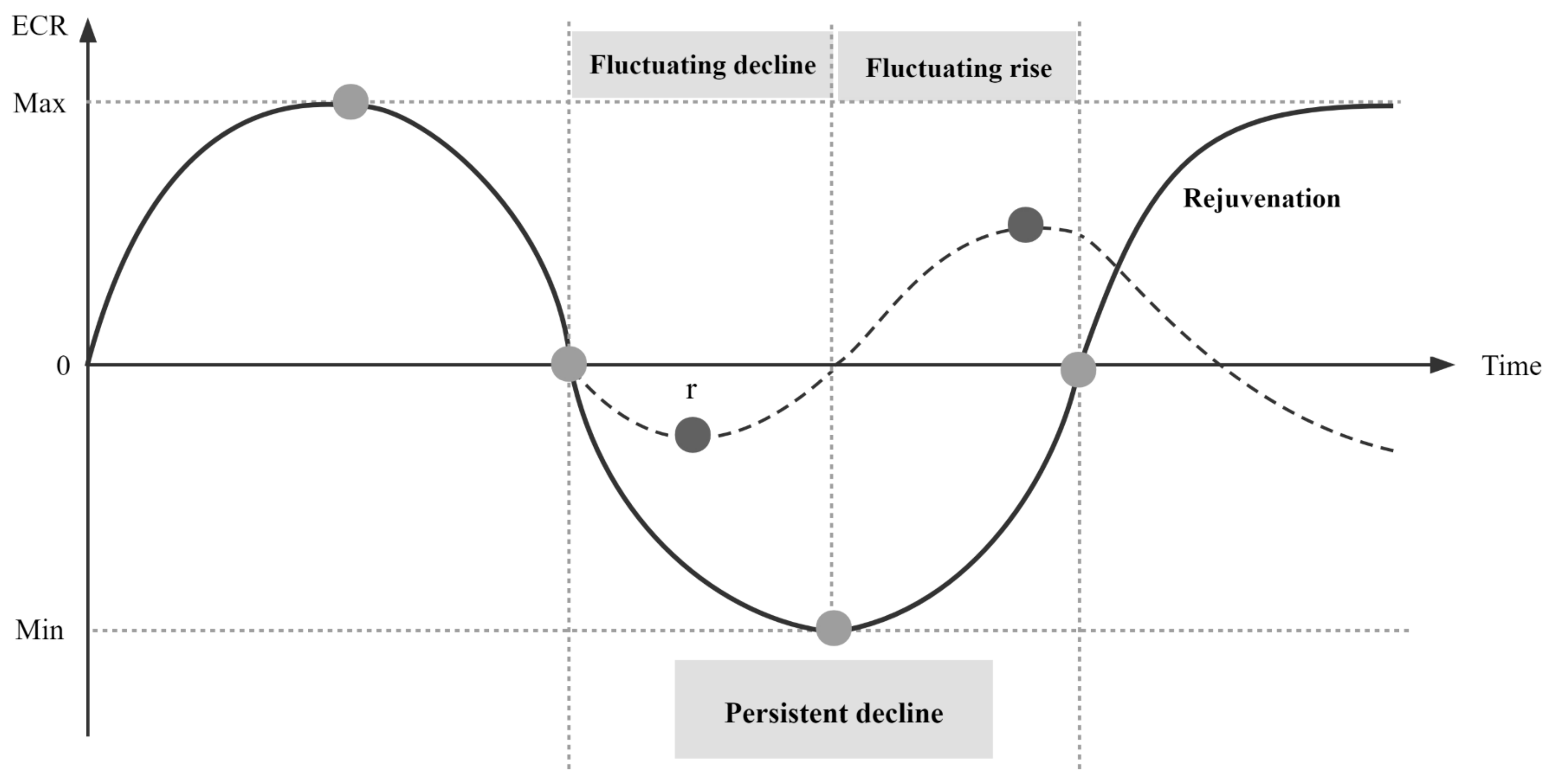
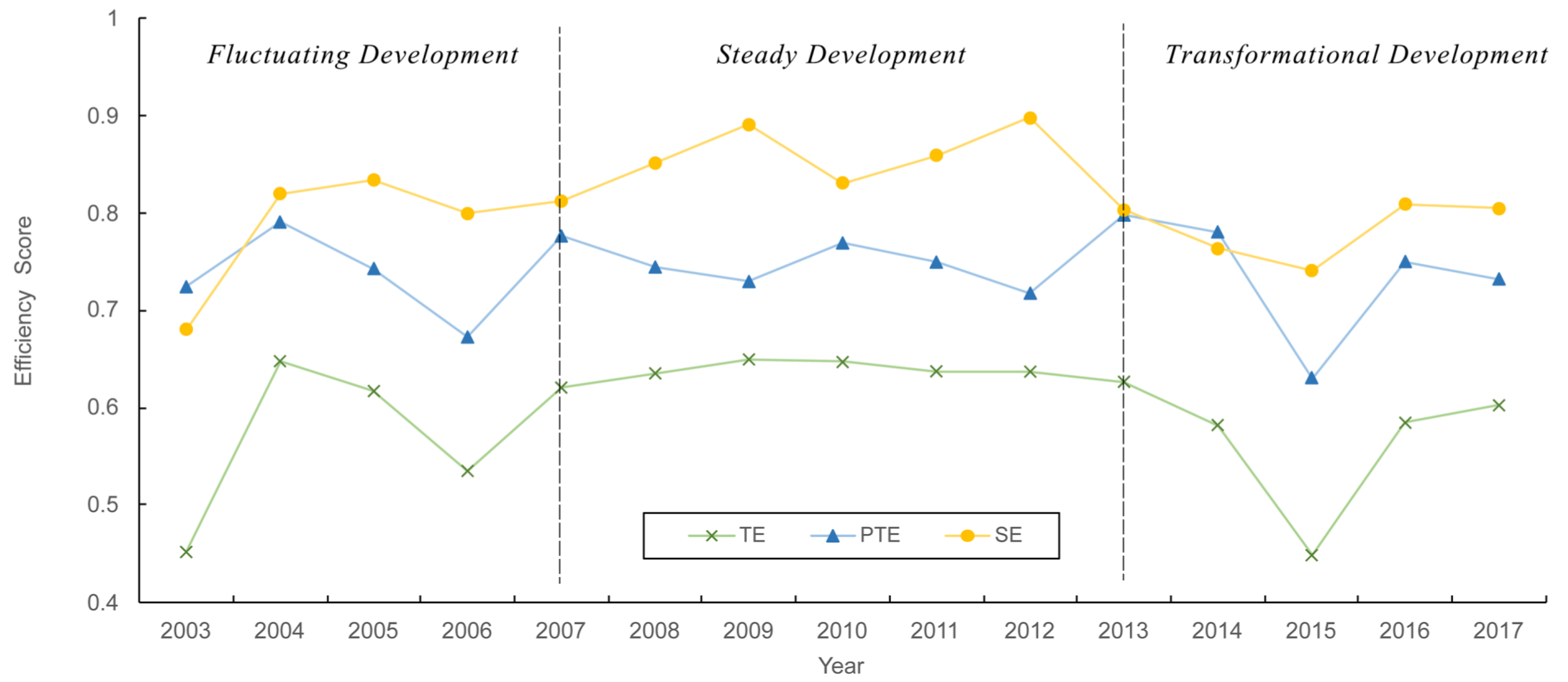
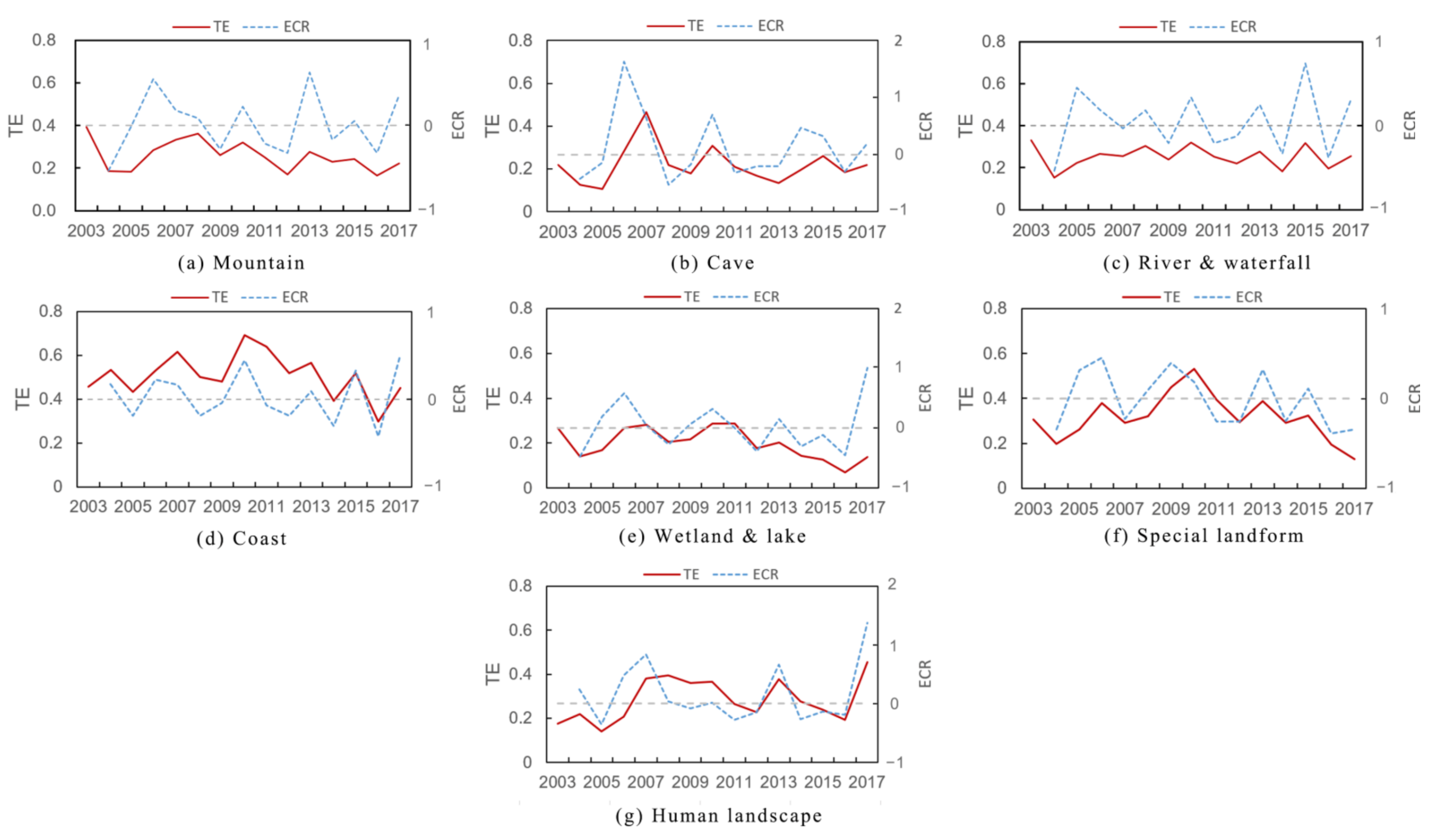
The decline is one of the essential issues for developing tourism destinations. The rapid adoption of appropriate policies will enable them to reverse the decline and enter the rejuvenation stage in time. This study advocated establishing an operational evaluation model of tourism efficiency with DEA and the super-SBM model to estimate when China’s mass tourism destinations are in decline and rejuvenation based on the tourism area life cycle (TALC) theory regarding China’s national scenic areas (NSAs) samples. The results show that the development of China’s mass tourism destinations can be divided into three phases, in which there is a clear process of persistent decline and rejuvenation. Different types of NSAs vary in terms of efficiency level and change trends. Human landscape, caves, and wetland and lakes all have distinct phases of persistent decline, but humanistic landscapes show a significant rejuvenation trend. These findings provide an innovative re-interpretation of the TALC model.
Keywords: national scenic areas (NSAs); efficiency; decline; rejuvenation; TALC; China national scenic areas (NSAs); efficiency; decline; rejuvenation; TALC; China