Review

The Effects of Environmental Changes on Plant Species and Forest Dependent Communities in the Amazon Region


by
Diego Oliveira Brandão
1,*,
Lauro Euclides Soares Barata
2 and
Carlos Afonso Nobre
1
1
Postgraduate in Earth System Science (PGCST), National Institute for Space Research (INPE), Sao Jose dos Campos 12227-010, Brazil
2
R&D Laboratory on Bioactive Natural Products, Federal University of West Para (UFOPA), Santarem 68035-110, Brazil
*
Author to whom correspondence should be addressed.
Forests 2022, 13(3), 466; https://doi.org/10.3390/f13030466
Submission received: 31 December 2021 / Revised: 10 March 2022 / Accepted: 11 March 2022 / Published: 16 March 2022
(This article belongs to the Special Issue The Dynamic Interaction between People and Forest Ecosystems)

Abstract

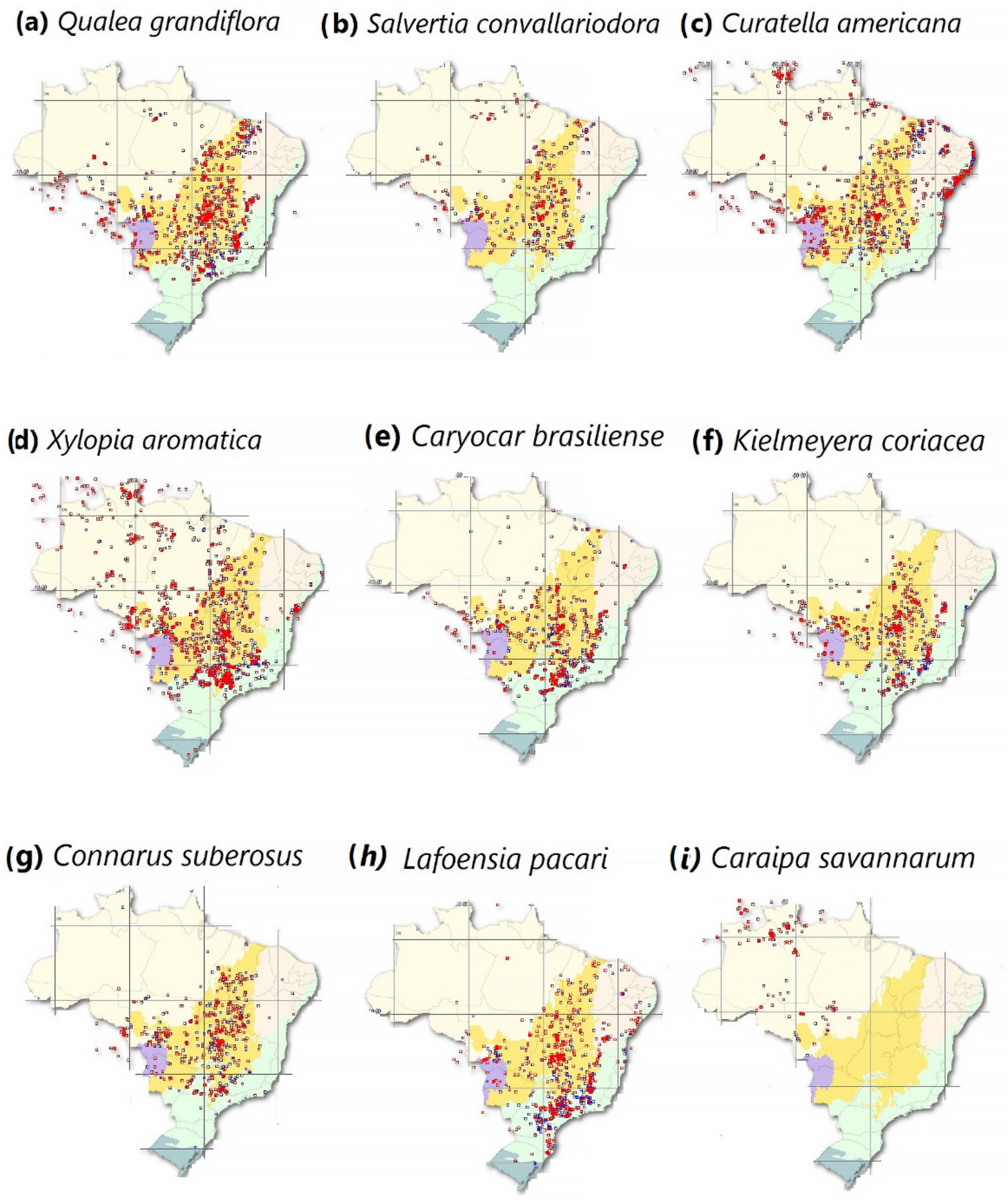
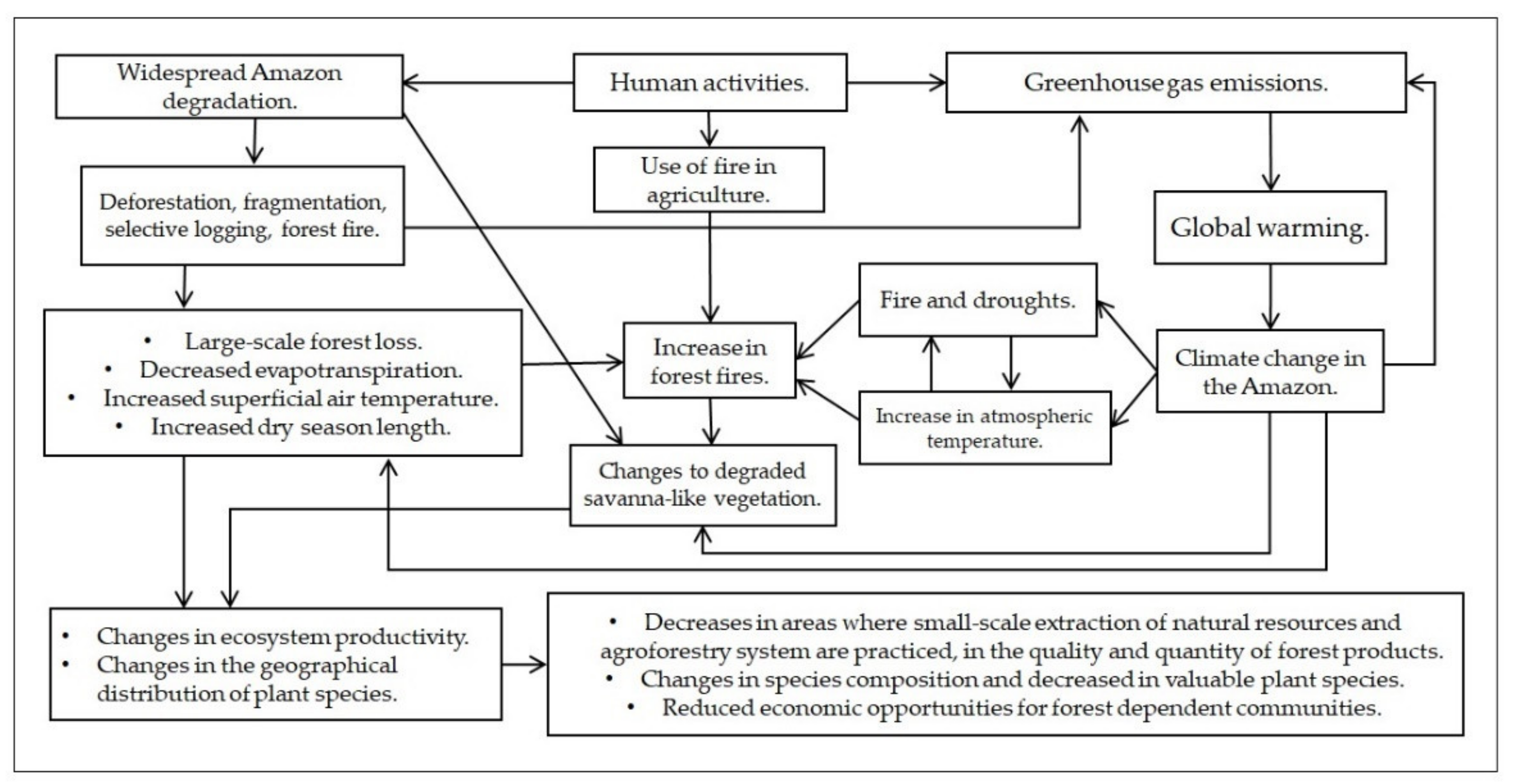
We review the consequences of environmental changes caused by human activities on forest products and forest-dependent communities in the Amazon region—the vast Amazonas River basin and the Guiana Shield in South America. We used the 2018 and 2021 Intergovernmental Panel on Climate Change reports and recent scientific studies to present evidence and hypotheses for changes in the ecosystem productivity and geographical distribution of plants species. We have identified species associated with highly employed forest products exhibiting reducing populations, mainly linked with deforestation and selective logging. Changes in species composition along with a decline of valuable species have been observed in the eastern, central, and southern regions of the Brazilian Amazon, suggesting accelerated biodiversity loss. Over 1 billion native trees and palms are being lost every two years, causing economic losses estimated between US$1–17 billion. A decrease in native plant species can be abrupt and both temporary or persistent for over 20 years, leading to reduced economic opportunities for forest-dependent communities. Science and technology investments are considered promising in implementing agroforestry systems recovering deforested and degraded lands, which could engage companies that use forest products due to supply chain advantages.
Keywords: agroforestry system; climate change; deforestation; forest degradation; non-timber forest products agroforestry system; climate change; deforestation; forest degradation; non-timber forest products