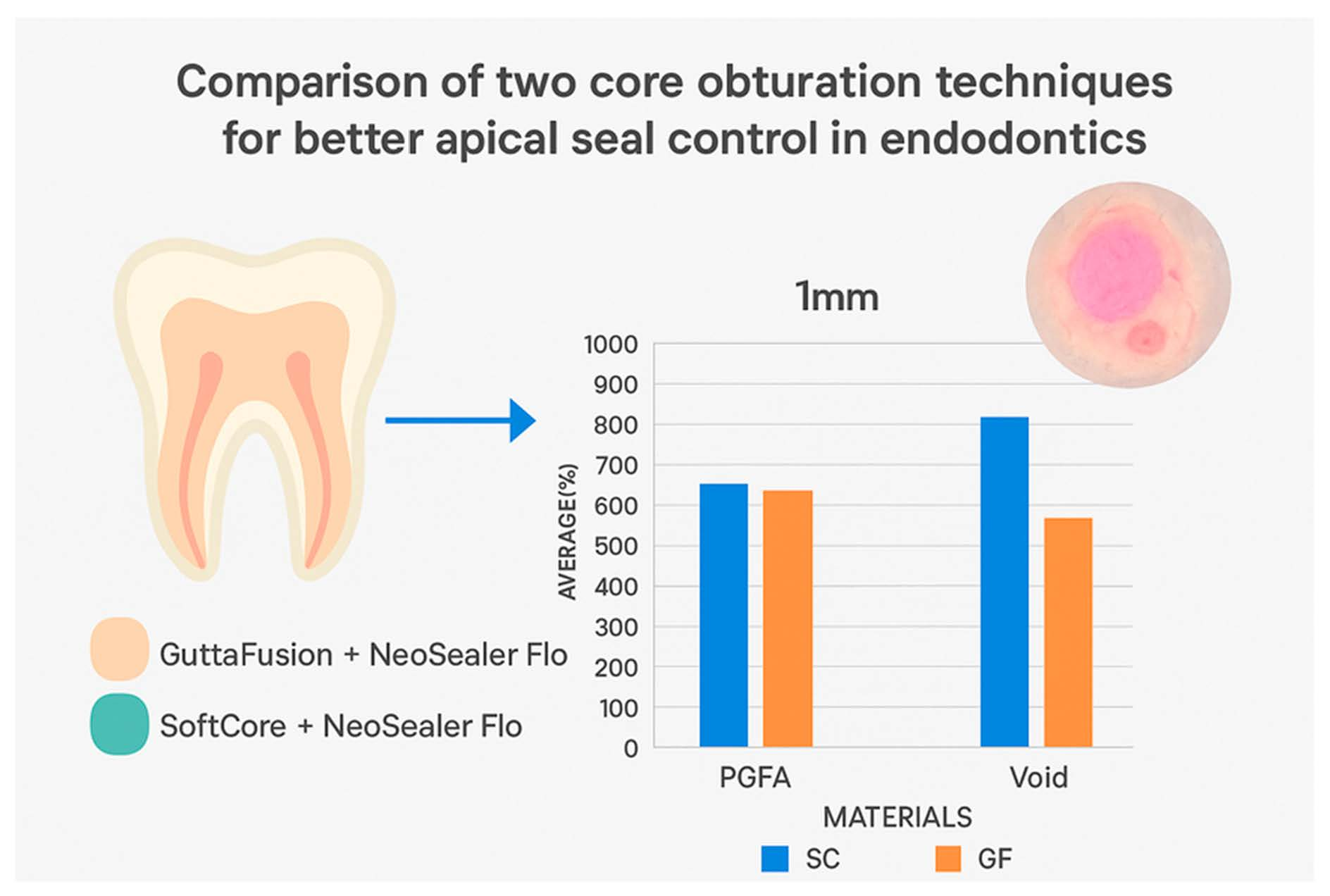
Percentage of Gutta-Percha-Filled Areas in Canals Obturated by Two Different Core Techniques with Endodontic Bioceramics Sealer

 ,
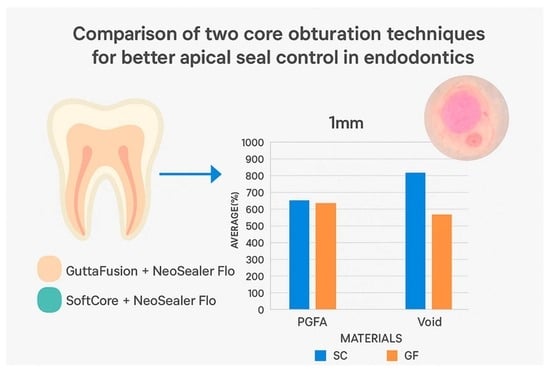
, Abstract
Share and Cite
Libonati, A.; Marroni, D.; Barbalace, G.; Campanella, G.; Campanella, V. Percentage of Gutta-Percha-Filled Areas in Canals Obturated by Two Different Core Techniques with Endodontic Bioceramics Sealer. Materials 2026, 19, 37. https://doi.org/10.3390/ma19010037
Libonati A, Marroni D, Barbalace G, Campanella G, Campanella V. Percentage of Gutta-Percha-Filled Areas in Canals Obturated by Two Different Core Techniques with Endodontic Bioceramics Sealer. Materials. 2026; 19(1):37. https://doi.org/10.3390/ma19010037
Chicago/Turabian StyleLibonati, Antonio, Danilo Marroni, Giulio Barbalace, Giulia Campanella, and Vincenzo Campanella. 2026. "Percentage of Gutta-Percha-Filled Areas in Canals Obturated by Two Different Core Techniques with Endodontic Bioceramics Sealer" Materials 19, no. 1: 37. https://doi.org/10.3390/ma19010037
APA StyleLibonati, A., Marroni, D., Barbalace, G., Campanella, G., & Campanella, V. (2026). Percentage of Gutta-Percha-Filled Areas in Canals Obturated by Two Different Core Techniques with Endodontic Bioceramics Sealer. Materials, 19(1), 37. https://doi.org/10.3390/ma19010037