Article

Determination of Temperature-Dependent Elastic Constants of Steel AISI 4140 by Use of In Situ X-ray Dilatometry Experiments


1
Institute for Applied Materials (IAM-WK), Karlsruhe Insitute of Technology (KIT), Engelbert-Arnold-Str. 4, 76131 Karlsruhe, Germany
2
Institute of Materials Research, Helmholtz-Zentrum Geesthacht (HZG), Max-Planck-Str. 1, 21502 Geesthacht, Germany
*
Author to whom correspondence should be addressed.
Materials 2020, 13(10), 2378; https://doi.org/10.3390/ma13102378
Submission received: 16 April 2020 / Revised: 11 May 2020 / Accepted: 16 May 2020 / Published: 21 May 2020
(This article belongs to the Section Advanced Materials Characterization)

Abstract

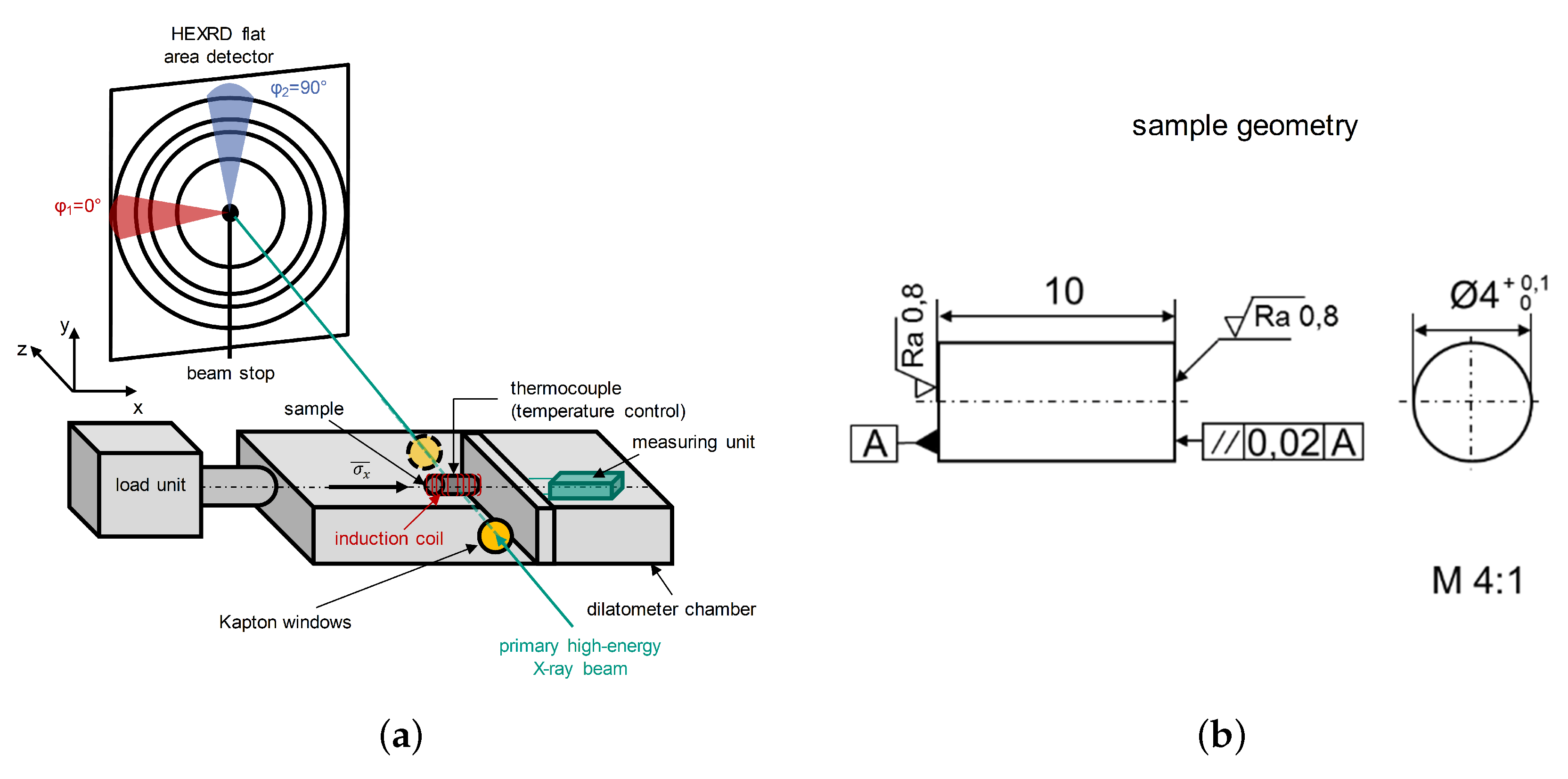
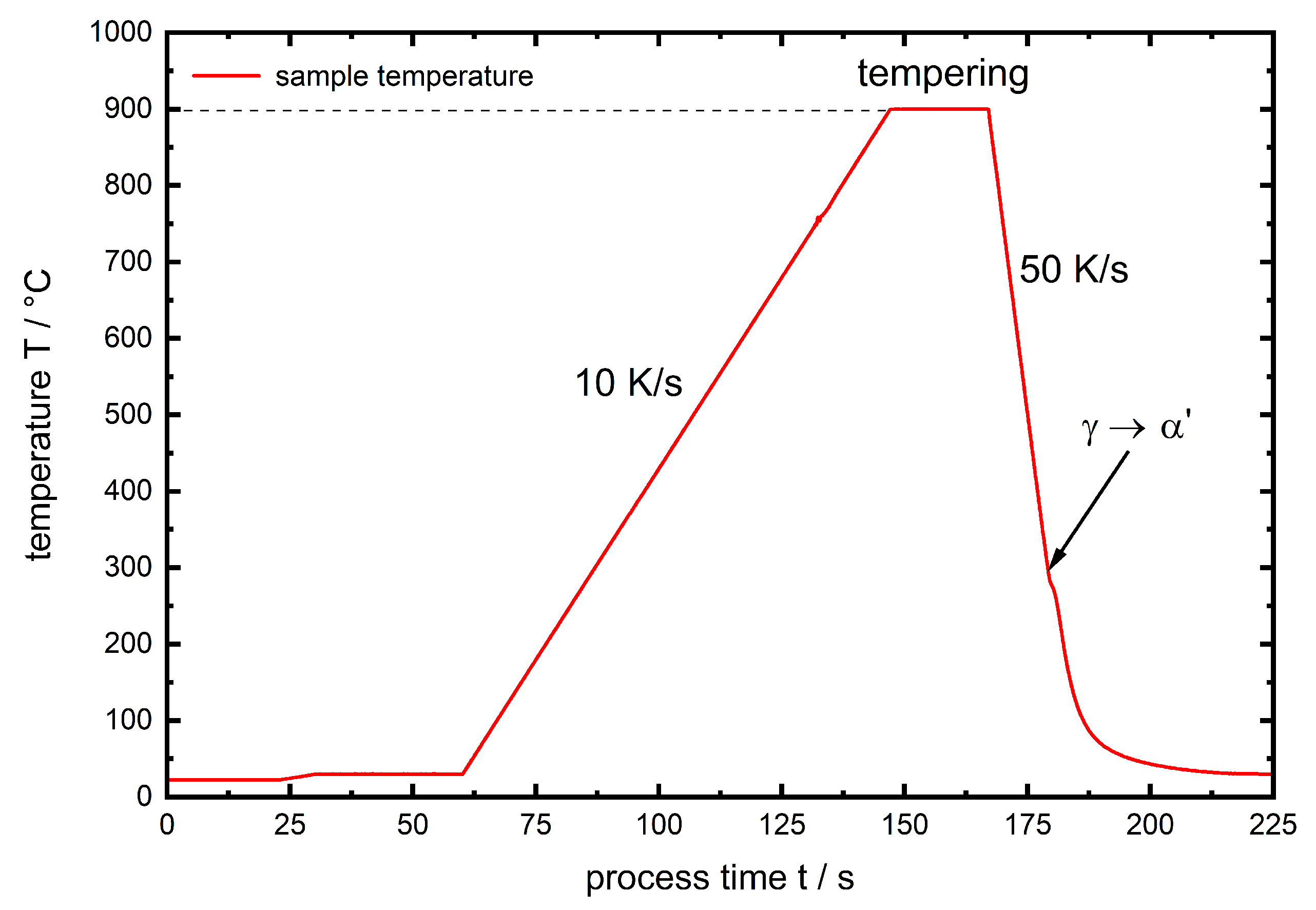
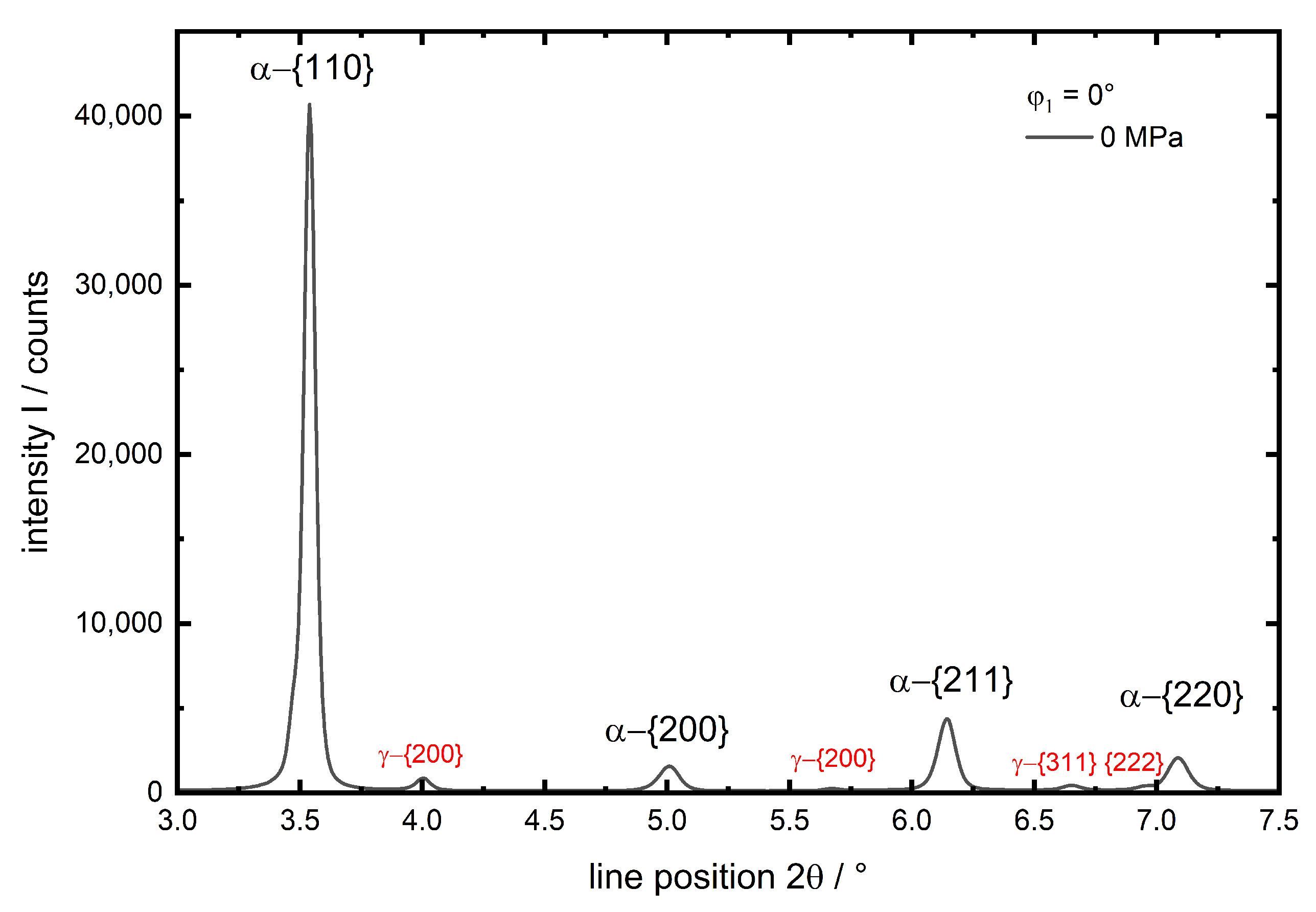
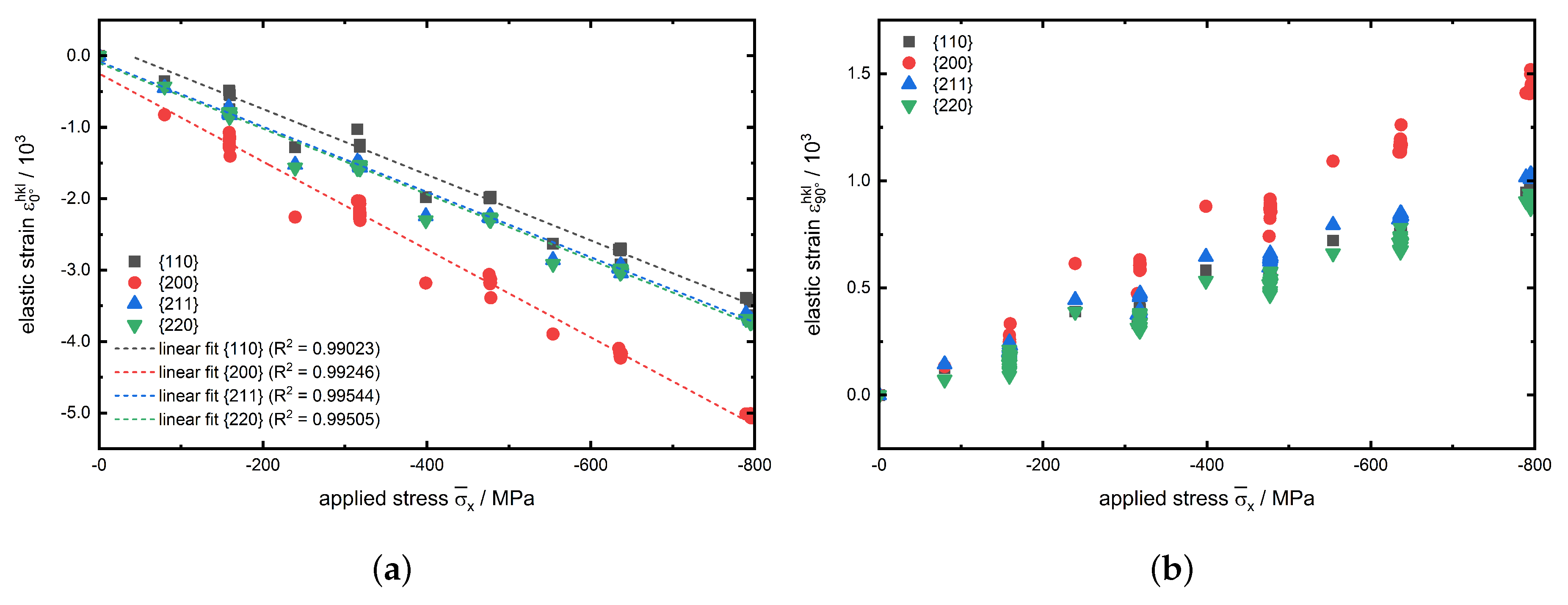
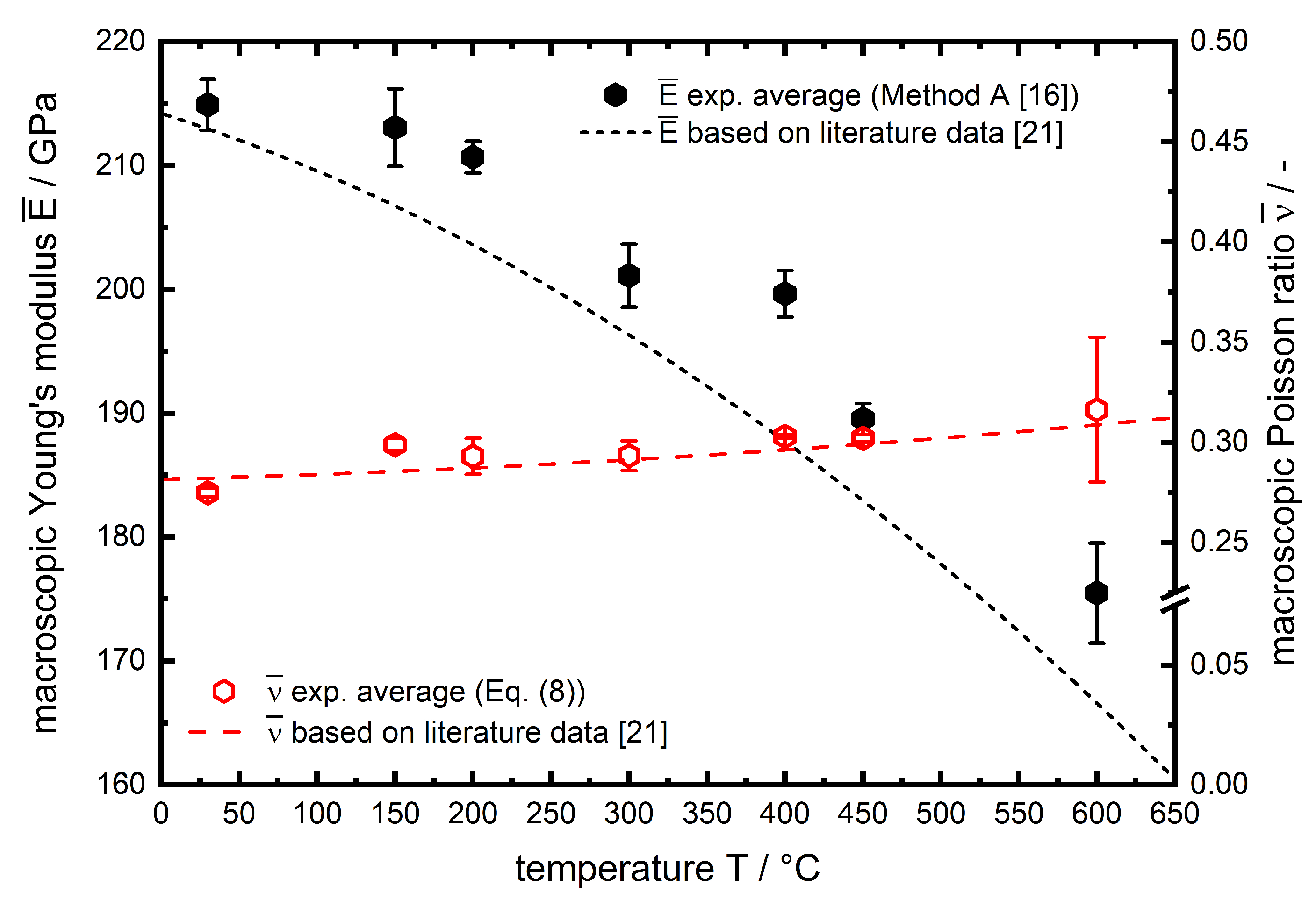
In situ dilatometry experiments using high energy synchrotron X-ray diffraction in transmission mode were carried out at the high energy material science beamline P07@PETRAIII at DESY (Deutsches Elektronen Synchrotron) for the tempering steel AISI 4140 at defined mechanical loading. The focus of this study was on the initial tempering state ( f e r r i t e ) and the hardened state ( m a r t e n s i t e ). Lattice strains were calculated from the 2D diffraction data for different h k l planes and from those temperature-dependent lattice plane specific diffraction elastic constants ( D E C s ) were determined. The resulting coupling terms allow for precise stress analysis for typical hypoeutectoid steels using diffraction data during heat treatment processes, that is, for in situ diffraction studies during thermal exposure. In addition, by averaging h k l specific Y o u n g s m o d u l i and P o i s s o n r a t i o s macroscopic temperature-dependent elastic constants were determined. In conclusion a novel approach for the determination of phase-specific temperature-dependent DECs was suggested using diffraction based dilatometry that provides more reliable data in comparison to conventional experimental procedures. Moreover, the averaging of lattice plane specific results from in situ diffraction analysis supply robust temperature-dependent macroscopic elastic constants for martensite and ferrite as input data for heat treatment process simulations.
Keywords: in situ X-ray diffraction; elastic constants; synchrotron radiation; tempering steel; AISI 4140; dilatometry in situ X-ray diffraction; elastic constants; synchrotron radiation; tempering steel; AISI 4140; dilatometry