1. Introduction
Saudi Vision 2030 aspires to combat climate change by boosting power production from renewable energy sources, which will pose difficulties for Saudi power infrastructure and require a balance of supply and demand. As renewable energy becomes more prevalent, the significance of adaptable low-carbon technology will grow. The government aims to achieve net-zero emissions by 2060 and reduce dependency on fossil fuels by decarbonizing the transportation, industrial, and energy sectors [
1]. NEOM underscores the worldwide transition to renewable-energy urban centers and the need for sophisticated solutions to address the intermittency of solar and wind resources. The analysis underscores that extensive hydrogen production, storage, and hydrogen-fueled electrical generation are crucial for NEOM to establish a dependable, low-carbon, and entirely renewable energy system. The introduction identifies hydrogen as the crucial facilitator for achieving NEOM’s long-term sustainability and energy security objectives [
2].
To mitigate carbon dioxide (CO
2) emissions from energy production, hydrogen has attracted considerable interest as a viable alternative, yielding solely water vapor as a byproduct. The worldwide interest in hydrogen is now on the rise, with several nations implementing laws and measures to enhance its production and use. Gas turbines are essential for fulfilling global energy requirements, offering efficient and adaptable options for electricity production and industrial use [
3]. Gas turbines are crucial for meeting global energy demands, providing efficient and flexible power generation options. There is a growing focus on hydrogen as a key energy carrier for decarbonizing difficult sectors and enhancing the flexibility of systems reliant on variable renewable energy. The model indicates that electrolyzers, when paired with renewable energy output and hydrogen storage, can produce hydrogen. This suggests that utilizing hydrogen in gas turbines could facilitate time-shifting in power production, particularly as the share of variable renewable energy increases [
4].
Hydrogen turbines (H
2T) enhance power system flexibility and renewable energy integration by pairing wind or solar energy with hydrogen production. This method utilizes surplus renewable energy while generating clean fuel for turbines, minimizing energy restriction and improving grid stability. Wind-to-hydrogen systems can act as controllable loads, supporting DC connection stability. Hydrogen-fueled turbines offer reliable power management and bolster voltage and frequency stability, particularly under weak grid conditions or low-voltage ride-through events [
5]. Incorporating hydrogen into natural gas infrastructure, via co-firing in gas turbine combined-cycle (GTCC) plants, is an efficient way to reduce emissions with little capital expenditure. This technology promotes hydrogen utilization in a variety of applications, including gas-to-liquid processes and fuel cells; therefore, it assists in the shift to cleaner energy. Advances in hydrogen combustion technology, particularly in turbines with high hydrogen concentration, suggest that this approach is a viable option for considerable carbon reductions while preserving reliability and efficiency [
6].
Green hydrogen refers to hydrogen produced by methods that harness renewable energy sources [
7]. Technologies for green hydrogen generation are essential for decarbonizing hard-to-abate industries, particularly in Saudi Arabia’s petrochemical sector. Hydrogen is seen as a cost-effective long-term energy storage solution, potentially aiding the integration of intermittent renewable energy. Its anticipated role is crucial for establishing a sustainable energy framework [
1]. Numerous water electrolysis systems are available, varying mainly by the type of electrolyte used. The three main types include alkaline electrolyzers (AEL), proton exchange membrane cells (PEM), and solid oxide electrolysis cells (SOEC). AEL and PEM typically operate at near ambient temperatures (up to 90 °C), while SOECs function at higher temperatures (700 to 950 °C). Electrolytic-grade hydrogen is utilized as a cooling medium in energy sectors and is increasingly sought for energy storage from renewable sources, smart-grid flexibility, and hydrogen vehicle refueling stations [
8]. Alongside hydrogen-based storage, advanced thermal energy storage (TES) technologies have arisen as crucial facilitators for extensive renewable energy integration. Modern thermal energy storage methods encompass sensible heat storage utilizing molten salts, phase change materials (PCMs) that leverage latent heat phenomena, and thermochemical energy storage systems that provide elevated energy density and prolonged storage duration. Recent studies emphasize the significance of hybrid TES configurations in enhancing system flexibility, minimizing renewable curtailment, and facilitating sector coupling among power, heat, and hydrogen systems. While TES primarily focuses on thermal energy management, its integration with hydrogen and power systems is increasingly acknowledged as a synergistic approach to augmenting overall energy system resilience and sustainability [
9]. An alkaline water electrolyzer is included in the system for hydrogen generation. Alkaline electrolyzers use an alkaline electrolyte solution, such as potassium hydroxide, to facilitate the transport of hydroxide ions between the anode and cathode. Although alkaline electrolyzers have extended cold-start durations, they provide more economical solutions and superior stack longevity compared to other electrolyzer technologies [
10].
An accurate depiction of photovoltaic (PV) performance necessitates comprehensive modeling of semiconductor physics and nonlinear current–voltage (I–V) characteristics, influenced by factors such as irradiance, temperature, and internal recombination. While single-diode and double-diode models are common, their oversimplifications limit precision in specific conditions. The triple-diode model (TDM) enhances electrical representation by incorporating three diode branches, addressing issues like diffusion, depletion-region recombination, and leakage effects. This model aligns I–V curves across various conditions and improves physical realism and parameter identifiability, making it particularly relevant for high-efficiency PV modules and advanced technologies, despite its computational complexity. The TDM is increasingly recognized for accurate parameter extraction and performance forecasting in PV modeling systems [
11,
12,
13].
Hydrogen production (H
2P) can enhance system adaptability and decarbonization. This study examines renewable-driven hydrogen routes, focusing on energy conversion and system efficiency, using a triple-diode model (TDM) for accurate PV performance representation. Unlike prior research, it integrates a PV-electrolyzer-(H
2) turbine hybrid architecture and reintroduces (H
2T) power into the electrolysis process, creating a closed-loop system that improves (H
2P) without extra renewable capacity. This innovative modeling and feedback mechanism provide a comprehensive evaluation of solar-driven (H
2) systems [
14].
This work provides an integrated and scientific contribution to renewable energy modeling by addressing the full framework from PV-power modeling to H2P production based on hybrid power. This multi-phase integration of PV modeling, H2 generation, H2 storage, and hydrogen-to-power conversion provides a cohesive approach that has not been investigated with this degree of time fidelity and scientific specificity:
SC1: A sophisticated photovoltaic characterization framework is developed using the Triple-Diode Model (TDM), facilitating precise estimates of PV characteristics across diverse irradiance and temperature circumstances. This improves the accuracy of I–V curve reconstruction and prediction relative to other methods.
SC2: The study establishes a comprehensive hydrogen production model that correlates PV-generated energy with Specific Energy Consumption (SEC) and Faraday-based electrochemical equations, enabling precise measurement of hydrogen outputs on an hourly, daily, and monthly basis.
SC3: The study contains a full H2T framework that translates H2 mass transfer into energy using real turbine efficiencies and H2’s lower heating value (LHV), allowing for a detailed examination of green H2 utilization techniques.
SC4: The study presents an innovative hybrid power framework, wherein H2 generated from excess PV-power production is stored and subsequently transformed into dispatchable turbine power, thus establishing a cohesive approach to evaluating system-level efficiency, energy equilibrium, and long-term utilization of renewable energy within a Saudi environment.
H2-based power conversion is being increasingly investigated for system integration, focusing on both H2P and its recoverable energy contribution to power systems within efficiency limits. Key losses occur during electrical-to-chemical conversion in electrolysis, storage, conditioning, and chemical-to-electrical conversion in turbines, limiting overall round-trip performance. Research on H2-fueled gas turbines and co-firing in GTCC architectures indicates that energy-recovery measures, like combined-cycle utilization and operational flexibility, enhance H2’s dispatchable resource value. This study quantifies H2-to-power recovery using an LHV-based turbine and assesses a hybrid feedback scheme to improve electrolysis and H2P under realistic conditions.
The proposed TDM–AEL–H2T system significantly diverges from traditional power-to-H2-to-power (P2H2P) frameworks due to three essential architectural and modeling differences, in addition to model coupling. The PV subsystem is modeled using a physics-based TDM, allowing for the precise characterisation of diffusion, depletion-region recombination, and leakage/grain-boundary losses often overlooked in SDM- and DDM-based PV–electrolysis analyses. Secondly, the system undergoes assessment by high-resolution hourly simulations over an extended summer duration, effectively capturing intraday, diurnal, and seasonal fluctuations in irradiance and temperature that are sometimes oversimplified in steady-state or daily evaluations. Crucially, in contrast to traditional open-chain P2H2P configurations, the proposed design has a closed-loop hybrid topology that recovers power from H2 turbines (H2T) using stored H2, which is then reintegrated with PV electricity to facilitate electrolysis. This power-recycling mechanism allows the direct measurement of energy recovery, hybridization benefits, and enhancements in H2 generation without requiring further PV capacity, offering a coherent and comprehensive assessment of solar-driven H2 processes.
This research is divided into two main sections. The first section is allocated to examining the mathematical techniques for modeling solar energy output and correlating it with H
2 production equations based on specific consumption and Faraday’s law. This section addresses the use of hydrogen as a feedstock in turbines for power generation and its repurposing as a hybrid energy source with solar energy to enhance H
2P. The second section delineates the modeling study findings and conclusions on renewable energy modeling using triple-diode modeling, the hourly and daily H
2 consumption during the summer months (May–September) for 2025, and the use of PV-generated H
2 as a feedstock in turbines for H
2 power generation. This discussion ultimately addresses the provision of hybrid energy
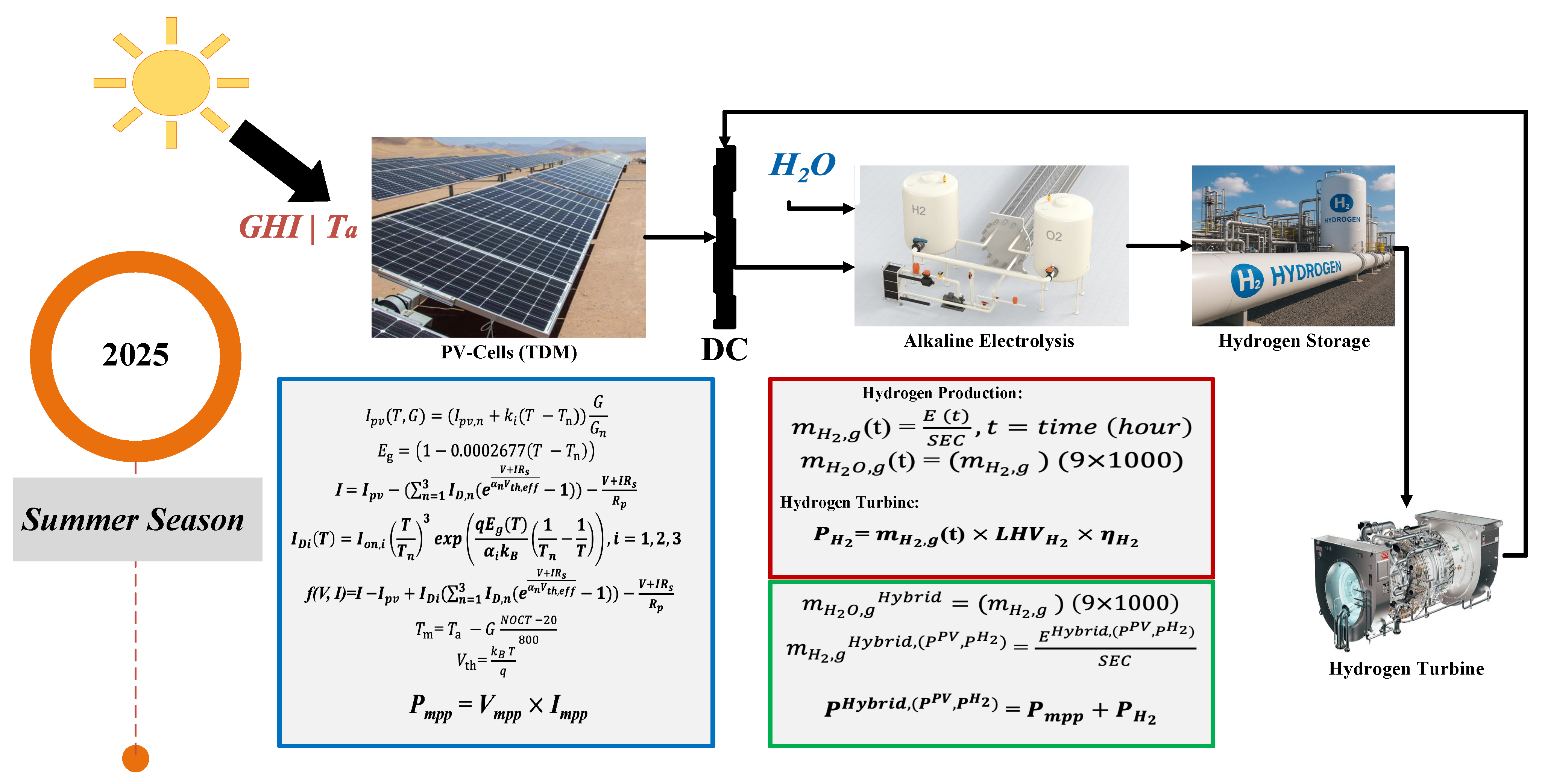
to the electrolysis process to augment H
2 generation as shown in
Figure 1.
Table 1 highlights previous research that combined PV modeling with electrolyzers to obtain H
2 findings and used H
2 to generate power via turbine.
2. Materials and Methods
This section elucidates the methodology that combines data-driven research, sophisticated PV modeling, and hydrogen energy conversion to provide a thorough assessment of green H2 production from solar energy sources. The research is conducted at the PV module level (610 W, 144 cells), and the suggested methodology is linearly scalable to bigger PV strings or plants. During the first phase, high-resolution hourly datasets of global horizontal irradiance (GHI) and ambient temperature were acquired for the Shuaiba solar power project in Jeddah, Western Region, Saudi Arabia. This extensive PV solar power facility employs highly efficient bifacial modules and uniaxial tracking systems, designed to produce 2660 MW of clean energy. The data were refined to guarantee uniformity and representativeness of regional climatic conditions. The atmospheric inputs were utilized in a three-phase PV model that precisely characterizes the nonlinear current–voltage (I–V) and power–voltage (P–V) characteristics of the PV module under fluctuating irradiance and temperature conditions, facilitating an accurate estimation of the maximum power point () throughout the summer season.
In the subsequent phase, the solar energy output was transformed into hydrogen using an electrolysis model that included specific energy consumption (SEC) or Faraday law while considering actual conversion efficiencies and system losses. The generated hydrogen was utilized in a H
2T model to assess its power-generating capacity, using hydrogen’s low calorific value and the turbine’s efficiency to ascertain the recoverable electrical energy. Algorithm 1 presents pseudo, which is an overview of the distinct phases, which are elaborated upon in the next subsections. This cohesive, systematic paradigm connects the unpredictability of solar energy resources, photovoltaic energy conversion, hydrogen generation, and energy recovery, offering a thorough foundation for assessing energy-technological performance.
| Algorithm 1 Pseudocode for TDM → H2 → turbine → hybrid power |
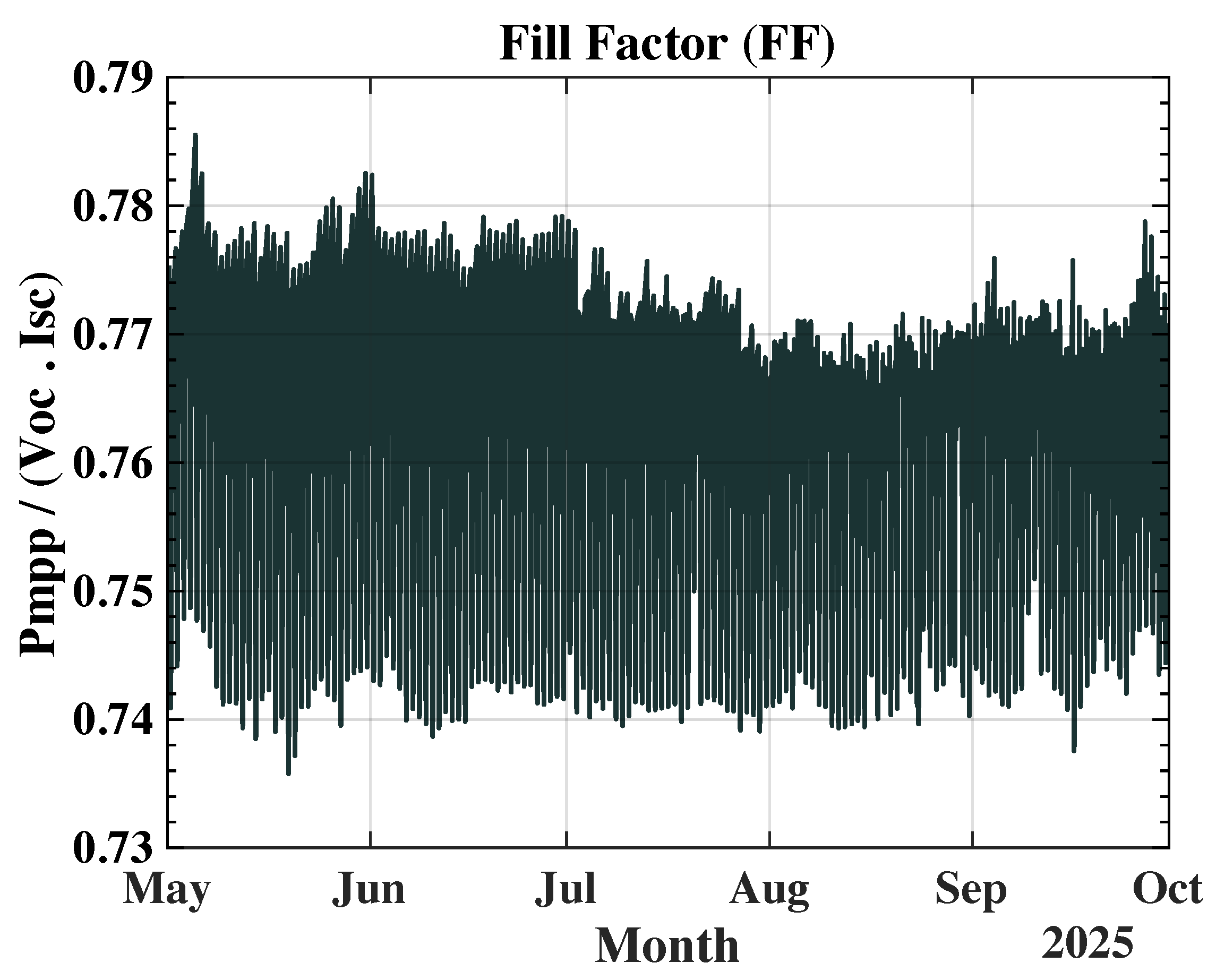
Input: and Parameters: PV Power (TDM): , , , , , , , , , , , , , NOCT Electrolyzer (Alkaline): , K, , , , , SEC value or Faraday constant (F) H2T: , for Time step (t) do Step 1: Triple-Diode PV model (TDM) Compute Equations ( 1)–( 7) Generate I–V and P–V curves Extract , , , and FF Obtain PV power output Step 2: Hydrogen production model (electrolyzer) Input if SEC-based method is selected then Compute H 2P using Equation ( 13) else Compute H 2P using Equations ( 14)–( 17) end if Compute H2 mass flow rate Compute water consumption using Equation ( 18) Step 3: H2T turbine (H2T) model Input Compute using Equation ( 19) Obtain Step 4: Hybrid integration Compute hybrid H 2P by using Equations ( 20)–( 22) end for Output: P–V and I–V curves; H2P; water consumption; H2T; hybrid H2P.
|
2.1. Data Description
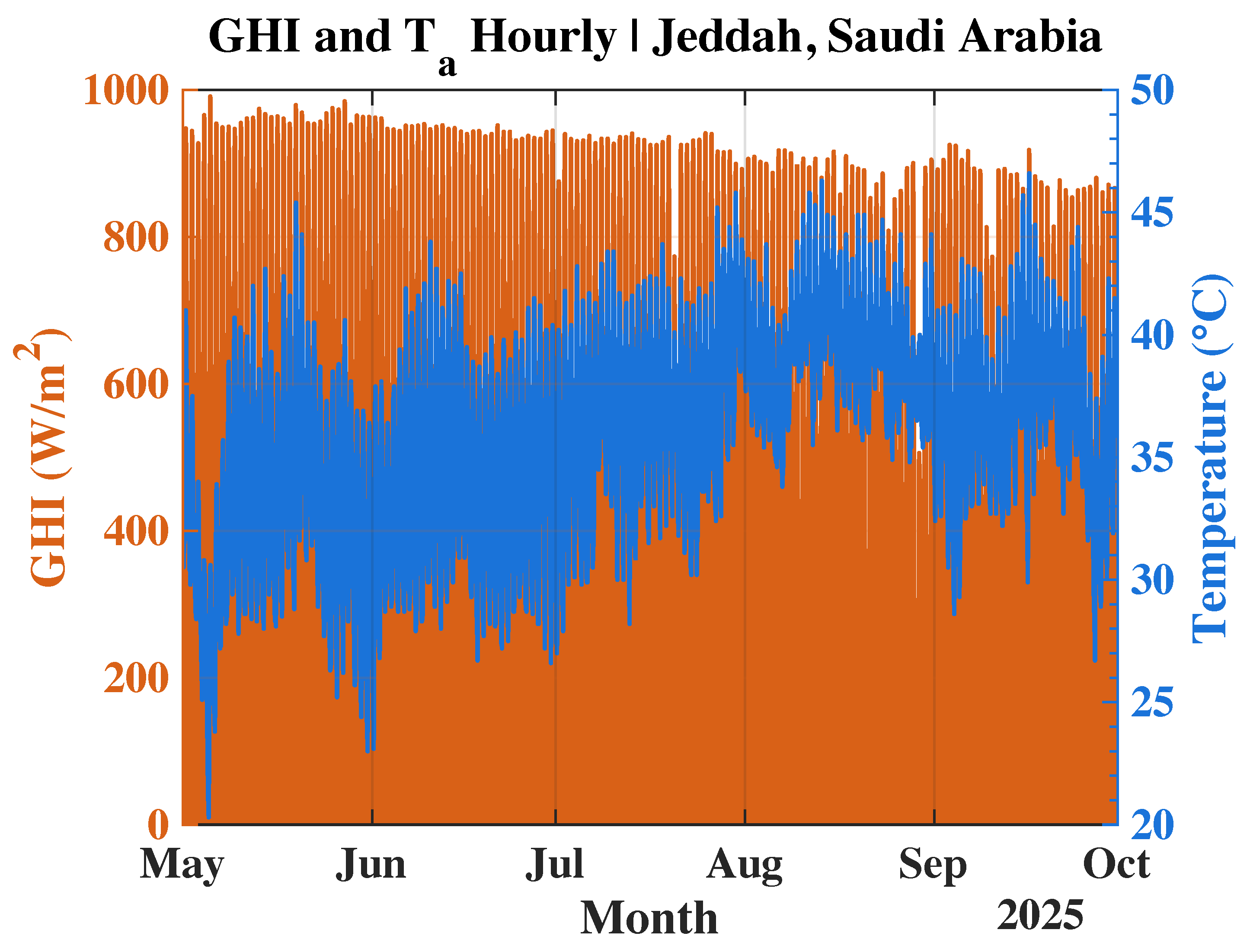
The dataset had two elements: global horizontal irradiation (GHI) and ambient temperature (Ta). The data was sourced from the National Center for Meteorology database and the Open-Meteo partners (Free Weather API). The measurement station in western Saudi Arabia, Shuaibah, is situated at about 20.68° North latitude and 39.52° East longitude, as seen in
Figure 2.
Table 2 demonstrates datasheet under standard test conditions (STC), the CS6.1-72TB-610 module [
18] produces 610 W at 44.4 V and 13.74 A; moreover, contingent upon rear-side irradiation, its effective power may rise to around 732 W, indicating a bifacial gain of almost 20%.
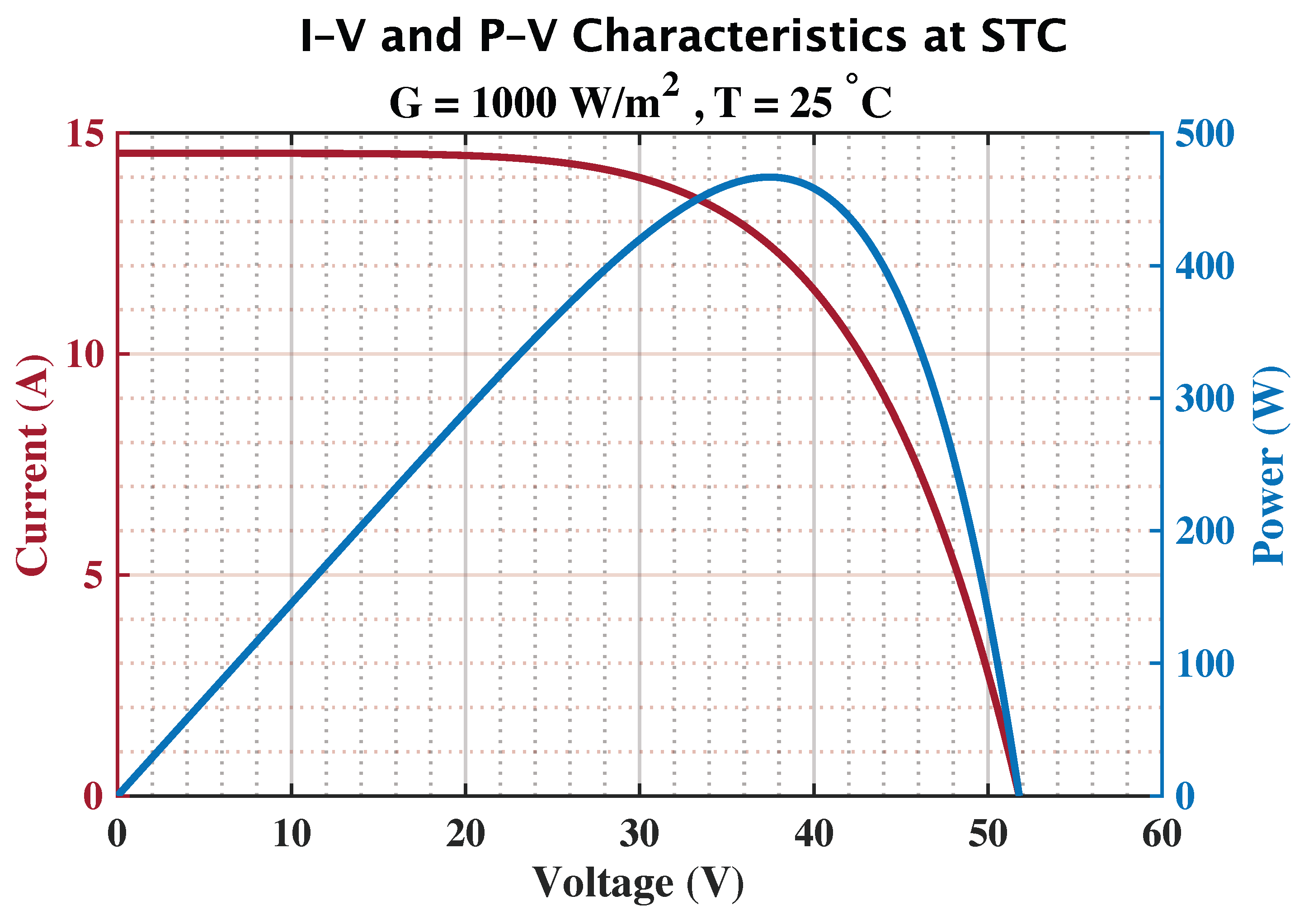
Figure 3 Evaluation of the triple-diode model under standard test conditions by comparing the modeled and manufacturer datasheet current–voltage characteristics (
,
) [
18]. The datasheet’s critical operational parameters (
,
, and MPP:
–
) are emphasized to measure point-specific variations.
Table 3 depicts an advanced and efficient alkaline water electrolysis system intended for large-scale hydrogen production. The modular design facilitates many applications, ranging from small units generating 50 Nm
3/h to large industrial operations producing over 19,000 Nm
3/h, approximately equal to 42 tons of H
2 daily [
19].
2.2. Triple-Diode Model (TDM)
The triple-diode model (TDM) demonstrated superior performance compared to the standard single diode model (SDM) and double diode models (DDM) by accurately simulating the intricate non-linearity of photovoltaic cells. Furthermore, the TDM is considered an effective model for predicting the physical performance of diverse PV modules, accounting for the effects of grain boundaries and elevated leakage current in the materials of PV solar modules. This method use a three-diode model to represent the photovoltaic cell.
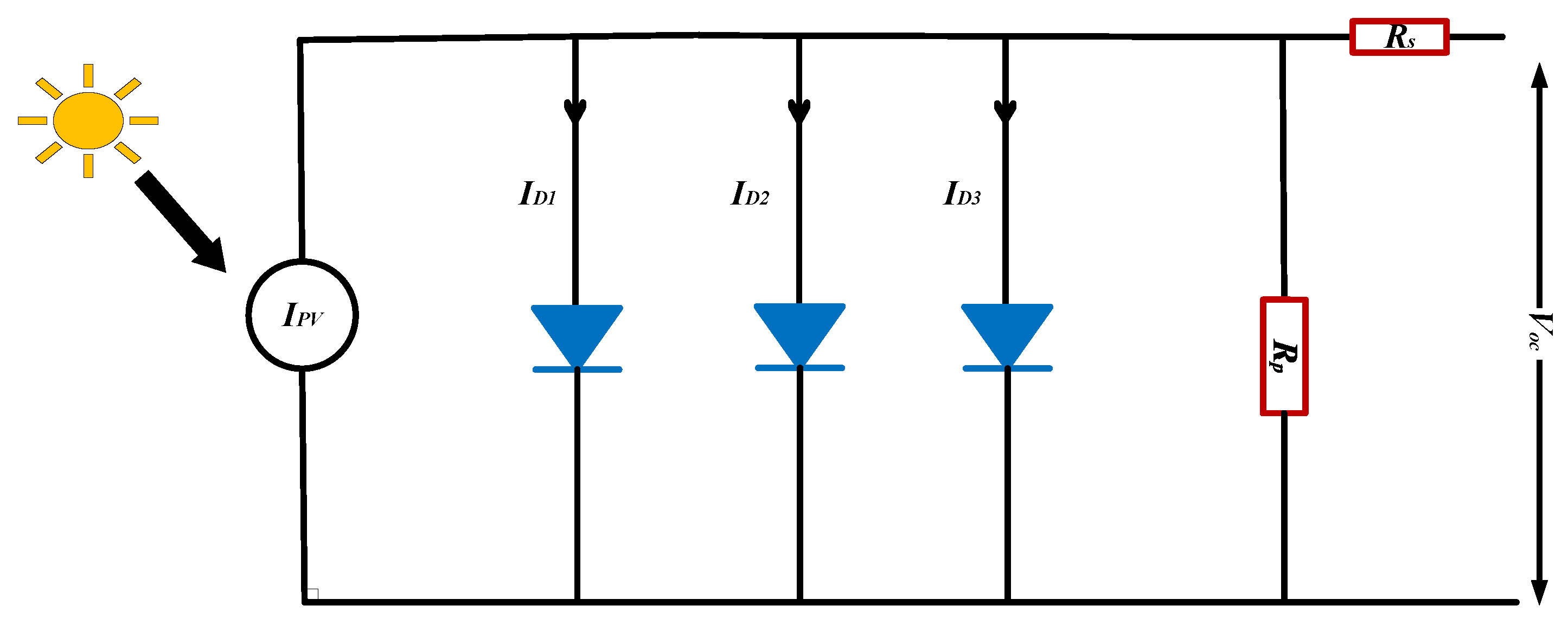
Figure 4 illustrates the three-diode model and the currents in the three diodes are
,
, and
.
denotes the current associated with diffusion and recombination in the emitter and bulk areas of the p–n junction.
represents the recombination current inside the depletion area.
denotes the influence of grain boundaries and recombination current inside the depletion area. The series resistance (
) denotes the resistance of the semiconductor material to the current and in the neutral regions of the solar cell. The parallel resistance (
) signifies the leakage current at the solar cell’s surface. The current of a TDM is mathematically expressed as follows [
20,
21,
22,
23]:
where
represents photocurrent as a function of temperature and irradiance,
denotes reverse saturation current for each diode,
indicates bandgap energy as a function of temperature,
refers to shunt resistance as a function of irradiance,
is thermal voltage per cell,
is module temperature (NOCT model),
standa for effective thermal voltage,
is initial guess for open-circuit voltage,
represents power and maximum power point (mpp), and FF is Fill Factor.
is the Newton–Raphson method is used to solve the (I–V) implicit function. The TDM parameters were obtained from a synthesis of manufacturer datasheet values [
18] and literature-reported diode and recombination coefficients. The nonlinear I–V equations were resolved using the Newton–Raphson technique, with a convergence tolerance of
. Although the TDM demands more computing resources than SDM and DDM owing to its elevated parameter count, the additional runtime is minimal for hourly and seasonal simulations and is justified by the enhanced loss representation.
The nine parameters of the TDM were determined by a hybrid process that integrates datasheet-based initialization, analytical semiconductor relationships, and numerical refinement. The initial values of photocurrent, open-circuit voltage, and short-circuit current were derived from the manufacturer’s datasheet under normal test settings. The diode saturation currents and ideality factors were initialized using relevant ranges from the literature and then refined through a Newton–Raphson iterative method to ensure convergence and precise reconstruction of the I–V characteristics under different irradiance and temperature conditions [
18].
Prior comparative analyses indicate that the TDM markedly diminishes fitting errors in I–V and P–V characteristics compared to the single-diode model (SDM) and double-diode model (DDM), with reported reductions in root mean square error (RMSE) ranging from 30–50% relative to SDM and 15–25% relative to DDM, especially under low-irradiance and high-temperature conditions. The improved precision validates the use of TDM as a dependable electrical basis for downstream H
2P modeling [
11,
13,
21].
2.3. Hydrogen Production (H2P) and Hydrogen Turbine (H2T)
Most water electrolysis devices produce H
2 and oxygen (O
2) from water at reduced working temperatures. The primary methods of water electrolysis for H
2 production are alkaline electrolysis (AEL), proton exchange membrane electrolysis (PEM), solid oxide electrolysis (SOE), and polymer anion exchange membrane (AEM) electrolysis. The current study will address devices for alkaline (AEL) electrolysis to generate H
2, using nickel and cobalt oxides for the anode and cathode, respectively. Potassium hydroxide (KOH) at 30–40% serves as the electrolyte, enabling reactions at the electrodes that produce H
2 and O
2. A permeable diaphragm divides the electrodes, facilitating the passage of hydroxyl ions (OH
−). The electrolyzers function at temperatures ranging from 65 to 100 °C, with a conversion efficiency of 60 to 80% with a cell voltage between 1.8 and 2.4 V. They operate well at low temperatures without the need for catalysts; nevertheless, the corrosion of electrodes in the alkaline solution presents a considerable barrier. The Specific Energy Consumption (SEC) methodology was used to quantify H
2 generation Equation (
13), which shows how much H
2 is made for every unit of electrical energy used. The alkaline electrolyzer is assumed to operate at a fixed nominal efficiency (
) and a constant specific energy consumption (SEC), as commonly adopted in system-level techno-energetic studies. While the input electrical power varies dynamically with PV production, efficiency variations due to load-dependent polarization losses are neglected to preserve model transparency and to focus on PV modeling accuracy. Electrolysis typically requires around 9 kg of deionized water as fuel for the generation of each kilogram of H
2, and the mathematical calculation of H
2 power using the H
2T is as follows:
where hydrogen mass flow rate is
in g/h, the lower heating value of hydrogen (
) is 120 MJ/kg ≈ 33.33 Wh/g, and the turbine efficiency (
) is 55%.
Table 4 illustrates the main operational aspects of Alkaline electrolysis [
24,
25].
denotes the reversible cell potential,
R is the area-specific resistance,
K stand for an empirical constant describing electrode kinetics,
stand for the number of cells connected in series,
is the active cell area,
is the electrolyzer efficiency, and
is the molar mass of H
2. the second method is to calculate H
2 production from the applied current is used by Faraday’s law Equation (
17). The formulation incorporates Faraday’s constant (
F = 96,485 C/mol) and the molar mass of H
2 (
g/mol) to express output in molar or mass flow rates. Under standard conditions, the molar flow is converted to volumetric units using the ideal gas molar volume of 22.414 L/mol. This approach provides a fundamental first-order estimate but neglects the complex polarization and loss mechanisms shown in advanced cell models [
26,
27]. The value of
denotes the stoichiometric minimum water requirement for the electrolysis reaction. This value excludes supplementary plant-level water usage, including purification losses, blowdown, cooling, or auxiliary system requirements, which are significantly influenced by electrolyzer design and site-specific operational conditions.
H2 turbines are favored over proton exchange membrane fuel cells (PEMFCs) due to their compatibility with large-scale, dispatchable power generation and established grid infrastructure. Although PEMFCs can achieve higher electrical efficiency at the stack level, their large-scale deployment is constrained by high capital costs, limited unit capacity, complex balance-of-plant requirements, and sensitivity to H2 purity. In contrast, H2 turbines—particularly those adapted from conventional natural-gas turbines—offer high power ratings, fast ramping capability, and straightforward integration into existing power systems, making them well suited for grid support and long-duration energy storage. Recent technological advancements further indicate that H2 turbines can operate under both co-firing and 100% H2 modes, providing a scalable and practical pathway for decarbonizing power generation. H2T models as a steady-state energy conversion unit, whereby the recoverable electrical power is calculated directly from the H2 mass flow rate, its lower heating value, and a constant turbine efficiency. This formulation provides an idealized upper-bound estimate of H2-to-power conversion, disregarding transient and operational restrictions. In practical gas-turbine operation, part-load conditions, start-up and shut-down events, auxiliary power consumption, and combustion-related constraints generally diminish the effective electrical efficiency by approximately 5–15% compared to nominal steady-state values, contingent upon the operating point and system configuration. Comparable efficiency penalties have been shown for H2-fueled and H2-co-fired gas turbines under actual dispatch scenarios in the literature. Thus, the electrical energy retrieved from H2 in practical systems would be inferior to the steady-state values shown here, and the current findings should be regarded as a theoretical performance standard rather than a comprehensive operational prediction bound by dispatch.
The hydrogen turbine (H2T) is utilized not as a substitute for fuel cells but as a complementary and systemically advantageous technology for large-scale, dispatchable power generation from green H2. Fuel cells have superior electrochemical efficiency at the component level; nevertheless, they are often limited to low- and medium-power applications, incur elevated capital costs per kilowatt, and are susceptible to H2 purity and load variations. Conversely, H2 turbines function at the megawatt level, provide rapid ramping and grid-support functionalities, and interface effortlessly with current gas-turbine and combined-cycle systems. In the proposed PV–electrolysis framework, the H2T facilitates efficient temporal shifting of excess photovoltaic energy by converting stored H2 into dispatchable electricity during periods of low irradiance, thereby improving system reliability and strengthening the hybrid power feedback mechanism that boosts overall H2P. Thus, the H2T is exceptionally appropriate for the extensive, grid-centric hybrid PV–H2 framework examined in this study.
2.4. Proposed Model (Hybrid Power)
The suggested hybrid topology combines PV production with H
2-based energy utilization to improve system flexibility and maintain steady power output under varying operating circumstances. Within this context, the total hybrid power is characterized as the aggregate of the PV maximum power point and the generated H
2-based power, enabling the system to alleviate photovoltaic intermittency and provide an alternative energy supply. The associated hybrid electrical energy is used to calculate the hourly H
2P using the Specific Energy Consumption (SEC) or Faraday’s law, which measures the electrical energy needed to produce H
2. The produced H
2 may be used in a H
2T, with the turbine’s power output calculated by multiplying the hydrogen mass flow by the lower heating value and the turbine’s efficiency. These combined formulations provide a complete hybrid PV–H
2 power model that quantifies hydrogen generation, water consumption, and energy used, facilitating a thorough evaluation of the integrated system’s performance. The below mathematical equations depict the hydrogen cycle generated from the hybrid energy of solar power and the output of H
2T.
The hybrid PV–H2 turbine concept is neither an energy-recycling nor a self-sustaining system. The hydrogen turbine does not return the initial solar energy input; rather, it converts only a portion of the chemical energy contained in hydrogen into electrical power, which is limited by thermodynamic losses caused by electrolyzer efficiency, hydrogen’s lower heating value (), and turbine conversion efficiency. The round-trip efficiency of the PV → H2 → power pathway is less than one, which aligns with the first and second laws of thermodynamics. The result indicates energy conservation and irreversible entropy creation. This study emphasizes time-resolved modeling of energy and hydrogen flow instead of aggregated thermodynamic efficiency metrics. Global metrics like round-trip or exergy efficiency are not disclosed, as the suggested framework embodies a hybrid energy-recovery system rather than a closed energy storage cycle.
4. Conclusions
This study presented a comprehensive and accurate modeling framework for solar-driven green H
2 production by integrating a Triple-Diode photovoltaic (PV) model (TDM), an alkaline electrolyzer (AEL), and a hydrogen turbine (H
2T) into a unified hybrid power architecture. In contrast to traditional PV–H
2 research that utilizes simplified electrical models and open-chain power-to-H
2 processes, the proposed framework incorporates detailed semiconductor loss mechanisms and explicitly considers H
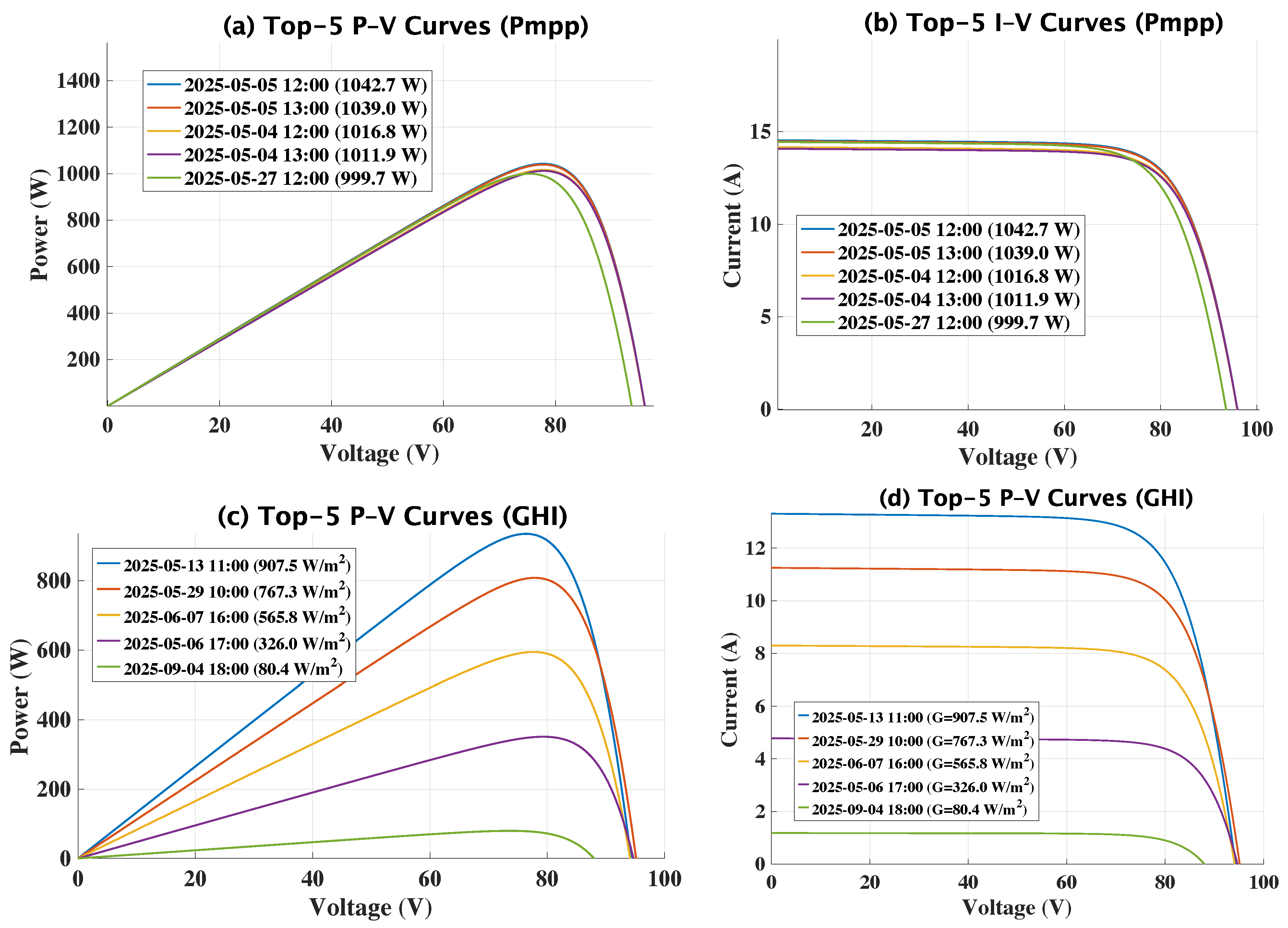
2-to-power recovery via a closed-loop hybrid configuration. The TDM exhibited robust capability in reconstructing PV electrical performance under realistic operating conditions. The results confirmed that, under high solar irradiance, the PV module attained peak maximum power point (
) values exceeding 1 kW, as reported in
Table 5 and illustrated in
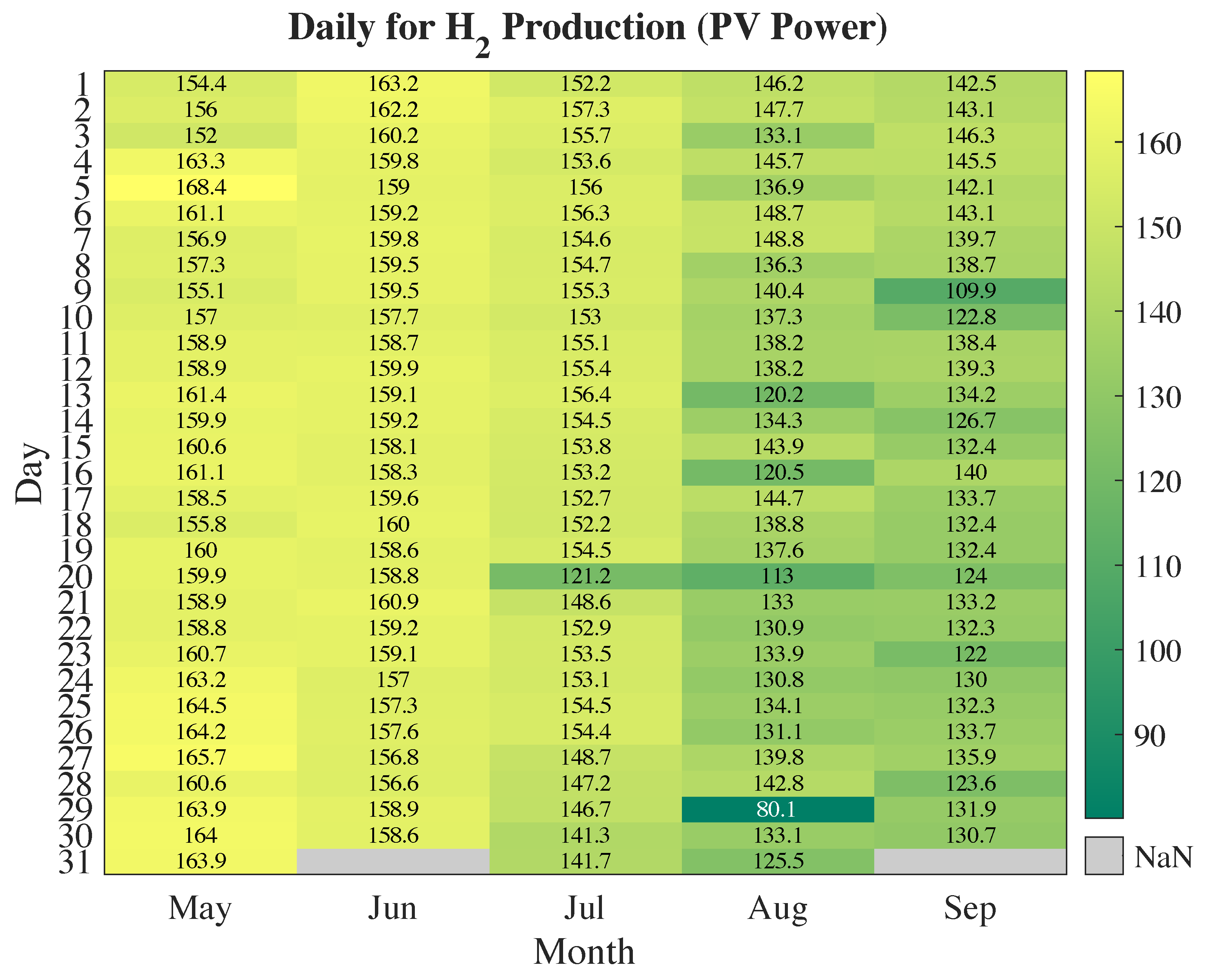
Figure 5. These findings confirm the suitability of the TDM for accurate estimation of PV output, particularly under high irradiance and elevated temperature conditions, where simplified diode models can introduce systematic deviations. The alkaline electrolysis model, integrated with SEC-based and Faraday-law formulations, enabled accurate quantification of H
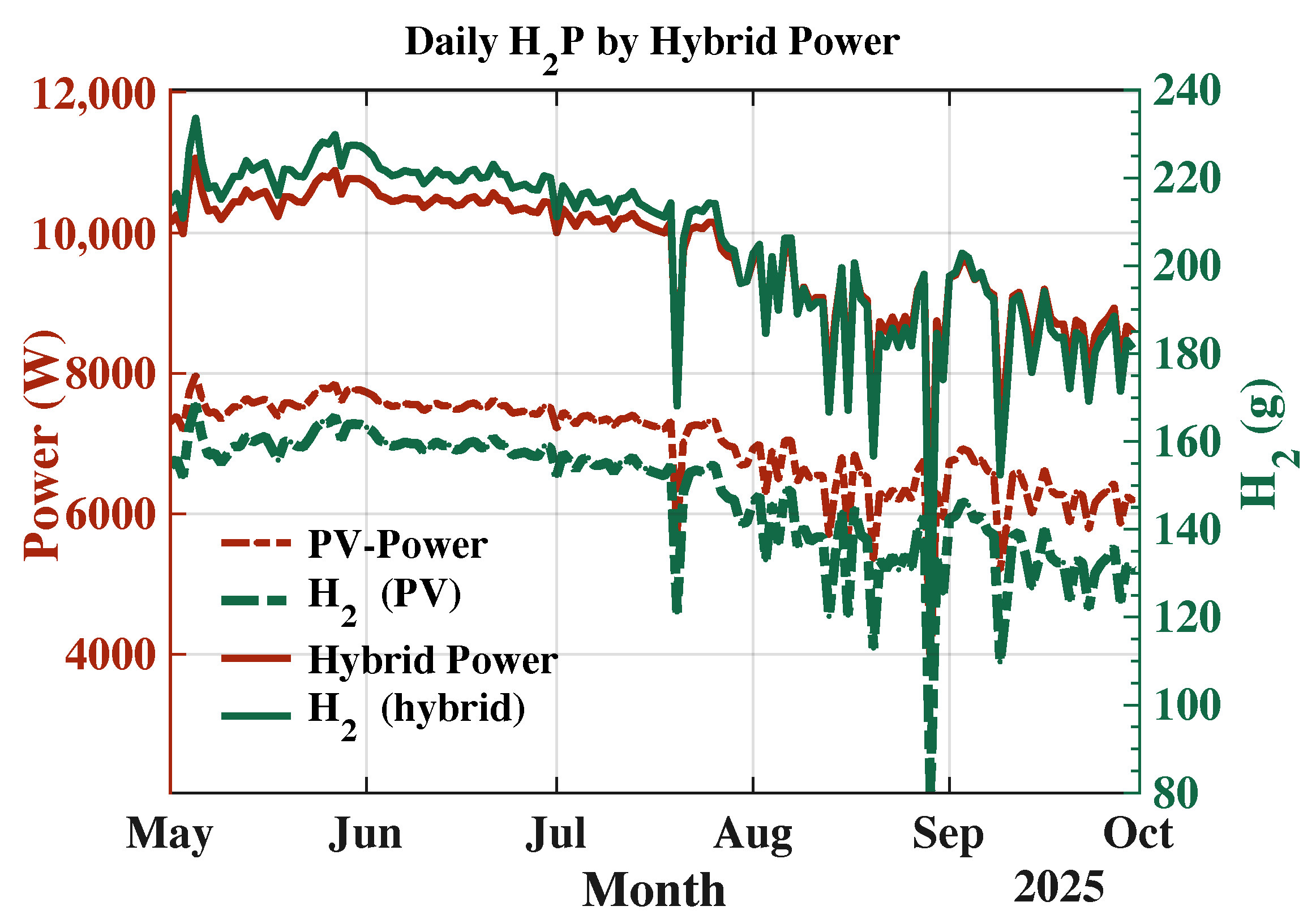
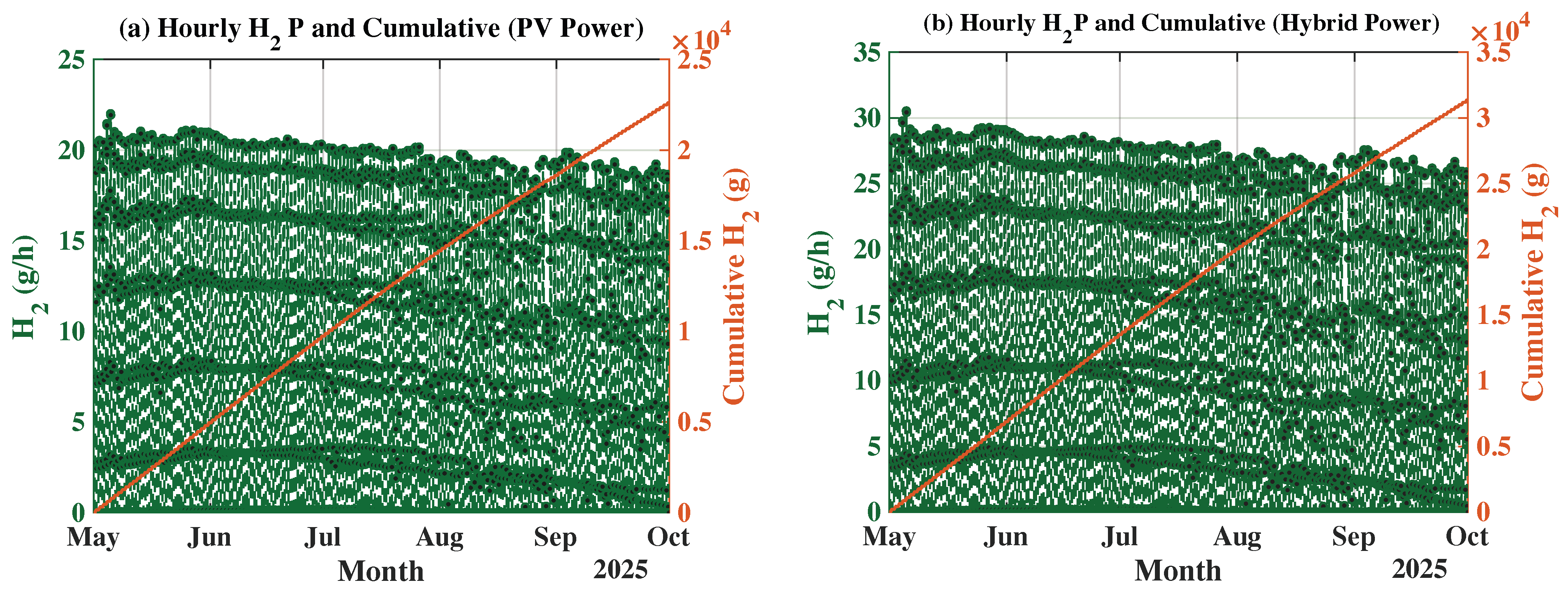
2P on hourly, daily, and monthly timescales. During the summer of 2025, the PV-driven electrolyzer generated 22.6 kg of green H
2 using approximately 1.02 MWh of electrical energy, with a corresponding water consumption of about 203 L. Seasonal patterns indicated peak H
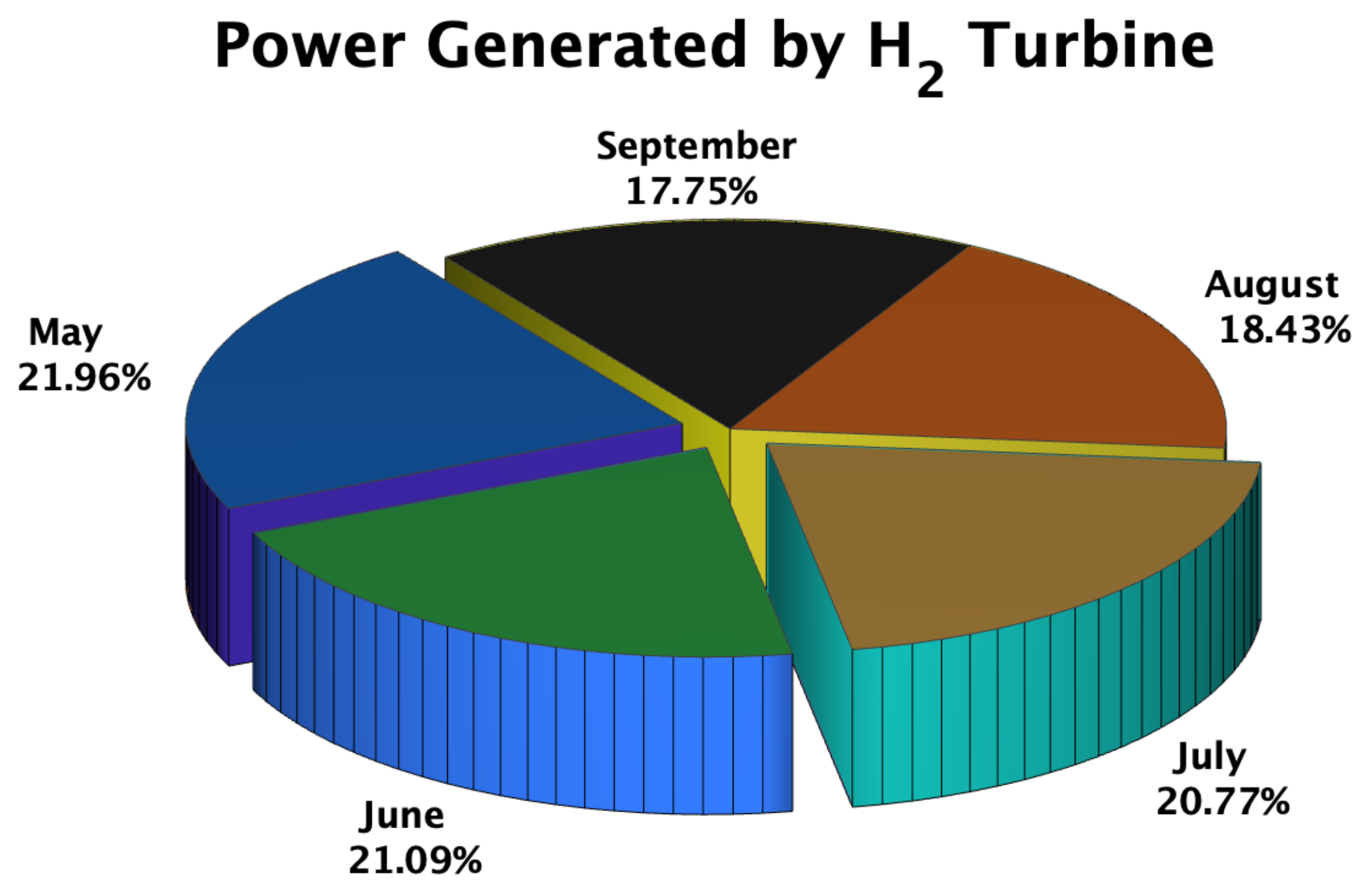
2P in May, followed by a gradual decrease toward September, consistent with variations in solar irradiance and ambient temperature. Incorporating a hydrogen turbine added a complementary dimension of energy utilization by converting stored H
2 into dispatchable electrical power. The H
2T produced approximately 414.6 kWh over the study period, demonstrating the feasibility of H
2-based power recovery within the proposed framework. Reintegrating turbine-generated power with PV electricity in the hybrid configuration increased total H
2P to 31.4 kg without requiring additional PV capacity, highlighting the effectiveness of the hybrid power feedback mechanism.
Overall, the proposed PV–AEL–H2T framework provides a coherent and scientifically grounded method for assessing solar-driven H2 systems under real climatic conditions. The electrolyzer and turbine models adopt constant efficiency parameters, which were applied consistently across all scenarios to preserve the validity of comparative trends. Future work may extend the present framework by incorporating load-dependent electrolyzer efficiencies, dynamic turbine operation, and multi-module or utility-scale configurations to enhance practical applicability. The outcomes of this study support the strategic role of integrated solar–hydrogen systems in advancing renewable energy utilization and align with Saudi Vision 2030 and global decarbonization objectives.