Investigation of the Effects of Ambient Conditions and Injection Strategies on Methanol Spray Characteristics

Abstract
1. Introduction
- (1)
- Quantitatively investigate the evolution characteristics of methanol spray under low-pressure and low-temperature conditions relevant to engine cold start, with particular emphasis on spray penetration, cone angle, and macroscopic spray morphology;
- (2)
- Provide high-quality experimental data to support the calibration and validation of three-dimensional CFD models for methanol spray;
- (3)
- Conduct a mechanistic analysis of low-pressure methanol spray development using three-dimensional numerical simulations on the CONVERGE platform, thereby providing a reliable design basis for improving engine cold-start performance and optimizing port fuel injection (PFI) systems.
2. Materials and Methods
2.1. Experimental Setup
2.2. Experimental Conditions
2.3. Data Processing
2.4. CFD Simulation Model Settings
3. Results and Discussion
3.1. The Influence of Temperature on Spray Morphology and Parameters
3.2. The Influence of Environmental Pressure on Spray Morphology and Parameters
3.3. The Influence of Spray Strategies on Spray Morphology and Parameters
3.4. Improvement of Engine Cold Start
- Intake air or injector heating to weaken the cooling core and alleviate evaporation delay;
- High-pressure, short-duration pre-injection to disrupt the liquid core and form an initial combustible kernel;
- Optimized spark plug placement in the high-temperature, combustible periphery to avoid the cooling core region.
4. Conclusions
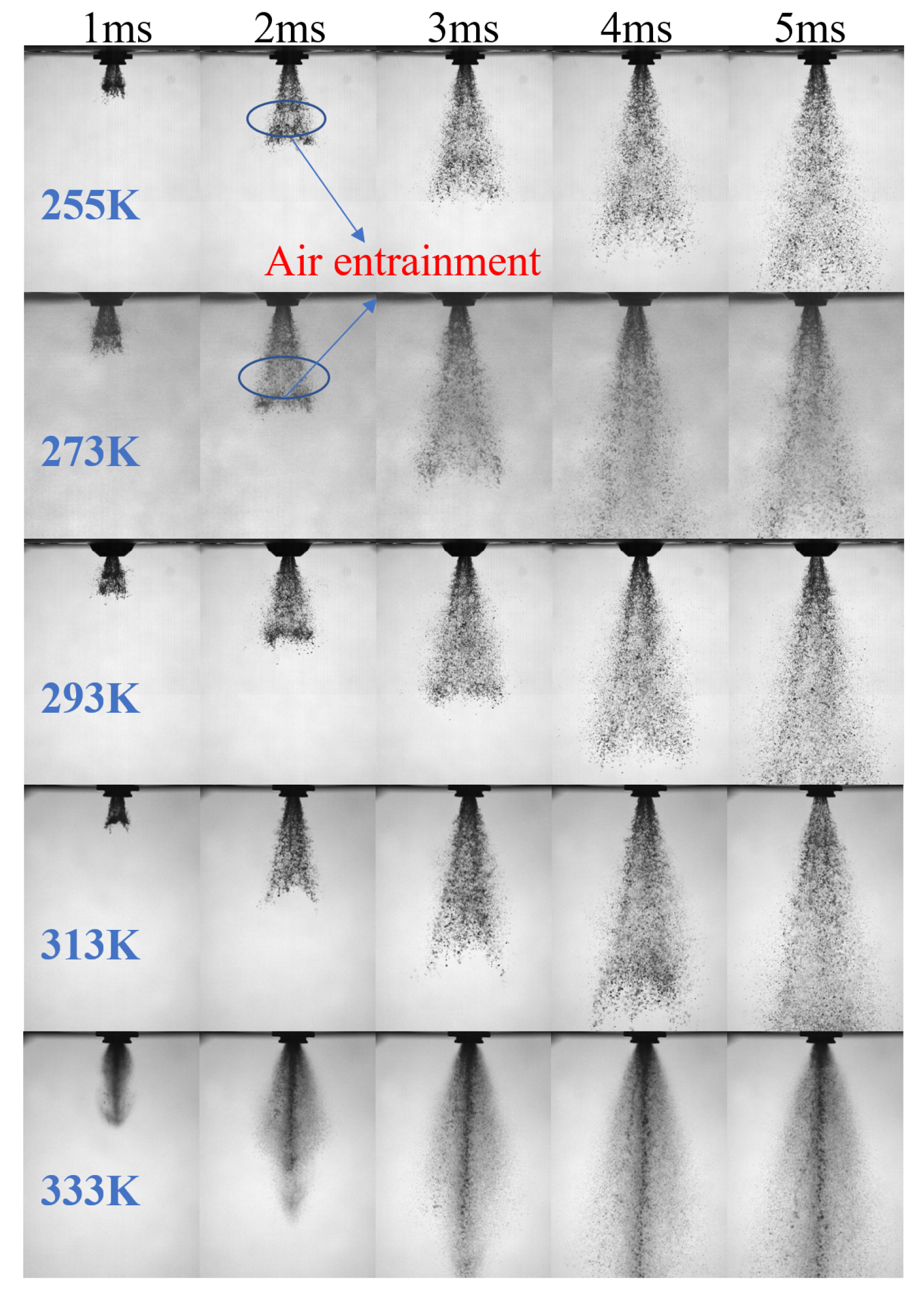
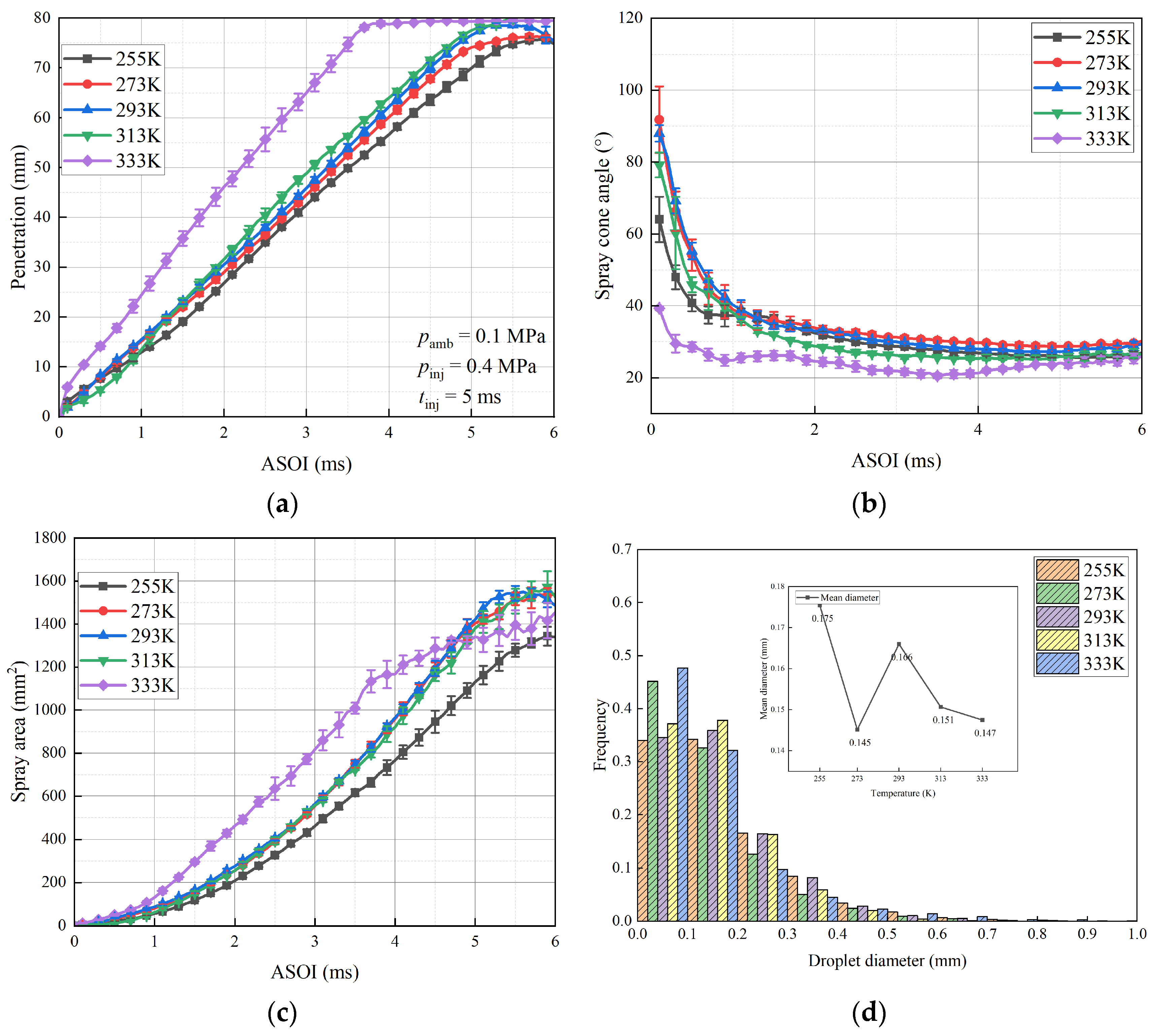
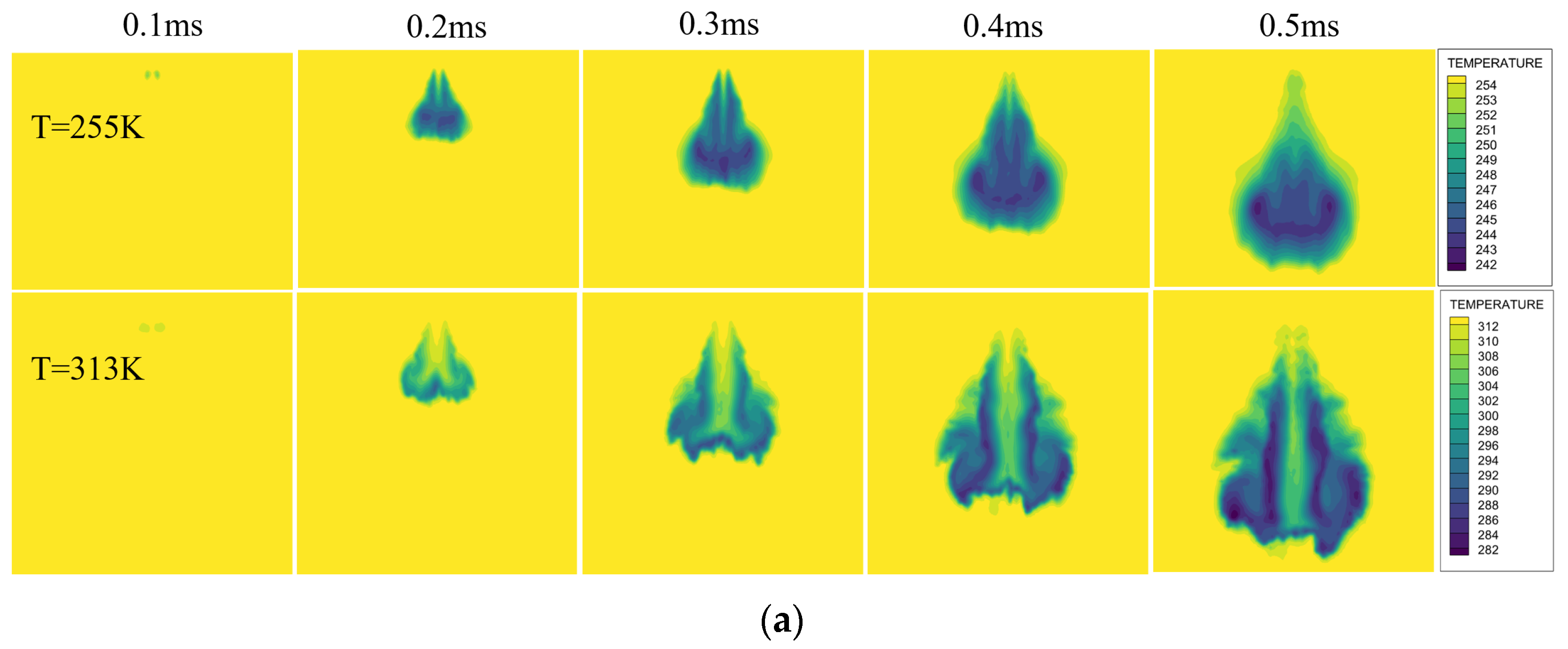
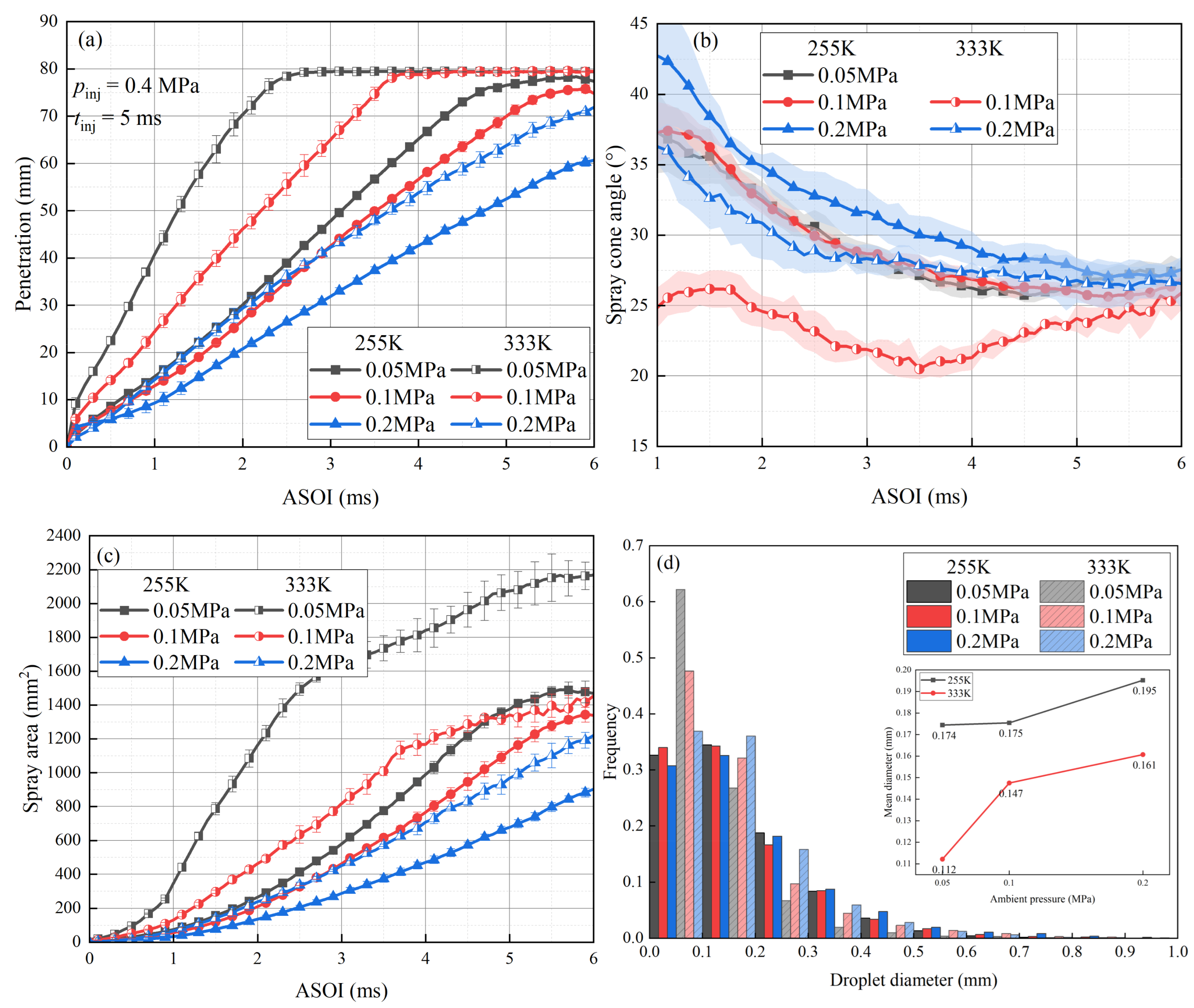
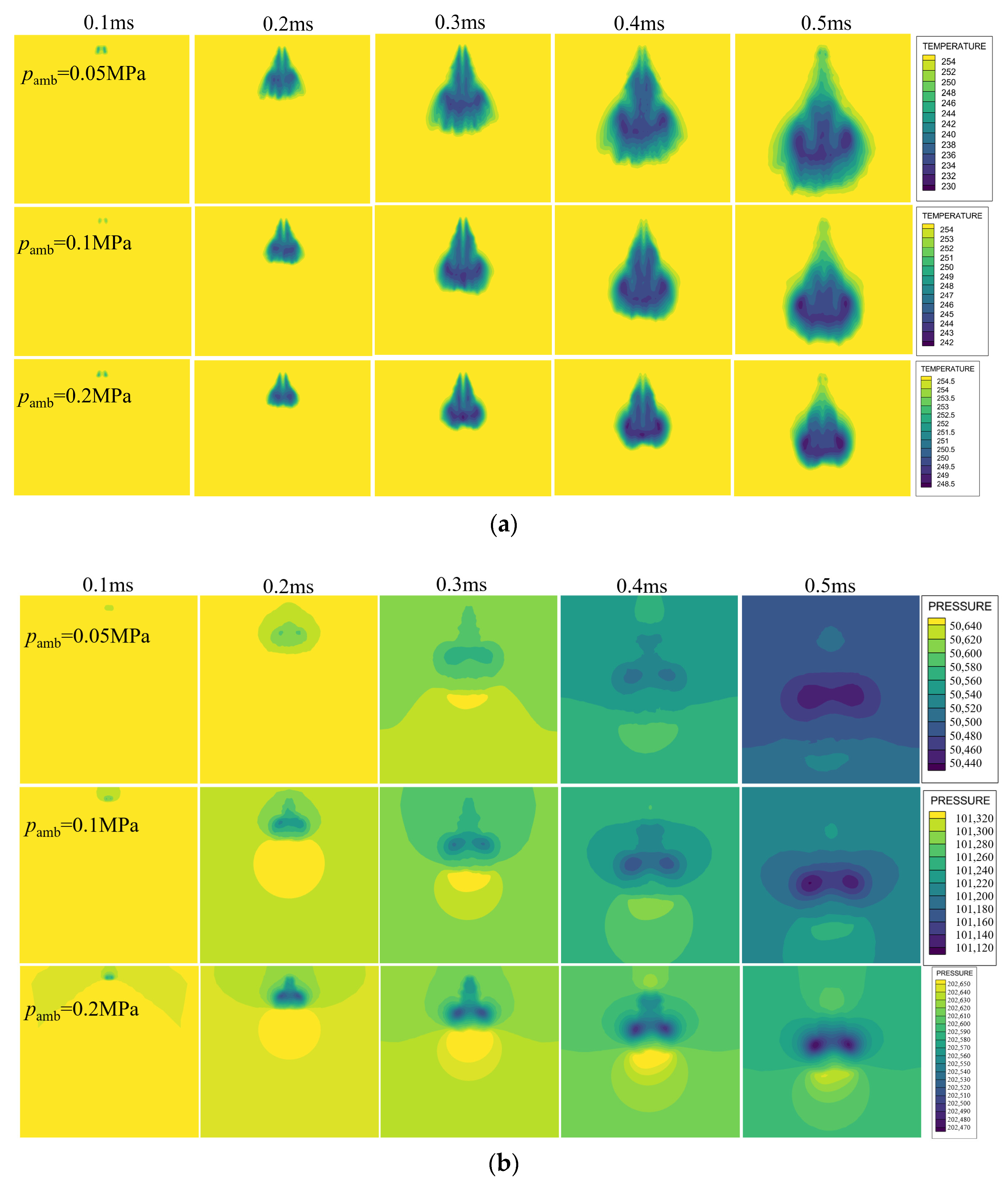
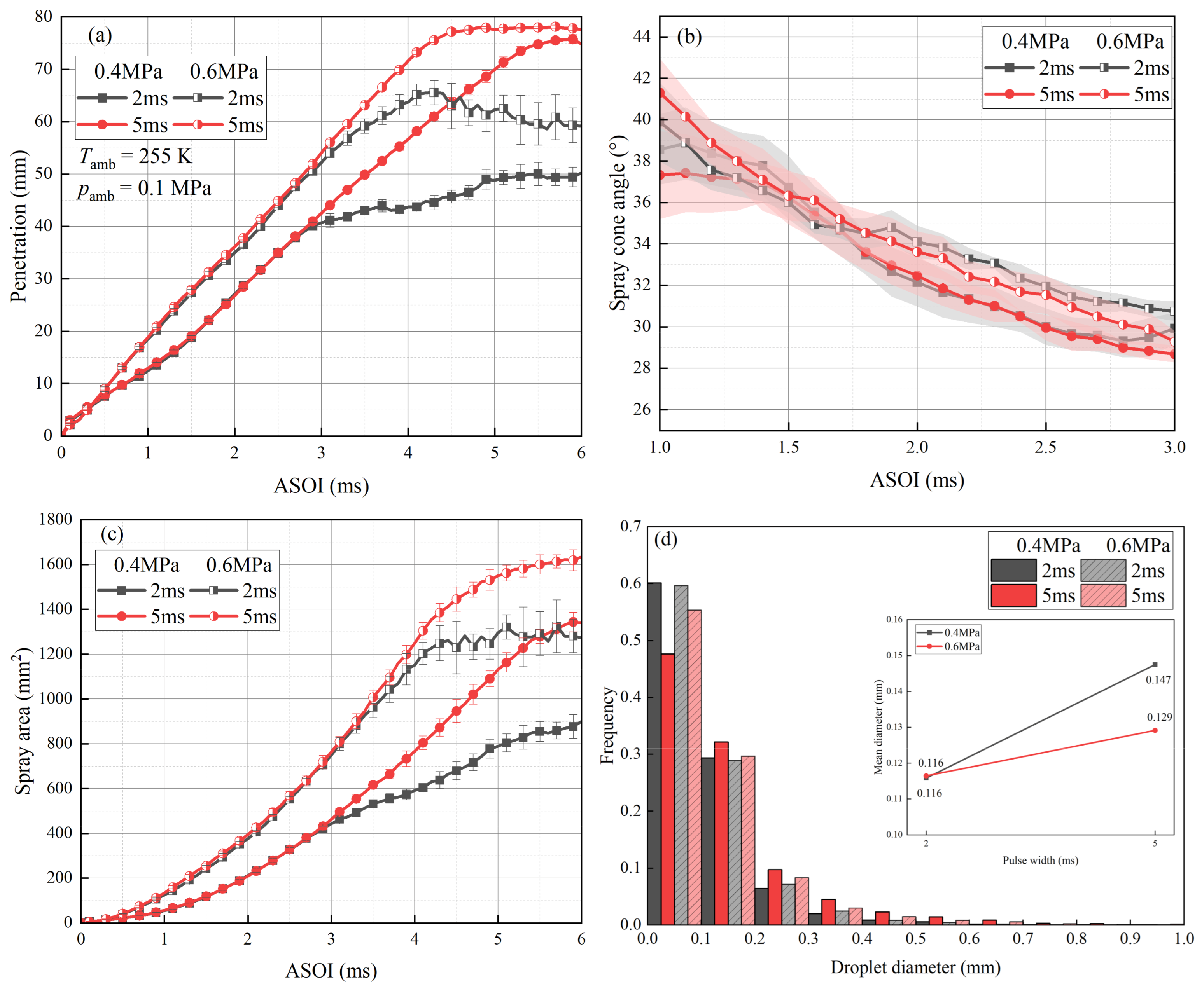
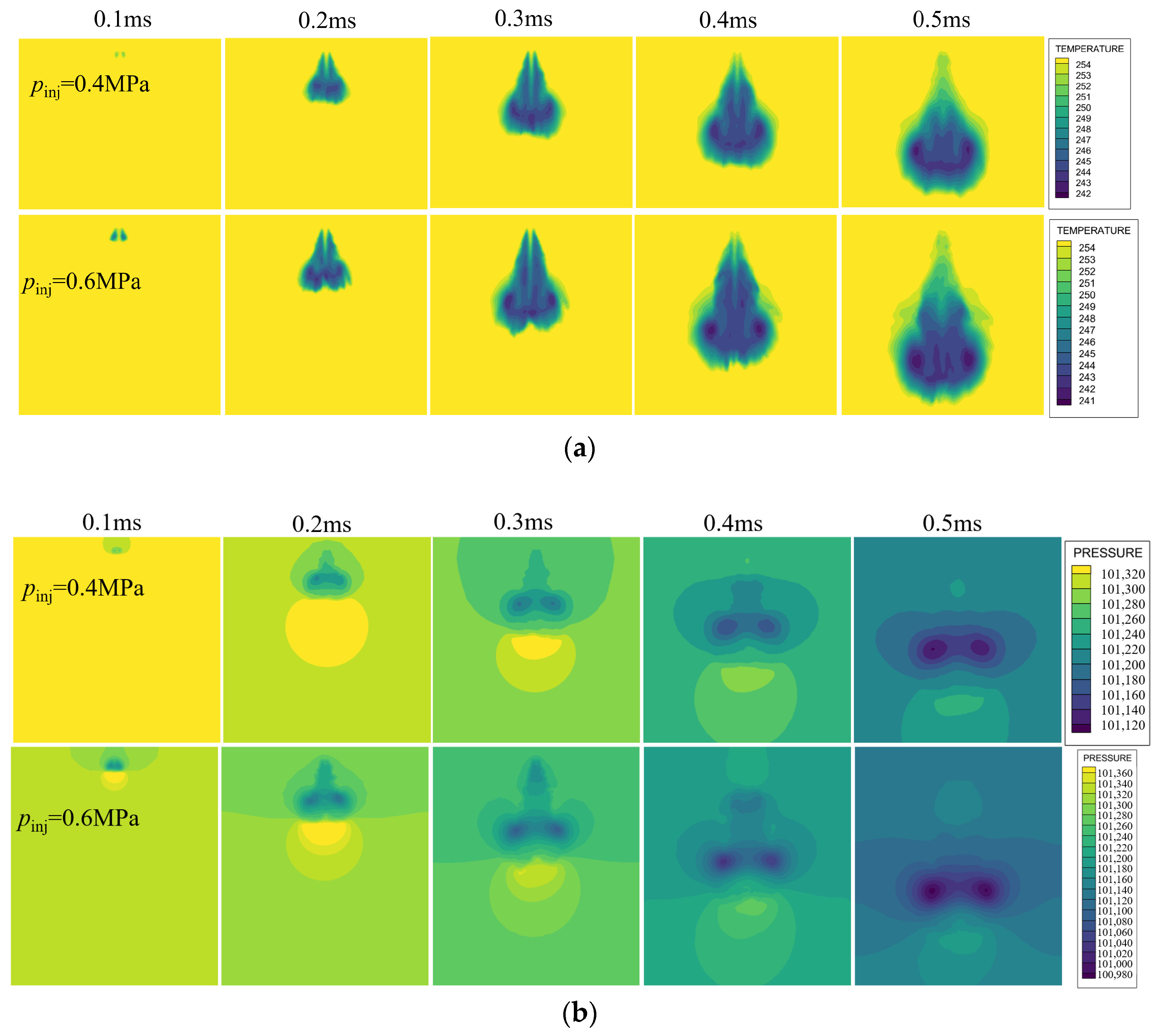
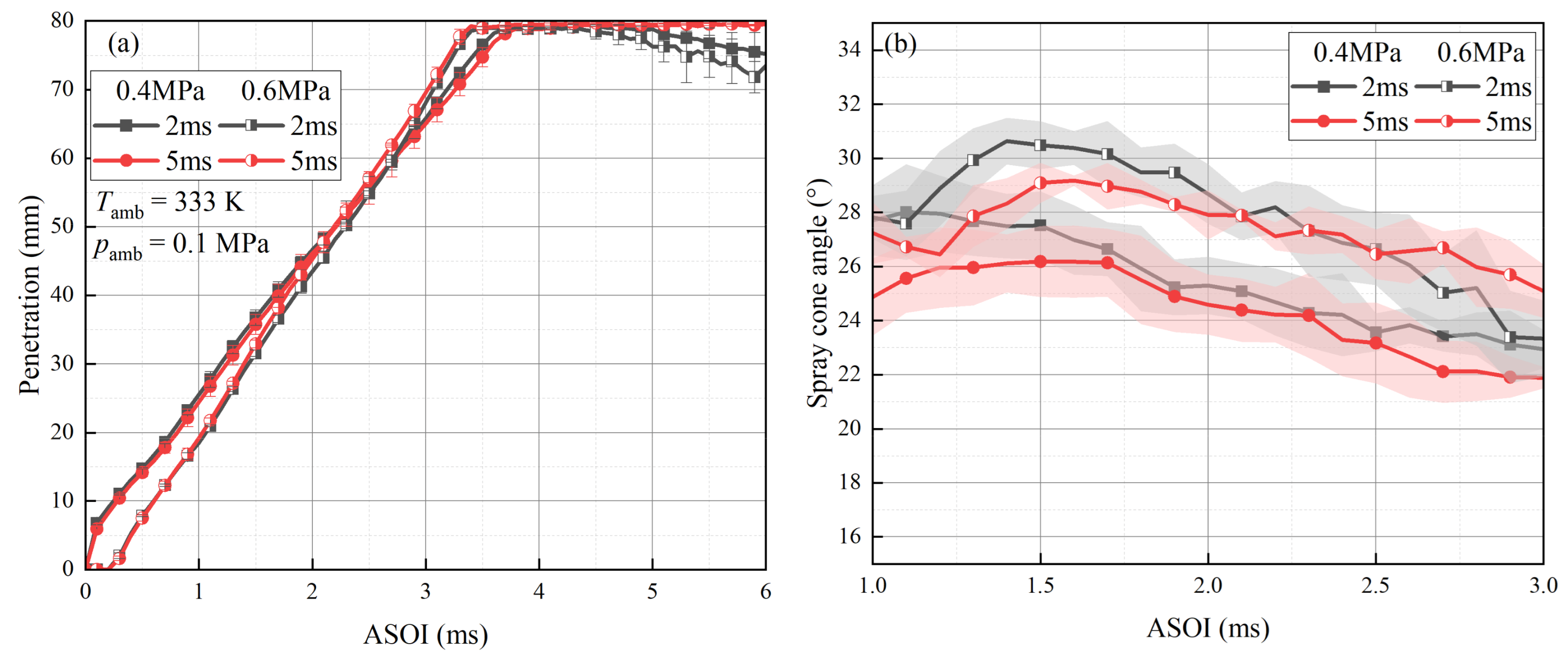
- Spray atomization and evaporation are strongly influenced by ambient temperature. As the temperature increases from 255 K to 333 K, the spray penetration length increases by approximately 70%, accompanied by significant enhancement in evaporation. Under low-temperature conditions, a persistent cooling core forms with a dense liquid core and long penetration distance, which inhibits vaporization and delays mixture formation—this constitutes the fundamental thermodynamic cause of cold-start difficulty. At higher temperatures, localized flash boiling occurs, markedly accelerating atomization and evaporation; the cooling core rapidly dissipates, resulting in a more uniform combustible mixture. However, when the temperature exceeds 313 K, excessive penetration increases the risk of wall impingement and pre-ignition.
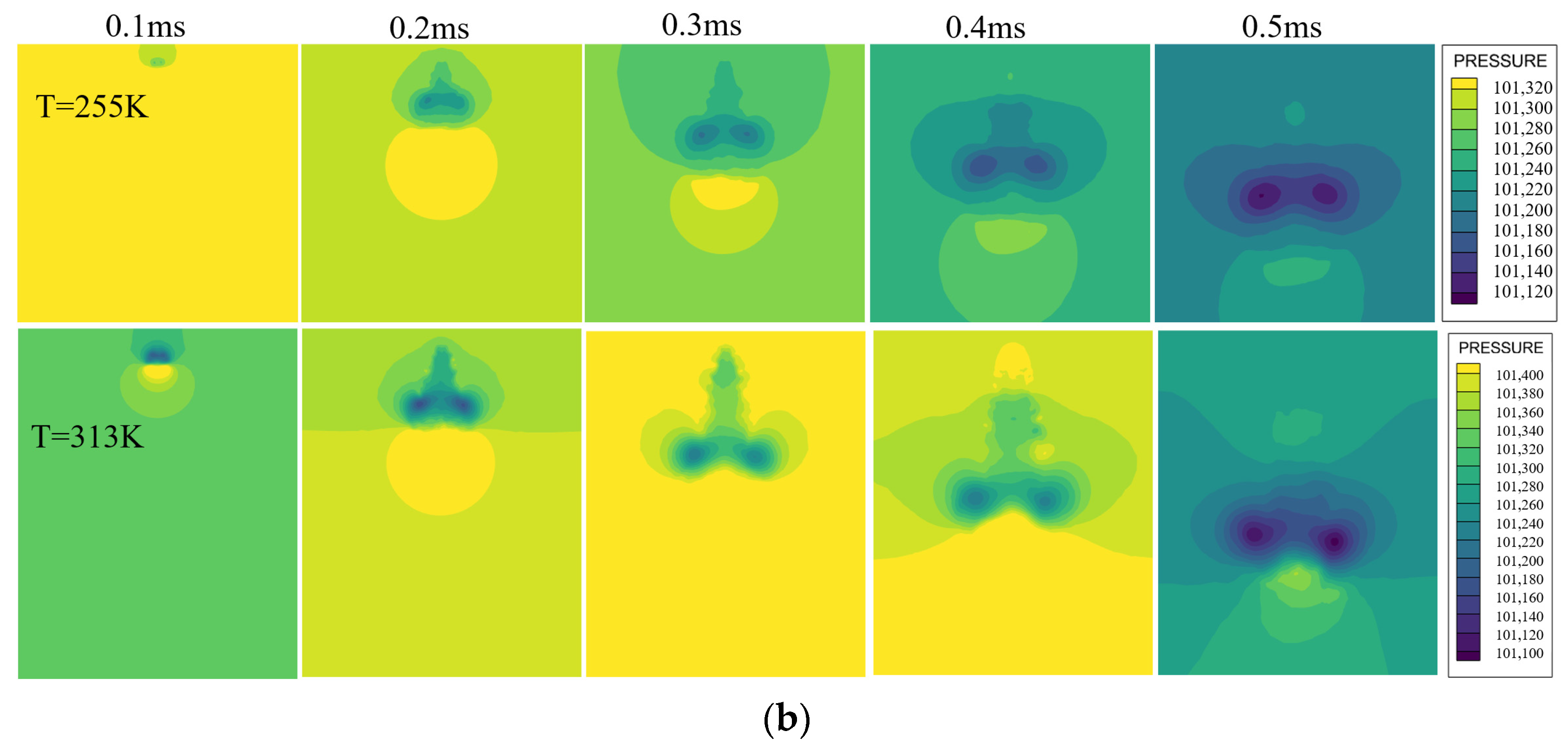
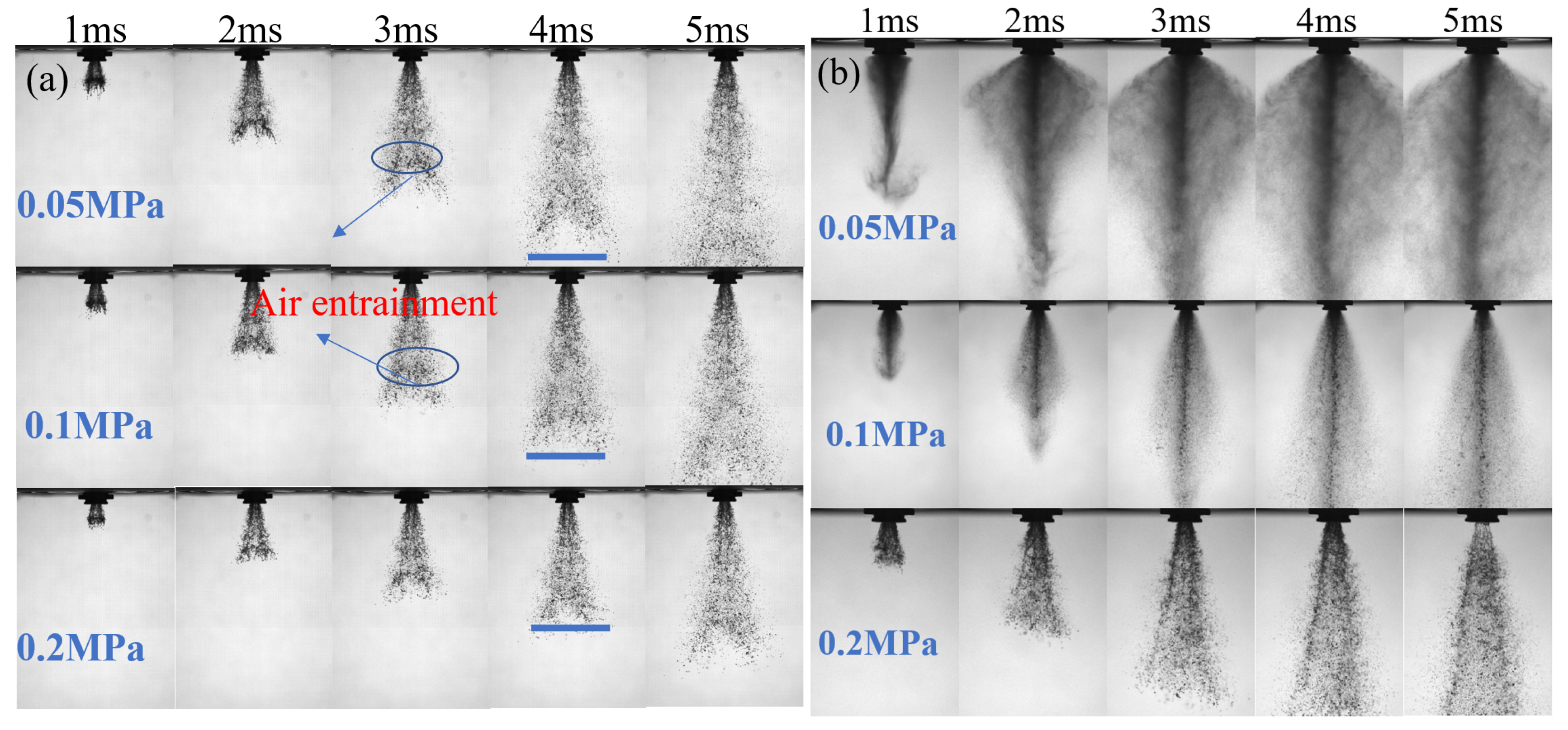
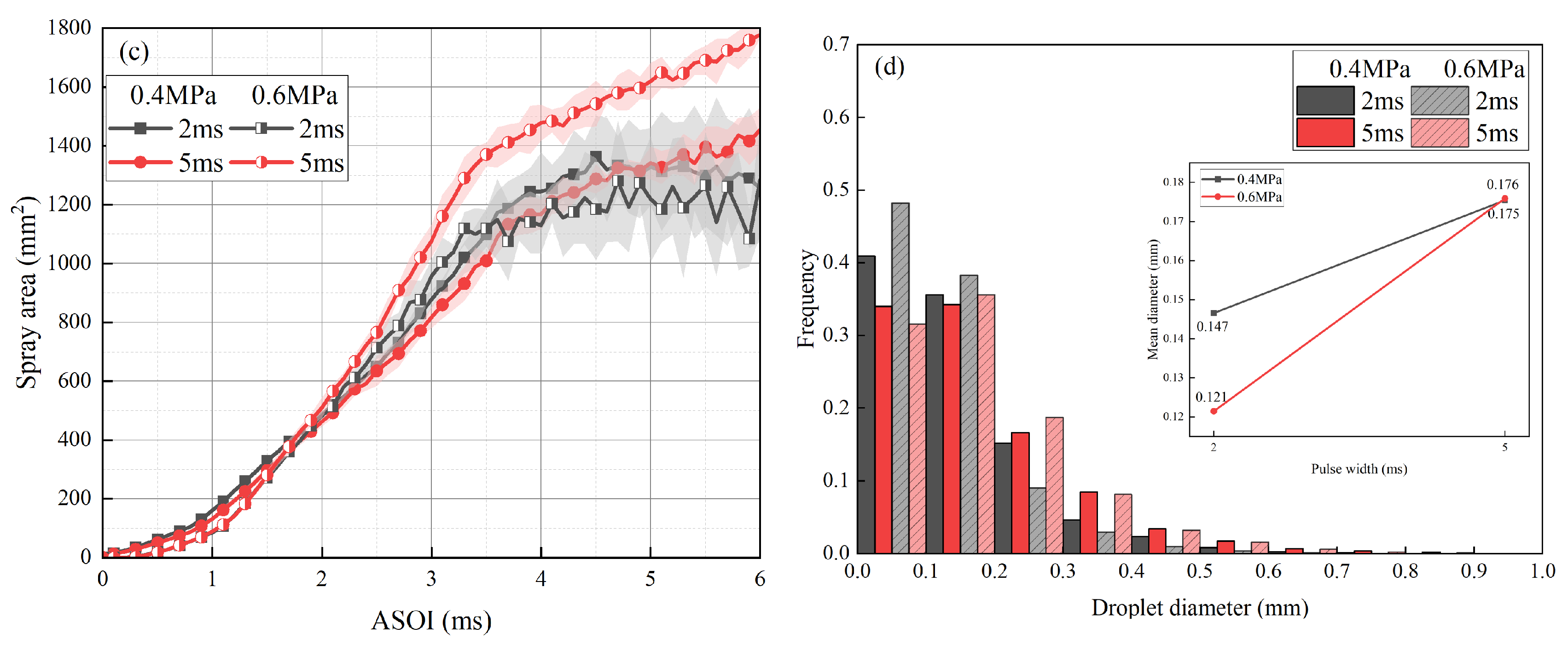
- Ambient pressure governs spray dynamics through the gas–liquid momentum ratio. Ambient pressure significantly affects the macroscopic behavior of low-pressure methanol sprays. Increasing ambient pressure reduces both spray velocity and penetration length due to the smaller pressure differential between the injection and ambient pressures. Meanwhile, the higher gas density enhances interaction between the spray and surrounding air, leading to a wider spray cone angle. In addition, droplet size increases with rising ambient pressure, reflecting reduced atomization efficiency.
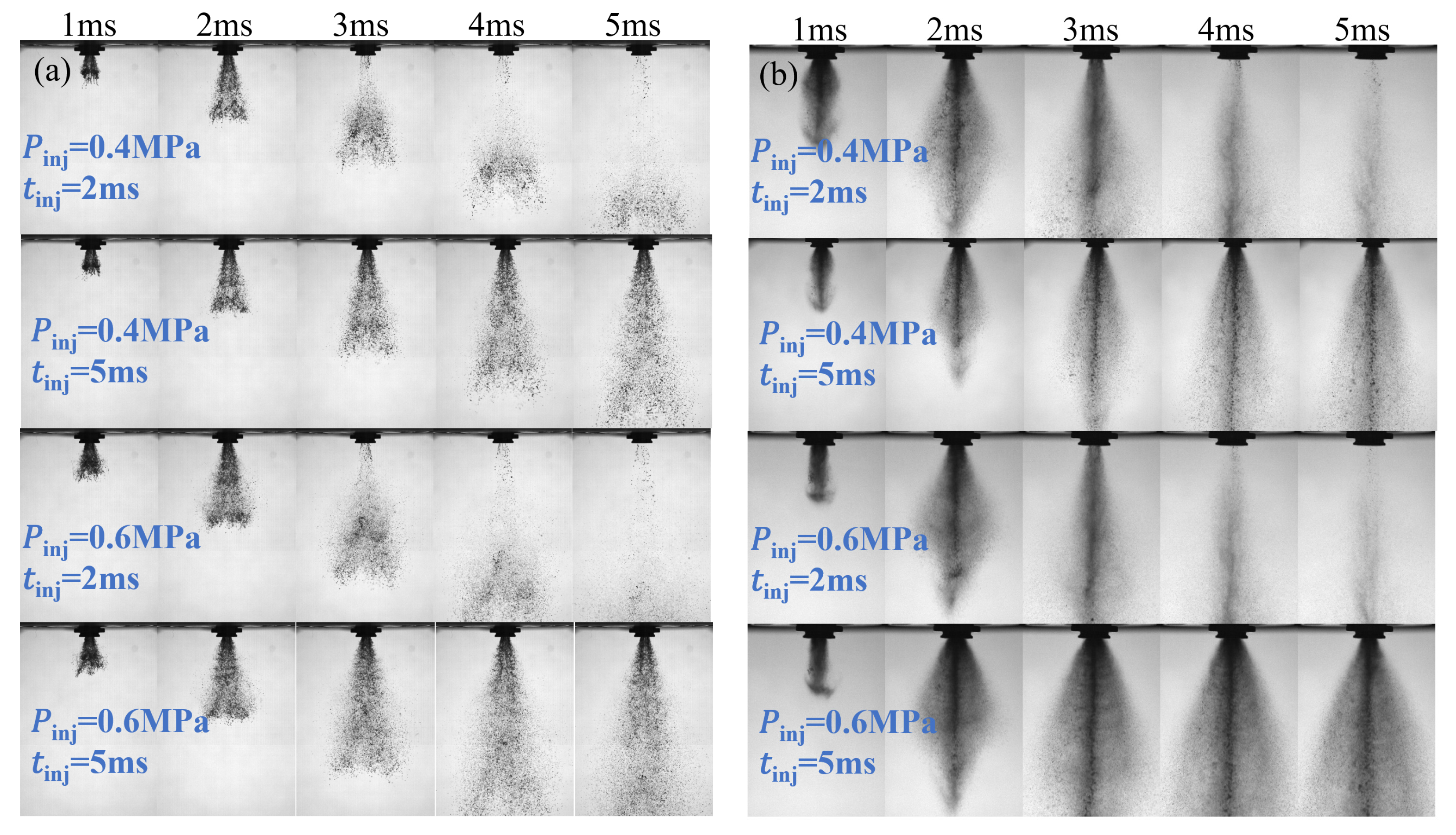
- Adjusting injection strategy effectively improves atomization performance. Increasing the injection pressure from 0.4 MPa to 0.6 MPa shortens the liquid column core, reduces the average droplet diameter by approximately 15%, and enhances spray uniformity. Appropriately shortening the injection pulse width (from 5 ms to 2 ms) decreases droplet collision probability and mitigates wall impingement.
- Optimization strategies for low-temperature cold-start. Both experimental and simulation results confirm that restricted evaporation and the persistent cooling core are the primary challenges to cold-start performance. To address these issues, the following recommendations are proposed:
- (1)
- Intake air or injector heating to weaken the cooling core and alleviate evaporation delay;
- (2)
- High-pressure, short-duration pre-injection to disrupt the liquid core and form an initial combustible kernel;
- (3)
- Optimized spark plug placement in the high-temperature, combustible periphery to avoid the cooling core region.
5. Limitations and Future Work
Author Contributions
Funding
Data Availability Statement
Conflicts of Interest
References
- Yan, Y.; Liu, Z.; Liu, J. Computational analysis of ammonia-hydrogen blends in homogeneous charge compression ignition engine operation. Process Saf. Environ. Prot. 2024, 190, 1263–1272. [Google Scholar] [CrossRef] [Scilit]
- Wang, X.; Bu, H.; Chen, H.; Liu, J.; Chen, Z.; Gao, J. Numerical investigation of diesel spray combustion characteristics in the ammonia/air atmosphere. J. Energy Inst. 2024, 116, 101718. [Google Scholar] [CrossRef] [Scilit]
- Eurostat. Complete Energy Balances; Eurostat: Luxembourg, 2025. [Google Scholar] [CrossRef]
- Jiang, M.; Sun, W.; Guo, L.; Zhang, H.; Jia, Z.; Qin, Z.; Zhu, G.; Yu, C.; Zhang, J. Numerical optimization of injector hole arrangement for marine methanol/diesel direct dual fuel stratification engines. Appl. Therm. Eng. 2024, 257, 124456. [Google Scholar] [CrossRef] [Scilit]
- Huang, Q.; Yang, R.; Liu, J.; Xie, T.; Liu, J. Investigation of the mechanism behind the surge in nitrogen dioxide emissions in engines transitioning from pure diesel operation to methanol/diesel dual-fuel operation. Fuel Process. Technol. 2024, 264, 108131. [Google Scholar] [CrossRef] [Scilit]
- Yang, R.; Shang, T.; Li, L.; Liu, J.; Xie, T.; Liu, Z.; Liu, J. The mechanism of the increased ratio of nitrogen dioxide to nitrogen oxides in methanol/diesel dual fuel engines. Energy 2024, 312, 133701. [Google Scholar] [CrossRef] [Scilit]
- Li, Y.; Cai, Y.; Jia, M.; Wang, Y.; Su, X.; Li, L. A full-parameter computational optimization of both injection parameters and injector layouts for a methanol/diesel dual-fuel direct injection compression ignition engine. Fuel 2024, 369, 131733. [Google Scholar] [CrossRef] [Scilit]
- Verhelst, S.; Turner, J.W.G.; Sileghem, L.; Vancoillie, J. Methanol as a fuel for internal combustion engines. Prog. Energy Combust. Sci. 2019, 70, 43–88. [Google Scholar] [CrossRef] [Scilit]
- Wang, X.; Chang, X.; Liu, J.; Gao, J.; Wu, J.; He, H. Experimental investigation of high-pressure methanol spray characteristics for engines. Appl. Therm. Eng. 2025, 271, 126388. [Google Scholar] [CrossRef] [Scilit]
- Wang, Y.; Dong, P.; Long, W.; Tian, J.; Wei, F.; Wang, Q.; Cui, Z.; Li, B. Characteristics of Evaporating Spray for Direct Injection Methanol Engine: Comparison between Methanol and Diesel Spray. Processes 2022, 10, 1132. [Google Scholar] [CrossRef] [Scilit]
- Leng, X.; Xing, M.; Luo, Z.; Jin, Y.; He, Z.; Wei, S. An investigation on methanol high pressure spray characteristics and their predictive models. Energy 2024, 313, 133732. [Google Scholar] [CrossRef] [Scilit]
- Zhang, Y.-J.; Wei, Y.-J.; Jamil, H.; Liu, S.-H. Investigation of the Behaviors of Methanol Spray Impingement and Wall Wetting. Appl. Sci. 2022, 12, 12263. [Google Scholar] [CrossRef] [Scilit]
- Liu, K.; Chen, C.; Su, M.; Zhou, W.; Wang, Q.; Oppong, F.; Li, L.; Xu, C. Experimental study of the macroscopic characteristics of methanol low-pressure injection spray. Int. J. Energy Res. 2022, 46, 23259–23272. [Google Scholar] [CrossRef] [Scilit]
- Li, X.; Xiang, L.; Wang, L.; Wang, Z.; Hu, Y. Experimental study on macroscopic and microscopic characteristics of flash boiling methanol spray under extremely cold conditions. Energy Convers. Manag. 2025, 333, 119780. [Google Scholar] [CrossRef] [Scilit]
- Wu, F.; Yu, H.; Pan, X.; Zang, X.; Hua, M.; Wang, H.; Jiang, J. Experimental study of methanol atomization and spray explosion characteristic under negative pressure. Process Saf. Environ. Prot. 2022, 161, 162–174. [Google Scholar] [CrossRef] [Scilit]
- Chen, Z.; Yao, A.; Yao, C.; Yin, Z.; Xu, H.; Geng, P.; Dou, Z.; Hu, J.; Wu, T.; Ma, M. Effect of fuel temperature on the methanol spray and nozzle internal flow. Appl. Therm. Eng. 2017, 114, 673–684. [Google Scholar] [CrossRef] [Scilit]
- Wu, F.; Pan, X.; Wang, H.; Hua, M.; Yu, H.; Zang, X.; Jiang, J. Experimental study on the explosion characteristic and flame propagation of methanol spray at different injection pressures. Fuel 2022, 325, 124746. [Google Scholar] [CrossRef] [Scilit]
- Cui, M.; Nour, M.; Fu, J.; Zhang, W.; Wang, G.; Xu, H.; Yao, B.; Li, X. Fundamental investigation of methanol flash boiling combustion under direct injection conditions. Combust. Flame 2025, 276, 114147. [Google Scholar] [CrossRef] [Scilit]
- Chen, Z.; Zhao, P.; Wang, T.; He, H.; Chen, H.; Zhang, P.; Li, Y.; Geng, L.; Qi, D. Visualization study the cross spray and combustion characteristics of diesel and methanol in a constant volume combustion chamber at cold and flare flash boiling regions. Energy 2024, 301, 131654. [Google Scholar] [CrossRef] [Scilit]
- Zhao, D.; An, Y.; Pei, Y.; Hu, J.; Hu, Z.; Zhang, Y. Optical study on spray mixing, flame propagation and jets evolution within visible methanol active pre-chamber for turbulent jet ignition. Energy Convers. Manag. 2024, 319, 118952. [Google Scholar] [CrossRef] [Scilit]
- Pu, Y.-H.; Dierickx, J.; Verhelst, S. Modelling the evaporative cooling effect from methanol injection in the intake of internal combustion engines. Fuel 2024, 372, 132131. [Google Scholar] [CrossRef] [Scilit]
- Sun, T.; Zhao, W.; Wang, T.; Liao, S.; Wei, H.; Zhou, L. Large-eddy simulation of methanol spray combustion characteristics in lean n-heptane mixture environments. Fuel 2026, 405, 136650. [Google Scholar] [CrossRef] [Scilit]
- Otsu, N. A threshold selection method from gray-level histograms. Automatica 1975, 11, 23–27. [Google Scholar] [CrossRef] [Scilit]
- Gaur, A.; Ailaboina, A.; Saha, K. Microscopic and macroscopic analysis of the flashing and non-flashing ethanol blended fuel for the direct injection sprays. Appl. Therm. Eng. 2025, 260, 124924. [Google Scholar] [CrossRef] [Scilit]
- Amsden, A. KIVA-II: A Computer Program for Chemically Reactive Flows with Sprays; Los Alamos National Laboratory Report LA-11560-MS; Los Alamos National Laboratory (LANL): Los Alamos, NM, USA, 1989. [Google Scholar]
- O’Rourke, P.J.; Amsden, A.A. A Spray/Wall Interaction Sub-Model for the KIVA-3 Wall Film Model. SAE Trans. 2000, 109, 281–298. [Google Scholar]
- Han, Z.; Reitz, R.D. Turbulence Modeling of Internal Combustion Engines Using RNG κ-ε Models. Combust. Sci. Technol. 1995, 106, 267–295. [Google Scholar] [CrossRef] [Scilit]
- Beale, J.C.; Reitz, R.D. Modeling spray atomization with the Kelvin-Helmholtz/Rayleigh-Taylor/hybrid model. At. Sprays 1999, 9, 623–650. [Google Scholar]
- Schmidt, D.P.; Rutland, C.J. A new droplet collision algorithm. J. Comput. Phys. 2000, 164, 62–80. [Google Scholar] [CrossRef] [Scilit]
- Zama, Y.; Ochiai, W.; Furuhata, T.; Arai, M. Experimental Study on Spray Angle and Velocity Distribution of Diesel Spray Under High Ambient Pressure Conditions. At. Sprays 2011, 21, 989–1007. [Google Scholar] [CrossRef] [Scilit]
- Hiroyasu, H.; Kadota, T.; Arai, M. Supplementary Comments: Fuel Spray Characterization in Diesel Engines; Plenum Press: New York, NY, USA, 1980. [Google Scholar]
- Chintagunti, S.J.; Agarwal, A.K. Effect of ambient pressure on macroscopic and microscopic spray characteristics of gasoline-diesel blends for gasoline compression ignition engine applications. Appl. Energy 2024, 376, 124106. [Google Scholar] [CrossRef] [Scilit]
- Yanfeng, G.; Shenghua, L.; Yu, L. Investigation on methanol spray characteristics. Energy Fuels 2007, 21, 2991–2997. [Google Scholar] [CrossRef] [Scilit]
- Delacourt, E.; Desmet, B.; Besson, B. Characterisation of very high pressure diesel sprays using digital imaging techniques. Fuel 2005, 84, 859–867. [Google Scholar] [CrossRef] [Scilit]
- Payri, R.; García, A.; Domenech, V.; Durrett, R.; Plazas, A.H. An experimental study of gasoline effects on injection rate, momentum flux and spray characteristics using a common rail diesel injection system. Fuel 2012, 97, 390–399. [Google Scholar] [CrossRef] [Scilit]



| Study | Type | Application/Focus | Injection Method |
|---|---|---|---|
| Wang et al. [9] | Experimental | High-pressure methanol spray characterization in CVCC | HPDI |
| Wang et al. [10] | Experimental | Methanol vs. diesel spray comparison | HPDI |
| Leng et al. [11] | Experimental Modeling Machine learning | Spray penetration prediction and correlation development | DI |
| Zhang et al. [12] | Experimental | Spray–wall interaction and wall wetting under PFI | PFI |
| Liu et al. [13] | Experimental | Extreme conditions: ambient pressure effects and flash-boiling threshold | PFI |
| Li et al. [14] | Experimental | Flash-boiling under extremely cold conditions; spray collapse timing | DI |
| Wu et al. [15] | Experimental | Sub-atmospheric pressure effects; micro-explosion behavior | |
| Chen et al. [16] | Simulation Experimental validation | Internal nozzle flow, cavitation, and temperature-dependent properties; droplet sizing | DI |
| Wu et al. [17] | Experimental | Spray explosion and flame propagation under negative pressure | DI |
| Cui et al. [18] | Experimental | Flash-boiling effects on combustion and emissions in CVCC | DI |
| Chen et al. [19] | Experimental | Diesel/methanol dual DI cross-spray interaction and combustion | DI |
| Zhao et al. [20] | Experimental | Methanol spray mixing and flame/hot-jet evolution in active pre-chamber | DI |
| Pu et al. [21] | Simulation Modeling | Intake cooling mechanism: droplet vs. wall-film evaporation | PFI |
| Sun et al. [22] | Simulation | Methanol spray autoignition/combustion in high-reactivity environment | DI |
| Parameter | Value |
|---|---|
| Ambient and fuel temperature (K) | 255, 273, 293, 313, 333 |
| Ambient pressure (MPa) | 0.05, 0.1, 0.2 |
| Injection pressure (MPa) | 0.4, 0.6 |
| Injection pulse width (ms) | 2, 5 |
| Parameter | Value |
|---|---|
| Breakup model | KH–RT model |
| Collision model | NTC model |
| Evaporation model | Frossling model |
| Spray–wall interaction | Wall Film model |
| Turbulence model | RNG k–ε model |
Disclaimer/Publisher’s Note: The statements, opinions and data contained in all publications are solely those of the individual author(s) and contributor(s) and not of MDPI and/or the editor(s). MDPI and/or the editor(s) disclaim responsibility for any injury to people or property resulting from any ideas, methods, instructions or products referred to in the content. |
© 2026 by the authors. Licensee MDPI, Basel, Switzerland. This article is an open access article distributed under the terms and conditions of the Creative Commons Attribution (CC BY) license.
Share and Cite
Wang, D.; Zhu, W.; Li, Z.; Zhai, C.; Zeng, X.; Shi, K.; Qi, Y.; Wang, Z. Investigation of the Effects of Ambient Conditions and Injection Strategies on Methanol Spray Characteristics. Energies 2026, 19, 416. https://doi.org/10.3390/en19020416
Wang D, Zhu W, Li Z, Zhai C, Zeng X, Shi K, Qi Y, Wang Z. Investigation of the Effects of Ambient Conditions and Injection Strategies on Methanol Spray Characteristics. Energies. 2026; 19(2):416. https://doi.org/10.3390/en19020416
Chicago/Turabian StyleWang, Decheng, Wuzhe Zhu, Zhijie Li, Changhui Zhai, Xiaoxiao Zeng, Kui Shi, Yunliang Qi, and Zhi Wang. 2026. "Investigation of the Effects of Ambient Conditions and Injection Strategies on Methanol Spray Characteristics" Energies 19, no. 2: 416. https://doi.org/10.3390/en19020416
APA StyleWang, D., Zhu, W., Li, Z., Zhai, C., Zeng, X., Shi, K., Qi, Y., & Wang, Z. (2026). Investigation of the Effects of Ambient Conditions and Injection Strategies on Methanol Spray Characteristics. Energies, 19(2), 416. https://doi.org/10.3390/en19020416