Improving Large Wind Turbine Power Curve by Integrating Lidar-Measured Multiple Wind Parameters: A Coastal Case Study


Abstract
1. Introduction
2. Data and Methodology
2.1. Observation Site and Instruments
2.2. Calculated Multiple Parameters and Fitting Models
2.2.1. Bulk Richardson Number
2.2.2. Wind Shear Exponent
2.2.3. Turbulence Intensity
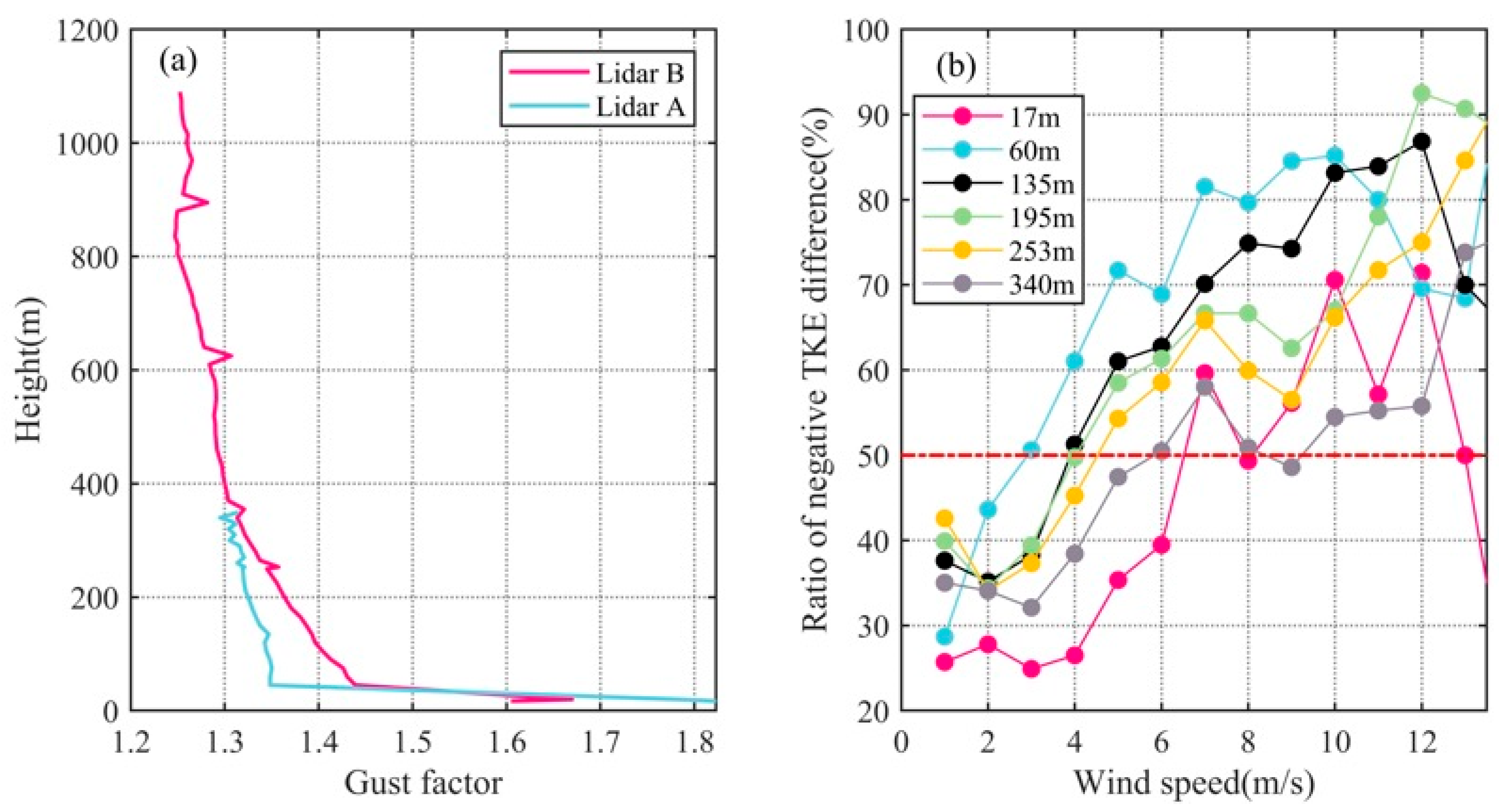
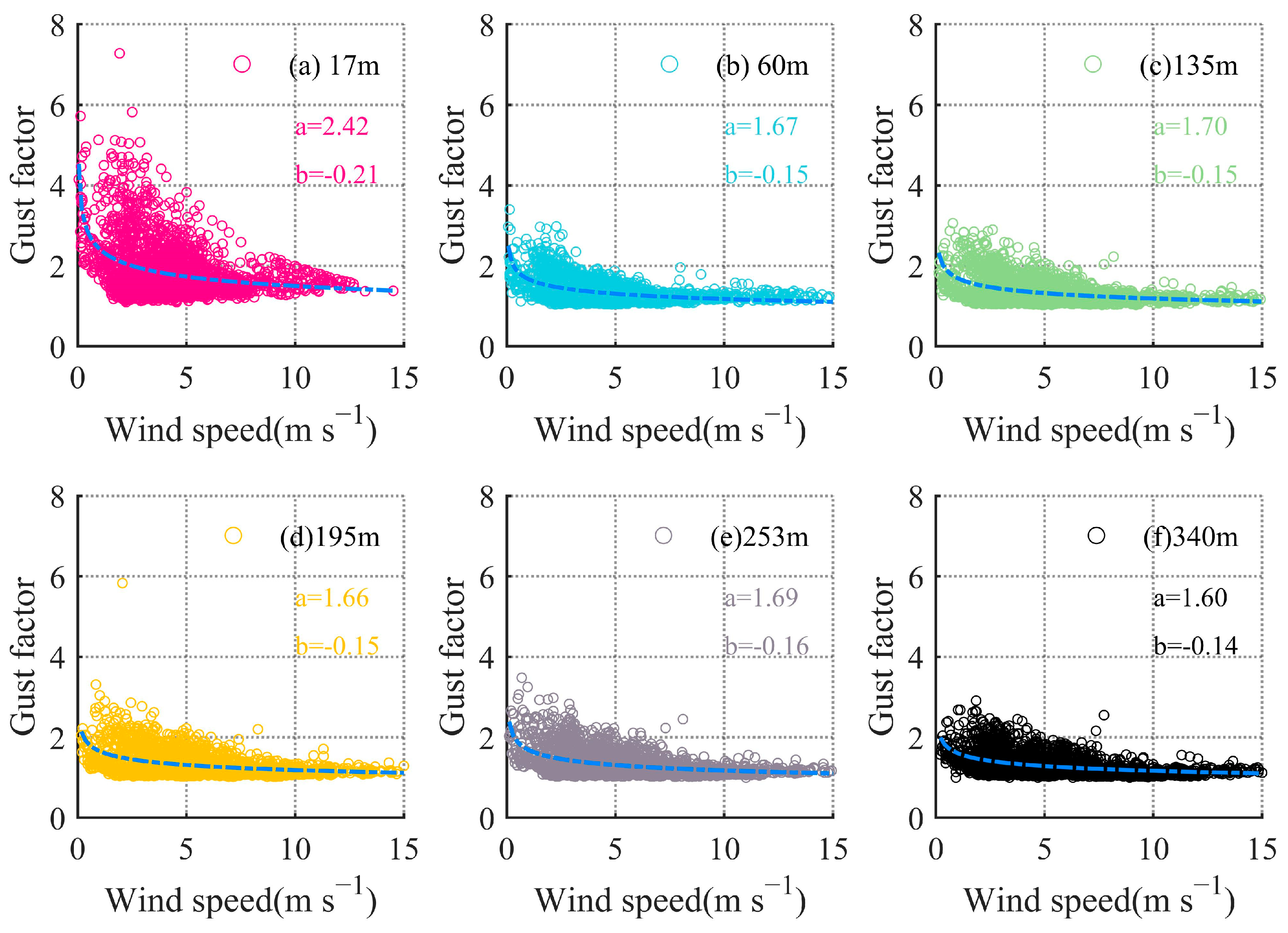
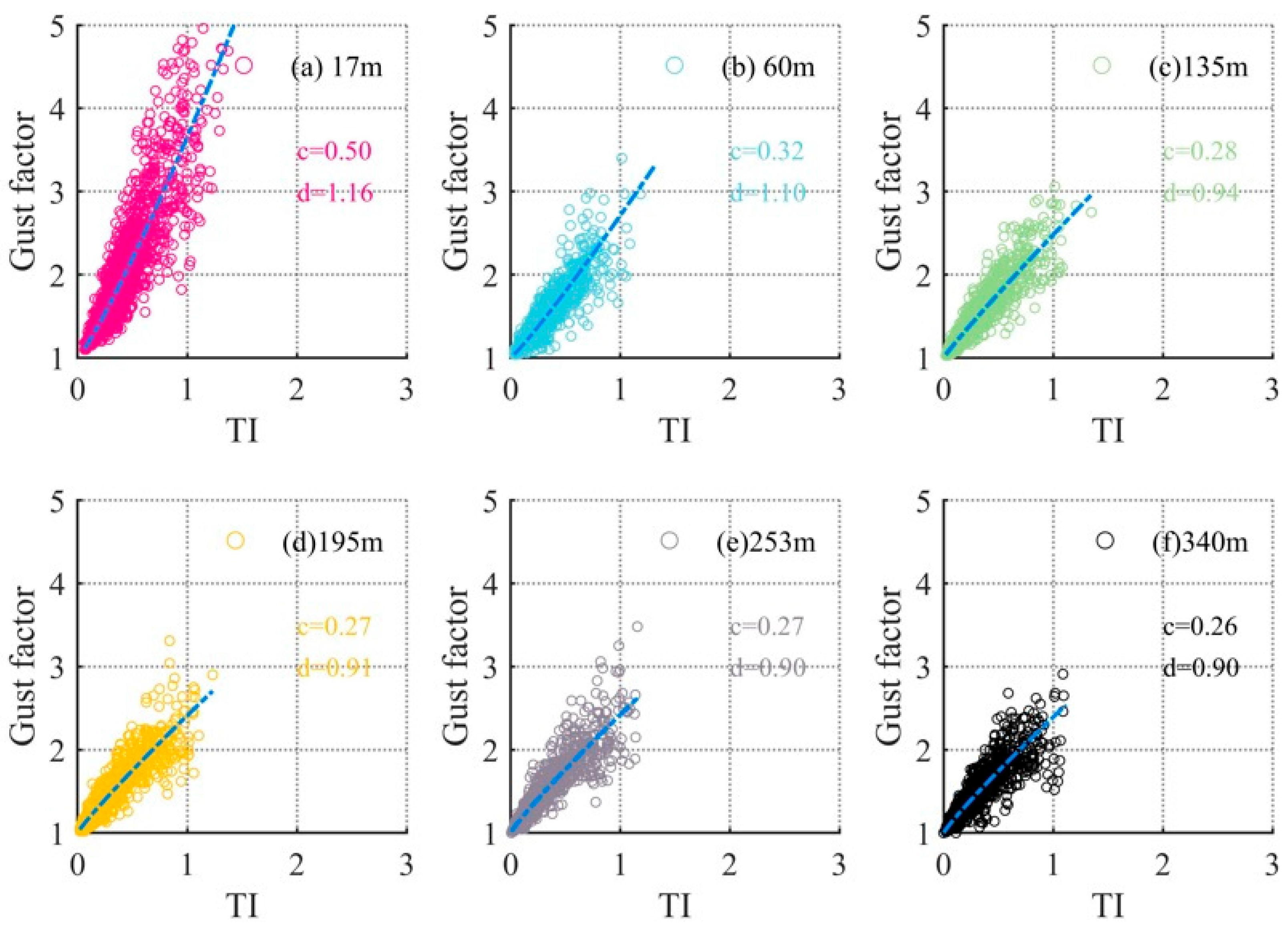
2.2.4. Gust Factor
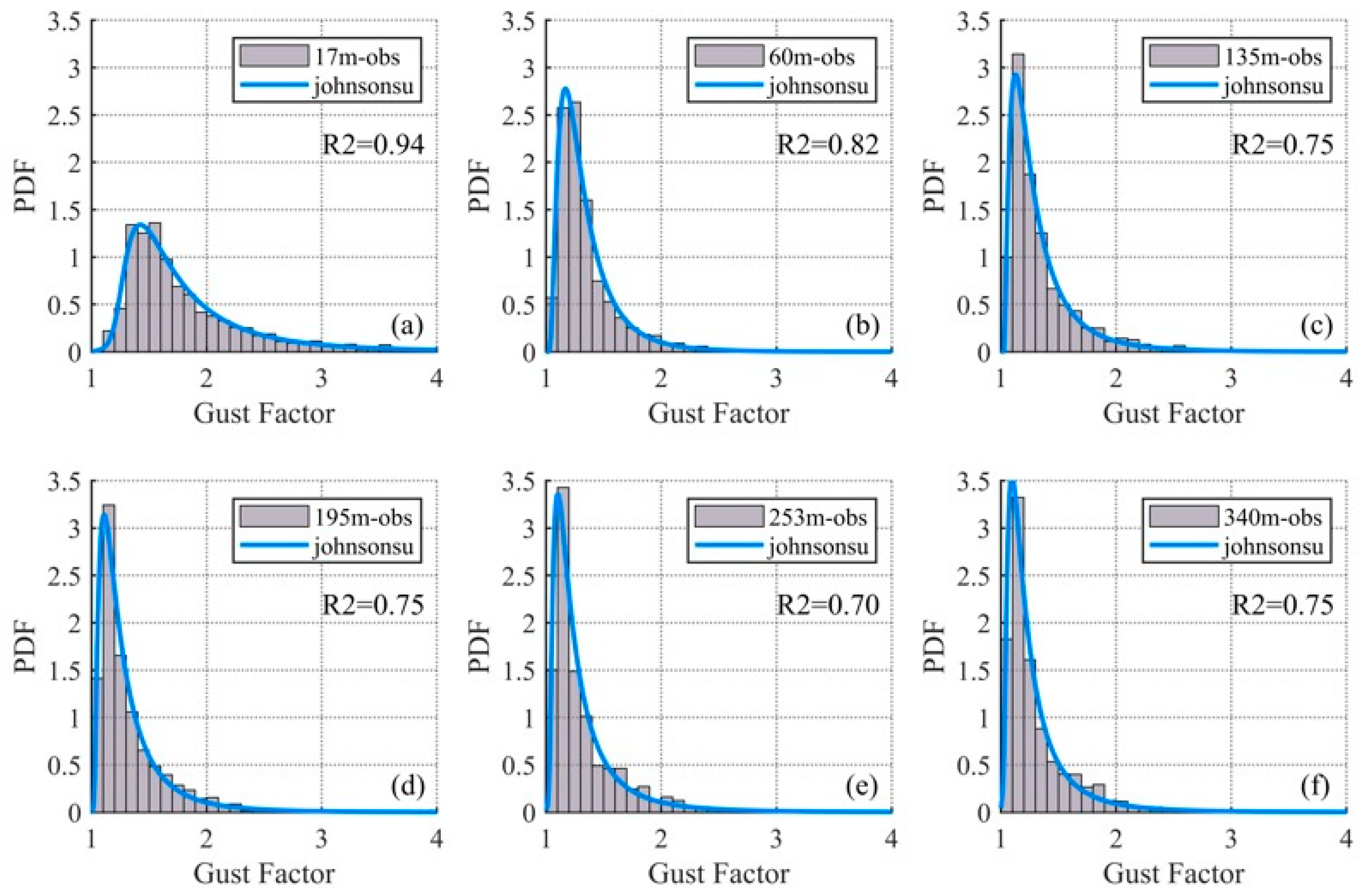
2.2.5. JohnsonSU Distribution Function
2.2.6. Corrections to the Power Curves for Large Wind Turbine
3. Results and Discussion
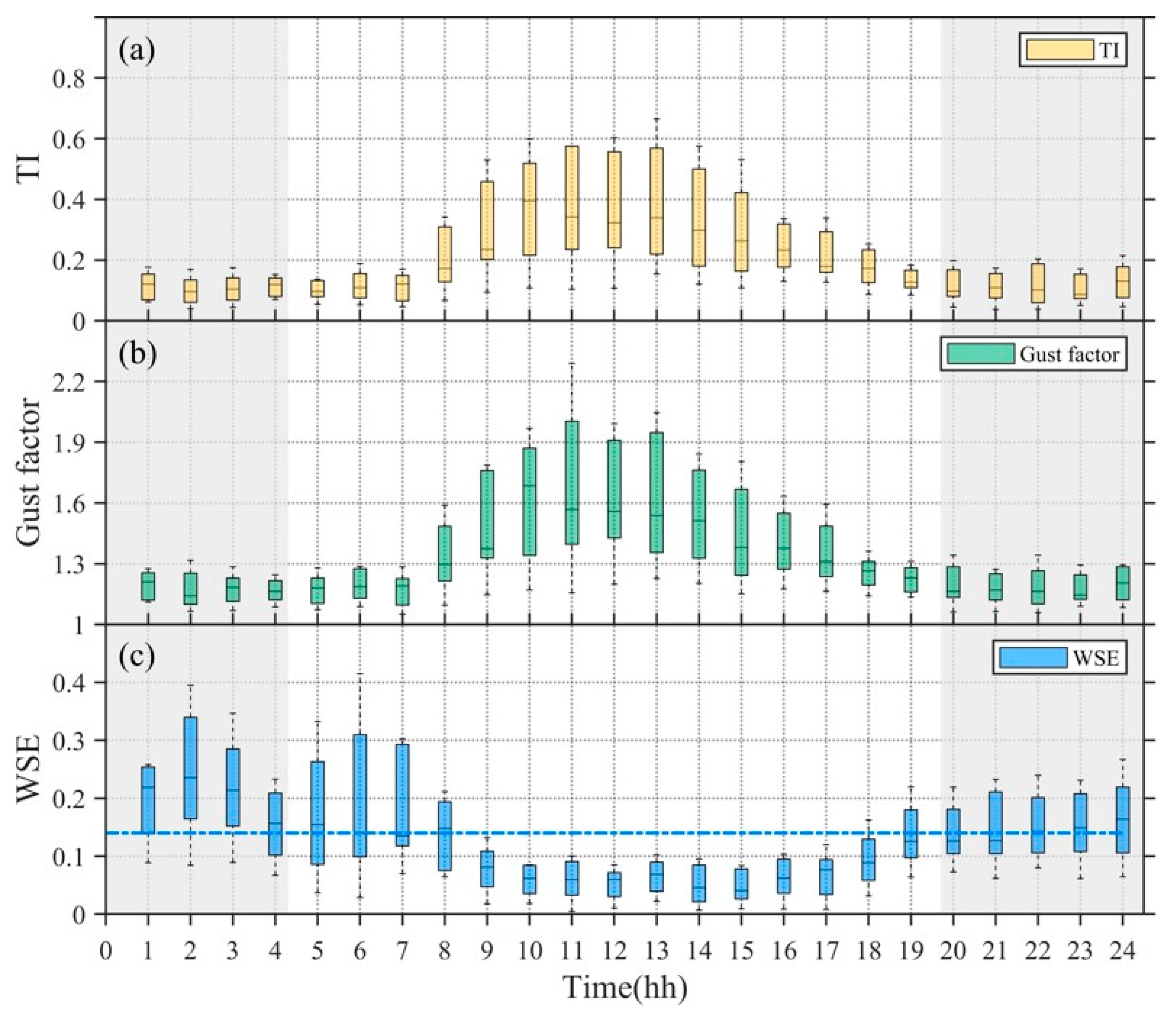
3.1. Characteristics of the Atmospheric Turbulence Intensity, Gust Factor, and Wind Shear Exponent
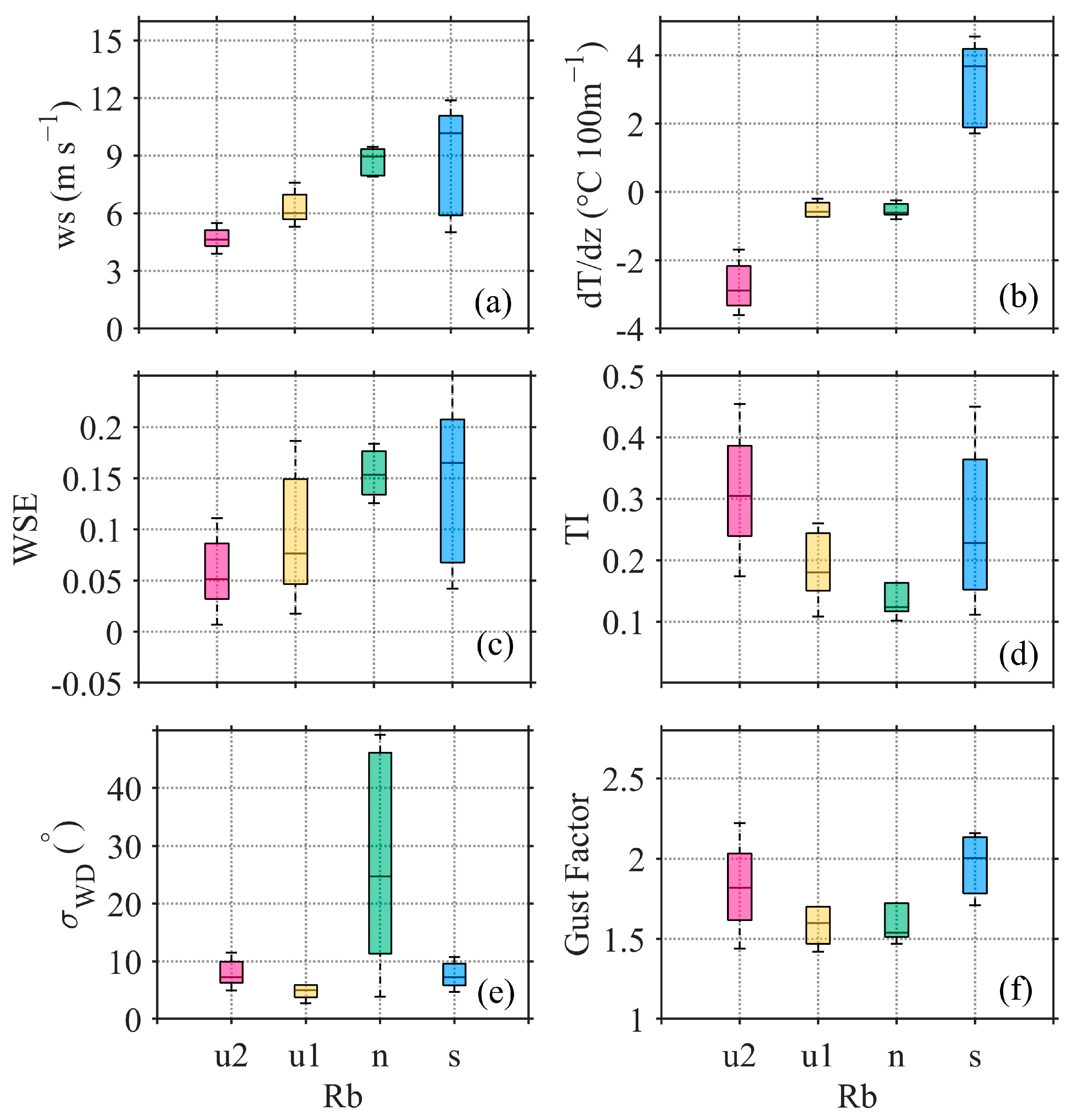
3.2. Analysis of Different Atmospheric Stabilities
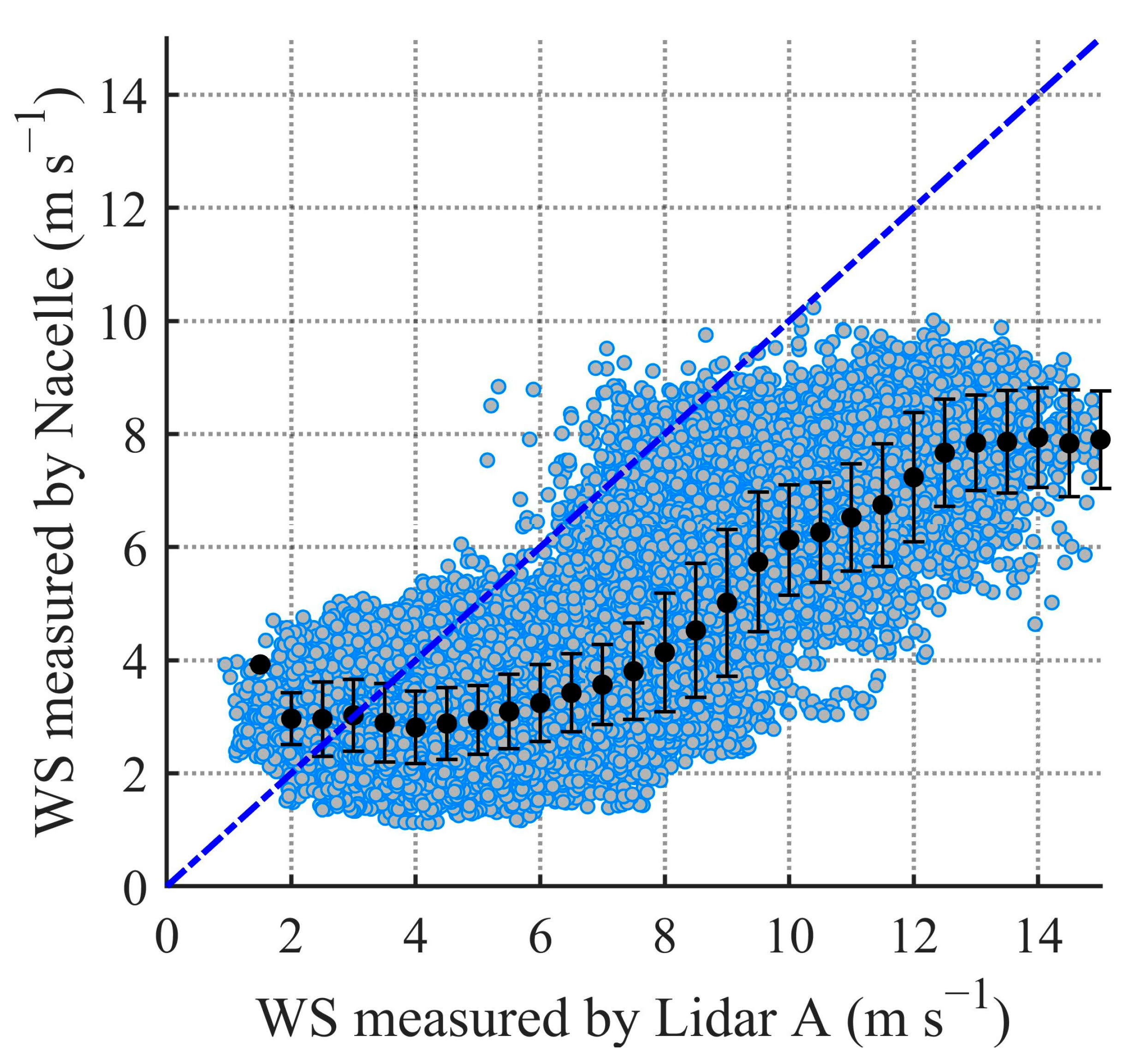
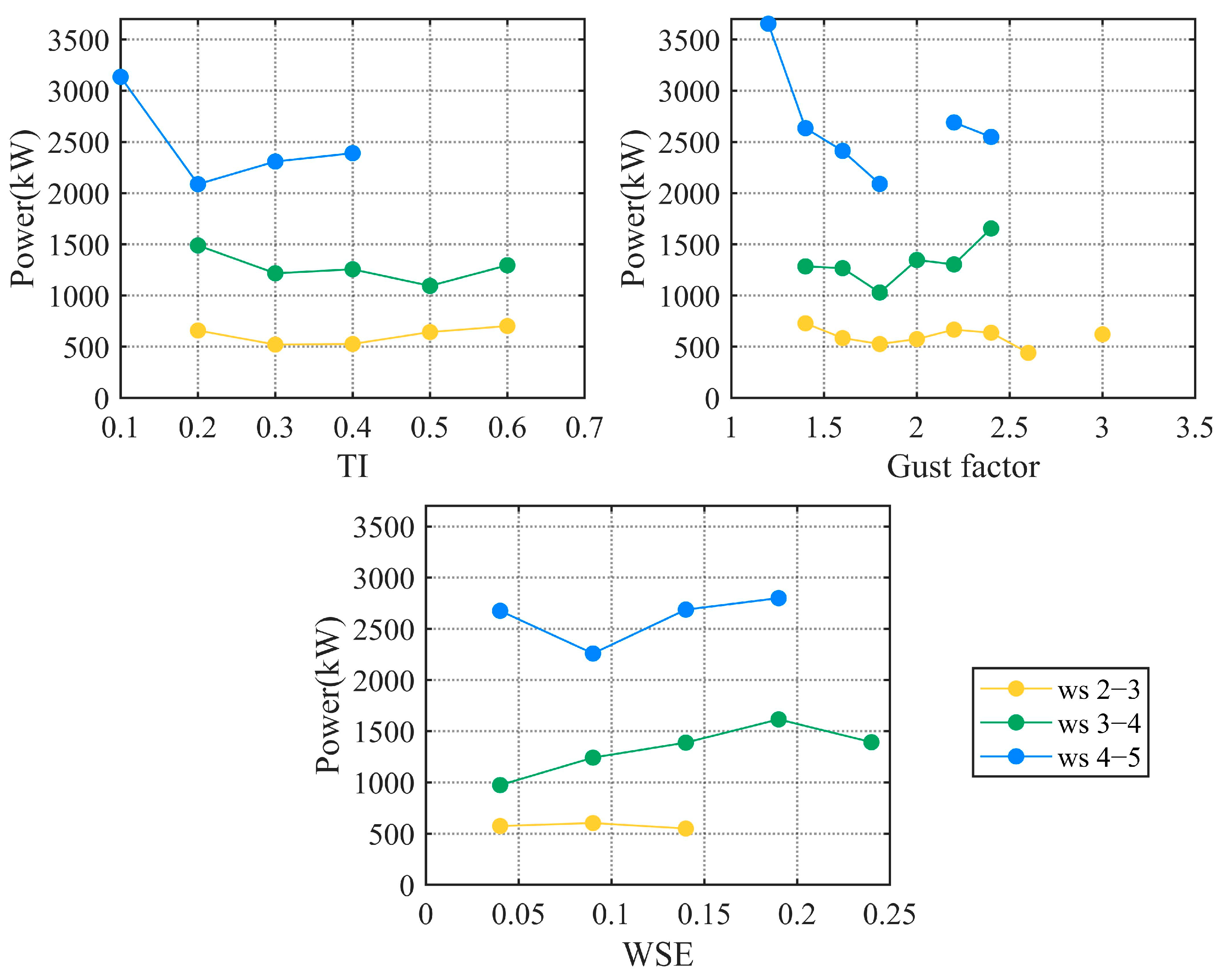
3.3. Power Performance of Wind Turbines and Improvements in Power Curve
4. Conclusions
Author Contributions
Funding
Data Availability Statement
Acknowledgments
Conflicts of Interest
References
- Osman, A.I.; Chen, L.; Yang, M.; Msigwa, G.; Farghali, M.; Fawzy, S.; Rooney, D.W.; Yap, P.S. Cost, environmental impact, and resilience of renewable energy under a changing climate: A review. Environ. Chem. Lett. 2023, 21, 741–764. [Google Scholar] [CrossRef]
- Kandy, D.M.; Mörtberg, U.; Wretling, V.; Kuhlefelt, A.; Byström, G.; Polatidis, H.; Barney, A.; Balfors, B. Spatial multicriteria framework for sustainable wind-farm planning–Accounting for conflicts. Renew. Sustain. Energy Rev. 2024, 189, 113856. [Google Scholar] [CrossRef]
- GWEC. Global Wind Report 2023. Available online: https://gwec.net/globalwindreport2023/ (accessed on 28 July 2025).
- Emeis, S. Current issues in wind energy meteorology. Meteorol. Appl. 2014, 21, 803–819. [Google Scholar] [CrossRef]
- Veers, P.; Dykes, K.; Lantz, E.; Barth, S.; Bottasso, C.L.; Carlson, O.; Clifton, A.; Green, J.; Green, P.; Holttinen, H. Grand challenges in the science of wind energy. Science 2019, 366, eaau2027. [Google Scholar] [CrossRef] [PubMed]
- Abdallah, A.; William, M.A.; Moharram, N.A.; Zidane, I.F. Boosting H-Darrieus vertical axis wind turbine performance: A CFD investigation of J-Blade aerodynamics. Results Eng. 2025, 27, 106358. [Google Scholar] [CrossRef]
- International Energy Agency (IEA). Wind turbines-Part 2: Small Wind Turbines. Available online: https://webstore.iec.ch/publication/5433 (accessed on 30 November 2025).
- Vanderwende, B.J.; Lundquist, J.K. The modification of wind turbine performance by statistically distinct atmospheric regimes. Environ. Res. Lett. 2012, 7, 034035. [Google Scholar] [CrossRef]
- Sathe, A.; Mann, J. A review of turbulence measurements using ground-based wind lidars. Atmospheric Meas. Tech. 2013, 6, 3147–3167. [Google Scholar] [CrossRef]
- Manwell, J.F.; McGowan, J.G.; Rogers, A.L. Wind Energy Explained: Theory, Design and Application, 2nd ed.; Manwell, J.F., McGowan, J.G., Rogers, A., Eds.; John Wiley: Chichester, UK, 2009. [Google Scholar]
- Stull, R.B. An Introduction to Boundary Layer Meteorology; Kluwer Academic Publishers: Dordrecht, The Netherlands, 1988. [Google Scholar]
- Larsén, X.G.; Davis, N.; Hannesdóttir, Á.; Kelly, M.; Svenningsen, L.; Slot, R.; Imberger, M.; Olsen, B.T.; Floors, R. The Global Atlas for Siting Parameters project: Extreme wind, turbulence, and turbine classes. Wind Energy 2022, 25, 1841–1859. [Google Scholar] [CrossRef]
- Bardal, L.M.; Sætran, L.R. Influence of turbulence intensity on wind turbine power curves. Energy Procedia 2017, 137, 553–558. [Google Scholar] [CrossRef]
- Asadi, M.; Pourhossein, K. Wind farm site selection considering turbulence intensity. Energy 2021, 236, 121480. [Google Scholar] [CrossRef]
- Ryu, G.H.; Kim, D.H.; Lee, H.W.; Park, S.Y.; Yoo, J.W.; Kim, H.G. Accounting for the Atmospheric Stability in Wind Resource Variations and Its Impacts on the Power Generation by Concentric Equivalent Wind Speed. J. Korean Sol. Energy Soc. 2016, 36, 49–61. [Google Scholar] [CrossRef]
- Scheurich, F.; Enevoldsen, P.B.; Paulsen, H.N.; Dickow, K.K.; Fiedel, M.; Loeven, A.; Antoniou, I. Improving the Accuracy of Wind Turbine Power Curve Validation by the Rotor Equivalent Wind Speed Concept. J. Phys. Conf. Ser. 2016, 753, 072029. [Google Scholar] [CrossRef]
- Ryu, G.H.; Kim, D.; Kim, D.Y.; Kim, Y.G.; Kwak, S.J.; Choi, M.S.; Jeon, W.; Kim, B.S.; Moon, C.J. Analysis of Vertical Wind Shear Effects on Offshore Wind Energy Prediction Accuracy Applying Rotor Equivalent Wind Speed and the Relationship with Atmospheric Stability. Appl. Sci. 2022, 12, 6949. [Google Scholar] [CrossRef]
- Kong, S.; Xiao, Y.L.; Cao, J.L.; Han, Z.T. Adapting wind shear coefficients to urban morphology: Unlocking urban wind energy potential. Sustain. Cities Soc. 2025, 121, 106217. [Google Scholar] [CrossRef]
- Ryu, G.H.; Kim, Y.G.; Kwak, S.J.; Choi, M.S.; Jeong, M.S.; Moon, C.J. Atmospheric Stability Effects on Offshore and Coastal Wind Resource Characteristics in South Korea for Developing Offshore Wind Farms. Energies 2022, 15, 1305. [Google Scholar] [CrossRef]
- Wu, Z.; Bangga, G.; Cao, Y. Effects of lateral wind gusts on vertical axis wind turbines. Energy 2019, 167, 1212–1223. [Google Scholar] [CrossRef]
- Kim, D.; Ryu, G.; Moon, C.; Kim, B. Accuracy of a short-term wind power forecasting model based on deep learning using LiDAR-SCADA integration: A case study of the 400-MW Anholt offshore wind farm. Appl. Energy 2024, 373, 123882. [Google Scholar] [CrossRef]
- Shi, Y.; Zeng, Q.C.; Liu, L.; Huo, J.T.; Zhang, Z.; Ding, W.C.; Hu, F. Observed evidence that subsidence process stabilizes the boundary layer and increases the ground concentration of secondary pollutants. J. Geophys. Res. Atmos. 2022, 127, e2021JD035244. [Google Scholar] [CrossRef]
- Kim, D.Y.; Kim, Y.H.; Kim, B.S. Changes in wind turbine power characteristics and annual energy production due to atmospheric stability, turbulence intensity, and wind shear. Energy 2021, 214, 119051. [Google Scholar] [CrossRef]
- Elliott, D.L.; Holliday, C.; Barchet, W.; Foote, H.; Sandusky, W. Wind Energy Resource Atlas of the United States; Solar Energy Research Institute: Golden, CO, USA, 1987; p. 210. [Google Scholar]
- Wharton, S.; Lundquist, J.K. Atmospheric stability affects wind turbine power collection. Environ. Res. Lett. 2012, 7, 014005. [Google Scholar] [CrossRef]
- Kubik, M.L.; Coker, P.J.; Barlow, J.F.; Hunt, C. A Study into the Accuracy of Using Meteorological Wind Data to Estimate Turbine Generation Output. Renew. Energy 2013, 51, 153–158. [Google Scholar] [CrossRef]
- Göçmen, T.; Van Der Laan, P.; Réthoré, P.-E.; Diaz, A.P.; Larsen, G.C.; Ott, S. Wind Turbine Wake Models Developed at the Technical University of Denmark: A Review. Renew. Sustain. Energy Rev. 2016, 60, 752–769. [Google Scholar] [CrossRef]
- International Electrotechnical Commission. Wind Turbines Generator Systems-Part 1: Safety Requirements, IEC61400-1.[S]; International Electro Technical Commission: Geneva, Switzerland, 2019. [Google Scholar]
- Suomi, I.; Vihma, T.; Gryning, S.; Fortelius, C. Wind-gust parametrizations at heights relevant for wind energy: A study based on mast observations. Q. J. R. Meteorol. Soc. 2013, 139, 1298–1310. [Google Scholar] [CrossRef]
- Wang, B.L.; Hu, F.; Cheng, X.L. Wind gust and turbulence statistics of typhoons in South China. Acta Meteorol. Sin. 2011, 25, 113–127. [Google Scholar] [CrossRef]
- Johnson, N.L. Bivariate distributions based on simple translation systems. Biometrika 1949, 36, 297–304. [Google Scholar] [CrossRef]
- Johnson, N.L. Systems of Frequency Curves Generated by Methods of Translation. Biometrika 1949, 36, 149. [Google Scholar] [CrossRef]
- Tian, L.L.; Song, Y.L.; Zhao, N.; Shen, W.Z.; Wang, T.G.; Zhu, C.L. Numerical investigations into the idealized diurnal cycle of atmospheric boundary layer and its impact on wind turbine’s powerperformance. Renew. Energy 2020, 145, 419–427. [Google Scholar] [CrossRef]
- Zhang, Z.; Liu, L.; Shi, Y.; Zhang, K.; Liu, K.W.; Wang, S.; Hu, F. Analysis of urban turbulence intensity observed by Beijing 325-m tower and comparison with the IEC turbulence model for small wind turbines. J. Wind. Eng. Ind. Aerodyn. 2023, 241, 105511. [Google Scholar] [CrossRef]
- Liao, H.L.; Jing, H.M.; Ma, C.M.; Tao, Q.Y.; Li, Z.G. Field measurement study on turbulence field by wind tower and Windcube Lidar in mountain valley. J. Wind. Eng. Ind. Aerodyn. 2020, 197, 104090. [Google Scholar] [CrossRef]
- Zou, Q.; Li, Z.; Zeng, X.; Wang, C.; Zou, F. The analysis of characteristics of wind field on roof based on field measurement. Energy Build. 2021, 240, 110877. [Google Scholar] [CrossRef]
- Sparks, P.R.; Huang, Z. Gust factors and surface-to-gradient wind-speed ratios in tropical cyclones. J. Wind. Eng. Ind. Aerodyn. 2001, 89, 1047–1058. [Google Scholar] [CrossRef]
- Shu, Z.R.; Li, Q.S.; He, Y.C.; Chan, P.W. Gust factors for tropical cyclone, monsoon and thunderstorm winds. J. Wind Eng. Ind. Aerodyn. 2015, 142, 1–14. [Google Scholar] [CrossRef]
- Fang, G.S.; Zhao, L.; Cao, S.Y.; Ge, Y.J.; Li, K. Gust characteristics of near-ground typhoon winds. J. Wind Eng. Ind. Aerodyn. 2019, 188, 323–337. [Google Scholar] [CrossRef]
- Mohan, M.; Siddiqui, T. Analysis of various schemes for the estimation of atmospheric stability classification. Atmos. Environ. 1998, 32, 3775–3781. [Google Scholar] [CrossRef]
- Antoniou, I.; Pedersen, S.M.; Enevoldsen, P.B. Wind Shear and Uncertainties in Power Curve Measurement and Wind Resources; SAGE Publications: Thousand Oaks, CA, USA, 2009. [Google Scholar] [CrossRef]
- Dörenkämper, M.; Tambke, J.; Steinfeld, G.; Heinemann, D.; Kühn, M. Atmospheric Impacts on Power Curves of Multi-Megawatt Offshore Wind Turbines. J. Phys. Conf. 2014, 555, 012029. [Google Scholar] [CrossRef]



| Parameters | Value |
|---|---|
| Cut-in wind speed | 3 m s−1 |
| Rated wind speed | 11.5 m s−1 |
| blade length | 118 m |
| Swept area | 43,700 m2 |
| Number of blades | 3 |
| Hub height | 135 m |
| Measured Variable | Device | Resolution |
|---|---|---|
| Wind speed | Thies (Thies Clima, Göttingen, Germany) | 0.1 m s−1 |
| Wind direction | Thies (Thies Clima, Germany) | 0.1° |
| Pressure | PTB110 (VAISALA, Vantaa, Finland) | 0.1 hPa |
| Temperature | KPC1.S/6-ME (Ammonit, Berlin, Germany) | 0.01 K |
| Humidity | KPC1.S/6-ME (Ammonit, Germany) | 0.01% |
| Height (m) | 17 | 60 | 135 | 195 | 253 | 340 |
|---|---|---|---|---|---|---|
| γ (shape parameter 1) | −2.082 | −7.258 | −6.593 | −3.464 | −2.648 | −2.539 |
| δ (shape parameter 2) | 1.127 | 1.384 | 1.165 | 1.108 | 1.012 | 1.029 |
| λ (scale parameter) | 0.141 | 0.002 | 0.001 | 0.018 | 0.027 | 0.030 |
| ξ (position parameter) | 1.211 | 1.014 | 1.016 | 1.015 | 1.028 | 1.024 |
| Cp | Correction Coefficients | R2 | RMSE | ||
|---|---|---|---|---|---|
| C1 | C2 | C3 | |||
| 0.485 | 0.492 | −0.546 | 1.429 | 0.451 | 400.26 |
| 0.486 | 0.462 | −0.530 | 1.387 | 0.450 | 400.42 |
| 0.487 | 0.466 | −0.532 | 1.393 | 0.450 | 400.59 |
| 0.488 | 0.470 | −0.535 | 1.399 | 0.449 | 400.76 |
| 0.489 | 0.475 | −0.537 | 1.405 | 0.449 | 400.94 |
| 0.49 | 0.479 | −0.539 | 1.411 | 0.448 | 401.11 |
| 0.491 | 0.483 | −0.542 | 1.417 | 0.447 | 401.29 |
| 0.492 | 0.487 | −0.544 | 1.423 | 0.447 | 401.48 |
Disclaimer/Publisher’s Note: The statements, opinions and data contained in all publications are solely those of the individual author(s) and contributor(s) and not of MDPI and/or the editor(s). MDPI and/or the editor(s) disclaim responsibility for any injury to people or property resulting from any ideas, methods, instructions or products referred to in the content. |
© 2025 by the authors. Licensee MDPI, Basel, Switzerland. This article is an open access article distributed under the terms and conditions of the Creative Commons Attribution (CC BY) license (https://creativecommons.org/licenses/by/4.0/).
Share and Cite
Shi, Y.; Hu, F.; Li, X.; Zhang, Z.; Zhang, K. Improving Large Wind Turbine Power Curve by Integrating Lidar-Measured Multiple Wind Parameters: A Coastal Case Study. Energies 2025, 18, 6398. https://doi.org/10.3390/en18246398
Shi Y, Hu F, Li X, Zhang Z, Zhang K. Improving Large Wind Turbine Power Curve by Integrating Lidar-Measured Multiple Wind Parameters: A Coastal Case Study. Energies. 2025; 18(24):6398. https://doi.org/10.3390/en18246398
Chicago/Turabian StyleShi, Yu, Fei Hu, Xuelin Li, Zhe Zhang, and Kang Zhang. 2025. "Improving Large Wind Turbine Power Curve by Integrating Lidar-Measured Multiple Wind Parameters: A Coastal Case Study" Energies 18, no. 24: 6398. https://doi.org/10.3390/en18246398
APA StyleShi, Y., Hu, F., Li, X., Zhang, Z., & Zhang, K. (2025). Improving Large Wind Turbine Power Curve by Integrating Lidar-Measured Multiple Wind Parameters: A Coastal Case Study. Energies, 18(24), 6398. https://doi.org/10.3390/en18246398