Article

Verification and Validation of Large Eddy Simulation for Tip Clearance Vortex Cavitating Flow in a Waterjet Pump
1
State Key Lab of Water Resources and Hydropower Engineering Science, Wuhan University, Wuhan 430072, China
2
Wuhan Second Ship Design and Research Institute, Wuhan 430064, China
*
Author to whom correspondence should be addressed.
Energies 2021, 14(22), 7635; https://doi.org/10.3390/en14227635
Submission received: 25 September 2021 / Revised: 5 November 2021 / Accepted: 9 November 2021 / Published: 15 November 2021
(This article belongs to the Special Issue Advances in Pumped Storage Hydraulic System)

Abstract

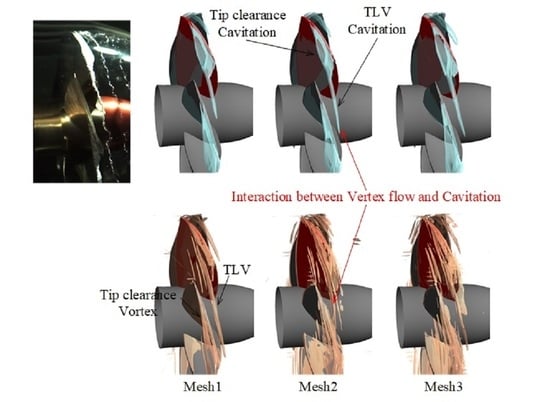
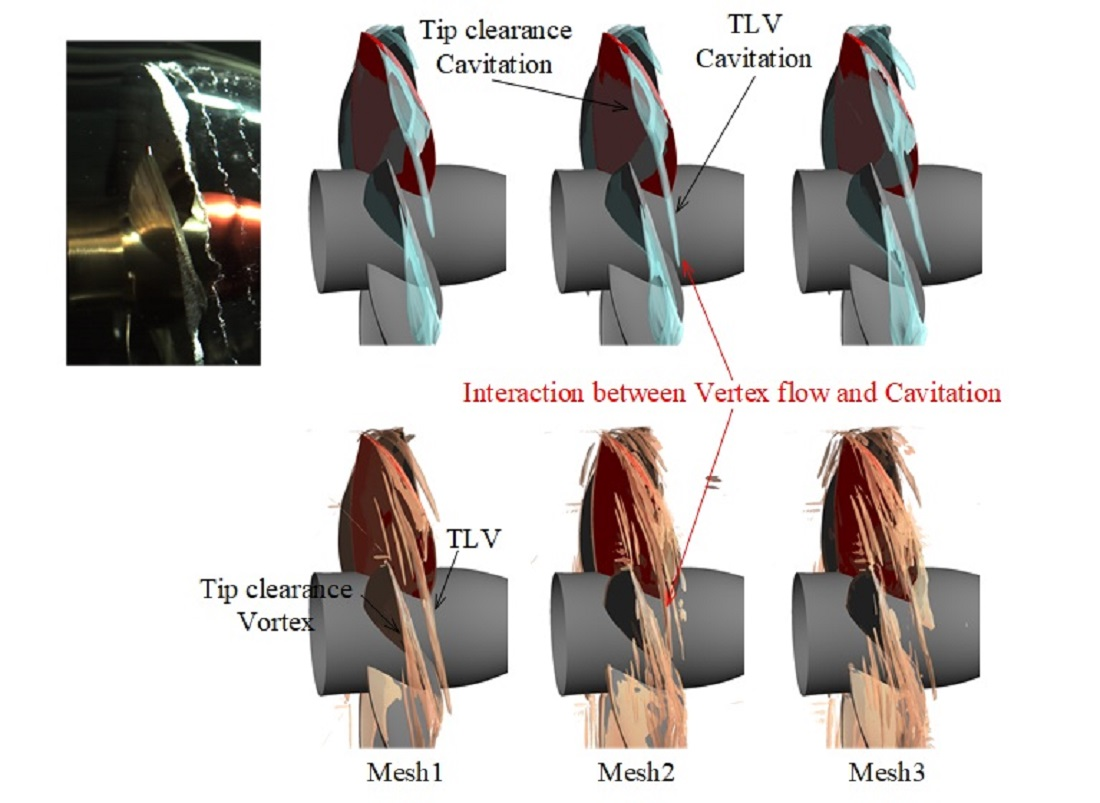
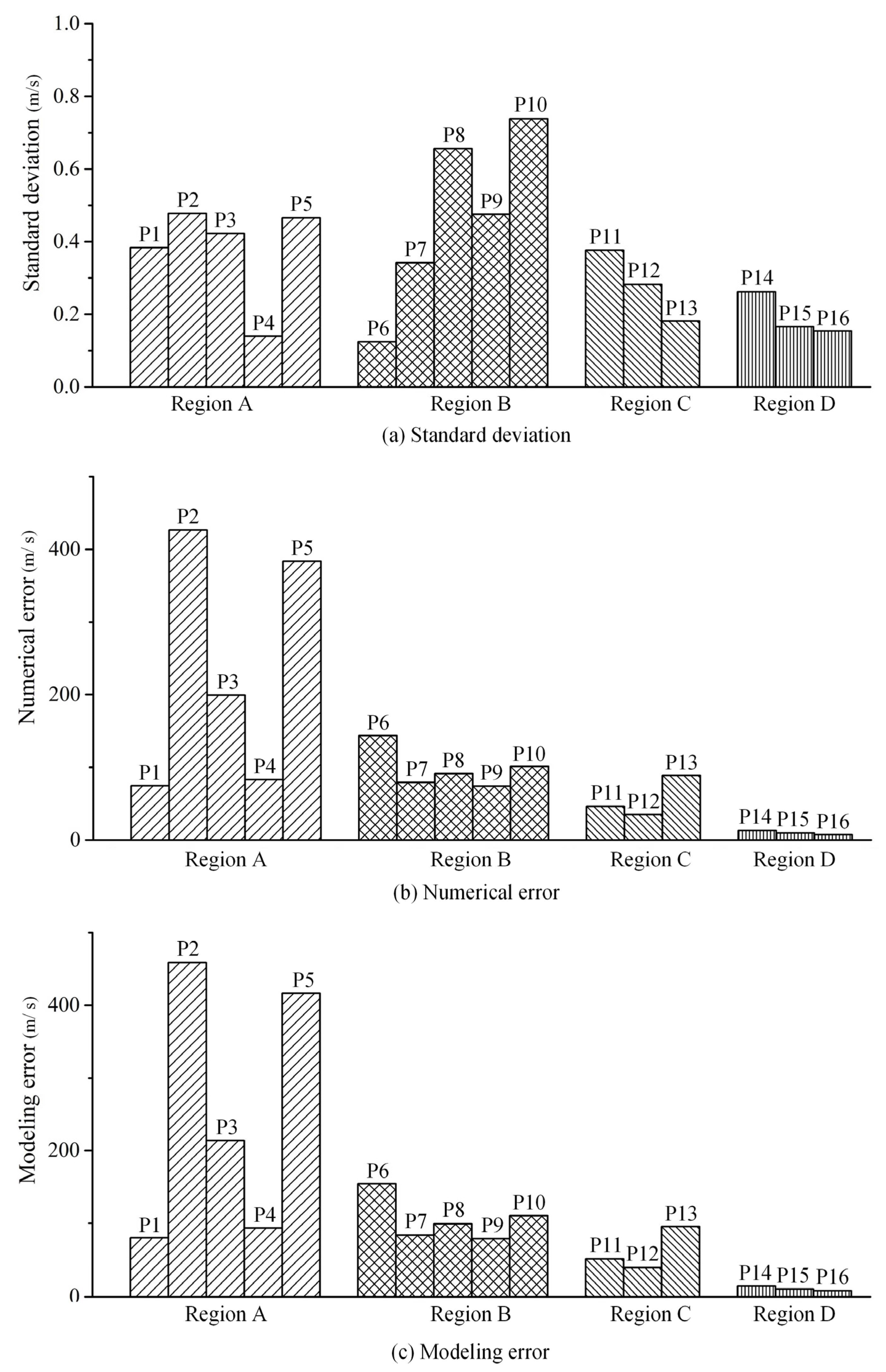
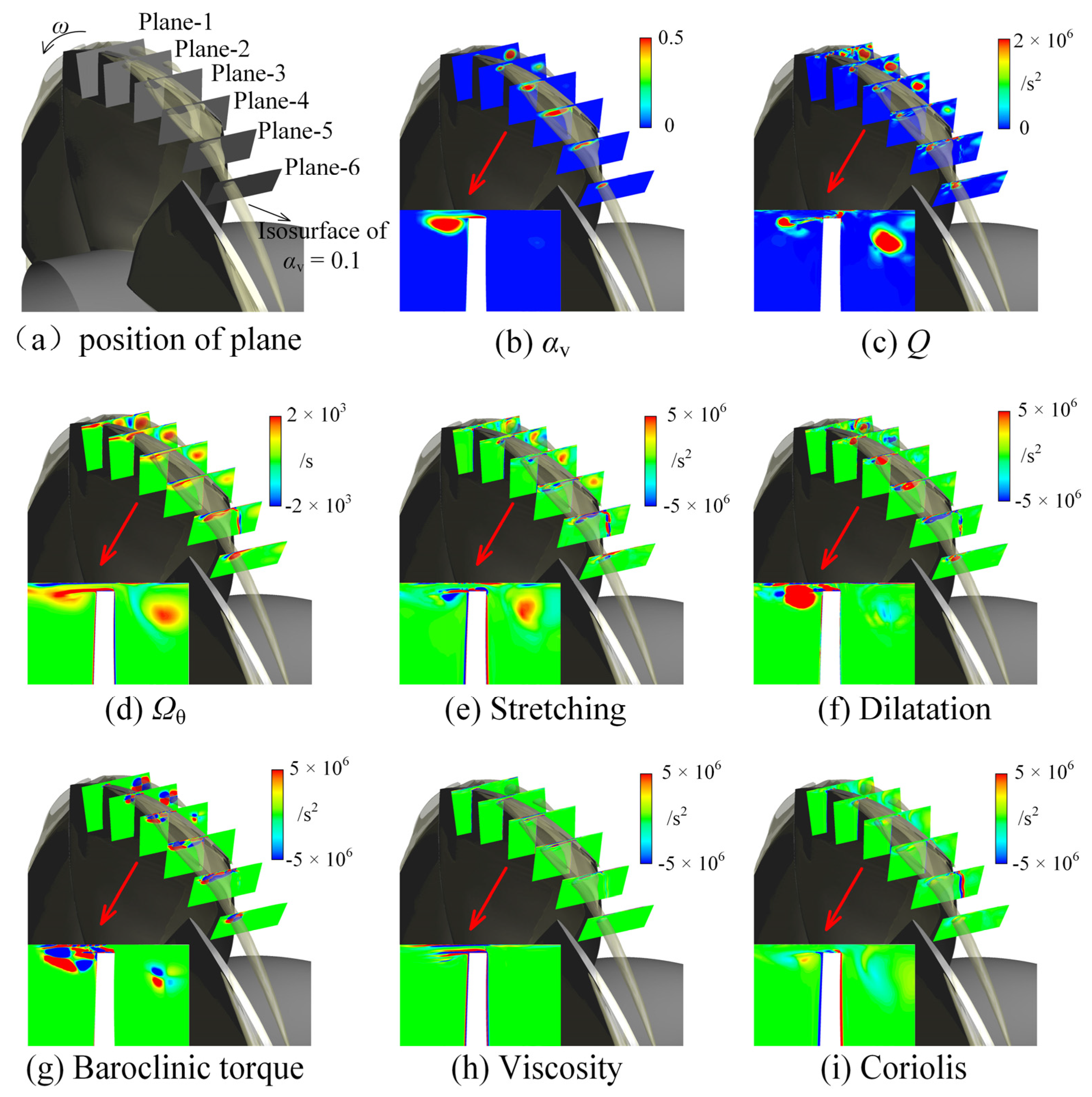
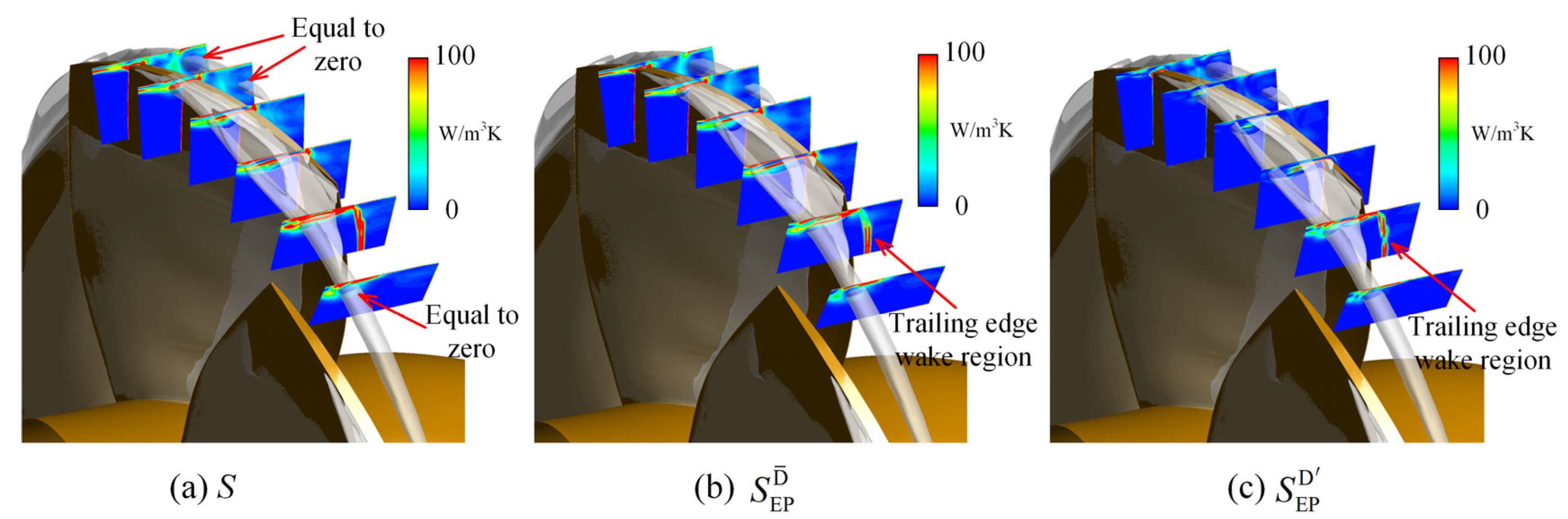
In this paper, large eddy simulation (LES) was adopted to simulate the cavitating flow in a waterjet pump with emphasis on the tip clearance flow. The numerical results agree well with the experimental observations, which indicates that the LES method can make good predictions of the unsteady cavitating flows around a rotor blade. The LES verification and validation (LES V&V) analysis was used to reveal the influence of cavitation on the flow structures. It can be found that the LES errors in cavitating region are larger than those in the non-cavitating area, which is mainly caused by more complicated cavitating and tip clearance flow structures. Further analysis of the interaction between the cavitating and vortex flow by the relative vorticity transport equation shows that the stretching, dilatation and baroclinic torque terms have major effects on the generation and transport of vortex structure. Meanwhile the Coriolis force term and viscosity term also exacerbate the vorticity transport in the cavitating region. In addition, the flow loss characteristics of this pump are also revealed by the entropy production theory. It is indicated that the tip clearance flow and trailing edge wake flow cause the viscous dissipation and turbulent dissipation, and the cavitation can further enhance the instability of the flow field in the tip clearance.
Keywords: cavitation; large eddy simulation (LES); verification and validation (V&V); vorticity transport equation; entropy production; waterjet pump cavitation; large eddy simulation (LES); verification and validation (V&V); vorticity transport equation; entropy production; waterjet pump
Graphical Abstract