Article

Microgravity Survey to Detect Voids and Loosening Zones in the Vicinity of the Mine Shaft
Faculty of Geology, Geophysics and Environmental Protection, AGH University of Science and Technology, Mickiewicza 30 Av., 30-059 Kraków, Poland
*
Author to whom correspondence should be addressed.
Energies 2021, 14(11), 3021; https://doi.org/10.3390/en14113021
Submission received: 26 April 2021 / Revised: 19 May 2021 / Accepted: 20 May 2021 / Published: 23 May 2021
(This article belongs to the Special Issue Mining Innovation)

Abstract

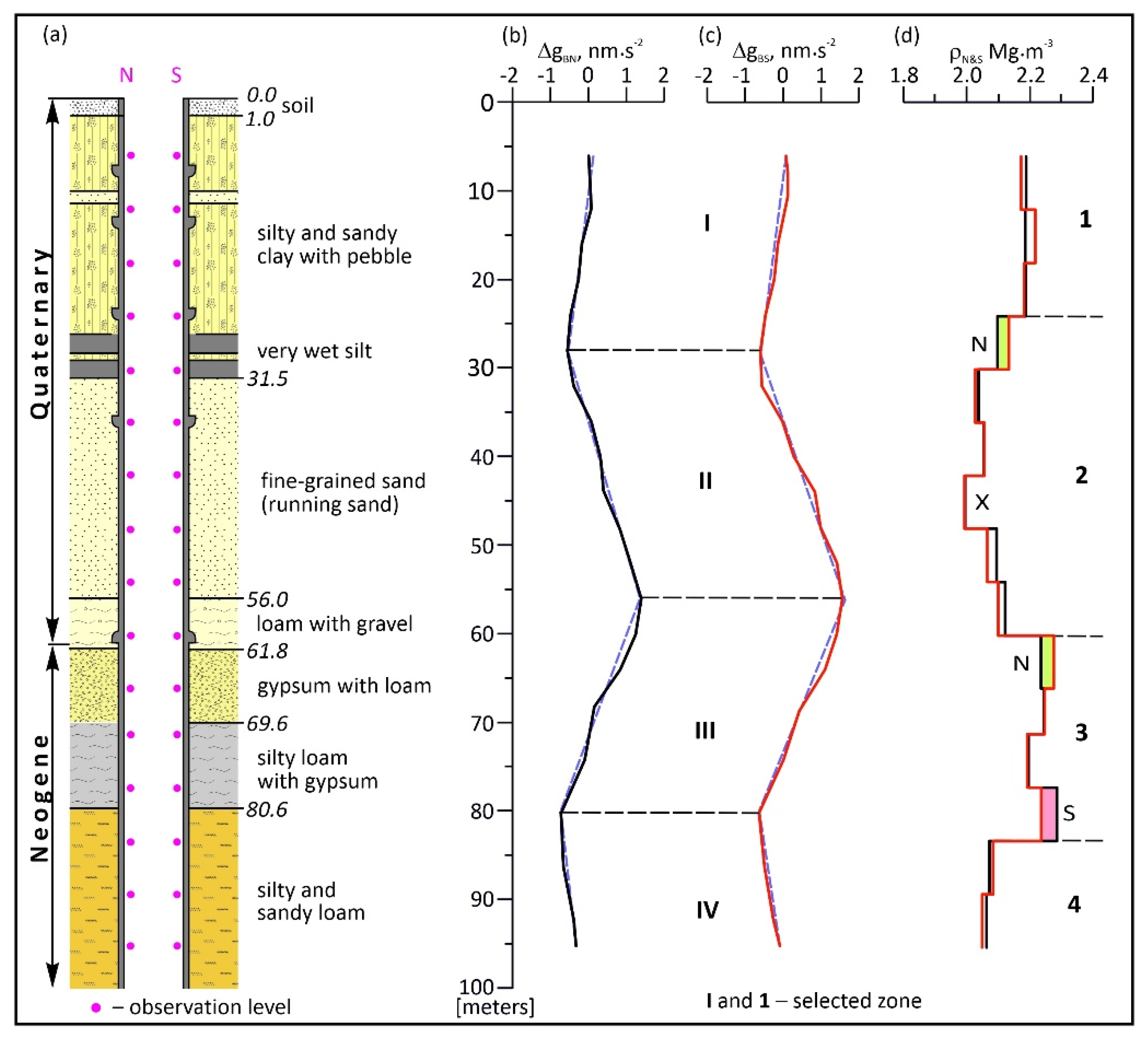
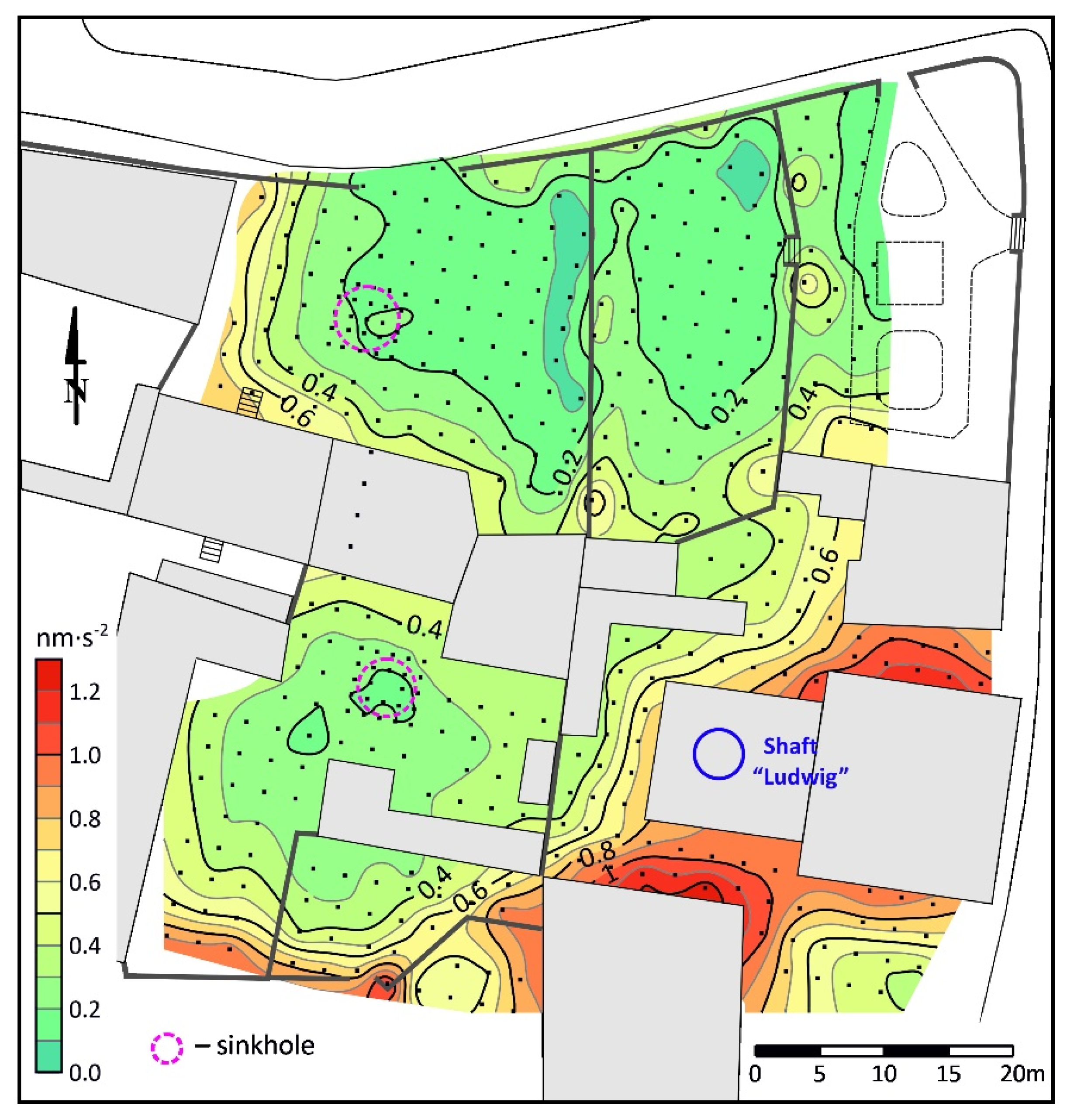
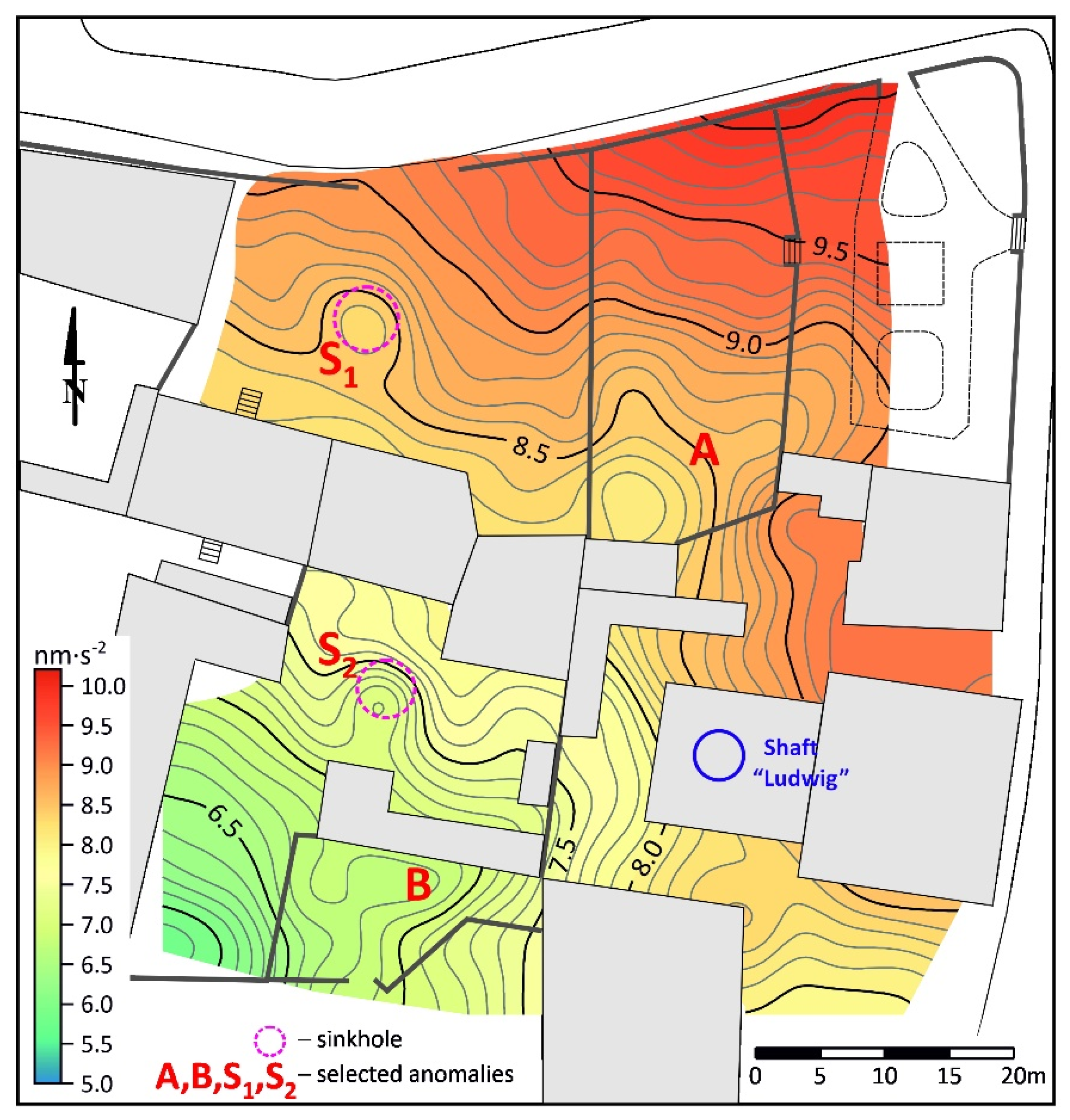
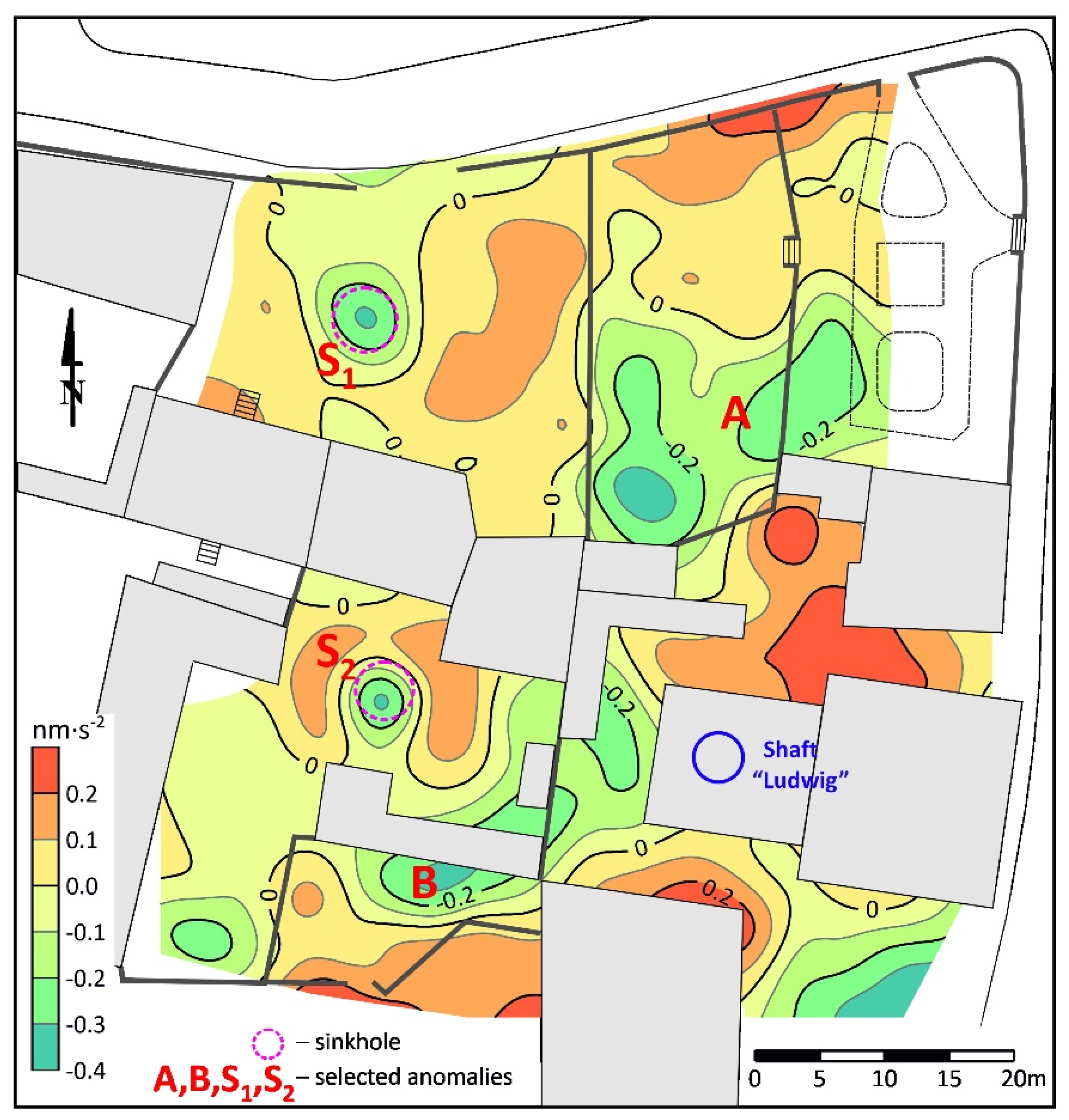
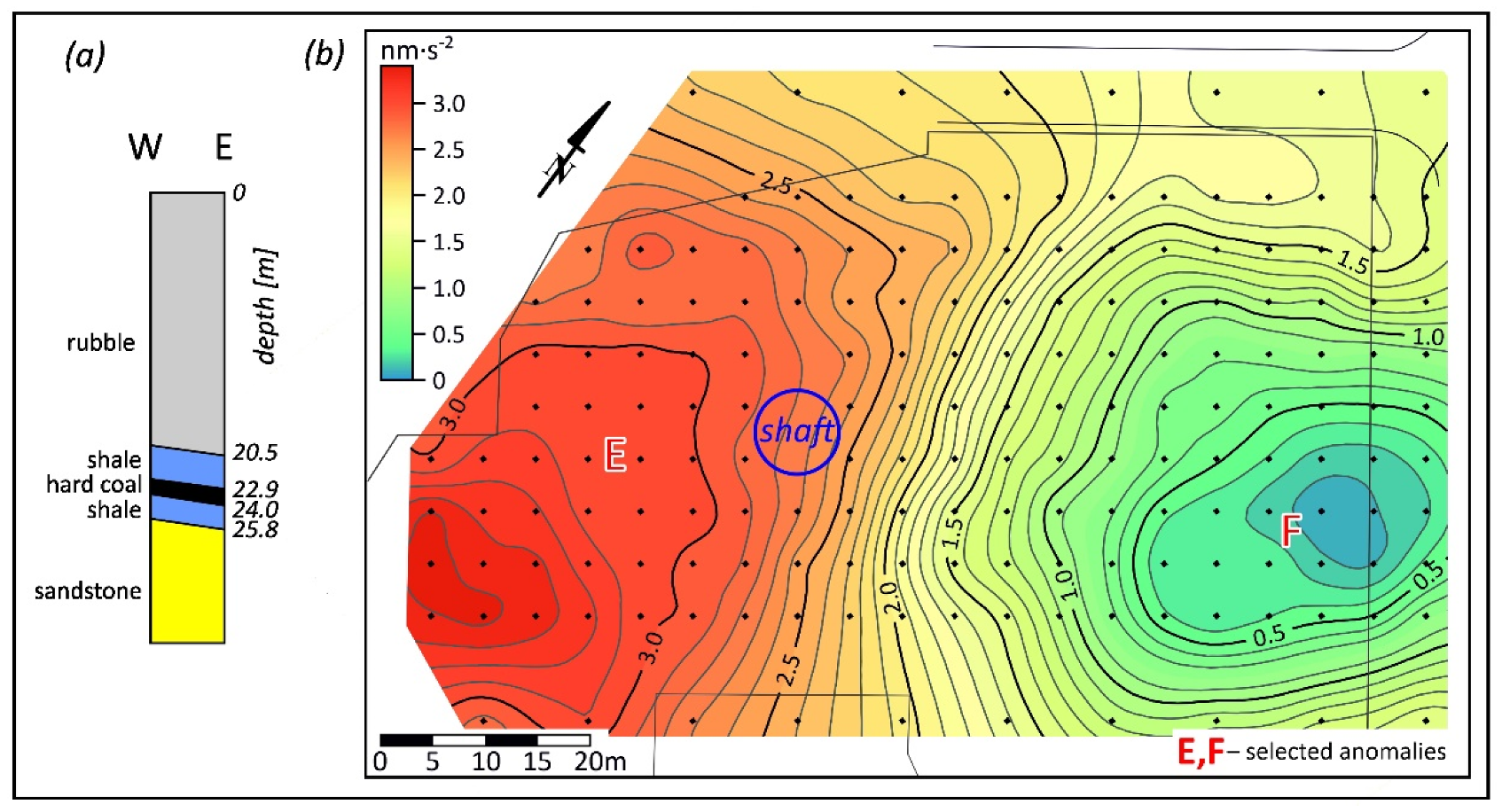
In mining and post-mining areas, the assessment of the risks to the surface and its infrastructure from the opening or closed mine is of the utmost importance; particular attention should be paid to mine shafts. The risks include the occurrence of undetected voids or loosening zones in the rock mass. Their detection makes it possible to prevent their impact on a mine shaft and surface infrastructure. Geophysical methods, and in particular, a microgravity method lend themselves for the detection of changes in the distribution of masses (i.e., the density) due to voids and loosening zones. The paper presents the results of surface microgravity surveys in the vicinity of three mine shafts: under construction, working, and a liquidated one. Based on the gravity anomalies, the density distribution of the rock mass for all three cases was recognized. The properties of the anomalies allowed to determine which of the identified decreased density zones may pose a threat to the surface infrastructure or a mine shaft. The microgravity survey made inside the working mining shaft provided information on the density of rocks outside the shaft lining, regardless of the type of lining. No significant decrease of density was found, which means that there are no larger voids outside the shaft lining. Nevertheless, at a depth of 42 m in running sands layer, the decreasing density zone was located, which should be controlled. Additionally, measurements in two vertical profiles gave the possibility of directional tracking of density changes outside shaft lining. Such changes were observed on three boundaries of geological layers, with two of them being on the boundary of gypsum and other rocks.
Keywords: geophysics; microgravity; hard coal mine; mine shaft; mining and post-mining area; rock density; voids and loosening zones geophysics; microgravity; hard coal mine; mine shaft; mining and post-mining area; rock density; voids and loosening zones