Breaking Free from Managerial Myopia: Government and Corporate Governance as Catalysts for Firm Innovation


Abstract
1. Introduction
2. Literature Review and Hypothesis Development
3. Research Design
3.1. Sample and Source of Data
3.2. Measurement of Variables
3.2.1. Measures of Managerial Myopia
3.2.2. Measures of Firm Innovation
3.2.3. Control Variables
3.3. Model Specification
4. Empirical Results
4.1. Summary Statistics
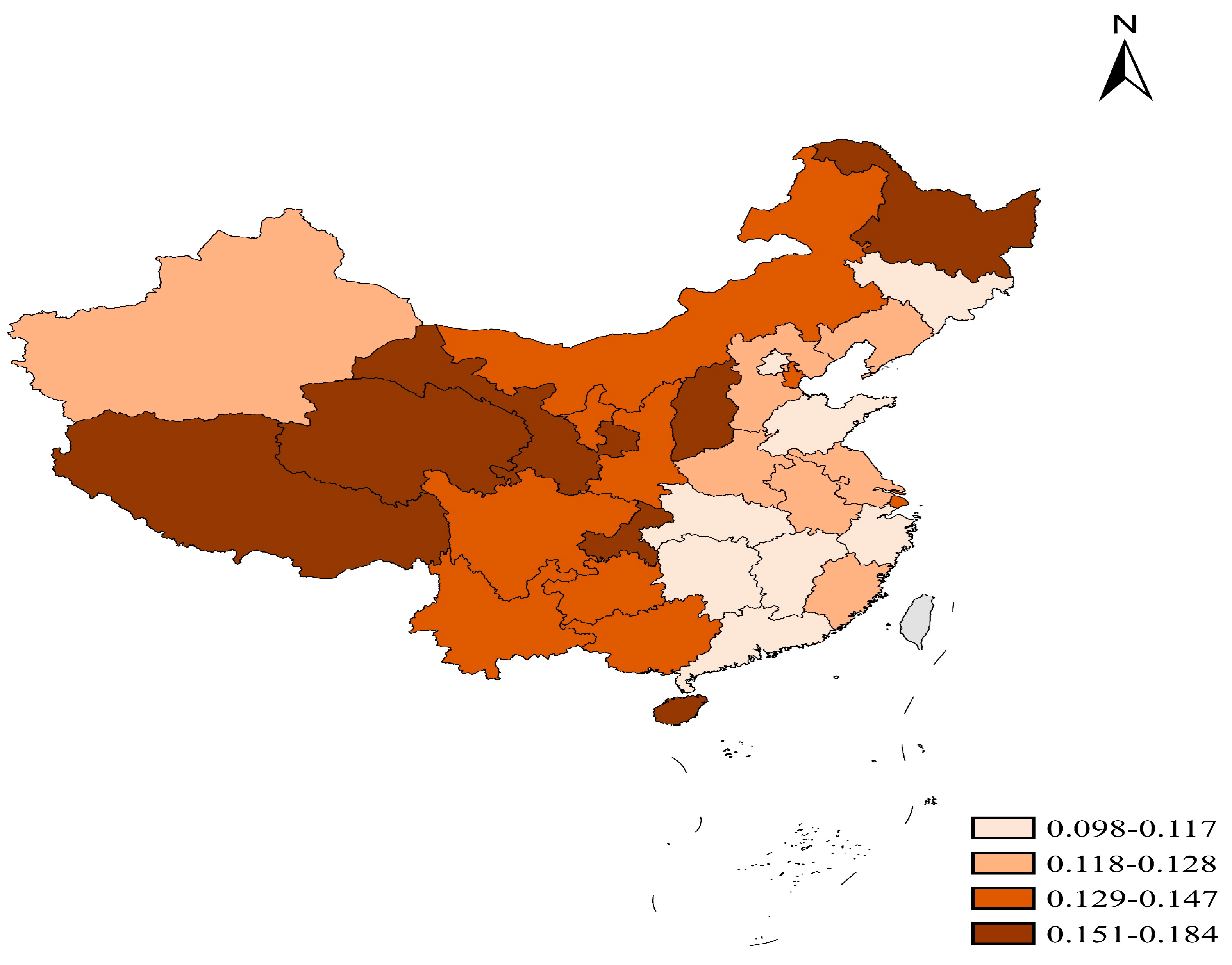
4.2. Sample Distribution
4.3. Correlation Analysis
4.4. Baseline Results
4.5. Robustness Tests
4.5.1. Test of Innovation Efficiency
4.5.2. Forward Values of Innovation Measures
4.5.3. Removing Big Cities
4.5.4. Additional Fixed Effects to Alleviate the Problem of Missing Variables
4.5.5. Propensity Score Matching
4.5.6. Endogeneity—2SLS
5. Further Analysis
5.1. Impact of Myopia and Innovation on Firm Growth
5.2. The Moderating Role of Government Ownership
5.3. The Moderating Effect of Corporate Governance
6. Conclusions
Author Contributions
Funding
Institutional Review Board Statement
Informed Consent Statement
Data Availability Statement
Conflicts of Interest
Appendix A

| Variables | Definition |
|---|---|
| R&D | R&D expenditure scaled by total assets. |
| PA | The natural logarithm of one plus the number of patent applications in a year. |
| PG | The natural logarithm of one plus the number of patent grants in a year. |
| MP | Myopia, number of short-term keywords divided by total words multiplied by 100 in the section of management discussion and analysis (MD&A) in the annual reports. |
| Firm Size | The natural logarithm of total assets of a firm. |
| Leverage | Total debt divided by total assets. |
| Firm Age | The natural logarithm of listing age of a firm. |
| Tobin’s Q | The ratio of market value and book value of total assets. |
| ROA | The net income divided by total assets. |
| Cash Ratio | The ratio of cash and tradable securities to total assets. |
| Subsidy | Government subsidies to firms divided by total assets. |
| SOE | Dummy variable equal to one if the firm is state-owned, and zero otherwise. |
| Independence | The number of independent directors as a percentage of the total number of directors on the board. |
| Board Size | The natural logarithm of the total number of directors on the board. |
| Concentration | Top one shareholding, which is the largest shareholding. |
| CEO Age | The natural logarithm of CEOs’ age. |
| CEO Tenure | Tenure of CEO. |
| CEO Gender | Dummy variable equal to one if the CEO is male, and zero if the CEO is female. |
| CEO Education | A five-point scale reflecting the highest levels of education attained (1 = below college degree, 2 = college degree, 3 = undergraduate degree, 4 = master’s degree, and 5 = Ph.D. degree) |
| CEO Duality | Dummy variable equal to one if the CEO also serves as the chairman, and zero otherwise. |
| Gpay | The natural logarithm of the compensation of the company’s top three highest-paid executives. |
| GDP Growth | The annual GDP growth rate in a province during the fiscal year. |
| Efficiency | Innovation efficiency, calculated as the natural logarithm of one plus the number of patent applications divided by the natural logarithm of one plus R&D expenditure, following Quan and Yin (2017). |
| Lottery | An indicator of provincial-level gambling preference. It is calculated as the total welfare lottery sales scaled by GDP in the province in a year, following Sheng et al. (2022). |
| Institution | The number of shares held by institutional investors over the total number of shares. |
| Big 4 | An indicator variable for auditor quality. It equals one if a firm is audited by Big 4 audit firms, and zero otherwise. |
| Board Diversity | Measured by the female ratio among board members. |
| Variable | Sample | Treated | Control | %Bias | Bias | t-Statistics | p > t |
|---|---|---|---|---|---|---|---|
| Firm Size | Unmatched | 22.702 | 22.305 | 32.8 | 15.50 | 0.000 | |
| Matched | 22.436 | 22.453 | −1.4 | 95.9 | −0.58 | 0.564 | |
| Leverage | Unmatched | 0.461 | 0.403 | 29.7 | 14.04 | 0.000 | |
| Matched | 0.426 | 0.429 | −1.5 | 95.0 | −0.62 | 0.532 | |
| Firm Age | Unmatched | 3.010 | 2.970 | 15.9 | 7.52 | 0.000 | |
| Matched | 2.998 | 2.996 | 0.7 | 95.8 | 0.28 | 0.781 | |
| Tobin’s Q | Unmatched | 1.984 | 2.258 | −19.5 | −9.22 | 0.000 | |
| Matched | 2.131 | 2.138 | −0.5 | 97.3 | −0.22 | 0.826 | |
| ROA | Unmatched | 0.027 | 0.036 | −11.7 | −5.54 | 0.000 | |
| Matched | 0.033 | 0.032 | 1.5 | 87.6 | 0.60 | 0.548 | |
| Cash Ratio | Unmatched | 0.131 | 0.148 | −16.6 | −7.85 | 0.000 | |
| Matched | 0.138 | 0.136 | 2.0 | 88.0 | 0.84 | 0.403 | |
| Subsidy | Unmatched | 0.004 | 0.005 | −7.8 | −3.67 | 0.000 | |
| Matched | 0.005 | 0.005 | 0.3 | 95.5 | 0.14 | 0.887 | |
| SOE | Unmatched | 0.457 | 0.249 | 44.6 | 21.12 | 0.000 | |
| Matched | 0.316 | 0.322 | −1.3 | 97.1 | −0.52 | 0.600 | |
| Independence | Unmatched | 0.374 | 0.377 | −5.4 | −2.56 | 0.011 | |
| Matched | 0.374 | 0.375 | −1.5 | 72.8 | −0.61 | 0.541 | |
| Board Size | Unmatched | 2.147 | 2.107 | 20.3 | 9.61 | 0.000 | |
| Matched | 2.124 | 2.123 | 0.3 | 98.5 | 0.13 | 0.896 | |
| Concentration | Unmatched | 0.343 | 0.311 | 23.4 | 11.07 | 0.000 | |
| Matched | 0.321 | 0.324 | −2.0 | 91.4 | −0.85 | 0.397 | |
| CEO Age | Unmatched | 3.902 | 3.882 | 14.2 | 6.70 | 0.000 | |
| Matched | 3.891 | 3.891 | −0.6 | 96.0 | −0.23 | 0.816 | |
| CEO Tenure | Unmatched | 4.834 | 4.876 | −1.2 | −0.55 | 0.581 | |
| Matched | 4.873 | 4.918 | −1.3 | −7.8 | −0.52 | 0.604 | |
| CEO Gender | Unmatched | 0.948 | 0.925 | 9.6 | 4.54 | 0.000 | |
| Matched | 0.935 | 0.935 | −0.4 | 96.2 | −0.15 | 0.882 | |
| CEO Education | Unmatched | 3.210 | 3.107 | 8.1 | 3.81 | 0.000 | |
| Matched | 3.107 | 3.123 | −1.2 | 85.2 | −0.48 | 0.629 | |
| CEO Duality | Unmatched | 0.204 | 0.309 | −24.2 | −11.43 | 0.000 | |
| Matched | 0.250 | 0.254 | −1.0 | 95.7 | −0.42 | 0.673 | |
| Gpay | Unmatched | 14.537 | 14.528 | 1.2 | 0.59 | 0.555 | |
| Matched | 14.533 | 14.535 | −0.3 | 74.0 | −0.13 | 0.895 | |
| GDP Growth | Unmatched | 0.073 | 0.077 | −7.7 | −3.63 | 0.000 | |
| Matched | 0.075 | 0.075 | −0.3 | 95.9 | −0.13 | 0.896 |
| Myopia Words | |||||
|---|---|---|---|---|---|
| Time (28) | 尽快 | 尽早 | 早日 | 抓紧 | 及早 |
| as soon as possible | as early as possible | early | make the most of | at the earliest time | |
| 力争 | 全力 | 立即 | 加紧 | 数月 | |
| strive | fully | immediately | speed up | several months | |
| 年内 | 立刻 | 马上 | 日内 | 数天 | |
| within a year | at once | right away | within a day | several days | |
| 随即 | 即刻 | 在即 | 最晚 | 最迟 | |
| immediately | instantly | imminent | late | no later than | |
| 关头 | 恰逢 | 来临之际 | 前夕 | 适逢 | |
| critical moment | coincide with | approaching | the day before | just happened to | |
| 遇上 | 正逢 | 之时 | |||
| encounter | just in time for | at the time of | |||
| Pressure (9) | 契机 | 之际 | 压力 | 考验 | 难度 |
| opportunity | at the point of | pressure | test | difficulty | |
| 困境 | 严峻考验 | 双重压力 | 通胀压力 | ||
| dilemma | severe test | double stress | inflation pressure | ||
| 1 | The previous literature explores several approaches to proxy the short-termism behavior in the management team, such as questionnaire (Marginson & McAulay, 2008) and horizon analysis using the ratio of firms’ short-term investment (Fang & Jin, 2016). The shortcomings of these methods have been fully discussed in the previous literature (e.g., H. Liu & Zhang, 2023; Hu et al., 2021). The management executives are busy people with heavy workloads as well as career concerns; thus, the response rate of questionnaires may be low and may be prone to subjective bias (C. Chen et al., 2023). The horizon analysis by Fang and Jin (2016) observes managers’ ex post facto and perceptions, not what they really feel at the time. |
| 2 | Management discussion and analysis (MD&A) is a section within a listed company’s annual report where executives investigate firm performance. It includes various discussions of decisions, risks, future goals, and new projects. |
| 3 | We thank the anonymous reviewer for raising this question. |
| 4 | The results are available on request. |
| 5 | The city specifically designated in the State Plan include Shenzhen, Dalian, Qingdao, Ningbo, and Xiamen. |
| 6 | Balanced tests results after PSM are reported in Appendix A Table A2. |
| 7 | We find the negative adjusted R2 observed in the second stage of the 2SLS regression. We clarify that a negative adjusted R2 can arise in IV estimations, especially when the second-stage regression focuses on causal identification rather than goodness-of-fit. Unlike OLS, 2SLS does not aim to maximize explanatory power; instead, it prioritizes the consistent estimation of causal effects. According to the Stata structure of IV estimation (https://www.stata.com/statalist/archive/2011-10/msg00993.html (accessed on 8 January 2026)), the presence of a negative adjusted R2 does not invalidate the IV estimates, particularly when the first-stage results confirm instrument relevance and standard diagnostic tests support instrument validity. |
| 8 | In the SOE subsample of Table 9, Panel A, the economic significance of myopia is −0.051, and −0.061 in non-SOE subsample |
| 9 | Regarding the interaction analysis in Table 10, we clarify that our focus is on the coefficient of the interaction term (Myopia × moderating variable) rather than the individual main effects. This approach is methodologically appropriate because the interaction term captures the incremental moderating effect, which is the core research interest. The coefficients of Myopia and the moderating variable represent conditional effects when the interacting variable equals zero, which may not have meaningful economic interpretation in the setting. This practice is consistent with standard econometric treatment of interaction models in corporate finance and innovation research (e.g., L. Wang et al., 2021). |
References
- Aghion, P., Van Reenen, J., & Zingales, L. (2013). Innovation and institutional ownership. American Economic Review, 103(1), 277–304. [Google Scholar] [CrossRef]
- Allen, F., Qian, J., & Qian, M. (2005). Law, finance, and economic growth in China. Journal of Financial Economics, 77(1), 57–116. [Google Scholar] [CrossRef]
- Balsmeier, B., Fleming, L., & Manso, G. (2016). Independent boards and innovation. Journal of Financial Economics, 123(3), 536–557. [Google Scholar] [CrossRef]
- Boeing, P. (2016). The allocation and effectiveness of China’s R&D Subsidies-Evidence from listed firms. Research Policy, 45(9), 1774–1789. [Google Scholar]
- Boubakri, N., Cosset, J. C., & Guedhami, O. (2005). Postprivatization corporate governance: The role of ownership structure and investor protection. Journal of Financial Economics, 76(2), 369–399. [Google Scholar] [CrossRef]
- Brick, I. E., Palmon, O., & Wald, J. K. (2006). CEO compensation, director compensation, and firm performance: Evidence of cronyism? Journal of Corporate Finance, 12(3), 403–423. [Google Scholar] [CrossRef]
- Brochet, F., Loumioti, M., & Serafeim, G. (2015). Speaking of the short-term: Disclosure horizon and managerial myopia. Review of Accounting Studies, 20, 1122–1163. [Google Scholar] [CrossRef]
- Byun, S. J., & Kim, D. H. (2016). Gambling preference and individual equity option returns. Journal of Financial Economics, 122(1), 155–174. [Google Scholar] [CrossRef]
- Chang, C. H., & Wu, Q. (2021). Board networks and corporate innovation. Management Science, 67(6), 3618–3654. [Google Scholar] [CrossRef]
- Chang, X., Dasgupta, S., & Hilary, G. (2009). The effect of auditor quality on financing decisions. The Accounting Review, 84(4), 1085–1117. [Google Scholar] [CrossRef]
- Che, L., Hope, O. K., & Langli, J. C. (2020). How big-4 firms improve audit quality. Management Science, 66(10), 4552–4572. [Google Scholar] [CrossRef]
- Chen, C., Chen, Y., Hsu, P. H., & Podolski, E. J. (2016). Be nice to your innovators: Employee treatment and corporate innovation performance. Journal of Corporate Finance, 39, 78–98. [Google Scholar] [CrossRef]
- Chen, C., Wang, T., & Jia, X. (2023). Short-termism in financial decision-making: Uncovering the influence of managerial myopia on corporate financial asset allocation through MD&A textual analysis. International Review of Financial Analysis, 90, 102900. [Google Scholar]
- Chen, J., & Nadkarni, S. (2017). It’s about time! CEOs’ temporal dispositions, temporal leadership, and corporate entrepreneurship. Administrative Science Quarterly, 62(1), 31–66. [Google Scholar] [CrossRef]
- Chen, Y., Podolski, E. J., Rhee, S. G., & Veeraraghavan, M. (2014). Local gambling preferences and corporate innovative success. Journal of Financial and Quantitative Analysis, 49(1), 77–106. [Google Scholar] [CrossRef]
- Cho, S. J., Chung, C. Y., & Liu, C. (2019). Does institutional blockholder short-termism lead to managerial myopia? Evidence from income smoothing. International Review of Finance, 19(3), 693–703. [Google Scholar] [CrossRef]
- Christensen, D. M., Jones, K. L., & Kenchington, D. G. (2018). Gambling attitudes and financial misreporting. Contemporary Accounting Research, 35(3), 1229–1261. [Google Scholar] [CrossRef]
- Chuluun, T., Prevost, A., & Upadhyay, A. (2017). Firm network structure and innovation. Journal of Corporate Finance, 44, 193–214. [Google Scholar] [CrossRef]
- Dinc, I. S., & Gupta, N. (2011). The decision to privatize: Finance and politics. The Journal of Finance, 66(1), 241–269. [Google Scholar] [CrossRef]
- Duppati, G., Kijkasiwat, P., Hunjra, A. I., & Liew, C. Y. (2023). Do institutional ownership and innovation influence idiosyncratic risk? Global Finance Journal, 56, 100770. [Google Scholar] [CrossRef]
- Edmans, A., Fang, V. W., & Lewellen, K. A. (2017). Equity vesting and investment. The Review of Financial Studies, 30(7), 2229–2271. [Google Scholar] [CrossRef]
- Faleye, O., Kovacs, T., & Venkateswaran, A. (2014). Do better-connected CEOs innovate more? Journal of Financial and Quantitative Analysis, 49(5–6), 1201–1225. [Google Scholar] [CrossRef]
- Fan, J., Liu, Y., Zhang, Q., & Zhao, P. (2022). Does government debt impede firm innovation? Evidence from the rise of LGFVs in China. Journal of Banking & Finance, 138, 106475. [Google Scholar] [CrossRef]
- Fan, J. P., Wong, T. J., & Zhang, T. (2013). Institutions and organizational structure: The case of state-owned corporate pyramids. The Journal of Law, Economics & Organization, 29(6), 1217–1252. [Google Scholar]
- Fan, Z., Chen, Y., & Mo, Y. (2024). Management myopia and corporate ESG performance. International Review of Financial Analysis, 103071. [Google Scholar] [CrossRef]
- Fang, H., & Jin, Y. (2016). Corporate governance, internal control and management decision horizon. Finance Research, 11, 3–14. (In Chinese) [Google Scholar]
- Gao, H., Lin, Y., & Ma, Y. (2016). Sex discrimination and female top managers: Evidence from China. Journal of Business Ethics, 138, 683–702. [Google Scholar] [CrossRef]
- Guo, D., Guo, Y., & Jiang, K. (2016). Government-subsidized R&D and firm innovation: Evidence from China. Research Policy, 45(6), 1129–1144. [Google Scholar]
- Hambrick, D. C., & Mason, P. A. (1984). Upper echelons: The organization as a reflection of its top managers. Academy of Management Review, 9(2), 193–206. [Google Scholar] [CrossRef]
- Ho, Y. K., Xu, Z., & Yap, C. M. (2004). R&D investment and systematic risk. Accounting & Finance, 44(3), 393–418. [Google Scholar] [CrossRef]
- Holmström, B. (1999). Managerial incentive problems: A dynamic perspective. Review of Economic Studies, 66(1), 169–182. [Google Scholar] [CrossRef]
- Hsu, P. H., Tian, X., & Xu, Y. (2014). Financial development and innovation: Cross-country evidence. Journal of Financial Economics, 112(1), 116–135. [Google Scholar] [CrossRef]
- Hu, N., Xue, F. J., & Wang, H. N. (2021). Does managerial myopia affect long-term investment? Based on text analysis and machine learning. Management World, 37, 139–156. (In Chinese) [Google Scholar]
- Huang, Y., Pagano, M., & Panizza, U. (2020). Local crowding-out in China. The Journal of Finance, 75(6), 2855–2898. [Google Scholar] [CrossRef]
- Ji, Q., Quan, X., Yin, H., & Yuan, Q. (2021). Gambling preferences and stock price crash risk: Evidence from China. Journal of Banking & Finance, 128, 106158. [Google Scholar] [CrossRef]
- Jia, N., Huang, K. G., & Man Zhang, C. (2019). Public governance, corporate governance, and firm innovation: An examination of state-owned enterprises. Academy of Management Journal, 62(1), 220–247. [Google Scholar] [CrossRef]
- Jiang, X., & Yuan, Q. (2018). Institutional investors’ corporate site visits and corporate innovation. Journal of Corporate Finance, 48, 148–168. [Google Scholar] [CrossRef]
- Keough, K. A., Zimbardo, P. G., & Boyd, J. N. (1999). Who’s smoking, drinking, and using drugs? Time perspective as a predictor of substance use. Basic and Applied Social Psychology, 21(2), 149–164. [Google Scholar] [CrossRef]
- Kogan, L., Papanikolaou, D., Seru, A., & Stoffman, N. (2017). Technological innovation, resource allocation, and growth. The Quarterly Journal of Economics, 132(2), 665–712. [Google Scholar] [CrossRef]
- Kong, D., Wang, Y., & Zhang, J. (2020). Efficiency wages as gift exchange: Evidence from corporate innovation in China. Journal of Corporate Finance, 65, 101725. [Google Scholar] [CrossRef]
- Li, Z., & Yamada, T. (2015). Political and economic incentives of government in partial privatization. Journal of Corporate Finance, 32, 169–189. [Google Scholar] [CrossRef]
- Lin, J. Y., & Tan, G. (1999). Policy burdens, accountability, and the soft budget constraint. American Economic Review, 89(2), 426–431. [Google Scholar] [CrossRef]
- Lin, K. J., Lu, X., Zhang, J., & Zheng, Y. (2020). State-owned enterprises in China: A review of 40 years of research and practice. China Journal of Accounting Research, 13(1), 31–55. [Google Scholar] [CrossRef]
- Liu, H., & Zhang, Z. (2023). The impact of managerial myopia on environmental, social and governance (ESG) engagement: Evidence from Chinese firms. Energy Economics, 122, 106705. [Google Scholar] [CrossRef]
- Liu, Q., Luo, T., & Tian, G. G. (2019). How do political connections cause SOE s and non-SOE s to make different M&A decisions/performance? Evidence from China. Accounting & Finance, 59(4), 2579–2619. [Google Scholar]
- Liu, X. (2022). Managerial myopia and firm green innovation: Based on text analysis and machine learning. Frontiers in Psychology, 13, 911335. [Google Scholar] [CrossRef]
- Liu, Y., Wei, Z., & Xie, F. (2014). CFO gender and earnings management: Evidence from China. Review of Quantitative Finance and Accounting, 46(4), 881–905. [Google Scholar] [CrossRef]
- Lobo, G. J., Xie, Y., & Zhang, J. H. (2018). Innovation, financial reporting quality, and audit quality. Review of Quantitative Finance and Accounting, 51, 719–749. [Google Scholar] [CrossRef]
- Manner, M. H. (2010). The impact of CEO characteristics on corporate social performance. Journal of Business Ethics, 93, 53–72. [Google Scholar] [CrossRef]
- Mansi, S. A., Maxwell, W. F., & Miller, D. P. (2004). Does auditor quality and tenure matter to investors? Evidence from the bond market. Journal of Accounting Research, 42(4), 755–793. [Google Scholar] [CrossRef]
- Marginson, D., & McAulay, L. (2008). Exploring the debate on short-termism: A theoretical and empirical analysis. Strategic Management Journal, 29(3), 273–292. [Google Scholar] [CrossRef]
- McWilliams, A., Siegel, D. S., & Wright, P. M. (2006). Corporate social responsibility: Strategic implications. Journal of Management Studies, 43(1), 1–18. [Google Scholar] [CrossRef]
- Nguyen, L., Vu, L., & Yin, X. (2020). The undesirable effect of audit quality: Evidence from firm innovation. The British Accounting Review, 52(6), 100938. [Google Scholar] [CrossRef]
- Quan, X., & Yin, H. (2017). Chinese short selling mechanism and corporate innovation: A natural experiment from Chinese margin trading program. Management World, 1, 128–144. (In Chinese) [Google Scholar]
- Rarick, C. A. (2007). Confucius on management: Understanding Chinese cultural values and managerial practices. Journal of International Management Studies, 2(2). Available online: https://www.google.com/url?sa=t&source=web&rct=j&opi=89978449&url=https://papers.ssrn.com/sol3/papers.cfm%3Fabstract_id%3D1082092&ved=2ahUKEwjNtYPcuJuSAxXSh1YBHVpeATEQFnoECB0QAQ&usg=AOvVaw08kDwCOJc2H4js_si0u8gf (accessed on 5 December 2025).
- Reichelt, K. J., & Wang, D. (2010). National and office-specific measures of auditor industry expertise and effects on audit quality. Journal of Accounting Research, 48(3), 647–686. [Google Scholar] [CrossRef]
- Richardson, S. (2006). Over-investment of free cash flow. Review of Accounting Studies, 11, 159–189. [Google Scholar] [CrossRef]
- Rosenbaum, P. R., & Rubin, D. B. (1983). The central role of the propensity score in observational studies for causal effects. Biometrika, 70(1), 41–55. [Google Scholar] [CrossRef]
- Sheng, X., Guo, S., & Chang, X. (2022). Managerial myopia and firm productivity: Evidence from China. Finance Research Letters, 49, 103083. [Google Scholar] [CrossRef]
- Sherf, E. N., Tangirala, S., & Venkataramani, V. (2019). Why managers do not seek voice from employees: The importance of managers’ personal control and long-term orientation. Organization Science, 30(3), 447–466. [Google Scholar] [CrossRef]
- Song, C., & Chen, L. (2023). Effects of dialect connectedness between chairperson and CEO on corporate innovation in China. Global Finance Journal, 57, 100836. [Google Scholar] [CrossRef]
- Staiger, D. O., & Stock, J. H. (1994). Instrumental variables regression with weak instruments. National Bureau of Economic Research Cambridge. [Google Scholar]
- Sun, R., & Zou, G. (2021). Political connection, CEO gender, and firm performance. Journal of Corporate Finance, 71, 101918. [Google Scholar] [CrossRef]
- Tang, J., Yang, J., Ye, W., & Khan, S. A. (2021). Now is the time: The effects of linguistic time reference and national time orientation on innovative new ventures. Journal of Business Venturing, 36(5), 106142. [Google Scholar] [CrossRef]
- Tang, Z. (1995). Confucianism, Chinese culture, and reproductive behavior. Population and Environment, 16(3), 269–284. [Google Scholar] [CrossRef]
- Tate, G., & Yang, L. (2015). Female leadership and gender equity: Evidence from plant closure. Journal of Financial Economics, 117(1), 77–97. [Google Scholar] [CrossRef]
- Thoma, D., & Tytus, A. E. (2018). How cross-linguistic differences in the grammaticalization of future time reference influence intertemporal choices. Cognitive Science, 42(3), 974–1000. [Google Scholar] [CrossRef]
- Van Ittersum, K. (2012). The effect of decision makers’ time perspective on intention–behavior consistency. Marketing Letters, 23(1), 263–277. [Google Scholar] [CrossRef]
- Wang, L., Dai, Y., & Kong, D. (2021). Air pollution and employee treatment. Journal of Corporate Finance, 70, 102067. [Google Scholar] [CrossRef]
- Wang, T., & Bansal, P. (2012). Social responsibility in new ventures: Profiting from a long-term orientation. Strategic Management Journal, 33(10), 1135–1153. [Google Scholar] [CrossRef]
- Xi, T., Yao, Y., & Zhang, M. (2018). Capability and opportunism: Evidence from city officials in China. Journal of Comparative Economics, 46(4), 1046–1061. [Google Scholar] [CrossRef]
- Xie, F., Anderson, H. D., Chi, J., & Liao, J. (2019). Does residual state ownership increase stock return volatility? Evidence from China’s secondary privatization. Journal of Banking & Finance, 100, 234–251. [Google Scholar]
- Xie, F., Anderson, H. D., Chi, J., & Liao, J. (2023). State control and stock price crash risk: New evidence of the conservatism of state-owned enterprises. International Journal of Managerial Finance, 19(4), 853–889. [Google Scholar] [CrossRef]
- Xin, Q., Bao, A., & Hu, F. (2019). West meets east: Understanding managerial incentives in Chinese SOEs. China Journal of Accounting Research, 12(2), 177–189. [Google Scholar] [CrossRef]
- Yao, S., Wang, C., Cui, X., & Fang, Z. (2019). Idiosyncratic skewness, gambling preference, and cross-section of stock returns: Evidence from China. Pacific-Basin Finance Journal, 53, 464–483. [Google Scholar] [CrossRef]
- Yu, Y., Bingyuan, X., Zhuo, D., & Qilong, F. (2024). Managerial Myopia and Corporate Innovation Strategy. Finance Research Letters, 67, 105733. [Google Scholar] [CrossRef]
- Zeng, P., & Wu, Q. (2012). The impact of female executives participation on technological innovation: Evidence from Chinese GEM companies. Studies in Science of Science, 50, 773–781. [Google Scholar]
- Zhang, J., Li, Y., Xu, H., & Ding, Y. (2023). Can ESG ratings mitigate managerial myopia? Evidence from Chinese listed companies. International Review of Financial Analysis, 90, 102878. [Google Scholar] [CrossRef]
- Zhang, X., Yu, M., & Chen, G. (2020). Does mixed-ownership reform improve SOEs’ innovation? Evidence from state ownership. China Economic Review, 61, 101450. [Google Scholar] [CrossRef]

| Variables | N | Mean | S.D. | Min | 25% | Median | 75% | Max |
|---|---|---|---|---|---|---|---|---|
| R&D | 8944 | 0.021 | 0.019 | 0 | 0.008 | 0.018 | 0.029 | 0.099 |
| PA | 8944 | 3.217 | 1.641 | 0 | 2.197 | 3.332 | 4.277 | 7.276 |
| PG | 8944 | 2.859 | 1.568 | 0 | 1.792 | 2.944 | 3.892 | 6.843 |
| Myopia | 8944 | 0.120 | 0.088 | 0 | 0.055 | 0.102 | 0.165 | 0.423 |
| Firm Size | 8944 | 22.502 | 1.227 | 20.154 | 21.642 | 22.340 | 23.197 | 26.302 |
| Leverage | 8944 | 0.432 | 0.196 | 0.066 | 0.279 | 0.426 | 0.579 | 0.898 |
| Firm Age | 8944 | 2.990 | 0.253 | 2.305 | 2.833 | 2.998 | 3.162 | 3.610 |
| Tobin’s Q | 8944 | 2.122 | 1.410 | 0.836 | 1.233 | 1.667 | 2.441 | 8.758 |
| ROA | 8944 | 0.032 | 0.071 | −0.303 | 0.011 | 0.034 | 0.064 | 0.211 |
| Cash Ratio | 8944 | 0.140 | 0.101 | 0.012 | 0.067 | 0.114 | 0.182 | 0.513 |
| Subsidy | 8944 | 0.005 | 0.005 | 0 | 0.002 | 0.003 | 0.006 | 0.027 |
| SOE | 8944 | 0.352 | 0.478 | 0 | 0 | 0 | 1 | 1 |
| Independence | 8944 | 0.375 | 0.053 | 0.333 | 0.333 | 0.333 | 0.429 | 0.571 |
| Board Size | 8944 | 2.127 | 0.197 | 1.609 | 1.946 | 2.197 | 2.197 | 2.708 |
| Concentration | 8944 | 0.327 | 0.140 | 0.088 | 0.218 | 0.304 | 0.418 | 0.708 |
| CEO Age | 8944 | 3.892 | 0.138 | 3.466 | 3.807 | 3.912 | 3.989 | 4.174 |
| CEO Tenure | 8944 | 4.855 | 3.608 | 1 | 2 | 4 | 7 | 17 |
| CEO Gender | 8944 | 0.936 | 0.244 | 0 | 1 | 1 | 1 | 1 |
| CEO Education | 8944 | 3.159 | 1.278 | 1 | 2 | 4 | 4 | 5 |
| CEO Duality | 8944 | 0.256 | 0.437 | 0 | 0 | 0 | 1 | 1 |
| Gpay | 8944 | 14.532 | 0.667 | 12.967 | 14.093 | 14.504 | 14.926 | 16.438 |
| GDP Growth | 8944 | 0.075 | 0.053 | −0.192 | 0.053 | 0.077 | 0.107 | 0.202 |
| Panel A | Myopia |
| Myopia across years | |
| Year | |
| 2015 | 0.137 |
| 2016 | 0.118 |
| 2017 | 0.111 |
| 2018 | 0.118 |
| 2019 | 0.125 |
| 2020 | 0.119 |
| Panel B | Myopia |
| Myopia across industries | |
| Industry | |
| Transportation | 0.182 |
| Mining | 0.176 |
| Electricity, Gas, and Water | 0.170 |
| Real estate | 0.162 |
| Comprehensive | 0.156 |
| Wholesale and Resale Trade | 0.133 |
| Construction | 0.131 |
| Culture, Sports, and Entertainment | 0.125 |
| Agriculture, Forestry, Animal Husbandry, and Fishery | 0.124 |
| Manufacturing | 0.116 |
| Public Facilities’ Management | 0.110 |
| Scientific Research and Services | 0.103 |
| Leasing and Business Services | 0.092 |
| Accommodation and Catering | 0.089 |
| Health and Social Service | 0.076 |
| Information Technology | 0.073 |
| Education | 0.070 |
| Panel C | Myopia |
| Myopia across provinces | |
| Province | |
| Xizang | 0.184 |
| Shanxi | 0.173 |
| Qinghai | 0.172 |
| Heilongjiang | 0.172 |
| Gansu | 0.166 |
| Chongqing | 0.156 |
| Hainan | 0.151 |
| Shaanxi | 0.147 |
| Guangxi | 0.142 |
| Shanghai | 0.138 |
| Sichuan | 0.137 |
| Inner Mongolia | 0.135 |
| Guizhou | 0.133 |
| Tianjin | 0.132 |
| Yunan | 0.130 |
| Ningxia | 0.129 |
| Liaoning | 0.128 |
| Anhui | 0.127 |
| Xinjiang | 0.124 |
| Jiangsu | 0.123 |
| Henan | 0.123 |
| Fujian | 0.122 |
| Hebei | 0.118 |
| Hubei | 0.117 |
| Jiangxi | 0.117 |
| Zhejiang | 0.115 |
| Hunan | 0.115 |
| Jilin | 0.114 |
| Shandong | 0.114 |
| Beijing | 0.111 |
| Guangdong | 0.098 |
| 1 | 2 | 3 | 4 | 5 | 6 | 7 | 8 | 9 | 10 | 11 | 12 | 13 | 14 | 15 | 16 | 17 | 18 | 19 | |
|---|---|---|---|---|---|---|---|---|---|---|---|---|---|---|---|---|---|---|---|
| 1. Myopia | 1 | ||||||||||||||||||
| 2. Firm Size | 0.190 | 1 | |||||||||||||||||
| 3. Leverage | 0.180 | 0.494 | 1 | ||||||||||||||||
| 4. Firm Age | 0.091 | 0.122 | 0.120 | 1 | |||||||||||||||
| 5. Tobin’s Q | −0.111 | −0.465 | −0.321 | −0.142 | 1 | ||||||||||||||
| 6. ROA | −0.079 | 0.087 | −0.312 | −0.029 | 0.166 | 1 | |||||||||||||
| 7. Cash Ratio | −0.083 | −0.155 | −0.321 | −0.019 | 0.237 | 0.214 | 1 | ||||||||||||
| 8. Subsidy | −0.050 | 0.165 | −0.055 | −0.033 | 0.130 | −0.006 | 0.013 | 1 | |||||||||||
| 9. SOE | 0.262 | 0.355 | 0.277 | 0.154 | −0.176 | −0.040 | 0.019 | −0.041 | 1 | ||||||||||
| 10. Independence | −0.039 | −0.004 | 0.001 | −0.065 | 0.045 | −0.022 | 0.033 | 0.040 | −0.041 | 1 | |||||||||
| 11. Board Size | 0.121 | 0.271 | 0.141 | 0.107 | −0.141 | 0.039 | −0.034 | −0.055 | 0.266 | −0.547 | 1 | ||||||||
| 12. Concentration | 0.140 | 0.238 | 0.066 | −0.080 | −0.046 | 0.141 | 0.072 | −0.071 | 0.276 | 0.054 | 0.054 | 1 | |||||||
| 13. CEO Age | 0.092 | 0.124 | 0.040 | 0.063 | −0.050 | 0.043 | 0.010 | 0.007 | 0.140 | 0.017 | 0.072 | 0.086 | 1 | ||||||
| 14. CEO Tenure | −0.027 | −0.025 | −0.074 | 0.075 | 0.018 | 0.066 | 0.004 | 0.029 | −0.153 | 0.021 | −0.012 | −0.094 | 0.276 | 1 | |||||
| 15. CEO Gender | 0.054 | 0.043 | 0.027 | −0.019 | −0.035 | 0.016 | −0.025 | 0.017 | 0.081 | −0.082 | 0.095 | 0.012 | 0.007 | −0.010 | 1 | ||||
| 16. CEO Education | 0.051 | 0.093 | 0.044 | 0.034 | −0.010 | 0.010 | 0.019 | 0.035 | 0.151 | −0.012 | 0.077 | 0.021 | −0.034 | −0.018 | −0.009 | 1 | |||
| 17. CEO Duality | −0.144 | −0.143 | −0.103 | −0.095 | 0.092 | 0.016 | 0.013 | 0.030 | −0.292 | 0.109 | −0.182 | −0.072 | 0.151 | 0.243 | −0.008 | −0.069 | 1 | ||
| 18. Gpay | 0.004 | 0.432 | 0.110 | 0.182 | −0.124 | 0.172 | 0.048 | 0.028 | 0.038 | 0.001 | 0.100 | 0.001 | 0.112 | 0.056 | 0.014 | 0.086 | −0.004 | 1 | |
| 19. GDP Growth | −0.029 | −0.035 | −0.044 | −0.098 | 0.004 | 0.040 | 0.034 | 0.005 | −0.044 | 0.008 | 0.005 | 0.001 | −0.026 | 0.011 | 0.025 | −0.008 | 0.036 | −0.001 | 1 |
| (1) | (2) | (3) | |
|---|---|---|---|
| VARIABLES | R&D | PA | PG |
| Myopia | −0.013 *** | −0.938 *** | −0.829 *** |
| (−4.811) | (−3.983) | (−3.600) | |
| Firm Size | −0.001 *** | 0.602 *** | 0.554 *** |
| (−3.051) | (20.034) | (18.608) | |
| Leverage | −0.001 | −0.039 | −0.031 |
| (−0.380) | (−0.247) | (−0.205) | |
| Firm Age | −0.002 | −0.224 ** | −0.170 |
| (−1.564) | (−2.085) | (−1.635) | |
| Tobin’s Q | 0.002 *** | 0.006 | −0.009 |
| (5.741) | (0.322) | (−0.505) | |
| ROA | 0.010 ** | 0.475 | −0.206 |
| (2.349) | (1.551) | (−0.715) | |
| Cash Ratio | 0.009 *** | 0.160 | 0.121 |
| (2.641) | (0.685) | (0.549) | |
| Subsidy | 0.717 *** | 39.695 *** | 38.382 *** |
| (8.811) | (8.712) | (8.606) | |
| SOE | 0.001 | 0.140 ** | 0.106 * |
| (0.713) | (2.261) | (1.779) | |
| Independence | 0.016 ** | −0.061 | 0.011 |
| (2.470) | (−0.111) | (0.021) | |
| Board Size | −0.001 | 0.084 | 0.071 |
| (−0.243) | (0.498) | (0.461) | |
| Concentration | −0.002 | −0.281 | −0.027 |
| (−0.912) | (−1.406) | (−0.143) | |
| CEO Age | −0.002 | 0.084 | 0.009 |
| (−0.935) | (0.472) | (0.056) | |
| CEO Tenure | 0.000 *** | 0.015 ** | 0.013 ** |
| (3.350) | (2.206) | (2.062) | |
| CEO Gender | 0.002 | 0.142 | 0.105 |
| (1.233) | (1.580) | (1.280) | |
| CEO Education | 0.000 | 0.039 ** | 0.030 * |
| (1.289) | (2.191) | (1.761) | |
| CEO Duality | 0.000 | 0.016 | 0.007 |
| (0.299) | (0.292) | (0.131) | |
| Gpay | 0.005 *** | 0.184 *** | 0.173 *** |
| (9.656) | (4.484) | (4.299) | |
| GDP Growth | 0.011 *** | 1.971 *** | 1.938 *** |
| (2.755) | (5.250) | (5.586) | |
| Constant | −0.025 ** | −13.470 *** | −12.314 *** |
| (−2.041) | (−13.582) | (−12.894) | |
| Observations | 8944 | 8944 | 8944 |
| Adjusted R2 | 0.389 | 0.410 | 0.417 |
| Industry FE | Yes | Yes | Yes |
| Year FE | Yes | Yes | Yes |
| Panel A. Test of Innovation Efficiency | |||||
| (1) | (2) | (3) | (4) | ||
| VARIABLES | Efficiency | Efficiencyt+1 | Efficiencyt+2 | Efficiencyt+3 | |
| Myopia | −0.043 *** | −0.046 *** | −0.054 *** | −0.042 ** | |
| (−3.448) | (−3.243) | (−3.499) | (−2.502) | ||
| Constant | −0.499 *** | −0.486 *** | −0.459 *** | −0.433 *** | |
| (−9.708) | (−8.424) | (−7.569) | (−6.536) | ||
| Observations | 8944 | 6301 | 4859 | 3471 | |
| Adjusted R2 | 0.326 | 0.318 | 0.321 | 0.312 | |
| Control | Yes | Yes | Yes | Yes | |
| Industry FE | Yes | Yes | Yes | Yes | |
| Year FE | Yes | Yes | Yes | Yes | |
| Panel B. Forward Looking | |||||
| (1) | (2) | (3) | (4) | (5) | |
| VARIABLES | R&Dt+1 | PAt+1 | PGt+1 | PAt+2 | PGt+2 |
| Myopia | −0.014 *** | −1.020 *** | −0.895 *** | −1.182 *** | −1.027 *** |
| (−4.430) | (−3.799) | (−3.525) | (−4.075) | (−3.702) | |
| Constant | −0.021 | −13.402 *** | −11.801 *** | −13.082 *** | −11.325 *** |
| (−1.479) | (−11.993) | (−11.069) | (−11.089) | (−9.728) | |
| Observations | 6301 | 6301 | 6301 | 4859 | 4859 |
| Adjusted R2 | 0.373 | 0.401 | 0.418 | 0.401 | 0.412 |
| Control | Yes | Yes | Yes | Yes | Yes |
| Industry FE | Yes | Yes | Yes | Yes | Yes |
| Year FE | Yes | Yes | Yes | Yes | Yes |
| Panel C. Remove Big Cities | |||||
| (1) | (2) | (3) | |||
| VARIABLES | R&D | PA | PG | ||
| Myopia | −0.007 ** | −1.376 *** | −1.321 *** | ||
| (−2.107) | (−4.237) | (−4.153) | |||
| Constant | −0.017 | −13.286 *** | −11.821 *** | ||
| (−1.155) | (−9.858) | (−8.828) | |||
| Observations | 4268 | 4268 | 4268 | ||
| Adjusted R2 | 0.318 | 0.372 | 0.368 | ||
| Control | Yes | Yes | Yes | ||
| Industry FE | Yes | Yes | Yes | ||
| Year FE | Yes | Yes | Yes | ||
| Panel D. Add Fixed Effects to Alleviate the Issue of Missing Variables | |||||
| (1) | (2) | (3) | |||
| VARIABLES | R&D | PA | PG | ||
| Myopia | −0.011 *** | −0.799 *** | −0.675 *** | ||
| (−3.960) | (−3.380) | (−2.921) | |||
| Constant | −0.028 ** | −14.324 *** | −12.859 *** | ||
| (−2.249) | (−13.981) | (−13.147) | |||
| Observations | 8944 | 8944 | 8944 | ||
| Adjusted R2 | 0.406 | 0.426 | 0.433 | ||
| Control | Yes | Yes | Yes | ||
| Industry × Year FE | Yes | Yes | Yes | ||
| Province FE | Yes | Yes | Yes | ||
| (1) | (2) | (3) | |
|---|---|---|---|
| VARIABLES | R&D | PA | PG |
| Myopia | −0.016 *** | −1.035 *** | −1.015 *** |
| (−5.341) | (−3.923) | (−3.922) | |
| Constant | −0.021 | −13.060 *** | −11.888 *** |
| (−1.628) | (−12.295) | (−11.545) | |
| Observations | 6692 | 6692 | 6692 |
| Adjusted R2 | 0.345 | 0.413 | 0.418 |
| Control | Yes | Yes | Yes |
| Industry FE | Yes | Yes | Yes |
| Year FE | Yes | Yes | Yes |
| First Stage | Second Stage | |||
|---|---|---|---|---|
| (1) | (2) | (3) | (4) | |
| VARIABLES | MP | R&D | PA | PG |
| Lottery | 4.191 ** | |||
| (2.311) | ||||
| Myopia | −0.334 *** | −28.244 *** | −29.137 *** | |
| (−3.298) | (−3.232) | (−3.295) | ||
| Constant | −0.206 *** | −0.096 *** | −19.776 *** | −18.827 *** |
| (−3.441) | (−4.054) | (−9.589) | (−9.067) | |
| Observations | 8944 | 8944 | 8944 | 8944 |
| Adjusted R2 | 0.138 | −1.596 | −1.443 | −1.764 |
| Control | Yes | Yes | Yes | Yes |
| Industry FE | Yes | Yes | Yes | Yes |
| Year FE | Yes | Yes | Yes | Yes |
| F-value | 14.859 |
| (1) | (2) | (3) | (4) | |
|---|---|---|---|---|
| VARIABLES | Tobin’s Q | Tobin’s Qt+1 | Tobin’s Qt+2 | Tobin’s Qt+3 |
| Myopia × R&D | −10.364 | −14.849 | −31.667 * | −36.221 * |
| (−0.632) | (−0.903) | (−1.762) | (−1.895) | |
| Myopia | 0.216 | 0.416 | 0.637 ** | 0.925 *** |
| (0.732) | (1.371) | (1.978) | (2.700) | |
| R&D | 12.327 *** | 11.486 *** | 13.267 *** | 15.425 *** |
| (5.127) | (4.433) | (4.535) | (4.414) | |
| Constant | 10.589 *** | 7.245 *** | 5.025 *** | 3.765 *** |
| (12.225) | (7.491) | (4.988) | (3.505) | |
| Observations | 8944 | 6301 | 4859 | 3471 |
| Adjusted R2 | 0.404 | 0.313 | 0.255 | 0.250 |
| Control | Yes | Yes | Yes | Yes |
| Industry FE | Yes | Yes | Yes | Yes |
| Year FE | Yes | Yes | Yes | Yes |
| Panel A. SOE and Non-SOE | ||||||
| SOE | Non-SOE | |||||
| (1) | (2) | (3) | (4) | (5) | (6) | |
| VARIABLES | R&D | PA | PG | R&D | PA | PG |
| Myopia | −0.009 * | −0.450 | −0.401 | −0.017 *** | −1.233 *** | −1.103 *** |
| (−1.927) | (−1.336) | (−1.255) | (−4.624) | (−3.816) | (−3.392) | |
| Constant | 0.025 | −13.766 *** | −13.488 *** | −0.039 ** | −12.408 *** | 10.724 *** |
| (1.343) | (−7.375) | (−7.462) | (−2.489) | (−10.213) | (−9.145) | |
| Observations | 3151 | 3151 | 3151 | 5793 | 5793 | 5793 |
| Adjusted R2 | 0.395 | 0.491 | 0.493 | 0.384 | 0.354 | 0.365 |
| Control | Yes | Yes | Yes | Yes | Yes | Yes |
| Industry FE | Yes | Yes | Yes | Yes | Yes | Yes |
| Year FE | Yes | Yes | Yes | Yes | Yes | Yes |
| Panel B. Central SOE and Local SOE | ||||||
| Central SOE | Local SOE | |||||
| (1) | (2) | (3) | (4) | (5) | (6) | |
| VARIABLES | R&D | PA | PG | R&D | PA | PG |
| Myopia | −0.009 | 0.003 | −0.105 | −0.008 * | −0.756 * | −0.654 * |
| (−1.466) | (0.007) | (−0.209) | (−1.912) | (−1.799) | (−1.723) | |
| Constant | −0.003 | −12.570 *** | −12.370 *** | 0.037 | −14.409 *** | −14.455 *** |
| (−0.068) | (−3.816) | (−3.941) | (1.528) | (−6.299) | (−6.465) | |
| Observations | 1208 | 1208 | 1208 | 1943 | 1943 | 1943 |
| Adjusted R2 | 0.433 | 0.538 | 0.540 | 0.360 | 0.473 | 0.477 |
| Control | Yes | Yes | Yes | Yes | Yes | Yes |
| Industry FE | Yes | Yes | Yes | Yes | Yes | Yes |
| Year FE | Yes | Yes | Yes | Yes | Yes | Yes |
| Panel C. Strategic Industry | ||||||
| Strategic Industry | Non-Strategic Industry | |||||
| (1) | (2) | (3) | (4) | (5) | (6) | |
| VARIABLES | R&D | PA | PG | R&D | PA | PG |
| Myopia | −0.009 | −1.138 | −1.138 | −0.014 *** | −0.890 *** | −0.770 *** |
| (−1.267) | (−1.586) | (−2.085) | (−4.885) | (−3.492) | (−3.071) | |
| Constant | −0.087 * | −19.759 *** | −16.171 *** | −0.016 | −12.704 *** | −11.905 *** |
| (−1.805) | (−5.088) | (−6.335) | (−1.304) | (−12.100) | (−11.646) | |
| Observations | 1408 | 1408 | 1408 | 7536 | 7536 | 7536 |
| Adjusted R2 | 0.559 | 0.269 | 0.273 | 0.297 | 0.427 | 0.430 |
| Control | Yes | Yes | Yes | Yes | Yes | Yes |
| Industry FE | Yes | Yes | Yes | Yes | Yes | Yes |
| Year FE | Yes | Yes | Yes | Yes | Yes | Yes |
| Panel A. Institutional Investors | |||
| (1) | (2) | (3) | |
| VARIABLES | R&D | PA | PG |
| Myopia × Institution | 0.013 | 2.525 *** | 2.042 ** |
| (1.193) | (2.832) | (2.242) | |
| Myopia | −0.018 *** | −2.029 *** | −1.706 *** |
| (−3.437) | (−4.702) | (−3.976) | |
| Institution | −0.004 ** | −0.465 *** | −0.478 *** |
| (−2.012) | (−2.719) | (−2.860) | |
| Constant | −0.029 ** | −13.590 *** | −12.622 *** |
| (−2.330) | (−13.175) | (−12.851) | |
| Observations | 8944 | 8944 | 8944 |
| Adjusted R2 | 0.389 | 0.411 | 0.419 |
| Control | Yes | Yes | Yes |
| Industry FE | Yes | Yes | Yes |
| Year FE | Yes | Yes | Yes |
| Panel B. Auditors Monitoring | |||
| (1) | (2) | (3) | |
| VARIABLES | R&D | PA | PG |
| Myopia × Big 4 | 0.008 | 2.277 ** | 2.442 *** |
| (0.886) | (2.563) | (2.806) | |
| Myopia | −0.013 *** | −1.069 *** | −0.982 *** |
| (−4.794) | (−4.401) | (−4.147) | |
| Big4 | −0.001 | −0.636 *** | −0.563 *** |
| (−0.710) | (−3.049) | (−2.855) | |
| Constant | −0.025 ** | −14.116 *** | −12.744 *** |
| (−2.013) | (−13.846) | (−12.938) | |
| Observations | 8944 | 8944 | 8944 |
| Adjusted R2 | 0.388 | 0.412 | 0.419 |
| Control | Yes | Yes | Yes |
| Industry FE | Yes | Yes | Yes |
| Year FE | Yes | Yes | Yes |
| Panel A. Independent Directors | |||
| (1) | (2) | (3) | |
| VARIABLES | R&D | PA | PG |
| Myopia × Independence | −0.077 | 0.162 | −0.405 |
| (−1.597) | (0.038) | (−0.100) | |
| Myopia | 0.016 | −0.999 | −0.679 |
| (0.872) | (−0.621) | (−0.444) | |
| Independence | 0.025 ** | −0.081 | 0.059 |
| (2.568) | (−0.102) | (0.081) | |
| Constant | −0.028 ** | −13.462 *** | −12.333 *** |
| (−2.234) | (−13.190) | (−12.562) | |
| Observations | 8944 | 8944 | 8944 |
| Adjusted R2 | 0.389 | 0.410 | 0.417 |
| Control | Yes | Yes | Yes |
| Industry FE | Yes | Yes | Yes |
| Year FE | Yes | Yes | Yes |
| Panel B. Female Ratio in Board | |||
| (1) | (2) | (3) | |
| VARIABLES | R&D | PA | PG |
| Myopia × Board diversity | 0.016 | 0.139 | −0.281 |
| (0.876) | (0.083) | (−0.173) | |
| Myopia | −0.015 *** | −0.954 *** | −0.786 ** |
| (−3.862) | (−2.843) | (−2.472) | |
| Female CEO | −0.005 | −0.175 | −0.073 |
| (−1.432) | (−0.685) | (−0.300) | |
| Constant | −0.023 * | −13.383 *** | −12.261 *** |
| (−1.889) | (−13.475) | (−12.816) | |
| Observations | 8944 | 8944 | 8944 |
| Adjusted R2 | 0.389 | 0.410 | 0.417 |
| Control | Yes | Yes | Yes |
| Industry FE | Yes | Yes | Yes |
| Year FE | Yes | Yes | Yes |
Disclaimer/Publisher’s Note: The statements, opinions and data contained in all publications are solely those of the individual author(s) and contributor(s) and not of MDPI and/or the editor(s). MDPI and/or the editor(s) disclaim responsibility for any injury to people or property resulting from any ideas, methods, instructions or products referred to in the content. |
© 2026 by the authors. Licensee MDPI, Basel, Switzerland. This article is an open access article distributed under the terms and conditions of the Creative Commons Attribution (CC BY) license.
Share and Cite
Pan, J.; Anderson, H.; Chen, J.; Chi, J. Breaking Free from Managerial Myopia: Government and Corporate Governance as Catalysts for Firm Innovation. J. Risk Financial Manag. 2026, 19, 94. https://doi.org/10.3390/jrfm19010094
Pan J, Anderson H, Chen J, Chi J. Breaking Free from Managerial Myopia: Government and Corporate Governance as Catalysts for Firm Innovation. Journal of Risk and Financial Management. 2026; 19(1):94. https://doi.org/10.3390/jrfm19010094
Chicago/Turabian StylePan, Junchang, Hamish Anderson, Junshi Chen, and Jing Chi. 2026. "Breaking Free from Managerial Myopia: Government and Corporate Governance as Catalysts for Firm Innovation" Journal of Risk and Financial Management 19, no. 1: 94. https://doi.org/10.3390/jrfm19010094
APA StylePan, J., Anderson, H., Chen, J., & Chi, J. (2026). Breaking Free from Managerial Myopia: Government and Corporate Governance as Catalysts for Firm Innovation. Journal of Risk and Financial Management, 19(1), 94. https://doi.org/10.3390/jrfm19010094