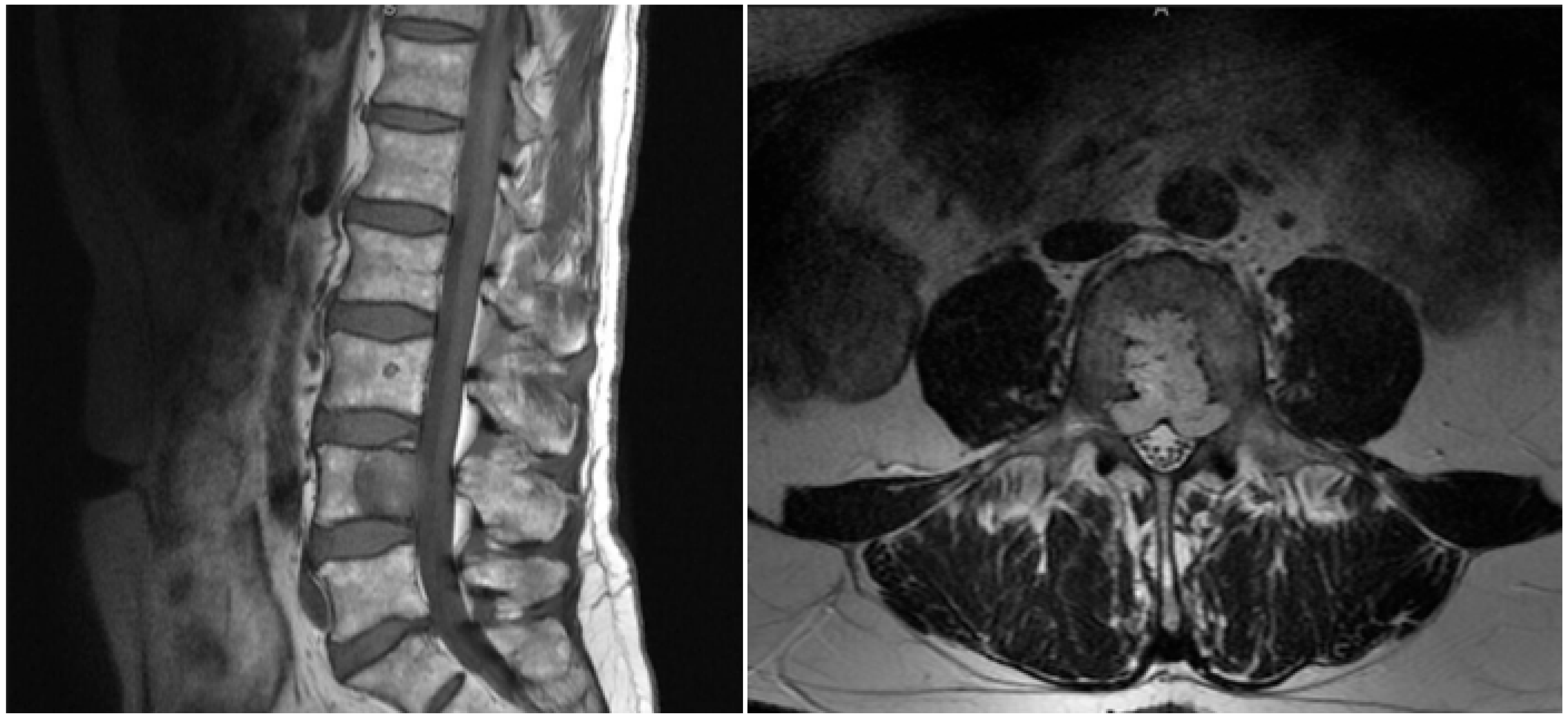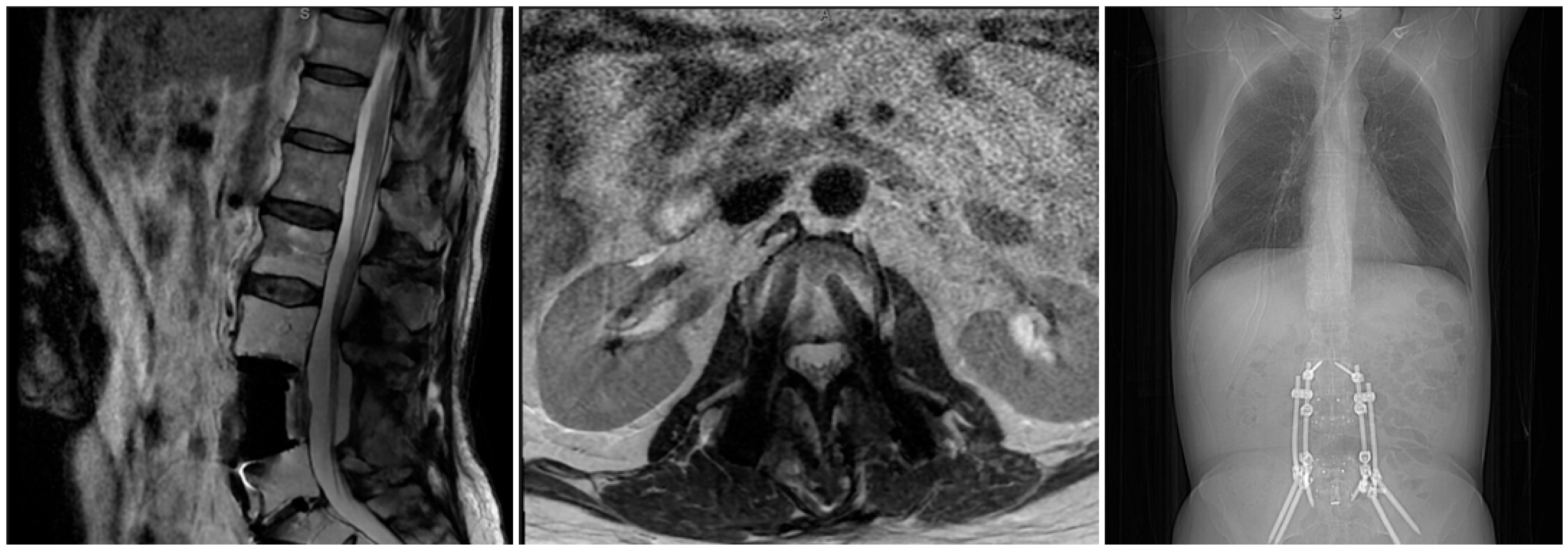
Pre-Spondylectomy Radiofrequency Ablation for Spinal Chordoma: An Illustrative Case and Systematic Review of Clinical Applications and Outcomes
by
 , , , ,
Holden Husbands
1 ,
,
Drake Johnston
1,
Matthan Tharakan
1,
Ahmed Hussan
1,
Kishore Balasubramanian
1,
Patrick Bettiol
2,
Benjamin Chou
1,
Sanaa Hameed
1,
Zachary A. Smith
1,
M. Burhan Janjua
1,
John F. Burke
1 and
Hakeem J. Shakir
1,* 1
Department of Neurosurgery, University of Oklahoma Health Sciences Center, Oklahoma City, OK 73104, USA
2
Department of Orthopedic Surgery, University of Oklahoma Health Sciences Center, Oklahoma City, OK 73104, USA
*
Author to whom correspondence should be addressed.
Curr. Oncol. 2026, 33(9), 569; https://doi.org/10.3390/curroncol33090569 (registering DOI)
Submission received: 9 August 2026
/
Revised: 13 September 2026
/
Accepted: 16 September 2026
/
Published: 20 September 2026
(This article belongs to the Special Issue Advances in the Orthopaedic Oncology)
Simple Summary
A chordoma is a tumor that occurs within the spine that is difficult to manage due to its aggressive tendency to invade other bones in the surrounding area. The rarity of chordoma has made the data that does exist inconsistent and has resulted in a variety of recommendations for how to treat and monitor these patients. The different presentations of the tumor across these cases also make real recommendations difficult. Given the variety of treatments that do currently exist, however, we attempted to catalog and understand how they may be applied in treatment. In addition, we used a case report from our medical center to present a novel way of attacking these tumors. The review describes how ablation has been applied and summarizes reported pain, neurologic, radiographic, and complication outcomes. Available evidence is limited and heterogeneous; therefore, thermal ablation should be considered a selective adjunct or palliative option rather than a replacement for oncologically appropriate resection.
Abstract
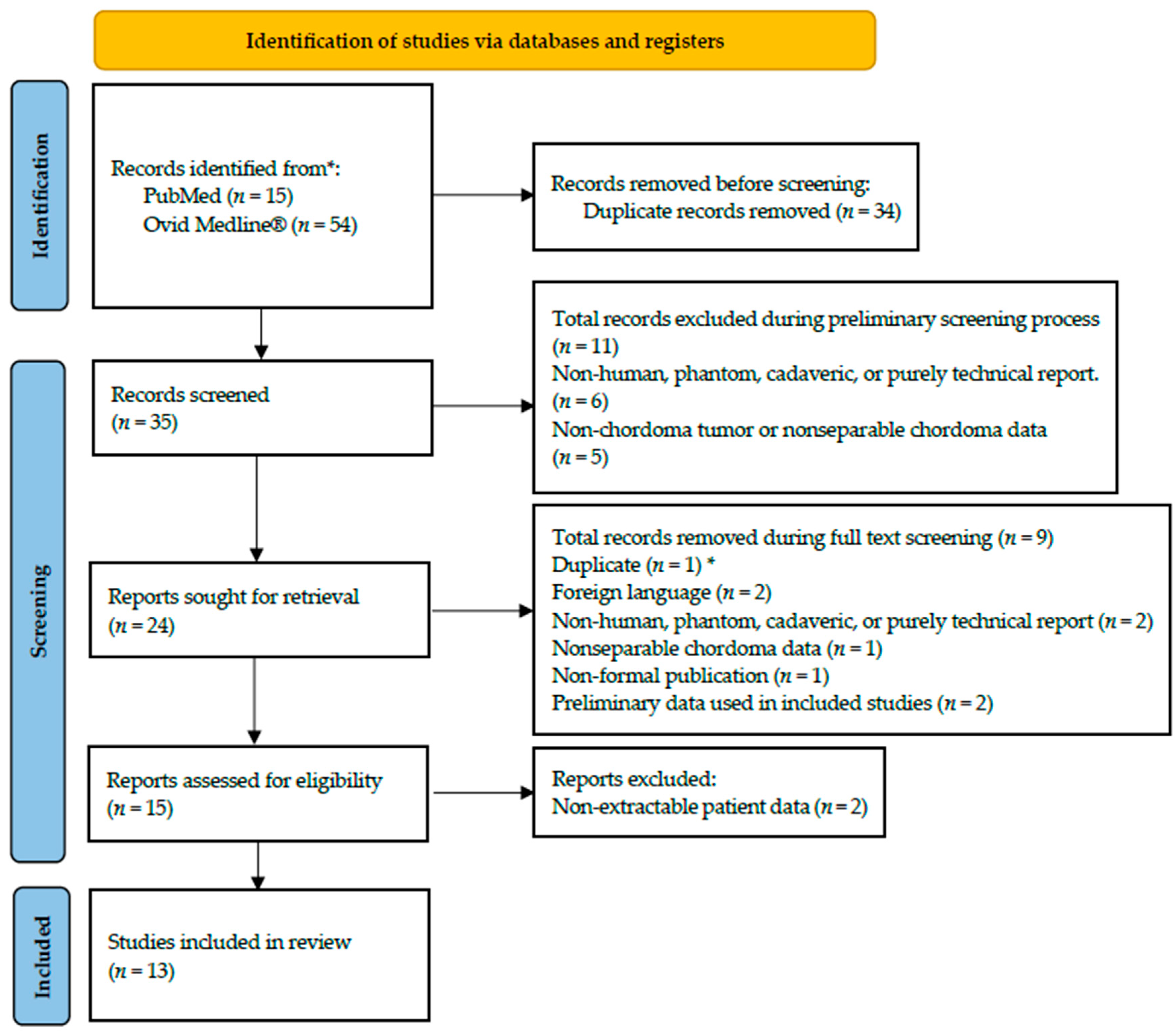
Chordomas are rare, locally aggressive spinal tumors. En bloc resection may improve local control but can cause substantial morbidity. Thermal ablation may provide a less invasive adjunct or alternative in selected cases. We systematically reviewed reports of radiofrequency ablation (RFA), cryoablation, laser interstitial thermal therapy, high-intensity focused ultrasound, and similar thermal techniques for spinal or sacral chordoma to characterize their clinical applications and reported clinical and radiographic outcomes across pre-resection, primary non-operative, and palliative settings. Eligible studies reported at least one ablation-related clinical or radiographic outcome. Data were descriptively synthesized, and risk of bias was assessed using the Joanna Briggs Institute criteria. Thirteen studies including 33 patients and 34 ablated sites were identified. Cryoablation was used in 21 patients, RFA in 11 patients, and laser interstitial thermal therapy in one patient. Ablation was used as a pre-resection adjunct, primary treatment for unresectable disease, or palliation for recurrent or metastatic lesions. Most reports described pain improvement, short-term local stability, and few major complications. We also report an L4 chordoma treated with CT-guided RFA and vertebroplasty before staged en bloc spondylectomy, without a new neurologic deficit or local recurrence at 18 months. Thermal ablation may be a technically feasible adjunct, primary non-operative option, or palliative strategy for carefully selected spinal and sacral chordomas. In the presented mobile-spine case, planned pre-spondylectomy RFA was feasible before staged en bloc resection; however, limited follow-up and sparse heterogeneous literature preclude conclusions regarding long-term local control, recurrence reduction, survival, or routine use. Ablation should not replace oncologically appropriate en bloc resection when that procedure can be safely achieved and should be considered selectively within multidisciplinary chordoma care.