Article

A Hotspot of TTX Contamination in the Adriatic Sea: Study on the Origin and Causative Factors

by
Simone Bacchiocchi
1,2,
Debora Campacci
1,2,*,
Melania Siracusa
1,2,3,
Alessandra Dubbini
1,2,
Stefano Accoroni
1,3,
Tiziana Romagnoli
3,
Alessandra Campanelli
4,
Francesco Griffoni
1,2,
Tamara Tavoloni
1,2,
Stefania Gorbi
3,*,
Cecilia Totti
3 and
Arianna Piersanti
1,2
1
Istituto Zooprofilattico Sperimentale Umbria e Marche “Togo Rosati”, Via G. Salvemini, 1, 06126 Perugia, Italy
2
Centro di Referenza Nazionale per il Controllo Chimico e Microbiologico dei Molluschi Bivalvi Vivi, Istituto Zooprofilattico Sperimentale Umbria e Marche “Togo Rosati”, Via Cupa di Posatora, 3, 60131 Ancona, Italy
3
Dipartimento di Scienze della Vita e dell’Ambiente, Università Politecnica delle Marche, Via Brecce Bianche, 12, 60131 Ancona, Italy
4
Consiglio Nazionale delle Ricerche, CNR-IRBIM, Largo Fiera della Pesca, 2, 60125 Ancona, Italy
*
Authors to whom correspondence should be addressed.
Mar. Drugs 2023, 21(1), 8; https://doi.org/10.3390/md21010008
Submission received: 15 November 2022 / Revised: 14 December 2022 / Accepted: 16 December 2022 / Published: 22 December 2022
(This article belongs to the Special Issue Women in Science: Their Contribution in Marine Drugs)

Abstract

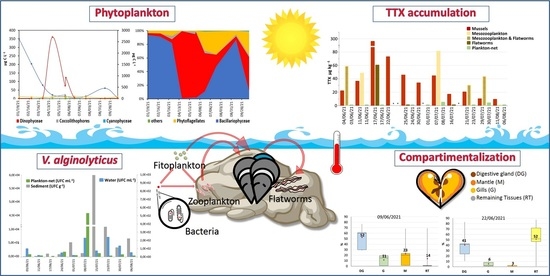
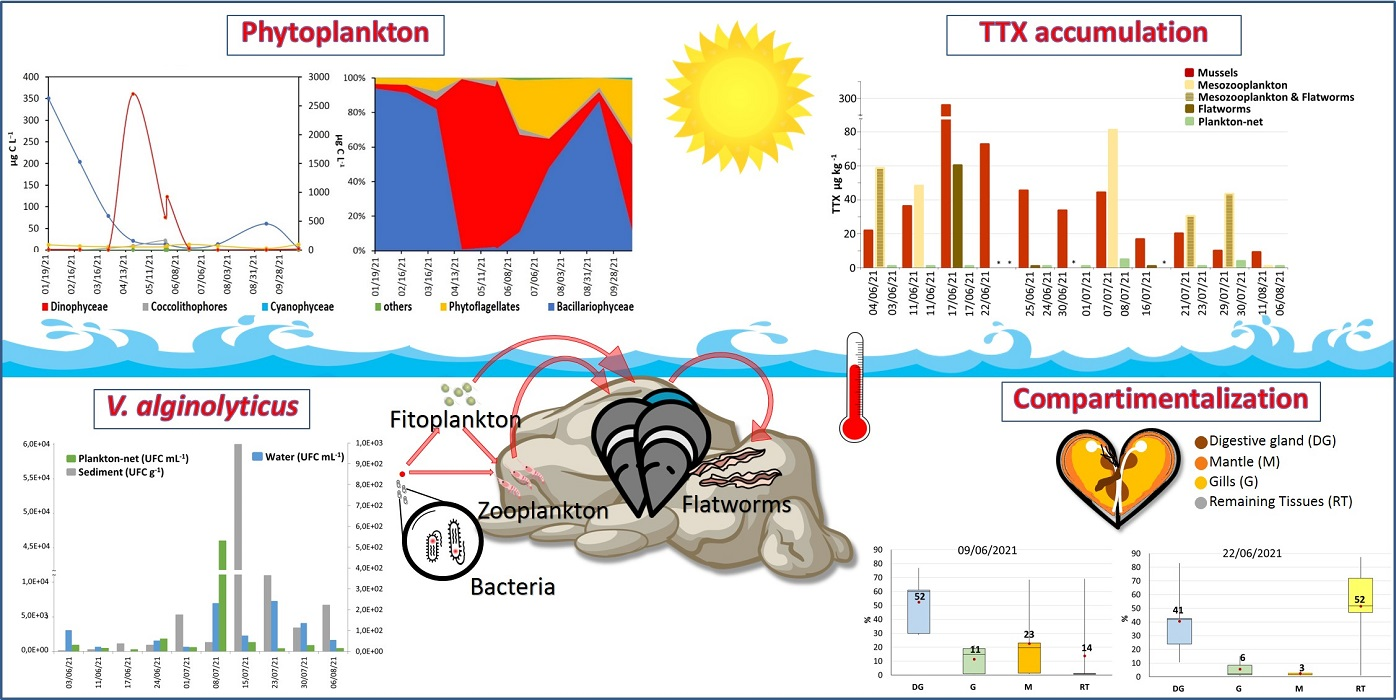
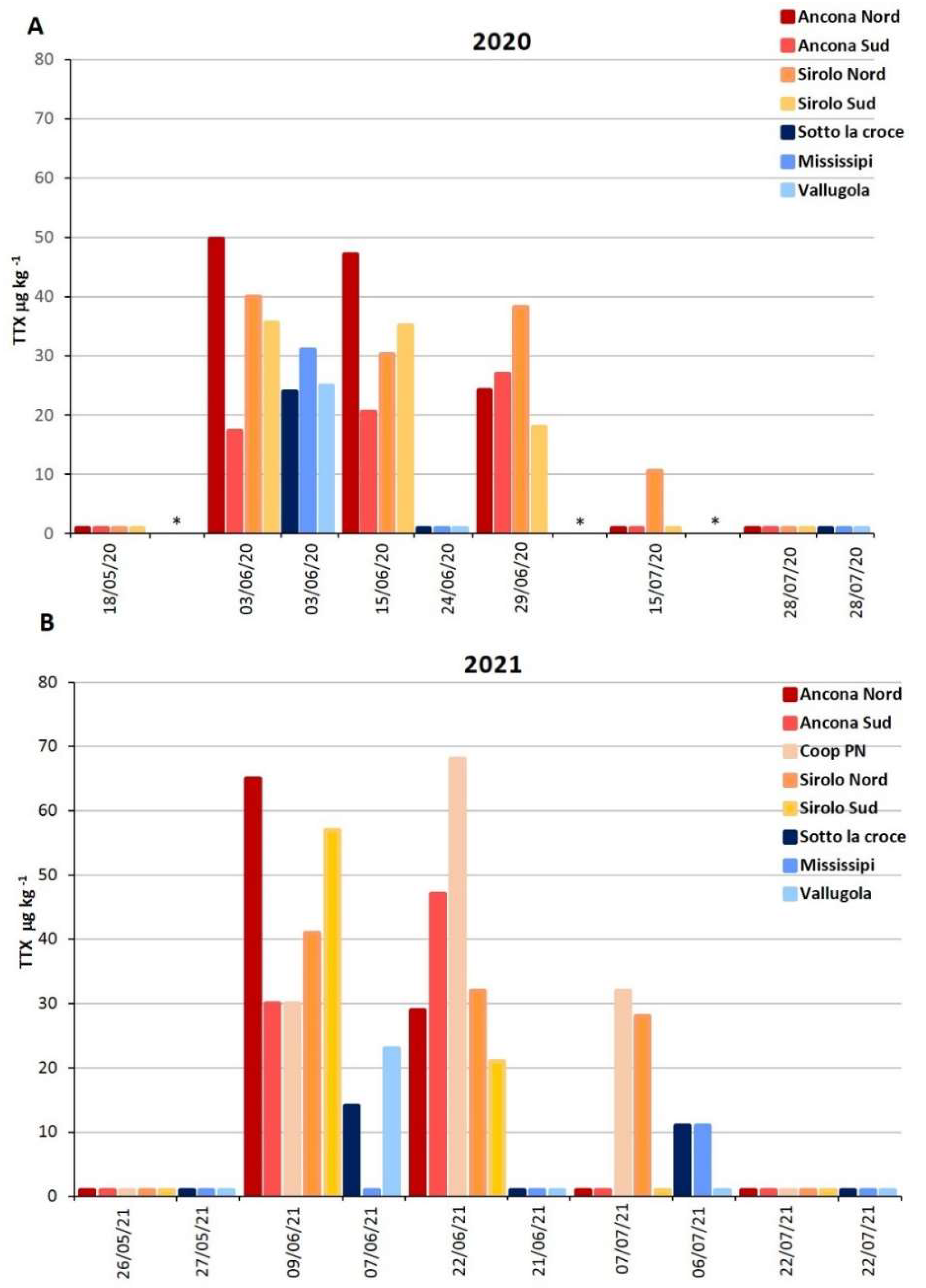
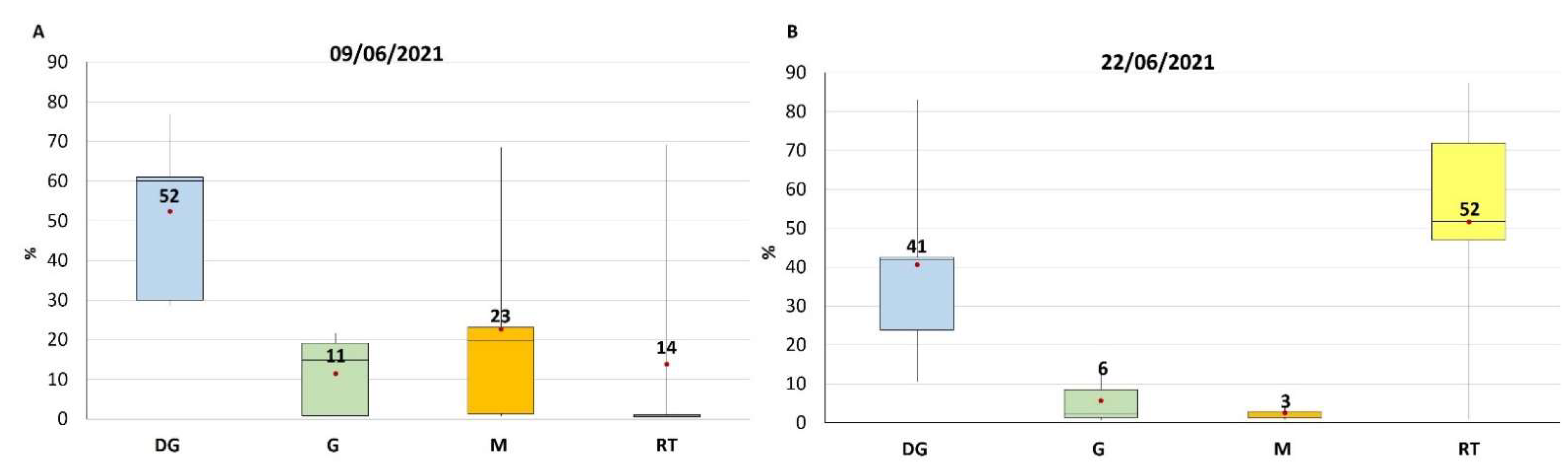
Tetrodotoxins (TTXs), the pufferfish venom traditionally associated with Indo-Pacific area, has been reported during last decades in ever wider range of marine organisms and ever more geographical areas, including shellfish in Europe. Wild mussels (Mytilus galloprovincialis) grown in the Marche Region (N Adriatic Sea, Italy) were shown to be prone to TTX contamination during the warm season, with a suspected role of Vibrio alginolyticus characterized by non-ribosomal peptide synthetase (NRPS) and polyketide synthase (PKS)-encoding genes. This work aimed to deepen the knowledge about the toxin’s origin and the way through which it accumulates in mussels. A two-year study (spring–summer 2020–2021) confirmed the recurrent presence of TTX (11–68 µg kg−1) in the official monitored natural mussel beds of the Conero Riviera. During 2021, a supplementary nonroutine monitoring of a natural mussel bed in the same area was carried out weekly from June until August for TTXs and/or the presence of V. alginolyticus. Biotic (mussels, mesozooplankton, worms and phytoplankton); abiotic (water and sediment) matrices and phytoplankton assemblage characterizations were studied. Mussels showed relevant TTX contamination levels (9–296 µg kg−1) with extremely rapid TTX accumulation/depletion rates. The toxin presence in phytoplankton and its distribution in the different mussel tissues supports its possible exogenous origin. The V. alginolyticus count trend overlaps that of TTX contamination in mussels, and similar trends were reported also for some phytoplankton species. The role of V. alginolyticus carrying NRPS or PKS genes as a possible TTX source and of phytoplankton as a “potential vector” should therefore be further investigated.
Keywords: tetrodotoxin; mussels; shellfish; HILIC-MS; bivalves; emerging toxins; Vibrio alginolyticus; zooplankton; dinoflagellates tetrodotoxin; mussels; shellfish; HILIC-MS; bivalves; emerging toxins; Vibrio alginolyticus; zooplankton; dinoflagellates
Graphical Abstract