
Article

Actinoporin-like Proteins Are Widely Distributed in the Phylum Porifera
by
Kenneth Sandoval
and
Grace P. McCormack
*
Molecular Evolution and Systematics Laboratory, Zoology, Ryan Institute & School of Natural Sciences, National University of Ireland Galway, 23 University Rd., H91 R8EC Galway, Ireland
*
Author to whom correspondence should be addressed.
Mar. Drugs 2022, 20(1), 74; https://doi.org/10.3390/md20010074
Submission received: 15 December 2021 / Revised: 7 January 2022 / Accepted: 10 January 2022 / Published: 15 January 2022
(This article belongs to the Special Issue Marine Sponge Biotechnology)

Abstract

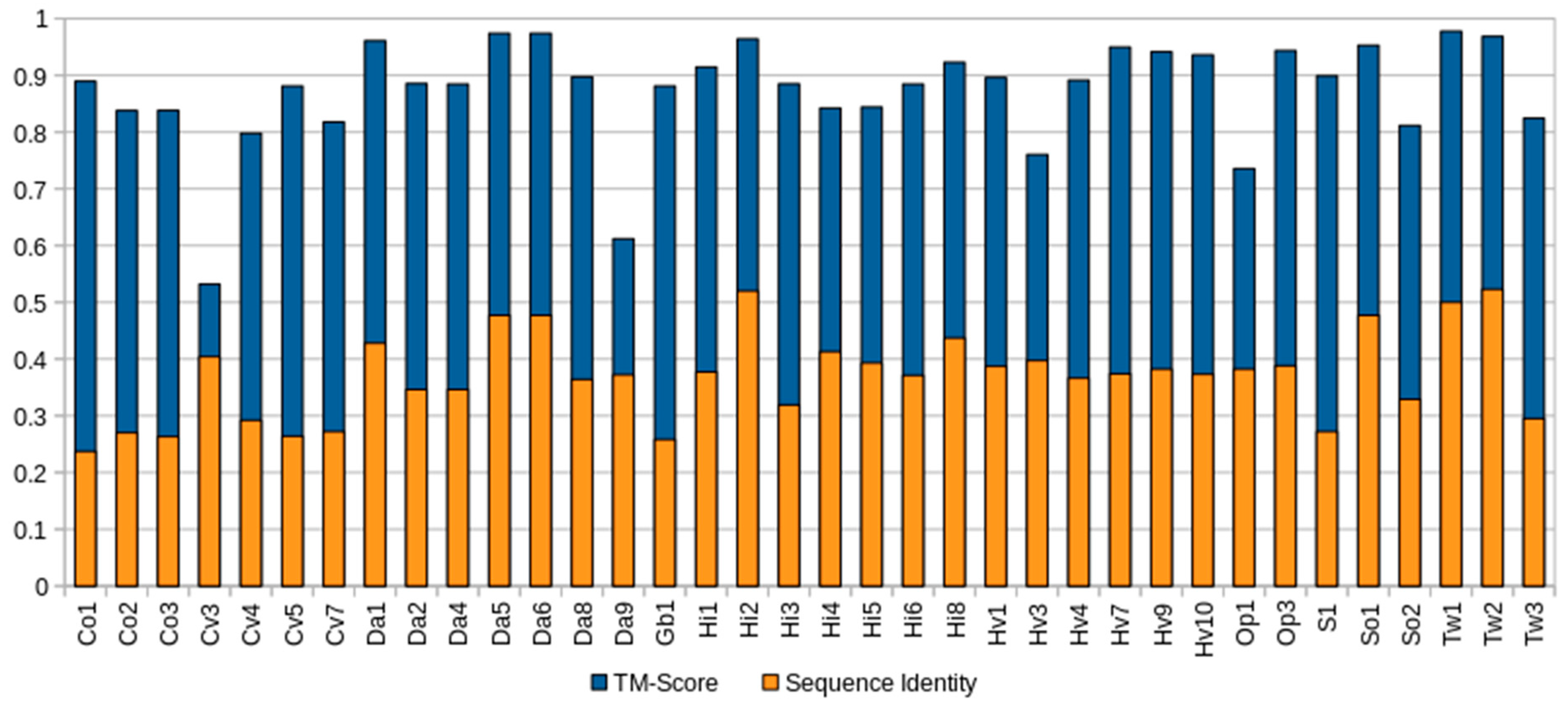
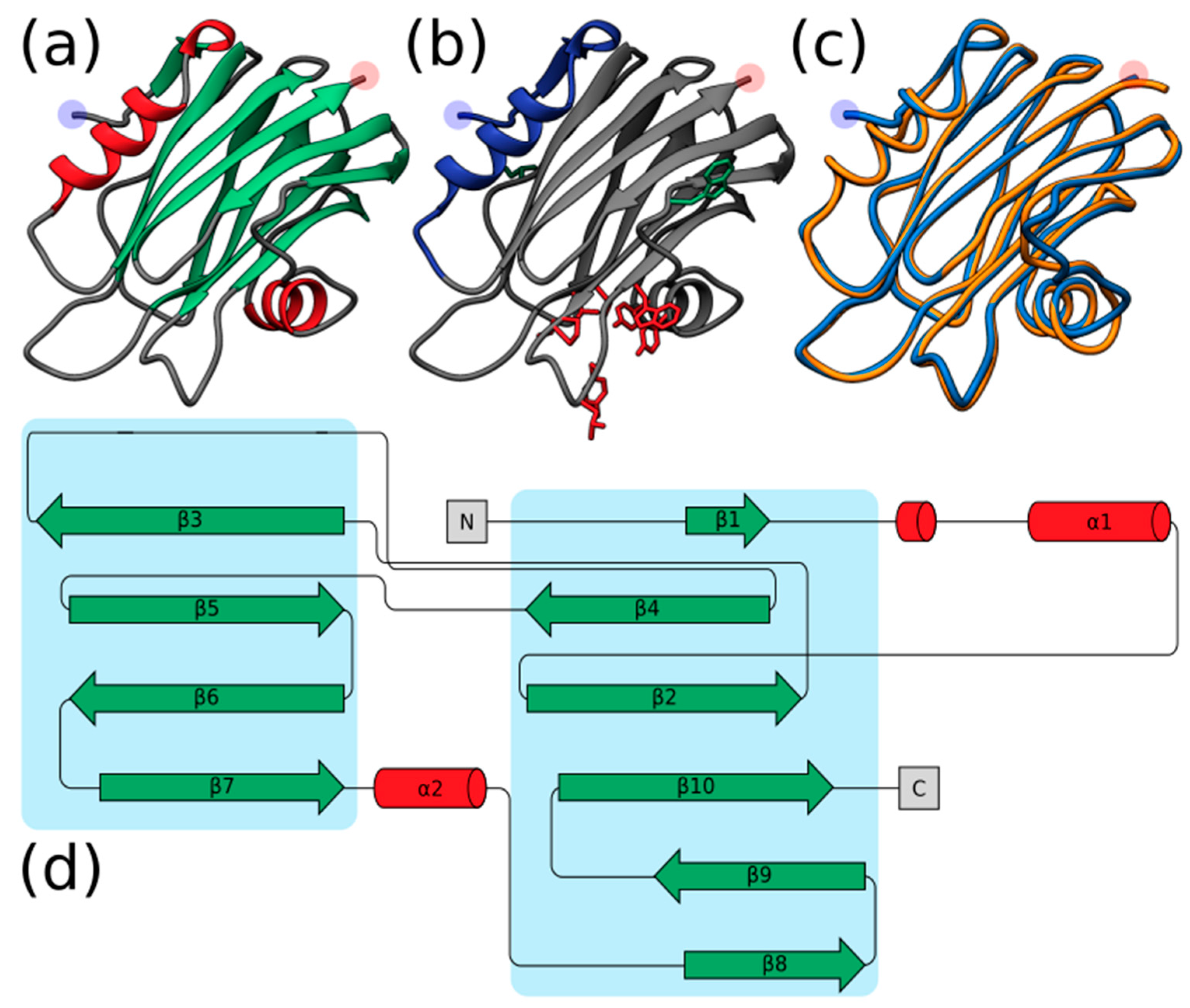
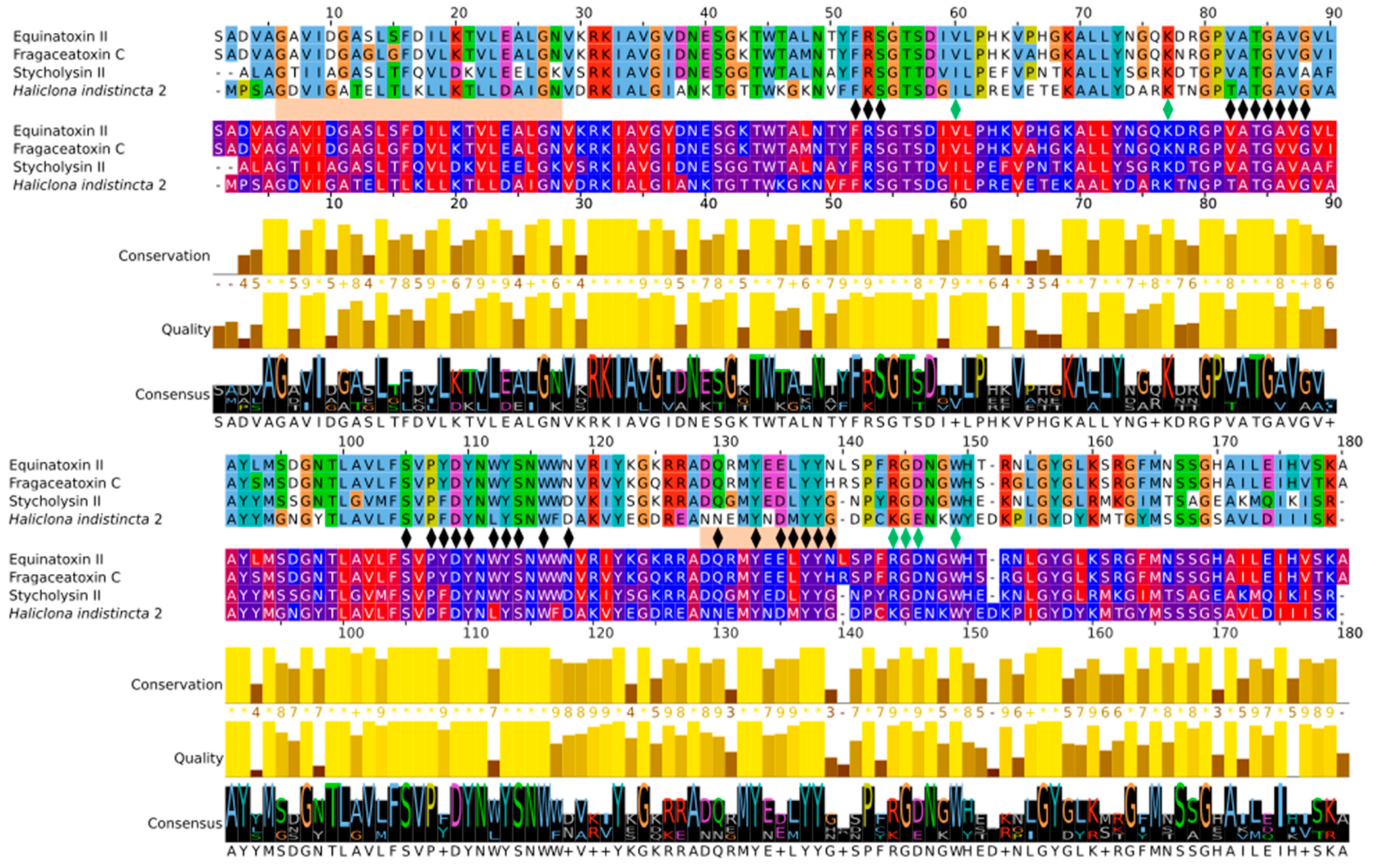
Actinoporins are proteinaceous toxins known for their ability to bind to and create pores in cellular membranes. This quality has generated interest in their potential use as new tools, such as therapeutic immunotoxins. Isolated historically from sea anemones, genes encoding for similar actinoporin-like proteins have since been found in a small number of other animal phyla. Sequencing and de novo assembly of Irish Haliclona transcriptomes indicated that sponges also possess similar genes. An exhaustive analysis of publicly available sequencing data from other sponges showed that this is a potentially widespread feature of the Porifera. While many sponge proteins possess a sequence similarity of 27.70–59.06% to actinoporins, they show consistency in predicted structure. One gene copy from H. indistincta has significant sequence similarity to sea anemone actinoporins and possesses conserved residues associated with the fundamental roles of sphingomyelin recognition, membrane attachment, oligomerization, and pore formation, indicating that it may be an actinoporin. Phylogenetic analyses indicate frequent gene duplication, no distinct clade for sponge-derived proteins, and a stronger signal towards actinoporins than similar proteins from other phyla. Overall, this study provides evidence that a diverse array of Porifera represents a novel source of actinoporin-like proteins which may have biotechnological and pharmaceutical applications.
Keywords: Porifera; marine sponge; Haliclona; transcriptomics; actinoporins; pore-forming toxins Porifera; marine sponge; Haliclona; transcriptomics; actinoporins; pore-forming toxins
Graphical Abstract