Exercise Training and Cardiovascular Risk Factors in Males with Overweight or Obesity: A Systematic Review of Randomized Controlled Trials


Abstract
1. Introduction
2. Methods
2.1. Data Sources and Search Strategy
2.2. Eligibility Criteria
2.3. Exclusion Criteria Included
2.4. Data Extraction and Verification
2.5. Quality Assessment
2.6. The Evidence Levels
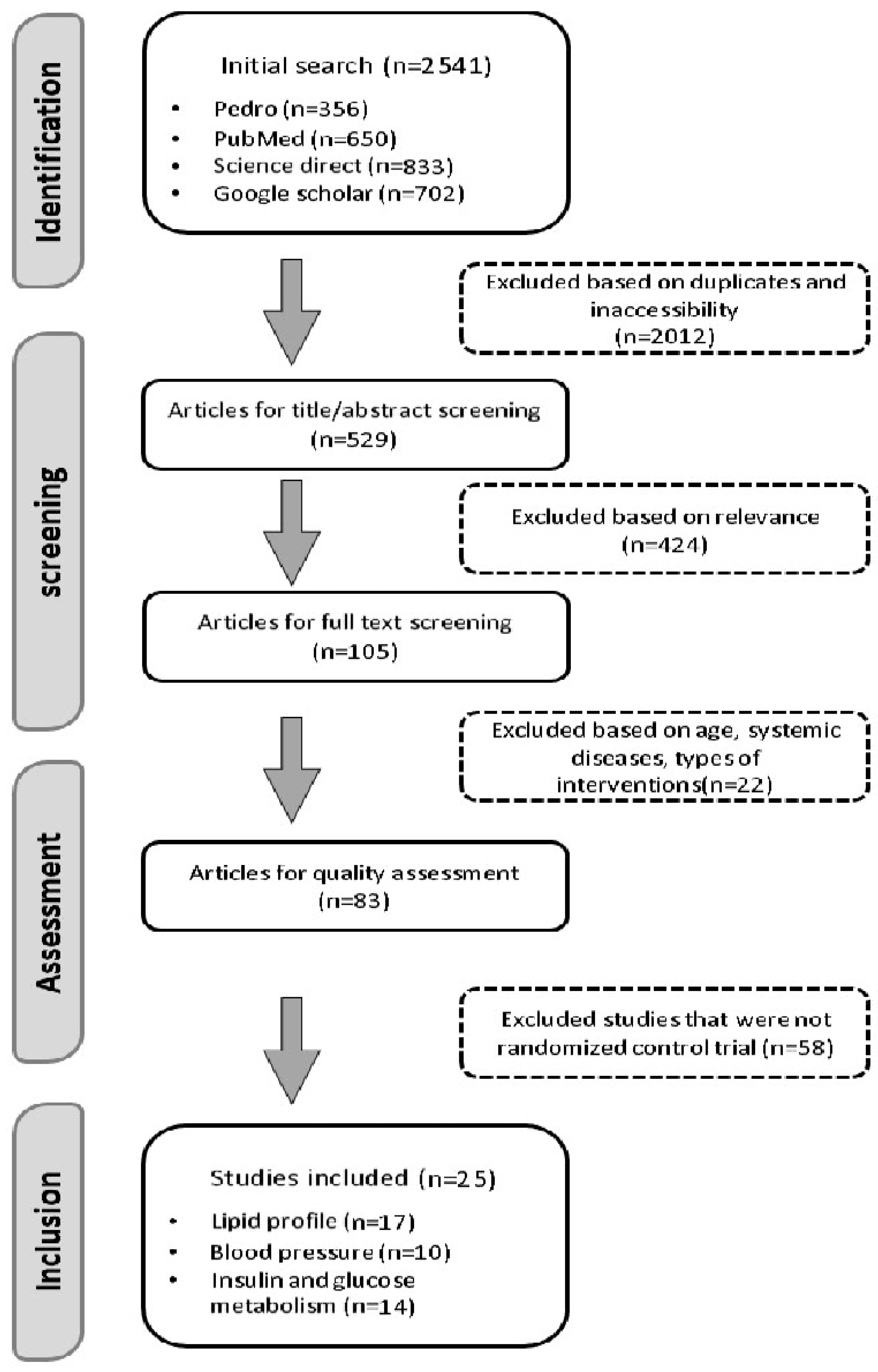
2.7. PRISMA Flowchart
2.8. Data Analysis and Synthesis
3. Results
3.1. Study Selection
3.2. Characteristics of the Included Studies
3.3. Characteristics of Exercise Programs
3.4. Outcomes
3.4.1. Blood Pressure
3.4.2. Blood Insulin and Glucose
3.4.3. Lipid Profile
4. Discussion
4.1. Blood Pressure
4.2. Blood Insulin and Glucose
4.3. Lipid Profile
4.4. Limitations
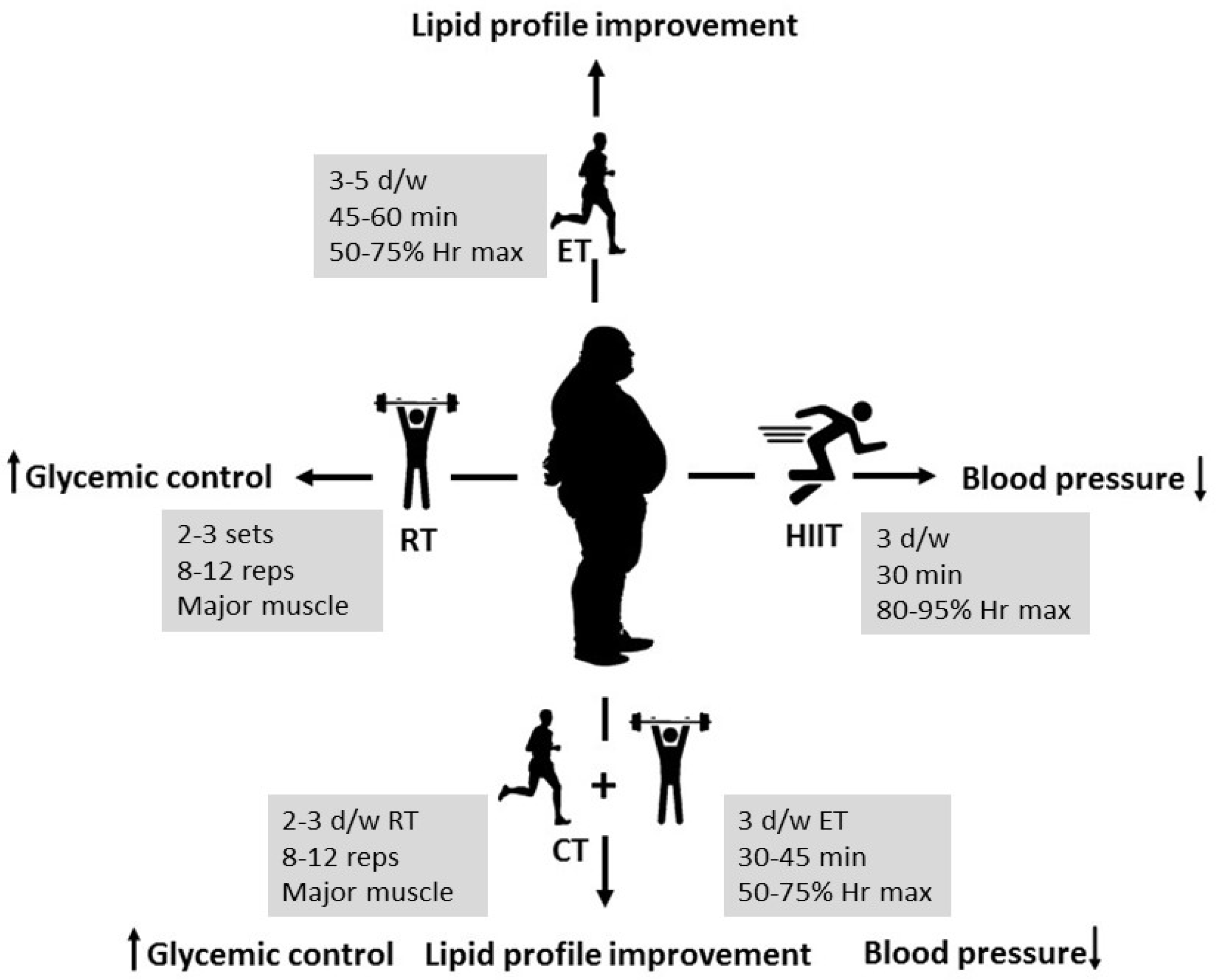
5. Practical Recommendation
6. Conclusions
Author Contributions
Funding
Data Availability Statement
Conflicts of Interest
References
- Chooi, Y.C.; Ding, C.; Magkos, F. The epidemiology of obesity. Metabolism 2019, 92, 6–10. [Google Scholar] [CrossRef] [PubMed]
- WHO. Overweight and Obesity; WHO: Geneva, Switzerland, 2023. [Google Scholar]
- World Obesity Federation. World Obesity Atlas 2023; World Obesity Federation: London, UK, 2022. [Google Scholar]
- Long, D.A.; Reed, R.; Lehman, G. The cost of lifestyle health risks: Obesity. J. Occup. Environ. Med. 2006, 48, 244–251. [Google Scholar] [CrossRef] [PubMed]
- Blüher, M. Obesity: Global epidemiology and pathogenesis. Nat. Rev. Endocrinol. 2019, 15, 288–298. [Google Scholar] [CrossRef] [PubMed]
- Bays, H.E.; Taub, P.R.; Epstein, E.; Michos, E.D.; Ferraro, R.A.; Bailey, A.L.; Kelli, H.M.; Ferdinand, K.C.; Echols, M.R.; Weintraub, H. Ten things to know about ten cardiovascular disease risk factors. Am. J. Prev. Cardiol. 2021, 5, 100149. [Google Scholar] [CrossRef] [PubMed]
- Sharma, A. Obesity and cardiovascular risk. Growth Horm. IGF Res. 2003, 13, S10–S17. [Google Scholar] [CrossRef] [PubMed]
- Longo, M.; Zatterale, F.; Naderi, J.; Parrillo, L.; Formisano, P.; Raciti, G.A.; Beguinot, F.; Miele, C. Adipose tissue dysfunction as determinant of obesity-associated metabolic complications. Int. J. Mol. Sci. 2019, 20, 2358. [Google Scholar] [CrossRef] [PubMed]
- Hall, J.E. Pathophysiology of obesity hypertension. Curr. Hypertens. Rep. 2000, 2, 139–147. [Google Scholar] [CrossRef] [PubMed]
- Elagizi, A.; Kachur, S.; Carbone, S.; Lavie, C.J.; Blair, S.N. A review of obesity, physical activity, and cardiovascular disease. Curr. Obes. Rep. 2020, 9, 571–581. [Google Scholar] [CrossRef]
- Petrick, H.L.; King, T.J.; Pignanelli, C.; Vanderlinde, T.E.; Cohen, J.N.; Holloway, G.P.; Burr, J.F. Endurance and Sprint Training Improve Glycemia and V˙ O2peak but only Frequent Endurance Benefits Blood Pressure and Lipidemia. Med. Sci. Sports Exerc. 2021, 53, 1194–1205. [Google Scholar] [CrossRef] [PubMed]
- Verheggen, R.; Maessen, M.; Green, D.J.; Hermus, A.; Hopman, M.; Thijssen, D. A systematic review and meta-analysis on the effects of exercise training versus hypocaloric diet: Distinct effects on body weight and visceral adipose tissue. Obes. Rev. 2016, 17, 664–690. [Google Scholar] [CrossRef]
- Bull, F.C.; Al-Ansari, S.S.; Biddle, S.; Borodulin, K.; Buman, M.P.; Cardon, G.; Carty, C.; Chaput, J.-P.; Chastin, S.; Chou, R. World Health Organization 2020 guidelines on physical activity and sedentary behaviour. Br. J. Sports Med. 2020, 54, 1451–1462. [Google Scholar] [CrossRef] [PubMed]
- Croymans, D.; Krell, S.; Oh, C.; Katiraie, M.; Lam, C.; Harris, R.A.; Roberts, C. Effects of resistance training on central blood pressure in obese young men. J. Hum. Hypertens. 2014, 28, 157–164. [Google Scholar] [CrossRef] [PubMed]
- Clark, T.; Morey, R.; Jones, M.D.; Marcos, L.; Ristov, M.; Ram, A.; Hakansson, S.; Franklin, A.; McCarthy, C.; De Carli, L. High-intensity interval training for reducing blood pressure: A randomized trial vs. moderate-intensity continuous training in males with overweight or obesity. Hypertens. Res. 2020, 43, 396–403. [Google Scholar] [CrossRef]
- Costa, E.C.; Hay, J.L.; Kehler, D.S.; Boreskie, K.F.; Arora, R.C.; Umpierre, D.; Szwajcer, A.; Duhamel, T.A. Effects of high-intensity interval training versus moderate-intensity continuous training on blood pressure in adults with pre-to established hypertension: A systematic review and meta-analysis of randomized trials. Sports Med. 2018, 48, 2127–2142. [Google Scholar] [CrossRef] [PubMed]
- Ferreira, J.P.; Duarte-Mendes, P.; Teixeira, A.M.; Silva, F.M. Effects of combined training on metabolic profile, lung function, stress and quality of life in sedentary adults: A study protocol for a randomized controlled trial. PLoS ONE 2022, 17, e0263455. [Google Scholar] [CrossRef]
- Moher, D.; Liberati, A.; Tetzlaff, J.; Altman, D.G.; The PRISMA Group. Preferred reporting items for systematic reviews and meta-analyses: The PRISMA statement. Ann. Intern. Med. 2009, 151, 264–269. [Google Scholar] [CrossRef]
- Elkins, M.R.; Moseley, A.M.; Sherrington, C.; Herbert, R.D.; Maher, C.G. Growth in the Physiotherapy Evidence Database (PEDro) and use of the PEDro scale. Br. J. Sports Med. 2013, 47, 188–189. [Google Scholar] [CrossRef] [PubMed]
- Haynes, R.B.; Sackett, D.L.; Richardson, W.S.; Rosenberg, W.; Langley, G.R. Evidence-based medicine: How to practice & teach EBM. Can. Med. Assoc. J. 1997, 157, 788. [Google Scholar]
- Cheema, B.S.; Davies, T.B.; Stewart, M.; Papalia, S.; Atlantis, E. The feasibility and effectiveness of high-intensity boxing training versus moderate-intensity brisk walking in adults with abdominal obesity: A pilot study. BMC Sports Sci. Med. Rehabil. 2015, 7, 3. [Google Scholar] [CrossRef] [PubMed]
- Chin, E.C.; Yu, A.P.; Lai, C.W.; Fong, D.Y.; Chan, D.K.; Wong, S.H.; Sun, F.; Ngai, H.H.; Yung, P.S.; Siu, P.M. Low-frequency HIIT improves body composition and aerobic capacity in overweight men. Med. Sci. Sports Exerc. 2020, 52, 56–66. [Google Scholar] [CrossRef] [PubMed]
- Amaro-Gahete, F.J.; Ponce-González, J.G.; Corral-Pérez, J.; Velázquez-Díaz, D.; Lavie, C.J.; Jiménez-Pavón, D. Effect of a 12-week concurrent training intervention on cardiometabolic health in obese men: A pilot study. Front. Physiol. 2021, 12, 630831. [Google Scholar] [CrossRef] [PubMed]
- Gerosa-Neto, J.; Panissa, V.L.G.; Monteiro, P.A.; Inoue, D.S.; Ribeiro, J.P.J.; Figueiredo, C.; Zagatto, A.M.; Little, J.P.; Lira, F.S. High-or moderate-intensity training promotes change in cardiorespiratory fitness, but not visceral fat, in obese men: A randomised trial of equal energy expenditure exercise. Respir. Physiol. Neurobiol. 2019, 266, 150–155. [Google Scholar] [CrossRef]
- Park, W.; Jung, W.-S.; Hong, K.; Kim, Y.-Y.; Kim, S.-W.; Park, H.-Y. Effects of moderate combined resistance-and aerobic-exercise for 12 weeks on body composition, cardiometabolic risk factors, blood pressure, arterial stiffness, and physical functions, among obese older men: A pilot study. Int. J. Environ. Res. Public Health 2020, 17, 7233. [Google Scholar] [CrossRef] [PubMed]
- Reljic, D.; Frenk, F.; Herrmann, H.J.; Neurath, M.F.; Zopf, Y. Low-volume high-intensity interval training improves cardiometabolic health, work ability and well-being in severely obese individuals: A randomized-controlled trial sub-study. J. Transl. Med. 2020, 18, 419. [Google Scholar] [CrossRef]
- Ahmadizad, S.; Ghorbani, S.; Ghasemikaram, M.; Bahmanzadeh, M. Effects of short-term nonperiodized, linear periodized and daily undulating periodized resistance training on plasma adiponectin, leptin and insulin resistance. Clin. Biochem. 2014, 47, 417–422. [Google Scholar] [CrossRef] [PubMed]
- Bonfante, I.L.P.; Chacon-Mikahil, M.P.T.; Brunelli, D.T.; Gaspari, A.F.; Duft, R.G.; Lopes, W.A.; Bonganha, V.; Libardi, C.A.; Cavaglieri, C.R. Combined training, FNDC5/irisin levels and metabolic markers in obese men: A randomised controlled trial. Eur. J. Sport Sci. 2017, 17, 629–637. [Google Scholar] [CrossRef] [PubMed]
- Siu, P.M.; Yu, A.P.; Chin, E.C.; Yu, D.S.; Hui, S.S.; Woo, J.; Fong, D.Y.; Wei, G.X.; Irwin, M.R. Effects of Tai Chi or conventional exercise on central obesity in middle-aged and older adults: A three-group randomized controlled trial. Ann. Intern. Med. 2021, 174, 1050–1057. [Google Scholar] [CrossRef] [PubMed]
- Duft, R.G.; Castro, A.; Bonfante, I.L.; Brunelli, D.T.; Chacon-Mikahil, M.P.; Cavaglieri, C.u.R. Metabolomics approach in the investigation of metabolic changes in obese men after 24 weeks of combined training. J. Proteome Res. 2017, 16, 2151–2159. [Google Scholar] [CrossRef] [PubMed]
- Kim, Y.S.; Nam, J.S.; Yeo, D.W.; Kim, K.R.; Suh, S.H.; Ahn, C.W. The effects of aerobic exercise training on serum osteocalcin, adipocytokines and insulin resistance on obese young males. Clin. Endocrinol. 2015, 82, 686–694. [Google Scholar] [CrossRef]
- Kim, S.-W.; Jung, W.-S.; Park, W.; Park, H.-Y. Twelve weeks of combined resistance and aerobic exercise improves cardiometabolic biomarkers and enhances red blood cell hemorheological function in obese older men: A randomized controlled trial. Int. J. Environ. Res. Public Health 2019, 16, 5020. [Google Scholar] [CrossRef]
- Kolahdouzi, S.; Baghadam, M.; Kani-Golzar, F.A.; Saeidi, A.; Jabbour, G.; Ayadi, A.; De Sousa, M.; Zouita, A.; Abderrahmane, A.B.; Zouhal, H. Progressive circuit resistance training improves inflammatory biomarkers and insulin resistance in obese men. Physiol. Behav. 2019, 205, 15–21. [Google Scholar] [CrossRef]
- Nikseresht, M.; Agha-Alinejad, H.; Azarbayjani, M.A.; Ebrahim, K. Effects of nonlinear resistance and aerobic interval training on cytokines and insulin resistance in sedentary men who are obese. J. Strength Cond. Res. 2014, 28, 2560–2568. [Google Scholar] [CrossRef] [PubMed]
- Poon, E.T.-C.; Siu, P.M.-F.; Wongpipit, W.; Gibala, M.; Wong, S.H.-S. Alternating high-intensity interval training and continuous training is efficacious in improving cardiometabolic health in obese middle-aged men. J. Exerc. Sci. Fit. 2022, 20, 40–47. [Google Scholar] [CrossRef] [PubMed]
- Safarzade, A.; Alizadeh, H.; Bastani, Z. The effects of circuit resistance training on plasma progranulin level, insulin resistance and body composition in obese men. Horm. Mol. Biol. Clin. Investig. 2020, 41, 20190050. [Google Scholar] [CrossRef] [PubMed]
- Smith-Ryan, A.E.; Melvin, M.N.; Wingfield, H.L. High-intensity interval training: Modulating interval duration in overweight/obese men. Physician Sportsmed. 2015, 43, 107–113. [Google Scholar] [CrossRef] [PubMed]
- Moraleda, B.R.; Morencos, E.; Peinado, A.B.; Bermejo, L.; Candela, C.G.; Benito, P.J.; PRONAF Study Group. Can the exercise mode determine lipid profile improvements in obese patients? Nutr. Hosp. 2013, 28, 607–617. [Google Scholar]
- Saremi, A.; Asghari, M.; Ghorbani, A. Effects of aerobic training on serum omentin-1 and cardiometabolic risk factors in overweight and obese men. J. Sports Sci. 2010, 28, 993–998. [Google Scholar] [CrossRef]
- Varady, K.A.; Bhutani, S.; Klempel, M.C.; Kroeger, C.M. Comparison of effects of diet versus exercise weight loss regimens on LDL and HDL particle size in obese adults. Lipids Health Dis. 2011, 10, 119. [Google Scholar] [CrossRef] [PubMed]
- Vincent, H.K.; Bourguignon, C.; Vincent, K.R. Resistance training lowers exercise-induced oxidative stress and homocysteine levels in overweight and obese older adults. Obesity 2006, 14, 1921–1930. [Google Scholar] [CrossRef] [PubMed]
- Saeidi, A.; Nouri-Habashi, A.; Razi, O.; Ataeinosrat, A.; Rahmani, H.; Mollabashi, S.S.; Bagherzadeh-Rahmani, B.; Aghdam, S.M.; Khalajzadeh, L.; Al Kiyumi, M.H. Astaxanthin Supplemented with High-Intensity Functional Training Decreases Adipokines Levels and Cardiovascular Risk Factors in Men with Obesity. Nutrients 2023, 15, 286. [Google Scholar] [CrossRef]
- Hematinezhad Touli, M.; Elmieh, A.; Hosseinpour, A. The effect of six-week aerobic exercise combined with green tea consumption on PON1 and VO2max increase and apelin, blood pressure, and blood lipids reduction in young obese men. Arch. Razi Inst. 2022, 77, 2115–2123. [Google Scholar] [PubMed]
- Rezaeimanesh, D. The response of serum adipolin levels and insulin resistance index to high-intensity interval training in overweight men. Rev. Latinoam. De Hipertens. 2023, 18, 163–169. [Google Scholar]
- Grace, F.; Herbert, P.; Elliott, A.D.; Richards, J.; Beaumont, A.; Sculthorpe, N.F. High intensity interval training (HIIT) improves resting blood pressure, metabolic (MET) capacity and heart rate reserve without compromising cardiac function in sedentary aging men. Exp. Gerontol. 2018, 109, 75–81. [Google Scholar] [CrossRef] [PubMed]
- Lemes, Í.R.; Ferreira, P.H.; Linares, S.N.; Machado, A.F.; Pastre, C.M.; Netto, J. Resistance training reduces systolic blood pressure in metabolic syndrome: A systematic review and meta-analysis of randomised controlled trials. Br. J. Sports Med. 2016, 50, 1438–1442. [Google Scholar] [CrossRef] [PubMed]
- Montero, D.; Roberts, C.K.; Vinet, A. Effect of aerobic exercise training on arterial stiffness in obese populations: A systematic review and meta-analysis. Sports Med. 2014, 44, 833–843. [Google Scholar] [CrossRef] [PubMed]
- Wewege, M.A.; Thom, J.M.; Rye, K.-A.; Parmenter, B.J. Aerobic, resistance or combined training: A systematic review and meta-analysis of exercise to reduce cardiovascular risk in adults with metabolic syndrome. Atherosclerosis 2018, 274, 162–171. [Google Scholar] [CrossRef]
- Hayes, L.D.; Herbert, P.; Sculthorpe, N.; Grace, F. High intensity interval training (HIIT) produces small improvements in fasting glucose, insulin, and insulin resistance in sedentary older men but not masters athletes. Exp. Gerontol. 2020, 140, 111074. [Google Scholar] [CrossRef] [PubMed]
- Johns, D.J.; Hartmann-Boyce, J.; Jebb, S.A.; Aveyard, P.; Group, B.W.M.R. Diet or exercise interventions vs combined behavioral weight management programs: A systematic review and meta-analysis of direct comparisons. J. Acad. Nutr. Diet. 2014, 114, 1557–1568. [Google Scholar] [CrossRef] [PubMed]
- Yaspelkis III, B.B. Resistance training improves insulin signaling and action in skeletal muscle. Exerc. Sport Sci. Rev. 2006, 34, 42–46. [Google Scholar] [CrossRef] [PubMed][Green Version]
- Batacan, R.B.; Duncan, M.J.; Dalbo, V.J.; Tucker, P.S.; Fenning, A.S. Effects of high-intensity interval training on cardiometabolic health: A systematic review and meta-analysis of intervention studies. Br. J. Sports Med. 2017, 51, 494–503. [Google Scholar] [CrossRef]
- Richard, A.J.; White, U.; Elks, C.M.; Stephens, J.M. Adipose tissue: Physiology to metabolic dysfunction. In Endotext [Internet]; MDText.com, Inc.: South Dartmouth, MA, USA, 2020. [Google Scholar]
- Westcott, W.L. Resistance training is medicine: Effects of strength training on health. Curr. Sports Med. Rep. 2012, 11, 209–216. [Google Scholar] [CrossRef] [PubMed]
- Ho, S.S.; Dhaliwal, S.S.; Hills, A.P.; Pal, S. The effect of 12 weeks of aerobic, resistance or combination exercise training on cardiovascular risk factors in the overweight and obese in a randomized trial. BMC Public Health 2012, 12, 704. [Google Scholar] [CrossRef] [PubMed]
- Lucotti, P.; Monti, L.D.; Setola, E.; Galluccio, E.; Gatti, R.; Bosi, E.; Piatti, P. Aerobic and resistance training effects compared to aerobic training alone in obese type 2 diabetic patients on diet treatment. Diabetes Res. Clin. Pract. 2011, 94, 395–403. [Google Scholar] [CrossRef] [PubMed]
- Patel, H.; Alkhawam, H.; Madanieh, R.; Shah, N.; Kosmas, C.E.; Vittorio, T.J. Aerobic vs. anaerobic exercise training effects on the cardiovascular system. World J. Cardiol. 2017, 9, 134. [Google Scholar] [CrossRef]



| Author | #1 * | #2 | #3 | #4 | #5 | #6 | #7 | #8 | #9 | #10 | #11 | Total | Quality |
|---|---|---|---|---|---|---|---|---|---|---|---|---|---|
| Cheema [21] | 1 | 1 | 1 | 1 | 0 | 0 | 1 | 0 | 1 | 1 | 1 | 7/10 | Good |
| Chin [22] | 0 | 1 | 0 | 1 | 0 | 0 | 0 | 0 | 0 | 1 | 1 | 4/10 | Fair |
| Croymans [14] | 0 | 1 | 0 | 1 | 0 | 0 | 0 | 0 | 0 | 1 | 1 | 4/10 | Fair |
| Gahete [23] | 1 | 1 | 0 | 1 | 0 | 0 | 1 | 0 | 0 | 1 | 1 | 5/10 | Fair |
| Neto [24] | 1 | 1 | 0 | 1 | 0 | 0 | 0 | 0 | 0 | 1 | 1 | 4/10 | Fair |
| Park [25] | 0 | 1 | 0 | 1 | 0 | 0 | 0 | 0 | 0 | 1 | 1 | 4/10 | Fair |
| Reljic [26] | 1 | 1 | 0 | 1 | 0 | 0 | 1 | 0 | 0 | 1 | 1 | 6/10 | Good |
| Ahmadizad [27] | 0 | 1 | 0 | 1 | 0 | 0 | 0 | 0 | 0 | 1 | 1 | 4/10 | Fair |
| Bonfante [28] | 0 | 1 | 0 | 1 | 0 | 0 | 0 | 0 | 0 | 1 | 1 | 4/10 | Fair |
| Siu [29] | 0 | 1 | 0 | 1 | 0 | 0 | 0 | 0 | 0 | 1 | 1 | 4/10 | Fair |
| Duft [30] | 0 | 1 | 0 | 1 | 0 | 0 | 0 | 0 | 0 | 1 | 1 | 4/10 | Fair |
| Kim [31] | 0 | 1 | 0 | 1 | 0 | 0 | 0 | 1 | 0 | 1 | 1 | 5/10 | Fair |
| Kim [32] | 0 | 1 | 0 | 1 | 0 | 0 | 0 | 1 | 0 | 1 | 1 | 5/10 | Fair |
| Kolahdouzi [33] | 0 | 1 | 0 | 1 | 0 | 0 | 0 | 0 | 0 | 1 | 1 | 4/10 | Fair |
| Nikseresht [34] | 0 | 1 | 0 | 1 | 0 | 0 | 0 | 0 | 0 | 1 | 1 | 4/10 | Fair |
| Poon [35] | 1 | 1 | 0 | 1 | 0 | 0 | 0 | 0 | 0 | 1 | 1 | 4/10 | Fair |
| Safarzade [36] | 1 | 1 | 0 | 1 | 0 | 0 | 0 | 0 | 0 | 1 | 1 | 4/10 | Fair |
| Smith-Ryan [37] | 1 | 1 | 0 | 0 | 0 | 0 | 0 | 0 | 0 | 1 | 1 | 3/10 | poor |
| Moraleda [38] | 1 | 1 | 0 | 1 | 0 | 0 | 0 | 0 | 0 | 1 | 1 | 4/10 | Fair |
| Saremi [39] | 1 | 1 | 0 | 1 | 0 | 0 | 0 | 0 | 0 | 1 | 1 | 4/10 | Fair |
| Varady [40] | 0 | 1 | 0 | 1 | 0 | 0 | 0 | 0 | 0 | 1 | 1 | 4/10 | Fair |
| Vincent [41] | 0 | 1 | 0 | 1 | 0 | 0 | 0 | 1 | 0 | 1 | 1 | 5/10 | Fair |
| Saeidi [42] | 1 | 1 | 0 | 1 | 0 | 0 | 0 | 1 | 1 | 1 | 1 | 6/10 | Good |
| Touli [43] | 1 | 1 | 0 | 1 | 0 | 0 | 0 | 0 | 1 | 1 | 1 | 5/10 | Fair |
| Rezaeimanesh [44] | 1 | 1 | 0 | 1 | 0 | 0 | 0 | 0 | 1 | 1 | 1 | 5/10 | Fair |
| Outcomes | Exercise Modality | Study | Level of Evidence |
|---|---|---|---|
| Blood pressure | HIIT RT CT ET | 3 RCTs 1 RCTs 3 RCTs 2 RCTs | 1b 2a 2a 2a |
| Glucose and insulin | HIIT RT CT ET | 3 RCTs 5 RCTs 3 RCTs 2 RCTs | 2a 1b 1b 2a |
| Lipid profile | HIIT RT CT ET | 3 RCTs 3 RCTs 5 RCTs 3 RCTs | 2a 2a 1a 2a |
| Authors | Participants | Intervention | Comparison | Outcome (Measure) | Results |
|---|---|---|---|---|---|
| Hematinezhad Touli, [43] | AE: n = 10 CON: n = 10 Age: 28–35 BMI: 25–30 | 6 w 3 d/w 45 min 50–70% HR max | no exercise | BP (digital wrist monitor) | BMI (+) ↓ Body fat (+) ↓ SBP (+) ↓ DBP (+) ↓ |
| Cheema, [21] | Bx: n = 6 CON: n = 6 Age > 18 BMI = 32 | 12 w 4 d/w 50 min/d | no exercise | BP (manually at the brachial and radial artery) | BMI = 30.5 (−) SBP (+) ↓ DBP (+) ↓ |
| Chin, [22] | MICT: n = 9 HIIT 3: n = 14 HIIT 2: n = 10 HIIT 1: n = 9 CON: n = 14 Age: 22.8 ± 3.1 BMI: 26.4 ± 2.9 | 8 W 1–3 d/w 30 min/d MICT 3 d/w HIIT 3 d/w HIIT 2 d/w HIIT 1 d/w | no exercise | BP (electronic sphygmomanometer) | Time × group interaction: SBP (+) ↓ DBP (+) ↓ BMI (+) ↓ Body weight (+) ↓ All exercise group: SBP (+) ↓ |
| Croymans, [14] | RT: n = 28 CON: n = 8 Age: 20–23 BMI: 31.4 | 12 w 3 d/w 1 h/day | light physical activities without RT | BP (SphygmoCor system) | Body fat (+) ↓ SBP (+) ↓ DBP (+) ↓ |
| Gahete, [23] | CT: n = 6 CON: n = 6 Age: 42.5 BMI > 30 | 12 w 3 d/w 60 min/d Concurrent training | no exercise | BP (automatic monitor) | Weight (+) ↓ BMI (+) ↓ BP (+) ↓ |
| Neto, [24] | HIIT: n = 13 MICT: n = 13 CON: n = 6 Age: 18–35 BMI ≥ 30 | 6 w 3 d/w 30–60 min HIIT: 10 efforts at 100% of MAV/1-min passive recovery MICT: 30 min to 65% of the MAV | no exercise | BP (aneroid sphygmomanometer) | In both HIIT and MICT: BMI (−) Visceral fat (−) SBP (+) ↓ DBP (−) |
| Park, [25] | CT: n = 10 CON: n = 10 Age: 68.8 BMI of >25 | 12 W 3 d/w 90–120 min Combined training | no exercise | BP (automatic sphygmomanometer) | BP (+) ↓ Body weight (−) BMI (−) |
| Reljic, [26] | HIIT: n = 30 CON: n = 19 Age ≥ 18 BMI ≥ 30 | 12 w 2 d/w HIT: 5 efforts of 1 min at 80–95% HRmax/1 min of low-intensity recovery | no exercise | BP (automatic upper-arm monitor) | Body weight (−) BMI (−) SBP (+) ↓ DBP (+) ↓ |
| Siu, [29] | CT: n = 181 Tai chi: n = 181 CON: n = 181 Age ≥ 50 | 12 W CT: aerobic exercise and strength training or Tai chi | no exercise | BP (NA) | Both CT and Tai chi: Body weight (+) ↓ BP (−) |
| Saremi, [39] | ET: n = 9 CON: n = 9 Age: 43.1 + 4.7 BMI > 25 | 12 w 5 d/w 50–60 min ET: progressive aerobic training | usual lifestyle | BP (mercury sphygmomanometer) | Body weight (+) ↓ BMI (+) ↓ SBP (+) ↓ DBP (−) |
| Authors | Participants | Intervention | Comparison | Outcome (Measure) | Results |
|---|---|---|---|---|---|
| Saeidi, [42] | CT: n = 17 CON: n = 17 Age: 27.6 ± 8.4 BMI: > 30 | 12 w 3 d/w 60 min concurrent strength and endurance training | no exercise | IR (HOMA-IR) IN (ELISA kit) G (colorimetric enzymatic kit) | Body weight (+) BMI (+) ↓ IN (−) G (−) IR (−) |
| Rezaeimanesh, [44] | HIT: n = 12 CON: n = 12 Age: 19–25 BMI: > 25 | 8 w 3 d/w HIT: 1 min at 85–88% of HR max followed 2 min at 50–55% HR max (10 times) | no exercise | G (Glucose kit) IR (HOMA-IR) Insulin (ELISA kit) | Within group: Body weight (+) BMI (+) ↓ Between group: Body weight (−) BMI (−) G (−) IR (+) ↓ IN (−) |
| Ahmadizad, [27] | NP: n = 8 LP: n = 8 DUP: n = 8 CON: n = 8 Age: 23.4 ± 0.6 BMI = 25–29.9 | 8 W 3 d/w nonperiodized group: steady resistance exercise intensity and training volume linear periodized group: gradually increasing exercise intensity and decreasing training volume daily undulating periodized group: fluctuating exercise intensity and training volume from day to day within a week. | no exercise | Plasma IN (ELISA kit) Plasma G (enzymatic colorimetric method) IR (HOMA-IR) | Both NP and LP: Body fat (+) ↓ BMI (−) IN (−) G (−) IR (−) DUP: In (+) ↓ G (−) IR (−) |
| Bonfante, [28] | CT: n = 12 CON: n = 10 Age: 49.13 ± 5.75 BMI: 30.86 ± 1.63 | 24 w 3 d/w CT: Strength training (3 sets of 6–10 maximal rep) and endurance training (walking/ running at 55–85% of VO2peak) | no exercise | G levels (automatic anal 2008yser and a commercially available kit) IN (chemiluminescence) IR and IS (HOMAbeta/HOMA-IR) | BMI (−) Body weight (−) HDL (+) ↑ LDL (+) ↓ IN (+) ↓ G (+) ↓ TC (+) ↓ IR (+) ↓ IS (+) ↑ G (+) ↓ |
| Chin, [22] | MICT: n = 9 HIIT 3: n = 14 HIIT 2: n = 10 HIIT 1: n = 9 CON: n = 14 Age: 22.8 ± 3.1 BMI: 26.4 ± 2.9 | 8 W 1–3 d/w 30 min/d MICT 3d/w HIIT 3d/w HIIT 2d/w HIIT 1d/w | no exercise | Fasting IN (enzyme-linked immunosorbent assay) Fasting G (commercial test kit) | Time × group interaction: Fasting G (−) Fasting IN (−) IR (−) |
| Croymans, [14] | RT: n = 28 CON: n = 8 Age: 20–23 BMI: 31.4 | 12 w 3 d/w 60 min | light physical activities without RT | Fasting IN (enzyme-linked immunosorbent assay) | Body fat (+) ↓ IN (+) ↓ |
| Duft, [30] | CT: n = 11 CON: n = 11 Age: 48.2 BMI: 31 | 24 w 3 d/wk 60 min Combined training: 30 min resistance 30 min aerobic | no exercise | Serum G (automatic chemistry analyzer), Serum IN (electrochemiluminescence) | Fat mass (+) ↓ Serum G (+) ↓ Serum IN (−) |
| Kim, [31] | ATG: n = 29 CON: n = 10 Age: 26.6 BMI: 28.19 | 8 w 4 d/w ATG: a treadmill running at 65–75% VO2max to burn approximately 600 Kcal per session | no exercise | Fasting G (ADVIA 1650 Chemistry system) Fasting IN (electro chemiluminescence immune assay) IR (HOMA-IR) | BMI (+) ↓ Body weight (+) ↓ Fasting G (−) Fasting IN (−) IR (+) ↓ |
| Kim, [32] | CT: n = 10 CON: n = 10 Age: 68.8 BMI > 25 | 12 w 3 d/w CT: Three kinds of combined exercise interventions for 90–120 min: elastic resistance exercise, aerobic exercise on a treadmill, and aerobic exercise on a bicycle) | no exercise | Fasting G (enzymatic kinetic assay) Fasting IN (electro chemiluminescence immunoassay) IR (HOMA-IR) | Fat mass (+) ↓ Body weight (+) ↓ IN (+) ↓ IR (+) ↓ G (−) |
| Kolahdouzi, [33] | RT: n = 13 CON: n = 13 Age: 23 ± 3.2 BMI: 30.67 ± 3.06 | 8 w 3 d/w 60 min RT: 65–85% of 1 repetition maximum | no exercise | Fasting IN (ELISA) Fasting G (Glucose oxidize) IR (HOMA-IR) | BMI (+) Body weight (+) IN (+) − IR (+) − G (−) |
| Nikseresht, [34] | RT: n = 12 AIT: n = 12 CON: n = 10 Age: 34–46 years BMI >25 | 12 weeks 3 d/w RT: 40–65 min of weight training at different intensities with flexible periodization AIT: 4 sets of 4 min running at 80–90% of HR max, with 3-min recovery | no exercise | Serum G (glucose oxidase method) serum IN (ELISA) IR (HOMA-IR) | Both training group: Fat mass (+) ↓ G (−) IN (+) ↓ IR (+) ↓ |
| Poon, [35] | HIIT: n = 11 MICT: n = 10 HIIT-MICT: n = 11 CON: n = 10 age: 42 ± 5 BMI: 26.3 ± 2.1 | 16 w 3 d/w HIIT: 12 × 1-min running bouts at 80–90% HR max with 1-min active recovery at 50% HR max MICT: 40-min brisk walk at 65–70% HR max HIIT-MICT: alternating both method | no exercise | G (enzymatic amperometric method) IN (ELISA) IR (HOMA-IR) | BMI (+) ↓ Body weight (+) ↓ IN (−) IR (−) G (−) |
| Safarzade, [36] | RT: n = 14 CON: n = 14 age: 36 ± 7.7 BMI: 32.4 ± 4.5 | 8 w 3 d/w RT: 3 circuits in each session, with 12 stations per circuit and 8–10 repetitions per station | no exercise | G (enzymatic amperometric method) IR (HOMA-IR) IN (ELISA) | BMI (+) ↓ Body weight (+) ↓ IN (+) ↓ IR (+) ↓ G (−) |
| Smith-Ryan, [37] | HIIT 1: n = 10 HIIT 2: n = 10 CON: n = 5 Age: 18–50 BMI > 25 | 3 w 3 d/w HIIT 1: 10 × 1 min bouts at 90% power with 1 min rests HIIT 2: 5 × 2 min bouts with 1 min rests at undulating intensities (80–100%) | no exercise | fasting G and IN (enzymatic assays for) IR (HOMA-IR) | Both group: Body fat (−) IN (+) ↓ IR (+) ↓ G (−) |
| Authors | Participants | Intervention | Comparison | Outcome (Measure) | Results |
|---|---|---|---|---|---|
| Saeidi, [42] | CT: n = 17 CON: n = 17 Age: 27.6 ± 8.4 BMI: > 30 | 12 w 3 d/w 60 min concurrent strength and endurance training | no exercise | TC and TG (enzymatic methods) HDL and LDL (photometric method) | Body weight (+) ↓ BMI (+) ↓ HDL (+) ↑ LDL (+) ↓ TC (+) ↓ TG (+) ↓ |
| Hematinezhad Touli, [43] | AE: n = 10 CON: n = 10 Age: 28–35 BMI: 25–30 | 6 w 3 d/w 45 min 50–70% HR max | no exercise | Lipid profile (NA) | BMI (+) ↓ Body fat (+) ↓ TC (+) ↓ LDL (+) ↓ HDL (+) ↑ |
| Bonfante, [28] | CT: n = 12 CON: n = 10 age: 49.13 ± 5.75 BMI: 30.86 ± 1.63 | 24 w 3 d/w CT: Strength training (3 sets of 6–10 maximal rep) and endurance training (walking/ running at 55–85% of VO2peak) | no exercise | TC, TG, and HDL (automatic anal2008yser and a commercially available kit) LDL (Friedewald). | BMI (−) Body weight (−) HDL (+) ↑ LDL (+) ↓ TC (+) ↓ |
| Chin, [22] | MICT: n = 9 HIIT 3: n = 14 HIIT 2: n = 10 HIIT 1: n = 9 CON: n = 14 Age: 22.8 ± 3.1 BMI: 26.4 ± 2.9 | 8 W 1–3 d/w 30 min/d MICT 3 d/w HIIT 3 d/w HIIT 2 d/w HIIT 1 d/w | no exercise | TG and HDL (commercial test kit) | Time × group interaction: BMI (+) ↓ Body weight (+) ↓ Time × group interaction: HDL (−) TG (−) |
| Croymans, [14] | RT: n = 28 CON: n = 8 Age: 20–23 BMI: 31.4 | 12 w 3 d/w 60 min | light physical activities without RT | LDL (Friedewald equation) TC, HDL, and TG (the Olympus AU400 Chemistry Analyzer, Center Valley, PA, USA) | Body fat (+) ↓ TC (−) TG (−) LDL (−) HDL (−) |
| Gahete, [23] | CT: n = 6 CON: n = 6 Age: 42.5 BMI > 30 | 12 w 3 d/w 60 min/d Concurrent training | no exercise | TC, HDL (enzyme-linked immunesorbent assay) | Weight (+) ↓ BMI (+) ↓ HDL (−) TC (−) |
| Kim, [31] | ET: n = 29 CON: n = 10 Age: 26.6 BMI: 28.19 | 8 w 4 d/w ATG: a treadmill running at 65–75% VO2max to burn approximately 600 Kcal per session | no exercise | TG, TC, HDL, and LDL (ADVIA 1650 Chemistry system) | BMI (+) ↓ Body weight (+) ↓ HDL (+) ↑ LDL (+) ↓ |
| Kolahdouzi, [33] | RT: n = 13 CON: n = 13 Age: 23 ± 3.2 BMI: 30.67 ± 3.06 | 8 w 3 d/w 60 min RT: 65–85% of 1 repetition maximum | no exercise | TC, HDL, LDL, and TG (enzymatically) | BMI (+) ↓ Body weight (+) ↓ HDL (+) ↑ LDL (+) ↓ TC (+) ↓ TG (+) ↓ |
| Moraleda [38] | ST: n = 24 ET: n = 26 CT: n = 24 CON: n = 22 Age: 18–50 BMI >30 and <34.9 | 22 w 3 d/w ST: circuit involving the following eight exercises CT: a combination of cycle aerometry, treadmill or cross trainer work, plus weight training ET: involved the use of a treadmill, exercise bike or cross Training | habitual hospital clinical practice and diet | TC, LDL, HDL, and TG (enzymatic methods with Olympus reagents by automated spectrophotometry) | Body weight (+) ↓ HDL (−) LDL (−) TC (−) TG (−) |
| Neto, [24] | HIIT: n = 13 MICT: n = 13 CON: n = 6 Age: 18–35 BMI ≥ 30 | 6 w 3 d/w 30–60 min HIIT: 10 efforts at 100% of MAV/1-min passive recovery MICT: 30 min to 65% of the MAV | no exercise | TC, TG, and HDL (colorimetric) | In both HIIT and MICT: BMI (−) Visceral fat (−) HDL (−) TG (−) TC (−) |
| Park, [25] | CT: n = 10 CON: n = 10 Age: 68.8 BMI of >25 | 12 W 3 d/w 90–120 min Combined training | no exercise | TG, TC, HDL, and LDL (enzymatic colorimetric assay) | Body weight (−) BMI (−) Group x time interactions: TG (+) ↓ TC (+) ↓ LDL (+) ↓ |
| Poon, [35] | HIIT: n = 11 MICT: n = 10 HIIT-MICT: n = 11 CON: n = 10 age: 42 ± 5 BMI: 26.3 ± 2.1 | 16 w 3 d/w HIIT: 12 × 1-min running bouts at 80–90% HR max with 1-min active recovery at 50% HR max MICT: 40-min brisk walk at 65–70% HR max HIIT-MICT: alternating both method | no exercise | TC (oxidase, esterase, and peroxidase colorimetric method) HDL (polyethylene glycol direct method) LDL (intra-assay CV) TG (enzymatic method) | BMI (+) ↓ Body weight (+) ↓ LDL (−) HDL (−) TC (−) IN (−) |
| Saremi, [39] | ET: n = 9 CON: n = 9 Age: 43.1 + 4.7 BMI > 25 | 12 w 5 d/w 50–60 min ET: progressive aerobic training | usual lifestyle | TC, TG, and HDL (enzymatic colorimetric) LDL (formula of Friedewald) | Body weight (+) ↓ BMI (+) ↓ TC (+) ↓ TG (+) ↓ LDL (+) ↓ HDL (−) |
| Siu, [29] | CT: n = 181 Tai chi: n = 181 CON: n =181 Age ≥ 50 | 12 W CT: aerobic exercise and strength training or Tai chi | no exercise | HDL (NA) | Both CT and Tai chi: Body weight (+) ↓ HDL (+) ↑ |
| Smith-Ryan, [37] | HIIT 1: n = 10 HIIT 2: n = 10 CON: n = 5 Age: 18–50 BMI > 25 | 3 w 3 d/w HIIT 1: 10 × 1 min bouts at 90% power with 1 min rests HIIT 2: 5 × 2 min bouts with 1 min rests at undulating intensities (80–100%) | no exercise | TC, TG, and HDL (enzymatic assays for) VLDL and LDL (Friedwald’s equations) | Both group: Body fat (−) HDL (−) LDL (−) TC (−) TG (−) |
| Varady, [40] | ET: n = 15 CON: n = 15 Age: 35–65 BMI > 25 | 12 w 3 d/w ET: 45–60 min running at 60–75% of HR max. | no exercise | Plasma TC, LDL, HDL, and TG (enzymatic kits) LDL and HDL (linear polyacrylamide gel electrophoresis) | ET group: Body weight (+) HDL (+) ↑ LDL (−) TC (−) TG (−) |
| Vincent, [41] | RT: n = 10 CON: n = 10 Age: 60–72 BMI > 25 | 24 w 3 d/w RT: 8 to 13 repetitions at 50–80% of 1RM | no exercise | Plasma TC (commercial spectrophotometric method) HDL (commercial kit) | Fat mass (−) TC (−) HDL (−) |
| Evidence Level | Key Findings | Number of Studies | Intervention |
|---|---|---|---|
| Limited (Level 2a) | Significant BP reductions | 3 | HIIT |
| Moderate (Level 1b) | Moderate BP reductions | 3 | CT |
| Limited (Level 2a) | Significant BP reductions | 1 | RT |
| Limited (Level 2a) | Non-significant BP reductions | 2 | ET |
| Evidence Level | Key Findings | Number of Studies | Intervention |
|---|---|---|---|
| Limited (Level 1b) | Reductions in 1 study | 5 | HIIT |
| Moderate (Level 2a) | Reductions in 2 out of 3 studies | 3 | CT |
| Moderate (Level 2a) | Consistent improvements in all studies | 5 | RT |
| Moderate (Level 2a) | No significant changes observed | 2 | ET |
| Evidence Level | LDL | HDL | Intervention |
|---|---|---|---|
| Moderate (Level 1b) | Reduction in 1/3 studies | Improvements in 1/5 studies | HIIT |
| Moderate (Level 1b) | Reduction in 2/4 studies | Improvements in 2/5 studies | CT |
| Limited (Level 2a) | Reduction in 1/2 studies | Improvements in 1/3 studies | RT |
| Moderate (Level 1b) | Not specified | Improvements in 3/5 studies | ET |
Disclaimer/Publisher’s Note: The statements, opinions and data contained in all publications are solely those of the individual author(s) and contributor(s) and not of MDPI and/or the editor(s). MDPI and/or the editor(s) disclaim responsibility for any injury to people or property resulting from any ideas, methods, instructions or products referred to in the content. |
© 2025 by the authors. Published by MDPI on behalf of the Lithuanian University of Health Sciences. Licensee MDPI, Basel, Switzerland. This article is an open access article distributed under the terms and conditions of the Creative Commons Attribution (CC BY) license (https://creativecommons.org/licenses/by/4.0/).
Share and Cite
Pourmotahari, A.; Shahrbanian, S.; Supriya, R.; Saeidi, A. Exercise Training and Cardiovascular Risk Factors in Males with Overweight or Obesity: A Systematic Review of Randomized Controlled Trials. Medicina 2025, 61, 255. https://doi.org/10.3390/medicina61020255
Pourmotahari A, Shahrbanian S, Supriya R, Saeidi A. Exercise Training and Cardiovascular Risk Factors in Males with Overweight or Obesity: A Systematic Review of Randomized Controlled Trials. Medicina. 2025; 61(2):255. https://doi.org/10.3390/medicina61020255
Chicago/Turabian StylePourmotahari, Aynaz, Shahnaz Shahrbanian, Rashmi Supriya, and Ayoub Saeidi. 2025. "Exercise Training and Cardiovascular Risk Factors in Males with Overweight or Obesity: A Systematic Review of Randomized Controlled Trials" Medicina 61, no. 2: 255. https://doi.org/10.3390/medicina61020255
APA StylePourmotahari, A., Shahrbanian, S., Supriya, R., & Saeidi, A. (2025). Exercise Training and Cardiovascular Risk Factors in Males with Overweight or Obesity: A Systematic Review of Randomized Controlled Trials. Medicina, 61(2), 255. https://doi.org/10.3390/medicina61020255