Article

Safety and Efficacy of Moderate-Intensity Stereotactic Body Radiation Therapy for Ultra-Central Lung Tumor


Department of Radiation Oncology, Korea University Ansan Hospital, Ansan-si 15355, Gyeonggi-do, Republic of Korea
*
Author to whom correspondence should be addressed.
Medicina 2024, 60(4), 538; https://doi.org/10.3390/medicina60040538

Submission received: 9 February 2024 / Revised: 8 March 2024 / Accepted: 21 March 2024 / Published: 26 March 2024
(This article belongs to the Section Oncology)

Abstract

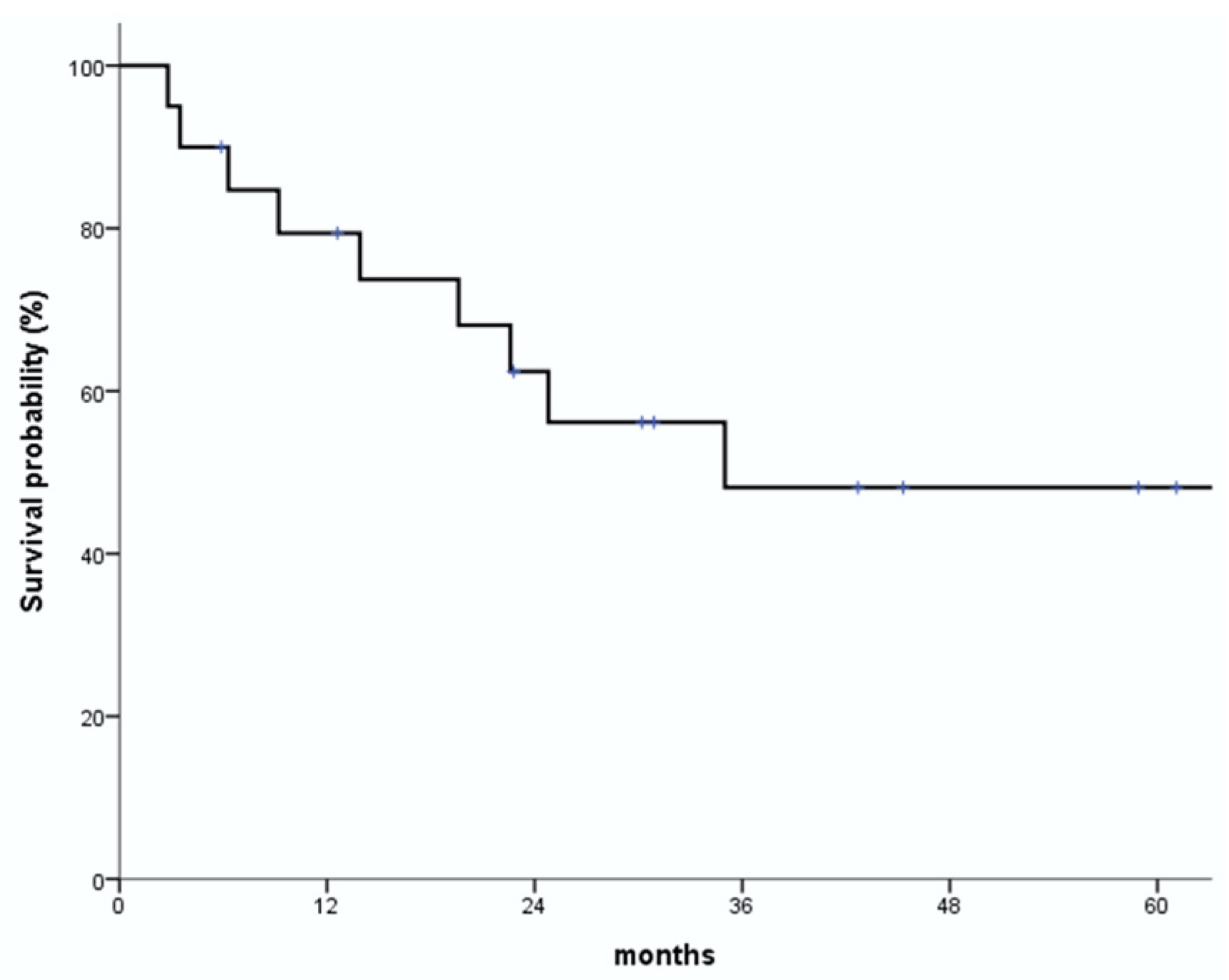
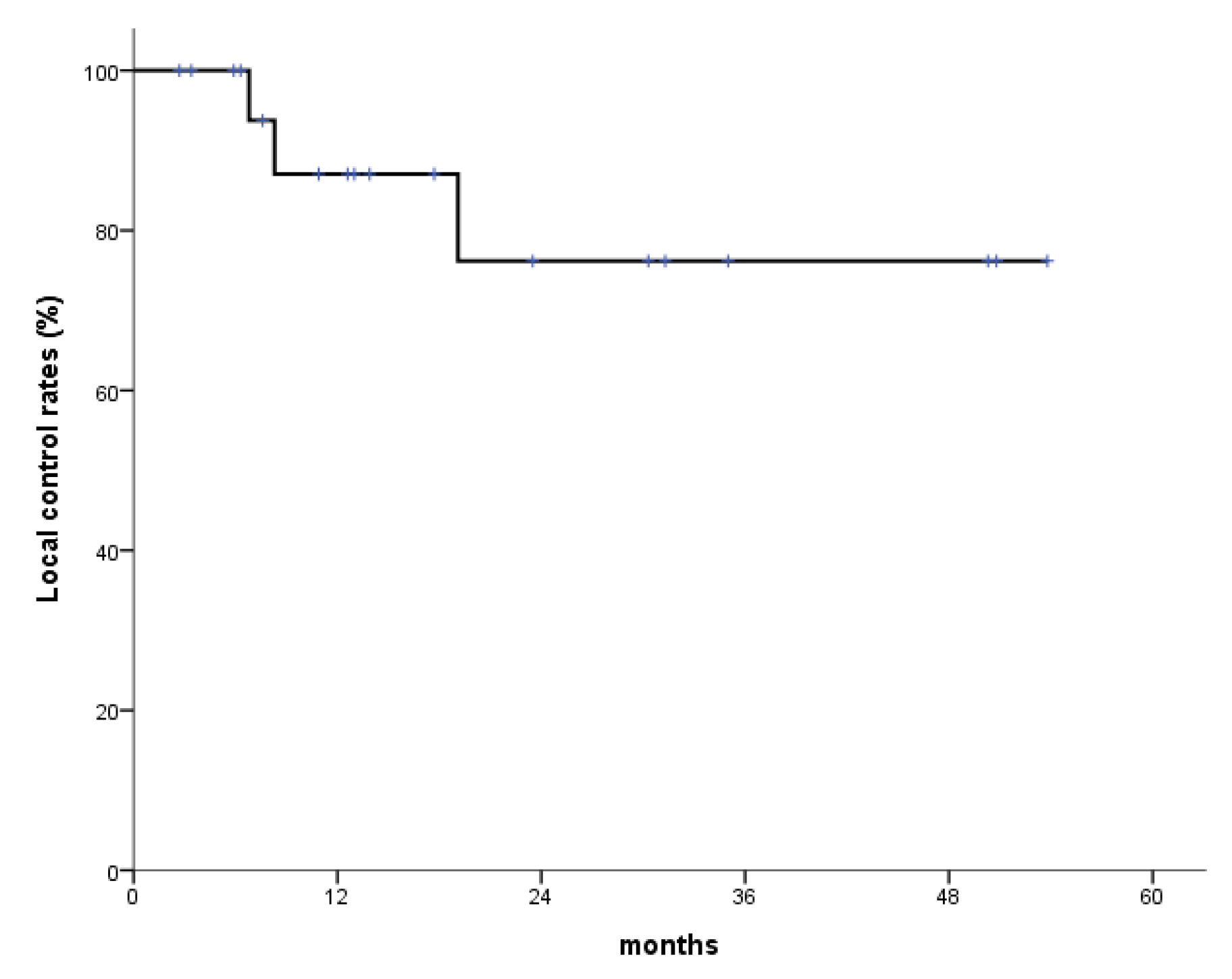
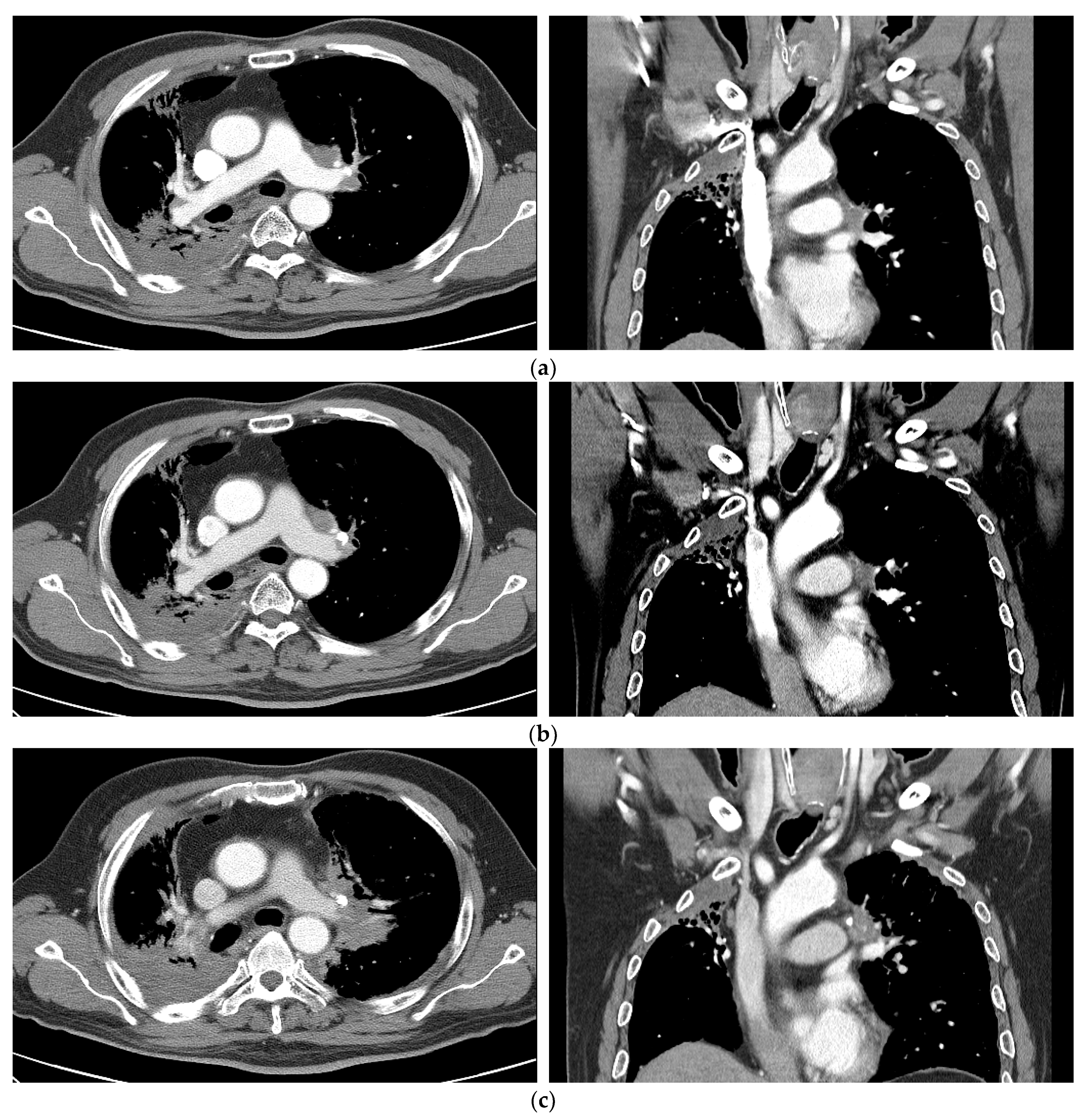
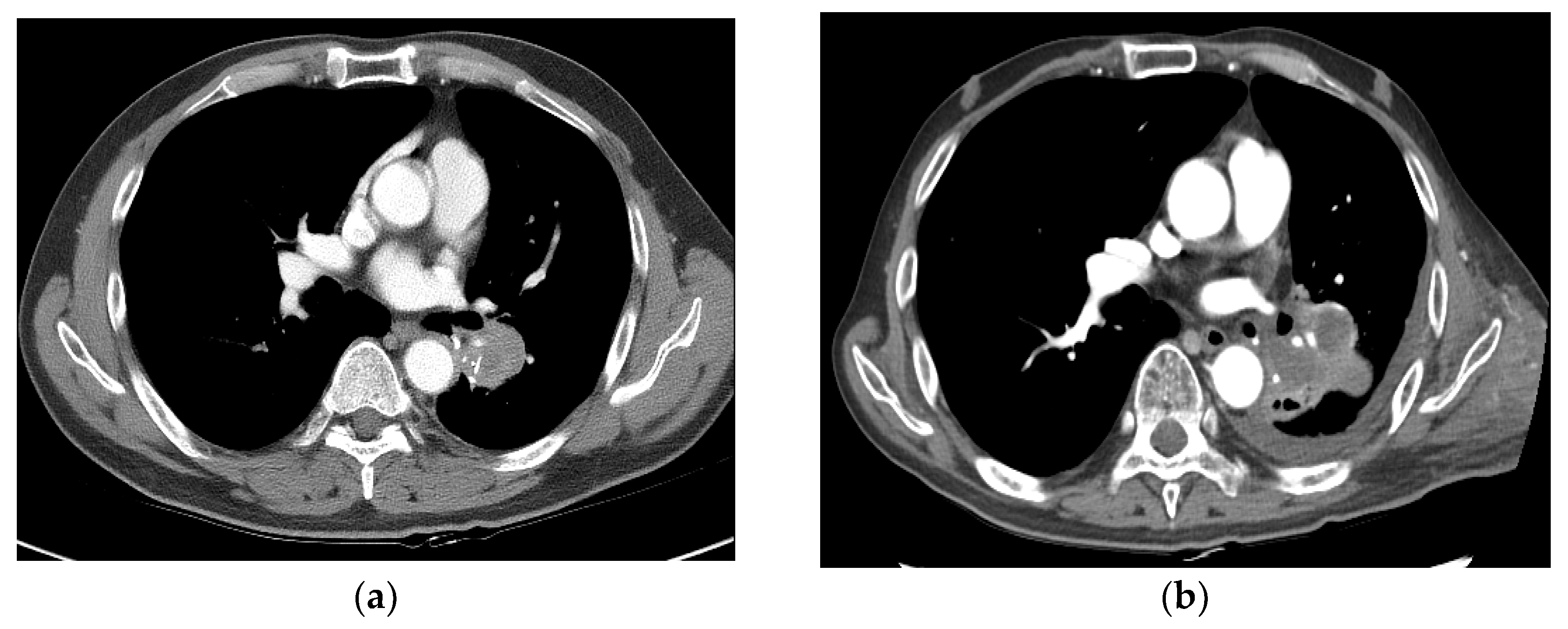
Background and Objectives: Ultra-central (UC) lung tumors are defined as those abutting the proximal bronchial tree. Stereotactic body radiation therapy (SBRT) for UC tumors is difficult because of concerns about severe toxicities. Therefore, we report the safety and efficacy of moderate-intensity SBRT for UC tumors at our institution. Materials and Methods: From January 2017 to May 2021, we treated 20 patients with UC tumors with SBRT at a dose of 45–60 Gy in 10 fractions. The primary endpoints were local control (LC) and overall survival (OS). Results: The median follow-up time was 15.8 months (range: 2.7–53.8 months). Ten of the 20 patients (50.0%) showed a complete response, five (25.0%) had a partial response, two (10.0%) had stable disease, and three (15.0%) showed progressive disease (PD). The response and disease control rates were 75.0% and 85.0%, respectively. Patients with PD showed local progression at median 8.3 months (range: 6.8–19.1 months) after SBRT. One-year and 2-year OS rates were 79.4% and 62.4%, respectively. One-year and 2-year LC rates are 87.1% and 76.2%, respectively. Eight patients died due to a non-radiation therapy related cause. One patient experienced grade 5 massive hemoptysis 6 months after SBRT, resulting in death. One patient experienced grade 2 esophageal pain and two experienced grade 2 radiation pneumonitis. Otherwise, no grade 3 or higher toxicities were reported. Conclusions: Moderate-intensity SBRT offers effective control of UC tumors and is a well-tolerated treatment for such tumors.
Keywords: stereotactic body radiotherapy; ultra-central tumor; feasibility; radiotherapy stereotactic body radiotherapy; ultra-central tumor; feasibility; radiotherapy