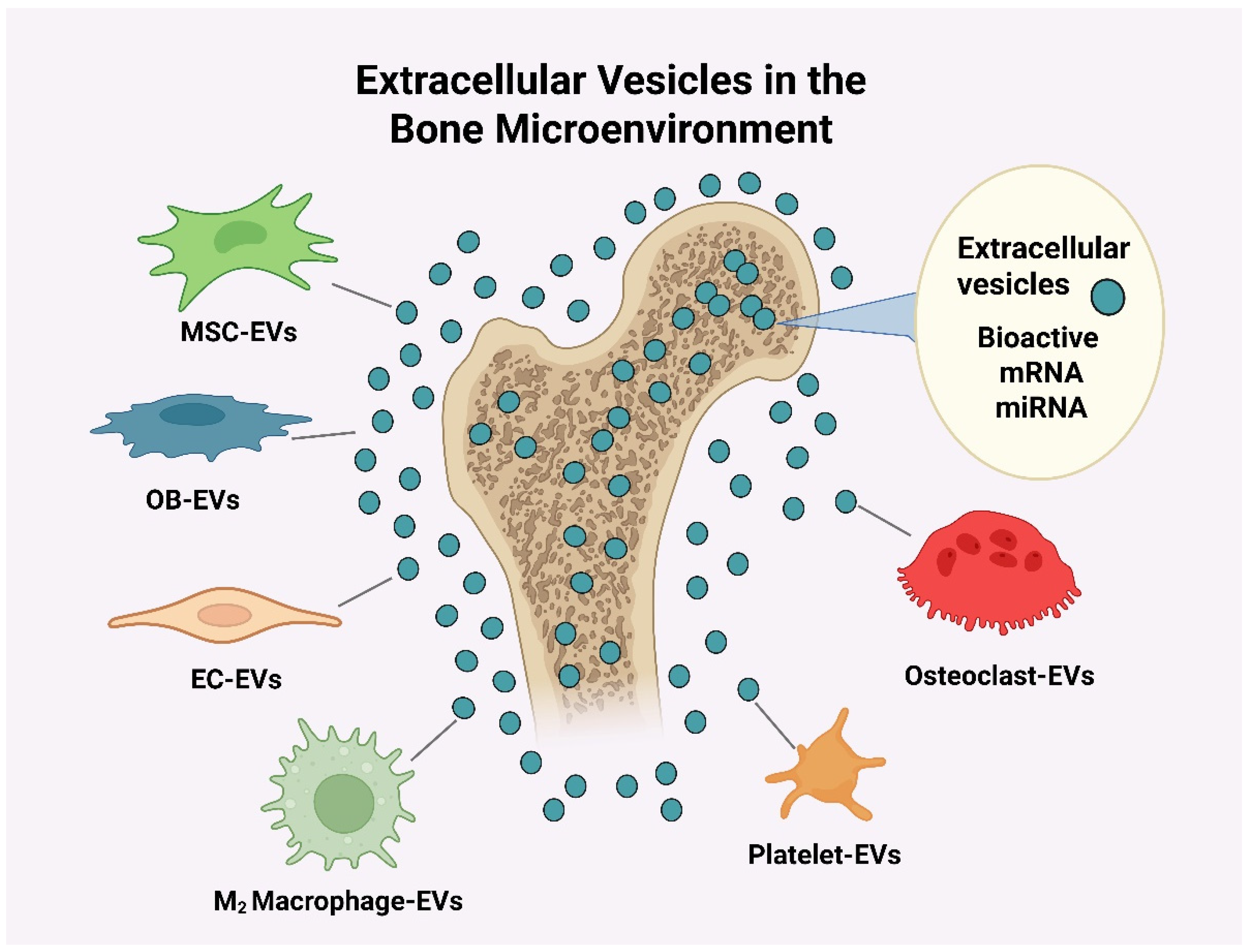
Correction: Biswas et al. Extracellular Vesicles in Osteogenesis: A Comprehensive Review of Mechanisms and Therapeutic Potential for Bone Regeneration. Curr. Issues Mol. Biol. 2025, 47, 675


 , , , ,
  , ,
, ,  ,
,  and
and 
1. Figure Legend
2. Error in Figure
Reference
- Biswas, S.; Gangadaran, P.; Dhara, C.; Ghosh, S.; Phadikar, S.D.; Chakraborty, A.; Mahajan, A.A.; Mondal, R.; Chattopadhyay, D.; Banerjee, T.; et al. Extracellular Vesicles in Osteogenesis: A Comprehensive Review of Mechanisms and Therapeutic Potential for Bone Regeneration. Curr. Issues Mol. Biol. 2025, 47, 675. [Google Scholar] [CrossRef] [PubMed]

Disclaimer/Publisher’s Note: The statements, opinions and data contained in all publications are solely those of the individual author(s) and contributor(s) and not of MDPI and/or the editor(s). MDPI and/or the editor(s) disclaim responsibility for any injury to people or property resulting from any ideas, methods, instructions or products referred to in the content. |
© 2026 by the authors. Licensee MDPI, Basel, Switzerland. This article is an open access article distributed under the terms and conditions of the Creative Commons Attribution (CC BY) license.
Share and Cite
Biswas, S.; Gangadaran, P.; Dhara, C.; Ghosh, S.; Phadikar, S.D.; Chakraborty, A.; Mahajan, A.A.; Mondal, R.; Chattopadhyay, D.; Banerjee, T.; et al. Correction: Biswas et al. Extracellular Vesicles in Osteogenesis: A Comprehensive Review of Mechanisms and Therapeutic Potential for Bone Regeneration. Curr. Issues Mol. Biol. 2025, 47, 675. Curr. Issues Mol. Biol. 2026, 48, 154. https://doi.org/10.3390/cimb48020154
Biswas S, Gangadaran P, Dhara C, Ghosh S, Phadikar SD, Chakraborty A, Mahajan AA, Mondal R, Chattopadhyay D, Banerjee T, et al. Correction: Biswas et al. Extracellular Vesicles in Osteogenesis: A Comprehensive Review of Mechanisms and Therapeutic Potential for Bone Regeneration. Curr. Issues Mol. Biol. 2025, 47, 675. Current Issues in Molecular Biology. 2026; 48(2):154. https://doi.org/10.3390/cimb48020154
Chicago/Turabian StyleBiswas, Sreyee, Prakash Gangadaran, Chandrajeet Dhara, Shreya Ghosh, Soumya Deep Phadikar, Akash Chakraborty, Atharva Anand Mahajan, Ranit Mondal, Debdeep Chattopadhyay, Trisha Banerjee, and et al. 2026. "Correction: Biswas et al. Extracellular Vesicles in Osteogenesis: A Comprehensive Review of Mechanisms and Therapeutic Potential for Bone Regeneration. Curr. Issues Mol. Biol. 2025, 47, 675" Current Issues in Molecular Biology 48, no. 2: 154. https://doi.org/10.3390/cimb48020154
APA StyleBiswas, S., Gangadaran, P., Dhara, C., Ghosh, S., Phadikar, S. D., Chakraborty, A., Mahajan, A. A., Mondal, R., Chattopadhyay, D., Banerjee, T., Dey, A., Ghosh, S., Krishnan, A., Ahn, B.-C., & Rajendran, R. L. (2026). Correction: Biswas et al. Extracellular Vesicles in Osteogenesis: A Comprehensive Review of Mechanisms and Therapeutic Potential for Bone Regeneration. Curr. Issues Mol. Biol. 2025, 47, 675. Current Issues in Molecular Biology, 48(2), 154. https://doi.org/10.3390/cimb48020154