Article

Multi-Scale Adaptive Light Stripe Center Extraction for Line-Structured Light Vision Based Online Wheelset Measurement

1
School of Physical Science and Engineering, Beijing Jiaotong University, Beijing 100044, China
2
MOE Key Laboratory of Luminescence and Optical Information, Beijing Jiaotong University, Beijing 100044, China
*
Author to whom correspondence should be addressed.
Sensors 2026, 26(2), 600; https://doi.org/10.3390/s26020600
Submission received: 16 December 2025 / Revised: 9 January 2026 / Accepted: 13 January 2026 / Published: 15 January 2026
(This article belongs to the Special Issue Intelligent Sensors and Signal Processing in Industry)

Abstract

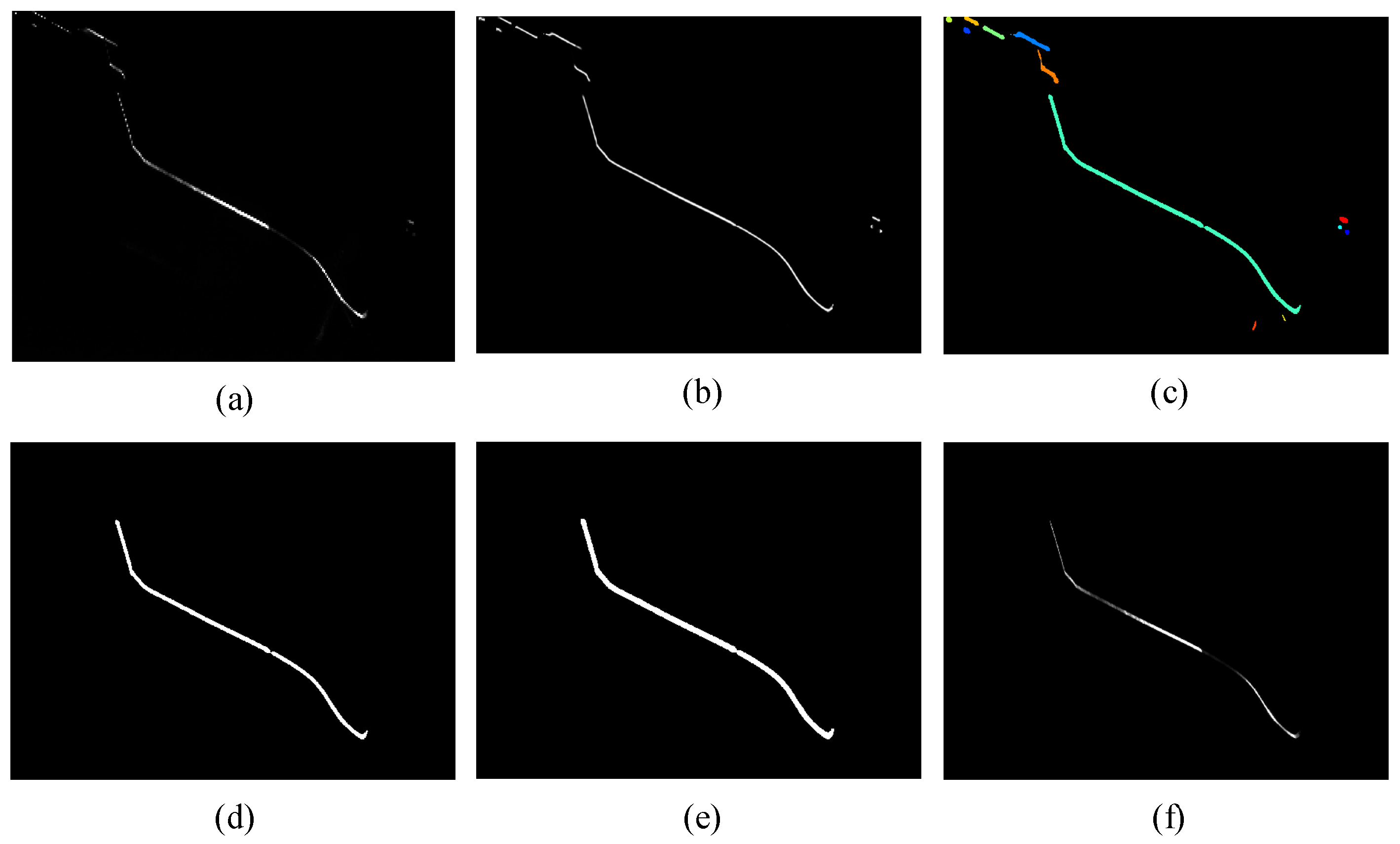
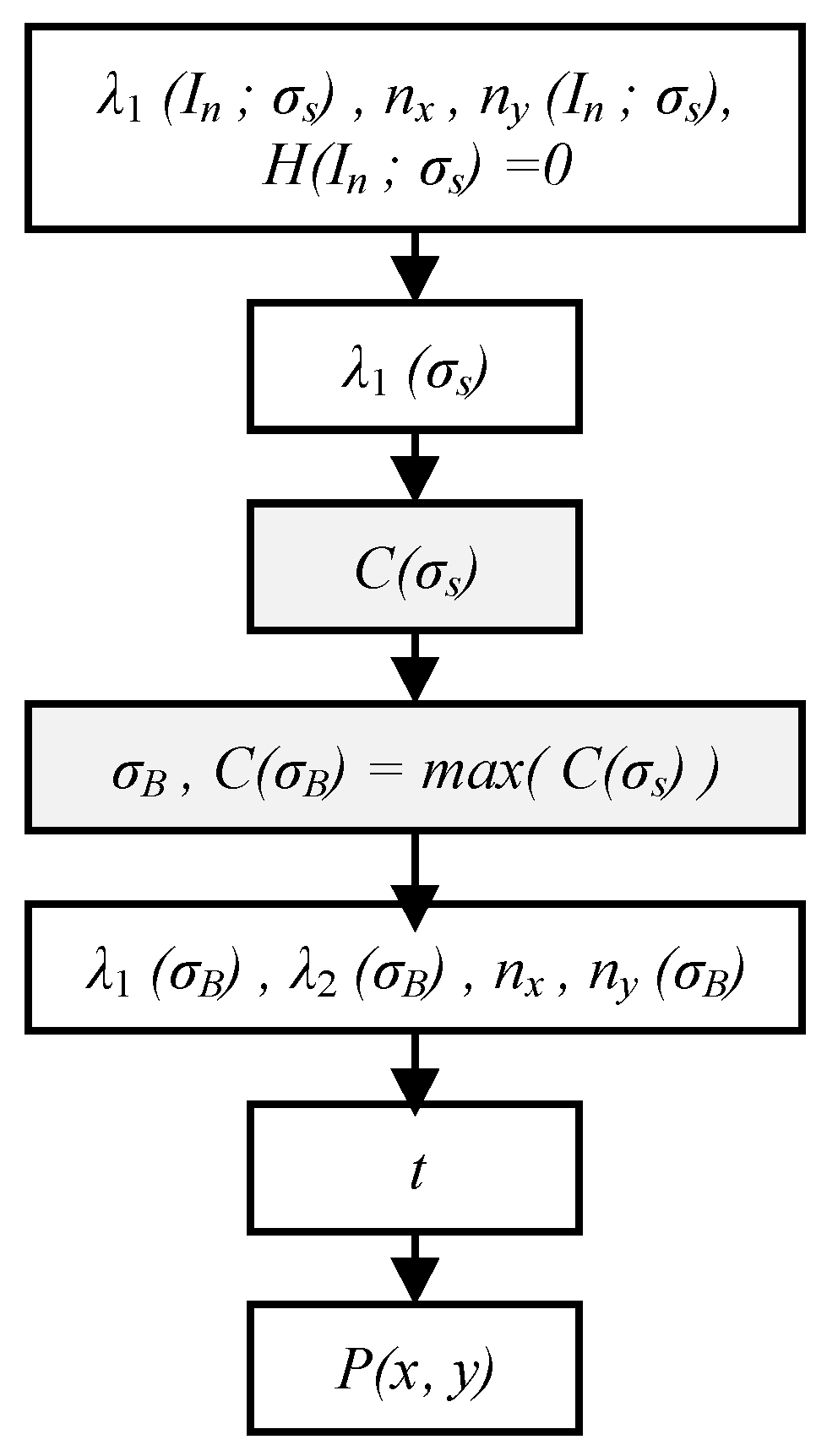
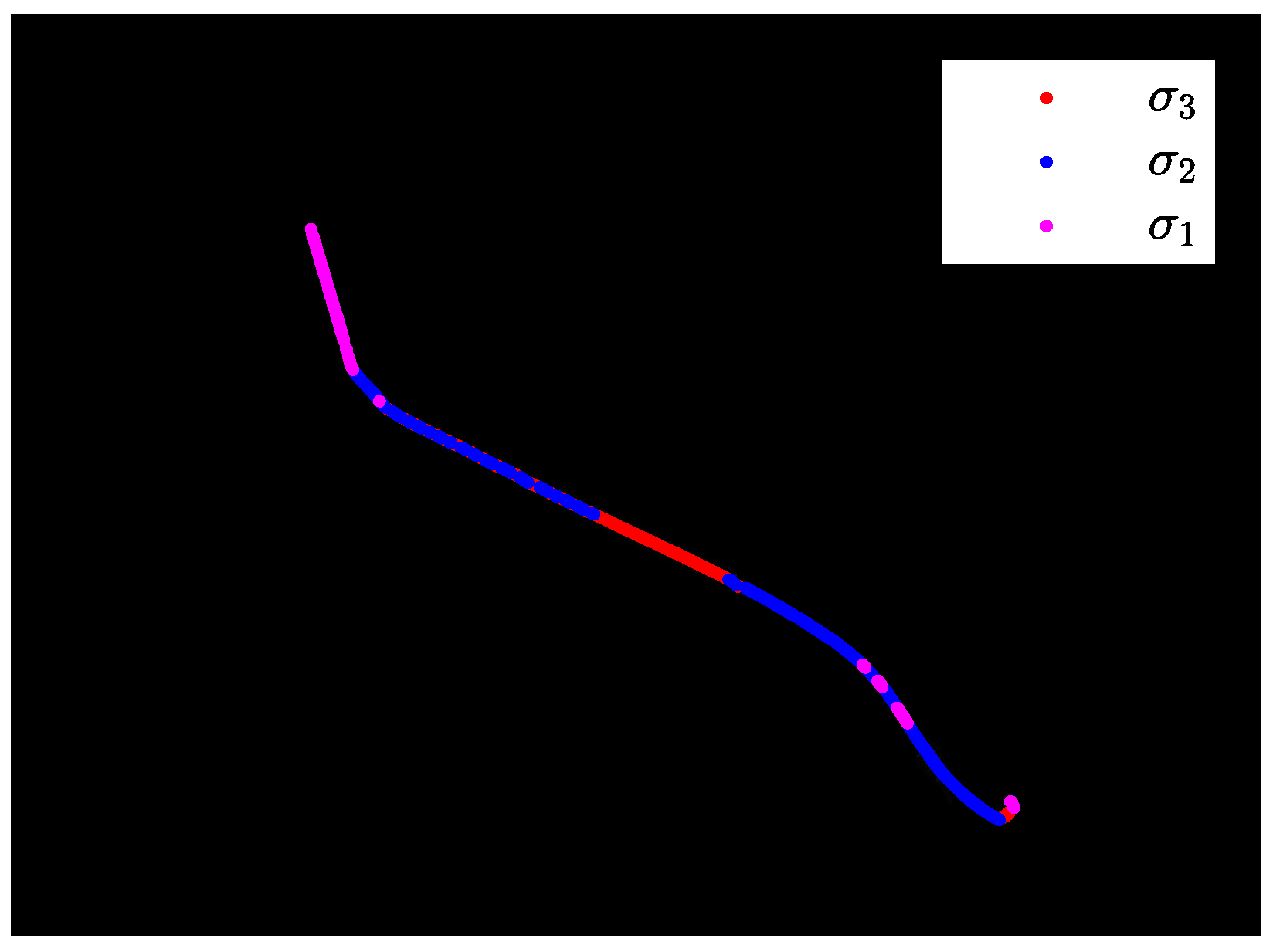
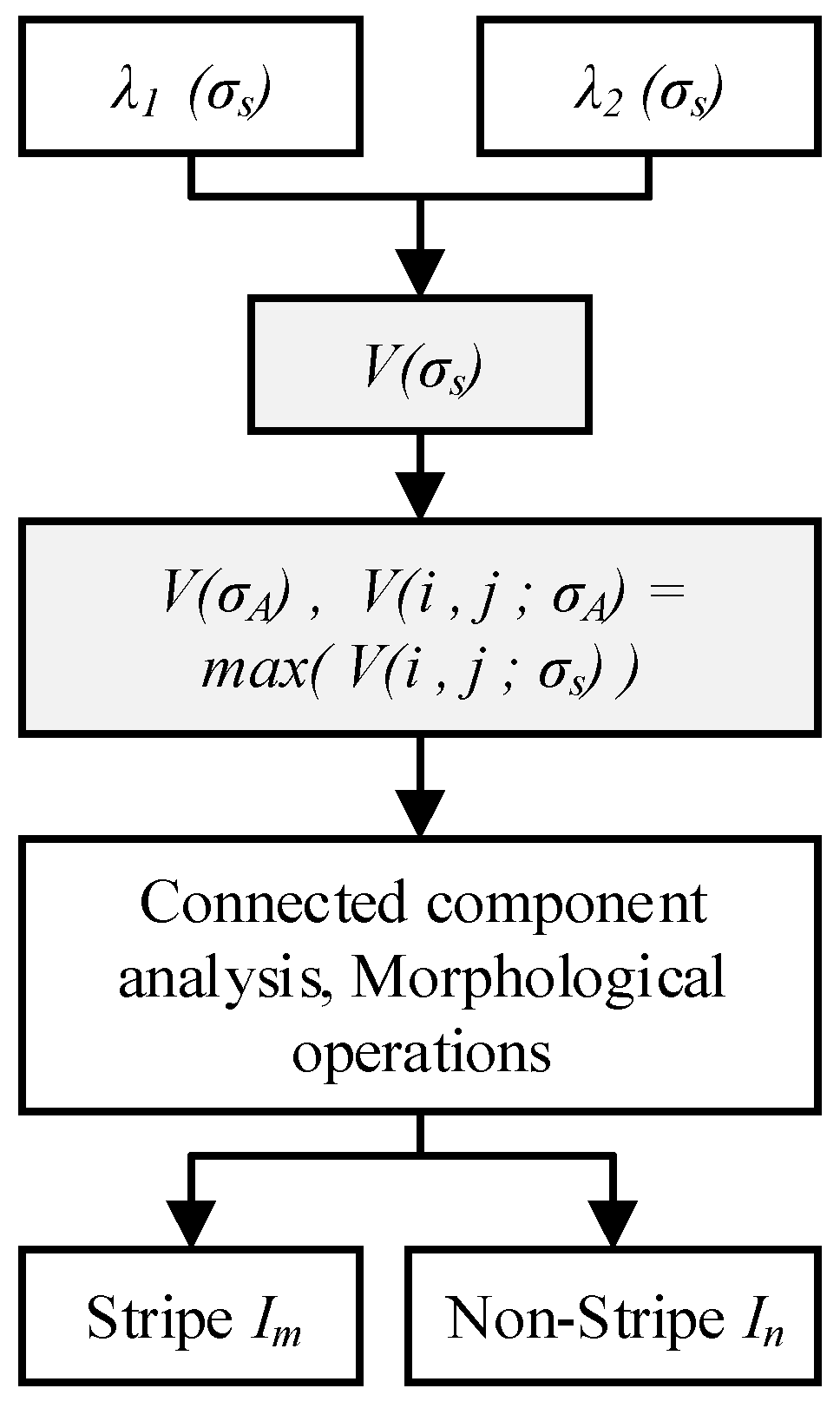
The extraction of the light stripe center is a pivotal step in line-structured light vision measurement. This paper addresses a key challenge in the online measurement of train wheel treads, where the diverse and complex profile characteristics of the tread surface lead to uneven gray-level distribution and varying width features in the stripe image, ultimately degrading the accuracy of center extraction. To solve this problem, a region-adaptive multiscale method for light stripe center extraction is proposed. First, potential light stripe regions are identified and enhanced based on the gray-gradient features of the image, enabling precise segmentation. Subsequently, by normalizing the feature responses under Gaussian kernels with different scales, the locally optimal scale parameter (σ) is determined adaptively for each stripe region. Sub-pixel center extraction is then performed using the Hessian matrix corresponding to this optimal σ. Experimental results demonstrate that under on-site conditions featuring uneven wheel surface reflectivity, the proposed method can reliably extract light stripe centers with high stability. It achieves a repeatability of 0.10 mm, with mean measurement errors of 0.12 mm for flange height and 0.10 mm for flange thickness, thereby enhancing both stability and accuracy in industrial measurement environments. The repeatability and reproducibility of the method were further validated through repeated testing of multiple wheels.
Keywords: centerline extraction; line structured light; parameter adaptation; vision measurement centerline extraction; line structured light; parameter adaptation; vision measurement