Identification of Dynamic Parameters in a DC Motor Using Step and Ramp Torque Response Methods

 , , , and
Abstract
1. Introduction
- To present two complementary direct analytical methods for identification of inertia and friction coefficients;
- To provide comparative analysis between the constant torque method and ramp input method;
- To validate identified parameters through closed-loop control implementation;
- To offer an accessible experimental platform using Arduino-based data acquisition.
2. Friction Modeling for DC Motors
2.1. Dynamic Model of a DC Motor with Friction
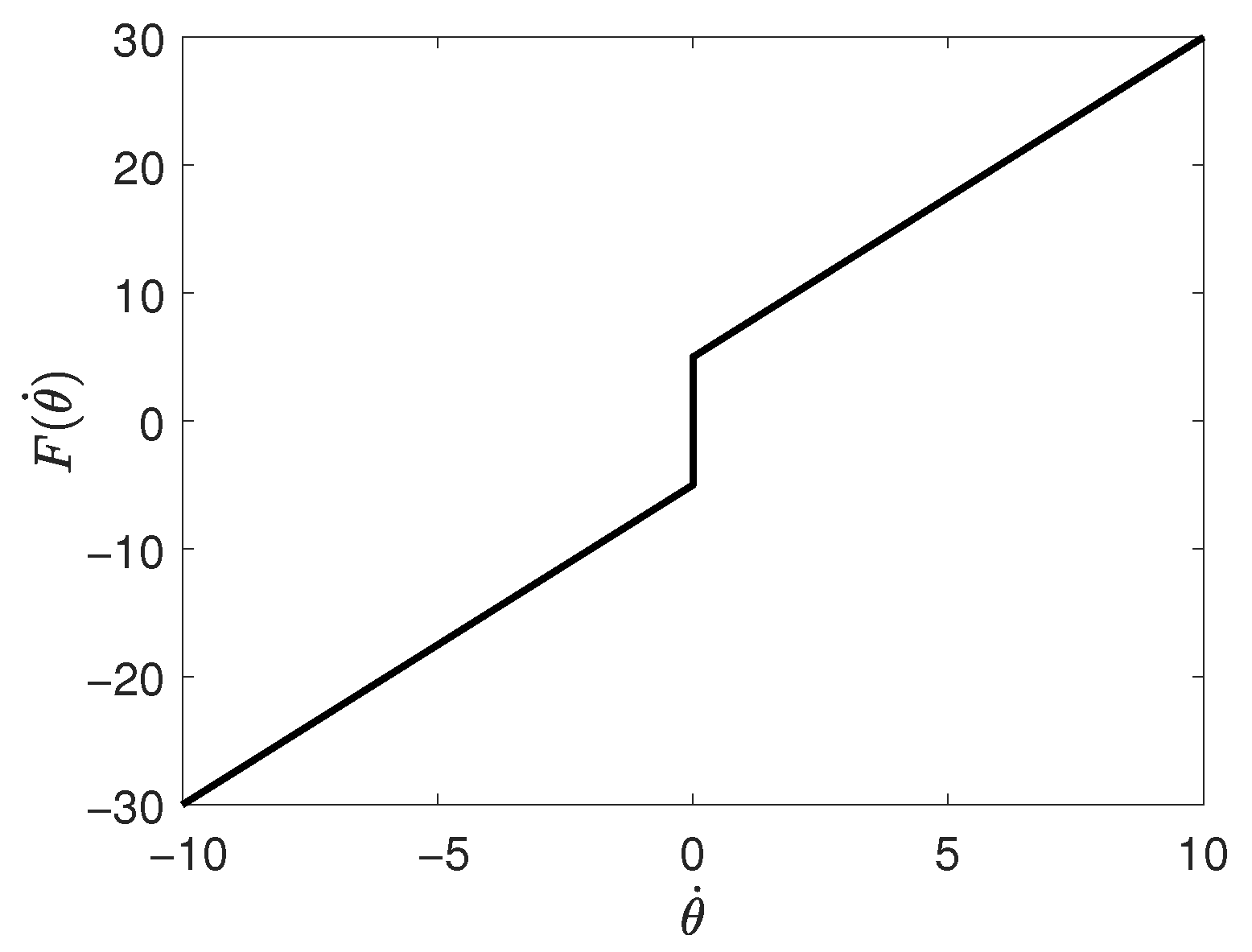
2.2. Coulomb and Viscous Friction Model
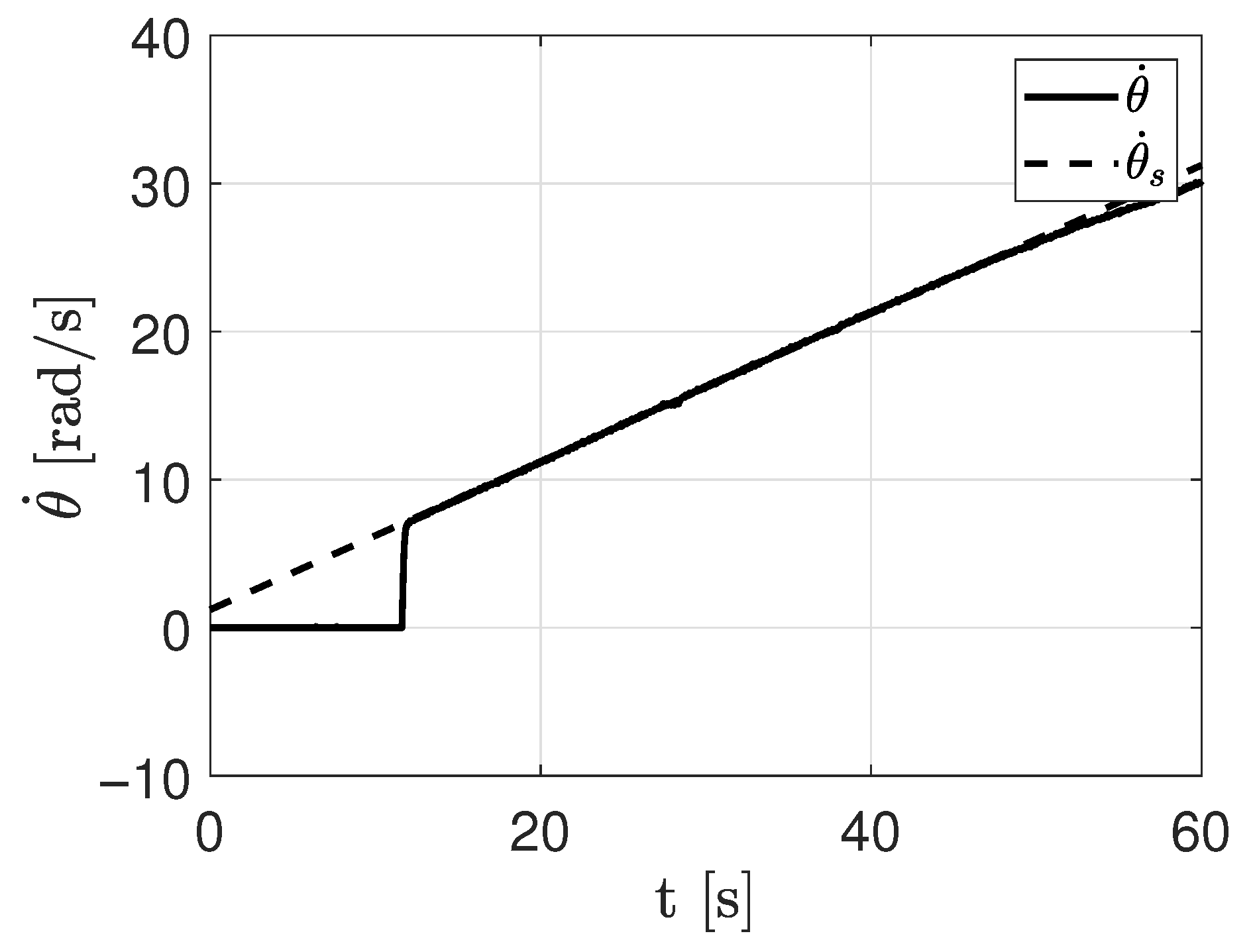
2.3. Static Friction
2.4. Stribeck Friction
2.5. Dahl Model
2.6. Lugre Model
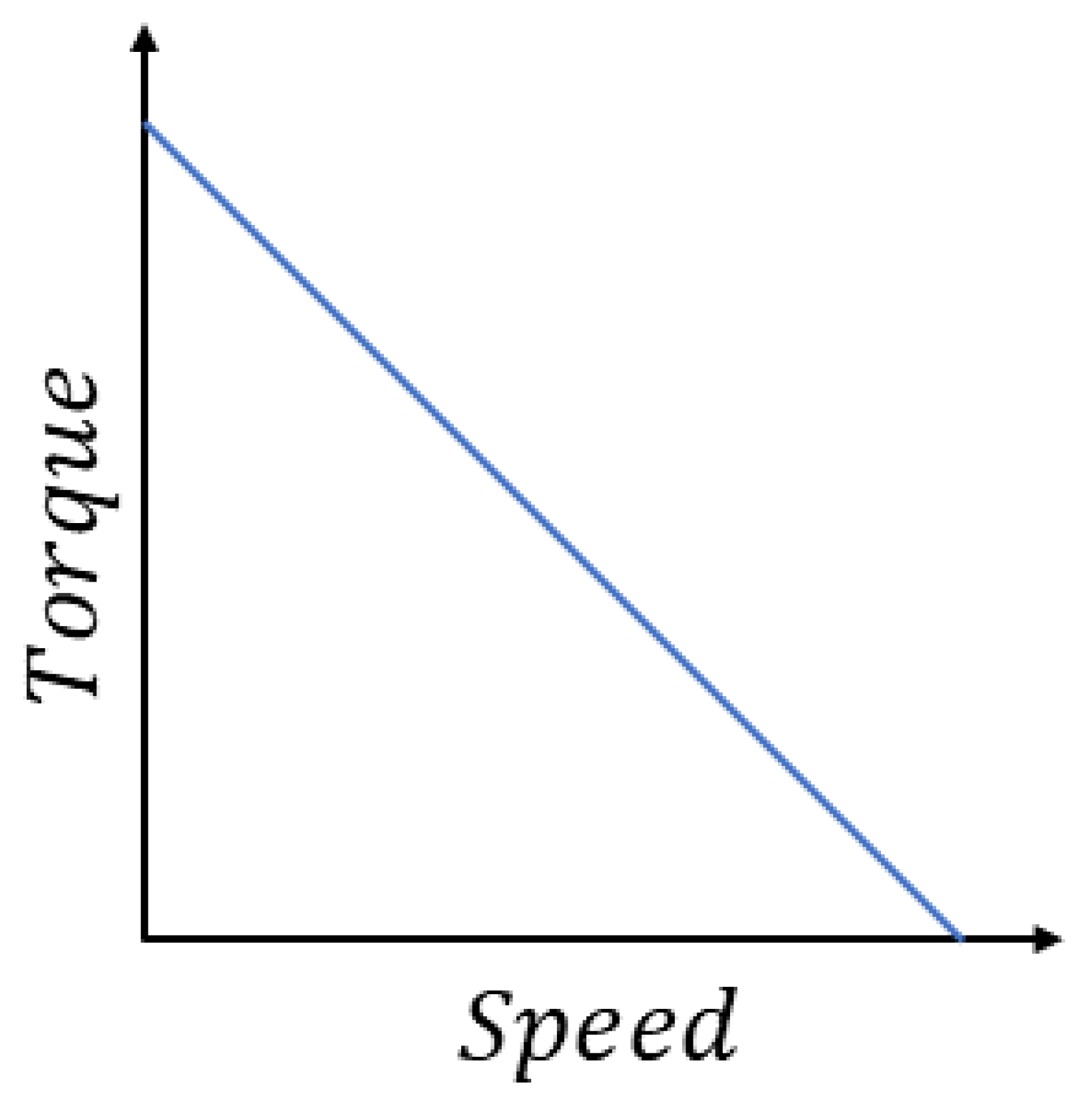
2.7. Mechanical System Model Including Torque and Friction
3. Estimation Methods for Viscous and Coulomb Friction and Inertia in DC Motors
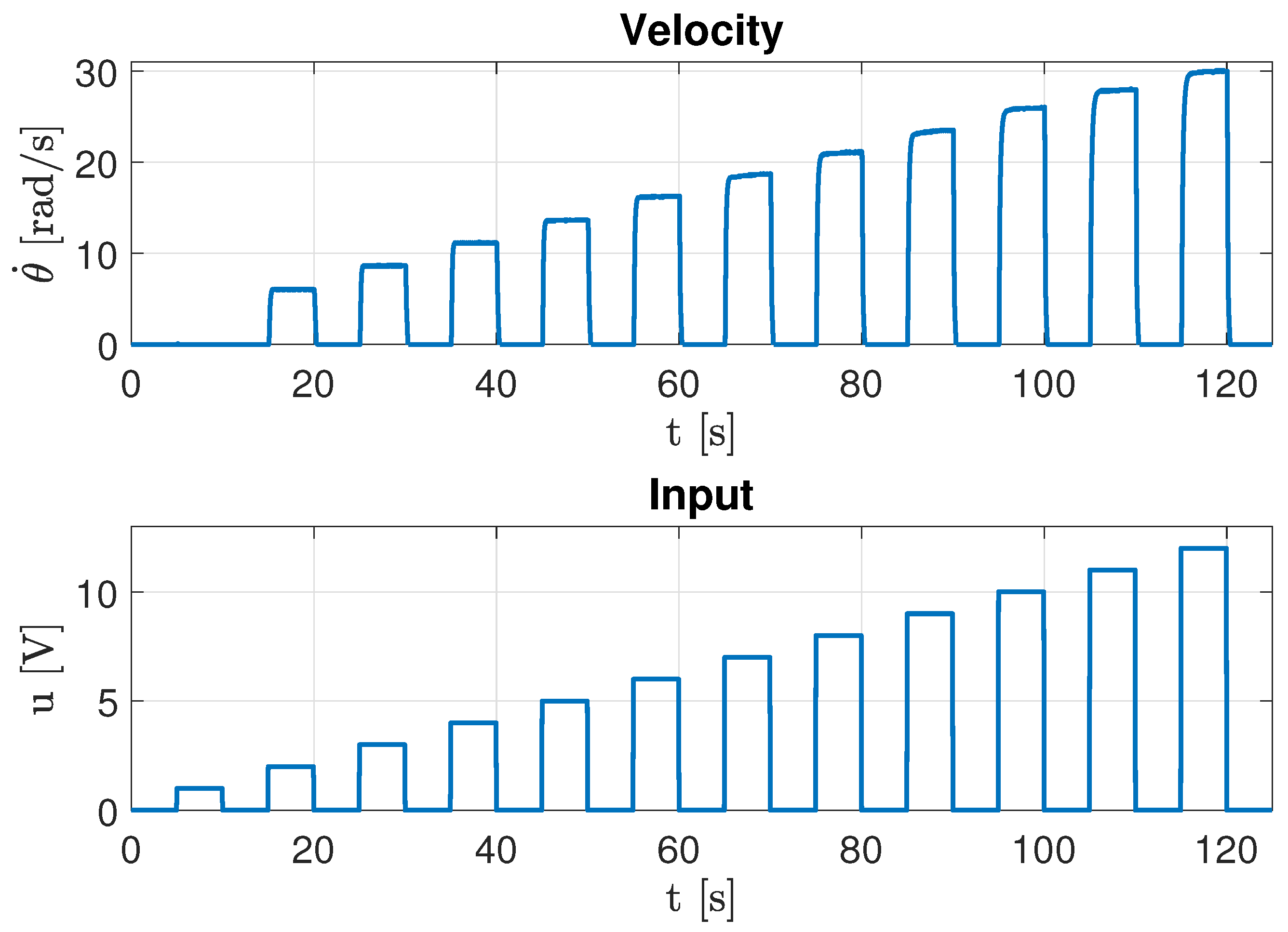
3.1. Constant Torque Method
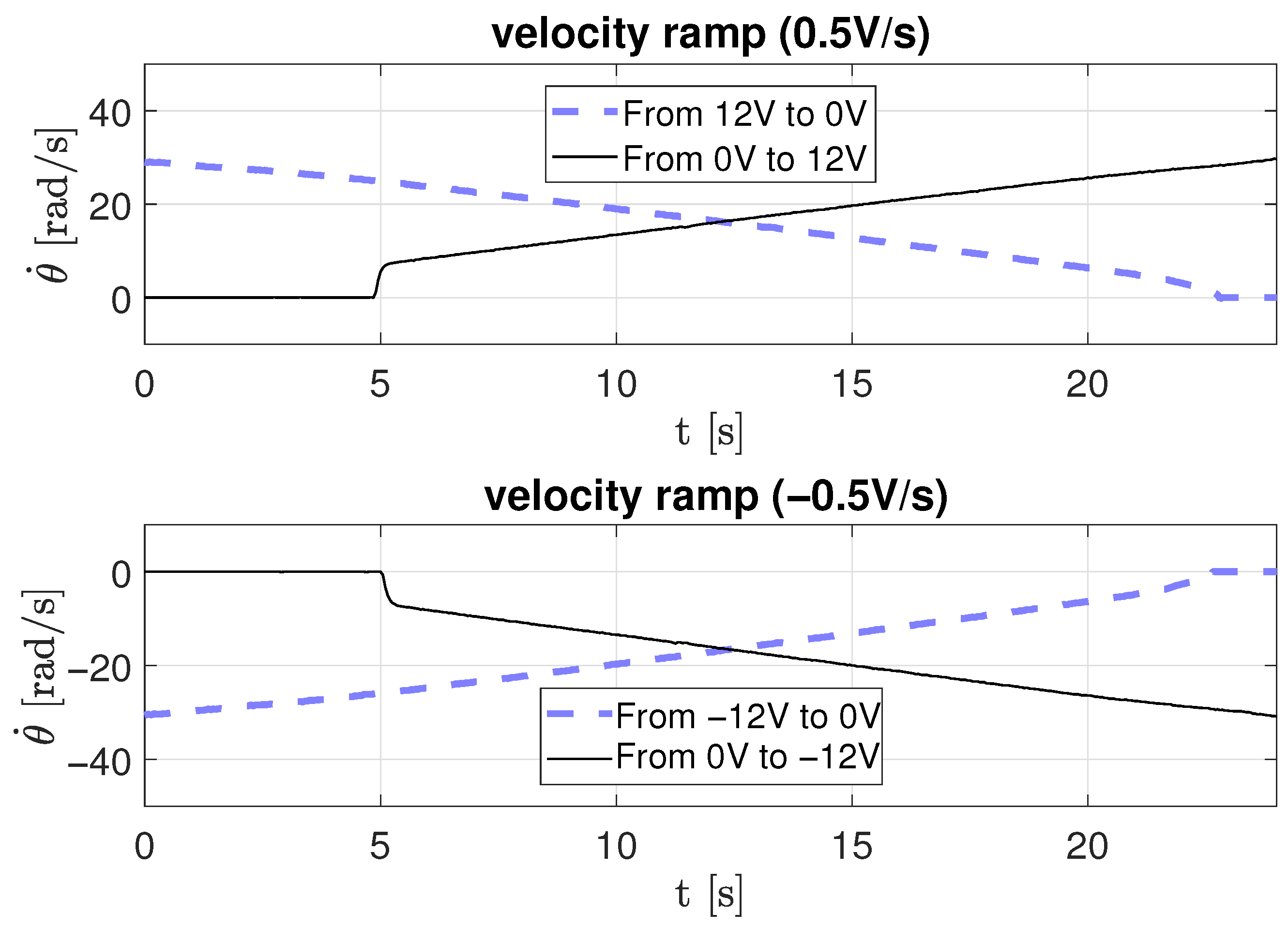
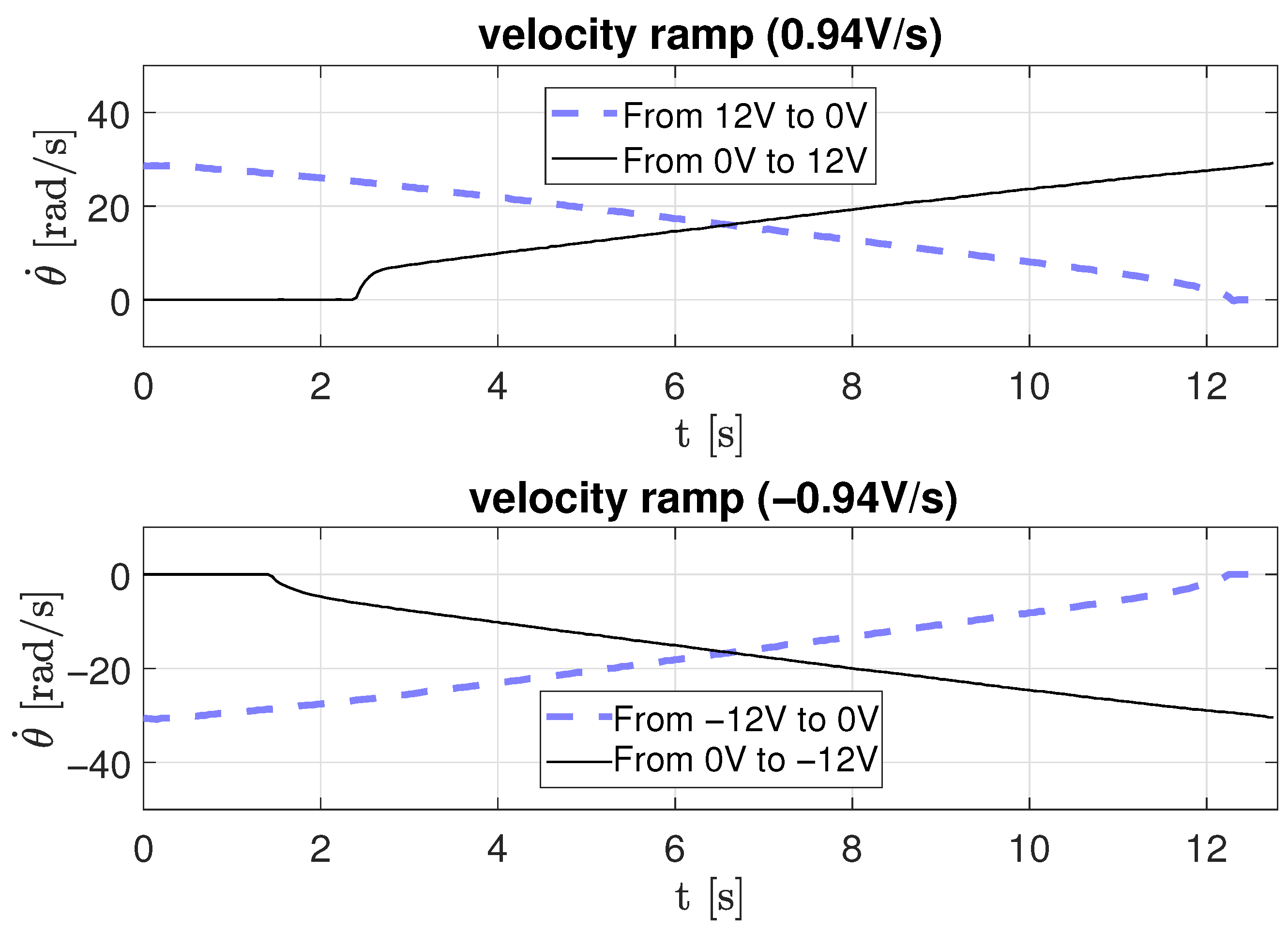
3.2. Ramp-Type Input Method
3.3. Identification of the Inertia Coefficient
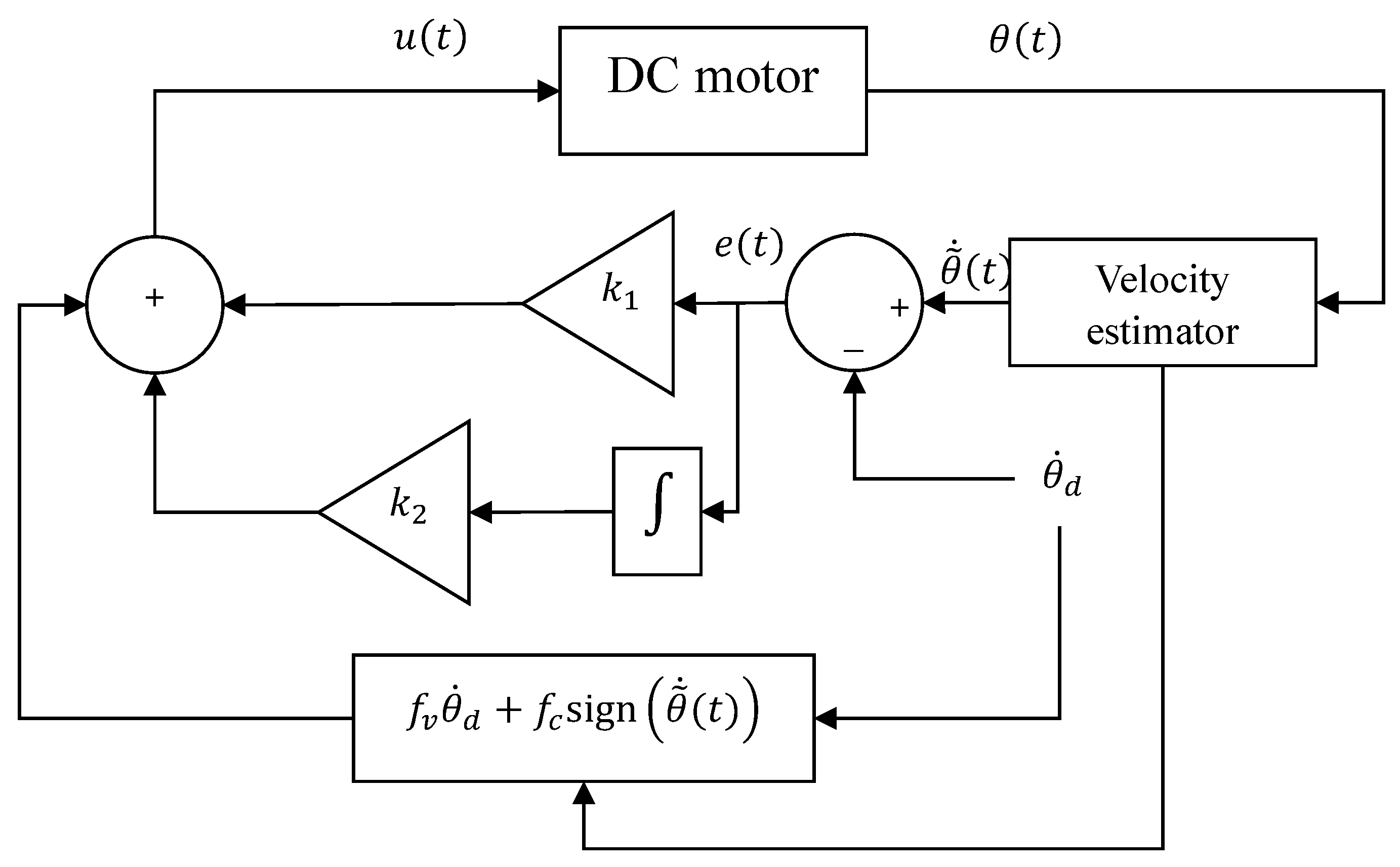
3.4. Velocity Control of DC Motor Using PI Controller
4. Experimental Results
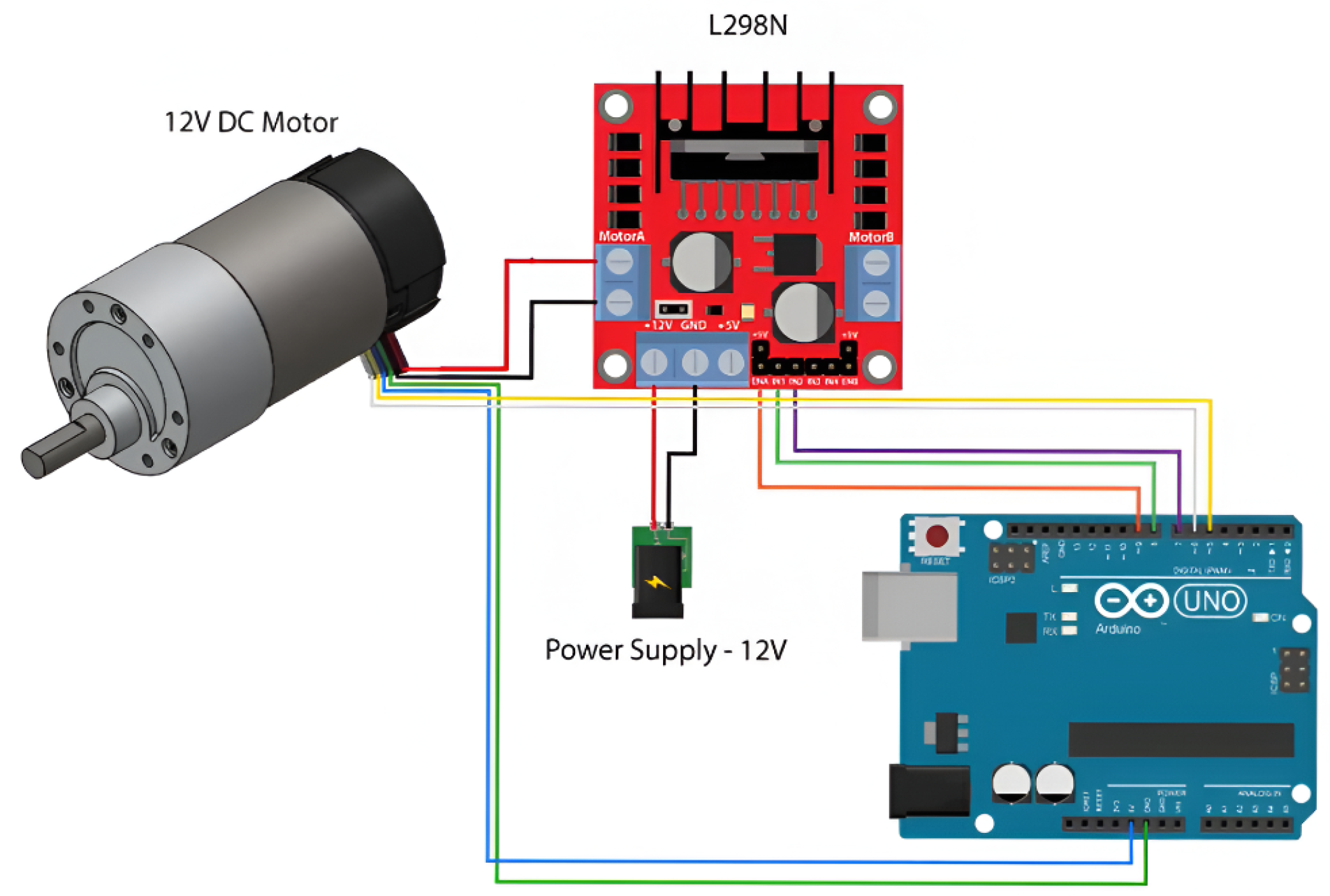
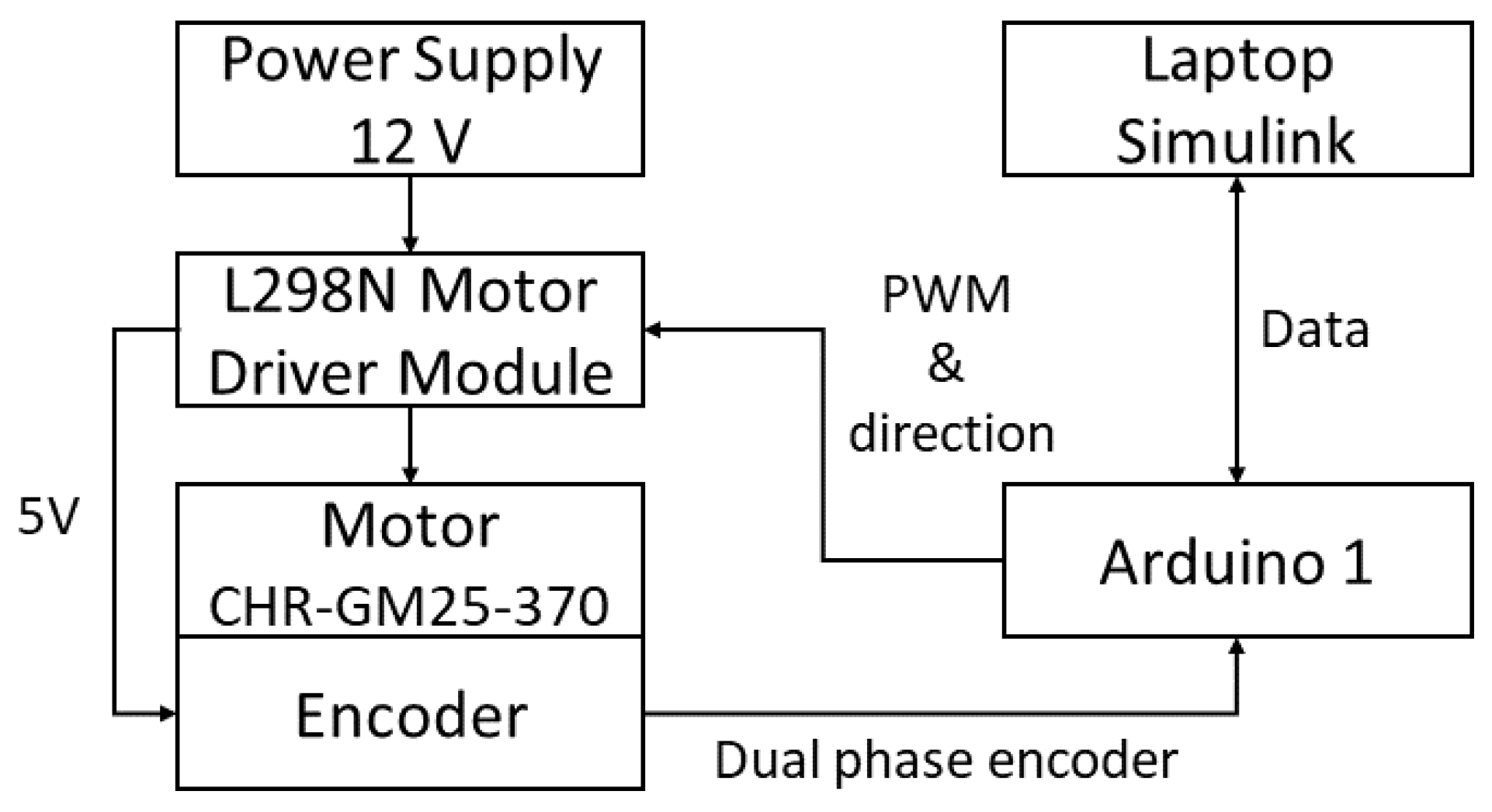
4.1. Experimental Scenarios
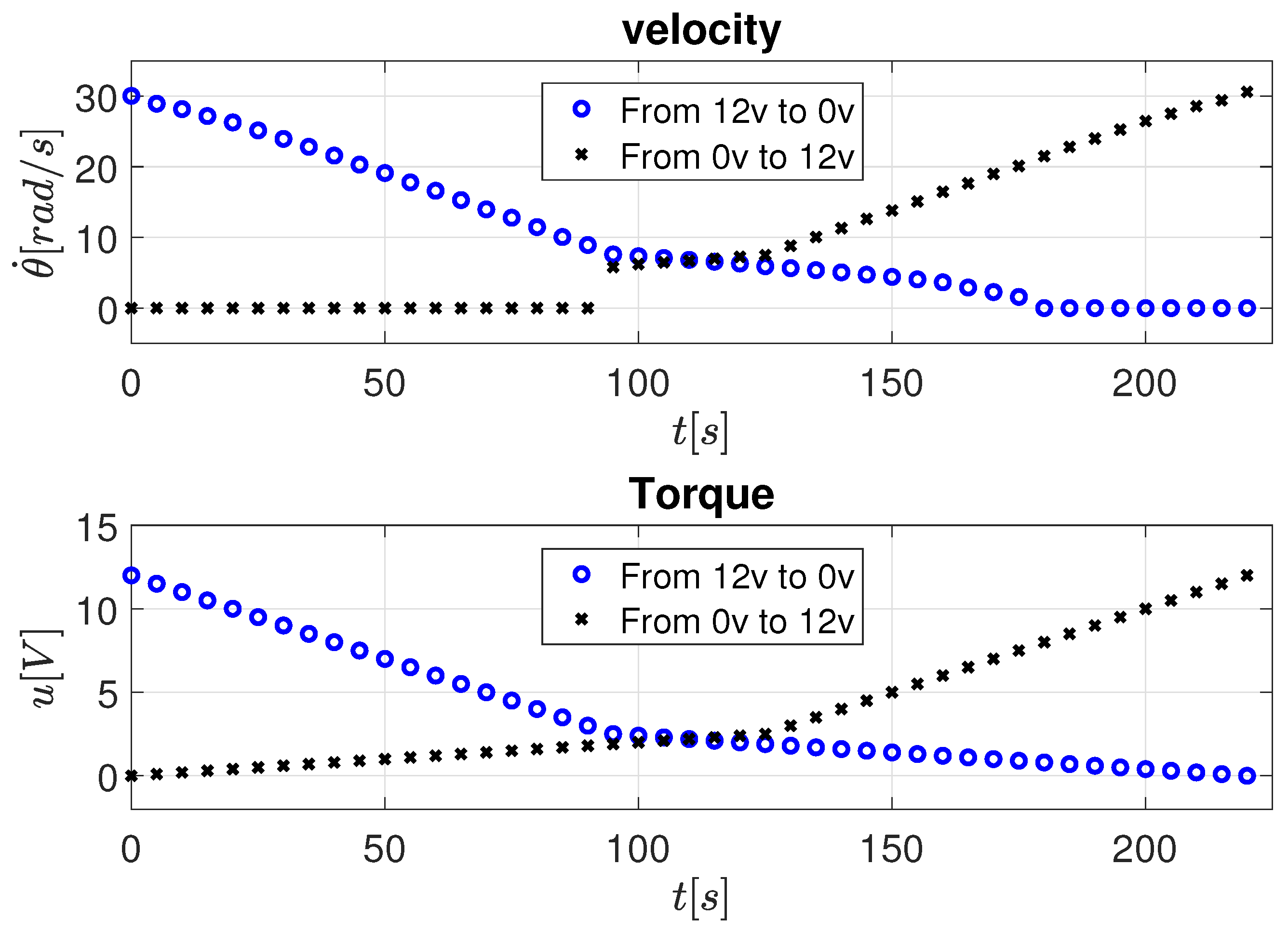
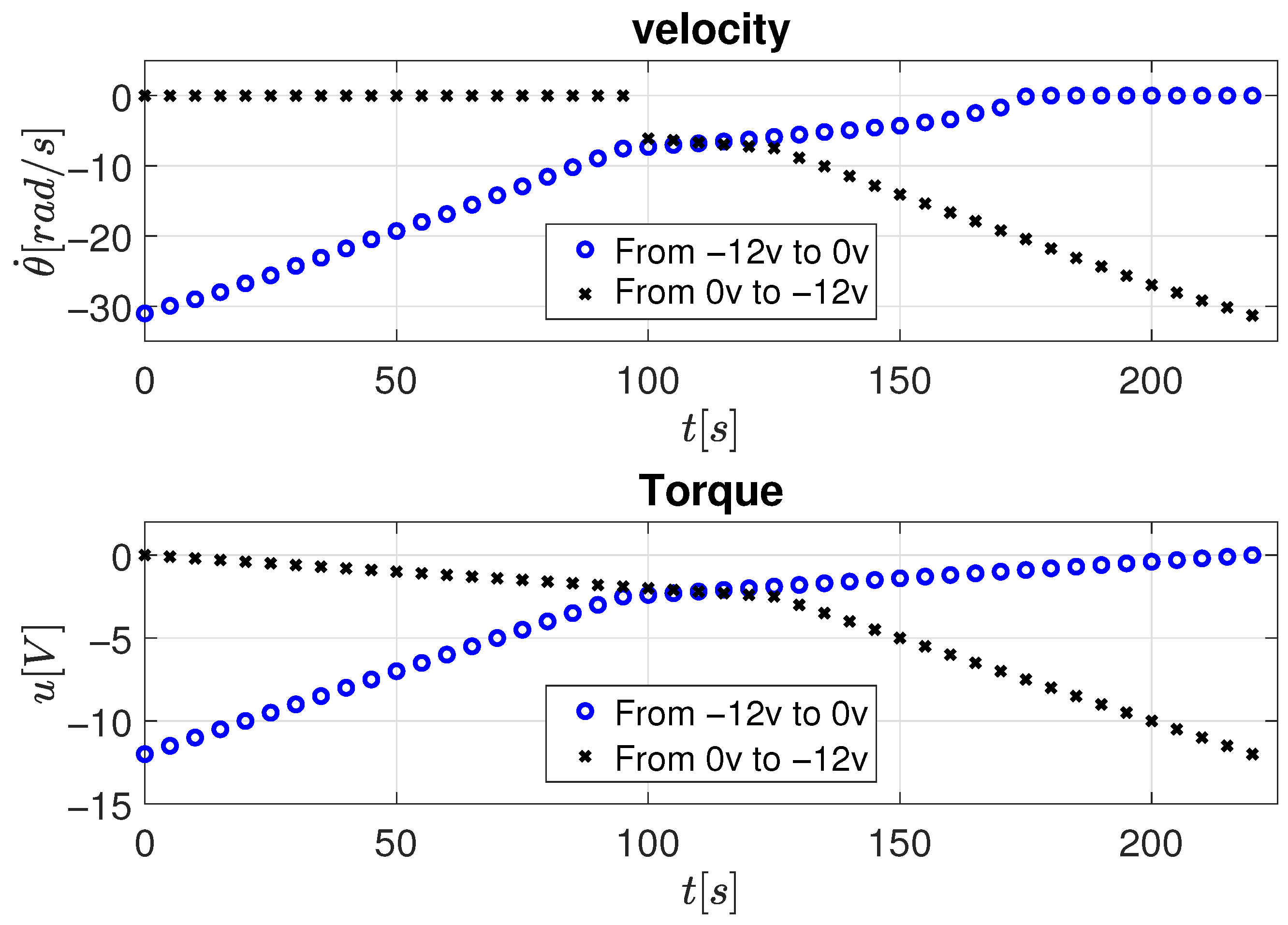
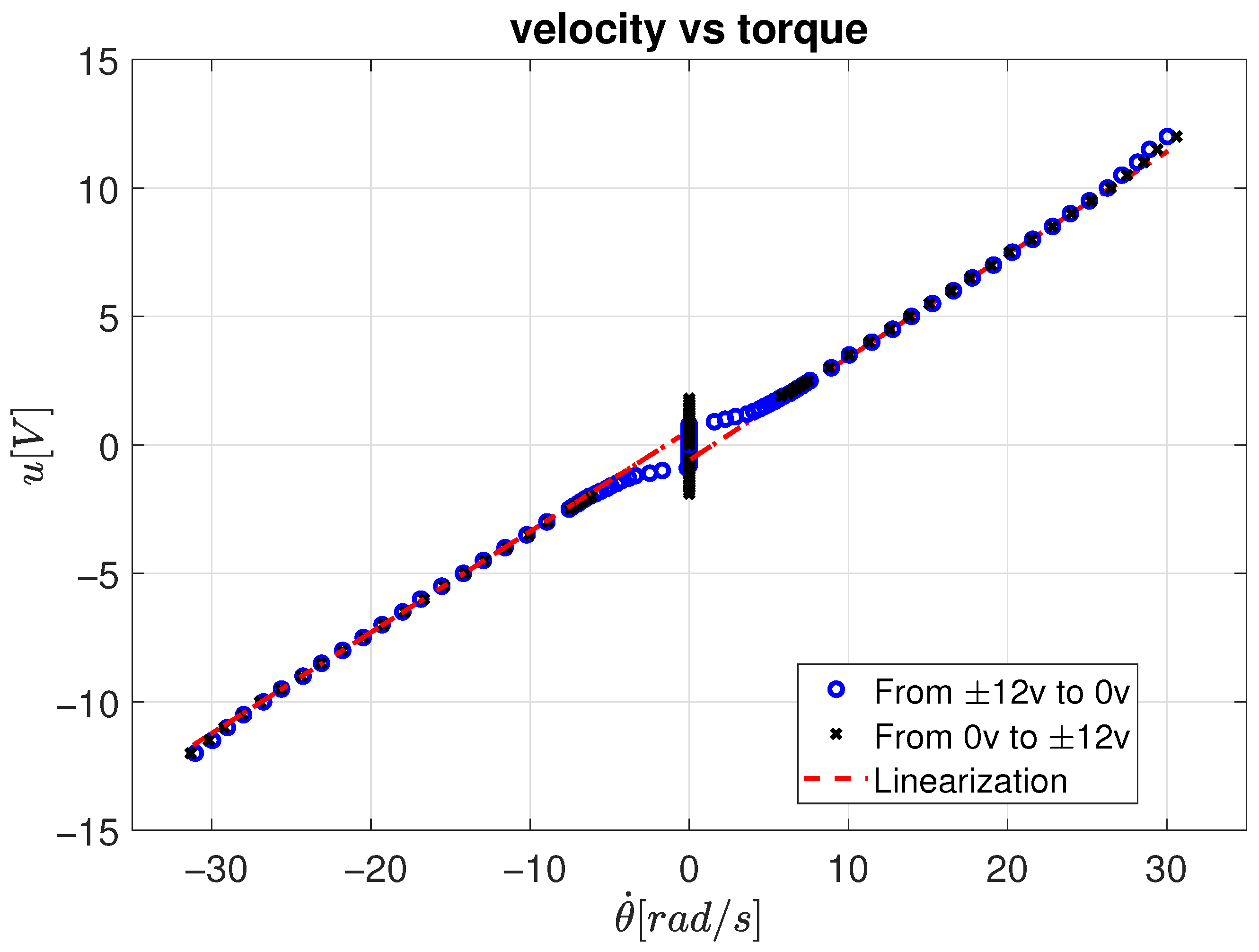
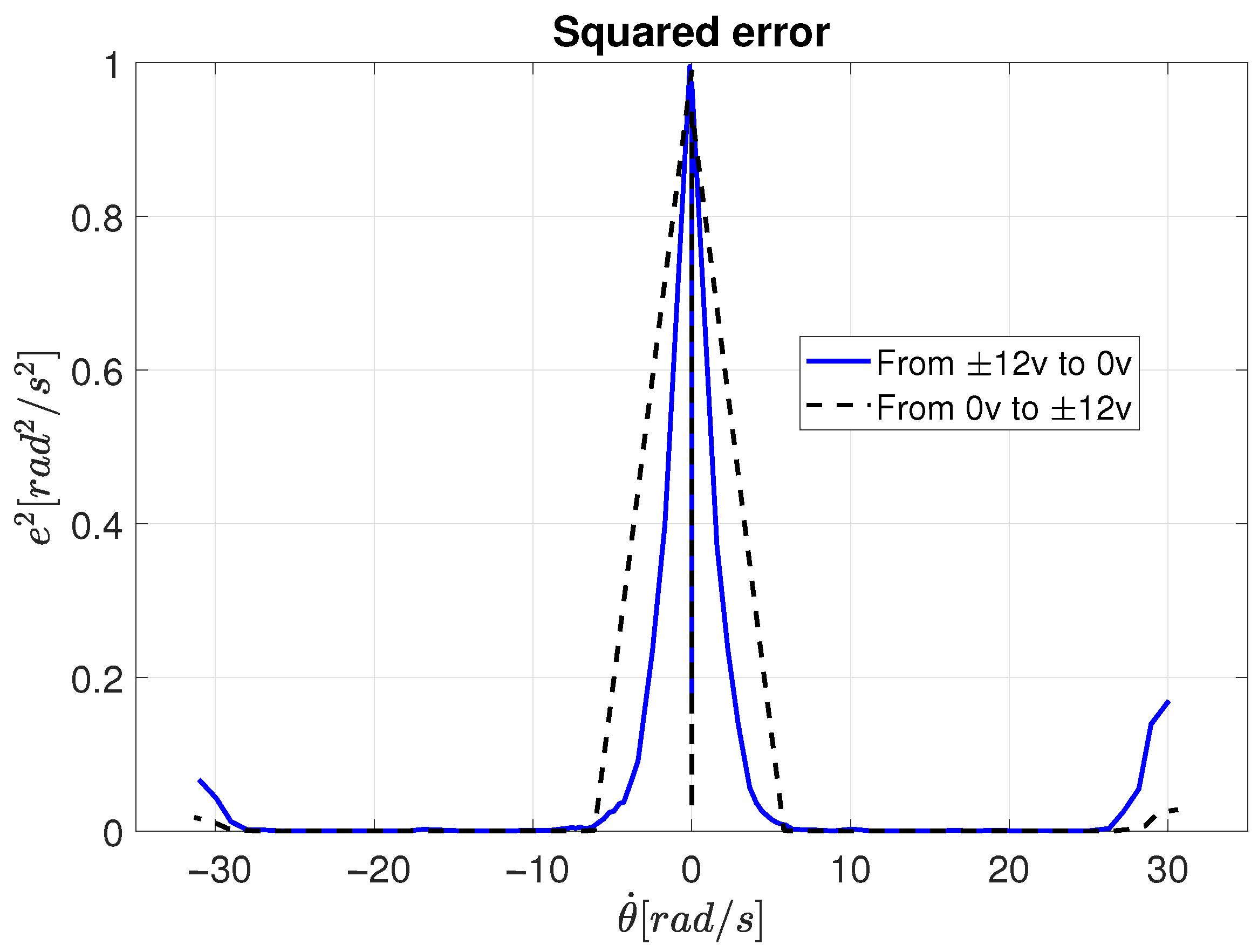
4.1.1. Experiments for Constant Torque Method
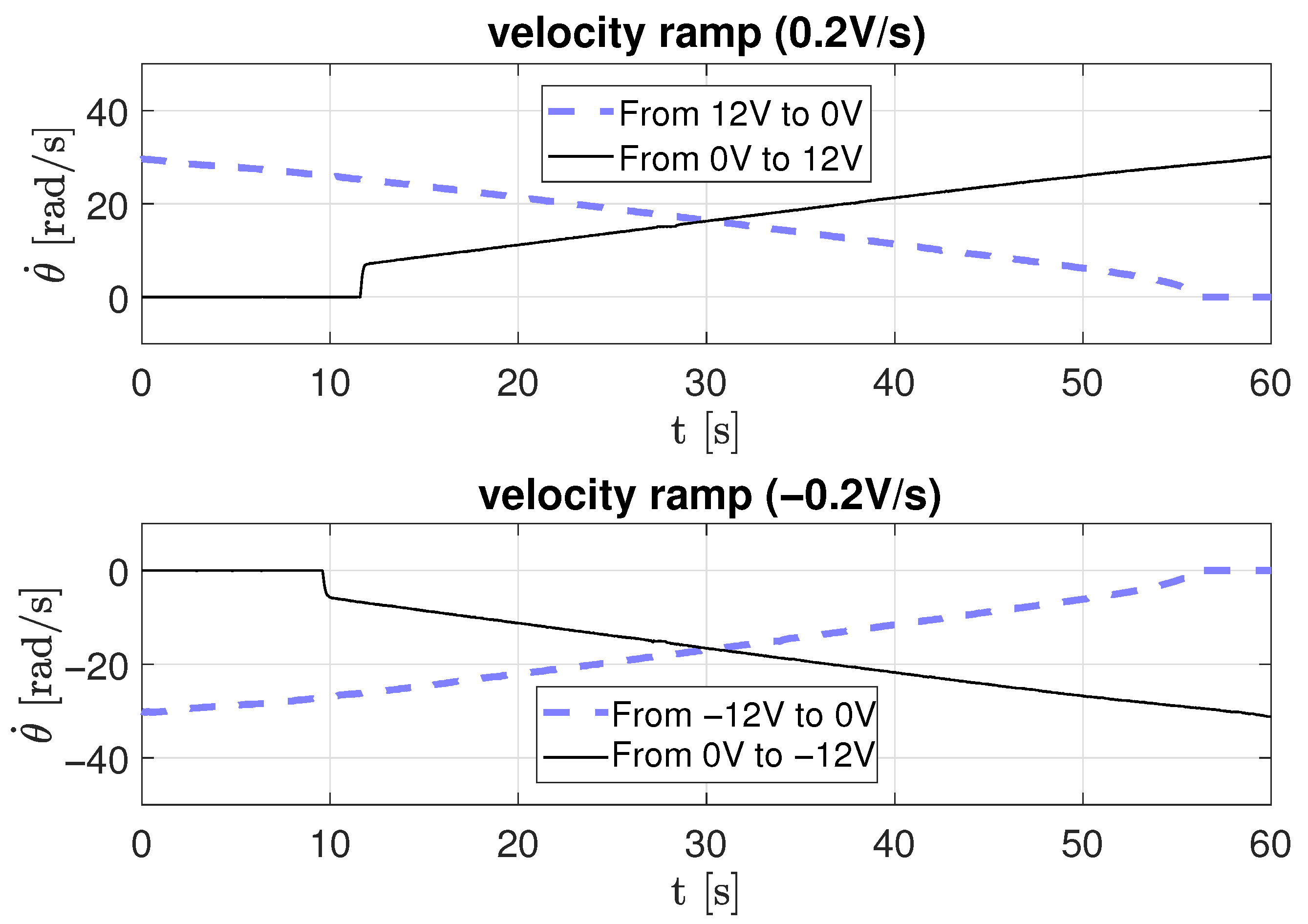
4.1.2. Experiments for Ramp-Type Input Method
4.1.3. Comparison of Estimated Parameters
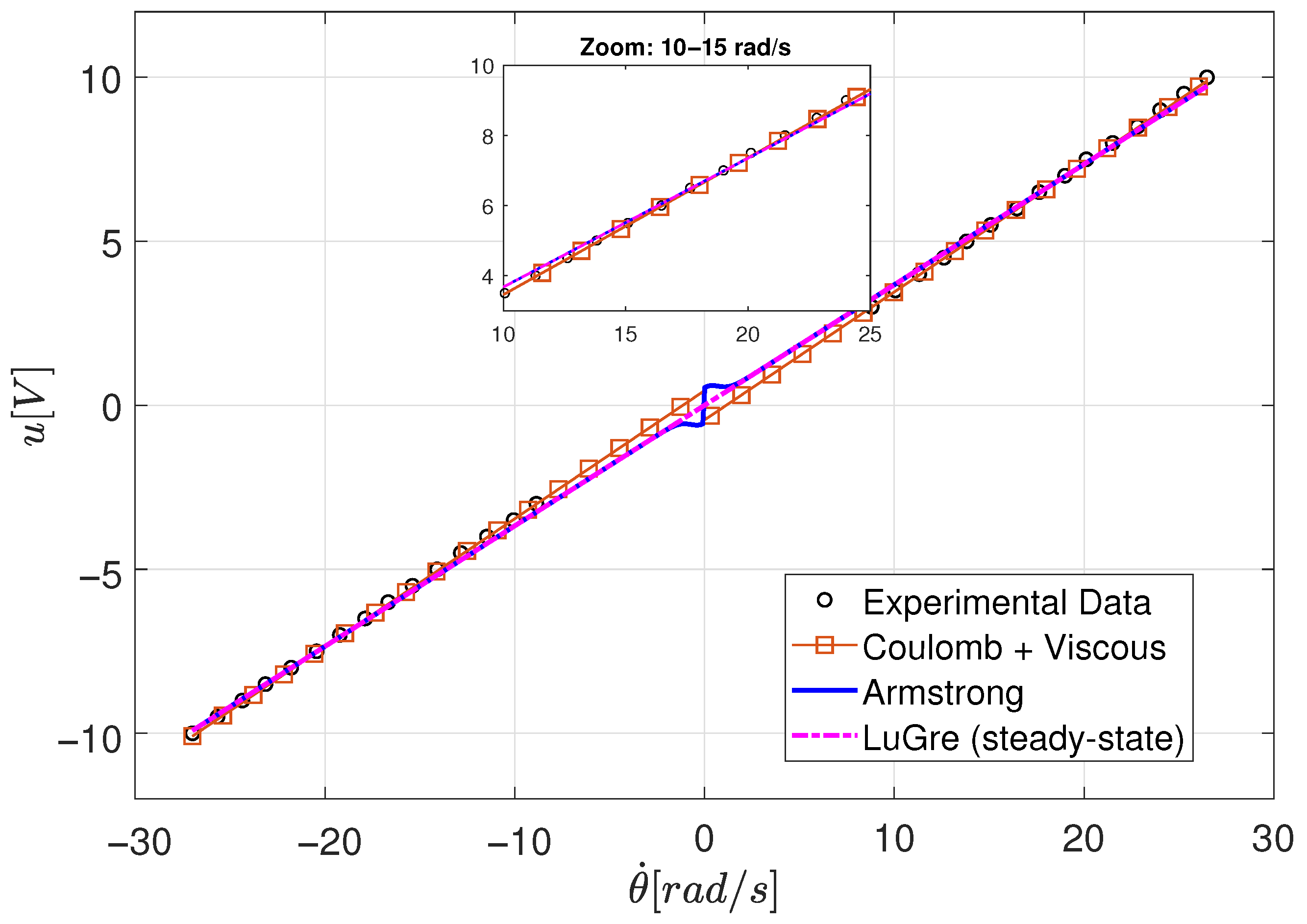
4.1.4. Experimental Results and Friction Model Selection
4.1.5. Experimental Determination of the Moment of Inertia
4.1.6. Repeatability Analysis for Constant Torque Method
4.1.7. Repeatability Analysis for Ramp Input Method
4.1.8. Repeatability Analysis for Moment of Inertia Identification
4.1.9. Consolidated Repeatability and Statistical Summary
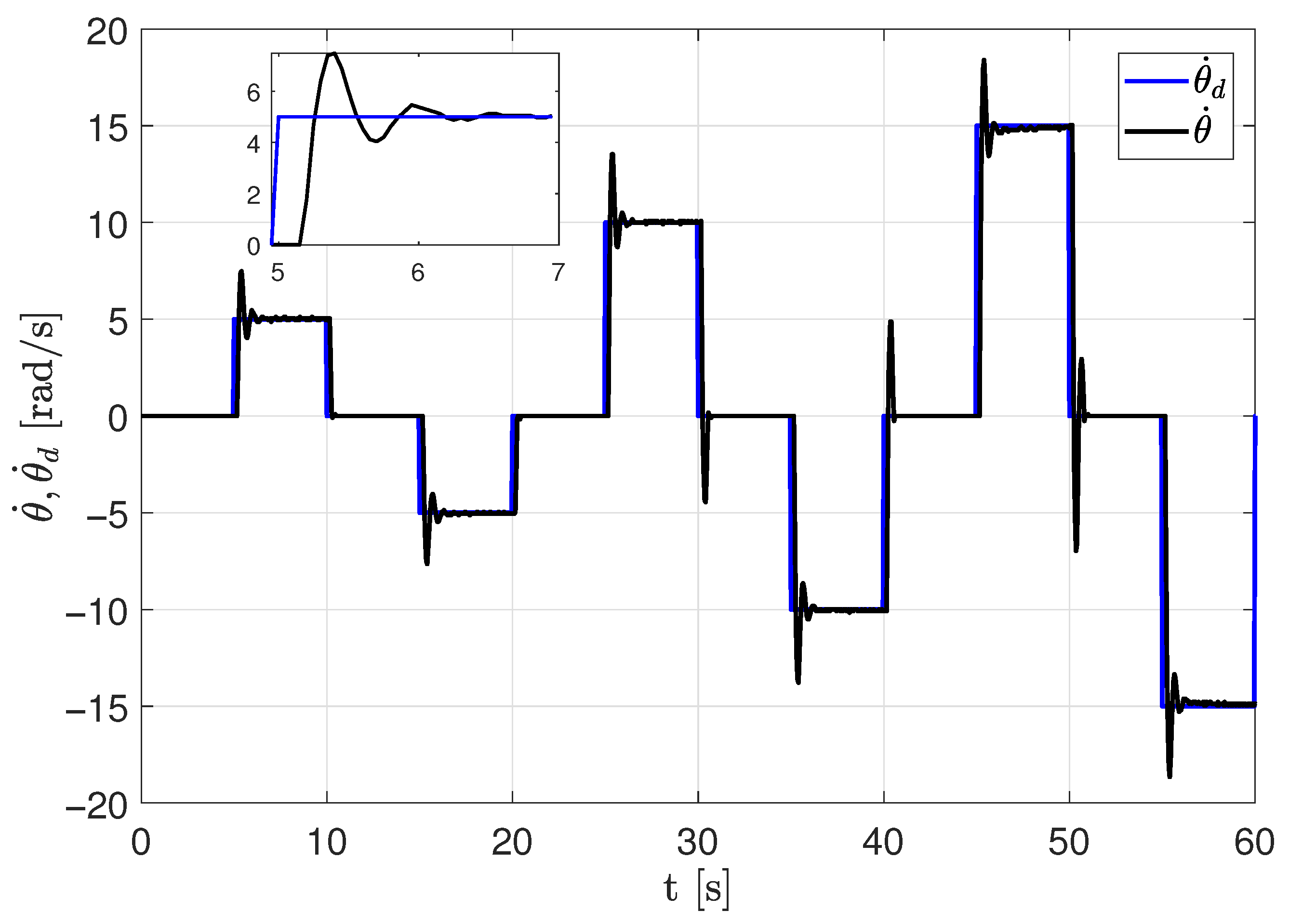
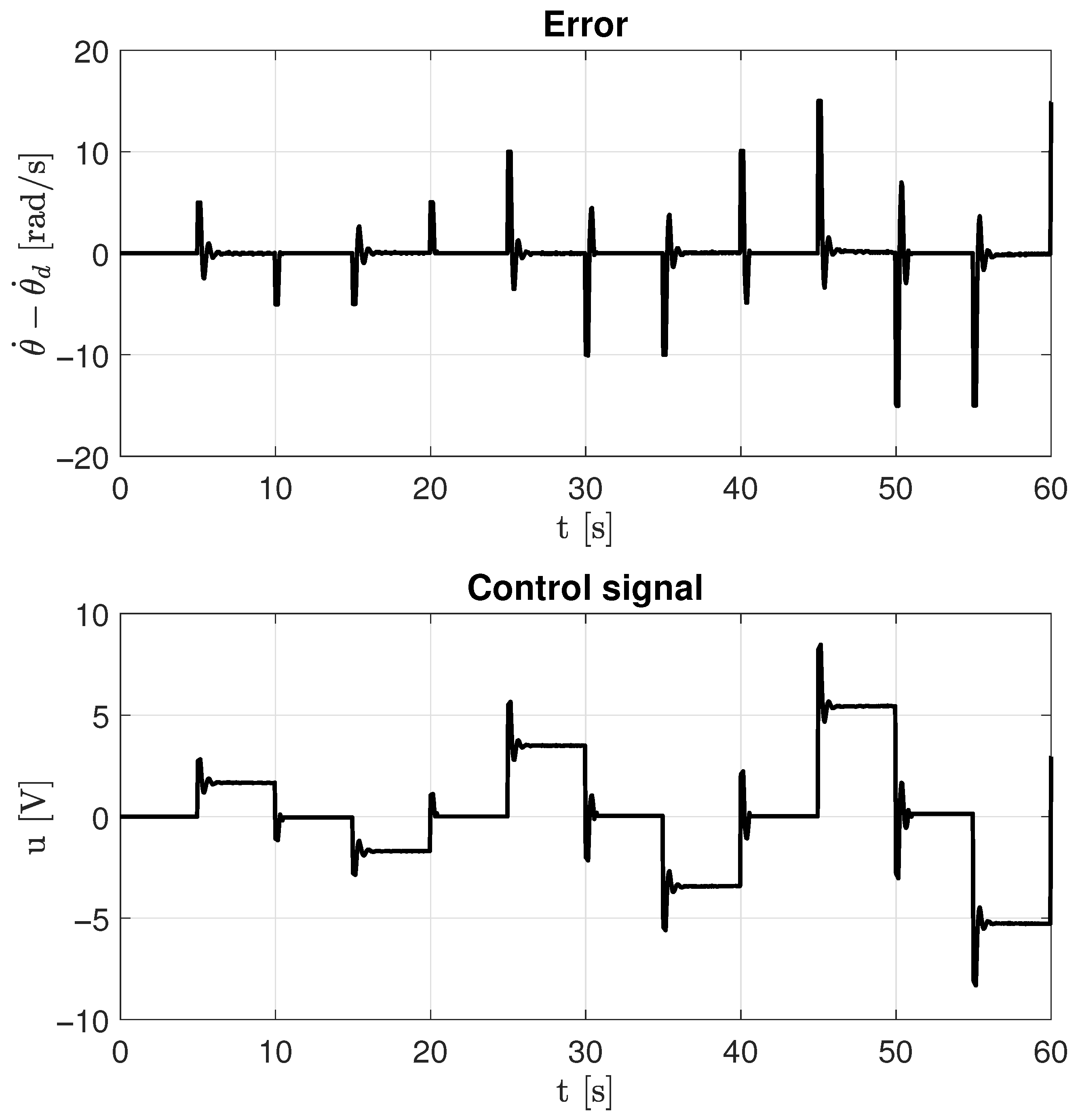
4.1.10. Closed-Loop Velocity Control Validation
Gain Selection Methodology
- Settling time: , typical for servo motor applications;
- Damping ratio: , allowing slight overshoot while maintaining good transient response.
- Increasing the magnitude of improves disturbance rejection at the expense of a moderate increase in overshoot;
- Reducing the magnitude of mitigates integral windup effects at low velocities.
5. Conclusions and Discussion
Discussion and Limitations
Author Contributions
Funding
Institutional Review Board Statement
Informed Consent Statement
Data Availability Statement
Conflicts of Interest
References
- Kim, S. Moment of inertia and friction torque coefficient identification in a servo drive system. IEEE Trans. Ind. Electron. 2018, 66, 60–70. [Google Scholar] [CrossRef]
- Freidovich, L.; Robertsson, A.; Shiriaev, A.; Johansson, R. LuGre-model-based friction compensation. IEEE Trans. Control Syst. Technol. 2009, 18, 194–200. [Google Scholar] [CrossRef]
- Zimmermann, K.; Zeidis, I.; Lysenko, V. Mathematical model of a linear motor controlled by a periodic magnetic field considering dry and viscous friction. Appl. Math. Model. 2021, 89, 1155–1162. [Google Scholar] [CrossRef]
- Kim, N.J.; Moon, H.S.; Hyun, D.S. Inertia identification for the speed observer of the low speed control of induction machines. IEEE Trans. Ind. Appl. 1996, 32, 1371–1379. [Google Scholar] [CrossRef]
- Lee, K.B.; Blaabjerg, F. Robust and stable disturbance observer of servo system for low-speed operation. IEEE Trans. Ind. Appl. 2007, 43, 627–635. [Google Scholar] [CrossRef]
- Seong, H.; Chung, C.; Shim, D. Model Parameter Identification via a Hyperparameter Optimization Scheme for Autonomous Racing Systems. IEEE Control Syst. Lett. 2023, 7, 1652–1657. [Google Scholar] [CrossRef]
- Batool, A.; ul Ain, N.; Amin, A.A.; Adnan, M.; Shahbaz, M.H. A comparative study of DC servo motor parameter estimation using various techniques. Automatika 2022, 63, 303–312. [Google Scholar] [CrossRef]
- Fazdi, M.F.; Hsueh, P.W. Parameters Identification of a Permanent Magnet DC Motor: A Review. Electronics 2023, 12, 2559. [Google Scholar] [CrossRef]
- Kuczmann, M. Review of DC Motor Modeling and Linear Control: Theory with Laboratory Tests. Electronics 2024, 13, 2225. [Google Scholar] [CrossRef]
- Wu, W. DC Motor Parameter Identification Using Speed Step Responses. Model. Simul. Eng. 2012, 2012, 189757. [Google Scholar] [CrossRef]
- Brablc, M.; Sova, V.; Grepl, R. Adaptive feedforward controller for a DC motor drive based on inverse dynamic model with recursive least squares parameter estimation. In Proceedings of the 2016 17th International Conference on Mechatronics—Mechatronika (ME), Prague, Czech Republic, 7–9 December 2016; pp. 1–5. [Google Scholar]
- De Souza, D.A.; Batista, J.G.; Vasconcelos, F.J.S.; Dos Reis, L.L.N.; Machado, G.F.; Costa, J.R.; Junior, J.N.N.; Silva, J.L.N.; Rios, C.S.N.; Júnior, A.B.S. Identification by Recursive Least Squares with Kalman Filter (RLS-KF) Applied to a Robotic Manipulator. IEEE Access 2021, 9, 63779–63789. [Google Scholar] [CrossRef]
- Chebbi, A.; Franchek, M.A.; Grigoriadis, K. Simultaneous State and Parameter Estimation Methods Based on Kalman Filters and Luenberger Observers: A Tutorial and Review. Sensors 2025, 25, 7043. [Google Scholar] [CrossRef]
- Brosch, A.; Hanke, S.; Wallscheid, O.; Böcker, J. Data-Driven Recursive Least Squares Estimation for Model Predictive Current Control of Permanent Magnet Synchronous Motors. IEEE Trans. Power Electron. 2021, 36, 2179–2190. [Google Scholar] [CrossRef]
- Amiri, M.S.; Ibrahim, M.F.; Ramli, R.B. Optimal parameter estimation for a DC motor using genetic algorithm. Int. J. Power Electron. Drive Syst. 2020, 11, 1047–1054. [Google Scholar] [CrossRef]
- Rodríguez-Abreo, O.; Hernandez-Paredes, J.M.; Rangel, A.F.; Fuentes-Silva, C.; Velásquez, F.A.C. Parameter Identification of Motors by Cuckoo Search Using Steady-State Relations. IEEE Access 2021, 9, 72017–72024. [Google Scholar] [CrossRef]
- Karnavas, Y.L. Application of recent nature-inspired meta-heuristic optimisation techniques to small permanent magnet DC motor parameters identification problem. J. Eng. 2020, 2020, 877–888. [Google Scholar] [CrossRef]
- Gökçe, C.O.; İpek, M.E.; Dayıoğlu, M.; Ünal, R. Parameter estimation and speed control of real DC motor with low resolution encoder. Results Control Optim. 2025, 19, 100549. [Google Scholar] [CrossRef]
- Siddiqi, F.U.R.; Ahmad, S.; Akram, T.; Ali, M.U.; Zafar, A.; Lee, S.W. Artificial Neural Network-Based Data-Driven Parameter Estimation Approach: Applications in PMDC Motors. Mathematics 2024, 12, 3407. [Google Scholar] [CrossRef]
- Olejnik, P.; Ayankoso, S. Friction modelling and the use of a physics-informed neural network for estimating frictional torque characteristics. Meccanica 2023, 58, 2749–2769. [Google Scholar] [CrossRef]
- Balara, D.; Timko, J.; Žilková, J.; Lešo, M. Neural networks application for mechanical parameters identification of asynchronous motor. Neural Netw. World 2017, 27, 259–270. [Google Scholar] [CrossRef]
- Virgala, I.; Kelemen, M. Experimental friction identification of a DC motor. Int. J. Mech. Appl. 2013, 3, 26–30. Available online: http://article.sapub.org/10.5923.j.mechanics.20130301.04.html (accessed on 15 September 2025).
- Traversaro, S.; Prete, A.D.; Muradore, R.; Natale, L.; Nori, F. Inertial parameter identification including friction and motor dynamics. In Proceedings of the 13th IEEE-RAS International Conference on Humanoid Robots, Atlanta, GA, USA, 15–17 October 2013; pp. 202–209. [Google Scholar] [CrossRef]
- Kelly, R.; Llamas, J.; Campa, R. A measurement procedure for viscous and coulomb friction. IEEE Trans. Instrum. Meas. 2000, 49, 857–861. [Google Scholar] [CrossRef]
- Ponce, I.; Orlov, Y.; Cuesta Garcia, J. Comparacion de dos metodos de estimacion de los parametros de las fricciones viscosa y de Coulomb para un motor de CD. In Proceedings of the Congreso de Instrumentacion SOMI XXX, Durango, Mexico, October 2015. [Google Scholar]
- Yerlikaya, U.; Balkan, T. Identification of Viscous and Coulomb Friction in Motion Constrained Systems. In Proceedings of the 2018 IEEE/ASME International Conference on Advanced Intelligent Mechatronics (AIM), Auckland, New Zealand, 9–12 July 2018; pp. 91–96. [Google Scholar] [CrossRef]
- De Wit, C.C.; Olsson, H.; Astrom, K.J.; Lischinsky, P. A new model for control of systems with friction. IEEE Trans. Autom. Control 1995, 40, 419–425. [Google Scholar] [CrossRef]
- Soto, I.; Campa, R.; Sánchez-Mazuca, S. Modelado y control con compensacion de friccion de un sistema pendubot. Revista Iberoamericana de Automática e Informática Industrial 2020, 18, 39–47. [Google Scholar] [CrossRef]
- Olsson, H. Control Systems with Friction. Doctoral Thesis, Department of Automatic Control, Lund Institute of Technology (LTH), Lund, Sweden, 1996. [Google Scholar]
- Piatkowski, T. Dahl and LuGre dynamic friction models—The analysis of selected properties. Mech. Mach. Theory 2014, 73, 91–100. [Google Scholar] [CrossRef]
- Hernandez, E.D.R.; Garcia, B.E.S.; Cortes, F.R.; Trevino, M.A.V.; Barriga, J.L.O. Nuevo modelo de friccion para robots manipuladores. In Proceedings of the Mem. ELECTRO, Chihuahua, Mexico, October 2018; Volume 42, pp. 140–145. [Google Scholar]
- Yao, J.; Jiao, Z.; Ma, D. RISE-Based Precision Motion Control of DC Motors With Continuous Friction Compensation. IEEE Trans. Ind. Electron. 2014, 61, 7067–7075. [Google Scholar] [CrossRef]
- Bhushan, B. Introduction to Tribology; John Wiley & Sons: Hoboken, NJ, USA, 2013. [Google Scholar] [CrossRef]
- Olsson, H.; Åström, K.; Canudas de Wit, C.; Gäfvert, M.; Lischinsky, P. Friction Models and Friction Compensation. Eur. J. Control 1998, 4, 176–195. [Google Scholar] [CrossRef]
- Virgala, I.; Frankovsky, P.; Kenderova, M. Friction Effect Analysis of a DC Motor. Am. J. Mech. Eng. 2013, 1, 1–5. [Google Scholar] [CrossRef]
- Armstrong-Helouvry, B.; Dupont, P.; De Wit, C.C. A survey of models, analysis tools and compensation methods for the control of machines with friction. Automatica 1994, 30, 1083–1138. [Google Scholar] [CrossRef]
- Kaewkham-ai, B.; Uthaichana, K. Comparative study on friction compensation using Coulomb and Dahl models with extended and unscented Kalman filters. In Proceedings of the 2012 7th IEEE Conference on Industrial Electronics and Applications (ICIEA), Singapore, 18–20 July 2012; pp. 191–195. [Google Scholar] [CrossRef]
- Xu, Z.D.; Guo, Y.Q.; Zhu, J.T.; Xu, F.H. Chapter 4—Semiactive Intelligent Control. In Intelligent Vibration Control in Civil Engineering Structures; Xu, Z.D., Guo, Y.Q., Zhu, J.T., Xu, F.H., Eds.; Academic Press: Oxford, UK, 2017; pp. 85–149. [Google Scholar] [CrossRef]



| Friction Model | Model Type | Parameters to Be Identified | Required Experimental Conditions |
|---|---|---|---|
| Viscous friction | Static, linear | Steady-state tests at constant velocity | |
| Coulomb + viscous friction | Static, nonlinear | Steady-state tests with positive and negative velocities | |
| Coulomb + viscous with bias | Static, nonlinear | Steady-state tests under unidirectional rotation | |
| Static LuGre (Stribeck effect) | Static, nonlinear | Low-speed velocity sweeps in both directions | |
| Dahl model | Dynamic, nonlinear | Torque or voltage step and ramp tests | |
| Dynamic LuGre model | Dynamic, nonlinear | Step, ramp, or PRBS excitations with persistent excitation | |
| Dynamic LuGre with inertia | Dynamic, nonlinear | PRBS or multi-step tests with velocity reversals | |
| Pure mechanical dynamic model | Dynamic, linear | Step response tests neglecting nonlinear friction effects |
| Input Voltage | ||
|---|---|---|
| Positive (0 to 12 V) | ||
| Positive (12 to 0 V) | ||
| Negative (0 to −12 V) | ||
| Negative (−12 to 0 V) | ||
| Average Value |
| Parameter | Positive Ramp | Negative Ramp |
|---|---|---|
| r | V/s | V/s |
| m | ||
| b | ||
| N·m·s | N·m·s | |
| N·m | N·m | |
| r | V/s | V/s |
| m | ||
| b | ||
| N·m·s | N·m·s | |
| N·m | N·m | |
| r | V/s | V/s |
| m | ||
| b | ||
| N·m·s | N·m·s | |
| N·m | N·m |
| Parameter | Constant Torque | Ramp |
|---|---|---|
| Viscous Friction | N·m·s | N·m·s |
| Coulomb Friction | N·m | N·m |
| Model | Parameters | RMSE (N·m) | Func. Eval. | |
|---|---|---|---|---|
| Coulomb–viscous | 0.29 | 0.982 | 34 | |
| Stribeck | 0.18 | 0.991 | 97 | |
| LuGre (steady-state) | 0.20 | 0.990 | 112 |
| Parameter | Constant Torque | Ramp |
|---|---|---|
| Viscous Friction | N·m·s | N·m·s |
| Coulomb Friction | N·m | N·m |
| Moment of Inertia | kg·m2 | kg·m2 |
| Input Voltage Direction | Viscous Friction | Coulomb Friction | ||||
|---|---|---|---|---|---|---|
|
Mean (N·m·s) |
Std Dev (N·m·s) |
RSD (%) |
Mean (N·m) |
Std Dev (N·m) |
RSD (%) | |
| Positive (0 to 12 V) | 0.3945 | 0.0108 | 2.74 | 0.4694 | 0.0187 | 3.98 |
| Positive (12 to 0 V) | 0.3999 | 0.0121 | 3.03 | 0.5954 | 0.0245 | 4.12 |
| Negative (0 to −12 V) | 0.3869 | 0.0095 | 2.45 | 0.4334 | 0.0163 | 3.76 |
| Negative (−12 to 0 V) | 0.3929 | 0.0114 | 2.90 | 0.5586 | 0.0219 | 3.92 |
| Overall Average | 0.3935 | 0.0110 | 2.78 | 0.5141 | 0.0204 | 3.95 |
| Ramp Rate | Viscous Friction | Coulomb Friction | ||||
|---|---|---|---|---|---|---|
|
Mean (N·m·s) |
Std Dev (N·m·s) |
RSD (%) |
Mean (N·m) |
Std Dev (N·m) |
RSD (%) | |
| V/s | 0.3998 | 0.0127 | 3.18 | 0.4880 | 0.0312 | 6.39 |
| V/s | 0.4055 | 0.0133 | 3.28 | 0.4519 | 0.0289 | 6.40 |
| V/s | 0.4091 | 0.0142 | 3.47 | 0.3195 | 0.0208 | 6.51 |
| V/s | 0.3824 | 0.0115 | 3.01 | 0.3116 | 0.0201 | 6.45 |
| V/s | 0.3834 | 0.0119 | 3.10 | 0.1483 | 0.0098 | 6.61 |
| V/s | 0.3912 | 0.0128 | 3.27 | 0.2563 | 0.0167 | 6.52 |
| Overall Average | 0.3952 | 0.0127 | 3.22 | 0.3293 | 0.0213 | 6.48 |
| Method | Mean J (kg·m2) | Std Dev J (kg·m2) | RSD J (%) | 95% Confidence Interval (kg·m2) |
|---|---|---|---|---|
| Using constant torque friction parameters | 0.1346 | 0.0041 | 3.05 | [0.1313, 0.1379] |
| Using ramp input friction parameters | 0.1178 | 0.0048 | 4.08 | [0.1140, 0.1216] |
| Parameter | Method | Trials (n) | Mean | Std Dev | RSD (%) | 95% CI | Range (Min–Max) |
|---|---|---|---|---|---|---|---|
| Viscous Friction (N·m·s) | Constant Torque | 20 | 0.3935 | 0.0110 | 2.78 | [0.3830, 0.4040] | [0.3781, 0.4103] |
| Ramp Input | 30 | 0.3952 | 0.0127 | 3.22 | [0.3845, 0.4059] | [0.3765, 0.4145] | |
| Coulomb Friction (N·m) | Constant Torque | 20 | 0.5141 | 0.0204 | 3.95 | [0.5049, 0.5233] | [0.4823, 0.5512] |
| Ramp Input | 30 | 0.3293 | 0.0213 | 6.48 | [0.3196, 0.3390] | [0.3012, 0.3621] | |
| Moment of Inertia J (kg·m2) | Transient (CT friction) | 8 | 0.1346 | 0.0041 | 3.05 | [0.1313, 0.1379] | [0.1289, 0.1398] |
| Transient (Ramp friction) | 8 | 0.1178 | 0.0048 | 4.08 | [0.1140, 0.1216] | [0.1117, 0.1243] |
Disclaimer/Publisher’s Note: The statements, opinions and data contained in all publications are solely those of the individual author(s) and contributor(s) and not of MDPI and/or the editor(s). MDPI and/or the editor(s) disclaim responsibility for any injury to people or property resulting from any ideas, methods, instructions or products referred to in the content. |
© 2025 by the authors. Licensee MDPI, Basel, Switzerland. This article is an open access article distributed under the terms and conditions of the Creative Commons Attribution (CC BY) license.
Share and Cite
Cardona Soto, J.A.; Ponce, I.U.; Soto, I.; García, M.A.; Mejía, G. Identification of Dynamic Parameters in a DC Motor Using Step and Ramp Torque Response Methods. Sensors 2026, 26, 78. https://doi.org/10.3390/s26010078
Cardona Soto JA, Ponce IU, Soto I, García MA, Mejía G. Identification of Dynamic Parameters in a DC Motor Using Step and Ramp Torque Response Methods. Sensors. 2026; 26(1):78. https://doi.org/10.3390/s26010078
Chicago/Turabian StyleCardona Soto, Jorge Antonio, Israel U. Ponce, Israel Soto, Miguel A. García, and Guillermo Mejía. 2026. "Identification of Dynamic Parameters in a DC Motor Using Step and Ramp Torque Response Methods" Sensors 26, no. 1: 78. https://doi.org/10.3390/s26010078
APA StyleCardona Soto, J. A., Ponce, I. U., Soto, I., García, M. A., & Mejía, G. (2026). Identification of Dynamic Parameters in a DC Motor Using Step and Ramp Torque Response Methods. Sensors, 26(1), 78. https://doi.org/10.3390/s26010078