Advances in High-Temperature Irradiation-Resistant Neutron Detectors

Abstract
1. Introduction
2. Diamond Detector
2.1. Working Principle
2.2. Preparation Process of Diamond Detectors
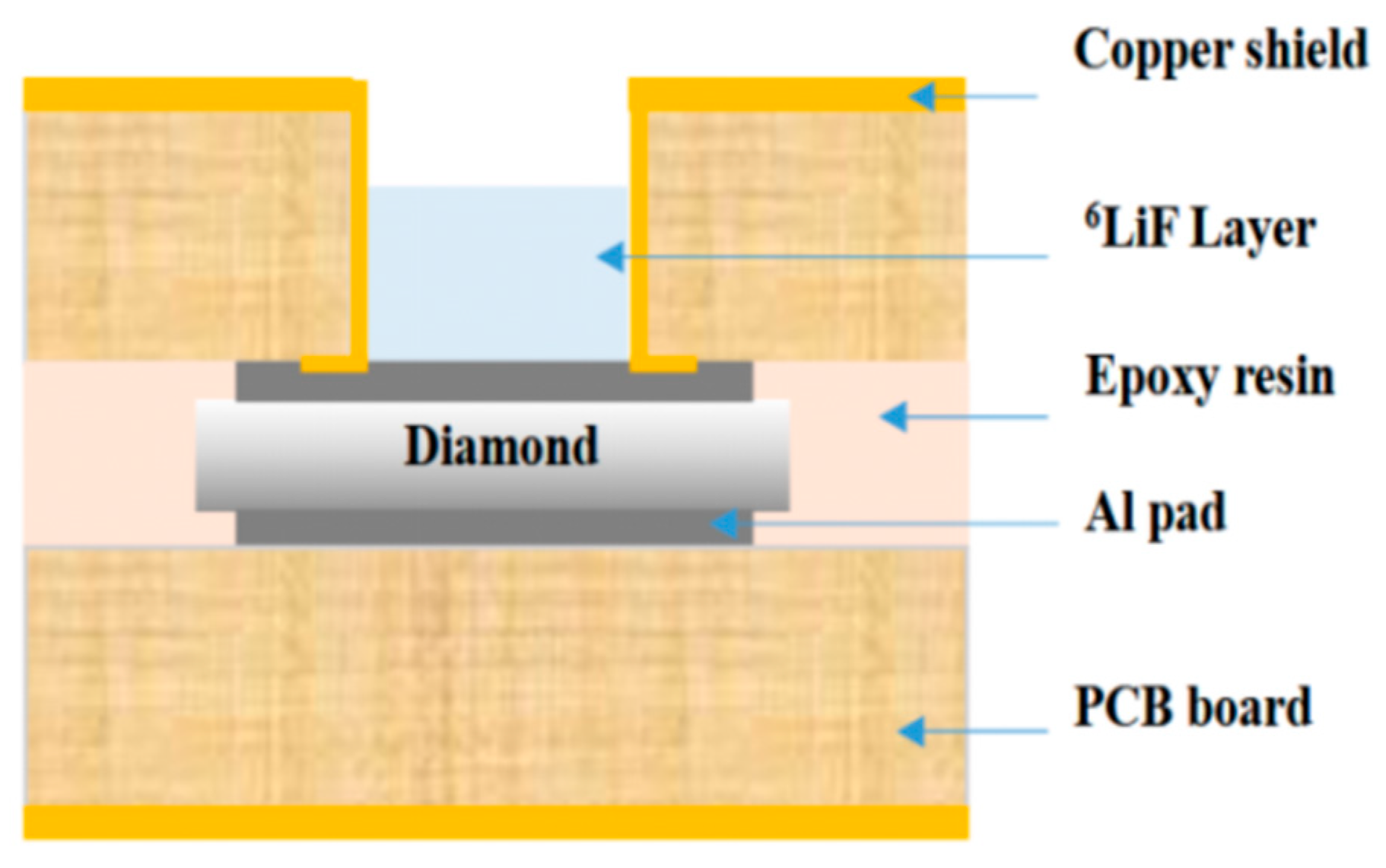
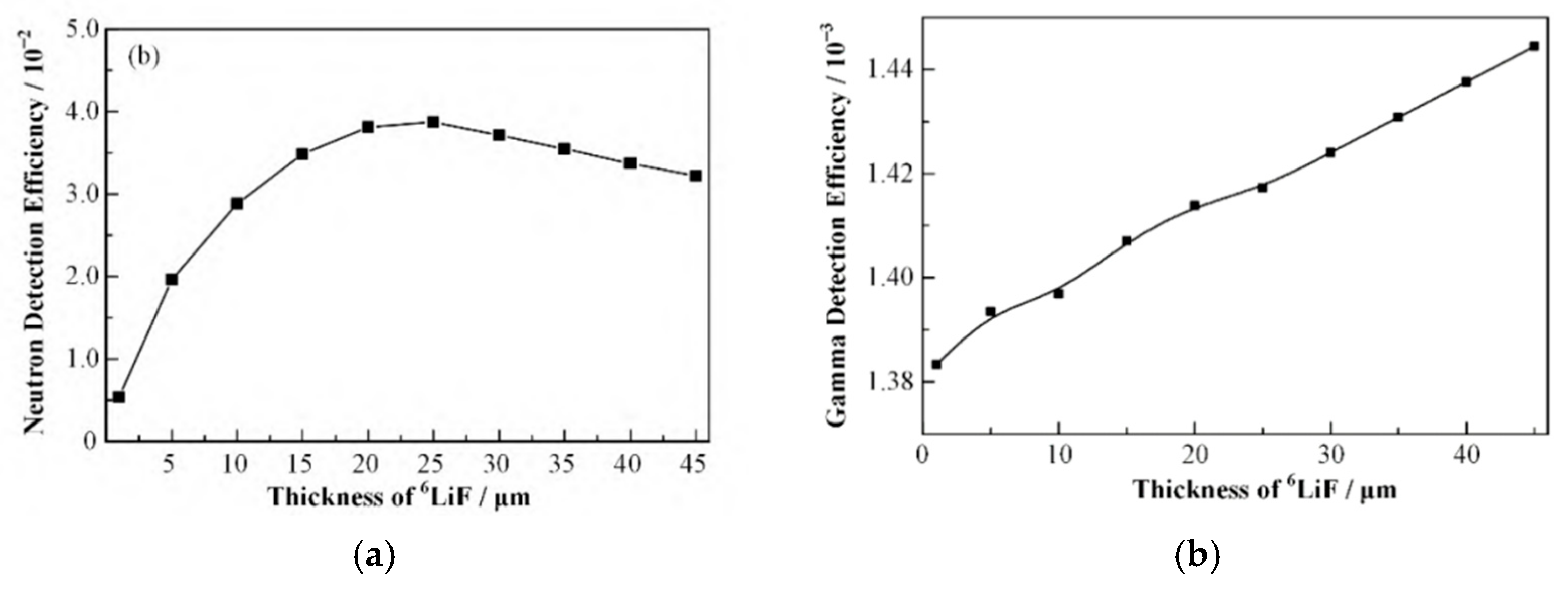
2.3. Structural Design of Diamond Detectors
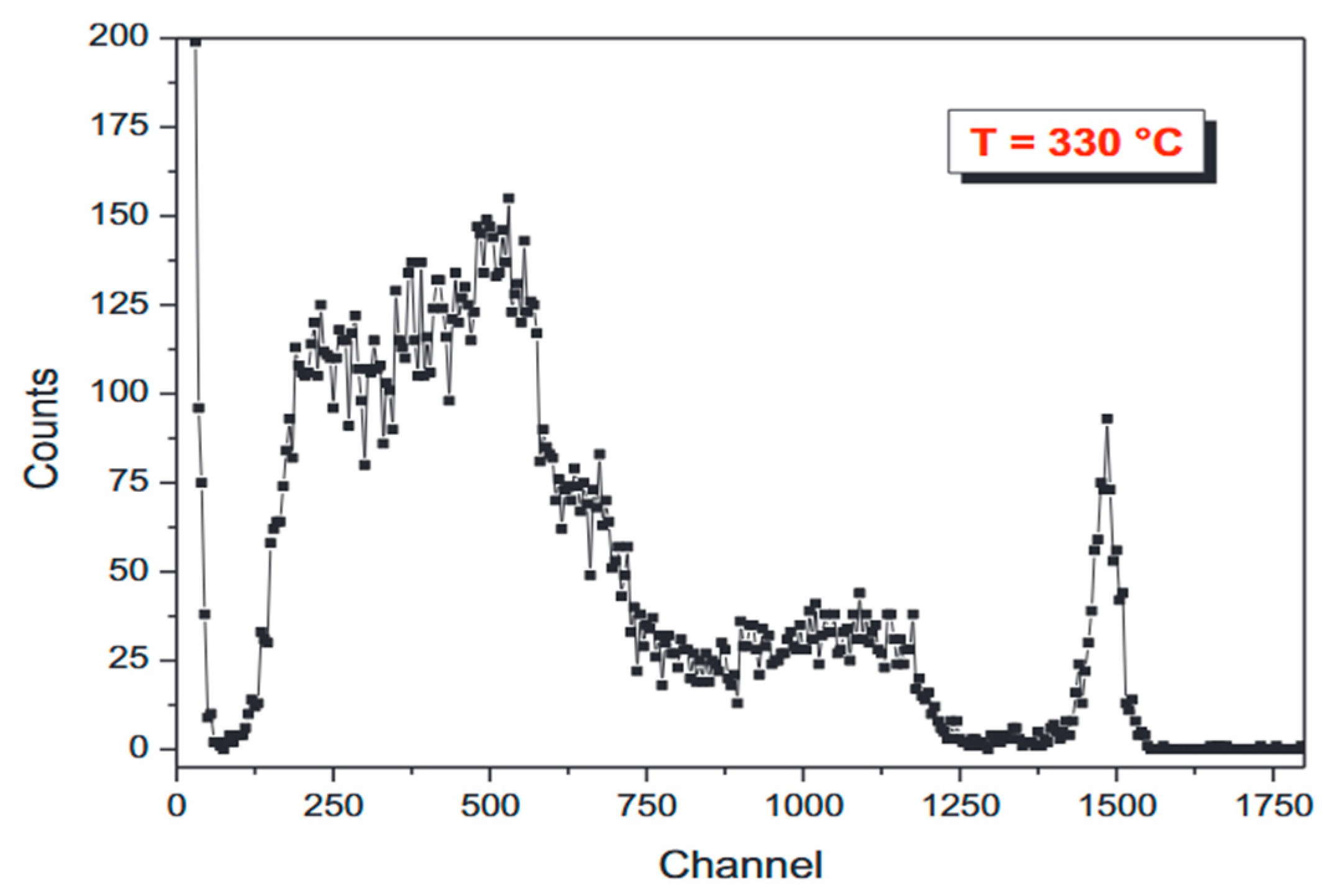
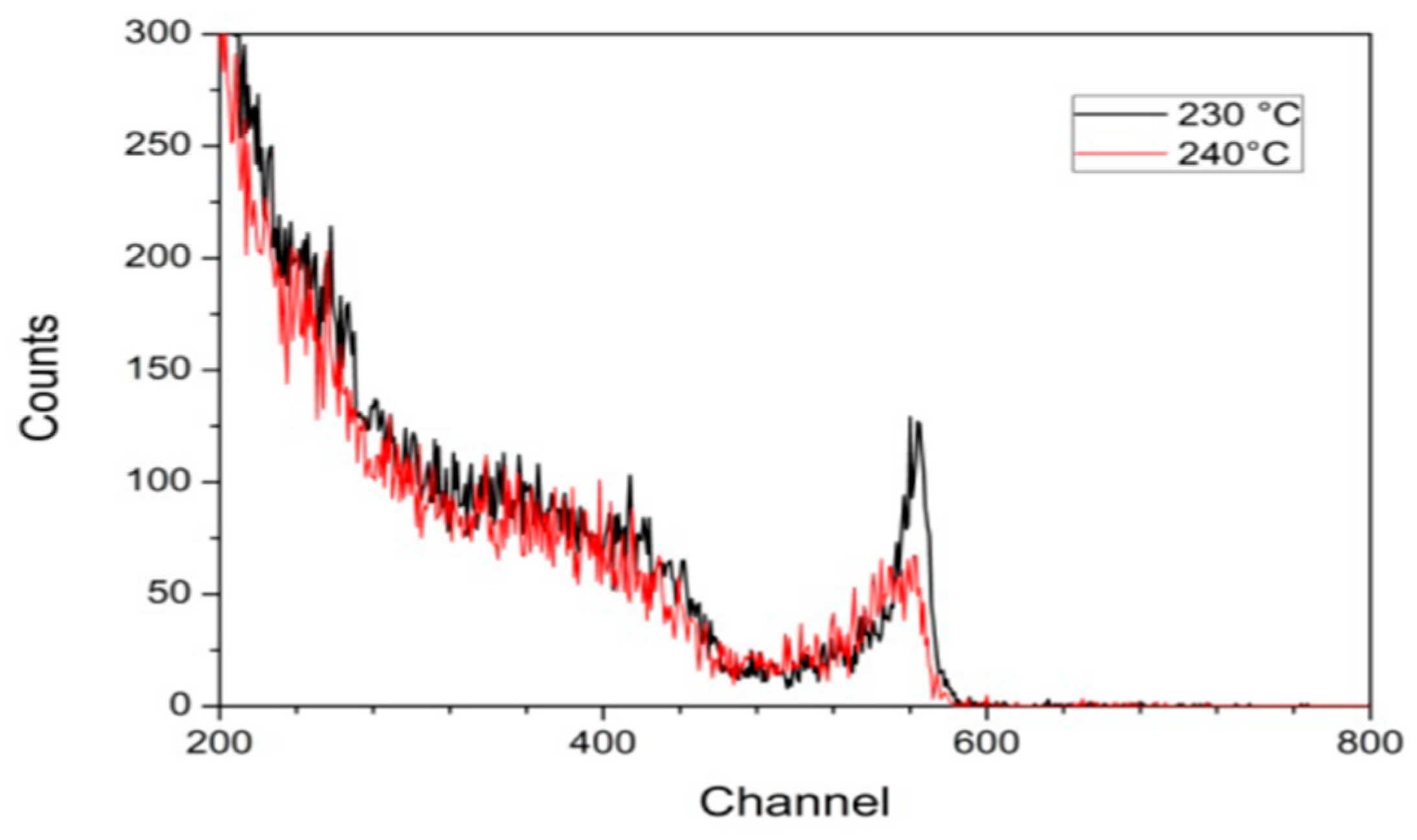
2.4. Performance Testing in High Temperature Environments
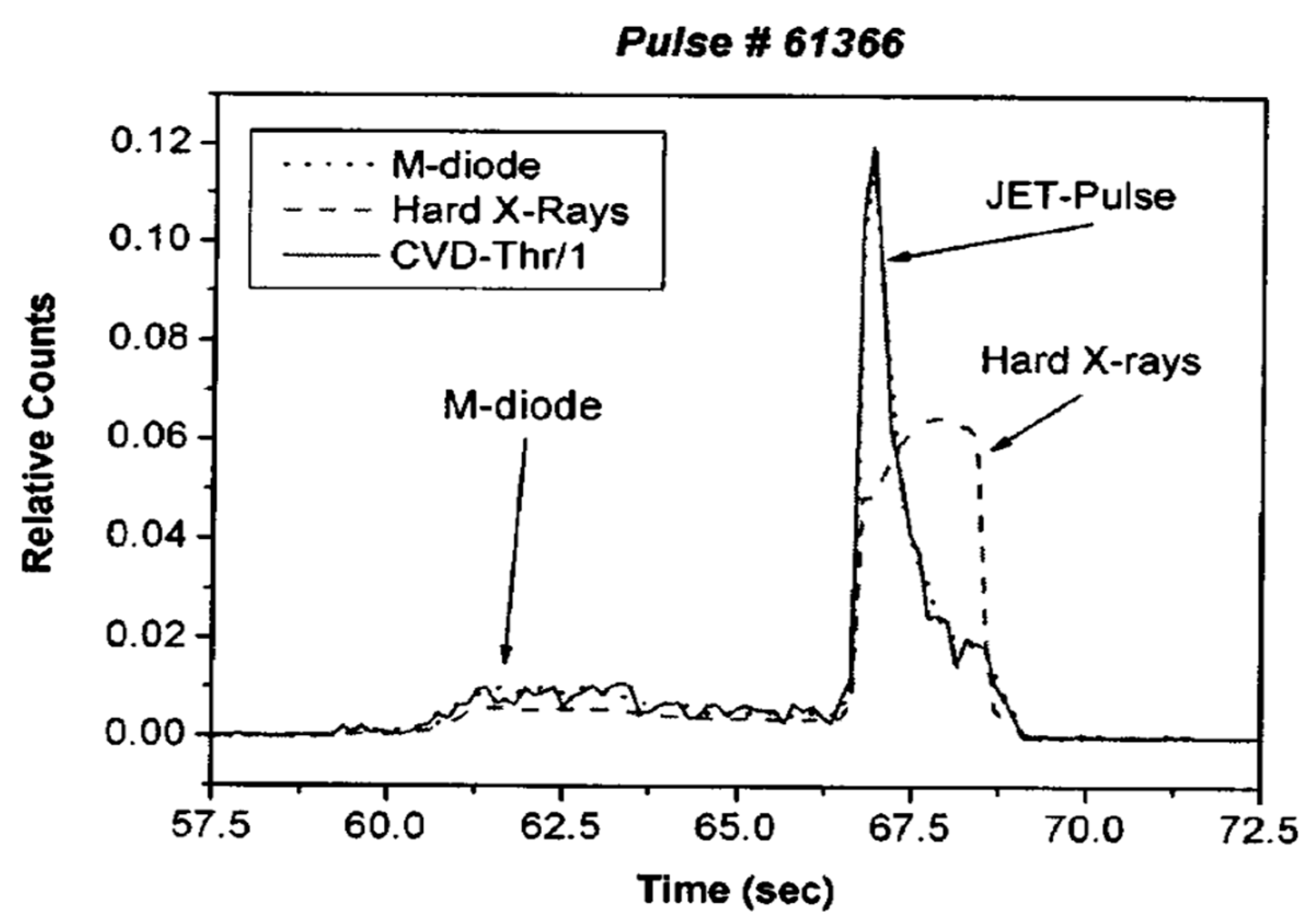
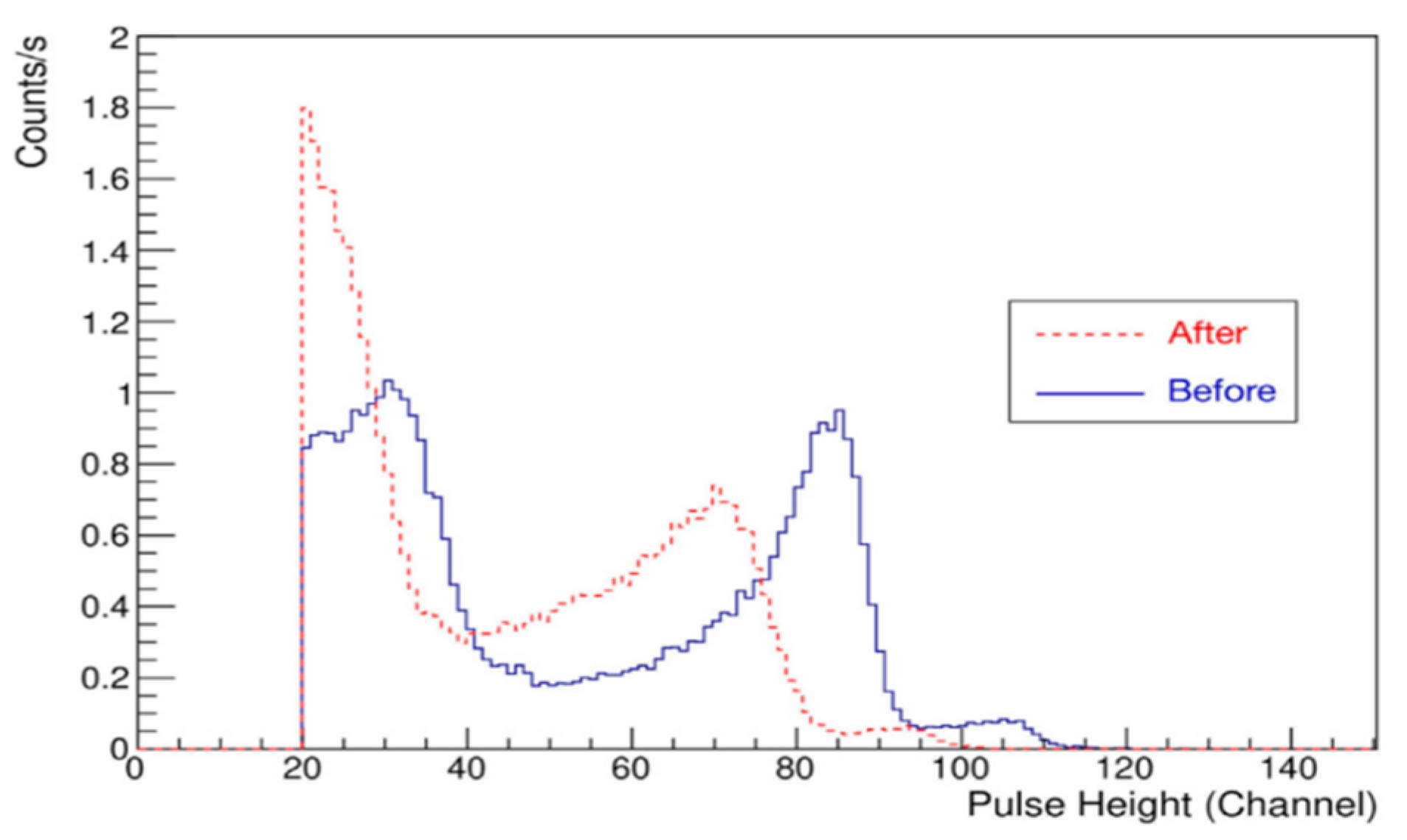
2.5. Performance Testing in Irradiated Environments
2.6. Short
3. 4H-SiC Neutron Detector
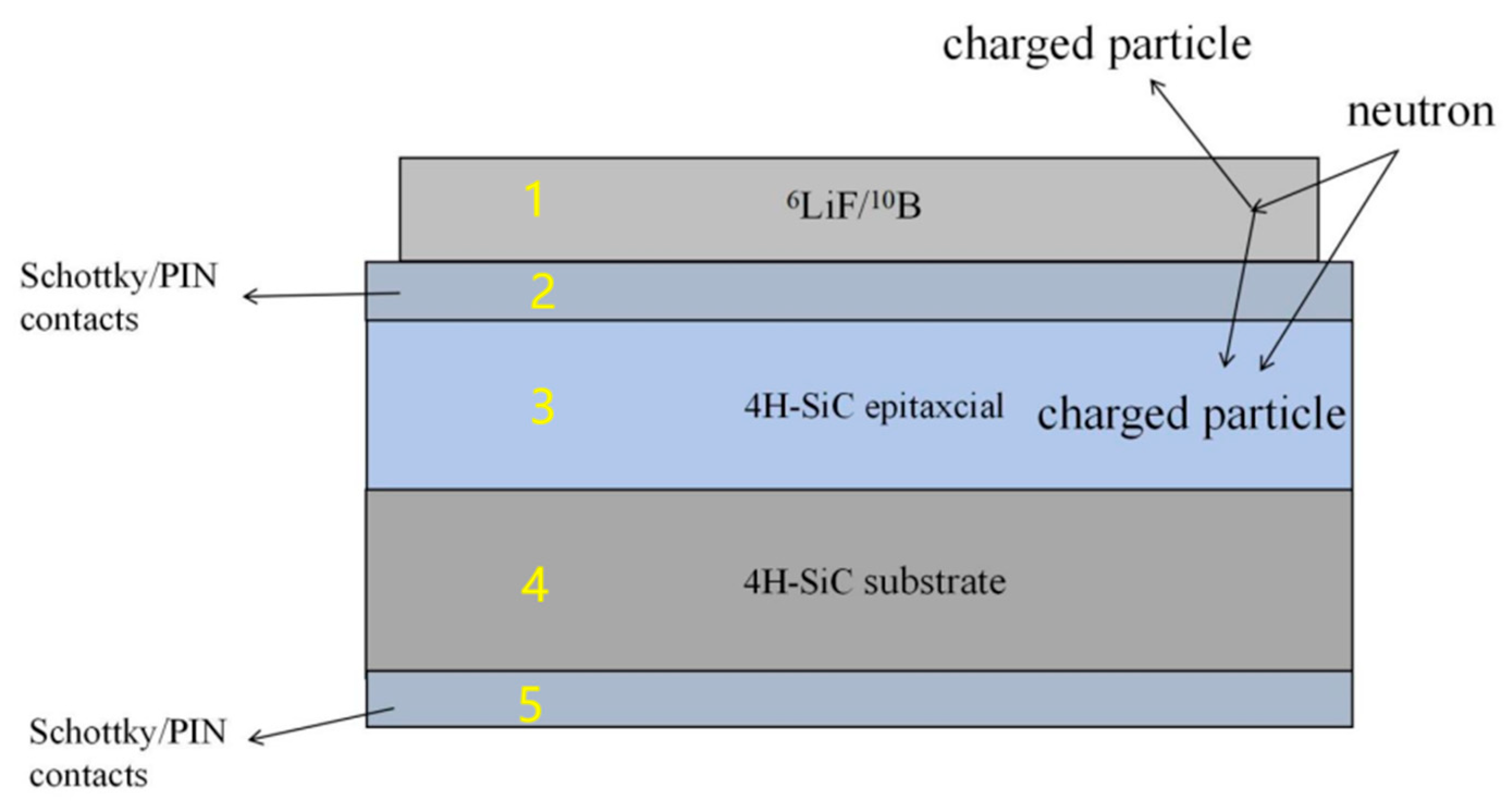
3.1. Working Principle
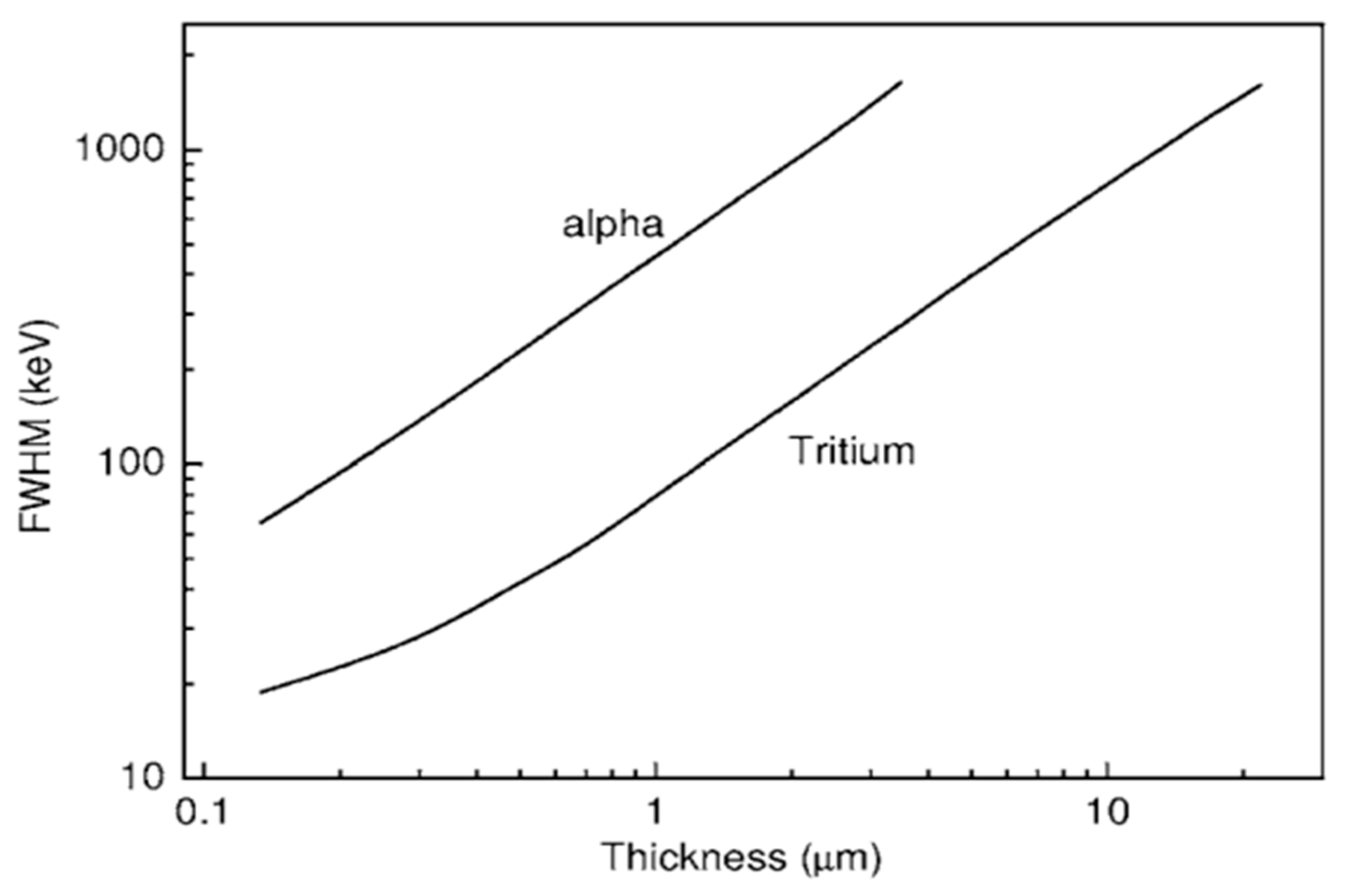
3.2. Preparation and Structural Design of Probes
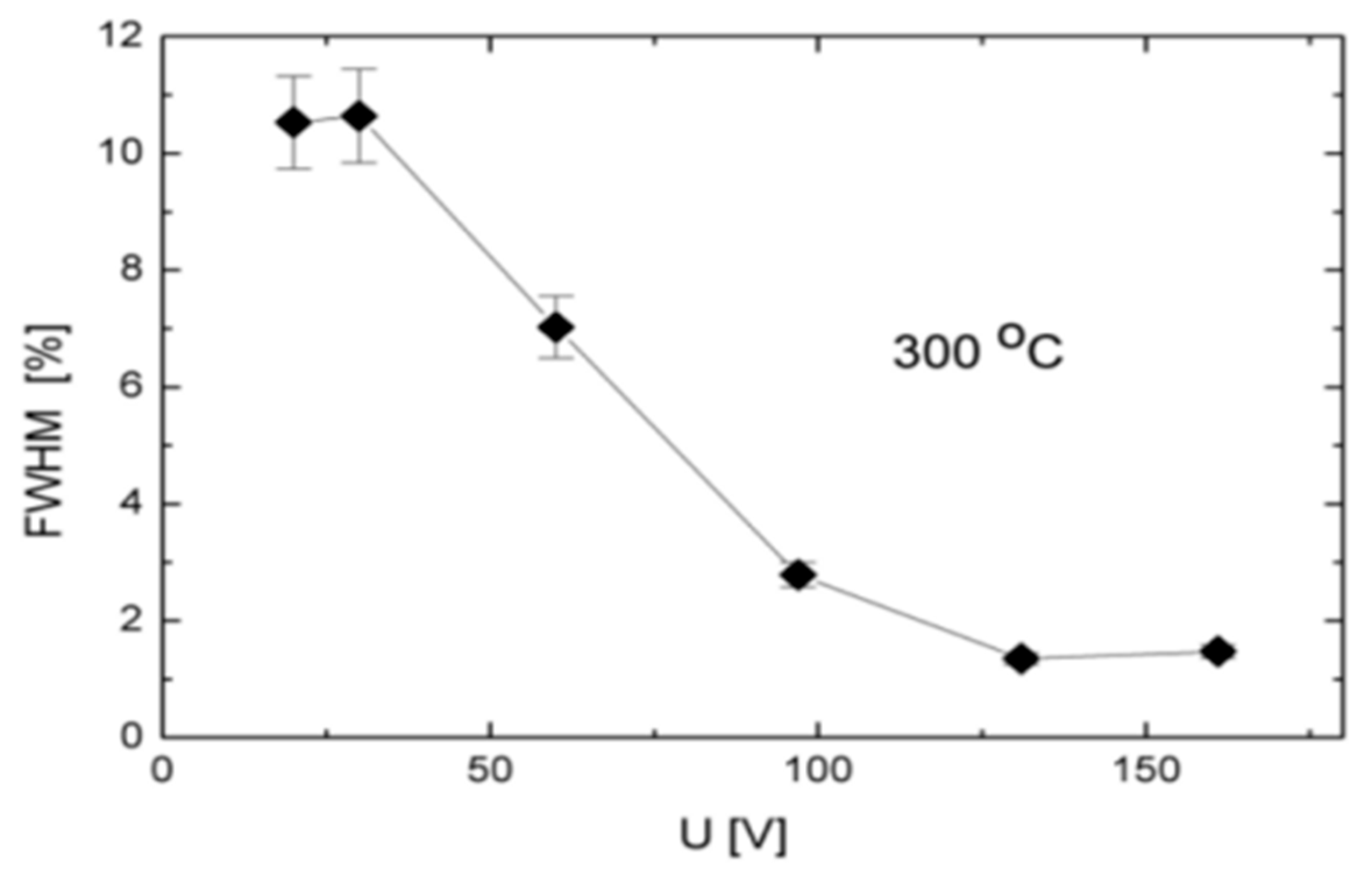
3.3. Performance Testing in High Temperature Environments
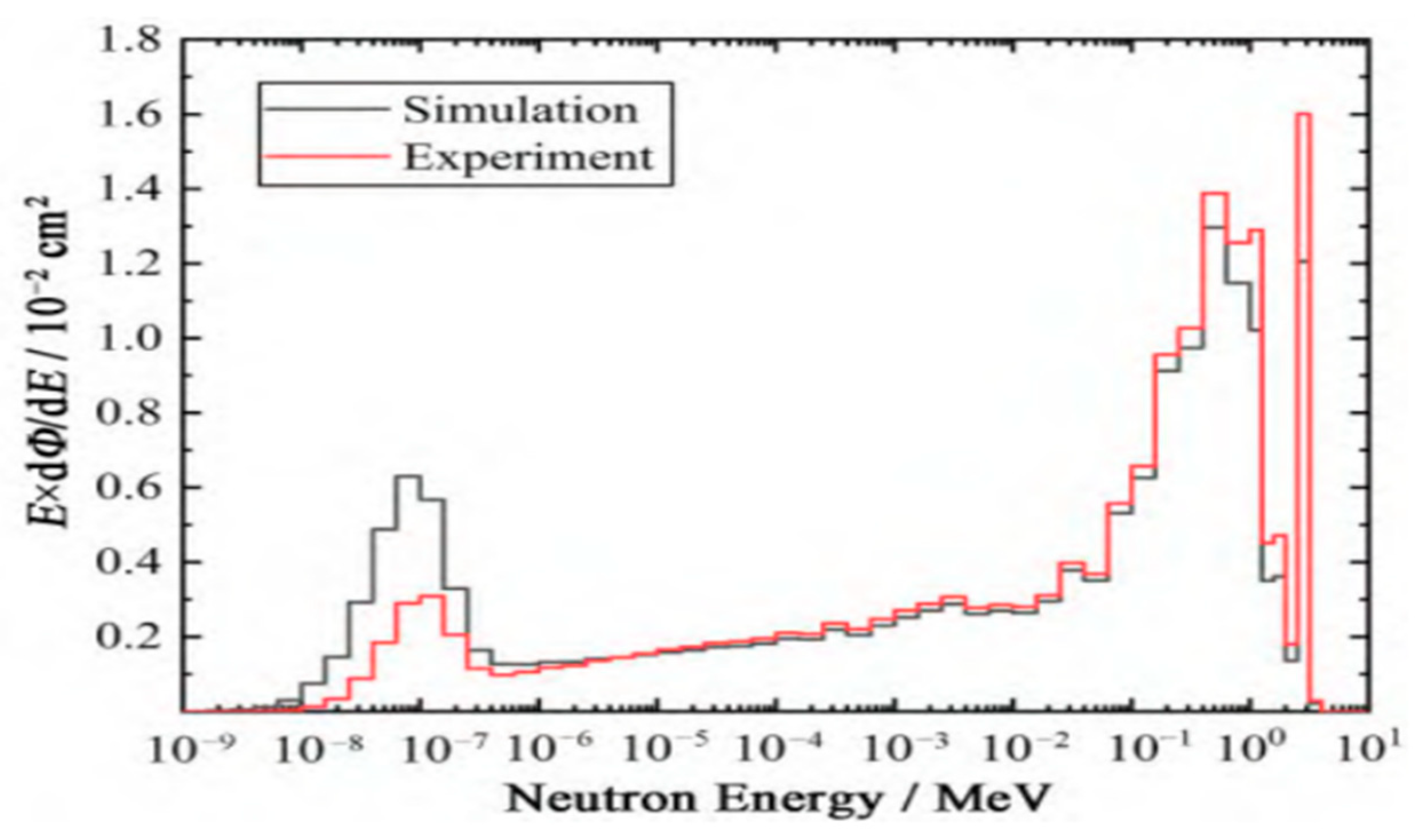
3.4. Neutron Monitoring Applications in Reactors
3.5. Short
4. High Temperature Fission Chamber
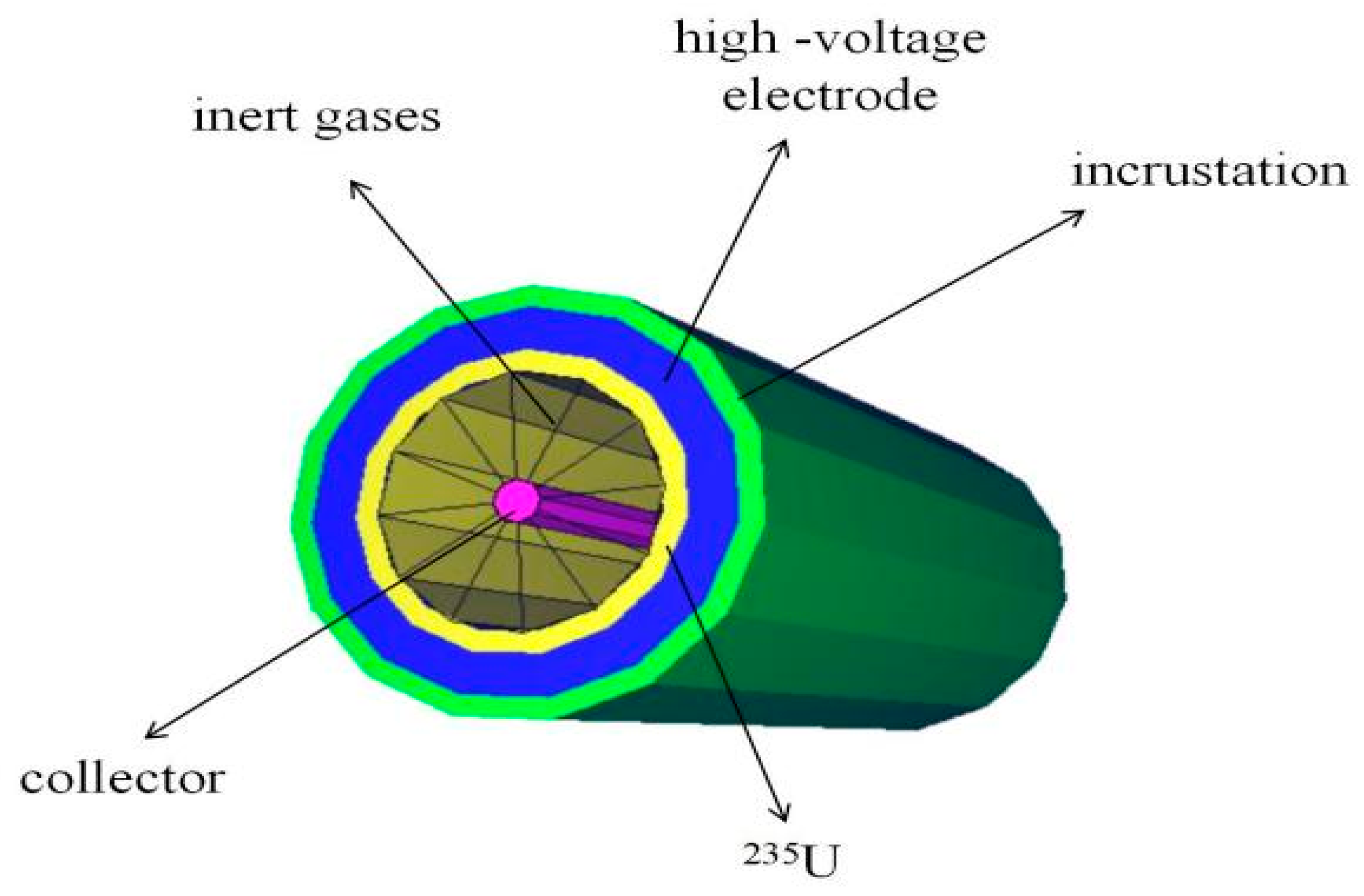
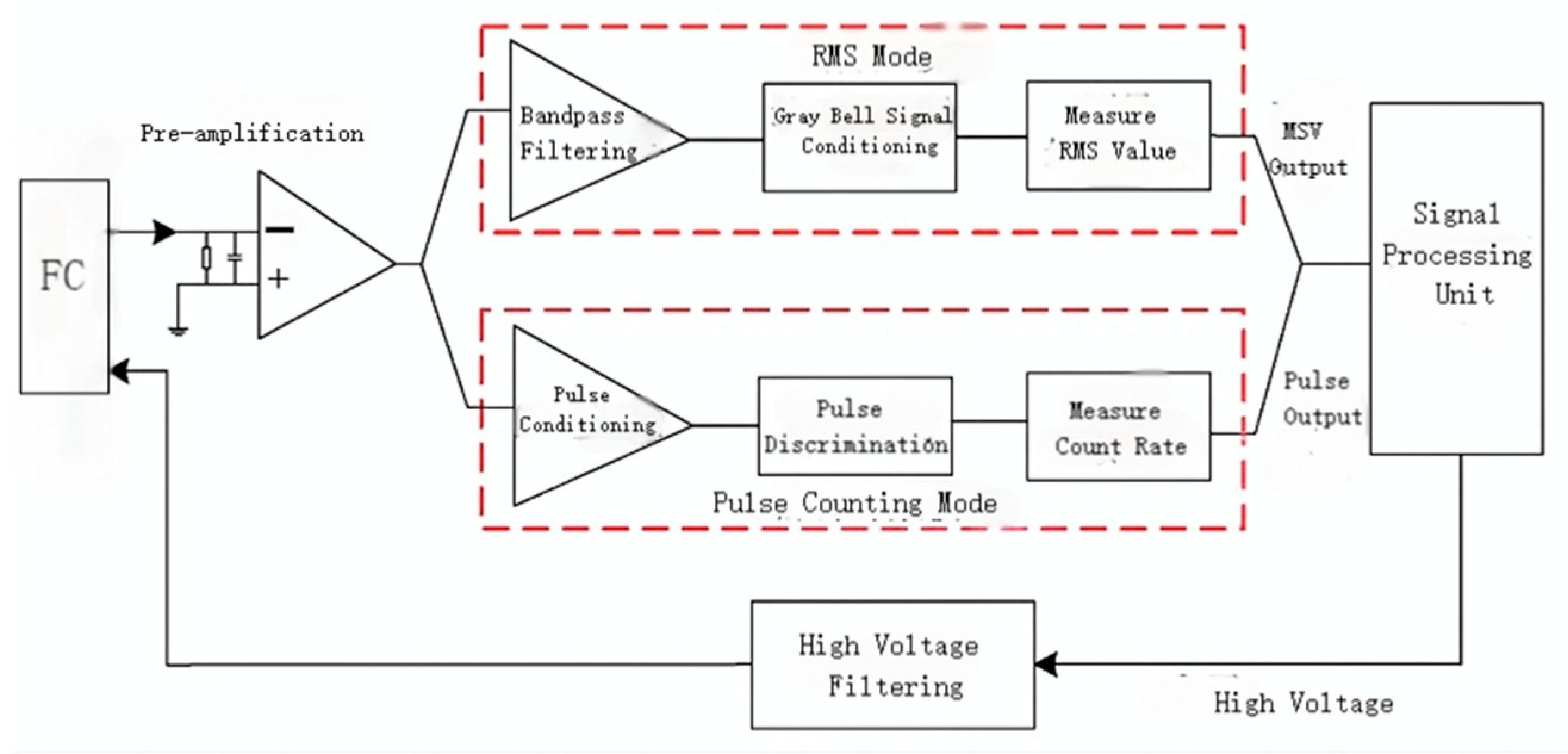
4.1. Working Principle
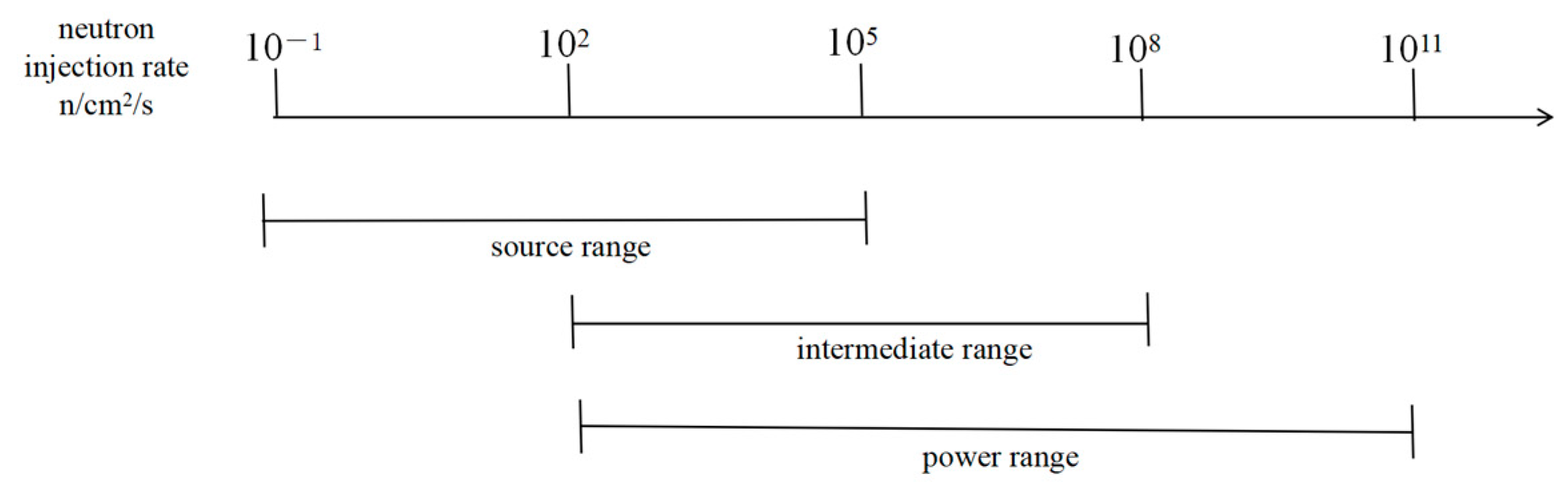
4.2. High Temperature Performance Testing and Reactor Monitoring Applications
4.3. Research on Miniaturized Structure Design and Performance Optimization
4.4. Short
5. Self-Powered Neutron Detector
5.1. Working Principle
5.2. Detector Test Validation and Engineering Applications
5.3. Emitter Material Selection and Performance Study
5.4. Optimization of SPND Model Construction
5.5. Short
6. Summary and Outlook
6.1. Summaries
6.1.1. Material Properties Determine Application Boundaries
6.1.2. The Engineering Process Is Clearly Differentiated
6.1.3. Technical Bottlenecks Need to Be Broken Through
6.2. Future Outlook
Author Contributions
Funding
Data Availability Statement
Conflicts of Interest
References
- Ma, R.; Jiang, G.; Fang, Y.; Qu, R.; Fu, Y. The Molten Salt Reactor MSR Overview and Perspectives. Nucl. Power Eng. 2024, 44, 1239–1246. [Google Scholar] [CrossRef]
- Liu, M.; Cheng, X.; Liu, B.; Wang, T.; Liu, Z.; Yang, X.; Liu, R.; Shao, Y. Preparation and Performance Evaluation of Fuel Elements for Ultra-high Temperature Gas-cooled Reactors. Nucl. Power Eng. 2024, 45, 231–237. [Google Scholar] [CrossRef]
- Ding, T.; Chen, W.; Wang, W. Research and Analysis of Thermal Parameter of Million-kilowatt Sodium-cooled Fast Reactor. At. Energy Sci. Technol. 2025, 59, 89–95. [Google Scholar]
- Ren, H.; Zhang, Z.; Xia, X.; Cai, J. Simulation study on the structure of diamond neutron detectors. Nucl. Technol. 2023, 46, 63–70. [Google Scholar]
- Liu, J.; Li, C.; Zhu, X.; Shao, S.; Chen, L.; Wei, J. Material Development and Neutron Detection Performance of Diamond Detector. J. Artif. Cryst. 2019, 48, 1990–1991. [Google Scholar] [CrossRef]
- Liu, J. Research and Application of High Performance Diamond Radiation Detectors. Ph.D. Thesis, Wuhan University, Wuhan, China, 2019. [Google Scholar]
- Ding, S.; Zhang, J.; Su, K.; Ren, Z.; Chen, J.; Yang, Z.; Zhang, J.; Hao, Y. Single-crystal diamond grown through high-power-density epitaxy used for a high-performance radiation detector. Sci. China Mater. 2024, 67, 2329–2334. [Google Scholar] [CrossRef]
- Wang, L.; Zhang, Y.; Huang, G.; Ma, Z.; Xi, S.; Wu, K.; Zhao, X.; Song, Y.; Zhou, C.; Li, H.; et al. Single crystal diamond detector for gamma dose measurement. Nucl. Technol. 2025, 48, 95–102. [Google Scholar]
- Su, Q. The Research on CVD Diamond Films and Radiation Detectors. Ph.D. Thesis, Shanghai University, Shanghai, China, 2007. [Google Scholar]
- Wang, L. Studies on CVD Diamond Detectors for Pulsed Radiation Detection. Ph.D. Thesis, Tsinghua University, Beijing, China, 2008. [Google Scholar]
- Xu, P. Development and Performance of CVD Diamond Film Radiation Detectors. Ph.D. Thesis, Nanhua University, Hengyang, China, 2020. [Google Scholar]
- Marinelli, M.; Milani, E.; Prestopino, G.; Tucciarone, A.; Verona, C.; Verona-Rinati, G.; Angelone, M.; Lattanzi, D.; Pillon, M.; Rosa, R.; et al. Synthetic single crystal diamond as a fission reactor neutron flux monitor. Appl. Phys. Lett. 2007, 90, 183509. [Google Scholar] [CrossRef]
- Almaviva, S.; Marinelli, M.; Milani, E.; Prestopino, G.; Tucciarone, A.; Verona, C.; Verona-Rinati, G.; Angelone, M.; Lattanzi, D.; Pillon, M.; et al. Thermal and fast neutron detection in chemical vapor deposition single-crystal diamond detectors. J. Appl. Phys. 2008, 103, 054501. [Google Scholar] [CrossRef]
- Masuzawa, T.; Miyake, T.; Nakagawa, H.; Nakano, T.; Takagi, K.; Aoki, T.; Mimura, H.; Yamada, T. Characterization of diamond radiation detector with B-doped/undoped stacked structure. Diam. Relat. Mater. 2023, 136, 109985. [Google Scholar] [CrossRef]
- Kobayashi, M.I.; Angelone, M.; Yoshihashi, S.; Ogawa, K.; Isobe, M.; Nishitani, T.; Sangaroon, S.; Kamio, S.; Fujiwara, Y.; Tsubouchi, T.; et al. Thermal neutron measurement by single crystal CVD diamond detector applied with the pulse shape discrimination during deuterium plasma experiment in LHD. Fusion Eng. Des. 2020, 161, 112063. [Google Scholar] [CrossRef]
- Angelone, M.; Pillon, M.; Bertalot, L.; Orsitto, F.; Marinelli, M.; Milani, E.; Pucella, G.; Tucciarone, A.; Verona-Rinati, G.; Popovichev, S.; et al. Time dependent 14MeV neutrons measurement using a polycrystalline chemical vapor deposited diamond detector at the JET tokamak. Rev. Sci. Instrum. 2005, 76, 013506. [Google Scholar] [CrossRef]
- Angelone, M.; Pilotti, R.; Sarto, F.; Fiore, S.; Loreti, S.; Pagano, G.; Pillon, M.; Marinelli, M.; Milani, E.; Verona, C.; et al. High temperature operation of single crystal diamond detectors. In Proceedings of the 2016 IEEE Nuclear Science Symposium, Medical Imaging Conference and Room-Temperature Semiconductor Detector Workshop (NSS/MIC/RTSD), Strasbourg, France, 29 October–6 November 2016; pp. 1–4. [Google Scholar] [CrossRef]
- Angelone, M.; Cesaroni, S.; Loreti, S.; Pagano, G.; Pillon, M. High temperature response of a single crystal CVD diamond detector operated in current mode. In Nuclear Instruments and Methods in Physics Research Section A: Accelerators, Spectrometers, Detectors and Associated Equipment; Elsevier: Amsterdam, The Netherlands, 2019; Volume 943, p. 162493. [Google Scholar]
- Angelone, M.; Pilotti, R.; Sarto, F.; Pillon, M.; Lecci, S.; Loreti, S.; Pagano, G.; Cesaroni, S.; Verona, C.; Marinelli, M.; et al. Systematic study of the response of single crystal diamond neutron detectors at high temperature. J. Instrum. 2020, 15, P03031. [Google Scholar] [CrossRef]
- Angelone, M.; Verona, C. Properties of diamond-based neutron detectors operated in harsh environments. J. Nucl. Eng. 2021, 2, 422–470. [Google Scholar] [CrossRef]
- Tsubota, M.; Kaneko, J.H.; Miyazaki, D. High-temperature characteristics of charge collection efficiency using single CVD diamond detectors. Nucl. Instrum. Methods Phys. Res. Sect. A Accel. Spectrometers Detect. Assoc. Equip. 2015, 789, 50–56. [Google Scholar] [CrossRef]
- Pilotti, R.; Angelone, M.; Pagano, G.; Loreti, S.; Pillon, M.; Sarto, F.; Marinelli, M.; Milani, E.; Prestopino, G.; Verona, C.; et al. Development and high temperature testing by 14 MeV neutron irradiation of single crystal diamond detectors. J. Instrum. 2016, 11, C06008. [Google Scholar] [CrossRef]
- Pilotti, R.; Angelone, M.; Marinelli, M.; Milani, E.; Verona-Rinati, G.; Verona, C.; Prestopino, G.; Montereali, R.M.; Vincenti, M.A.; Schooneveld, E.M.; et al. High-temperature long-lasting stability assessment of a single-crystal diamond detector under high-flux neutron irradiation. Europhys. Lett. 2016, 116, 42001. [Google Scholar] [CrossRef]
- Muraro, A.; Giacomelli, L.; Nocente, M.; Rebai, M.; Rigamonti, D.; Belli, F.; Calvani, P.; Figueiredo, J.; Girolami, M.; Gorini, G.; et al. First neutron spectroscopy measurements with a pixelated diamond detector at JET. Rev. Sci. Instrum. 2016, 87, 11D833. [Google Scholar] [CrossRef]
- Kumar, A.; Topkar, A. A study of the fast neutron response of a single-crystal diamond detector at high temperatures. IEEE Trans. Nucl. Sci. 2018, 65, 630–635. [Google Scholar] [CrossRef]
- Pompili, F.; Esposito, B.; Marocco, D. Radiation and thermal stress test on diamond detectors for the radial neutron camera of ITER. Nucl. Instrum. Methods Phys. Res. Sect. A Accel. Spectrometers Detect. Assoc. Equip. 2019, 936, 62–64. [Google Scholar] [CrossRef]
- Anniyev, T.; Vasilyev, M.; Khabashesku, V.; Inanc, F. High-temperature diamond detector for neutron generator output monitoring in well logging applications. IEEE Trans. Nucl. Sci. 2020, 67, 1885–1892. [Google Scholar] [CrossRef]
- Liu, Y.; Loh, C.; Zhang, J.; Wu, F.; Qi, M.; Hei, L.; Lv, F.; Lv, Y.; Ge, T.; Li, Y.; et al. Proton irradiation tests of single crystal diamond detector at CIAE. Nucl. Mater. Energy 2020, 22, 100735. [Google Scholar] [CrossRef]
- Wang, Z.; Gao, F.; Wang, F.; Liu, Y.; Ding, Y.; Chen, Y.; Hou, J. Experimental study of the Impulse Response of a Diamond detector. J. Isot. 2024, 37, 42–48. [Google Scholar]
- Holmes, J.; Brown, J.; Koeck, F.A.; Johnson, H.; Benipal, M.K.; Kandlakunta, P.; Zaniewski, A.; Alarcon, R.; Cao, R.; Goodnick, S.M.; et al. Performance of 5-μm PIN diamond diodes as thermal neutron detectors. Nucl. Instrum. Methods Phys. Res. Sect. A Accel. Spectrometers Detect. Assoc. Equip. 2020, 961, 163601. [Google Scholar] [CrossRef]
- Huang, G.; Wu, K.; Chen, Y. Response of single-crystal diamond detectors to 14 MeV monoenergetic neutrons. Acta Phys. Sin. 2021, 70, 40–46. [Google Scholar] [CrossRef]
- Hodgson, M.; Lohstroh, A.; Sellin, P.; Thomas, D. Neutron detection performance of silicon carbide and diamond detectors with incomplete charge collection properties. Nucl. Instrum. Methods Phys. Res. Sect. A Accel. Spectrometers Detect. Assoc. Equip. 2017, 847, 1–9. [Google Scholar] [CrossRef]
- Tang, B. Experimental Study on Silicon Carbide Neutron Detector. Master’s Thesis, University of Chinese Academy of Sciences (Shanghai Institute of Applied Physics, CAS), Shanghai, China, 2020. [Google Scholar]
- Ruddy, F.H. Silicon carbide radiation detectors: Progress, limitations and future directions. MRS Proc. 2013, 1576, mrss13-1576-ww01-01. [Google Scholar] [CrossRef]
- Jiang, Y.; Wu, J.; Wei, J. Neutron Detector Based on 4H-SiC Schottky Diode. At. Energy Sci. Technol. 2013, 47, 664–668. [Google Scholar]
- Chen, Y.; Jiang, Y.; Wu, J.; Fan, X.; Bai, L.; Liu, B.; Li, M.; Rong, R.; Zou, D. Response of SiC-based neutron detectors to thermal neutrons. High Power Laser Part. Beams 2013, 25, 2711–2716. [Google Scholar] [CrossRef]
- Huang, H.L. Performance of SiC Radiation Detector and its Degradation. Ph.D. Thesis, Xi’an Electronic Science and Technology University, Xi’an, China, 2019. [Google Scholar]
- Feng, T. Research of 4H-SiC PIN Neutron Detector Based on SuperJunction. Master’s Thesis, Xi’an University of Electronic Science and Technology, Xi’an, China, 2024. [Google Scholar]
- Zatko, B.; Sagatova, A.; Sedlackova, K.; Necas, V.; Dubecky, F.; Solar, M.; Granja, C. Detection of fast neutrons from D–T nuclear reaction using a 4H–SiC radiation detector. Int. J. Mod. Phys. Conf. Ser. 2016, 44, 1660235. [Google Scholar] [CrossRef]
- Li, Z. Research on SiC Neutron Detector Technology for High-Temperature Intense Radiation Field. Master’s Thesis, China Academy of Engineering Physics, Chengdu, China, 2019. [Google Scholar]
- Funaki, T.; Kashyap, A.S.; Mantooth, H.A.; Balda, J.C.; Barlow, F.D.; Kimoto, T.; Hikihara, T. Characterization of SiC diodes in extremely high temperature ambient. In Proceedings of the Twenty-First Annual IEEE Applied Power Electronics Conference and Exposition, APEC ’06, Dallas, TX, USA, 19–23 March 2006; pp. 441–447. [Google Scholar] [CrossRef]
- Ivanov, A.M.; Kalinina, E.V.; Strokan, N.B.; Lebedev, A.A. 4H-SiC nuclear radiation p-n detectors for operation up to temperature 375 °C. Mater. Sci. Forum 2009, 615–617, 849–852. [Google Scholar] [CrossRef]
- Szalkai, D.; Ferone, R.; Issa, F.; Klix, A.; Lazar, M.; Lyoussi, A.; Ottaviani, L.; Tutto, P.; Vervisch, V. Fast neutron detection with 4H-SiC based diode detector up to 500 °C ambient temperature. IEEE Trans. Nucl. Sci. 2016, 63, 1491–1498. [Google Scholar] [CrossRef]
- Kushoro, M.H.; Angelone, M.; Bozzi, D.; Cancelli, S.; Dal Molin, A.; Gallo, E.; Gorini, G.; La Via, F.; Parisi, M.; Perelli Cippo, E.; et al. Operation of a 250μm-thick SiC detector with DT neutrons at high temperatures. Fusion Eng. Des. 2024, 204, 114486. [Google Scholar] [CrossRef]
- Weiss, C.; Wilson, J.; Tiebel, G.; Steinegger, P.; Griesmayer, E.; Frais-Kölbl, H.; Dressler, R.; Camarda, M.; Areste, M.D.M.C. High-temperature performance of solid-state sensors up to 500 °C. Nucl. Instrum. Methods Phys. Res. Sect. A Accel. Spectrometers Detect. Assoc. Equip. 2022, 1040, 167182. [Google Scholar] [CrossRef]
- Wang, F.; Hong, B.; Li, T.; Shen, S.; Jiang, J.; Chen, S. Feasibility study of fast neutron yield measurement with 4H-SiC detector. Nucl. Technol. 2021, 44, 43–48. [Google Scholar]
- Zhang, M.; Zhong, G.; Huang, J. Research on fusion neutron energy spectrum measurement using a Bonner sphere spectrometer based on a 4H-SiC detector. Nucl. Technol. 2024, 47, 79–86. [Google Scholar]
- Radulović, V.; Yamazaki, Y.; Pastuović, Ž.; Sarbutt, A.; Ambrožič, K.; Bernat, R.; Ereš, Z.; Coutinho, J.; Ohshima, T.; Capan, I.; et al. Silicon carbide neutron detector testing at the JSI TRIGA reactor for enhanced border and port security. Nucl. Instrum. Methods Phys. Res. Sect. A Accel. Spectrometers Detect. Assoc. Equip. 2020, 972, 164122. [Google Scholar] [CrossRef]
- Ruddy, F.H.; Dulloo, A.R.; Seidel, J.G.; Hantz, F.W.; Grobmyer, L.R. Nuclear reactor power monitoring using silicon carbide semiconductor radiation detectors. Nucl. Technol. 2002, 140, 198–208. [Google Scholar] [CrossRef]
- Ruddy, F.H.; Dulloo, A.R.; Petrovic, B.; Seidel, J.G. Fast neutron spectrometry using silicon carbide detectors. In Reactor Dosimetry in the 21st Century; Wagemans, J., Abderrahim, H.A., Dhondt, P., DeRaedt, C., Eds.; World Scientific Publ. Co. Pte. Ltd.: Singapore, 2003; pp. 347–355. [Google Scholar] [CrossRef]
- Ruddy, F.H.; Williams, J.G. Power monitoring in space nuclear reactors using silicon carbide radiation detectors. In Proceedings of the AMS Conference on Space Nuclear Power, San Diego, CA, USA, 5–9 June 2005. [Google Scholar]
- Ruddy, F.H.; Dulloo, A.R.; Seidel, J.G.; Das, M.K.; Sei-Hyung Ryu Agarwal, A.K. The fast neutron response of 4H silicon carbide semiconductor radiation detectors. IEEE Trans. Nucl. Sci. 2006, 53, 1666–1670. [Google Scholar] [CrossRef]
- Ruddy, F.H.; Seidel, J.G.; Dulloo, A.R. Fast neutron dosimetry and spectrometry using silicon carbide semiconductor detectors. In Reactor Dosimetry: 12th International Symposium; Vehar, D.W., Gilliam, D.M., Adams, J.M., Eds.; American Society for Testing and Materials: Conshohocken, PA, USA, 2008; Issue 1490; pp. 408–415. [Google Scholar]
- Ruddy, F.H.; Ottaviani, L.; Lyoussi, A.; Destouches, C.; Palais, O.; Reynard-Carette, C. Silicon carbide neutron detectors for harsh nuclear environments: A review of the state of the art. IEEE Trans. Nucl. Sci. 2022, 69, 792–803. [Google Scholar] [CrossRef]
- Radulović, V.; Ambrožič, K.; Snoj, L. E-SiCure collaboration project: Silicon carbide material studies and detector prototype testing at the JSI TRIGA reactor. EPJ Web Conf. 2020, 225, 07007. [Google Scholar] [CrossRef]
- Mandal, K.C.; Chaudhuri, S.K.; Ruddy, F.H. Fabrication and characterization of high-resolution 4H-SiC epitaxial radiation detectors for challenging reactor dosimetry environments. EPJ Web Conf. 2023, 278, 01003. [Google Scholar] [CrossRef]
- Kandlakunta, P.; Tan, C.; Smith, N.; Xue, S.; Taylor, N.; Downing, R.G.; Hlinka, V.; Cao, L.R. Silicon carbide detectors for high flux neutron monitoring at near-core locations. Nucl. Instrum. Methods Phys. Res. Sect. A Accel. Spectrometers Detect. Assoc. Equip. 2020, 953, 163110. [Google Scholar] [CrossRef]
- Kap, C.-S. Neutron Detection; China Atomic Energy Press: Beijing, China, 2014. [Google Scholar]
- Meng, L.; Lai, W.; Huang, G. Influence of parameters of micro fission chamber operated in current mode upon the detection performance. Nucl. Electron. Detect. Technol. 2017, 37, 492–495. [Google Scholar]
- Qiu, S.; Xiao, W.; Dong, J.; Ge, M.; Zhai, C.; Tang, Z.; Zhou, Y.; Zeng, L.; Liu, H.; Sun, G.; et al. Development of fission ionisation chamber detection device for neutron flux measurement in reactors. Radiat. Prot. 2024, 44, 134–140. [Google Scholar]
- Nishitani, T.; Yamauchi, M.; Izumi, M.; Kusama, Y. Design of Micro-Fission Chambers for Iter Low Power Operations; Japan Atomic Energy Research Institute: Tokai, Japan, 2005. [Google Scholar]
- Filliatre, P.; Jammes, C.; Elter, Z. Dependability of the fission chambers for the neutron flux monitoring system of the french GEN-IV SFR. In Proceedings of the International Conference on Fast Reactors and Related Fuel Cycles Next Generation Nuclear Systems for Sustainable Development (FR17), Yekaterinburg, Russia, 26–29 June 2017. [Google Scholar]
- Galli, G.; Hamrita, H.; Kirkpatrick, M.J.; Odic, E.; Jammes, C. A new discriminating high temperature fission chamber filled with xenon designed for sodium-cooled fast reactors. Nucl. Instrum. Methods Phys. Res. Sect. A Accel. Spectrometers Detect. Assoc. Equip. 2020, 968, 163947. [Google Scholar] [CrossRef]
- Tsai, K.; Reichenberger, M.; De Izarra, G.; Barbot, L. Performance Benchmark of Commercial and Developmental Fission Chambers in Elevated Temperatures: INL/RPT--23-75886-Rev000, 2299516; Idaho National Laboratory (INL): Idaho Falls, ID, USA, 2023. [Google Scholar]
- Tsai, K. Characterizing the Performance of Fission Chambers for Local Neutron Flux and Spectrum Measurement: INL/RPT-22-70207-Rev000, 1901814; Idaho National Laboratory (INL): Idaho Falls, ID, USA, 2022. [Google Scholar] [CrossRef]
- REUTER-STOKES. Fission Counters/Chambers RS-C3-2510-114.22; Baker Hughes Company: Houston, TX, USA, 2023. [Google Scholar]
- UE. High Temperature Fission Chamber, Capable of Operating at Temperatures up to 800 °C; Innovation House Lancaster Road Ferndown Industrial Estate: Wimborne Dorset, UK, 2022. [Google Scholar]
- Exosens. High Temperature Fission Chambers Engineered for AMR/SMR Safety and Performance; Exosens: Mérignac, France, 2024. [Google Scholar]
- Yin, Z.; Yin, J.; Chen, H.; Wen, Z.; He, Y.; Hu, Y. Progress in the design of a new pocket-type miniature fission ionisation chamber. Nucl. Electron. Detect. Technol. 2022, 42, 1048–1052. [Google Scholar]
- Wu, Z.P.; Jiang, X.B.; Zhang, W.S. Monte Carlo simulation of neutron sensitivity of microfission chamber in neutron flux measurement. Nucl. Sci. Tech. 2022, 33, 78. [Google Scholar] [CrossRef]
- Wang, C.; Xiao, W.; Liu, J.; Shi, Y.; Hu, C.; Qiu, S.; Ge, M.; Zhou, Y.; Dong, J. Performance validation of a wide-range neutron injection rate measurement in a fission ionisation chamber for nuclear measurements. Radiat. Prot. 2024, 44, 343–348. [Google Scholar]
- Sun, J.; He, G.; Liu, Y.; Yang, F.; Zhao, J.; Liu, H.; Liu, Z.; Huang, X. Research on Wide-range Signal Processing Algorithm Based on Fission Ionization Chamber. At. Energy Sci. Technol. 2025, 59, 1558–1564. [Google Scholar]
- Žerovnik, G.; Kaiba, T.; Radulović, V.; Jazbec, A.; Rupnik, S.; Barbot, L.; Fourmentel, D.; Snoj, L. Validation of the neutron and gamma fields in the JSI TRIGA reactor using in-core fission and ionization chambers. Appl. Radiat. Isot. 2015, 96, 27–35. [Google Scholar] [CrossRef] [PubMed]
- Li, Z.; Zhou, D.; Tao, H.G.; Xiao, L.; Guo, Z.; Zhang, Y.; Yang, A.; Zhu, D.; Shao, J.; Chen, X. Current status of emitter materials for self-contained neutron detectors. Nucl. Electron. Detect. Technol. 2024, 44, 392–403. [Google Scholar] [CrossRef]
- Yang, D.-B.; Li, K.; Wei, W.-B.; Li, D.; Xia, Y. Application of self-contained neutron detectors in reactor neutron measurement. Sci. Technol. Vis. 2021, 131–134. [Google Scholar] [CrossRef]
- He, Y. Research of the Monitoring System for Nuclear Power and Neutron Flux for an ADS Subcritical Reactor. Ph.D. Thesis, University of Chinese Academy of Sciences (Institute of Modern Physics, Chinese Academy of Sciences), Lanzhou, China, 2017. [Google Scholar]
- Li, S.; Hu, C.; Deng, P.; Li, Z. Study of γ effect in vanadium self-contained energy neutron detectors. Nucl. Electron. Detect. Technol. 2021, 41, 607–614. [Google Scholar]
- Huang, Y.; Li, W.; Yang, D.; Jiang, T.; Wang, Y.; Yu, H.; Lin, C.; Zhang, Y. Research on Key Parameters of Self-Powered Neutron Detector of In-core Neutron Fluence Rate Measurement System in HPR1000. Nucl. Power Eng. 2020, 41, 45–49. [Google Scholar] [CrossRef]
- Barbot, L.; Villard, J.F.; Fourrez, S. The self-powered detector simulation ‘MATiSSe’ toolbox applied to SPNDs for severe accident monitoring in PWRs. EPJ Web Conf. 2018, 170, 08001. [Google Scholar] [CrossRef][Green Version]
- Verma, V.; Jammes, C.; Hellesen, C.; Filliatre, P.; Svard, S.J. Feasibility study of self powered neutron detectors in fast reactors for detecting local change in neutron flux distribution. In Proceedings of the 4th International Conference on Advancements in Nuclear Instrumentation Measurement Methods and their Applications (ANIMMA), Lisbon, Portugal, 20–24 April 2015; pp. 1–4. [Google Scholar] [CrossRef]
- Barbot, L.; Radulovic, V.; Fourmentel, D.; Snoj, L.; Tarchalski, M.; Dewynter-Marty, V.; Malouch, F. Calculation to experiment comparison of SPND signals in various nuclear reactor environments. In Proceedings of the 4th International Conference on Advancements in Nuclear Instrumentation Measurement Methods and their Applications (ANIMMA), Lisbon, Portugal, 20–24 April 2015; pp. 1–7. [Google Scholar] [CrossRef]
- Verma, V.; Barbot, L.; Filliatre, P.; Hellesen, C.; Jammes, C.; Svärd, S.J. Self powered neutron detectors as in-core detectors for sodium-cooled fast reactors. Nucl. Instrum. Methods Phys. Res. Sect. A Accel. Spectrometers Detect. Assoc. Equip. 2017, 860, 6–12. [Google Scholar] [CrossRef]
- Mohd Ali, N.S.; Hamzah, K.; Idris, F.M.; Rabir, M.H. Thermal neutron flux measurement using self-powered neutron detector (SPND) at out-core locations of TRIGA PUSPATI reactor (RTP). Iop Conf. Ser. Mater. Sci. Eng. 2018, 298, 012027. [Google Scholar] [CrossRef]
- Raj, P.; Angelone, M.; Doring, T.; Eberhardt, K.; Fischer, U.; Klix, A.; Schwengner, R. Experimental assessment of a flat sandwich-like self-powered detector for nuclear measurements in ITER test blanket modules. IEEE Trans. Nucl. Sci. 2018, 65, 2385–2391. [Google Scholar] [CrossRef]
- Alex, M.; Ghodgaonkar, M.D. Development of an inconel self powered neutron detector for in-core reactor monitoring. Nucl. Instrum. Methods Phys. Res. Sect. A Accel. Spectrometers Detect. Assoc. Equip. 2007, 574, 127–132. [Google Scholar] [CrossRef]
- Angelone, M.; Klix, A.; Pillon, M.; Batistoni, P.; Fischer, U.; Santagata, A. Development of self-powered neutron detectors for neutron flux monitoring in HCLL and HCPB ITER-TBM. Fusion Eng. Des. 2014, 89, 2194–2198. [Google Scholar] [CrossRef]
- Vermeeren, L.; Carcreff, H.; Barbot, L.; Cloute-Cazalaa, V.; Fourrez, S.; Pichon, L. Irradiation tests of prototype self-powered gamma and neutron detectors. In Proceedings of the 2nd International Conference on Advancements in Nuclear Instrumentation, Measurement Methods and their Applications (ANIMMA), Ghent, Belgium, 6–9 June 2011; pp. 1–8. [Google Scholar]
- Du, S.; Zhang, Q.; Sang, Y.; Liu, S. Evaluation for self-powered neutron detector used in sodium-cooled fast reactor. Ann. Nucl. Energy 2025, 215, 111252. [Google Scholar] [CrossRef]
- Guo, Z.; Zhang, Y.; Yang, W.; Zhou, D.; Xiao, R.; Li, Z.; Zhu, D.; Shao, J. Study of the influence of manufacturing defects on the sensitivity of rhodium self-powered neutron detectors. Ann. Nucl. Energy 2025, 216, 111285. [Google Scholar] [CrossRef]
- Lepore, L.; Remetti, R. Application of prompt self-powered neutron detectors to the lead-cooled fast reactor demonstrator ALFRED: Validation of the monte carlo model for selected SPNDs. J. Nucl. Eng. Radiat. Sci. 2017, 3, 041018. [Google Scholar] [CrossRef]
- Wu, X.; Cai, L.; Zhang, X.; Wu, T.; Jiang, J. Study of neutron sensitivity for vanadium self-powered neutron detector in nuclear reactors. AIP Adv. 2023, 13, 125015. [Google Scholar] [CrossRef]
- Cui, T.; Yang, Y.; Xue, H.; Kuang, H. A monte-carlo simulation method for the study of self-powered neutron detectors. Nucl. Instrum. Methods Phys. Res. Sect. A Accel. Spectrometers Detect. Assoc. Equip. 2020, 954, 161383. [Google Scholar] [CrossRef]
- Zhou, D.; Li, Z.; Yang, A.; Xiao, R.; Guo, Z.; Zhang, Y.; Zhu, D.; Shao, J.; Chen, X. Simulation study of a rhodium self-powered neutron detector for irradiation of nuclear fuel and material reactor. Nucl. Instrum. Methods Phys. Res. Sect. A Accel. Spectrometers Detect. Assoc. Equip. 2024, 1060, 169070. [Google Scholar] [CrossRef]








| Technical Indicators | Lower Limit of Neutron Flux Detection | Neutron Flux Detection Upper Limit | Maximum Reliability Operating Temperature | Dimensions (Diameter) | Technology Maturity |
|---|---|---|---|---|---|
| Diamond detector | Excellent (as low as 1014 nV) | General (typically ≤1010 nv) | Superior (theoretically ≥600 °C) | Medium | Proof-of- concept stage |
| Silicon carbide semiconductor detector | Excellent (as low as 104 nV) | Poor (typically ≤1012 nv) | Excellent (theoretically ≥800 °C) | Medium | Proof-of- concept stage |
| High-temperature fission chamber | Excellent (as low as 102 nV) | Excellent (up to 1014–1015 nv) | Outstanding (about 800 °C) | Excellent (≤1.5 mm) | Mature |
| Self-powered neutron detector | Poor (typically ≥109 nV) | Excellent (up to 1015 nv) | Exceptional (≥1000 °C) | Excellent (≤2 mm) | Quite mature |
| Performance Parameters | Single-Crystal Diamond Detector | Polycrystalline Diamond Detector |
|---|---|---|
| Charge collection efficiency | Excellent (typically >97%, with a maximum of 98.9%) | Moderate to good (typically 60–90%) |
| Energy resolution | Excellent (up to 2.1–3.7% for alpha particles) | Poor (typically >10%) |
| Maximum reliable operating temperature | Excellent (experimentally verified typically ≤ 330 °C, theoretically ≥ 600 °C) | Good (experimentally verified typically ≤ 250 °C) |
| Neutron detection efficiency | Moderate (depends on conversion layer, e.g., 6LiF) | Moderate (depending on transition layer) |
| Radiation resistance | Exceptional | Excellent |
| n/γ discrimination capability | Excellent | Moderate |
| Technology maturity | proof-of-concept stage | Laboratory research and development phase |
Disclaimer/Publisher’s Note: The statements, opinions and data contained in all publications are solely those of the individual author(s) and contributor(s) and not of MDPI and/or the editor(s). MDPI and/or the editor(s) disclaim responsibility for any injury to people or property resulting from any ideas, methods, instructions or products referred to in the content. |
© 2025 by the authors. Licensee MDPI, Basel, Switzerland. This article is an open access article distributed under the terms and conditions of the Creative Commons Attribution (CC BY) license (https://creativecommons.org/licenses/by/4.0/).
Share and Cite
Wang, C.; Yu, R.; Xia, W.; Gong, J. Advances in High-Temperature Irradiation-Resistant Neutron Detectors. Sensors 2025, 25, 7554. https://doi.org/10.3390/s25247554
Wang C, Yu R, Xia W, Gong J. Advances in High-Temperature Irradiation-Resistant Neutron Detectors. Sensors. 2025; 25(24):7554. https://doi.org/10.3390/s25247554
Chicago/Turabian StyleWang, Chunyuan, Ren Yu, Wenming Xia, and Junjun Gong. 2025. "Advances in High-Temperature Irradiation-Resistant Neutron Detectors" Sensors 25, no. 24: 7554. https://doi.org/10.3390/s25247554
APA StyleWang, C., Yu, R., Xia, W., & Gong, J. (2025). Advances in High-Temperature Irradiation-Resistant Neutron Detectors. Sensors, 25(24), 7554. https://doi.org/10.3390/s25247554