Article

A Talk-Listen-Ack Beaconing Strategy for Neighbor Discovery Protocols in Wireless Sensor Networks

1
State Key Laboratory of Integrated Service Network, Xidian University, Xi’an 710071, China
2
School of Telecommunications Engineering, Xidian University, Xi’an 710071, China
3
Guangzhou Institute of Technology, Xidian University, Guangzhou 510555, China
*
Author to whom correspondence should be addressed.
Sensors 2022, 22(1), 377; https://doi.org/10.3390/s22010377
Submission received: 10 November 2021 / Revised: 28 December 2021 / Accepted: 30 December 2021 / Published: 4 January 2022

Abstract

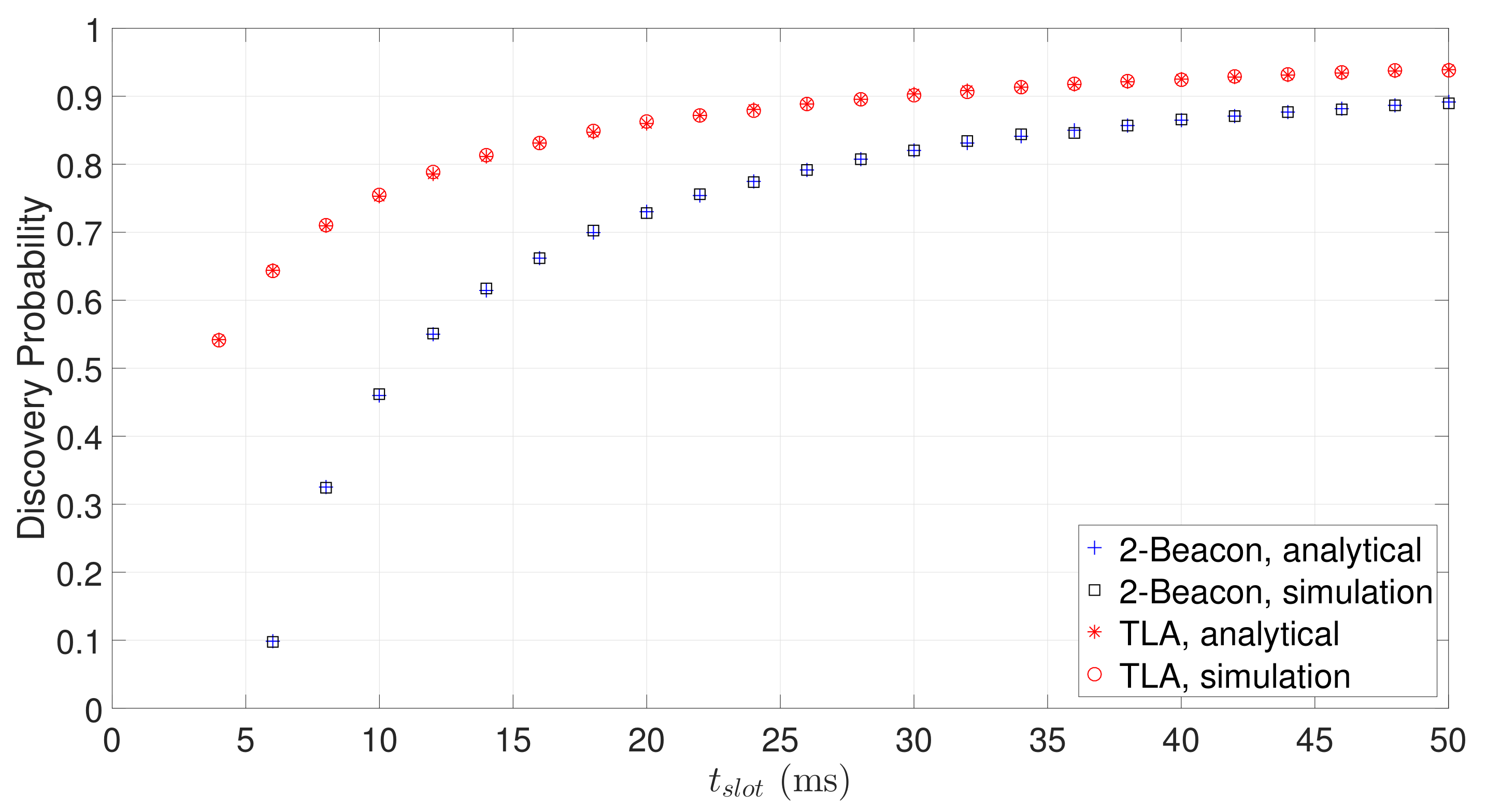
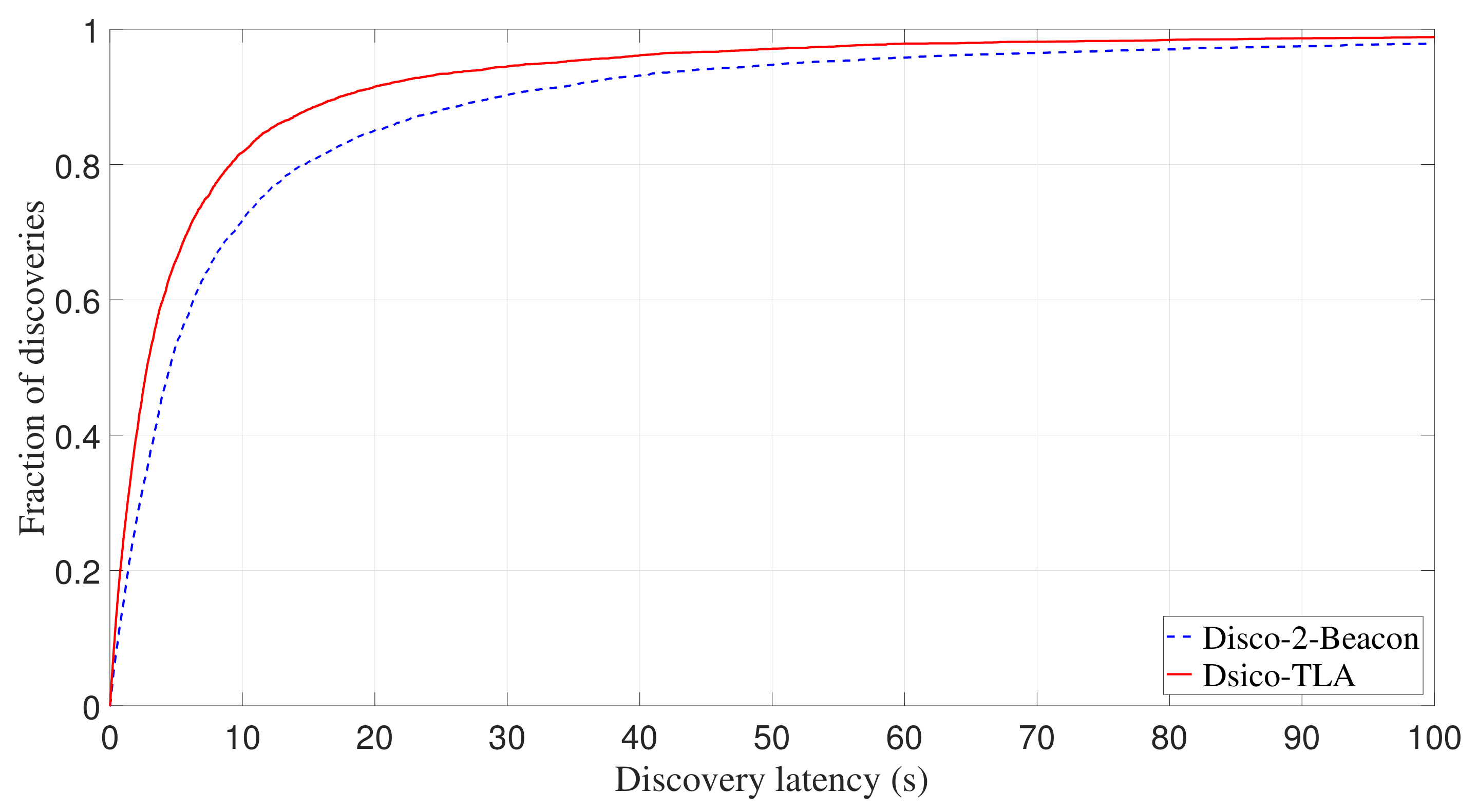
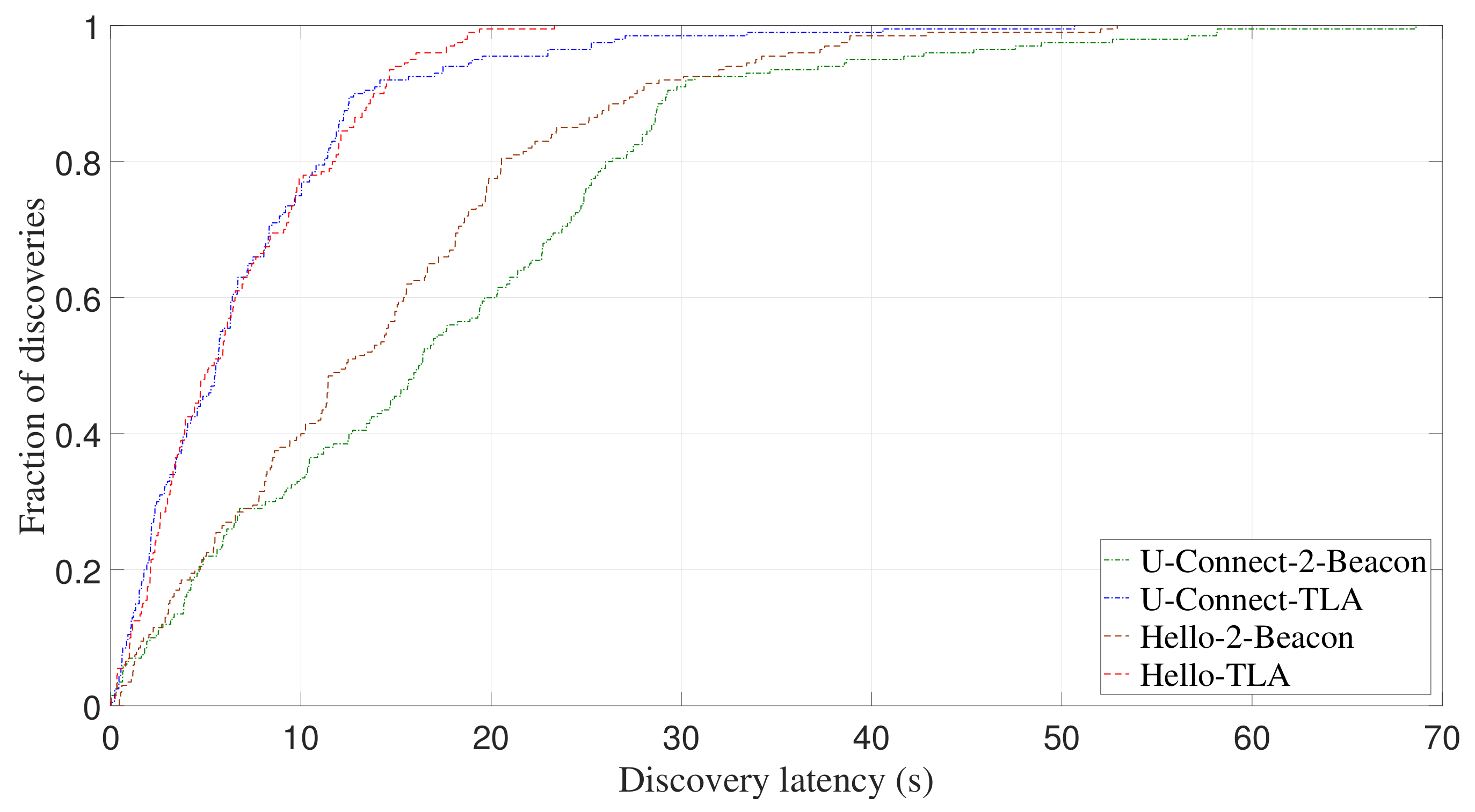
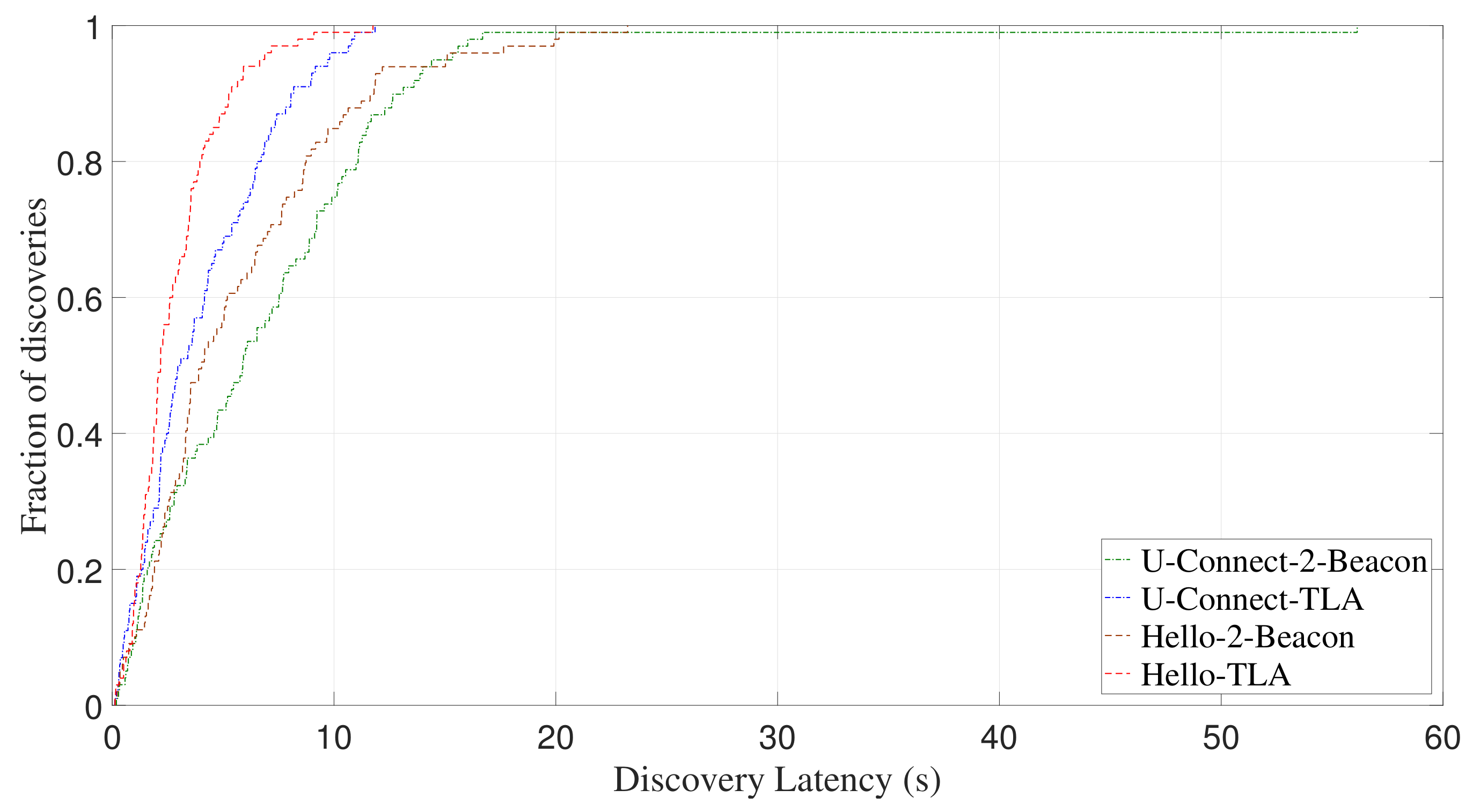
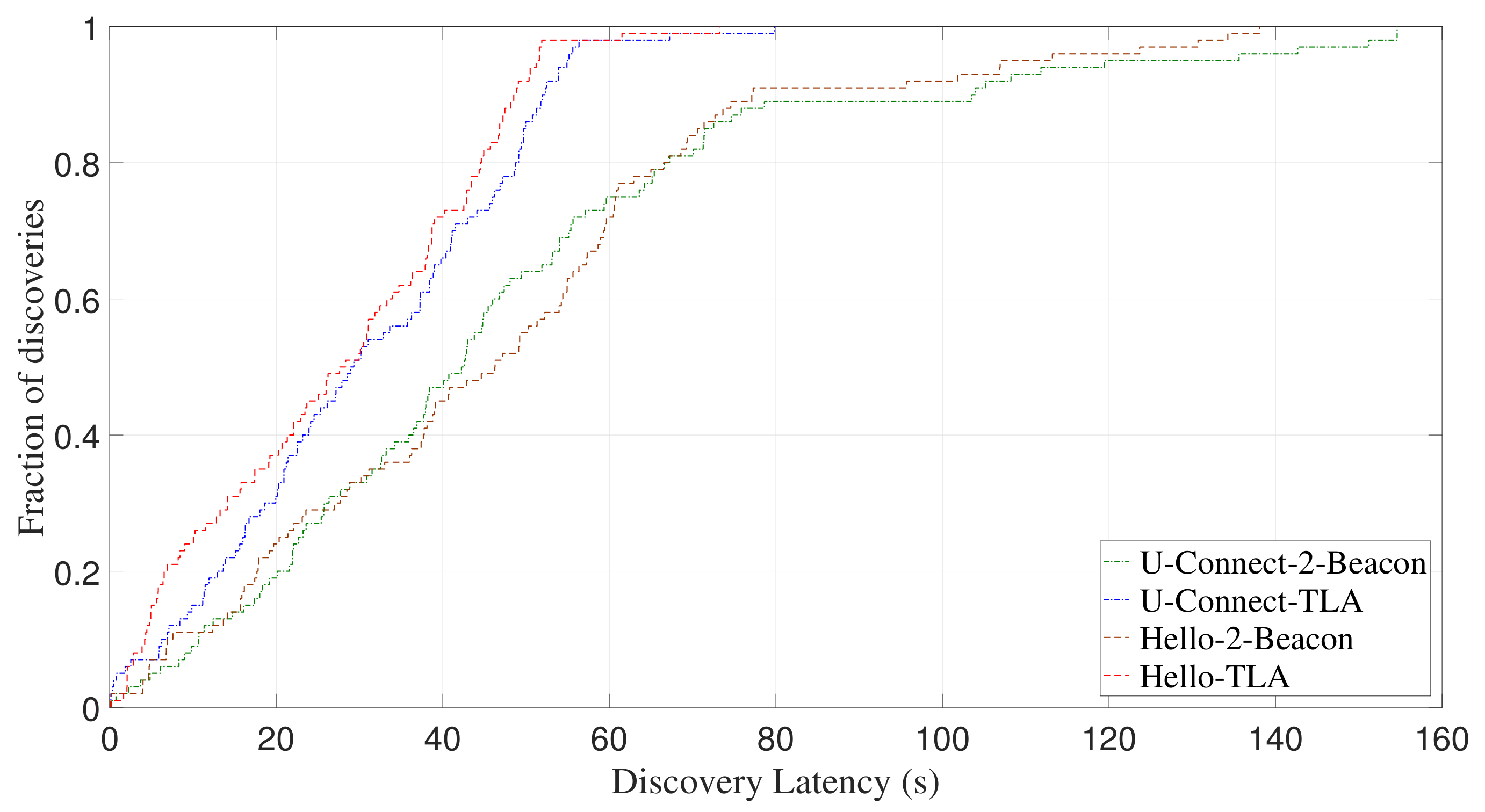
Neighbor discovery is a fundamental function for sensor networking. Sensor nodes discover each other by sending and receiving beacons. Although many time-slotted neighbor discovery protocols (NDPs) have been proposed, the theoretical discovery latency is measured by the number of time slots rather than the unit of time. Generally, the actual discovery latency of a NDP is proportional to its theoretical discovery latency and slot length, and inversely proportional to the discovery probability. Therefore, it is desired to increase discovery probability while reducing slot length. This task, however, is challenging because the slot length and the discovery probability are two conflicting factors, and they mainly depend on the beaconing strategy used. In this paper, we propose a new beaconing strategy, called talk-listen-ack beaconing (TLA). We analyze the discovery probability of TLA by using a fine-grained slot model. Further, we also analyze the discovery probability of TLA that uses random backoff mechanism to avoid persistent collisions. Simulation and experimental results show that, compared with the 2-Beacon approach that has been widely used in time-slotted NDPs, TLA can achieve a high discovery probability even in a short time slot. TLA is a generic beaconing strategy that can be applied to different slotted NDPs to reduce their discovery latency.
Keywords: wireless sensor networks; neighbor discovery; beaconing; duty cycle wireless sensor networks; neighbor discovery; beaconing; duty cycle