Article

Decoding of Ankle Joint Movements in Stroke Patients Using Surface Electromyography

1
Department of Biomedical Engineering & Sciences, School of Mechanical & Manufacturing Engineering, National University of Sciences and Technology (NUST), Islamabad 44000, Pakistan
2
Department of Health Science and Technology, Aalborg University, 9220 Aalborg Øst, Denmark
3
Center for Chiropractic Research, New Zealand College of Chiropractic, Auckland 1060, New Zealand
4
Health and Rehabilitation Research Institute, AUT University, Auckland 1010, New Zealand
*
Authors to whom correspondence should be addressed.
Sensors 2021, 21(5), 1575; https://doi.org/10.3390/s21051575
Submission received: 27 January 2021 / Revised: 18 February 2021 / Accepted: 19 February 2021 / Published: 24 February 2021
(This article belongs to the Special Issue On the Applications of EMG Sensors and Signals)

Abstract

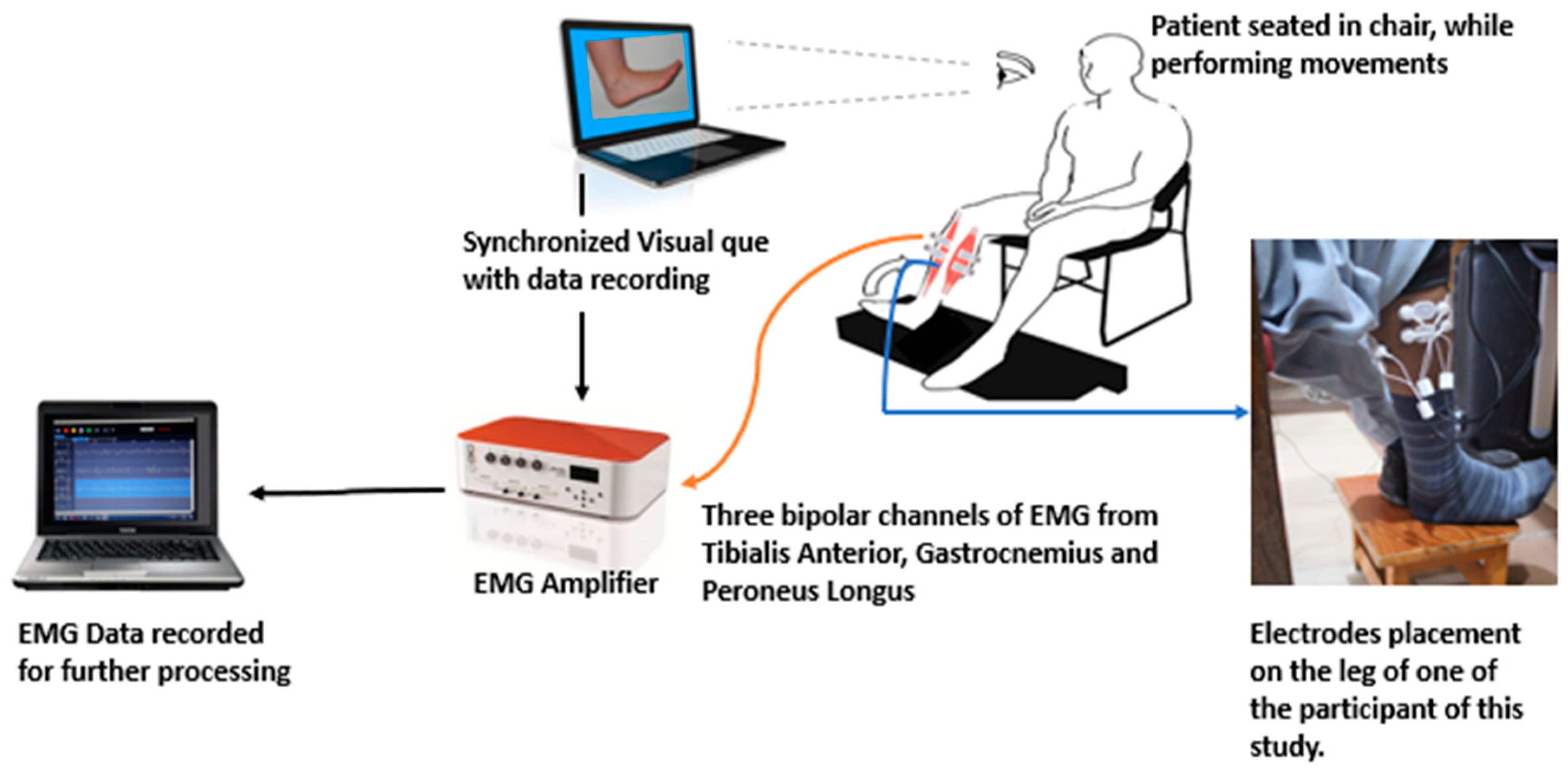
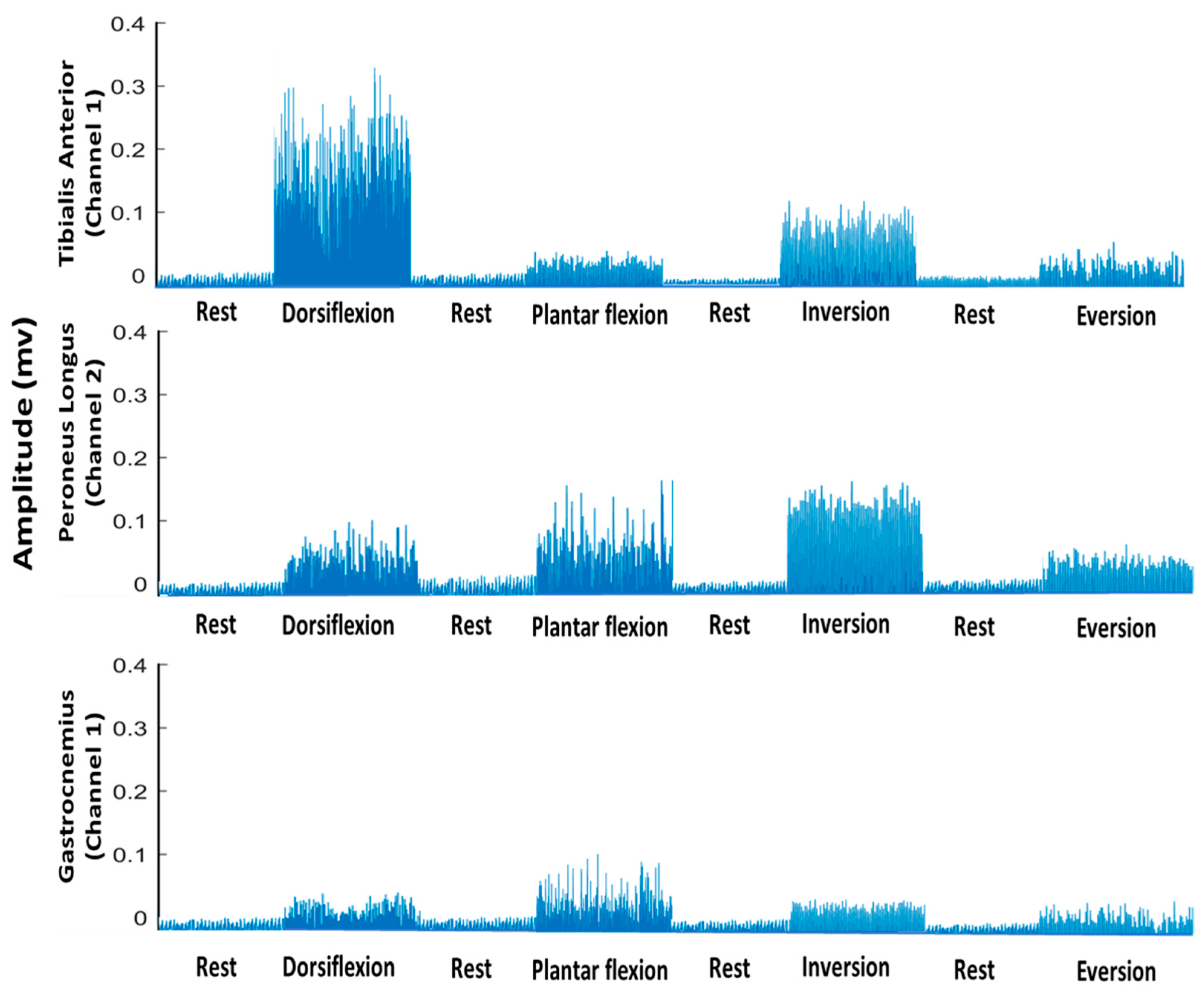
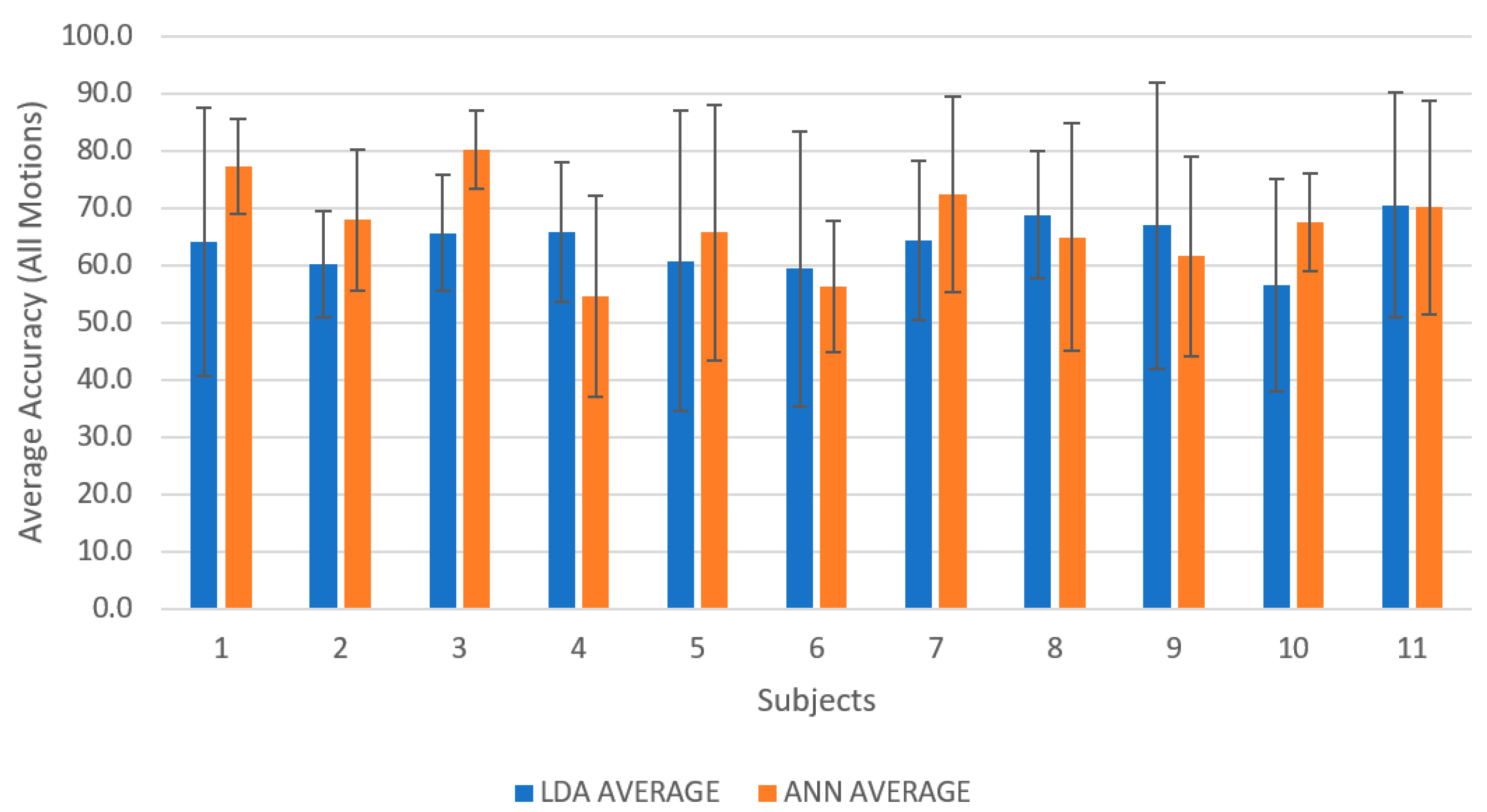
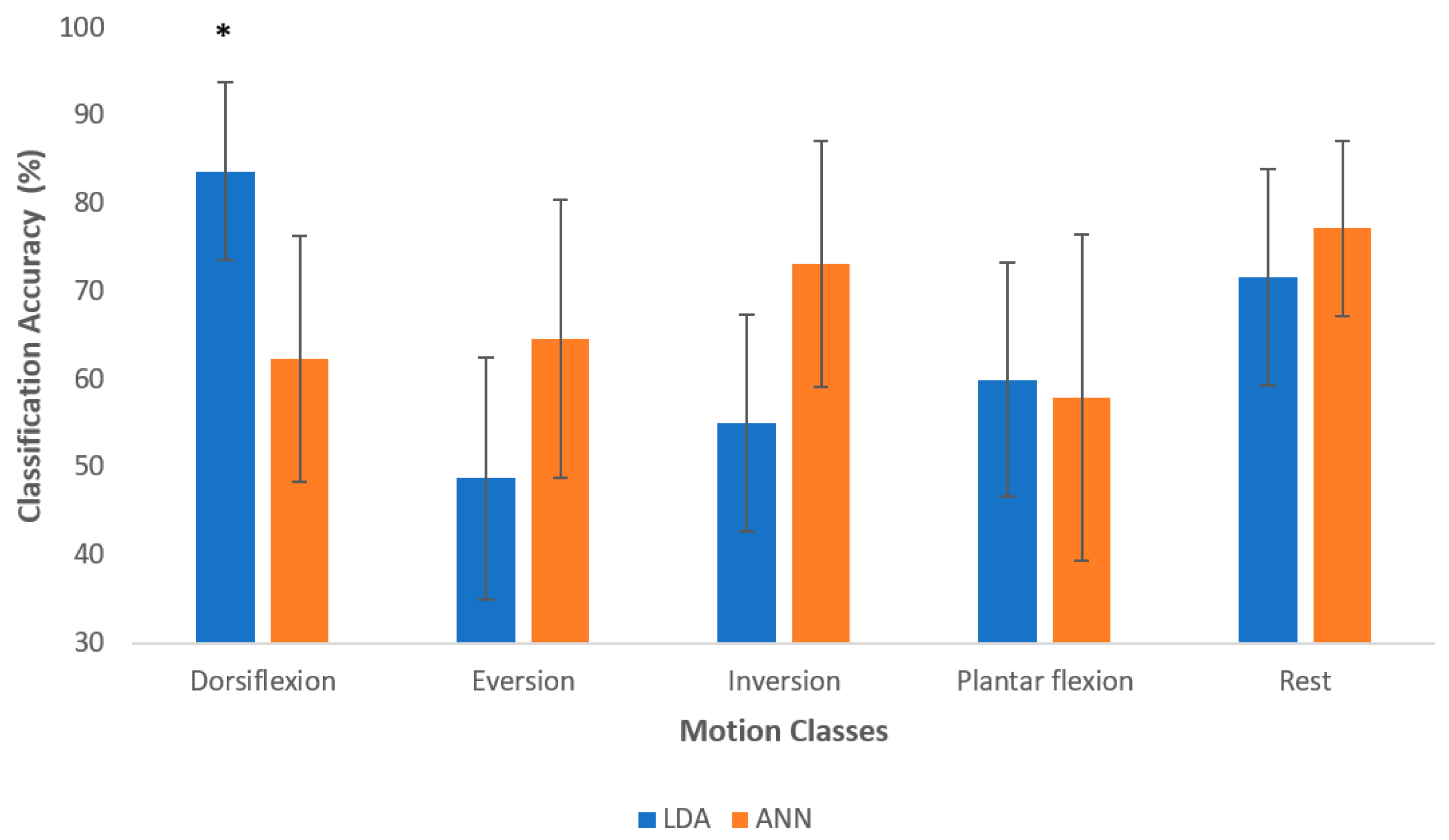
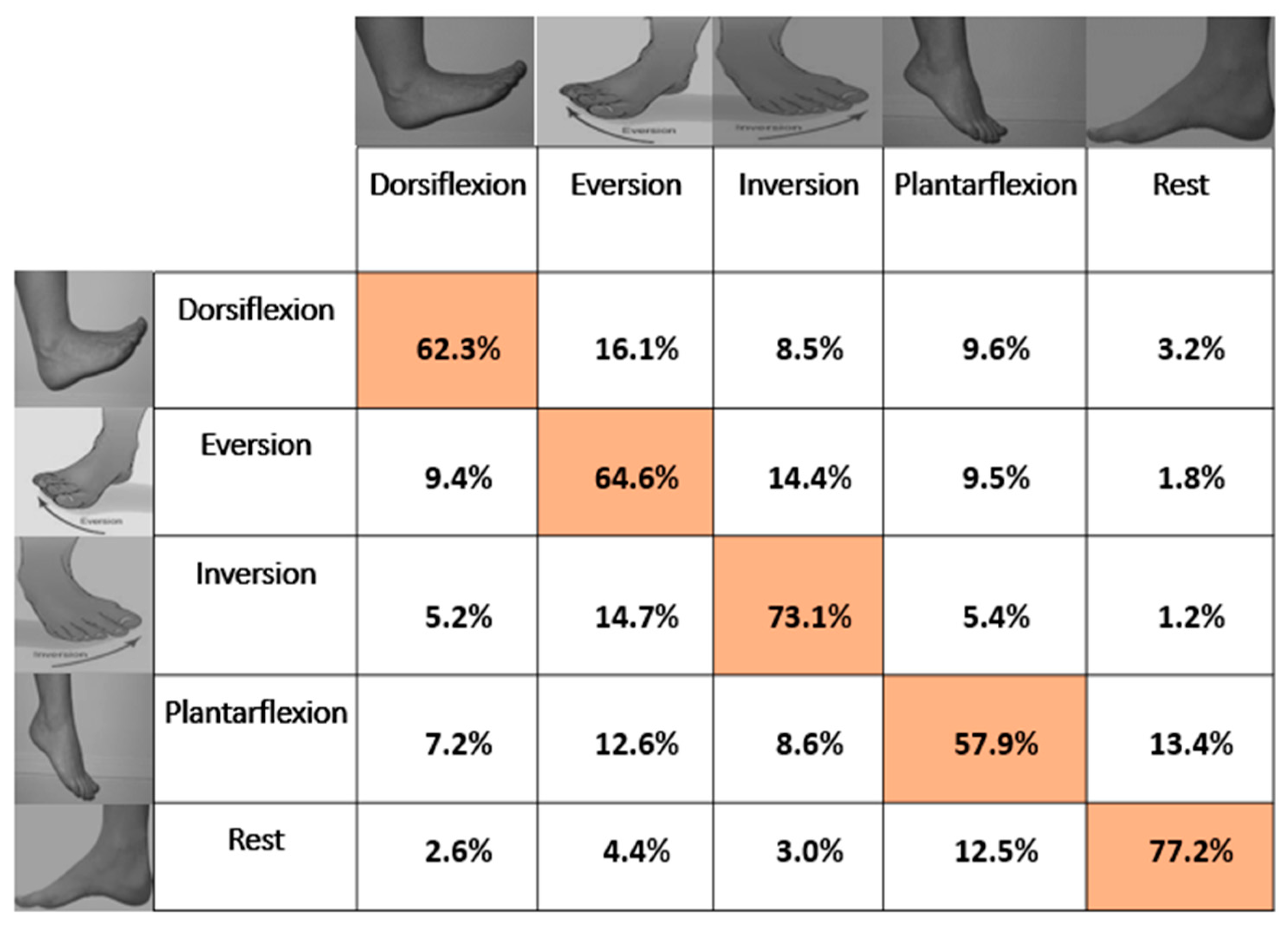
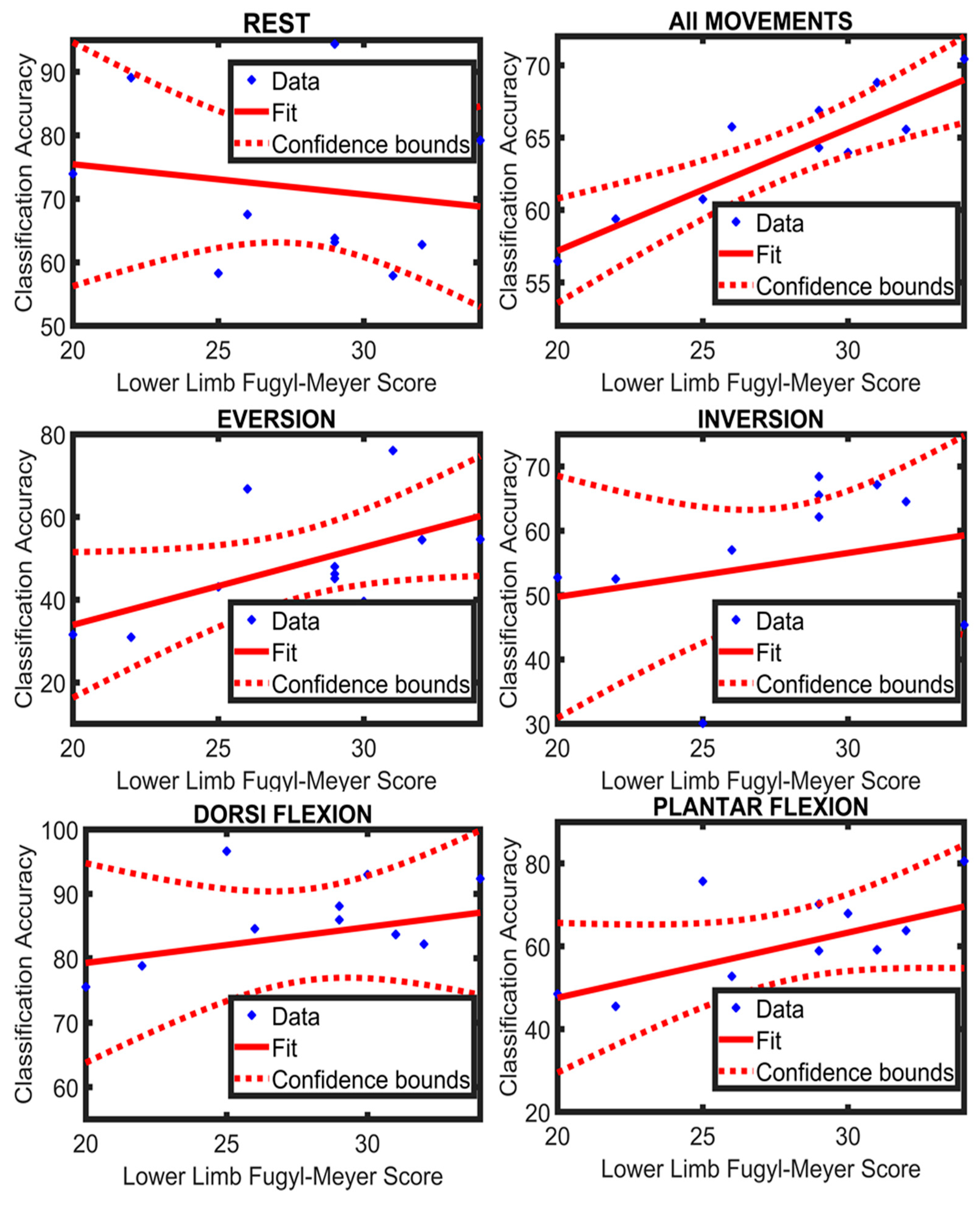
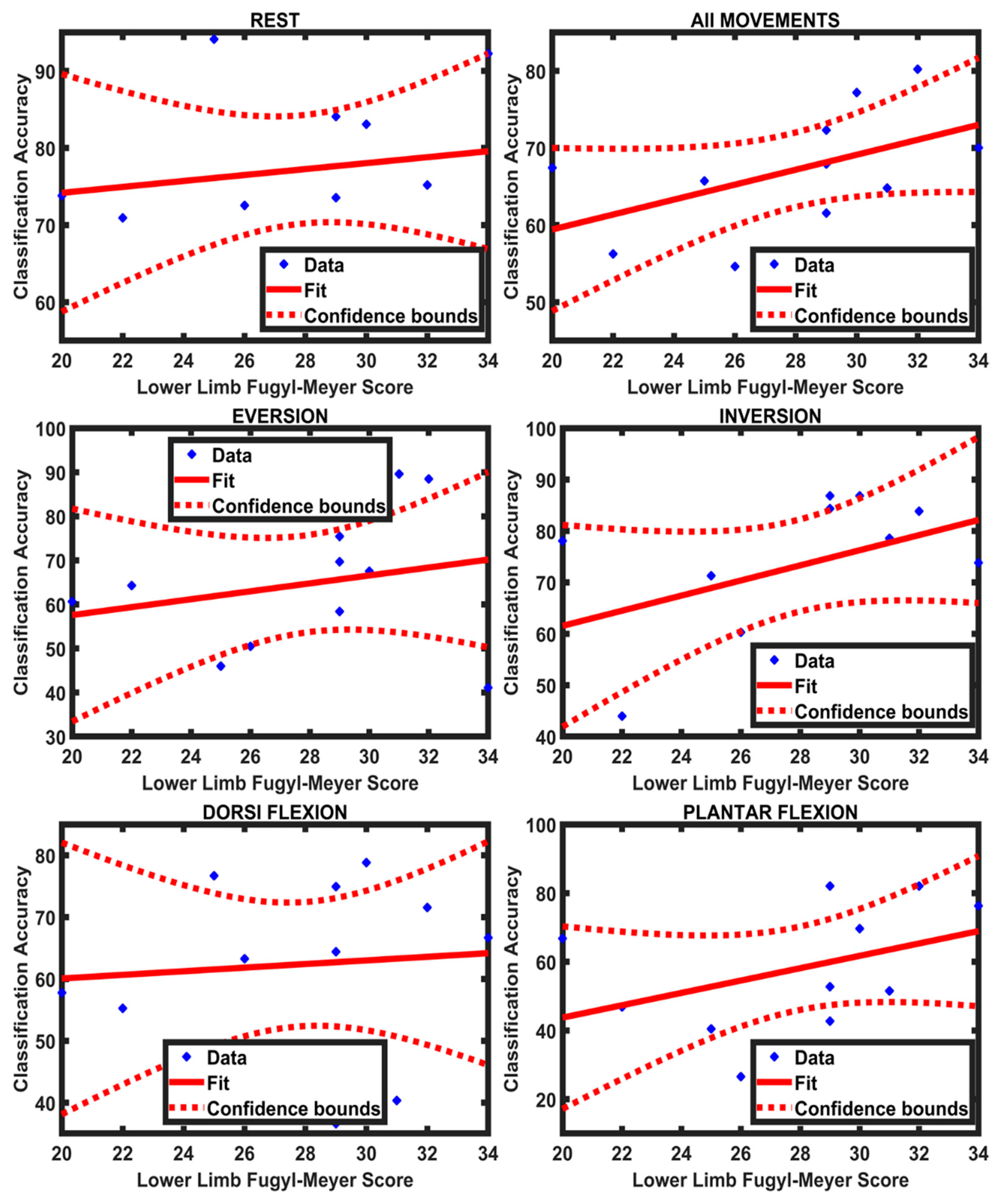
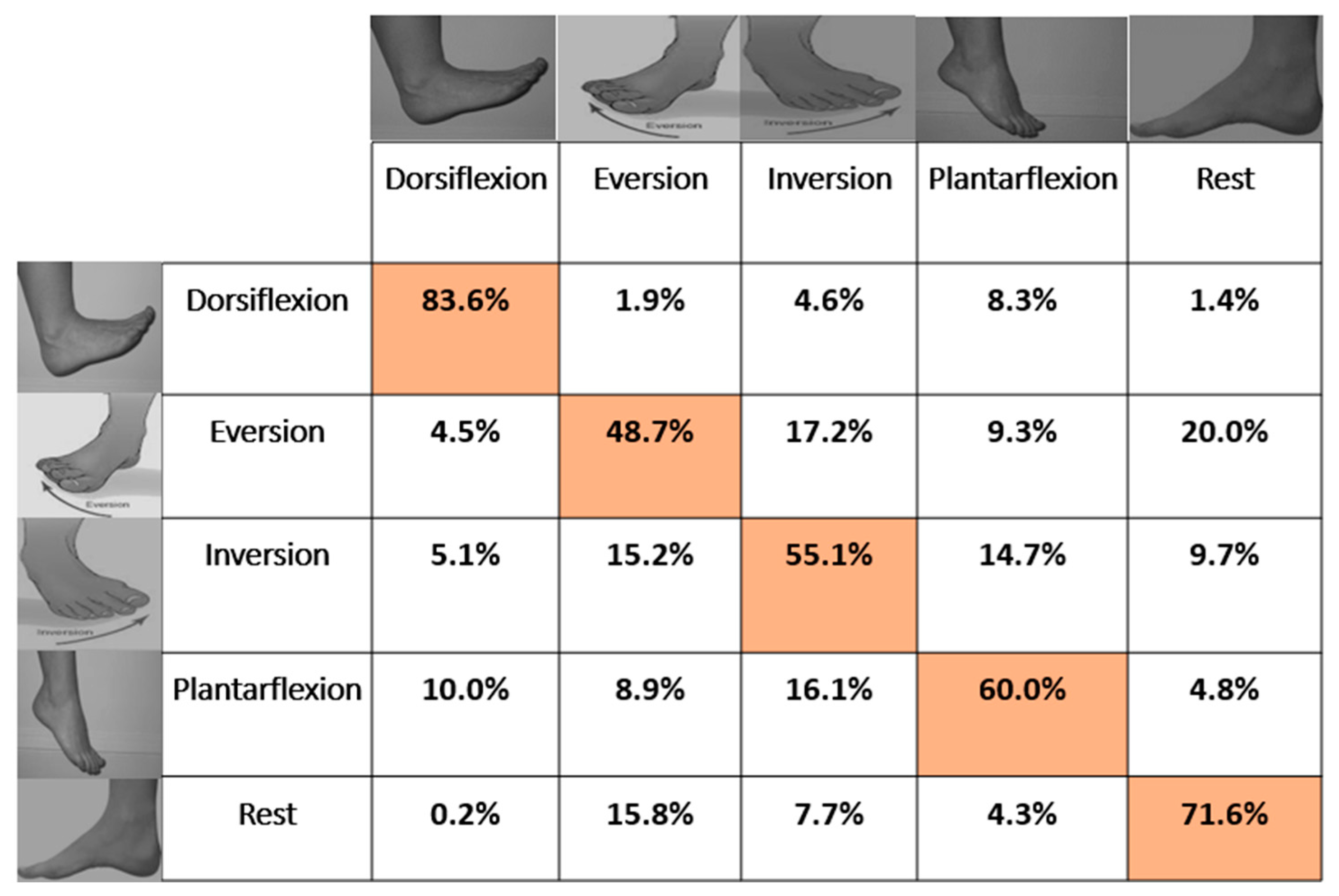
Stroke is a cerebrovascular disease (CVD), which results in hemiplegia, paralysis, or death. Conventionally, a stroke patient requires prolonged sessions with physical therapists for the recovery of motor function. Various home-based rehabilitative devices are also available for upper limbs and require minimal or no assistance from a physiotherapist. However, there is no clinically proven device available for functional recovery of a lower limb. In this study, we explored the potential use of surface electromyography (sEMG) as a controlling mechanism for the development of a home-based lower limb rehabilitative device for stroke patients. In this experiment, three channels of sEMG were used to record data from 11 stroke patients while performing ankle joint movements. The movements were then decoded from the sEMG data and their correlation with the level of motor impairment was investigated. The impairment level was quantified using the Fugl-Meyer Assessment (FMA) scale. During the analysis, Hudgins time-domain features were extracted and classified using linear discriminant analysis (LDA) and artificial neural network (ANN). On average, 63.86% ± 4.3% and 67.1% ± 7.9% of the movements were accurately classified in an offline analysis by LDA and ANN, respectively. We found that in both classifiers, some motions outperformed others (p < 0.001 for LDA and p = 0.014 for ANN). The Spearman correlation (ρ) was calculated between the FMA scores and classification accuracies. The results indicate that there is a moderately positive correlation (ρ = 0.75 for LDA and ρ = 0.55 for ANN) between the two of them. The findings of this study suggest that a home-based EMG system can be developed to provide customized therapy for the improvement of functional lower limb motion in stroke patients.
Keywords: stroke rehabilitation; surface electromyography (sEMG); pattern recognition (PR); ankle joint movements; home-based physical therapy; lower limb functional recovery stroke rehabilitation; surface electromyography (sEMG); pattern recognition (PR); ankle joint movements; home-based physical therapy; lower limb functional recovery