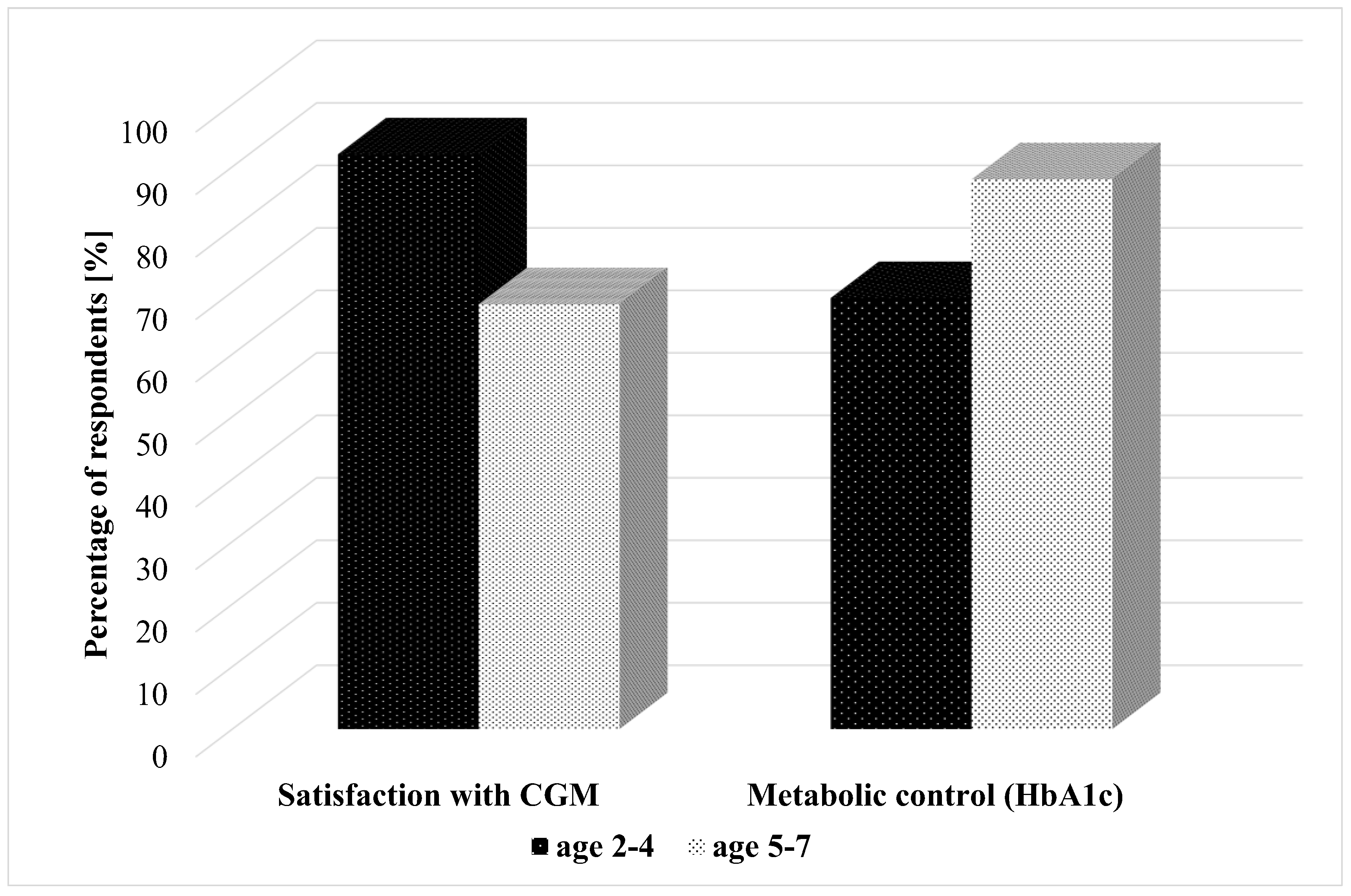
The Quality of Life and Satisfaction with Continuous Glucose Monitoring Therapy in Children under 7 Years of Age with T1D Using the rtCGM System Integrated with Insulin Pump—A Caregivers Point of View
 , ,
, , Abstract
Share and Cite
Rusak, E.; Ogarek, N.; Wolicka, K.; Mrówka, A.; Seget, S.; Kuźnik, M.; Jarosz-Chobot, P. The Quality of Life and Satisfaction with Continuous Glucose Monitoring Therapy in Children under 7 Years of Age with T1D Using the rtCGM System Integrated with Insulin Pump—A Caregivers Point of View. Sensors 2021, 21, 3683. https://doi.org/10.3390/s21113683
Rusak E, Ogarek N, Wolicka K, Mrówka A, Seget S, Kuźnik M, Jarosz-Chobot P. The Quality of Life and Satisfaction with Continuous Glucose Monitoring Therapy in Children under 7 Years of Age with T1D Using the rtCGM System Integrated with Insulin Pump—A Caregivers Point of View. Sensors. 2021; 21(11):3683. https://doi.org/10.3390/s21113683
Chicago/Turabian StyleRusak, Ewa, Natalia Ogarek, Karolina Wolicka, Anna Mrówka, Sebastian Seget, Magdalena Kuźnik, and Przemysława Jarosz-Chobot. 2021. "The Quality of Life and Satisfaction with Continuous Glucose Monitoring Therapy in Children under 7 Years of Age with T1D Using the rtCGM System Integrated with Insulin Pump—A Caregivers Point of View" Sensors 21, no. 11: 3683. https://doi.org/10.3390/s21113683
APA StyleRusak, E., Ogarek, N., Wolicka, K., Mrówka, A., Seget, S., Kuźnik, M., & Jarosz-Chobot, P. (2021). The Quality of Life and Satisfaction with Continuous Glucose Monitoring Therapy in Children under 7 Years of Age with T1D Using the rtCGM System Integrated with Insulin Pump—A Caregivers Point of View. Sensors, 21(11), 3683. https://doi.org/10.3390/s21113683